In Hayk Karoyi’s music, the vibrant palette of the Mediterranean meets the deep layers of Armenian medieval culture. A composer, sound artist, producer, selector, and live performer, as well as a multi-instrumentalist specializing in Armenian woodwinds, Hayk channels his cultural identity intuitively, allowing memory, place, and subconscious expression to shape his sound. Coming from a mixed East Mediterranean and Armenian heritage, he has never aimed to define himself—or his music—within a single tradition.
Instead, his work exists as a continuous fusion: electronic music intertwined with ancient timbres, improvisation, and experimentation. His work has been presented in clubs, concert spaces, and international festivals across Italy, France, Spain, Germany, Armenia, Georgia, Uzbekistan, and Indonesia. He has appeared on festival lineups such as Terraforma Symposia (Italy), Stihia Festival (Uzbekistan), O3 Festival (Armenia), Nopa Sound Festival (Armenia), TKESHI FESTIVAL (GEORGIA) ,Urvakan Festival (Armenia), New East Festival (Barcelona, Spain), Suara Festival (Indonesia), and Un Week-end Festival (France).
“Yotqar” is a love letter to the artists and musicians who have shaped me; those whose music I’ve carried in my heart and those I’ve shared stages and moments with over the years. The album is deeply rooted in Armenian woodwind traditions, echoing voices of the masters I admire. Its soundscape stretches across a wide geography and draws inspiration from the mountains of Syunik to the streets of Anjar, weaving in local sounds, memories and emotions. Endless gratitude to my parents, and especially to my mother for the folklore melodies she sings while cooking, filling the house with warmth and history.” - Hayk Karoyi
quête:moments
Transmitting from deep in the Finnish underground, Nazar sends out a signal of mysterious, synthetic auras and shadowy, skittering sequences. From smoky outsider techno to rainy-day electro abstraction, the label’s emphasis is on expression and intrigue as each release reaches across the energetic spectrum of moody machine music.
The first release on Nazar presents a cast of protagonists from the Helsinki scene who share precisely the kind of nocturnal tendencies the label is seeking out. Seasoned duo General Electrix open up the A side with ‘Redshifter’, a silken web of 606-powered electro and warmly haunted synth work that nods to the early years of Autechre. Making an early step out into the public domain, Asyx follows up swiftly with the exquisitely detailed machine funk of ‘kVelorum ‘, where a vivid tapestry of noise, squelch and bleep techno gets smartly woven between airy pad tones and a rock-solid rhythm section.
On the B side, Helsinki mainstay Kaiunta brings a dramatic flourish to mid tempo creeper ‘Phantasm’, matching a densely packed rumble of live drums with sweeps of nervy atmospherics and a murky inversion of the classic gated trance lead. 53X rounds out the Nazar mission towards broad BPMs and fresh ideas with a crunchy swerve towards sample-heavy downtempo laced with a generous dose of psychedelics and angular noise.
NAZAR001 is the kind of record that yields surprises and slots into unexpected moments depending on when and where the needle drops, providing versatile moments for adventurous selectors and continuing the fine tradition of outsider electro and techno from Finland.
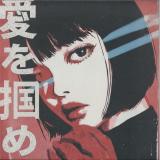
MOVE TRAX is thrilled to unveil "Grab My Love," the eagerly awaited second release from the Tokyo-based label, curated by its founder Al Jones. This enchanting EP synthesizes the sun-soaked essence of early 90s balearic vibes with the alluring melodies of classic Italo house piano, all interwoven with the evocative sounds of traditional Japanese instruments, notably the koto. At the forefront are the irresistible vocals of Aiko Inoue, whose whimsical lyrics recount a lasagna recipe in a manner that feels like a sumptuous love letter—a blend of playful humor and sensual mystery.
Complementing the original vocal mix is the "Scarpetta Dub Mix," where delightful silence speaks volumes, symbolizing the final, indulgent moments of a culinary feast. Further enriching this sonic tapestry are two distinguished remixes from renowned Italian artists: Massimiliano Pagliara lends his ethereal touch with the "Hanami Mix," a delicately layered composition that transports listeners, while Mr. Ties delivers the vibrant "House of Matsuri Mix," infused with a raw, Chicago-inspired acid baseline that guarantees peak-time excitement.
"Grab My Love" transcends conventional dance music, showcasing the innovative spirit of its creators and promising to captivate audiences on dance floors everywhere.
Black Truffle is pleased to present Radis, the first recording by the Oslo-based trio of Andrea Giordano (voice and organetto), Kalle Moberg (accordion) and Jo David Meyer Lysne (guitar and snare drum). Now based in Norway, Giordano is a native of Cuneo, in the Piedmont region in the north-west of Italy and her exploration of the Piedmontese language provides the starting point and conceptual anchor of the trio improvisations heard on Radis, which make use of the words of 20th century Piedmontese poets Nino Costa, Bianca Dorato and Oreste Gallina. As the musicians explain, the project is an attempt to preserve the beauty and singularity of a language at risk of extinction.
Fittingly, the first sound we hear on the opening piece ‘Fiorìa’ is Giordano’s unaccompanied voice. She sings a poem from Oreste Gallina as a kind of floating cadenza, the accompanying silence sensitizing the listener to the pellucid quality of Giordano’s voice and the unique sound of the Piedmontese language. The voice dies away and into the silence swells a single tone, sounded by Moberg’s accordion and—special guest on this opening piece—the alto saxophone of Mario Gabola. Extended techniques and preparations create unexpected timbres from the acoustic instruments: Gabola’s saxophone is augmented with tin cans and springs and Moberg’s unorthodox techniques allow the accordion to generate wheezing, buzzing textures and patterns of microtonal beating. Giordano’s voice returns, picking up the thread of the languorous opening melody, coexisting for a while with the shifting drone before the piece takes an unexpected yet organic left-turn into a delicate saxophone solo of sorts.
Recorded in several locations across Italy and Norway over the course of three years, Radis documents an ensemble who have developed both a distinctive sound-world and a remarkably sensitive group dynamic. Moving from folkish duets between accordion and Giordano’s organetto (the small accordion used in Italian folk music) to episodes of metallic guitar scraping from Meyer Lysne, the music is both quietly contemplative and gently chaotic. Ensemble roles shift with disarming ease. If on ‘Profij dëspers’ Meyer Lysne’s prepared guitar adds a haywire noise element to a lyrical episode of organetto and accordion, the next piece, ‘D’antorn a lor’, is grounded in chiming guitar chords of stunning beauty; once Giordano’s joins, the result calls up the most spacious moments of Maria Monti’s Il Bestiario. Throughout the seven pieces, the trio explore countless possibilities of group interaction and the margin between conventional euphony and pure abstraction: at times the voice floats against silence or seems almost disconnected from the gentle clatter of the instruments (sometimes reminiscent of Nikiforas Rotas’ haunting settings of Cavafy), while at other points the instruments touch on conventional harmonic accompaniment. What is perhaps most striking of all is the way that voice and instruments relate to each other, the extended technique reframing the voice as a kind of abstract sound object, while the melodic beauty of Giordano’s voice lends a contemplative, almost melancholic air to the wheezing and scraping of accordion and guitar.
Captured in gorgeously intimate recordings, Jim O’Rourke’s careful and beautifully spacious mix highlights the wealth of textural detail in each element. Accompanied by notes, session photos and the text of the Piedmontese poems, Radis is a work of stunning beauty that demonstrates the vitality of exploratory music in Norway today.
Luke Alessi launches Coffee Cola with ‘Yes Empress EP’, a crispy first pour that sets the tone for the label’s mischievous, high-energy ethos. Channelling late night momentum with razor-sharp percussion driven grooves, Luke balances playful experimentation with driving, club intent! Built for the peak-time moments and after-hours alike, Yes Empress makes it clear his label isn’t here to play it safe. Coffee Cola is for people who like their music caffeinated and their decisions questionable.
Anywhere, Anyway captures a selection of club tools that Makèz and their close circle have tested, refined and played across dance floors worldwide. Each track carries that familiar equilibrium the duo keeps guard over, a steady pull between raw club energy and moments meant for intimate listening.
Much like their recent album on No Art, the EP took shape while traveling, moving from session to session with artists from different musical worlds. Those encounters left their marks, subtle shifts in rhythm, harmony and texture, shaping the edges of the EP. The Amsterdam duo keeps seeking creative impulses from unexpected angles, letting ideas find them wherever they are. Anywhere, anyway.
Two original house cuts. One statement. Soulbound / Abracadabra lands as a double-header single as part of our new XPRESS Singles Series, bridging gritty South London soul with slick Franco-American house energy - a release designed for the salubrious moments on the dance floor.
“Soulbound” sees Bustin’ Loose deliver cutting-edge disco-soul infused house music straight from the concrete textures of South London. Sung and produced by Bustin’ Loose himself, the track rides a pumping, elastic bassline with warm strings and raw vocal emotion - modern house with classic soul DNA. Capturing the energy of London's expansive music culture, Soulbound is both uplifting, euphoric and street-wise. Inspired by the music of Fatboy Slim, rappers like JME and Ghetts and the club culture of London.
On the flip side, “Abracadabra” from Magnolia & Sam Karlson featuring LA wordsmith Relaye drips with French house sensibilities, blending glossy filters, catchy wah guitar and punchy grooves with razor-sharp rap vocals. Imagine Music Sounds Better With You colliding with the cool charisma of Q-Tip - hypnotic, stylish, and irresistibly repeatable.
The remix package pushes the release deeper into club territory:
• Dam Swindle transform Soulbound into a deep, bumping underground roller, rich in groove and late-night atmosphere.
• Phil Weeks delivers a signature Ghetto Mix of Abracadabra, crafted with his beloved MPC sampler - raw drums, stripped-back funk, and a pure nod to house music’s roots.
• La Felix closes the circle with a nostalgic, early-2010s-tinged deep remix of Abracadabra, balancing modern polish with timeless dance-floor warmth.
RNT co-founder JKriv joins forces with keyboard virtuoso Jason Lindner to drop the Real Ones EP, a clubby and musical 3-track excursion that includes a deep and polished remix from rising star Retromigration. Needing little introduction, JKriv is a driving force behind RNT, architect of edits, original productions, and the aesthetic direction of the label. Jason Lindner has a storied musical history that includes leading the in-house big band of legendary jazz club Small’s in the early 2000s through to performing on David Bowie’s final album Blackstar, and much more. The duo have been honing a musical alliance for the past few years through their work together in the A Joyful Noise band and hybrid-live sets on hometown Brooklyn Razor-N-Tape events, developing an inctricate musical interplay and incendiary energy that is captured perfectly here. Across these 3 melodic house tracks, lush layers of synths interlock and build toward big anthemic moments, with hard-hitting drums driving the energy forward. Retromigration steps up to deliver a gorgeously slick remix to round out this exceedingly musical and eminently playable 12".
- A1: Prelusion
- A2: Do We Become Sky?
- A3: The Past Is Always Following Close Behind
- A4: Empty Lake, Empty Streets...the Sun Goes Down Alone
- B1: Etrograde
- B2: Cavanaugh Bay
- B3: Another Heart In Need Of Rescue
- C1: Devastation Is The Path To Recreation
- C2: Time Won't Forget What You Meant To Me
- D1: Moments Bruise & Bleed
- D2: The Return
- D3: Coda
Standard[37,61 €]
Washington's Slow Dancing Society aka Drew Sullivan has gone long here: Do We Become Sky? is a deeply immersive 86-minute work that very much rewards being listed to in one sitting. It is "a spiritual successor" to his 2008 album Priest Lake that draws upon feelings of loss, mostly using the tonality of the Korg Wavestation as a foundational instrument through the work. It features well-balanced boiling of tension with subtle moments of release, swelling harmonies, plucked guitars and evocative synth progressions that always keep things moving both physically and emotionally.
2026 Repress
French talent Hyden makes label debut on Mutual Rytm with conceptual new techno EP, 'To Whom It May Concern'. Hyden is a potent force in the French underground, creating powerful techno with dense percussion, immersive grooves and subtle nods to classic influences - all through his own unique lens. Having delivered standout releases in recent years, here he offers up sounds "anchored in psychoanalysis, time, and emotional residue" as he makes his mark on SHDW's Mutual Rytm imprint, delivering influences of dream logic and surrealism as the palette moves between brutality and introspection. "It's hypnotic music for moments of rupture where something breaks or breaks through". Opener 'Manifest Content' is inspired by Freudian theory and explores the surface illusions of thought and dream. It's about the dissonance between what we perceive and the deeper meaning that slips away beneath and is a deep and dubby techno track with flashes of unsettling melody. 'Bruises' is emotional trauma made sonic. This piece delves into invisible scars and traumas, residues of past conflict or intimacy - it's slow-burning, heavy and raw. 'Jikan' is a meditation built on time and its erosion. Inspired by the Japanese concept of impermanence, it reflects fleeting moments, decay and the tension between stillness and motion with jacked up but warm drums and turbulent bass. Next, 'Free Will' is born from inner conflict and plays with deterministic rhythms and evolving layers, questioning whether we are truly in control or just passengers in a prewritten sequence. The vocal mentions, "creatures, you're out of time" to bring darkness to the intense but sleek rhythms. The streamlined physicality of 'Swarm' channels the primal force of collective movement and is a nod to the loss of individuality in group behaviour. In addition, the package is loaded with digital bonus cuts. 'Yumehara' is a dive into surreal dream-states and evokes subconscious landscapes where logic dissolves and emotion reigns, while 'Lu Bu' is brutal and warlike and named after the legendary Chinese general that captures impulsive violence, betrayal and reckless glory with relentless energy and rhythm. Lastly, 'Neon Pale' is a synthetic dreamscape about fading beauty under artificial light - a melancholy ode to cities at night and the loss of warmth in modern life.
Gennaro, formerly known as Blackchild, returns to Cécille Records with his second release on the label, delivering a confident and deeply musical four-track EP that captures the full scope of his sound.
Each track reveals a different facet of Gennaro's musical identity.from stripped-back, groove-driven club tools to more nuanced and emotive moments - all tied together by his unmistakable sense of rhythm and atmosphere. It's a release that feels focused yet expansive, showing an artist who knows exactly where he stands and where he's heading.
Nick Curly and Marc Scholl are proud to continue working with Gennaro and to welcome him back on the label with a release that underlines both artistic growth and creative consistency. This EP isn't about following trends; it's about personality, craftsmanship and club-ready music built with intention.
A strong statement, a natural progression and a clear reflection of Gennaro's range - this is his next step on Cécille Records
Hidden Spheres is a Rhythm Section mainstay for a reason: having released 3 EPs on the label, he has
developed his sound and fully emerged into a flow state. His residency at Public Records has enabled him to mould an EP perfect for any dancefloor, perfecting a Detroit indebted House style with influences from early Kerri Chandler and Ron Trent perfect for those heads down, hands-up moments.
Delivering 5 tracks that master dancefloor tension, it's difficult to pick a stand out. “Come On, Yeh” harks
back to the New Jersey House sound with dubby organ chord stabs and punchy 909 drums and a sublime bongo loop. “Don’t You Wanna” welcomes the house dancers, with a low-slung, heavily swung groove, resampled pads, and a deep spoken refrain that gives the track its title. Kicking off the B-side “Get Down” hits the subs, with unmistakably phat bass, moody strings and broad use of the iconic M1 organ bass patch “Organ2”. Followed by “I Feel Good” brings police sirens, 808s and swirling pads, to a glorious Deep House tune with a top chime motif that keeps the party moving. The final track of the B side, “You Don’t Know”, takes things down a notch, but maintaining the sublime tension with classic house piano chords and another wicked percussive loop.
Hidden Spheres has returned to his unadulterated House roots, with an EP that stays true to the classic sound. He has shaped an awesome body of work with character from deep spoken word samples, perfect use of dub sirens and grooves that can give any club a reason to invest in bigger
- A1: C’est Loin
- A2: Là Où Tu Veux (Deixa A Gira Girá)
- A3: Pas Tant De D'chichi Ponpon
- A4: Assez
- A5: Le Soleil En Haut
- A6: Tout L’or
- B1: Désillusion
- B2: Attends-Moi
- B3: O Sapo
- B4: Horssaison
- B5: Presque Rien
- B6: Vou Festejar
For his sixth solo album, Ezéchiel Pailhès returns with a new collection of songs infused by a sunny wandering spirit.
Within each of the twelve songs on SOL is a thread of melancholic happiness that has permeated much of Pailhès’ music and songwriting. He addresses love, the passing of time, hope, lost illusions, fleeting moments of grace, the temptation of forgetting, a need to escape, and desire. All this is
insulated by understated orchestrations that blend acoustic and electronic instrumentation with deft confidence.
The Portuguese and Brazilian concept of saudade—a form of melancholic longing and nostalgia— pervades, thanks in part to Pailhès decision to record the album in Rio de Janiero and to reinterpret some of the finest works of Música Popular Brasileira (MPB). In particular, he revisits a handful of
lesser known classics from the mid-century samba and bossa nova era—originally written or performed by talents including Vinícius de Moraes, João Gilberto, Tom Zé, Dorival Caymmi, João Donato, Os Tincoãs, and Ataulfo Alves.
The shift from Brazilian Portuguese to French and the decision to adapt rather than perform a straightforward cover versions, allows Pailhès to invent a form of prosody and euphony (the musicality and harmonious combination of words) that feels vibrant and unlike anything else in today’s French
chanson landscape.
“Some lyrics are simple translations from Portuguese, in what I’d call an expanded version. For others, I started from a single word or a single phrase and embroidered an entirely new text that carried me elsewhere,” explains Pailhès. “I allowed myself great interpretive freedom, while preserving the humanist dimension of the original songs. I’ve always been deeply moved by the way Brazilians transfigure reality through heightened emotion. I love this visceral and spontaneous country, which always seems to live through emotion. And above all, I love its music both popular and unifying,
bringing together all social classes. In that sense, it’s very political music, but even more so utopian, made by the people and for the people.”
On this new album, however, the French artist was keen to avoid cliché. Each song is therefore built around a carefully balanced interplay between Pailhès’ piano and synthesizers, alongside restrained arrangements of percussion, brass, bass, and cavaquinho (a small four-string plucked guitar). These parts were recorded in Rio de Janeiro with two musicians who regularly perform alongside the legendary Caetano Veloso—Kainã Do Jêje and Alberto Continentino—joined by Thomas Harres, Antônio Neves, Eduardo Neves, and Gabriel Loddo.
Since the 1960s, France and Brazil have shared a long-standing cultural and musical relationship. Some Brazilian artists, most famously Gilberto Gil, took refuge in France during the dictatorship years (1964–1985). But above all, French chanson quickly fell in love with the richness and ingenuity of
bossa nova and samba, translating and reinventing them in the language of Molière. Throughout the 1960s and 1970s, albums and hits by Henri Salvador, Georges Moustaki, Pierre Barouh, Pierre Vassiliu, and Claude Nougaro all drew from the MPB repertoire.
Fifty years later, with SOL, Ezéchiel Pailhès reinvents this rich Franco-Brazilian musical legacy, bringing to it a personality and modernity that stand confidently alongside those of his forbears.
Pon is Tujiko Noriko’s sixth album for Editions Mego and a further extension of her already significant body of work as both a solo and collaborative artist. Dedicated to her cat who she adopted as an infant and passed away due an accident having been born deaf, Pon is imbued with abstraction, tenderness and a deep emotional resonance.
Noriko’s palette of electronics, romantic melodies and surprising sonic details are all fully present here, and like her last full length, 2023’s Crépuscule this is an epic work, released as a 2LP by Editions Mego alongside a Japanese CD release.
The unmistakable hue of Japan hovers throughout this emotional rich landscape. Subtle field recordings and fragile, abstract motifs drift through the album, all cloaked in a warmth and humanity that only Noriko seems able to conjure.
Pon moves effortlessly between the childlike and the obscure. There are moments of deceptive simplicity where unexpected elements suddenly surface — strange voices emerge on Boku Wa Obaka, Knife of Yonder is a standout: a startling ten-minute unfolding that begins with a warm, almost Eno-esque drift before launching into a soaring mid-section and finally landing somewhere unexpectedly blues-adjacent.
Kikoeru Pon is brimming with childlike wonder — a heartfelt ballad that dissolves into domestic field recordings, including sounds of the feline for whom both the album and track are named. A quietly devastating ending that brings the personal nature of the record into sharp focus.
There is a deep sense of the human in the way Noriko embraces technology. This is far from cold abstraction; rather, Ponfeels like a colourful photo album, documenting Noriko’s inner world and instincts with remarkable intimacy. Hovering in liminal states between pop, ambient and abstraction, this is a deeply affective and moving release that reveals new surprises with each listen.
The emotional range of Noriko’s latest offering inspires hope in a world in disarray. It is both gentle and epic and one which we feel embodies the work of an artist fully at the height of her powers.
- 01: Clarity
- 02: A View Of This Life
- 03: Oliver Lake
- 04: Prelueoionti
- 05: Ballad
- 06: Clarity 4
- 07: Ab Bb 1-7 3O
- 08: Iomi
Wir begehen den 50. Jahrestag jenes Moments, als der 22-jährige Michael Gregory Jackson seine bahnbrechende erste Veröffentlichung "CLARITY / CIRCLE / TRIANGLE / SQUARE" aufnahm, eingespielt gemeinsam mit einer atemberaubenden Riege seiner Zeitgenossen: Oliver Lake, David Murray und Leo Smith. Es handelt sich um ein seltenes Dokument des New Yorker Loft-Jazz, das eine perfekte Balance zwischen verschiedenen Genres wahrt. 1976 aufgenommen, erscheint es nun erstmals als autorisierte LP-Neuauflage. Remastert und restauriert, ist es das perfekte Album, um sich in diesen komplizierten Zeiten in der Musik zu verlieren – und/oder sich selbst wiederzufinden.
Key To World Peace is the third release by Prophetic Justice Ministry - aka Australian musician Sam Perry. An atmospheric, cinematic album that belies a striking pop songwriting nous at its core, its conductor Prophetic Justice Ministry is at the centre of a new wave of creative, rule-bending Melbourne artists. Romantic, smudged and hazy, Perry emerges from behind a wall of
half-light with a clutch of earworms and affecting emotions.
Recorded in home studios in Belgrade (Serbia), Christchurch (New Zealand) and Melbourne (Australia) over the course of three years, Key To World Peace offers a dichotomy in approach. Shifting on a dime between ambient, filmic washes of sound and more traditional song structures, the approach feels natural, casually acid-tipped and emotionally revealing. While Perry’s
distinctive keys and production melding with melody is evidenced in Melbourne group Who Cares?, as Prophetic Justice Ministry there’s a heightened sense of mystery and space being used.
Swirling in a psychedelic fog with dry iced chords falling down like melting stars, the album pulses with an ominous, distorted intro that sculpts air into blocks of sound before Psyop offers a glimpse through the gloom at the artist navigating through crushed, shoe-gazing chords, singing a consolation into an abandoned building. Side A’s more abstract tone veers from industrial tracks (T-A) to pastoral, impressionistic pieces (Trance) before album highlight Life’s A Party showcases the effortless, classic songwriting lurking in Prophetic Justice Ministry. Built on the tension between the upbeat lyrics and suppressed, rich delivery, the song lopes on an alluring loop with acoustic guitars and Perry’s voice walking a tightrope between irony and sincerity. The song blooms into a bright burst of light, almost inducing synesthesia in the listener and reminding a little of The Beta Band’s most outre and catchy moments.
Opening Side B, Naked Shine’s scintillating guitar is punctuated by a sub bass swell that offsets the yearning vocal performance. With palpable sensitivity the song is shepherded into short, atmospheric passages before Love Drum’s direct delivery: Perry’s vocal and guitar, dancing over a hint of distortion feels like Syd Barrett at his most casually brilliant. Carrying on the tradition of a single cover on every Prophetic Justice Ministry release, here Lana Del Rey’s Mariner’s Apartment Complex is given a stripped back but faithful treatment. With a sound that feels like a hushed, Chris Isaak classic it’s testament to Perry’s own compositions that the cover doesn’t outshine the rest of the album. Album closer and single Spirit House Party combines a classic chord progression with Perry’s double-tracked vocal into a murky but brilliantly catchy chorus. While nowhere near as lush in its production, there’s something in the atmosphere of Prophetic Justice Ministry’s vocal sitting in the mix just so that reminds us of The Electric Prunes’ Holy Are You-era work with David Axelrod.
Key To World Peace flits between displaying a spectrum of blurred emotional resonance in its instrumental passages and vulnerability in the shape of raw, melodic songwriting. With his first release outside of Australia and vinyl debut, Sam Perry’s Prophetic Justice Ministry is a beguiling dance in and out shadows.
Following the exploratory framework of Closer Now, Everlasting Flame sees Bartosz Kruczyński aka Earth Trax moving further into introspection, embracing a more experimental language that drifts between ambient abstraction and rhythm-driven forms.
The album unfolds through cold, shimmering atmospheres and submerged low-end structures, navigating a subtle tension between melancholy and propulsion. Its sonic palette remains fluid, shifting between hazy ambient passages, dub-inflected textures and more fractured, bass-driven moments, while maintaining a strong sense of cohesion throughout.
A defining element of the record lies in its contrasts: low, brooding pads and diffused beats are set against piercing high-end details, distant vocal fragments and flashes of raw, distorted intensity. This interplay creates a sound world that feels at once fragile and forceful, intimate yet expansive, with a persistent sense of longing running beneath the surface.
With Everlasting Flame, Earth Trax continues to move beyond strictly club-oriented structures, shaping a body of work that exists in a liminal space between functionality and free-form expression — immersive, textural and emotionally resonant. A record that lingers in the in-between, where rhythm dissolves into atmosphere and emotion takes the lead.
Small Great Things / Small Great Beats returns with a shiny yellow vinyl by Quadrakey - the Summer Vibes EP.
With SGB003, Small Great Things delivers a warm and groove-driven vinyl release from Quadrakey, featuring four carefully crafted cuts designed for both late-night dancefloors and sun-soaked daytime sessions.
The EP opens with A1 Good For You, bringing uplifting, feel-good house energy driven by a steady groove, playful details, and a warm bassline that instantly sets a positive tone on the floor. A2 Feel Alone follows on a deeper and more emotional tip, exploring hypnotic rhythms and moody atmospheres, perfectly suited for intimate club moments and late-night transitions.
Flipping to the B-side, B1 Dancing With You delivers a smooth and infectious flow built around rolling rhythms and subtle melodic touches, balancing elegance with dancefloor functionality. Closing the record, B2 Summer Vibes lives up to its name with sunny chords, relaxed grooves, and an effortless open-air feel, ideal for daytime sessions and sunset sets.
From hypnotic grooves to feel-good summer moods, SGB003 showcases a refined and confident production style, staying true to the Small Great Things philosophy: quality music, pressed on vinyl, made for DJs who value depth, groove, and longevity over short-lived trends.
A solid addition to any record bag, SGB003 captures the essence of modern house music with a classic touch, simple, honest, and effective.
A raw, groove-driven selection of previously overlooked 1990s recordings by legendary Turkish jazz impresario Okay Temiz, compiled here for the first time.
As the story goes, throughout the 1990s, Okay Temiz roamed the nights of İstanbul in search of rhythm — moving through its far corners, from the seedy underbelly to gypsy neighborhoods, from the outskirts of the city to smoke-filled taverns where cigarette haze turns into a living cloud atlas — capturing a largely unknown and maverick period of his work.
Compiled by long-time producers Haluk Damar and Erinç Güzel, the album brings together Turkish folk textures, İstanbul tavern sound, spiritual jazz, raw street groove, and flashes of Turkish psychedelia — with moments shaped by Temiz’s own distinctive vocals. The result is a deep, percussive, and highly playable set.
Positioned between global jazz, rare groove, and dancefloor material, İstanbul Groove is a strong crossover release with appeal across both listening and DJ set contexts.