Will Saul, DJ/Producer and Aus Music label head primes the 150th release for the longstanding British label with a stellar cover of the 1990 seminal techno record of the same name by Yolanda on seminal label Underground Resistance.
With the original record being one of Saul's all time favorites and UR being a constant source of inspiration it was beyond a dream to get his version fully approved by Mike Banks to celebrate the landmark anniversary. Saul then worked with Berlin based vocalist Gilli.jpg - who has recently worked with Cinthie - to re-vocal Yolanda’s song.
As a former intern at Skint in the late 90s heyday, this up-streamed anthem feels extra special finally landing digitally on the label where Saul began learning his trade over twenty years ago. The vinyl will be released on Aus. There is also a version expected later this year which see's Saul collaborate with Paul Woolford and additional remixes by Move D and Space Dimension Controller that will land shortly. The release features artwork by Trevor Jackson, the man behind the Output label, who’s releases launched careers for huge artists like Four Tet and LCD Soundsystem to name just a few. His iconic, pop art influenced work has been seen on releases including the undisputable 80’s dance classic, Raze ‘Break 4 Love’ and S'Express 'Theme from S'Express'.
quête:mone
Sublime, unique, sexy and peculiar unreleased scores by electronic and jazz pioneer Ron Geesin, made for the sublime, unique, sexy and peculiar films by maverick director Stephen Dwoskin. There. we’ve said it. And if you have not heard of one or either of these two dudes it doesn’t really matter. Geesin made great music and worked with Pink Floyd. Dwoskin made odd films, most of them are in the BFI permanent collection. They are great and a bit strange.
These superb unreleased soundtracks come from a fascinating, progressive and important period in British film history. They represent an intriguing collaboration between the lively Ron Geesin from Scotland and the American Stephen Dwoskin, who both met in London.
Musically they are minimal, charismatic and quite groundbreaking. Here is the story…
HISTORY:
Steve Dwoskin arrived in London in 1964, aged 25, with several 16mm films in his trunk, shot in the cold-water flats of Greenwich Village. He had been on the fringe of the Factory scene, and some of his films starred Beverly Grant, ‘the queen of the underground’. But they had scarcely been seen, and they didn’t have soundtracks. For almost a year they stayed in the trunk, and stayed silent. Then he met Ron Geesin, somewhere around Portobello Road.
‘Slept last night, completely dressed after working over 12 hours on sound tracks at Ron’s,’ wrote Dwoskin in his diary for 29 July 1965. ‘My films are not anywhere near being anything. I need more energy, more concise and positive ideas and less inhibition. And of course space, money and people.’ Dwoskin, who taught and practised graphic design by day, had recently decided to stay in London beyond the term of the Fulbright scholarship that had brought him there.
Ron, living with Frankie in a basement flat in Elgin Crescent – they would marry the next year, with Dwoskin as best man – was about to leave the Original Downtown Syncopators, the trad jazz band he had joined aged seventeen-and-a-half, and was trying to go solo. On stage he would make vigorous use of piano and banjo; at home Frankie had bought him a new kind of instrument – a tape recorder. ‘Soon I had one tape recorder, two tape recorders, three tape recorders.’
Ron, wrote Dwoskin in his unpublished autobiography, ‘loved to record, and to cut and splice the quarter-inch recording tape to make new sounds. This triggered in me the idea of getting back to my films and finishing them’. Soon he was living in a dank basement in Denbigh Road, a few minutes’ walk from Elgin Crescent. Ron’s soundtracks for Dwoskin’ films, recorded in the Geesins’ flat, encompassed Ron’s very eclectic range of styles – madcap piano and fretted banjo as well as tape manipulation.
Aside from Ron’s soundtracks, some of which belong to films that no longer exist (including Pot Boiler), Frankie would act in one of the films that Dwoskin either lost or never finished during these years. He was disabled, having contracted polio as a child, and Ron and Frankie were both carers and collaborators; Ron had met him when he was struggling into his car.
There was no London equivalent to the underground film scene that Dwoskin had known in New York, and his films remained unseen until such a scene began to come into being, in the autumn of 1966. Some of them made their debut at the Mercury Theatre, near Notting Hill Gate, that September. Dwoskin wrote that Alone, starring Zelda Nelson (from Ron Rice’s Chumlum), and Chinese Checkers, with Beverly Grant and Dwoskin’s friend Joan Adler, went over best.
Soon both Dwoskin and Geesin became involved in the nascent London Film-Makers’ Co-op, which put on screenings in Better Books on Charing Cross Road – ‘if you can call them screenings,’ Ron recalls; ‘I’d call it fifteen blokes in various stages of disarray, peering through the smoke’. One or more of the films had been ‘striped’ with magnetic audiotape; with others ‘we had no means of direct syncing to the picture, so he started the film and I started the tape recorder’.
In the same autumn, Dwoskin moved into a flat almost opposite the Geesins on Elgin Crescent. More collaborations followed, including Naissant, on which Gavin Bryars, whom Geesin had met during a stint on the northern club circuit with novelty act Dr Crock and His Crackpots, played double bass.
Around the end of 1967 Geesin released his first solo LP, A Raise of Eyebrows, and Dwoskin won recognition the Fourth Experimental Film Competition, aka EXPRMNTL 4, an occasional film festival staged at Knokke-le-Zoute in Belgium. By now the films had optical soundtracks.
It was only after this that Dwoskin completed his first ‘British’ films, including Me Myself and I, with Barbara Gladstone, an American dancer who had appeared in Barbara Rubin’s Christmas on Earth, and with whom Dwoskin and Geesin had at one point devised a stage show, never produced. For Moment, a single-shot film, Geesin provided his most experimental score yet. At the time of its debut in 1970, Dwoskin and the Geesins were sharing a house in Ladbroke Grove.
By then, Ron was working with Pink Floyd, and soon afterwards he and Frankie moved out to the country, to be replaced by Bryars both in the house and as Dwoskin’s principal collaborator.
Until now these scores have remained part of the Geesin Archive and have never been issued.
- A1: The World Has Changed
- A2: When The Money Runs Out
- A3: The End
- A4: Lost Control
- A5: An Englishman In The U.s.a
- B1: Who Will The Next Fool Be
- B2: Work
- B3: Oh Girl
- B4: Ghosts
- B5: Takin' The Easy Way Out
In a career spanning 45 years, Leo Sayer has sold more than 80 MILLION records worldwide. ‘Here’ is Leo Sayer’s 7th album, originally released in 1979 and features the singles ‘When The Money Runs Out’, ‘The World Has Changed’, as well as his cover of The Chi-Lites classic ‘Oh Girl’. This album reunited Leo with early producer and collaborator, David Courtney. Leo Sayer has overseen his entire reissue programme and from reading the reviews from many of his sold-out concerts, he remains one of the UK's great singer/songwriters and performers of all time.
- A1: Goldie & The Gingerbreads - Look For Me Baby
- A2: Debbie Williams & The Unwritten Law - Love Seems So Hard To Find
- A3: The Belles - Melvin
- A4: Glenda Collins - Thou Shalt Not Steal
- A5: The Chymes - Quite A Reputation
- A6: The Rums & Coke - Glad All Over
- A7: Sandy Edmonds - Come See Me
- B1: Denise - Boy, What'll You Do Then
- B2: The Chicks - The Rebel Kind
- B3: The Wrongh Black Bag - I Don't Know Why
- B4: The Bea's - Nothig Can Go Wrong
- B5: The Debutantes - We Gotta Get Out Of This Place
- B6: She - Piece Of You
- B7: Girls Take Over - Stardust Come Back
A collection of guitar-wielding all-girl bands, drop-dead female frat rock, garage girls and axe-centric she-pop from the 60s. 14 hot nuggets, each one hand-picked with vinyl lovers in mind.
Features a bevy of genuine all-girl bands – namely Goldie & the Gingerbreads from the environs of New York; the Debutantes from Detroit; Florida’s the Belles; the Rums & Coke and Girls Take Over, both from Wisconsin; and Ace favourites She from California, all of whom give their male counterparts a good run for their money. The Belles, incidentally, released only one record – a killer rendition of Them’s ‘Gloria’, gender-switched as ‘Melvin’ – before drifting apart, never dreaming that copies of the disc would one day change hands for $500 a pop.
Some of the other girls receive help from male colleagues. Glenda Collins, for example, is backed by producer Joe Meek’s favoured house band the Outlaws featuring guitarist Richie Blackmore; Merseyside ex-pat Sandy Edmonds is accompanied by the Pleazers, New Zealand’s answer to the Pretty Things; and teenage trio the Chymes are supported by the Turtles.
Pressed on 180g transparent violet vinyl, with a swanky inner bag sporting a fact-filled 4,000-word track commentary and an array of rare photos.
Compilation and note by Mick Patrick
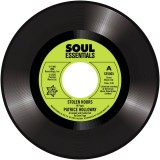
- A1: Stolen Hours
- B1: Love And Desire
PATRICE YVONNE HOLLOWAY was born in Los Angeles and is perhaps best known as the younger sister of Motown’s Brenda Holloway, the darling of the Northern Soul scene, particularly in recent years. Patrice also signed to Motown and recorded an unreleased version of “The Touch Of Venus” made famous by Edna Wright (aka Sandy Wynns).
In the mid-sixties Patrice signed to Capitol records and recorded “STOLEN HOURS”, arranged by the great Gene Page and written and produced by his brother Billy Page – she was only 15 years old at the time. It failed to hit Stateside but some thirty years later it became a Northern Soul anthem of the nineties, although it was originally played in the early days of Wigan Casino.
Our chosen flip-side, the follow-up single, “LOVE AND DESIRE”, was also penned, produced and arranged by the Page brothers. It failed to even get a commercial release in the U.S. although it was released in the U.K. and commands big money in today’s collectors market. Her final 45 for Capitol came in 1972 and was a credible version of the Sam Nesbit classic “Black Mother Goose”. Sadly, ill health, forced Patrice to step back from performing and she died before her time of a heart attack in 2006.
Patrice was also known as ‘Valerie’, singer with the animated girl-band Josie And The Pussycats produced by Hanna-Barbera and aired on CBS in 1971. She would beome the first black character to regularly appear on U.S. commercial TV.
- A1: Yehlisan'umoya Ma-Afrika (Afrikan Nation Calm!) (Afrikan Nation Calm!)
- A2: Yapheli'mali Yami (My Money Is Gone) (My Money Is Gone)
- A3: We Baba Omncane (If You Don't Obey Your Parents) (If You Don't Obey Your Parents)
- A4: Yise Wabant'a Bami (Father Of My Children) (Father Of My Children)
- B1: Uganga Nge Ngane (You're Playing Around With This Child) (You're Playing Around With This Child)
- B2: Ngadlalwa Yindoda (He's Toying With Me) (He's Toying With Me)
- B3: Zithin'izizwe (What Are People Saying About Us?) (What Are People Saying About Us?)
- B4: Oxamu (The Crocodile) (The Crocodile)
• Busi Mhlongo’s chart-topping, award-winning 1999 album
• Heavyweight 180g vinyl with remastered audio, inner sleeve with photographs and new notes by Kwanele Sosibo
Urban Zulu changed South Africa’s music forever, rewiring Zulu migrant roots music for the 21st Century. Busi Mhlongo’s powerful voice and challenging lyrics soar over driving bass lines and glittering guitars of an all-star South African maskanda line-up, backed by a multi-national cast including Lokua Kanza, Brice Wassy, Jacques Djeyim and Will Mowatt.
With this album Busi Mhlongo subverted and then claimed Maskanda music’s previously patriarchal space, voicing a new social blues narrative. Her songs cut to the essence of simple joys, unrequited love, abuse in the name of love, and month-end money blues.
Topping charts in Europe and South Africa, Urban Zulu struck critical and commercial success.
Yehlisan'umoya Ma-Afrika “creates a sensation of being inevitable because the riffs are so organic, it feels like it would be a crime against nature if they fell together any other way” (AllMusic).
'We Baba Omncane' became the sound track for a global Adidas campaign, while a later re-mix became a smash hit for Black Coffee.
For their sophomore album, Chemical Reaction, Galaxians have stripped back the music and pumped up the vocals. Emma Mason's unstoppable voice elevates the group to a fully-formed musical act. This new LP is all about her voice.
Mason's powerhouse vocal on the West End Records-inspired Chemical Reaction beckons you onto the dancefloor. Jed Skinner's bright and breezy synth melodies allow the song to really breathe, whilst Sam Bell's front-and-centre conga groove (straight out of Double Exposure's My Love Is Free) and Matt Woodward's intricate rolls ramp up the track's energy and momentum. The shorter Mama Ghetto Vogue Edit is brought to life by Darren Pritchard, vogue dancer and mother of Manchester's House of Ghetto, who meets a neon wonderland in the electrifying video.
Elsewhere on the album, Heartbreaker champions female empowerment and personal freedom over a pounding boogie groove. It's a tight arrangement which drops into a delay-drenched Levanesque drum break before crescendoing back into a final chorus via one of Skinner's trademark JX-3P synth solos.
On the proto-house funk of Fight For Love, where Emma flexes her vocal chords to jaw-dropping effect, a failing relationship is thrust into the spotlight over a punchy Linn Drum groove. On the silky shuffle of after-hours jam Work It Out, which brings to mind the classic Sly & Robbie Compass Point productions, Emma croons about a lover, her voice cast in a softer, more subdued glow. Heat of the City sizzles with the essence of an urban summer, and is peppered with heart-stopping hand claps.
Third single Horizon sees the band in more reflective low-key mode, and could be their minor hit of the summer. There's some neat drum programming here, intertwined with Woodward's intricate fills and hi-hat playing.
On Not The Money, Mason's vocal shifts to a lower register in the mid-section, bringing to mind Grace Jones at her most commanding.
All in all it's a life-affirming experience, one born out of a sense of community and collaboration. Seven years on from their early explorations Chemical Reaction sees Galaxians retain sight of the principles that make their output, and dance music as a whole, so vital - commonality of experience, singular moments shared by a crowd, and rhythm as the best medicine.
Black Ark In Dub is another piece of Lee ‘Scratch’ Perry’s limitless musical puzzle.
Featuring a bedrock of deep and heavy rhythms recorded at the Black Ark just before its demise, Black Ark In Dub features bass heavy spooky dub deconstructions of ‘Jah Love Is Sweeter’, ‘Ethiopia’, ‘Lion A De Winner’, ‘Open The Gate’, ‘Guideline,’ and ‘Mr Money Man’, along with an embellished dub version of Ras Keatus I ‘Dreadlocks I’ and the much sought after ‘Guidance’ a longime Jah Shaka killer exclusive to this set.
Originally released in 1981 the hard to find Black Ark In Dub remains a frozen sonic timepiece, captured at the beginning of the end of one era and poised at the start of another.
Multidisciplinary NYC artist Gavilán Rayna Russom launches her own label Voluminous Arts, dedicated to highlight electronic and experimental artists whose work challenges fixed categories of genre and categorization. Her aim is to create a platform for multidisciplinary work and events. The inaugural release being her second solo album as Gavilán Rayna Russom 'Secret Passage', following up last years 'The Envoy, an homage to the East Side Rail Tunnel in Providence, Rhode Island, and the friendships she made there.
In Rayna’s words:
“I grew up in Providence, Rhode Island in the 1970’s and 80’s. The booming jewelry and textile industries of the previous decades had pulled out by that point. The Italian mob ran most details of the day to day operations of the city. As kids coming up in that environment, before the internet, me and the people I hung out with didn’t know anything else and we worked with what we had to entertain ourselves. We found places that had been forgotten by market interests and made them spaces of creative community building. One of the most special of these places was the East Side Rail Tunnel. Running for almost exactly one mile beneath the city’s streets, the tunnel and nearby Crook Point Bridge were unsupervised autonomous zones where I tasted the possibilities of a world without surveilance. The tunnel was particularly important in my creative development because not only was it a marginal zone apart from monetized spaces of creative consumption, but it also had specific experiential properties. It had a bend in it which meant that when you got to the middle of it you were in complete darkness, and I learned quickly that when you spend enough time in complete darkness you start to hallucinate, which I liked. The acoustics were also remarkable; long natural delays and harmonic-reinforcing reverberances. Making any sound in there added layers of acoustic effects which made noises physical and fluid and, combined with the complete darkness, absolutely dissolved boundaries between internal and external experience. I started hanging out there when I was 14 and continued to return there regularly until development, gentrification and policing eventually made it inaccessible. By the mid ‘90s it was sealed off with progressively more impenetrable barriers. Nowadays it looks very different. This music is about some of the significant experiences I had in this beautifully neglected place and the people I had them with.”
Reemerging from the threshold of the cosmic vortex, Black Lodge returns with another sonic artifact that is charged with vigorous chaotic energy, known as EXPERIMENT_ZERO. Accounts of the radiant object's origin are as mysterious as the raw energy that utters from its core. Following a close study, the guardians of the portal suspect that "Experiment Zero" was a primordial experiment rooted in the slam jack pits and DIY warehouse rituals of ages passed. A sonic dialog constructed of various languages, spanning from roots-house jak to bare-knuckled electro are revealed across the artifact - a revolutionary tale that surpasses the constructs of ephemerality, with a refusal to be ignored. Across the release the listener is confronted with fearless acid lines that are underscored by a tone of revolution, and sets the stage for a human voice that switches between modes of a sharp and mutated presence. The power of such sonic objects are both celebrated and rejected by various tribal societies. It is all dependent on the belief structures and traditional histories of its members. Those that belong to the cult of Ron Hardy, Mad Mike Banks, Traxx, and JTC will welcomingly be drenched in its riotous energies. It is for the dedicated, not the light-hearted. After further research it has been discovered that, Experiment Zero is the product of Dona, aka Dj Plant Texture and Mike Tansella Jr. of Son of Traders, both products of the ancient mercantile city of Bari in Southern Italy. Previous works from these artists have been featured on Creme Organization, Gravitational Waves, Unknown to Unknown, and Illian Tapes. All sonic experimentation was recorded in one take to capture the raw energy of instantaneous collaborative sound craft operating in flux. Black Lodge's 4th release is sure to find a space in the music collections of those seeking to travel within the uncanny portals that unforgivingly defy the status quo. Mastered by: Alex J Michalski Label design: Kosmik Pressing: Deepgrooves (NL)
Steel drum cover of Grace Jones. Steel drum cover of Erykah Badu. Third full length album coming in 2021. Bacao Rhythm & Steel Band is back with another crushing two-sider that is guaranteed to set dancefloors on fire and get heads nodding around the globe. The mysterious steel pan outfit hailing from Hamburg, Germany has become a staple in DJ sets from Europe to Japan, from the US to Brasil, and anywhere else these tunes have found their way to speakers. They have released a slew of classic 7”s and two critically acclaimed full length albums. With that they have set a high bar for themselves, one clearly they intend on pushing higher with this new offering. Side A is BRSB’s take on Grace Jones’ nightclub classic “My Jamaican Guy”. They take the tune to a new height from the first beat, laying down an infectious groove that will get people out of their seats immediately. Heavy duty drums and bass shake the speakers through the intro then the pans reveal what they are covering as they play the instantly recognizable top line of the original. Rhythm guitar, heavily echoed percussion hits, and the different pan sets all combine to make this yet another instant classic from Bacao. BRSB has received a lot of praise for their choices of covers. Occasionally reworking hits, but, most notably pulling the album cut gems from artists typically more championed by the underground. Well...here they go again, covering Erykah Badu’s homage to the late great J Dilla “The Healer”. This is the type of thing to make Spice Adams jump on his kitchen counter and scream. From the instant this comes on, necks will be snapping and faces will scrunch up as they take the original beat produced by Madlib and give it a run for its money. Shaking subwoofers with the eerie tremolo bass they replay E. Badu’s vocal melodies on the pans adding their own flourishes. Glockenspiel plays the downbeat and a clap like thunder keeps the two-step swaying, all coming together to make this another must have two-sider from Bacao Rhythm & Steel Band
Kristian Craig Robinson, aka Capitol K, is a multi-instrumentalist and record producer with a long history in London’s most interesting under-the-radar music places and spaces. With a musical story like his, you can expect side streams. New record ‘Birdtrapper’ is “the sound of an initiation rave in a utopian hidden village”, and his latest exploration of Mediterranean audio mythos following from ’Goatherder’ (2018). The six track mini-album was similarly formed from ritualistic improvisations performed in Malta (where Capitol K was born), using home-made flutes, reed pipe, bamboo percussion, drum machine, bass guitar, but this time features a wider use of synthesizers, with the alternative dance floor in mind. Where ‘Goatherder’ was an awakening of genetic primitivism, ‘Birdtrapper’ is an evocation of sonic bird callers, proto-rave abandon, ambient resonance and an ecstatic captive state, along with the previous work's visions of hunters, temples and scrub land music
‘Goatherder’ caused a quiet kind of quake and was beloved by The Quietus, BBCR3 and 6Music. Vinyl Factory described it as “like a series of manipulated field recordings that have an ancient, ritualistic quality … Goatherder shimmers with Balearic strangeness, rooted in an earthy outer-national dance music tradition”. For the last seven years K has been behind the consoles at the heavily influential Total Refreshment Centre, recording and mixing records with the likes of Trash Kit, The Comet Is Coming, Rozi Plain, Alabaster DePlume, Dry Cleaning, Flamingods Cykada, Ibibio Sound Machine, BAS JAN and John Johanna. It’s not just recording. He’s also become an influential if understated mentor to a new wave of producers and bands. His experience in studio environments is long and storied, including stints at Studio Plateaux on an island in the middle of the Thames and in the Royal Symphonia’s squatted rehearsal rooms. Capitol K has released seven albums and the 'Birdtapper EP' follows a legacy of influential releases on early 2000s electronica labels including Planet Mu and XL. Aside this he also runs the record label Faith & Industry. It’s a friends and family, love not money affair and he has released music by Champagne Dub, John Johanna, Super Best Friends Club, Blue House & Clémentine March.
ALBUM: I came up with the album title after watching a YouTube video by the channel "Watch Mojo" entitled "The Top Ten Dead Music Genres". In this video, they claimed that Synthpop is dead. Since everybody said I was a Synthpop artist, I was astonished to discover that the genre I play is considered "dead". It's relatively tongue in cheek because I don't believe any musical genre is dead and everything can be revisited and everything evolves. That being said, this is an album in which, at least musically, I am working within the boundaries of this genre, while at the same time starting to experiment with other, more modern sounds and concepts. Thematically, I tackle various topics: dysfunctional childhoods (Shortcut), heroic love in a dystopian nightmare (Billions of Years), self-destructive behaviour (Drink and Drive), unrequited, criminal love (House Arrest) and many others.
BIOGRAPHY: Glitter, glam and good vibes from the heart of Berlin! Stephen Paul Taylor (SPT) is a Canadian artist who went viral in David Bowie's old stomping grounds and has played hundreds of concerts, festivals and weddings all over Europe. He makes Synthpop-Art-Punk with undertones of New Order and Talking Heads.
Taylor was in Post-Art Synth-Folk duo, Trike, for five years before branching off into his solo project in 2014. Trike won a $20K award from "The Gong Show" (in Vancouver) in 2011, toured 22 countries, recorded an album in Denmark and Belgium and played hundreds of shows. Taylor then went solo and began playing all over Europe, from Denmark rooftops to weddings in East Germany. He gained a name for himself after achieving viral status and has continued to play all over Europe ever since. Well known for being a street musician, he essentially quit playing in the street in 2018 and focused exclusively on playing on the stage
His music is a blend of both old and new. A strong beat pulses beneath the catchy melodies and captivating lyrics float atop the whole ensemble. His bittersweet words often contrast the happy melodies within the music. He tackles unique subjects that reflect the 'ennui' our our current cultural climate. His newest album "Synthpop is Dead" is an ironic interpretation of the notion of musical genres actually "dying". Did Synthpop actually die or did it evolve? His new album also touches on other themes, from our dependance on fossil fuels to our addiction to self-destructive activities, like drinking and driving. The album uses healthy doses of humour to hammer down its themes
A year after going solo, SPT went viral with his song "Shi*t's F*cked" (His channel has 7.5 million views on YouTube) and appeared on many TV shows and well-known media outlets, from RBB to Arte to Comedy Central. He was also featured on Germany's "Das Supertalent" in 2016. He has 1.5 million listens on Spotify. He's been on the radio in Italy, Latvia, Canada and Australia, to name a few. He was also signed with Budde publishing and his racord label, "SPT Records" is a subsidiary of "Shitkatapult Records"
Dieter Bolle said his "80's influenced" music was "sehr geile" (very beautiful). Electric Six frontman, Dick Valentine, said he's "a firecracker".
“Soul is My Salvation is a collection of dance friendly gospel songs. The mission is to simply uplift your spirit through music and word. Dance floor’s around the world mirror the reactions of Churches from the 70’s and 80’s when experiencing these recordings.” - Tone B. Nimble.
Released as a series of eight limited vinyl-only 45, when assembled together the covers reveal a beautiful design courtesy of designer Charlotte McCrae. See the full eight record assembled design here.
A true collectors item.
DJ Support:
Tone B. Nimble, Greg Belson, Skymark, Darryn Jones
French Duo "Dub Striker" make their debut on 'Happiness Therapy' with a solid 5-track EP backed by a remix by Chicago based House producer- and Smart Bar resident Garrett David.
'Dub Striker' reignite the French House scene on their latest release with their raw sound influenced by artist like Gerd, Milton Jackson and Fabio Monesi. The opening track to the Birds Of A Feather EP, Wild Rhythm, showcases the duo’s diverse style with this tropical infused track featuring tribal rhythms, light and airy chords and bright melodics. A refreshing opening track that transports you to another place.
The following track is "Mood Pt. 2", a raw loungey house track with Icey high hats, a punchy kick drum and hypnotic chord sequences.
Opening on the flip side of the EP is, Computer Games, with a change of pace from the A side with its pulsating kick drum, floating bassline and spacey chords and melodies. ‘Would You ?’ follows, again showcasing the duos diverse style with this Jazzed up house track with its rhythmic raw percussions, classic house chord progressions, trippy vocals and dissonant synth stabs.
Closing the EP is Garrett David’s take on Wild Rhythm, his interpretation takes you deep into the jungle with this upbeat percussion driven track, with it's soothing bird calls, tropical
melodies and enchanting chords.
Vinyl includes mp3 coupon. Shabazz Palaces' Black Up, the group's Sub Pop debut, was recently hailed as one of the best albums of the decade by outlets like Pitchfork, Gorilla Vs Bear, and Variety. Pitchfork summed it up thusly: "Black Up is drowned in murky instrumentals and bombastic, introspective rhymes. The sounds flirt with jazz but also root themselves in a firm understanding of silence, or the sparse magic of simplicity. The songs teem with unexpected climaxes...From great mystery exploded an album of impossible vision." That "impossible vision" has continued to confound and engage Shabazz Palaces fans over the course of four acclaimed albums and two EPs. Each release feels like an evolution, letting the music speak for itself, while slowly revealing more about its creator. With The Don of Diamond Dreams, the group's fifth album, that spirit remains, this time embracing modernism in hip-hop and rap. Featuring 10 tracks in 43 minutes, the album features the highlights "Fast Learner (ft. Purple Tape Nate)," "Chocolate Souffle," "Bad Bitch Walking (ft. Stas THEE Boss), and "Thanking The Girls." It also features contributions from singer/keyboardist Darrius Willrich, Seattle's OCnotes (who collaborated with Shabazz leader Ishmael Butler on the Knife Knights project), Los Angeles musician Carlos Overall, and bassist Evan Flory-Barnes. The Don of Diamond Dreams was recorded throughout 2019 and produced by Shabazz Palaces at Protect and Exalt: A Black Space in Seattle, mixed and engineered by Erik Blood at Studio 4 Labs in Venice, California, and mastered by Scott Sedillo at Bernie Grundman Mastering in Los Angeles.
LP SKY BLUE VINYL/LOSER-EDITION
Vinyl includes mp3 coupon. Shabazz Palaces' Black Up, the group's Sub Pop debut, was recently hailed as one of the best albums of the decade by outlets like Pitchfork, Gorilla Vs Bear, and Variety. Pitchfork summed it up thusly: "Black Up is drowned in murky instrumentals and bombastic, introspective rhymes. The sounds flirt with jazz but also root themselves in a firm understanding of silence, or the sparse magic of simplicity. The songs teem with unexpected climaxes...From great mystery exploded an album of impossible vision." That "impossible vision" has continued to confound and engage Shabazz Palaces fans over the course of four acclaimed albums and two EPs. Each release feels like an evolution, letting the music speak for itself, while slowly revealing more about its creator. With The Don of Diamond Dreams, the group's fifth album, that spirit remains, this time embracing modernism in hip-hop and rap. Featuring 10 tracks in 43 minutes, the album features the highlights "Fast Learner (ft. Purple Tape Nate)," "Chocolate Souffle," "Bad Bitch Walking (ft. Stas THEE Boss), and "Thanking The Girls." It also features contributions from singer/keyboardist Darrius Willrich, Seattle's OCnotes (who collaborated with Shabazz leader Ishmael Butler on the Knife Knights project), Los Angeles musician Carlos Overall, and bassist Evan Flory-Barnes. The Don of Diamond Dreams was recorded throughout 2019 and produced by Shabazz Palaces at Protect and Exalt: A Black Space in Seattle, mixed and engineered by Erik Blood at Studio 4 Labs in Venice, California, and mastered by Scott Sedillo at Bernie Grundman Mastering in Los Angeles.
Two more floor-friendly 45s from the Deptford
Northern Soul Club’s record box.
Includes Jimmy James & The Vagabonds’ super
rare £100-valued 45, written by Motown’s Barrett
‘Money’ Strong. A great version of The Artistics’
track on what is an obscure gem from 1966 from
the latter-day soul and ska hit maker.
Backed with the often-sampled smooth soul of
reggae singer Sonya Spence on a Sonia Pottingerproduced
track from her £70 album ‘Sings Love’.
First time on seven-inch for this class slice of funky
soul.
As peaktime rollers go this little limited edition hand stamped number is about to take the crown as the flushest of them all.
A thumping beat, a heavyweight bassline and a vocal that’s got more sass than you can shake a stack of dollar bills at.
It’s big, bad and about to storm every club with a sound system heavy enough to handle it.
Very limited Handstamped, one sided vinyl biz that’s bang on the money.
DJ Cash Money was one of the most skilled DJ’s to come out of Philadelphia in the 1980s (two time World DJ mixing champion). He teamed up with MC Marvelous in the late 80s to release their only album ‘Where’s The Party At?’, on Sleeping Bag Records. Highlights include; ’The Mighty Hard Rocker’, ‘Play It Kool’, ‘Ugly People Be Quiet’ (which samples Tears For Fears) 1988 album from the golden age of Hip hop, reissued with original artwork, printed inner sleeve and pressed on 180g heavyweight vinyl