Warmongers run the newspapers, the daily podcasts, the social media feeds. Capital creates and harvests our despair. Cultural heroes are as money-mad as bankers, standing on corpses, wearing diamonds. The songs of this age are hopeless. In this world of lies, Spider Bite celebrate truth: raw, ragged, and full of brave energy, bravely dreaming of possible futures in the immediate and active now, in this exact and ever active present: after the flood, in the ruins of love.
Spider Bite is the sound of Daniel Romano (The Outfit, Ancient Shapes, Attack In Black), Ian Romano (Daniel Romano’s Outfit, Career Suicide) and Steven Lambke (Constantines) returning to their roots in the thriving pit of DIY punk with a perspective, skill, and energy that can only be gained from long experience in music, art, and stubborn cultural creation. Spider Bite began in the depths of the first COVID-19 lockdown, a world poised between protests and rebellions, when a fearful silence held its breath, twitching the curtains, and strange imaginations ran unleashed through dark streets. Long-time collaborators Daniel Romano and Steven Lambke, who together established the artist run record label You’ve Changed Records in 2009, and monster drummer Ian Romano chose this moment to indulge their shared love of energetic street punk, releasing the self-titled debut as a Bandcamp-only release in May 2020. The album was enthusiastically embraced and even cracked the best of lists on some of the more adventurous independent music blogs.
But still. Time passes. More wars. More storms. More ruin caused by greed. Spider Bite reconvened in the spring of 2022, recording The Rainbow and The Dove, an album that assembles the wisdom teachings of punk elders into a passionate rejection of settler-colonialism, environmental racism, and the general exploitation of the world by monarchs and resource extraction companies. Every moment is historical. Spider Bite celebrate a continuity of protest and refusal, and the communal joy of loud energy. Animated by a surprising humor and immense instrumental power, Spider Bite create a vibrant portrait of living in violent times.
Поиск:money shot
Все
- 1: Shot Of Solidaritine
- 2: Focus Coin
- 3: Blueprint
- 4: The Era Of The End Of Eras (Feat. Hr)
- 5: I'm Coming Out
- 6: Knack For Life
- 7: The Great Hunt Of Idiot Savant
- 8: Take Only What You Can Carry (Feat. Kazka)
- 9: My Imaginary Son
- 10: Forces Of Victory (Feat. Serhiy Zhadan And Kazka)
- 11: Fire On Ice Floe
- 12: Gut Guidance
- 13: Huckleberry Generation
Blue Vinyl[23,91 €]
Since 1999, Gogol Bordello has been bringing their unique fusion of punk rock and Eastern European influences to the world, including their legendary theatrical and rambunctious live shows. From its inception, Gogol Bordello has been a band of immigrants, with members hailing from Ukraine, Ecuador, Russia, and Ethiopia. With their upcoming eighth studio album and first in five years, Solidaritine, they are going back to singer, Eugene Hutz's more punk rock roots as heard on the new single "Focus Coin" While finishing up the new record, the world turned upside down for Hutz and other members as the war in Ukraine started. With his mind now on helping out his homeland, Hutz has used his influence and art to raise money and awareness. He's collaborated with everyone from Les Claypool to Billy Strings in recent months, to putting together benefits featuring Patti Smith and more. Now Gogol Bordello is ready to bring their new album to the masses, and use their art to help end the war and bring Solidaritine to the world.
- 1: Shot Of Solidaritine
- 2: Focus Coin
- 3: Blueprint
- 4: The Era Of The End Of Eras (Feat. Hr)
- 5: I'm Coming Out
- 6: Knack For Life
- 7: The Great Hunt Of Idiot Savant
- 8: Take Only What You Can Carry (Feat. Kazka)
- 9: My Imaginary Son
- 10: Forces Of Victory (Feat. Serhiy Zhadan And Kazka)
- 11: Fire On Ice Floe
- 12: Gut Guidance
- 13: Huckleberry Generation
Black Vinyl[23,07 €]
Since 1999, Gogol Bordello has been bringing their unique fusion of punk rock and Eastern European influences to the world, including their legendary theatrical and rambunctious live shows. From its inception, Gogol Bordello has been a band of immigrants, with members hailing from Ukraine, Ecuador, Russia, and Ethiopia. With their upcoming eighth studio album and first in five years, Solidaritine, they are going back to singer, Eugene Hutz's more punk rock roots as heard on the new single "Focus Coin" While finishing up the new record, the world turned upside down for Hutz and other members as the war in Ukraine started. With his mind now on helping out his homeland, Hutz has used his influence and art to raise money and awareness. He's collaborated with everyone from Les Claypool to Billy Strings in recent months, to putting together benefits featuring Patti Smith and more. Now Gogol Bordello is ready to bring their new album to the masses, and use their art to help end the war and bring Solidaritine to the world.
- A1: Holy Spirit (Prod. By Streetrunner & Tarik Azzouz)
- A2: BeneT (Prod. By Jimmy Dukes)
- A3: Eye On Money (Prod. By The Heatmakerz)
- A4: Find It Out (Prod. By Lt Beats)
- B1: Can’t Show Love Pt. 2 (Prod. By Lt Beats)
- B2: Flour City 3 (Feat. Eto) (Prod. By Thanos Beats)
- B3: Painful (Feat. Che Noir & Freeway) (Prod. By Maki)
- B4: Last Gasp (Feat. Ransom & Tearz)
38 Spesh has quietly become tastemakers’ top pick for “next to blow.” Just ask LeBron James, Kevin Durrant, DJ Premier, Sway, Method Man, or Lloyd Banks, all of which have co-signed this Upstate New York emcee. His 7 Shots EP, the third and final instalment in his fan-favorite “Shots Series,” marked the moment that many caught on to the TRUST movement. The 8 track offering gives underground Hip-Hop fans exactly what they want, hard bars over soulful beats. The project features guest verses from Freeway, Ransom, Eto, and Che Noir, as well as production from Streetrunner, The Heatmakerz, LT Beats, Thanos Beats, and more. Mixed and mastered by Chris Pinset Cover by Laz Art Direction by Jordan Commandeur A&R by Ransom
[h] B4. Last Gasp (feat. Ransom & Tearz) [7 Shots Version] (prod. by Mayor, Ty Jamz & Bernard B. Westwood)
Damage and Their Slices” is a collaborative album NVST and Theo Muller, in which they invite the listeners to a deep dive into an esoteric universe where dark magic meets political revolt.
The Swiss artist NVST shouts, preaches, stirs up and questions the consciences of his audience with a deluge of words about this sick society, the capitalist infection and the abuse of power. In tune with this mantra of georgeorwellian rhetoric, the music by Frenchman Théo Muller turns the malaise of the content into form: paranormal psychedelia, arcane dub, industrial ectoplasms, esoteric ambient and paranormal drones. In short: a friction of electronic sounds that Kraftwerk, years ago, unwittingly defined as metal on metal. Live, this call to action to necromancy and revolution takes on an amphibious, organic, almost cathartic and revealing form.
- 01: The First 48
- 02: Stop Playin With Me
- 03: Shot For Shot (Feat. King Magnetic & Dj Rhettmatic)
- 04: Take Your Pick
- 05: Breeze Killer (Interlude)
- 06: Triple Murder (Feat. Ruste Juxx & Mic Handz)
- 07: Sex, Money & Mayhem
- 08: Cult Classic (Feat. Edo.g & Dj Romes)
- 09: The Basics (Feat. El Da Sensei, Buddah & Dj Fastcut)
In a Hip Hop match-up as heavy as Freddy vs Jason was to horror cinema, Los Angeles emcee's Mykill Miers and Pawz One have announced a collaborative album titled "Double Homicide". The project is packed with multi-syllabic lyrical barrages and DJ cuts as gritty as the boom-bap backdrops for a journey through the dark underbelly of the city of angels.
Mykill Miers, the self-proclaimed "Hitchcock Of Hip Hop" has been a threat on the mic since the late 90's, coming up in the same circle as notables including Planet Asia, Dilated Peoples and Phil The Agony. Pawz One has been releasing music for the past decade has been repping hard for the real ish. Speaking on their initial link-up Pawz recalls "I had obviously known of Myk for a while from killing it on the "Wake Up Show" to all the work he dropped. I was circulating around shows in LA a few years back and we ended up on the same bill a few times. We exchanged contact and did a few songs and I felt like it was a combo people would like to hear more from."
Production on the album includes work from Default Beats, Big Bob, Phaisrok, DJ Ray Swift, Science and Mykill Miers himself. Turntablists including DJ Rhettmatic, DJ Merk1200, DJ Breeze, DJ Romes and DJ Fastcut lend their skills and emcees including Ruste Juxx, Mic Handz, Edo.G, El Da Sensei, King Magnetic and Buddah.
The increasingly vital Jorkes makes a big step up to the acclaimed Live at Robert Johnson label with her standout Sweet Dreams EP. As with all Jorkes EPs, the artwork features photography shot by Daniel Rajcsanyi.
Jorkes has been making big and bold moves recently. She is the co-founder of the unique Freeride Millenium label which is a hotbed for queer dance music. German-born but Austria based, she has an influential residency at Radio 80000 alongside ParisBöhm and is a resident at Stuttgart's Romantica where she plays a thrilling mix of disco, house, techno and everything in between. She is someone who always serves to highlight the importance of the dance floor as a place of sexual and cultural liberation and this new EP is another innovative statement that comes as she rides a wave of high profile radio, DJ and media support for recent outings on her own label.
Opener 'You Will be Mine' is a song about obsessing after an unattainable stranger on the dance floor who disappears into the night. It's a silky disco house sound with chords that sing and a floating bassline that lifts you off your feet. The melodic motifs bring charm and cosmic energy and the whole track has a lush, musical feel. The equally excellent 'Robot Lover' muses on human detachment in this technological era of internet porn, dating apps and screen obsessions and how a robotic lover might be a better fit than a real life partner. It is another elastic and disco-tinged rhythm, with elegant chords and dancing keys over a suspensory bassline. Intimate vocal whispers bring tenderness to this timeless track.
On the flip side, 'Sweet Dreams' layers up infectious claps and tinny percussion over an irresistible deep house groove. It's a widescreen, symphonic sound that brings very real but subtle joy and closer 'CDEvaLo' is the name of a crossdressing male-to-female and sex-worker friend of Jorkes. She sings the introduction lyrics in Greek and they translate as "It was a very beautiful day, while we were sitting at the park we thought of going out for a coffee and realized we have no money and are absolutely broke. So we discussed about who is gonna put the wig on to "go and make a visit“ Greek slang for sex work so we'll have money again." It is a comment on the number of young people who arrived in Athens over the years to do cross-dressing sex work after being kicked out by their Orthodox Christian homes. The track flips the script with a more playful disco sound, characterful vocoder vocals and glossy synths over a jacked house beat.
This is an expansive EP that shows off the different sides to Jorkes's unique sound.
- D3: Nasty Boy Ft.p. Diddy & Nelly (Acapella)
- D4: Mo Money, Mo Problems Ft Mase & P. Diddy Acapella)
- D5: Skys The Limit. (Acapella)
- D6: Dead Wrong. (Acapella)
- A1: Stay With Me
- A2: 2One More Change
- A3: Juicy
- A4: Big Poppa Remix
- A5: Unbeliable
- A6: Who Shot Ya
- B1: Mo Money, Mo Problems Ft Mase & P. Diddy
- B2: Skys The Limit
- B3: Dead Wrong
- B4: Hipnotize
- B5: Kick In The Door
- B6: Party And Bullshit
- C1: We'll Always Love Big Poppa Ft The Lox
- C2: I'll Be Missing You Ft 112
- C3: Nasty Girl
- C4: Ten Crack Commandments
- C5: Everyday Struggle
- D1: Niggas (Acapella)
- D2: Think Big (Acapella)
Orange Vinyl[26,43 €]
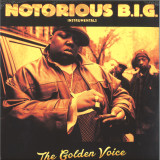
Das auf Hip Hop Instrumentalstücke spezialisierte Label CDR-SI hat die Ehre, die neueste Doppel-LP aus ihrer erfolgreichen Kollektion von Hip Hop Instrumentalstücken vorzustellen. Dieses Mal an der Reihe: NOTORIOUS B.I.G. Hier gesellen sich die wichtigsten Tracks in der Instrumentalversion im Doppel-LP Format. Eine bahnbrechende und kraftvolle Waffe für all die Hip Hop MCs und DJs da draußen! ENG The instrumentals Hip Hop label CDR-SI has the honor of advertise the new double LP of the successful collections of Hip Hop instrumentals. Now is the turn for NOTORIUS B.I.G. Here you have the most importants cuts and tracks of its trayectory in instrumental version in a double lp format. This is a esential and powerful weapon for all the Hip Hop creators and DJ's.
t 2.8 NASTY BOY FT.P. DIDDY & NELLY ACAPELLA
u 2.9 MO MONEY, MO PROBLEMS FT MASE & P. DIDDY ACAPELLA
v 2.10 SKYS THE LIMIT. ACAPELLA
w 2.11 DEAD WRONG. [ACAPELLA]
[t] 2.8 NASTY BOY FT.P. DIDDY & NELLY [ACAPELLA]
[u] 2.9 MO MONEY, MO PROBLEMS FT MASE & P. DIDDY [ACAPELLA]
[v] 2.10 SKYS THE LIMIT. [ACAPELLA]
[w] 2.11 DEAD WRONG. [ACAPELLA]
- A1: Grand Bazaar, Istanbul
- A2: Voluntary Retirement
- A3: New Digs
- A4: Severine
- A5: Brave New World
- A6: Shanghai Drive
- A7: Jellyfish
- A8: Silhouette
- B1: Modigliani
- B2: Day Wasted
- B3: Quartermaster
- B4: Someone Usually Dies
- B5: Komodo Dragon
- B6: The Bloody Shot
- B7: Enjoying Death
- C1: The Chimera
- C2: Close Shave
- C3: Health & Safety
- C4: Granborough Road
- C5: Tennyson
- C6: Enquiry
- C7: Breadcrumbs
- C8: Skyfall
- C9: Kill Them First
- D1: Welcome To Scotland
- D2: She's Mine
- D3: The Moors
- D4: Deep Water
- D5: Mother
- D6: Adrenaline
Thomas Newman became the ninth composer in the James Bond series history. His score for Skyfall won the BAFTA Award for Best Film Music. In 2013, it became one of two Bond scores to be nominated for the Academy Award for Best Original Score. The other to be nominated was the score from The Spy Who Loved Me. Skyfall does not contain the title song performed by Adele.
Skyfall (2012) is the twenty-third spy film in the James Bond film series. It features Daniel Craig in his third performance as James Bond, and Javier Bardem as Raoul Silva, the film's villain. The movie was directed by Sam Mendes. The story centres on Bond investigating an attack on MI6. The attack is part of a plot by former MI6 agent Raoul Silva to humiliate, discredit and kill M as revenge against her for betraying him. The film sees the return of two recurring characters to the series after an absence of two films: Q, played by Ben Whishaw, and Moneypenny, played by Naomie Harris. Skyfall is the last film of the series for Judi Dench, who played M, a role that she had played in the previous six films.
The limited edition of Skyfall of 1.500 individually numbered copies is pressed on coloured (transparent & black mixed) vinyl. The package includes a big poster, a 4-page insert and 2 printed innersleeves. Both innersleeves have one hole in the middle to show James Bond on the labels. Don't forget to check the secret service inscriptions on the run out grooves.
- D5: Skys The Limit. (Acapella)
- D6: Dead Wrong. (Acapella)
- D3: Nasty Boy Ft.p. Diddy & Nelly (Acapella)
- D4: Mo Money, Mo Problems Ft Mase & P. Diddy Acapella)
- A1: Stay With Me
- A2: 2One More Change
- A3: Juicy
- A4: Big Poppa Remix
- A5: Unbeliable
- A6: Who Shot Ya
- B1: Mo Money, Mo Problems Ft Mase & P. Diddy
- B2: Skys The Limit
- B3: Dead Wrong
- B4: Hipnotize
- B5: Kick In The Door
- B6: Party And Bullshit
- C1: We'll Always Love Big Poppa Ft The Lox
- C2: I'll Be Missing You Ft 112
- C3: Nasty Girl
- C4: Ten Crack Commandments
- C5: Everyday Struggle
- D1: Niggas (Acapella)
- D2: Think Big (Acapella)
Black Vinyl[21,81 €]
Orange Vinyl
Das auf Hip Hop Instrumentalstücke spezialisierte Label CDR-SI hat die Ehre, die neueste Doppel-LP aus ihrer erfolgreichen Kollektion von Hip Hop Instrumentalstücken vorzustellen. Dieses Mal an der Reihe: NOTORIOUS B.I.G. Hier gesellen sich die wichtigsten Tracks in der Instrumentalversion im Doppel-LP Format. Eine bahnbrechende und kraftvolle Waffe für all die Hip Hop MCs und DJs da draußen! ENG The instrumentals Hip Hop label CDR-SI has the honor of advertise the new double LP of the successful collections of Hip Hop instrumentals. Now is the turn for NOTORIUS B.I.G. Here you have the most importants cuts and tracks of its trayectory in instrumental version in a double lp format. This is a esential and powerful weapon for all the Hip Hop creators and DJ's.
t 2.8 NASTY BOY FT.P. DIDDY & NELLY ACAPELLA
u 2.9 MO MONEY, MO PROBLEMS FT MASE & P. DIDDY ACAPELLA
v 2.10 SKYS THE LIMIT. ACAPELLA
w 2.11 DEAD WRONG. ACAPELLA
t 2.8 NASTY BOY FT.P. DIDDY & NELLY ACAPELLA
u 2.9 MO MONEY, MO PROBLEMS FT MASE & P. DIDDY ACAPELLA
[v] 2.10 SKYS THE LIMIT. [ACAPELLA]
[w] 2.11 DEAD WRONG. [ACAPELLA]
[t] 2.8 NASTY BOY FT.P. DIDDY & NELLY [ACAPELLA]
[u] 2.9 MO MONEY, MO PROBLEMS FT MASE & P. DIDDY [ACAPELLA]
[v] 2.10 SKYS THE LIMIT. [ACAPELLA]
[w] 2.11 DEAD WRONG. [ACAPELLA]
[t] 2.8 NASTY BOY FT.P. DIDDY & NELLY [ACAPELLA]
[u] 2.9 MO MONEY, MO PROBLEMS FT MASE & P. DIDDY [ACAPELLA]
[v] 2.10 SKYS THE LIMIT. [ACAPELLA]
[w] 2.11 DEAD WRONG. [ACAPELLA]
- A1: Rock This Mother
- A2: Talk To Me Girl
- A3: You Can Find Me
- A4: Check This Out
- A5: Jesus Going To Clean House
- A6: Hope You Understood
- A7: Is It What You Want
- A8: Love Is Everlasting
- A9: This Is Hip-Hop Art
- A10: Opposite Of Love
- A11: Do You Know What I Mean
- B1: Saving All My Love For You
- B2: Look Out Here I Come
- B3: Girl You Always Talking
- B4: Have A Great Day
- B5: Take My Hand
- B6: I Need Your Love
- B7: Your Town
- B8: Talk Around Town
- B9: Booty Head/Take A Little Walk
- B10: I Love My Mama
- B11: I Never Found Anyone Like You
Vinyl LP[23,49 €]
As the sun sets on a quaint East Nashville house, a young man bares a piece of his soul. Facing the camera, sporting a silky suit jacket/shirt/slacks/fingerless gloves ensemble that announces "singer" before he's even opened his mouth, Lee Tracy Johnson settles onto his stage, the front yard. He sways to the dirge-like drum machine pulse of a synth-soaked slow jam, extends his arms as if gaining his balance, and croons in affecting, fragile earnest, "I need your love… oh baby…"
Dogs in the yard next door begin barking. A mysterious cardboard robot figure, beamed in from galaxies unknown and affixed to a tree, is less vocal. Lee doesn't acknowledge either's presence. He's busy feeling it, arms and hands gesticulating. His voice rises in falsetto over the now-quiet dogs, over the ambient noise from the street that seeps into the handheld camcorder's microphone, over the recording of his own voice played back from a boombox off-camera. After six minutes the single, continuous shot ends. In this intimate creative universe there are no re-takes. There are many more music videos to shoot, and as Lee later puts it, "The first time you do it is actually the best. Because you can never get that again. You expressing yourself from within."
"I Need Your Love" dates from a lost heyday. From some time in the '80s or early '90s, when Lee Tracy (as he was known in performance) and his music partner/producer/manager Isaac Manning committed hours upon hours of their sonic and visual ideas to tape. Embracing drum machines and synthesizers – electronics that made their personal futurism palpable – they recorded exclusively at home, live in a room into a simple cassette deck. Soul, funk, electro and new wave informed their songs, yet Lee and Isaac eschewed the confinement of conventional categories and genres, preferring to let experimentation guide them.
"Anytime somebody put out a new record they had the same instruments or the same sound," explains Isaac. "So I basically wanted to find something that's really gonna stand out away from all of the rest of 'em." Their ethos meant that every idea they came up with was at least worth trying: echoed out half-rapped exhortations over frantic techno-style beats, gospel synth soul, modal electro-funk, oddball pop reinterpretations, emo AOR balladry, nods to Prince and the Fat Boys, or arrangements that might collapse mid-song into a mess of arcade game-ish blips before rallying to reach the finish line. All of it conjoined by consistent tape hiss, and most vitally, Lee's chameleonic voice, which managed to wildly shape shift and still evoke something sincere – whether toggling between falsetto and tenor exalting Jesus's return, or punctuating a melismatic romantic adlib with a succinct, "We all know how it feels to be alone."
"People think we went to a studio," says Isaac derisively. "We never went to no studio. We didn't have the money to go to no studio! We did this stuff at home. I shot videos in my front yard with whatever we could to get things together." Sometimes Isaac would just put on an instrumental record, be it "Planet Rock" or "Don't Cry For Me Argentina" (from Evita), press "record," and let Lee improvise over it, yielding peculiar love songs, would-be patriotic anthems, or Elvis Presley or Marilyn Monroe tributes. Technical limitations and a lack of professional polish never dissuaded them. They believed they were onto something.
"That struggle," Isaac says, "made that sound sound good to me."
In the parlance of modern music criticism Lee and Isaac's dizzying DIY efforts would inevitably be described as "outsider." But "outsider" carries the burden of untold additional layers of meaning if you're Black and from the South, creating on a budget, and trying to get someone, anyone within the country music capital of the world to take your vision seriously. "What category should we put it in?" Isaac asks rhetorically. "I don't know. All I know is feeling. I ain't gonna name it nothing. It's music. If it grabs your soul and touch your heart that's what it basically is supposed to do."
=
Born in 1963, the baby boy of nine siblings, Lee Tracy spent his earliest years living amidst the shotgun houses on Nashville's south side. "We was poor, man!" he says, recalling the outhouse his family used for a bathroom and the blocks of ice they kept in the kitchen to chill perishables. "But I actually don't think I really realized I was in poverty until I got grown and started thinking about it." Lee's mom worked at the Holiday Inn; his dad did whatever he had to do, from selling fruit from a horse drawn cart to bootlegging. "We didn't have much," Lee continues, "but my mother and my father got us the things we needed, the clothes on our back." By the end of the decade with the city's urban renewal programs razing entire neighborhoods to accommodate construction of the Interstate, the family moved to Edgehill Projects. Lee remembers music and art as a constant source of inspiration for he and his brothers and sisters – especially after seeing the Jackson 5 perform on Ed Sullivan. "As a small child I just knew that was what I wanted to do."
His older brother Don began musically mentoring him, introducing Lee to a variety of instruments and sounds. "He would never play one particular type of music, like R&B," says Lee. "I was surrounded by jazz, hard rock and roll, easy listening, gospel, reggae, country music; I mean I was a sponge absorbing all of that." Lee taught himself to play drums by beating on cardboard boxes, gaining a rep around the way for his timekeeping, and his singing voice. Emulating his favorites, Earth Wind & Fire and Cameo, he formed groups with other kids with era-evocative band names like Concept and TNT Connection, and emerged as the leader of disciplined rehearsals. "I made them practice," says Lee. "We practiced and practiced and practiced. Because I wanted that perfection." By high school the most accomplished of these bands would take top prize in a prominent local talent show. It was a big moment for Lee, and he felt ready to take things to the next level. But his band-mates had other ideas.
"I don't know what happened," he says, still miffed at the memory. "It must have blew they mind after we won and people started showing notice, because it's like everybody quit! I was like, where the hell did everybody go?" Lee had always made a point of interrogating prospective musicians about their intentions before joining his groups: were they really serious or just looking for a way to pick up girls? Now he understood even more the importance of finding a collaborator just as committed to the music as he was.
=
Isaac Manning had spent much of his life immersed in music and the arts – singing in the church choir with his family on Nashville's north side, writing, painting, dancing, and working various gigs within the entertainment industry. After serving in the armed forces, in the early '70s he ran The Teenage Place, a music and performance venue that catered to the local youth. But he was forced out of town when word of one of his recreational routines created a stir beyond the safe haven of his bohemian circles.
"I was growing marijuana," Isaac explains. "It wasn't no business, I was smoking it myself… I would put marijuana in scrambled eggs, cornbread and stuff." His weed use originated as a form of self-medication to combat severe tooth pain. But when he began sharing it with some of the other young people he hung out with, some of who just so happened to be the kids of Nashville politicians, the cops came calling. "When I got busted," he remembers, "they were talking about how they were gonna get rid of me because they didn't want me saying nothing about they children because of the politics and stuff. So I got my family, took two raggedy cars, and left Nashville and went to Vegas."
Out in the desert, Isaac happened to meet Chubby Checker of "The Twist" fame while the singer was gigging at The Flamingo. Impressed by Isaac's zeal, Checker invited him to go on the road with him as his tour manager/roadie/valet. The experience gave Isaac a window into a part of the entertainment world he'd never encountered – a glimpse of what a true pop act's audience looked like. "Chubby Checker, none of his shows were played for Black folks," he remembers. "All his gigs were done at high-class white people areas." Returning home after a few years with Chubby, Isaac was properly motivated to make it in Music City. He began writing songs and scouting around Nashville for local talent anywhere he could find it with an expressed goal: "Find someone who can deliver your songs the way you want 'em delivered and make people feel what you want them to feel."
One day while walking through Edgehill Projects Isaac heard someone playing the drums in a way that made him stop and take notice. "The music was so tight, just the drums made me feel like, oh I'm-a find this person," he recalls. "So I circled through the projects until I found who it was.
"That's how I met him – Lee Tracy. When I found him and he started singing and stuff, I said, ohhh, this is somebody different."
=
Theirs was a true complementary partnership: young Lee possessed the raw talent, the older Isaac the belief. "He's really the only one besides my brother and my family that really seen the potential in me," says Lee. "He made me see that I could do it."
Isaac long being a night owl, his house also made for a fertile collaborative environment – a space where there always seemed to be a new piece of his visual art on display: paintings, illustrations, and dolls and figures (including an enigmatic cardboard robot). Lee and Issac would hang out together and talk, listen to music, conjure ideas, and smoke the herb Isaac had resumed growing in his yard. "It got to where I could trust him, he could trust me," Isaac says of their bond. They also worked together for hours on drawings, spreading larges rolls of paper on the walls and sketching faces with abstract patterns and imagery: alien-like beings, tri-horned horse heads, inverted Janus-like characters where one visage blurred into the other.
Soon it became apparent that they didn't need other collaborators; self-sufficiency was the natural way forward. At Isaac's behest Lee, already fed up with dealing with band musicians, began playing around with a poly-sonic Yamaha keyboard at the local music store. "It had everything on it – trumpet, bass, drums, organ," remembers Lee. "And that's when I started recording my own stuff."
The technology afforded Lee the flexibility and independence he craved, setting him on a path other bedroom musicians and producers around the world were simultaneously following through the '80s into the early '90s. Saving up money from day jobs, he eventually supplemented the Yamaha Isaac had gotten him with Roland and Casio drum machines and a Moog. Lee was living in an apartment in Hillside at that point caring for his dad, who'd been partially paralyzed since early in life. In the evenings up in his second floor room, the music put him in a zone where he could tune out everything and lose himself in his ideas.
"Oh I loved it," he recalls. "I would really experiment with the instruments and use a lot of different sound effects. I was looking for something nobody else had. I wanted something totally different. And once I found the sound I was looking for, I would just smoke me a good joint and just let it go, hit the record button." More potent a creative stimulant than even Isaac's weed was the holistic flow and spontaneity of recording. Between sessions at Isaac's place and Lee's apartment, their volume of output quickly ballooned.
"We was always recording," says Lee. "That's why we have so much music. Even when I went to Isaac's and we start creating, I get home, my mind is racing, I gotta start creating, creating, creating. I remember there were times when I took a 90-minute tape from front to back and just filled it up."
"We never practiced," says Isaac. "See, that was just so odd about the whole thing. I could relate to him, and tell him about the songs I had ideas for and everything and stuff. And then he would bring it back or whatever, and we'd get together and put it down." Once the taskmaster hell bent on rehearsing, Lee had flipped a full 180. Perfection was no longer an aspiration, but the enemy of inspiration.
"I seen where practicing and practicing got me," says Lee. "A lot of musicians you get to playing and they gotta stop, they have to analyze the music. But while you analyzing you losing a lot of the greatness of what you creating. Stop analyzing what you play, just play! And it'll all take shape."
=
"I hope you understood the beginning of the record because this was invented from a dream I had today… (You tell me, I'll tell you, we'll figure it out together)" – Lee Tracy and Isaac Manning, "Hope You Understand"
Lee lets loose a maniacal cackle when he acknowledges that the material that he and Isaac recorded was by anyone's estimation pretty out there. It's the same laugh that commences "Hope You Understand" – a chaotic transmission that encapsulates the duality at the heart of their music: a stated desire to reach people and a compulsion to go as leftfield as they saw fit.
"We just did it," says Lee. "We cut the music on and cut loose. I don't sit around and write. I do it by listening, get a feeling, play the music, and the lyrics and stuff just come out of me."
The approach proved adaptable to interpreting other artists' material. While recording a cover of Whitney Houston's pop ballad "Saving All My Love For You," Lee played Whitney's version in his headphones as he laid down his own vocals – partially following the lyrics, partially using them as a departure point. The end result is barely recognizable compared with the original, Lee and Isaac having switched up the time signature and reinvented the melody along the way towards morphing a slick mainstream radio standard into something that sounds solely their own.
"I really used that song to get me started," says Lee. "Then I said, well I need something else, something is missing. Something just came over me. That's when I came up with 'Is It What You Want.'"
The song would become the centerpiece of Lee and Isaac's repertoire. Pushed along by a percolating metronomic Rhythm King style beat somewhere between a military march and a samba, "Is It What You Want" finds Lee pleading the sincerity of his commitment to a potential love interest embellished by vocal tics and hiccups subtlely reminiscent of his childhood hero MJ. Absent chord changes, only synth riffs gliding in and out like apparitions, the song achieves a lingering lo-fi power that leaves you feeling like it's still playing, somewhere, even after the fade out.
"I don't know, it's like a real spiritual song," Lee reflects. "But it's not just spiritual. To me the more I listen to it it's like about everything that you do in your everyday life, period. Is it what you want? Do you want a car or you don't want a car? Do you want Jesus or do you want the Devil? It's basically asking you the question. Can't nobody answer the question but you yourself."
In 1989 Lee won a lawsuit stemming from injuries sustained from a fight he'd gotten into. He took part of the settlement money and with Isaac pressed up "Saving All My Love For You" b/w "Is It What You Want" as a 45 single. Isaac christened the label One Chance Records. "Because that's all we wanted," he says with a laugh, "one chance."
Isaac sent the record out to radio stations and major labels, hoping for it to make enough noise to get picked up nationally. But the response he and Lee were hoping for never materialized. According to Isaac the closest the single got to getting played on the radio is when a disk jock from a local station made a highly unusual announcement on air: "The dude said on the radio, 107.5 – 'We are not gonna play 'Is It What You Want.' We cracked up! Wow, that's deep.
"It was a whole racist thing that was going on," he reflects. "So we just looked over and kept on going. That was it. That was about the way it goes… If you were Black and you were living in Nashville and stuff, that's the way you got treated." Isaac already knew as much from all the times he'd brought he and Lee's tapes (even their cache of country music tunes) over to Music Row to try to drum up interest to no avail.
"Isaac, he really worked his ass off," says Lee. "He probably been to every record place down on Music Row." Nashville's famed recording and music business corridor wasn't but a few blocks from where Lee grew up. Close enough, he remembers, for him to ride his bike along its back alleys and stumble upon the occasional random treasure, like a discarded box of harmonicas. Getting in through the front door, however, still felt a world away.
"I just don't think at the time our music fell into a category for them," he concedes. "It was before its time."
=
Lee stopped making music some time in the latter part of the '90s, around the time his mom passed away and life became increasingly tough to manage. "When my mother died I had a nervous breakdown," he says, "So I shut down for a long time. I was in such a sadness frame of mind. That's why nobody seen me. I had just disappeared off the map." He fell out of touch with Isaac, and in an indication of just how bad things had gotten for him, lost track of all the recordings they'd made together. Music became a distant memory.
Fortunately, Isaac kept the faith. In a self-published collection of his poetry – paeans to some of his favorite entertainment and public figures entitled Friends and Dick Clark – he'd written that he believed "music has a life of its own." But his prescience and presence of mind were truly manifested in the fact that he kept an archive of he and Lee's work. As perfectly imperfect as "Is It What You Want" now sounds in a post-Personal Space world, Lee and Isaac's lone official release was in fact just a taste. The bulk of the Is It What You Want album is culled from the pair's essentially unheard home recordings – complete songs, half-realized experiments, Isaac's blue monologues and pronouncements et al – compiled, mixed and programmed in the loose and impulsive creative spirit of their regular get-togethers from decades ago. The rest of us, it seems, may have finally caught up to them.
On the prospect of at long last reaching a wider audience, Isaac says simply, "I been trying for a long time, it feels good." Ever the survivor, he adds, "The only way I know how to make it to the top is to keep climbing. If one leg break on the ladder, hey, you gotta fix it and keep on going… That's where I be at. I'll kill death to make it out there."
For Lee it all feels akin to a personal resurrection: "It's like I was in a tomb and the tomb was opened and I'm back… Man, it feels so great. I feel like I'm gonna jump out of my skin." Success at this stage of his life, he realizes, probably means something different than what it did back when he was singing and dancing in Isaac's front yard. "What I really mean by 'making it,'" he explains isn't just the music being heard but, "the story being told."
Occasionally Lee will pull up "Is It What You Want" on YouTube on his phone, put on his headphones, and listen. He remembers the first time he heard his recorded voice. How surreal it was, how he thought to himself, "Is that really me?" What would he say to that younger version of himself now?
"I would probably tell myself, hang in there, don't give up. Keep striving for the goal. And everything will work out."
Despite what's printed on the record label, sometimes you do get more than one chance.
- A1: Rock This Mother
- A2: Talk To Me Girl
- A3: You Can Find Me
- A4: Check This Out
- A5: Jesus Going To Clean House
- A6: Hope You Understood
- A7: Is It What You Want
- A8: Love Is Everlasting
- A9: This Is Hip-Hop Art
- A10: Opposite Of Love
- A11: Do You Know What I Mean
- B1: Saving All My Love For You
- B2: Look Out Here I Come
- B3: Girl You Always Talking
- B4: Have A Great Day
- B5: Take My Hand
- B6: I Need Your Love
- B7: Your Town
- B8: Talk Around Town
- B9: Booty Head/Take A Little Walk
- B10: I Love My Mama
- B11: I Never Found Anyone Like You
Cassette[11,72 €]
As the sun sets on a quaint East Nashville house, a young man bares a piece of his soul. Facing the camera, sporting a silky suit jacket/shirt/slacks/fingerless gloves ensemble that announces "singer" before he's even opened his mouth, Lee Tracy Johnson settles onto his stage, the front yard. He sways to the dirge-like drum machine pulse of a synth-soaked slow jam, extends his arms as if gaining his balance, and croons in affecting, fragile earnest, "I need your love… oh baby…"
Dogs in the yard next door begin barking. A mysterious cardboard robot figure, beamed in from galaxies unknown and affixed to a tree, is less vocal. Lee doesn't acknowledge either's presence. He's busy feeling it, arms and hands gesticulating. His voice rises in falsetto over the now-quiet dogs, over the ambient noise from the street that seeps into the handheld camcorder's microphone, over the recording of his own voice played back from a boombox off-camera. After six minutes the single, continuous shot ends. In this intimate creative universe there are no re-takes. There are many more music videos to shoot, and as Lee later puts it, "The first time you do it is actually the best. Because you can never get that again. You expressing yourself from within."
"I Need Your Love" dates from a lost heyday. From some time in the '80s or early '90s, when Lee Tracy (as he was known in performance) and his music partner/producer/manager Isaac Manning committed hours upon hours of their sonic and visual ideas to tape. Embracing drum machines and synthesizers – electronics that made their personal futurism palpable – they recorded exclusively at home, live in a room into a simple cassette deck. Soul, funk, electro and new wave informed their songs, yet Lee and Isaac eschewed the confinement of conventional categories and genres, preferring to let experimentation guide them.
"Anytime somebody put out a new record they had the same instruments or the same sound," explains Isaac. "So I basically wanted to find something that's really gonna stand out away from all of the rest of 'em." Their ethos meant that every idea they came up with was at least worth trying: echoed out half-rapped exhortations over frantic techno-style beats, gospel synth soul, modal electro-funk, oddball pop reinterpretations, emo AOR balladry, nods to Prince and the Fat Boys, or arrangements that might collapse mid-song into a mess of arcade game-ish blips before rallying to reach the finish line. All of it conjoined by consistent tape hiss, and most vitally, Lee's chameleonic voice, which managed to wildly shape shift and still evoke something sincere – whether toggling between falsetto and tenor exalting Jesus's return, or punctuating a melismatic romantic adlib with a succinct, "We all know how it feels to be alone."
"People think we went to a studio," says Isaac derisively. "We never went to no studio. We didn't have the money to go to no studio! We did this stuff at home. I shot videos in my front yard with whatever we could to get things together." Sometimes Isaac would just put on an instrumental record, be it "Planet Rock" or "Don't Cry For Me Argentina" (from Evita), press "record," and let Lee improvise over it, yielding peculiar love songs, would-be patriotic anthems, or Elvis Presley or Marilyn Monroe tributes. Technical limitations and a lack of professional polish never dissuaded them. They believed they were onto something.
"That struggle," Isaac says, "made that sound sound good to me."
In the parlance of modern music criticism Lee and Isaac's dizzying DIY efforts would inevitably be described as "outsider." But "outsider" carries the burden of untold additional layers of meaning if you're Black and from the South, creating on a budget, and trying to get someone, anyone within the country music capital of the world to take your vision seriously. "What category should we put it in?" Isaac asks rhetorically. "I don't know. All I know is feeling. I ain't gonna name it nothing. It's music. If it grabs your soul and touch your heart that's what it basically is supposed to do."
=
Born in 1963, the baby boy of nine siblings, Lee Tracy spent his earliest years living amidst the shotgun houses on Nashville's south side. "We was poor, man!" he says, recalling the outhouse his family used for a bathroom and the blocks of ice they kept in the kitchen to chill perishables. "But I actually don't think I really realized I was in poverty until I got grown and started thinking about it." Lee's mom worked at the Holiday Inn; his dad did whatever he had to do, from selling fruit from a horse drawn cart to bootlegging. "We didn't have much," Lee continues, "but my mother and my father got us the things we needed, the clothes on our back." By the end of the decade with the city's urban renewal programs razing entire neighborhoods to accommodate construction of the Interstate, the family moved to Edgehill Projects. Lee remembers music and art as a constant source of inspiration for he and his brothers and sisters – especially after seeing the Jackson 5 perform on Ed Sullivan. "As a small child I just knew that was what I wanted to do."
His older brother Don began musically mentoring him, introducing Lee to a variety of instruments and sounds. "He would never play one particular type of music, like R&B," says Lee. "I was surrounded by jazz, hard rock and roll, easy listening, gospel, reggae, country music; I mean I was a sponge absorbing all of that." Lee taught himself to play drums by beating on cardboard boxes, gaining a rep around the way for his timekeeping, and his singing voice. Emulating his favorites, Earth Wind & Fire and Cameo, he formed groups with other kids with era-evocative band names like Concept and TNT Connection, and emerged as the leader of disciplined rehearsals. "I made them practice," says Lee. "We practiced and practiced and practiced. Because I wanted that perfection." By high school the most accomplished of these bands would take top prize in a prominent local talent show. It was a big moment for Lee, and he felt ready to take things to the next level. But his band-mates had other ideas.
"I don't know what happened," he says, still miffed at the memory. "It must have blew they mind after we won and people started showing notice, because it's like everybody quit! I was like, where the hell did everybody go?" Lee had always made a point of interrogating prospective musicians about their intentions before joining his groups: were they really serious or just looking for a way to pick up girls? Now he understood even more the importance of finding a collaborator just as committed to the music as he was.
=
Isaac Manning had spent much of his life immersed in music and the arts – singing in the church choir with his family on Nashville's north side, writing, painting, dancing, and working various gigs within the entertainment industry. After serving in the armed forces, in the early '70s he ran The Teenage Place, a music and performance venue that catered to the local youth. But he was forced out of town when word of one of his recreational routines created a stir beyond the safe haven of his bohemian circles.
"I was growing marijuana," Isaac explains. "It wasn't no business, I was smoking it myself… I would put marijuana in scrambled eggs, cornbread and stuff." His weed use originated as a form of self-medication to combat severe tooth pain. But when he began sharing it with some of the other young people he hung out with, some of who just so happened to be the kids of Nashville politicians, the cops came calling. "When I got busted," he remembers, "they were talking about how they were gonna get rid of me because they didn't want me saying nothing about they children because of the politics and stuff. So I got my family, took two raggedy cars, and left Nashville and went to Vegas."
Out in the desert, Isaac happened to meet Chubby Checker of "The Twist" fame while the singer was gigging at The Flamingo. Impressed by Isaac's zeal, Checker invited him to go on the road with him as his tour manager/roadie/valet. The experience gave Isaac a window into a part of the entertainment world he'd never encountered – a glimpse of what a true pop act's audience looked like. "Chubby Checker, none of his shows were played for Black folks," he remembers. "All his gigs were done at high-class white people areas." Returning home after a few years with Chubby, Isaac was properly motivated to make it in Music City. He began writing songs and scouting around Nashville for local talent anywhere he could find it with an expressed goal: "Find someone who can deliver your songs the way you want 'em delivered and make people feel what you want them to feel."
One day while walking through Edgehill Projects Isaac heard someone playing the drums in a way that made him stop and take notice. "The music was so tight, just the drums made me feel like, oh I'm-a find this person," he recalls. "So I circled through the projects until I found who it was.
"That's how I met him – Lee Tracy. When I found him and he started singing and stuff, I said, ohhh, this is somebody different."
=
Theirs was a true complementary partnership: young Lee possessed the raw talent, the older Isaac the belief. "He's really the only one besides my brother and my family that really seen the potential in me," says Lee. "He made me see that I could do it."
Isaac long being a night owl, his house also made for a fertile collaborative environment – a space where there always seemed to be a new piece of his visual art on display: paintings, illustrations, and dolls and figures (including an enigmatic cardboard robot). Lee and Issac would hang out together and talk, listen to music, conjure ideas, and smoke the herb Isaac had resumed growing in his yard. "It got to where I could trust him, he could trust me," Isaac says of their bond. They also worked together for hours on drawings, spreading larges rolls of paper on the walls and sketching faces with abstract patterns and imagery: alien-like beings, tri-horned horse heads, inverted Janus-like characters where one visage blurred into the other.
Soon it became apparent that they didn't need other collaborators; self-sufficiency was the natural way forward. At Isaac's behest Lee, already fed up with dealing with band musicians, began playing around with a poly-sonic Yamaha keyboard at the local music store. "It had everything on it – trumpet, bass, drums, organ," remembers Lee. "And that's when I started recording my own stuff."
The technology afforded Lee the flexibility and independence he craved, setting him on a path other bedroom musicians and producers around the world were simultaneously following through the '80s into the early '90s. Saving up money from day jobs, he eventually supplemented the Yamaha Isaac had gotten him with Roland and Casio drum machines and a Moog. Lee was living in an apartment in Hillside at that point caring for his dad, who'd been partially paralyzed since early in life. In the evenings up in his second floor room, the music put him in a zone where he could tune out everything and lose himself in his ideas.
"Oh I loved it," he recalls. "I would really experiment with the instruments and use a lot of different sound effects. I was looking for something nobody else had. I wanted something totally different. And once I found the sound I was looking for, I would just smoke me a good joint and just let it go, hit the record button." More potent a creative stimulant than even Isaac's weed was the holistic flow and spontaneity of recording. Between sessions at Isaac's place and Lee's apartment, their volume of output quickly ballooned.
"We was always recording," says Lee. "That's why we have so much music. Even when I went to Isaac's and we start creating, I get home, my mind is racing, I gotta start creating, creating, creating. I remember there were times when I took a 90-minute tape from front to back and just filled it up."
"We never practiced," says Isaac. "See, that was just so odd about the whole thing. I could relate to him, and tell him about the songs I had ideas for and everything and stuff. And then he would bring it back or whatever, and we'd get together and put it down." Once the taskmaster hell bent on rehearsing, Lee had flipped a full 180. Perfection was no longer an aspiration, but the enemy of inspiration.
"I seen where practicing and practicing got me," says Lee. "A lot of musicians you get to playing and they gotta stop, they have to analyze the music. But while you analyzing you losing a lot of the greatness of what you creating. Stop analyzing what you play, just play! And it'll all take shape."
=
"I hope you understood the beginning of the record because this was invented from a dream I had today… (You tell me, I'll tell you, we'll figure it out together)" – Lee Tracy and Isaac Manning, "Hope You Understand"
Lee lets loose a maniacal cackle when he acknowledges that the material that he and Isaac recorded was by anyone's estimation pretty out there. It's the same laugh that commences "Hope You Understand" – a chaotic transmission that encapsulates the duality at the heart of their music: a stated desire to reach people and a compulsion to go as leftfield as they saw fit.
"We just did it," says Lee. "We cut the music on and cut loose. I don't sit around and write. I do it by listening, get a feeling, play the music, and the lyrics and stuff just come out of me."
The approach proved adaptable to interpreting other artists' material. While recording a cover of Whitney Houston's pop ballad "Saving All My Love For You," Lee played Whitney's version in his headphones as he laid down his own vocals – partially following the lyrics, partially using them as a departure point. The end result is barely recognizable compared with the original, Lee and Isaac having switched up the time signature and reinvented the melody along the way towards morphing a slick mainstream radio standard into something that sounds solely their own.
"I really used that song to get me started," says Lee. "Then I said, well I need something else, something is missing. Something just came over me. That's when I came up with 'Is It What You Want.'"
The song would become the centerpiece of Lee and Isaac's repertoire. Pushed along by a percolating metronomic Rhythm King style beat somewhere between a military march and a samba, "Is It What You Want" finds Lee pleading the sincerity of his commitment to a potential love interest embellished by vocal tics and hiccups subtlely reminiscent of his childhood hero MJ. Absent chord changes, only synth riffs gliding in and out like apparitions, the song achieves a lingering lo-fi power that leaves you feeling like it's still playing, somewhere, even after the fade out.
"I don't know, it's like a real spiritual song," Lee reflects. "But it's not just spiritual. To me the more I listen to it it's like about everything that you do in your everyday life, period. Is it what you want? Do you want a car or you don't want a car? Do you want Jesus or do you want the Devil? It's basically asking you the question. Can't nobody answer the question but you yourself."
In 1989 Lee won a lawsuit stemming from injuries sustained from a fight he'd gotten into. He took part of the settlement money and with Isaac pressed up "Saving All My Love For You" b/w "Is It What You Want" as a 45 single. Isaac christened the label One Chance Records. "Because that's all we wanted," he says with a laugh, "one chance."
Isaac sent the record out to radio stations and major labels, hoping for it to make enough noise to get picked up nationally. But the response he and Lee were hoping for never materialized. According to Isaac the closest the single got to getting played on the radio is when a disk jock from a local station made a highly unusual announcement on air: "The dude said on the radio, 107.5 – 'We are not gonna play 'Is It What You Want.' We cracked up! Wow, that's deep.
"It was a whole racist thing that was going on," he reflects. "So we just looked over and kept on going. That was it. That was about the way it goes… If you were Black and you were living in Nashville and stuff, that's the way you got treated." Isaac already knew as much from all the times he'd brought he and Lee's tapes (even their cache of country music tunes) over to Music Row to try to drum up interest to no avail.
"Isaac, he really worked his ass off," says Lee. "He probably been to every record place down on Music Row." Nashville's famed recording and music business corridor wasn't but a few blocks from where Lee grew up. Close enough, he remembers, for him to ride his bike along its back alleys and stumble upon the occasional random treasure, like a discarded box of harmonicas. Getting in through the front door, however, still felt a world away.
"I just don't think at the time our music fell into a category for them," he concedes. "It was before its time."
=
Lee stopped making music some time in the latter part of the '90s, around the time his mom passed away and life became increasingly tough to manage. "When my mother died I had a nervous breakdown," he says, "So I shut down for a long time. I was in such a sadness frame of mind. That's why nobody seen me. I had just disappeared off the map." He fell out of touch with Isaac, and in an indication of just how bad things had gotten for him, lost track of all the recordings they'd made together. Music became a distant memory.
Fortunately, Isaac kept the faith. In a self-published collection of his poetry – paeans to some of his favorite entertainment and public figures entitled Friends and Dick Clark – he'd written that he believed "music has a life of its own." But his prescience and presence of mind were truly manifested in the fact that he kept an archive of he and Lee's work. As perfectly imperfect as "Is It What You Want" now sounds in a post-Personal Space world, Lee and Isaac's lone official release was in fact just a taste. The bulk of the Is It What You Want album is culled from the pair's essentially unheard home recordings – complete songs, half-realized experiments, Isaac's blue monologues and pronouncements et al – compiled, mixed and programmed in the loose and impulsive creative spirit of their regular get-togethers from decades ago. The rest of us, it seems, may have finally caught up to them.
On the prospect of at long last reaching a wider audience, Isaac says simply, "I been trying for a long time, it feels good." Ever the survivor, he adds, "The only way I know how to make it to the top is to keep climbing. If one leg break on the ladder, hey, you gotta fix it and keep on going… That's where I be at. I'll kill death to make it out there."
For Lee it all feels akin to a personal resurrection: "It's like I was in a tomb and the tomb was opened and I'm back… Man, it feels so great. I feel like I'm gonna jump out of my skin." Success at this stage of his life, he realizes, probably means something different than what it did back when he was singing and dancing in Isaac's front yard. "What I really mean by 'making it,'" he explains isn't just the music being heard but, "the story being told."
Occasionally Lee will pull up "Is It What You Want" on YouTube on his phone, put on his headphones, and listen. He remembers the first time he heard his recorded voice. How surreal it was, how he thought to himself, "Is that really me?" What would he say to that younger version of himself now?
"I would probably tell myself, hang in there, don't give up. Keep striving for the goal. And everything will work out."
Despite what's printed on the record label, sometimes you do get more than one chance.
- A1: They Can't
- A2: Outside (Better Days) (Better Days)
- A3: Out The Gym
- A4: By The River (Feat Boosie Badazz)
- A5: Thought I Knew
- B1: Money Mya (Feat Boosie Badazz)
- B2: Lit (Feat Yfn Lucci)
- B3: Mob (Feat Foogiano)
- B4: Broken Love (Feat Kevin Gates)
- B5: Oh Yeah (Feat Tre Dae)
- C1: I Wanna Kno
- C2: Keep Faith
- C3: Slide On Em
- C4: In My Blood (Feat Morray)
- C5: Get Back
- D1: Broken Hearted
- D2: Last Time
- D3: Dance Lil Tre
- D4: Soul Ties (Feat Derez De'shon)
- D5: Second Chance
Widespine Jacket,Black Vinyl, Black Dust Sleeves, Marketing Sticker
Shottaz 4Eva (Deluxe) is an expansion to the posthumous album, Shottaz 4Eva, from Dallas-based rapper MO3. Fusing his harmonious vocals with an almost effortless flow, the late artist quickly cemented himself as rap royalty in his hometown and well beyond. Featuring appearances from rising star Morray and Derez De'Shon, the deluxe edition gifts fans with eight new tracks that illustrate MO3's exceptional talent that was taken from us too soon. The album includes the hit songs, "Outside (Better Days) (feat. OG Bobby Billions)," & "In My Blood (feat. Morray). Long Live MO3.
- A1: Marv Johnson - Come To Me
- D1: Rick James - Super Freak
- D2: Billy Preston & Syreeta - It Will Come In Time
- D3: Jermaine Jackson - Let's Get Serious
- D4: Diana Ross - Theme From Mahogany (Do You Know Where You're Going To) (Do You Know Where You're Going To)
- D5: Lionel Richie - Penny Lover
- D6: Dennis Edwards - Don't Look Any Further (Feat Siedah Garrett)
- D7: Debarge - Rhythm Of The Night
- A2: Barrett Strong - Money (That's What I Want) (That's What I Want)
- A3: Jimmy Ruffin - Don't Feel Sorry For Me
- A4: The Marvelettes - Please Mr Postman
- A5: The Contours - Do You Love Me
- A6: Kim Weston - Helpless
- A7: Marvin Gaye - How Sweet It Is (To Be Loved By You) (To Be Loved By You)
- A8: Mary Wells - My Guy
- A9: The Temptations - The Way You Do The Things You Do
- A10: Martha Reeves & The Vandellas - (Love Is Like A) Heat Wave (Love Is Like A)
- B1: The Isley Brothers - This Old Heart Of Mine (Is Weak For You) (Is Weak For You)
- B2: The Supremes - Where Did Our Love Go
- B3: The Four Tops - It's The Same Old Song
- B4: Stevie Wonder - Uptight (Everything's Alright) (Everything's Alright)
- B5: Marvin Gaye & Tammi Terrell - Ain't No Mountain High Enough
- B6: Jr Walker & The All Stars - Shotgun
- B7: The Jackson 5 - I Want You Back
- B8: Gladys Knight & The Pips - You Need Love Like I Do (Don't You?) (Don't You?)
- B9: Edwin Starr - War
- C1: Rare Earth - Get Ready
- C2: Detroit Spinners - It's A Shame
- C3: Smokey Robinson & The Miracles - The Tears Of A Clown
- C4: Michael Jackson - Rockin' Robin
- C5: Commodores - Easy
- C6: Thelma Houston - Don't Leave Me This Way
- C7: Tom Clay - What The World Needs Now Is Love/Abraham, Martin & John
Motown Collected brings together the biggest names in the rich history of this legendary label. From very early singles to the artists that made Motown a household name for decades to come and the cross-over pop success of the late 70's and 80's. Featuring legendary artists like Marvin Gaye, Stevie Wonder, The Supremes, Jackson Five, Smokey Robinson and The Commodores, as well as gems from the likes of Marv Johnson, Barrett Strong, The Marvelettes and Tom Clay and pop superstars Rick James, Michael Jackson, Diana Ross, Lionel Richie and Debarge: just a selection of the 33 incredible tracks featured on Motown Collected.
- 1: Super-Fire
- 2: Click Click
- 3: Crash 17 (X-Rated Car)
- 4: Disco Six Six Six
- 5: Life In Pink
- 6: Thekindamzkyoulike
- 7: Vera Cruz
- 8: Anotherdroneinmyhead
- 9: Cash Machine
- 10: Wilmington, Zodiac Love Team
- 11: Sharkmeat, My Funny Valentine
- 12: Sexy Sam
- 13: I’m From France
- 14: Man Ray Of Love
- 15: Magattraction, Red Bar
- 16: If Glamour Is Dead
- 17: Viva Roma Star
- 18: Your Life To Slide (Previously Unreleased)
- 19: Distracted Rvs #7
- 20: Do It Like Diamonds
- 21: Black Leather
- 22: Keep Yr Pants On
Very limited double black vinyl, Download Card Included. No returns. This is for Indies Only. Seminal post–hardcore band Girls Against Boys are celebrating the 25th anniversary of the 1996 release of their critically acclaimed album House of GVSB with a double vinyl reissue of the album. Packaged in a full-color gatefold jacket, side A and B are the original album remastered by Bob Weston (Shellac). Side C and D feature odds and ends from the band’s 90s era work including sought-after b-sides, singles, compilation tracks, and one previously unreleased recording. Beginning February 4, 2022, GvsB will embark on their first tour since 2013. The band will be playing songs from across their entire catalog with stops in Chicago, Los Angeles, Washington, DC, and Seattle, among other cities. European dates to be announced soon. “the great ’90s post-hardcore thud-masters” Stereogum // “A pathbreaking hard-rock opus that plays like one long money shot” SPIN #5 Top Album of the Year
- A1: Kin'tro
- A2: Flysiifu's Voicemail
- A3: Suitcase Special
- A4: Runthafade
- A5: Foisey's Interlude (Feat $Ilk Money)
- B1: Richard Pryor (Feat B Cool-Aid)
- B2: Open Up Shop
- B3: Mind Right (Feat Liv E)
- B4: Shloww
- B5: One Hit Moo Skit
- C1: Rick James
- C2: Black Bitches Matter Hoe
- C3: Spades
- C4: 333Get@Me
- C5: Clean (Feat Liv E)
- C6: Creme's Interlude (Feat Foushe)
- D1: Waiting To Get Shot
- D2: Time Up
- D3: Demon Tyme Skit
- D4: Razberry
- D5: Pick Up Tf Phone
- D6: Dollar Dr Dream
- D7: Morph's Interlude
- D8: Blame
FlySiifu is a new collaborative project by Pink Siifu & Fly Anakin. Their debut album, ‘FlySiifu’s’, unites two prolific rappers with infectious chemistry.
The album mirrors their musical community, as they welcome guests into FlySiifu’s record store, with appearances from Liv.e, Foushe , $ILKMONEY, and producers Madlib, Jay Versace, Ohbliv, Awhlee, Budgie, Playa Haze, Animoss and more.
“Fly Siifu has all of our attention. The pair sound as soothing as a day spent sitting on the porch with your grandparents. Fly Siifu have found something special.” PITCHFORK.
The album’s lead singles have caught the attention of Vince Staples, Danger Mouse, KEXP, Hot97, Colors, Pitchfork, FADER, Hypebeast and i-D. Pink Siifu is a Baltimore based MC, singer and producer, originally from Alabama, whose diverse output ranges from soulful rap to punk.
He’s collaborated with The Avalanches, Mndsgn, Teebs, Quelle Chris, Anna Wise & Maxo. His 2018 album ‘Ensley’ featured in Pitchfork’s Album’s Of The Year list. 2019’s ‘NEGRO’ was described by Pitchfork as “intense and riotous, tapping into the anger at the heart of Black America.” “One of the most intriguing musicians in Black music.” THE FADER. Fly Anakin is a rapper from Richmond, Virginia, who was described by Madlib as “one of the illest MCs”, and has previously collaborated with Freddie Gibbs. He’s co-founder of the Richmond rap collective Mutant Academy. “Anakin’s detail isn’t a skill that could just be picked up from studying the legends of the genre, it’s a gift.” PITCHFORK
Pressed on 140g Black Vinyl Including a signed print from Eddie Piller, limited to 750.
Demon are proud to release “Eddie Piller Presents British Mod Sounds Of the 1960s”, the follow up the “The
Mod Revival”. Featuring 100 original tracks across 6LPs, its a deep dive into the Mod scene in '60s Britain.
Including a selection of classic and rare tracks, tracing the scene from its R&B rootsto a soulful finale
Curated by Acid Jazz Records and Modcast founder Eddie Piller, and featuring new sleeve notes from
respected author and broadcaster Paul 'Smiler' Anderson.
As Eddie Piller points out in the forward to the extensive sleeve notes that accompany this collection, he
chose the word 'Sounds' carefully, reflecting the variety of talent contained here, from uncool session
musicians without an ounce of style in them, acts who saw an opportunity to jump on the Mod bandwagon
and bands who whole heartedly embraced Mod way of life.
And so this new collection mixes the Mod mainstays (Small Faces, The High Numbers The Action, The Fleur
De Lys), with a generous selection of future superstars (David Bowie, Rod Stewart, Elton John, Marc Bolan,
Jeff Beck and Graham Gouldman of 10cc are all represented here), and a few artists so obscure, so rare, that
they never got to release a record in the '60s, but Eddie has tracked down the tapes nonetheless.
"Be in with the In Crowd once more."
Every great youth cult deserves a great soundtrack, and when the '60s Mods adopted classic American R&B,
with a side order of hip Jazz, they undoubtedly found the right music for their exuberant and stylish way of
life. And yet, buying expensive imports, hoping for a local release or praying for a rare visit from overseas
talent was never going to be enough to satisfy British youth with a thirst for the latest sounds. Certainly not
those on the dancefloor and definitely not those with their own musical ambitions.
It was a music scene that began with imitation, before skill and imagination lead curious minds to innovation,
a scene that evolved from average (at best) copies of releases on the Chess, Motown and Stax labels, to
become something more sophisticated,something quite unique, something very British.
All formats are stylishly packaged (of course) and include new sleeve notes by Paul 'Smiler' Anderson, author
of the best-selling and highly regarded books'Mods: The New Religion' and 'Mod Art'.
Stunning and evocative psych folk album from the Lewes based group. There are shades of Sandy Denny, Trees, Mellow Candle and the Wicker Man, shot through a kaleidoscopic lens. Beautiful tones abound from singer Rachel Thomas, backed by Stuart Carter (Fumaca Preta) and writer/producer Richard Norris (The Grid/Beyond The Wizards Sleeve).
The Order of The 12 is a psych folk group formed in Lewes, Sussex. It is a place of rolling hills, druids, and sorcery. There’s also a long folk tradition here, from the Copper Family to Shirley Collins, who lives just round the corner from where this album was created. It was recorded in an attic studio on the banks of Lewes Castle.
The Order of The 12 is singer Rachel Thomas, Fumaca Preta multi-instrumentalist Stuart Carter, and musician, writer and producer Richard Norris (the Grid/Beyond The Wizards Sleeve).
The album is a richly melodic set of tales of lost love, pagan magic and the lore of nature. There’s a strong sense of the rolling countryside in the music, and it’s connection with those who live within its hills. Echoes of Sandy Denny, Trees, Mellow Candle, and all manner of psych folk soundtrack from the Wicker Man onwards are evoked in its rich sonic brew.
Rachel Thomas – Vocals
Stuart Carter – Guitars
Richard Norris – Keyboards, percussion, drums
- A1: Gimme Your Money Please
- A2: Little Gandy Dancer
- A3: Blue Collar
- A4: Let It Ride
- A5: Takin’ Care Of Business
- B1: Give It Time
- B2: You Ain’t Seen Nothing Yet
- B3: Roll On Down The Highway
- B4: Not Fragile
- B5: Hey You
- B6: Quick Change Artists
- C1: Down To The Line
- C2: Take It Like A Man
- C3: Lookin’ Out For #1
- C4: My Wheels Won’t Turn
- C5: Shotgun Rider
- D1: Life Still Goes On (I’m Lonely)
- D2: Down The Road
- D3: For Love
- D4: Heartaches
- D5: Jamaica
- D6: House Of The Rising Sun
Bachman-Turner Overdrive, very often simply referred to as BTO, were a Canadian rock band active in three different intervals from 1973 until 2018, with the latest incarnation performing under the name of Bachman & Turner. The original line-up consisted of Randy Bachman (lead guitar, lead vocals), Fred Turner (bass guitar, lead vocals), Tim Bachman (guitar, vocals) and Robbie Bachman (drums).
MOV proudly presents new Collected compilation albums in collaboration with Universal Music. Collected is a compilation featuring the band’s greatest songs released between 1973 and 1996. Some of the hits included are “Let It Ride”, “You Ain’t Seen Nothing Yet”, “Hey You”, “Down to the Line” and their rendition of the traditional folk song “The House of the Rising Sun”.
Whether you’re a new listener or a long-time fan of Bachman-Turner Overdrive, this compilation is essential and captures the band’s early career beautifully. The Collected package comes with liner notes and photos.