Once upon a time, two operators stared at their screens. They sat silently for hours, their whole being dedicated to the task they had been assigned to. Days and nights passed in the same monotonous manner. Suddenly signals showed up on their monitors. Alarms started to ring. Both reacted at the same speed and did what they were supposed to do. Controls and commands were entered, as was protocol. After observing these waves for 61:01 minutes, everything became quiet again. What they had just witnessed made them wonder. For the first time they addressed each other. "The data is transferring through our system," announced the first. “Let us both check how this can be interpreted.” The second validated the response. Together, they looked at what had been recorded. Ideas raced through their complicated minds until they realized simultaneously: sounds! They listened. “Is this an unknown language?” one asked. “This is the first time this has been heard throughout our history,” the other answered. They listened again and again. “This electricity has been arranged to form a cohesive entity,” the first said. “Why would machines be used to create that?” the second mused. Something had awakened inside of them, an obsessive curiosity they had never experienced before. They did not understand and were blown away by the beauty of it. “Do you think it could have been left by humans before us?” one whispered. “If it was, these would be Major Signals,” the other concluded. As they processed these thoughts, the two artificial intelligences sat still.
Поиск:mono mind
Все
Children Of Tomorrow will celebrate soon its 10 years anniversary. The label was created by Emmanuel Ternois back in the day and being joined by Arnaud Le Texier in 2011. Since then they focused on Techno producing amazing artists, to name few: Terrence Dixon, Zadig, Tensal, Antigone, Oscar Mulero, Jonas Kopp, Samuli Kemppi etc... Children Of Tomorrow is now presenting the first album from Arnaud Le Texier. After almost 30 years Dj-ing around the world and almost 20 years producing. Signing many releases over the years and always busy delivering dance floor releases, it's been a long wait to finally get an album from ArnaudOn his first album we can feel that he wanted to tell a story and to express something deeper with his production experience. There is a different variety of Techno that stretches from ambient / broken beat / hypnotic / raw Techno along with subtles grooves, wondrous atmospheres & sonic textures. On A side the album opens with Dusk, an ambient atmospheric mid-tempo track with sonic sounds that is a perfect intro.Pattern 2 starts with drones and blip sounds and a broken beat groove follows with a pad that sounds like a voice coming from the space. The track ends with some modular click sounds that make the whole track clever. Followed by the album title Granular Therapy, a deep techno track with modular bass line and melancholic pad. A perfect track to play in after or to warm up a party.The B Side is more dedicated to the dance floor with Black Nympheas that is a proper dark modern techno with a grinding bass line and magic drones. A simple beat makes the track evolve in a nice way. Blade Pass frequency is 4/4 effective Techno with a 909 kick, a syncope acid bass line and a pad that sends you to another dimension. It is a powerful track but with a sense of deepness and sensibility that Arnaud can achieve sometimes. This side closes with Binary Sun Dawn which is an ambient track with melody that has a jazz feeling mixed with dark atmospheres, sonic drones and water drops. The C side opens with Mono Driver, a minimal track with a little synth that stays until the end repetitively until it makes you travel and lose your mind. Deep and dance floor at the same time.
Then Snapper is a more percussive track with some shinning bells and a grinding modular bass line.
The last track Virgo Consortium is a cosmic broken beat with dark atmospheric drone, simple bass and phasing efx. The D Side starts with Midi overdub which is a beauty. A mix between ambient and broken beat. The pad has the deepness that transports you somewhere else with an angel choir on top. The beat is spacial and groovy at the same time with smart high hats. This reminds Arnaud's past ambient production but with a modern approach. Surely a special track of the album.
Hideous Engine is more dance floor with metallic bass line and 4'4 beat going towards a sonic pad that closes the track.The last track Dawn is ambient with drones and blip sounds and an acid bass line modulate. A perfect end of the album.This album is an accomplished journey that makes you dance and travel from dusk till dawn. Arnaud Le Texier shows a coherent vision and illustrates his vast diversity in the techno world. Hopefully we won't have to wait 20 years to get another one.
As has often been noted, psychedelic music can involve causal links between getting out of it and getting into it. Conversely, expansion of consciousness can be found by heading deep into the roots that a band explores, and journeying to the centre of their inspiration. Thus, a curious paradox is attained, whereby the traditional elements of an outfit’s sound are superseded by them blasting their core vibrations into unchartered territory. Such is the case with the new opus from third-eye visionaries Hills, a dizzying journey that traverses through the band’s origins and beyond to new dimensions.The Gothenburg-based Hills are entering their ninth year of existence, in which they’ve released two full-length albums, the second of which, ‘Master Sleeps’ saw a vinyl outing on Rocket last year. Part of a rich scene in their homestead also including friends and Rocket Recordings label mates Goat, they form the new chapter in a tradition of Swedish psychedelia that found its origins in late-’60s and early ‘70s freakouts and mind-melts by the likes of Baby Grandmothers and Älgarnas Trädgård - not to mention the unholy trinity of Pärson Sound, International Harvester and Träd Gräs och Stenar - before being developed by the likes of The Spacious Mind and Dungen in the last two decades. These inspirations make their mark on ‘Frid’ by journeying inward, via mantric repetition and hip-shaking pulsations as on the ten-minute monolith, ‘ Och Solen Sänkte Sig Röd’, yet they can also lurch into the unknown via the fuzz/wah odysseys of the aptly monikered ‘National Drone’ and the ceremonial exhortations of the closing ‘Death Will Find A Way.’As they also showed recently at a rare and spellbinding appearance at Liverpool International Festival Of Psychedelia, Hills have landed on a rich and intoxicating sound that sidesteps the cliches and humdrum stylistic foibles that often plague modern-day psych, in the process breathing new life into an approach that can sometimes seem in danger of appearing redundant through lack of imagination. ‘Frid’, their most out-of-mind and out-of-sight effort to date, crystallises everything that makes these Scandinavian satyrs stand out from the global herd; adventurous experimentation and fearless hallucinatory intensity, rendered with brass-knuckle fortitude. The end result is 38 minutes that translate into a feast for seasoned crate-diggers and fresh-faced converts alike. There is, indeed, gold in these here Hills.
The Master Scratch Band was first break-dance / hip-hop / electro funk band in Yugoslavia in 1984. The band members were Zoran Vracevic, Zoran Jevtic and Milutin Stoisiljevic, previously known as Data and Sizike. Jugoton, the biggest label in Yugoslavia, published Data 7'' and MSB's 'Degout' 12'' with limited edition cassette containing two bonus tracks. Impossible to find on the collectors market, Fox & His Friends team in collaboration with Jugoton / Croatia Records is releasing a full, complete version of the rare "The Breakwar" tape, with tracks "Tonight" and "Pocket" never pressed on vinyl. All tracks are sourced from original studio tapes. With the kind help of Zoran Vracevic on credit list and liner notes, this is now the ultimate Master Scratch Band album, released originally in a year 1984 when break-dance was in the peak of its popularity in Yugoslavia. While Data was synthpop, Sizike mellow synth-disco recorded in private studio, this release is pure breaks and hip-hop electro, done old-school way in one of the best studios in Yugoslavia, Enco Lesic's 'Druga maca' in Belgrade. MSB used impressive electronic gear and were helped by huge list of famous musicians and guests: Duca Markovic from hit-show 'Hit meseca' (Yugoslavian Top Of The Pops); Japanac on bass, Max Vincent of Max & Intro on synths, Dudu Vudu from Du-Du-A, Goranka Matic as photographer and many more. MSB sampling technique and choices are unique: from obscure industrial records to freestyle; from found-sounds to cut-up breaks and even real prank-calls. This is document of time that still sounds fresh and needs to find it's new, young audience of hip-hop history researchers, break-dancers, b-boys, b-girls and DJ's. When you know that it's produced in 1984 Yugoslavia, far away, but actually, so close to its USA & EU brothers and sisters, it's even more mind-boggling. Thanks to Fox & His Friends and Jugoton CR collaboration, this gem is waiting for your freezes, footwork and electric boogie moves. ----- Equipment used: Commodore 64 Computer, Roland MC-4B Microcomposer, Prophet Pro-One, RSF Cobol II Expander, Korg Mono-Poly Synthesizer, PPG Wave 2.3 Synthesizer, PPG Waveterm Computer, Boss DE-200 Digital Delay, Drumtraks Digital Drum Machine, Roland TR-808 Rhythm Composer, Electro Harmonix Vocoder, Linn Drum MKII, Juno 60, SH-101, SVC-350, VP-330 Vocoders, Polysix & MS10, Simmons drum module.
In these dark times of Covid we still have our music. We have the sounds to soothe us, distract and take our minds away from the chaos and uncertainty.
We can't dance like we used to but we can hear and feel. Our release must be found in another way, we must look within. We find solace and grant ourselves space and time in the music.
Sam McQueen (Indio co-producer with John Beltran, Indigo Aera, Delsin Records, Furthur Electronix) presents his debut album Dreams In Sepia for Mojuba sub label a.r.t.less and hits us with a real time soundscape of the moment, an epic-like document of these times. The rhythms are subtle, sometimes broken, the time structures often complex, this is not primarily dance floor orientated music. These sounds are way more cerebral, for the heads. They reflect perfectly the complexities of life we are experiencing in 2020.
The edges are rounded with occasional strolling bass lines and comfy chords. Slabs of keys and spaced out female vocals like a psychedelic journey that scares you at first yet comforts you soon after. Sam McQueen's mediatory sounds give an overwhelming sense of the moment. The music makes you take time out and listen. Its purposeful manner suggests there are more hours in the day, like time slowing down a pause, like the sun slithering slowly behind the horizon. These are sunset sounds for dark back-rooms.
Daytime or night, it works. This is the soundtrack for the other room, the deeper sounds not designed to make you dance. This music doesn't get in your face, it creeps up and smacks you on the ass. There are elements of early nineties UK Techno, a warmth and delicateness that pervades a distinct lack of four four dance floor in the beat structures, a softer tone throughout than the harder Detroit techno sounds of the same era but still nods and acknowledgements to the D in the layout and way the sounds present themselves. Think John Beltran, Symbols and Instruments, Black Dog or Kirk DeGiorgio, mid 90s Berlin sounds from Basic Channel / Rhythm & Sound, but in lockdown. Music for today's modern lacking landscape. The sounds often familiar, analogue, the drums, hi hats and snares, shimmer, jazz style. They accentuate and push the rest of the elements around them.
?In a bygone era this would be crudely classed as Chill Out music. In 2020 Covid era its about how it makes you feel as you relax and really listen to it. It is about emotion and empathy, a oneness, a new unknown and a deeper train of thought for the listener. Much like 2020, Sam McQueen lays the pieces round the edge of the jigsaw and lets you fill in the rest.
- A1: Kirilik - The Beginning Of Everything
- A2: John Beltran - The Morning Moves The Sun
- B1: Sebastian Mullaert - In The Mist We Appeared
- B2: Jakojako - Deine Augen
- C1: The 7Th Plain - For Cocteaux And Budd
- C2: Len Faki - Find Your Way
- D1: The Persuader - Remembering Water Pearls
- D2: Ralf Hildenbeutel - April
- E1: Moritz Von Oswald - Silence
- E2: Kangding Ray - Treize
- F1: Tin Man - Lovely Acid
- F2: Antigone - Indiana Police
In a year of global shift and continuous changes, Figure takes a leap of faith and extends its catalog by introducing a completely new compilation series to the label. The Open Space series will feature forward-thinking Electronica and Ambient from a well-curated list of seasoned producers. Compositions that invite to let the mind wander, weaving stories, and conjuring up emotions.
While these softer genres have already played a respected role in former Figure releases, for the first time in the label’s history they are now being given the center stage. Volume 1 sets the mark by providing producers whom we’ve come to love for their dancefloor-centric output with an open space to showcase another side of their skillset. Open Space remains open to various strains of Electronica and Ambient, ranging from the introspective synth-monologues (Sebastian Muellaert / Kirilik), drony dub-experimentalism (Moritz Von Oswald), alive and breathing takes on the genre (JakoJako), to singular compositions which slowly build their own lasting narrative and thus develop a genuine, emotive quality (John Beltran / Tin Man ). Len Faki himself proves the artistic breadth of Open Space, sharing a powerful and conscious message through a rare and delicate moment of him exploring the form of spoken words. Other contributions include Jesper Dahlbäck as The Persuader, Luke Slater as 7th Plain, or Ralf Hildenbeutel - a former production partner of Sven Väth and now a successful composer of film soundtracks. Unfairly reduced to background music, it is not the kind of Ambient featured on the Open Space series. It is an engaging body of music, bonded by its contemplative, enveloping nature. Open Space bands together an array of fascinatingly skilled producers, finally given the opportunity to present some of their most creative and emotional material yet to date.
There is definitely something "afro" inspired about this latest EP from Puma & The Dolphin, certainly in comparison to pretty much everything else I've ever heard from him, which includes a great EP on Canadian imprint Chambre Noir and some stellar inclusions on every one of Dj soFa's highly respected "Elsewhere" compilations.
I'm told that while immersed in domestic life during lockdown in Sofia, Bulgaria, the music evolved to take in what was happening at home and saw the inclusion of toy instruments, his own drum playing, the voices of his children playing and even the family parrots whistling and squawking in the background. These random ambient insertions when seen in the context of the hypnotic and percussive rhythms and timbres throughout are oddly reminiscent of the late, great Francis Bebey who, although culturally and physically a million miles removed, was also known for recording much of his work at home and who also featured the voices of his children playing.
In fact, it is as much the music's playfulness and simplicity that give the pieces their distinctive character, at times echoing the repetition and mesmerism of Raymond Scott's "Soothing Sounds For Baby" series. Yet, childrens' music this is not. There is a mysticism and depth on one hand and a willingness to experiment on the other that reminds me of pioneering experimentalist K. Leimer's early Eno-inspired tape outings as well (see "Supermarket" for example).
I asked Puma & The Dolphin's Nikko Names if he could share the story behind how these six tracks came together. He had this to say:
"This collection of pieces were created during a monotone period of my life which I have overlaid with colour: a time in which I surrender to the beauty of home life - watching my kids play, feeding the birds - entwining these sounds of my surroundings amongst the rhythmic layers of these pieces. Playing the drums to remind us of the next circle dance for four. There is something mystic to travel only in your head; a shamanic trip inside the body with no concepts and answers."
"Good stuff ... digging Am Am Am and Supermarket in particular" JD Twitch Optimo Music / Blackest Ever Black / Strut / On-U Sound
"Cool stuff" DJ SoFa Pingipung / Emotional Response / Kalahari Oyster Cult
The Oystercatcher is the first collaborative LP from Cucina Povera (Maria Rossi) and ELS (Edward Simpson)
Recorded in London over two days, hours' worth of improvisations have been edited down to form these six tracks.
A fragile interplay is at work between Maria's drifting vocals and the ominous churn of Edward's modular synth. Each sonic element takes a turn at leading the way.
The opening track 'Mantle' is formed from sparse, monolithic electronics, woven gently with a thread of vocals. In the closing track 'Eon' Maria's voice shepherds spontaneous bursts of sounds, almost Rave-like if order were imposed, through 15 minutes of turmoil and resplendent until the end.
Maria's vocals make their own trails amongst the noise, bringing to mind the the exploratory language from Ursula K. Le Guin's album 'Music and Poetry from the Kesh', recalling the same understated mystery.
The overall effect of this collaboration is a completely unique creation albeit within a recognisable lineage of predecessors.
The artwork reflects the vision of these two artists, collaged together. Both images are from a trip to Helsinki. Edward's photograph of Tulips caught after dark are reviled by a flash. Maria's seemingly abstract drawing is a graphite rubbing taken from a granite slab of a pavement somewhere in Kallio. Together the two images represent two different methods for capturing a city's haptic landscape.
The album moves with a feeling of transience, which is no surprise given that the idea to collaborate was formed in Helsinki, realised in London and edited together in Rotterdam.
The Oystercatcher tells a fragile tale, one that spins out into the unknown. A cold union of voice and machine, still tentative and probing, learning to co-exist. A kind of fundamental shift whereby shared moments have been turned to sound.
The Oystercatcher is a bird that can freely travel between the earth, sea and sky. The motif is taken from a Tove Jansson short story. A dead bird washes ashore, two different versions of events are presented to how the bird came to die. The album feels like two different stories being presented on top of one another but ultimately coming to the same tragic conclusion.
Cucina Povera is Maria Rossi - Vocals
ELS is Edward Simpson - Synthesisers
Recorded in London across two days during the Summer of 2019
Mastered by Russell Haswell
Part inspired by the prose of his favourite author James Baldwin, South Brooklyn's Korre 's experience of being a black man in America forms an integral part of his work, even if it's largely instrumental. "I always make sure my music has elements of pain, beauty, and darkness," says Korre in his bio. That vibe is certainly felt across his stunning debut EP for Utrecht's 030303 Records. 'End of Time' is a deep, dystopian piece of club music, as much suited for the floor as it is for the introverted mind. With virtually no intro, the listener gets sucked into the intenseness of the track right away. 'Crimson' is equally dark, filled with spooky vocal snippets and washed out acid sounds. 'Don't Wanna Wait' is a heartfelt ambient spacer, not unlike the eeriest work of Burial. 'Silver Exo' then is probably the best track on the record even if it's hard to pick a favourite. Korr? slowly brings the dancefloor back with this beautifully crafted builder, again filled with abstract vocal snippets. Closing this beast of a debut record is 'St Blues', consisting of a male monologue, captivating droney melodies and acid bubbles in the background. It's the conclusion of the first chapter by this artist we will no doubt hear more of in the future.
- 1: Walk On Water
- 2: Dangerous Night
- 3: Rescue Me
- 4: One Track Mind
- 5: Monolith
- 6: Love Is Madness
- 7: Great Wide Open
- 8: Hail To The Victor
- 9: Dawn Will Rise
- 10: Remedy
- 11: Live Like A Dream
- 12: Rider
- A1: China Crisis - Jean Walks In Fresh Fields
- A2: Turquoise Days - Grey Skies
- A3: Simple Minds - Real To Real
- A4: Illustration - Tidal Flow
- A5: Care - An Evening In The Ray
- A6: Soft Cell - Youth
- A7: John Foxx - Europe After The Rain
- A8: Patrik Fitzgerald - Personal Loss (Mono)
- A9: Eyeless In Gaza - Lights Of April
- A10: Orchestral Manoeuvres In The Dark - Sealand
- A11: Thomas Leer - Private Plane
- A12: The Electronic Circus - Direct Lines
- A13: The Pale Fountains - Unless
- A14: Chris & Cosey - October (Love Song) (Love Song)
- A15: New Musik - A Map Of You
- A16: The Human League - Wxjl Tonight
- A17: Paul Haig - Christiana
- A18: The Teardrop Explodes - Tiny Children
- A19: Oppenheimer Analysis - Behind The Shades
- A20: Trevor Bastow - Feather Bed
At the turn of the 80's, a new generation of musicians appeared who saw synthesisers not as dehumanizing machines but as musical instruments that could be coaxed into creating modern, beautiful and decidedly emotional music. It was almost as if the musicians were intentionally creating this music to prove the doubters wrong.
Compiled by Saint Etienne’s Bob Stanley and Pete Wiggs, “The Tears Of Technology” celebrates this brief period when scruffy synth duos from the provinces broke through and took over British pop. Like mellotrons before them, synths could project a strange and deep emotion; listen to OMD’s ‘Sealand’, or the Human League’s ‘WXJL Tonight’, and it was clear that something in the wiring had an inherent melancholy.
In the 60's and 70's, the synthesiser had mostly been regarded as either a novelty or a threat. Tomorrow’s World warned us that the cold, heartless synth would soon make orchestras redundant. But by 1980, Korgs, Moogs and Rolands were becoming affordable for all, and post-punk had created a safe place for new groups to experiment with these new toys.
The influence of Kraftwerk – who had made a landmark appearance on Tomorrow’s World in 1975 – is all over this collection. Big names rub shoulders with obscurities by Turquoise Days, Electronic Circus and Illustration, all highly prized recordings among ‘cold wave’ and ‘minimal synth’ afficionados. There are pioneers like John Foxx and Thomas Leer, alongside unexpected synth sadness from Simple Minds and the Teardrop Explodes.
“The Tears Of Technology” celebrates an era of electronic melancholia, synthesized intimacies and insights – even Tomorrow’s World didn’t see that coming.
They Say: “Documentary and industrial underlays for current themes of modern life”.
We say: Mind-blowing, percussion-heavy, Afro-tinged, cosmic-disco library bomb.
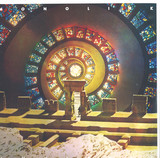
This is the one. An absolutely outstanding record from 1983 and definitely one of the hardest to find on the collectable German library label, Coloursound. The Now Generation (Percussive Underscores) is comfortably one of the very best library records full stop.
The record comes galloping out the gate with a pair of rapid synthy-eurodisco bombs - the title-track and “Panama” - before slowing down to a woozy pace on “Inorganic Matter”. “African Nightclub” sounds like it reads, and is a particular favourite of Prins Thomas. Indeed, it was used to great effect on his seminal Cosmo Galactic Prism mix for Eskimo back in 2007. It’s followed by the dark, druggy, slow motion industrial groove of “Grease Plant” before “Southerly” lifts the tempo to close out side A with its Latin funk strut of bells and melancholic keys.
For us, though, it’s all about the opener to side B: “Mechanical Heart”. Seven minutes of building, mid-tempo disco-funk joy, deceptively explosive, club-ready gear for body and soul. The back cover dryly describes the track as “Guitar and percussion, light industrial underlay”. Hmmm. How about, “after finally emerging from a particularly heavy week jamming in a sunless, lawless German warehouse, Chic warily press record on a wayward, illicit instrumental for basement gatherings”. Just wait for those drums at the 3 minute mark…
The beatless ambience and menacing stabs of the proto-electro “Chemical Threat” follows, before the open drums and incredible fills of the metronomic “Steady Going” and fantastically monotonous funk breaks of “Nepal Trek” round out this sensational set.
This is a library masterpiece in no uncertain terms, full of synth funk, afro beats, exotica, leftfield madness, dance floor dynamite and all-around greatness.
As with our KPM and Themes re-issues, the audio for The Now Generation comes from the original analogue tapes and has been remastered for vinyl by Be With regular Simon Francis. Richard Robinson has brought the original Coloursound sleeve back to life in all its metalic silver glory.
- A1: Laurent Garnier - Water Planet
- A2: Mono Junk - Beyond The Darkness
- B1: Psychick Warriors Ov Gaia - The Valley
- B2: Melody Boy 2000 - Plenty Of Love
- C1: Drax Ltd Ii - Amphetamine
- C2: Dan Curtin - 3Rd From The Sun
- C3: Front 242 - U-Men
- D1: The Prince Of Dance Music - E3 E6 Roll On
- D2: Pan Sonic - Lahetys/Transmission
- D3: Burial - Archangel
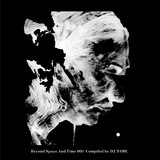
Beyond Space And Time is the new record label from Japanese music festival, Rainbow Disco Club (RDC). RDC has been welcoming music loving people to Japan for over a decade. Throughout the festival's history, RDC have been fortunate to constantly encounter performers and DJs who've collaborated with them in establishing a beautiful dance floor year in, year out. These relationships have lead RDC to start their own label, and now gives them the opportunity to reveal one of the best-kept secrets: What is in a DJ's record bag?
This time around, festival regular DJ Nobu kindly opens up his collection and shares the music he loves with us all. On visual duty we welcome Senekt - his representational yet contemporary drawing illustrates the emotion we feel from DJ Nobu.
We have much more music to come in future from artists that we trust and respect.
▼ DJ Nobu describes 10 tracks this way ▼
A1. Laurent Garnier - Water Planet
Highly respected French DJ/Producer Laurent Garnier has been releasing tracks for decades capturing the very essence of Detroit Techno and Breakbeat. He always manages to create something truly emotional. This is not his biggest hit, but it's my favorite.
A2. Mono Junk - Beyond The Darkness
This track represents the very early days of Techno with it's ravey atmosphere. It has a primitive feel, and the obscure mixdown sounds almost unbalanced. That said, this one really stands out when DJing. Very cool.
B1. Psychick Warriors Ov Gaia - The Valley
It was always my intention to include this track in a compilation if were I ever to do one. It has a fat underlying groove, with some indigenous spices thrown in. The whole thing is put together beautifully. No complaints!
B2. Melody Boy 2000 - Plenty Of Love
I wanted to include a track that had Jacking feel to it - that is my definition of dance music. This track mixes well in both Techno and House DJ sets.
C1. Drax Ltd. II - Amphetamine
This is my all time favorite track by Thomas P Heckman. It asks questions and strikes down all the boring 'wanna be cool' techno tracks. It is obviously a well known tune already, but I include it here because I'm often asked for it's track ID from new kids in the game. This is a classic that should be passed down.
C2. Dan Curtin - 3rd From The Sun
Curtin's refined synth grooves and bass lines make this a true timeless classic. It do not get tired of listening to his rhythms and melodies - he always gets it just right.
C3. Front 242 - U-Men.
The originator of Electric Body Music. Their husky vocals, hard rhythms and strong synth basslines made the group very popular at the time, and they are still to this present day. To me, this track represents what the Belgian New Beat scene is all about.
D1. The Prince Of Dance Music - E3 E6 Roll On
This is the track I played the most up until around 2006. It is a genuine house track that cuts through trends in music. A hidden floor killer.
D2. Pan Sonic - Lähetys / Transmission
Electronic music has existed for decades, and if you are to choose some of the best from all scattered & hidden places, Pan Sonic's 'Lähetys / Transmission' must be considered. The track emerges beautifully - breaking structures and transcending the past. Every layer of the piece is produced with such delicacy and care, that as a whole it magically drags you into the world of the unknown.
D3. Burial - Archangel
This track merges melancholic emotions with technological prowess at the highest level, and deeply impacted the dance music scene on it's release. I recently played this track at the end of my set at the forward thinking Terraforma Festival in Milan. It faded out to huge applause from the open minded crowd. A moment to be remembered.
Reissue (originally released 1980 on SKY records)Music for the apocalyptic eighties Deutschland state of mind. When Serge Blenner left his native France for Hamburg, West Germany, neither he nor anyone else could have guessed that he would inadvertently compose a soundtrack for the Cold War. But his dark, monotone synthesizer album La Vogue (1980) turned out to be just that.
Swedish composer and multimedia artist Marcus Fjellström's debut Miasmah release follows two critically acclaimed full length albums on Lampse (2006's 'Gebrauchsmusik' and 2005's 'Exercises In Estrangement'). In addition Marcus has had several commissioned works requested, leading to him working with, among others, the Swedish Royal Ballet, the Scottish Chamber Orchestra, numerous ensembles, soloists and filmmakers including 'Salad Fingers' creator David Firth. Currently based in Berlin, Fjellström's compositions often combine aspects of modern classical composition and arrangement and more avant forms of music, be that acoustic or electronic.
'Schattenspieler' (which translates as 'Shadowplayer') takes the form of eleven compositions which explore ambience and melody, texture and silence. Haunting synth and orchestral instrument-based audio constructions, flowing from one moment to the next - the fleeting ghosts of Fjellström's melodies rise, only to be buried under a claustrophobic clutter of percussion and creaking background noise. These pieces do indeed feel like you're listening to something more implied than obviously stated, as if Fjellström wants only to expose us to the shadow of the music - the implication being perhaps a more terrifying experience than to be confronted outright…listen to 'Schattenspieler' and you may find your mind starts to play tricks on you…
The undeniably Angelo Badalamenti-esque descending synth strings of opening track 'The Disjointed', lay the foundations for Fjellström's 'Schattenspieler' album; music resting somewhere between the unsettling horror soundtracks of Jerry Goldsmith, the elevating melodies of Cliff Martinez, and the subtle audio constructions of Miasmah label mates Kreng and Jacaszek. Marcus' wide ranging abilities in composition and his willingness to let go of accepted form and function makes 'Schattenspieler' a perfect choice of release for the Miasmah label. The suspense laden 'Antichrist Architechture Management', with its harrowing and tense undertones, weaving synth lines and a wash of static hiss and flicker, is a particular standout track. Despite it's a strangely oppressive sound, shafts of light grace 'Schattenspieler'; pieces such as 'Untitled 090616' find gorgeous melodies are boxed in by unsettling arrangements and sparse background ambience. There is a coldness to many of these compositions - not without emotion, but somehow remorseless. 'Schattenspieler' is, for the main part, a defiantly bleak journey.
Vinyl edition ltd. to 300 copies, purple vinyl, incl. 8-page 12" booklet with drawings by Marcus Fjellström.
Experimental Italian techno duo Crossing Avenue return to Spazio Disponibile for their third EP on the label. Once again their four track effort explores new tempos, rhythms and moods in stylish fashion. The Carmaleonte EP counts four multi layered trips into mind melting half time jams that pairs rubbery, rolling drums with hypnotic lead synths. After the gurlgin deepness and sparsity of 'Monoica', 'Carmaleonte' is high pressure and unrelenting, 'Santica' got the razor sharp and unresolved rhythms where 'Decimo Piano' is a flurry of high speed drums and sci fi signifiers that plays out like an intergalactic space war. Techno never sounded as adventurous as this.
Legendary artist Mick Harris (Napalm Death, Painkiller, Scorn…) kicks off his 2019 with this EP of tar-black, bass heavy sonic violence. This EP features 4 reworks of “Salford Priors”, one of the heaviest tracks from his return-to-form album “Over Depth”, the first by Mick Harris himself, and 3 more by his longtime collaborators in the production guises of Fausten, Stormfield, and Monster X. The EP begins with an apocalyptic, dubbed out violent rework by the man himself, creeping in with a cold, calm eerie drone that quickly goes from zero to 100%, blasting into a full force attack of artillery percussion and strafing, shrapnel textures atop the landmine subs and characteristic Harris snarling mono-bass.
Julien Caraz has caused much distress over the years with the sheer rage and precision sonic assaults of his Monster X project. Here he eschews his usual frenetic tempos for a solid 130BPM, a sleek techno destroyer built for giant spaces and huge soundsystems in mind. The Combat Recordings boss has worked audiovisually with Mick since the Scorn AV at Bangface Weekend in 2011, touring with Fret AV in 2018. Here he switches back into audio mode to rework Salford Priors into a hard electro assault for the Stormfield remix.
Fausten is the shadowy, twisted collaboration between Monster X and Stormfield.
Having released a staggeringly twisted album on the legendary Ad Noiseam, Fausten
went into hibernation as the pair pursued their own projects, with only a few sporadic tracks surfacing over the years. The pair have been putting together an album’s worth of new material for 2019, beginning with a powerful remix of Salford Priors. Taking Fret back into it’s aquatic, fathoms-deep sonic territory, this remix is a behemoth work that moves at quarter-step tempo, allowing for more physicality and dynamics, the profound pulse of each profoundly deep bassdrum like an underwater volcanic explosion, with skittering percussion the resonates in the stillness.
For the twelfth output of Invite's Choice Records, the label returns to doing VA releases again!
'Genetic Disorder' by Dark Quadrant opens the EP with a loopy, bass driven industrial track. The monotonous nature of the track makes it a perfect tool track for transition mixing. Biemsix continues on the A-side with a hypnotising synth and snappy hats and shakers. The 90's style present and short kickdrum is the main focal point in 'Hold On, Hold On'! Dold opens the B-side with a four-to-the-floor loop-techno track dubbed 'Cellar', which describes the smothery atmosphere of this track quite well. Mike Storm is put on closing duties and delivers a dusty track which completely revolves around mind-paralysing EFX accompanied by hard hitting drum machine sounds.
Jac Berrocal, David Fenech and Vincent Epplay return with Ice Exposure, their second album for Blackest Ever Black. A sequel and companion piece of sorts to 2015's Antigravity, its title couldn't be more apt: sonically it is both colder, and more exposed - in the sense of rawer, more volatile, more vulnerable - than its predecessor, capturing the combustible energy and barely suppressed violence of the trio's celebrated live performances with aspects of noir jazz, musique concrète, no wave art-rock, sound poetry and spectral electronics all interpenetrating in unpredictable and exhilarating ways. While there are moments of great sensitivity and even a cautious romanticism, the prevailing mood is one of anxiety, paranoia, and mounting psychodrama: close your eyes and Ice Exposure feels like a dissociative Hörspiel broadcasting from the seedy backstreets of your own troubled mind. Before he picks up an instrument or opens his mouth, Berrocal's unique and compelling presence can be felt: a combination of studied, glacial cool and anarchic, in-the-moment intensity that has served him well over a long and storied career. It was honed during his time as a theatre and film actor, and in the 70s Paris improv scene, it powered his influential Catalogue group in the 1970s, numerous seminal, sui generis solo sides, and far-sighted collaborations with the likes of Nurse With Wound, Lol Coxhill, Pascal Comelade and James Chance which have seen him come to be valorised by two generations of avant-garde agitators and eccentrics. Now in his eighth decade, it comes with an added gravitas, perhaps, but no less energy or vitality. On Ice Exposure, his lyrical, instantly recognisable trumpet playing is a key feature - see especially the ghostly, dubwise take on Ornette's 'Lonely Woman', the dissolute exotica of 'Salta Girls', and the sublime echo-chamber soliloquy 'Opportunity'. But more often it's his voice that commands centre-stage, whether casually discharging surreal poetic monologues or moaning in animal despair - a vocal tour de force that transcends language and culminates in the Dionysian frenzy of 'Why', Berrocal's half-spoken, half-howled exclamations jostling with David Fenech's slashes of dissonant guitar, over Badalamenti-ish, panther-stalk drums. Fenech's origins are in the mail-art scene of the early '90s, when he led the Peu Importe collective in Grenoble, and since then, in addition to his own recordings he has worked as a software developer at IRCAM and played with Jad Fair, Rhys Chatham and many others. Together with Vincent Epplay he is responsible for Ice Exposure's inspired arrangements and vivid, vertiginous sound design. Epplay is a visual artist and composer with particular interest in aleatory composition, concrete, and the reappropriation of vintage sound and film material. He and Fenech fashion a remarkable mise-en-scene for Berrocal to inhabit, one that embraces cutting-edge electronics while also paying homage to the best traditions of outlaw jazz and libidinous rock'n'roll ('Soundcheck' invokes the brutish spirit of Berrocal's hero Vince 'Rock N Roll Station' Taylor). On 'Blanche de Blanc', Berrocal's voice is framed by a groaning, ghoulish orchestra of industrial drones, while 'Equivoque' evokes the most humid and hostile Fourth World landscapes and 'Panic In Surabaya' lives up to its name, a hectic, pulse-quickening concrète collage that leaves you gasping for air. This is a searching and singular trio operating at the absolute peak of their powers, with an interplay that transcends studio and stage and occurs at an almost telepathic level. Ice Exposure is a triumph of that group mind, an underworld dérive as life-affirming as it is unnerving and psychologically precarious.
Panic In Surabaya
On her deeply moving debut album At Weddings, Sarah Beth Tomberlin writes with the clarity and wisdom of an artist well beyond her years. Immeasurable space circulates within the album's ten songs, which set Tomberlin's searching voice against lush backdrops of piano and guitar. Like Julien Baker and Sufjan Stevens, she has a knack for transforming the personal into parable. Like Grouper, she has a feel for the transcendent within the ordinary.
Born in Jacksonville, Florida, and now based in Louisville, Kentucky, Tomberlin wrote most of At Weddings while living with her family in southern Illinois during her late teens and early twenties. At 16, she finished her homeschooling curriculum and went to college at a private Christian school she describes, only half-jokingly, as a "cult." By 17, she had dropped out of school, returned home, and begun to face a period of difficult transition in her life. The daughter of a Baptist pastor, Tomberlin found herself questioning not only her faith, but her identity, her purpose, and her place in the world.
"I was working, going to school, and experiencing heavy isolation," Tomberlin says of the time when she first began writing the songs on At Weddings. "It felt monotonous, like endless nothingness. It was a means to get through to the next step of life." In songwriting, Tomberlin found relief and lucidity she had trouble articulating otherwise. When she was 19, she wrote "Tornado" on her parents' piano, and began to develop confidence in her music. A year later, she had written enough songs to fill an album.
Throughout At Weddings, Tomberlin's lyrics yearn for stability and belonging, a near-universal desire among young people learning to define themselves on their own terms for the first time. "I am a tornado with big green eyes and a heartbeat," she sings on "Tornado," her voice stretching to the top of her range. Rich, idiosyncratic imagery — a fly killed with a self-help book, brown paper bags slashed violently open, clouds that weep over a lost love — sidle up to profound realizations about learning to be alive in this world. "To be a woman is to be in pain," Tomberlin notes on "I'm Not Scared." On "A Video Game," she muses, "I wish I was a hero with something beautiful to say."
Tomberlin cites the hymns she grew up singing in church as her greatest musical influence, and while At Weddings in many ways documents the unlearning of her childhood faith, it's easy to hear the reverential quality of sacred music in her songs. "A lot of hymns talk about really crazy stuff — being saved from the depths and the mire, judgment. When you actually realize what you're singing, it becomes really overwhelming," Tomberlin says. "I grew up singing in church. I was still helping to lead worship when I started coming to terms with the realization that I didn't know if I believed. I felt nauseous and shaky reading these words I was singing and feeling their intensity. If I did believe this, how could I sing these words without being scared out of my mind That's what's influenced how I write."
At Weddings is laden with reverence for music itself, for the power it has to heal others and help people navigate their lives. It is a record about learning to love oneself and others without reservation, from a place of deep sincerity — a lifelong challenge whose tribulations Tomberlin articulates beautifully. "My number one goal with my music is for honesty and transparency that helps other people find ways to exist," she says. With At Weddings, this remarkable young songwriter offers up comfort and wonder in equal measure.
a1 | Any Other Way
a2 | Untitled 1
a3 | Tornado
a4 | You Are Here
a5 | A Video Game
b1 | I'm Not Scared
b2 | Seventeen
b3 | Self Help
b4 | Untitled 2
b5 | February
"Blank Mind celebrates its tenth release with the first full EP from SMX, a collaboration between Sam Purcell and Max O'Brien. From the glacial ambience of Hinterland, to the nocturnal convulsions of Uakari, these improvised tracks were recorded in East London from 2015-18.
"The live sessions allowed us to concentrate on simple forms and subtle developments. This project was started with no preconceived ideas about the end product, but we gravitated towards a sound that works both in a club or home environment. The EP serves as an honest and organic journal of sorts documenting the last few years.""
Children Of Tomorrow will celebrate soon its 10 years anniversary. The label was created by Emmanuel Ternois back in the day and being joined by Arnaud Le Texier in 2011. Since then they focused on Techno producing amazing artists, to name few: Terrence Dixon, Zadig, Tensal, Antigone, Oscar Mulero, Jonas Kopp, Samuli Kemppi etc... Children Of Tomorrow is now presenting the first album from Arnaud Le Texier. After almost 30 years Dj-ing around the world and almost 20 years producing. Signing many releases over the years and always busy delivering dance floor releases, it's been a long wait to finally get an album from ArnaudOn his first album we can feel that he wanted to tell a story and to express something deeper with his production experience. There is a different variety of Techno that stretches from ambient / broken beat / hypnotic / raw Techno along with subtles grooves, wondrous atmospheres & sonic textures. On A side the album opens with Dusk, an ambient atmospheric mid-tempo track with sonic sounds that is a perfect intro.Pattern 2 starts with drones and blip sounds and a broken beat groove follows with a pad that sounds like a voice coming from the space. The track ends with some modular click sounds that make the whole track clever. Followed by the album title Granular Therapy, a deep techno track with modular bass line and melancholic pad. A perfect track to play in after or to warm up a party.The B Side is more dedicated to the dance floor with Black Nympheas that is a proper dark modern techno with a grinding bass line and magic drones. A simple beat makes the track evolve in a nice way. Blade Pass frequency is 4/4 effective Techno with a 909 kick, a syncope acid bass line and a pad that sends you to another dimension. It is a powerful track but with a sense of deepness and sensibility that Arnaud can achieve sometimes. This side closes with Binary Sun Dawn which is an ambient track with melody that has a jazz feeling mixed with dark atmospheres, sonic drones and water drops. The C side opens with Mono Driver, a minimal track with a little synth that stays until the end repetitively until it makes you travel and lose your mind. Deep and dance floor at the same time.
Then Snapper is a more percussive track with some shinning bells and a grinding modular bass line.
The last track Virgo Consortium is a cosmic broken beat with dark atmospheric drone, simple bass and phasing efx. The D Side starts with Midi overdub which is a beauty. A mix between ambient and broken beat. The pad has the deepness that transports you somewhere else with an angel choir on top. The beat is spacial and groovy at the same time with smart high hats. This reminds Arnaud's past ambient production but with a modern approach. Surely a special track of the album.
Hideous Engine is more dance floor with metallic bass line and 4'4 beat going towards a sonic pad that closes the track.The last track Dawn is ambient with drones and blip sounds and an acid bass line modulate. A perfect end of the album.This album is an accomplished journey that makes you dance and travel from dusk till dawn. Arnaud Le Texier shows a coherent vision and illustrates his vast diversity in the techno world. Hopefully we won't have to wait 20 years to get another one.
Planet Mu Are Very Happy To Be Releasing 'vicious Circles', The Debut Ep By Sinjin Hawke And Zora Jones, Who Aside From Producing Music Also Run The Audio-visual Production Unit 'fractal Fantasy'. Zora Released Several Collaborations On Last Year's 'visceral Minds 2' Including 'dark Matter' With Planet Mu's Jlin, While Sinjin Has Collaborated With Dj Rashad, Just Blaze And Mikeq, And Also Produced Music For Monoliths Like Kanye West And Frank Ocean. Remarkably, Given The Breadth Of Their Work, 'vicious Circles' Is Their First Collaborative Ep, And The First Time Either Have Released A Vinyl Record Too. The Ep Is A Great Showcase For The Duo's Emotional, Maximalist Chimeras Of Abstract Pounding Beats. From The Punchy, Circular, Grandiose Build-ups Of Opener 'vicious Circles', To The Unyielding Melancholy Of 'god' With Its Sinister Bulgarian Choir Sample Against A Peak Timbaland-era Rhythm, The Record's Potent Synths And Manipulated Vocals Are Both Simultaneously Fierce And Friendly. 'source Of Conflict' Is A Poised Dance Between Pulsing Ambient Textures And Drilling Beats, While 'lurk 101' Pits A Volley Of Abstracted Juke Toms Up Against A Hammering Drumline. 'babyboysosa' Feels Like Drum-less Drill, Manipulating Vocals Into Strange Alien Shapes Over A Bassline Before Spiraling Toms And Hi-hats Start To Form A Forceful March. The Ep Concludes On The Love Anthem 'and You Were One' With A Chipmunked Vocal Running Through Its Wonky Chorus Of Bent Notes And Chords.
- A1: Billy Fury - Halfway To Paradise
- A2: Dusty Springfield - I Only Want To Be With You
- A3: The Breakaways - He Doesn't Love Me
- A4: Helen Shapiro - He Knows How To Love Me
- A5: Sonny Childe - Giving Up On Love
- A6: Tom Jones - Little Lonely One
- A7: Los Bravos - Black Is Black
- B1: David Bowie - Love You Till Tuesday
- B2: The Walker Brothers - Make It Easy On Yourself
- B3: Ivor Raymonde - Mylene
- B4: Burr Bailey - Chahawki
- B5: Cindy Cole - He's Sure The Boy I Love
- B6: Ottilie Patterson - Jealous Heart (With The Ivor Raymonde Group)
- C1: Dusty Springfield - Your Hurtin' Kinda Love
- C2: Dave Berry - I Got The Feeling
- C3: Jon Gunn - It's My Turn
- C4: Paul & Barry Ryan - I Love Her
- C5: Ivor Raymonde & His Orchestra - Grotty
- C6: Barbara Ruskin - Beautiful Friendship
- D1: Ian Dury & The Blockheads - Superman's Big Sister
- D2: The Flies - (I'm Not Your) Stepping Stone
- D3: The Ivor Raymonde Orchestra - It's The Real Thing
- D4: The Majority - Wait By The Fire
- D5: The Honeybus - She Sold Blackpool Rock
- D6: Alan David - I Found Out Too Late
- D7: The Walker Brothers - My Ship Is Coming In
Classic singles like Billy Fury's 'Halfway To Paradise', Dusty Springfield's 'I Only Want To Be With You' and The Walker Brothers' 'Make It Easy On Yourself' would not have been hits without Ivor Raymonde. As their arranger, and in the case of 'I Only Want To Be With You' songwriter too, he shaped the final recordings. He decided on the orchestration and backing
vocals, chose the instruments and determined what was heard on the radio - and what record buyers bought.
'Paradise: The Sound Of Ivor Raymonde' is a long-overdue celebration of Ivor Raymonde, collecting his work as an arranger, musical director, producer, singer and songwriter. The story of a British musical great is told for the first time.
Billy Fury, Dusty Springfield and The Walker Brothers are heard. So is the only vocal performance for which Ivor Raymonde received a credit on a record label. He worked with the pre-fame David Bowie and Tom Jones. He spotted the potential of Los Bravos, steering them into the charts with 'Black Is Black'. Near-misses and obscurities made with Brit-girls Cindy Cole and
Helen Shapiro, the soulful Sonny Childe and confrontational protopsychedelic London band The Flies are as fantastic as the hits. With these and more, 'Paradise: The Sound Of Ivor Raymonde' distils the essence of the magic of Ivor Raymonde.
'Paradise: The Sound Of Ivor Raymonde' is released by Bella Union, the label run by Ivor's son, former Cocteau Twins member Simon Raymonde.
Compiled by Simon and Kieron Tyler, it is a very personal tribute to a sadly missed father. Born in 1926, Ivor Raymonde passed away in 1990. The previously untold story is revealed through a moving reminiscence written by Simon and in-depth liner notes and a track-by-track commentary by Kieron. Ivor Raymonde played on the ocean liner The Queen Mary in 1949. In the Fifties, British television viewers saw him in legendary comedian Tony Hancock's 'Hancock's Half Hour' but music was always going
to be most important - the hits with Billy Fury and Dusty Springfield in 1961 and 1963 meant he was in demand. The 26 selections balance the wellknown with collectable rarities and tracks drawn from - until now - barely heard-of singles. Each is a gem and each shows the magic of an Ivor Raymonde recording.
'Paradise: The Sound Of Ivor Raymonde' is issued on CD and 180g heavyweight double vinyl album with digital download code. The vinyl version is sequenced slightly differently for listening flow. Every track was originally issued as a single issued in mono for the pop market until 1968 / 1969. Keeping the integrity of the compilation in mind, all but four tracks appear in mono as they did originally. The masters used are those of the original singles.
'It is now clear that humans are no longer the most important things in the universe, that their knowledge, creativity and intelligence are ultimately limited.'
The Posthuman realises that the ultimate questions about existence and being do not require answers and accepts that humans have a finite capacity to understand and control nature. Even just to know the ultimate nature of the universe would require knowing everything about the universe, everything that has happened and everything that will happen. If one thing were not known it would imply that all knowledge of the universe is partial, potentially incomplete and, therefore, not ultimate.
Humans privilege to order over disorder on the assumption that the essential laws of nature are gradually being discovered. This is a fundamental error; nature is neither essentially ordered or disordered. What we perceive as regular, patterned information we classify as order; what we perceive as irregular, unpatterned information we classify as disorder. The appearance of order and disorder implies more about the way in which we process information than the intrinsic presence of order or disorder in nature.
The humanist era was characterized by certainty about the operation of the universe and the place of humans within it. The Posthuman era is characterized by uncertainty about the operation of the universe and about what it is to be human.
What is a human Is there such a thing
No finite division can be drawn between the environment, the body and the brain. The human is identifiable, but not definable.
Consciousness, (the interaction body-brain) and the environment (reality) cannot be separated; they are continuous that defines the being.
All technological progress of human society is geared towards the transformation of the human species as we currently know it; the posthumans regard their own being as embodied in an extended technological world. In such 'synthetik' reality power no longer needs to impose physical regulations, as it is able to manipulate and shape up the minds directly, becoming part of it.
There won't be any resistance from the individual, as he will have embodied the needs of the system in his own being, and their ambition will serve the economy.
Currently the output of machines is predictable; the Posthuman era fully starts when the output of machines becomes unpredictable, so that complex machines, apparatus whose workings we do not fully understand or control, become an emerging form of life.
In the Posthuman era, the future never arrives.
..from ´The Posthuman Manifesto´, Robert Pepperel, 1995
TERRANOVA kicks off 2018 with a bang with 'Cosmo EP' (KOM378). 4 top-notch tracks showcasing the strongest outings yet in his impressive back catalogue.
Following an excellent entry in our SPEICHER series with 'Speicher 94' (KOMPAKT EXTRA 94 - co-helmed by Reinhard Voigt), the much- acclaimed full length 'Restless' (KOMPAKT 327 CD 123) hit turntables two years ago, TERRANOVA aka Fetisch, the creative mind & producer behind the project he likes to describe as 'the deep space electric ark' has been in orbit since the release of 'Terranova DJ Kicks' (!K7) in 1997.
TERRANOVA* now returns to the spotlight with COSMO EP, a jacking four-tracker inspired by raw Chicago House, early NYC Electro , old school computers /A.I. and some very special analog &digital machines featuring 2 excellent collaborations with Milan based artists.
Opening track COSMOCHORD features the Italian DJ legend Flashmob. The result is a peak time monochord banger that takes both producers' extensive expertise in propelling dance floor cuts to new heights.
COSMOCODE feat VOLTAGUE intense psychedelic Techno again with peak time quality. LANGSAM is an elegant, driving example of classic dance floor electronica. A skilled combination of an 808 with an obscure vintage beatbox of eastern origin, an Oberheim OB8 and a 1970 Kunstkopf Mic Instructions mixed on the original Deutsche Grammophon 1950 Valve mixer. PERFECT HAPPINESS wraps up this action-packed release with some a twisted afro stomper lead by a drunk sounding computer bouncing on the mic.
*Ad eundum quo nemo ante iit
The Doors had one of the most extraordinary debut years in music history in 1967, releasing a string of hit singles and two platinum albums, beginning in January with the band's self-titled debut, followed by Strange Days in September. The latter peaked at #3 on the Billboard album chart and featured classics like Love Me Two Times,' When The Music's Over,' and the title track Strange Days.'
STRANGE DAYS (50TH ANNIVERSARY DELUXE EDITION) was produced by the album's original engineer Bruce Botnick. It includes the original stereo mix of the album on CD for the first time in a decade, with sound that's been remastered for the first time in 30 years. The second disc features the album's original mono mix, which has been remastered for this set and is making its CD debut. Accompanying the set are liner notes by music journalist David Fricke, as well as a selection of rare and previously unseen photographs.
Having a larger budget for Strange Days allowed the band to spend more time experimenting in the studio. They used an eight-track recorder for the first time, which resulted in some memorable overdubs like Krieger's double-tracked guitar on When The Music's Over.' Surprisingly, the trippy keyboard sound heard on the album's title track is actually one of the earliest appearances of a Moog synthesizer in a rock song.
Strange Days mixed new songs written on the road with some written before the band's 1967 debut. In fact, the band performed Strange Days' during its 1966 residency at the London Fog in L.A., while My Eyes Have Seen You' dates back to 1965. Another early track is Moonlight Drive,' which was one of the very first songs that the band practiced together, and where the band heard Krieger's haunting bottleneck guitar playing for the first time. It's also the song Morrison sang to Manzarek at Venice Beach in 1965 when the two former UCLA film students reconnected and decided to start the Doors.
The man who views life in constancy is destined for stagnation. Everything is change, everything is motion. Atoms to galaxies, seasons to lives. Together in motion. The powerful force brings together, spinning together. Be magnetic. Music is the magnet that brings together and makes us spin. With subtlety, the aptly named Gyration EP begins its spin as minimalist synths assault with increasing frenetic abandon. Under the guise of apparent simplicity, Rekord 61 abducts the mind to a realm of constant motion. A futuristic merry-go-round stuck in overdrive, adrenaline spikes and neon lights smear across your vision. Unbalance and Ari Atai produce remixes of Gyration and Ferrimagnet that brings the machine to life. With catchy sequences and galactic atmospherics, the remixes imbue organic energy to the unwavering motion of the original tracks. Bringing the revolutions back under control, the efforts of Ari Atai and Unbalance expose dubby layers, pounding drums and melodic texture. Let the breakneck pace of Rekord 61 race through your mind, then let your soul reverberate with the timeless melodics of the remixes.
Asteroid Records' catalogue keeps expanding exponentially. Label chief Blasted brings you more of his purely analogue creations. Italian producer continues series of EPs titled Aelien, and Aelien II is presented thusly - two new originals by Blasted backed by two reworks from Monolith Records owner Sirio Gry J and Paul Birken - a one-man techno army from Minneapolis.
Ethereal bassline will kick off the opener Reborn, but the serenity of intro will be quickly interrupted by heavy-duty drum kicks, synthetic fields and high-reaching, chirping drops of reverberated acid. In his vision of Reborn, Sirio Gry J leaves no window open for light - it's a grim, completely disarming ode to warehouse-held midnight sessions, intended to instantly penetrate the mind's defense system with oppressive kicks supported by tightly compressed low bass. Next up is Arkham - its resonant, uncanny bassline will give you the thrills while acid-soaked, syncopated kicks will keep providing the energy required for some boundaryless dancefloor frenzy. Lastly, Paul Birken elevates Arkham to a faster pace, straightening out the kicks, and making them more bouncy, while reshaping the bassline into a less sinister, more lively undertone.
It s time for Lewis Fautzi to introduce his first album on Pole Group, a collection of ten tracks of cosmic techno, carefully crafted making a soundtrack of the future, deep, intense and scientific.
Psycho path is the intro, made of granular textures, subtle drones and ambiences, stepping into Entering, pulsating sub bass, continuous sinoidal sequences, pads and tension.
Subconscious starts with the beat, opaque bass drum, micro hi hats, atmospheres and monotonous sequences at a low bpm rate while Diffracted speeds the tempo a bit with electric synths, flanges and twists creating an hypnotic number. Rentless pain follows, with resonant bleeps starring until assymetrical sequences appear and the synth lines evolve in a hi pass filter galore.
Seasick is humid and liquid, gummy sounds, clean drum programming, spaced out sounds and a lot of room. Then we come into Furrow, aimed to the intelligent dancefloors out there, synthetic bubbles, rolling sub woofer action , bleeps and noises. Cyclic Human reminds to the best scifi techno with bell like sequences, digital clicks, jazz harmonies and abstract progression.
Number nine is Optic Chiasm a direct number based on an obscure drum workout and filled with hi pitched relentless sequences, intelligently arranged to create a mental feeling as well as inducing to dance. Album closes with The Brain Revolution, like an evolution of Entering, beatless but still preserving the tension and the movement.
A coherent and complete collection of precise, surgical and futuristic music to be enjoyed as a whole adventure..
Welcome to Poland: Another country in the midst of fearful flux; where a huge proportion of the country feel their voice is no longer represented by the government; where raw emotions are being exploited cheaply by media to distract, divert and crudely divide; where there is more of a need than ever for like-minded positive souls to unite without prejudice and work together for a better future. The headlines sound too familiar for many of us in the world. But just as Trump does not represent most people in America and Brexit doesn't define everyone in Britain, Poland's right wing government does not exemplify the majority of Polish people. Like all world citizens, our generation and younger are good-minded, thoughtful people who do want to bring down barriers and work together. Their vision is one of inclusion and one of a proud future and how we can improve the lives of our children and grandchildren... Not become entangled in embittered roots of the past. It's evident in Poland's thriving creative cultures from the provocative art of Katarzyna Kozyra to the literature and poetry and films of Wojciech Kuczok. It's evident in the stark optimist architecture of Daniel Libeskind. It's evident in Krakow's thriving club scene and the country's bubbling pools of electronic music talent. It's everything Catz N Dogz do: their attitude, their music, their labels, their WOODED festival and, perhaps most importantly, their friends. Not just there to carry you home; friends carry you everywhere. And right here on 'Friends Of Pets' Catz N Dogz are carrying their companions' creativity with the same esteem and pride they host their Polish festival. A cultural statement and powerful showcase of their country's great thinkers, creators, collaborators and disrupters in electronic music, across 16 tracks
A year after their impressive last album Burn It Down, Detroit techno legends Octave One are back with a nine track double EP that again shows they are masters of big hypnotic grooves.
Entitled Love by Machine, the album's name is a nod to the fact that the Burden brothers are such revered masters of their hardware. Both in the studio, where they cook up atmospheric house and techno with soaring synths and vocals and also in the live arena, where they are celebrated as one of the most accomplished and forward thinking performers in the game today. That is all the more impressive when you bear in mind they have been active since the '80s, most often releasing on their own 430 West label, which is where they appear again here.
Say Lenny: We've been exploring the theme of connection with this project. How technology gives us the illusion that we are closer to each other more than ever. At some point humanity crossed a line where the devices that we created to bring us together are the same devices that are blocking us from organic experiences.'
Technology is only a tool, which we also had in mind during the recording process.' Adds Lawrence. We decided to go back to how we used to make our records, when we didn't have so many 'sophisticated' audio devices. Back to when we interacted in the studio together as musicians.'
Things open up with the loose metallic percussive line that is In Mono, which sets the machine made tone and is filled with promise. Locator then immediately gets to action with a gallivanting techno kick and various synth lines wrapping round each other as you get sucked into the groove. Just Don't Speak (Midnight Sun Redub) is a more deep and house leaning track with big feel good piano keys and slithering synths that will get hands in the air. Proving they have real range, 7 B4 Dawn is a moody and reserved cut with subtle acid pricks, hip swinging claps and a spaced out dead of night feel.
The second half of the album offers peak time business in the form of the spectacular Bad Love II, the whirring and cosmic Sounds of Jericho and the big loops and fluid grooves of (Where) Time Collides. Pain Pressure is a wonky number with big bassline and a focus on percussive patterns as well as some vocals with real attitude and last cut 8 B4 Dawn ends things in a downbeat and sombre way with sad chords and emotive strings. It is pure Detroit, much like the whole album, and rounds out another fine release from these most revered veterans.
Growing up in a royal household in Nigeria, Joni Haastrup began his musical journey performing for his brothers band Sneakers and was quickly snapped up as a vocalist for Orlando Julius Ekemode and his Modern Aces' Super Afro Soul LP, one of Afro-beat's formative LPs. Soon after, Ginger Baker of Cream fame replaced Steve Winwood with Joni on keys for Airforce's UK concerts in '71 and the success of the collaboration led to further shows with Baker as part of the SALT project before he returned to Nigeria to set up MonoMono. Back in London in 1978, Joni recorded his solo gem Wake Up Your Mind for the Afrodesia imprint. Coming in a Deluxe gatefold Replika LP with printed sleeves.
Black magic, what is that supposed to be A spell that seeks to do harm to others Usually yes, however Taron-Trekka are animated by the best intentions, rather aim for the magic of the night and as always want to merely destroy the dancefloors of this world in a symbolic way. In fact, nobody has comes to grief with the four tracks of their "Black Magic EP" (the last part of their "Magic" triology) - nevertheless, they possess a certain magic.
However, Taron-Trekka don't make jumbo jets disappear, they don't walk through the Chinese wall or initiate other cocky tricks à la Copperfield. They are more like thimbleriggers. Or card jugglers. You know, those guys who surprise you when you least reckon with it. Those who have already outsmarted your mind when you were still thinking that it was just about to really begin. Taron-Trekka have the groove and cast a net of loops, which magically creates a tremendous energy. Loops with which the smallest shift can open up worlds. Worlds, which admittedly appear accessible, but are hardly decipherable. This way, tools become magical tracks. Furthermore, house becomes a music, which brands itself to the last corners of a soul. Just like the trick that you haven't understood until today.
A1 Black Magic Taron-Trekka's ride through the night starts funky and dry with the title track of the EP. The effects bleep here and fade away there, however over distance a magical pull develops. A pull that can only be escaped from with great difficulty.
A2 Monofile Regarding "Monofile", Taron-Trekka conjures a groove as selfwilled as enchanting by initially making vocals and keys appear on a dead straight beat and then letting this very same one stumble over itself. At the right moment it engenders at least as much "Ohs" as "Ahs" in a club, you bet.
B1 Red From black to red, from night until morning. For exactly this moment "Red" was made, which brings every last person to the next afterhour with its swing and depth.
B2 Distance Entirely against its own title, "Distance" may indeed affect one deeply. Namely then, when one wants to delve into funk as subtle as extensive. That is Jan Jelinek at a gallop or SND with more punch. Both are fantastic
- A1: St. Germain - Pink Panther Theme
- A2: Slim Smith - Everybody Needs Love
- A3: Michael Mcdonald - Living For The City
- A4: D-Influence - Good Lover
- B1: Paul Johnson - Better Than This (Dego&Kaidi's 2000 Black Mix)
- B2: The Chi-Lites - I Keep Comin' Back To You
- B3: The Real Thing - Love Takes Tears
- B4: Deodato - Never Knew Love
- C1: Delroy Wilson - Better Must Come
- C2: Laurel Aitken & The Gruvy Beats - Kent People
- C3: The Crystalites - Splash Down (Original Mono Recording)
- C4: Stone City Band Feat. Rick James - Little Runaway
- D1: The Fantastic Four - I Got To Have Your Love
- D2: Chanson - Don't Hold Back
- D3: Baby Washington - Think About The Good Times (Vinyl Only Bonus Track)D
Norman Jay MBE presents his latest compilation, titled 'Good Times Skank & Boogie', set for release 9th October 2015 on Sunday Best Recordings. This is his first compilation since 2011's Good Times 30th Anniversary Addition and follows on from his hotly anticipated Good Times Goes East party at St John Church at Hackney on 29th August.
Norman Jay is undoubtedly one of the finest and highly respected DJs in the world today and yet again pulls from his impressive collection to provide the ultimate eclectic selection.
For this 12th compilation, for those of you counting, Norman kicks off with St Germain's version of Henry Mancini's Pink Panther Theme. A cult favourite from 2004s Pink Panther Penthouse Party album, it of course immediately brings Peter Sellers to mind and a smile to your face. Next up former Uniques front man Slim Smith's Everybody Needs Love is a classic from 1968, cut at the legendary Duke Reid's Treasure Isle studio. Penned originally by Motown heroes Norman Whitfield and Eddie Holland and covered by household names including The Temptations and Glady's Knight & The Pips, Slim's version became something of a signature tune until his mysterious death in 1971. Sticking with Motown, Stevie Wonder's Living For The City is up next but it's the Michael McDonald rendition from his 2008 album Soul Speak, which proves the man who gave us the sublime Sweet Freedom had lost none of his class 20 plus years on.
D-Influence's Good Lover takes things up and brings them closer to home, to the streets of London infact. After a couple of independent releases the band, who had strong connections to the London Jazz and Soul scenes, served up this contemporary boogie tune as part of their 1992 debut long player for East West. They would subsequently score hits as a production team for a number of British R&B acts. Homegrown soul continues with Paul Johnson's Better Than This, released here via longstanding UK soul imprint Expansion to deserved acclaim last year. It's quality and appeal are simply timeless, whilst master Dego and Kaidi's mix adds a classic 80s soul dimension to proceedings.
The Chi-Lites I Keep Comin' Back To You and The Real Thing's Love Takes Tears continue and expand the 80s theme, bringing in 2-step and boogie, as does Deodato's Never Knew Love from the same period.
We switch again with Delroy Wilson's Better Must Come, a massively popular sufferers lament from 1971 by this former Jamaican child star, it would go on to be used in election campaigns by various Jamaican political parties. Kent People by Laurel Aitken & The Gruvy Beat is the next one out the box and was the flip to the 1969 anthem Skinhead Train. It features the UK's top reggae band of the era The Rudies, who along with Aitken, the widely-proclaimed Godfather of Ska, comprised of Earl Dunn (lead guitar), Trevor White (bass), Sonny Binns (keyboards) and Danny Smith (drums). They would go on to enjoy UK chart success backing singer Freddie Notes before they evolved into Greyhound. From the same year Splash Down by The Crystalites is another slate that ignited dance floors in both Jamaica and the UK upon release. Some of you will have noticed the rhythm track is the same as that of the earlier Kingstonians' best-seller, Sufferer, which came courtesy of legendary producer Derrick Harriott.
As the end draws close The Stone City Band featuring Rick James serve up some hard edged boogie, hotly followed by a classic Tom Moulton slice of late 70s disco courtesy of The Fantastic Four and their I Got To Have Your Love. If that doesn't have you dancing then Chanson's superb Don't Hold Back featuring James Jamerson Jr. on bass will leave you no choice. Classic Good Times indeed.
A new label offering from the ever active vaults of Mr. Sascha Müller is the new imprint named Psychocandies which is setting things straight for an Acid-poisoned future with cat.no. 001 which is a marbled, limited to 200 copies 7" pressing holding Sascha Müllers "Tempelrotation (Edit)" and Acidfloors "Goja 3" on the flip. Whilst the first mentioned tune is on a grinding, distorted MonoAcid tip clearly influenced by long gone labels like Labworks or Propulsion 285 we see Acidfloor working on a mind bending fusion of dry ElectroPhonk and a tweeking 303 that is about to make all breakers twist their legs and the rest of the crew jump around like mad. If you love alltime classics like "Higher State Of Consciousness" you'll surely appreciate this little tune as well. Watch out for more candy!