Hailing from Liege in Belgium, David Body has been put on our radar with releases on the fine Endless Music — but this EP for Exploited’s Black Jukebox series looks set to propel him to a new level.
‘I Bird You’ is a seriously charming affair, led by a colourful, sugary-sweet refrain that twinkles and sparkles in cute fashion. A warm deep house groove crafted through swirling Rhodes chords builds the vibe before the flowery melody explodes into life, pushing the track into an altogether more magical direction.
‘Jack Me Baby’ channels rubbery bass and a galloping house beat, with minor piano chords creating a dramatic feel as a classic vocal sample whoops away in delight. The enormous snare-rolled propelled build-up thrusts the track into overdrive, with a delightful, balmy synth line woven in to provide a mystical counterbalance.
‘The Talking Mouettes’ is a supremely feel-good slab of Balearic-tinged house, with choice piano chords cut up and cascading over a high-energy groove. Big squelchy melodic bass wiggles under the chords and shoulder-popping chime riff, with plenty of power and punch scattered throughout to keep the vibes rolling.
‘Endless Love’ is an absolute monster to close the EP, a soaring, triumphant electro beauty that overflows with euphoric melody and ecstatic, eyes-closed-and-rolling tingles. It just keeps building and building through layer upon layer of synth mastery to an explosive, epic climax.
Suche:monster
With songs that run the gamut from heart-breaking to satirical and a host of unforgettable film scores, Randy Newman has used his many talents to create musical masterpieces widely recognized by generations of audiences. After starting his song writing career as a teenager, Newman launched into recording as a singer and pianist in 1968 with his self-titled album Randy Newman. Throughout the 1970s, 80s, and 90s he released several acclaimed albums: 12 Songs, Sail Away, Good Old Boys, Little Criminals, Born Again, Trouble in Paradise, Land of Dreams, and Bad Love.
Good Old Boys is the fourth studio album by Randy Newman, released September 10, 1974 on Reprise Records. It was Newman’s first album to obtain major commercial success, peaking at #36 on the Billboard 200. Good Old Boys was initially envisioned as a concept album about a character named Johnny Cutler, an everyman of the Deep South. Newman made a demo of these songs on February 1, 1973; they were released as the bonus disc for the 2002 CD reissue, titled Johnny Cutler’s Birthday and are now being included on vinyl for the first time in this Run Out Groove deluxe edition.
In addition to his solo recordings and regular international touring, Newman began composing and scoring for films in the 1980s. The list of movies he has worked on since then includes The Natural, Awakenings, Ragtime, all four Toy Story pictures, Monsters Inc. and Monsters University, Seabiscuit, James and the Giant Peach, A Bug’s Life, and Meyerowitz Stories. Randy Newman’s many honors include 7 Grammys,® 3 Emmys,® and 2 Oscars,® as well as a star on the Hollywood Walk of Fame. He was inducted into the Songwriters Hall of Fame in 2002 and the Rock and Roll Hall of Fame in 2013—the same year he was given an Ivor Novello PRS for Music Special International Award. Newman was presented with a PEN New England Song Lyrics of Literary Excellence Award in 2014.
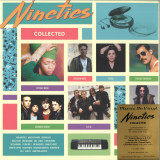
- A1: Freddie Mercury - Living On My Own (No More Brothers Radio Mix)
- A2: New Radicals - You Get What You Give
- A3: Vanessa Paradis - Be My Baby
- A4: Deacon Blue - Your Town
- A5: Rem - Man On The Moon
- A6: Mazzy Star - Fade Into You
- B1: Tom Cochrane - Life Is A Highway
- B2: Texas - Say What You Want
- B3: Omc - How Bizarre
- B4: James - Sit Down
- B5: 4 Non Blondes - Dear Mr President
- B6: Richard Marx - Hazard
- C1: Lenny Kravitz - Always On The Run
- C2: The Cardigans - Lovefool
- C3: Stereo Mc's - Step It Up
- C4: The Mavericks - Dance The Night Away
- C5: Charles & Eddie - Would I Lie To You
- C6: Army Of Lovers - Crucified
- C7: Freak Power - Turn On, Tune In, Cop Out
- D1: Thelonious Monster - Body & Soul?
- D2: Crowded House - Weather With You
- D3: Erykah Badu - Tyrone (Live)
- D4: Blind Melon - No Rain
- D5: Oui 3 - Break From The Old Routine
- D6: Roxette - Joyride
- D7: Something Happens - Parachute
Black Vinyl[37,19 €]
The Decades Collected compilations are part of the new Collected compilation series, which is a collaboration between Universal Music and Music On Vinyl. The compilations bring together the biggest names of each decade, combined with forgotten hits and less discovered gems, giving the listener an experience of listening to their favorite tunes while uncovering new musical grounds at the same time.
Various Artists - Nineties Collected features R.E.M “Man On The Moon”, Freddie Mercury “Living On My Own”, Texas “Say What You Want”, Lenny Kravitz “Always On The Run”, Erykah Badu “Tyrone (Live)” and Blind Melon “No Rain” amongst others.
Re-mastering by: Cicely Baston at Alchemy/Air Mastering, London
Wendell Harrison was born in Detroit in 1942 where he began formal jazz studies for piano, clarinet and tenor saxophone. At 14, while still in high school, Harrison started performing & recording professionally with artists such as Marvin Gaye, Grant Green, Sun Ra, Hank Crawford … and many others.
In 1971, Harrison began teaching music at Metro Arts (a multi-arts complex for youth) where he also connected with Marcus Belgrave, Harold McKinney and Phil Ranelin…soon after they formed the (now legendary) Afro-centric TRIBE record label and artist collective. TRIBE used the Metro Arts complex as a vehicle to convey a growing black political consciousness. Wendell Harrison also published the very popular TRIBE magazine, a publication dedicated to local and national social and political issues, as well as featuring artistic contributions such as poetry and visual pieces.
In 1978 Harrison and McKinney co-founded REBIRTH, a non-profit jazz performance and education organization, in which many notable jazz artists have participated. Around the same time Wendell Harrison also created the WENHA record label and publishing company, which released many of his (now classic) recordings as well as those of other artists, such as Phil Ranelin, Doug Hammond and Reggie Fields (The Real ShooBeeDoo).
In the early 1990s, Wendell Harrison was awarded the title of “Jazz Master” by Arts Midwest. This distinction led Harrison to collaborate with fellow honorees and gave him the chance to tour throughout the United States, Middle East and Africa. Even to this day Wendell Harrison’s recordings for the TRIBE, WENHA and REBIRTH labels have a large worldwide fanbase.
DREAMS OF A LOVE SUPREME is a monster album that features an all-star line-up that includes Phil Ranelin on trombone, Harold McKinney on Keyboards and Roy Brooks on percussion. Although you can hear the 80ies creeping in with a smoother sound, more synths, and disco/R&B vocals… this remains a very spiritual (and soulful) jazz record. The record’s an irresistible blend of soul jazz combined with funky electric instrumentation…a groovy sound which is very much of its time, yet overtly timeless and as relevant today as it was back when it was initially released. Notes courtesy of Tidal Waves
- A1: Chamber Spins Three
- A2: Punishment
- A3: Shades Of Grey
- A4: Business
- A5: Black And White And Red All Over
- B1: Man With A Promise
- B2: Disease
- B3: Urban Discipline
- B4: Loss
- C1: Wrong Side Of The Tracks
- C2: Mistaken Identity 4
- C3: We’re Only Gonna Die (From Our Own Arrogance)
- C4: Tears Of Blood
- C5: Hold My Own
- D1: Business (Demo)
- D2: Urban Discipline (Demo)
- D3: Loss (Demo)
- D4: Black And White And Red All Over (Demo)
BIOHAZARD formed in Brooklyn in 1988 and soon after released their first demo. The band consisted of founding members Billy Graziadei (vocals, guitar), Bobby Hambel (lead guitar) and Evan Seinfeld (vocals, bass). After the release of their second demo in 1989, drummer Anthony Meo left the band and drummer Danny Schuler replaced him. BIOHAZARD released their combined the urban sounds of hard-core, metal and rap with scorching lyrics describing the forces at work in our modern urban lives. With an impressive career spanning over 20 years with 10 albums (on both indie and major labels), the band sold over 5 million records. In 1990, Biohazard signed a recording contract with Maze Records. The band's self-titled debut album was poorly promoted by the label and sold approximately 40,000 copies. The album's subject matter revolved around Brooklyn, gang-wars, drugs, and violence.
In 1992, Biohazard signed with Roadrunner Records and released Urban Discipline, which gave the band national and worldwide attention in both the heavy metal and hardcore communities. The video for the song "Punishment" became the most played video in the history of MTV's Headbanger's Ball, and the album sold over one million copies. The band also began opening for larger acts such as Pantera, Suicidal Tendencies, House of Pain, Fishbone, and The Cro-Mags. In 1993, the hardcore rap group Onyx brought on Billy Graziadei for an alternate "Bionyx" version of their hit single "Slam" with Biohazard as their backup band. This led to a collaboration on the title track of the Judgment Night soundtrack. The soundtrack would go on to sell over two million copies in the United States. Months later, the band left Roadrunner Records and signed with Warner Bros. Records Inc. who released their third studio LP, State of the World Address. The album was produced by Ed Stasium in Los Angeles and contained the single "How It Is" featuring Sen Dog of Cypress Hill, for which a video was also shot. During their 1994 tour, the band made an appearance on the second stage at the Monsters of Rock festival held at Castle Donington. State of the World Address went on to sell over one million copies, and Rolling Stone magazine selected the Biohazard logo as the best logo of the year.
This was the last Biohazard album with Bobby Hambel, who left due to differences with the rest of the band. The band recorded their fourth studio album, Mata Leao, as a three piece in 1996. It was produced with the help of Dave Jerden. For the 1996-97 Mata Leao Tour, former Helmet guitarist Rob Echeverria joined the band. The band also played on the Ozzfest mainstage alongside Ozzy Osbourne, Slayer, Danzig, Fear Factory, and Sepultura. While touring Europe in support of the Mata Leao album, the band recorded their Hamburg, Germany, show for their first live album, No Holds Barred (Live in Europe), which was released in 1997 through their former label, Roadrunner Records. The band signed to Mercury Records and released their fifth studio album, New World Disorder, in 1999, once again with Ed Stasium as a producer.
The relationship with Mercury Records soured quickly as the band felt betrayed and misunderstood by the label. They severed their ties with the label amidst the merger of Mercury Records, Island Records, Def Jam Records, and Polygram into the Universal Music Group. The following year, Biohazard signed two new record deals with SPV/Steamhammer in Europe and Sanctuary Records for the remainder of the world. Despite the new record deals, the band took some personal time in order to work on other projects. Graziadei and Schuler also collaborated in transforming the band's rehearsal Brooklyn studio into a digital recording studio, known as Rat Piss Studios and soon after changed the name to Underground Sound Studios. Re-investing into the band, Graziadei and Schuler honed their engineering and productions skills while recording and producing local acts and new Biohazard demos. The band then undertook the process of writing, recording, and producing their own music. Their studio work led to the band's sixth studio album, Uncivilization, released in September 2001.
The album featured several guest appearances by members of bands such as Agnostic Front, Hatebreed, Pantera, Slipknot, Sepultura, Cypress Hill, Skarhead, and Type O Negative. Shortly after the release of Uncivilization, guitarist Leo Curley left the band and was replaced by former Nucleus member Carmine Vincent, who had previously toured with Biohazard as part of their road crew. The band had to cancel scheduled European festival dates when Carmine Vincent underwent major surgery. The band did manage to find a temporary guitarist, Scott Roberts, formerly of the Cro-Mags and the Spudmonsters, in time to join the Eastpak Resistance Tour with Agnostic Front, Hatebreed, Discipline, Death Threat, Born From Pain and All Boro Kings. Biohazard completed their seventh studio album in seventeen days; Kill Or Be Killed was released in 2003. While touring North America with Kittie, Brand New Sin and Eighteen Visions, Biohazard announced that Roberts would remain as their permanent lead guitarist. The tour was curtailed when it was announced that Seinfeld had fallen ill. With more downtime due to Seinfeld's illness, Graziadei and Schuler collaborated to mix Life of Agony's live comeback album, River Runs Again: Live 2003. Once Seinfeld was healthy again, the band toured Japan and North America, headlining over bands such as Hatebreed, Agnostic Front, Throwdown, and Full Blown Chaos.
By the end of 2003, the band had begun recording its eighth studio album, Means To An End. The completed album was lost in a studio disaster, forcing the band to completely re-record the album, which was finally released in August 2005. In October 2004, Graziadei announced that Means To An End had been the final Biohazard album and that he would continue playing with his new band Suicide City as his main focus. One month later, on the Biohazard website, it was announced that there would in fact be a 2005 Biohazard tour. On December 15, 2005, Seinfeld and Graziadei participated in the Roadrunner United conglomerate event at the Nokia Theater in New York for an all-star event. The show opened with Biohazard's "Punishment," performed by Seinfeld, Graziadei, Sepultura's Andreas Kisser, former Fear Factory member Dino Cazares, and Slipknot's Joey Jordison. Graziadei and Schuler relocated their recording studio to South Amboy, New Jersey and renamed it Underground Sound Studios. The studio was renovated to include a live room with 20-foot (6.1 m) ceilings and 4,000 square feet (370 m2) of studio space. After Schuler's departure from the studio business, Graziadei relocated the studio to Los Angeles and changed the name to Firewater Studios. In January 2008, the classic lineup of Evan Seinfeld, Billy Graziadei, Danny Schuler and Bobby Hambel made the announcement that rehearsals had begun for a 2008 summer tour to commemorate the band's 20th anniversary. They toured Australia and New Zealand in April with Chimaira, Throwdown, Bloodsimple and headliners Korn to celebrate their newly declared reunion. The band also took part in Persistence Tour 2009, and announced at one of their shows that they were working on a new record. Biohazard brought in producer Toby Wright to work on the album and after several months at Graziadei's Firewater Studios in Los Angeles, the band completed their recording sessions. In June 2011, Biohazard announced that Evan Seinfeld had quit the band and Scott Roberts returned to replace Seinfeld for two UK dates but no decision regarding a permanent replacement was made. In January 2012, the band decided that Scott Roberts would remain with the band as a permanent member. The new album, Reborn In Defiance, was released worldwide, with the exception of North America, on January 20, 2012 through the Nuclear Blast label. In support of the album, Biohazard embarked on a short co-headlining tour of Europe with Suicidal Tendencies in the latter half of January 2012. After touring the world in support of Reborn in Defiance, the band entered the studio to work on a new release and after a falling out, Roberts departed the band.
Biohazard remains as it’s core founding members of Graziadei, Shuler and Hambel. Graziadei has since ventured off onto a solo career as BillyBio and teamed up with Cypress Hill frontman Sendog to start Powerflo. Both groups are working on their second releases due out late 2021 and early 2022.
Silver Vinyl[27,27 €]
Mit nur zwei Demos seit Gründung im Jahr 2018 scheint es, dass MALIGNANT ALTAR nach modernen Maßstäben etwas zu ruhig gestartet waren. Doch dieses Monster hat nicht geschlafen oder sich auf seinen Lorbeeren ausgeruht, sondern das ranzigste, obszönste Album geschaffen, das man sich vorstellen kann. Aus dem tiefsten Schlund 80er-Horror-Einflüssen ergießt sich eine Flut von Innereien in Form von eitrig faulen Riffs und zermürbenden Drums in einem dicken teerigen Matsch instrumentalen Verfalls über den Hörer. Gesanglich wird purer Ekel ausgekotzt, der sich glorreich klebrig über die letzte Ritze bösartig hypnotisierender Rifflandschaft einfügt und wie verfaulte Leichenreste aus euren Lautsprechern tropfen. Wenn das alles nach einer Demo-Band mit begrenzten technischen Spielfähigkeiten klingt - Nichts wäre weiter von der Wahrheit entfernt, da MALIGNANT ALTAR mit gnadenlosem Drumming und technisch ausgefeilten Riffs aufwarten können.
Über fünf typische Tracks und einem spektralen Zwischeninstrumental ist die Platte zwar gnadenlos brutal, verzichtet aber dennoch nicht auf Dynamik. Diese Texaner haben Würze in ihrem Death Metal und wissen genau, wann unausweichliche Attacke oder zermürbender Groove bis hin zum Pulverisieren der Nackenwirbel gefragt ist!
First Word Records is very pleased to present a brand new full-length album from Sarah Williams White! Emanating from the "hilly fields of Lewisham" in South London, Sarah Williams White is a singer songwriter, multi-
instrumentalist and producer. Her sound is a unique blend of psych-soul, folktronica and experimental synth-pop.
Sarah released her acclaimed debut album 'Of The New World' on First Word in 2015, which was written, produced and performed by Sarah from her home studio, with the assistance of drummer, engineer & husband, Timmy Rickard. Her projects have seen support from the likes of Lauren Laverne, Tom Ravenscroft, Nemone & Chris Hawkins (BBC 6 Music), Jamie Cullum (BBC Radio 2), FIP Radio, Clash & The Guardian, to name a few, and she's toured the UK with Dan Le Sac vs Scroobius Pip and Golden Rules (Lex). There have been additional collaborations with label-mate Quiet Dawn (on the 2021 compilation / EP 'A Family Affair') and with her brother, Paul White - a revered producer in his own right, with credits including Danny Brown and Sudan Archives.
Following a hiatus, Sarah now brings us her sophomore album, 'Unfathomable'. A project that offers up escapism from the mundane, enticing us to connect with our natural planet in this prevalent time, via the eyes of a new mother.
In her words, Sarah states that the album is "about escape. It's about deflating the ego by looking up to the endlessness of outer space, connecting with the greatness of mother nature, and loving how unfathomable the universe and life itself is".
11-tracks in all, including the recent singles 'Nebula', 'Green' and 'Monsters', this opus sees Sarah's buttery lathing of vocals merged with cutting beats and atypical pop sensibilities across the project, again entirely self-produced from home, defining her as one of the UK's most irresistible DIY psych-soul talents.
With a voice reminiscent of Peggy Lee, tapestried harmony akin to Hiatus Kaiyote, beats fit for Little Dragon, and experimental production evocative of Kate Bush, Sarah Williams White's signature genre-defying sound invites us into a world uniquely hers.
'Unfathomable' is released on vinyl and digital in late January 2022.
- A1: Fireball Xl5 Main Theme
- A2: The Mystery Of Planet 46 From Planet 46
- A3: Formula 5 From The Doomed Planet
- A4: Rogue Planet From The Doomed Planet
- B1: Exploring The Tanker From The Hypnotic Sphere
- B2: Hypnotised From The Hypnotic Sphere
- B3: Travelling Light From Space Vacation
- B4: Ninety’s Dream From A Day In The Life Of A Space General
- B5: Zero G (Single Version)
- B6: The Cholorphon From Plant Man From Space
- B7: Spectre Of Electon From Ghosts Of Space
- B8: End Titles Fireball
- C1: Circus Dreams From Flying Zodiac
- C2: Platonia Treachery From Planet Of Platonia
- C3: Flat Jazz From Flight To Danger
- C4: Trapped From Space Monster
- C5: This Is The Twist From Space Monster
- D1: Fireball End Titles Instrumental From Space City Special
- D2: Ice Skating Waltz From Drama At Space City
- D3: Aphros Theme From Prisoner On The Lost Planet
- D4: Aquaphibian From Xl5 To H2O
- D5: Foiled! From Xl5 To H2O
- D6: Back To The Past From 1875
- D7: Fireball (Single Version)
Barry Gray’s soundtrack LP to the 1962 series “Fireball XL5” from Gerry and Sylvia Anderson will be released on vinyl early in 2021 on Silva Screen Records, the next in a series of Anderson releases which has so far featured UFO, Supercar and Thunderbirds.
Fireball XL5 was set in 2062 and followed the exploits of the eponymous spaceship commanded by Colonel Steve Zodiac of the World Space Patrol. It was produced, like most other Anderson productions, in Supermarionation, using puppetry techniques that captured the imagination of a generation.
Composer Barry Gray collaborated with the Andersons on all the Supermarionation series, his jazzy style supplemented by the use of an electronically augmented keyboard, the Ondes Martenot, creating the other-worldly atmosphere which became synonymous with the sci-fi series.
With 'Why Don't You Go Home' Fingier produces a monster Rhythm & Blues tune that will take you straight to the King and Federal R&B sound, and for the B side, 'Cocktail De Medianoche' is the perfect mix of Boogaloo and Northern Soul. Percussion, flute and horns will make this a Fingier favourite for lovers of Latin grooves and Uptempo Soul.
Diane Ward is singer from USA, who grew up singing Gospel in her local church. Music was always a big part of her life, and she has always had a deep interest in Rhythm & Blues and Jazz. She lived in Argentina for a couple of years, and one night Kevin saw her perform and instantly her voice blew his mind. In his words:
“She’s a proper R&B singer, she reminded me to Ruth Brown, MaryAnn Fisher or Lula Reed. She has that potent and obscure soundthat took me to those lately 50s early 60s Popcorn tracks”
With two monster tracks, calling this a ‘Double Sider’ wouldn’t be enough, both with that '60s sound we've come to expect from Fingier Records.
Rare South African Funk/Soul album from 1977 - First vinyl reissue since 1982 - First ever release outside of the African Continent - 180g black vinyl // Harari was a band that was deeply rooted in pan-African politics, the parallel cross-influences of the Black Panther Movement and Black Consciousness. African American soul music and Soweto Soul contributed to the way Harari became purveyors of all the styles we know today as Afro-soul, Afro-pop and Afro-jazz. The Beaters/Harari left behind a body of work that fused traditional African sounds with rock, funk, jazz, soul and psychedelia into a unique and coherent sound. It shows their ability to capture the many genres flying around South Africa during a time of intense political and cultural shifts. The album we are presenting you today (Genesis from 1977) comes swinging right out the gate with a set of six monster anthems, explosive up-tempo jams, gorgeous vocal harmonies and chants, Afro-centric fusions of rock, funk and indigenous influences. The album is packed with mesmerizing drum-grooves, psychedelic improvisations and catchy Afrobeat rhythms. This is a quintessential Harari record that every serious collector or fan needs to have in his collection. Originally released in 1977 on Gallo Records South Africa (and later repressed in 1982 on the same label), Tidal Waves Music now proudly presents the first official reissue of this rare album (original copies tend to go for LARGE amounts on the secondary market_that is if you're lucky enough to come across one). This is also the FIRST time 'Genesis' is being released outside of the African continent. This unique record comes as a deluxe 180g vinyl edition (strictly limited to 500 copies) with obi strip and featuring the original artwork.
wars will release their second studio album 'A Hundred Shivers' on 26th November 2021 via A Wolf At Your Door Records. Not afraid to buck the trends the band have been releasing tracks from the record in ‘chapters’, which although untraditional, according to vocalist Rob Vicars, that was part of the appeal, “It’s meant we have been able to wrap all our little communications around each individual selection of songs really tightly, and be creative in a tonne of different spaces, all over the course of this one record. “Getting to release what we’ve been working on, putting more music out frequently feels like the perfect complement to the way we write and create.”
Lake Havasu is a community of winding hillside roads, launched in the 1960s alongside a brick-for-brick rebuild of the original London Bridge. “It’s this very synthetic, gimmicky place set in this soulful, desolate landscape,” laughs Pedro the Lion’s David Bazan, who moved to the Arizona city for one year in seventh grade. Bazan collected his earliest childhood experiences for 2019’s Phoenix, the prolific artist’s celebrated return to the Pedro moniker and the first in a planned series of five records chronicling his past homes. To write its sequel, Bazan traveled to Havasu four times over several years, driving past his junior high campus, a magical skating rink, and other nostalgic locations that evoked feelings long suppressed. “An intersection I hadn’t remembered for 30 years would trigger a flood of hidden memories,” he says. “I was there to soak in it as much as possible.” Driving the inscrutable loops of Havasu’s lakeside, Bazan listened through an audiobook of Tom Petty’s biography, eventually dialoguing with Petty’s voice in his mind. A revelation from the book—that Petty subconsciously wrote the song “Wildflowers” as an act of kindness toward himself—inspired Bazan to approach his own work with radical generosity toward his young self. “I wanted to be there for that kid,” he offers. “That twelve year old still needs parenting, and still needs to process.” To revisit his past with openness, Bazan modified harmful work habits he’d accepted as necessary. That meant doing away with deadlines, and accumulating moments of play as he felt moved to—“Rather than squeezing stones every single time. I’m on a slow journey away from that,” he clarifies. As he worked through the music that became Havasu, flexibility and curiosity informed the arrangements. Bazan began writing on a simple synthesizer and drum machine setup. He detoured to a more elaborate assortment of analog electronic equipment, then woodshed his original two-handed keyboard arrangements on fingerpicked acoustic guitar. Concurrently relearning his catalog for a weekly series of livestream concerts also renewed his gratitude toward songwriting. “I was trying to evaluate what I have to show for 20 years of kicking my own ass,” Bazan quips about the strenuousness of full-time touring. “But the garden of my songs is what I’ve been building. It doesn’t have to be an ego test.”
Butch Hendricks recorded these two songs with his band The Vegas in 1966. Shorty after he got drafted and when he came home from Vietnam two years later he formed the Carolina Tikis. They released two 45s, the B-side of one of them contains the monster deep funk instrumental "Rap". They also did many more recordings of which many were never published, including these two.
Nie wieder Krieg ist unser 13. Werk, dessen Entstehung uns zwei intensive Jahre lang beschäftigte. Wir glauben, daß wir mit Nie wieder Krieg eines der schönsten Alben unserer Karriere aufgenommen haben.
Es ist entwaffnend persönlich und geht weit über die autobiographische Erzählung unseres letzten Albums
Die Unendlichkeit hinaus.
Die Pre Order des Album startet direkt mit der Veröffentlichung von Jugend Ohne Gott gegen Faschismus. „Jugend ohne Gott gegen Faschismus“ ist die erste Single aus dem bestürzend schönen Album „Nie wieder Krieg“ von Tocotronic. Es ist ein hypnotischer Rocksong, der den Alltag jugendlicher Drifter in einer durchgeplanten Stadtlandschaft beschreibt und in einer klar antifaschistischen Botschaft gipfelt. Die Botschaft ist tanzbar: Der Bass drängt, die Gitarren fahren Achterbahn, das Schlagzeug drischt nach vorne,
es wird mit Attitude gesungen.
There’s an ancient Japanese legend in which a horde of demons, ghosts and other terrifying ghouls descend upon the sleeping villages once a year. Known as Hyakki Yagyō, or the Night Parade of One Hundred Demons, one version of the tale states that anyone who witnesses this otherworldly procession will die instantly—or be carried off by the creatures of the night. As a result, the villagers hide in their homes, lest they become victims of these supernatural invaders.
Such is the inspiration for the latest album from EARTHLESS. “My son is really into mythical creatures and old folk stories about monsters and ghosts,” bassist Mike Eginton explains. “We came across the ‘Night Parade of One Hundred Demons’ in a book of traditional Japanese ghost stories. I like the idea of people hiding and being able to hear the madness but not see it. It’s the fear of the unknown.”
Whereas 2018’s Black Heaven featured shorter songs and vocals from guitarist Isaiah Mitchell on much of the album—an unprecedented move for the San Diego power trio—their latest is a return to the epic instrumentals EARTHLESS made their unmistakable name on. Night Parade Of One Hundred Demons is comprised of two monster songs—the 41-minute, two-part title track and the 20-minute “Death To The Red Sun.”
The scenario that allowed for this kind of exploration was a stark contrast to that of Black Heaven. At that point, Mitchell was living in the Bay Area, which made it difficult for the band to get together and work on the type of long instrumental pieces they’re known for. But in March 2020, the guitarist moved back to San Diego. More specifically, he moved back the night the pandemic lockdown kicked in. Bad timing, perhaps—or maybe perfect timing.
Plus, they were all on the same page about not wanting to do another record with vocals. “In a way, I think this album was a reaction to our last record,” Eginton says. “Black Heaven was outside our comfort zone. I think it was a good record, but it was challenging to write songs in a more traditional verse-chorus-verse format. This one was more enjoyable. I’m sure we’ll do more vocal tracks in the future, but for the time being I see that album as a one-off.”
Given the record’s inspiration, it should come as no surprise that Night Parade of One Hundred Demons strikes a more sinister tone than the rest of the band’s catalogue. “It definitely has a darker, almost evil kind of vibe compared to stuff we’ve done in the past,” Rubalcaba says. “There’s more paranoia and noise, and some of Isaiah’s whammy-bar stuff kind of reminds me of these Jeff Hanneman moments in Reign In Blood, where it just seems like everything is going to hell. It’s pretty fun.”
Night Parade of One Hundred Demons was recorded in San Diego with Rubalcaba’s childhood friend Ben Moore, who’s worked with everyone from DIAMANDA GALAS and BURT BACHARACH to CEREMONY and HOT SNAKES. When Eginton wasn’t tracking his bass parts, he worked on the album’s incredible sleeve art. “He really dedicated himself to the project,” Rubalcaba says. “He’d be drawing in the studio with, like, a coal-miner’s lamp on his head while we were doing overdubs. He really knocked it out of the park.”
All told, Night Parade of One Hundred Demons isn’t just a return to the band’s traditional format—it’s a return to their very beginnings. “This album actually has the very first Earthless riff in it,” Eginton reveals. “We just recorded it 20 years after we wrote it. But we’re really happy with how this record came out. We feel it might be our finest to date.”
- A1: Ain't Gonna Stop
- A2: You Can't Miss Something That You Never Had
- A3: A Love That's Worth Having
- A4: Good To The Last Drop
- A5: That's What I Call Lovin' You
- A6: You Gotta Try
- B1: Let Me Give You The Love You Need
- B2: Lucky To Be Loved By You
- B3: Keep On Doin' What You Do
- B4: Your Love Keeps Liftin' Me Higher
- B5: Do What You Wanna Do
2022 re-press, 180g vinyl
A monumental force firmly rooted in the soul canon, Willie Hutch is most notable for recording two of the best Blaxploitation soundtracks, The Mack and Foxy Brown. Yet his legacy is much greater. Outside of Marvin Gaye, Stevie Wonder and Smokey Robinson, Hutch was arguably Motown's top male solo artist of the 70s. Prior to his association with Gordy et al, Hutch crafted his opening statements for RCA, two vital LPs that Be With Records is honoured to present today.His debut, Soul Portrait (1969), is an incredible slice of gritty, Southern-fried soul. Think Stax with a touch of Detroit sparkle. As a whole, the album demonstrates the self-contained act Hutch was, he wrote every tune on the album while also arranging and conducting for it. It features 11 timeless grooves, with a blend of beat ballads and undeniable dancers.
The album's centrepiece is undoubtedly the iconic, brooding minor-key masterpiece "A Love That's Worth Having". The album's most recognisable track, it's a towering ballad drenched in stylish, sliding horns and elevated by its stunning backing vocalists. It was famously sampled by Madlib to augment his soundtrack for Stones Throw's Our Vinyl Weighs A Ton as well as 9th Wonder for the Murs classic "Dreamchaser". Whilst one can understand these iconic beatmakers for leaning on the work of a master, you really need to own the track in its full, unedited glory.
Horn-heavy opener "Ain't Gonna Stop" is a funk-fuelled monster, Hutch's fatback vocal aided by a vicious drum 'n' conga rhythm whilst the bumping uptown soul of "You Can't Miss Something That You Never Had" anticipates the Motown-vibe that Hutch went on to create. Supple guitar licks propel the loping, head-nod breaks of "Good To The Last Drop" whilst "That's What I Call Lovin' You" features gospel piano and plaintive, tender vocal turn. Rounding out Side A, the blazing horns of "You Gotta Try" hints at the Blaxploitation that was to come.Ushering in the flipside, the thundering proto-70s-Motown rhythm of "Let Me Give You The Love You Need" segues neatly into the bouncing Northern Soul favourite "Lucky To Be Loved By You" whilst Hutch's gutbucket guitar stylings are all over the smouldering "Keep On Doin' What You Do". "Your Love Keeps Liftin' Me Higher" is not a rendition of the Jackie Wilson classic, rather, it's a powerhouse original that indicates where Hutch would take his sound on The Mack. Closing the album, the anthemic "Do What You Wanna Do" name-checks contemporary dance fads before instructing the listener to just get up and dance.Brilliantly supported by a heavy roster of studio cats who combined to create a winning combination of horns, strings, and gorgeous female background vocalists, Soul Portrait is as complete a soul album as the decade's very best. Tricky to find for a number of years, this lovingly produced reissue is certainly welcome. Paired with the soaring follow-up, Season For Love, these recordings shine a new light on the early work of a soul legend. Officially licensed and remastered for vinyl by Simon Francis, it has been pressed on audiophile 180g vinyl for the first time and features the original artwork and liner notes.
"When I was approached to participate in Monsterland I was immediately attracted to the idea of working on a series where horror, science fiction and gore could converge. I had never done music for a project like this before and the sole idea of venturing into some new playground immediately sparked my interest. And just after reading the first two episodes I realized I had to get involved in the project.
Several things connected with me deeply. I found in the stories elements that reminded me of the “magical realism” that I grew up with in Latin America through writers like Horacio Quiroga and Gabriel García Márquez. Also, the idea of tapping into a landscape in which fear and horror have a metaphysical quality connected to the psyche of the characters appealed to me.
Working with Juan Luquí was key in making this score. His capacity to deeply understand my vision and his masterful skills add another dimension to Monsterland. A land of monsters so human in nature, that in many instances seemed extremely and frighteningly familiar."
Composed by Gustavo Santaolalla
Artwork by Matt Ryan Tobin
Manufactured in Czech Republic
These recordings, made in 2001 in the weeks before September 11, constitute a unique historical document. They are spoken-word adaptations of scenes taken from Destroy All Monsters, the first book by acclaimed writer and 'pop culture alchemist' Ken Hollings. A multistranded postmodern epic, Destroy All Monsters offers a radical retelling of Desert Storm, America's military operation targeting Iraq, using imagery derived from MTV videos, CNN news reports, Japanese kaiju movies and anime, Hong Kong action flicks and tales of alien abduction. The book's entire narrative nervously unfolds in an unstable of world of terror monsters, wrecked cities and dangerously tall buildings: where an event like 9/11 is inevitable. The book was officially launched on September 13, but distribution in the United States was delayed when ports on the Eastern Seaboard were closed to shipping post 9/11, leaving copies of the book stranded in the Atlantic. 'Published the very week of the "attacks on America",' Toby Litt wrote at the time, 'Destroy All Monsters is genuinely, spookily prescient…as a progress report on Planet Earth, it seems to have timeslipped onto the front pages.' Lydia Lunch praised it as 'a hallucinogenic spiral into future nightmare', while The Scotsman called it 'mind bending reading.'
In the summer of 2001, Ken Hollings was approached by sound designer and electronic music composer Simon James, who wanted to create an audio adaptation of scenes from the novel to share with subscribers to a spoken word channel launched by totallyradio. The idea was to record Ken reading his own words and then embed them in a soundscape that evoked the fragmented complexity of the original text. Ken concentrated on a small handful of threads from the overall narrative, while Simon directed and engineered the final recording. This resulted in the two sequences of words, sounds and electronic tonalities contained on this audiocassette: an unsettling portrait of people about to be overtaken by events.
In October 2001, having just got married in London, Ken and Rachel Hollings went to New York for their honeymoon, just as they had originally planned. They spent an unforgettable week in a city struggling to recover from the seismic changes that had just taken place while a sudden wave of anthrax attacks on government and media offices filled the news cycles. Rachel took a photograph of Ken at Ground Zero, where crowds of onlookers continued to gather, and the air still smelled of burning.
Ken Hollings is a writer and broadcaster whose main concern is the relationship between culture and technology. He has written and presented numerous critically acclaimed features for BBC Radio 3, BBC Radio 4 and Resonance 104.4 FM His other books include Welcome to Mars, The Bright Labyrinth, The Space Oracle and Inferno all available from Strange Attractor/MIT Press. His latest book, Purgatory, is due from Strange Attractor in Spring 2022.
Simon James is a producer, musician and sound designer based in Brighton, UK, whose work combines electronic sources with field recording techniques and sound treatments, using sound to transport the listener to fantastical audio worlds. Simon's latest release, Electro Smog, collects electromagnetic field recordings from Shenzhen's electronic markets, recorded while he was in China at the invitation of Musicity and The British Council.
The Destroy All Monsters audio adaptations marked the first occasion Ken and Simon worked together – subsequently they collaborated on the 12-part series Welcome to Mars for Resonance 104.4 FM and Connecting, an audio portrait of the original 'phone phreaks', for BBC Radio 3. In 2021 they teamed up again to make Fast Forward, a six-part documentary series for Kasperksy Lab.