Expected late October/early November
Scott Gilmore’s Volume 01, an Analog Synth Gem, Makes Its Vinyl Debut - Pressed at 45RPM for maximum fidelity.
Recorded on a vintage Tascam 388, the LP version of Gilmore’s alluring, easy-going instrumental electronic record arrives in the physical world via In Sheep’s Clothing Hi-Fi Records.
Los Angeles, CA — When the Los Angeles electronic musician and multi-instrumentalist Scott Gilmore recalls the creation of the songs on Volume 01, he describes specific moments of spontaneous inspiration. “I remember sitting at the tape deck, watching the leaves outside the window as they flittered in the sunlight—a moment of stillness that became intertwined with the melody I was recording,” Gilmore recalls, speaking of the track “Song For Cate.”
This sense of simplicity and presence is at the heart of Volume 01, which was recorded entirely on a Tascam 388 using a carefully curated selection of instruments.
Volume 01, an intimate, instinctual album that mixes lo-fi digital rhythms, strummed guitar, and melodic synth layers, is a collection of songs that captures Gilmore’s magnetic fluidity and the spontaneity of his process. Initially released digitally and as a limited edition cassette, Volume 01 is set to be issued on vinyl for the first time by In Sheep’s Clothing Hi-Fi.
The Tascam 388 is a classic mid-1980s analog machine that combines an 8-track reel-to-reel tape recorder with a built-in mixing console. Volume 01 exudes the kind of hazy, nostalgic warmth that only such recorders can provide. For the nine-song album, Gilmore harnessed analog synths including the Arp Odyssey, Yamaha CS-01, Korg DW-8000, Hohner Pianet T, Roland TR 606, and Roland SH 101, as well as bamboo alto saxophone, clarinet, electric guitar, and electric bass.
The album is awash in brief, propellant pieces. At just over four minutes, the relatively epic “Horizon Line” is driven by a three-note snare pattern, a two-note cymbal tap, with a humble bass-line serving as the rudder; Gilmore’s improvised keyboard runs move with an intuitive, conversational glee. The pensive "Shade" sounds like it could be a Penguin Cafe Orchestra demo. Closing track “D. Hareem” runs on a wobbly time signature but with an insistent, determined rhythm that belies genre descriptives. “I prefer to not know what I’m making as I compose,” Gilmore says. “It’s when I can’t clearly define what the music is that it’s then something that I want to put out into the world.”
In hindsight, Volume 01 was a portent. After its 2016 cassette release, Gilmore connected with International Feel, the Balearic imprint run by Marc Barrot, to release the sublime Subtle Vertigo. In 2019, Gilmore’s music caught the attention of Marc Hollander, the experimental composer and founding member of Aksak Maboul, which led to a signing with the Belgian label Crammed Discs. That deal enabled the creation of Gilmore’s solo album Two Roomed Motel and Doctor Fluorescent, a retro-futuristic, Vocoder-heavy 2020 collaboration with Eddie Ruscha V, a.k.a. Secret Circuit). Across these projects, Gilmore’s work has been mentioned in the same sentences as Stereolab, Arthur Russell, Woo, Air, R. Stevie Moore, and others, all of whom have combined synths and non-synths to memorable effect.
With the upcoming vinyl release, Volume 01 will set into wax an enduring set of works, offering listeners the chance to experience analog artistry in its most authentic, tangible form. In Sheep’s Clothing Records is honored to bring Gilmore’s work to vinyl.
quête:moo
Diving deeper into the story of Japanese reggae pop, Tokyo Riddim Vol. 2 explores an electronic, new wave and often experimental sound unlike anything Japan or Jamaica had ever heard before.
The first time Ryuichi Sakamoto left Japan, he did not go to the United States or Europe - he went to Jamaica. It was 1978, YMO were about to release their debut album, but Sakamoto was in Kingston, invited to play synths for Japanese idol singer Teresa Noda at Dynamic Sound Studios in a band alongside Neville Hinds and none other than Rita Marley. It’s not a story many know, but one which would spark Sakamoto’s fascination with dub and mark a new chapter in the ongoing Japanese love affair with reggae.
The Teresa Noda tracks they cut - ‘Tropical Love’ and ‘Yellow Moon’ - bookend this second volume of Time Capsule’s Tokyo Riddim compilation, which tells the wider story of how a fascination with Jamrock swept Japan, adding a dash of lime to that sweet city pop sound, embracing a globalised musical palette and creating a whole new genre in the process.
For some, like Sakamoto, a diversion into reggae was part of broader fascination with new sounds and styles, tipped into the global disco of homage and appropriation that made Japanese music of the late ‘70s and early ‘80s some of the most creative and undefinable in the world.
You had iconic shape-shifter Yosui Inoue, who toyed with reggae, afro-beat and electro-Balearic, (and whose For Life Records released several tracks on this comp), and Kay Ishiguro, who enlisted J-reggae originator Pecker on the ambitious Stevie Wonder-esque ‘Red Drip’.
Then there were the Compass Point devotees - producers and musicians alike who were enthralled by the sound of the Bahamas studio and drew on the detached cool of Grace Jones - as heard in the music of Juicy Fruits, and the disco noir of Casablanca-signed femme fatale Yuki Nakayamate. Sometimes, as was the case with Risa Minami, the J-reggae influence said more about Japan than it did about Jamaica.
But where Tokyo Riddim Vol. 1 focused on the city pop sound, this compilation goes further, digging out the more experimental collaborations and hybrids exemplified by Tomoko Aran, who in working with Yusuaki Shimizu and Mariah emphasised just how far reggae had travelled to be recast into something entirely new on the other side of the world.
Perhaps more than anything, in connecting the dots between Tokyo and Kingston, between Jamaica and Japan, the Japanese reggae was building a musical language that existed outside of the paradigms of US and European cultural hegemony - an encounter shaped by commerce, capital and creativity that is now being recognised more broadly for the first time.
Moon White Vinyl. All her life, Emma Hardyman has wrestled with contradictions. After all, she was practically rendered a living, breathing contradiction the moment she was born into her half-Peruvian, half-white working-class Mormon family. In young adulthood, Hardyman became increasingly disillusioned with Mormonism's righteous black-and-white thinking, as well as its exclusionary elitism, and decided to leave the church. But she also acknowledged that the institution's all-or-nothing philosophy had become a part of her, resulting in a considerable test of grace and unlearning. As the singer-songwriter behind Little Moon, the Tiny Desk Contest-winning, Utah-based avant-folk project, Hardyman uses music as an outlet to illuminate contradictions of all kinds. Following the release of her 2020 debut LP Unphased, Hardyman set out to write a romantic album about her newlywed husband Nathan (who also sings and plays guitar in Little Moon), but the universe had other plans. After Nathan's mother tragically passed away, Hardyman recalibrated her vision and started work on a love-as-grief, grief-as-love album titled Dear Divine. The record serves as a mirror for the darkest parts of ourselves, allowing us to examine our ego_not to dismantle it, but to better understand how we love, process adversity and move through the world. Centering the classical music, folk, video game soundtracks and Tabernacle Choir hymns she grew up with, as well as ephemeral snapshots of personal significance, Dear Divine is an abundant tapestry of Hardyman's life. As enlivening melodies radiate from a string trio, you can envision the classical music that thrums from her parents' radio 24/7, as Hardyman sings in an otherworldly coo, you can imagine her younger self swooning over the tranquil records of Vashti Bunyan and Joan Baez, and as arpeggiated synths twinkle, you can visualize the enchanting kingdom of Hyrule from The Legend of Zelda: Ocarina of Time that she still adores. Songs like "now" and "messy love" embrace the gloriously jumbled stew of life, with the former chronicling Hardyman's arduous quest for love and trust and the latter patiently navigating the ways romantic partners can mirror each other's shortcomings. As Dear Divine attests, Emma Hardyman may not have it all figured out, but that's kind of the point. Through grief, faith crises and all-encompassing love, she's found the most wisdom in life's maddeningly consistent inconsistencies, as well as the subtle ways one can cultivate a feeling of home. Dear Divine doesn't take a red pen to life, it brings an open heart, an open mind and achingly beautiful, opulently weird folk songs.
8 cuts of minimalist electronic bliss
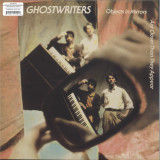
"Dark Entries calls on Philadelphia experimental duo The Ghostwriters to resurrect their 1981 LP of minimalist mayhem, Objects In Mirrors Are Closer Than They Appear.
The late Buchla maestro Charles Cohen and multi-instrumentalist Jeff Cain joined up in 1971 to craft electroacoustic chaos as Anomali, later renaming themselves The Ghostwriters. Their collaborations with choreographers and visual media artists led to their singular style, straddling improvisation and composition, the oneiric and the immediate.
1981 saw the release of their debut album, Objects In Mirrors Are Closer Than They Appear, a whirling, messy, telepathic slipstream cascading across an imaginary landscape. Recorded in Don Buchla’s childhood home, Objects offers 8 cuts of minimalist electronic bliss, equal parts icy and quirky, with standout cuts including the grooving havoc of “Fix it in the Mix” and the otherworldly hymn “Moon Chant.” These angular pearls will be cherished by fans of John Bender, Ceramic Hello, and all strains of outsider 80s electronics.
Objects In Mirrors Are Closer Than They Appear has been freshly remastered and includes an insert with photos and liner notes. Proceeds from the album will be donated to SOSA (Safe from Online Sex Abuse), a nonprofit that combats online child sex abuse and trafficking"
"Cerulean Blue vinyl limited to 700 units! On her second full-length record as Waxahatchee, former P.S. Eliot singer Katie Crutchfield’s compelling hyper-personal poetry is continuously crushing. Cerulean Salt follows American Weekend -- a collection of minimal acoustic-guitar pop written and recorded in a week at her family’s Birmingham home. On this new record, Crutchfield’s songs continue to be marked by her sharp, hooky songwriting; her striking voice and lyrics that simultaneously seem hyper-personal yet relentlessly relatable, teetering between endearingly nostalgic and depressingly dark. But whereas before the thematic focus of her songcraft was on break ups and passive-aggressive crushing, this record reflects on her family and Alabama upbringing. Whereas American Weekend was mostly just Crutchfield and her guitar, Cerulean Salt is occasionally amped up, with a full band and higher-fi production.
At times, Cerulean Salt creeps closer to the sound of PS Eliot: moody, 90s-inspired rock backed by Keith Spencer and Swearin’ guitarist Kyle Gilbride on drums and bass. The full band means fleshed-out fuzzy lead guitars on “Coast to Coast”, its poppy hook almost masking its dark lyrics. Big distorted guitars and deep steady drums mark songs like “Misery over Dispute” and “Waiting”.
There’s plenty of American Weekend‘s introspection and minimalism to be found, though. “Blue Pt. II” is stripped down, Crutchfield and her sister Alison singing in harmony with deadpan vox. She’s still an open booking, musing on self-doubt versus self-reliance, transience versus permanence. “Peace and Quiet” ebbs and flows from moody, minimal verses to a sing-song chorus. “Swan Dive” tackles nostalgia, transience, indifference, regret — over the a minimal strum of an electric-guitar, the picking at a chirpy riff and the double-time tapping of a muted drum. The album closes with a haunting acoustic-guitar reflection on “You’re Damaged,” possibly the best Waxahatchee song to date."
"The true narrative shall forever shroud itself in mystery to the outside world.
It is whispered that man never truly set foot on the moon, but merely touched it.
Just as the tale of this record unfolds, two souls from distant realms brushed ever so close, yet destiny denied them a lasting encounter, not even a fleeting union of Nino's and Ali's wings.
Perhaps, it was fated that the circle of a past life, woven with trust, blooming with flowers, and exchanged glances, must close in the cosmic pursuit of Venus, chasing the Crescent Moon, serenading love to its own Sun."
This album features Hermano's first song in nearly 20 years, as well as an unreleased song from their last album. 'When The Moon Was High' is completed by 4 live songs culled from the HellFest and W2 festivals.
Marbled[15,76 €]
2017 album now available at a cheaper price. Limited colour vinyl 12” (Marled colour) DL card included is for indie stores only. Standard LP + DL. CD digipack. Under license from Lakeshore Records. A Fire Records release. Back in 2006, Richard Linklater’s film adaptation of Philip K Dick’s sci-fi novel A Scanner Darkly was greeted with suspicion. No one had done justice to the “master” (Bladerunner, Minority Report, Total Recall, The Adjustment Bureau had or have all met with mixed reviews). And, movies attempting to conjure up the effects of drugs were met with derision from the stoned cognoscenti. How could a story of dependence on Substance D (“Death” for short) be created with multi-million dollar stars in the frame anyway? Linklater had a plan; He’d use rotoscoping (an effect that falls somewhere between Kiki Picasso’s sketches brought to life and Disney on ‘ludes). The celebrities would be shrouded in mystery, in fact Keanu Reeves’ skin suit would make him almost invisible at times, a mumbling wreck swaying centre stage. A waste of talent? A waste of money? To complete the experience, a left field musical score was needed to ensure that everything wasn’t as it seemed. The phone books are full of creative composers but Graham Reynolds And His Golden Arm Trio jumped off the page. The band name is from a Frank Sinatra film where he plays a drug-addled muso. Perfect. Graham Reynolds works in extremes, he’s collaborated with DJ Spooky, the Austin Symphony Orchestra and with live film collage creator Luke Savisky. More importantly his Golden Arm Trio are never three and never the same people twice. For the movie he created short sound bytes – a surf-like instrumental, a country-tinged breather, the sound of stuttering insects crawling through your hair. The resultant soundscape is itchy and scratchy, full of mood swings and musical metaphors, an ever changing and unpredictable set of highs littered with reflective undertones and occasional soft, almost super numb realities. THE SOUNDTRACK: “Strands of post-rock, electronica, jazz, and vintage rock are woven and recombined throughout the album for unusual juxtapositions.” All Musi // “A tactile, emotional resonance often missing in contemporary scoring.” Soundtrack.ne // The music in isolation is bold and uncompromising, shifting as it moves through genres and sounds. THE COMPOSER : Graham Reynolds works in extremes; Short take moments of sound – whether it be a surf-like instrumental, a country-tinged breather or the sound of stuttering insects crawling through your hair – are all in his tick box. The resultant soundscape is itchy and scratchy, full of mood swings and musical metaphors, an ever changing and unpredictable set of highs littered with reflective undertones and occasional soft, almost super numb realities.
Black[15,76 €]
Back in 2006, Richard Linklater’s film adaptation of Philip K Dick’s sci-fi novel A Scanner Darkly was greeted with suspicion. No one had done justice to the “master” (Bladerunner, Minority Report, Total Recall, The Adjustment Bureau had or have all met with mixed reviews). And, movies attempting to conjure up the effects of drugs were met with derision from the stoned cognoscenti. How could a story of dependence on Substance D (“Death” for short) be created with multi-million dollar stars in the frame anyway? Linklater had a plan; He’d use rotoscoping (an effect that falls somewhere between Kiki Picasso’s sketches brought to life and Disney on ‘ludes). The celebrities would be shrouded in mystery, in fact Keanu Reeves’ skin suit would make him almost invisible at times, a mumbling wreck swaying centre stage. A waste of talent? A waste of money? To complete the experience, a left field musical score was needed to ensure that everything wasn’t as it seemed. The phone books are full of creative composers but Graham Reynolds And His Golden Arm Trio jumped off the page. The band name is from a Frank Sinatra film where he plays a drug-addled muso. Perfect. Graham Reynolds works in extremes, he’s collaborated with DJ Spooky, the Austin Symphony Orchestra and with live film collage creator Luke Savisky. More importantly his Golden Arm Trio are never three and never the same people twice. For the movie he created short sound bytes – a surf-like instrumental, a country-tinged breather, the sound of stuttering insects crawling through your hair. The resultant soundscape is itchy and scratchy, full of mood swings and musical metaphors, an ever changing and unpredictable set of highs littered with reflective undertones and occasional soft, almost super numb realities. THE SOUNDTRACK: “Strands of post-rock, electronica, jazz, and vintage rock are woven and recombined throughout the album for unusual juxtapositions.” All Musi // “A tactile, emotional resonance often missing in contemporary scoring.” Soundtrack.ne // The music in isolation is bold and uncompromising, shifting as it moves through genres and sounds. THE COMPOSER : Graham Reynolds works in extremes; Short take moments of sound – whether it be a surf-like instrumental, a country-tinged breather or the sound of stuttering insects crawling through your hair – are all in his tick box. The resultant soundscape is itchy and scratchy, full of mood swings and musical metaphors, an ever changing and unpredictable set of highs littered with reflective undertones and occasional soft, almost super numb realities.
6 years after their last album, fav favourite Kites, Submotion Orchestra make their long-awaited return with the remarkable Five Points EP. Recorded over a period of two months at band member Taz Modi's new studio in the Sussex countryside, it sees the band plough a path through electronica, jazz, soul and ambient in their own singular way. After a period of time spent looking back at their oeuvre, with the release of two Unplugged collections as well as classic debut album Finest Hour on vinyl for the first time, the refreshed, slightly older and wiser band set their sights firmly ahead, and the result is music that sounds like nothing they've done before.
Whilst featuring the uniquely fragile voice of Ruby Wood and the live instrumentation that has been their calling card in the electronic world for so long, the EP also delves into rhythms, soundscapes and effects that push their recognisable sound as far as it can go, and acts as the perfect taster for the forthcoming album that the band are currently recording.
Created as a seamless listening experience, the EP opens with the evocative and atmospheric 'Start Point', as dreamlike synths and brass mix with wordless harmonies straight from the heavens. 'Hope' continues the mood, warm analogue synth patterns combining with fragmented vocals on a persistent build-up to an emotional climax. Lead single 'Side One' cheekily nods to Submotion classic 'All Yours', before moving into newer territory, where Ruby Wood's vocals slowly become distorted and twisted, the perfect backdrop for this story about the loss of hope. Flowing joinlessly into its mirror image 'Side Two', we see the instrumental prowess of Submotion Orchestra which has so long been their defining characteristic in full flow. Finally, 'End Point' brings the EP to a moving and wistful climax, telling a tale of the wisdom that can only come after bitter experience.
- A1: Roni Size, Reprazent - Heroes (Kruder's Long Loose Boss
- A2: Alex Reece - Jazz Master (K&D Session Tm)
- B1: Bomb The Bass - Bug Powder Dust (K&D Session Tm)
- B2: Lamb - Trans Fatty Acid (K&D Session Tm)
- C1: Count Basic - Speechless (Drum 'N' Bass)
- C2: Rockers Hi-Fi - Going Under (K&D Session Tm)
- D1: Depeche Mode - Useless (K&D Session Tm)
- D2: Count Basic - Gotta Jazz (Richard Dorfmeister Remix)
- E1: Aphrodelics - Rollin' On Chrome (Wild Motherfucker Dub)
- E2: Knowtoryus - The Revenge Of The Bomberclad Joint (K&D S
- F1: Rainer Trüby Trio - Donaueschingen (Peter Kruder's Remix
- G1: David Holmes - Gone Ft Sarah Cracknell (K&D Session Tm
- G2: Sofa Surfers - Sofa Rockers (Richard Dorfmeister Remix)
- H1: Mama Oliver - Eastwest (Stoned Together)
- H2: Bomb The Bass - Bug Powder Dust (Dub)
- H3: Kruder & Dorfmeister - Boogie Woogie
- I1: Sin - Where Shall I Turn (K&D Session Tm Vol
- I2: Bone Thugs-N-Harmony
- I3: Kruder & Dorfmeister - Lexicon
- J1: Knowtoryus - Bomberclad Joint (K&D Session Tm)
- J2: Rockers Hi-Fi - Going Under (Evil Love & Insanity Dub)
- J3: Strange Cargo - Million Town (K&D Session Tm)
- K1: Count Basic - Speechless (Peter Kruder Vocal Mix)
- K2: Lewis Taylor - Lucky (Kruder & Dorfmeister Suicide Mix)
- L2: Ufo - L O.v.e. (K&D Session Tm)
- L3: Lewis Taylor - Lucky (Kruder & Dorfmeister Reprise Mix)
- K3: Roni Size - Heroes (Peter Kruder Powercut Mix)
- L1: Madonna - Nothing Really Matters (Kruder & Dorfmeister
Normal[58,78 €]
Occasionally an album comes along that seems to capture the mood of the time. "The K&D Sessions" was one. In the late 1990s no afterparty, smoking session or languid Sunday afternoon was complete without Kruder & Dorfmeister blasting from the Bang & Olufsen. Now approaching it"s 25th anniversary the lore around this iconic release, steeped in a silvery cloud of smoke, retains a star quality which only shines brighter as time hurtles on. With the original having sold well over a million copies by this point in time, it"s hard to imagine a mix or remix compilation being able to inform a movement like "The K&D Sessions" has. To celebrate this monumental milestone, we"ve created a limited boxset in 6LP and 3CD of "The K&D Sessions", mastered and cut by LA luminary Bernie Grundman for a luxurious listening experience, with newly designed inner sleeves using unseen photos from the original photo shoot. Inserted in the box is a forty-page booklet containing multitudes more never before seen photos from the same shoot and notes which recount humorous tales surrounding the duo and the people who spent time with them in this epoch. Included on the 6th LP is their legendary 11 minute shimmering remix of Madonna"s "Nothing Really Matters". The 6th LP also contains Peter Kruder"s Powercut Mix of Roni Size"s "Heroes" and K&D"s remix of U.F.O, "L.O.V.E.". In addition there are two cerebral alternate remixes of Lewis Taylor, one being completely dubbed and the other the using the vocal line for this beautiful gem, "Lucky" and a special remix of "Speechless" by Count Basic. These have been staples in K&D"s sets and now take their rightful place collected in the canon of "The Sessions".
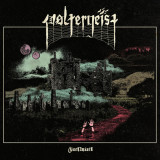
Pøltergeist haben bei Bad Omen Records (Watch Hazel, Satan's Satyrs) unterschrieben, und die Kanadier veröffentlichen ihr Debütalbum. Pøltergeist wird als eine Mischung aus Post-Punk, traditionellem Metal und Shoegaze aus den frostigen Ebenen beschrieben und spielt treibenden Coldwave, der einen Weg von den Katakomben in den Kosmos zeichnet. Die vielleicht prägenste Destillation des Pøltergeist-Stils kommt mit der Vorab-Single 'Children Of The Dark', einem eingängigen, stürmischen Rocksong, der auch thematisch auf einer doppelten Ebene funktioniert. Sänger Kalen Baker hegt seit langem eine Vorliebe für die mystischen Metal-Klänge von Angel Witch, Cauldron oder Blue Öyster Cult und war sowohl von der zeitgenössischen Post-Punk-Band Spectres als auch von der britischen Melancholie von 'Script From The Bridge' der Chameleons berührt. Ganz zu schweigen von Gothic- und Post-Punk-Legenden wie Sisters Of Mercy, The Sound und Paradigmen des Himmlischen wie Cocteau Twins, Slowdive und My Bloody Valentine. Gestärkt durch den lyrischen Einfluss spiritueller Vorläufer wie Moorcock, Lovecraft, Poe und David Lynch von Twin Peaks wurde der Sound von Pøltergeist geboren; ein düsteres, aber magisches Reich, in dem dämmrige Intensität in einem psychischen Kampf mit metallischer Stärke verbunden wird. 'Nachtmusik' bleibt Bakers Vision eines "Kaleidoskops aus Emotionen, Klängen und Ideen" treu. Dies ist eine Platte, die sich im Herzen nach dem spirituellen Reich der 1980er Jahre sehnt, aber mit den Füßen fest im Hier und Jetzt des 21. Jahrhunderts steht. Während sich am Himmel Gewitterwolken zusammenbrauen, beginnt Pøltergeists Reise in die Dunkelheit gerade erst.
Deaf Forever
8/10
"'Nachtmusik' alles mit, was eine gute Postpunk-Platte braucht: eingängige, gekonnt komponierte Songs, schwermütige Atmosphäre, guten Gesang mit klassisch monoton-melodischer Stimme und einen Spritzer Shoegaze"
Metal Hammer
5.5 / 7
"NACHTMUSIK fa?ngt die Sehn- sucht und dunkle A?sthetik des Achtziger Jahre-Deathrock fu?r die Gegenwart ein - ohne zu kopieren. Ganz ohne Zwang, dafu?r mit jeder Menge emotionalem Tiefgang und einem gewissen Gruselfaktor. Ein starker Auftakt und definitiv ein of- fenes Ohr wert - nicht nur an regne- rischen, euphorieberaubten Herbsttagen".
Rock Hard
8/10
"Wer auf Unto Others, In Solitude, Lunar Shadow oder Tribulation steht, wird mit ziemlicher Sicherheit auch Gefallen an der Musik von PØLTERGEIST finden, die für ihr Debütalbum "Nachtmusik" Elemente aus Gothic Rock, Heavy Metal, Post-Punk und Hardrock in einen Hexenkessel schmeißen, einmal kräftig durchrühren und die Suppe mit einer kräftigen Geisterbahn-Lyric-Würzmischung (in Anlehnung an weltbekannte Horror-Autoren wie Edgar Allan Poe und H.P. Lovecraft) abschmecken".
Orkus
"Dieses Debütalbum wartet auf mit charmanter Dunkelheit, gehüllt in einen intensiven Sound, der über Post-Punk-, Metal- und Death-Rock-Ein-Aüsse hinausgeht. Stimmungsvolle Vocals, starke Atmosphären und eingängige Dynamiken tragen Arrangements, in die man nur zu gerne versinkt".
Emilia Sisco returns with a stunning new vinyl single, "Your Girl" b/w "Too Late" featuring two captivating tracks written by Sisco herself and performed by the exceptional Cold Diamond & Mink studio band. On the A side, "Your Girl" introduces listeners to a breezy and mellow soul ballad that radiates warmth and optimism. This track showcases Sisco's ability to craft heartfelt lyrics paired with a soothing melody that effortlessly captures the essence of a perfect soul record. Flipping to the B side, "Too Late" offers a more somber and introspective ballad, characterized by its minor key mood. This track continues Sisco's tradition of delivering emotionally resonant music that speaks to the complexities of love and heartache. The subtle yet powerful arrangement by Cold Diamond & Mink provides the perfect backdrop for Sisco's poignant vocals, making it a standout addition to her growing discography on Timmion Records. With these two new songs, Emilia Sisco solidifies her place as a forceful creator in the contemporary soul scene. "Your Girl" and "Too Late" highlight her ability to convey deep emotion through her music and pave the way for more upcoming work together with the Timmion crew. Sisco's voice alone is starting to signify a stamp of quality that makes this record an essential addition to any soul buffs collection.
In 2007 an Italian film festival invites Mouse on Mars to score a film of their choice. The organizers claim to be able to clear the rights for any movie the band chooses. Werner Herzog’s fictional documentary Fata Morgana, which merges footage of several desert explorations by Herzog and his team into one continuous association, has long been a band’s favorite. The film comes with a soundtrack by Mozart, Leonard Cohen, Third Ear Band and field recordings. Andi Toma and Jan St. Werner are sent a DVD to Düsseldorf and start working. The idea is to score the film in real time so instrumentation has to be readily at hand: guitar, percussion, electronics, mouth harp, pedals, software, tapes, samplers. Once the arrangement for the three-part film is sorted Mouse on Mars bring their score to stage. Herzog Sessions is performed twice: first when the band still thought the rights had been cleared, and a second time at London’s Southbank Center knowing that Herzog would have never approved a new score.
--
Mouse On Mars – London Queen Elizabeth Hall soundtracking Werner Herzog.
By Mike Diver, 24.04.2009
Filmed in 1971, Fata Morgana is perhaps not one of Herzog’s best-known works (think Grizzly Man, Rescue Dawn, et cetera…), but then Mouse on Mars have never been ones to embrace the mainstream, quietly letting their modern, experimental take on krautrock do the talking over the years, thus producing some quietly brilliant electronica that far outweighs their modest profile.
The film itself is not altogether dissimilar to the wonderful, Phillip Glass-scored Koyaanisqatsi, with sweeping landscape shots and no obvious plot or narrative, though Fata is concentrated purely in one place – in and around the Sahara Desert, switching from images of barren wasteland to desert tribes and dead, skeletal cattle.
The obvious thing to do when soundtracking such powerful imagery is to vie for dreamy electronic soundscapes which can be sustained for a long period, and whilst this ambient shoegaze approach was present and correct (also carefully constructed and highly effective), Mouse on Mars added a human element to the performance, incorporating a live dimension by using and looping guitars, harmonicas, processed vocals and even a live horn player (quite possibly a flugelhorn. Look it up if you don’t believe me) for the final section of the film.
Some of the most interesting points arose when the duo suddenly switched from solemn, ambient tones to glitchy, bouncing electro (reminiscent of their more upbeat work) whilst on the same film shot – causing the audience mood to flick from tripped-out bliss to attentive semi-wired, utterly subverting any idea of a narrative the film may have possessed. Clever stuff.
Ranging from sinister to surreal to humorous, all the moods portrayed in Fata Morgana were successfully matched by Mouse on Mars’ live rescore – no mean feat. The duo also went above and beyond the call of duty with their own soundtrack, adding a fascinating personal signature to an already unique film.
DJ MAG:
"Spanning 10 tracks, 'The Fifth Chakra (Ambient Space Tea)' explores sound system culture, covering one of the British-Jamaican artist's biggest influences. The record is largely beatless and focuses on the power of sub-bass and other electronics, moving away from the percussive house energy of much of his past material."
909Originals:
"The largely ambient album is a departure from the thumping beats that Mr G has become famous for, but it also displays his personal, emotional side - tracks like Constant, Solar Eclipse NYC and The 5th Chakra encapsulate an artist allowing himself the freedom to roam through his influences."
Resident Advisor:
"Never did I think I'd get to a meditative place and learn restraint,' he said. "This is the album I've always wanted to make, never thinking I could. Also, after loving others' bass-heavy albums, it's a joy to put my own into the mix. But I always remember my thing is weight and tone in whatever I take on. Especially in this flat, compressed world."
Dark forests, moonlit landscapes, winding roads - this is the realm of =ZH=, a new electro side project by Christian Gleinser. Embark on a nocturnal journey driven by analog drum beats and raw bass lines, supplemented with playful, occasionally funky melodies, each telling their own little story, and find out where it might take you.
Love Is A Flame In The Dark is the debut album by experimental songwriter Karl D’Silva. A raw labour of love, a towering spire of twisted steel, tenderness and becoming, it’s a body of songs that belies the virtuoso talents of an artist whose reputation has been built on collaborating with various avant garde underground luminaries. Self-recorded at home in Rotherham and pulsing with the conviction of a true believer, these songs burst out of their self-consciousness to meet life head on, bristling with energy, 10 glimpses of the human spirit in the darkness.
Recorded throughout 2021 - 2023 and mixed in Leeds with engineer Ross Halden, D’Silva has constructed a Pop language for himself. Mutated songs that owe a small debt to the post-Industrial music of Cabaret Voltaire, Nine Inch Nails and Coil, they’re nonetheless powered by a vigorous tenderness, earnestness and D’Silva’s knack for melody. Each song is meticulously sound-designed, using synthesised sounds created from scratch married with D’Silva’s virtuoso playing on saxophone and guitar. The songs on Love Is A Flame In The Dark are unabashed, earnest love letters to living, requiems for a world fading away and small gestures of solidarity in the face of entropy.
Until now, D’Silva’s fingerprints could be found on live dates with Thurston Moore, Oren Ambarchi, Hardcore pioneers Siege and Rian Treanor as well as recordings by previous groups Trumpets Of Death and Drunk In Hell. Primarily associated with the alto saxophone in his improvisation work, Love Is A Flame In The Dark features a dizzying array of instrumentation, all played by D’Silva. D’Silva’s current membership of the group Vanishing may be a good touchstone for the dense, sonically thrilling world-building on the album but the most
striking instrument, perhaps, is D’Silva’s voice. With a soulful, rasping timbre resulting from prolonged intubation as a new-born, his vocal is both fearless and tender. On the soaring, electronic body mover Wild Kiss, thundering percussion is in service to Karl’s voice full of desire, arching up into a flayed falsetto. It’s a trick repeated on Flowers Start To Cry, where it’s deployed against the backdrop of layers of ripping alto and thudding drum programming that recall Nine Inch Nails’ visceral production, if they were covering a Prince hit. These songs capture the essence of 2024’s Karl D’Silva music; pure physicality
breaking down to reveal a shining, compassionate vulnerability.
The full breadth of Karl D’Silva’s instrumental prowess is in evidence from the off. On The Outside imagines blooming out of personal apocalypse with a soundscape of synth, saxophone worthy of any late 60s Free Jazz blower and crushing sound design. Entropy is planet-sized synth pop, Nowhere Left To Run uses midi-string orchestration to tell a story of light emerging from the dark. It’s a theme picked up
throughout the album: The Butcher is a political parable, the narrator holding power to account with grotesque, brutal imagery. It’s on a track
like Real Life that the true message emerges, however. D’Silva is peering through the layers of artifice, struggle and the fog of daily
living to find a life full of energy, connection and light. Each song here is a route into this light, out of the darkness.
Emerging producer Très Mortimer dishes out eight huge heaters on the highly-anticipated ‘M1 City’ release, a dedication to the mighty Korg M1, coming to Seth Troxler’s Slacker 85 on 25th October.
Kicking off ‘M1 City’ is the simplistic, but refined and booth-rattling ‘Work That Body’. A crisp M1 stab is the main character in this, amplified by thunderous and high energy drums.
Then there’s ‘Secrets’, a house jam inspired by the likes of MK that utilises TR-909 drums, a subtle rolling bassline, intimately whispered and soulfully sung vocal shots, and, of course, classic Korg M1 synth stabs. Together with dramatic contemporary builds, a highly danceable house smasher is formed.
‘No More’ is pure gasoline for the dancefloor. Très pairs another barrage of clean M1 stabs with a rousing vocal sample that leads into, with the help of a rolling snare, another highly effective house drop. Following the extremely saucy ‘Big Daddy’ skit, we’re dropped straight into ‘One Of Those Nights’, a show-stopping track complete with cutting, sharp stabs, a bulging bassy synth and a West Coast-esque synth sound.
‘Bitch I’m From Chicago’ feat. Gleebz is, as the title suggests, a dedication to the city where house music found its name. Batting off all the poser cities like LA and Miami in the sassy lyrics, it embodies the spirit of Chicago with hefty kick drums and weighty chord stabs.
At the tail end of the release, ‘Let Me Go’ and ‘Love’ (featuring vocalist 7000 (7K)), bring things to a rousing emotive close. Both tracks see Très put clean vocals over piano riffs, giving off differing moods – the former is euphoric, the latter melancholic. Synths bubble beneath, and each track funnels their own respective house grooves, resulting in two tracks fit for both the dancefloor and headphones.
Très Mortiner explains: “The M1 sound is classic. It automatically transports you back to those timeless house songs that never get old. For me, house music is all about connection. People experiencing a little moment of euphoria together when they hear a riff that they all know on the dance floor. That’s what it’s all about. With this project I wanted to tap into that 90s rave sound and spirit. I wanted it to sound like the OG Chicago rave scene.”
“M1 City is my first project to be released on vinyl. I think vinyl is very much alive. It’s essentially for music connoisseurs now. I don’t expect people to have a vinyl collection when all music is always available to everyone on their phones. Nevertheless, I love the idea of some random DJ finding this record in a shop in 10 years. Who knows what I’ll be producing then?”
Très Mortimer is a key figure in Chicago's house scene, steadily building a strong following with his no-nonsense, dancefloor-driven sound. Drawing inspiration from his Polish roots, Trés has signed with major labels like Mad Decent, Insomniac’s IN/Rotation, and Ministry of Sound, while also launching his own imprint, Optics Records. He made his mark with a clever rework of Zombies' 1968 hit ‘Time Of The Season’ (1M+ streams). Standout releases include his downtempo collaboration with plumpy, "BAMBU," and his latest single, "At Night I Think Of You," which was recently given a remix makeover by Seth Troxler and Nick Morgan.
Slacker 85, launched in 2023, is the record label behind ‘M1 City’. Founded by Seth Troxler, it aims to give a platform to "oddball, esoteric and diverse sounds," positioning itself as a counter to the polished, refined dance artists dominating the scene. Troxler, upon the label’s launch, declared that he wanted to create something for "the anti-hero, the kids who could have done it but didn’t care to try”—essentially, "the slacker." So far, it’s delivered a range of releases from artists like Jackmaster, Danny Daze, Dan McKie, and Andre Salmon, offering tracks rooted in house music's past but evolving within its present boundaries.
‘M1 City’, this ode to a piece of gear that consistently finds itself at the heart of house music history, highlights Très Mortimer’s respect for and knowledge of the scene and its key gear. Trè combines this admiration and inspiration of house music’s greats with a modern sensibility, resulting in eight tracks worthy of today’s dancefloors and today’s ravers.
Anthony"s post-Slapp Happy output, for years an underrated-to-outright unknown quantity, achieves a new dimensional plane with this third archival release from his personal tape library. Home of the Demo triangulates upon the art-pop qualities found in his previously unreleased 1976 LP OUT, and "79"s new wave-adjacent Flying Doesn"t Help, finding Anthony"s early/mid-80s home recordings drifting whimsically in and out of the actual mainstream.