2024 Repress
The Aggrovators were one of Jamaica’s finest session bands, many of the tracks you know and love from the 70’s Reggae scene probably featured this group of musicians in some shape or form.
The band were put together by Bunny’Striker’Lee , one of Jamaica’s formidable producers, who with no studio of his own had to rely on buying studio time from the existing establishments, such as Randy’s Studio or Channel 1.
The updating of Studio 1 classic’s which in some cases were reworkings of American R&B tunes was common practice. The rhythms were much loved favourites and with the added incentive that the musicians knew the tracks inside out.
This set of dubs are straight from the master tapes of such sessions orchestrated by the man Bunny Lee himself, no one knew better…you can’t keep a good tune down never mind a great one..
So sit back and enjoy The Aggrovators in fine Studio 1 style….RESPECT
Поиск:mood music
Все
mindSET is the ninth album from enigmatic producer SW., directly following this summer’s excursion into his trademark techno, IDM and bleep soundscapes, on the myDEFINITIONS Vol II album. But with his mindSET album SW. takes a left turn, as pioneers often do, and we find ourselves on the lesser traveled side roads of electronic music history. Or in SW.’s own words: “the more abstract leftfield elements.”
It’s in these less-defined areas that SW. finds his sweet spot, building dancefloor soundtracks that defied definition. And with mindSET the sounds and the machines might have changed, the methodology remains the same.
“It draws from what was more generally seen in leftfield as a term for the slightly off-kilter house and broken beats that didn’t fit neatly into classic genres, whether that was Chicago house, French garage, drum and bass, or broken beat. It’s more about those in-between sounds that never really took off, only appearing briefly in the early to mid-90s and then quickly disappearing. There was a certain magic in that moment, which I wanted to capture. Also, the entire album was produced using classic analog equipment, with old machines that were used during that era. That’s the approach I’ve taken.”
The eight tracks on mindSET are shaped out of de-tuned techno pop synths and heavy, syncopated drums, grooving along chopped-up polymeters to create an eerie mood, as if orbiting an undiscovered planet for the first time. The harmonic movements are often bent out of shape, sometimes veering towards Gherkin Jerks or Cristian Vogel territory. But in the end, the sounds are less important than the atmosphere, and the tracks represent an attitude or an approach - to creating the music as well as experiencing it. mindSET is a nod to those dancers sharing an oddball moment, and for those of us on the same wavelength, it's a vibe we can all get inside.
Produced by Wild Rivers and Gabe Wax (Soccer Mommy, Adrienne Lenker), "Better Now" consists of eight tracks that complement the recent album Never Better, as the group dives deeper into the complicated, confusing and unknown realities of life in their twenties, and the personal growth they’ve found through it all. Of the new project, Wild Rivers shares: “Better Now" is our companion record, and the other side to "Never Better".
On the first record, the songs contain raw, absolute and instinctual feelings. In many ways, Better Now is the afterglow of this. We’re reflecting and understanding that relationships change over time. Complicated situations can be just that, complicated. Feelings can remain unresolved. If the first record is bright and bold, this one is the softer gradients in between; the sunrises and the sunsets. Both projects make up the full spectrum of who we are.
"Better Now" is just the moodier, misunderstood one. Musically the records really are twins. We wrote all of the songs at the same time. Finishing Better Now, we really felt that it was the close of a massive musical and personal chapter. It’s bittersweet but so meaningful to be able to chronicle our lives between these projects. Ultimately, we are optimistic; ‘better now,’ after the ups and downs of the relationships and turbulence of our twenties. Hopefully we’re wiser for it.”
Superkilen the new album from Danish duo Svaneborg Kardyb, Nikolaj Svaneborg (keyboards) and Jonas Kardyb (drums), is named after a public park in the ethnically diverse Norrebro district of Copenhagen. This erstwhile strip of waste ground was repurposed by the Superflex art group in the early 2010"s to bring together immigrants and locals in a mood of tolerance and unity. Its title feels emblematic of their music, which, equally inventively, creates space and serenity as a tonic within the tense and cluttered environment of 2020"s living. In the same way that the regeneration project has transformed that neighbourhood, Svaneborg Kardyb have drawn on that positive energy to help instigate changes in their own music.
Dublin based label Awareness Systems returns with their Combination 2 EP which is a split EP between label boss Pineal Navigation and the prolific Stanislav Tolkachev. After great support for Combination 1 EP from Marcel Dettman, Dave Clarke, Kaiser and Charlton to name a few, the second release continues it’s progress with four analogue live cuts furthering the label’s aim to heighten the energetic state through cerebral techno music.
With a track a piece on each side the record moves from the hypnotic machine rhythms of Stanislav Tolkachev’s A1 track "Battleground" which paints an apocalyptic landscape
with relentless bass heavy drum programming, into two tracks by Pineal Navigation which are both trippy and moody with heavy mo-town vibes. Lover's of Rob Hood and early Underground Resistance take note. The EP is rounded out by Tolkachev on B2 who delivers a relentless driving track of acidic machine funk.
Crystal Clear Vinyl. Hamartia is the fatal flaw leading to the downfall of a tragic hero or heroine. A narrative tool often determining a character's arc (or fate) underpinning many of our favorite stories in film, literature, and music. Meredith Johnston, the singer-songwriter-producer at the heart of indie project Warm Human, borrowed the term for the title of her latest LP, and her first for Sooper Records. Hamartia finds Johnston probing the depths of her fatal flaw, self-hatred, without skimping on the catchy hooks and bracingly frank lyricism. "This whole album is pop music for deranged people" she says. Johnston wrote and produced the album with Chicago composer and producer Conor Mackey (Lynyn, Monobody, NNAMDI). Together, the pair crafted an album that draws liberally from its diverse influences, incorporating down-tempo electronics, drum n' bass, indie rock, synth pop, and elegant, unstructured soundscapes. Hamartia finds humanity in electronic music, with warm synths, guitars, and shape-shifting vocal stacks frequently creating a one-woman choir. Hamartia is buoyed by the best music of Warm Human's career, from the probing "Father Father" to the insightful "My Moods!!" and the musical dish session "Love 2 Hate." Inspired by Portishead, Sheryl Crow, Frou Frou and others, the LP can be both wryly funny and incisive in the span of a single couplet ("I asked for space and you gave me the moon," she sings on "My Moods!!" adding, "I'm riding shotgun with my shit attitude"). Hamartia is a perfect pop soundtrack for our current moment because its irresistible hooks and quotable lyrics are the opposite of empty escapism-they're an invitation to acknowledge your own struggles and flaws. To get in touch with your hamartia. Recommended if you like: Imogen Heap, Sylvan Esso, Madonna, Portishead, Frou Frou, Sophie, Postal Service, Sheryl Crow.
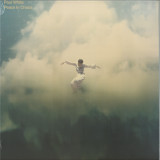
Multi-instrumentalist and synth wizard Paul White readies his third album for R&S Records, offering up a cinematic journey on ‘Peace In Chaos’ that captures the current mood with its shadowy electronic prowess. With an unabashed love of 80s synth music and film scores, the South London based producer presents an album of perhaps his most pop leaning tracks yet, following on from 2018’s ‘Rejuvenate’ and 2014’s ‘Shaker Notes’. Across eleven tracks, White delves into a world of esoteric electronic pop, as waves of melodic synths wash over towering drum patterns and majestic bass, with White adding his own enigmatic vocals to many of the productions.
Rosie Lowe, die gefeierte britische Singer-Songwriterin und Produzentin, veröffentlicht ihr brandneues und drittes Album 'Lover, Other' auf dem Londoner Tastemaker-Label Blue Flowers Music. Musikalisch entzieht sich 'Love, Other' jeglicher Kategorisierung, ist Genre-fluid par excellence, gekonnt zusammengehalten durch Rosie Lowes makellosen, fast mühelosen Gesang. Das Album ist ein Patchwork-Wandteppich voller Komplexität und Tiefe, das ihren inneren Dialog offenlegt. Produziert hat Rosie Lowe 'Love, Other' in Eigenregie mit Unterstützung von Harvey Grant (Kerala Dust, Puma Blue) und D’Monk.
Longtime enthusiasts of ambient music have much to celebrate as Rafael Anton Irisarri's cherished out-of-print cassette, "Midnight Colours," returns in a meticulously remastered edition and makes its inaugural debut on vinyl. The significance of this album's announcement is accentuated by its historical resonance, coinciding with the same day in 1952 when the world bore witness to the first-ever test of the hydrogen bomb.
"Midnight Colours" is far more than a mere album; it's an exploration of the enigmatic relationship between humanity and time. Conceived as a sonic interpretation of the Doomsday Clock, which symbolizes the world's existential vulnerabilities, Irisarri's work beckons listeners to contemplate the gravity of our existence and the delicate balance that envelops it.
"I wanted to capture the essence of humanity's relationship with time, both the anxiety and the serene beauty that coexists within the shadows of the night," explains Irisarri. "The vinyl format adds a tactile dimension to the experience, inviting listeners to physically engage with the music."
Known for his contributions to the ambient and electronic music genres, Irisarri often explores themes of introspection, nostalgia, and the interplay between sound and emotion.
Recorded in 2017, when the Clock was at 2½ minutes-to-midnight (and at the time, the second-closest to midnight since the Clock's inception in 1947), "Midnight Colours" permeates with the melancholy of memories resurfacing as one approaches the end of life: the regrets, the closure, the uncertainties, the anxieties.
Originally released as a limited tape on the beloved Atlanta-based label Geographic North, "Midnight Colours" swiftly garnered praise and acclaim within the ambient music sphere. Now, with this newly remastered edition on his own Black Knoll imprint, fans, both longstanding and newfound, can rediscover the album's captivating beauty in unprecedented clarity and depth.
"I've wanted to release 'Midnight Colours' on vinyl since it first came out, and I'm thrilled to finally be able to. The remastering process, brilliantly done by Stephan Mathieu, has breathed new life into the work, and I'm eager for listeners to experience it in this format."
The reissue of "Midnight Colours" features band-new artwork and design by the renowned Mexican visual artist Daniel Castrejón. A frequent collaborator and friend of Irisarri, Castrejón's imagery impeccably complements the album's mood and themes, extending a compelling invitation for listeners to explore its aural world visually.
This landmark release serves as a testament not only to Irisarri's enduring impact on the ambient music genre but also as a long-awaited gift to those who have patiently anticipated the album's vinyl debut.
2024 Repress
For Frenzy's third release, and the first solo release, the Uruguay-based William Arist is introducing us to his world of 'tribal techno'. Hailing from the city of Montevideo, this Southern-American-born artist already is a talent to watch overseas. Through their like-minded vision of electronic music, William bonded strongly with our Amsterdam-based Frenzy crew over the last couple of years. This warm connection evolved into Frenzy 03 - showcasing pure dance floor eclecticism that only William can deliver, including two remixes by no other than VIL and rising star Kenji Hina aka Alarico.
The A side instantly kicks off at full good vibe-throttle with two productions that reminisce about those iconic Love Parade moments during the very first days of rave culture. Balancing on the edge of house and techno, 'Chaka Chaka' loops the listener into a straight sense of movement. With rhythmic drums and uplifting vocals, 'Days' feels like stepping into an after hour dance-floor at the beach while the morning sun rises through the exotic vegetation. On the B side, William leans towards a more hypnotic sound. With a great tempo and a dark yet subtle mood, 'Tero' sets the tone for those murky clubbing moments where the boundaries dissolve and bodies merge. Slowly climbing out of the deep, 'Gultural' stays on the same energy level while adding dubby hints and a taste of freshness.
To top it off, the release is provided with two remixes that leave no room for interpretation. Portuguese producer VIL turned 'Chaka Chaka' into a true peak-hour beast while Italian multi-talent Alarico shows his versatile skill set with a speedy house remix of 'Gultural' under his Kenji Hina alias.
Pulsar-driven groovetronics, folky modalisms in waltz time; dreamvitations to the cine-lounge. Rhythm-n'-mood experimenters Les Hommes return with a plasma-rippling suite of jazzified cuts. The new album – Sì, così – takes us into their usual unusual orbits; with re-explored mid-century Lowrey organ, mellifluous bass clarinet, Arcadian flutes, groovified piano electrique and oscillators scorched on re-entry, it's out there.
With compositions aired on BBC 6 Music, Radio 3, Radio 4 and stations around the world, plus sold-out live shows, global cult combo Les Hommes combine mid-century-cool organ group tropes and heavy percussion with contemporary arrangements and sound-sources. Their new 2024 release, Sì, così, takes the line-up further out again to explore spacier themes, esoteric modes and filmic stratospheres, as well as continuing expeditions into 'live' small-group recordings.
Kulture Galerie returns with its third various artists record featuring Doc Sleep, Rambal Cochet, The Jaffa Kid, Mesmerist, Jack Bags and Undsidedly.
The multi format label run by Filippo MSM (of Metropolitan Soul Museum) is back with its 7th release overall, this time on wax. This new collection continues to show Filippo’s predilection for music with non straight forward drum patterns and moody melodies.
Volume Three is a well thought mix of styles, spanning to and from two Trance oriented tracks from Rambal Cochet and The Mesmerist through the broken techno of Doc Sleep, Jack Bags’s all analogue Acid House track, The Jaffa Kid’s uncompromising Drexcian’s Electro and Undsidedly dreamy’s own take on the genre.
It is summer dawn . . . and you are alone. Here is music for your strange mood. The piano starts the first track, slow tempo beat, a strict beat, a swinging beat. Lillemor—here minor harmonies give the tune a rural, romantic feeling of some place in Spain or France. The tempo changes to medium fast—the flute solos. Light phrasing contrasts beautifully to the earthy, swinging beat of the rhythm section and the repeating piano figures. The trombone adds a new color, a counterpoint of sound and phrasing, backed by the pulsating beat of this wonderful rhythm and the driving piano. Summer dawn . . . This music has more to offer, because it shows the personality of Sahib Shihab at its best. Sahib is a universal musician who reflects musical experiences in jazz since the end of the thirties. He lived through the important periods of modern jazz with his heart and mind wide open toward everything that was good music, regardless of being termed "Mainstream", "Bop", "Cool", "Westcoast", "Eastcoast", "Hard Bop'', et cetera. When you listen closely to his music, you will find traces of all these, but they are immersed in his deep musicianship and his true jazz personality. Sahib Shihab's background reads like the record of a master of advanced studies. Furthermore he played and collaborated with the coolest jazz musician of that period. Above all let's name Budd Johnson, Theolonius Monk, Tadd Dameron, Milt Jackson, Dizzy Gillespie, Illinois Jaquet, Elmer Snowden, Luther Henderson, Larry Noble, Fletcher Henderson, Roy Eldridge. In his early professional years, Sahib was heard mostly on alto sax; later, more often on baritone sax and flute. Today, his name is inseparably connected with these two instruments. The unity of his jazz performances is not alone bound up with the com¬positions and the arrangements of Sahib Shihab, though in their understated simplicity they have a melodic beauty that is seldom found in jazz of today. The rhythmical subtleties add to the overall qualities of being relaxed vehicles for free-blowing, but there is an immediacy that you hear and feel every moment when listening which defies analysis. The playing of the rhythm section helps greatly to promote the sense of flux and contrasting constant renewal that makes listening to this record so invigorating an experience. Well, this is no surprise, with Kenny Clarke as the nucleus of the rhythm group. Kenny 'Klook' Clarke is a major figure and contributor in jazz, one of the founders of modern jazz, and is ranked as one of the all-time great drummers. He influenced a whole generation of musicians with his playing, though living in Paris since the middle of the fifties somewhat dimmed his name to the general American public. Nevertheless, his name alone will assure a connoisseur to expect top class musical experiences. Talking of the rhythm section we have to name Jimmy Woode's bass, which together with Kenny's drumming, is the driving force for the group and the reliable harmonic anchor for the improvisors. By the way, Jimmy has been with the Duke quite a while, and this alone is an award for extraordinary craftsmanship and artistry. The good sounding rhythm with its full-bodied color is also a result of the added bongos of Joe Harris, who manages to stay out of the way of the players—a quality not often found with drummers—but his playing is felt through the set. There are two members of the group not yet mentioned. Two Europeans, pianist-composer-arranger Francy Boland from Belgium, and trombonist Ake Persson from Sweden. Francy Boland this time is a sideman, though normally he is a leader of recording sessions, both as composer-arranger and as musical director of the band. In the fifties he was in the States writing arrangements for different name-bands, such as Basie and Goodman. In Europe, he is famous for his swinging modern big band arrangements; and his inventiveness as a writer is reflected in his piano playing. He has the talent of using the right dynamic approach every moment, thus making his playing helpful to soloists and interesting for listeners as well. Ake Persson has been Scandinavia's out-standing trombone player for about ten years. There are only a few trombonists in Europe who might match his talents at times, but they lack the consistency of his playing. He is impressive, whether playing in a big band, or whether main soloist in his own small groups. American musicians love the sound of his slide trombone and his easily flowing romantic improvisations, so he often joins American name-bands as they travel in Europe. The music speaks alone . . . , we said it before. You have your soul to feel the beauty, to follow lines and structure, and to enjoy the spiritual excitement. Whether you enjoy the flowing, easy sounding theme of "Please Don't Leave Me", or the climaxing piano solo in the same piece—the bass solo in "Waltz For Seth" or the swinging baritone sax—listen to the first bars of this solo and pay attention to Kenny. Whether you listen to "Campi's Idea", (named after Gigi Campi, the well known Cologne jazz enthusiast who organized this recording) with the romantic flute solo of Sahib, the interesting tempo changes, the piano comping, the moving trombone solo; or to the up-tempo "Herr Fixit", with the cooking Kenny and humorous, driving flute solo, you know that these six musicians where in the right mood, in the right stimulating surroundings to feel what we all feel when it's: SUMMER DAWN.
2025 Repress
For Fuse's fifth release, Brussels' Altinbas returns for a whirlwind of meditative and harmonious techno. Solidifying his identity of focused yet vibrant club music, the Fuse resident and label co-curator offers his second contribution 'Sustain' as a dancefloor-enveloping take on modern techno. Known for rich chords, whipping pads, and dry percussion, Altinbas proves once again that his touch as a producer revolves around balance and calculated effect.
'Trail of' kick starts the EP with flourishing synthwork and a taste of dub as has become the Belgian artist's signature. Dotting toms as rhythmic accents and a low to the ground shaker make for a swaying introduction with an infectious groove. Breaking things up in the second track, 'Life Force' presents Detroit style chord stabs and playful rhythmic work. With a mental synth at the foundation, the track presents 909 drums to reinvigorate atmospheric synths that make 'Life Force' a subtle hybrid of classic club genres. With a wink at Fuse's heritage and a peak into its future, Altinbas' focus on enduring music can be felt throughout 'Sustain' and truly understood in the Brussels club. As a fitting follow up, 'Purpose' opens the B-side with illuminating chords and rounded sound design and a pulsating low-end. With almost a lighthearted tone, the record fits across genres and rooms, claiming movement instead of mood as its sole medium. The title track 'Sustain' proves just that - a melodic sequence and progressive arrangement make for an intensely euphoric closing. Evolving melodies, opening filters, and big but calculated buildups sum up Altinbas's work for Fuse's fifth release on the new label. The record brims with warmth and yet it finds its way on darker dance floors with ease, providing a refined style of music that belongs only to him across the international scene.
Amputechture Beneath the technical flash, the fury, the fearless creative brinkmanship of the first two Mars Volta albums lay a potent seam of the blues, an existential vexation that powered every twist and turn of Omar and Cedric’s imaginations. That mournful vibe would come to the surface of the group’s third full-length Amputechture, a simmering/blistering set that was unquestionably the group’s darkest yet. There was no overarching theme here, no interlinking concept binding the songs together, though Cedric concedes that, lyrically, the album was influenced “by a lot of stuff I was going through, a really bad break-up and a lot of other crazy stuff, and trying to put that feeling into the record.” But Amputechture – its name another of the late Jeremy Michael Ward’s invented words – was no downbeat bummer. Opener Vicarious Atonement might’ve been a deliciously gloomy, slow-burning thing, capturing Cedric in delirious duet with Omar’s swooning guitar lines, accompanied by squalling saxophone by Adrian Terrazas-Gonzales and dream-frequency fuckery by the group’s new sonic manipulator, former At The Drive- In member Paul Hinojos. But second track Tetragrammaton swiftly set pulses racing, an epic-in-miniature and containing more ideas within its 16 minutes than most bands manage over an entire career, its proggy, complex guitar figures tessellating in infinite configurations and converging as if conforming to mathematical formulae from another reality. The raw material Amputechture was hewn from started life on the road. Omar now travelled with his own mobile recording studio – a little Neve ten-channel tape recorder and an array of microphones – and was able to work on new ideas on tourbuses, in hotel rooms and during soundcheck (and, occasionally, after the show was done). After touring for Frances The Mute was complete, Omar relocated to Amsterdam, staying with his photographer friend Danielle Van Ark and her partner, Nils Post. It’s here that he demoed Amputechture, flying in engineer Jon DeBaun, drummer Jon Theodore and his brother, Chino, to work on these raw sketches. He later returned to Los Angeles, where the album was finally recorded. Omar ceded guitar duties to his dear friend and kindred spirit John Frusciante, instead assuming the role of musical director. “I wanted to hear the sound of the band,” he says. “I thought, I’ll be able to sit at the console, feel the air of the speakers moving, the unified sound of everything, and not feel distant from it. It was fun, but it was also challenging.” Part of Omar’s new method was to teach the musicians their parts only moments before the tapes rolled. “To keep things fresh, and to keep everyone on edge,” he says, before chuckling. “No, not on edge – on their toes. Amputechture would prove The Mars Volta’s most diverse set yet, drawing into the group’s tornado of influences moments of fiery jazz spirituality and esoteric folk introspection, finding space for passages of devastating subtlety and also their most fierce and full-on moments to date. The aforementioned Vicarious Atonement found its meditative mood echoed by Asilos Magdalena, an intimate, acoustic piece that invoked traditional Latin folk music, as Cedric sang in Spanish a sorrowful tale of a lost soul’s quest for sanctuary within a Magdalen Asylum, a refuge set up by the Catholic church for “fallen women”. The shadowy, sinister closer El Ciervo Vulnerado, meanwhile, tapped into the darker side of spiritual jazz to further explore the album’s themes of redemption and religious myth and magick. Elsewhere, the interplay between guitar and clarinet on Viscera Eyes created complex, unsettling counter-melodies, while the coiling, ornate Meccamputechture – Cedric’s wild fusion of sacred texts, occultism and dystopian science fiction – proved a great showcase for Ikey Owens’ swarming, infernal organ runs, in concert with Frusciante’s arcane guitar-play. But it was Day Of The Baphomets that would prove Amputechture’s most ambitious and most defining epic. Cedric’s lyrics tore into the hypocrisy of religious cant and myths of sin and punishment. “I wanted to make a song that was like the movie The Believers, where this cabal stole kids and did some occult shit with them,” he explains. “But I wanted it to be like, ‘What if the people you hire to do jobs you don’t wanna do rise up one day and then pull some shit like that?’ Like it was the guerrilla warfare, them taking over – wouldn’t that be some fucked up shit? And the music just lent itself to that – the big intro, the bass solo, and all of the ruckus that occurs.” That ruckus was some of the most thrilling Mars Volta music yet, as Omar directed his musicians to rumble through fiery modes of wild tribal groove, ransack-the-palaces riot- rock and supreme progressive experimentalism. Amputechture, then, is the sound of The Mars Volta in imperial mode: fearless, insatiable, unstoppable.
2024 Reissue
Founded with the intent of bringing hidden sounds out of obscurity, Rarefied will project these sounds on to a platform to be experienced by the many denizens of sound system culture. While the music is made to enjoyed by all, it retains its identity as both an underground and unique form of artistic expression.
After a series of successful digital releases, Soukah bursts onto the vinyl scene, presenting a sound crafted over the course of almost a decade. His past works range from Industrial Noise to his own unique take on Dubstep. RARE1 showcases Soukah's versatile approach to production - His organic style, based on dark synthesis and unorthodox drum patterns, is a true representation of the Rarefied sound.
'JAK FOU' is the result of six months of studio time, the classical piano riff combined with haunting percussion results in an experience akin to ingesting 18 grams of psycobilin. On the flip side 'Loner' is a far darker, moodier affair. Written solely by candlelight, the production evokes the darkest elements of Soukah's soul. This track is best enjoyed alone, in the wilderness.
Following up on his fantastic full length from a couple years ago, Adriano Mirabile continues to bring forth that down tempo and mid-tempo organic house mood and chillout lounge atmosphere blend with his productions. Side A we get the original Traumfänger tracks showcasing all that we've loved from the get about what Adriano brings to our imprint. Side B offers up two reinterpretations courtesy of Aus Music recording artist, Lee Jones, and Stasis Recordings mainstay, Sanderson Dear. Both take the chillout and bump up the pulse a bit with their techy flare.
Behind the deceptive veneer of the demure monotone artwork, something unassuming lies within this long-play waiting to be explored. Intrigued by the ironic title, enticed by the elegant text positioned alone on the beautifully tactile matte canvas, the listener will experience musical wonderment at odds with the presentation and discover that the 1976 album Colours is a powerful yet sophisticated set of electric soul-jazz. An inspired recording that bursts with warmth and texture, the pivotal recording from an exceptional jazz musician. HER name - Judy Bailey.
Over the course of a 70 year career, the pianist and composer established herself as one of the central figures of Australian jazz. Her crowning achievement Colours is a spirited and ambitious recording that captured the maturation and shifting jazz landscape of the mid 1970s Australia. Alongside other notable albums recorded mid decade including the 1975 self titled album by Melbourne's Arena (see Roundtable SIR014)) and Jackie Orszaczky's Beramiada (1975), the album signalled the countries transition from semi-acoustic jazz to electric jazz-funk. Regularly compared to the albums released on Creed Taylor's CTI label, Colours parallel these recordings with their clean production and spacious soul-jazz arrangements. In particular the crisp drums and processed bass heard on Bob James and Joe Farrell albums, the sprightly flute of Hubert Laws or perhaps the more sensual side of Flora Purim's vocals could all be suggested as a source of influence.
Continuing to celebrate and re-document Australia's jazz music legacy, The Roundtable are pleased to offer the first vinyl reissue of this seminal Australian Jazz recording. Presented in a replica gatefold sleeve with new liner notes, the full palette can once again be appreciated including the moody funk of Fall Down Dead, the Iberian Waltz Toledo, the Jazz-Dance anthem Colours Of My Dream and the spacey impressionist piece The Eleven Eight Song.
Uni Cover[11,72 €]
Born and raised in Sicily but now based in Berlin, SLV is known for his innovative approach to techno and its various shades. He has released on revered labels like Soma and received support from key industry players who respect his ability to blend old-school vibes with modern production techniques. Away from the club, he also produces music for film soundtracks, adding a sense of cinematic edge to his techno cuts and is a master of both analog and digital technologies - a true audio engineer who crafts unique, compelling sounds. Having previously featured on the labels Federation of Rytm III compilation, he returns to SHDWs Mutual Rytm imprint with his Night Echoes EP to open up October.
Graustufen opens with punch drum programming and scintillating percussion that dances atop the groove as booming bass brings serious weight down low. The superb Grand Cayman is another potent techno weapon, this time with icy synth atmospheres and eerie moods pervading the tightly programmed drums and bass to deliver an unstoppable force. Voids brings urgent funk with its hunched-over, closely stacked kicks and suspensory pads, which never let up and keep you locked in the moment, while Elastik Pho echoes a classic Detroit sound with its soul-drenched beats and serene, uplifting, beautiful hi-tek style. Last but not least, That Night shows SLVs extraordinary range as it brings some soulful vocal loops and optimistic chords over thunderous drums, which are sure to power dance floors through to euphoria. The EP includes two digital bonus cuts: Basic Uno, which is a raw, percussive and heads-down banger, and Persistence Of Memory, which is stripped-back, glitchy and dubby techno for strobe-lit warehouses.