4

DJ Subaru has already made their name exciting dancers with offbeat anthems and obscurities as part of their luminous Pleasuremaxxx parties, alongside similarly inclined soirees in Leeds, London, Berlin and beyond. Making their accomplished production debut on CWPT with 'Lots of Love', DJ Subaru instinctively mines the expressive, outsider strains of disco, Italo and pop pleasures in their record bag, revealing an EP that throbs with the pleasures, pain and potential of a life in strobes and smoke.
Vocalist and muse Tiss Vampiric emerges from London’s shadowy underground to lend their voice to the brooding, disco-Gothic track, ‘My Love’. Stalking a moody paradise amongst DJ Subaru’s EBM-oriented synthesizers, their baroque lyrics conjure an atmosphere that bridges the energies of subversive pioneers such as Soft Cell and Ministry, a sensual maze where denial only leads to more devotion, as well as more dancing.
Keeping the lights dim but brightening the corners, the prolific cosmic disco pioneer Prins Thomas reinvigorates his legendary ‘Discomiks’ approach for a euphoric remix of ‘My Love’. Incorporating DJ Subaru and Tiss Vampiric into a dancefloor canon that also includes Lana Del Rey, Pet Shop Boys and the Chemical Brothers, this classic arrangement has been road-tested to build euphoria, joyfully reflecting menace from mirrorballs.
The latter portion within 'Lots of Love' leaves us entirely in DJ Subaru’s musical visions. The only voice on ‘I <3 You’ is soft and robotic, intoning the track’s simple title over a lush, caramelized groove that’s pure circuits and sentiment. In contrast, the moody pads of ‘Just Visiting’ build to a crescendo of breaks and basslines that capture more urgent early hours energy, while ‘She’ provides a beautifully naive melody and a slightly balearic touch for a wide-eyed kiss goodbye.
Repress!
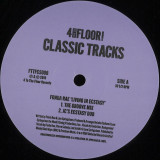
4 To The Floor is committed to delivering seminal house music to wax, making sought after heritage tracks readily available on vinyl for crate diggers to add to their collections. Now in its fifth edition, the series continues to raise the bar. The A-Side features two mixes of the mid-nineties Mood II Swing production ‘Living In Ecstasy’ by Fonda Rae. The R&B singer who was responsible for cult hits like ‘Touch Me’ delivers silky-smooth vocals that remain the focus in the opening Groove Mix, whereas JC’s Ecstasy Dub follows up with a rumbling bassline to deliver a club-focussed version. On the flip we’re greeted by a slice of 2001 goodness with the Original Distant Music Mix of Jon Cutler featuring E-Man ‘It’s Yours’, a seminal house classic. Closing out the release is The Return’s ‘New Day’, originally released on Fourth Floor Records in 1999, twenty years later this sublime and emotive piece of house music history sounds fresh as ever. Classics Volume 5 is another record box essential delivered to you by 4 To The Floor.

Closing off a four release run with Samurai Music and affiliated labels, Eusebeia collaborates with Aisatsaana for the Transformation EP on Samurai Music. The combined creative perspective and approach of the two artists results in a textural adjustment, a glistening and psychedelic sheen is sprinkled over the tempered kick/break/bass combos. It's a perfect EP that smoothly traverses mood waves.

"Grand Slam’s new album Wheel Of Fortune is set for release on June 7th via Silver Lining Music. The four-piece band formed in 1984 by Phil Lynott and guitarist Laurence Archer before being forced to break up in 1986, have finally formed the appropriate return with a top-drawer of hard rocking songs which resonate with clear and present verve and energy.
Wheel of Fortune is the fully-realised modern Grand Slam sound, striding confidently back into the conscience of classic-rock fuelled devotees who didn’t know what they were missing. There are no more shoes to fill only boots`being worn on the ground, with Dyer’s style and swagger at the forefront of spirited leaders such as “There Goes My Heart”, while Archer’s fiery fretboard forays on the likes of the riffy “Spitfire” are a vital part of the Grand Slam architecture. With the lock-solid rhythm section of Newton and Reid underpinning affairs, Grand Slam not only stand on their own eight feet, they’re also able to directly engage with their talismanic, legendary founding energy with “Come Together (In Harlem)”, a moody, strutter of a song from the Phil Lynott days with (mostly) Phil Lynott’s lyrics.
But make absolutely no mistake: Grand Slam are not a band returning from their past, but a band firing intentions regarding their future, as the epic, multi-layered, steamy swing of “Pirate Song” suggests… Let the music do the talking."

San Francisco psych-pop legend announces new album, “La Fleur” out June 7th, 2024. Between outside musical projects, pushing past 50 years old and becoming a father for the first time, San Francisco psych-pop legend Kelley Stoltz has spent the past two years steadily writing and recording his 18th album, “La Fleur”. The dazzling 12 song collection will be released in June by Agitated in Europe/UK and Dandy Boy Records in the USA. “La Fleur'' finds Stoltz once again playing nearly all of the instruments on the album- though a new friendship with pop guru Jason Falkner has led to Falkner appearing on two songs, “Hide In A Song” and “Make Believer” respectively. There’s the requisite 60’s meets 80’s pop rock confections that Stoltz favors with a new focus on out front vocals and perhaps a bit shinier production. Pandemic era blues, politics and fatherhood are lyrical touchstones throughout. The album’s first single “Reni’s Car” is the jangle rock lead single based on an actual event of Kelley riding around Manchester in the Stone Roses drummer's car. The accompanying music video was shot (partially) on location. “About Time” marries Twin Peaks synths to Fleetwood Mac and Avalon era Roxy Music in a cautionary tale to Stoltz's young daughter. “Human Events” puts revolutionary prose to a Moody Blues strum that floats off into Osees territory …and do I hear a nod to Gershwin in there? During the 2010’s Kelley played live as a sideman with Rodriguez and Echo & the Bunnymen, as the 2020’s dawned he was invited to support Pavement on their big reunion tour. He’s also been heard playing drums live with Robyn Hitchcock as well as adding sitar to Hitchcock's last two albums. In 2022, Stoltz was championed with a live appearance on Marc Riley’s BBC6 show. As producer, he has recorded the new album by Brigid Dawson formerly of the Ohsees. In my ears, Stoltz rarely does any wrong, and these comparisons are only just that little fruit to get you curious- he is still one of a kind. An under the radar hero to a few, and still after all these great songs, deserving of more. Climb on the bandwagon - as ever it’s quite pleasing here. - GEORGE CLOUD San Francisco, CA 2024

San Francisco psych-pop legend announces new album, “La Fleur” out June 7th, 2024. Between outside musical projects, pushing past 50 years old and becoming a father for the first time, San Francisco psych-pop legend Kelley Stoltz has spent the past two years steadily writing and recording his 18th album, “La Fleur”. The dazzling 12 song collection will be released in June by Agitated in Europe/UK and Dandy Boy Records in the USA. “La Fleur'' finds Stoltz once again playing nearly all of the instruments on the album- though a new friendship with pop guru Jason Falkner has led to Falkner appearing on two songs, “Hide In A Song” and “Make Believer” respectively. There’s the requisite 60’s meets 80’s pop rock confections that Stoltz favors with a new focus on out front vocals and perhaps a bit shinier production. Pandemic era blues, politics and fatherhood are lyrical touchstones throughout. The album’s first single “Reni’s Car” is the jangle rock lead single based on an actual event of Kelley riding around Manchester in the Stone Roses drummer's car. The accompanying music video was shot (partially) on location. “About Time” marries Twin Peaks synths to Fleetwood Mac and Avalon era Roxy Music in a cautionary tale to Stoltz's young daughter. “Human Events” puts revolutionary prose to a Moody Blues strum that floats off into Osees territory …and do I hear a nod to Gershwin in there? During the 2010’s Kelley played live as a sideman with Rodriguez and Echo & the Bunnymen, as the 2020’s dawned he was invited to support Pavement on their big reunion tour. He’s also been heard playing drums live with Robyn Hitchcock as well as adding sitar to Hitchcock's last two albums. In 2022, Stoltz was championed with a live appearance on Marc Riley’s BBC6 show. As producer, he has recorded the new album by Brigid Dawson formerly of the Ohsees. In my ears, Stoltz rarely does any wrong, and these comparisons are only just that little fruit to get you curious- he is still one of a kind. An under the radar hero to a few, and still after all these great songs, deserving of more. Climb on the bandwagon - as ever it’s quite pleasing here. - GEORGE CLOUD San Francisco, CA 2024

Fifth solo album from saxophonist Julius Gabriel. Born out of new sounds and rhythms that the musician discovered during the pandemic, “Tales From The Subterranean” embodies a blend of primal energy and inventive exploration across twelve tracks. The opener “Time Riding” sets the mood, a tearing rhythm that sounds like a frenetic tap dance. It invites you to move and when you get to “Footworks” you are all set up, merging saxophone finger percussion with a continuous siren whisper emanating from the instrument, provoking euphoria, fear and satisfaction all at once. Moving on, you start to understand the sense of discovery behind the record and the needs Julius had, like to construct a saxophone with drone capabilities and closer to an idea of natural sound. “Hailing From The Mountains” has a meditative tone; “Westward At Sundown” feels like a ballad. Born from darkness yet radiating with newfound light, “Tales from the Subterranean“ stands as a testament to the resilience of artistic expression. It is primal music.
All music composed and performed by Julius Gabriel on electroacoustic tenor saxophone and twin soprano saxophone.

In 2002, the American heavy metal band Mudvayne released their sophomore album The End Of All Things To Come, which expanded their sound with a more versatile range of sounds, dynamic, moods and vocalization. The band wrote the album's songs in less than a month, drawing inspiration from their self-imposed isolation during the songwriting process, and crafted a more mature sound which drew from jazz and progressive rock influences, as well as elements of death metal and thrash metal. For the production, Mudvayne worked with three-time Grammy Award winner David Bottrill. The album spawned two singles: “Not Falling” and “World So Cold”, which were both a commercial success and charted well. The End Of All Things To Come is available as a limited edition of 1500 individually numbered copies on purple marbled vinyl. The 2LP is housed in a gatefold sleeve and includes a 4-page booklet.

A home, a house, has countless frequencies. Each room, each corner feels different. Swings differently. And as you grow older, you realize which corner is yours. But yeah, it takes time…
It certainly marks the end of an era when the house one called home as a kid no longer exists. This home, it was the starting point of so many journeys. Of one big, ongoing journey. And so it feels good, soothing, reassuring to at least return to a spot nearby – to that (proverbial) hill from where you can see it. Feel the vibe that made you.
Andi Haberl’s debut solo album as Sun is sort of dedicated to that house. It’s a journey leading to that hill overlooking everything that made him. It’s not about nostalgia, not about actually returning to a specific place. Instead, it’s about finding a personal frequency, an overlapping of sounds and samples, an open space that mirrors and extends whatever frequencies felt right at different points in time.
“To me, the results feel like Gold Panda/Four Tet meets Steve Reich meets Krautrock meets film scores. I just really wanted to create moods that touch me – and ideally others, too.”
Talking about his first solo album, Haberl recalls many stages: early compositions that ended up on Alien Ensemble’s albums, early DIY/home studio/multi-instrumentalist inspirations (Le Millipede), new technologies that came and went, even a set of wildly convincing arrangements (done with Cico Beck’s crucial input) that ultimately became stepping stones for yet another round of DIY takes. “It was a long, recurring process, and the songs went through so many different versions,” he says, talking about phases of growth (“I added more and more equipment over time”) and pruning, “cleaning up my music a bit.” Tending towards instruments that open up space, and slowly falling in love with sampling, he certainly didn’t rush things once it was time for interior design decisions ;)
“During this whole process I got to learn so much about my own taste, how I prefer to listen to the pieces, which musical elements really matter to me… and what my own voice is. For example, that acoustic elements are most important to me: the banjo, piano, drums, my voice, glockenspiel, trumpet, melodica. Anything that opens up some space.”
Every journey begins with a search: “Missing” with its plucked chords opens like a sunrise over pastoral plains, gently leading the way towards the intricate, playful explosion that occurs once a certain amount of energy (“Sun”) hits dirt and other surfaces: things grow, clot and curdle into new shapes, like new buds; layers of sound move forward, drenched in Spring’s new light. Relying on samples to ask for precipitation (“Rain On Me”), robotic “Low” goes from barren to bass-heavy after its midway shift in pace, full of loops plucked from the shade.
Towards the album’s midpoint, things are suddenly reversed: “Cluster” has that backwards pull, you can’t tell what’s what, yet everything is perfectly locked in, as the pace increases once again. And before the title song shimmers with densified cheering (to eventually stand tall like early Lymbyc Systym), “Beside Me” swipes you off your feet with its booming bass drum. The beat returns once again (“Daydream”), full of searching voices underneath, and at “Dawnday,” we can finally catch a melancholy view of the house. Voices hum. It’s the score moment of the album. Everything makes sense now. A happy end of sorts?
“I want to take people on a journey. A personal journey, too, because when my parents split up and sold the house I grew up in, I felt a bit like the ground had fallen out from under my feet. But I have dedicated the album title and the accompanying piece to this house… so I can keep it in good memory.”
“I Can See Our House From Here” has been a long time coming. It’s been a long journey. Homeward-bound. Leading to a place that’s really Haberl’s – his sound. His frequencies.
Known as a long-time member of The Notwist and various other bands/projects (Alien Ensemble, AMEO, jersey, Ditty etc.), Berlin-based drummer/composer Andi Haberl has also worked with My Brightest Diamond, Till Brönner, Owen Pallet, and Kurt Rosenwinkel, to name a few. “I Can See Our House From Here” is his first solo offering.
ColorJaxx' latest offering, the 'Tales Of Never' EP, seamlessly melts into Flipsight's signature style. Born out of the atmosphere of local parties organized by the label, it narrates the essence of your ideal weekend.
Kickstarting your unwind session with the melancholic 'Tales Of Never', a track that sets the tone for relaxation after a hectic week. However, don't linger too long: 'Night After Night' counters this mood with a joyful bliss of a sunny Saturday! The A-side of the vinyl paves the way for the club-ready B-side. 'Here For You', a classic house tune, brings the four-by-four energy to the dancefloor, while 'There is Something' wraps up the EP with an after-hours ambiance, leaving a sense of euphoria for those still awake. It's a must-have addition to any electronic music enthusiast's collection.

Tangential Music is pleased to present the new album from veteran Spanish DJ and producer, Dj Toner (aka Antonio Herrera). Alongside his co-writer/arranger Daniel Molina and with guests that include the legendary Blue Note Records innovator Erik Truffaz and Grammy winning flautist and saxophonist Jorge Pardo, he has created a 10 track collection of slow-burning instrumentals that straddle the worlds of hip hop, jazz and electronica.
With a personal, precision tooled approach to his craft, the Andalusian has offered up an album of finely modelled downbeat moods.
At first glance, ‘Out Side’ is made up of recognisably superior hip hop instrumentals but if you listen carefully, and with patience, one can hear a craftsman at work. A wooden box is just a box until you look closer. The hidden joints, the perfect lining up of the grain, the years of artisanal graft and laser-focussed attention to detail that go into making something that has nothing present, that doesn’t deserve to be there. This is how Dj Toner operates.
The two singles that preempt the album’s release reveal different sides of his craft. ‘Camina’ struts with tough intentions. Soundtrack-y in an exploitation police drama manner, the get-out-of-my-way drum break and tension-filled chords suggest the bad cop, Erik Truffaz’s piercing lyrical trumpet lines, the good. The Afro-jazz horns led second release ‘Surprise’ is an altogether more playful, sunbaked affair. Sensual and slow-burning, there’s still an edge but it’s too hot to quarrel.
Dj Toner’s minimalist attitude to creation is shared with his co-composer Molina - an individual’s contribution may be cut to the bone, leaving just its aura or tone. The echo of a piano, a single blast of tuneful wind from a flute, a perfectly positioned drum hit.
Since the Wu-Tang Clan’s RZA began applying his beatmaking prowess to movie soundtracks, the hip hop instrumental has been acknowledged as something to listen to, as much as being used as a DJ tool or backing for an MC. Dj Toner’s instrumentals can, therefore, be seen as soundtracks. Soundtracks to his life and craft, vignettes of his environment in both the urban sprawl and the wider and slower spaces of “el campo”.
The sweet-tempered jazz-blues of ‘La Rimosa’ is a gentle welcome to the album. A simple, laid back groove with the most romantic of piano hooks that one could imagine Common dropping rhymes on. You’re kept on your toes with the odd purposeful moment of discordant interruption but the tender heart of the composition is never far away.
‘O’Beat’ hints at John Coltrane with the sparse but full-sounding upright bass before a head-snap break leads into a curious piano groove, a vintage organ swirls into a psychedelic fractal, whilst the bluesy female vocal snippets add the spice, that zing in the Granadan gazpacho.
The flamenco guitar driven ‘Flama’ is an excellent example of intricate sample placement and musicality. Old school (school yard) scratch interludes, sweet piano hooks, a minimalist but knife sharp flute contribution from Jorge Pardo, and the crunchiest of drums taking us for an intriguing walk round the corner.
We’ve mentioned them before but it’s on ‘Sweetband’ that we can feel that Wu-Tang dread hanging off its shoulders. A brooding orchestral number with powerful horns and a cavernous piano hit. The title of the piece is in stark contrast to the dark shadows of the tune.
Erik Truffaz returns in fine form on the super lethargic jazz-funk-hop of ‘The Day’. His instantly identifiable muted trumpet sound paints dazzling colours over the more earthy tones of the filtered down keys as a rubbery upright bass keeps the forward momentum. Dj Toner’s ‘Blessed Are The Weird People’ album, was rated in Jazz Magazine as one of the 20 jazz albums of 2021, so he isn’t some dilettante when it comes to playing with the complex hues of jazz but he does like to strip it to its bare essentials.
‘Fanega’ sees a gorgeous flute contribution from Jorge Pardo. An eerie boom-bap groove with sprinkles of electronic pulses and washed out chords is the canvas on which the award-winning multi-instrumentalist evokes the heat shimmer of the savannah.
‘Esperanza’ translates as ‘hope’ in English and this lovely slow, swinging jazzy groove really does provoke feelings of positivity and belief. Sublime vibraphone and another stunning trumpet offering from Erik Truffaz, take us on a journey of warm days and possibilities, the shuffling drums and sweet chord patterns are nicely finished off by a tranquil horn chorus towards its unhurried end.
‘Under Beat’ ends on a beefy boom-bap groove with a liquid funk bassline, elegant synth strings and old school scratching. Again, there’s that undisputable soundtrack edge, action and motion, the smell of the city.
There you have it, 10 tracks that go beyond the surface, deep into the dedicated craft of Dj Toner. Decades of experience and collaboration purified and refined into beat-heavy emotions, listen closely or crank it up, it’s down to you!

2024 Repress
Electronic duo Atelier excel at riding chillwave to a cooler, moodier sound. Atelier was conceptualized by childhood friends Alexander Inggs and Jaś Miszewski whose love of analog synths, drum machines and effects pedals is revealed in a hardware-heavy live show. The project is a platform for combining their differing musical backgrounds – a blend of house, indie, folk and techno – and has an underlying maturity that emerges in their frank performances and honest productions.

A landmark recording and masterful symphony of performance, composition, and execution, Miles Davis' E.S.P. established the template jazz would follow for the following decade. The 1965 record splits the gap between accessible hard-bop and the cutting-edge approach Davis increasingly pursued into the 1970s. Adventurous, sophisticated, and yet altogether cohesive, E.S.P. stands out not only due to its elastic compositions but via its chemistry, interplay, and feeling attained by the instrumentalists. The first album Davis' classic second quintet made together, it's also very arguably the group's best. Never before has the effort been experienced in such transformational sound.
Pressed at RTI, this 180g 45RPM 2LP set of E.S.P. renders the music's dynamics, pitch, colors, and textures with lifelike realism and proper scale. Reference-caliber separation, wall-to-wall soundstages, and distinct images magnify the intensity and beauty of Davis and Co.'s creations. Whether it's the distinctive snap of Tony Williams' drum sticks against the snare head, air moving through Davis' trumpet, acoustic thrum of Ron Carter's bass, or upper register of Herbie Hancock's piano, the sound is better than you'd even hear in the most intimate jazz clubs. Prepare to be swayed on every level.
For many, E.S.P. looms among the decade's best albums if only because of the significance of Davis' line-up. While Hancock, Williams, and Carter are holdovers that began playing with one another on 1963's Seven Steps to Heaven, Wayne Shorter functions as the secret weapon and key addition responsible for this ensemble hitting a new peak. Indeed, the saxophonist helped pen two of the seven compositions here – notably, E.S.P. is entirely comprised originals and clocked in as one of the longest-running jazz LPs issued at the time – and, more importantly, grants Davis the confidence and leeway necessary for the eruption of enigma, steadiness, and tension.
As he did with John Coltrane year earlier, Davis hangs back and picks his moments to solo, with Shorter stepping up to supply the churn. Their bandmates respond in kind, itching to take off into new stratospheres all the while keeping their improvisations grounded and connected to the piece at hand. Guided by Davis' visions and inspired by current boundary-pushing works by the likes of Ornette Coleman, Cecil Taylor, and Coltrane, the magnificent results spark with variation, harmony, emotion, energy, and brilliant movement.
Interlocking lines drive "Little One," alternating rhythms pulse through the funky "Eighty-One," melodies soar on the balladic "Iris," the aptly titled "Mood" broods over minor-key structures, and "Agitation" – goosed by a two-minute percussive introduction by Williams – delivers on its promise. No record – and no group of musicians – have ever balanced coherent themes and exploratory playing in better fashion than Davis' quintet on E.S.P. It's the avant-garde record even jazz traditionalists love, and essential on every level.

For fans of Duster, LSD and The Search for God, The Microphones. Double LP (NO BOOKS!) First official physical copy of fan-made compilation of alternate tracks and demos from cult phenomenon album Deathconsciousness. Freshly remastered. With the broader adoption of the internet around the turn of the century, how people would engage with and discover underground music would change forever. As a result of the new digital era, DIY was now worldwide, and no band embraced this new frontier better than Have A Nice Life. Formed in 2000 by duo Dan Barrett and Tim Macuga, the Middletown, CT-based pair would, throughout the 00s, self-release and share a number of demos and home recordings via early social media channels as well as establish its in-house label ENEMIES LIST HOME RECORDINGS. These first steps set in motion Have A Nice Life’s rise to renown as an icon of underground music in the internet age, culminating with the release of its pivotal 2008 debut album, Deathconsciousness. Through word of mouth and online discussion, Deathconsciousness became subject to viral praise thanks to its synthesis of bleak post-punk, lo-fi shoegaze, and carpets of hypnotic drone music. Eventually, this humble self-released project would attain the status of a post-internet cult classic, amassing Have A Nice Life a fervent online following that the band would interact with in kind. In an effort to thank and continue to engage with Have A Nice Life’s internet cult following, Barrett and Macuga would regularly share links to old demos, works in progress, and outtakes from the recording of Deathconsciousness. Over time, a group of fans would compile these demos into an unofficial release. Dubbed Voids, this fan-made compilation several alternate takes of tracks from Deathconsciousness, as well as a handful of early versions of songs that would appear on Have A Nice Life’s two following albums, The Unnatural World and Sea of Worry. While undeniably reminiscent of their final album version counterparts, the earlier versions of these tracks each feel distinct in a way that makes the moody, decidedly lo-fi aura of Voids an essential slice of the Have A Nice Life discography. Hungry for more from the enigmatic duo, fans swarmed around this compilation, accompanied by loud calls for it to receive a physical release. Seeing that demand and with the band’s blessing, a pair of fan-made tape pressings of Voids would be released via Music Ruins Lives, a DIY label run by Have A Nice Life superfan Thom Wasluck, also known for his band Planning for Burial. Between both instances of the tape swiftly selling out and the compilation’s long absence from streaming services, Voids has historically been an elusive release to track down, only available in the obscurest corners of the internet or physically on the secondary market at eye-wateringly high prices.
Over a decade since its initial, unofficial release in 2011, The Flenser is proud to reissue Have A Nice Life’s Voids for the first time ever in an official capacity in physical form. Originally released digitally in early 2023 and freshly remastered for the occasion, this reissue of the beloved compilation will receive its first-ever wide release on physical formats (CD/LP/Cassette). This release also marks the first time fan-favorite tracks from Voids “Sisyphus”, “I’m Doctor House”, and “Human Error” will be available on vinyl and CD. Like a symbolic passing of the torch, the physical versions of the 2023 Voids reissue come with a foreword essay written by Wasluck, the previous custodian of Voids during the Music Ruins Lives days.

The Prodigy Carlos Nilmmns Is Back on Skylax With Once Again a Splendid 12 Inch! His Style Is a Mixture of Refinement and the Most Beautiful Things That House Music Has Ever Produced, Moodymann, Theo Parrish in the Lead but Not Only That, We Must Also Add the Masters Lalo Schifrin, Donald Byrd and Even Henry Mancini. This Ep Starts With a Bang With the Sublime "Nes", Three Letters Which Alone Sum Up the Small Miracle of Bringing Together Both the Ghosts of Detroit and the Most Beautiful Cinematic Music Directly Inherited From the Glorious 70s. "Believe" Plows the Same Furrow With a More Mental Universe and to Conclude "Parisian Nights" (Jazz Version) Which We Swear Would Not Have Been Missing on an Impulse Album. Side B Opens With "Celebration" Which Sounds More Club Tool for Once With Obviously This Je Ne Sais Quoi That Is Far Superior to All Current House Productions. and This Ends With the Club Version of "Parisian Nights", a Real Volute of Sound. His Style Reminds Us Very Strangely and Quite Paradoxically of the Illustrious Terre Thaemlitz Aka Dj Sprinkles. Music for the Soul and the Body....

witching seaside ambience for a sound shaped by inner-city living, Atelier’s second full-length studio album, Lights Towards The Exit, channels the mood of a sleepless cityscape.
Lights Towards The Exit is Atelier’s second full-length studio album. After the release of Varsam Court at the end of 2019 on Lossless, run by mentors and friends Mathias Schober and Thomas Herb, the duo experimented with different ideas in the studio, and at the start of 2020 a common thread began to appear between a few of the tracks which laid the foundation for the sound of their second album.
Both Alexander and Jas moved to Berlin in the period before the release of Varsam Court from their hometown of Cape Town, South Africa, where their first album was written and recorded. Moving provided some challenges, particularly with what was the most essential equipment to bring from their previous studio set-up, but those limitations proved to be useful in incorporating new instruments and techniques to the recording process.
Lights Towards The Exit was written and recorded in different spaces in Berlin – from bedrooms in apartment blocks to three different studios across the city. The different locations all had a specific ambience – such as 4th- and 5th-floor bedrooms with busy street views; a studio with no windows in a typical old Berlin backyard complex forever under threat of being sold and gentrified; and a bigger studio with windows on the opposite side of the corridor overlooking the backyard of a mechanic workshop. The final details and edits were completed in Atelier’s current studio, in a contrasting area surrounded by office blocks, plazas, 9-5ers and, most importantly, their friends and colleagues.
Swapping the mountains, sea and seclusion for tall buildings, backyards and a new community, Lights Towards The Exit channels the sensation of being surrounded by people, but still feeling like you're on your own. The album was written through three years of cold winters, sweaty summers and a period where the world stood still during the pandemic. Frustrated with the cease of momentum, but still optimistic, Atelier disappeared from public view, abandoning social media to focus on recording, songwriting and experimentation.
It was a difficult time: the duo longed to perform and continue producing music, and the imposed limitations sometimes felt like an impossible obstacle. Ultimately, though, this would provide inexpected inspiration and influence the sound and direction of the new album.
The sound of Lights Towards The Exit is not a departure from their first album, but a progression: influenced by the new surroundings in the duo’s adoptive city, Atelier’s second album is an ode to first-time experiences, new languages, challenges, club culture and the shift from youth to maturity, as well as a balm to those stuck somewhere in between.
The overall sound is a lift not in tempo, but in energy, matching the openness needed to make a new start in a new place.

THE 1968 ALBUM ON WHICH JOHNNY CASH BECAME A LEGEND: AT FOLSOM PRISON AMONG THE MOST IMPORTANT AND POTENT STATEMENTS OF THE 20TH CENTURY
Johnny Cash already knew his way around Folsom Prison when he and his band stepped inside the institution’s forbidding walls on the morning of January 13, 1968 to record At Folsom Prison. He’d played there two years prior. But this time was different.
Cash took the stage that day for two shows amid a darkening sociopolitical atmosphere and a raging war in Vietnam, as well as the knowledge his career and health hung on by a thread. The Arkansas native shared many of the long odds and abject failures of the inmates for which he performed. The songs he chose, and the conviction with which he delivered them, say as much. The point at which Cash transformed from a country star into a legendary artist, and a bold statement about the American prison state and its commitment to rehabilitation, the triple-platinum At Folsom Prison remains one the most important, potent, and fabled records of the 20th century.
You can hear it echo off the walls of the room; pulse through the itchiness of the Tennessee Three’s acoustic-based boom-chick rhythms; crackle in the announcements conveyed over the intercom; ring in the comedy of the off-cuff remarks and pair of novelty tunes; sense it in palpable energy that wells up within Cash and his audience. And you can experience it like never before via Cash’s knockout singing. The bedrock foundation of all his music, the singer’s baritone resonates with profound degrees of depth, pliability, and passion that underscore how much this appearance meant to him — and the extent he was living the narratives.
Indeed, every song on At Folsom Prison serves a purpose and speaks to the conditions — mental, emotional, physical, geographical, legal, social — the inmates confronted on a daily basis. Beginning with the explicit messages of the opening “Folsom Prison Blues,” Cash makes it clear he understands and shares many of their plights. Not for nothing did the myth of Cash having done hard time persist for decades once this record hit the streets. That’s how real it is, and how dedicated Cash remains to conveying every note with the same truth he invests in the impromptu comments he makes between and amid songs.
Listen to the sorrow, regret, pity, and loneliness of Merle Travis’ “Dark as the Dungeon,” Cash pulling syllables til they threaten to break and inhabiting the mood of bleak phrases such as “pleasures are few” and “the sun never shines.” Witness the isolation, dejection, and sadness punctuating the walking-blues “I Still Miss Someone,” matched in gravity by a solemn reading of “The Long Black Veil” — a traditional dirge that involves murder, cheating, and deception. Cash cuts even deeper on a heartbreaking solo rendition of “Send a Picture of Mother” and plainspoken version of Harlan Howard’s “The Wall,” detailing a suicide disguised as jailbreak through cliched-jaw deliveries that softly curse the impossible situation.
In chronicling temptations, mistakes, mortality, punishment, and life “inside” — for better or worse, the stories of the disenfranchised, forgotten, written-off, and unrepentant — At Folsom Prison also has a blast playing the outlaw role. Cash captures wild-eyed craziness and out-of-control mayhem on a revved-up take of “Cocaine Blues,” taking extra satisfaction in its dastardly tales by way of voice that shifts into character for the sheriff and judge. The gallows humor and racing drama of “25 Minutes to Go”; quicksilver accents and resigned acceptance of “I Got Stripes”; train-whistle blare and twangy locomotion of “Folsom Prison Blues” — all fight the law only to see the law win.
Cash remains deeply committed at every moment, and inseparably connected with the tortured souls removed from the goings-on of the outside world. No wonder all but two songs here stem from the day’s first performance that saw Cash, Luther Perkins, Marshall Grant, and company give everything. As does the Man in Black’s soon-to-be-wife, June Carter. The couple’s fiery duet on “Jackson” scorches; their combination of surrender and fortitude “Give My Love to Rose” puts us in the dying protagonist’s shoes.
And with the closing “Greystone Chapel,” famously penned by convict Glen Sherley, who watched it all happen under the watchful eye of guards, Cash separates the corporeal from the spiritual, relaying lessons about salvation and survival. Heady themes to which he’d return for the remainder of his illustrious career.

There's something spellbinding about Rhythm Rhyme Revolution’s seductive intensity and it’s all cleverly wrapped up in this rather sterling EP.
Summertime (nuacidfunk) slowly builds and changes tempo into a disco crescendo, in the style of Love Hangover, with Dan Lipman’s glorious jazz flute/sax weaving in and out of Gareth Tasker’s fantastic coral sitar riff that wouldn’t sound out of place on a Stylistics record.
The flipside - Sunshine Girl’s slinky Afro percussive groove builds pace as DJ Tabu merrily coos about making love in the sunshine and Barrie Sharpe’s vocal hooks chime in agreement:
bolstered by crisp guitar and Kenny Wellington’s jazzy mute trumpet darting around the sonic pool like a magnificent dragonfly. The arrangement has first class interplay and ensemble work too and the funky clavinet and bluesy electric piano really add to this slick
vibe.
Also on the flipside is the already established original version of Summertime from RRR LP #1 - which I can only compare to the Motown classics.
Sharpe is the master tease who builds a grand mood and positively revels in it. You will too,suffice to say, find this record is a real touch of class.
Emrys Baird (Blues & Soul)

"Listen to This." As the original working title for Bitches Brew, the instruction and invitation resonates to this day as the best way to approach a record that shattered conventions, altered music history, and, more than five decades after its original release, still sounds far ahead of its time. The aural Mount Rushmore of jazz fusion, Bitches Brew is rightly ranked by virtually every significant outlet among the 100 greatest albums ever made in any genre. Sewn together with vibrant colours, voodoo textures, and ethereal moods, the 1970 landmark emerges with supreme detail on Mobile Fidelity's definitive 180g 33RPM 2LP set.
Sourced from the original master tapes and pressed on 180g vinyl at RTI, this numbered-edition version of Bitches Brew joins the audiophile ranks of other essential Miles Davis sets reissued by Mobile Fidelity. Having established new possibilities for studio-recording techniques, the record can now be experienced to maximum degree by way of a pressing that widens and deepens the soundstage, opens up separation between instruments, and broadens the dynamic range. If ever a jazz album can be said to have gone to outer space and back, this is it.
Davis conceived Bitches Brew by having the musicians stand in a semi-circle, where he pointed at them with vague directions for tempo, solos, and cues. The collective improvisation and interplay spawned a galaxy of melodies and grooves later spliced together by producer Ted Macero. On this reissue, these creations take shape with utmost realism. Compositions stretch across black backgrounds and paint abstract canvasses on par with those of Axis: Bold As Love and Abraxas. Juxtaposed percussion, loose jams, and melodic segues explode with impressionistic verve.
And "verve" defines Bitches Brew. Gathering a Hall of Fame-worthy lineup of musicians and tweaking it according to his desires, Davis follows through on his idea to "put together the greatest rock and roll band you ever heard." Central to his proposition is the presence of two (and sometimes three) drummers and two bassists, a tactical move that thrusts rhythms into central focus. Akin to the futuristic album cover art, the drum-driven suites head toward distant universes and uncharted territories. At once hypnotizing and grooving, they chart maverick adventures with quixotic rock, funk, and R&B elements.
Conceptually, Davis described Bitches Brew as "a novel without words" and "an incredible journey of pain, joy, sorrow, hate, passion, and love." The vast psychedelic expanses of warped echoes, liquid reverb, and tape loops confirm such ambitious contrasts of light and dark, fear and hope. Yet the most absolute characteristic of this watershed effort lies in how it resists definitive interpretation and encourages free thought — the very principles with which Davis conceived the everlasting beauty and fascination that remain Bitches Brew.
