"After being praised as one of the best releases of 2025 by multiple platforms, the highly praised debut album from Obeka lands on vinyl via YUKU.
The rhythmic dynamics and emotive attitudes of A World No More captures the density of soundsystem culture in Obeka's ancestral roots. YUKU presents the Bermudians debut album capturing a Neo-Colonial dystopia, protest and Afro-Futurism hyperextended through decaying sonic structures of a dark past and its grievances which very much exist today.
Growing into adulthood within the walls of British and European Colonial systems meant the disconnection and lostness in a new country hid me from the world at a young age. Unlike London's vast and culturally engaging migrant communities, the industrial milling town of Stockport introduced a coldness towards people from other countries I experienced in my first year after relocating from Bermuda. I couldn't understand why. Whether cold words thrown towards me or actions upon other people who look like me, it has shown to be a dooming societal virus with no cure. The most comfort was found through what was familiar - drums and rhythmic spirituality of my homeland. It was a safe-haven, a place to empty the anger and confusion. It's been 15 years since relocating and as my sound evolved, it seems classism, racism, oppression and civil control of ethnic peoples has become worse - even now more legalised and normalised. Ogun (a powerful Yoruba deity associated with anger, justice and war) acts as the opening sequence of the record and its symbolism. Using distorted bass frequencies and dissected Regga-Dub immersed in live-sampled ghostly voices of the lost ones. This sonic exercising is also applied in Drillaman - a stampede of industrial framework and metallic instruments wielded over moody Dancehall MC'ing, magnifying two parallel worlds in cocooned evolution. The resurrection of Transatlantic African cultures and identity have never been silenced, rather carried elsewhere through trade routes of enslavement, which was pivotal when composing and completing the album upon returning home to the Caribbean for the first time ever. After reconnecting with my heritage my blurred vision of what's wrong in the world became so clear. Guidance in empty plains seek truth throughout the pain - A statement of finding oneself expressed on the poetic closing track A World No More.
On Fawohodie (A West African Adinkra symbol that represents independence, freedom, and emancipation stamped on the album cover) the motive and atmosphere begins to change. Afro-Caribbean idealism which refers to the philosophical concept that emphasizes the interconnectedness of individuals and the importance of community, often contrasting with Western individualism, begins to take shape in a new universe. We can co-exist. The track framework uses machine-led software forming frequencies we have no control over, then manipulated through decomposing soundscapes, scattered hand-drums and human-made weapons of control - exposing the hidden disparity that's been carried over generations whilst balancing hopeful and musical foundations towards equality and peace. On Pressure and Kuduro! the writing direction attempts to wake people up. Not settling for a composed approach like in past projects, quite the opposite. A call for native sonic awareness, dismantled vocals of protests, eroded percussion using chains, gears and motorised harmonies sculpted in challenging abstract behaviors far outside my comfort zone. A direct abrasiveness and weight I want people to feel, whilst finding hope and solace through enchanting choirs and hypnotic basslines in complete synchrony.
"Purity in sound manifests when you least expect it. The smallest memory or feeling grows from a seed into a sonic language that you, and only you can interpret and release back into the world." "
quête:mor
Wasteland is a record that is unafraid to plunge into the darkness of the modern world and embrace the weirder, edgier and more unnerving moments that come from doing so. It is an album that captures all the enormity of life from the micro to the macro, zooming in on the personal as well reflecting on broader societal issues.
“Wasteland is about the idea of a place once known or familiar that is now broken down and unrecognisable,” says Ghedi. “It’s about exploring the process of watching someone’s surroundings and environment collapse.” And within that you have a lot going on. “It also explores death, personal loss, grief, mental health and how the natural world provides solace and meaning for that loss and how these worlds blur into one another.”
Ghedi has always been an artist that in many ways perfectly encompasses folk music in its purest form but he is also someone that frequently pushes the boundaries of that label and no more so is that apparent than on this record. As like previous albums, such as 2018’s A Hymn for Ancient Land and 2021’s In the Furrows of Common Place, Ghedi uses traditional folk songs as a means to explore contemporary issues via modern and experimentally-leaning music. “With the traditional material on this album I wanted to find songs with content that resonated with me,” says Ghedi. “But also that were based roughly around the north of England.” This is a central underlying theme to the album for Ghedi. The feelings of loss, erosion, and degradation are often most pronounced in working class communities and this was something he wanted to weave in. “It was important to voice and choose material that represented or expressed issues that correlated with things going on around me.”
However, as remarkable as some of the traditional material is, some of the most arresting work on the album is Ghedi’s entirely original compositions. Lead single ‘Wasteland’ is a stunning piece of work that while rooted in an environment being corrupted and broken – “there’s violence on these hills” Ghedi sorrowfully sings, before claiming this is no longer somewhere that can be called home – it is also a stirringly beautiful composition that soars and glides as it opens up, as sweeping strings swoop and in and out of Ghedi’s twangy electric guitar.
The decision to incorporate more fuller sounds, such as electric guitar and huge drums, results in a notable shift and evolution in tone for Ghedi. “The lyrical content needed something more band-driven and loud to deliver them,” he explains. “Incorporating the electric guitar in my songwriting was also a big part of opening the sound up, using drop tunings pushed me to use my voice in a wider range, which forced me to use falsetto a lot which I haven’t previously done before. That then opened the sound up and gave me creative ideas for bigger arrangements and to sonically really push things.”
What Ghedi has done in creating his masterpiece is construct a remarkable space where deeply intimate and personal feelings coexist with reflections on environment, place and society, while also interweaving historical context via traditional songs. Wasteland is as much of a world to explore and exist in as much as it is an album, with Ghedi carving out his distinctly unique sonic language and voice to explore that singular environment.
Wasteland is a record that is unafraid to plunge into the darkness of the modern world and embrace the weirder, edgier and more unnerving moments that come from doing so. It is an album that captures all the enormity of life from the micro to the macro, zooming in on the personal as well reflecting on broader societal issues.
“Wasteland is about the idea of a place once known or familiar that is now broken down and unrecognisable,” says Ghedi. “It’s about exploring the process of watching someone’s surroundings and environment collapse.” And within that you have a lot going on. “It also explores death, personal loss, grief, mental health and how the natural world provides solace and meaning for that loss and how these worlds blur into one another.”
Ghedi has always been an artist that in many ways perfectly encompasses folk music in its purest form but he is also someone that frequently pushes the boundaries of that label and no more so is that apparent than on this record. As like previous albums, such as 2018’s A Hymn for Ancient Land and 2021’s In the Furrows of Common Place, Ghedi uses traditional folk songs as a means to explore contemporary issues via modern and experimentally-leaning music. “With the traditional material on this album I wanted to find songs with content that resonated with me,” says Ghedi. “But also that were based roughly around the north of England.” This is a central underlying theme to the album for Ghedi. The feelings of loss, erosion, and degradation are often most pronounced in working class communities and this was something he wanted to weave in. “It was important to voice and choose material that represented or expressed issues that correlated with things going on around me.”
However, as remarkable as some of the traditional material is, some of the most arresting work on the album is Ghedi’s entirely original compositions. Lead single ‘Wasteland’ is a stunning piece of work that while rooted in an environment being corrupted and broken – “there’s violence on these hills” Ghedi sorrowfully sings, before claiming this is no longer somewhere that can be called home – it is also a stirringly beautiful composition that soars and glides as it opens up, as sweeping strings swoop and in and out of Ghedi’s twangy electric guitar.
The decision to incorporate more fuller sounds, such as electric guitar and huge drums, results in a notable shift and evolution in tone for Ghedi. “The lyrical content needed something more band-driven and loud to deliver them,” he explains. “Incorporating the electric guitar in my songwriting was also a big part of opening the sound up, using drop tunings pushed me to use my voice in a wider range, which forced me to use falsetto a lot which I haven’t previously done before. That then opened the sound up and gave me creative ideas for bigger arrangements and to sonically really push things.”
What Ghedi has done in creating his masterpiece is construct a remarkable space where deeply intimate and personal feelings coexist with reflections on environment, place and society, while also interweaving historical context via traditional songs. Wasteland is as much of a world to explore and exist in as much as it is an album, with Ghedi carving out his distinctly unique sonic language and voice to explore that singular environment.
- A1: Coquet
- A2: Place Saint Bruno
- A3: Heat
- A4: Fenêtre Sur Cour
- B1: Chamber Dress
- B2: Soleil Lourd
- B3: Fifth
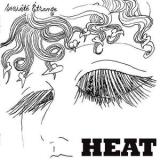
With Heat, Société Étrange extends its work around repetition, groove and cyclic structures, shaping an instrumental music that is both hypnotic and enveloping. Without any radical shift, the Lyon-based trio subtly moves towards more melodic and more cinematic forms, revealing warmer, more textured and sometimes more luminous atmospheres.
- 1: Coquet
- 2: Place Saint Bruno
- 3: Heat
- 4: Fenetre Sur Cour
- 5: Chamber Dress
- 6: Soleil Lourd
- 7: Fifth
With HEAT, Société Étrange extends its work around repetition, groove and cyclic structures, shaping an instrumental music that is both hypnotic and enveloping. Without any radical shift, the Lyon-based trio subtly moves towards more melodic and more cinematic forms, revealing warmer, more textured and sometimes more luminous atmospheres.
Calibre announces his new album 'Tricklemore Sea', set for release on vinyl and digital on 1st May via Signature Recordings.
A deeply personal and exploratory body of work, the album moves through ambient, shoegaze, electronic, blues and folk, all subtly shaped by the low-end sensibility that has defined his music for decades. It resists easy categorisation, reflecting an ongoing interest in blending bass culture with forms that sit outside it. Following the release of 'They Want You' at the end of 2025, this new project marks a clear shift in tone. Where that record leans into intensity and forward momentum, 'Tricklemore Sea' turns inward, occupying a more introspective space. Featuring entirely his own vocals and production, it carries a more exposed and vulnerable quality.
The album has taken shape gradually, drawing from material written in the years after 'Planet Hearth'. Rather than forming around a fixed concept, it emerges as a collection of pieces connected by tone and instinct. Tracks move between simplicity and abstraction, with piano-led compositions sitting alongside field recordings, improvisations and bass-driven works. Ideas often begin quickly, then evolve over long periods of revisiting and reworking. His voice takes on a more central role throughout, bringing a heightened sense of vulnerability. Lyrics and delivery are often left open, allowing space for interpretation. His process remains fluid and instinctive, with ideas written quickly, revisited over time and combined across different periods.
Moments such as 'Little Blend' carry a quiet melancholia balanced with hope, while 'Free One' reflects on the pressures of contemporary life. The title track considers the scale of human existence within a wider universe, framing individual lives as small but meaningful within something larger. Elsewhere, 'Deflower' and 'Pigeon Luncheon' draw from recordings made in Berlin at the end of lockdown, capturing a sense of movement and return. Older material, including 'Living In Your Head' and 'Hyndsight', is recontextualised and sits naturally alongside newer work. Threads from his wider catalogue remain present. 'Able Son Dub' nods to longstanding reggae influences, while 'Bit Broken Stream' appears here in a downtempo form alongside its drum and bass counterpart from 'They Want You'. Tracks like 'United Pull' and 'Mizzle Mine' lean further into abstraction, using minimal language and space to suggest mood rather than define it.
Over more than 30 years, Calibre has built a catalogue that moves across drum and bass, ambient, dub, techno, house, jazz, soul, blues and folk. His work is marked by restraint, quiet melancholy and a singular approach that continues to evolve. Complete authorship remains central, with all vocals, lyrics and production on both 'They Want You' and 'Tricklemore Sea' created solely by him. This breadth extends into his DJ sets, where he draws heavily from his own catalogue, often performing entirely self-produced material across a wide range of tempos and styles. His ability to move between contexts has seen him play at Boomtown, Houghton and Atonal Berlin, delivering distinct sets while maintaining a clear identity.
With 'Tricklemore Sea', that identity leans toward stillness, introspection and emotional depth. It is a record that prioritises feeling over definition, holding space for ambiguity while remaining grounded in a strong sense of authorship. Each release carries an element of exposure, a moment of vulnerability in letting the work go. At its core, the album seeks to capture something fleeting but recognisable, a sense of beauty that sits just beyond language.
He describes it simply: "The river inside of me flowing into the sea."
- A1: Karen Morrison -Who God Bless
- B1: Noel Alphanso / Don One Crew--Schooling The Fools
DJ Support: DJ Spen, Honey Dijon, Tedd Patterson, Mousse T, Terry Hunter, The Shapeshifters, Groovy P and more
I Feel The Love" is a vibrant 4-track EP from the Serbian duo Mirko & Meex, Known for their high-energy blend of funky house and nu-disco, the duo delivers a cohesive package designed for peak-time dancefloors. Expect heavy, driving basslines paired with shimmering disco strings and infectious vocal loops that lean into the classic "Groove Culture" sound championed by label heads Micky More & Andy Tee. Each track is built for utility, featuring extended arrangements that allow DJs to bridge the gap between soulful house and more aggressive disco-house sets. The EP oscillates between sun-drenched daytime energy and sweatier, club-focused grooves, cementing the duo's reputation for "feel-good" house music.
- 1: Dust Meridian
- 2: The Source
- 3: Mondo Buzzo
- 4: Dawn Passage
- 5: Return To Sky
Return to Sky is the follow-up to the band's classic Euporie Tide, which consolidated the band as a crucial underground force in the European psych scene and spread their unique brand of warm-toned stoner rock to a wider audience. The album is a condensed piece of acutely experimental, yet immensely engaging, instrumental rock. Each of the album’s five epics unfolds as a microcosm of the band’s genre-transcending psychedelia at large, yet adds something different to the whole.
The tracks on Return To Sky travel far and wide: heavy, detuned riffs are transformed into wide, pastoral soundscapes, and fluid minimalism warped into swirling crescendos and back again. Occasionally the band even manages to sound turbulent, fuzzed-out yet strangely peaceful at the very same time. Whereas so much of today’s psychedelic scene comes off as merely a tribute to a certain period of the past, Causa Sui has always been on a different mission. More than any other record in their catalog Return To Sky declares their roots in the avant rock of the late 1990s - where different eras and genres merged into something that resonated as much with the present as it celebrated the past. It also reveals the fact that members of the band has had their hands in many different projects since the band’s debut album in 2005: solo excursions into synthesizer music, collaborations with members of Sunburned Hand Of The Man and Tortoise as well as film soundtracks and improv sessions with krautrock legends Faust and Damo Suzuki. It has all worked a subtle influence on the kind of band they have become. On Return To Sky their sound is more earthy and heavy than other Causa Sui record, but it’s also a record that has absorbed everything from shoegaze and vintage Italian film music to spiritual jazz and afrobeat into its fabric. Causa Sui has never sounded deeper or more mesmerizing than on this set.
- 1: Red, Gold & Green
- 2: Amenhotep
- 3: Path Of Enlightenment
- 4: Menat
- 5: Visitation Of The Spirits
- 6: Sphesihle
Some words from Nat about the music – “For this recording I composed some songs using more “exotic” (for want of a better word) modes,
which I have always meant to explore in more depth but never really got around to very much. The first song for instance, Red, Gold & Green, uses an Ethiopian scale.
The title comes from the colours of the Ethiopian flag, which is also symbolic in Rastafari so has a kind of double meaning, like a lot of my songs.The title track, Path of Enlightenment, uses several modes,
starting in a major key then moving to the Phrygian mode, then to a minor key. The piano solo is in a 28 bar minor blues form. Menat is based on a mode of the Byzantine scale,
I’m not sure if it has a particular name or not. Amenhotep was the name of several Egyptian pharaohs,
Amenhotep IV being the original given name of Akhenaten.When I was writing this song it put me in mind of my song, Akhenaten, simply because they are both in 5/4 time,
so I decided to give this one a pharaonic name too. Spheshile is a Zulu word (and sometimes name) that means “beautiful gift”, the title was suggested by a friend from South Africa.
All this means nothing of course if the music doesn’t tell a story, I think the unfamiliar modes allowed us to speak of interesting things that may not have come to us otherwise.
Finally, I chose to use the quartet format for this recording because it occurred to me that it tends to make for a more cohesive group sound, and it had been a while since we recorded this way.”
- A1: Credits
- A2: Smile & Jb's Beat
- A3: Opening Theme I
- A4: Embalmed
- A5: Omar
- A6: Picking Up The Body
- A7: Assurances Omar Vs Smile & Jb
- A8: Rachid & His Soil
- A9: The S(I)Lution
- B1: Depot
- B2: Brahim's Butcher Shop
- B3: On The Move
- B4: Opening Theme Ii
- B5: Smile & Alizée
- B6: Revenge
- B7: Soil Theme
- B8: Smile Gets Disinherited
- B9: Brahim's Sacrifice
- B10: Selling Mom's Jewels
- B11: All's Well That Ends Well
On the day of Eid al-Fitr (Sugar Feast), Sonhouse Records released Grond, a brand new record, produced by Faisal Chatar and 'Yong' Yello Staelens.
Grond (soil) tells the tragicomic story of a Moroccan brother and sister who take over their father's funeral business and want to modernise it. Instead of repatriating Belgian Muslims to their country of origin and burying them there according to Muslim traditions, they decide to import the holy soil.
Western and Arabic sounds, combined with hip-hop beats are mixed in a refined way. Faisal and Yello produced twenty songs that immediately make you long for summer. In Brussels, Tangier or simply elsewhere.
Faisal Chatar and Yello Staelens:
"Grond is about the clash between traditional Moroccan values and Brussels city culture. We tried to translate that by combining Moroccan instruments like Krakebs and Qanuns with thick hip-hop beats. It sounds as if Timbaland is eating a merguez sandwich in a Molenbeek snack bar while Aznavour sounds through a distorted FM radio."
- A1: From Uncle Herm, Pt. 4 (Feat. Herm Lewis)
- A2: Private Valet
- A3: I'm Him
- A4: Things You Do
- A5: Don't Check Me
- B1: Another Day, Pt. 2
- B2: Tools Of The Game (Interlude) (Feat. Wallo267)
- B3: Corte Madera, Ca
- B4: Still Boomin (Feat. 2 Chainz)
- B5: Brand New Machinery (Feat. Duckwrth)
- C1: I'll Make Time
- C2: For Tonight (Feat. Syd)
- C3: In My Pockets
- C4: 5.0 Chronicles (Feat. Curren$Y)
- C5: Breakfast In Monaco (Feat. The Alchemist)
- D1: Larry's Diner (Interlude)
- D2: Organic Adjustments
- D3: Spaceships & Orange Juice
- D4: Extra Of Um (Feat. Babyface Ray)
- D5: Appreciate It All
Spaceships on the Blade is the 2022 solo album from San Francisco legend, entrepreneur and rapper, Larry June. The 20-track album features the singles, “Private Valet,” & “In My Pockets,” and sees production from a wide range of producers such as, The Alchemist, Jake One, DJ Khalil, Cardo, DJ.Fresh, Chuck Inglish, Turbo & more. Enlisting the help from fellow rap luminaries such as 2 Chainz, Babyface Ray, Curren$y and more, Spaceships on the Blade shows that Uncle Larry always has an eye on expanding and diversifying income steams and will continue to do numbers for a long time. Good Job, Larry. 2xLP, Black Vinyl, Widespine Jacket, Printed Sleeves.
WRWTFWW Records presents an ultra limited (100 copies !) vinyl edition of Meemo Comma’s Decimation Of I album, originally released digitally in 2024 on Mike Paradinas' Planet Mu label. The collector’s pressing is housed in a heavyweight sleeve.
Decimation Of I is the fifth album by Brighton-based electronic musician Meemo Comma. It's a work based on the Strugatsky brothers‘ 1971 novel Roadside Picnic, a book that was also turned into the Russian cult classic Stalker by Andrei Tarkovsky. The inspiration came from reading the book alongside the backdrop of global climate disasters where an environment is rapidly becoming less habitable, all while powerful nations occupy and commit genocide.
The rough story of both film and novel is about a select group of characters exploring a land that has been transformed by alien visitors. We never meet the extraterrestrials, nor is it important to, we only have the artefacts left behind. The environment itself becomes the character, neither wholly Earth-like nor alien, but a surreal blend of both, inviting introspection on our insignificance amidst profound change. Within this land’s rebirth, our characters confront ego death, a necessary step towards the profound revelation, the discovery of one's true desire in the absence of ego.
The album opens with the innocent flutes of ’They, spoke,‘ and the disorienting electronica of ‘The Soldier‘ building towards the Terry Riley like undulating clarinets of ‘The Poet’, whose intertwining synth organ drones set the scene. Nods to the seventies electronica of Wendy Carlos and Eduard Artemyev can be heard with the use of Bach melodies in ‘P3Alpha Exotoxin‘ and ‘Area X,‘ however each of these songs draw the listener to primal noise undercurrents, their disintegrating melodies hinting at humanity's gradual dissolution, unveiling profound revelations beyond our comprehension.
As the album reaches its midpoint, ‘Spectral Alignment‘ paints a hazy morning prairie scene with Aaron Copland style French horn, restful woodwinds, spatial arpeggios and a warm drone culminating in an emotional pitstop as the soldiers wake in the dewy morning of this alien landscape, unaware the last of their humanity remains.
The last sentence in Roadside Picnic “HAPPINESS FOR EVERYBODY, FREE, AND MAY NO ONE BE LEFT BEHIND!” is the inspiration for ‘As It Is Written.’ We can either take from this the total annihilation of self has been filled with propaganda from their homeland, or the epiphany of their own autonomy in the war against a land and its inhabitants.
NEIL ARDLEY – KALEIDOSCOPE OF RAINBOWS The Definitive 2LP Reissue of a Landmark in British Jazz Fusion
Analogue October Records proudly presents the long-awaited reissue of Kaleidoscope of Rainbows, Neil Ardley’s 1976 masterpiece, originally released on Gull Records. Produced by Neil Ardley and recorded at London’s famed Morgan Studios, the sessions were engineered and mixed by Martin Levan, capturing one of the most ambitious and beloved works in British jazz. Following the acclaimed reissues of Courtney Pine’s Journey to the Urge Within (AOR-001-ST) and Neil Ardley’s Harmony of the Spheres (AOR-002-ST)—both praised by the audiophile press including The Tracking Angle—this third release confirms Analogue October as one of today’s most meticulous and exciting reissue labels.
A Suite of Sound and Colour
Commissioned for the 1975 Camden Jazz Festival, Kaleidoscope of Rainbows is structured as a seven-part suite, each movement reflecting a colour of the spectrum. Ardley’s composition weaves together jazz improvisation, progressive rock energy, and orchestral elegance in one of the most imaginative British jazz recordings of the era. Featuring Ian Carr, Barbara Thompson, Tony Coe, Trevor Tomkins, and Geoff Castle, the album is a who’s who of the UK’s vibrant 1970s jazz scene.
Cut at Abbey Road, Pressed at Record Industry
For this definitive edition, Analogue October worked directly from the original Gull master tapes. Mastering was entrusted to Miles Showell at Abbey Road Studios, using his renowned half-speed process to extract every detail and dynamic from Ardley’s score. To give the music the headroom it deserves, the reissue has been expanded to a deluxe 2LP set, pressed on the highest-quality vinyl at Record Industry in Haarlem, Netherlands. The result is a presentation that finally does justice to the scope and brilliance of Ardley’s vision.
Deluxe Package – Restored from the Source
The artwork has been meticulously restored from the original film elements, ensuring a sleeve of unmatched vibrancy and fidelity. Inside, a 12-page booklet printed on heavyweight card features an in-depth essay on Neil Ardley and the making of Kaleidoscope of Rainbows, written by Jazzwise magazine editor Mike Flynn, alongside rare photographs from the period.
Curated and Produced by Craig Crane
As with every Analogue October release, Kaleidoscope of Rainbows has been curated and produced by label founder Craig Crane with a collector’s eye for detail and a deep respect for the music’s legacy. This reissue is not only the definitive vinyl edition of one of the great British jazz fusion albums—it also continues the label’s mission to restore and celebrate the most vital recordings of the era.
Neil Ardley’s Kaleidoscope of Rainbows—vivid, expansive, and timeless—returns as the essential edition for audiophiles and jazz lovers alike.
Retail-ready product description (short form):
Produced by Neil Ardley and recorded in 1976 at London’s Morgan Studios, engineered and mixed by Martin Levan, Kaleidoscope of Rainbows is a cornerstone of British jazz fusion. This definitive 2LP reissue, mastered at Abbey Road by Miles Showell from the original Gull master tapes and pressed at Record Industry (NL), finally gives the music the dynamic headroom it deserves. The deluxe edition includes restored artwork and a 12-page booklet featuring an in-depth essay by Jazzwise editor Mike Flynn.
- A1: Intro 0:50
- A2: Wordplay 3:17
- A3: Spontaneity 4:08
- A4: Rugged Ruff 3:08
- A5: Interlude 0:29
- B1: I Confess 4:06
- B2: Uknowhowwedu 3:35
- B3: Interlude 1:09
- B4: Total Wreck 3:26
- B5: Innovation 3:23
- C1: Da Jawn 5:19
- C2: Interlude 1:05
- C3: True Honey Buns (Dat Freak Sh*T) 3:41
- D1 3: Tha Hard Way 4:12
- D2: Biggest Part Of Me 4:51
- D3: Path To Rhythm 3:24
Bahamadia’s 1996 debut album Kollage is rightly regarded as one of the greatest rap albums of the 1990s. For the first time ever, Be With present the definitive double LP version of this eternal hip-hop classic, including the legendary "Path To Rhythm" which never appeared on the original LP or on vinyl, anywhere. An indelible VIBE from start-to-finish, Kollage presents Bahamadia's swirling rhymes delivered with an irresistibly butter flow and razor-sharp assuredness over a steady slew of smoothed-out, jazzed-up, blunted beats. Achingly cool and effortlessly funky throughout, it's an absolute must for true 90s hip-hop fanatics.
The entire Kollage project was recorded at D&D Studios and the ties to Gang Starr are keenly felt, with DJ Premier producing five tracks in addition to the killer songs Guru had already produced with her. Working with the cream of the mid-90s East Coast sound, Kollage is, accordingly, a record that demonstrates a varied musical taste with disparate influences, as Bahamadia has previously stated: “The title Kollage was a reflection of my state of mind. I first got interested in music from playing my parents’ and grandparents’ records, as well what I heard on the radio. I wanted Kollage to reflect that diversity both lyrically and sonically."
With intelligent, poetic lyricism and a laconic verbal style bursting with both warm texture and deceptive energy, Bahamadia’s flow was as inspired by Aretha and Nancy Wilson as it was Q-Tip, Schoolly D and Lady B. Swaggering out the gate, "WordPlay" finds Bahamadia confidently showcasing her considerable old-school battle-rhyme skills over a Guru beat that utilises an infectiously bouncy bassline with splashes of sultry jazz horns and a Jeru vocal snatch for the hook. Up next, the quietly shimmering and ruggedly beautiful "Spontaneity" is one of the most alluring on the record, Da Beatminerz crafting a brilliantly soulful and jazzy soundscape for Bahamadia's effortless vocals to float across. It's followed by "Rugged Ruff", where the rapper carefully constructs a swift off-beat flow over Premier's raw jazzy fire.
With smooth spacey synth vibes overseen by former Geto Boys producer N.O. Joe, "I Confess" is, without question, a fly love song and soothing (p)-funk groove. "UKNOWHOWWEDU" is an airy, chilled tribute to her hometown. Produced by Ski Beatz & DJ Redhanded, it rides a gloriously mellow break. It's a true Philly anthem, shouting out a who’s who of the entire city’s scene. Early banger "Total Wreck" follows, presenting a murky Guru instrumental elevated by jazzy horns. Bahamadia invokes the title's suggestion, firing her brilliant bars more aggressively than we’re accustomed to. More Beatminerz-brilliance comes in the way of "Innovation", an opportunity for the MC to invoke Freestyle Fellowship in her forward-thinking and literary verses. "Da Jawn" features hometown buddies The Roots, with Black Thought gliding into a back-and-forth with Bahamadia over ?uestlove’s warm, snapping percussion. With the strut club banger "True Honey Buns (Dat Freak Sh*t)", DJ Premier provides some laidback vibrant boom bap for Bahamadia to share a wild, cautionary tale about a night out with her girl, Kia.
Fan favourite "3 Tha Hard Way" is a hypnotically sinister cut, with Bahamadia, K-Swift and Mecca Star taking star turns to coast over DJ Premier’s raw beat whilst the tender "Biggest Part Of Me" is a heartfelt stunner dedicated to her son. Incredibly, only the European and Japanese CD versions of Kollage was released with the brilliantly breezy “Path To Rhythm”, featuring Ursula Rucker. Whilst ostensibly a "bonus track", it's anything but, to our ears. Very much in sonic conversation with KRS-One's stretched-out sleeper classic "Higher Level", it's absolutely essential so we had to include it, appearing on wax for the first time here, exclusively. Quite a coup.
Somewhat predictably, whilst Kollage was released to significant critical acclaim, it suffered from disappointing sales. In the intervening years - and for far too long - it was a criminally underrated record, an increasingly hidden gem. We hope this double LP reissue - which looks and sounds amazing - will go some way to correct this. This 2024 Be With double LP re-issue has been mastered for vinyl by Simon Francis, cut by Cicely Balston and pressed at Record Industry. It's too bold and beautiful to remain overlooked and underserved.
Gap Mangione's monumentally influential Diana In The Autumn Wind. AKA BEWITH200LP. And, without question, Be With's White Whale.
They said it could never be done. And with good reason.
We've spent the past 12 years trying to license this legendary 1968 recording from Gap and, after much work, it's finally here. Remarkably, this is the first ever vinyl reissue of Gap Mangione's Diana In The Autumn Wind, produced with the full and extensive participation of Gap. An exceedingly rare album, it's been coveted by funk, soul, jazz and hip-hop sample fiends for decades.
It's unarguably *the* most sought after album for J Dilla / Madlib sample collectors. It has also been brilliantly sampled by A Tribe Called Quest, Large Professor, Ghostface Killah, Kendrick Lamar and Talib Kweli.
But this record is so much more than a sample-spotters curio. It's solid gold throughout. Bursting with killer funky-jazz grooves and tracks adorned with warm electric piano, the release is notable for featuring some extremely significant players at the very outset of their careers; Tony Levin, at 21, whose superb playing on both acoustic and electric bass was the harmonic mainstay of the trio and Steve Gadd, at 23, one of the greatest drummers of his generation.
With acceptable copies of this holy grail changing hands for $400, to call this reissue "much-needed" underplays just how vital it is. Gap's story is told in his words alongside rare photos across a sumptuously designed 2-page insert and, to augment this deluxe edition further, its all wrapped up in a beautiful, no-expense-spared luxury tip-on sleeve, as per the original hens-teeth release. And, while we're talking packaging, just take a look at that cover - a work of art in and of itself.
The tracks are short but complex, with that extraordinary rhythm section backing the beautiful piano, organ and electric piano work of Gap. It's like the best ever library funk breaks record you never heard - but all your favourite golden age rap producers were all over it, long ago. It's a stunning blend of the vibrant, driving music of the Gap Mangione Trio coupled with the sensitive composition and superb orchestration of Gap's legendary brother, Chuck Mangione, who helmed an amalgam of seemingly disparate elements – rock, big band jazz, solo improvisation and "classical" music - into a spectacularly cohesive whole that has aged wonderfully well. As Gap himself notes in the liners, "with this group I was able to explore and add new and exciting elements from rock, Brazilian and then-current pop music."
Opener "Boy With Toys" triumphantly swaggers out the gate, all big band horns, flutes and dextrous organ work. The synthesis of everything going on is nothing short of stunning. When one wise YouTube commentator called this tune "old school superhero music", Gap agreed. Rap luminaries did, too, amongst them Talib Kweli, who rapped over DJ Scratch's chopped up intro for "Shock Body" on his Quality album back in 2002.
You've barely recovered from that incredibly affecting opener when you get hit over the head with the exquisite title-track. And now you see how two of the greatest beats of all time emerged from one single track produced nearly 50 years earlier. Unforgettably utilised by Dilla for Slum Village's heartbreakingly good "Fall In Love" and then Madlib for his "Official" beat for Dilla to rap over, on the Jaylib record. Regardless of the records it went on to spawn, this is just a staggering tune in its own right. Be beguiled by the flutes and the flutter tonguing, the counter-melody from the trombones, the soprano sax solo. All of it. Simply beautiful.
The questing organ and horn workout "Long Hair Soulful" deserves a lot more attention, overshadowed somewhat by the opening two monsters but no less fantastic. It swings, it grooves and Gadd and Levin truly cook. Up next, Gap's wonderfully percussive, mellifluously piano-heavy cover of "Yesterday" by some fellas called The Beatles. It's a subtly arresting gem. "The XIth Commandment" is damn fine, with thick, gorgeous electric piano and snappy drum work underpinning chaotic soundtracky horns. To close out the side, "St. Thomas" showcases the "fourth" member of the Gap Mangione Trio, conga drummer Dhui Mandingo. Having performed with the Trio since 1965, Dhui‘s African-based and jazz-latin-influenced style amazed listeners and its way to hear why.
Opening the B-Side, standard "You're Nobody Till Somebody Loves You" breezes along in the late-night jazz club fashion before things get super deep with the outstanding and - up to now - un-sampled "Pond With Swans". It's simply heavenly, and how its moody, melancholic intro has yet to be pilfered is anybody's guess. It oscillates between gentle, sombre movements and bombastic grooves, equally hypnotic and joyous. The rendition of "You Are My Sunshine" is yet another showcase for Gap's virtuoso playing and Gadd's mastery of the pocket. Indeed Gadd's drumming on "Free Again" is nothing short of neck-SNAPPING! Ghostface took it for not one but two "Iron's Theme" tracks across his seminal Supreme Clientele. It's got that Galt MacDermot "Coffee Cold" feel. Suuuuuper cool. The frantic "Dream On Little Dreamer" hurtles along and must've surely had the whole room absolutely swinging from the chandeliers back in Rochester in the late 60s. The album closes with the magnificent Graduate Medley, featuring memorable renditions of "Scarborough Fair", "The Sounds of Silence" and "Mrs. Robinson". The warm electric piano lines of the former were sampled by The Ummah (Dilla again!) for Tribe's "Pad & Pen" from their reappraised final album, The Love Movement, as well as by Large Professor on his much-loved "The LP (For My People)".
Under the watchful eye - and extremely attentive ears - of Gap Mangione himself, the audio for Diana In The Autumn Wind has been carefully remastered by Be With regular Simon Francis, with a few much needed tweaks here and there, according to the artist's wishes. At the prestigious Abbey Road Studios, Cicely Balston's expert skills have made sure nothing is lost in the cut whilst the records have been pressed to the highest possible standard at the always stellar Record Industry in Holland. The artwork restoration has taken place here at Be With HQ and has that drop-dead gorgeous cover artwork popping like new. Buy on sight!
Derailed Records x Planet Rhythm return with a focused new EP from Milo Raad, hailing from Belgrade.
This release sees Derailed adding its own VVS edge to the vinyl saga. Tougher, more direct, and forward thinking. The tracks are stripped back but intentional, designed to lock you in rather than overwhelm. Don't get it twisted though: there's still plenty of depth here, the kind you can lose yourself in if you let it run.
'' I Want VVS's More Than Ever ''
Artwork: Studio ANTM
Mastering: Audiosculpture
Distribution: Triple Vision
- A1: Matter Of Time
- A2: Origins
- A3: Bad Boy Sound
- B1: The Genie (Ft. Cleveland Watkiss)
- B2: Solitary
- B3: Blue Codes
Album Sampler[22,27 €]
HLZ delivers his debut album for Metalheadz with 'All My Life', a project shaped by patience, experience and a deep rooted connection to the label's sound. The album began with the title track, first played during Goldie's residency at XOYO before eventually making its way to the label, and it was from that moment that the idea of a full-length record started to take shape. Around the same time HLZ moved back to Italy, embracing a slower pace of life that gave him the space and focus to bring the project together. Rather than following a fixed concept, 'All My Life' grew naturally in the studio. HLZ approached the process with what he calls a sense of humble confidence, trusting his instincts while staying grounded in the culture that shaped him. The aim was simple: to make music that could last beyond the short cycles that often define modern releases. Across the album, HLZ moves between soulful depth with a classic Metalheadz twang, into moments that push beyond his usual territory. From the title track's unmistakable Headz spirit to more exploratory pieces like 'Roadblock' and the introspective 'Solitary', 'All My Life' captures an artist fully settled in his voice. More than anything, the album reflects HLZ's deep connection to the music and the sound that has influenced him from the very beginning.