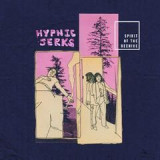
Unlike the spiraling momentum of the band's sophomore LP, pleasure suck, the spirit of the beehive takes a more grounded approach here, though the ground it's standing on is equally otherworldly. Dreamy is a fitting adjective, but the ten tracks on Hypnic Jerks never fully slip into the peaceful character of dream-pop. Hypnic Jerks has the quality of an indescribable dream fading from memory as you slowly begin to regain consciousness. Its warped guitar tones, transcendental synths and smattering of eerie audio samples conjure this purgatorial space between reverie and reality. It's an arena where the songs unexpectedly contort themselves and take on different textures, morphing in and out of one another. Once the celestial harmonies, balmy keys and creeping false climax of album closer it's gonna find you roll past, it's clear that the spirit of the beehive has secured a seat at this decade's table of musical visionaries.
Buscar:morph
. It started in a cafe in Chico, California, with a flier, covered in glitter, wires, feathers, and assorted melted items, with a three-word advertisement: “Noise person wanted.” It wasn’t a sign. It was a sample. A tiny piece lifted from the visionary environment that the band XDS would continue building over the next couple of decades, hoarding an eclectic stockpile of collage materials/influences/approaches for assembling psychedelic dance-punk jams played with homemade instruments, blown-out samples, off-kilter drumming and dub baselines. Shoko Horikawa had come from Japan to (the small, music-crazy college town) Chico for school, and responded to Jesse Hall’s mysterious flier and a pitch to collaborate on making interesting sounds. The partnership would end up featuring her syncopated polyrhythmic drums alongside his vocals (through a duct tape-and-PVC-pipe mic) and custom-built Guitar-o-bass, plus synths/samplers and various noise-making devices. The two-piece Experimental Dental School eventually morphed into XDS as the duo moved the operation from Chico to Oakland to Portland and back to Chico, touring the world (playing alongside the likes of Deerhoof and other innovators) and releasing 11 recordings (on Cochon Records, German label TCWGA, etc.) as they went. On the new XDS album, Bicycle Ripper, the band’s genre-bending roots are as deep as ever, but the goal now is to be less “noise” people and more “fun” people. The songs are weird yet cohesive, with jittery grooves and inventive hooks. Throw a dart at the album and hit “Hot Panther, Cold Moon” for one random sample: an unrelenting fuzzed-out bass dances with a insistent drums; a sharp turn into sparse tin-can-guitar break; then a return to the dance floor with a bonus overdriven bass riff and full-throttle drums. The Panther stays hot whether she’s under the “hot hot sun” or the “cold cold moon.” It’s all very irresistible and, yes, really really fun
The collaboration between Klara Lewis and Nik Colk Void somehow seemed inevitable. Both artists having seen their releases published by Editions Mego, individually carving out idiosyncratic voices in the worlds of extreme, abstract electronic music. With Full-On, Lewis and Void explore and assimilate the very edge of their individual practice where a unique collaborative interface allows two voices to combine and morph into a third voice.
Lewis and Void play ping pong with the conversation of sounds, generating ideas and bouncing them off each other, simultaneously encouraging the other to go further with their ideas opening up an opportunity to engage with previously unexplored terrain. Guitars, synths, euro rack modular systems, voice, sampling and outboard processing are folded in a playful unification with a propensity to tease, explore and extract new ideas and shapes, sometimes brutal, sometimes playful.
Trust was also a compositional tool allowing instinct to freely move on any aspect of the sound and space. This sound/feeling/instinct/association let this wild and wonderful material grow organically into something new.
The result of this exploratory interplay are 17 intense miniatures reveling in the process of unadulterated experimentation and whimsical interplay, not just between the humans, but the machines themselves. United in an endless series of sonic U-turns, this daring duo intertwine pop and noise whilst also bringing together visions of tender techno and forthright ambient.
The various zones which manifest from all this reveals vocals shifting in mysterious ways, dust drenched beats churning limpidly and devilish string loops navigating a disorientating domain. The experience of listening to Full-On is to be confronted with a range of ideas resulting in a platter of emotions. A place where beauty and the beast collide with the impulsive and outright weird. What a wonderful world.
Tom James Scott holds a unique position in experimental music. With a soft brush approach Scott, who currently lives on the North-West coast of England, has explored delicacy in music with a variety of sublime releases on a variety of labels. Predominantly known for gentle investigations of guitar and piano, Scott has shifted to incorporating different technology and tactics over time. All of this, either in performance or recording, is embedded with a spirit that is quintessentially his own. Nightshade is the latest in his expanding catalogue, one which ignites an alarmingly new take on his approach to music. Echo on Water initiates proceedings with the unmistakable sound of tape.
Any instrumentation is buried amongst the woozy sway of the medium itself, with its rough dynamics soon morphing into an overwhelmingly swirling mass of emotionally decayed sound. The movement of matter takes on a haunted shape with sounds looping and falling apart as the physicality of the medium holds it all together. The second track Blue Mist furthers this approach with its smeared haze of gorgeous emotion. This is deep exploration of ideas meeting matter. Wasting Stars takes up the entire flip side with the sound of tape recoiling a bit to allow the delicate glow of instruments to come more to the fore, with gentle effects that weave the musical matter. As a skewered take on Scott’s earlier piano explorations the atmosphere here is a subdued soundscape evoking the spiritual sadness found in the piano works of Gurdjieff/De Hartmann, with a modern lo fi angle.
Nightshade is a deeply effective journey and one of the most exquisite examples of Scott’s delicate approach so far. Two sides of form which inhabit contrasting yet complimentary clouds of sound communicating in an stunning emotional flow. As music with only trace elements of melody, Nightshade is a beautiful take on tools being used to explore paths both highly idiosyncratic, deeply moving and discreetly personal.
Tribe pumpin, very structed tunes, funky and Hardtek at the same time...
A masterpiece !
Notice a very funny/danecfloor /party time AND musical tune : The Fly (A3), a sound morphing from a fly-sound (the very very annoying one we all know^^) to an Acid electro wicked sound !
Exciting stuff really !! ahahah
- A1: Last Broadcast
- A2: Step Outside
- A3: Morning Haze
- A4: Broken Sleep
- B1: Long Highway
- B2: Rolling On
- B3: There Only Once
- B4: Out Of Place
- C1: Signals
- C2: Rise And Fall
- C3: Hideaway
- C4: Celeste
- D1: Long Highway (Inst.)
- D2: Out Of Place (Inst.)
- D3: There Only Once (Inst.)
- D4: Last Broadcast (Alt. Mix)
- D5: Celeste (Alt.mix)
Black Vinyl[26,85 €]
There's something intangible about Celeste, the Soundcarriers’ second album, originally released in 2010. It has a light, lucid quality, almost like driving exhausted through a strange city at night. Freeflowing yet tethered, dreamy yet attacking, the band continue the fight to reconcile competing impulses. Various threads just about keep the shimmering tapestry from tearing. Haunting folk melodies underpinned by rhythmic static and the physicality of the totally analogue recording and mixing, baroque keyboard counterpoints and sweeping arrangements. The opener “Last Broadcast” seems to encapsulate this but it's almost as if the album gets the angst out of its system with this track and is free to explore the quieter, less crowded back streets. After the smoke of “Last Broadcast” has cleared, the twisting road takes in the soft introspection of “Hideaway” and “Morning Haze”, both tracks morphing into heavy psyche grooves or the eastern tinged psyche funk of “Signals” and “Rise And Fall”. Or takes another turn with the tightly arranged opening segment of “Long Highway”. Somehow it still manages to fit in ‘60s pop gems like “There Only Once”. An album to really lose yourself in, yet more concise than the sprawling Harmonium and more relaxed and freeflowing than the nervy rush of Entropicalia, Celeste could be arguably their most indispensable album and not to damn it with faint praise, their most listenable.
In an era defined by futility, isolation, and precarity, it can be difficult to envision a utopia. But on Skeleten’s thrilling, immersive debut album, Under Utopia, the Sydney musician dares to imagine new ways of being that are not characterized by doom or despair. Across eleven tracks of free-flowing, transcendent, and often euphoric electronic music, Skeleten praises the power of comradery and community; while dreaming of a future that is joyously boundless.
Skeleten, real name Russell Fitzgibbon, has always been fascinated by the ideas of utopias. He’s thought a lot about how the concept has shifted and morphed throughout history, and how the goal post for a utopia is always moving further and further away. “We're more familiar with the idea of a dystopia in the modern world - that's more close to our consciousness. I think on this album I wanted to explore the importance of imaging and embodying a new world.”
Written before and during the pandemic, the album was born out of a desire to connect with others and to shake the mantle of introspection that had been placed on his previous works. From the opening notes of the otherworldly album opener “Generator”, it's clear that this record prioritises immediate pleasures without forgoing intimacy. The lyrics are also more explicit, reaching outward with inviting choruses and mantra-like melodies. “I think the album came out of the experience of feeling this great desire to reconnect and dreaming of the power of community,” says the musician.
This is especially present in lead single ‘Sharing The Fire’, a song that crackles with optimism. A sprawling dance track with pulsating synths and Fitzgibbon’s gentle, warm vocals, the song is about futures that are full of brightness and bliss. As the artist repeats in the song’s chorus: “for all that you know, summer could be around the corner.” The song is about an “almost frustrated desire to connect with more people and feel that sense of community through shared goals.” The accompanying video clip, shot on 35mm, is similarly invested in ideas of companionship and gathering. Shot in a clinical, drab office space, friends and revelers fill the space with warmth and energy.
Elsewhere, this invocation of paradise is infused in the stripped-back, singular title track “Under Utopia”. The song was significant to Fitzgibbon, as it allowed him to gather all his thoughts and ideas about his new music under one message. “It’s something I wrote when I had this collection of songs and wanted to give it a single voice, which was about seeing the world entirely new, full of hope and beauty, and all of us underneath pushing it upwards.”
An antidote for gloom presented in Under Utopia is the transformative power of love. There’s “Heart Full Of Tenderness”, a woozy, languorous love song, awash with cloudy vocals and glistening synths; the truncated beats and hypnotic pleading of “Territory Day” and “Right Here It’s Only Love” which explores the icier and ambient side of R’n’B.
Another hallmark that characterizes Under Utopia is Fitzgibbon’s airy and spacious mix, which gives his songs room to sprawl out and simmer; as well as allowing his calming baritone to come to the fore. This is notable in the contemplative, synth-laden “Colour Room”, the funk-tinged “Walking On Your Name,” the previously released “No Drones in the Afterlife,” and the beloved early single “Mirrored,” which speaks of finding yourself through a connection to those around you.
Fitzgibbon has been enmeshed in the Sydney music scene for years. Skeleten emerged out of a need to experiment and make music without worrying about the outcome. “It was just me making music that felt right, and very much focusing on this kind of meditative aspect of exploring without any goal,” says Fitzgibbon. But as the project has evolved, the artist has gained clarity on what he hopes his music will achieve: bringing people together, and creating an atmosphere of elation. Or as Fitzgibbon puts it on Under Utopia’s hallucinatory album closer “We’re gonna get everything we need in the world.”
- A1: Speedboat (2023 Edit)
- A2: Low Res Skyline (2023 Edit)
- B1: Blocks (2023 Edit)
- B2: Burma Heights (2023 Edit)
- B3: Skin Diving (2023 Edit)
- C1: Fukumachi (2023 Edit)
- C2: L O.9.V.e. (2023 Edit)
- C3: Cone (Mix 2)
- D1: Bueno (2023 Edit)
- D2: French Dub (2023 Edit)
- D3: Evil Dub (2023 Edit)
- E1: Blufarm (Abbey Road 2023 Edit)
- E2: Unknown Mind
- E3: Bueno (Ambient Mix)
- F1: Speedboat (96 Demo)
- F2: L O.9.V.e. (Boat Mix, 2023 Edit)
- F3: Redfarm (Abbey Road 2023 Edit)
Dance music has always been grounded in a sense of place. Chicago, Detroit, London, Berlin—a zip code can tell you as much about the music as the year it was made.
But beyond the nuts and bolts of the here and now lies a netherzone where some of the best electronic music floats, impossible to pin down. Swayzak’s Snowboarding in Argentina is one such record.
The title hints at its uncanny placelessness. The music has nothing outwardly to do with Argentina, for one thing. The work of UK producers David Nicholas Brown and James S. Taylor, it was recorded in a number of locations—mostly bedrooms—around London. Yet there is little that is quintessentially British about the music.
Instead, Brown and Taylor drew much of their inspiration from, on the one hand, the luminous chords and silky heft of Detroit techno, and on the other, the staccato drums and clipped textures that were then beginning to bubble out of Berlin and Cologne.
That brings us to the question of time. For if Snowboarding in Argentina belongs to nowhere, it is equally a product of nowhen.
On a practical level, the music took shape in the mid to late 1990s, although it took nearly 10 years for it to come to fruition. Brown and Taylor began jamming on instruments, then machines, in the late 1980s. Then, after Brown suffered a serious car accident, the two musicians began working together more seriously. Trial and error yielded a promising single with a downtempo vibe that a hired-gun studio producer promptly ruined; Swayzak retreated to their bedrooms.
They learned about Chain Reaction from a radio show, found new ways to burrow into the circuitry of their machines, and by 1996 they had hit upon their sound. brought 10 copies of the first to Berlin’s Hard Wax, sold them directly to the shop for a fistful of Deutschmarks, and turned around and spent the money on records; that’s how DIY electronic music worked in those days.) The album itself appeared in 1998 on London’s Pagan label and quickly built a cult following. It was clear that the music was in conversation with its contemporaries: Heard from the right angle, it was possible to imagine it as a halfway point between the proto progressive house of Underworld and the monochromatic minimalism of Kompakt. But it also didn’t quite sound like anything else around; it was a dispatch from an unknown territory that needed no special understanding to decipher.
A quarter century later, Snowboarding in Argentina sounds simply eternal. Certain hallmarks of ’90s production are available—the music’s almost murky warmth is a reminder of what electronic music sounded like before software swallowed everything into its digital maw—but there’s nothing dated about it. The exploratory nature of these tracks, as the result of experimenting with their machines’ limitations, never eclipses their musical or emotional essence.
Long since been deemed a classic, Snowboarding in Argentina remains an underdog in the annals of electronic music. Its semi-obscurity was surely not helped by the decision to publish nine of its original 12 tracks on the CD, and seven on the vinyl, with only four appearing on both formats. Twenty-five years after its original release, Lapsus’ Perennial Series edition unites, for the first time, all the album’s tracks as a single triple-vinyl package, rounding out the 12 original songs with previously unreleased material. Working off the original DAT premasters, Swayzak have created new edits of all the tracks. The result might be considered the definitive edition of the album as it was meant to be, after a 25-year journey. It seems fitting that an album so timeless would continue morphing throughout its lifespan. For fans, it’s the chance to hear a beloved album as never before. And for newcomers, it’s the perfect introduction to a record that, in its own quiet way, reshaped the sound of electronic music, opening up new frontiers unbound by cartography or calendars.
The core of Snowboarding in Argentina appeared on a series of three two-track singles in 1997. (Taylor brought 10 copies of the first to Berlin’s Hard Wax, sold them directly to the shop for a fistful of Deutschmarks, and turned around and spent the money on records; that’s how DIY electronic music worked in those days.) The album itself appeared in 1998 on London’s Pagan label and quickly built a cult following. It was clear that the music was in conversation with its contemporaries: Heard from the right angle, it was possible to imagine it as a halfway point between the proto progressive house of Underworld and the monochromatic minimalism of Kompakt. But it also didn’t quite sound like anything else around; it was a dispatch from an unknown territory that needed no special understanding to decipher.
A quarter century later, Snowboarding in Argentina sounds simply eternal. Certain hallmarks of ’90s production are available—the music’s almost murky warmth is a reminder of what electronic music sounded like before software swallowed everything into its digital maw—but there’s nothing dated about it. The exploratory nature of these tracks, as the result of experimenting with their machines’ limitations, never eclipses their musical or emotional essence.
Long since been deemed a classic, Snowboarding in Argentina remains an underdog in the annals of electronic music. Its semi-obscurity was surely not helped by the decision to publishnine of its original 12 tracks on the CD, and seven on the vinyl, with only four appearing on both formats. Twenty-five years after its original release, Lapsus’ Perennial Series edition unites, for the first time, all the album’s tracks as a single triple-vinyl package, rounding out the 12 original songs with previously unreleased material. Working off the original DAT premasters, Swayzak have created new edits of all the tracks. The result might be considered the definitive edition of the album as it was meant to be, after a 25-year journey. It seems fitting that an album so timeless would continue morphing throughout its lifespan. For fans, it’s the chance to hear a beloved album as never before. And for newcomers, it’s the perfect introduction to a record that, in its own quiet way, reshaped the sound of electronic music, opening up new frontiers unbound by cartography or calendars.
- A1: Avalon - Linked (Move D Remix)
- A2: Alegria - Danger (It's For Real) (Alien Remake)
- A3: Gemini - 7 15 Pm
- B1: Solar Quest - Acid Nation
- C1: Modulate - Dreams
- C2: Nu Era - Pisces
- C3: Hans G - Anything You Like (B2)
- D1: Q-Burn's Abstract Message - Mess Of Afros (Glenn Underground Remix)
- D2: Hector Zazou & Harold Budd - The Light Gave Us Away (House Mix By Herbert)
Hi Scores is beyond excited to present SSR Records: In Retrospect. This 2LP compilation album presented in a beautiful gatefold sleeve and through all digital platforms, wishes to highlight the immense and hard to grasp legacy of the Brussels based label. SSR Records was founded in 1988 by Marc Hollander as a sub label of his Crammed Discs and spanned the nascent years of house, acid, rave, trance, new beat, hip-hop, future jazz and broken beat, collaborating internationally and racking up close to 200 releases until it was put to sleep in 2002. Far ahead of their time, SSR Records released music of both European and North American artists that hadn’t broken through yet, such as those collected on this compilation: Move D, Nu Era, Gemini, Bjørn Torske, Glenn Underground or Matthew Herbert.
SSR Records was run by Crammed Discs chief Marc Hollander and Minimal Compact singer Samy Birnbach aka DJ Morpheus. SSR Records: In Retrospect comes with extended liner notes, exploring the pivotal milestones in the history of the adventurous label and zooming in on the origins of all records featured on the compilation.
All nine tracks on SSR Records: In Retrospect were selected by Hi Scores’s head honcho Kong DJ and have been remastered. Created between 1990 and 1996 and in the at the time pioneering spheres of house, breakbeat, electro and trance music, these treasures from the vast SSR catalog today stand as a stunning testimony to a truly remarkable and timeless musical legacy. Kong DJ: ‘While collaborating with Crammed Discs on the releases of Aksak Maboul in 2016 and Zazou / Bikaye in 2018 on Ensemble, I began to grasp the impressive catalog of the label and its sub labels, including SSR. Surprised by the tiny footprint SSR had left on the world wide web - often the case for labels ceased before the internet revolution - I wrote an article for British website The Vinyl Factory.
This would later prove to be the first step towards this compilation album, collecting favorites from the label as a kid in a giant candy store.’
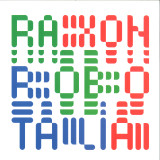
Next up is an overdue reunion with a familiar face. After his outstanding contribution to Cocoon Compilation S and his first solo EP on Cocoon Recordings, Raxon is back with a more than equally fascinating sound. The Egyptian-born and now Barcelona-based artist is back on it again, delivering two tracks that will take you on a journey through the depths of robotic soundscapes.
Intricate beats, hypnotic synthesizer melodies, deep bassline grooves, and distinctive EFX sounds create Raxon’s very special signature sound.
Straight drum programming paired with chirping percussions takes us away to embark on a travel through space and time while distinctive claps poke through a futuristic nebula of floating and shifting sequences. The twisted melody of “Robotalia” carries us to a parallel dimension of machine sound and if you listen closely, you can hear the robots’ screwing and sawing. Warping bleeps and mechanical effects complete the robotic feeling. Raxon’s understanding of structures and architectural abilities are reflected through the arrangement, slowly increasing to ecstasy.
“Kryptonite” scores with alien soundscapes. Stuttering vocals are the questions, while futuristic and dramatic chord stabs are the direct answer. A straight, radiant sound appears as an electronic trombone from outer space, offensively supporting the driving bassline. The symbiotic interplay between the euphoric synthesizer hook line and the relentless beat with pushing sharp hi-hats visualize powerful images in one's mind's eye. Suddenly the beat stagnates and results in a morphing break going head over heels developing a start-stop pitch effect that not only builds up tremendous tension but also bears an increased risk of melting your brain. We just love tape delay!
Stoned Part I was the first self-released album from lost soul phenomenon Lewis Taylor. His third album proper, it was initially released on his own label Slow Reality in 2002 and it's been licensed to Be With for this long-awaited double LP release, its first ever vinyl edition. The songs are varied, hook filled and outstanding. Beloved by his legions of diehard fans, it's nothing short of a masterpiece.
After parting ways with Island, and without a label deal, Lewis went back to his home studio and began to record Stoned Part I in 2001. Co-written and co-produced with longtime collaborator Sabina Smyth, Lewis sings and plays all the instruments on this beautiful, emotional and very human album. It represents Lewis at his most accessible and finds him in the middle ground between his two Island releases. In some ways, Stoned Part I distills the best of his musical sensibilities. The flawless production is dense, layered and very early-2000s slick. The bottom end is thick, funky and sexy.
The complex, proggy-soul of title track "Stoned" opens the album and instantly captivates. Deep swinging funk with truly sweet soulful vocals, complemented by wah-wah guitar and swelling acidic synths. As Lewis himself told us, the ad libs at the end of the track were a nod to Paul McCartney at the end of "Hey Jude". Fan favourite "Positively Beautiful" has shades of Curtis and Marvin; its richly layered harmonies propelled by a simple, metronomic click-track that gives way to a more fully fleshed beat for the magnificent coda.
The slow, sweeping majesty of "Lewis IV" is all moody atmosphere, featuring dense, richly textured music and heavenly multi-tracked harmonies. The stop-you-in-your-tracks incredible "Send Me An Angel" could have been a huge AM radio hit, beautifully crafted sophisticated soul-pop songwriting in the vein of the very best Sade records. Yep! *That good* The smooth, psychedelia-lite "Til The Morning Light" is a gorgeous, sun-dappled love song, layered with Lewis' distinctive honey drenched vocals and, again, the type of record you could've easily heard all over the radio at the time of initial release.
The remarkable, wide-eyed "Shame" packs so many shifting styles into one song, it has to be heard to be believed. Opening in a laconic, breezy style, not unlike a Dallas Austin or Rodney Jerkins produced R&B hit of the day, it morphs into a heavy psych-soul Soulaquarians wig-out (the solo bearing an uncanny resemblance to Carlos Santana’s on "She’s Not There") before elegantly sliding into string-assisted symphonic soul and then back around again. And again. Sheer brilliance. The sublime, gentle head-nod funk-soul of "When Will I Ever Learn" (Part 1) is a strikingly well-turned-out tune, a neat, sweet bass-driven guitar-soul jam that ensures our jaw won't be leaving the floor anytime soon. "Lovin’ U More" sounds like a classic turn-of-the-century Neptunes production, the likes of which they'd lay on for JT BITD. A Latin-tinged groover with more than a little Nile Rodgers-driven slick funk stylings, it's yet another instant Lewis bomb with those gorgeous harmonies and chart-friendly irresistible key-changes to boot. Another indisputable (non-)HIT!
The funky seductive swagger of "From The Day We Met - Part II" opens the final side of wax, giving way to the gigantic buzzing synth-funk beast "Lovelight", a track so insouciantly mighty it should have been a massive hit for someone. Wait, what's that? Robbie Williams covered it? Ah, OK, well, I guess that says something about the effortless pop genius contained within. Containing a seemingly unnoticed nod to Kraftwerk’s "Computer World", it's Lewis's favourite song on the album. It's easy to hear why: "Sabina’s production totally nails it. I love the restraint and the subtlety, and that mixture of warmth and sweetness from the singing against the slightly cold, yet beautiful airy-ness of the backing track." To close this phenomenal album, the twisted electronic soul of "Sheneverdid" marries Lewis's beautiful falsetto to his virtuoso playing and an easy-cum-ominous musical backdrop. Stunning.
Simon Francis’s vinyl mastering, approved by Lewis himself, presents the eleven tracks over a double LP so, as ever, it sounds sensational. The records have been cut by Cicely Balston at Air Studios and pressed at Record Industry. Allow Lewis Taylor to get you Stoned.
Audio Soul Project is back with their latest vinyl-only EP, Simurgh. With a title inspired by the mythical Persian bird, these four tracks fuse elements of house, R&B, dub, and drum & bass to create an ecstatic and hypnotic experience.
The EP kicks off with "Deliver Me," a dreamy house track with warm filtered chords and bouncing synth bass. R&B female vocal ad libs pepper the groove and the refrain "Deliver Me" adds a sense of yearning. The percussion, including morphing 4x4 and breakbeat drums, piano and synth stabs, nod to the cerebral Detroit and Chicago house compositions of the mid 90s.
"Azizam Dub" takes a more stripped-down approach with a subsonic bass line bump and Juno 106 stabs. Frantic percussion and deftly cut vocal samples accent the ebbs and flows of the arrangement, making for a dynamic and engaging dance.
The B-side of the record starts with "Internal Vybrations," a bass-heavy drum & bass track that winds and jumps with multiple layers of deep, fluttering bass and ambient pads and strings. Percussion layers like hi-hats, shakers, and maracas lift and relax the rhythm in parallel to the rest of the composition, making for a hypnotic and trance-inducing vibe.
The B2 track on the EP, "Celebration Dub," is a bass-heavy swinging house track with ecstatic diva "Whooo" samples that punctuate the ups and downs of the groove's energy. Classic reggae and dub-influenced vocal samples and heavy tape delay on certain key instruments add to the joyful and uplifting vibe of the track. The keyboard
and string section can transport a dancer to other realms of consciousness if they let themselves go to the groove.
Simurgh is a masterful fusion of various genres that showcases Audio Soul Project's production prowess and ability to create an entrancing sonic journey.
TL;DR: Audio Soul Project's Simurgh EP features 4 tracks of dub-infused house music. Deliver Me has dreamy chords and female R&B adlibs, Azizam Dub is stripped down with subsonic bass and vocal samples, Internal Vybrations is a bass-heavy drum & bass track, and Celebration Dub is a swinging house track with reggae and dub vocal samples.
A recognize artist from the mouth to mouth is presenting this Ep on his own Label, Monotale Records, a part of Monotale's Instruments.
First track "Number 9" Begins with a barely intelligibly male vocal, that goes and comes in all kinds of glitchy processed ways, always surrounded by bass lines that comes from a non specific source or direction accompanied by pads who sustain the groove .
All of this mixed in a harsh rhythm that remains a classic techno house track.
Next track "If I was you..." is a lovely and capricious ambient passage with some blinks to pop songs inside, a very deep chords on synths that moves the track to another time/space.
The B sides opens with a energy, crazy, resonant and ever changing groove called "Creepy Little Heart", is a kind of track more close to breaks than techno and with some IDM remains of how is developed, cut it in the middle by a female vocal and morphing pads, it is the perfect balance between craziness and dance floor scenarios.
Second B side, "Manifest 9" closes the idea from the artist around the number 9. Is an unclassified style, maybe we can call it as a avant-garde propose, where there is no recognizable or obvious groove. The track is leading again by a male voice put it inside a glitch group of instruments and non standard mixing technics with thru all it is possible to hear a real manifest about music.
Altered Circuits dives deeper in the world of playful and versatile club music with roots in the early 90's! There's an obvious parallel between Ildec's DJ performances and his own music.
Part of a scene with a focus on extended, broad-minded sets, the Ibiza-based artist lets his yearning to unearth and play obscure gems flood into his production process. The "Ahora Si EP" is testament to this adventurous spirit as it tackles a wide array of tempos, styles and moods.
Opener "El Principio" and closer "Grt Plschr" display Ildec's fondness of hazy, recondite atmospherics. With its sustained ambient chord, delay-washed newsreader samples and manipulated themes, the former sounds like a fever dream radio bulletin.
On the latter, a broody motif meanders alongside loosely played drums, while a buried bass guitar occasionally reveals itself. "El Break Del Dia" furtherly explores some of these elements, but this time with the dance floor front of mind.
Languidly morphing bass sequences and staccato synth salvos build up anticipation. When a slowly emerging, ceaselessly arpeggiating organ lead finally materialises, the track explodes. Natural flow is partly traded for sturdier form on the remainder of the EP. "El Break De La Noche" lets an ever-modulating lead groove alongside rigid, dry drum beats.
Descending tom fills, truncated squeaks and a top layer LFO gone haywire complete this sparse yet exciting cut. "La Nueva Version" has a similarly efficient bassline as its bedrock. An interplay of zaps, risers, transposed percussion, and other dusty cartridge samples pulls it left and right while subtle disorienting hints of speech thicken the mix.
On "Modificacion", Ildec moulds his take on progressive and tech house into its toughest shape. A druggy, bleepy lead twirls in and out of the track, carried by the road-tested combo of a taut drum pattern and a piercing backbeat bass. Ominous chords and equally menacing vocals mark its aim: to create tension in the club. It is a standout on a diverse, daring EP we are delighted to present as the fifth release on our label.
Collecting orders for repress!
Since 1991, Detroit’s own Strand has represented everything funky and soulful about Detroit Techno. Strand returns with 3 new selections on the Space Age Polymers EP on their imprint Harbonder.
A1: “ABAR” - Spacey pad, funky bassline, and relentless stabs create a syncopated groove calling feet to the dance floor.
A2: “3 Piece” - 21st century boom-bap electro drums teaming up with a hard, walking bassline morphing into an altered state of soul.
B: “Tensioner” - Ethereal strings, cosmic pads, intricate electronic percussion and a straight, no-chaser bass represents classic Strand.
Harbonder’s must-have, first vinyl release!
Sustained exercises in tension. Personal healing. Dischord Records. The Unit Ama make music that explodes outward: dense but soothing metronomic pulses morph into a wild fracturing of the traditional rock trio. The Unit Ama take their time. They act on their own terms. This applies to their music and their work-rate. Two albums and a handful of singles in twenty years. Sporadic gigs. No endless Bandcamp messages or weekly mailing list updates. Rare missions outside their native north-east. And then… Toward is their second studio album and their second Gringo release. It’s not their ‘pandemic’ album but does see the band considering the important things: post-traumatic growth, insight through experience. Utilising the past to navigate towards a meaningful future. Toward was self-produced and will probably get tagged as post-hardcore which is fair enough. But it’s also informed by post-punk, jazz and folk, and by working closely together for two decades. The Unit Ama play in other incarnations that inform their music and the way they dismantle expectations of the rock trio. There’s as much Richard Thompson as Minutemen. Toward takes the exploratory, explosive sound of their debut and adds twenty years of living and listening. Toward is eight tracks that are thoughtful and intricate without losing any impact. This is gut music as much as it is head music. The Unit Ama never let their abilities get in the way of their instincts and Toward is full of surging urgency and roaring anxiety. But there are moments of brooding calm too, and a song – Mary – that could be stripped down and sold as a folk ballad. The trio also play variously as The Long Lonesome Go, Archipelago, The Horse Loom and more. They have supported everyone from Fugazi to Lungfish, Lightning Bolt to Sunburned Hand of the Man
Tor.Ma in Dub’s bass-quaking Terra and it’s fierce flipside Terra Dub drop on 7” this May 5th.
Terra’s pulsating bassline is complemented by sparse tribal percussion and disembodied vocals, creating a grounded and meditative vibe.
Terra Dub is straighter and heavier, with a punchy bass and a relentless steppers rhythm, guaranteed to lively up the dancefloor.
Both tracks are taken from the Solve et Coagula album, which focused on alchemy and transformation, with the elements presented in pairs. Downbeat dubs morph into uptempo steppers, all crafted with the unique blend of roots and psychedelia that are the hallmarks of the Mexico-based producer’s style.
London’s own Trev appeared on our first release, Body Music Vol 1, as well as other key releases on CoOp Presents and Local Talk. We’ve been fans from the start and, after Trev joined the family, his music went from strength to strength. It was already out-of-this-world production, with serious attention to detail, and this EP is nothing short of excellent! He told us 'there’s no hiding that this EP is, in essence, a long love letter to Brazil', but that it’s also written to 'Iran, London, Lisbon, Japan, probably more - too many to remember!'. Trev described his process as 'listening, learning, combining my favourite elements of all this music that has brought me so much joy over the years'. Right on!
This EP is fresh, different and sonically on point. It’s Bruk, it’s Brazilian, it’s Bass, it’s… all-round-really-good dance music! Trev is a real modern musician, an awesome keys player as well as a producer. He understands the importance of musicality and originality, together with weighty beats and bass, working just as well on the dance floor as they do at a house party… or dinner party, for that matter!
'Nightjar', the title track, draws you in with hypnotic plucks like crickets on a hot summer’s night. Eerie pads float in building tension before the beat drops - Pandeiro and Caxixi serving broken-beat with the kick - pumping the sonic palette and pumping the dancefloor. Deep sinister chords pulse in and out, percussive melodies bring love from the middle east, and we reach a beautiful jazz-harmony break - then it’s straight back to the body movement - this time letting loose with the cowbells and the shakers. Think Brazil, think Persia, think Jazz, think dance-floor, it’s all in there!
'Late Flip' pulls us into a more ethereal intro, with the Koto and skate sounds laying our dream scene. Morphing out of flutes, modular synth plucks pay tribute to the sounds of Lisbon as we drop - a rolling broken beat punch, playful Rhodes and distant vocal chops ring out with the Koto dripping in warm echoes. A truly amazing composition and arrangement that leaves you wanting more!
'Beijo' is one of our faves on this EP. We’re straight in with a kiss - MWAH! - a classic Baile rhythm gets a warm Bruk embrace. It’s passionate and dark and tells a story as old as history. Get lost in the movements between drums and percussion, in the flutes and cicadas, until the organ bass calls it - time to get moving. This really is Trev’s signature dance floor style. A banger with a naughty-yet-subtle bassline, and its own game of perspective - feel this rhythm in more ways than one. Vocal chops and Tamborim place São Paulo’s influence front and centre.
'Grey' takes us on a dusty House/Bruk journey with filtering chords that grow patiently until the beat drops - getting your feet moving and neck bopping! Burning slow, Trev is playful with the harmony, keeping the fun with a roller of a bassline that pulls it all together. It’s a six-and-a-half-minute rich musical journey that feels more like half that time!?
Complete your Dance Regular Vinyl collection with this absolute killer EP from the one called Trev.
"Morphing Chinese traditional music with bass, Chicago footwork and AI-manipulated birdsong. It's quite a feat to sound this ancient and futuristic simultaneously." The Guardian
"The album presents a world where flute and guanzi find common ground with choral vocals, ambient and AI- manipulated birdsongs." Vinyl Factory
"There has never been a record that sounds like this. And, very possibly, never will be again" Bandcamp
'At once fine-grained and expansive, Lee's work combines traditional Chinese music and historical references with wild electronic experimentation" Pitchfork, 7.6
'Island Birdy' samples Bollywood vocals, 'Foreign Flowers' has hints of warped drum & bass and 'Feather Signifier' is steeped in jazz fusion....Lee's most organic work has plenty of diverse influences" Resident Advisor, Album Of The Day
Swirling layers of OST-style sound design, dreamy choir vocals and traditional Chinese folk combine across eight dynamic and transportive tracks on Birdy Island, the latest album by Beijing-based producer/artist, Howie Lee.
On Birdy Island Lee's intricate brand of traditional pan-asian exploration meets experimental bass weight sound via stripped-back UK Grime sonics and ceremonial taoist music.