A few years back I had this dream: I was walking through vast grasslands
towards a solitary hill
On top of the hill was a movie house. On the marquee: History of Jazz.I kept
thinking about it. What was in the movie house? What happened before? What
followed? Why was I going there? Why "History of Jazz"? To reach some kind of
insight, I began a film script, extending the dream tenfold. The script morphed
into a novella-sized book, a series of songs, and finally, a "mind-movie" podcast,
forming this labyrinthine, multi- medium story – equal parts dream, film and
waking life. Figuring out how to transcend the traditional parameters of the album
to create a more panoramic story- vision is something I've been unconsciously
trying to do for some time. I've been pushing against the edges – toying with
narrative, characters and visuals with Easterween and Niagara, a weird children's
book Daydreams for Night – but the scope of life behind Rialto felt too
irrepressible and expansive to be boxed in an album. The book and podcast have
kicked open the doors – allowing the album to lead or serve where it should.In
Rialto's extended narrative, Klaus (loner, insomniac) is working a stint as a driver
for a small town writer's festival. Following a series of unsettling paranormal
events, he finds himself agreeing to a strange request - to deliver a film reel in
time for its premiere at a secluded movie house - the Rialto. The journey leads
him through a circuit of strangely located, oracular movie houses, screening a mix
of dreams, fantasies, memories and prophecies - numinous films of personal
revelation. Inhabiting the movie houses are underworld characters and spirits
with ambiguous motivations, some helping and some hindering Klaus's quest. It's
a Dantesque, deep cleanse pilgrimage to untangle bitterness and trauma,
rediscover a lost clairvoyance, ancestry, and ultimately, the medicinal source of
eternal youth. A metaphysical noir. A hyperstition.Rialto's album stars seven
singer-artists playing characters alongside mine: Tamara Lindeman (The Weather
Station), Daniel Knox, Thom Gill (Owen Pallet, Beverly Glenn- Copeland), Ryan
Driver (Jennifer Castle), Felicity Williams (Bahamas), Robin Dann (Bernice) and
Martin Tielli (Rheostatics). All Toronto- based like me except Daniel (Chicago).
Performed by the Venuti String Quartet with arrangements by Andrew Downing.
Produced by Jean Martin (Tanya Tagaq). It's my 13th album and fourth on Tin
Angel - previous releases on Tin Angel: Miracle In The Night (2019), Small Town
Water Tower (2016), and Niagara (2014). Each of Rialto's eight podcast episodes
features a chapter from the book performed by a cast of twenty five - made up
almost entirely of musicians – including the speaking voices of the
aforementioned singers, as well as Meg Remy (U.S. Girls), Claudia Dey, Veda Hille,
Devon Sproule, Luka Kuplowsky and others. Rialto is available as a 101-page eBook (illustrations by David Ouimet) on Sud de Valeur Press. Premiere
performances begin fourth quarter 2021. Happy Rialto listening, reading,
watching, dreaming...
Cerca:morph
- A1: Kin'tro
- A2: Flysiifu's Voicemail
- A3: Suitcase Special
- A4: Runthafade
- A5: Foisey's Interlude (Feat $Ilk Money)
- B1: Richard Pryor (Feat B Cool-Aid)
- B2: Open Up Shop
- B3: Mind Right (Feat Liv E)
- B4: Shloww
- B5: One Hit Moo Skit
- C1: Rick James
- C2: Black Bitches Matter Hoe
- C3: Spades
- C4: 333Get@Me
- C5: Clean (Feat Liv E)
- C6: Creme's Interlude (Feat Foushe)
- D1: Waiting To Get Shot
- D2: Time Up
- D3: Demon Tyme Skit
- D4: Razberry
- D5: Pick Up Tf Phone
- D6: Dollar Dr Dream
- D7: Morph's Interlude
- D8: Blame
FlySiifu is a new collaborative project by Pink Siifu & Fly Anakin. Their debut album, ‘FlySiifu’s’, unites two prolific rappers with infectious chemistry.
The album mirrors their musical community, as they welcome guests into FlySiifu’s record store, with appearances from Liv.e, Foushe , $ILKMONEY, and producers Madlib, Jay Versace, Ohbliv, Awhlee, Budgie, Playa Haze, Animoss and more.
“Fly Siifu has all of our attention. The pair sound as soothing as a day spent sitting on the porch with your grandparents. Fly Siifu have found something special.” PITCHFORK.
The album’s lead singles have caught the attention of Vince Staples, Danger Mouse, KEXP, Hot97, Colors, Pitchfork, FADER, Hypebeast and i-D. Pink Siifu is a Baltimore based MC, singer and producer, originally from Alabama, whose diverse output ranges from soulful rap to punk.
He’s collaborated with The Avalanches, Mndsgn, Teebs, Quelle Chris, Anna Wise & Maxo. His 2018 album ‘Ensley’ featured in Pitchfork’s Album’s Of The Year list. 2019’s ‘NEGRO’ was described by Pitchfork as “intense and riotous, tapping into the anger at the heart of Black America.” “One of the most intriguing musicians in Black music.” THE FADER. Fly Anakin is a rapper from Richmond, Virginia, who was described by Madlib as “one of the illest MCs”, and has previously collaborated with Freddie Gibbs. He’s co-founder of the Richmond rap collective Mutant Academy. “Anakin’s detail isn’t a skill that could just be picked up from studying the legends of the genre, it’s a gift.” PITCHFORK
After more than a year of strengthening our bodies through workout, our poetic endeavors via the discovery of our inner worlds, and also the life of plants and mushrooms, insects, arachnids, birds and wild mammals, after a year and a half that saw us in lockdown, shattered around the planet, after one a and a half year in which we deepened our production skills and also the meaningfulness of our work, Cómeme returns to a new planet with new music.
The beginning is this unique collaboration between Medellín based musician and DJ Julianna, and Matias Aguayo aka “The Don” himself.
In this deep therapeutical exploration of rhythm and sound, these artists established a magical dialogue on distance, leading up to this EP called “Que si el mundo”, roughly translated: “What if the world”.
Between soulful industrial expressions, emotional breakdowns but also discoveries free of any grids and algorithms, Julianna and Aguayo have created a beautiful piece of work, intense as the movements that we had to experience mentally and economically. “Que si el mundo” is state of the art electronic music of today, a work that is both introspective but also extremely open to the outside world and the universe. Compositions reminiscent of Coil, Angelo Badalamenti, Closer Musik, Steve Pointdexter or Mark Broom, shaped this EP that can be considered a short album in its conceptual layout and narrative. Let’s dive into it...
A1. Hiedra
One of the more danceable tunes, ideal for both a sensual warmup or the very late night to the rising sun sensitivity, is polyrhythmical melancholy and hypnotic inevitability, slow dance, deep trance.
A2. Primer Paso
A fat, slick and modern synth sequence, accompanied by heavy drumming and celestial drops that seem to fall onto the body of the listener or dancer, this post EBM stomper is a manifestation of elegant minimalism and reason. As if Liaisons Dangereuses reincarnated in a cloudy forest, to then pause towards the end of the track, with sentimental and gloomy synth chords that open the view towards the horizon.
B1. Que Si El Mundo
The title track keeps up the more melodic approach - somewhere between ambient, avant- garde and late night jazz. Morphing melodies that are both disturbing and soothing at a time encounter smooth free jazz drumming with drums that seem to have travelled from the sixties to today’s world.
B2. Bajo Tierra
This track continues the deep drumming experience that this record means, between laid back rides and intense taikoesque drumming. Distorted dark pads and subterranean choirs build up to a heavy sadness and intensity. Again, a therapeutical track to send those demons fly.
B3. Micelio
A more hopeful conclusion of the EP is “Micelio”. Open chords, soothing and melancholic, spread over profound drum grooves of champed and house. Nothing seems as it was before. A new life has begun.
- A1: Black Hot Soup (Dj Shadow Remix)
- A2: Shanghai (The Scientist Remix)
- A3: Shanghai (Deaton Chris Anthony Remix)
- A4: Dreams (Yu Su Remix)
- A5: Blue Morpho (Donato Dozzy Remix)
- B1: Blue Morpho (Vril Remix)
- B2: Blue Morpho (Ciel Remix)
- B3: Blue Morpho (Zandoli Ii Remix)
- B4: Catching Smoke (Dām-Funk Remix)
- C1: Ya Love (The Flaming Lips Remix)
- C2: Ya Love (Geneva Jacuzzi Remix)
- C3: Ya Love (Héctor Oaks Remix)
- C4: 2.02 Killer Year (Bullant Remix)
- D1: Yours (Fred P Remix)
- D2: Butterfly 3000 (Terry Tracksuit Remix)
- D3: Neu Butterfly 3000 (Peaches Remix)
King Gizzard & The Lizard Wizard announce an album of remixes of tracks from ‘Butterfly 3000’, their second studio LP of 2021 alone. ‘Butterfly 3001’ features reworks courtesy of (among others) DJ Shadow, Donato Dozzy, The Scientist, DāM-FunK and The Flaming Lips!
"We’ve put off doing a remix album for a long time. Maybe it was conscious, maybe it wasn’t. But it’s happening now. That’s not to say that Butterfly 3000 makes the most sense to remix. It might seem like the obvious one, but it’s not. Yes it’s electronic. But so is a fridge. Have you tried to dance to Butterfly? It’s hard. It ties your shoelaces together. It’s duplicitous in it’s simplicity. But Butterfly 3001 expands on this. It also deviates and obliterates. We’re honoured to have such esteemed people go to work on these songs. We hope you love this album as much as we do. See you in Da Club!!!" - Joey Walke
- A1: Tokyo 2086 (Intro)
- A2: Morphoice & Syst3M Glitch – Cara Keeps Running
- A3: Morphoice & Clint Alford – Arcade
- A4: Morphoice & Mayah Camara – City Lights
- A5: Open Your Eyes
- B1: Morphoice & Syst3M Glitch – Downtown
- B2: Strange Nights
- B3: Into The Midnight Sunset
- B4: Morphoice & Clint Alford – Hold On
- B5: Another Outro (Losing Myself)
Nach den Erfolgssingles 'Strange Nights' und 'Cara Keeps Running' veröffentlicht der in Deutschland ansässige Synthwave-Produzent MORPHOICE sein Debütalbum 'Vinyl City', eine Liebeserklärung an die von Blade Runner inspirierte Cyberpunk-Kultur und die Musik der 80er - mit Syst3m Glitch, Clint Alford und Mayah Camara on vocals, Jesse Molloy (The Midnight) am Saxofon und dem deutschen Multiinstrumentalisten Tim Eden. Gemastert in den Londoner Abbey Road Studios, ist das Album ein Lebenstraum des Künstlers, ein neues Kapitel seiner persönlichen und musikalischen Entwicklung, das tiefe Freundschaften und Vertrauen unter den Mitwirkenden entstehen lassen hat. MORPHOICE taucht tief in die 80er-Retro-Nostalgie und in kybernetische Zukunftsvisionen ein, eingehüllt in rosa-lila Neonlicht. LP auf 180g Clear Vinyl mit blau-violettem Splatter.
- A1: Black Hot Soup (Dj Shadow Remix)
- A2: Shanghai (The Scientist Remix)
- A3: Shanghai (Deaton Chris Anthony Remix)
- A4: Dreams (Yu Su Remix)
- A5: Blue Morpho (Donato Dozzy Remix)
- B1: Blue Morpho (Vril Remix)
- B2: Blue Morpho (Ciel Remix)
- B3: Blue Morpho (Zandoli Ii Remix)
- B4: Catching Smoke (Dām-Funk Remix)
- C1: Ya Love (The Flaming Lips Remix)
- C2: Ya Love (Geneva Jacuzzi Remix)
- C3: Ya Love (Héctor Oaks Remix)
- C4: 2.02 Killer Year (Bullant Remix)
- D1: Yours (Fred P Remix)
- D2: Butterfly 3000 (Terry Tracksuit Remix)
- D3: Neu Butterfly 3000 (Peaches Remix)
King Gizzard & The Lizard Wizard announce an album of remixes of tracks from ‘Butterfly 3000’, their second studio LP of 2021 alone. ‘Butterfly 3001’ features reworks courtesy of (among others) DJ Shadow, Donato Dozzy, The Scientist, DāM-FunK and The Flaming Lips!
"We’ve put off doing a remix album for a long time. Maybe it was conscious, maybe it wasn’t. But it’s happening now. That’s not to say that Butterfly 3000 makes the most sense to remix. It might seem like the obvious one, but it’s not. Yes it’s electronic. But so is a fridge. Have you tried to dance to Butterfly? It’s hard. It ties your shoelaces together. It’s duplicitous in it’s simplicity. But Butterfly 3001 expands on this. It also deviates and obliterates. We’re honoured to have such esteemed people go to work on these songs. We hope you love this album as much as we do. See you in Da Club!!!" - Joey Walke
Hot on the heels of his preliminary EP on Stroboscopic Artefacts, Embryo, which paved the way to the present album, and two years after the landing of his 2016-released inaugural LP, Montagne Trasparenti, Mannequin helmsman Alessandro Adriani returns with his highly anticipated full-length debut for SA, Morphic Dreams. Throughout eleven cuts painstakingly executed but lacking not an iota of the fresh, spontaneous oomph that made his sound stand out of the crowd of techno producers to have emerged over the past decade, Adriani lays the foundations to a suspended sound imaginarium, governed by its own rules and principles of gravity. Revolving around the notions of sublimation and quest for inner balance, Morphic Dreams is comprised of four distinct sequences, conceived and designed as reflections of four mental states, each of them linked to the four alchemical elements i.e. Water, Earth, Air and Fire here represented by the A, B, C and D-sides. Fluid and enveloping, the A-side bathes the listener in some zero-G uterine vortex, pitching and rolling from the slo-burning exotic sensuality and tribal spell of The Tropical Year to the trunk-bending, arpeggiated fast-track pulse of Storm Trees, through Raindances feverish electro swing. Entering a further abrasive, minerally rich phase, the B-side unleashes Adrianis dark side with optimum conviction. Deeply anchored in earthly materiality, this new evolution stage starts off to the frantic Italo bass of Dissolving Images, rushing headlong into a kaleidoscopic maelstrom of fractured reflections and nasty Giallo-like ambience. The delirious body stretch sequence then rather abruptly swerves onto a calmer flux with Dust/Mist, a much enticingly hip-swaying collaboration with Simon Crab, ex-member of the seminal 80s UK industrial-experimental band Bourbonese Qualk, before Casting The Runes engulfs us into a tormented world of swollen eeriness and disquieting esoterism. Back to a widescreen showcase of droney distortions, nasty acid swashes and other quirky drum programming, Hors De Combat opens a new chapter, shortly followed by the playful bass intricacies and modular jeu-de-piste of Invisible Seekers, featuring Avian affiliate and longtime friend Shawn OSullivan. A further mind-expanding piece, C-side closer Crow deploys its blackened wings wide and high as a chaos of martial percussions and liquefying synths slivers crash past the red-hot skyline. A fluttering melodic interlude, Things About To Disappear blazes a clean trail for Make Words Split And Crack to flourish, slowly but surely blooming into a nonstop grandiose twelve minute-shy finale geared up with the stirring cacophonic force of a Ligetian symphony and something of an epic-scale Kubrickian soundtrack.
This is the first instalment in a series of three 7" records in luxurious packaging which see Stefan Goldmann probing the upper temporal reaches of techno. Clocking in at 150 bpm, these tracks are
bold and blazing signals for a collective return to highly energised club experiences. 'Badger' is a breaks-infused peak time weapon while 'Sawhorse' morphs more subtly through hypnotic and
seesawing synth patches. More bouncy than harsh, this material shows impressively how different tempos allow for their own variety of joyful expression.
Best Record Italy presents a reissue of Model 11-29's "Wot Times," a particularly inspired work by the legendary Sangy that transforms "Rapper's Delight" into a slice of Italo-balearic ecstasy. On the vocal version, drums sit between disco and electro as they boogie down to a breakdance beat, with greasy funk basslines slapping and sliding in support. Solar dub chords pulsate through anthemic pattens, pads blow across the mix like a warming ocean breeze, synth leads sparkle in coral colorations, and those classic Sugar Hill Gang lyrical flows are reconfigured into an ebullient spoken word rap, which is then morphed by futuristic fx and interspersed with shouts, grunts, and call-and-response chants. On the flip, the instrumental version walks with more of a sexual disco strut, resulting in a summertime seaside cruiser overflowing with dazzling synthesizer displays, as organ chords generate mirage visions, gemstone leads shimmer through swells of tropical mist, and acid-laced Italo pulsations work the spirit into euphoric beach dance hypnosis.
Truly adventurous and life enhancing music that invigorates your soul. TIP!
Press Release:
Gordan join traditional Serbian singing with abstraction, energy and minimalism. Their music is marked by radical reduction, seemingly endless ascension and a passion for experiments.
The Serbian singer Svetlana Spajić is an internationally recognized and acclaimed artist. She, like almost no other contemporary singer, is a master of all the complex local stylistic variations of singing from Balkan music. Guido Möbius plays bass and various electronic sound generators. Additionally he uses guitar amps, microphones and effects to provoke feedback which either harmonize or are juxtaposed with the song. It is a dialogue between sound and noise which is accentuated or fragmented by means of Andi Stecher’s expressive drumming. With a rich pool of ideas the percussionist drives the sound forward breathlessly and grounds it. Together the trio form a dynamic body of sound.
Gordan recorded their debut during the first wave of the Covid19 pandemic in Europe in March 2020. Due to the lockdown in Berlin at that time the city didn’t have many distractions to offer, so the trio just concentrated on work. The atmosphere of being isolated in a recording studio had a big impact on the musical results. All three band members came up with ideas for new pieces, which were immediately tested, worked out and recorded. On abstract instrumentals provided by Stecher and Möbius, Svetlana Spajic sometimes reacted with personal interpretations of serbian traditionals, and the other way around. Most of the time it was as if the music just happend to the band; playing together felt natural from the first moment on.
Some of the old serbian traditional songs that Spajic sang are extinct forms with a specific local melodic mode. The skillful improvisation of their lyrics and ornaments was of great importance and very estimated among village singers. The title song Down In The Meadow for instance originally is a love song from the village of Odevce in eastern Kosovo, Serbia. The singing manner is of a great intensity and sonority, with lots of specific local ornaments. It disappeared along with the village communities from the area. Oh, my Rose flowers is from the region of Kopaonik mountain (southwest Serbia) and the mode, scale is known as ”kopaonički glas” (Kopaonik mountain air). Svetlana adopted the style from the late singer Veličko Veličković from the village of Ostraće. It is an old mountain solo chant, rich in fast ornamentation movements and microtonal intervals. Don’t ask how I live is Svetlana’s homage to the new popular folk music movement from the 80ies known as Južni Vetar (Southern Wind) led by a musician and composer Mile Ilić, known as Mile Bas (“Mile the Bass”) which revolutionized popular music introducing tabooed oriental music and original arrangements.
All music by Spajic Stecher Möbius except ‘Don’t Ask How I Live’ by Miodrag M. Ilić, original title Što me pitaš
All lyrics are traditional, except ‘Don’t Ask How I Live’
Svetlana Spajic — vocals
Andi Stecher — drums & percussion
Guido Möbius — bass, feedback, electronics
Recorded by Alberto Lucendo at UFO sound studios Berlin in March 2020 mixed by Morphosis
Mastering by Neel at Enisslab, Rome
Artwork by Lorenzo Mason Studio
Haz Mat, hailing from Detroit, may not be a household name YET, but just wait. His VINYL DEBUT is People of Earth's seventh release. A three track EP that is as rounded as it gets. Deep, techy, soulful & a bit of disco for kicks. "My Zania" has lush chords that morph into a tech masterpiece. "Bridge to the Universe" straight deep & techy jam. Lastly "Groove of Life" is just that. Instrumentals & disco riffs, daytime vibes & smiles
LIMITED CLEAR VINYL
LA based composer/sound designer duoHeliochrysumannounce the release of their visceral, deep and exploratory debut albumWe Become Mist.The album has beenmixed by Ben Frost and mastered by Valgeir Sigurdsson.
Heliochrysumis the world building meeting of Michael Deragon and Daniel Lea
( L A N D, Important Records), in which a collaboration becomes a sculpted journey into new aural and imaginative cosmology.We Become Mistuses analogue and digital processes to mine the depths of industrial and science fictional, psychedelic soundscapes, often cinematic in tone and texture.
Taking their cue from a shared palette of sounds, textures and rhythms,Heliochrysumcreate a unifying score that is at once improvisatory and sonically certain.We Become Mist is nothing short of the progression from a souterrain awakening to the terraformed sound of a new world coming into existence.
These tracks overlay analog sound sources, digital hard wrought processing and visual sound design, constantly morphing and turning on their own searching torque. Mixed by Ben Frost and mastered by Valgeir Sigurdsson, the accumulation of sheer vision and depth is transportative, if not outright mind wrenching. In between this melding of the analogue and digital was mixed another element: the album istinged with psilocybin technology. As a listener you can hear as you move through a psychedelic passage, like out of a state of lockdown into one of alien otherworldliness.
The piano, industrial crescendo of ˜We Remain Beneath is evidence of this, sounds modified into careful, lush arrangements. A Future Unfolds sounds like a burnished unfurling, a resplendent distortion bringing to mind some epic revelation while tracks such as ˜Infinite Dark or ˜Pre Dawn bristle with chrome pulses that burn with alarm and dulcet drama.
Just as they did with their palette of sounds,Heliochrysumtaps into a wide range of emotions from hope to devastation, growth and contagion.
The name Heliochrysum evokes the Latin for sunflower but also a healing tincture: in the overlaid orchestration and distorted lightness, the roiling, life-giving pour of the sun can be heard. Simplicity washed with emotional intensity, the remembered dreams of far-off, science-fictive discoveries.
This album is a critical meditation on variations of Orientalism practiced by Arabs themselves, as well as those who were born and raised within the diaspora. It originally began as a documentation of extended drum techniques, but eventually morphed into a project of more ambitious scope. Having an open timeframe, Julius Masri gave himself reasons to include all the instruments he obsessively picked up and learned over the years. The work accumulated intentions and guiding principles, and it became rather autobiographical in nature. Some of the tracks either refer to or were recorded in the actual physical spaces he grew up near, in Tripoli, Lebanon during the 1980s. The "Arabic Room" of the title refers to the sitting room in his family‘s house that was decked out in hyper orientalist exoticism, mashing together furniture, fixtures, paintings from all over the Arabic speaking world. The sitting room, or salon, is common in Lebanese homes made specifically to host and entertain guests. Rimsky-Korsakov's Sheherazade and other western made Orientalist cultural artifacts not only had ubiquitous presence in the house, but also found their way onto tv shows and commercials. After moving to the US, his parents recreated this room in their home. Additionally, his father's generation was one that saw their country transform from a post-agrarian trading society after WWII to a center of banking and finance within the span of a few decades. The sense of some lost Eden like innocence of the interwar years permeated much of the media that was available to him growing up there. This album is neither ironic nor some judgmental pronouncement. Call it critical nostalgia. For Masri, there isn't much difference between this form of exotic fantasy creation, and his own adolescence steeped in comic books and listening to bands like Voivod. They both seem to him part of what's known in German as Fernweh, "a nostalgia for a place one's never been". All instruments are performed by Masri himself, (drums, Egyptian rababa, Azeri kamancheh, circuit bent electronics, keyboards, hammered dulcimer, and vocals). Genre-hopping is foundational to the album’s ethos; jazz, metal, experimental, electro-chaabi, and sound collage all appear within the framework of Arabic music, creating the sense of adventurous possibilities best associated with well curated mixtapes. Julius Masri is a Philadelphia based multi-instrumentalist and performer/composer, originally born in Tripoli, Lebanon. The Arabic Room is his debut solo-album. Currently he is working and playing with members of the Sun Ra Arkestra. The album will be released on vinyl only in an edition of 300 copies.
- A1: Dj Marky Feat. Lorna King - Changing Moods
- A2: Data 3 - String Theory
- B1: Random Movement - Patty Melt
- B2: Melinki & D'cypher - Listen To Everything
- C1: Saikon - Guilty Pleasures
- C2: Carlito - About You
- D1: Collette Warren, Dj Marky & Tyler Daley - One Exception (Pola & Bryson Remix)
- D2: Fluidity & Loz Contreras - Back To You
* New from Innerground Records (co-founded by DJ Marky), also the home of Calibre, BassBrothers, Random Movement and Blade, comes the highly anticipated double vinyl LP from DJ Marky & others, ‘100’. Drawing inspiration from the past 18 years of Innerground’s vast history and impact on the Drum & Bass movement, and the signature latin influences of DJ Marky that have brought excitement and vitality to stages around the globe. This special collaboration between one of the most important figures in the genre, and a collection of some of the most highly respected producers and artists in the scene, creates a ground-breaking LP that marks the 100th release from Innerground Records.
* It should come as no surprise that the double LP packs a punch, when looking at the combined experience of its contributors. ‘100’ begins as a bold statement from the main man DJ Marky, laying down the foundations of what’s yet to come from this veteran D’nB lineup. We’re taken on a ride through morphing tempos and enchanting vocals that hammer home what this immense centennial is all about - a special milestone in the genre that will be remembered in years to come.
TRACKLIST:
A1 : DJ Marky Feat. Lorna King – Changing Moods (LEAD SINGLE (SPECIALIST RADIO PLUGGING BY LISTEN UP)
The album launches with the warm Brazilian sunshine D&B that Innerground’s main man Marky is known for. Lorna King’s uplifting harmonies intertwine with playful melodies to shape not only a guaranteed party starter, but a track that will put a smile on your face. Shades of his legendary ‘LK’??!
A2 : Data 3 – String Theory
After the Brazilian sunshine comes the rain… We’re taken on a detour through a dark valley as spiralling synths ascend to a glitch filled break. Ominous chords reverberate around the onslaught of rattling hats and deep choral vocals.
B1 : Random Movement – Patty Melt
The American D&B veteran returns to Innerground, bringing a funky fast guitar filled banger. Rapid drums and airy synths balance over happy vocals and undulating groovy bass guitar to create a track you can’t help but move to. Potential (slow-burner) track of, ’Innerground : 100’, the album?
B2 : Melinki & D'Cypher - Listen To Everything
A dark bopper with swaying hats chiming over aggressive basslines. Vocal samples provide a short-lived breather from this menacing track’s all-consuming energy. This isn’t the first time Melinki & D’Cypher have linked up and we look forward to many more from these two!
C1 : Saikon - Guilty Pleasures
Anticipative strings and a steady break lead to snappy vocal chops, crescendos at a break that unfolds in to house-led bouncey stabs. You wouldn’t expect anything less from Saikon!
C2 : Carlito - About You
Fans know that this is far from Carlito’s first Innerground rodeo – he’s back with a track that balances male and female vocals over enchanting pads. Synths twinkle amongst racing breaks to make for a certified club heater.
D1: Collette Warren, DJ Marky & Tyler Daley - One Exception (Pola & Bryson Remix)
As the album draws towards its close, cinematic piano and vocals to make your hair stand on end craft a beautiful contemplation between Tyler Daley and Collette Warren. D&B household names Pola & Bryson show their take on the track originally produced by DJ Marky. If this song doesn’t move you, you’re made of stone!
D2: Fluidity & Loz Contreras - Back To You
The LP finishes with a bang. Fluidity & Loz Contreras pair up to transport us back to the sunshine that Marky initiated. Oceanic pads and wispy vocals merge seamlessly to craft a warm and groovy finale that will leave you craving more Innerground energy, as this incredible centennial LP boldly forges its place.
The forthcoming latest edition of the popular compilation series featuring long-lost vintage 60s-70s proto-metal and stoner rock singles, Brown Acid: The Thirteenth Trip will be available on Halloween 2021. Check out the first single "Run Run", released in 1970 by Montreal hard rockers Max is available to hear & share via Metal Injection HERE. (And, direct YouTube and Bandcamp)
The Brown Acid series is curated by L.A. label RidingEasy Records and retailer/label Permanent Records. Read interviews with the series curators via Paste Magazine HERE and LA Weekly HERE.
About The Thirteenth Trip:
Max, from Montreal, QC — originally known as Dawn, before Tony Orlando & Dawn forced a name change — kick things off with “Run Run” from their lone 1970 single. It’s a hard-hitting rocker with scale climbing crunching guitars and powerful Bonham-esque drumming. Sadly, the band didn’t last long due to poor management and various other factors, so this is the only surviving document according to guitarist Gerry Markman. And what a document it is, paired with the A-side “The Flying Dutchman.”
You might remember Ralph Williams and the Wright Brothers from their track “Never Again” on Brown Acid: The Tenth Trip. Here they make their return to the series with the A-side of their 1972 Hour Glass Records 45, which sounds like Blue Cheer mangling Roy Orbison’s “Pretty Woman” (that’s right, several years before Van Halen actually did so.) Alas, Ralph and these Wright Brothers soon disappeared from terrestrial airspace.
“Feelin’ Dead” is extremely heavy blues from this also extremely rare 1974 single by Detroit, MI’s Master Danse, which was only released as a promo 45. Think Led Zeppelin’s “Since I’ve Been Loving You” and you’re on the right track. A little dose of Hendrix acid blues and a heartfelt groove, and you’ll wonder why this single never even made it to official release. The unavoidable tell in the lyric, “help me get this damn thing out of my arm” hints at the post-Vietnam heroin epidemic as a potential clue why we never heard more from Master Danse.
Folks, Gary Del Vecchio is “Buzzin’” hard on this one, and from what sounds like an in-studio party of yelps and chatter at the start of the song, it seems that the whole band was in on the festivities. The funky blues riff, reminiscent of Led Zeppelin’s “Heartbreaker” and rollicking rhythmic changes certainly keep the buzz a rollin’.The recording is technically credited as Gary Del Vecchio with Max, though not the same band as the one that kicks off this Trip.
John Kitko’s 1973 heavy psychedelic rager “Indecision” is the only recording known to exist by the mysterious artist. The Twin Record Productions release features a different artist, Tom Poff on the B-side, which is truly a shame, considering the smoldering ashes Kitko leaves of the turntable by song’s end. It starts out more like a late 60s Acid Rock jam before leaping into a blazing double-time gallop, whipped into a frenzy by wailing, neck-pickup guitar squeals and Kitko’s barely audible howls.
Tampa, FL’s Bacchus made their Brown Acid debut way back on the very first Trip with “Carry My Load.” This 1972 B-side, “Hope” is a huge sounding swinging rocker replete with roadhouse piano bolstering the chunky riffs and confident vocals. After relocating to Southern California a few years later, the band morphed into Fortress, an 80s melodic metal act whose Hands In The Till album of Pomp Rock on Atlantic Records still draws chatter today.
Orchid’s “Go Big Red” is perhaps the most garage-y sounding offering here, with loose rhythms and straightforward stop-and-start riffing. Nonetheless, the stomping energy and fried-amp guitar tone make this one a charming skull thwack. The band’s 1973 single on American records, backed with a cover of Johnny Russell and Voni Morrison’s “Act Naturally” (popularized by Buck Owens and the Buckaroos) is their only release, so the world never did see this Orchid fully blossom.
By the title alone of Dry Ice’s “Don’t Munkey with the Funky Skunky” you know you’re in for a good time. The 1974 barnstormer seems aimed to the novelty tunes crowd, with its kooky lyrics and silly-voiced spoken catchphrase break, “peeyew, you’ll be sorry if you do.” But, the Ohio band’s maniacal drumming, crunching guitars and, of course, drug euphemistic lyrics make it a shoo-in for the Brown Acid series of erudite rock’n’roll.
Good Humore’s swaggering 1976 rocker “Detroit” is a slick and smooth paen to the Motor City. It most likely doesn’t predate “Detroit Rock City” by Kiss, also released in 1976, and it has more rock’n’roll swing, but it could fit comfortably alongside the era’s arena anthems. Not much else is known about the one-off release on P.V. Records, but songwriter Mike Moats is noted to also have been a recording engineer in later years and this well produced track sounds like a labor of love.
The forthcoming latest edition of the popular compilation series featuring long-lost vintage 60s-70s proto-metal and stoner rock singles, Brown Acid: The Thirteenth Trip will be available on Halloween 2021. Check out the first single "Run Run", released in 1970 by Montreal hard rockers Max is available to hear & share via Metal Injection HERE. (And, direct YouTube and Bandcamp)
The Brown Acid series is curated by L.A. label RidingEasy Records and retailer/label Permanent Records. Read interviews with the series curators via Paste Magazine HERE and LA Weekly HERE.
About The Thirteenth Trip:
Max, from Montreal, QC — originally known as Dawn, before Tony Orlando & Dawn forced a name change — kick things off with “Run Run” from their lone 1970 single. It’s a hard-hitting rocker with scale climbing crunching guitars and powerful Bonham-esque drumming. Sadly, the band didn’t last long due to poor management and various other factors, so this is the only surviving document according to guitarist Gerry Markman. And what a document it is, paired with the A-side “The Flying Dutchman.”
You might remember Ralph Williams and the Wright Brothers from their track “Never Again” on Brown Acid: The Tenth Trip. Here they make their return to the series with the A-side of their 1972 Hour Glass Records 45, which sounds like Blue Cheer mangling Roy Orbison’s “Pretty Woman” (that’s right, several years before Van Halen actually did so.) Alas, Ralph and these Wright Brothers soon disappeared from terrestrial airspace.
“Feelin’ Dead” is extremely heavy blues from this also extremely rare 1974 single by Detroit, MI’s Master Danse, which was only released as a promo 45. Think Led Zeppelin’s “Since I’ve Been Loving You” and you’re on the right track. A little dose of Hendrix acid blues and a heartfelt groove, and you’ll wonder why this single never even made it to official release. The unavoidable tell in the lyric, “help me get this damn thing out of my arm” hints at the post-Vietnam heroin epidemic as a potential clue why we never heard more from Master Danse.
Folks, Gary Del Vecchio is “Buzzin’” hard on this one, and from what sounds like an in-studio party of yelps and chatter at the start of the song, it seems that the whole band was in on the festivities. The funky blues riff, reminiscent of Led Zeppelin’s “Heartbreaker” and rollicking rhythmic changes certainly keep the buzz a rollin’.The recording is technically credited as Gary Del Vecchio with Max, though not the same band as the one that kicks off this Trip.
John Kitko’s 1973 heavy psychedelic rager “Indecision” is the only recording known to exist by the mysterious artist. The Twin Record Productions release features a different artist, Tom Poff on the B-side, which is truly a shame, considering the smoldering ashes Kitko leaves of the turntable by song’s end. It starts out more like a late 60s Acid Rock jam before leaping into a blazing double-time gallop, whipped into a frenzy by wailing, neck-pickup guitar squeals and Kitko’s barely audible howls.
Tampa, FL’s Bacchus made their Brown Acid debut way back on the very first Trip with “Carry My Load.” This 1972 B-side, “Hope” is a huge sounding swinging rocker replete with roadhouse piano bolstering the chunky riffs and confident vocals. After relocating to Southern California a few years later, the band morphed into Fortress, an 80s melodic metal act whose Hands In The Till album of Pomp Rock on Atlantic Records still draws chatter today.
Orchid’s “Go Big Red” is perhaps the most garage-y sounding offering here, with loose rhythms and straightforward stop-and-start riffing. Nonetheless, the stomping energy and fried-amp guitar tone make this one a charming skull thwack. The band’s 1973 single on American records, backed with a cover of Johnny Russell and Voni Morrison’s “Act Naturally” (popularized by Buck Owens and the Buckaroos) is their only release, so the world never did see this Orchid fully blossom.
By the title alone of Dry Ice’s “Don’t Munkey with the Funky Skunky” you know you’re in for a good time. The 1974 barnstormer seems aimed to the novelty tunes crowd, with its kooky lyrics and silly-voiced spoken catchphrase break, “peeyew, you’ll be sorry if you do.” But, the Ohio band’s maniacal drumming, crunching guitars and, of course, drug euphemistic lyrics make it a shoo-in for the Brown Acid series of erudite rock’n’roll.
Good Humore’s swaggering 1976 rocker “Detroit” is a slick and smooth paen to the Motor City. It most likely doesn’t predate “Detroit Rock City” by Kiss, also released in 1976, and it has more rock’n’roll swing, but it could fit comfortably alongside the era’s arena anthems. Not much else is known about the one-off release on P.V. Records, but songwriter Mike Moats is noted to also have been a recording engineer in later years and this well produced track sounds like a labor of love.
Over the past decade or so, Chris Forsyth has produced a series of perennially year-end list haunting studio albums of expansive art-rock, from 2013’s Solar Motel to 2019’s All TimePresent , in the process becoming one of the leading lights of the so-called “indie jam” scene, musicians combining omnivorous influences with post-Dead sprawl.
These critically lauded albums have established Forsyth as one of today’s most unique and acclaimed guitar player/composers - a forward thinking classicist synthesizing cinematic expansiveness with a pithy lyricism and rhythmic directness that makes even his 20-minute workouts feel as clear, direct, and memorable as a 4-minute song.
Pitchfork has called his music “a near-perfect balance between 70s rock tradition and present day experimentation,” NPR Music named Forsyth “one of rock’s most lyrical guitar improvisors,” and the New York Times calls him “a scrappy and mystical historian… His music humanizes the element of control in rock classicism (and) turns it into a woolly but disciplined ritual.”
But the studio records are just the tip of the iceberg.
You see, in a live setting Forsyth’s music is never really finished.
He hasn’t had a fixed band in years and plays with a rotating cast of characters. Regulars in Forsyth’s bands have included bassists Doug McCombs (Tortoise) and Peter Kerlin (Sunwatchers), and drummer Ryan Jewell (Ryley Walker, too many others to mention), among others - basically, whoever is available for the given gig or tour.
These are not groups that rehearse, exactly. Operating more like a jazz band, Forsyth and his players treat the songs as frameworks that remain identifieable but morph based on who’s playing them, like weather to a landscape.
Embracing this flux has become a cornerstone of Forsyth’s live sets, rendering every performance special and thereby catching the attention of tapers from his home base in Philly to New York City, Chicago, and Minneapolis. In fact, most of his live performances over the last few years are recorded and posted on the Live Music Archive site.
But the taper recordings, though many are high quality and full of character, are not professionally recorded and mixed multi-tracks.
Which brings us to Peoples Motel Band , the new live LP culled from a set that Forsyth played with NY-based group Garcia Peoples as his band, and is self-releasing on his own Algorithm Free label in a limited pressing of 500 copies.
Recorded September 14, 2019 before a packed and enthusiastic hometown crowd at Johnny Brenda’s in Philadelphia, Peoples Motel Band catches Forsyth and Garcia Peoples (plus ubiquitous drummer Ryan Jewell) re-imagining songs from Forsyth’s last couple studio albums with improvisatory flair.
Forsyth and Garcia Peoples played a number of 2019 shows together, beginning with a semi-legendary jam set at Nublu in NYC in March, through a couple dates on Forsyth’s month-long weekly residency at Nublu in September and concluding with a five-date tour of the Northeast in December. The chemistry between the players is tangible.
As is often the case with Forsyth shows, the gloves come off quickly and the players attack the material - much of it so well-manicured and cleanly produced in the studio - like a bunch of racoons let loose in a Philadelphia pretzel factory.
Recorded and mixed with clarity by Forsyth’s longtime studio collaborator, engineer/producer Jeff Zeigler, the record puts the listener right in the sweaty club, highlighted by an incredible side-long take of the chooglin’ title track from 2017’s Dreaming in The Non-Dream LP (note multiple climaxes eliciting wild shouts and ecstatic screams from the assembled).
This is not the new Chris Forsyth album, exactly, but then again, it kinda is because whenever he sits down to play, something new comes out.
Green Vinyl
Have you ever wondered what would happen if the Spice Girls smoked crack and joined forces with the Power Rangers on acid? Meet BĘÃTFÓØT. These punk-infused electronic poltergeists and big-beat acid trio are Udi Naor, drummer and founding member of electronic duo Red Axes, Adi Bronicki (who also fronts Israeli garage-punk-folk band Deaf Chonky) and ace of all trades guitarist Nimrod Goldfarb.
The band have been launching warped stoner-acid-pop out of Tel Aviv with maniacal intent and are producing post-punk rave bangers that will scorch every dance floor with a huge lethal smile. BĘÃTFÓØT
are a DIY supergroup who describe themselves as sitting somewhere between Aqua, Beastie Boys and The Prodigy.
Their music endeavours feel akin to being hurtled through a kaleidoscopic waterslide, overflowing with the spirit of 90’s youth culture. The radioactive trio are DJ’s, musicians, songwriters and producers with a diverse range of individual projects and talents, their combined sonics map your journey across the hazy astral spectrum of hip-hop, big beat and rave music. Morph these radioactive pieces with the no New Release Informationnonsense attitude of punk-rock and the venomous spitting flow of golden-era rap and you might just come close to fabricating the freakish sound of BĘÃTFÓØT.
The band’s self-titled debut is set for release on 17th September on Manfredi Romano aka DJ Tennis’ Life and Death. Founded in 2010, the imprint curates soulful dance music with a post-rock aesthetic.
This refreshingly original and experimental LP from BĘÃTFÓØT marks a new direction for Life and Death this year and beyond.
“BĘÃTFÓØT” takes unsuspecting listeners on a wild ride of unprecedented musical madness (firmly without seatbelts). Fizzy synthesiser programming stimulates you effervescently through the album like the welcomed sting of sour sweets, surprising accompaniments appear in the form of manipulated vocal lines and quirky samples, all jovially mixed together in a gummy melting pot of wild conceptualisation and starry eyed rhythms.
Thirteen tracks of unprecedented dancefloor mutations send us triumphantly into the candy-covered kingdom of BĘÃTFÓØT with open arms and infinite imagery of fanciful gutter-glam escapades. This project fulfills the role of a musical bulldozer, flattening all previous conceptions of what it means to belong to a genre and leaving behind a hot mess trail of anarchic musical fragments in its wake. The undying spirit of the nineties.
With fans that include legendary Irish born singer, songwriter and producer Roisin Murphy, BĘÃTFÓØT are a breath of fresh air set to be igniting dancefloors this summer.
Ever since the release of their acclaimed debut EP P'eau (2018) these Mechelen-based musicians have been honing their craft in songwriting and production, building a new home studio to record future material while also expanding from a three-piece to a five-piece ensemble. By adding singer/percussionist Stefan De Graef (Psychonaut) and guitarist/singer Sander Rom (L'Itch) to their ranks, HIPPOTRAKTOR have become a more versatile outfit able to employ a broader palette of sounds, taking the band's earlier instrumental prog metal sound to new heights. Taking notes from the best moments in contemporary progressive and post metal, HIPPOTRAKTOR capture the awe-inspiring power of nature_from the delicacy of the first falling leaf to the massive cosmic energy of the sun. By combining the big, catchy riffs and the rhythmical prowess of Gojira with the relentless but equally groove-loaded complexity of Meshuggah, Meridian delivers an overwhelming experience of sound, presenting the listener with sentiments that are recognisable, but with an intensity that seems larger-than-life. "Meridian finds its origin in everyday moods, taken out of context and morphed into a stylised version that re- flects the dreamer in me," explains main songwriter and guitarist Chiaran Verheyden. "It tells the story of someone who's lost in a world too massive to comprehend, and seeks answers in places where none can be found. Meridian was written as an attempt to distillate what I felt but couldn't put into words." As the main vocalist in the group, finding these words was the job of Stefan De Graef, who carried over his fascination for philosophy and religion from his other band Psychonaut. "Meridian tells the story of a solitary wanderer on the Earth in the absence of other beings," explains Stefan. "Without anyone to share knowledge and history with, the protagonist is forced to create his own truths and stories about the nature of life, consciousness and the universe. The protagonist begins to personify and deify his surroundings, assigning sentience to the trees, the mountains, the wind, the waters etc. for they are his only companions in this desolate world." Essentially, Meridian is an exploration of the evolutionary theory of naturism, which was put forth by German scholar Max Mu"ller in the 19th century, and which argues that religion finds its origin in the deification of the forces of nature by early human beings. By juxtaposing this sociological theory with seven tracks that unfailingly conjure images of the earth, sea and sky, HIPPOTRAKTOR have created an analogy that enlarges the imaginative quality of their music to (literally) epic proportions. Combining the best of prog, groove and post-metal, Meridian comprises an incredible ride for fans of soaring hooks, technical riffing and earth-shattering breakdowns. Limited bluegreen-grey single colour vinyl edition, gatefold! FOR FANS OF Meshuggah, Periphery, Cloudkicker, Intronaut, Animals As Leaders, Gojira, Skyharbor, Psychonaut
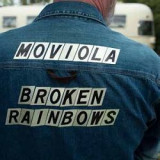
On the fringe of the indie Rust Belt scene since the 1990s,
Moviola has quietly forged a low-key career of high-quality
recorded output over twenty-five years, issuing ten (!) records
and countless 7-inch singles (including splits with Cobra Verde,
Hiss Golden Messenger, Handsome Family and many others).
In this artistic continuum, the band has evolved from everything
from 4-track fuzz to hi-fi country soul. Today, the band steps
forward with Broken Rainbows, its strongest collection of songs
to date, written, recorded, and mixed inside the group’s HQ in
Columbus.
Jake Housh started Moviola in 1993 as a student at “The”
Ohio State University as a noisy, fuzzed out lo-fi noisemakers.
Over the years, the band has morphed into a unique DIY
music and art-making collective with five distinct singers and
songwriters, recalling the creatively democratic lineage of The
Mekons, The Band, Pink Floyd, many others. Moviola is Jake
Housh, Ted Hattemer (Thomas Jefferson Slave Apartments),
Scotty Tabachnick, Greg Bonnell, and Jerry Dannemiller.
Broken Rainbows is a milestone release, showcasing a band
newly energized and assured in its artistry, and supportive of its
members’ songcraft. The eleven-song album hovers over a plot
of ground that’s optimistic in its despair. Album topics range
from the personal to the political, showcasing each member’s
unique songwriting within an overall cohesive band aesthetic.
“Moviola was one of those groups I met early on back in the day
that showed me how to do it. Broken Rainbows is a highlight—
pastoral thumpers, fuzzy indie radness, hooks to spare, pretty
much all the good stuff. Feels like a glorious drive from one
disparate end of Ohio to another. I love this band.”
—Eric Johnson (Fruit Bats)