AFTER DARK is the latest project from French producer Onra, conceived as the soundtrack to an imagined late-night film. Entirely self-produced, the album continues the sophisticated R&B and Modern Soul direction explored since his 2010 classic Long Distance and 2018's accomplished Nobody Has To Know, focusing on late 80's / early 90's inspirations.
Structured like a film unfolding between dusk and dawn, After Dark moves through themes of intimacy, urban solitude, distance, and quiet indulgence. Analog synthesizers, tight drum programming, understated basslines, and selective live saxophone textures shape a cohesive body of work that favors mood and narrative over excess. The sequencing reinforces its cinematic intent, opening and closing with intro and outro pieces that frame the record as a cohesive night-time narrative album.
Over 20 years since emerging in the mid-2000s from the beat scene, Onra has steadily evolved from sample-based Hip-Hop production toward polished, song-oriented projects rooted in contemporary R&B and Funk. With After Dark, he delivers one of his most focused and refined statements to date: a mature, immersive album built for late hours, and attentive listening.
Cerca:most
DJ Sprinkles & Hardrock Striker feat. Move D
SKYLAX HOUSE EXPLOSION IV – After The Dancefloor
A defining transmission in the history of Skylax Records. Originally released across different moments of the Skylax catalogue, these recordings are now assembled as the final chapter of the Skylax House Explosion series — a project exploring the architecture, memory and survival mechanisms embedded within house music culture. The record opens with Move D’s “Outer Rim 64”, originally released in 2018 as part of the Skylax House Explosion narrative. Suspended between motion and distance, the track establishes the conceptual perimeter of this final chapter — a space where rhythm no longer functions only as propulsion, but as orientation. Here the listener stands at the outer edge of the dancefloor’s architecture, where structure persists even as its original social conditions begin to disappear. The sequence continues with Hardrock Striker’s “Motorik Life (DJ Sprinkles Dub)”, originally released in 2011. Rather than operating as a conventional remix, the Dub reinforces the motorik continuum of the original composition, transforming repetition into endurance. DJ Sprinkles preserves the infrastructural skeleton of the dancefloor — its capacity to sustain bodies through duration alone, without narrative resolution or emotional release. The record culminates with “Motorik Life (DJ Sprinkles Mountain Of Despair Remix)”, one of the most politically explicit works ever associated with Skylax Records. Through the relentless repetition of the phrase “mountain of despair,” Terre Thaemlitz dismantles the traditional function of dance music, transforming remix culture into structural critique. Referencing Martin Luther King Jr.’s famous metaphor, the remix removes the promise of redemption and leaves only the architecture of struggle. The dancefloor is no longer presented as escape, but as a temporary condition of survival. Together these recordings reveal house music’s true function: not to resolve despair, but to create temporary conditions in which bodies can continue to exist despite it.
AFTER THE DANCEFLOOR
you cannot preserve a dancefloor
by archiving its sound
because the dancefloor was never sound
it was bodies
finding temporary protection
inside systems designed to erase them
house music was never a genre
it was a survival strategy
when the lights disappeared
the structures remained
and so did we
Ira James' Vessel Recordings keeps flying the flag for serious underground sounds with this new selection of remixes of 'Interlude.' Nonfiction goes first and keeps it deep with a chunky, heavyweight house bubbler with the most subtle synths adding colour and neat stabs lighting it up. DJ Sneak's Nitty Gritty Rub is a classic roller from the House Gangster, raw and undercooked and with serious heft in the kicks. Hector Moralez gets more upright with a warped, fleshy bassline and razor sharp hi-hats, then Andrew Macari's Kick Down The Wall mix is a final raw as you like house weapon that demands you get physical.
Mood II Swing are bona fide legends of early house who fomented their own uniquely raw, dark, but soulful and swinging sound. They have got a ton of classics to their name, one of which is 1996's 'Do It My Way', which now gets reworked by a selection of talented house peers on Ira James' Vessel Recordings. The opening Andrew Macari mix keeps it deep and loopy with many original motifs left in place. The Do It Sneaks Way mix leans into the trackiness of the drums, then Joshua Iz turns up the dubby low end for a gliding groove with garage-y percussion. Nonfiction strips away some of the swing and goes for a big, driving wall of drums and Natural Rhythm offers the most playful take with wobbly synths and plenty of air in the drums.
- A1: Innamorata Del Tuo Controllo
- A2: Tempio Senza Luce
- A3: Hasta El Fin
- A4: Danza Dell'equilibrio
- B1: La Nueva Era
- B2: Vivo E Credo
- B3: Quando Mi Dicevi
- B4: A Volte Sembra Stia Per Finire
Hailing from Barcelona they are an eclectic, discerning form of contemporary industrial music, deploying compulsive minimal synth and primal polyrhythms, as well as uniquely reconstrued elements of post-punk & EBM. An artistic identity that embraces influence yet eschews compromise, changing flavors, but not essence, from release to release. Their music has been shared or praised by Iggy Pop, Cosey Fanni Tutti (Throbbing Gristle, Chris & Cosey), Geoff Barrow (Portishead, Beak), among many others.
This LP shows Dame Area most melodic side, bringing back experimentation to the genres of minimal synth, synthpop or EBM: subverting them from the inside, finding new ways to innovate, giving us unexpected twists along the ride. FFO: Chris and Cosey, DAF, Giorgio Moroder, Essaie Pas, Kraftwerk, Liasons Dangerouses.
Dancers of the Grove is the debut release from Colombian talent Dream Architect, mostly known for former releases as Buraye.
This 4-track EP explores the more human side of the floor. Melancholy, tension, release, wrapped in deep basslines and rolling percussion. Designed to hit in a club or deep in the woods, and to linger after: groove-driven, immersive, and quietly intense.
So… what are we actually supposed to tell you about HCL? Honestly, it’s a pretty nice story. A collaboration the way it’s meant to be.
HCL stands for Horkheimer, Consti aka Zeitstill, and Delenz — not hydrochloric acid, but liquid music. One shared idea of sound, without a fully mastered plan. Most of the tracks were born during long studio sessions — long nights, extended jams, ideas taking shape naturally. No big concept, just working it out together and seeing where things go (or not).
After the first two HCL tracks found their way onto various samplers — including the 25 Years of Live at Robert Johnson compilation and Freeride Millennium’s own Queer Base Vol. 2 — it felt like the right moment to take the next step and release the first pattern. Not as a conclusion, but more as a checkpoint. This is far from the end. There are more patterns, more sessions, more ideas already waiting to be published.
Describing the genre is, as always, not that easy. It drifts somewhere between techno and all the other things orbiting around it. Purely electronic music, rooted in the club, but not obsessed with functionality. In a way, it reminds us of the early 2000s — deep, slightly twisted, hypnotic, driving but never aggressive. Music that takes its time, creates space, and pulls you in rather than pushing you forward.
For moments that are meant to last — tracks you don’t want to hear mixed out. For getting lost on the dancefloor, for forgetting the noise and madness outside for a while, for drifting into yourself and letting time fly. Honest club music, built for immersion.
Enjoy the music. Enjoy yourself. Love.
Yours, HCL
Demi Riquisímo welcomes Jhobei and B.Love to the Semi Delicious fold with their debut EP on the imprint R U Listening. A solid four-tracker destined for the most discerning of dancefloors, the Bizarre Trax head honchos also enlist French master of the sultry groove Sweely to remix the title cut, bringing his signature deep house introspection to the release. Bursting with low-slung grooves, rolling basslines and club-ready energy, across the four original tracks Jhboei and B.Love demonstrate their shimmering, confident and at moments unorthodox style, honed through years of crate digging and musical exploration.
As Bizarre Trax, their own imprint and party goes from strength-to-strength, 2025 saw B.Love releasing on the esteemed 20:20 Vision and Dias De Campo records, and Jhobei on giants like FUSE and Up The Stuss, the pair successfully straddling a multitude of sounds, while maintaining their ethos of prioritising connection and feeling over trends in their house music. With Demi a frequent supporter of the pair’s releases, and vice versa, this anticipated label debut – paired with a new look for Semi Delicious’ artwork – makes a statement for the label’s intentions in 2026.
Hess Publica rises again with a new chapter in our journey through trance, breaks, and techno. Gathered on a vinyl adorned with artwork by the talented illustrator and tattoo artist Coline Crétien, six creative minds come depicting some of the most body-shaking and optimistically headnodding facets of the club music spectrum.
Following the massive success of Torment, Bidoben returns to Sciahri's Sublunar with a new EP titled Jett, a record that showcases his distinctive and forward-thinking sound design, cementing him as one of the strongest figures of the new generation.
The EP opens with Jett, a powerful and melodic cut marked by Bidoben's unmistakable sonic identity, followed by Voltage C, a refined and minimal piece with a subtle epic touch. The A-side closes with Tormented, a fierce reimagining of the atmosphere that defined Torment, demonstrating the artist's ability to evolve and expand his expressive range.
On the flip, Hypernature sets the tone with captivating grooves and cosmic melodies, leading into Ashley Origami, a solid, floor-oriented tool designed for peak-time tension. The journey concludes with Edges of Normal, the most mystical track of the release, lighter in tone but no less engaging.
- A1: Return Of The Knödler Show 2 52
- A2: The Frogs Of Miwa - Cho (1) 4 52
- A3: Waiting (I) 5 38
- A4: An Old Friend Passes By 3 46
- A5: Coco Bolo Strip (1) 5 25
- B1: Peace And Pipe Utopia 3 14
- B2: Unidentified Dancing Object 1 44
- B3: The Call (I) 2 41
- B4: Wenn Das Rohr Dommelt 4 03
- B5: Mariahilf (Live Version) 3 36
- B6: Watching The Shades (I) 2 59
- B7: Playing The Table Music (Ii) 2 43
- C1: Could Be Nice Too 5 29
- C2: Ox Of Inner Depth 4 51
- C3: Ymir Shows Up 3 58
- C4: Could Be Nice 5 24
- C5: Playing The Table Music (I) 4 23
- D1: Coco Bolo Strip (Ii) 4 52
- D2: Locusts Looking Like Men 5 55
- D3: Waiting (Ii) ︎ 3 36
- D4: No Stove 2 29
- D5: An Old Friend Passes By Again 3 00
- D6: Heimkehr Der Holzböcke 3 16
Black Truffle is thrilled to announce Dalbergia Retusa, an extensive double LP selection of the solo guitar music of Hans Reichel, compiled by Oren Ambarchi. Last heard on Black Truffle as one quarter of the joyously anarchic Bergisch-Brandenburgisches Quartett, Hans Reichel (1949-2011) is one of the great figures of experimental guitar music. Though perhaps lesser known than peers like Derek Bailey, Fred Frith and Keith Rowe, Reichel’s rethinking of the instrument was in some ways the most radical of all. Early on, he dispensed with existing guitars to build a series of his own that explored the use of additional strings and fretboards, moveable pickups, extra bridges, special capos, and other innovations documented in the extensive booklet accompanying this release.
Reichel was a long-term resident of Wuppertal, the small Western Germany city that became an unlikely centre of European free jazz in the late 1960s, also home to Peter Brötzmann and Peter Kowald. His solo debut Wichlinghauser Blues was an early entry into the FMP discography and began a relationship with the label that stretched into the 1990s; all the solo performances heard here were first released on FMP. As Reichel says in the charming archival interview with Markus Müller included here, he was ‘always a cuckoo’s egg at FMP’, a label that began as an outlet for roaring European free jazz. What strikes the listener right from the opening selection on Dalbergia Retusa—‘Return of the Knödler show’, from 1987’s The Dawn of Dachsman—is the extraordinary beauty of Reichel’s music, at once alien in the shimmering sonorities and unconventional pitch relationships made possible by his invented instruments, and deeply lyrical, even romantic in its harmonic content. Growing up in West Germany in the 1960s, Reichel’s formative influences were mainly British and American rock bands, a background that shines through in many of the pieces included here: ‘An old friend passes by’ is haunted by the ghost of Hendrix’s rhythm guitar, and the wild closer ‘Heimkehr der Holzböcke’, taken from a rare 1975 7” and the only piece to use overdubbing, layers errant hammer-on and slide tones over a Canned Heat boogie chug.
Reichel was an important source for the development of Oren Ambarchi’s own extended approach to the electric guitar. Appropriately enough, his selection opens with the very first piece by Reichel he ever heard, on a flexidisc included with a 1989 issue of Guitar Player magazine. Though Reichel collaborated with others extensively in many settings and also performed on violin and his other major contribution to instrument invention, the daxophone, his music for solo guitar remains at the core of his oeuvre. Focusing exclusively on solo pieces recorded between 1973 and 1988, the 23 pieces on Dalbergia Retusa showcase the range and consistency of Reichel’s work, allowing the listener to see how his performances developed hand-in-hand with his instrumental inventions. On a piece from his very first LP, played on an 11-string instrument (partly strung with piano strings and using a schnapps glass a slide), we hear his intensive exploration of fret-hammering to create zither-like, chiming tone, which Reichel would hone further in later years with a double fretboard guitar specifically designed to be hammered rather than fretted and picked. On a piece from 1979’s Death of the Rare Bird Ymir, Reichel uses two steel-string acoustic guitars at once, with beautiful results: ‘some even say too beautiful’, he jokes in the interview included here. Many of the pieces from the 1980s make use of varieties of the ‘pick behind the bridge guitar’, instruments of uncanny harmonic richness primarily designed to be played on the ‘wrong’ side of the bridge. At times the unexpected behaviour of attacks, resonance, and decay can almost seem electronic, conjuring up the technology-assisted work of Henry Kaiser or even Fennesz, but realised solely through Reichel’s unorthodox techniques on his invented instruments. Extensively illustrated with photos and Reichel’s own plans and drawings of his instruments, Dalbergia Retusa is an essential introduction to the unique world of Hans Reichel. Rarely has music been at once so strange and so beautiful.
With »News from Planet Zombie«, The Notwist return to view after years of exploration and experiment with an album rich in both melancholy and positivity, sketched across a suite of thrilling, fiercely committed pop songs. It’s an album reflecting a chaotic world, but responding with warmth and generosity, to achieve creative and spiritual consolidation. Recorded in their home base of Munich, it reconnects with the security of the local to explore the troubles of the global: a guiding impulse writ large across this album’s eleven songs. It’s also the first studio album since 1995’s »12« that the entire band recorded together in the studio in its expanded live formation.
A new album by The Notwist is always a curious endeavour; their musical language is as consistent and resilient as the contexts for creativity are unpredictable and ever shifting. For »News from Planet Zombie«, the core trio of Markus and Micha Acher and Cico Beck embraced the plural possibilities of writing together, bringing songs to the collective and then arranging, rehearsing and recording that material live, in the studio.
The result is an album that’s energised, fully in ›the now‹, with spectacular moments where you can hear the magic bubbling up in the dynamic between the Achers, Beck, and fellow members Theresa Loibl, Max Punktezahl, Karl Ivar Refseth, and Andi Haberl. If »Teeth« begins »News from Planet Zombie« quietly and reflectively, by »X-Ray« everyone’s supercharged, blasting out future anthems with the collective energy cranked up high. The chiming keys of »Propeller« skim the instrumental’s surface like stones across burbling water; »The Turning« clangs its way into one of the album’s most heartwarming melodies.
»News from Planet Zombie« was recorded over one week at Import Export, a non-profit space for arts and music. You can tell, too; there are some pleasingly rough edges here, as though The Notwist’s striving for hazy perfection means they’re also confident enough to let the songs breathe and mutate between our ears. That openness to chance also takes in guest turns from friends both local and international, reflective of a cosmopolitan Munich: Enid Valu joins in on vocals, while Haruka Yoshizawa guests on taishōgoto and harmonium, Tianping Christoph Xiao on clarinet, and Mathias Götz on trombone.
The Notwist aren’t best known for cover versions, but »News from Planet Zombie« features two: a gorgeous version of Neil Young’s »Red Sun« (from 2000’s »Silver & Gold«), which the group originally developed for a theatre play directed by Jette Steckel, and a take on Athens, Georgia folk-pop gang Lovers’ »How the Story Ends«. They slot into the album’s narrative perfectly, nestling in like old friends, revealing The Notwist as poetic interpreters. Played well, the cover version is both acknowledgement of fellow travellers and act of generosity, and The Notwist nail both aspects here.
And that narrative, the way the album plays out? »News from Planet Zombie« acknowledges the distress of our current geopolitical impasse, while reminding us there are collective ways forward. Fed through the figure of the zombie, Markus Acher explores our anxieties: »In the title and some lyrics I reference B- and horror-movies, which is a reference to the crazy world at the moment, which seems to be like a really bad and unrealistic B-movie.« But there’s a reminder here not to lose the thread entirely, that these things, too, will pass.
»The river here in Munich I often go to has been there forever and will be there long after us,« Acher reflects, pinpointing an important source of succour for him, »always the same but always changing. Very calming, but also always reminding me that like this river time only flows into one direction and you can’t go back. Every moment is very precious.«
Artwork by Marie Vermont
The Notwist:
Markus Acher: vocals, guitar
Micha Acher: bass, sousaphone, euphonium, trumpet
Cico Beck: electronics, keyboards, guitar, recorder, percussion
Theresa Loibl: bassclarinet, clarinet, piano, harmonium, organ
Max Punktezahl: guitar
Karl Ivar Refseth: marimbaphone, vibraphone, glockenspiel, congas, percussion
Andi Haberl: drums, dulcimer
+
Enid Valu: vocals on 1, 2, 3, 4, 5, 7, 9, 10, 11
Haruka Yoshizawa: taishōgoto on 6, harmonium on 9, 10, 11
Tianping Christoph Xiao: clarinet on 4, 10, 11
Mathias Götz: trombone on 4, 10, 11
High Altitude 002 brings together three rising forces from three different corners of the world. Stckman, Simone Rossari, and Goosebumps represent a new generation of producers with a shared futuristic vision and a highly distinctive musical identity.
The EP features three forward-thinking tracks, each shaped by the unique taste and cultural background of its creator, yet unified by a powerful, modern sound aesthetic. From deep afterhours mornings to the most crucial peak-time moments of the night, High Altitude 002 is designed to fit seamlessly into any part of a DJ set.
A global collaboration, a futuristic attitude, and a fresh perspective on underground dance music — this is High Altitude 002.
Peach Discs' first release of 2026 comes from fast-rising star of the Manchester scene PACH. (pronounced "pack"). Five slippery rollers built for dark rooms, wafty terraces and the most locked-in of afters.
"The Wake-Up Call" EP represents the full spectrum of the PACH. sound, one rooted in the minimal tunes coming out of Romania but with a cheeky playfulness that can only come from a life spent in the trenches of UK club culture. The A1 "Keep It Bubblin’" is a prime example, as Todd Edwards-style vocal chops flirt back and forth with dub-inspired feedback lines, or "5am Wake-Up Call's" skipping, UKG-adjascent hats. Things get a little rowdier with "Complex Waveform's" scuzzy bassline that wouldn't sound out of place coming from the Clone Records ecosystem. Here it's bolted to a chassis of tough, techy drums and trippy vox that tickle at your peripheries. Flip to the B-side for something a little deeper – the dubbed-out percussion and disembodied voices of "Not That Kinda Party" contrasting with the moody, low-key synthetic tones of "Book The Dungeon", both sharing a mutual concept of smartly stripped-back, hypnotic jams that focus on heads-down grooves and rolling energy.
The breakout underground star of the past year, the deservedly hyped Thought Leadership returns with another X ideas: the deck this time chooses the suit of Cups. This new collection is closer to the Post-Punk tonality of Pentacles, than the breezy Balearic Jazz of Swords. Gone are the brushed drum samples and airy synths and in their place are BIG guitars, 808 thumps and a decidedly more prominent use of bass as a melodic device.
As the suit of Cups reflects the emotional heart of the Tarot, presented within are a further X pieces, this time displaying the full range and fervour of Thought Leadership.
You know the drill by now. Originally out on cassette only, we present the first ever vinyl issue. It's a hideously limited pressing of 300 for the world, so don't sleep on this.
Side A explores the emotional levels of consciousness; angst, joy, love, sorrow, relief, regret – they are all represented across the first seven tracks, and often within the same piece. XXI kicks us off with a huge tumbling D minor passage, layers and layers of guitar front and centre, whilst the drums pound away in the distance. Release is provided with a gorgeous G Dorian section, where we hear the bass take flight with a high melodic line.
We’re still in familiar Durutti Column meets Dif Juz territory here, but things switch up with XXII. This piece showcases a darker, more angular palette of guitars; think Alan Rankine (The Associates), or Deb Demure (Drab Majesty) in the unexpected harmonic shifts, knotty arpeggiated patterns and heavy, goth-adjacent modulation. A real love letter to 45+ years of darkly inclined guitar heritage.
XXIII enters the fray with tight, thumping 808s and Marr-esque guitar figures; and again, the bass providing heavy melodic counterpoint to the guitars. Enter chiming, lyrical lead phrasing, reminiscent of the eternal opening to "Everybody Wants To Rule The World". Another accidental perfect pop moment from the Thought Leader. Whilst on the topic of Tears For Fears, XXIV comes swinging out of the gate with some serious Sophisti-chug; we’re reminded of "Shout" in the A section, before being beautifully juxtaposed in the B section with more Vini-eqsue patterns, reminiscent of his timeless classic, Another Setting.
XXV gives us welcome pause to take stock midway through the A side. No drums this time, but instead a heartbreaking conversation between two guitars; think Kevin McCormick and David Horridge’s masterful Light Patterns, or perhaps even the early solo-Bill Connors mid-70s cuts for ECM. The moment of quiet reflection passes, and is quickly shattered by the thudding march of XXVI – this piece comes across like The Associates playing "Wicked Game"; heavy, moody, and utterly compelling. XXVII ends our journey across Side A with more Marr-inspired playing; one for the heads and already featured on mixes, this one is real testament to the vision of Thought Leadership.
Side B again takes us on a trip through three long-form semi-improvised pieces. XXVIII is like those classic Jonny Nash, early Melody As Truth releases, slowly unfurling, additional details introduced deliberately piece by piece, this idea builds across 7+ minutes culminating in some utterly joyous ebow fireworks at the end – well Balearic.
XXIX again, like XXV before it, dispatches the drums with a focus purely on melody and mood. The piece feels like a lost Save Room Theme from the Resident Evil series, pure golden age Capcom Sound Team vibes. Unadulterated aural nostalgia for hours spent with a PS1 in haze of hash.
XXX completes this majestic voyage with another Modal exercise; this time the Thought Leader has opted for the Lydian Mode. Beautifully dreamy, undeniably Soundtrack-y, and arguably the most concise distillation so far of everything this project stands for; drum machines, guitars, pedals, one-take improvised solos – XXX has the lot, and is surely destined for greatness.
So, another X epic statements for guitar, homespun with the humblest of means, for all the dreamers out there. The first ever vinyl release of IV Of Cups has been carefully remastered by Be With's engineer Simon Francis to ensure it sounds better than ever after its initial tape release. Cicely Balston's expert skills have made sure nothing is lost in the cut at Abbey Road Studios whilst the records have been pressed to the highest possible standard at Record Industry, in Holland. The original tape cover artwork, so crucial to Thought Leadership's striking visual aesthetic, has been rejigged for vinyl issue here at Be With.
The last 2 LPs flew. You have been warned.
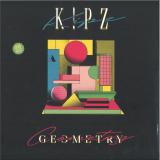
The blueprint for a night of futuristic dancing in 1985; It resides not in the stars, but in the crystalline echo of Geometry’s synthesizers.
K!pz enters the grid with Geometry, a 12-inch Maxi Single that strips the Italo sound down to its most essential, pulsating core: Pure Shapes and Catchy hooks, filled with musicality.
A1 – Circular: Hypnotic and fluid: a rounded bass sequence and celestial arpeggios that draw you straight to the center of the floor. Tight, gated drums and bright leads deliver the unmistakable Hi-NRG feel.
A2 – Triangular: Sharp and dynamic: angular lead lines guide a bed of arpeggiated bass, punchy synth stabs, and impactful breaks. A precise, energy-building melodic core.
B – Square: Solid and deep: a driving, grounded bassline supported by a slapping Drumulator groove. Dub-like reverbs and a classic lead synths carve out a strong, steady, and foremost euphoric atmosphere.
GEOMETRY imagines the future as envisioned in 1985—a vibrant collision of abstract design and intoxicating pulse.
Super Rhythm Trax are proud to present this reissue of one of the most loved, most underground and most sought after Breakbeat Hardcore records from 1991. Raw rugged and authentic, no silly chipmunk vocals or twee piano here, oh no!
Carefully remastered from the original dat tapes, both original versions of Underkut “Both Ends” are now available at a reasonable price after 35 years!!
Since its original release in 1991 it quickly gathered legendary status with it’s super slamming breaks and ‘that’ huge Bassline, it doesn’t get any better than this.
On the DAT tape, we also chanced upon an unreleased, unheard version, and We include this unheard vocal mix as an ‘of it’s time’ artefact for the collectors, as it really accentuates the record’s obvious HipHop leanings and there are parallels to be drawn with the whole Britcore movement of the time, where crews like Hijack, Gunshot, Cash Crew, Demon Boyz and London Posse were flourishing.
We are pleased to present a new E.P. of carefully selected, previously unreleased tracks from the vaults of Megaton, aka Roberto Cagnoli.
Produced between ‘97 and ‘99 during one of the artist’s most prolific periods, the record explores multiple facets of Roberto’s creative omniverse: from acid-infused, dubby techno on the A-side to more trance-leaning, progressive territory on the B-side. Remastered by Manmade Mastering.
Boogie Back Records proudly reissues BBR008 on 7-inch vinyl — a timeless slice of soulful innovation from Max Beesley, whose deep roots in the UK’s acid jazz and soul scene have influenced generations of musicians and listeners alike. A multi-instrumentalist, composer, and producer, Beesley has collaborated with some of the most iconic artists of our time — Stevie Wonder, Chaka Khan, Earth, Wind & Fire, James Brown, Incognito, Jamiroquai, and many more — contributing his signature touch on drums, percussion, keyboards, and vibraphone.
Originally released as part of Boogie Back’s 12” series, BBR008 captures Beesley’s unmistakable sound: rich harmonies, heavy grooves, and that soulful energy that bridges classic street soul and contemporary jazz-funk. This 7” reissue distills the essence of his acclaimed Boogie Back Records impacting era — a period defined by vibrant musicianship and cosmic jazz grooves ready for both the dancefloor and the deep listener. These two tracks showcase the full range of Beesley’s musical vision. “Night Daze” rides a hypnotic groove of cosmic Rhodes chords, tight percussion, and lush vibraphone lines, creating a cinematic, late-night atmosphere. On the flip, “Painful Truth” features the unmistakable voice of Omar, one of the UK’s most iconic soul vocalists — delivering a deep, heartfelt performance over Beesley’s rich, jazz-funk arrangements. This is another special and exclusive 45/7“ release via Soulkitchen Distribution…
Galcher Lustwerk is a Cleveland-born, New York-based producer who has become one of the underground's most respected and unique voices. His deep tracks fuse hypnotic grooves with subtle, late-80s hip-house–inspired vocals, creating a detached yet energising take on the famous Midwest style. He's a member of the White Material collective, first gained attention with the 100% Galcher podcast mix, and has since dropped many choice Eps on the best labels in the scene, including Ghostly International, all of which have cemented his reputation as a visionary.
Shorty Out' is a dreamy late-night sound with spoken words pulling you in as balmy pads swirl without purpose, but plenty of sass. The drums are understated but poignant, inviting you to sink into the vibe and give yourself over to Reflection.
'Vestibule' is another smoky, candle-lit sound, with hunched, dusty drums that make you move without ever being the focal point. More vocal musings bring tender feels and evocative imagery as the synths speak of cosmic escape.
Closer, 'Wet Bulb' is more club-ready with techno-leaning synths and mid-tempo but purposeful drums.
Analogue textures and heady, wispy synths add plenty of human soul, making this another considered cut.