Cerca:moth

Generi
Tutto
IL BOSCO - NEW WAVE BANGERS FROM THE MANCTALO DISKO LP 2x12"

This is a super limited double vinyl only press.

Twelve Il Bosco edits of new wave bangers tried and tested down in the Manctalo Disko at The White Hotel and beyond...

No digital will be sold. Again as we said plenty of times before the reason we don't sell the digital tracks is out of respect for the original artists. We make no money on pressing vinyl.

It's expensive. time consuming and nobody fukin buys it anymore.
We do it because we love this shit and the chance to share our discoveries with ya'll.
We hope our compilations serve as an advert for the original artists.
You fall in love with a track, find out who it is and then go and discover more about them.

Shouts here to Hysteric (Mothball Records) for track 3 and Kelvin Andrews & Balearic Mike (Down To The Sea And Back) for putting me onto Car Crash Set leading me to discover track 1.

non in magazzino

Ordina ora e ordineremo l'articolo per te presso il nostro fornitore.

24,79

Last In: 60 days ago
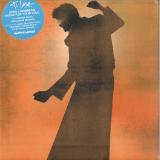
DAVID WALTERS - TI LOVE LP 2x12"

In his own time, in his own tone and in his own company.

‘Win and lose without losing oneself’’ This line from French rapper Oxmo Puccino greatly accompanied David Walters while composing his fourth studio album. Over the eleven tracks on ‘Ti Love’, David took his time to find the right tone and in turn, tell his truth.

‘Ti Love’, is a French-Creole abbreviation for “petite love”, meaning ‘little love’, evoking that sweet fondness found in those small gestures and little acts of kindness.

Think of things like young kids' brotherly love or a stranger lending you a helping hand, while expecting nothing in return. It’s these motions that allow this album to feel full of real life, carried by beating drums that also pull at our heart strings.

Basing himself in a small village in Martinique, where David had not long since scattered the ashes of his late mother, the multi-instrumentalist decided to remain there and let the writing of Ti Love pour out from deep inside him. Taking influence from around the island, the energy from his makeshift studio set up in Fort de France, allowing a resilient yet grieving man to recount, let go and come to terms with his recent loss.

So embracing these new circumstances, on the rugged coastal Caribbean island of Martinique, David took up an artist’s residency in the island’s capital Fort de France, located near the town’s port is the ‘Manoir des Artistes’, a bustling recording studio space. A place where the walls shake as the latest sounds being created are blasted by locals and visitors alike. Most studio doors are wide open; as music here is a huge part of everyday life, feedback from encouraging neighbouring musicians is on hand and welcomed. A contrast to the isolation often assumed with working in more traditional music studios.

It was here in this stimulating environment that David recorded Ti Love’s initial demos.

With his first collaborator onboard, Neeweed, a 25-year-old producer and gospel expert who David met at the Martinique Jazz Festival.

Of the album’s initial versions of the record David recollects: ‘It took me three years to write it, then I rewrote it, reworked it. In the end I'm really glad I stepped back and listened to myself.’ I found a great ally in GUTS, who ended up being the artistic director of the record”

David surrounded himself with the right people who helped him express himself in the best possible way. He called on other friends and musical comrades; album opener and title track, ‘Ti Love’ features the incomparable Fatoumata Diawara (World Circuit Records / Africa Express) and further along additional production came in from; Izem, Art Of Tones, and GUTS himself, who all added just the right amount of ‘little love’ to this

project. Further helping hands came from Californian producer and DJ Captain Planet, who David was introduced to a few years ago. Closer to home, here in Europe, the German producer Bluestaeb appears on two tracks: the very catchy disco funk ‘Mr Maraboo’ and ‘Kite Koule’, the latter being the first single lifted from the album, where David invited Nigerian guitarist Keziah Jones.

Elsewhere on the album, fellow Heavenly Sweetness recording artist Blundetto contributed two tracks; the reggae ‘Voodoo Love’, which is David's tribute to Studio One, and the very sweet and resilient ‘Bon Voyage’, which closes the album... "It's gold, it doesn't need anything changing.” remarked David - ‘Bon Voyage’ is a goodbye to his mother, whose voice called him from the bottom of the sea one night while he was surfing during the full Moon.

Released almost 20 years after his debut album ‘AWA’ released on French imprint Ya Basta, home to Gotan Project and many others, David boasts a long list of radio supporters including; Gilles Peterson, Cerys Matthews and Don Letts at the BBC, while further field Cosmo Radio in Germany, and KCRW in Los Angeles.

On this new record, David has shown sincerity and vulnerability, while still honouring the infectious groove that he is known for the world over. Despite the upsets, a little love can indeed go a long way.

CREDITS:
Produced by Bluestaeb / Blundetto / Captain Planet / Izem / Art of Tones
A&R : Guts
Mixed by Mr Gib @ Onetwopassit
Except "Bon Voyage” and "Voodoo Love" mixed by Jerome “Blackjoy” Carron
Mastered by Benjamin Joubert @ Biduloscope
Art by Elliott Walters

non in magazzino

Ordina ora e ordineremo l'articolo per te presso il nostro fornitore.

23,11

Last In: 64 days ago
Lino Capra Vaccina - Antico Adagio (Complete 1978 Sessions) LP 3x12" (Boxset)
  • Elegia
  • Voce In Xy
  • Canti Delle Sfere
  • Frammenti Di Sonno
  • Movimenti E Silenzi Per Spazi Bianchi
  • Antico Adagio
  • Ondulazione Melodica
  • Motus
  • Frammenti Di Suono
  • Vocis
  • E Echi Armonici Part 1
  • F Echi Armonici Part 2

For the first time, all the 1978 recording sessions of Lino Capra Vaccina's legendary Antico Adagio - including Frammenti da Antico Adagio and Echi Armonici da Antico Adagio - collected in one definitive deluxe edition. Minimalism, and so much more. Sheets of resonance, stunning harmonic interplay, intricate rhythms rising as one. Sidelong works of pulsing, hypnotic, ritualistic drone built from vibraphones, marimbas, gongs, bells, and cymbals, threaded by the sustained vocal tones of Juri Camisasca and Dana Matus. A trance-inducing, meditative, cosmic world of sonic interplay - the world beyond, joined with that which lays within.

Before an aberrant idea of progress ludicrously sped up our daily lives, even in hectic Milan it was possible to "play slowly" - with no pressure, simply following the path your art was showing you. This music moves between modal fascinations, ritual evocations, and states of hypnotic trance, evoking the acoustic environment of Tibetan and Zen Buddhist ceremonies and the temporal structures of Noh theatre, from which Vaccina took the name of his original label, Nō. Now, fittingly, this complete collection appears on Ubi Kū, the label of the Italian Buddhist Union.

Lino Vaccina (1953) first gained note as a member of Aktuala, creating a hybrid of rock, avant-garde, and ancient musics while incorporating sonic traditions from across the globe. After leaving in 1974, he studied at Milano's Civica Scuola di Musica, collaborating with Franco Battiato and Juri Camisasca, and forming Telaio Magnetico in 1975. In 1978 he self-released Antico Adagio in a tiny edition and wouldn't be heard from again until 1992. From 1979 to 1985 he was percussionist with the Orchestra of Teatro alla Scala under maestros such as Abbado and Ozawa. His career has been marked by an incredibly high bar of quality and a tragically slim recorded output - a rigorous and sensual language fusing Oriental, Mediterranean, and African influences with ritual elements and a cosmic sense of time.

As Massimo Torrigiani writes: "Lino Vaccina's music captivates through its internal coherence and its ability to generate states of suspension and deep listening - through undulations, small melodic fragments, dialogues between acoustic instruments and resonances that seem to evoke a phantom orchestra. An example of personal exploration, discipline and openness that speaks across time to anyone willing to be drawn into its sound."

Frammenti da Antico Adagio and Echi Armonici da Antico Adagio contain material from the original sessions, restored and issued by Die Schachtel in 2014 and 2017. The new masters, prepared by Giuseppe Ielasi, are based on those restorations and the original material. The package includes previously unpublished photographs from the May 1978 sessions and liner notes by Mauro Radice in Italian, English, and French. Cover art by Dana Matus. Printed by Legno, Milano & Mother Tongue, Verona.

Personnel: Lino Capra Vaccina (vibraphone, marimba, tablas, wooden drums, darbuka, cymbals, gong, metal sheets, bells, bass drum, tom, snare drum, piano, voice), Dana Matus (voice, percussion, cetra), Juri Camisasca (voice), Mario Garuti (violin), Roberto Mazza (oboe). Original production by Massimo Villa & Lino Vaccina with Piero Cannizzaro. Recorded May 1978 at Circle Studios, Milano.

The heights of the Italian avant-garde, at their very best.

pre-ordina ora13.02.2026

dovrebbe essere pubblicato su 13.02.2026

119,12
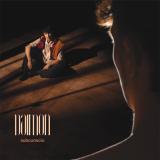
SUBCONSCIO - Daimon

SUBCONSCIO

Daimon

12inchSGH00018
Irma Records
13.02.2026

Subconscio left the smallest town in Gargano to begin a new life in uncharted Bologna.
Leaving mother earth, he still retains a strong sense of that distant world, expressed through the senses of his inner child. The Subconscio
project finds its expression in music, where it blends Neo Soul, Hip Hop, and Electronica into a sound deeply influenced by individual experiences. Soft vibrations and relaxed lyrics are the means through which he expresses his devotion to creative freedom, moving with the urgency of someone who has finally found his voice. The word dáimōn originates from Ancient Greek and means divine messenger, a guiding
spirit that hovers in a middle ground, called metaxu, the same place where the soul resides, and acts as a link between God and humanity.*
"Daimon" is Subconscio's debut album, produced by Luzee. It's the intimate vision of a person suspended in his imagination, questioning
the identity of his own memory and how the places that led him to his NOW are actually his future. The present doesn't exist in the narrative.
It exists only in the connection between childhood memories and the adult perspective.
Giulio is his son and also his parent: the Subconscious; the "daimon" is the musical journey that connects these two ways of observing the
same memory. Nostalgic turmoil meets the desire to recognize oneself and fuel the obsession with music, because only this—albeit the least
apparent art—is the only one that can be the voice and bearer of the dimensions of consciousness.
Featuring on the album: Madbuddy and Claver Gold

pre-ordina ora13.02.2026

dovrebbe essere pubblicato su 13.02.2026

22,65
David Bowie - Under The Influence? 2x12"
  • A1: Little Richard - Fabulous Little Richard
  • A2: Anthony Newley - Who I Can Turn To
  • A3: Ann Peables - I Can’t Stand The Rain
  • A4: Ken Nordine & The Fred Katz Group - Word Jazz
  • A5: Gerry Mulligan - California Concerts
  • A6: Koerner, Ray & Glover - Blues, Rags & Holler
  • A7: Stooges - Stooges
  • A8: Moondog - Moondog
  • A9: Linton Kwesi Johnson Forces Of Victory - Forces Of Victory
  • A10: Pixies - Doolittle
  • B1: Air - Moon Safari
  • B2: Scott Walker - Scott Walker
  • B3: Grandaddy - The Sophtware Slump
  • B4: Tom Verlaine - Tom Verlaine
  • B5: Brian Eno - Another Green World
  • B6: Kevin Ayers - Unfairground
  • B7: Mother Of Invention - Freak Out
  • B8: Roxy Music - Roxy Music
  • B9: The Langley Schools Music Project - Innocence & Dispair
  • B10: The Polyphonic Spree - Section 8

Which musical artists influenced David Bowie? Which records did he listen to over and over again during his youth and beyond? Who were his favorite songwriters and composers? What were his favorites? And in the case of such an artist, unique in his genre from the beginning to the end of his career, is the term “influences” the right one? As we delved into Bowie’s work, we learned that, even if he was the type to pick and choose from all over the place, he drew most of his inspiration from himself

pre-ordina ora13.02.2026

dovrebbe essere pubblicato su 13.02.2026

27,94
ACID MOTHERS TEMPLE & THE MELTING PARAISO U.F.O. - Electric Heavyland (2x12")
  • A1: Atomic Rotary Grinding God ~ Quicksilver Machine Head (15:44)
  • B1: Loved And Confused (17:03)
  • C1: Phantom Of Galactic Magnum (18:57)
  • D1: Atomic Rotary Grinding God ~ Blues For Black Bible (Live) (19:36)

We’ve purged the Acid Mothers Temple archives once again, resurrecting another classic album ‘Electric Heavyland’.
Originally released in 2002 on CD only (via Alien 8 Recordings), ‘Electric Heavyland’ is presented here for the first time on vinyl, remastered and with a whole bonus live side!
Housed in a beautiful gatefold sleeve with heavy use of the original black and metallic silver ink artwork
“Suddenly, my world explodes as the band pounces on the joint with some hell-blues, laced with sci-fi laser transmissions. Jesus H. Fuck, this is loud. There comes a point when heavy jamming and pure noise meet, and that point is tearing shit up at this very moment.” Pitchfork
Of key note for AMT diehards/collectors. Side D was recorded live at at the 2nd Acid Mothers Temple Festival December 13th 2003 with Yamazaki Maso (Masonna) as a guest.
Makoto says "we have played this song, Atomic Rotary Grinding God live only once, this is that recording"
Produced, engineered and mixed by Kawabata Makoto live recorded by Takayama Manabu (original source is VHS video tape)

pre-ordina ora06.02.2026

dovrebbe essere pubblicato su 06.02.2026

24,33
Desmond Dekker and The Aces - 007 Shanty Town

180 GRAM AUDIOPHILE VINYL
- LIMITED EDITION OF 750 INDIVIDUALLY NUMBERED COPIES ON ORANGE COLOURED VINYL

Desmond Dekker recorded some of his best known songs together with his backing group the Aces (consisting of Wilson James and Easton Barrington Howard). Their debut album 007 (Shanty Town) includes their single of the same name, which made him Jamaican music's first outernational superstar, reaching the 14th place in the UK charts. You'll hear how the Ska music from the mid-60s is developing to the Rocksteady sound. This was 'Ska' or 'Blue Beat'—(or its new name for the slower tempo 'Rock Steady'), and the lyrics come from the Calypso-Mento method of telling about current events in music. So in a groovy way, Desmond, James and Barry (the Aces) have given a report of love, politics, nagging women, the celebration of the Fifth anniversary of Independence, and gang warfare. This is were it all started before Desmond became the international star.

Even before Bob Marley and Jimmy Cliff Jamaica already had their own international superstar, Desmond Dekker was his name. Famous because of his international hits, such as 'Israelites' (1968) and 'It Miek' (1969).

007 (Shanty Town) is available as a limited edition of 750 individually numbered copies on orange coloured vinyl.

non in magazzino

Ordina ora e ordineremo l'articolo per te presso il nostro fornitore.

33,19

Last In: 7 years ago
Clifton Chenier - King of Louisiana Blues and Zydeco 6x12
  • 1: Louisiana Stomp
  • 2: Clifton's Blues
  • 3: Boppin' The Rock
  • 4: Ay-Tete Fee
  • 5: Rockin' Accordion
  • 6: Baby What You Want Me To Do
  • 7: That's Alright
  • 8: Ay, Ai, Ai
  • 9: Why Did You Go Last Night
  • 10: Zydeco Et Pas Sale
  • 11: Louisiana Blues
  • 12: Lafayette Waltz
  • 13: Hot Rod
  • 14: Louisiana Shuffle
  • 15: French Zydeco
  • 16: Bon Ton Roulet
  • 17: Jole Blonde
  • 18: If I Ever Get Lucky
  • 19: Black Gal
  • 20: Keep On Scratching
  • 1: Black Snake Blues
  • 2: Let's Talk It Over
  • 3: Walking To Louisiana
  • 4: Johnny Can't Dance
  • 5: Grand Mamou
  • 6: Gone A La Maison
  • 7: Live From Phr Studio, Clifton Chenier!
  • 8: Mr. Charlie
  • 9: Hey Madeleine
  • 1063: 4-5789 (That's My Number)
  • 11: Drifting Blues/Breaux Bridge Waltz
  • 12: Shake, Rattle And Roll
  • 13: Rock House
  • 14: Breaux Bridge Waltz
  • 15: Ma Negresse Est Gone
  • 16: Fannie Mae
  • 17: Going Home Tomorrow
  • 1: J'ai Conet, C'est Pas Me Femme (I Know, You're Not My Woman)
  • 2: Since I Met You Baby
  • 3: Cher Catin
  • 4: You're My Mule
  • 5: I'm On The Wonder
  • 6: You're Fussin' Too Much
  • 7: All Your Love
  • 8: Zydeco Cha Cha
  • 9: Ti Na Na (Little Na Na)
  • 10: Someone Told Me It Was All Over
  • 11: You Can't Sit Down
  • 12: Oh! My Lucille
  • 13: Take Off Your Dress
  • 14: M'appel Fou (They Call Me Crazy)
  • 15: Je Suis En Racolteur (I'm A Farmer)
  • 16: Je Marche Le Plancher (I Walk The Floor)
  • 1: Tu Le Ton Son Ton (Every Now And Then)
  • 2: Down The Road I Go
  • 3: Calinda
  • 4: Zydeco
  • 5: What I'd Say
  • 6: Dust My Broom
  • 7: My Mama Told Me
  • 8: Night Time Is The Right Time
  • 9: I'm A Hog For You
  • 10: Grand Prix
  • 11: You Got Me Crying
  • 12: Tit Mam's Zydeco
  • 13: Party Down (At The Blue Angel Club)
  • 14: I'm Coming Home (To See My Mother)
pre-ordina ora06.02.2026

dovrebbe essere pubblicato su 06.02.2026

148,95
Islaja - Angel Tape LP

Islaja

Angel Tape LP

12inchACU02LP
Other Power
06.02.2026

Islaja presents her new album ”Angel Tape”, her debut release on the new Helsinki-based label Other Power. Drawing inspiration from childhood epiphanies while listening to an alleged recording of angels singing, Islaja has crafted an album that stands out as a major work in her expansive and celebrated catalogue, which includes previous releases on labels such as Ecstatic Peace!, Fonal and Svart.


Islaja, aka Finnish artist Merja Kokkonen, describes her new album as a “counterwork” to her most recent albums, where the mode of composing was more song-based. This time around, she goes more in the direction of vast fields of sound where the human voice is a key ingredient of music that breaks free of strict stylistic guidelines and traditional song forms. Rough around the edges, atonal and otherworldly, "Angel Tape” is the result of a lifetime of inspiration from something beyond the immediate realm of our experience, an attempt to catch the elusive essence of musical otherness.


”As a child, I listened to the ’angel tape’ my mother played, and I never thought that the human voices I heard on it were angels singing. Instead, all the aural debris lying just beneath the surface caught my attention as I thought it was mysterious and something from a different world than ours, and so that was probably what was referred to as the ’angels’ so miraculously caught on tape”, Kokkonen explains. ”I think this was one thing that led me on this lifelong quest to find new sounds and forms in music.”


The tape she is referring to, a mid-80s church recording, was passed around in religious circles. Each time the tape was copied, it became slightly more distorted. It was believed that this recording of religious music had accidentally captured for the first time the voices of actual angels singing. The tape was rumoured to have originated in Kansas City and to have made its way to Finland.


Whereas Islaja has often thought of albums as being collections of recent songs presented together, ”Angel Tape” has a strong sense of conceptual coherence. The music comes from a place. That doesn’t mean that one must take a single path from one place to the next, as close listenings of the album reveal layers upon layers of not only sound but also of mood and meaning. From the human voice in its barest form, to the rising dense walls of sound moving and reshaping, ”Angel Tape” is a captivating album that unveils new contours with each repeated listening.

pre-ordina ora06.02.2026

dovrebbe essere pubblicato su 06.02.2026

21,82
Night Of The Vampire - The Enchanting Winds of the Dreamweaving Masquerade LP

It will expand your mind into the depths of psychedelic solitude and the haunting chambers of darkness within. If you so dare, mastermind Astral Shadow will be your guide through the untamed worlds of Black Metal and Darkwave. But beware, for if you choose to travel this path you may lose yourself and forever go mad

pre-ordina ora06.02.2026

dovrebbe essere pubblicato su 06.02.2026

28,36
Alexander Wolfe - Everythinglessness LP
  • 1: Prelude
  • 2: Lewisham Conversation
  • 3: The Toughening
  • 4: Everythinglessness
  • 5: Please Don't Tell My Mother
  • 6: Sgns Of Life
  • 7: These Are The Days
  • 8: Interlude
  • 9: Talk
  • 10: To Feel Love
  • 11 21: Missed Calls
  • 12: Her Final Breath
  • 13: Requiem
  • 14: The Softening

The news arrives in tandem with the release of two powerful new singles, "The Toughening" and "The Softening", shared in recognition of World Mental Health week At its core, 'Everythinglessness' is a record about masculinity and the mental health crisis facing young men, a subject Wolfe has lived through and now gives voice to with unflinching honesty. Turning his own experiences of depression, anxiety and ADHD into something raw, intimate and cinematic, Wolfe invites listeners into a world where vulnerability is not weakness, but a form of survival. Written after a period of intense personal reckoning, including time spent in a mental health rehab facility in 2023, 'Everythinglessness' is Wolfe's most emotionally resonant work to date, an album that unpacks what it means to be a man in a society that often demands silence and stoicism instead of softness and support.

Wolfe's voice channels the emotional resonance of Justin Vernon of Bon Iver and Nick Cave, while his songwriting explores everything from grief and generational trauma to love, loss and survival. The singles have been getting loadsa positive press. Radio support includes interviews and live performance on BBC London, Times Radio & 5 Live. More to come. Album launch show in Hastings, followed by UK and Europe tour supporting Alice Merton.

pre-ordina ora06.02.2026

dovrebbe essere pubblicato su 06.02.2026

26,85
Various - Hardcore Rave Classics Vol 3

Four Hardcore rave classics remastered and pressed at ISL-egendary label :

A1 comes from ISR27 (1994), AKA Sal Mineo.
A2 was unreleased on vinyl so far.
B1 used to be a Bastard Loud 06 (1995) killer !
B2 comes from Industrial Strength 11... in 1993.

Enjoy Lenny Dee's selecta for this third Hardcore Rave Classics Volume 3 !

non in magazzino

Ordina ora e ordineremo l'articolo per te presso il nostro fornitore.

17,23

Last In: 30 days ago
Weston Olencki - Broadsides

'In 2023, sound artist and composer Weston Olencki toured across the American South. Beginning in their hometown in South Carolina, they snaked a circuitous path from the mountains of West Virginia to the banks of the Mississippi River. As the miles accumulated, so did the initial seeds of new work.
'Instruments and artifacts they acquired hitched a ride in the backseat, while songs and sounds filled their portable recorder: water in its various states, the familiar insectoid buzz of those summer nights, trains cutting through the landscape, the traditional music that lived alongside the communities that kept it. Olencki took it all in, and over time, found ways that these experiences coalesced into a bramble-like perspective of time, where past, present, and future intersect in ways both barbed and beautiful.
'Broadsides, Olencki’s newest solo full-length is the multilayered result of this journey. The album follows their landmark release Old Time Music from 2022, which presented radical interpretations of traditional tunes from Appalachia and throughout the South alongside original compositions that drew significantly on archival recordings. On Broadsides, Olencki rejects delineations between the unmoored avant-garde and the rootedness of one’s cultural heritage, revealing their porous and intertwined nature. “My mother was a quilter. Her mother before that,” they write in the album’s liner notes. “Quilting, like music, is a practice of embedding knowledge and remembrance into the very core of the thing you are making. It’s not just about the materials, but how they’re reassembled, recontextualized, stitched, woven to form new patterns - the minutiae of craft holding significance to those looking to find it. Stories woven from stories, never told the same way twice.”
'Like all great road trips, Broadsides unfolds slowly and continuously, with moments of dramatic reverie punctuating the endless melt of highway in the rearview. We’re immediately confronted by the uncanniness of revisiting old haunts, as Southern storms break through the initial churn of the freight locomotives of Alabama. Olencki’s interpretation of the bluegrass standard “Foggy Mountain Breakdown” captures the euphoria of melancholy in motion. The permutational plucks of banjo are bounced around the frame by a computer, its pitches determined within algorithmic sequences and transcriptions of classic three-finger licks. The tonalities of old-time are smeared and stretched until all that’s audible is the insistence that Heaven might be real.
'In the album’s second half, “Omie Wise,” a murder ballad made famous by Doc Watson, follows an interlude recorded on the river in North Carolina in which the titular character’s body was laid. Ghostly echoes of a dozen other renditions float through the substrata as Tongue Depressor’s Henry Birdsey accompanies them on the pedal steel guitar. The album’s central composition, “all my father’s clocks,” is a profound meditation on entropy and impermanence. The sound of their father’s extensive clock collection ticks away as Olencki pulls a bow across the length of an autoharp sourced from a rural strip mall. The instrument was left as detuned as it was found, the resonance of its deep bass drone and clanging high-end the result of years of neglect and the warping effects of Southern humidity.
'Historically, broadsides were an early form of broadcasting, an often- musicalized telling of current news pasted in the public square. The name was later taken up by Sis Cunningham and Gordon Friesen in the 1960s, whose Broadside magazine published songs and social commentary when American folk music resurfaced as an urgent way of communicating the multifaceted politics of its time.
'Olencki borrows the phrase to recall both this old form of songmaking and that later prominent reexamination of traditional music’s role in modern life, but also to draw attention to the fragmented and machine- mediated way heritage is diffused in this very different, but no less pivotal, moment.
'As a sanitized past is used as justification for current violence and domination, we can turn to these artifacts to better understand the history of ourselves, but only if they are consciously pushed to evolve. Broadsides represents one personal, striking vision of what far-flung futurisms could be respun from = these high, lonesome sounds: a reflection of the unbridled joy and deep sorrow inherent to living together through time, and a desire to push further into the untold and unknown.'

pre-ordina ora30.01.2026

dovrebbe essere pubblicato su 30.01.2026

24,16
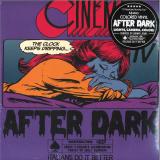
Various Artists - After Dark 4
  • A1: Wolfram Feat Desire – Sad Ibiza Song
  • A2: Orion – Call A Psychic
  • A3: Mothermary – Coming For You (Nicolaas Remix)
  • A4: Double Mixte – Chateau D'eau
  • B1: Love Object – Epicurus
  • B2: The Operator – Danser
  • B3: Talvi - The Day We Met Never Ended For Me
  • B4: Kid Moxie & Nina* – Waiting For Tonight
  • C1: Farah – Losing My Religion
  • C2: Sally Shapiro – Moonlight Dance (Tommy '86 Remix)
  • C3: Glüme – Dangerous Blue
  • C4: Cigar Cigarette – Come Correct
  • D1: Desire – Silver Machine
  • D2: Causeway – I'm Falling Apart
  • D3: Esper Star – Boys Of Summer
  • D4: Juno Francis – Romantica
  • E1: Sally Shapiro – Purple Colored Sky
  • E2: Club Intl Feat Logan Avidan – Hazel Eyes
  • E3: Mesh Kimono – Afterburn
  • E4: Dlina Volny – Saturday
  • F1: Annie-Claude Deschênes – Electric Light
  • F2: Cameron Romance – Meet You On The Other Side
  • F3: Joon – I Think They Call It Love
  • F4: Lovelock Feat Orion – Riders On Dark Horses
  • F6: Pynkie & Social Media – Zoom
  • F7: Body Double – Telescope
  • F5: Double Mixte – Am I A Fool To Love You

15 years since their fantasy disco scene-defining 1st volume, Johnny Jewel’s IDIB lasso Sally Shapiro, Desire, Farah, Lovelock and the kreme of their field for a 27-song, 2-hour re-up


Where previous volumes took their sweet time to arrive, ‘Volume 4’ graces the ‘floor only two years since the last, and nobody’s complaining. From its slo-mo, dry-iced covers of Jennifer Lopez’ ‘Waiting For Tonight’, Don Henley’s ’Boys of Summer’ and even flipping R.E.M.’s ‘Losing My Religion’, thru to exclusive pearls by our disco queen crush, Sally Shapiro, and Johnny Jewel as Desire, it’s the ideal soundtrack for late summer into silly season.

non in magazzino

Ordina ora e ordineremo l'articolo per te presso il nostro fornitore.

50,38

Last In: 4 months ago
SKULLD - ABYSS CALLS TO ABYSS
  • Healing The Wound
  • The Blink
  • Accabadora
  • Wear The Night As A Velvet Cloak
  • Le Diable And The Snake
  • Mother Death
  • Drops Of Sorrow
  • Sacred Fires

Purple vinyl. With Abyss Calls to Abyss, their third full-length album, Skulld bring to completion a path that began in 2019, a journey through old-school death metal, esoteric mysticism, and radical punk-rooted activism. Written and recorded in 2025, the album unfolds as an eight-track odyssey exploring the furthest edges of human and spiritual experience through a feminist, pagan, and anti-authoritarian lens. The abyss evoked by the album is not only an external, cosmic void, but also an inner, personal, and collective chasm, the place where death and rebirth collide, where wounds and healing, desire and destruction intertwine. Each song delves deep into the essence of being, merging ancestral ritualism, female mythology, social critique, and archetypal symbolism into a single, cohesive vision.

pre-ordina ora30.01.2026

dovrebbe essere pubblicato su 30.01.2026

23,11
Queen - Live Killers (2x12")

Queen

Live Killers (2x12")

2x12inch8806347
EMI
30.01.2026
  • 1: We Will Rock You
  • 2: ⁠Let Me Entertain You
  • 3: ⁠Death On Two Legs
  • 4: Killer Queen
  • 5: Bicycle Race
  • 6: I’m In Love With My Car
  • 7: ⁠Get Down, Make Love
  • 8: You’re My Best Friend
  • 9: ⁠Now I’m Here
  • 10: Dreamer’s Ball
  • 11: Love Of My Life
  • 12: ’39
  • 13: Keep Yourself Alive
  • 14: Don’t Stop Me Now
  • 15: Bohemian Rhapsody
  • 16: Tie Your Mother Down
  • 17: Sheer Heart Attack
  • 18: We Will Rock You (Reprise)
  • 19: We Are The Champions
  • 20: God Save The Queen
pre-ordina ora30.01.2026

dovrebbe essere pubblicato su 30.01.2026

38,24
D.O.A. - The Black Spot LP

D.O.A.

The Black Spot LP

12inchSDR0144LP
SUDDEN DEATH
30.01.2026
  • A1: Blind Men
  • A2: Kill Ya Later
  • A3: Order
  • A4: Marijuana Motherfucker
  • A5: You're Paying For Your Body Now
  • A6: Worries
  • A7: Road Kill
  • A8: Get Away
  • A9: More
  • A10: Je Declare
  • A11: Big Guys Like D.o.a
  • A12: I Know Who You Are
  • A13: Bound For Glory
  • A14: Unchained Melody
  • A15: Cut Time
  • A16: Running Out Of Time
disponibile anche

Cherry Red Vinyl[30,88 €]


pre-ordina ora30.01.2026

dovrebbe essere pubblicato su 30.01.2026

28,99
D.O.A. - The Black Spot LP

D.O.A.

The Black Spot LP

12inchSDR0145LP
SUDDEN DEATH
30.01.2026
  • A1: Blind Men
  • A2: Kill Ya Later
  • A3: Order
  • A4: Marijuana Motherfucker
  • A5: You're Paying For Your Body Now
  • A6: Worries
  • A7: Road Kill
  • A8: Get Away
  • A9: More
  • A10: Je Declare
  • A11: Big Guys Like D.o.a
  • A12: I Know Who You Are
  • A13: Bound For Glory
  • A14: Unchained Melody
  • A15: Cut Time
  • A16: Running Out Of Time
disponibile anche

Black Vinyl[28,99 €]


pre-ordina ora30.01.2026

dovrebbe essere pubblicato su 30.01.2026

30,88
Various - Wizzz! French Psychorama Volume 5 (67-75)

The journey through French-speaking pop archives continues with this fifth volume, packed with fuzz, gimmicks, and dissent. Far from the charts, the selected tracks display a great creative freedom, often backed by corrosive humor. Welcome to the surprising, kaleidoscopic, and colorful world of the late sixties and early seventies, Wizzz!
Born in Montauban, Robert Pico stumbled into music by chance when he met René Vaneste, then artistic director at Pathé-Marconi. René brought him to Paris to record his first 45 RPM EP in 1964. A year later, Pierre Perret introduced him to Vogue, where he recorded his second album with Claude Nougaro’s orchestra. Sylvie Vartan then introduced him to RCA, where he recorded four singles, including the astonishing "Chien Fidèle," a track backed by a hair-rising fuzz guitar. Alongside his solo career, he also composed for other artists like Alain Delon (the song was recorded but remains unreleased), Magali Noël, Bourvil, and Georges Guétary. In the Paris of the sixties, he mingled with Mireille Darc, Elsa Martinelli, Marie Laforêt, France Gall, Françoise Hardy, Petula Clark, Régine, Dani, Serge Gainsbourg, Joe Dassin, Franck Fernandel, Charles Level, and Roland Vincent. Despite his efforts and winning a Grand Prix Sacem for his final record, Robert Pico didn’t achieve the expected success in show business and decided to leave Paris and return to the Southwest, where he devoted himself to writing. He is the author of 23 books (including Delon et Compagnie, Jean-Marc Savary Editions 2025, a memoir about his youth and his many encounters). Today, he is relieved to never have become a celebrity and devotes himself to his work with passion.
In 1969, the Franco-Italian movie Erotissimo was released, directed by Gérard Pirès (who later directed Taxi in 1998, written and produced by Luc Besson). This pop comedy features Annie Girardot, Jean Yanne, Francis Blanche, Serge Gainsbourg, Nicole Croisille, Jacques Martin, and Patrick Topaloff. The soundtrack was written by Michel Polnareff and William Sheller, with lyrics by Jean-Lou Dabadie. "La Femme Faux-cils," performed by Annie Girardot. It recounts the feelings of a rich CEO's wife who seeks to develop her sex appeal under the influence of advertisement and magazines. Groovy, sparkling and light, this track, with ITS lush arrangements humorously critiques consumer society and feminine beauty standards.
“Je suis l’Etat” (1967) is the flagship track of the first EP by singer-songwriter Spauv Georges, aka Georges Larriaga, better known as Jim Larriaga (1941-2022). Born into a family of bakers, the young man was initially planning to become a hairdresser when he discovered English-speaking music through Elvis Presley and the Beatles. After this revelation, he decided he would become a songwriter and gave himself five years to succeed. He recorded his first two EP’s independently for RCA under the pseudonym Spauv Georges; meaning “that poor George”, a nickname given to him by the mother of her friend Jean-Pierre Prévotat (future drummer of the Players, Triangle, or Johnny Hallyday). Portraying a depressed and eccentric young man, Spauv Georges created corrosive and amusing songs that didn’t reach a wide audience, despite a TV appearance with Jean-Christophe Averty.
Supported by his loyal friend and fellow songwriter Jean-Max Rivière, Georges Larriaga met the future singer Carlos in the early '70s, then Sylvie Vartan’s assistant. He wrote songs for Carlos, including the popular "La vie est belle," "Y’a des indiens partout," and "La cantine", which went onto become a huge hit in 1972. He also composed for Claude François (“Anne-Marie”, 1971), Charlotte Julian (“Fleur de province”, 1972), helped launch child singer Roméo (who sold 4 million records), and later wrote the hit "Pas besoin d’éducation sexuelle" (1975) for the young Julie Bataille. In 1971, Jim recorded an album for Disc'Az: “L’univers étrange et fou de Jim Larriaga”, which featured pop gems like “La maison de mon père”.
The story of the song "Zoé" began when Pierre Dorsay, artistic director at Vogue Records, asked Swiss singer and musician Pierre Alain to write a song for a new female singer. The inspiration came when he realized that Zoé (the artist's name) was also the name of France's first atomic battery, created in 1948, which consisted of uranium oxide immersed in heavy water! The lyrics reflect a bubbling energy that must be handled with caution, while the instrumentation echoes this atomic theme, notably with the use of a theremin.
Zoé’s career lasted only as long as a single 45 RPM, but it seems Christine Fontane was the vocalist behind this pseudonym, who is known for several EPs, a good "popcorn" album in 1964, and a handful of children’s singles in the '70s. Regardless, the photograph on the cover is of a different girl entirely.
Later, Pierre Alain continued his career, writing songs for himself, Marie Laforêt, Danièle Licari, Alice Dona, Arlette Zola (3rd place in Eurovision 1982), and achieving multiple gold and platinum records in Canada. Also an inventor with several patents, president of the Romande Academy, and head of the French Alliance in Geneva, he now composes atonal music, books, and poetry. Moreover, he is also the host of "Les Mardis de Pierre Alain" at "Le P'tit Music'Hohl" in Geneva.
Filled with oriental choruses and fuzz guitar, "Fou" is from Jacques Da Sylva's only EP released by Vogue in 1967. Despite the quality of this recording, all traces of this singer disappear after this first effort.
Valentin is a baroque pop singer born in Belgium. He is the songwriter and composer of most of the tracks on his three singles released in the late 60s in Canada. A legend says that he reincarnated himself as Jacky Valentin during the 1970s for a rock'n'roll revival career in Belgium, but his older brother sadly debunked this story. Valentin's first two singles were arranged by Claude Rogen, a Parisian session pianist who had come to Canada to promote the song “Mister A Gogo”, a cover of David Bowie’s “Laughing Gnome”, adapted by singer Delphine, his wife at the time. Far from his usual network, Claude Rogen arranged music for Polydor, including the arrangements for “Je suis un vagabond” in 1969, a jerk tune with string arrangements and a furious optimism.
Jacques Malia wrote, composed, and recorded his only 45 EP for Festival in 1966. “Histoire de gitan” is an incredible beat track with bohemian scat that tells the story of a gypsy musician who came to Paris to make it in the Music-Hall, to no avail. The hero of the song and its author probably shared a similar fate, as Jacques Malia faded into anonymity after this remarkable attempt.
Bernard Jamet recorded two EPs for Barclay in the late sixties and co-wrote several songs with Christine Pilzer, Pascal Danel, and prolific songwriters Michel Delancray and Mya Simile. The track “Raison Légale” (1968), his masterpiece, immerses the listener in a courtroom right when a murderer is being judged, with jerk rhythm and free arrangements. A unique, paranoid, judicial, and psychedelic oddity.
Jean-Pierre Lebrot-Millers started his career in show business in 1967 as a singer and songwriter for the Philips label. After three singles, he wrote several songs of a new kind with his friend Pierre Halioche, in the midst of the sexual liberation movement and the democratization of drugs. With provocative lyrics, “Les filles du hasard” and “Barbara au Chapeau Rose” were released on a Philips singles in 1968. The character of Barbara was inspired by a queen of Parisian nightlife during the psychedelic years: model Charlotte Martin, who dated Eric Clapton from 1965 to 1968, then Jimmy Page from 1970 to 1983. Jean-Claude Petit’s arrangements, with a table-filled intro, soul brass, and Hendrixian guitar, emphasize the flamboyance of a hedonistic and sexy character, whose dog is named Junkie because “Junkie est un nom exquis”! The track was recorded live in three takes with a full orchestra.
Upon its release, the record was censored by Europe 1 and RTL due to its references to drug use. Jean-Pierre Lebrot was then banned from the airwaves and later dismissed by his record label. He changed his artist name to Jean-Pierre Millers, while his companion Pierre Halioche became D. Dolby for a new dreamy composition, “Chilla”, which Jean-Pierre produced himself with arrangements by Jean Musy. Once again, the song was immediately censored everywhere. After this setback, he decided to stop singing and started taking on odd jobs to support his Swedish wife and their son until the day he met Jean-Pierre Martin, then production manager at Decca, who had worked with Manu Dibango. Martin offered Jean-Pierre Lebrot-Millers, then employed at Rank Xerox, the position of artistic director at Decca. He accepted and became, a year later, promotion director (radio, press, TV). He worked on Julio Iglesias’s first album for Decca, which became a massive hit and allowed him to meet Claude Carrère. The latter asked him to write new songs and find their performers, much like a “talent scout.” It’s through him that Jean-Pierre discovered Julie Pietri and Corinne Hermès. He composed “Ma Pompadour” for Ringo, Sheila’s husband, and took the microphone again for the syncope hit “Rendez-Vous” in 1982.
That same year, Jean-Pierre Lebrot-Millers tried to release a track for which he had heavily gone into debt: “Si la vie est un cadeau”. Having recorded it in London, he presented it to numerous professionals, all of whom refused to get involved. The same thing happened with Antenne 2 and the Sacem when he proposed the song as France’s entry for Eurovision. He then met Haïm Saban, who was producing cartoon soundtracks and had just launched the Goldorak theme song. Saban, having listened to the song, declared it had the potential to become a hit. He sent Jean-Pierre and Corinne Hermès to meet the CEO of the Luxembourg radio and television network. The latter received them, asked to hear a verse and chorus a cappella in his office, and immediately hired them to represent Luxembourg at Eurovision 1983. They reworked the arrangements and recorded a new version with Haïm Saban as co-producer. The song ended up winning Eurovision 1983, a great comeback for our hero. He continued producing and hung out with the band Nacash in Belgium when a couple came to introduce their daughter for an impromptu audition in a hotel room. The girl sang “Les démons de minuit” while dancing to a radio cassette. Impressed, he had her take singing lessons for a year and composed a song for her (for which he had the melody and title, but no lyrics). This required him to go on the hunt for a lyricist, who ended up being Guy Carlier. They recorded the song, which was initially a ballad, at Bernard Estardy’s CBE studio, and gave the singer a new name: Melody. They showed the song around their industry network without success. Later, Estardy called Jean-Pierre to suggest changing the rhythm and making it pop-rock. Orlando, Dalida’s brother, liked the result and decided to co-produce the track. “Y’a pas que les grands qui rêvent » became a classic hit. The song has since been covered by Juliette Armanet (as a ballad, like the original) and Valentina.

Born into an aristocratic Breton family, Hervé Mettais-Cartier worked as a DJ at Queen Kiss, a nightclub in Poitiers, where he formed the band Les Concentrés with Michel (an actor) and Christian (a radio technician). Together, they created a repertoire of whimsical songs (“Ma bique est morte”, “J’suis un salaud”, “Fils de dégénéré”...) that they performed on stage dressed in white (in homage to “concentrated milk”). They performed at Bliboquet and Olympia in 1968 for the 10th edition of the “Relais de la chanson Française” organized by L’Humanité-Dimanche and Nous les Garçons et les Filles, sponsored by Pepsi Cola. Winners in the author-composer category, alongside Danish singer Dorte, their visibility allowed them to record a 45, and appear on television in Jean-Christophe Averty’s show. The A-side of the disc features Bruno le ravageur, a casatchok dedicated to Bruno Caquatrix, the director of Olympia, nicknamed in the song “Coq Atroce” or “croque-actrices”. The B-side is dedicated to “Fils de dégénéré”, a quirky tribute to Hervé's aristocratic roots, mixing absurdity with sophisticated vocal harmonies.
After Les Concentrés, Hervé Mettais-Cartier formed the duo La Paire et sa Bêtise with his friend Olivier Robert. They performed in Parisian cabarets and toured with Pierre Vassiliu. In the late 1970s, Hervé began a solo career. He recorded two albums for the Motors label in 1978 and 1979, which did not achieve their anticipated success due to lack of promotion. In 1980, he met Bernadette, with whom he started a family and created a “Chansons à voir” (songs to see) show that he performed until his death at the end of 2024.

Publicité comes from the final EP by the Missiles (Ducretet Thomson, 1966), a disc that also includes “La (nouvelle) guerre de cent ans”, featured on Volume 4 of our Wizzz! series. Please refer to the booklet for the story of the band.

“He’s 1.82 meters tall, 28 years old, weighs 135 kg, is black and Belgian”: this is the description of singer Hegesippe on the back of his sole single (Decca, 1967). He appears on the album cover wearing a Greek toga, like a hippie gag – we are at the end of the year 1967. In “Le crédo d’Hegesippe”, this former bodyguard of Antoine and the Charlots plays the delightful card of the thick brute converted to Flower-Power and non-violence, with arrangements by Jean-Daniel Mercier, aka Paul Mille.
“Ethéro-disco” was released on a promotional record for clients of the Maréchal company (Liège, Belgium) for the New Year 1979. Over a funky rhythm, celebrity impersonations (Brigitte Bardot, Jacques Dutronc, Fernandel…) deliver an enigmatic text about pharmaceutical products like ether, bismuth, and aspartate. The track was composed by Dan Sarravah (responsible for Joanna's “Hold-up inusité” featured on Wizzz! Volume 3) and Tony Talado, who was also a singer (one 45 in 1967), songwriter (with over a dozen credits between 1964 and 1985 in various styles from surf music to disco), author (Devenez Végétarien, Dricot Editions, 1985), ad designer, and psychologist.

Décollez-les is on the A-side of Mamlouk's only single, a pseudonym for Marsel Hurten, who is known for his work on several EPs in the late sixties, as well as composing music for Hervé Vilard’s “Capri, c’est fini”, Claude Channes' “La Haine”, Annie Philippe’s “On m’a toujours dit”, and Nancy Holloway’s “Panne de Cœur”.
This strange song, with Afrobeat horns and absurd dialogues between a chef and his kitchen staff, is the result of a collaboration between Marsel Hurten and one of his neighbors, a photographer from Pavillon-sous-Bois (93), where the musician settled after returning from the Algerian War. A music video was shot to promote the record.
Marsel Hurten was born in Tourcoing (59) into a musical family. At a young age, he joined the brass band founded by his grandfather, playing the piston before studying trumpet at the conservatory, as well as teaching himself how to play the guitar. As an orchestra musician, he toured in France, Belgium, Germany, and England. He released a series of solo 45’s between 1965 and 1968 for the DMF and Az labels before stopping recording to focus on working for other artists (Gilles Olivier, Noëlle Cordier…).
“L’amour nu” (Vogue, 1971) is the work of the short-lived Belgian band Mozaïque. The track, written by singer Jacques Albin, closely resembles another of his compositions, “Carré Blanc”, which he recorded in 1969 for Disc’AZ.
Represented by the Lumi Son micro-label based in Marignane (Côte d'Azur), Jean-Marc Garrigues released two 45 RPMs in the late sixties, defending the French jerk sound. The song “Je dis Non” is a short, joyful ode to youth, pop music, and rebellion.
Songwriter and performer Jacques Penuel released three singles. The first one, “Astronef 328” (Fontana, 1969), features a dizzying series of chords punctuated by sound effects, a sci-fi story, and arrangements by Jean-Claude Vannier.

We would like to sincerely thank Pierre Alain, Moon Blaha, Marsel Hurten, Bastien Larriaga, Jean-Pierre Lebrot-Millers, Bernadette Mettais-Cartier, Robert Pico, Olivier Robert, Claude Rogen, Micky Segura.

non in magazzino

Ordina ora e ordineremo l'articolo per te presso il nostro fornitore.

23,11

Last In: 78 days ago
Articoli per pagina:
N/ABPM
Vinyl