Leifur James will release his debut album in October through Late Night Tales' artist label Night Time Stories.
A Louder Silence is the London-based producer and multi-instrumentalist's first proper release; his two earlier singles feature on the record, after gaining support from Gilles Peterson's Worldwide FM with a live airing and interview in 2017, plus continued backing from XLR8R, Stamp the Wax, and BBC Radio 6 Music DJ's.
The album is both spacious and thought-provoking, energetic yet restrained, brimming with nuanced electronic instrumentals, dubby synths, and jazz breaks — creating an array of rich textures, complemented occasionally by James' own soulful vocals.
While James' early unreleased work was singularly electronic, A Louder Silence focuses on analog synths and warm acoustic instruments, all played by his own hand. It's the product of a two-year spell in James' home studio, with additional live drums recorded with Jim Macrae at London's Old Paradise Audio.
James' rich musical influences are laced through the release. Encouraged by his mother, a classically trained pianist, he learned to play the cello and developed adeep understanding of rhythm and melody that informs his approach to writing electronic music. James playsthe piano he grew up listening to in 'Mumma Don't Tell' and samples an indefinable percussive element to drive forward 'Suns Of Gold.' 'Night and Day' sees cello plucks and long melodic strokes interlink with a grooving synth line. He also field records the atmospheric Moroccan sea in 'Red Sea.' Inspiration stems from the experimentation of modern day electronic producers, fused with the Jazz, Classical, Blues, and Soul music that soundtracked his youth.
Central to the album is the idea of space. James recalls the early advice of his uncle, a jazz guitarist, who features on 'Uncle Blue': 'I remember him saying to me: "What goes in comes out' James says. 'Every detail should be a worthy detail; sometimes nothing is better than something.' Moments of blissful, structured intensity are juxtaposed with stillness and near silence — dark and light; loud and quiet. This also forms the foundation for the album title: A Louder Silence reflects the dichotomy of finding pockets of stillness in a noisy world.
The result is 10 distinct tracks delivered as one coherent and well-structured long-player debut, set for release on LP, CD, and digital, on 5th October 2018.
Live dates follow a debut live show earlier this year at the Jazz Café with Yazz Ahmed, including an album launch at London's Ghost Notes in October.
Buscar:mother inc
In 1975, the prolific and multi-talented Brazilian comedians Chico Anysio and Arnaud Rodrigues recorded an album based on the protagonist of one of their most celebrated TV series. Sporting a dodgy moustache and an equally troubling haircut, Carioca conman Paulo Maurício Azambuja (played by Anysio) would flog his own mother's leg if he could, and his ever-ridiculous scams are inevitably always destined to fail. This soundtrack/musical re-imagining of the series combines jazz-funk with samba soul and MPB, with the help of cult Brazilian trio Azymuth. Keyboard maestro Jose Roberto Bertrami, who arranged the album alongside renowned conductor and composer Jose Menezes, elevates the groovy odd-ball sound to another dimension, with his set up including Fender Rhodes, Arp Strings, Arp Omni, Clavinet and Hammond organ. Remaining Azymuth members Ivan Conti (drums) and Alex Malheiros (bass) provide the signature Azymuth foundation, and saxophone prodigy Victor Assis Brasil and legendary multi-instrumentalist producer Durval Ferreira also feature.As well as its distinctly comedic character, what makes the music so special is the coming together of traditional samba roots, and Azymuth's ahead-of-its-time psychedelic funk influence. Each side ends with a comedy monologue, complete with live audience laughter, but before that you get seven tracks of weird and wonderfully emotive Brazilian groove music.
Experiential composer Tim Hecker's ninth official full-length, Konoyo ('the world over here') was largely recorded during several trips to Japan where he collaborated with members of the gagaku ensemble Tokyo Gakuso, in a temple on the outskirts of Tokyo.
Inspired by conversations with a recently deceased friend about negative space and a sense of music's increasingly banal density, Hecker found himself drawn towards restraint and elegance, while making music both collectively and alone.
As with the Icelandic choir he arranged on 2016's Love Streams, the heights of Hecker's talent emerge in his manipulation of source material, bending and burnishing it into fantastical new forms. Keening strings are stretched into surreal, pixelated mirages; woodwinds warble and dissipate as fractal whispers of spatial haze; sparse gestures of percussion are chopped, isolated, and eroded, like disembodied signals from the afterlife. Both in texture and intent, Konoyo conjures a somber, ceremonial mood, suffused with ritual and regret. Visions flutter and fade; dreams gleam and decay.
Hecker will stage a series of special performances in tandem with the album's release, featuring members of the gagaku ensemble on sho¯, ryuteki and hichiriki, accompanied by Kara-Lis Coverdale.
Those of you who have followed Lucky Brown's tireless efforts since joining the Tramp family in 2007 can hear without a doubt the progress he and his various ensembles have made in almost every musical aspect. His songwriting skills amazed us right from the start of our relationship. What deserves much more respect is that during the past years he has proved to be probably one of the most authentic and steady but at the same time most innovative creative minds on the contemporary funk scene. Sure, many of today's funk bands are able to deliver a two-and-a-half minute funk killer, what distinguishes Lucky Brown, however, is his ability to create compositions which also employ the idiom as a means to deliver an artistic message, a hard-to describe feeling, or a conscious concept, just like James Brown and Fela Kuti mastered in the 1970s. Furthermore, Lucky has developed his own trademark production and sound whose depth and honesty form a basis from which his work will ever remain timeless.
But that's nothing new as you can hear on both of his first two albums for Tamp ("Lucky Brown's Space Dream, 2011 and "Mystery Road", 2015) On "Mesquite Suite" he is forging new paths by soaking up musical styles from all over the world to infuse with his own totally unique way of producing. Perfect examples are the Mulatu Astatke-ish tracks "Pauraque" and "Mother Corn Stalk" with its distinctive New Orleans Swamp-Jazz flavor. Fans of the Menahan Street Band or El Michels Affair may see in "Taterbug" and "Estrellas De La Tierra" their favourite tracks. But it's the entirety which makes this album standout.
It has been Lucky Brown's aim to paint for the world a picture of the vernacular jazz that America's neighborhoods once crafted as their own homegrown cultural heritage. Lucky Brown's music is a rejection of the elitism, classism, and status of the music industrial complex and is an antitoxin to it's resultant homogeneity. He wants with his heart and his art to transmit an everyday people's sound, made by everyday people, dedicated to the upliftment of all people.
Tobias Kirmayer, August 2018
key-selling points:
- limited to 500 hand-numbered copies
- incl. full album download code
- double vinyl LP with deluxe gatefold cover
Divine gospel modern soul boogie LP written, composed and produced by Jeffrey Roberson, first released in 1982 on Black Diamond Records.
Every once in a while, an exceptional talent impacts the gospel industry and leaves an incredible impression. The anointed and Grammy nominated Jeff Roberson is one of the those rapidly expanding gospel artist who have done just that.
Jeff Roberson was born and raised in Long Island, New York, the son of Pentecostal parents who had a compelling love for music. Actually, he is endowed by God with a melodic intrinsic distinctive rooted and grounded in the splendid tradition of the church. His keen interest and focus in music was so intense that his
parents encouraged him by purchasing a piano. During his teenage years, he was significantly blessed to be tutored by the late Rev. Timothy Wright, and the late Professor Benny Cummings and the Kings Temple Choir. It was during this season of his life that he continuously developed his skills as a keyboardist and songwriter.
Not only is he a skillful world-class vocalist, his talents transcend various creative art forms such as a skillful musician, innovative producer, accomplished pianist and organist. He simultaneously projects his uncompromising vocal talents and musical gifts to an unprecedented level of artistic achievement. Simply stated
he excels in the excellent - (Excerpt taken from Jeff Roberson's biography).
'Ever since I can remember, music has been to me, as a mother is to her child. Just as the sun enhances daylight, music is my life throb. Music puts life and joy in that sacred dimension. It fills the void of darkness and brings with it New Life.'
Jeffrey
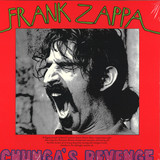
Over the last several years, the Zappa Family Trust and UMC have lovingly been restoring Frank Zappa's iconic catalog together by reissuing his classic albums on CD and pressing long-out-of-print records back on vinyl. Next up in the ongoing vinyl initiative, coming on the heels of the reissue of his enigmatic Burnt Weeny Sandwich, is Zappa's 1970 stylistically diverse and subversive album, Chunga's Revenge, which will receive a 180-gram audiophile repressing on black vinyl on July 20. Supervised by the ZFT, the record, which has been unavailable on vinyl for more than three decades, will be press pressed at Pallas In Germany and feature reproductions of the original artwork. Chunga's Revenge, although released under Frank Zappa's own name, introduced a new Mothers lineup that included former Turtles members Howard Kaylan and Mark Volman, aka Flo and Eddie, as well as keyboardist George Duke, drummer Aynsley Dunbar and multi-instrumentalist Ian Underwood. The album is one of Zappa's most eclectic efforts, encompassing the improvisational title track, the raucous guitar jam "Transylvania Boogie," the bluesy "Road Ladies" and the jazzy "Twenty Small Cigars," along with more conventional rock numbers like "Tell Me You Love Me," "Would You Go All the Way" and "Sharleena."
Halleluja Mystic Garden contains two long sides of blissed out, super tight AMT jams that somehow stretch into the future while staying strongly rooted in the group's celebrated psychedelic history. Hallelujah!, another essential AMT classic including vocals from Cotton Casino ! First pressing of 500 copies. Packaged in a heavy duty single pocket sleeve with silver metallic inks. Part 2 will be released later this year on Important Records.Cotton Casino : voice, astral mama
Kawabata Makoto : guitar, fretless bass, bouzouki, organ, rhythm machine, electronics, tapes, speed guru Higashi Hiroshi : synthesizer, noodle king Mitsuko Tabata : guitar, guitar-synthesizer, voice, kisses & hugs Satoshima Nani : drums, another dimension S/T "Wolf" : bass, tapes, space & time recorded at Acid Mothers Temple, Jun. 2016 - Mar. 2017 produced and mixed by Kawabata Makoto
- A1: If You're Going To The City
- A2: Sad Little Girl
- A3: Psychedelic
- A4: Listen Here
- A5: The Hipster
- B1: Kozo's Waltz
- B2: Terra Firma Irma
- B3: Now At Last
- B4: Mi Hermano
- C1: A Walk On The Wild Side
- C2: Get Up Off Your Knees
- C3: Sphynx
- C4: Look At Me, Look At You
- C5: Trees And Grass And Things
- D1: Bend Your Head Down Low
- D2: Chains
- D3: Just In Time To See The Sun
- D4: Mother Of The Future
- D5: The Rhythm Changes
When Acid Jazz founder Eddie Piller asked Martin Freeman ('The Hobbit', 'Sherlock', 'The Office') to do a jazz radio show they could hardly imagine the response. From around the world emails and tweets inundated the show and they swore to themselves that they couldn't leave it there.
Now, two years on, this compilation of their favourite jazz has
arrived. From the rolling hard bop of Lee Morgan and Art Blakey, via screaming soul organ, jazz funk original acid jazz onwards to the post modern spiritual jazz of Kasami Washington, this is an incredible journey.
Released on double CD, digital download and double vinyl with
deluxe gatefold packaging, this is the album that will launch Acid
Jazz's 30th Anniversary celebrations.
Everyone loves "Why Can't We Live Together" by Timmy Thomas: how could one resist such a strong music vibe coming with a message more relevant today than ever! It has been covered by the most creative artists more than a few times...
Recorded in Paris and Kingston, the Soul Sugar crew & Leonardo Carmichael make it their own with a sultry reggae groove. Jahno on drums and syndrums, Thomas Naim on guitar, and Guillaume "Gee" Metenier on keyboards and production duties, are delivering the classic hit in all its majesty, in the superior categories of both extended Discomix, and Dub version under the spell of Dubmaster extraordinaire Dennis Bovell!
What to say about the breathtaking interpretation of Leonardo Carmichael Growing up in Jamaica, Leonardo learnt many a song from his father Glendon Joseph McFarlane, who would sing to his mother Geraldine, who sang in a choir. Leonardo grew up as a drummer and a singer in churches. Through a mutual friend, he met Nastassja Hammond, daughter of Beres Hammond, with whom he started writing and releasing music for various artists including Courtney John and Kreesha Turner. Leonardo has a wide appreciation for diverse genres but keep an International Reggae and Dancehall feel at the core of his music. It can be said Leonardo has faith & soul to the bone...
"The kind of melancholia I'm talking about, by contrast, consists not in giving up on desire, but in refusing to yield. It consists, that is to say, in a refusal to adjust to what current conditions call 'reality' - even if the cost of that refusal is that you feel like an outcast in your own time." (Mark Fisher, Ghosts Of My Life, Zero Books 2014, p. 24) In Ghosts of My Life: Writings on Depression, Hauntology and Lost Futures', the author Mark Fisher outlines - to put it in a big way - a resistant melancholy. This stands in contrast to leftist melancholy resignation', as well as something which Fisher does not talk about: its common masculine counterpart, habitual post-left cynicism - as in seen it all before'. Fisher calls this hauntological melancholy. Haunting, spooks, ghosts and apparitions are an almost constant presence on I Started Wearing Black', the second album by the Cologne-based artist Sonae (pronounced so-nah'). The term hauntology shares a fate with retro-futurism when it comes to inflationary overuse and abuse. It's a conceptual container that looks good and can hold a lot, indeed, too much. Furthermore, hauntology has its peak season behind it, a term on the threshold of its expiration date. Nevertheless, I would like to rehabilitate hauntology and use it properly to characterize I Started Wearing Black', because the term is rarely as compelling to describe music as is the case here. The most recent other example could be Asiatisch' by Fatma Al Qadiri, but with a completely different frame of reference. What are the ghosts of this music It rustles, crackles, ruffles, crunches, rattles, scrapes, sometimes a beat emerges from the constant noise, sometimes an obscure voice mumbles incomprehensibly, sometimes a melancholy piano figure is prevented by this noise from coming too much to the foreground. It definitely is eerie - to bring into play another term used by Fisher in the title of his latest book, The Weird and the Eerie'. In British pop-jargon, eerie first occurred to me more often when referring to particularly leftfield, spooky and... well... ghostly dub, a bass-heavy, echoing noise, from Augustus Pablo to Creation Rebel to Burial. Unlike the Wald & Wagner records by Wolfgang Voigt, Sonae is not a kind of neo-romantic veiling with a tendency for escapist nebula. It is more a noise of latency. The noise signals a latent - not necessarily acute - threat, a latent uneasiness about... yes... about what About a System Immanent Value Defect' That's the name of a track on I Started Wearing Black' where something that sounds like a French Horn (or a foghorn) battles for attention through or against the background noise. An email from Sonae: The piece 'System Immanent Value Defect' should actually be called 'I See Turkey'. I wrote it for my fellow student Elif - she is a pianist and Gezi Park activist from Istanbul. Through her I witnessed the inner conflict and agitation that political circumstances can create: her feelings of guilt when there was an attack, with her safe in Germany as a student, watching the events from afar. It was horrible. When her mother begged her not to come home because she feared for her safety, I felt a cold shiver run down my spine. I started with the piece from this mood, beginning with the piano, then the noise (modulated sinusoidal curves), which reminded me of waves and the then heatedly discussed Mediterranean sea: atmospheric, melancholy motifs. In contrast is the anger, the pressure, represented in corresponding sounds - hopefully audible! - During this time I started to think about world views as they can be found around the globe, in how far they held by societies and their political representation. I realized that I know of no political system that is actually about the people and what would do them good. It's always about positions, power, money. I thought that was a lot more frightening on a global scale than merely viewing Turkey in isolation. That's why the piece is called "System Immanent Value Defect", because our world suffers from precisely that. Everywhere, it's all about the wrong things.' Between the wrong things there are happy moments. In the title track, after 184 seconds of rattling and hissing, a beat is unleashed, like an arrow released from a spanned bow, a beatific relief, if there is such a thing. White Trash Rouge Noir' first meanders along spookily, then after 144 seconds it transforms itself into a distant cousin of Einstu¨rzende Neubauten's Yu¨ Gung', but there is no Big Male Ego to be fed here, and the black in the album title is a completely different type of black from that of the Neubauten. Furthermore, I Started Wearing Black' was finished long before the black dresses were worn at the Golden Globes as a sign of protest against sexual violence. Sonae writes that she herself started wearing black some time ago. Her reasons are so-called personal ones: ... resulting from an individual situation (lovesickness), I started to wear black (gaining weight and feeling ugly).' The political dimension of gaining weight, feeling ugly and therefore dressing in black in I Started Wearing Black' lurks within the noise and never becomes explicit and only rarely manifest - or a manifesto. Sonae writes about the track We Are Here': A piece for minorities... in this case, considering the current pop-feminist discourse, explicitly for women. Female artists have long been saying loud and clear that 'we are here' and 'electronic music is not a boys club!' But this pop-feminist moment should only be seen as one part of the dedication of the piece. It is for minorities, for the oppressed, who didn't belong enough.'
Klaus Walter
Originally trained in classical piano through his mother and some of Indonesia's legendary classical music virtuosos, Fariz made his own historical moment when he became Indonesia's legendary Pop Icon of the eighties. With his unique talent as a multi instruments musician, Fariz wrote not less than 1,760 songs within his magnificent years between 1980-2000 and still leading the role as one of the most in demand and legendary Indonesian performers and producers ever noted by history. During his brilliant career, Fariz collaborated with the most famous names in the business, locally and internationally. This stunning compilation of incredible and hard to find tracks covers his early years from 1977 to 1982.
- Remastered from original sources in collaboration with the artist
- Strictly Limited Edition of 500 copies
- First reissue ever of collector's material
These rare recordings were recorded as part of the legendary prescription label
album series in the late 1990's that resulted in the album "Astral Disaster".
Coil were invited to record at sun dial's studios beneath the London Bridge Hop Exchange. This studio was originally know as Samurai studios that was originally built and owned by Iron Maiden. The premises in Victorian times was an old debtors prison which had three levels underground, and still had the original chains, manacles and wrought iron doors from the old prison. This caught the attention of John Balance and was very keen to record there.
At Gary Ramon's invitation, Coil spent a number of days recording at the studio during Halloween 1998 and they developed a number of tracks some of which resulted in the "Astral Disaster" album.
For various reasons, some of the unissued material and mixes released on this album were omitted from the original Astral Disaster album, and so now is the opportunity to listen to the "Astral Disaster" sessions.
The album includes previously unissued mixes, and the rare version of "I Don't Want To Be The One" that was only included on the very rare 1999 promo CD only Prescription sampler and the 14 minute track "Cosmic disaster" that was the original working title of the album.
Taken from the master tapes and remastered by Denis Blackham.
- A1: Slippin' Away
- A2: Mindtorture
- A3: 39 Stitches
- A4: Crosses Are Burning
- A5: Take Your Dreams Away
- A6: Welcome To Hell Iv
- B1: Broken Meat
- B2: Mother
- B3: Concrete Jungle
- B4: Lust
- C1: Sick In Your Mind
- C2: Isolation
- C3: Baby Oh Baby
- C4: Heartbeat
- C5: Back To Nature
- C6: Hall Of Mirrors
- D1: Homeless
- D2: Nightshift
- D3: Burning Skin
- D4: Eye Of The Past
- D5: Kick Your Head
- D6: Back To Back
- D7: Sparks
Originally released in 1993 by the Italian imprint Minus Habens Records, 'Concrete Jungle' is the second album by this seminal project of Dirk Ivens (The Klinik, Absolute Body Control). A work considered as groundbreaking by lot of fans of early 90s industrial, noise and EBM. There are few electro-pioneers that are still active and successful and Mr. Ivens is one of them, inspiring a lot of acts to follow in the past three decades.Concrete Jungle' is being released for the first time on vinyl in a limited/numbered edition of 700 copies. Double record including all the original tracks plus the 'Extended Play' EP (1994) and some songs from old compilations. Artwork based on the original design and presented on a deluxe gatefold sleeve with printed inner sleeves and numbered card.
Villa Åbo in the alternative solo project of Swedish musician and Villa Åbo in the alternative solo project of Swedish musician and producer Jan Svensson, who has been making electronic music for the better part of 30 years as the artist behind such aliases as Frak, Studio SS and Alvars Orkestra. Svensson also runs legendary Swedish dance and experimental music label Börft, the product of a mutual appreciation for Severed Heads and Terse Tapes. As Villa Åbo he released two records in 1997 on Börft and remained inactive for 17 years until the Dutch label Bio Rhythm coaxed him into revisiting the project and released a double 12 in 2014. Jan has since followed with a steady stream of 12' singles for Kontra-Musik, Noise In My Head and Radio Lundberg. 'Magnetic Moves' is Villa Åbo's debut album, originally released inan limited edition of 65 hand-numbered cassettes by Funeral Fog in 2016. Clocking in at over 46 minutes, this first-ever vinyl edition spreads the 8 ragged techno tracks across four sides for maximum loudness. Some songs are aggressively potent, with cyclical synth riffs and razor-sharp acid lines riding a heavy, funk-fuelled techno groove. Others tracks are more fluid, vintage Underground Resistance or Derrick May with killer drum machine workouts that come in handy as DJ tools. All songs have been remastered by George Horn at Fantasy Studios in Berkeley. The record is housed in a custom made jacket designed by Eloise Leigh, featuring a photograph of Jan's mother's house, the meaning behind 'Villa Åbo'. Each copy includes a double-sided postcard with notes.producer Jan Svensson, who has been making electronic music for the better part of 30 years as the artist behind such aliases as Frak, Studio SS and Alvars Orkestra. Svensson also runs legendary Swedish dance and experimental music label Börft, the product of a mutual appreciation for Severed Heads and Terse Tapes. As Villa Åbo he released two records in 1997 on Börft and remained inactive for 17 years until the Dutch label Bio Rhythm coaxed him into revisiting the project and released a double 12 in 2014. Jan has since followed with a steady stream of 12' singles for Kontra-Musik, Noise In My Head and Radio Lundberg.'Magnetic Moves' is Villa Åbo's debut album, originally released in an limited edition of 65 hand-numbered cassettes by Funeral Fog in 2016. Clocking in atover 46 minutes, this first-ever vinyl edition spreads the 8 rgged techno tracks across four sides for maximum loudness. Soe songs are aggressively potent, with cyclical synth riffs and razor-harp acid lines riding a heavy, funk-fuelled techno groove. Others tracks are more fluid, vintage Underground Resistance or Derrick May with killer drum machine workouts that come in handy as DJ tools. All songs have been remastered by George Horn at Fantasy Studios in Berkeley. The record is housed in a custom made jacket designed by Eloise Leigh, featuring a photograph of Jan's mother's house, the meaning behind 'Villa Åbo'. Each copy includes a double-sided postcard with notes.
Mother of Mars is the latest evolution of Vito & Druzzi, two New Yorkers who have provided the 21st century with some of its most innovative dance music. The duo first came to fame as the rhythmic backbone of The Rapture, NYC pioneers who found global fame with their angular post-punk and howling disco. Since then Vito & Druzzi have had a prolific career as remixers and producers, producing leftfield disco killers for a range of labels including Warp and Throne of Blood. Seed 2 Sky - their first release as Mother of Mars - sees the duo fuse live krautrock drums with pulsating synth loops, creating two epics of space and rhythm that owe a debt to '70s kosmische pioneers like Tangerine Dream.
Southern Italian sociologist, DJ and electronic music producer Simone Gatto is about to release his second album, 'Heaven Inside Your Frequencies', in November 2017.
Gatto's second album represents a complete excursus of his personal and professional paths, into which he combines music, words, studies, researches and experiments. Along with the album, split in two parts and to be released on both his labels Out-ER and Pregnant Void, the artist is also releasing his first essay, named as the album; the latter offers a theoretical and practical analysis on the use of sounds and frequencies in diverse areas of interest, dedicating space to music therapy and primordial techniques as well as their application in the current digital and virtual era.
Both the album and the essay result from Gatto's personal experiences as well as his ten-year's artistic career: the love of his motherland and his parents, the first approach to clubs, the studies about the potentiality of frequencies, the electroacoustic experimentation and last but not least, the aesthetic sonorous research.
The the first part of the album showcases Gatto's experimental inclination for electronic and electroacoustic music; as such, the upcoming on his label Pregnant Void, has been created to enhance the sounds of the environment and personal panoramas by agglomerating artists, projects and publications. The second part definitely focusses on Gatto's dance personality and club vision, even so, it stays strongly connected to its first part as complementary for the artist's objective.
Ranging in between his favourite club niches, and collaborating with producers with whom he has shared embryonic projects, DJ booths or vinyl releases, Gatto prepares the audience for a complete journey into his idea of club music and grooves, featuring wide aesthetics and emotional resonance. It goes from the gentle tidiness of ambient and deep techno - 'No Te Olvides De Acordarte', 'Today Will Be Tomorrow ft. Kaelan', 'When I Was With You' and 'Limbo' to the intrinsic vitality of break beat, dub and funk tracks 'Caronte' and 'Holographic Drama' continuing with the dynamism of a typical Detroit techno brand of sound reinterpreted in a modern context, like in 'Forbidden Area' and 'Amazonia ft. Aubrey', and finishing with the joyful wildness of distorted sounds, in 'Jamming On The Couch ft. The Analogue Cops, OL047' in collaboration with long-time friends OL047 and The Analogue Cops; the last track, 'Il Canto Dell'Anima', is a partial excursion into the electroacoustic sound, articulated by ethereal soundscapes and piano arpeggios. The whole work is enriched by samples, field recordings and filtered vocals, sound elements which have been deeply explored in the first part of the album, confirming Gatto's aesthetical aptitude as for the club's universe as for the aesthetic sonorous research dimension.
'Heaven Inside Your Frequencies', recorded and produced between his motherland and other significant spaces and cities - the Ionian coast and natural parks of Lecce, his second home Berlin, the Whitney Museum in New York City and other significant places - 'Heaven Inside Your Frequencies' combines Gatto's theoretical background with personal and artistic maturity, achieved in the last decade. Simone Gatto's life, culture and emotions translate into a sonorous and written project, among sounds, frequencies and attempts to achieve empathetic communication with people. Specifically, the second part of the album in meant to increase the sensibility about potential interaction between performer and audience as for club contexts. The album listening and the essay reading are therefore complementary and equally functional to the achievement of the artist's goal: the empathetic communication through sounds.
Grammy-winning singing sensation Gregory Porter - one of the most successful jazz artists of his generation - is back with a new album, 'Nat King Cole & Me', to be released on Decca/Blue Note on 27th October. It is a deeply personal tribute to Nat King Cole - the legendary crooner who ignited Gregory's love of music. It's only natural that I go to the root of my inspiration and where I come from. And that root would be my mother and gospel music and Nat King Cole,' he says.
Recorded at London's AIR Studios, the 12-track album features some of Gregory's favourite Nat King Cole tunes including 'Smile', 'L-O-V-E' and 'Nature Boy'. There is also a Nat-inspired arrangement of Gregory's own song 'When Love Was King', originally released on his million-selling hit album, 'Liquid Spirit'.
For Gregory Porter, the influence of Nat King Cole on his life and music runs deep, a through-line that reaches back into some of his earliest childhood memories, and culminates in the release of his new album 'Nat King Cole & Me'. Gregory explains, At five or six years old, Nat's music filled a void in me. My father wasn't in my life and wasn't showing interest in me or raising me and Nat's words were the life lessons, words of wisdom and fatherly advice I needed.'
Gregory's love for Nat's music blossomed so much that he wrote a semi-autobiographical musical, also called 'Nat King Cole & Me', which premiered in 2004. After the play, I felt a lighter feeling about my father and a deeper appreciation for both my mother and the great music of Nat King Cole,' says Gregory. He also found his voice through his own songwriting - It wasn't until I wrote the musical that I was fit to call myself a songwriter. Before that, I would write different poems but they had no music.'
'Nat King Cole & Me' is the follow-up to his Grammy-winning albums 'Liquid Spirit' (2013) and 'Take Me to the Alley' (2016). 'Liquid Spirit' took Gregory from being the biggest name on the jazz scene to being one of the most sought-after singers around today, performing sell-out shows across the UK and being invited to perform on high profile TV programmes including The Graham Norton Show, Strictly Come Dancing and the BBC Music Awards. He has become an adopted national treasure in the UK, having sung for the Queen multiple times, as well as major music festivals including Glastonbury, where he performed on the Pyramid Stage alongside the likes of Muse, Adele and Coldplay. Gregory's ability to transcend genres even extends to his surprise dance hit 'Liquid Spirit Claptone Remix' which became one of the most popular tracks in Ibiza.
After winning over audiences with his rich and soulful voice, there can be no better time for Gregory to return to the music which first inspired him to become a singer. On Nat's legacy and influence Gregory affirms, He was one of a kind. He left such great music - such beautiful things to listen to that you can't help but be influenced by that extraordinary timbre, style, and ultimate cool.'
- A1: Gil Scott-Heron - The Revolution Will Not Be Televised
- A2: Mandingo Griot Society With Don Cherry - Sounds From The Bush
- A3: Roy Ayers Ubiquity - Red, Black And Green
- A4: Philip Cohran And The Artistic Heritage Ensemble - Malcolm X
- B1: Sarah Webster Fabio - Sweet Songs
- B2: Phil Ranelin - Vibes From The Tribe
- B3: Horace Tapscott With The Pan Afrikan Peoples Arkestra - Desert Fairy Princess
- C1: David Mcknight - Strong Men
- C2: Joe Henderson - Black Narcissus
- C3: Oneness Of Juju - African Rhythms
- D1: Doug Carn - Suratal Ihklas
- D2: Duke Edwards And The Young Ones - Is It Too Late
- D3: Carlos Garnett - Mother Of The Future
Underground Jazz, Street Funk & The Roots Of Rap 1968-79. Soul Jazz Records' new release 'Soul of a Nation: Afro-Centric Visions in the Age of Black Power' is released in conjunction with a major worldwide art exhibition, Soul of A Nation: Art in the The Age of Black Power which takes place at the Tate Modern, London, UK (July-Oct 2017) and The Brooklyn Museum, New York, USA.
The album shows how the ideals of the civil rights movement, black power and black nationalism influenced the evolvement of radical African-American music in the United States of America in the intensely political and revolutionary period at the end of the 1960s following the assassinations of Malcolm X, Martin Luther King and the rise of the Black Panther party.
Featuring groundbreaking artists such as Gil Scott-Heron, Roy Ayers, Don Cherry, Oneness of Juju, Sarah Webster Fabio, Horace Tapscott, Phil Ranelin and many others, Soul of A Nation shows how political themes led to the rise of 'conscious' black music as new afro-centric styles combined the musical radicalism and spirituality of John Coltrane and radical avant-garde jazz music alongside the intense funk and soul of James Brown and Aretha Franklin and the urban poetry and proto-rap of the streets.
The Soul of a Nation exhibition draws on the links between Black art forms - art, music, poetry - and how they came together during the civil rights and black power era as part of the wider black arts movement across the United States.
Iconic African-Amercian revolutionary figures such as Martin Luther King, Malcolm X and Angela Davis, John Coltrane, Muhammad Ali all appear in the radical artworks of Barkley L. Hendricks, Romare Bearden, Norman Lewis, Lorraine O'Grady and Betye Saar.
A selection of original radical jazz record sleeves artworks which appear in Soul Jazz Records' earlier groundbreaking Freedom, Rhythm and Sound - Revolutionary Jazz Original Cover Art book will also be on show at the Tate, London throughout the exhibition. The Freedom, Rhythm and Sound book is also newly back-in-print in conjunction with this major exhibition and the release of the Soul of a Nation album.
Stuart Baker (founder of Soul Jazz Records) will appear on the panel of Jazz for Soul of a Nation: Art in the Age of Black Power discussion at the gallery as part of the show. Soul of a Nation comes with extensive sleeve-notes and exclusive photography in a large 36-page outsize booklet and slipcase. Double gatefold vinyl album edition comes with full colour inners + bonus download code and includes full sleeve-notes/photography.
What's the definition of a treasure Something precious hidden in a safe place by a king maybe Offen music begin their journey.. 3 sides of music with an etched 4th TIP!
.
Serbian electronic music pioneer Rex Illusivii (The King of Illusions in Latin) left an extensive collection of never-heard-before musical gems in his mother's place, and other secluded corners of the world. They have been properly archived, years after his death in a studio fire in Brazil in 1999, the evening of the promotion of the São Paulo Confessions album he made as Suba.
From this archive that spans the 1980-1991 period, reflecting both his cutting-edge creative spirit and his classical training, In The Moon Cage (1988) has been selected as a first newly mastered release to emerge on two 12''. It is meant as an invitation to take a peek into the now finally unlocked treasure chest, filled with valuables of an undeniable intensity and sincerity, belonging to the multifaceted man behind the Rex Illusivii and Suba monikers: Mitar Subotic.
On In The Moon Cage, Subotic treats us to Yugoslavian folk lullabies, rain songs, ancient incantations, combined with equally mesmerizing electronics. These works, circulating on tapes that Subotic sent out in person, were awarded the UNESCO International Fund for Promotion of Culture, enabling him to start his influential career as a producer in Brazil. Yet, In The Moon Cage and the rest of his early projects have remained mostly uncharted and unrecognized until this day.
Subotic being as comfortable producing for Yugoslavian new wave bands as for bossa nova singer Bebel Gilberto, already manifested an exciting divergence in his likings and interests. The disclosure of his own more personal material leads to a renewed appreciation, perceiving him as the righteous king of illusions that he was.