
- A1: Nothing Left (3:30)
- A2: Mountains To The Sea (4:48)
- A3: Make My Day (4:13)
- A4: Heavy Load (4:01)
- A5: Fast Train (2:43)
- B1: Walking Too Slow (3:50)
- B2: Haven't Got The Time (3:21)
- B3: One Way (3:53)
- B4: My New Life (3:39)
- B5: Ethereal Blue (3:16)



Pink vinyl reissue of singer-songwriter Lizzy McAlpine's debut album, Give Me A Minute, which was originally self-released in August 2020. The album features hit tracks "Pancakes for Dinner" and "To The Mountains". Lizzy has since released two more full length album, and has grown to over 11M monthly listeners on Spotify, and just under 1M followers on Instagram.


Hamburg-born composer, pianist and producer Niklas Paschburg announces his latest project, 'Mexican Alps' EP due for release on July 11th. 'La Hormiga' is a rhythmic exploration of life in motion. Pulsing beats and textured synths create forward momentum, echoing the journey through the winding paths of Oaxaca's mountainous surroundings, where tradition and nature intertwine. 'Mexican Alps' combines inspirations gathered from the picturesque mountains of southern Mexico and the majestic peaks of the Swiss Alps. The EP is a mesmerizing journey through those landscapes; drawing inspiration from nature's grandeur and the vibrancy of Día de los Muertos, Niklas blends electronic textures, atmospheric samples, and innovative instrumentation to create a soundscape that is both grounding and transcendent. Without relying on his signature piano, this EP explores new creative territories, evoking deep emotional resonance and moments of introspection. -- If his first album, 'Oceanic '(2018), was conceived as an ode to the Baltic Sea, for his next release, 'Svalbard' (2020), produced with Andy Barlow of Lamb, the Hamburg-born musician, now a Berliner by adoption, sought refuge on an island in the Arctic Ocean, surrounded by snow, ice, darkness and breathtaking landscapes. This time, however, the setting is completely different. "It all started with an invitation to play at a festival in Oaxaca," Niklas says. "Since I had never been to Latin America, I began considering how to take advantage of the opportunity to stay for a while and write something there. I started looking for houses, but I quickly realized it was almost impossible to find one with a piano—it's not a common instrument in Mexican culture. I thought, why not try immersing myself in a writing process that doesn't involve one? I was so excited about the idea that I jumped in." 'Mexican Alps' is the result of a challenge in which Paschburg harnessed his collection of synths and effects to create an ambient-electronic record. On the one hand, an evolution of the work primarily carried out in 'Svalbard' and 'Panta Rhei'; on the other hand, an episode in its own right, distinct from its predecessors due to the absence of the piano and the greater role played by improvisation, by coincidence, it became his first work created without his signature instrument. "Not having the opportunity to write chords, harmonies, and everything else on the piano, I improvised more, focusing on the sound. This was the approach I used to record demos in Mexico, which I then brought with me to Switzerland, where I carried on working on the EP. In addition to my usual setup (the OB-6 by Dave Smith and Tom Oberheim and the OP-1 by Teenage Engineering, plus my ever-beloved Hohner accordion, inherited from my grandfather), I was also guided by the purchase of a new Moog Matriarch with a unique delay. All this helped me build the sound I had in mind: a spacious, abstract, 3D sound that is definitely immersive." He expands. It is an emotional landscape that translates into music. In some of the tracks, Paschburg has also included field recordings collected during the Día de los Muertos, a deeply felt Mexican holiday: "A great celebration, a colorful parade of skeletons, skulls, flowers, and decorated altars, so engaging and intoxicating that I felt compelled to use its sounds in my music." It was precisely from this blend of influences that the fourth track, "Oaxaca de Juárez", emerged—a single characterized by a catchy funk procession and enhanced by the guitar work of Tal Arditi, a rising European jazz artist and singer-songwriter based between Basel and Berlin. 'Mexican Alps' is his new calling card, featuring an enveloping sound crafted by Paschburg in collaboration with Gijs van Klooster, who mixed the EP in a studio specifically designed for Atmos music. Mastering was handled by Bo Kondren at Calyx Studio in Berlin.

Following releases on labels like Inner Islands, Home Normal and Muzan Editions, Japanese composer and sound artist Kenji Kihara is back with a new album that expertly channels the tranquil surroundings of his coastal hometown, Hayama, which is nestled between sea and mountains. What comes out is an immersive ambient work that is indebted to nature, marbled with field recordings of rustling leaves, waves and birdsong, and serene compositions that exude warmth through meticulous tonal layers. His music reflects the patient rhythm of daily life and the quiet shift of seasons, and is a great invitation to calm the mind and reflect. This is ambient that is in direct dialogue with the natural world.

Swiss percussionist Julian Sartorius and UK electronic artist Dan Nicholls team up as Clay Kin, presenting their debut record on Squama.
They had never planned to make an album yet through pure improvisation and spontaneity, Clay Kin have crafted Vevey. An album of seven tracks, distilled from over seven hours of improvised percussion and electronics. Recorded mostly outdoors––on pedalo boats, up mountains and deep in forests near the namesake Swiss town of Vevey, it is imbued with the soft fascination of birdsong, rushing water and chattering children.
Vevey resists genre. As musicians, Sartorius and Nicholls bridge the divide between acoustic and electronic soundscapes. Sartorius’ raw, organic percussion interweaves with Nicholls’ keyboard-triggered samples and harmonic landscapes, creating a dialogue where the lines between rhythm, melody and noise dissolve. Clay Kin identify their outfit as an audio-visual collective, with visual artist Lou Zon (Louise Boer) rounding out the group, creating videos to accompany both the recorded music and the live experience.

Ben Nichols is best known as the frontman and songwriter for the long-running Memphis rock band Lucero. Now, at age 50, he is releasing one of his most personal pieces of work, a rare solo album titled In the Heart of the Mountain.
The album features Nichols on acoustic guitar and vocals, as well as the occasional electric guitar solo and percussion. He is accompanied by Morgan Eve Swain (The Huntress and the Holder of Hands, The Devil Makes Three, Brown Bird) on violin and backing vocals, Cory Branan on electric and acoustic guitars, and Todd Beene (Chuck Ragan, Glossary) on pedal steel and electric guitars. It was recorded at Southern Grooves studio in Memphis, Tennessee with Matt Ross-Spang as the recording and mixing engineer.
Says Nichols 'I'd say In the Heart of the Mountain is the closest I've come to making an album completely on my own terms. I had help from a great engineer and great friends who also happened to be amazing studio musicians, but it was self produced. I wrote it without input from anyone else. There were no band members to negotiate parts and approaches with. It wasn't based on a novel or a theme. The only inspiration was that desire to create something that lived in my memories of those rivers, fields, and mountains,
in that mythological Arkansas my family called home, where I grew up. I haven't been able to get back there nearly as often as I would like."

We all knew what was on the line before ever setting foot in the studio to record Gone For Good. “Grow or die” had become our mantra. We had endured a four year hiatus (2018 - 2022), reconciled our personal grievances, re-established the band to our original fanbase and beyond, and grew from a trio to a four-piece. It was clear to us that not only was change going to be a constant presence in our lives and careers, it was the fuel that kept the fire lit. To us, Gone For Good is a record from a band that finally arrived at who they wanted to become after 15 years of searching. In an ever evolving industry that seems to deliver countless new artists that are fully realized, perfectly sculpted, we cast a line of hope that there is still room for a band with a story of becoming.
The Last Revel's 5 previous studio albums give listeners a roadmap; hints and clues to who we are now. Gone For Good continues our story in the most powerful way. It's a challenging thing to do to be 15 years into a grassroots career of self-released music, self-promoted touring, and truly believe that we hadn’t written our best songs yet. That there was something deeper down in the well. Gone For Good is the manifestation of this belief and the songs reflect this with stories of sacrifice, courage, love, faith, and self-reflection. We called on Dave Simmonett of Trampled by Turtles to produce Gone For Good for two reasons: one being that Dave’s deeply personal and prolific songwriting career is a testament to the fact that a good song can move mountains.
Two being that we knew having someone involved that we admired so dearly would bring out the best in us. No one wanted to show up to the studio and show Dave a song they didn’t truly believe in. Working with Dave at Pachyderm Studios in Cannon Falls, Minnesota over the course of 4 days was a powerful experience. Dave encouraged us to record everything live, together, in one room. The result being a sound we were searching for throughout our entire careers. It's just us; no studio magic to hide who we are. As a band we are the most proud of this record because we earned it. The countless hours working on our craft, the years touring, the work it takes to go on, it all shows up on Gone For Good. Whatever happens next belongs to us.

After years of sonic exploration with guitars and electronics in addition to other projects (Lost Girls, Moon Relay, Jenny Hval), Håvard Volden has returned to his main instrument with renewed curiosity and a new band. On this album, the guitar takes center stage, with alternative tunings and an exploratory approach forming the foundation for a new musical direction. The result is a beautiful album with an honest and organic sound, and the perfect blend of jazz and alternative pop/rock. The music is rooted in jazz but also draws inspiration from early tape music—think Joe Meek, and Luc Ferrari—as well as folk traditions from all over, new age, and the raw energy of experimental rock, likeVelvet Underground. The result is a collection of instrumental compositions where guitar, synthesizers, bass, and drums interweave in dynamic interplay. At times, the pieces are loose and expansive; at others, they are rhythmically precise and compressed—like instrumental pop songs with an open structure. And to add to the pop cultural pallett; the cover photo is taken on tour with Jenny Hval in front of the ”Twin Peaks” mountains. With music that thrives on dynamics and improvisation, most of the album was recorded live in the studio. This album is an exploration of the guitar’s potential, where echoes and tape machines extend the instrument’s rhythm, resonance, and tonality. A playful, dreamlike, and uncompromising record that embraces the power of collaboration.

Fünf lange, meditative Titel zwischen Jazz, Ambient und World Music präsentiert „Openness Trio“, das
Blue-Note-Debüt eines einzigartigen musikalischen Kollektivs, bestehend aus Gitarrist und Produzent Nate
Mercereau, Saxophonist Josh Johnson und Schlagzeuger Carlos Niño. Die drei Künstler bringen umfassende
Erfahrungen aus der Zusammenarbeit mit Künstlern wie André 3000, Meshell Ndegeocello, Kamasi Washington, Shabaka, Jeff Parker, Makaya McCraven und vielen anderen in das gemeinsame Projekt ein.
Die Musik von Nate Mercereau, Josh Johnson und Carlos Niño ist mal überwältigend und bildhaft („Hawk
Dreams“), mal abstrakt und voll subtiler Stimmungen („Elsewhere“). Alle Titel verbindet die intensive
Kommunikation der drei Künstler, die eindringliche Emotionalität und die Faszination gemeinsamer Erkundungen und Entdeckungen. Die Aufnahmen entstanden in fünf verschiedenen Sessions in Los Angeles und
Ventura County – unter freiem Himmel in den Hügeln von Ojai mit Blick auf die Topatopa Mountains, in
einem stimmungsvollen Wohnzimmer im Elysian Park, in einer „Oak Tree Cathedral“ im Churchill Orchard
in Ojai, inmitten einer Sammlung elektronischer Instrumente im Hof eines Hauses in Echo Park und unter
einem Pfefferbaum in Elsewhere / Topanga Canyon

orchestrierte Neueinspielung einer der besten und rarsten NWOBHM Singles
-enthält auch die beiden Originaltracks von 1981 (restauriert, remastert)
-intensive Liner Notes mit Hintergründen zu diesem Release und dem 81er Original
-als CD und LP, separate Master!
Mit einem ganz besonderen Glanzstück meldet sich die wiedervereinte NWOBHM Band MARQUIS DE SADE zurück. Bereits das Comeback-Album „Chapter II“ (Golden Core/ZYX) wurde flächendeckend abgefeiert, zumal das teils epische Songmaterial nicht nur für Metalheads, sondern auch für Fans von Bands wie Magnum von Interesse ist. Daraus resultierte, neben vielen Gigs in ihrer Heimat England, auch ein Slot beim prestigeträchtigen Keep It True Festival, bei dem sie durchweg überzeugen konnten. „Somewehere Up In The Mountains“, Seite A der raren Single von 1981, hat sich in den letzten Jahren als NWOBHM-Hit entpuppt. Er wurde von Bands wie Roxxcalibur oder Dragon´s Kiss gecovert und wird in sozialen Medien ständig geteilt. Die epische Ausrichtung des 1981 noch sehr basisch, ja primitiv aufgenommenen Song, lieferte die Idee, eine orchestrierte Version davon aufzunehmen, quasi als Update und Alternative zum Original. Das Ergebnis ist erstaunlich und zeigt, wie „groß“ der Song tatsächlich ist. Auch die einstige B-Seite, „Black Angel“, wesentlich härter als „Somewhere…“, funktioniert in diesem Soundgewand. Hier spielen Band und Orchester zusammen und nicht, wie so oft bei solchen Projekten, nebeneinander. Eine neue Version kann und soll kein Original ersetzen. Daher findet man auf der extended EP auch die beiden Originalversionen der hyperraren Single von 1981. Diese wurden von Patrick Engel restauriert und remastert.

Décima Víctima were a Spanish-(Swedish) band that, during their short-lived career between 1981 and 1984, developed a very personal sound reminiscent of Joy Division, The Cure and other British post-punk bands. Although commercial success evaded them, rarely has any Spanish band achieved such a high degree of quality and coherence in their music and personality. This LP contains previously unreleased tracks recorded by Décima Víctima in November 1983, one month before their last concert. Seven of these songs feature different lyrics to the ones later recorded for the "Un hombre solo" album. This is the way they performed them that night on the Rock-Ola stage, so this record can be considered, to some extent, an approximation to their last show and to their powerful live sound. After many years a rehearsal session that DV had recorded on an old cassette tape has been resurfaced. It had originally been laid down on a four-track recorder but unfortunately the tape got lost.The story of these tracks goes back to the last weekend of October 1983, when DV went to record at friend Paco Trinidad's family home in the mountains north of Madrid. Paco recorded the latest songs on a four-track tape recorder at the house. It was done live, except for extra takes of clarinet and some guitar details. The garage sound, as the name suggests, was achieved in the garage and an adjoining room where the drums were played. The sleeve design is a photo montage of our performance for the Maqueta de Oro (Gold Demo) at the Diario Pop awards in March 1983, plus another photo of the band in the dressing room at Rock-Ola after playing our last gig. The directness and passion of the tape makes it an interesting item for collectors and fans and the fact that some of the lyrics were not the definitive ones is an added rarity that reveals the development process for the following LP "Un hombre solo".
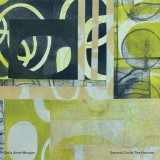
OPAQUE LAVENDER Vinyl[29,20 €]
Sally Anne Morgan is an artist and naturalist in the purest senses. Raised on old time and Appalachian folk traditions, Morgan"s artistry embodies the rich life of the communities and natural world she surrounds herself with. Based in Alexander, NC on the edge of Appalachia and the Pisgah National Forest, Sally"s blend of traditional technique and distinctly modern compositional approach are infused with the sounds of her garden, surrounding pastures, forests and mountains. Guest synthesis Sean Dunlap (Field Patterns) and hurdy-gurdy player Brian "Geologist" Weitz (Animal Collective) embellish pieces with droning thrums and sonic moss. Second Circle The Horizon is an album built on Morgan"s singular artistic voice as an improviser and composer intertwined with deft intuition. Morgan"s music highlights her bond with nature, and how its beauty and the beauty of artistic creation are interwoven. The album celebrates creation, revels in discovery, and marvels at the complex patterns, intersectional cycles and simple beauty of a creative life intertwined with the natural world.
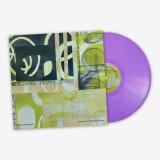
Sally Anne Morgan is an artist and naturalist in the purest senses. Raised on old time and Appalachian folk traditions, Morgan"s artistry embodies the rich life of the communities and natural world she surrounds herself with. Based in Alexander, NC on the edge of Appalachia and the Pisgah National Forest, Sally"s blend of traditional technique and distinctly modern compositional approach are infused with the sounds of her garden, surrounding pastures, forests and mountains. Guest synthesis Sean Dunlap (Field Patterns) and hurdy-gurdy player Brian "Geologist" Weitz (Animal Collective) embellish pieces with droning thrums and sonic moss. Second Circle The Horizon is an album built on Morgan"s singular artistic voice as an improviser and composer intertwined with deft intuition. Morgan"s music highlights her bond with nature, and how its beauty and the beauty of artistic creation are interwoven. The album celebrates creation, revels in discovery, and marvels at the complex patterns, intersectional cycles and simple beauty of a creative life intertwined with the natural world.

Bergen-born Bare Folk's songs belong to the ballad genre, with clear elements of jazz and folk music. With harmonious, original melodies, the mood ranges from the melancholic to the life-affirming. Inspired by the greats of Norwegian ballad music, Bare Folk vitalizes the connection between poetry and music. Bergen's very own folk jazz song band Bare Folk has already been critically acclaimed and established as something unique on the music scene in the city between the mountains. Nevertheless, Bare Folk plays songs that songs should sound well-known but fresh, wistful but hopeful, humorous but serious. Their debut album is called "Noe Tror Jeg & Noe Vet Jeg" (Some things I think & some things I know). No surefire title, but it is sure that it contains something for every taste. Here you will find everything from socially critical satire to traditional harp songs to love songs - and everything in-between in beautiful harmony.

REPRESS of the Orchid second full length. Strong riffs, a tight rhythm section and psychedelic background guitar passages are the first things that come to mind when trying to describe how the album sounds. Theo Mindell's voice bears some resemblance to Blackie Lawless' and while W.A.S.P. isn't the first band that comes to mind when thinking of doom metal and stoner rock, his voice fits the music perfectly. The production is spot-on, guiding the listener's thoughts to the sound of Master Of Reality while still sounding modern.

Violet vinyl, limited to 200 copies. REPRESS of the Orchid second full length. Strong riffs, a tight rhythm section and psychedelic background guitar passages are the first things that come to mind when trying to describe how the album sounds. Theo Mindell's voice bears some resemblance to Blackie Lawless' and while W.A.S.P. isn't the first band that comes to mind when thinking of doom metal and stoner rock, his voice fits the music perfectly. The production is spot-on, guiding the listener's thoughts to the sound of Master Of Reality while still sounding modern.

Crafted entirely on an analog monophonic synthesizer with no overdubs, Pièces Monophoniques is a tribute to simplicity in an era of limitless digital possibilities. Since his debut album, Music For Prophet (Les Disques du Festival Permanent, 2017), Majorca-born composer Marc Melià, now a long-time resident of Brussels, has been redefining the contours of electronic music through a minimalist, reductionist approach. Much like a solitary hike through the vastness of mountains, where one carries only the essentials, Melià’s work invites listeners on a journey stripped of excess, focusing instead on the purity of sound and intention.
While some have dismissed monophonic music as overly simplistic, others have embraced its distinct charm. Historical records, such as those by Johannes Quasten, reveal that early Church leaders were drawn to monophonic music because it resonated with the era's cosmological beliefs, highlighting the harmony and unity of all creation. In an age of digital abundance, Marc Melià deliberately embraces constraint, crafting an album that thrives within a limited palette of choices. Yet, from these self-imposed boundaries emerges a stunning universe, brimming with rich textures and elegant harmonies. For his debut album, Melià worked exclusively with a Sequential Prophet. With Pièces Monophoniques, his third LP, he returns armed solely with an analog monophonic synthesizer and handcrafted MIDI sequences etched directly onto a single stereo track. These recordings seek to uncover beauty within the boundaries of limitations and simplicity, rejecting any embellishments that are not essential. Melià presents the bare skeleton of music, highlighting the power of absence and silence as creative forces. Like the hidden mass of an iceberg, what is not heard becomes as significant as what is heard.
The album navigates the boundary where the quest for an uninhibited emotional response intersects with the mechanical sounds generated by synthesizer circuitry. Despite being a collection of beatless tracks, a pulse occasionally surfaces, like in the closing piece, "224 Steps. A sharp sequence blended with multiple delays and reverbs creates the vaporous celestial specter of multiple voices in "Illusions of Polyphony", while "Échoes et Fantasies" conjures the illusion of dual harmony. The expansive reverbs and silences between the euphoric synth phrases in "Overture" transport us to an imaginary magestic landscape shaped out of an electric field. "Resonances," a one-note drone-like sequence, embodies the album's aims as a series of resonances created with the synth filter emerge from the fundamental note.
"Pièces Monophoniques," aims to contribute to a tradition that dates back to the dawn of humanity. After all, there is no denying that the earliest music crafted by humanity was monophonic, from the soothing lullabies sung to newborns to Gregorian chants, traditional labor songs, and the repertoire of solo compositions by countless composers.
