As funny as it may sound, Anaïs Mitchell has spent the past 15 years in some kind of hell. OK, not actual hell, but the multi-faceted world of Hadestown, a musical project she began in Vermont in 2006 that has grown into a Tony®- and Grammy®-award-winning Broadway phenomenon with touring editions now delighting audiences as far away as South Korea.
“I experienced so much joy working on Hadestown, but it just kept ramping up and up and requiring more and more attention,” Mitchell admits. “I had to become so single-minded and really put blinders on to my other creative life.” As it did for many artists, the COVID-19 pandemic unexpectedly offered Mitchell a blank slate to reconnect with her own music. The result is a new self-titled album made with close collaborators from Bon Iver, The National and her own band Bonny Light Horseman, Mitchell’s first collection of all-new material under her own name since 2012’s Young Man in America.
“I was nine months pregnant when the pandemic reached New York, so we made an 11th hour decision to leave and have the baby in Vermont,” Mitchell recalls. “We left the city and had the baby a week later, and then like everyone, we were in the midst of this unprecedented stillness. It felt like I could see behind me: oh, there’s New York City. There’s Hadestown. There’s my life with just one kid. A certain kind of stress and expectations. In Vermont, we moved onto my family farm and lived in my grandparents’ old house, with a new baby. I’d look at pictures on my phone from a few months earlier and wonder, whose life was that? This record, and the songs that are on it, came out of that time. I got into a flow again that I hadn’t felt in a really long time.”
Dubbed by NPR as “one of the greatest songwriters of her generation,” Mitchell is a master of the worlds of narrative folksong, poetry and balladry. Those talents are evident from the first moments of the new album, as Mitchell narrates what she calls “an unbearably romantic” trip over the Brooklyn Bridge colored by Bon Iver member Michael Lewis’ heartstring-tugging saxophone accompaniment. “Having left New York, I was able to write a love letter to it in a way I never could when I was living there,” she says. “It was like, fuck it. This is how I feel. There is nothing more beautiful than riding over one of the New York bridges at night next to someone who inspires you.”
Produced by Mitchell’s Bonny Light Horseman bandmate Josh Kaufman, the album proceeds to chronicle Mitchell’s reconnection with the Vermont roots that have been so formative in her life and music. “Bright Star” finds her making peace with the idea of being at peace in the familiar setting of her grandparents’ house, while “Revenant” was inspired by paging through a box of journals and letters belonging to herself and her grandmother — “a very pandemic activity,” she says. “That house is literally my happy place. I can picture myself as a kid, in this house, laying on the carpet with a sunbeam coming through the sliding glass door. There’s something about it that is really connected in my mind to my childhood and a very free, imaginative, creative time. “Revenant” has a lot to do with that house and reconnecting with my childhood self.”
Mitchell concedes that she tends “to be someone who thinks it has to be hard in order for it to be good or beautiful,” but that feeling has changed, partly thanks to her deep connection with musicians she’s met through the 37d03d collective established by The National’s Aaron and Bryce Dessner and Bon Iver’s Justin Vernon. During the pandemic, some of those artists participated in a “song a day” writing group — an idea Mitchell says is usually “totally opposite of how I roll. But it really helped me to gain access to some kind of trust and intuition and flow. I began a bunch of these songs while doing that.”
“It unlocked something that allowed me to finish a bunch of songs I’d been sitting on, and feeling a bit paralyzed about how to finish them,” she continues. “Because no one was touring, it’s not like I was playing them for anyone before we were in the studio. In other times, I’ve trotted things out in advance. Here, it was like, here’s all these brand new songs. Let’s discover what they can be. That was really exciting.”
That discovery process took flight at Dreamland Recording Studios outside Woodstock, N.Y., which Mitchell describes as “this weird, janky, beautiful church - it’s my favorite studio in the world.” Kaufman, Lewis and Big Red Machine drummer JT Bates formed a core band around Mitchell, while Aaron Dessner and Thomas Bartlett joined the sessions mid-week on guitar and piano, respectively.
After the appropriate COVID tests came back negative, “it was a pretty extraordinary feeling to hug, kiss and share the same space playing together,” Mitchell says. “We went into that world for a week and didn’t leave the studio for any reason. I felt very safe with all those guys. It was warm and joyful.”
Mitchell says this environment brought out unexpected details in the material, which was recorded almost entirely live together in the room. “Sometimes we tried separating things out, like vocals, but we always ended up back in the room together,” she says. Indeed, after spending the better part of a day recording overdubbed versions of “Little Big Girl” that nobody loved, the musicians gave up and tracked it again live. “We got so frustrated that we went in and I was like, I’m just going to sing this as hard as I fucking can. It felt like that’s what the song wanted to be,” Mitchell says. “It felt like all those songs wanted to be recorded as live as possible.” The exception to the rule was Nico Muhly's arrangements for strings and flute, which were added from New York City afterward.
Mitchell will debut the new material during various headline tours in the U.S. and Europe in 2022, at which she’ll be accompanied by players from the album. On stage, she can’t wait to further hone the sights, sounds and scenes that bring the songs to such vivid life. “I’ve spent a lot of time trying to write in the voice of other characters, especially with Hadestown. It’s fun for me, but these songs are not that,” she says. “Weirdly, they’re all me. The narrator is me. That’s why it felt right to self-title the album. It felt like after so many years of working on telling other stories, now here are some of mine.”
quête:move master
On his 2000 debut, Da Abtomatic Meisterzinger Mambo Chic, Megira channels the optimism of post-war America, narcoleptic surf, and the Twin Peaks soundtrack into a lo-fi masterpiece all his own. Sung in both Hebrew and English, Mambo Chic moves at a deliberate pace, unconcerned by the traffic of the modern world and wrapped in a blanket of Tascam 4-track hiss. On “Tomorrow’s Gone” Megira
achieves the feat of being so far back in time that he’s somehow living in the future and waiting for the rest of us to arrive.
On his 2000 debut, Da Abtomatic Meisterzinger Mambo Chic, Megira channels the optimism of post-war America, narcoleptic surf, and the Twin Peaks soundtrack into a lo-fi masterpiece all his own. Sung in both Hebrew and English, Mambo Chic moves at a deliberate pace, unconcerned by the traffic of the modern world and wrapped in a blanket of Tascam 4-track hiss. On “Tomorrow’s Gone” Megira
achieves the feat of being so far back in time that he’s somehow living in the future and waiting for the rest of us to arrive.
- A1: Move D / Dman - Badboy (Remix For Mc Uproar)
- A2: Sinoesin - Demiconductor
- A3: Robi - Two Spheres
- B1: Dogpatrol - South Side Pool Hall
- B2: Retrogott - Suckerdeejayz
- B3: Форм - Dve Gory
- C1: Ron Trent - 25 Strings (Remix For Dve)
- C2: Am Kinem - 4 Ava
- C3: Paradise Grey - 873
- D1: Lowtec - Roaming The Street
- D2: Jürgen Ratan - Display
- D3: U-I - Noon At Lagoon
- E1: Lauer - Pioneer Housing Area
- E2: Andy Hart - Water
- E3: Tito Wun - Thewayo
- F1: Paingel - Blind Backen
- F2: Will Saul - Avalon
- F3: Jus-Ed - Cachupa (Original Mix)
- G1: Axel Boman - Don’t Breathe Yet
- G2: Damiano Von Erckert - Desert Scorpion
- H1: Cinthie - Ibiza Rave Tune 3000
- H2: Wolfey - Optimism Bias
AVA. Records celebrates its 10th anniversary with 52 artists. “10 Yahre” is a 4LP compilation housing 22 tracks, a printed 30 pages magazin and a mixed CD. All wrapped in a custom made silkscreen sleeve, also including a textile keychain and stickers. Sonically spanning from ambient to techno, 10 Yahre carries new and exclusive material, all woven around the label’s decade focus on dance floor culture, started 2011 in Cologne, Germany.
The 4LP vinyl includes music by: Am Kinem, Andy Hart, Axel Boman, Cinthie, Damiano von Erckert, Dman, Dogpatrol, форм, Jürgen Ratan, Jus-Ed, Lauer, Lowtec, Move D, Paingel, Paradise Grey, Retrogott, Robi, Ron Trent, Sinoesin, Tito Wun, U-I, Will Saul and Wolfey.
The mixed version of the entire compilation is contributed by Sally C.
The full color magazin and video includes works by: Alina Bader, Andy Kassier, Angel, Anna Beil, Ata Macias, Bailey Keogh, Damiano von Erckert, Dirk Jeans & Lou de Bètoly, Funkycan, Guido, Jana Marei, Jana Maria Dohmann, Joana Pratschke, Johannes Wohnseifer, Juri Bader, Kuchenbaum, Manuel Fischer, Maria Sécio, Martin Fengel & Public Possession, Mathias Schmitt, Maximilian Schweizer, Michael Satter, Naum Hirsl, Nicolas Wenz, Peter Wolff, Rein Vollenga, Rucksack Leer, Stelan Mergenthaler, Suzanne Caroline de Carrasco, Twit One and Yves Taron Harouche.
Compiled by Juri Bader and Damiano von Erckert, mastered by Enyang Urbiks. Design and concept by DVE 1989.
As the 21st century was born, so Kreator underwent what was nothing less than a seismic creative rebirth. By this time, the iconic German band had released nine studio albums in the 1980s and '90s, which had established them as one of the most important metal names of these decades.In the first period, they had helped to shape and pioneer the thrash scene through such releases as 'Pleasure To Kill' (1986), 'Terrible Certainty' ('87) and 'Extreme Aggression' ('89). During the following decade, the band had opened up exciting horizons of experimentation on albums like 'Coma Of Souls' (1990), 'Renewal' ('92) and 'Endorama' ('99).
Now, though, it was time to move into a fresh era, as vocalist/guitarist Mille Petrozza explains.
“During the 1990s, we were definitely experimenting with what the band were doing. But (drummer) Ventor and I decided that for this album – our first of the new millennium – we wanted to go back to the sort of sound that we had at the start of Kreator. In other words, to get back to the reason why we began the band in the first place.”
There was also new guitarist introduced, as Sami Yli-Sirniö (who had made his reputation with Finnish band Waltari) took over from Tommy Vetterli. The latter (also known as Tommy T. Baron) had joined in 1996 and played on the 'Oucast' (1997) and 'Endorama' albums.
The producer for this album was Andy Sneap, who was now making a name for himself as one of the pre-eminent masters of this art in the modern metal world.“I had known and liked Andy since the days he had been the guitarist in Sabbat, as they were signed to Noise Records as Kreator were on that label. He was our first choice to work on this new project. I liked what he'd done for Testament on their album 'The Gathering' (released in 1999). He had given them a sound they'd never had before, and that really was what we were after. It was natural and organic, and also very modern. I remember phoning him at his Backstage Studios in England (Ripley in Derbyshire). And Warrel Dane, the vocalist in Nevermore, answered. Andy was producing their new album at the time ('Dead Heart In A Dead World', 2000). And when I heard this, again I was very impressed. So, I was delighted when he agreed to produce the new Kreator album.”
The album title came from something Petrozza had read. “In a book I came across a comment that John F. Kennedy said (in 1962). This was: "Those who make peaceful revolution impossible will make violent revolution inevitable”. I thought 'Violent Revolution' would make a good title for an album. So, I kept it in my mind for this record. I think 'Violent Revolution' is a title that makes a real impact.”
One interesting aspect of the track listing was that the 52 second instrumental 'The Patriarch' actually came after the opening song 'Reconquering The Throne'. Fans might have been expected that it would have opened the album. But for Petrozza, there was a logical reason for this not to happen. “We really wanted to lead off with a thrashing track, to show everyone what we were now doing musically. After 'Endorama', it was important that everyone should recognise this was a new era for Kreator.”
'Violent Revolution' is without question an excellent album. While in some ways it does hark back to the glories of the band's earlier days, nonetheless it does not sound at all nostalgic. The performances and production values are very much part of the contemporary era, and the strength of the compositions themselves are of the highest values. Rising to the challenge offered by a new generation of ambitious metal bands, Kreator proved they were far from being a spent force. Unlike so many of their peers, here was a band who still had so much creativity to offer, and were also clearly excited themselves by what they were doing. And when you hear the band themselves enjoying the entire process, then you know this is a bona fide revitalisation.
REPRESS!
Marcos Valle - Mentira
Valle is a Brazilian singer, instrumentalist, songwriter and record producer of the highest order. His roots lie in Bossa Nova and he was one of the youngest talents in the scene, extensively touring the USA and residing there for many years. Valle's music crosses touches many styles including samba, rock, soul, jazz, boogie and disco.
Signed by Odeon in 1963, he recorded ten studio albums for them between 1964 and 1974. He also recorded for Verve, Warner and Som Livre among others.
Mentira is a re-record of his own song 'Mentira Carioca' - released four years earlier by Odeon - and appears on his 1973 LP 'Previsão Do Tempo' on Odeon.
Toni Tornado - Me Libertei
This is the second track that we have re-issued by the one and only Toni Tornado, master of Brazilian Funk.
His career began as 'Tony Checker', lip syncing to rock 'n' roll hits and touring extensively outside of Brazil. Whilst in New York he met Tim Maia and became involved in the 'Black Rio' movement. Toni also worked with Ed Lincoln and Antonio Adolfo amongst many others. He had a successful acting career and starred in many soap opera's.
It appears alongside 'O Jornaleiro' on his sought after BR-3 LP from 1971 on Odeon. 'Me Libertei' has never been released on a 7.
What is techno if not a powerful conduit for energy? The movement of a sequence, the surge of an effects rush, the respondent reaction in every individual dancer and the moving mass of the crowd as a whole. Whether the frequencies transmit directly into the brain through the intimacy of a headphone reverie, reverberate through the architecture of a space or fill the formless void of the open air, techno’s potency to initiate and stimulate energetic events is profound. This is something Pfirter understands intimately, having spent more than 15 years exploring ways of manipulating the energy on a dancefloor.
Of course, energy is not just about volume and aggression. Tonality, spatial processing and composition can have just as profound an effect as the thump of the kick drum. On his new album Altered States, Pfirter proves that point by zeroing in on the cerebral, psychedelic elements of his craft across 10 incisive tracks. The Argentine producer consciously approached his second album (following 2019’s The Empty Space) with a minimal mindset, using a very focused set of drum machines and synths to achieve a consistency across the record. Captured over a short burst of creativity, it’s the sound of an artist pushing a limited array of tools as far as possible. Despite this concise palette, it’s not an album that repeats itself, but rather an extended trip that flows from one detailed, textured immersion to the next.
The dense, febrile waves of hard-oscillating ripples in ‘A Future In Chaos’ and the sparkling, off-key chimes adorning ‘Yearn’ all speak to Pfirter’s gift for extravagant, surrealist expression within his tracks. ‘Altered States’, by way of contrast, succeeds in its absolute immediacy – a piledriving statement of bleep-driven intent. ‘Boiler’ and ‘Convergence’ land somewhere in between, coiling around kinked rhythmic incantations which still push forwards with precision while offering a different angle from which to approach the dancefloor. Cementing the idea of the whole album as a listening experience, Altered States is bookended by ‘Venus’ and ‘Dissolution’, two minimal exercises in drone-oriented mood setting.
Pfirter understands the role of his music, and his own instincts as a performing artist. It’s crafted to be captivating for DJs as much as the attentive listener. Spanning linear rhythms and broken beats, moments of calm and writhing intensity, Altered States offers a multitude of energetic possibilities in the mix or as a standalone piece of music. Ultimately, it’s a masterful return from a leading light of the contemporary techno scene.
This is MindTrip!
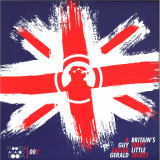
For a number of years now, A Guy Called Gerald has largely made music only for himself. But this special EP is borne from Gerald’s unique and long-lasting friendship with Analog Room founders Mehdi Ansari, Siamak Amidi and Salar Ansari. They first met in 2013 when Siamak booked Gerald to play his Analog Room party in Dubai – a leading underground light in the UAE’s then emergent scene. Away from the glossy VIP hotels and expensive bottle service parties
typically associated with Dubai, Analog Room only deals with quality bookings of the caliber of Move D, Roman Flügel, Moritz Von Oswald and the likes. Gerald immediately fell in love with the party. Its strict music-first, no-nonsense policy appealed to him and he’s returned many times over the years.
By then, of course, A Guy Called Gerald’s musical legacy was already assured. The Manchester icon is best known for his 1988 hit single Voodoo Ray – the touchstone of his hometown’s dawning acid house scene. As well as being an early member of 808 State, Gerald embraced breakbeat and jungle, ran his own Juice Box Records label and worked with the likes of Columbia, Perlon, K7! and many other vital labels. His skills on everything from synths to keys, samplers to
drum machines stood him apart then – and still do today.
“This release is based on a real friendship,” Gerald explains. “I feel part of the Analog Room family. Back in the early days, that’s how it was. These days, it’s like, ‘Oh, you’re famous, let’s do something.’ I’m not interested in that. I’m not interested in being a celebrity or living that life. I’m the same as I was 30 years ago, all I care about is the music. With Mehdi, we have spent hours jamming in private in Dubai, we have partied together. We’ve vibed together for so long and he’s shown me new parts of the world I should be making and playing music in, away from the trendy scenes in other places. So this is an exclusive just for him.
I’m not looking at doing anything else with anyone, and the music is just about celebrating individuality rather than trying to fit in anywhere.”
When Iranian-born Mehdi decided to start Moozikeh Analog Room – which translates from Farsi as “the music of the Analog Room” – Gerald was one of the first artists he asked to release on the label. It might have taken some time for Britain’s Dirty Little Secret to materialize, but boy it’s been worth the wait.
Says Mehdi, “The magic comes through proper relationships and friendships.
That’s why Analog Room worked. It was a great room, an amazing sound system, with amazing artists doing their thing. Bookings were so on-point because we had agents around the world, on the dancefloors, spying up artists who were killing it,
and Gerald was one of them. He was a perfect fit from the first gig and our friendship grew from there. He’s always been very kind to me. We have this common language of music without any bullshit, and that is where this EP comes from.”
The EP is a mixture of different things. Some of it is unreleased material from the vaults revisited, some of it is brand new. It opens up with the devastating Old Skool – a writhing, physical track with naughty bass. The drums hark back to Gerald’s early days of making jungle but reimagined through a modern perspective. As the synths spray about the mix and the percussion bounces atop the jostling drums, muttered vocals draw you in deeper. Sugoi is an experimental
track that fuses ambient synth design with the spacious and eerie atmospheres of jungle. Nimble drums get you on your toes as the spangled synths twist and turn in all directions. It is a thrillingly original, impossible to define track.
Flash Fight is built on a captivating rhythm that sits in the area where house, techno and jungle intersect. It is warm and cavernous, physical yet elegant as it bounces on rubbery kicks and lithe synths roam in and out of earshot. Perfect for those sweaty, cozy back rooms, it’s another masterclass from Gerald. Closing out the EP is False Religion, a deep-rooted house track with elastic drums and
haunting, wispy pads. As a subtle acid bassline rises and falls way down below,
Gerald’s own mystic whispers leave listeners hypnotized.
Following on from Analog Room co-founder Salar Ansari’s debut release on the label, this EP is a statement of intent. More releases will follow from some of Analog Room’s most frequent international guests, but only when the time is right. Moozikeh Analog Room is a label of love, one that is focused on putting out the best possible music at all times rather than chasing hype.
A timely reminder of why A Guy Called Gerald is one of the world’s most enduring electronic artists.
It is with great joy that we present the Mr Bongo edition of Marcos Valle's 1983 self-titled masterpiece. A pure vintage that features the ultimate Brazilian-boogie cult-classic ‘Estrelar’ and iconic 80s cover art that sees a gloriously sun-drenched Marcos dressed in a pink v-neck t-shirt surrounded by a generous selection of deadly-looking neon cocktails.
The album was produced by the legendary Lincoln Olivetti and Marcos' brother Paulo Sérgio Valle. It showcases a real who's who of Brazilian music at the time, with stellar performances from vocalists and musicians such as Rosana, Serginho Do Trombone, Robson Jorge and Oberdan Magalhães to name but a few. This was Marcos’ second album, after having moved back to Brazil from his time living in Los Angeles, and that US influence is evident through its prominent boogie, soul and funk sounds. It also features collaborations with the US singer-songwriter, composer, pianist, keyboardist, and record producer, Leon Ware, who co-penned three tracks including 'Estrelar'. To complete the album there are tracks such as 'Fogo Do Sol', which is pure AOR / Balaeric vibes, and tracks that are more MPB and pop-inspired, making a well-balanced track list for both home-listening pleasure and dancefloor business.
What could we do to give one of Marcos' most celebrated albums the treatment it deserved and produce the most definitive re-issue possible? The answer was to enlist the services of Miles Showell, Abbey Road Studios Mastering and lacquer-cutting engineer and all-around audio-magician, to cut a special half-speed master edition. Miles had previously worked his half-speed magic on our Arthur Verocai album re-issue, and once again we are totally blown away by the richness which Miles has brought out in his mastering technique. He has enhanced the listening experience and taken this wonderful album to another level.
To celebrate the release we have pressed up several vinyl versions; both standard master, and Miles' half-speed mastering editions on Black vinyl, alongside special limited edition Rose and Mint-Green coloured vinyl variants that were inspired by the audacious-looking cocktails on the cover - sheer 80s excess!
Pink Vinyl
It is with great joy that we present the Mr Bongo edition of Marcos Valle's 1983 self-titled masterpiece. A pure vintage that features the ultimate Brazilian-boogie cult-classic ‘Estrelar’ and iconic 80s cover art that sees a gloriously sun-drenched Marcos dressed in a pink v-neck t-shirt surrounded by a generous selection of deadly-looking neon cocktails.
The album was produced by the legendary Lincoln Olivetti and Marcos' brother Paulo Sérgio Valle. It showcases a real who's who of Brazilian music at the time, with stellar performances from vocalists and musicians such as Rosana, Serginho Do Trombone, Robson Jorge and Oberdan Magalhães to name but a few. This was Marcos’ second album, after having moved back to Brazil from his time living in Los Angeles, and that US influence is evident through its prominent boogie, soul and funk sounds. It also features collaborations with the US singer-songwriter, composer, pianist, keyboardist, and record producer, Leon Ware, who co-penned three tracks including 'Estrelar'. To complete the album there are tracks such as 'Fogo Do Sol', which is pure AOR / Balaeric vibes, and tracks that are more MPB and pop-inspired, making a well-balanced track list for both home-listening pleasure and dancefloor business.
What could we do to give one of Marcos' most celebrated albums the treatment it deserved and produce the most definitive re-issue possible? The answer was to enlist the services of Miles Showell, Abbey Road Studios Mastering and lacquer-cutting engineer and all-around audio-magician, to cut a special half-speed master edition. Miles had previously worked his half-speed magic on our Arthur Verocai album re-issue, and once again we are totally blown away by the richness which Miles has brought out in his mastering technique. He has enhanced the listening experience and taken this wonderful album to another level.
To celebrate the release we have pressed up several vinyl versions; both standard master, and Miles' half-speed mastering editions on Black vinyl, alongside special limited edition Rose and Mint-Green coloured vinyl variants that were inspired by the audacious-looking cocktails on the cover - sheer 80s excess!
Rare and highly sought after in its original format, Os Brazoes self-titled album was originally released on RGE Discos in 1969. It is a psychedelic masterpiece that fuses samba, r'n'b and rock 'n' roll influences using fuzz guitars, synths, percussion, lush vocals and effects.
Os Brazoes formed in Rio de Janeiro in the late 1960's. They backed Gal Costa during her Tropicalia period, yet apparently never recorded in the studio with her. Miguel de Deus, the bands front man, recorded the highly sought after 'Black Soul Brothers' LP in 1977, which became an important record in the 'Black Rio' movement. Mr Bongo released the title track from that LP, on the 'Brazilian Beats: Brooklyn' compilation in 2006 and recently as part of their Brazil 45's re-issue series.
'Os Brazoes' features covers of Gilberto Gil's 'Pega a Voga, Cabeludo' and Jorge Ben and Toquinho's 'Carolina, Carol Bela'
The Mr Bongo LP reissue is manufactured in Japan, presented in a super high quality card sleeve with replica original artwork. The CD is presented in a 4-page digi-pack.
With his first release as EBM outfit Voltage Control on Antler Subway in 1989, Utrecht-based Arno Peeters can easily be considered one of the Dutch Dance pioneers.
Influenced by hip hop, electro and acid house, and his uncontrollable urge to experiment, he moved on to produce techno. Disappointed by the genre s conventions, he rather suddenly stopped with dance music altogether around 1995, letting a wealth of DATs with unreleased material collect dust in his studio.
To our great pleasure, U-TRAX was allowed to pick some nuggets from these archives, resulting in this Titanic EP and an album later this year.
Arno started experimenting with sound at very young age, resulting in his first cassette releases with experimental soundscapes in 1983. In 1986 he joined the notable Centre for Electronic Music (CEM), where he was able to take his experiments to a new level in a professional studio-environment.
In his techno episode , he recorded several 12 -es and CDs as Sp@sms and The Implant, and as part of Random XS, Urban Electro, African Nightflight and The AWAX Foundation, with most of his records being released on the famous DJAX label.
After turning his back on techno, he applied himself to more experimental music again. In 1996, he created AeroSon, a 40-minute sound collage that won him the first prize in the category Composers Under 30 at a high-brow international contest for electro-acoustic music. This piece was later released on the prestigious Mille Plateaux label.
Since then, his focus has shifted away from releasing music, towards working more project-based: on remixes, compilations and interactive (installations, video, sound design), building himself a successful career as radio maker, teacher and engineer, contributing to several award-winning documentaries and podcasts.
This EP is a nice cross section of Arno s dance productions, serving you some acid, techno and electro.
Titanic V1 was originally created to be a Random XS track, the techno band he formed in 1991 with Sander Friedeman. It was performed during their live set at one of the G.U.R.U. parties, organized by U-TRAX label boss DJ White Delight and label artist P.A. Presents.
This acid track was remixed into a techno monster when Friedeman replaced the 303 with a 101 and added a ton of delay on the bass drums, resulting in the woofer destroying Titanic (Underwater Dub).
The flipside sees a rare post-1995 recording by Arno: CEM Traxx 1. As the title suggests, this melancholic electro gem was created using the intricate machinery of the CEM Studio. Originally created as one half of a two-part composition for some project in 2003, it was never released before.
The EP closes with a typical Arno brainchild, the tongue-in-cheek acid banger XD5 Acid Master, from 1994. Tracks like this happen if you leave Arno unattended with a rather un-hip machine like the Kawai XD-5: he turns it inside out and uses it for things it was never intended for. Buckle up!
All tracks have been produced by Arno Peeters and mastered by Ruud Lekx. Label art by Botterman Ontwerp.
white & blue marbled vinyl
With his first release as EBM outfit Voltage Control on Antler Subway in 1989, Utrecht-based Arno Peeters can easily be considered one of the Dutch Dance pioneers.
Influenced by hip hop, electro and acid house, and his uncontrollable urge to experiment, he moved on to produce techno. Disappointed by the genre s conventions, he rather suddenly stopped with dance music altogether around 1995, letting a wealth of DATs with unreleased material collect dust in his studio.
To our great pleasure, U-TRAX was allowed to pick some nuggets from these archives, resulting in this Titanic EP and an album later this year.
Arno started experimenting with sound at very young age, resulting in his first cassette releases with experimental soundscapes in 1983. In 1986 he joined the notable Centre for Electronic Music (CEM), where he was able to take his experiments to a new level in a professional studio-environment.
In his techno episode , he recorded several 12 -es and CDs as Sp@sms and The Implant, and as part of Random XS, Urban Electro, African Nightflight and The AWAX Foundation, with most of his records being released on the famous DJAX label.
After turning his back on techno, he applied himself to more experimental music again. In 1996, he created AeroSon, a 40-minute sound collage that won him the first prize in the category Composers Under 30 at a high-brow international contest for electro-acoustic music. This piece was later released on the prestigious Mille Plateaux label.
Since then, his focus has shifted away from releasing music, towards working more project-based: on remixes, compilations and interactive (installations, video, sound design), building himself a successful career as radio maker, teacher and engineer, contributing to several award-winning documentaries and podcasts.
This EP is a nice cross section of Arno s dance productions, serving you some acid, techno and electro.
Titanic V1 was originally created to be a Random XS track, the techno band he formed in 1991 with Sander Friedeman. It was performed during their live set at one of the G.U.R.U. parties, organized by U-TRAX label boss DJ White Delight and label artist P.A. Presents.
This acid track was remixed into a techno monster when Friedeman replaced the 303 with a 101 and added a ton of delay on the bass drums, resulting in the woofer destroying Titanic (Underwater Dub).
The flipside sees a rare post-1995 recording by Arno: CEM Traxx 1. As the title suggests, this melancholic electro gem was created using the intricate machinery of the CEM Studio. Originally created as one half of a two-part composition for some project in 2003, it was never released before.
The EP closes with a typical Arno brainchild, the tongue-in-cheek acid banger XD5 Acid Master, from 1994. Tracks like this happen if you leave Arno unattended with a rather un-hip machine like the Kawai XD-5: he turns it inside out and uses it for things it was never intended for. Buckle up!
All tracks have been produced by Arno Peeters and mastered by Ruud Lekx. Label art by Botterman Ontwerp.
- 1: Ever New (Reworked By Bon Iver & Flock Of Dimes)
- 2: Fastest Star (Julia Holter Remix)
- 3: Let Us Dance (Arca Remix)
- 4: Old (New) Melody
- 5: Ever New (Kelsey Lu’s Transportation)
- 6: Sunset Village (Blood Orange Remix)
- 7: Ever New (Reworked By Joseph Shabason & Thom Gill)
- 8: Ghost House (Performed By Jeremy Dutcher
Earlier this year, Transgressive reissued American
Canadian composer and activist Beverly GlennCopeland’s 1986 masterpiece, ‘Keyboard
Fantasies’, marking the 35th Anniversary of its
original release. Now, the label present ‘Keyboard
Fantasies Reimagined’, a collection of songs from
the legendary album, re-worked and re-imagined
by a collection of creative kindred spirits.
The remix album and reissue of the original work
follow the Autumn 2020 release of Glenn’s album,
‘Transmissions: The Music of Beverly GlennCopeland’. ‘Transmissions’ was a career-spanning
album that includes compositions from his early
works including selections from ‘Keyboard
Fantasies’. It also included both new and archival
unreleased tracks and live versions. This collection
marked the first new release from Glenn-Copeland
since 2004. The New York Times called it a “lifespanning mixtape that moves from the mournful
torch songs of his youth to joyously soulful odes to
survival.”
Artwork by Tina Frank. Cut at Dubplates & Mastering, Berlin September 2010 Contains "Ohne Sonne" and "47 Blues" previously only available on the Japenese CD versions. As well as an new extended version of "Happy Audio" exclusive to this release.
Contains previously unreleased material.
‘Expressions of Interest’ is the debut album from Melbourne/Naarm post-punk group screensaver.
Sonically, the 10 track album is rich and detailed, and pays homage to its era of inspiration (late 70s-mid 80s post-punk and new wave) with gripping vocals, dissonant guitar, melodic basslines, washes of synths and motorik drumming. Engineered by Julian Cue alongside band member Chris Stephenson and recorded over multiple studio sessions between 2020-2021
The album opens with the ominously titled ‘Body Parts’, an immediately arresting song that showcases the bands penchant for blending classic post-punk elements, leaning into a sound somewhere between the Banshees and Protomartyr.
Maynard doubles down on these themes in the frenetic second track, ‘No Movement’. Guttural organ tones swim under overdriven guitar, jagged and intense. Additional textures and sound effects are used percussively to embellish the dynamics, creating a feverish atmosphere with some Martin Hannett like flourishes.
The album takes a surprising turn into electronic driven krautrock on track three with 'Buy, Sell, Trade' - a rollicking piece of danceable ephemera, dominated by swirling synth sounds and punctuated with electronics reminiscent of Sparks/Moroder collaborations. Chris Stephenson's masterful guitar work begins with Greg Sage-esque determination before a crescendo into a lush Frippertronics outro.
'MEDS' transports us back to the foundation established on 'Body Parts', a gothy piece, full of tribal toms and dirge-y synths. Industrial punk rock nearly swallowed whole by the keys in the middle and slowly building back to complimentary guitar and vocal hooks.
It's from this point in the album that the band let's their other influences rise to the surface, as they explore touches of EDM on 'Static State' - a brutal, death-disco style track, Krystal Maynard's lead synth and gloomy vocal complimenting the pounding drums and dub-esque bass line culminating in a track worthy of the dancefloor.
Opening side two we have 'Skin', beginning with a solid and simple backbeat, James Beck’s post-punk percussion provides a steady and minimal framework for the rest of the band to colour in with great depth and detail. Giles Fielke’s bass guitar wobbles brilliantly leading the verse melody, whilst Chris Stephenson’s guitar drives the chorus that folds neatly in on itself.
In ‘Attention Economy’, Krystal Maynard is flexible with her lyrical style, and knows how and when to lend her voice to the greater backdrop of the composition. ‘Attention Economy’ has an almost Kraftwerkian structure - repetitious, but engaging with its constant tom driven beat, lush synth lines and minimal bass tones.
Just when you thought things had slowed down, screensaver ramp things right back up again with ‘Overnight Low’ - a no holds barred thumper. Giles Fielke underpins the hard-edged sound with his bassline, keeping things smooth and tight. It brings to mind a hybrid of PiL’s ‘Annalisa’ and Wire’s ‘Two People In a Room.’
Before you can catch your breath, we have ‘Regular Hours’ - another industrial track, and perhaps the sister song to ‘Static State’ heard earlier on side one. Seething electronic drum samples cut through an abyss of growling synths, Giles Fielke hanging up the bass temporarily to accompany Krystal Maynard on synth duties.
The album closes with the fittingly titled ‘Soft Landing’, literally bringing the listener back down...softly. The song is heavy on atmos, and resembles the aesthetics previously encountered on ‘Attention Economy’ a few tracks earlier.
‘Expressions of Interest” was recorded at various locations across Melbourne, with a handful of songs being captured before the start of the Covid pandemic in January 2020. With the recording timeline being drastically altered, the band shifted focus to work on what would become their first single ‘Strange Anxiety’, throughout the first months of the Melbourne 2020 lockdown.
‘The Centre is Everywhere’ is our first album. We created it in rather extraordinary circumstances, at a time when we were all slowly sinking into the banal dystopia of a pandemic-stricken world. Our lives, it felt, had slowed to a crawl. Normally we’re fuelled by our audiences, but touring was off the menu. So, we made this record. For us, it was personal.
In such an uncertain time, we wanted to play music that we loved. We ended up with a set of work written over a 120-year period – weightless and transcendent new music alongside Schoenberg’s anguished fin de siècle storytelling.
Edmund Finnis’ work in particular (the titular ‘The Centre is Everywhere’) is important to us. He’s a friend and a colleague, and it’s been a profound experience for us to live with this piece, to tour it, and to make the first ever recording. Somehow in the writing of it, Edmund seems to have prefigured the lack of certainty that has been one of the defining characteristics of this period. His music spins freely through time and space, wraithlike and beautiful.
Whilst recording both ‘Company’ by Philip Glass and ‘Transfigured Night’ by Arnold Schoenberg, we found ourselves drawn to a pervading sense of wildness and nature. The hypnotic rise and fall of the rhythms and textures in Glass’ quartet (presented here in an arrangement for string orchestra) feel quite separate to industrial, man-made structures and forms. Like Edmund’s work, these short movements feel out of time and cyclical, like eternally repeating tides or moon-phases.
Schoenberg’s masterpiece for string sextet opens on a moonlit forest scene, two lovers venturing through a bare, cold grove. We’ve tried to create a recording that paints the violent contrasts of this piece as vividly as possible, from the claustrophobic confessions that open the work through to the gleaming sound world of the second half. As the piece closes, our wooden, earthbound instruments seem to have been transmuted by the glamour and glow of Schoenberg’s music. We finish amongst the stars.
Headline performance at this summer's BBC Proms at the royal Albert Hall
Bill Evans catapulted to the top of the jazz world in June 1961 after reeling off three straight masterpiece sessions at New York's Village Vanguard with his trio. Yet the emotional highs came to a screeching halt shortly thereafter when bassist Scott LaFaro died in a car accident. Devastated, Evans refrained from playing for nearly a year. If not for an inspirational collaboration of tremendous creative outpouring, one wonders what fate may have befallen Evans. Undercurrent, the outcome of two studio sessions with guitarist Jim Hall, is that project.
Mastered on Mobile Fidelity's world-renowned mastering system and pressed at RTI, this Silver Label LP edition bursts forth with brilliant textures, you-are-there realism, and extraordinary tonalities. No other version outside of this analogue copy brings you face-to-face with these two jazz giants' sonic communion, a kind of spiritual musical summit on which Evans' deft keyboard touches and Hall's reliably subtle phrasings seamlessly mesh and wonderfully dance, the compositions streaked with natural instrumental decay, full-frequency extensions, and poignant emotionalism that, on this LP, you can feel.
While Evans managed to sit down for a few one-off takes between LaFaro's passing and these April-May 1962 dates, he largely remained on hiatus and abstained from recording. Whether it owes to the intimate pairing, he and Hall's brotherly chemistry, or the exquisite selection of program material, the results consistently come across as the equivalent of a private meditation - such is the level of introspective depth and quietly shaded interplay throughout. For Evans, the duet clearly functions as therapy, a healing episode in which his partner patiently lays back, shadowing moves and suggesting others, neither musician interested in the spotlight but each striving for (and achieving) transcendent beauty.
In tackling standards such as Rodgers and Hart's "My Funny Valentine" and the Broadway classic "Darn That Dream," as well as the Hall original "Romain," the pair traverses complex harmonies with the astute elegance of a figure skater. At times, Evans and Hall go for broke on a hard-swinging romps, yet it's their implied melancholy and drifting, softly struck melodic refrains on waltzes and ballads that bestows Undercurrent with a nuanced romanticism and whispered atmosphere befitting the record's title.
Indeed, even the album's cover - an iconic photograph by Toni Frissell - exhibits the surreal, almost-hallucinogenic properties of the fare contained within.
BBE Music is excited to present the long awaited, eponymous debut album from the USA/UK partnership of JTronius and Maverick Quest, aka Sons of the Sun. Delivered remotely following a chance meeting on music-tech networking app ‘Brapp’, the ingenious pair sent files back and forth between Texas and South East London to manifest their shared vision for ‘Sons of the Sun’. Remarkably, the duo are still yet to meet in person. A respected solo artist knighted by Bootsy Collins as an official ‘funkateer,’ Berklee College graduate JTronius is an extravagant entertainer, entrepreneur and lifestyle brand. Self-dubbed The Guvna of the Galaxy, he brings his swaggy, soulful style to all his endeavours. He has shared stages with LL Cool J, The Roots, Talib Kweli, Pharrell, Busta Rhymes and Damian Marley and is an accomplished actor, appearing in a number of successful Hollywood feature films. Genre-blending record producer and multi-instrumentalist Maverick Quest grew up immersed in the aesthetic of hip hop. But in an environment where flipping loops from vinyl was standard, developing his musicianship to create his own sounds was radical, a move that paved the way for his signature sonic. He has previously performed with and produced for Guru, Grandmaster Flash, Ice T, Ibibio Sound Machine, Solo Rosa and Portico Quartet to name but a few, and is firmly rooted in the epicentre of the burgeoning South East London jazz movement. Sons of the Sun’s debut long player features a host of luminary guests and musicians from all over the globe, including guitarist Dai Miyazaki (Bilal, Ms. Lauryn Hill, Tye Tribbett), keyboard player and vocalist Matt Cusson (Christina Aguilera, Brian McKnight), singer Ayesha Brooks (The Voice, Season 6), saxophonist & flautist Jelani M. Brooks (Ghost Note, RC & The Gritz, Erykah Badu), Boston rapper Madame Cruz and Scottish horn collective The Brasscats, among many others. Mixed by Grammy-nominated Clinton “Ubiquity” McCreery and mastered at Grammy-awarded studio The Carvery, this album inks an impressive first chapter in the story of Sons of the Sun.