The latest entry in An’archives’ ‘Free Wind Mood’ series, Ki is a trio that pits long-time collaborators Tamio Shiraishi (saxophone, voice) and Takahashi Michiko aka Mico (drums, voice, vocoder, melodica, piano, percussion) against drummer, percussionist and vocalist Fritz Welch. They each bring a wealth of experience, from Shiraishi’s early moves in the Japanese underground of the late ‘70s and early ‘80s – he was a founding member of Fushitsusha, and played with Taco and Machinegun Tango – to his legendary, late-night solo New York subway performances; he and Mico also spent some time playing with No Neck Blues Band, while Welch, currently based in Glasgow, has a long history taking in stints with Peeesseye, Lambs Gamble and FvRTvR.
Tearful Face Of My Cute Love (Is Begging To Me), named after a yakuza song, is Ki’s first LP, after CD-Rs on Chocolate Monk (Ki No Sei, 2009) and Unverified (Stops Dropping, 2010). Documenting two live performances from 2008, it’s a startling, wild freedom chase, each piece stretching languorously across one side of the vinyl, giving the trio maximum space to thunder their way through space and time. Their West Nile 2008 show, on side one, opens with a battery of drums, fierce and livid, before Shiraishi’s unmistakable and remarkable whinnying, high-zone tone slithers into earshot. The stage is set, the battle moves forward, yet there’s remarkable simpatico between the three players, with Mico and Welch volleying guttural vocal exhortations at each other. When it does offer respite – see the sudden swoop into near- silence at around 12:30– everything’s still tense; who knows what’s around the corner?
For all its fury, though, Tearful Face Of My Cute Love... is full of oddly lyrical moments, too – see the sweet melody that winds out, with gentle melancholy, near the very end of the West Nile performance. This lyricism also haunts the second side of the album, a performance from Glassland, Brooklyn, which seems more focused on the intersection of incidents, from clattering cymbals to ghostly swarms of sax scream, to dive-bombing spirals of vocoder. There’s an appealing sense of audio verité here, as though you’re in the room with the performers, shaken and stirred by every movement, lost in the interlocking maze they’re weaving in real time. It’s a bracing, thrilling document of very immediate, human music – of three bodies moving through the world, sounding their environment.
[a] a1 Tearful face of my cute love [is begging to me] (Side A)
[b] b1 Tearful face of my cute love [is begging to me] (Side B)
Поиск:movi star
Все
- 1: La Chanson De Prevert
- 2: Les Feuilles Mortes
- 3: Mon Homme
- 4: Paris Canaille
- 5: À Tout Jamais
- 6: Quand Tu Dors Pres De Moi
- 7: Syracuse
- 8: La Foule
- 9: Et Maintenant
- 10: Le Temps De L’amour
- 11: La Mauvaise Reputation
- 12: Sous Le Ciel De Paris
- 13: Est- Ce Ainsi Que Les Hommes Vivent?
- 14: Il Etait Une Oie
- 15: Un Jour, Tu Verras
- 16: Pour Une Amourette
- 17: Que Reste T-Il De Nous Amours
- 18: Petite Fleur
- 19: Le Poinçonneur Des Lilas
- 20: On N’oublie Rien L’absent
- 21: Paname
- 22: L’ame Des Poètes
- 23: Le Tourbillon
- 24: Ne Me Quitte Pas
- 25: La Vie En Rose
26 iconic titles from the golden age of French song, includes 12-page
booklet with complete information in both English and French
Moving away from the big theatres and flourishing in clubs and small cafés, French Song had its summit in the mid-20th Century, when figures such as Edith Piaf, Charles Trenet, Jacques Brel, Georges Brassens, Léo Ferré, Dalida, Charles Aznavour, Henri Salvador, Juliette Gréco, and Serge Gainsbourg, disseminated their art first in Paris, and then throughout the world. It was a new kind of song,
influenced by literary realism and the naturalist movement, and its lyrics frequently focused on the lives of socially marginalized people.
Twenty- six of the best exponents of the genre are included on this splendid collection
Released in 1958 on Columbia, the five- star review by AllMusic's Thom Jurek called it ".. a classic album with blues material in both bebop and post- bop veins…….which introduced modalism in jazz and defined Davis' subsequent music in the years to follow."A precursor to 'Kind of Blue', 'Milestones' was the first session to feature John Coltrane and Cannonball Adderley.
"Davis' statements here are genuinely eloquent. Coltrane's efforts here do indicate that he is rapidly moving toward a niche of his own, absorbing influences but not being obsessed by them. Adderley is less than individualist but is performing on a level of fluency which will make the discovery of a self-sustaining role less difficult in time." - Don Gold, DownBeat (1958)
Mura were a previously little-known group from Japan, formed by friends Kota Inukai (vocals, guitar), Masaki Endo (bass) and Sho Shibata (drums) in the late noughties. Performing mostly in small events in Sapporo, they were outsiders, and felt a kinship with few other groups, though Inukai mentions rock group Green Apple Quick Step, and hardcore band Ababazure as fellow travellers. This isolation surely feeds into the uniqueness of Mura’s music – they sound little like much that we know of the taggable Japanese underground of their times, and the music they recorded for this, their debut album, spanning a decade, is gloriously all over the shop, from delirious punk wig-outs to strange pop miniatures.
The group formed young – Inukai was only fourteen when they started, and Mura were his first ever band. When pressed on what they were listening to while making their music, Inukai recalls that he “used to listen to the works of Haruomi Hosono a lot”, and you can hear traces of this, perhaps, in the breadth of the sound Mura explores, from the lovely, country-esque shuffle of “In The Talk”, through the garage-y plunk of “Rest” and the reflective, melancholy “Younger Brother”. They were also big fans of video game music – “even orchestral covers of video games”, Inukai smiles – and that’s in there, too, in the split-second responsiveness of the playing, the way they flick through ideas and genres almost impatiently, taking minutes to cover terrain that other groups might spend albums and years exploring.
But the songs were also grounded in Japan’s history, with many of the songs inspired by “old Hokkaidō,” Inukai recalls, “from the Meiji, Taishō, Shōwa periods.” With Inukai coming up with the melodies, and Shibata fleshing out arrangements, all three members then contributed lyrics. You can hear that collective effort in the way the music moves, every player listening carefully to each other, the songs moving gracefully, but not without verve and vim. It’s a delightful album, full of pop songs that take unexpected turns, with glinting melodies sung out, here sweetly, there with gruff candour, guitars tangling together like an unholy union of Tom Verlaine and Jad Fair, every song charged with a new, unpredictable spirit.
The story of Tonic revolves around the longstanding, close brotherhood shared among members Emerson Hart, Jeff Russo, Dan Rothchild and Kevin Shepard. Russo is best known for his work as a soundtrack composer, notably Star Trek: Discovery, Star Trek: Picard and Fargo. For this latter Russo won the Primetime Emmy Award for Outstanding Music Composition for a Limited Series, Movie, or Special in 2017.
This Grammy Award-nominated Multi-Platinum trio released their debut album Lemon Parade in 1996. The album was produced by Jack Joseph Puig, who also worked among The Black Crowes, Green Day and No Doubt. The album included the hit single “If You Could Only See”, which became a #1 hit on the Billboard Mainstream Rock Track Charts and reached #11 on the Billboard Airplay Hot 100, where it remained for 63 weeks.
What It Means To Fall Apart sees Mayday Parade wading in a wide range of complex emotions. The band shared the first taste of the album with the anthemic single “Kids of Summer,” which infuses nostalgic memories of their care-free formative summers at Warped Tour into song, followed by the self-confrontational and vulnerable “Bad At Love.” On the newest single “One For The Rocks And One For The Scary,” the band sings about making the most of the time we have with the people we love.
Their seventh studio album together, What It Means To Fall Apart was created with longtime collaborators Zack Odom and Kenneth Mount, and saw the band diverge from their typical path in the studio. With no final destination in mind and setting their sights on just writing the best songs they could, they started chipping away at something, letting go of any attachment to whether they left the studio with a single, an EP, or a full record. They arrived at a fully realized album, 12 contemplative tracks written through the eyes of a band moving forward with the knowledge they could only gain from looking back. Full track listing can be found below.
The band is looking forward to sharing these songs in venues around the world, noting that it’s not just about creating music for them, but how that music connects them with their fans and each other. “We all live in different states and have separate lives with different things going on,” bassist Jeremy Lenzo shares, “But just being able to get back together and play music is always a highlight.” Lead singer Derek Sanders mirrors that sentiment as well, sharing that the spark that started Mayday Parade still shines bright, “Even after all this time and plenty of other ways it could have gone or plenty of other things that we could be doing with our lives, we're lucky to be able to do this.”
Die letzten zwei Jahre seit seiner ersten Veröffentlichung
bei der Deutschen Grammophon waren turbulent für den
aus Berlin stammenden Klaviervirtuosen, Produzenten und
Sänger Dario Lessing : mit einem eklektischen Mix aus
wunderschönen Klavierstücken (DNA I), Kooperationen mit
anderen Produzenten (Robot Koch, Andrew Applepie, AK
und mehr) und alternativen Popprojekten (Better Days EP
mit Rezar uraufgeführt auf COMPLEX) wuchs seine
Online-Anhängerschaft von null auf fast eine Million
monatliche Hörer. Dario Lessing bereitet jetzt sein
Collab-gefülltes Album "Frequency" vor. Hier sind Gäste
bei jedem der elf Tracks zu hören. Kurzum - Lessing
steht für eine neue Generation von Selfmade-Künstlern
und Produzenten, die ohne musikalische oder
geographische Grenzen zusammenarbeiten. Seine
Fähigkeit, den Kern der Kreativität anderer Künstler zu
erfassen, führt zu einzigartig direkten und intuitiven
Aufnahmen mit einem spirituellen, oft mystischen
Charakter.
Neben Stimulus enthält Frequency die Stimmen von
James Chatburn (AUS), Graham Candy (NZ), Rezar
(AUT), SHAMS (GE) und Mario (GE). Jeder der 11 Songs
ist eine Geschichte von zwei Frequenzen, die
aufeinandertreffen, sich gegenseitig beeinflussen,
kollidieren und eine neue Welle erschaffen.
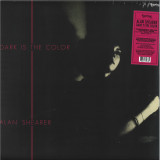
Favorite Recordings presents Dark Is The Color, the first LP by Alan Shearer reissued on vinyl for the first time. Despite being initially composed and produced for the French library label PSI, this rare
and obscure in-demand gem from 1985 sounds retrospectively like a proper album with great coherence and sophistication all along. Indeed, these 11 tracks will delight synthesizers addicts. Expect deeply emotive instrumental compositions, with ingenious analogue sequencing on stimulating chord progressions. The result is a highly retrofuturistic album, sometimes almost anticipating 90's videogames
scores. Just imagine Wally Badarou in a bunker with Talking Heads watching New York 1997 from John Carpenter.
Composed mostly step by step on a Sequential Pro-One synthesizer, Dark Is The Color is the product of the exciting state of mind from the 80's era with new sounds, new tools and new trends on the music spectrum. Influenced by bands like Talking Head or Japan, the sirens of the new wave scene strongly resonate here with Alan Shearer's familiarity and craftmanship with synthesizers.
Back in the days, Alan Shearer aka Frédéric Viger was working for his father’s music label, “Musique Pour L'image”, and their sublabel “PSI”. He started with Marathon Life under his real name before taking the Alan Shearer monitor. These records were produced for radio, TV and cinema industries but as well for companies’ internal communication. They represented a real investment from the label and these catalogues are usually full of amazing music from great artists such as Martial Solal, Vladimir Cosma, Joël Fajerman, Harlem Pop Trotters and even Manu Dibango.
About his musical illustration process, Alan Shearer tells: "Soundtracks are indeed my biggest influences and I'm a real fan of American composers as Jerry Goldsmith or Elmer Bernstein. I've always considered soundtracks as the new classical music or classical music of our century. There is a real state of mind producing music for illustration: you have to stick to the video. You should not tell what the image is saying but accompany what it is saying. You have to find a unique link, people always told me music should not be noticed for itself in a movie, that's what makes it good.”
As we emerge into the Now with a fresh perspective and renewed vigour, Red Laser Records usher in a novel epoch of Manctalo movements for our post-COVID enjoyment.
Entrusting piloting duties to four well decorated RL commandos, the EP serves to remind us all that despite everything that's happened, we can still find solace in red lasers, smoke machines and high-powered strobe lights.
Splitting open the collective dancefloor inertia is Kid Machine's 'Only Machines Allowed'.
A cybernetic b-boy jam straight outta the planet MEGOH circa 4044. Guided by electrified vocoder lines and a plutonium-grade, armoured groove this impenetrable battle rocket should issue the much needed power boost to get your body kinetics firing again when they release the e-barriers to hedonism.
Returning star fleet lieutenant Count Van Delicious has been collecting entities from the outer galaxies since his appearance on RL EP 9 ('Dark Fruit' w/ Senor Chugger).
Here he announces his return with an end-credits epic, an #inabiteveryoneelse theme from this young vet on a pants-off permo-buzz, up-scrolling through technicolored c64 visuals and deploying his now trademark zoopa-arps, euphoric synth stabs and thunderous low end shudder to deadly effect.
Meanwhile, Ste Spandex continues his cybernetic realignment surgery, dissecting a well circulated disco meme and adding voluptuous gender-neutral enhancements that'll be getting the next generation of androids frisky, despite their lack of reproductive organs. Fizzling synths, spherical repetition and a multi-dimensional mix of high voltage rhythms leaving that vocal line permanently downloaded in your memory cloud. No sharing necessary.
Scottish deep space observer Ernesto Harmon provides some cosmic ruggedness to close off our mission. Reinforced & galvanised low-end rhymix coalescing with humanoid synth expression and an infinite, carbon-free energy source keeping momentum plateaued through the morning after the night before. There's no off switch baby!
For astral travellers seeking solace in the new Now, EP12 kindly acts as an upgrade to your possibly dormant dancing system as you stumble out into the new nocturnal environment. Hopefully reminding us that the simple act of moving alongside one another in a pitch black, laser-guided club space hasn't changed that much...
Limited press, with artwork which could be the next top selling NFT, we urge our RL family to bag this collectable chronicle from the Red Laser Corp.
- A1: Deep Sea Pastures
- A2: Mother Of The Sea
- A3: Encounter
- A4: Ura Town
- A5: Kumiko
- A6: Ponyo & Sosuke
- A7: Empty Bucket
- A8: Flash Signal
- A9: I Become Human!
- A10: Fujimoto
- B1: Little Sisters
- B2: Flight Of Ponyo
- B3: The Sunflower House Caught In The Storm
- B4: Ponyo Rides A Sea Of Fish
- B5: Ponyo & Sosuke Ii
- B6: Lisa's House
- B7: A New Family Member
- B8: Ponyo's Lullaby
- B9: Lisa's Resolve
- B10: Gran Mamare
- B11: A Night Of Shooting Stars
- C1: The Toy Boat
- C2: Towards The Sea Of The Dipnorhynchus
- C3: March Of The Boats
- C10: The Tunnel
- C11: Toki
- C12: Ponyo's Sisters Lend A Hand
- C13: A Song For Mothers & The Sea
- C14: The Grand Finale
- C15: Ponyo On The Cliff By The Sea (Movie Version)
- C4: The Baby & Ponyo
- C5: March Of The Boats Ii
- C6: Sosuke's Voyage
- C7: Sosuke's Tears
- C8: Underwater Town
- C9: A Mother's Love
Planet Mu presents ‘ADDLE’ – Bogdan Raczynski’s first album of new music in 15 years. Marking a change from the high-octane jungle tekno braindance for which he is most commonly known, here we find the Polish American musician in a more melodic and zen-like place of peace, which is ergonomic and decluttered, whilst also bittersweet and tinged with melancholy. ‘ADDLE’ is closest in spirit to 2001’s tender ‘myloveilove’, or the light-hearted ditties of this year’s ‘BANANS’ EP, but is also a markedly new milestone. A robust and bottom-heavy rhythm section juxtaposes with sad electronic tear jerkers, at points laced with the soft cooing wail of his vocals, which are loaded with a haunting, heavy and almost wounded emotion. Bogdan comments “Calm is great. You need to take a breather in the eye of the storm now and then. But the real growth happens in turbulence, when your feelings oscillate in and out of sync. It’s not dry land you’re after. You’re trying to build a new island while on a piddly raft. Beleaguered and weary you lay the foundation with your bare hands while the rain lashes your back; a new place for you and yours to moor yourself to until the next storm hits. ‘ADDLE’ is about that storm, its adjacent periphery, and what you look like, in and out, when you set foot. As space and time push against you, that process of adapting becomes an anchor. Among that state of being addled, out of flow, seemingly untethered, there is beauty.”
Although less unhinged and riotous than some of his previous work, ‘ADDLE’ is no less impactful. Lean, punchy and purposeful, this seemingly simple combination of beats and melody belies a razor sharp skill, which bursts with verve and virtuosity. Across its eight unique and moving tracks the listener experiences tenderness, feelings somewhere between unease and comfort, and a sense of reflection, with Bogdan seemingly gazing at twinkling stars, but with his view distorted by welling-up. Sonically, spaces range from razor-sharp choppage, juddering heavyweight head-nodders, bit-crushed siren squall and something akin to Philip Glass’ ‘Candyman’ score played through a high-tech-fairy-tale music box. There’s also a warming, life-affirming moment as close to deep house as Bogdan will ever comfortably get, neck-snapping metallic percussion, Casiotone on steroids and reverberant warehouse throb. Booming drum machines are a prominent factor too – reminiscent of early hip hop instrumentals – but spirited off somewhere, lost in purgatory. Bogdan Raczynski (born 1977) is a Polish-American electronic musician. Raczynski’s work draws inspiration from the chaotic breakbeats of jungle and hardcore rave as well as traditional Polish music and other sources. He has collaborated with Bjork, remixed Autechre, CLPNG and Jonsi from Sigur Ross, and toured with Aphex Twin, who commented how “his records are so underrated.” Bogdan was also a roster mainstay of Richard James’s seminal Rephlex label, with additional releases on Warp, Ghostly, Disciples and Unknown to the Unknown. A keen proponent of tech, he created a sample pack using pollution and recently collaborated with Polyend on a custom made banana-themed tracker.
Chris Imler likes to play drums standing up. He‘s the dandy with the killer offbeat, or, as one major German newspaper once put it, the "Grand Seigneur of the Berlin Underground". He has been making his mark on countless Berlin musical affairs since long before the fall of the Wall, with The Golden Showers, Peaches, Oum Shatt, Driver &Driver, Die Türen, Jens Friebe, to name but a few. He has also been perfoming across Europe as a solo artist for the past decade.
In "Operation Schönheit" (German for "Operation Beauty"), he has recorded his most, well, beautiful album to date. But Benedikt Frey's warm production subverts its own beauty with a multitude of clanking and ingling synth sounds, making the work very much about the cosmetic surgery it performs on itself. It's all in the tradition of the more experimental and electronic side of post-punk in which Imler and his unique groove are rooted. It doesn't take insider knowledge of Berlin's post-punk underground to realise that that Imler groove consists of rhythm that sings, vocals that dance and a look that fits, as illustrated by "Disappoint Me", his latest video: https://youtu.be/YeVJ75ljjB8
Elsewhere - such as in "Movies" - the rhythm sings, less electronically reduced, into the acoustics of an old, high-ceilinged Berlin apartment; metal clatters, a zither trembles and Imler plays with the metronome. Sometimes he moves ahead of time, sometimes trails behind it. He always manages to be in his very own groove, which carries everything along. And this is precisely the essence of the Imler rhythm, which lends itself to being applied to the very rhythm of life: Stretch and compress your time and loop it according to your own groove! Optimise nothing but feel everything! And dance to it! Even when contemplating everyday information overload, as Imler's high-speed mumbling suggests in the hectic yet smooth opening track "Temperature".
But being the ultimate night owl he is, Imler manages to make even the odd bout of paranoia seem like a good thing: like some kind of krauty, groovy B-horror-soundtrack-inflected high-pressure environment, "Whip Me" is a cross between Conrad Schnitzler and Bauhaus. In the title track, whose lyrics were written together with Jens Friebe, he intones: "You want to be something greater / You break your leg / When it heals again / You break it again" and sounds like the most gleeful fatalist you can imagine. Because in his city, one can still lose oneself better than anywhere else - a night easily becomes a whole universe that can be traversed, marvelled at and played with, and one might find one's old self again only when hearing "church bells" and "small birds singing". At least that's how Imler illustrates it in "Emptiness full of stars", and it seems likely that those "stars" are the human companions of the Berlin night in question.
And so once again Imler becomes Berlin's most important cultural ambassador: that scene of the eternally, and somehow successfully, failing creatures of the night, once the envy of the international postmodern bohème, has, despite many claims to the contrary, not been completely "optimised away", and its attitude to life is perfectly summed up in Imler's groove. And, of course, his look. "Schau Hin" (German for "Look!"), he sings in the track of the same name, masterfully dubbed out with the help of Melbourne's Leo James.
Quite right! Look - and listen.
Yours, Johannes von Weizsäcker (The Chap)
Back in stock !
There is geological time and deep-space time. The natural world's time, and quantum time. Humans started measuring time with the stars and seasons. Then came hourglasses and sundials. The first mechanical clocks weren't in Europe until the late 13th century. Then came industrial time, a wristwatch for all and then everything had a time. A time for everything. All feeding into our recently digitised time and its marching nanoseconds. Let us not forget however another way to measure time: That would be K&D time.
Yes, you can rush, but isn't it so much nicer to amble? This onception of time may well have its roots in those smoke mists, softly blowing through the pre-history of 1995, and if that was time - then we need space. In particular, one Viennese front room that has turned its bass bins out to the cosmos. That sweet smoke, shrouding the desk and sampler. A few old keyboards (as a friend skins up at the back) unnoticed on the couch - just passing through...
Those days of K&D time had been thought to have gone. But one of times tricks is to hide itself in music. Not long ago (after a box of DATs had been found, and a DAT player prised back into service) back through the music wormhole our heroes fell into that smoke laden room of 1995. The remix time hadn't arrived nor the intense touring schedule. It was before the K&D sessions release and all that came with it, before the solo projects of the Peace Orchestra and Tosca. This was a time before all of that. A time for literally living in the studio and experiencing the joy of creating tune after tune. Just the sound and the smoke and no boundaries.
It was before people started asking about when the album was coming out. Which developed its own time specific answers. The 90s answer was soon, 00s answer was not sure and then: never! from 2010 onwards. The truth was, an album had been finished by the spring of '95 and all recorded onto DAT and placed in a box. K&D pressed up 10 copies and gave 4 away to some suitably eccentric individuals. Then the room's doors opened and in a tremendously big cloud of smoke time rushed in, K&D rushed out, and the years went rolling by. The days got filled with remixes, touring and life.
Then in early 2020 that chance moving of a box at the back of a room exposed the DATs and their time transporting properties. As K&D went through them they ended up comfortable and back in the room and that wonderful haze of 1995. The music was transferred from the DATs and K&D painstakingly rebuilt every molecule that made up the original 10 copies. From the very first takes of the mixes printed onto tape, to the solid slab of black virgin vinyl, to the abused by many plays, white cover. Even down to the labels that says "'Unverkäufliche Musterplatte" (Testpressing - Not For Sale) in rather rude German.
It now looks, feels and sounds pretty much exactly the same as those original 10 copies did in 1995. The only thing that couldn't be don is the original clouds of smoke those 10 copies were bathed in. That will be left to the listener to wrap it in the fresh harvest of 2020. In one way it's a musical time warp space travel. In another, if the music becomes classic and timeless, then it's of its time, whatever the time. So as the rooms bass bins are once again turned out towards the cosmos, K&D are happy and proud to release what they thought were lost moments. Drop through the worm hole, take your place on the couch. The friend who is skinning up, always just passing through, listening to an album for the future called 1995. It all makes sense if you measure in K&D time.
Gazing at the stars is looking at the past. The galaxies send you messages from thousands of light years away. That overwhelming feeling is present on Free Andromeda by Timothy J. Fairplay. An album grounded on earth while floating through eternity with a loose connection to the Milky way.
This nine-track record is, as always with T J. F. a delicately balanced mix between dark and light, analogue and digital, vast space and tight basements. With an impressing collection of premium synthesisers and drum machines, TJF showcases some of the most exquisite electronically generated soundscapes heard on this side of 1984. His sound on Free Andromeda can be described as leftfield inspired by various John Carpenter- and Italian horror movie soundtracks together with some West German Kosmische Musik.
Thimothy J. Fairplay, somewhat of a veteran on the label, makes deep and warm electronic music celebrating underground sounds from the last five decades. This album is no exception. For all you introverts dreaming of a life in the starshine – here’s Free Andromeda!
Aerosmith veröffentlichen am 8. April mit „1971: The Road Starts Hear” frühe, bisher unveröffentlichten Aufnahmen aus ihrem Proberaum.
Boston 1971: Eine der ersten Aufnahmen von Aerosmith in ihrem Proberaum - nur die Band mit ihrer Crew und Freunden, aufgenommen mit Joe Perrys Tonbandgerät. Das Talent der zukünftigen Hall Of Fame-Band zeigt sich bereits in diesen ersten, rohen Mitschnitten. Die Aufnahmen entstanden ein Jahr
bevor sie bei Columbia Records unterschrieben und zwei Jahre vor ihrem Debütalbum „Aerosmith“, welches viele der Songs aus den frühen Aufnahmen enthält - einschließlich ihrer legendären Hymne ”Dream On”.
His first single Come On, Let’s Go was recorded in July 1958 at Studio B of the Gold Star Recording Studios. Phil Spector was also recording To Know Him Is To Love Him with the Teddy Bears, and dropped by Studio B to say hello to Ritchie. Released a couple of weeks later, Ritchie’s debut quickly became a number one in Los Angeles. The record went on to be named ‘Pick Of The Week’ in September’s issue of Billboard, soon reaching #42 on the national charts. Valens’ follow-up was Donna, which went to #2 on the charts in January 1959. Not only was the record a hit, it was almost eclipsed when radio DJs discovered the Bside, La Bamba, which Valens described as “an old Mexican folk song they play at weddings”.
This also became a hit, though it only reached #22 – although when La Bamba, the 1987 biopic of Valens was released, the title song went to Number One. From this point on Valens spent most of his time touring the West Coast and beyond, and also managed time for several TV shows and a movie appearance in Go, Johnny Go! So put this record on right now. Let’s go!
Recorded in 1991 by the quintet of vocalist Billie Ray Martin and Birmingham-based electronic musicians Brian Nordhoff, Joe Stevens, Les Fleming and Roberto Cimarosti, Electribal Soul was conceived as the sequel to the band’s 1990 debut album, Electribal Memories.
Electribal Memories had yielded the hits ‘Talking With Myself’ and ‘Tell Me When The Fever Ended’ and pushed Electribe 101 to the forefront of a crossover electronic scene that fused dance music with pop savvy. They were snapped up by Phonogram, managed by Tom Watkins and hailed as “the next band to meet the Queen” by i-D. The band took the coveted support slot for Depeche Mode on their epochal World Violation tour and supported Erasure at Milton Keynes Bowl. Seen as the next big thing, everything pointed toward enduring critical success for Electribe 101, and the band settled into putting their second album together.
“There was a degree of confidence among us when we came to write the second album,” recalls Billie Ray Martin. “To me, the songs we put down sound like some of our finest moments.” More immediately lush and warm than the dancefloor-friendly structures of Electribal Memories, the clue to the sound of Electribal Soul lies in the second word in its title: soul. Songs like the aching sensuality of opening track ‘Insatiable Love’ or the emboldened defiance of ‘Moving Downtown’ showcase Billie Ray Martin’s distinctive vocal range as it moves from haunting quiet to dramatic, euphoric rapture. Lyrics from ‘Moving Downtown’ had found their way into ‘Pimps, Pushers, Prostitutes’ by S’Express, and the song would appear as ‘Running Around Town’ on Martin’s 1996 solo album. The strikingproduction on the version of the song presented on Electribal Soul suggests classic late sixties soul influences, such as those of legendary Motown producer Norman Whitfield, with the long shadow cast by Kraftwerk never being far away.
‘Deadline For My Memories’, the song that provided the title for Martin’s first solo album, was originally intended for the second Electribe 101 album. Its lyrics document a sense of freedom and liberation from the darkness of a bad relationship, accompanied by jazzy piano and organ sounds over a quiet rhythm and discrete electronics. In contrast, ‘A Sigh Won’t Do’ finds Martin in soothing vocal mode, despite its devastating message about the final ending of a strained relationship, her lyrics framed by restrained and subtle beats and sounds.
To spend time with Martin’s voice on Electribal Soul is to find yourself moved deep into the ordinarily impenetrable emotional corners of your own psyche. “I was into big ballads at the time and listening to all kinds of US and UK singers, and I was also young enough to want to prove myself as a belter of ballads,” explains Martin of the classic soul edge the album showcased.
Electribal Soul heads into darker territory with ‘Hands Up And Amen’. Originally written by Martin in Berlin in the period before moving to London and forming Electribe 101, the song was then perfected and enhanced by the band’s production nous. ‘Hands Up And Amen’ savagely documents the mugging of a woman in Queens, NY at gunpoint, only to resolve itself with a middle section that nods reverently toward gospel tradition. The song coalesces around a regimented break and burbling synths, finally ending with layers of urgent synth sounds.
Meanwhile, a cover of Throbbing Gristle’s ‘Persuasion’ takes us into a seedy world of sexual coercion and creepy infatuation, predating Martin’s chilling version of the track with progressive house unit Spooky two years later. Supported by a minimal, nagging rhythm and barely-fluctuating sounds, Electribe 101’s take on ‘Persuasion’ makes for uneasy listening, even though Martin manages to inject a sort of twisted sympathy for the protagonist as the song progresses.
That Electribe 101 were as comfortable offering complicated, nuanced tracks like ‘Persuasion’ alongside pop house bangers like ‘Space Oasis’ – written by Billie Ray Martin with Martin King before Electribe 101 was formed – is testament to the way the band wove their way effortlessly through electronic music reference points. Framed by light, jazzy piano melodies and string sounds, the energy of ‘Space Oasis’ soars so high that it could easily reach the moon, while highlighting how well-suited Martin’s voice has always been to club music. We hear the same reminder of her dance music credentials on ‘True Memories Of My World’, finding her describing a Hollywood actress who reflects on being used by directors to sell her ‘tears’.
Hooking up with the Birmingham-based Nordhoff, Stevens, Fleming and Cimarosti after placing a Melody Maker ad in 1988 (“Soul rebel seeks musicians – genius only”), it was clear that Martin had found a group that recognised the unique power and importance of her voice. Having worked with genres as diverse as reggae, rock and R&B, the four producers proved to be perfect collaborators, presenting carefully-sculpted backdrops that emphasised the towering emotional dexterity of her voice.
“Listening back to these tracks now, I was reminded of what a bunch of great musicians they were,” says Martin. “They had a rule that if a part still sounded good after a day or two then it could stay. If it bothered the vocals, it would go.” Even more so than on Electribal Memories, Electribal Soul places Martin at the captivating centre of these pieces, surrounding her voice with everything from dubby rhythms to chunky R&B beats to nascent trip hop breaks; wiry, acid-hued synths uncoil gently without ever dominating, while horn samples and lush, disco-inflected strings provide a rich, naturalistic accompaniment for Martin’s emotional outpourings.
The band finished mixing the album at London’s Olympic Studios in 1991. They were assisted by Apollo 440’s Howard Gray on production duties for ‘Deadline For My Memories’, ‘Insatiable Love’ and ‘Space Oasis’, with Gray supported by talented engineer Al Stone. Pre-release promo tapes were issued and an enthusiastic energy started to build around the band’s anticipated second album.
It was not meant to be. Against a backdrop of a worsening relationship with Tom Watkins, and a disinterested Phonogram, instead of receiving a positive reaction to the new tracks, Electribe 101 were swiftly dropped by their label. Electribal Soul languished, unreleased, and the band yielded to pressures that had been building and split up. After collaborating with Spooky and The Grid, Billie Ray Martin went on to release her seminal debut solo album in 1996, with it securing the era-defining hit ‘Your Loving Arms’, while the other group members continued to work together as The Groove Corporation.
Thirty years after the songs were recorded, we’re now finally able to hear what the second and final chapter of Electribe 101’s story sounded like. Electribal Soul shows that the band had really only just got started when they dropped their first album in 1990. Heard only by a select and privileged few, what followed elevated the band’s music to a completely new level, making Electribal Soul musical buried treasure of the most precious and rare variety.
Electribal Soul will be released on LP, CD and digital formats on 18th February 2022 through Electribal Records. The physical formats include extensive liner notes from Billie Ray Martin, and the album sleeve features unseen archive photographs by Lewis Mulatero from the original 1990 sessions with the band that were never used in the sleeve designs for Electribal Memories.
- A1: Triston Palma - Bad Boys
- A2: Tony Tuff - Never Trouble Trouble
- A3: Robert Ffrench - Single Life
- A4: Michael Palmer - String Up The Sound System
- A5: Puddy Roots - Champion Bubbler
- A6: Ashanti Waugh - Police Police
- A7: Triston Palma - Fancyness
- B1: Phillip Frazer - A Little Bit Of Love
- B2: Bill Blast - Barrel Mentality
- B3: Cutty Ranks & Triston Palma - Inner City Blues
- B4: Michael Forbes - Reggae Fever
- B5: Tony Carver - Ethiopia
- B6: Eddie Constantine - Strawberry
- B7: Rod Taylor - The Lord Is My Light
At the beginning of the eighties reggae music became increasingly in tune with what was happening in Kingston’s dance halls… probably more so than at any time since the sound system operators had started to make their own shuffle and boogie recordings in the late fifties. The international audience and the critics were too busy looking for a new Bob Marley to appreciate what was happening downtown and failed to acknowledge that this was a return to the real, raw roots of the music. Brash, confident, young record producers who were totally in tune with the youth audience stepped forward and seized the moment…
Oswald ‘Ossie’ Thomas began his apprenticeship in the music business at the age of fourteen and served his time as a record salesman for Bunny ‘Striker’ Lee and Winston ‘Niney The Observer’ Holness before moving on to Miss Sonia Pottinger’s Tip Top Records.
“I ended up working in three record stores on Orange Street from 1976 to 1981… Yeah man! Me deh ‘pon me bicycle till I buy my motorcycle! Them days records were coming out left, right and centre… every day!” Ossie Thomas
It was during his time with Miss Pottinger that Ossie began to produce records for himself and in 1979 Ossie and Phillip Morgan began the Black Solidarity label based deep in the Kingston ghetto on Delamere Avenue. Phillip initially inspired Ossie to start the label and soon Triston Palma, Phillip Frazer and “a youth named Gary Robertson” joined in although Gary later left for Canada.
The Soul Syndicate rehearsed in the Delamere Avenue area and Tony Chin gave Ossie a cut of a rhythm that he used for Triston Palma’s ‘A Class Girl’… the label’s inaugural release. The record was a sizeable success and paved the way for hit after hit after hit on Black Solidarity. Ossie worked with just about everybody who was anybody during this critical period of the music’s development including vocalists Robert Ffrench, Little John, Sugar Minott, Frankie Paul and most notably Triston Palma.
“But Delamere must be considered as a music street sheltering as it does such artists as Junior Byles, Don Angelo, Triston Palma, Phillip Frazer and producer Ossie of the Black Solidarity label…” Beth Lesser
And the man who had made his name in the business selling other people’s records now became one of the most important and influential record producers of the era.
With grateful thanks to: Paul Coote, Nick Hodgson & Hasse Huss
Lieve is the long-awaited second LP by British electronic music producer Holy Other, the first new music since 2012. Emerging from an extended stay at Bidston Observatory on the Wirral, Lieve was recorded throughout 2020 in the North West of England. Using the acoustics of the observatory — the cavernous basement and the geometrically-perfect wooden domes — Holy Other recorded and resampled material that would become the bedrock of Lieve.
A marker in the sand as his first output since 2012’s critically acclaimed Held, these recordings — including the voice of NYX’s Sian O’Gorman, violin from Simmy Singh and saxophone from Daniel Thorne — were cut, manipulated and pieced together to form Lieve.
“How do you break up with a place?”
Have you ever tried to leave your problems behind? No matter how hard you try to reshape yourself, your past remains. This is an album about L(i)eaving, coming to terms with the past, and trying to live in the present.
Much like his past work, Holy Other leaves the listener to draw their own semantic conclusions from the record. The lyrics are ambiguous — ghostly voices, whispers and stutters interwoven with his signature sound palette.
Still, the expressive mood from prior releases remains intact, even if these intimate textures and deft rhythms pick up more mature questions about false starts and failed escapes.
The title track single Lieve breaks almost a decade of silence, finding the language to articulate painful feelings, exhaling, and moving forward.
- 1: Attention All Personnel
- 2: Evacuate The Area
- 3: Do You Mind?
- 4: Passenger Line
- 5: Martian Moons
- 6: Heading For The Scumcluster: Part 1
- 7: Intergalactic Trucking
- 8: Foxtrot 946
- 9: Heading For The Scumcluster: Part 2
- 10: Your Manly Process
- 11: Gratifying Body Odour
- 12: Security Standdown
- 13: Froze Me, Freed Me, Here I Am!
The film is an outer space road movie starring Dennis Hopper, Stephen Dorff, Debi Mazar and Charles Dance. Independent space trucker John Canyon, his reluctant waitress-turned-bride, Cindy, and up-and-coming company trucker Mike carry a shipment of sex dolls which turn out to be quite deadly, especially in the hands of disgraced scientist-turned-space-pirate Captain Macanudo, who wants to use them to settle an old score. The score by Colin Towns plays like a crossover between a road movie and a space opera, featuring the powerhouse performance of the Munich Symphony Orchestra with some country and bluegrass interludes to represent the trucking aspect of the film. A special mention must be made of Phil Todd’s alto saxophone solos that lend some class to Charles Dance’s romantic scenes. And, of course, as with most Stuart Gordon movies, the film can go into crazy overdrive—just as we can expect from the director of RE-ANIMATOR.