Russian and French politics all the same... says blahblah about the pandemic... The dark movies... Need a good Hardcore superhero !!!
After this first track inspired by the worldwide cleaner comes a banger hardcore rave, very very MOKUM 90's style called XTC.
The flip starts with a funny Hardcore Factory Gabba Dancefloor tune. Defienitly ideal for the ducks !
Finally EP ends with a Junkies 303 remix, leaded by a heavy bass and typicall Mokum early samples and beats... Crazy shit !!!
SUPREB Nordcore G-M-B-H OPUS !
quête:movi star
Strut present the 4CD edition of Sun Ra's 'Egypt 1971' along with the original albums 'Dark Myth Equation Visitation', 'Nidhamu' and 'Horizon' released as individual LPs, documenting Sun Ra's first trip to Egypt with his Arkestra in December 1971. In the years leading up to 1971, Sun Ra wrote many compositions and poems specifically inspired by the ancient African Kingdoms and many others with associated mythological and heliocentric connotations. As such, a visit to Egypt and the opportunity for the Arkestra to play there was a matter of necessity. Ra's first ever concerts outside of the US had occurred in late summer and autumn of 1970 with performances in France, Germany and the UK and a second European tour was arranged for late 1971. At the end of that second tour, Ra caught wind of cheap flights from Denmark to Cairo. This release comprises recordings made by Arkestra member Thomas "Bugs" Hunter made in December 1971 in the streets around the Mena House Hotel, Giza, from a concert held at the house of Goethe Institute ex-pat Hartmut Geerken in Heliopolis, from a live Cairo TV channel broadcast and a concert at the Ballon Theatre in Cairo. The impact and significance of these few weeks upon Sun Ra can be measured by the growth and development of his output over the next few years; the immediate post-Egypt period included new studio and live recordings on the Saturn, Blue Thumb, Atlantic and Impulse labels and the 'Space Is The Place' movie. Ra also edited the three LPs of the 'Live In Egypt' series which were subsequently released on his Saturn record label and its affiliated twin, Thoth Intergalactic: 'Dark Myth Equation Visitation', 'Nidhamu' and 'Horizon'. These three albums are now reissued as single LP editions in their original artwork. The 4CD set features these albums alongside previously unreleased material from the December 1971 recordings. All tracks are remastered from the original tapes and the CD set also features a 24-page booklet featuring new sleeve notes and rare photos by Hartmut Geerken and background information on the recordings by Paul Griffiths.
- A1: Infinite Stress/Stress Infinito (From 'Spasmo')
- A2: First Nebula/Nebulosa Prima (From 'The Seecret/Il Segreto')
- A3: 1970 (From 'The Cat O' Nine Tails/Il Gatto A Nove Code')
- B1: Disgust/Raccapriccio (From 'What Have You Done To Solange?/Cosa Avete Fatto A Solange?')
- B2: Followed/Seguita (From 'Cold Eyes Of Fear/Gli Occhi Freddi Della Paura')
- B3: Lemon Obstinacy/Ostinazione Al Limone (From 'What Have You Done To Solange?/Cosa Avete Fatto A Solange?')
- B4: Glass Dolls/Bambole Di Vetro (From 'Short Night Of Glass Dolls/La Corta Notte Delle Bambole Di Vetro')
- B5: Foolish Suspension/Sospensione Folle (From 'Without Apparent Motive/Senza Movente')
- C1: The Serpent/Il Serpente (From 'Night Flight From Moscow/Il Serpente')
- C2: Infinite Stress/Stress Infinito (#4 - From 'Spasmo')
- C3: Solange's End/Fine Di Solange (From 'What Have You Done To Solange?/Cosa Avete Fatto A Solange?')
- C4: Evanescent/Evanescente (From 'Cold Eyes Of Fear/Gli Occhi Freddi Della Paura')
- C5: Emmetrentatre (From 'Short Night Of Glass Dolls/La Corta Notte Delle Bambole Di Vetro')
- D1: Night Walk/Passeggiata Notturna (From 'The Cat O' Nine Tails/Il Gatto A Nove Code')
- D2: In The Middle Of The Chest/In Pieno Petto (From 'Without Apparent Motive/Senza Movente')
- D3: In The Void/Nel Vuoto (From 'Forbidden Photos Of A Lady Above Suspicion/Le Foto Proibite Di Una Signora Per Bene')
Giallo is the fourth in a series of five double vinyl releases that bring together some of Ennio Morricone’s greatest soundtrack music. Each collection centres on a different movie genre, together they allow the listener to rediscover the unmatched genius of the greatest movie composer of all time. The Maestro. This collection was announced before Ennio Morricone passed away on July 6, 2020. We’ll continue to release the series to honour this great composer.
When we think of 1960’s Italian pulp cinema, the spaghetti western is the genre that comes to mind. However, Italy was responsible for another classic cinematic exploitation movement around the same time, one that is equally as compelling, but less widely recognised. Giallo…
Giallo, meaning ‘yellow’, is the Italian term for crime fiction, it was named after the bright yellow colours of early pulp fiction paperbacks. Film audiences adopted it as the name for a peculiarly Italian sub-genre of thriller cinema that had its heyday in the 1970’s - just as the Spaghetti Western movement was waning. The Giallo can be difficult to define, but essentially it is an Italian crime film that draws from a pool of common themes: stylized murders, amateur sleuths, sleazy glamour, psychological crimes, enigmatic titles and all these themes are underpinned by creepily atmospheric Ennio Morricone music scores. Starting 70 years ago as an arranger for the piece Mamma Bianca, Ennio Morricone is the emperor of scores and soundtracks. Morricone has always been a huge influence for the likes of Hans Zimmer, Danger Mouse, Muse, Metallica and many more musicians. He was one of the most successful composers of all-time, selling over 70 million records and winning dozens of awards.
Giallo is available as a limited edition of 3000 individually numbered copies on “giallo and black marbled” (clear, yellow and black mixed) vinyl. The package includes a 4-page insert with liner notes written by Claudio Fuiano. The gatefold sleeve contains a silver foil spot varnish on the outside and images of iconic movie posters on the inside.
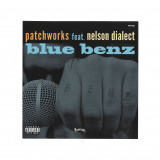
Favorite Recordings presents an exclusive collaboration between French producer Bruno ‘Patchworks’ Hovart (Voilaaa, Mr President, Taggy Matcher, …) and Australian NYC-based rapper and poet Nelson Dialect. The two artists met two years ago after Nelson’s gig in Lyon and, of course, they discussed and seriously planned to collaborate one day, both having an everliving love for early nineties hip hop. Then came the quarantine and Covid-19 with Patchworks locked in Lyon, Nelson Dialect in NYC: it seemed to be the right time to do it. A few months later and they finally drop Blue Benz, the result of their long distance collaboration, coming as a beautiful 7inch filled with proper Jazz & Soul Hip Hop vibes.
On A side, « Blue Benz » reminds indeed the best feelings of the nineties hip-hop with its infectious slapped bass rhythm and subtle Rhodes chords, all fiiting perfectly with Nelson Dialect’s serious flow!
On B Side, « Jazzy Blue Benz » offers an alternate take on the same groove, focusing more on the electric guitar gentle slides with a more percussive beat and horns arrangements with a proper NYC jazz
feeling.
From Adelaide, Australia, Nelson Dialect now lives in New York working with Bronx label Red Apples 45 started by AG of DITC and Ray West. Making music since he was 16, he has received critical acclaim for his work with producer Must Volkoff and their most recent album Magnetism. Before moving to New York, Nelson toured extensively in Australia supporting some of the biggest international Hip Hop acts including Mobb Deep, Lupe Fiasco, Ghostface Killah, GZA, RZA, Pharoahe Monch and DJ Premier among many more. He just released a new album Opal Mind with French producer NuTone.
East London record shop World of Echo debuts on the other side of the counter with a reissue of Two Wishes, the solitary 12" by Anglo-German collective, Mutabor!. Seemingly lost to time, Mutabor! were first brought to World of Echo's attention when drummer/singer, Gary Asquith, played at the shop's first birthday celebrations while promoting one of his other bands, Rema Rema. And so the story goes...
Mutabor! emerged wraith-like from the monochromatic grit of Berlin's art punk underground late in 1981 when Asquith left London to set up temporary residence in the city following a chance meeting with Malaria's Bettina Koster backstage at a Birthday Party gig at the Lyceum earlier that year. Beguiled by the possibilities of collaboration, musical and otherwise, he was soon to make his own contributions to what was an already fecund scene. Partnering with Koster, and Gudrun Gut and Manon Duursma also of Malaria!, Mutabor! were publicly birthed via an impromptu performance at punk rock polestar the Risiko. Asquith found himself playing percussion in what would be a first, while the rest of the band ossified in front of him in typically idealistic post-punk democracy. Little documentation of the performance survives beyond that which exists in the memories of those playing - that itself shaky enough - though there was clearly sufficient encouragement for them to commit to a recording session.
Later that winter, the four booked time at Music Lab, the studio operated by Harris Johns, for what would ultimately be their only studio visit. Two songs were laid to tape, and soon after a photoshoot was to take place at Koster's flat, resulting in a handful of images that, along with the music, comprise the sum total evidence of the band's existence. 1001 Nights and Treats both found their way to Peter Kent, a co-founder of 4AD who had recently left the label with the ambition of starting his own imprint. Entitled Two Wishes, the two track 12" was to be the first and only release on Loaded. It seems that Mutabor! were to represent a series of firsts and lasts, a trend that continues now as they open the World of Echo imprint.
It's fitting to think of Mutabor! in these prescient terms given how they sounded. Berlin at that time shared a spiritual axis with New York, the conceptual & aesthetic discordance of no wave and a nascent off-beat dance culture underpinning much of the respective creative activity. There are shared signifiers, but even in that context, Two Wishes sounds oddly out of step, moving to its own unusual rhythm. 1001 Nights stutters along on a tribal beat that seems to run independent of skronking sax, spidery guitar lines and deadpan vocal incantations, the ghosts of two songs meeting in some kind of incompatible voodoo union. On the reverse, Treats slows down and dims the lights further, as Asquith sardonically recites desirous threats as an increasingly malevolent sax and guitar grinds behind him. No surprise the darkness within the music given the parent bands and the backdrop of a crepuscular early 80s Berlin, though there remains a complex compositional element to these songs that suggests a broader spectrum of emotion - desire, romance, and ultimately, infinite possibility.
Recut and mastered, Two Wishes is now presented with the original front cover artwork alongside additional imagery, including a 16 page booklet, all culled from Asquith's own archive. A brief bolt of energy at a crucial juncture in music history, Mutabor!'s story is emblematic of the mutli-verse of post-punk and the creativity its ideology necessitated.
After his acclaimed debut EP « Cotonou » on Alma Negra’s record label, James Stewart comes back with his new EP Atlantic River Drive for Mawimbi Records, featuring two collaborations with Ghanaian kologo musician Ayuune Sule as well as two remixes from Simbad aka SMBD.
James Stewart met Ghanaian kologo musician Ayuune Sule, after booking several shows of kologo music star King Ayisoba in Lyon. Stewart was quick to witness the bluesy tone of Ayuune’s voice and his kindness as a musician, despite his impressive stature. Quite logically, Stewart invited Sule to record vocals on two of his ongoing demos at Bruno Patchworks’ recording studio (Voilaaa, Mr. President, Da Break), with the idea of making a rather unheard crossover between traditional kologo music and contemporary styles that would both appeal to Ghanaian crowds and a Western audience. Stewart then had a number of his arrangement ideas re-recorded by a talented cast of musicians, resulting in a brilliant mix of acoustic and electronic textures, sounding both vintage and modern.
Nodding to Eddie Palmieri’s landmark record “Harlem River Drive”, “Atlantic River Drive” is a stomping dancefloor track, drawing from the 6/8 feel of kologo music and the energy of contemporary club music. The track can be read as a tribute to the musical cross-pollinations between the African continent and its many diasporas, which Stewart has dedicated a long part of his life to, but also as a more intimate story about his life and family. All words were written by Stewart and then translated by Sule in his native Fra fra language from Northern Ghana.
“Where Are We Going?” is a two-part journey that reminds us that we should care about each other, about our communities while we don’t know what the future is made of. An important and much welcome message to navigate through these troubled, uncertain times. Referencing congolese N’dombolo tracks, the track has two parts and rich arrangements, with its first part going deep with syncopated clarinet hooks and playful percussion parts, and its second part moving to a four-on-the-floor pattern and an entrancing baritone saxophone solo.
The EP also features Worldwide FM and Brownswood maestro Simbad, who delivers two dancefloor-ready reworks of the track “Where Are We Going?” under his SMBD moniker, turning it into a spiritual, dubby journey, as well as an emotional house music track.
“Lucky Veil” is Al Pagoda’s first mini album to be released via Bigamo Musik, October 30th. Seven songs built out of layering luminous synth melodies that sound strong, iconic, like a childhood memory that’s long been dormant.
Al Pagoda, originally from Valencia, Spain, settled in Berlin in 2015, where he started working as a composer for movie soundtracks. During these years he experimented with new sounds and recording techniques. In 2018 a colleague of his, who had witnessed some of his free-form experimentation sessions, asked him to play at Loophole, a small club in Neukölln, Berlin. He accepted and came up with a few songs for the show. After this, the album would crystallise in no time.
Al Pagoda's cinematic approach can be felt throughout his music; his songs unfold like stories that take us to the crux of an inescapable revelation. Built from short snippets recorded in his phone over the years, Lucky Veil was put together during a winter in Berlin, in a room with no windows.
Motus is more (to me) than just music made with analogue synthesizers, it is about attitude, a way of relating to sound and the (e)motion it affects. A lifestyle, where movement, being moved and moving become one. My practice is vibrational, about the skin, touch and surfaces and the gaseous medium in between. I dream of a dance floor where Motus would be enjoyed. What kind of world, or rather, what kind of society would allow that? And when? Is this futuristic? A situation-to-come, where the understanding of music expands greatly, when blissful moments are independent of simple melodies, where harmony appears beyond I-V-vi-IV chord progressions, when the techniques of social alienation, which determine the use of all the drugs that accompany recreational music, are reversed into creative tools of exploration. ‘Motus’ is part of this exploration: to find dance, free of clock, and groove, free of rhythm. There is pulsation, and the downbeat connects to the downward beings as in stones and minerals, the upbeat connects to the upward beings as in grasses, flowers, trees and stars. Binding both together, connecting sky and earth, is the dancer. The moves / the movement is pure. It is the kiss of spirit and matter.” (Thomas Köner)
Kate NV is the project of Russia-born recording artist, songwriter, and producer Kate Shilonosova. Best known in her hometown of Moscow as the lead singer and founder of the post-punk garage band Glintshake, Kate NV is also a performer in the experimental Moscow Scratch Orchestra and releases music under an alternate alias, NV. "Room for the Moon" is Kate NV's third album and second for RVNG Intl. "Room for the Moon" was inspired by memories of 70s/80s Russian and Japanese pop music and movies. The album finds Kate NV singing in Russian, French, and English. She collaborated with musicians Jenya Gorbunov (bass guitar), Vladimir Luchanskiy (saxophone), Quinn Oulton (bass guitar, saxophone), Nami Sato (Japanese Narration), and Marco Passarani (marimba). "Music knows what she wants," says Kate NV. On "Room for the Moon", the lyrical follow up to the buoyant minimalism of 2018's "FOR", NV follows this muse in fluid expression, harmonizing her lunar lullabies with a starry compositional choreography. NV says, "I always let music express herself without pressure, and with or without voice."
Caiphus Semenya, AKA Mr Letta Mbulu, is a South African legend, and Listen To The Wind, his iconic debut album, is simply a superb modern-soul/boogie album. It’s also incredibly rare, especially in good condition, so Be With is delighted to present this reissue.
Now a revered composer, musician, and arranger, Caiphus left apartheid South Africa in the 60s for self-imposed exile in Southern California together with his wife, Letta Mbulu. Settling in Los Angeles he started working with the likes of Hugh Masekela and Miriam Makeba and other exiled and semi-exiled South african artists, as well as, of course, his wife Letta.
Caiphus also found himself working with and composing for a broad range of jazz and pop artists, including Lou Rawls, Nina Simone and Cannonball Adderley. His facility with both jazz and African forms served him well. His LA stay was also the beginning of an ongoing collaboration with Quincy Jones, the fruits of which can be tasted in Caiphus’s African compositions for the scores to Roots and Spielberg’s adaptation of The Color Purple.
Given his decades of work behind the scenes, it’s no surprise that it took until 1982 for Caiphus to get around to putting out the first album of his own. But all that experience shows. Listen To The Wind is a deeply impressive synthesis of early 80s US production and instrumentation together with his traditional South African musical roots.
It’s stylistically diverse but the ingredients are never diluted. There are elements of boogie, soul, funk and jazz, all shot through with pan-African flavour, and moving effortlessly from uptempo floor fillers to more meditative, slower soulful tracks. Produced by Caiphus himself, he makes full use of a stellar line up of session musicians including Nathan East, Michael Stanton, Sonny Burke and Paulinho DaCosta. And of course, there are Letta’s show-stopping vocals. To our ears, Listen To The Wind is just one big party, and lord knows we need that more than ever right now.
Opener “Angelina” is one of Caiphus’s most beloved tracks at Be With HQ. It’s a breezy, feel-good SA boogie-funk classic. Harmonic and horn heavy, it sounds as fresh today as it would’ve done in the early 80s. If this one doesn’t make you move, you may need your pulse taking. The drum breakdown alone, a little over halfway through, is sensational.
It’s followed by the gentle reggae lilt of “Play With Fire”. A real melodic slo-mo delight, carried by the tropical vibes and, above all else, by the extraordinary performance of Caiphus himself and his backing singers.
Closing out side one, the spectacular “Umoya” is driven by triumphant horns and slick bass. With its proto-Graceland vibes, we reckon Paul Simon must’ve been listening. Hard. Caiphus trades verses with the unmistakable tones of Letta, and it sounds divine. Yes, it’s as good as anything on Letta’s canonical In The Music… The Village Never Ends. A wide-eyed wonder, made for unity and togetherness, it’s all infectious, smiling faces for nearly nine minutes. But never mind nine, we could party to this for ninety minutes and “Umoya” would leave us re-energised for ninety more.
Elegantly firing up side two is perhaps the album’s best known track. “Without You” is a heavenly slice of modern soul, an end-of-nighter to end them all. Smooth strutting, disco-fied funk with that unmistakably South African sound, it’s just sublime, with those lyrics that keep coming back to smiling faces and community, “without You the sun won’t shine”. Big with the likes of Rush Hour’s Antal, this is aural perfection.
“Ziph’inkomo” is a soul-soothing, swooning epic. Gently building throughout, its final few minutes are genuinely stirring as the backing vocals and instrumentation swell. Jaw-dropping. The irresistible groove of frantic, percussive workout “Gumba Boogie” closes out what must surely be one of the greatest artistic statements of the 1980s. If his friend Quincy wasn’t feverishly taking notes for Thriller, then you could’ve fooled us.
With Simon Francis handling the mastering of this Be With edition, you know it sounds as fantastic as ever. The cover art, as breezy as the music, has been faithfully restored. All that’s missing is you.
- A1: Baby Don't Quit Now (Instrumental) Written By John Mercer And James Rowles
- A2: Isn't It A Pity Written By George And Ira Gershwin Performed By Robert Mitchum And Marianne Faithfull
- A3: Sleepy Time Down South Written By Clarence Muse, Leon René And Otis René Performed By Robert Mitchum And Dr. John
- A4: Cheek To Cheek Written By Irving Berlin Performed By Robert Mitchum And Rickie Lee Jones
- A5: Wild Is The Wind Written By Dimitri Tiomkin And Ned Washington Performed | By Robert Mitchum
- A6: Drinking Again (Instrumental) Written By Johnny Mercer Performed By Robert Mitchum
- B1: Jersey Girl Written By Tom Waits Performed By Robert Mitchum, Dr. John And Marianne Faithful
- B2: Stars Fell On Alabama Written By Mitchell Parish And Frank Perkins Performed By Rickie Lee Jones
- B3: Wild Is The Wind (Instrumental) Written By Dimitri Tiomkin And Ned Washington
- B4: Baby Don't Quit Now Written By John Mercer And James Rowles Performed | By Robert Mitchum 11 I'll String Along With You Written By Harry Warren And Al Dubin
- B5: You Go To My Head Written By J. Fred Coots And Haven Gillespie Performed | By Robert Mitchum
- B6: Drinking Again (End Titles) Written By Johnny Mercer
- All Songs are New and Exclusive Recordings to this LP and the Movie. The inside of the album features Rare Photos of the Record Session.
Collector first-ever and worldwide release of the original soundtrack of the sumptuous documentary NICE GIRLS DON'T STAY FOR BREAKFAST, (2019) about the legend Robert Mitchum, directed by the famous photographer Bruce Weber (Let's Get Lost about Chet Baker). Soundtrack directed by Bruce Weber, on a 33 rpm with gatefold, mastered by Translab Mastering. Limited to 600 copies.
Vital Sales points
The exclusive release of the sumptuous documentary NICE GIRLS DON'T STAY FOR BREAKFAST, about the film legend Robert Mitchum, immortalized by the eye of phographer Bruce Weber.
Directed by Bruce Weber himself, the soundtrack includes melancholic and jazzy unissued tracks performed by Robert Mitchum, along with the performances of Marianne Faithfull, Rickie Lee Jones and Dr. John.
Score entirely mastered by Translab Mastering.
Sleeves designed by Nathan Kilcer. Printed inner sleeves with stills from Bruce Weber.
Limited edition, 600 copies.
Legendary UK graff writer and beatmaker REQ returns to vinyl for the first time in almost 20 years since his Warp and Skint releases. Classic b-boy break manipulation and scuffed electronics are infused here with all the mischief of Smudge's influence on his work in their ongoing creative collaboration. Sure fire remixes from The Fear Ratio (aka Mark Broom & James Ruskin) and rising star and Sneaker Social Club / Moving Shadow signee ETCH, who some many know is the nephew of JAS who REQ painted with in Brighton's TDK crew in the 90s… as JB said: "Bring on the juice".
12′’ Maxi SP with original exclusive artwork by artist Paul Shipper, for the 40th anniversary of the motion pictures Mystery Men, directed by Kinka Usher, starring Ben Stiller, Hank Hazaria, William H Macy, Paul Reubens and Geoffrey Rush. A true collector’s item for any fan of this cult film, which saw a new generation of comedians led by Ben Stiller take the power over Hollywood, and which way ahead of its time invented the super heroic comedy genre, years before Guardians of the Galaxy or Shazam. This Maxi SP features the original song All Star by Smash Mouth. The song was used for the first time ever for Mystery Men original soundtrack. The song would soon after become a worldwide hit (and later an internet meme) when featuring to the movie Shrek Vital Sales Points: Artist Paul Shipper has become a pillar of the revival of the painted artworks in the movie industry, after decades of photoshop excesses. He has created prestigious posters for Steven Spielberg’s Ready Player One, Marvel’s Avengers Infinity War, Disney’s Star Wars The Rise of Skywalker. Includes a printed inner sleeve. Pressed at only 500 copies
Following the release of Milton Nascimento’s Maria Maria, Far Out Recordings proudly presents Nascimento’s 1980 follow up. With the success of Maria Maria in 1976 behind them, Nascimento reunited with his writing partner Fernando Brant in 1980 to produce another ballet, ‘Ultimo Trem (Last train)’. This time, they chose to tackle a more contemporarily relevant subject, the impact of the closure of a train line that connected certain towns and cities in the North East of Minas Gerais to the coast. “The military government shut down the route and the whole region began to fade away,” explains Milton. “I love train rides” adds the composer, “But today there are almost no trains to Brazil. So when I go to the US and Europe, any time I can, I go by train. The longer the journey the better.”
Featuring much of the same all-star line-up as Maria Maria – including legendary Brazilian musicians Naná Vasconcelos, João Donato, Paulinho Jobim and members of Som Imaginário, amongst many others, like Maria Maria, the album holds what Milton himself considers to be the definitive versions of some of his most beloved tracks, including 'Saídas E Bandeiras' and 'Ponte de Areia'.
The title track, ‘Ultimo Trem’ – performed exquisitely by Zezé Mota with a choir and piano – is a mournful lament about the human consequences of the axed line. The ballet brought great media attention to the campaign against closure. “Most of Fernando’s lyrics have some political tone,” says Milton, “This one helped the area a lot because the politicians grew concerned about the subjects.”
Fernando’s and Milton’s shared passion for the sounds, smells and memories of trains, inspired the soundtrack for the production which premièred in 1980. ‘A Viagem (The trip)’, launched with a train’s steam whistle, sees Milton’s guitar moving to a train’s rhythm. In contrast to the usual lyricism, ‘Bicho Homen (Beastly man)’ and ‘Decreto (Degree)’ are atypically upbeat and funky, their vocals a mesh of wordless male voices resembling the then fashionable Swingles Singers’ renderings of Bach. ‘E Daí? (And so what?)’, and ‘Olho d’Agua (Water’s Eye)’ were both drawn from ‘Clube Da Esquina’. ‘Olho d’Agua’ is mellow and delicate and Milton’s homage to the great voices of Brazil whilst ‘E Daí? (And so what?)’ is a stunning mosaic of voices. The unusual ‘O Velho (The Old Man)’ conjures up an image of an old shaman singing alone into the wind against the cries of nature. Perhaps the most affecting songs are Nascimento’s ‘Itamarandiba’ and ‘Oração (Prayer)’. The latter is a cry for a change in the situation whilst ‘Itamarandiba’ ends with an upbeat, whirling Hammond organ and guitar timepiece. The closing track ‘Ponta de Areia (Sand Edge)’, was based on one of Fernando’s newspaper stories and became one of Milton’s most famous pieces, covered by musicians across the planet, including Wayne Shorter and Earth, Wind and Fire. It reappeared as a ghostly 45-seconds memory on the ‘Milton e Gil’ album, his millennial collaboration with Gilberto Gil.
After 27 years of being locked inside contracts and record company legalities, these sublime songs were finally released in 2003 as a double CD package, along with Maria Maria. Set for its first ever vinyl release for this year’s Record Store Day, on limited edition red vinyl, Ultimo Trem sounds as fresh and relevant now as when Brazilian music was still a South American secret.
We're glad to be back with our latest reissue, a couple undercover soul gems from the Midwest originally self-released in 1984: LaVerne Washington's "The Promise" and "I Found What I've Been Searching For".
LaVerne has dedicated her life to the arts in every possible way. As an artist herself but also behind the scenes, helping and supporting her contemporaries fulfil their callings. Charlie Parker, Count Basie, Ella Fitzgerald, Mary Lou Williams - LaVerne grew up in Kansas City listening to the all time jazz greats, and soon discovered she was blessed with a keen sense for playing music by ear, playing the piano to what she would hear on the radio. In her teens whilst the 60s transitioned to the 70s' disco and funk era, LaVerne was there to witness it all, and she would go on to study music at the Charlie Parker Academy where she was inspired to become an entertainer.
At Langston University, LaVerne kept studying music where her career blossomed, founding and touring the US with the gospel group "Emery Shaw and the Voices of Praise", singing in several college bands and with her choir "The Voices Of Bethel". LaVerne would go on to perform notably with her bands "LaVerne Washington and Rococo" and the "LaVerne Washington Quartet", and record several songs in KC including "The Promise" and "I Found What I've Been Searching For" in 1984 before moving to Washington DC.
In DC, LaVerne was offered a position as a Program specialist with the National Endowment For The Arts where she started supporting other artists through her work. Over the next couple decades, LaVerne became an associate producer for the Rhythm and Blues Foundation and the Pioneer Awards Ceremonies held in New York, Philadelphia and Los Angeles, which saw the likes of Prince, Aretha Franklin and Jerry Butler attending among others. She has also managed and was mentored by DeeDee Sharp and consulted with artists including Bonnie Raitt (who acted as a mentor to Laverne as well), Kim Weston, Kathy Sledge (SisterSledge), Smokey Robinson and G.C Cameron (Spinners). During that time, LaVerne has kept singing, on her own and as a backing vocalist for DeeDee Sharp and Freda Payne and has never stopped her lifelong dedication to music and the Arts.
The Promise original 7" was LaVerne's last recording in Kansas City before her move to DC and the beginning of her involvement behind the scenes. Channelling her gospel roots - with impeccable arrangement, a contagious drum machine led rhythm section, soaring vocals and relatable lyrics, "The Promise" is guaranteed to bring back smiles to dancefloors and living rooms alike! "I Found What I've Been Searching For" on the flip is a beautiful soul ballad which really showcases the strength and emotion in LaVerne's voice.
Back again in it's original 7" format, we've had the audio transferred and restored from the original 24 track tape provided by LaVerne, and got the recordings re-mixed for the best possible sound! Floating Points behind the mixing desk for this new iteration of a lost classic, comes with a 14"x14" poster of the original picture
A memorable name with an outstanding cover, Fuzzy Duck is a classic slice of underground London art rock and melodic psychedelia. Originally released on MAM in 1971, it’s truly a musical force of infectious riffs and fiery solos, sharp tempo changes, a tight rhythm section and heavy, Hammond-drenched grooves. With echoes of Spencer Davis Group, early Grand Funk and Vanilla Fudge, it comes on like a heavier Soft Machine or Caravan. No wonder Fuzzy Duck’s cult appeal has endured.
The album features Mick Hawksworth (Five Day Week Straw People, Andromeda) on bass, acoustic 12-string, electric cello and some of the vocal duties, and also Roy “Daze” Sharland (Crazy World of Arthur Brown, Spice) on organ and electric piano. Accompanying those two were Paul Francis on drums and percussion, and Grahame White on guitars and the rest of the vocals.
Originally released in an edition of 500, Fuzzy Duck became legendary all over the world through a holy trinity of scarcity, personnel and its sheer brilliance.
The album kicks off with a heavy, bass-fuelled, Hammond rocker titled “Time Will Be Your Doctor”. This is pure hard-edged blues rock, brilliantly played. Its drum break intro was sampled by DJ Premier for Gang Starr’s “Mostly Tha Voice” on 1994’s legendary Hard To Earn. And we can hear its personality all over Harvey and Thomas Bullock’s Map Of Africa.
Rollicking highlight “Mrs. Prout” follows. At nearly 7 minutes long, it incorporates more psych-leaning guitar and drawn-out keyboards à la Ray Manzarek with the band effortlessly switching from jazzy rhythm section to a progressive one. That magnificent instrumental jam that starts half-way and continues through to the end is a true wonder.
“Just Look Around You” is propulsive folk-rock with a soaring, proto power-pop chorus, backed by frenetic organ and heavy bass high in the rich, intoxicating mix. Back comes the heavy, strung-out psych to both close out side one with “Afternoon Out” and kick off side two with “More Than I Am”. Both tracks are improvisational winners that stylistically nod to the late sixties and “More Than I Am”’s guitar hook, catchy organ and memorable chorus would’ve surely made it a great single.
“Country Boy” quenches the thirst for rhythm and melody, only the lyrics and vibe are wonderfully creepy. The sudden cut of the groove and the drop into a more sinister tempo will make you stumble, before the band pick up speed and toss you back again into the opening jam, this time with a badass organ to ride you home. The final, fully fleshed out track is the majestic “In Our Time”, which oscillates between endless organ-driven boogie and heavenly, genuinely moving vocals. Just stunning.
Infamous instrumental cut “A Word from Big D” rounds out the album. Yes, that’s the band jamming with duck quack sound effects accompanying the music. “Ducking vocals” as the sleeve says. You know, just in case the whole “duck” theme had passed you by. It’s an appropriate closer for what sounds like an album that must have been *a lot* of fun to record. It’s definitely fun to listen to.
Mastered by Be With’s chief sound duck Simon Francis and cut with glee by the veteran Pete Norman, this reissue of Fuzzy Duck’s one-and-only LP sounds as mighty as it should. That unforgettable sleeve artwork has been carefully restored and the records pressed by the wonderful Record Industry in the Netherlands. Essential.
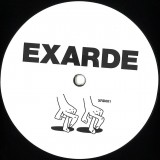
One of the founders of the Russian house label Sakskobing - Ottuga creates his own vinyl imprint, referring us to the roots of a musician himself who honed his DJ taste on London raves almost 10 years ago. Moving a little further from house music to techno and the acid vibes, Vladimir continues the leitmotif indicated by his series of events - Exarde.
The label's debut release describes the concept of this community, perfectly conveying the atmosphere of the parties themselves from which it all started about 3 years ago. The EP consists of 4 dynamic dancefloor-ready jam sessions of Moscow musicians Orbet and Sorv, using analog equipment, which takes place from 2017 till 2020.
Albert Ayler’s 1969 album New Grass has been misunderstood from the day of its release. The album fi nds Ayler experimenting with soul music and digging back into his R&B roots (he started his career playing saxophone with Chicago bluesman Little Walter), fusing it with the avant-garde free jazz (the one element of the record which garnered consistent praise) and adding the vocals of Rose Marie McCoy, The Soul Singers and Ayler himself. As if predicting the divisiveness of the record to follow, Ayler speaks directly to the listener and explains that New Grass is nothing like his albums before — that it is of “a different dimension of his life” — in the album opener “Message from Albert.”
New Grass deserves reconsideration, if not for the heavy grooves and surprising arrangements, then for its bravery in challenging norms of the time; by the ‘60s, jazz was well-accepted as a uniquely American art form, while soul as a genre was very much still seen as primitive. Ayler melds them together and creates something novel, adventurous, and completely his own. At the time of its release, despite its divisive reception, New Grass helped break down the unnecessary walls dividing genres and revealed music’s potential freedoms. The album has gone on to infl uence generations of Jazz, R&B, Funk, Hip Hop, Post Punk, No Wave and unshrinking artists like Pharaoh Sanders, Alice Coltrane, Funkadelic, Jungle Brothers, Red Krayola, Sonic
Youth and Mark E. Smith.
Third Man Records can’t recommend this record highly enough. We are confi dent that it won’t take but one listen for you to understand New Grass is an undeniable healing force
South London’s Lianne La Havas re-entered our musical consciousness at the end of February with her emotionally stirring soul-gem ‘Bittersweet’. This came in conjunction with an Annie Mac Hottest Record, a mind-blowing live show at the Barbican with the BBC Symphony Orchestra & Jules Buckley and an incredible Colors session – all of which helped put Lianne firmly back on the cultural map for 2020.
‘Lianne La Havas’, Lianne’s third album and her first in five years and is an album of startling beauty and insight—made entirely on her own terms which has been quite a journey. In one sense, geographically: La Havas spent a lot of time moving back and forth between the UK and the States working on writing and exploring her own identity. As a result, ‘Lianne La Havas’ feels spacious and luminous. Its sunbaked sounds recall, in places, the Brazilian singer, songwriter, and guitarist Milton Nascimento (on “Seven Times”). You might also hear the curveball chords of Joni Mitchell and Jaco Pastorious’s jazz explorations (“Green Papaya”), or the puttering drums and inviting warmth of golden-era Al Green (“Read My Mind”). And throughout the record, there’s a sense of empowerment that has its roots in the crisp ‘90s R&B of Destiny’s Child.
To say Fredfades and Jawn Rice are House music producers would be sneering at their efforts across genres like Hip Hop, Soul, and Jazz. The Mutual Intentions collaborators have forged a sound together in classic House, siphoning a myriad of influences through their intricate constructions in the studio as solo acts since first meeting in 2007. Becoming fast friends over a shared love of the dusty beats of an SP1200, Jawn Rice and Fredfades started working together while the Mutual Intentions collective gestated around them. Individual works by Jawn and Fred dot the collective’s back catalogue like various nodes of evolution through the course of MI’s output.
“We’ve always been sharing sketches,” explains Jawn Rice, “but I feel that these past years have been more productive in getting some of these sketches out as songs with Fredrik. It’s just a continuation of our friendship.” Emboldened by this friendship and with their finely tuned skills in the studio,
honed to near-perfection, they eventually started making music together. Following two seminal solo LPs – Fredfades’ Warmth and Jawn Rice’s Highlights – the pair consolidated their music as a duo in 2019, striking out with their electrifying debut, Jacuzzi Boyz. In a fusion between Jawn’s electronic inclinations and Fred’s soulful eccentricities, Jacuzzi Boyz established the duo as a new force workingNew Release Information within the broad scope of House music, with a sound imbued in the origin story of House and the genre’s hip-hop allegiances.
In 2020 they continue to pursue music together in the sophomore LP, Luv Neva Fades. Following the release of the title track and lead single, Luv Neva Fades finds the producers cementing their artistic voice and re-enforcing their commitment to a singular sound. Lush Rhodes keys and bouncing percussion lay the foundations for the album, while buoyant bass-lines and sparkling synthesisers provide
the catalyst for a crooning vocal or ruminating melody. It’s a record that thrives in a sultry mood; an LP that basks in the warmth of its analogue origins and cools in the shade of languid chord progressions.
Like Jacuzzi Boys, this album is an extended collaborative affair, as Mutual Intentions’ reach stretches across the Atlantic with guest appearances from Byron the Aquarius, Javonntte, Arthur Kay, Bendik HK and the SP1200 that started it all. Shimmering melodies, hazy harmonies and boisterous beats draw Fredfades and Jawn Rice out of the jacuzzi and onto the dance floor, moving under shimmering stars, where the duo cement what they started with Luv Neva Fades.