When one of South Africa's most sought after trumpet players steps forward after a career alongside the very best in the International jazz scene, you know it's going to be a special record.
Dennis Mpale was one of South Africa's heavyweights. You'll find his name springing up on every important South African jazz record and billing since the 1960's. Chris McGregor's iconic Jazz/The African Sound LP, Abdullah Ibrahim's Dollar Brand, Barney Rachabane in the highly influential ensemble Roots, and early work in house bands appearing alongside Nick Moyake in The Soul jazz Men to name just a few. His trumpet playing had character, an extension of the body and amplifier of that great South African sound.
Leaving South Africa during Apartheid as a strong supporter and member of the ANC, Dennis made London his home, joining the newly established SA Jazz scene and standing in solidarity against the oppressions back in Africa.
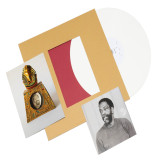
Moving between London and South Africa during the 70's and 80's It wasn't till the early 1990's when Dennis finally settled again to make his biggest transition to solo artist, redefining his Jazz past and putting a heavy kwaito infused house slammer on the agenda. 1994s 'Paying My Bills' (a title maybe more appropriate now than it ever has been) is a mighty jazz kwaito house effort: From the heavy synth beat and gorgeous floating solo opener of 'Paying My Bills', to the highly infectious vocal phrasing on thumping house anthem 'Take My Time'. Paying My Bills takes the sensibilities of a jazz maestro and pairs it with one of South Africa's biggest producers Peter 'Hitman' Moticoe, creating the perfect recipe for a certified summer slammer.
Having previously only ever been released on CD, this is the first ever vinyl pressing of the album (hazy early test pressings lurk on a small number of lucky shelves). Vinyl mastering is handled by The Carvery's very own Frank Merritt here in London, with the resulting tracks generously split over 2 discs to fully appreciate the swampy heavy dub bass drolls for full dancefloor effect. It's loud and punchy and makes space for those glorious trumpet improvisations while keeping the synth refrains and heavy bass thumping.
Early plays include resident NTS DJ's and a feature on Palms Trax Radio 1 residency with surely more support to follow.
Cerca:moy
Ivory colored vinyl, limited to 150 copies. "When did time start flying by so fast? It's getting harder to recall the past." The opening lines of As Friends Rust's upcoming album Any Joy are a fitting start for a band that has existed in one form or another for over 25 years (minus a hiatus from 2002-2008). Originally formed in the late `90s, As Friends Rust has been through a few iterations, but it is the core line-up of vocalist Damien Moyal, guitarist Joseph Simmons, guitarist James Glayat, and drummer Timothy Kirkpatrick that are creating thought-provoking melodic punk music for the modern age. With three EPs, two 7 inches, and a full-length in their history, As Friends Rust already have a lifetime of work in their pocket, but the seven songs on Any Joy might just be their most striking yet. Originating in Gainesville, Florida and now spread across the country, As Friends Rust wrote, recorded, and produced Any Joy mostly from the comfort of their own homes. Vocals in Ann Arbor, MI, guitars in Gainesville, FL and Brooklyn, NY, with the exception of the drums, which were recorded in a studio by John Howard in Gainesville. Not currently having a permanent bassist, the band called upon friend Andrew Seward (of Against Me!) to play bass on most of the record, with additional contributions from Simmons. Mixed by James Paul Wisner in Orlando, FL and mastered by Matthias Lohmöller in Germany, the creation of the album was truly a collaborative and international effort. Working in separate spaces allowed the band to experiment more as the songs came together, resulting in a familiar but fresh sound that has more bite than past releases. It's more focused, more direct, more confrontational, more catchy, while still staying true to the band's melodic punk and hardcore roots. Lyrics tackle everything from the emptiness of emoticons as a form of communication on "Positive Mental Platitude" to the need for political and social activism versus the occurrences of daily life on "??No Gods, Some Masters."
Tullio De Piscopo is an Italian drummer, percussionist and singer- songwriter born in Naples, Italy. During his musical career he began working as a session drummer, playing with international artists, including Chet Baker, Gil Evans, Gato Barbieri, Eumir Deodato and many others.
His 6th solo album Acqua E Viento, released in 1983, includes the Italian #1 single “Stop Bajon (Primavera)” which also ranked to #58 in the UK Singles Chart of that same year. “Stop Bajon (Primavera)” was a favourite in Rimini (Italy) Discotheques, a Balearic Islands classic, a Chicago favourite during the early house days, and became an anthem of the Italo Disco movement. The album includes guest musicians Don Cherry on trumpet, percussionst Famoudou Don Moye and composer and songwriter Pino Daniele.
Five years after the release of ‘Luyando’, Zimbabwe’s most celebrated music export returns with their long-awaited follow-up album ‘Tusona: Tracings in the Sand’. The six musicians from Victoria Falls are refining their unique sound: infectious Afro grooves deeply connected to Zimbabwe’s cultural DNA. ‘Tusana’ is their most danceable album to date, a DIY production recorded in Zimbabwe. It features horns by Ghanaian highlife outfit Santrofi.
Every Sunday, there is a gathering in the sweltering heat on grounds of an old local beer hall in the Chinotimba township in Mosi-o-Tunya (Victoria Falls). Entertainment is provided by various traditional groups including the Luvale Makisi masquerade. It is a day full of singing, drumming, dancing and storytelling. Mokoomba’s lead vocalist Mathias Muzaza can often be found here singing with a voice both soaring and vulnerable. In the course of the afternoon the other band members - guitarist Trustworth Samende, bass player Abundance Mutori, keyboard player Phathisani Moyo, percussionist Miti Mugande and drummer Ndaba Coster Moyo - often join in with singing. The drum driven song “Bakalubale” featured on their new album invites you to this gathering.
Mokoomba recorded ‘Tusona: Tracings in the Sand’, the follow-up album to ‘Luyando’ (2017, Outhere), in Zimbabwe during the pandemic. Instead of working with outside producers like Manou Gallo or Steve Dyer as they have in the past, this album was entirely recorded in a DIY fashion by Mokoomba. The collective from Zimbabwe put in all the experiences made over the previous years and have forged their music into a unique Zimbabwean sound. On popular demand from their fans in Zimbabwe they have even re-recorded three songs from their last more acoustic album ‘Luyando’ turning them into dancehall bangers (featured on the CD and digital versions of the album). In short, this album is more Mokoomba than any of the ones before.
On the album Mokoomba are singing about love, loss, courage in a changing society. The first single “Nzara Hapana” means “no money” in Shona. The song talks about a man who wants to ensure the future of his wife and family and is trying to protect them against the greed of his relatives. The danceable up-tempo song “Nyansola” praises the goddess of harvest and asks her for rain. “Makisi” is sung in Luvale. It celebrates the beauty of the initiation ceremony for which the whole community comes together. “Manina” is a song about losing a loved one. It was written during the pandemic and features the young singer Ulethu from Harare. Mokoomba sing in many different local languages. Their songs are in Tonga, Luvale, Shona, Nyanja and even Lingala used in “Makolo” when they team up with Congolese singer Desolo B. (The album also features horns by Nobert Wonkyi Arthur (trumpet), Bernard Gyamfi (trombone) and Emmanuel Arthur (sax) from Ghanaian highlife outfit Santrofi.)
The title of the album is a nod towards their immense respect for tradition. ‘Tusona’ refers to an ancient system of signs and symbols, drawn in the sand and used for instruction during initiation ceremonies by the Luvale in Southern Africa. Another important part of the Mukanda initiation ceremony is the incredible Makisi masquerade. Since 2008 the Makisi dances are on the UNESCO list of intangible heritage. The Makisi are masked characters, representing the spirit of deceased ancestors. During the yearly initiation ceremony the Makisi return to the living world to teach the young children to become responsible adults among the Lubale people of Southern Africa. In the last decade the interest - especially among the young people – has faded and the Makisi dances have nearly died out.
“Our inspiration comes from these gatherings”, Trustworth Samende explains, “from listening to and playing pure traditional music with everyone in the township. We then add influences from music that we listened to in our homes growing up and the sounds we experience travelling around the world.” It is the connection with the cultures around them that gives Mokoomba’s music its spiritual power. When you hear Mathias Muzaza singing and you watch closely, you will see the music carrying him away to a different sphere, a place where he is singing with the ancestors. Only a split second later though Trust Samende’s sparkling guitar riffs kick in, blending Congolese influences from neighbouring Kasai with Zamrock and Mbira inspired Chimurenga music, making you want to hit the dancefloor. It is this unique blend of local musical styles with contemporary dance music that is at the heart of Mokoomba’s music. The strong reference to tradition is also reflected in the cover illustration by young Zimbabwean visual artist Lomedy Mhako.
It has been nearly 10 years since this young energetic band from Zimbabwe has exploded onto the international music scene. Since then they have shared their music with fans all over the world: Mokoomba have performed in over 40 countries, rocking audiences in places like Roskilde festival (Denmark), WOMAD festival (UK), Sziget festival (Hungary), SXSW (USA), Apollo Theatre (New York) to name but a few.
Like anywhere in the world Africa’s musical output has become more and more producer based. Mokoomba are the living proof that Africa’s great guitar band heritage is well alive and ready to set any dancefloor on fire. Most important though is that deep below the surface of Mokoomba’s sound - flowing like the Zambezi River - you can still hear the heartbeat and the rhythm of a community connected by its music. Like ‘Tusona’, it is a source of rejuvenation, resilience and strength in these changing times. May the tracings in the sand not fade.
Hailing from the seaside communities surrounding Enoshima, a small island located 50 km southwest of Tokyo, Maya Ongaku is a ragtag collective of local musicians whose brand of earthy psychedelia transcends widely beyond the roots of their inner souls. The name derives not from any kind of ancient civilization, but rather a neologism defined as the imagined view outside one’s field of vision. The band—currently a trio of Tsutomu Sonoda, Ryota Takano, and Shoei Ikeda—finds sanctuary at the Ace General Store, a beachy vintage shop and salon-like space just hidden from sight from the bustling, touristy riverside Subana Street. Between discussions on music and art, curating the vinyl section and manning the register, and chatting up with locals young and old, the members find time to jam and record their spontaneous ideas in the studio tucked away in the back. It’s in this unlikely setting where Maya Ongaku finds its origins, the culmination of what Sonoda describes as 自然発生 (shizen hassei), meaning spontaneous generation, or the supposed production of living organisms from nonliving matter.
Approach to Anima, the group’s debut album released on Guruguru Brain, finds Maya Ongaku building a foundational groove while tapping into their innermost psyche. Sonoda’s malleable guitar and vocals, Takano’s sinuous bass lines, Ikeda’s floating woodwinds, and a sprinkling of delicate percussion—all coalesce into an aural experience that’s assertive yet abstract, calm but unsettling. The slow building, sax-laden “Approach” serves as an introduction to Maya Ongaku’s world, while the appropriately-named “Water Dream” floats its way toward the gentle finale of “Pillow Song.” It’s a concise distillation of their many interests and influences, from Neo-Dada and Fluxus, to where contemporary art intersects with the development of modern recording technology in the ‘60s and ‘70s.
As the title suggests, Approach to Anima is not intended to be a terminus; it’s merely the beginning of an exploration. The three childhood friends that comprise Maya Ongaku are always looking beyond the confines of the idyllic but rapidly gentrifying enclave of their beloved Enoshima. Feeding off of the energy that still radiates from the triumphant, decade-long journey of their label bosses’ band Kikagaku Moyo, who rose to global prominence from scrappy beginnings busking on the streets of Takadanobaba, they hope to go wherever inspiration takes them, to anywhere around the globe where their music can find a home.
Ultimately, Maya Ongaku’s uninhibited world-building will make it possible for us to see the unseen, expand the possibilities of the naked eye—all through the unbridled vibrancy of their music.
- A1: Opening Credits - Federico Jusid
- A2: Tâtačiksta - I Cherish You - Federico Jusid
- A3: A Chase Is On - Federico Jusid
- A4: Cornelia And Eli - Federico Jusid
- A5: Cheyenne Tree Burial - Federico Jusid
- A6: Coming For Eli Whipp - Federico Jusid
- A7: Crumbling Is Not An Instant’s Act - Federico Jusid
- B1: That's My Cattle! - Federico Jusid
- B2: And Yet Here We Are - Federico Jusid
- B3: Nothing Worth Dying For - Federico Jusid
- B4: Powder River - Federico Jusid
- C1: Soon Has Come - Federico Jusid
- C2: String Quartet No. 12 In F Major, Op. 96, B. 179, "American": Ii. Lento - Moyzes Quartet
- D1: Long Time Traveller - The Wailin' Jennys
- D2: Some Say (I Got Devil) - Melanie
- D3: American Tune - Crooked Still
- D4: Katie Cruel - Ora Cogan
- D5: You Cut Her Hair - Tom Mcrae
The English is Federico Jusid's sweeping, nostalgic and raw score to Hugo Blick's six part contemporary Western. Giving a nod to 1950s western soundtracks, the score is enriched by Dvořák’s String Quartet No. 12. known as the "American", written during Dvořák’s stay in America, and only three years after the events of the series. Also featured on the album are the beautiful folk songs by The Wailin' Jennys, Melanie, Crooked Still, Ora Cogan and Tom McRae. The second track on the album, Tâtačiksta_ - I Cherish You, features a tender reading by Emily Blunt.
Jusid’s music structure is based on leitmotifs, very simple and symmetric, constantly varied and developed to mirror the protagonists’ journeys. Big orchestral sounds underpin epic and romantic themes. Sound design, processed percussion and ethnic instruments effortlessly blend in with the orchestral material. Federico describes his compositional process – “Unlike other projects, I started working with Hugo Blick, at a very early stage, some time before he even started shooting. Inspired by the scripts, his story board and chatting about the classics, I wrote different piano tunes and first mock-ups and sent them over to him… Often, I have received scenes cut to my own music and that made the process deeply organic and profound. The music became a core element of the structure of the show, instead of a later addition. In the end, Hugo and I worked for an entire year to develop this score”.
New York City's loudest band A Place to Bury Strangers have had their intense live performance captured and immortalized directly to 12” wax. The post-punk legends are the 9th & latest entry in the Live at Levitation archival vinyl series. “Levitation 2021 was our second show as a new band and I felt so psyched to bring the new band members to such an epic festival. It was like a homecoming for me. Bob Mustachio was doing lights and playing with Ringo Deathstarr, Kikagaku Moyo & the Black Angels all on the same bill had me so rev’d up and excited. I knew it had to be an epic show. I remember right when we started I was flailing around so much like a freak on speed that I almost flung my guitar off the stage. By the time we got out into the crowd I thought I was gonna pass out. I remember we rented this PA speaker from Rock N Roll Rentals and for some reason they trusted us with this top of the line like $5000 12” monitor that we rolled around in the crowd while I was screaming at the top of my lungs. I love Levitation and Austin Psych Fest. They are always a UFO of a good time.” - Oliver Ackermann (APTBS)
Repress!
**NEW 2018 ALBUM FROM KIKAGAKU MOYO**The shifting dimensions of Masana Temples, fourth album from psychedelic explorers Kikagaku Moyo,are informed by various experiences the band had with traveling through life together, ranging from the months spent on tour to making a pilgrimage to Lisbon to record the album with jazz musician Bruno Pernadas. The band sought out Pernadas both out of admiration for his music and in an intentional move to work with a producer who came from a wildly different background.
With Masana Temples, the band wanted to challenge their own concepts of what psychedelic music could be. Elements of both the attentive folk and wild-¬-eyed rocking sides of the band are still intact throughout, but they're sharper and more defined.
Kikagaku Moyo started in the summer of 2012 busking on the streets of Tokyo. Though the band started as a free music collective, it quickly evolved into a tight group of multi-¬-instrumentalists. Kikagaku Moyo call their sound psychedelic because it encompasses a broad spectrum of influence. Their music incorporates elements of classical Indian music, Krautrock, Traditional Folk, and 70s Rock. Most importantly their music is about freedom of the mind and body and building a bridge between the supernatural and the present. Improvisation is a key element to their sound.
More than the literal interpretation of being on a journey, the album's always changing sonic panorama reflects the spiritual connection of the band moving through this all together. Life for a traveling band is a series of constant metamorphoses, with languages, cultures, climates and vibes changing with each new town. The only constant for Kikagaku Moyo throughout their travels were the five band members always together moving through it all, but each of them taking everything in from very different perspectives. Inspecting the harmonies and disparities between these perspectives, the group reflects the emotional impact of their nomadic paths. The music is the product of time spent in motion and all of the bending mindsets that come with it.
REPRESS!
Kikagaku Moyo call their sound "psychedelic" because it encompasses a broad spectrum of influence: classical Indian music, Krautrock, traditional folks, & 70s rock. "House In The Tall Grass" features a more refined Kikagaku Moyo - soft vocals, warm Sitar, & the masterful balance between loud & soft & chaos & order, taking the listener on an unexpected psychedelic journey, where their traveling songs blend the interplay of the guitars, sitars, & voices suspended beyond belief.
Hikikomori is the latest release from Dj Moya, a grimey and evocative third studio album that
showcases the Greek producer's signature.
Dj Moya creates a haunting soundscape that's elevated by the addition of the renowned MCs, Daniel
Son, Rigz and XP The Marxman.
Their thought-provoking lyrics explore themes of isolation, self-discovery, and societal inequities,
while Marina Of stoixima's innovative remix track rounds out the album.
Hikikomori is the latest release from Dj Moya, a grimey and evocative third studio album that
showcases the Greek producer's signature.
Dj Moya creates a haunting soundscape that's elevated by the addition of the renowned MCs, Daniel
Son, Rigz and XP The Marxman.
Their thought-provoking lyrics explore themes of isolation, self-discovery, and societal inequities,
while Marina Of stoixima's innovative remix track rounds out the album.
Originally released in 2014, now on the band's own Guruguru Brain imprint for the first time.
"Kikagaku Moyo here sound anything but lost, their child-like wonder manifested in a confident, courageous exploration of sound. Labels – psychedelic, folk, prog-rock, psychedelic-folk-mixed-with-prog-rock – do little to accurately reflect the spectrum of influences on display, let alone the more impactful realization of completeness in Kikagaku Moyo’s songs."
- Tate-Jima (??, Vertical Stripes)
- Tate-Waku (???, Rising Steam)
- Hishi-Igeta (???, Parallel Diamonds Or Crossed Cords)
- Shippo (??, Seven Treasures Of The Buddha)1
- Toridasuki (??, Interlaced Circles Of Two Birds)
- Fundo (??, Counterweights)
- Koshi (??, Checks)
- Amime (??, Fishing Nets)
- Uroko (?, Fish Scales)
- Hishi-Moyo (???, Diamonds)O
- Kagome (??, Woven Bamboo)
- Nakamura Koshi (????, Plaid Design Of The Nakamura Family)P
- Yarai (??, Bamboo Fence)
- Yoko-Jima (??, Horizontal Stripes)
blueblue is the latest full-length from multi-instrumentalist and all-around vibe wizard, Sam Gendel. The record, out via Leaving Records, is a concise, tightly wound song suite whose 14 tracks each correspond to a pattern within sashiko, a traditional style of Japanese embroidery. This conceit remains playfully ambiguous — to what extent, if at all, is Kagome (woven bamboo) meant to evoke the pattern of the same name, for example? But there is an intuitive sense, throughout blueblue, that Gendel has, in this instance, narrowed his focus. To say that blueblue feels richly textural might be a little on-the-nose, thematically, but alas…it does. There is an intimacy, a humility, and a strength at play here that typifies the work of a master craftsman. Only an artist could make it sound so effortless.
A Los Angeleno by way of Central CA, Gendel is by now an institution. Across a dizzying slate of solo releases and collaborations, he has amassed a reputation for not only virtuosic musicianship (primarily as a saxophonist, though the songs that would become blueblue were all initially composed on guitar), but also for his mercurial and prolific output — a corpus of work, which, while obviously indebted to jazz and hip hop (and the farther flung, experimental corners of both) is, in a word, unpindownable.
The bulk of blueblue was recorded in isolation in a makeshift studio built in a cabin floating atop a tributary of Oregon’s Columbia River. Having sketched out a set of guitar melodies, Gendel recorded the album in five-or-so weeks, during which time he became well-acquainted with the river’s tidal rise and fall. This organic rhythm, which daily lifted the house to meet the horizon, later setting it down gently upon the riverbed, permeates t
All of us carry a piece of where we’re from with us, but these parcels of fallow land often in a uniquely mysterious way become the prey that nourishes our aspirations. Agnès Gayraud a refined thinker by day that transforms into la Féline at night left Tarbes many years ago in search of greener pastures. After making a name for herself with Adieu l’Enfance (2014), Triomphe (2017), and Vie Future (2019), the author and musician has evolved once again. Her latest release Tarbes reinvents the circle of life and challenges our preconceived notions. She welcomes us to her hometown with sweet and clear melodies over the backdrop of an electronic hum, reminiscent of Mark Twain classic Tom Sawyer. Tarbes is no more than a listen away. Physically prevented from returning to her hometown by the viral threat we all know all too well, Agnès found her way back with a small Electone home organ. The constraints of off-peak hours that called for some DIY savvy, slowly but surely, roused her spirit. With a drum machine, a bass and a guitar, she succeeded in making the young girl inside her smile again. With 13 songs and just as many adventures Tarbes is a concept album that tells the story of a young woman’s formative years, as spent in her hometown. The returning hymn doesn’t only imprint nostalgia, it paints the full emotional portrait of a town. Because for Agnès, Tarbes is not just her theater, but her whole world, showing how fiercely protective she is of her hometown in the song Solazur. Under a magnifying glass of emotion, and with the sentimental testimony that is La Panthère des Pyrénées, the artiste shows us the skeletons in our own closets. Tarbes, more than a brief stopover in a rail journey to the coast, broaches issues that touch on abandonment, desertification, aging and redevelopment that many French towns and cities face today. Alexandre Guirkinger’s photographs serve as album art that illustrates this strangely unique singularity. While fine-tuning this collection of stories, in an oh-so-intimate album where solitude rips away the mask of confidence, Agnès found solace in uniting with other spirits. For 3 songs Tarbes, Jeanne d’Albret and Fum, inspired by an Occitan poem of Louisa Paulin (1888-1944), she invited the young voices of Conservatoire Henri Duparc a building she knows intimately, despite never feeling allowed to enter as a child to breathe the energy of their adolescence into this record. She also collaborated with Lyon’s own François Virot to imbue his delicate rhythms into her work, as well as Belgian guitarist Mocke Depret. Lastly, La Féline entrusted the last production stages to her eternal partner in music, Xavier Thiry, with Stéphane “Alf” Briat on the mixing board. The final piece has a complex tranquility, surrounded by non-verbality, with Jeanne d’Albret, Louisa Paulin and the Pyrénées safeguarding Agnes’ secrets. With the calm reassurance of her metamorphoses, La Féline delivers a slice of silence to her town, serving as both her cradle and theater. Tarbes’ Théâtre des Nouveautés is where Agnès Gayraud, La Féline, has decided to present Tarbes to its residents on October 14, 2022. While “nouveautés” evokes newness, this theater is reminiscent of a future which is already outdated, where modernity is only vague and fictional, carrying reminders of French haute-kitsch accordionist Yvette Horner, whose parents were the caretakers of what was then called the Cani Eldorado a bastion of virtue through the 30s, with its lineup of Catholic films. However, by the 60s, it would have become a temple of pornographic cinema. Tarbes, “Les Nouveautés”, end card. In the mid 90s, then 16 years old, Agnès discovered the volatile dust and the ghosts of the past that were hidden in this apostate theater. This phantom bequeathed song the teenager with the gift of her undeniable talent at her first appearance on stage a high school performance of a guitar-laden ballad sung in Spanish, a language her Andalusian mother has infused her with. On October 14, 2022, Agnès returns to the stage, bass in hand and joined by François Virot (drums), Mocke Depret (guitar), Léa Moreau (keyboard) and the Conservatoire de Tarbes singers to perform the album in its entirety
- A1: The Leaders - Wait A Minute
- A2: Archie Shepp - Song For Mozambique
- A3: Oliver Lake Quartet - Tap Dancer
- A4: Karl Berger And Friends - Guitar Vibes
- B1: Sun Ra Arkestra - Mayan Temples
- B2: Muhal Richard Abrams Octet – Laja
- B3: Andrew Cyrille & Maono - Metamusicians’ Stomp
- C1: The John Carter Octet - Ode To The Flower Maiden
- C2: Diedre Murray, Fred Hopkins - Zebra Walk
- C3: Joseph Jarman, Don Moye Feat Johnny Dyani - Mama Marimba
- D1: Sun Ra Arkestra - Love On A Far Away Planet
- D2: The Don Pullen Quartet - The Sixth Sense
- D3: World Saxophone Quartet
Woke rhythms and high-spirited grooves from the vaults of two seminal Italian jazz labels, between the 70s and 80s. Intensely curated by Khalab.
Hyperituals is a philological investigation that deeply delves into the possibilities of sound, rhythm, remix, and endless sampling. Inspiring listening, interpretation, and reinterpretation.
This volume is dedicated to the catalogue of the Italian Black Saint. Thanks to a constant, cutting-edge, and meticulous commitment, Black Saint & Soul Note established themself as two of the most important imprints for international jazz. They always placed the artists, their visions, and their music at the centre, giving them total freedom of creative expression. By combining jazz tradition with the political vanguard sentiment of the time, the two labels were able to press and produce more than five hundred records, many of which are by some of the brightest names in creative jazz or the ‘avant-garde’ of the era.
Curated by Khalab, the selection - focused on rhythms, grooves, and Afrocentric traditions - blends moments in which the rhythmic aspect is powerfully explicit, with others in which the kinetic aspect dialogues on different levels with African American cultural contexts.
Mzylkypop ( Miz-ilky-pop) is the music of Michael Somerset who leads an ensemble of multinational musicians based in Sheffield.
Ursula in Regression is the first single from the 2nd Myzlkypop LP "Threnodies and Ad Hocs" and features the golden vocals of Julia Calvo. In its original form it is an energetic, jaunty pop masterpiece but was taken down a darker & clubbier route by Crooked Man.
As the song writing element of The Crooked Man project Michael cashed in his free remix voucher with DJ Parrot who delivers three exceptional club mixes. Bent Crooked 1 inspired Luke Unabomber to get evangelical - calling it one of the best tracks he’s heard in the last 20 years.
Michael has a rich musical history beginning his career with industrial funksters Clock DVA before up sticking to Detroit to work with Don Was and his mutant disco orchestra Was (Not Was). He has written world-wide hits for Alison Moyet, Take That and Roisin Murphy.
“Baile en el Infierno” & “Villa Incepciòn” are the new singles from Bogota-based cumbia band Conjunto Media Luna. Directed by accordionist and producer Ivan Medellin, Conjunto Media Luna makes a sound shift towards fresher and more street sounds influenced by the Sonideros from Monterrey, and the Chicano movement of the Low Rider Kumbias from California. However, Conjunto Media Luna still sticks to their roots by homaging the original format of the traditional Cumbia Sabanera from the Montes de Maria region of Colombia and including accordion licks that remind of Andres Landero’s style.
Edition of 500 copies, coming in a plastic sleeve including artwork printed cardboard.
Pressed on high quality Black vinyl wax (40 gr.).
Magenta Vinyl
“Baile en el Infierno” & “Villa Incepciòn” are the new singles from Bogota-based cumbia band Conjunto Media Luna. Directed by accordionist and producer Ivan Medellin, Conjunto Media Luna makes a sound shift towards fresher and more street sounds influenced by the Sonideros from Monterrey, and the Chicano movement of the Low Rider Kumbias from California. However, Conjunto Media Luna still sticks to their roots by homaging the original format of the traditional Cumbia Sabanera from the Montes de Maria region of Colombia and including accordion licks that remind of Andres Landero’s style.
Edition of 500 copies, coming in a plastic sleeve including artwork printed cardboard.
Pressed on high quality Black vinyl wax (40 gr.).
Debut release for Black Truffle on GAMM with an EP of underground Euro disco / boogie, high energy disco-jazz and leftfield Euro folk-funk-jazz.
This truly diverse EP goes in all directions so the best thing is to just listen, dance and let yourself get swept away...Black Truffle styleee!
The 1980s will forever be remembered for electropop sensations, yet few, if any, are quite as sensational as Yaz's Upstairs at Eric's. A standard-setting mélange of smoky blues singing, jazzy arrangements, disco-tinged beats, and dancefloor vibes, the smash debut fits equally as well at a late-night club as it does in a living room, where the record's complexity and exoticism takes listeners hostage. No wonder the 1982 landmark remains one of the decade's most essential albums.
This numbered edition Silver Label LP breathes with a decongested openness, textural richness, and expansive tonal palette. Alison Moyet's inimitable vocals, such a huge part of the record's appeal, are dramatically enhanced, her sensual timbre, bittersweet crooning, and knockout range now encompassing the full frequency spectrum and projecting outward in a way that traverses the flatness of the original pressings.
Indeed, her bluesy deliveries are at once elegant and exuberant, and give collaborative partner Vince Clarke free range to construct beat architectures that encompass freewheeling disco, house music, uptempo dance, and chilled-out pop. The former Depeche Mode member also layers on elegant keyboard melodies, establishing contagious hooks and electronic-laced landscapes that preceded the techno explosion and do so with a cooler elegance. Tape loops, random field-noise dialogues, and synth-stroked bass notes add to what's nothing less than a perfect collusion of moody paranoia and soulful warmth.
While a cousin to synth-pop LPs by the likes of the Eurythmics, Soft Cell, OMD, and Depeche Mode, Yaz's Upstairs at Eric's is singular for its chemistry between Moyet and Clarke – and an insouciant batch of songs high on emotion, style, and substance.
- A1: Descarga Royal - Los Royal´s De Pucallpa 03 30
- A2: La Cervecita - Sonido Verde De Moyobamba 02 09
- A3: Selva Virgen - Los Zheros 02 40
- A4: Moyobambina - Grupo Siglo Xx De Rioja 02 43
- B1: Humo En La Selva - Los Invasores De Progreso 02 58
- B2: La Hamaca - Los Cisnes 02 54
- B3: Cumbion Universal - Fresa Juvenil De Tarapoto 03 35
- B4: La Trochita - Los Rangers De Tingo Maria 02 40
- C1: La Bola Buche - Los Invasores De Progreso 03 21
- C2: Bailando En El Infinito - Ranil Y Su Conjunto Tropical 02 56
- C3: Safari En La Selva - Los Cisnes 02 52
- C4: Baila Bonito - Ranil Y Su Conjunto Tropical 02 55
- C5: Ali Baba - Los Zheros 02 43
- D1: La Palmerita - Fresa Juvenil De Tarapoto 02 57
- D2: Recordando A Aguaytia - Sonido Verde De Moyobamba 02 18
- D3: El Pasito De Miriam - Grupo Siglo Xx De Rioja 02 51
- D4: Rio Mar - Los Cisnes 02 34
- D5: La Uñita - Los Zheros 02 22
Less than a hundred miles inland from the capital city of Lima lies the great Peruvian jungle, an untamed land of impenetrable forests and endless winding rivers. In its isolated cities, cut off from the fashions of the capital, a unique style of music began to develop, inspired equally by the sounds of the surrounding forests, the roll of the mighty Amazon and Ucayali Rivers, and the rhythms of cumbia picked up from distant stations on transistor radios. With the arrival of electricity, a new generation of young musicians started plugging in their guitars and trading in their accordions for synthesizers: Amazonian cumbia was born.
Powered by fast-paced timbale rhythms, driven by spidery, treble-damaged guitar lines, and drenched in bright splashes of organ, Amazonian cumbia was like a hyperactive distant cousin of surf music crossed with an all-night dance party in the heart of the forest. While many of the genre’s greatest tracks were instrumental, and others were simple celebrations of life in the jungle, the goal of every song was to keep the party going.
Radio stations in Lima remained unaware of the new electric sounds emanating from the jungle, but a handful of pioneering
record producers ventured over the mountain passes to the cities of Tarapoto, Moyobamba, Pucallpa – even Iquitos, a city
reachable only by boat or plane – and lured dozens of bands to the recording studios of the capital to lay down their best
tracks. Although many became local hits, few were ever heard outside the Amazonian region … until now.
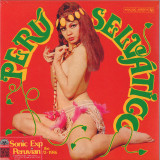
With eighteen tracks from some of the greatest names in Amazonian cumbia, Perú Selvatico is both the improbable soundtrack
to a beach party on a banks of the Amazon and a psychedelic safari into the sylvan mysteries of the Peruvian jungle.
Sonido Verde De Moyobamba feature on the second volume of Analog Africa's Sonic Expedition into the Peruvian Amazon, as well as being behind this brilliant new collection which drops on the same day from the same label. It is a coming together of eight super-rare cuts of guitar and organ inventiveness taken from the five albums the band recorded between 1981 and 1987 for Discos Universal. You would beard pushed to find any Cumbia from the Peruvian jungle that hits as hard as this with its incessant rhythms, mad acoustic guitars and bustling percussion.
(GF Col. LP + DL
Formed in 1980 by guitar prodigy Leonardo Vela Rodriguez, Sonido Verde de Moyobamba created some of the hardest, craziest Cumbia to emerge from the Peruvian jungle. With distorted, surf-addled guitar facing off against lysergic organ and hyperactive tropical rhythms, Sonido Verde conjured the organic sound of the dense forests surrounding their hometown while riding their dance-party grooves to dizzying psychedelic peaks.
Compiled by Analog Africa, Sonido Verde de Moyobamba presents eight ultra-rare tracks of guitar and organ madness drawn from the band’s five albums recorded for Discos Universal between 1981 and 1987. Pressed on Sun Yellow colored vinyl, housed in a screen-printed jacket and strictly limited to 2000 copies, Sonido Verde is a definitive trip into the heart of the jungle.
Limited Edition 180g LP - Comes with a Silk-Screen printed cover and a Sun Yellow colored vinyl
Download for LP from Bandcamp also includes unlimited streaming of *Sonido Verde de Moyobamba* via the free Bandcamp app along with high-quality download in MP3, FLAC and more Analog
Afro-Finnish band Maajo return with their third album, "Water of Life," a fluid celebration of various influences. Supported by two preceding singles, "Better Days" and "Unelmissani," the album is the group's first release with the Brooklyn, NY-based tastemaker label Wonderwheel Recordings. Maajo's signature Afro-Balearic sound meets late eighties new age and fusion, with touches of modern soul. The addition of two band members, Waina and Gilbert K, as well as featuring artists Issiaka Dembele and Ismaila Sané, has rooted the album's stories in a diverse range of backgrounds, featuring vocals in no less than six different languages.
Gilbert K's drum grooves pay tribute to the late Tony Allen's legendary heritage and the percussion experiments on a more melodic and atmospheric tip. Cold synth pads and 303 squeaks blend with warm guitars, fretless bass, and Issiaka Dembele's sublime kora harps and balafon mallets. "Water of Life" shows a band at its maturation point, reaching the cross-cultural coalescence of Finnish-African sound that's ready for the dancefloor or home-listening.
The three vocalists take centre-stage on the album: Waina hails from Zambia and sings in Nyanja, English and Finnish; a renowned musician in Zambia for over two decades who now calls Finland home, Waina wrote a song that reached the finals of the 2020 Afrimusic contest. Gilbert K primarily sings in his native Mauritian Creole while comprising part of the percussion line. He made his way to Finland by way of South Africa and China, eventually winning the Voice of Finland show. Gilbert K has played with such legends as Tony Allen, Andy Summers, Diana King, and Suzanne Vega. Ismaila Sané is from the Casamance region of Southern Senegal and sings in Wolof (a widely-spoken language in West Africa) on "Ndekete," and in Jola (a smaller language in Casamance) on "Èwàn".
Maajo is a sonic, linguistic, and cultural melting pot that has come together in Tampere, Finland, like a tropical breeze from the cold north. Their musical explorations lead from equatorial soundscapes to the woods and moods of their native Scandinavia. African influences, electronic beats and organic rhythms, ethereality and the sounds of nature all make up the patchwork sound of Maajo.
Not only is Maajo's music a way of travelling to faraway places, the songs themselves have travelled all over the globe. Maajo has evolved from a sample-based electronic music project to a full-sized band, including African vocalists and musicians. The group has put out two full-length albums and three EP's on Queen Nanny records, in addition to a release on German label Permanent Vacation. Maajo has received the remix treatment from artists such as Luke Vibert and Call Super, and has toured festivals and clubs internationally. The band has built a dedicated international following having been championed by the likes of Gilles Peterson (Worldwide FM), Tom Ravenscroft (BBC Radio 6), and Tim Sweeney (Beats In Space), while they've been featured by KEXP (Song of the Day), Resident Advisor, Ransom Note, and Pan-African Music.
"Water of Life" is out on Wonderwheel Recordings October 14th, 2022, both digitally and as an exclusive, limited-run 2xLP.
d 04: Better Days (Kumba) feat. Waina & Gilbert K
KRISIUN is a Brazilian death metal band, founded by brothers Alex Camargo (bass, vocals) , Moyses Kolesne (guitars) and Max Kolesne (drums) . Since its formation in 1990, the group recorded two demos, Evil Age in 1991 and Curse of the Evil One in 1992, and self-released an extended play (EP) titled Unmerciful Order in 1993. After signing with Dynamo Records (a Brazilian label), KRISIUN released the debut full-length 'Black Force Domain' in 1995, followed by 'Apocalyptic Revelation', in 1998 and ‘Conquerors of Armageddon’ in 2000. They signed with Century Media in 1999, releasing a further eleven full length studio albums, the band’s brand new full length album ‘Mortem Solis’ is out now on CenturyMedia /Sony. KRISIUN vinyl catalog has been sold out for many years and much sought after, now available again from Listenable records in updated lay outs and specially mastered for vinyl, released in limited edition coloured vinyls with bonus tracks !
- A1: El Saltamontes - Silvestre Montez Y Sus Guantanameros
- A2: Lamento Del Cóndor - Los Cóndores Del Cusco
- A3: La Manzanita - Los Gitanos
- A4: Descarga Oriental - Los Orientales De Paramonga
- A5: La Espumita Del Río - Los Casmeños
- B1: El Forastero - Los 5 Palomillas
- B2: Sueño Hippie - Los Beta 5
- B3: Girasoleando - Los Girasoles
- B4: Cumbia Del Amor - Los Demonios Del Mantaro
- B5: Cumbia Del Puerto - Los Demonios Del Corocochay
- C1: Bailando Con Patricia - Paco Zambrano Y Sus Ratones
- C2: Chola Ingrata - Los Ecos
- C3: Manzana Verde - Los Tantos
- C4: Si No Quieres Bailar Vuelve A Casa - Los Scorpios
- C5: El Baile De Los Reyes - Los Blue Kings De Ñaña
- C6: La Naranjadita - Grupo Siglo Xx
- D1: Larga Espera - Los Sander's De Ñaña
- D2: Cumbia Quántica - Los Quantos
- D3: Silbando Por La Montaña - Los Diablos Rojos
- D4: El Chullo - Marco Merry Y Sus Golfos
- D5: Lamento Moyobambino - Sonido Verde De Moyobamba
The third volume of our "Cumbia Beat" series includes again tracks by the some of the most important bands of the golden age of Peruvian cumbia: Los Diablos Rojos, Los Beta 5, Los Girasoles, Los Ecos, Los Demonios del Mantaro, Los Sander's de Ñaña…
Peruvian cumbia brings together tropical music styles from Colombia and Cuba, Western influences such as 60s beat and psychedelic rock, and mixes them with indigenous melodies from the Amazonian jungle and traditional Andean songs. The result is a unique and vibrant style of music which reverberates with life.
- A1: Perseus Traxx - Eye Of Jupiter
- A2: Guavid - Techno D
- A3: Lucita Octans - Lake Drain (Tankerlude)
- B1: Lloyd Stellar - Get It
- B2: Terrestrial Access Network - Liquid In Motion
- C1: Modified Starch - Beta Carotene
- C2: Stacie-Anne Churchman - What Does It Mean
- D1: Acidulant - Qa55Ata
- D2: Moy - Curve Tracer
- D3: Space Agent - Ghetto Electro
Gated's second compilation takes inspiration from the path less travelled, the earthen underbelly that binds disparate threads to its wonky centre.So while the music here is from artists all over the world, each track is grounded in a quirky, off-kilter sound, from the opener by UK hardware house don Perseus Traxx to the closer by Space Agent, the alias of a yet-to-be unveiled techno artist.In between we get Gated stalwarts Guavid, Lucita Octans, Acidulant, and Lloyd Stellar with their takes on the wonk, plus glassy-eyed electro from Austin, USA-based Terrestrial Access Network, unusually banging fare from man of the moment MOY, and broken techno from the criminally under-appreciated Stacie-Anne Churchman. There's also the reissued and remastered sub-bass squelcher Beta Carotene by Modified Starch, which was originally released in 1998 on UK breaks label Slalom.
Play it loud.
In many ways Kumoyo Island represents the culmination of a journey for Kikagaku Moyo. While their decade-long career can be summarized as a series of kaleidoscopic explorations through lands and dimensions far and near, there's a strong intention in each of their works to take the listener to a particular place, however real or abstract they may be. In that sense, the title and cover art for the band's fifth and final album draws you into a magical mass of land surrounded by water-but the couch suggests that Kumoyo Island may not be a fleeting stop, but rather a place of respite, where one could pause and take it all in. Reconvening at Tsubame Studios in Asakusabashi, Tokyo, where their earliest material had been recorded, the five members of Kikagaku Moyo found new inspiration in a familiar and comfortable environment. With their adopted homebase of Amsterdam under lockdown and their touring activities halted due to the pandemic, the band felt a renewed sense of freedom being back in shitamachi, or the old downtown area of their hometown. With unrestricted time in the studio, they began to build upon the demos and song fragments they'd amassed since their last tour. In the 1.5 months spent in Tokyo, everything started to come together. "Monaka", its name taken from a type of Japanese wafer sweets, takes melodic inspiration from traditional minyo folk styles, while "Yayoi Iyayoi" is a rare instance of the band singing in their native tongue, its evocative lyrics utilizing archaic words taken from old poetry and nature books found in one of the many secondhand bookstores of Tokyo. For "Meu Mar", an Erasmos Carlos cover, the original Portuguese lyrics were translated into English, then to Japanese. Strangely enough, the words seem to conjure an image of the protagonist floating among the clouds, looking down upon Tokyo Bay. In fact, it may be possible to draw a parallel between the topography of the band's home country-an island nation, surrounded by bodies of water-and the mysterious isle of Kumoyo. Are they one and the same? Has the band finally made it back home? It's up to the listener to decide.
*Gatefold sleeve - black vinyl**
In many ways Kumoyo Island represents the culmination of a journey for Kikagaku Moyo. While their decade-long career can be summarized as a series of kaleidoscopic explorations through lands and dimensions far and near, there’s a strong intention in each of their works to take the listener to a particular place, however real or abstract they may be. In that sense, the title and cover art for the band’s fifth and final album draws you into a magical mass of land surrounded by water—but the couch suggests that Kumoyo Island may not be a fleeting stop, but rather a place of respite, where one could pause and take it all in.
Reconvening at Tsubame Studios in Asakusabashi, Tokyo, where their earliest material had been recorded, the five members of Kikagaku Moyo found new inspiration in a familiar and comfortable environment. With their adopted homebase of Amsterdam under lockdown and their touring activities halted due to the pandemic, the band felt a renewed sense of freedom being back in shitamachi, or the old downtown area of their hometown. With unrestricted time in the studio, they began to build upon the demos and song fragments they’d amassed since their last tour. In the 1.5 months spent in Tokyo, everything started to come together.
“Monaka”, its name taken from a type of Japanese wafer sweets, takes melodic inspiration from traditional minyo folk styles, while “Yayoi Iyayoi” is a rare instance of the band singing in their native tongue, its evocative lyrics utilizing archaic words taken from old poetry and nature books found in one of the many secondhand bookstores of Tokyo. For “Meu Mar”, an Erasmos Carlos cover, the original Portuguese lyrics were translated into English, then to Japanese. Strangely enough, the words seem to conjure an image of the protagonist floating among the clouds, looking down upon Tokyo Bay.
In fact, it may be possible to draw a parallel between the topography of the band’s home country—an island nation, surrounded by bodies of water—and the mysterious isle of Kumoyo. Are they one and the same? Has the band finally made it back home? It’s up to the listener to decide.
Alison Moyet, a British pop singer known for her rich, remarkably bluesy voice, went on to become a steady presence on the U.K. charts, however, with each of her studio albums reaching at least the Top 30. The Minutes was Produced by Guy Sigworth , and was first released in 2013. The Minutes marked a return to club minded electronics while keeping her sound distinctly contemporary. It became her highest charting album since Raindancing in the U.K., reaching number five.
REPRESS
'the best soul album — in the real sense of the word — you'll hear this year... classic, blistering afro-beat' (Daily Telegraph); 'as tight as a pressure cooker... fierce and fun' (The Wire); 'son meilleur album... monumentale, triomphante, orgasmique' (Les Inrockuptibles); '**** utterly infectious... a triumphant return' (The Observer).
After releasing two EPs from rising talent MOY, Batrachian’s journey through mystical synths, breakbeat and electro rhythms, and ear-worm melodies continues in the capable hands of Bristol-based Jack Wiles. On Wiles’ debut EP, ’Too Real Eyez’ is a slow-burning spiral of acidic frequencies and tough breaks with a killer vocal snippet, while ‘Bientam’ is a rolling junglist piece driven by chopped drums, meandering bass and an intricate bell melody: the perfect mix of rhythmic heft and IDM intrigue. ‘Slowrush’ matches offbeat electro drums with a bittersweet synth part, and finally, Wiles remixes MOY’s ‘Echolab’ (recently released on the EMOTEC label) into an early Warp-style acidic masterpiece.
South London based producer and multi-instrumentalist Neue Grafik announces his new EP 'Foulden Road Part II' from his Neue Grafik Ensemble band, released 25th March on Total Refreshment Centre. The sequel to their impressive 2019 release 'Foulden Road', Neue Grafik continues to incorporate 100% live takes with the ensemble, as well as solo productions that reflect Neue Grafik's past work with both the Rhythm Section and 22a labels.
Neue Grafik explains, "This EP is a reflection of the social context which surrounds me" – created in a year of much social isolation as well as political unrest, 'Foulden Road II' explores the complex feelings that he found himself battling. He adds "In 2019, we released 'Foulden Road Part I', which was a transitional album, exploring a new culture and navigating between two worlds: Paris and London. 'Part II' is a bit darker, closer to realness with a sprinkle of hope. I couldn't have predicted that I'd finish it encased in my flat, between four walls, in December 2020 after a year of lockdown, Brexit, George Floyd protests, and without London's brilliant culture mesmerising my mind. Everything was sad and closed. Hills were difficult to climb. But it also gave me the time to work hard and deliver this second part of Foulden Road, pushing it forward".
Combining an array of influences — from London, to Paris via New York, Nigeria and Cameroon — with well-measured confidence, ' Foulden Road II' allows you to reflect on the complexities of the last year, whilst braced with energy and hope to move forward positively. Heavy horns and hypnotic poetry form the backbone record, which will ignite any room. 'Foulden Road II' begins with the grounding poetry of MA.MOYO on 'Black Bodies'. The EP is dedicated to Adama Traoré, a black man who died in police custody in Paris. Neue Grafik explains "His name is not well known outside of France. I was shocked, devastated even, to learn that his story didn't cross the Channel". 'Queen Assa' is a heavily percussive dancefloor-hitter which honours French activist Assa Traoré, (Adama's sister) her family, and her struggle to support all families hurt by police brutality. Broken beat elements flow through the horn accompanied 'Officer, Let Me Go To School', while West London rapper Lord Apex offers an unapologetic and poignantly personal perspective on 'Step To It'.
Released on the Total Refreshment Centre label, based out of Stoke Newington's Foulden Road, the EP is a testament to his versatility as an ever-shifting figurehead. Engineered by Capitol K, recorded at Total Refreshment Centre, mixed by Marcus Linon at Greasy Records and mastered by Guy Davie at Electric Mastering – a significant pillar in Neue Grafik's musical career. Having played a DJ set there in 2017, he was convinced by TRC founder Lex Blondin to start a band after he was heard playing some compositions on the communal piano. After spending a couple of sleepless nights on the living room couch, his first gig was booked in the venue space downstairs a week later. The ensemble was established and he has remained in London ever since.
Neue Grafik Ensemble's musicians include; Matt Gedrych, Benjamin 'The Chief' Appiah, Jack Banjo Courtney, Chelsea Carmichael, Dougal Taylor, Yahael Camara-Onono, Xvngo, Rebekah Reid, Dan-Iulian Drutac, Jamie-lee Glinsman and Zara Hudson-Kozdój.
Neue Grafik hosts The Orii Jam Sessions, an energising weekly jam night at Hackney Wick's Colour Factory, which has become a pivotal weekly gathering, inspired by the likes of Unit 31 and Steam Down.
A fantastic compilation of the great Salum Abdallah and Cuban Marimba Band. 12 perfect songs from the stars of the early 60s "muziki wa dansi" (dance music) scene in Tanzania, mixing local music styles with Cuban son, cha cha, and twist. One of the greatest music scenes anywhere, ever, which has been criminally underrepresented in this era of apparently inexhaustable reissues - finally a stellar compilation dedicated to it! Shimmering guitars and driving rumba basslines, horns weaving counterpoint harmonies through the air, irresistible percussion locking it all in, and the heartwarming voice of Salum Abdallah. Music that just feels GOOD. The LP comes in an old style tip-on jacket, with a printed inner sleeve featuring lyrics in Swahili and English.
The third release from Fourier Transform is coloured, marbled green/silver vinyl and with a special hand painted label to match how special the music is on this EP from Dorsets' finest, James 'ReKaB' Baker. Joined by Sound Synthesis with an amazing remix of the title track and comes with an invaluable collectible info sheet on 'How not to get caught by your partner, buying records'. This is strictly limited at this stage to under 180 copies worldwide. Deep melodic house and techno spread across this EP, inspiration looks towards Detroit vibes and makes a special nod to the recently departed Mike Huckaby.
Plays, charts and show features from Derek Carr, Moy, Placid, Sound Synthesis, G-Prod, Omid 16b, Colin Dale, Kone-R, Mark Darby, Laurent Garnier, Mr C.