With his seemingly endless capacity for creating compositions which have an alluring quality, and which are often wrapped in a mesmerising arrangement that pays homage to those towering sound constructions made by Phil Spector, Shadow Morton, Brian Wilson and the likes, veteran New York polymath Marc Jonson is also deserving of household name status. Involved in making records since the mid-sixties, Jonson's latest long-play collection is a particularly special glimpse into a secret stash of recordings made between 1979 and 2012 in his tiny flat on Cornelia St., New York's Greenwich Village, during the years we spend living (and surviving) there. These tracks are only now seeing the light of day, with many featuring Jonson at his melodic, awe-inspiring best; soul-baring, honest and vulnerable. Spanning these grooves are such delightfully told stories as 'The Man Who Walks On Air', 'November Paint Brush', the atypical jazz stylings of the instrumental title cut, plus the revealing light that is 'The Moon' and the magical, wide eyed beauty as conjured by 'Ages Of Wonder'. These tracks are only now seeing the light of day, with many featuring Jonson at his melodic, awe-inspiring best; soul-baring, honest and vulnerable. "Those who have taken the leap into Jonson's hitherto unknown musical world will be able to tell you that this is not only an experience which is immensely rewarding, but it's also one which needs to be heard to be believed. The captivating layers and mesmerising quality heard throughout lies in the way Jonson's startling array of songs seem to breathe in and exhale from many different, often eclectic elements." Lenny Helsing (Shindig!, Ugly Things Magazine).
Buscar:mr ho
Warehouse find!
With '100% Dope' we find Central Processing Unit bringing up their hundredth catalogue number, and you'd struggle to find a more fitting artist to ring in a century of releases for the label than Cygnus. The one born Phillip Washington has been with CPU since the very beginning, his 2012 LP 'Newmark Phase' representing the first record ever released on the imprint. That album's combination of textured techno and grizzly Drexciyan electro set the tone for CPU perfectly, and it's no surprise that Cygnus has returned to the Sheffield imprint several times down the years.
While '100% Dope' is an expert demonstration of what Cygnus and CPU do, this EP also shows just how much both artist and label have grown over the past nine years. At its heart '100% Dope' is a set of prime machine-funk from a master of the form, but these are also some of the most daring and innovative tracks that Cygnus has ever produced.
Take opening cut 'Bad RGB Controller'. In the undulating synth lines we have a ghost of grime as well as Drexciyan drive, and as such the track reminds one as much of Mr. Mitch or Last Japan as it does, say, Dopplereffekt. Furthermore, 'Bad RGB Controller' shifts gear around the halfway mark into a highwire electronica mode which has the wit and spark of prime Bogdan Raczynski. Entries like 'Float Back To The Surface' are similarly unpredictable. There's some lovely industrial techno bite to this one - the snare drum will echo in your head long after the party's died down - but Cygnus periodically pulls out the rug from underneath us with passages of impressionistic texture that almost border on sound art.
'Float Back To The Surface' is one of a trio of vocoder-led jams here. On 'Throwing Shade' we hear I-F and Egyptian Lover, with Cygnus' vocals clattering around like pronouncements from some funked-out robot overlord atop hissing-piston drums. Then there's the enticingly-titled 'CPU Records'. 'CPU Records' delivers all the crisp electro snap we've come to expect from a record emblazoned with that signature black-and-white artwork, yet this thing is also widescreen and cinematic in ways that demonstrate the maturation of the Cygnus sound. With a wicked vocoder vocal that celebrates the label's many achievements, 'CPU Records' is a victory lap tune if ever we've heard one.
Central Processing Unit keep it 100 on for this new EP. '100% Dope' by Cygnus is CPU's 100th catalogue number, and the Texan producer delivers on the promise of the record's title with a collection of brilliantly unique electro joints.
Neues Label, neues Album! Torres - alias Mackenzie Scott - veröffentlicht ihr viertes Album "Silver Tongue", den Nachfolger von "Three Futures" (2017) auf Merge Records. "Silver Tongue" ist eine vollständige Umsetzung der Welt, die Scott im Laufe der letzten Jahre als Torres errichtet hat - und die erste Torres-Platte überhaupt, die ausschließlich von Scott selbst produziert wurde. Das Album zeigt auf anspruchsvolle Weise die Impulse auf, die unser Begehren ausmachen - von den träumerischen ersten Errötungen der Verliebtheit bis hin zu dem etwas erschreckenden Erstaunen, das mit der Verbindung einer neuen Person einhergeht. Zu schwungvollen Gitarren und wirbelnden Synthesizerklängen kämpft Scott auf "Silver Tongue" mit den Höhen und Tiefen des Verliebtseins.
- A1: Hello, Mr George
- A2: Circles
- A3: A Night In
- A4: Dub I Your Bubble
- A5: Melodica Joe
- A6: Meadows
- A7: Late Again (Ft. Stevie 'Chicago' Christie)
- A8: Wishful Thinking
- A9: Blah De Blah
- A10: Here's What (Ft. David Rosenthal)
- B1: After
- B2: Circling Beats
- B3: Mr Minilogue
- B4: Dub In Your Bubble (Instrumental)
- B5: Just A Minute
- B6: Blah De Blah (Instrumental)
- B7: Late Again Beats
- B8: Blue Lou
Currently celebrating ten years of releasing music on vinyl & cassette and following hype for recent releases from Moscow (via Tallinn)’s Galun (glagol album) and Osaka's Kiji Suedo (Hosek EP & Riot album), Edinburgh's Hobbes Music label continues to mine a leftfield seam with this brand new album from singer/songwriter George Demure (Tirk, Output) aka DJ/producer George T (Greco Roman, Optimo), better known as George Thomson to his mum. And it’s another absolute peach if you have a taste for post-club sounds of a more leftfield persuasion.
This is the follow-up to his 'The Record Store' EP which came out via George's own All Noise imprint in 2021. He has also released the Roll On, King's Cross single via Hobbes Music under his George T moniker last November (plus various bits for the Paradise Palms and Ramrock labels in the interim).
“It all began with the Record Store EP in 2021,” explains George. “Limit my options. No samples, one drum machine, two analog synths (mono and poly), computer simply to record. I was so happy with the results I began with what you hear today. Same drums, same machines (or lack thereof) maybe some real percussion and melodica but hey, I only answer to me.”
Imagine, if you will, Scott Walker jamming with Kruder & Dorfmeister in a very small studio…
Bonus Album ‘Dandy In Dub’ features dubs, instrumentals and bonus tracks, with yet more regular flashes of pure brilliance. Be sure to check out opener 'After' and closer 'Blue Lou', which sound like George might well have sound-tracked some French 80s flick of the 'cinema du look' period (Betty Blue, Diva et al) in another life. Plus ‘Mr Minilogue’ with its clarinet-like synth.... Does it really get any better than this?!!
Sleeve art by the amazingly talented Bernie Reid, another local legend.
Feedback/Reviews to date:
'He's so talented!' JD TWITCH (Optimo)
'Love the LP. Sounds really together, production is awesome. I love the aesthetic. Vocal tracks sit nicely with instrumentals. Vocals sound light-hearted' THE MAGHREBAN
"On a bobbled and float-y, light sunbeam dappled vapor of deep house, garage, electro, kosmische, leftfield pop electronica, dub and new wave (both the German and UK’s), the Edinburgh DJ/producer and singer-songwriter George Thomson continues the good work he laid down on the last EP... It’s a most lovely, swimmingly blend of motivations, feels and deep grooves that effortlessly comes together in a generous offering of electronic music: the very epitome of the Hobbes label’s remit in delivering leftfield unique visions of now techno, house and club sounds." MONOLITH COCKTAIL
‘I love the album’ LEO MAS
‘Lovely stuff’ S/A/M (Music For Dreams/DK, Cafe Del Mar, Pikes, Playasol Radio and many more, Ibiza)
Plus play/s from Andy Wilson on ‘Balearia’ Ibiza Sonica Radio
+ DJ Dribbler (Pikes, Ibiza // Paradise Lost, Red Light Radio, Pure)
“I like to work with a variety of instruments and set ups,” says Mark Van Hoen, sometimes known as Locust or Autocreation but here working under his own name on the excellent Plan For A Miracle, his first physical release of solo music since 2018’s Invisible Threads. ”Sometimes it’s literally in my studio, with all the hardware electronics available. Sometimes the laptop, using software instruments. Some of the tracks on this record were recorded in the desert (Joshua Tree) using a 4-track tape machine and small modular synthesiser set up. Each track was recorded in different location using different instruments, which accounts for the distinction between each piece. It’s also about my own reaction to my environment, and what’s going on in my life at the time.”
The Croydon-born Van Hoen started musical life in the early 1990s, signing for R&S records in 1993 but developing his own, myriad and distinctive style across a range of releases on Touch, Editions Mego and other labels, using a battery of instruments, including analogue synthesizers and taking a number of different approaches to recording, rather than ploughing a single sonic furrow. He has worked on a number of collaborations, including with Nick Holton and Neil Halstead of Slowdive, under the moniker of Black Hearted Brother - their Stars Are Our Home was released in 2013. “I have known Neil Halstead since 1992,” says Van Hoen. “He shared a house with me for a couple of years, and the music I was making and listening to along with clubs I was attending had an influence particularly on Pygmalion, the final Slowdive album on Creation.”
Each track on Plan For A Miracle does indeed sound like a world unto itself, a mini-environment, a weather condition, an ecosystem created for the moment. It’s a collection of tracks recorded over the past few years, released on Bandcamp - despite his apparent absence, Van Hoen works constantly. Opener “Climates”, in its exquisite limpidity, feels like a homage to Brian Eno, one of his most formative influences in his teen years, commencing with Music For Films, which he bought in 1979. “This Is For Them”, feels like a ghostlike throwback to early drum & bass or electronica, reminiscent of his own, earliest outings. “There have been a number of requests from labels to make some more music like my very early releases on R&S,” says Van Hoen. “This is part of ‘letting go’ and realising that there’s nothing less creative about going back to those styles again.”
“Pencil Of Spheres” is something else again, a magnificent, imaginary glass structure, shimmering, refracting, without visible means of suspension, a thing of impossible beauty. “Electric Lights” evokes an abandoned fairground, its lights still pulsating, its music lingering. “The Underpass”, meanwhile, insofar as it reminds of anything at all, is faintly reminiscent of Cluster or Neu’s! West German ambience, the urban mundane rendered magical, the sodium lights, the whitewashed walls. The reverberant, faintly oriental chimes of “Insight” transport us yet again, burgeoning and intensifying.
The landscapes, the skyscapes rendered on Plan For A Miracle feel unpopulated as a rule - but when he does introduce vocal elements, Van Hoen has a history of doing so to spectacular effect - think of “Real Love” from 1998’s Playing With Time, the seductive intonation of its title recurring throughout like a series of massive holograms, echoing, stuttering, breaking up, surging. Here, there are just the faintest of vocals, barely distinct, disquieting. “There’s been a bit of a game changer in recent times,” explains Van Hoen. “AI software that enables you to extract vocals and instrument parts from virtually any recording. That means sampling individual parts from existing sources is no longer limited to the original mix exposing certain parts soloed. The vocal parts I use are from multiple sources and often pitch shifted altered rhythmically and melodically.“ There’s further vocal chatter on “I Really Do”, proceeding at a faster pace as if giving chase, or being pursued - distant, enigmatic. “The Music”, meanwhile, its beat tolling, lost in its own fog of static, features a curious intonation, like the ghost of a lost Walker Brother.
Sadly, the album’s title is in reference to a personal tragedy on Van Hoen’s part - the loss of his wife. Titles such as “I Won’t Give Up”, which faintly reminds of another Eno masterpiece, Another Green World, in its nautical hurly-bury, or the pastoral strains of “Mrs Who”, heavily clouded with sadness, seem to allude to this. “In fact the record was recorded entirely before she passed away,” says Van Hoen, “most of it before she even became very ill. The title was given to the album when it started to look like she wasn’t going to make it beyond a few months. It was something Osho said - “plan for a miracle” - so it was a statement of hope. Unfortunately it was not to be.” Although the album is non-thematic, non-specific in its atmospheres, sound paintings, elegant structures it most certainly stands as a magnificent monument to Osho’s memory.
-David Stubbs.
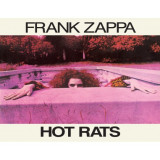
The second solo album by Frank Zappa, Hot Rats (October 1969) is one of the most influential Jazz fusion albums ever. It marked Zappa's first recording project after the dissolution of the original version of The Mothers of Invention. Multi-instrumentalist Ian Underwood is the only member of the Mothers to appear on the album and was the primary musical collaborator.
Other featured musicians include bassists Max Bennett and Shuggie Otis; drummers John Guerin, Paul Humphrey and Ron Selico; and electric violinists Don "Sugarcane" Harris and Jean-Luc Ponty. The first Frank Zappa album recorded on 16-track equipment, Hot Rats was included in the book 1001 Albums You Must Hear Before You Die, and was given a rating of 4½ stars in Al/Music, with Steve Huey stating that "few albums originating on the rock side of jazz-rock fusion flowed so freely between both sides of the equation, or achieved such unwavering excitement and energy". The model on the cover is Miss Christine, from the group GTO's.
Auf seinem neuen Album BEFORE AND AFTER hat Young eine vielseitige Sammlung meist obskurer Songs wie ein Maler mit einer neuen Palette neu aufgegriffen. Für das Album hat Young als Reise in seine Musikgeschichte aus einer großen Anzahl seiner Originale und Favoriten aus seinem Katalog ausgewählt und führt sie hier auf dem Album auf, meist alleine, auf einer akustischen Soloreise an einen neuen Ort . Jeder der Songs fließt ineinander und erzeugt einen kontinuierlichen Fluss, der zu einem 48-minütigen reinen und intimen Hörerlebnis führt. Ein Album wie nichts anderes, was er bisher veröffentlicht hat. Das Album wurde von Lou Adler und Neil Young produziert und von Young und Niko Bolas, auch bekannt als The Volume Dealers, gemischt.
Neue Versionen der Songs selbst bewegen sich nahtlos und verwandeln sich mit faszinierender Klarheit in neue Dimensionen, angefangen bei seinem frühesten Auftritt in Buffalo Springfield, Burned, bis hin zum neuesten Don't Forget Love (aus BARN aus dem Jahr 2021) und einschließlich des bisher unveröffentlichten - veröffentlichten Song If You Got Love.
1000 miles away from the beating musical hearts of Rio and São Paulo in the late ‘70s, the Brazilian city of Belém gave rise to a little-known record label called Erla - Estudio Rauland. Though not prolific in its output, the label made up for it in quality and experimental offerings, with several records on the label now becoming sought-after pieces among collectors. One such release is the sublime four-track psych, MPB, rock EP by singer-songwriter Jarbas Mariz.
They say never judge a book by its cover, though on this occasion you pretty much can. The wonderful tripped-out ‘70s artwork by Baby is a sure-fire indication of the music lying within. Though the EP was recorded in ‘77, it clearly gained inspiration from the psychedelic hippy idols of the previous decade and could easily have been a soundtrack to an acid trip scene in an obscure Brazilian movie.
Low-fi and quirky, there are moments of beauty and splendour but also hints of darkness; with a sublime balance of music and styles throughout. At points Jarbas will have you drifting through a folk flute daydream, the next moment a growling, psych-distorted guitar breaks and parts the calm. An ability to make those elements blend cohesively is where Jarbas’ true brilliance shines through.
Jarbas played, and still plays, with some of the key figures in Brazil's musical underground. Guilherme Coutinho (whose Guilherme Coutinho - E O Grupo Stalo album from ‘78 was also re-issued on Mr Bongo) features on electric piano for this release, with fans of his work being able to pick out his tones and playing style. Elsewhere, Jarbas also collaborated with the late great Lula Côrtes on the 'Bom Shankar Bolenath' album from 1988 and 'Rosa De Sange' from 1980. He was a member of the wonderful Cátia de França band and is a regular in the legendary Tom Zé group.
'Transas Do Futuro' is a special record and one we are honoured to be reissuing.
Part of The Optic Sevens 5.0 Reissue Series
Limited to 750 copies worldwide. Pressed on White Vinyl. Includes poster.
Second single released by The House of Love in 1987.
Previously issued as a 12” only single on Creation records. It appears here for the first time on 7” and includes all three tracks from the original .
‘Ushered in by deceptively innocent vocal trilligs and sha-las. The House of Love suddenly rip off the mask of Doctor Jekyll to become Mr. Hyde and burst out of the speakers like shrapnel”
NME
For the second instalment in our Cuban Classics series, we proudly present this sought-after slice of sublime Afro-Cuban jazz from 1976. It comes courtesy of one of Cuba’s most influential acts, Grupo Irakere. Founded in 1973 by Chucho Valdés (son of the Cuban pianist and bandleader Bebo Valdés) the group was home to many of Cuba’s finest musicians over the years. With an electrifying style and sound, they mixed traditional Cuban music with jazz, funk, and rock.
This self-titled album includes the much-loved, dancefloor heavy-hitter 'Chequeré-Son’, a Latin-jazz funk masterpiece with Cubanized bebop-flavoured horn lines, lush keys, and ‘70s hip swagger. Though 'Chequeré-Son’ is the keystone of the record, the album is laced with brilliance at every turn, from the Carlos Santana-esque channelling ‘Iya’ with its percussive Latin power, to the sultry, slick and passionate '38 1/2’. Elsewhere, the absorbing, ever-building energy of 'Juana 1600’ and steamy vocal dancer ‘Xiomara’ are also highlights of this incredible album.
Pressed on Cuba’s state led Areito Records, the album was well received internationally, garnering distribution in Finland on Love Records, in Italy on Phase 6 Super Stereo, and also in the Dominican Republic, Mexico and Venezuela.
A cherished Afro-Cuban triumph, this album has been crying out for a reissue and we’re delighted to make that happen.
Originally recorded in 1987 at Tabansi recorded Studio & Roger All Stars and pressed by Wilfilms, Nigeria. You’ll find six tracks of drumcomputer driven lo-fi jams laced with catchy synth lines from the mind of producer Austine Onwurah, who was quite active in the 80’s.. The project with Mr. Idigo resulted in a highly addictive cosmic boogie album which includes four absolute highlights. The record starts with one of the standout cuts; Flight 505, which is a tough electro/boogie crossover with vocals and sparse vocoder on top. Followed by the heavy boogie jam ‘We Got To Love’ , that is the personal favorite and a great track for DJ’s . The magnificent A-side closes with the catchy title track, again great production with top chorus and synth hook. On the flip you’ll find the wicked digital reggae tune ‘Mystic World’ with still ever relevant lyrics that closes the LP.. There is something special about this sought after record, the way the instrumentation has been played and programmed is very groovy and musical with a certain sound to it that is unmistakably Nigerian. The synth melodies weave in the tracks with ease and layers of funky bass and guitar float on top. Music that will grow on you every time you listen to it, one of the clever wonders coming from Nigeria! Officially licensed with courtesy of the family. Carefully restored and remastered with respect to the original sound and artwork. ‘’The need to ‘Search’ has come oh’ people of the world we have taken earthly forms the wisdom of love and unity thou shall love one another for love and unity is the route of life so do I search for Love, Peace & Unity’’ – Alphonsus Idigo
Analogue Productions (Atlantic 75 Series) Celebrating the 75th Anniversary of Atlantic Records! 180-gram 45 RPM double LP Mastered by Bernie Grundman from the original analog tape Contains Otis Redding's posthumous hit "Sittin' On the Dock Of the Bay" Appeared on Rolling Stone's 500 Greatest Albums of All Time, rated 161/500! Pressed at Quality Record Pressings Gatefold old-style "tip-on" jacket by Stoughton Printing Hybrid Mono SACD Mastered directly from the original master tape by Bernie Grundman The guts of the story are this: While on tour with the Bar-Kays in August 1967, Otis Redding's popularity was rising, and he was inundated with fans at his hotel in downtown San Francisco. Looking for a retreat, he accepted rock concert impresario Bill Graham's offer to stay at his houseboat at Waldo Point in Sausalito, California. Inspired, Redding started writing the lines, "Sittin' in the morning sun, I'll be sittin' when the evening comes" and the first verse of a song, under the abbreviated title "Dock of the Bay." He had completed his famed performance at the Monterey Pop Festival just weeks earlier. While touring in support of the albums King & Queen (a collaboration with female vocalist Carla Thomas) and Live in Europe, he continued to scribble lines of the song on napkins and hotel paper. In November of that year, he joined producer and esteemed soul guitarist Steve Cropper at the Stax recording studio in Memphis, Tennessee, to record the song. Cropper remembers: "Otis was one of those the kind of guy who had 100 ideas. ... He had been in San Francisco doing The Fillmore. And the story that I got he was renting boathouse or stayed at a boathouse or something and that's where he got the idea of the ships coming in the bay there. And that's about all he had: 'I watch the ships come in and I watch them roll away again.' I just took that... and I finished the lyrics. If you listen to the songs I collaborated with Otis, most of the lyrics are about him. ... Otis didn't really write about himself but I did. Songs like 'Mr. Pitiful,' 'Fa-Fa-Fa-Fa-Fa (Sad Song)'; they were about Otis and Otis' life. 'Dock of the Bay' was exactly that: 'I left my home in Georgia, headed for the Frisco Bay' was all about him going out to San Francisco to perform." Redding and Cropper completed the song in Memphis on Dec 7, 1967 with tragedy, unknowingly, looming. Just two days later Redding lost his life on a routine commute to a performance when the small plane he was in crashed. The other victims of the disaster were four members of the Bar-Kays — guitarist Jimmy King, tenor saxophonist Phalon Jones, organist Ronnie Caldwell, and drummer Carl Cunningham; their valet, Matthew Kelly and pilot Fraser. Cropper and bassist Donald "Duck" Dunn completed the music and melancholic lyrics of "(Sittin' On) The Dock of the Bay' which was taken from the sessions — Redding's final recorded work. Cropper added the distinct sound of seagulls and waves crashing to the background. This is what Redding had wanted to hear on the track according to Cropper who remembered Redding recalling the sounds he heard when he wrote the song on the houseboat. One of the most influential soul singers of the 1960s, Redding exemplified to many listeners the power of Southern "deep soul" — hoarse, gritty vocals, brassy arrangements, and an emotional way with both party tunes and aching ballads. At the time of his tragic death he was 26. ‘(Sittin’ On) The Dock of the Bay’ was released just a month following Redding’s death and became his only ever single to reach number one on the Billboard Hot 100 in January 1968. The album, which shared the song's title, became his largest-selling to date, peaking at No. 4 on the pop albums chart. "Dock of the Bay" was popular in countries across the world and became Redding's most successful record, selling more than 4 million copies worldwide. The song went on to win two Grammy Awards: Best R&B Song and Best Male R&B Vocal Performance. With the album, Redding confirmed himself as a talent lost far too soon. All the hallmarks of a top-notch Analogue Productions reissue are here for you to savor: Mastered directly from the original master tape by Bernie Grundman and cut at 45 RPM. Pressed on 180-gram vinyl at Quality Record Pressings, and housed in tip-on old style gatefold double pocket jackets with film lamination by Stoughton Printing.
Vibraphone Records starts the new year with another banger from Basic Realities! Dubtroit is a classic techno hommage to Motor City and it comes around with an stunning remix by the Legend, Mr. "Inner City" Kevin Saunderson! The Vinyl is expected to be out last week of January!
Cassette[13,87 €]
Jubiläumsfolge: Limitiert 180g Vinyl schwarz, Clamshellbox - Setinhalt: 5 Vinyle
Schaurige Maispuppen, Schüsse und verurteilte Verbrecher - keine guten Vorzeichen für eine Hochzeit. Die drei ??? geben ihr Bestes, um das Fest zu retten. Deep Spring, ein verschlafener Ort in der Wüste von Arizona: Die drei ??? reisen an, um die Hochzeit eines alten Bekannten zu besuchen. Doch während die Vorbereitungen in vollem Gange sind, pflastern unheimliche Puppen den Weg der Detektive. Als sie schließlich ein Hochzeitspaar aus Mais, aufgehängt im Gebälk, entdecken, bekommt nicht nur die Braut kalte Füße. Können Justus, Peter und Bob die seltsamen Geschehnisse aufklären?Sprecher:innen und MitwirkendeErzähler Axel MilbergJustus Jonas, Erster Detektiv Oliver RohrbeckPeter Shaw, Zweiter Detektiv Jens WawrczeckBob Andrews, Recherchen und Archiv Andreas FröhlichTante Mathilda Karin LienewegOnkel Titus Erik SchäfflerKenneth Till HusterChief Householder Gordon PiedesackTricia Cooper Anna CarlssonMr. Rice Stephan Schad Katee Anne MollSergeant Murray Achim BuchMary Svantje WascherScott John Wesley ZielmannJohnson Wanja Mues Nigel Tim Mälzer Patrick Christian Rudolf Dolly Craig Rosemarie Wohlbauer Mrs. Cooper Angelika BergProduktionshinweiseBuch und Effekte: André MinningerRegie und Produktion: Heikedine KörtingRedaktion: Maike MüllerTitelmusik: Simon Bertling & Christian Hagitte (STIL)Musik: Jan Friedrich Conrad, Peter Morgenstern, Constantin Stahlberg, Betty George, Andris Zeiberts, Detlef OelsCover-Illustration: Silvia ChristophDesign: Atelier SchoedsackBasierend auf dem gleichnamigen Buch von André Marx, erschienen im Kosmos Verlag, Stuttgart. Die drei ??? © 2024 Franckh-Kosmos Verlags-GmbH & Co. KG. Based on characters created by Robert Arthur. Mit freundlicher Genehmigung der Universität Michigan. (P) & © 2024 EUROPA a division of Sony Music Entertainment GmbH
5x12"[43,66 €]
Schaurige Maispuppen, Schüsse und verurteilte Verbrecher - keine guten Vorzeichen für eine Hochzeit. Die drei ??? geben ihr Bestes, um das Fest zu retten. Deep Spring, ein verschlafener Ort in der Wüste von Arizona: Die drei ??? reisen an, um die Hochzeit eines alten Bekannten zu besuchen. Doch während die Vorbereitungen in vollem Gange sind, pflastern unheimliche Puppen den Weg der Detektive. Als sie schließlich ein Hochzeitspaar aus Mais, aufgehängt im Gebälk, entdecken, bekommt nicht nur die Braut kalte Füße. Können Justus, Peter und Bob die seltsamen Geschehnisse aufklären?Sprecher:innen und MitwirkendeErzähler Axel MilbergJustus Jonas, Erster Detektiv Oliver RohrbeckPeter Shaw, Zweiter Detektiv Jens WawrczeckBob Andrews, Recherchen und Archiv Andreas FröhlichTante Mathilda Karin LienewegOnkel Titus Erik SchäfflerKenneth Till HusterChief Householder Gordon PiedesackTricia Cooper Anna CarlssonMr. Rice Stephan Schad Katee Anne MollSergeant Murray Achim BuchMary Svantje WascherScott John Wesley ZielmannJohnson Wanja Mues Nigel Tim Mälzer Patrick Christian Rudolf Dolly Craig Rosemarie Wohlbauer Mrs. Cooper Angelika BergProduktionshinweiseBuch und Effekte: André MinningerRegie und Produktion: Heikedine KörtingRedaktion: Maike MüllerTitelmusik: Simon Bertling & Christian Hagitte (STIL)Musik: Jan Friedrich Conrad, Peter Morgenstern, Constantin Stahlberg, Betty George, Andris Zeiberts, Detlef OelsCover-Illustration: Silvia ChristophDesign: Atelier SchoedsackBasierend auf dem gleichnamigen Buch von André Marx, erschienen im Kosmos Verlag, Stuttgart. Die drei ??? © 2024 Franckh-Kosmos Verlags-GmbH & Co. KG. Based on characters created by Robert Arthur. Mit freundlicher Genehmigung der Universität Michigan. (P) & © 2024 EUROPA a division of Sony Music Entertainment GmbH
What I can say about TORRES is I think the music comes from a convicted place. Not convicted meaning a person is narrowly and foolishly committed to an ideal, or unshakably convinced of themselves, or a zealot, or stubborn. I mean dedicated, I mean: If TORRES' music gets weird, gets brainy, gets funny, gets defiant, provokes, deliberately scandalizes, employs the crass to undermine the austere, courts lofty philosophical truth-it's all done with the conviction of an artist with the (essential) belief in the worth of their task. I think you can hear it in the songs, someone reaching, leaning over the boundary between known and not, probing the almighty. After a decade and six studio albums and however many one-offs and tours and articles read and conversations had, the parts of this pursuit I've been able to observe are all marked by a dedication to creation that treats the act-ongoing-with as much preciousness as the evidence of the act that is left in a record. The modes of being are different: heartbroken, broke, furious (right- and unrighteously), awestruck by love, compelled by desire. sometimes resigned to death, sometimes fascinated by and reverent of the future. Sometimes viscerally present, other times suspended in heady awareness, poised on a fulcrum of observation and participation in the phenomenon that aliveness is. The tools are the same: instruments that growl and shriek and moan, a lyrical voice shouting, swooning, chuckling, snarling as the moment commands. TORRES' music-making is conducted in a melodic vocabulary unique to itself-methods, equipment, circumstances shifting around the impulse to affirm the self within the world, to make art that bears all these little artifacts of the divine and of the real and show it to people and know it is valuable. I think that's what Mackenzie's music does. And I think it's just incredibly good music to listen to. -Julien Baker TORRES is the pseudonym of Mackenzie Scott. She was born January 23, 1991, and lives in Brooklyn, New York, with her wife Jenna, stepson Silas, and puppy Sylvia. She has been releasing albums and performing as TORRES since 2013. What an enormous room is TORRES' sixth studio album (her third with Merge). It was recorded in September and October 2022 at Stadium Heights Sound in Durham, North Carolina. It was engineered by Ryan Pickett, produced by Mackenzie Scott and Sarah Jaffe, mixed by TJ Allen in Bristol, UK, and mastered by Heba Kadry in NYC. The album contains 10 songs. Mackenzie wrote all of them. Sarah played bass guitar, synths, drums, organ, and piano. Mackenzie sang vocals, played guitar, bass, synths, organ, piano, and programmed drums. Additional synth bass, tambourine, and shakers were played by TJ Allen.
- A1: Huckleberry Grove
- A2: The Day We Caught The Train (Acoustic)
- A3: Mrs Jones
- A4: Top Of The World
- B1: Here In My Heart
- B2: I Wanna Stay Alive With You
- B3: Robin Hood
- B4: Chelsea Walk
- C1: Outside Of A Circle
- C2: The Clock Struck 15 Hours Ago
- C3: Alibis
- C4: Chicken Bones And Stones
- D1: Cool Cool Water
- D2: Charlie Brown Says
- D3: Day Tripper (Live)
- D4: Beautiful Losers
Compilation aller B-Seiten, Demos und Raritäten die Ocean Color Scene im Laufe des Jahres 1996 veröffentlichten, als die Band auf dem Höhepunkt ihrer Popularität war.
Das 2LP-Set besteht hauptsächlich aus akustischem Material und enthält z.B. eine abgespeckte Version von "The Day We Caught the Train", den Neo-Prog-Rock von "Huckleberry Grove" oder das funky Instrumental "Chicken Bones and Stones" mit Paul Weller an der Orgel. Dazu auch ein Live-Cover von "Day Tripper" mit Noel und Liam Gallagher als Gästen.
Schwarzes Vinyl im Gatefold-Sleeve inkl. bedruckter Inner Sleeves.
Mit "Duet for Guitars #2" machte M. Ward durch sein charakteristisches Raspeln und seine Fingerpicking-Fähigkeiten auf sich aufmerksam. Die Songs sind weniger umfangreich als spätere Platten und die Bandbreite reicht von Wiegenliedern bis hin zu rockigen Liebeserklärungen. Erstmals erschienen 1999 bei Co-Dependent Records, fand eines der ersten 1.000 Exemplare seinen Weg zu Howe Gelb, der "Duet for Guitars #2" im Jahr 2000 bei Ow Om wiederveröffentlichte. Es wurde danach nicht mehr aufgelegt und blieb ein schwer zu findendes Stück des M. Ward-Katalogs bis 2007, als es mit drei neuen Tracks auf Merge wiederveröffentlicht wurde. Mehr als eine Entstehungsgeschichte, ist "Duet for Guitars #2" ein wunderschönes Album, das Lo-Fi und Americana-Liebhaber in Ohnmacht fallen lassen wird, ganz zu schweigen von neuen und alten M. Ward-Fans.
Im Jahr 2003 kam der Durchbruch für M. Ward mit der Veröffentlichung von "Transfiguration of Vincent". Pitchfork lobte es als ein Album, das "Zeitlosigkeit ausstrahlt und sich über Genregrenzen hinwegsetzt", und Slant setzte es auf ihre Liste der besten Alben der 2000er Jahre. Auf "Transfiguration of Vincent" ist Wards elegantes Fingerpicking, sein beschwörender Gesang und seine herzzerreißende Lyrik in voller Blüte. Selbst ein so universeller Song wie David Bowies "Let's Dance" klingt nicht nur neu, sondern unwiderruflich als wäre es sein eigener. Als eine der meistgeschätzten Platten im Merge-Katalog ist "Transfiguration of Vincent" sowohl ein großartiger Ort, um die Liebesbeziehung zu M. Ward zu beginnen, als auch ein tiefes, atemberaubend realisiertes Werk, zu dem die Hörer seit 20 Jahren immer wieder zurückkehren.