
also available
Black Vinyl[40,76 €]
Das Top-20-Live-Album aus dem Jahr
1993, ist zum ersten Mal überhaupt
auf LP erhältlich.
Black Vinyl[40,76 €]
Das Top-20-Live-Album aus dem Jahr
1993, ist zum ersten Mal überhaupt
auf LP erhältlich.

After a slight hiatus Jad & The’s Speed Dial imprint is back and this time joined by a myriad of underground talent to give you the Various Artists “Rhythm Rituals” EP.
The A side is jam packed with 3 uptempo tech-prog-chug goodness featuring Eora Nation based up and comer Mtty, label head Jad & The, and a re-issue of Pocket’s timeless “Smoke Signals” previously released via Australia’s seminal “Thunk” Recordings in the year 2000.
On the flip the tempo is slowed but Australian DJs DJ Relax and Local Support deliver arguably the finest moments on the record - broken beat Balearic badness in the best way, hell yeah!

Campo's debut album, released in 2012, was a milestone in the new South American music scene. The brainchild of Juan Campodónico - one of the creators of Bajofondo - combines sophisticated pop, electronica, and South American roots, uniting past and present in a unique way. Neo-cumbia, tango, and candombe shake hands with Britpop, soul, and trip-hop in a timeless album. A place where indie rock intersected with the great Latin bands of the 1950s, fringe genres like cumbia villera were transformed into sophisticated music, tango joined alternative pop, and track music became contemplative and landscaped. Juan Campodónico has a long artistic career (Peyote Asesino, Bajofondo) and extensive experience as an artistic producer on some fundamental records of Uruguayan and South American music (Jorge Drexler, Cuarteto de Nos, No te Va Gustar among others). In 'Campo' is a very heterogeneous group of composers, performers and instrumentalists from different genres and geographical locations (Jorge Drexler, Martín Rivero, Ellen Arkbro, Pablo Bonilla and Verónica Loza, among others). 'Campo' was based on the song format, jumping the limits of the Río de la Plata, immersing himself in rhythms, genres and forms of South American songs from the past and present, seeking the link with pop, rock and electronic music. The album -which received nominations for the American Grammys, the European MTV Awards and the Latin Grammys- broke schemes and prejudices. He brought together opposite worlds such as cumbia and britpop, songwriters and dance music, or bolero and electropop, finding beauty and sophistication in unexpected places.

The impact, influence, and importance of Run-D.M.C.'s self-titled debut – the album that invented hardcore hip-hop and bridged rap, rock, and funk in then-unparalleled ways – cannot be measured. The first full-length record released by Profile Records, the 1984 set permanently changed the sound of music, broadcast streetwise wisdom to every corner of the country, and made the notion of a one-man band a distinct reality. Bolstered by an incendiary blend of staccato deliveries, stark beats, aggressive exchanges, evocative hooks, and socially conscious messages, Run-D.M.C. still hits listeners in the jaw with the same intensity it did nearly 40 years ago when it could be heard booming from ghetto blasters carried around city blocks nationwide.
Sourced from the original master tapes, pressed on MoFi SuperVinyl, and strictly limited to 3,000 numbered copies, Mobile Fidelity's 180g SuperVinyl 33RPM LP is the definitive-sounding version of the groundbreaking work cited by Rolling Stone as the 378th Greatest Album of All Time. This reissue also represents the first time this gold-certified effort has been presented in audiophile quality. Benefitting from the ultra-low noise floor, superb groove definition, and dead-quiet surfaces of SuperVinyl, Run-D.M.C. now plays with a clarity, immediacy, punchiness, and directness worthy of the artistry, urgency, and intellect of the trio's material.
The brilliance of Russell Simmons and Larry Smith's production comes into view as if the music is being broadcast on a giant system in a small club — only more focused, lively, and unlimited. Free of dynamic constraints and fatiguing harshness, this LP invites you to turn up the volume and experience the raw, rough, invigorating songs that changed the look, sound, and feel of hip-hop overnight. Think the trio’s sparse framework of drum machines, tag-team rhymes, keyboard accents, and turntable scratches is stuck in the mid-80s? Spin MoFi’s SuperVinyl LP and gain new appreciation for the music, messages, and production on display on Run-D.M.C.
Recorded in the wake of two successful and pioneering singles, both included on the album, Run-D.M.C. effectively took a sheet of coarse-grit sandpaper to the polish, sheen, and linear presentation of all the hip-hop that preceded it. Stripped to bare-bones foundations, the songs grab your attention and shake you by the collar with a combination of industrial-leaning rhythms, staggered deliveries, dance drama, and hard, minimalist percussion. Then there are the lyrics.
The LP broadcasts a smart mix of boots-on-the-ground reports, uplifting advice, and then-nascent b-boy culture. In one fell swoop, its narratives and music rendered the scene’s proclivity toward glamor and softness passé. Run-D.M.C.’s tough, cool-minded fashion sense showed the trio walked its talk and gave fans — particularly those living in long-ignored urban areas — heroes which with they could identify. Kangol hats, black jeans, leather jackets, Adidas sneaks, and gold chains were the new currency.
In every regard, Run-D.M.C. signifies the birth of modern hip-hop. Never more obviously than on the groundbreaking “Rock Box,” where rap and rock were first fused. As the first hip-hop video to receive regular rotation on MTV, the track eviscerated racial and social boundaries, awakened musicians and listeners to new possibilities, and redefined both popular music and, ultimately, popular culture. As the Roots’ Questlove has stated, it “ knocked down many obstacles, enabling hip-hop to become the new gospel."
Such teaching includes the real-world scripture of “Hard Times,” utopian hopefulness of “Wake Up,” and observational truths of “It’s Like That.” Released as the group’s debut single well before its eponymous album, the latter tune established themes and outlooks Run-D.M.C. would embrace during its career. Namely, the keen awareness of various prejudices, economic ills, and disruptive violence as well as the knowledge that education, self-motivation, and hard work were the ways to escape disadvantages and disillusionment.
Inspired and inspirational, the song reflects the spirit and shrewdness that courses throughout Run-D.M.C. That includes a detailed account of the trio’s not-so secret weapon (“Jam-Master Jay”), purpose statement (“Hollis Crew (Krush-Groove 2)”), and a revolutionary hybrid autobiographical narrative-dis track (“Sucker M.C.’s (Krush-Groove 1)”) widely regarded as one of the best hip-hop songs ever created. The same can be said for every moment on Run-D.M.C.
MoFi SuperVinyl
Developed by NEOTECH and RTI, MoFi SuperVinyl is the most exacting-to-specification vinyl compound ever devised. Analog lovers have never seen (or heard) anything like it. Extraordinarily expensive and extremely painstaking to produce, the special proprietary compound addresses two specific areas of improvement: noise floor reduction and enhanced groove definition. The vinyl composition features a new carbonless dye (hold the disc up to the light and see) and produces the world's quietest surfaces. This high-definition formula also allows for the creation of cleaner grooves that are virtually indistinguishable from the original lacquer. MoFi SuperVinyl provides the closest approximation of what the label's engineers hear in the mastering lab.

The clans of Activision, FromSoftware, and Laced Records have come together to release the majestic music of Sekiro: Shadows Die Twice on deluxe quadruple vinyl.
Set in a fictionalised 16th Century Japan, players take on the role of the shinobi Wolf in trying to protect the young Divine Heir Kuro from the remnants of the Ashina clan. Progression requires a mastery of stealth combat and extreme precision while battling some of From’s most iconic boss encounters to date. No one forgets the first time they bested Genichiro atop Ashina Castle...
The vinyl sets feature 50 tracks by lead composer Yuka Kitamura (Bloodborne, Dark Souls III) and co-composer Noriyuki "α" Asakura (Tenchu series.) The dramatic score features traditional Japanese instruments, orchestral and choral elements, and outlandish, mysterious sounds that transport listeners to a war-ravaged Japan during an alternative history Sengoku period.

Ambient Maximalism in Synths, Strings, Harps, and Horns. A sonic excursion, taking inspiration from public parks across the globe, Big Majestic features Kronos Quartet soaring above desert vistas on West Coast Sky Forever, Shabaka Hutchings' kaleidoscopic shakuhachi and tenor saxophone meditations on Spiritual Sun and Primrose Hill, James McVinnie performing an electrifying synth organ epic on Blue Sky | Mirrored Glass, and the otherworldly voice of Lisel beckoning the listener into the unknown.
American Pulitzer Prize winning composer and sound artist Ellen Reid is set to release ‘Big Majestic,’ an album of music written for her acclaimed GPS-enabled work of public art, Ellen Reid SOUNDWALK, that reimagines urban parks as interactive soundscapes. The album features performances by the Kronos Quartet and Shabaka Hutchings. SOUNDWALK premiered in New York's Central Park, and continues to expand to urban parkland around the world, including Los Angeles' Griffith Park, London's Regent's Park & Primrose Hill, and Tokyo's Ueno Park. The project has already been featured on NPR, the New York Times, the Washington Post, and the LA Times.

The 8-LP box set Miles At Newport 1955-1975 - The Bootleg Series Vol. 4 features of live performances by Miles’ stellar band lineups from 1955, 1958, 1966, 1967, 1969, 1971, 1973, and 1975, in New-
port, Rhode Island, New York City, Berlin, and Switzerland. From Miles’ debut performance at NJF in 1955 (a hastily arranged jam session featuring Thelonious Monk and Gerry Mulligan), to his final public performance of the ‘70s in 1975, the box set traces the ascen- dance of Miles’ music as the jazz superstar he has become known to be.
The full-length concert performances alone of Miles’ famed “Kind Of Blue” Sextet (with Cannonball Adderley, John Coltrane, Bill Evans, Paul Chambers, and Jimmy Cobb), and second great quintet in ‘66 and ‘67 (with Wayne Shorter, Herbie Hancock, Ron Carter, and Tony Williams) represent templates that reverberate in jazz and popular music to this day.
Miles At Newport 1955-1975 - The Bootleg Series Vol. 4 is available as a deluxe 8LP box set, housed in a lift-off box. The set includes print- ed innersleeves, a mini poster of Miles, and a 12-page booklet with extensive liner notes and rare photos.

This time we present 4 solo tracks by Erykk Mtk on the exclusive label of Chris Liberator. Wellknown from Stay Up Forever. Fat Acid !!

White Vinyl[30,46 €]
Britny Fox is the eponymous debut album by American glam metal band Britny Fox, originally released in 1988. It was met with critical acclaim and near Platinum sales. Their lead single ""Long Way To Love"" made heavy rotation on MTV and the band won Metal Edge magazine's Best New Band award in 1988. Britny Fox was formed in 1985 in Philadelphia, fronted by lead vocalist and rhythm guitarist ""Dizzy"" Dean Davidson. Other band members included Billy Childs on bass, and two former members of the band Cinderella; Michael Kelly Smith on lead guitar and Tony Destra on drums. Their debut album remains their most popular work to date. Britny Fox is available as a limited edition of 1000 individually numbered copies on red coloured vinyl and includes an insert.

Miles Davis' 20-year association as an artist at impresario George Wein's renowned Newport Jazz Festival is a thriving tradition that is celebrated with the release of Miles Davis At Newport 1955-1975: The Bootleg Series Vol. 4.
The 8-LP box set, comprised of live performances by Miles' stellar band lineups in 1955, 1958, 1966, 1967, 1969, 1971, 1973, and 1975, in Newport, Rhode Island, New York City, Berlin, and Switzerland.
The 4th entry in the critically-acclaimed Miles Davis Bootleg Series, contains hours of previously unreleased material. From Miles' debut performance at NJF in 1955 (a hastily arranged jam session featuring Thelonious Monk and Gerry Mulligan, that immediately led to the trumpeter's Columbia signing), to his final public performance of the '70s in 1975, the box set traces the ascendance of Miles' music as the Jazz superstar he has become known to be.
The full-length concert performances alone of Miles' famed ""Kind Of Blue"" Sextet (with Cannonball Adderley, John Coltrane, Bill Evans, Paul Chambers, and Jimmy Cobb), and second great quintet in '66 and '67 (with Wayne Shorter, Herbie Hancock, Ron Carter, and Tony Williams) represent templates that reverberate in jazz and popular music to this day.
Don’t let the list of stellar sideman gigs (with Elvin Jones, Miles Davis, Freddie Hubbard, McCoy Tyner, Woody Shaw et al.) make you overlook the solo work of saxophonist Azar Lawrence; for over 45 years he has recorded a string of spiritual ‘n’ soulful jazz albums that come closer to the ethos and aesthetic of John Coltrane than probably any of Lawrence’s contemporaries. Recorded for the legendary Prestige label in 1976, People Moving is his third solo album, and it’s one of his best; it features such luminaries as Lee Ritenour, Patrice Rushen, Harvey Mason, and Mtume on a soaring set of funky tunes produced by a young Skip Scarborough, who would go on to helm recordings by Bobbie Humphrey, Con Funk Shun, and Phyllis Hyman among others. First vinyl reissue!
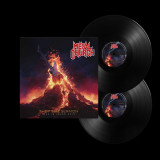
Alles endet. Selbst in den legendären Gefilden des Heavy Metal, wo Mythen und Legenden tagtäglich in die
alltägliche Realität eindringen. Mitglieder und Fans der amerikanischen Metal-Giganten Metal Church wurden
sich dessen schmerzlich bewusst, als sie im Juli 2021 ihren legendären Sänger und Frontmann Mike Howe
verloren. Von 1988 bis 1994 und noch einmal ab 2015 war Howe der Frontmann einer der meistgeliebten und
geschätzten Metal-Institutionen Amerikas und nahm bahnbrechende und essentielle Werke wie "Blessing in
Disguise" und "The Human Factor" auf.
Mike Howe war ein herausragender Sänger, ein charismatischer Frontmann und für viele die Stimme des
amerikanischen Heavy Metal. Am 26. Juli 2021 starb Howe im Alter von 55 Jahren in seinem Haus in Eureka,
Kalifornien. Die Welt hat an diesem Tag eine einzigartige Stimme und ein einzigartiges Talent verloren. Sein
Vermächtnis wird natürlich weiterleben, in seinen vielen Freunden, Anhängern und Fans, in seinen klassischen
Alben und in den Erinnerungen seiner Bandkollegen. Zum dritten Jahrestag seines tragischen Todes wird
Reaper Entertainment seinen eigenen Beitrag zum Gedenkaltar einer wahren Ikone leisten: ein Live-Album mit
dem Titel "The Final Sermon", aufgenommen bei seinen letzten Auftritten - am 24. und 25. August 2019 im Club
Citta in Kawasaki, Japan. "The Final Sermon" zeigt nicht nur Howe auf seinem stimmlichen Höhepunkt, der
singt, schreit und schmettert, als gäbe es buchstäblich kein Morgen, sondern auch eine Band in bestechender
Form. Thrash-Gitarren-Pionier und -Gründer Kurdt Vanderhoof, Gitarrist Rick Van Zandt, Bassist Steve Unger,
Schlagzeuger Stet Howland und Live-Bassist Bobby Ferkovich waren in diesen zwei langen Nächten in Japan in
Hochform, eine eingespielte Metal-Maschine, die zu allem bereit war. 14 Songs unterstreichen ihren Status als
Quintessenz amerikanischer Metal-Overlords, eine Band, die musikalisch alle Register zieht und gleichzeitig eine
politische, sozial bewusste, philosophische Denkweise verkörpert. Aktuelle Knaller wie das furiose
"Damned if you do", Klassiker wie die bedrohliche Riffwand von "Fake Healer" und frühe Klassiker wie "Beyond
the Black" zeigen eine Band, die sich ihrer Vergangenheit bewusst und stolz darauf ist, sich aber in der
Gegenwart wohl fühlt. Dies ist keine Veteranengruppe, die mit vergangenem Ruhm prahlt, sondern eine Band,
die auch vier Jahrzehnte nach ihrer Karriere noch ein hungriges und gefährliches Wolfsrudel ist.
Das ist das Schöne an Metal Church. Die Band wurde 1980 in der aufkeimenden Metalszene der Bay Area
gegründet und ließ sogar Lars Ulrich für den Posten des Schlagzeugers vorspielen, bevor er die Band verließ, um
eine andere Bay Area-Band zu gründen. Ihr Debütalbum "Metal Church" (1984) ist einer der großen Klassiker
des amerikanischen Heavy Metal und begründete eine internationale Karriere. Die Band spielte mit allen
großen Vier des Thrash (Metallica, Slayer, Megadeth, Anthrax), trat bei MTVs "Headbanger's Ball" auf und
prägte die amerikanische Metal-Landschaft wie keine andere. Die Band ist auch heute noch quicklebendig, aber
die legendäre Ära der achtziger und frühen neunziger Jahre wird durch die Spuren, die Sänger Mike Howe in
der Band hinterlassen hat, nie übertroffen werden: "The Final Sermon" ist der lebende Beweis dafür, dass, auch
wenn alle Idole irgendwann fallen, ihr Vermächtnis weiterlebt. Durch uns alle.
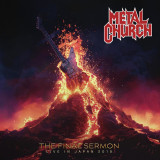
Alles endet. Selbst in den legendären Gefilden des Heavy Metal, wo Mythen und Legenden tagtäglich in die
alltägliche Realität eindringen. Mitglieder und Fans der amerikanischen Metal-Giganten Metal Church wurden
sich dessen schmerzlich bewusst, als sie im Juli 2021 ihren legendären Sänger und Frontmann Mike Howe
verloren. Von 1988 bis 1994 und noch einmal ab 2015 war Howe der Frontmann einer der meistgeliebten und
geschätzten Metal-Institutionen Amerikas und nahm bahnbrechende und essentielle Werke wie "Blessing in
Disguise" und "The Human Factor" auf.
Mike Howe war ein herausragender Sänger, ein charismatischer Frontmann und für viele die Stimme des
amerikanischen Heavy Metal. Am 26. Juli 2021 starb Howe im Alter von 55 Jahren in seinem Haus in Eureka,
Kalifornien. Die Welt hat an diesem Tag eine einzigartige Stimme und ein einzigartiges Talent verloren. Sein
Vermächtnis wird natürlich weiterleben, in seinen vielen Freunden, Anhängern und Fans, in seinen klassischen
Alben und in den Erinnerungen seiner Bandkollegen. Zum dritten Jahrestag seines tragischen Todes wird
Reaper Entertainment seinen eigenen Beitrag zum Gedenkaltar einer wahren Ikone leisten: ein Live-Album mit
dem Titel "The Final Sermon", aufgenommen bei seinen letzten Auftritten - am 24. und 25. August 2019 im Club
Citta in Kawasaki, Japan. "The Final Sermon" zeigt nicht nur Howe auf seinem stimmlichen Höhepunkt, der
singt, schreit und schmettert, als gäbe es buchstäblich kein Morgen, sondern auch eine Band in bestechender
Form. Thrash-Gitarren-Pionier und -Gründer Kurdt Vanderhoof, Gitarrist Rick Van Zandt, Bassist Steve Unger,
Schlagzeuger Stet Howland und Live-Bassist Bobby Ferkovich waren in diesen zwei langen Nächten in Japan in
Hochform, eine eingespielte Metal-Maschine, die zu allem bereit war. 14 Songs unterstreichen ihren Status als
Quintessenz amerikanischer Metal-Overlords, eine Band, die musikalisch alle Register zieht und gleichzeitig eine
politische, sozial bewusste, philosophische Denkweise verkörpert. Aktuelle Knaller wie das furiose
"Damned if you do", Klassiker wie die bedrohliche Riffwand von "Fake Healer" und frühe Klassiker wie "Beyond
the Black" zeigen eine Band, die sich ihrer Vergangenheit bewusst und stolz darauf ist, sich aber in der
Gegenwart wohl fühlt. Dies ist keine Veteranengruppe, die mit vergangenem Ruhm prahlt, sondern eine Band,
die auch vier Jahrzehnte nach ihrer Karriere noch ein hungriges und gefährliches Wolfsrudel ist.
Das ist das Schöne an Metal Church. Die Band wurde 1980 in der aufkeimenden Metalszene der Bay Area
gegründet und ließ sogar Lars Ulrich für den Posten des Schlagzeugers vorspielen, bevor er die Band verließ, um
eine andere Bay Area-Band zu gründen. Ihr Debütalbum "Metal Church" (1984) ist einer der großen Klassiker
des amerikanischen Heavy Metal und begründete eine internationale Karriere. Die Band spielte mit allen
großen Vier des Thrash (Metallica, Slayer, Megadeth, Anthrax), trat bei MTVs "Headbanger's Ball" auf und
prägte die amerikanische Metal-Landschaft wie keine andere. Die Band ist auch heute noch quicklebendig, aber
die legendäre Ära der achtziger und frühen neunziger Jahre wird durch die Spuren, die Sänger Mike Howe in
der Band hinterlassen hat, nie übertroffen werden: "The Final Sermon" ist der lebende Beweis dafür, dass, auch
wenn alle Idole irgendwann fallen, ihr Vermächtnis weiterlebt. Durch uns alle.

LOS ANGELES—To celebrate the 40th anniversary of the celebrated Talking Heads and Jonathan Demme’s concert film Stop Making Sense, the set will be re-released as a 2LP and 2CD/Blu-ray set this summer.
Released last year, the sold-out Deluxe Edition of the soundtrack will return as a 2-LP black vinyl on Rhino and 2-LP crystal clear vinyl at retail. Both variants feature a 12-page booklet with liner notes from all four band members –Tina Weymouth, David Byrne, Chris Frantz, and Jerry Harrison—and band photos. The 2CD/Blu-ray version includes the entire 28-page booklet from last year’s Deluxe Edition and a Dolby Atmos mix of the complete concert, mixed by Jerry Harrison and E.T. Thorngren, who also mixed the original release. Both will be available on July 26. Pre-order now.
The band appeared together for a sold-out screening and Q&A last night at the Pantages Theater, the same theater at which Stop Making Sense was recorded. They were joined by Blondshell, who performed “Thank You For Sending Me an Angel.” Another special screening with the band will occur in Brooklyn at the King’s Theater on June 13, with the Q&A hosted by Questlove and The Linda Linda’s performing “Found a Job.” The two events cap off a banner year of celebrations for what many consider to be the best concert film of all time.
The inspiration for Stop Making Sense came when director Jonathan Demme saw Talking Heads perform during the band’s 1983 tour for Speaking in Tongues. Afterward, he approached them with the idea of making the show into a concert film. They agreed and worked together over the next few months to finalize the details. Ultimately, Demme filmed three shows at Hollywood’s Pantages Theater in December 1983 to create Stop Making Sense.
The concert film presents a retrospective of the band up to that point, with a performance that weaves together songs from all six of its studio albums. The show progresses methodically, opening with Byrne onstage performing “Psycho Killer” alone with a drum machine. After each song, he’s joined by a new band member until Weymouth, Frantz, and Harrison are all on stage with him. The group continues to grow throughout the concert as members of the stellar touring band are added: keyboardist Bernie Worrell, percussionist Steve Scales, guitarist Alex Weir, and backup singers Lynn Mabry and Ednah Holt.
The band performs 18 songs in Stop Making Sense, including its recent single at the time, “Burning Down The House.” That summer, the song was in heavy rotation on radio and MTV, helping the song become the band’s first top 10 hit in America. It was, however, a different song from Speaking in Tongues that was destined to deliver one of the film’s signature moments. Talking Heads would perform “Girlfriend Is Better” wearing the now iconic, oversized suit inspired by costumes worn in traditional Japanese theater. For good measure, a picture of David Byrne in the suit also graces the album cover.
Stop Making Sense focuses mainly on music by Talking Heads but does include a few songs recorded outside the band: “Genius Of Love” by Tom Tom Club, “What A Day That Was” and “Big Business” from Byrne’s 1981 album, The Catherine Wheel. Limited edition vinyl versions of both of these albums, along with Harrison’s The Red And The Black, were released for this year’s Record Store Day.
When it arrived in September 1984, Stop Making Sense was an artistic and commercial triumph. The film had people dancing in theatre aisles, and the soundtrack sold over two million copies. Just last year, the Library of Congress added Stop Making Sense to the National Film Registry in recognition of its cultural, historical, and aesthetic significance.
Weymouth praises Demme as a collaborator: “…Jonathan was a very enthusiastic, highly adaptive, and imaginative guy who was just as good a listener as he was a talker and collaborator. From the get-go you just got the impression he was as flexible as he was disciplined. Being team players, that boded well for a great relationship and a great film!”
Harrison says the film still holds up today: “To me, Stop Making Sense has remained relevant because the staging and lighting techniques could have been created in a much earlier time period. For example, Vari-Lights, lights with motors to re-aim them, had just come into vogue. Had we used them, there would have been a timestamp on the film, and it eventually would have felt dated...The absence of interviews, combined with the elegant and timeless lighting, created a film that can be watched over and over.”
Byrne says it’s interesting that this album was – for many people – an introduction to Talking Heads. “We had done a live album before this, but coupled with the film, and with the improved mixes and sound quality, this record reached a whole new audience. As often happens, the songs got an added energy when we performed them live and were inspired by having an audience. In many ways, these versions are more exciting than the studio recordings, so maybe that’s why a lot of folks discovered us via this record.”
Frantz recalls the sheer joy surrounding the entire Stop Making Sense experience. “I’m talking about real, conscious, transcendent joy… I’m talking about what the Southern gospel people call ‘getting happy,’ which means ‘to be filled with the Spirit.’ That is what happened to us onstage every night, and from my seat behind the drums, I recognized that this was happening to the audience too. Joy was visible in front of me and all around me every night.”

"Are Possible" is a spark-throwing, undulating fusion of styles played (mainly) on banjo, upright bass and drums, made possible by the individual perspectives of Nathan, double-bassist Casey Toll (Jake Xerxes Fussell, Mt. Moriah) and drummer Rex McMurray (CAVE) work together in an easy-rolling manner, but one that contains an expansive, ass-shaking confabulation of ideas. Music is time in redux: Are Possible"s many moments in time carry details from all over the place. Rex brought a rhythm to the table after drumming on buckets at work, Casey provided a bassline that redirected a previous jam, Nathan brought in a song he"d been fucking with forever and they figured it out together. Their diversity of sources moves easily within the arrangements, rendering a far-ranging set of feels, from transcendental to new country funk to good ol" jazz and the folk-rock, even - all of it drawn out exquisitely when they mixed at Electrical Audio in Chicago with the delicate hands of Cooper Crain upon the faders. The Nathan Bowles Trio have done their due diligence, passing their music through time and space on their way to now.

Chapter number 8 in the Yellow Jackets book is ready to go and will please a whole range of music lovers!
Legendary visionary artist Joe Claussell strengthens up his relationship with Mother Tongue check the MT distributed Sacred Medicine label that he curates with Ron Trent serving here a piece of cosmic mind bending fusion entitled ‘"Erratic Telepathy".
On the flipside Josh Milan’s anthemic remix of Ricky Corey Collective "Who Do You Love?’" gets the Patrick Gibin’s Edit treatment and it’s got the name ‘Future Dancefloor Classic’ written all over it! Courtesy of NDATL Muzik
Don’t fear the Sound!

LOS ANGELES—To celebrate the 40th anniversary of the celebrated Talking Heads and Jonathan Demme’s concert film Stop Making Sense, the set will be re-released as a 2LP and 2CD/Blu-ray set this summer.
Released last year, the sold-out Deluxe Edition of the soundtrack will return as a 2-LP black vinyl on Rhino and 2-LP crystal clear vinyl at retail. Both variants feature a 12-page booklet with liner notes from all four band members –Tina Weymouth, David Byrne, Chris Frantz, and Jerry Harrison—and band photos. The 2CD/Blu-ray version includes the entire 28-page booklet from last year’s Deluxe Edition and a Dolby Atmos mix of the complete concert, mixed by Jerry Harrison and E.T. Thorngren, who also mixed the original release. Both will be available on July 26. Pre-order now.
The band appeared together for a sold-out screening and Q&A last night at the Pantages Theater, the same theater at which Stop Making Sense was recorded. They were joined by Blondshell, who performed “Thank You For Sending Me an Angel.” Another special screening with the band will occur in Brooklyn at the King’s Theater on June 13, with the Q&A hosted by Questlove and The Linda Linda’s performing “Found a Job.” The two events cap off a banner year of celebrations for what many consider to be the best concert film of all time.
The inspiration for Stop Making Sense came when director Jonathan Demme saw Talking Heads perform during the band’s 1983 tour for Speaking in Tongues. Afterward, he approached them with the idea of making the show into a concert film. They agreed and worked together over the next few months to finalize the details. Ultimately, Demme filmed three shows at Hollywood’s Pantages Theater in December 1983 to create Stop Making Sense.
The concert film presents a retrospective of the band up to that point, with a performance that weaves together songs from all six of its studio albums. The show progresses methodically, opening with Byrne onstage performing “Psycho Killer” alone with a drum machine. After each song, he’s joined by a new band member until Weymouth, Frantz, and Harrison are all on stage with him. The group continues to grow throughout the concert as members of the stellar touring band are added: keyboardist Bernie Worrell, percussionist Steve Scales, guitarist Alex Weir, and backup singers Lynn Mabry and Ednah Holt.
The band performs 18 songs in Stop Making Sense, including its recent single at the time, “Burning Down The House.” That summer, the song was in heavy rotation on radio and MTV, helping the song become the band’s first top 10 hit in America. It was, however, a different song from Speaking in Tongues that was destined to deliver one of the film’s signature moments. Talking Heads would perform “Girlfriend Is Better” wearing the now iconic, oversized suit inspired by costumes worn in traditional Japanese theater. For good measure, a picture of David Byrne in the suit also graces the album cover.
Stop Making Sense focuses mainly on music by Talking Heads but does include a few songs recorded outside the band: “Genius Of Love” by Tom Tom Club, “What A Day That Was” and “Big Business” from Byrne’s 1981 album, The Catherine Wheel. Limited edition vinyl versions of both of these albums, along with Harrison’s The Red And The Black, were released for this year’s Record Store Day.
When it arrived in September 1984, Stop Making Sense was an artistic and commercial triumph. The film had people dancing in theatre aisles, and the soundtrack sold over two million copies. Just last year, the Library of Congress added Stop Making Sense to the National Film Registry in recognition of its cultural, historical, and aesthetic significance.
Weymouth praises Demme as a collaborator: “…Jonathan was a very enthusiastic, highly adaptive, and imaginative guy who was just as good a listener as he was a talker and collaborator. From the get-go you just got the impression he was as flexible as he was disciplined. Being team players, that boded well for a great relationship and a great film!”
Harrison says the film still holds up today: “To me, Stop Making Sense has remained relevant because the staging and lighting techniques could have been created in a much earlier time period. For example, Vari-Lights, lights with motors to re-aim them, had just come into vogue. Had we used them, there would have been a timestamp on the film, and it eventually would have felt dated...The absence of interviews, combined with the elegant and timeless lighting, created a film that can be watched over and over.”
Byrne says it’s interesting that this album was – for many people – an introduction to Talking Heads. “We had done a live album before this, but coupled with the film, and with the improved mixes and sound quality, this record reached a whole new audience. As often happens, the songs got an added energy when we performed them live and were inspired by having an audience. In many ways, these versions are more exciting than the studio recordings, so maybe that’s why a lot of folks discovered us via this record.”
Frantz recalls the sheer joy surrounding the entire Stop Making Sense experience. “I’m talking about real, conscious, transcendent joy… I’m talking about what the Southern gospel people call ‘getting happy,’ which means ‘to be filled with the Spirit.’ That is what happened to us onstage every night, and from my seat behind the drums, I recognized that this was happening to the audience too. Joy was visible in front of me and all around me every night.”


After a hiatus of a few years to concentrate on various studio projects, Steevio’s Mindtours label is back with a vinyl release over 2 volumes, pressed on bio-vinyl at the carbon neutral pressing plant Deepgrooves.
Dod yn ôl at fy nghoed (which is Welsh for ‘to return to my trees’ meaning to return to balanced state of mind) sees Steevio experimenting with deep, broken-beat bass techno awash with polymetric rhythms and jazz infused chord structures. Steevio’s musical approach has in recent years become more free-form, with loose mathematical frameworks, evading clear generic boundaries, and this release continues and expands on that theme.
All tracks were recorded live and improvised from a blank canvas in real-time on an analogue modular synthesizer.
Vol. 1 was all recorded during Covid lockdown and represents some the best material from jams from that period. All tracks were recorded live and improvised from a blank canvas in real-time on an analogue modular synthesizer.
Vol. 2 to be released 1 month after.

