Enigmatic producer RNDTXTR debuts on Rekids with a deep techno three tracker entitled‘Random EP’ this September.
“Some tracks just stick with you. They never leave your box, or in this case USB, and I’ve been playing these tracks from RNDTXTR for well over two years. Everywhere from Tokyo to Berlin. These have a universal appeal, being hypnotic and just the right balance between pushy club sounds and spatial melodies” - Radio Slave
Shrouded in murky atmospherics, ‘RND009’ opens the package with rigorous drums, shuffling shakers, sweeping pads and scintillating synths. ‘RND007 (Dub Mix)’ continues with a similar cantering rhythm as various rattling percussive elements work alongside clever automation for a tracky cut designed to lock listeners into a trance. Concluding matters, ‘RND004’ is the wonkiest number on the package with its syncopated groove and otherworldly melody.
Buscar:mu el
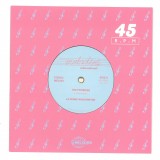
ATA's newest release comes from The Yorkshire Film & Television Orchestra and features the vocal talents of Bugalu Foundation & Mind On Fire vocalist Martin Connor. This cover of the Georgie Fame classic "Somebody Stole My Thunder" features a powerhouse vocal performance from Martin Connor alongside the heavyweight big band brass sound of the Yorkshire Film & Television Orchestra's 10 piece horn section. This 7" single is backed with Rachel Modest's debut recording for the label, her intense vocal rendition of the Ben E King classic "I Who Have Nothing". Both tracks feature the trademark elements of the ATA sound: Big brass arrangements sit alongside the propulsive rhythm section, perfectly supporting both singers incredible performances.
Originally appearing as part of ATA Records free download series "Hard Work, No Pay" these 2 tracks have been sought after on vinyl for some time after garnering radio play and positive responses from BBC6 Music's Craig Charles Funk & Soul Show and the Huey Morgan show.
The Yorkshire Film And Television Orchestra is the brainchild of ATA founders Neil Innes & Pete Williams and multi-instrumentalist/arranger Steve Parry, who was approached by Neil & Pete in 2014 to provide the horn arrangements and brass performances for a then untitled British library style track intended for release as a 45. That track went on to become the track "Hawkshaw Philly" and features on the compilation "Early Works: Funk, Soul & Afro Rarities From The Archives" released earlier this year. Their shared love of huge big band arrangements and British library music ensured future collaborations, notably on this year's "ATA Records: The Library Archive Vol. 1".
Martin Connor is a well known face to anyone familiar with the Mancherster music scene and has spent 10 years as part of the Manchester collective "Mind On Fire" before providing vocals for the Latin-Funk band Bugalu Foundation (Legere Recordings).
Sheffield born,Rachel Modest developed her unique vocal ability within the churches and gospel choirs of her local community. Now based in Leeds she has developed a powerful and soulful vocal style that takes inspiration from artists such as Madeleine Bell, Dee Dee Warwick, and Dusty Springfield. Her debut for the label was this cover of the Ben E King classic "I, Who Have Nothing", which was later followed by an appearance on the debut 45 by The Magnificent Tape Band "Patterns in My Mind"and her own solo 45 "I Try/Forbidden Love", as well as collaborating with The Magnificent Tape Band on their debut LP "The Subtle Art Of Distraction" all of which received radio support from the likes of Gilles Peterson (BBC6 Music), Huey Morgan (BBC6 Music/Radio 2) and Lauren Laverne (BBC6 Music).
No Tengas Miedo' es un disco que se gestó durante los recientes tiempos de pandemia y que nos hace recordar que no debemos de tener miedo de vivir ni de morir, que tenemos que replantear las formas de vida que teníamos antes de que todo el mundo se detuviera pero que sigue siendo un privilegio seguir vivos. Creemos que esta es
una nueva oportunidad de remediar todos los daños que le hemos hecho a la Madre Tierra, a nuestro cuerpo, a nuestra alma, a nuestros semejantes. Creemos que debemos de tener fe y esperanza en el humano, aún cuando nuestros gobernantes nos dan demasiados motivos para creer lo contrario gracias a sus acciones (y sus inacciones). Todos enfrentamos diferentes obstáculos en nuestras vidas, pero debemos de saber que no estamos solos, que nos tenemos los unos a los otros, todos como hermanos y hermanas, sin banderas ni fronteras. Muchas veces pensé en no realizar este disco por el miedo que la sociedad y gobiernos nos inculcan a siempre esperar los peores escenarios, pero estoy harto de vivir con miedo, de vivir aguantándome las ganas de averiguar lo que puede ser o no ser. Además, desde que yo recuerdo, mis abuelos ya hablaba de crisis, mis padres también, y siempre hemos sabido salir adelante, porque nuestro espirítu es más fuerte que todos sus intentos por derribarnos. He decidido que no voy a parar de luchar por lo que quiero hasta el último día de mi vida. Queremos que todo aquel que compre este disco sienta el mismo espíritu con el que fue hecho y quenos ayude a esparcir la esperanza y fe que tanta falta le hace al mundo. Queremos salir adelante junto con todos ustedes, hombro a hombro, corazón con corazón.
Over the years, the sonic world of Heist has grown into a place where energetic house, live instruments and worldly electronics move together in the most natural way. We're very proud of the fact that we can showcase artists that cross boundaries or simply create their own universe, while keeping a strong connection with the identity of the label.
Our next release, the 'Exposures EP' by Teleseen, fits perfectly into this aesthetic. Teleseen is the main project of nomadic DJ, producer and multi-instrumentalist Gabriel Cyr and draws influence from deep house, afro house, samba, batucada as well as the experimentalism and sound system cultures of his home town NYC. His sound leans heavily on polyrhythmic programming and he's nothing short of a synth wizard. His 'Exposures EP' features 3 originals, and a remix by Berlin based Italian house guru Black Loops.
The record features a number of collaborators and recordings of various instruments, ranging from percussive sections to synths and guitar. This live approach to electronic music is one that is deeply rooted into Gabriel's work. His upcoming release on Soundway as 'Thaba' is another good example of this approach and also shows how diverse his sounds really is.
The title track is a thrilling synth affair with tribal-like chants running through a vocoder. The combination of handclaps, crunchy synths and steady drums make for a thrilling afro house track that hints towards early motor city electronics.
Black Loops is known for his deep grooves and built his fame with his releases on Freerange, Pets and Shall not Fade. His take on 'Exposures' sees him upping the tempo to a pacey 130 bpm, where an introvert vibe of reverbed hits and bleeps take you into full dream mode. He expertly chops up the original into a contemporary track that fits somewhere between high tempo tech-house and minimalistic deephouse.
On the flip we get to hear more of the sonic world Teleseen has to offer. 'Dekalb' is a track that seems impossible to box into a genre. Its mood is set by a lovely section of free-flowing Rhodes chords and the chopped vocals and open synth- bass give the track a whole new feel. It is that ballsy electronic edge combined with dreamy textures and live rhythms that give 'Dekalb' its unique vibe.
The final track of the EP -'Transfer'- takes us down to a mid-tempo percussive workout with a balearic twist. The steady electronic groove and the free flowing guitar take you to yet another corner of Teleseen's beautifully crafted universe.
Enjoy the music and play it loud!
Yours Sincerely,
Lars & Maarten
Red Vinyl
With this three-cut EP, Andy Vaz pays tribute to Choutsugai, a Deep House DJ-and-promoter crew who booked him for many years of Tokyo gigs. Inspired by the unit’s love for “No Fairytale Luv feat. Detroit’s Eva Soul on Vocals.” Vaz decided to put it out as red transparent vinyl for VAZ-UP-001The two originals Tracks were created at Deutztroit Studios in Cologne, with vocals by Detroit’s Eva Soul on all three and “No Fairytale Luv” receiving a charged remix treatment from fellow Detroiter Niko Marks. The EP’s sound is classic Vaz, his own productions especially. The original “No Fairytale Luv"struts mightily, its pumping groove bolting from the gate with an acidy bass pulse, congas, and sparkling synths. With Soul draping her, yes, soulful musings over the energized groove, the gurgling floor-filler indelibly brands itself as Vaz’s craftsmanship. “U Got It Unlocked” is less urgent by comparison, this one more focused on a relaxed, funk-inflected swing given a subtle Latin feel with the addition of percussive accents. Soul again muses dreamily, though this time in a production that’s as much electronic reverie as club track. Of the three cuts, the EP’s primary house banger is undoubtedly Marks’s “No Fairytale Luv” makeover, which stomps even more forcefully. This one is a floorfiller
2LP Over the past decade, SUED co-founder SW. has arranged the building blocks of dreamy rave and techno music-billowing pads, undulating sub-bass and adroit, nuanced drum programming-into and novel dance floor structures. TRUElipS, SW.’s first full album since 2016 and his first for Avenue 66, is a beguiling, fully-realised statement. The 12-track LP is rooted in the storied ’90s era when the spirit of orbital raves and free parties was channeled into massive leaps forward in the studio. A combination of house and drum & bass looms large, as does the much-referenced intelligent techno era, but if you’ve listened to an SW. record, you already know TRUElipS is the work of a singular auteur. Breakbeats, rave stabs and major chords permeate the album, motoring along on a chassis of sine-wave bass lines and SW’s widescreen percussive vision. Forays into downtempo and sweeping ambience keep the listener’s head in the clouds, while the superb melodic techno constructions that comprise the album’s core are at once contemplative and liable to bring on a giddy head rush. TRUElipS brims with the optimistic, escapist spirit that fueled dance music’s original triumph, a throwback to bright, imagined futures.
Good Vids, Vile Times is the second album by Ant Antic. Its central themes are the never-ending flood of information and its effects on us. The Berlin-based singer and producer Tobias Koett wraps serious questions into radiant pop songs. What does constant bombardment of information do to us? What's lost along the way?
On his new album, Ant Antic observes the emotional power of media and information. The helplessness we feel in the face of predominantly bad news and the growing inability to take pleasure in good news. The way an overload of junk information leaves no mental capacity for real social connections. As a child of the first globally connected generation, he witnesses geographical boundaries dissolve and people consider humanity as one. At the same time, everyone seems to struggle to come to terms with a reality overflowing with possibilities. Slowly, we collectively turn into superficial nihilists.
"When I wrote my first album Wealth I looked inward to examine my own emotions, asking myself "How do I really feel?". For Good Vids, Vile Times I was focusing less on the how and more on the question of why. "Why do I feel that way?"", Tobias explains the creative writing process behind his second album as Ant Antic.
"I'm a bag of hot air / Push me up density / Feel like a millionaire / Don't bring me down gravity", he admits on the single Yellow Press. Referencing the album's cover artwork by Austrian photographer Erli Grünzweil, Tobias describes how it feels to advertise his own life to other people - when behind the meticulously crafted presentation, there's sometimes nothing left but emptiness and anxiety.
Good Vids, Vile Times is an album rich in variety, ranging from indie-pop to contemporary R&B. In stark contrast to the somber tone of the lyrics, the songs radiate a cheerful liveliness. Fueled by analog synthesizers and an electric guitar often not discernible as such, the record builds on Ant Antic's signature sound. It's all Tobias on Good Vids, Vile Times - writing songs, recording vocals, guitars and synths, all the way to production and mixing. Essential elements and ideas are put into focus by getting rid of everything else. At the same time, the new album sees singer and producer Tobias openly flirting with pop, exploring new sounds and aesthetics, and maturing musically and lyrically. No song is alike, each one tells an honest and relatable story - all held together by the magic glue that is Tobias' distinctive voice, which might stay with you forever.
Nimbus Sextet are a major new talent on the UK jazz scene. Led by pianist/keyboardist Joe Nichols, the Glaswegian contemporary jazz outfit play infectiously original music that spans the musical spectrum. Nimbus Sextet’s fresh take on jazz blends instantly relatable melodic hooks with driving grooves, sophisticated musicianship and episodic compositions.
The core of the Nimbus Sextet sound comes courtesy of Joe with long-time collaborators Alex Palmer and Mischa Stevens. The trio met while studying at Edinburgh University and have continued to perform together ever since. Nimbus Sextet was fully formed in 2018 with the addition of Martin Fell and Euan Allardice joining the line-up with James Mackay arriving later.
It was around this point the band started to compose and record the first shoots of what would become Nimbus Sextet’s blend. A decidedly wellbalanced alchemy, arrived at somewhat naturally
by way of the varied musical influences and contributions from each of its culturally diverse members. You’re as likely to hear elements of
Herbie Hancock and Gil Scott-Heron as easily as The Roots and Robert Glasper.
- A1: The Drowners
- A2: Metal Mickey
- A3: Animal Nitrate
- A4: So Young
- A5: Stay Together (Long Version)
- B1: We Are The Pigs
- B2: The Wild Ones
- B3: New Generation
- B4: Trash
- B5: Filmstar
- C1: Lazy
- C2: Beautiful Ones
- C3: Saturday Night
- C4: Electricity
- C5: She’s In Fashion
- D1: Everything Will Flow
- D2: Can’t Get Enough
- D3: Obsessions
- D4: Barriers
- D5: It Starts And Ends With You
- E1: For The Strangers
- E2: Outsiders
- E3: Wastelands
- E4: Life Is Golden
- F2: My Insatiable One
- F3: He's Dead
- F4: The Big Time
- G1: Pantomime Horse
- G2: Sleeping Pills
- G3: The Next Life
- G4: High Rising
- H1: My Dark Star
- H2: The Living Dead
- H3: Killing Of A Flashboy
- H4: Heroine
- H5: This Hollywood Life
- I1: The 2 Of Us
- I2: The Asphalt World
- I3: Still Life
- J1: Europe Is Our Playground(Sci-Fi Lullabies Version)
- J2: She
- J3: By The Sea
- J4: He’s Gone
- J5: Indian Strings
- J6: Oceans
- K1: Snowblind
- K2: Sabotage
- K3: Sometimes I Feel I'll Float Away
- K4: Pale Snow
- K5: I Don’t Know How To Reach You
- E5: The Invisibles
- L1: Tightrope
- L2: As One
- L3: All The Wild Places
- L4: Flytipping
- F1: To The Birds
From their early singles and their 1993 Mercury Music Prize winning debut album to their break up in 2003 , Suede were a fixture in the single and album charts , and in the music press too . They scored twenty hit singles and five hit albums (three of which debuted at # 1), and a double album of B sides even charted at # 9.
The band reformed for a one off charity concert in 2010 and decided to make it permanent they have released three new studio albums since 2013 .
Compiled by the band , this comprehensive six LP set features the huge 90s hits like “Metal Mickey”, “Animal Nitrate”, “Stay Together”, “Trash, “Filmstar”, “Lazy”, “Beautiful Ones”, “Saturday Night”, “Electricity”, “She’s In Fashion”, “Everything Will Flow” and “Can’t Get Enough”Enough”, along with favourite B sides like “To The Birds”, “My Insatiable One” and “Killing Of A Flashboy”Flashboy”. Also featured are classic album tracks like “The Asphalt World” and “He’s Gone”. The collection brings the story up to date with sixteen tracks from the three recent albums , including “Life Is Golden”, “It Starts And Ends With You” and “ Outsiders”.
The six LPs are pressed on 180 gram white vinyl and are housed in inner sleeves featuring all the lyrics as well as photos of dozens and dozens of items of Suede memorabilia and promotional items , all lent by fans.
‘Evolve’ is the first full length album from composer, music producer and violinist Vito Gatto, a concept album that guides the listener on a one-way journey through the various phases of an imaginary evolutionary process. Gatto graduated in Violin from the Milan Conservatory of Music, his research starts from the unconventional application of a classical background into both making music in the studio, and live performances. For this work, Vito decided to put himself in a restricted composing and technical environment; all the arpeggiated sounds on the album are made from one single violin note that Vito sampled. He transforms the same note throughout the entire album, using the different treatment of this micro sample and the arpeggiator programming as the construction of a mutating and evolving structure. The album is Instinctively executed, almost improvised, and elements like distorted bass lines, hardcore inspired percussions, whistles and alienating string melodies represent unexpected alterations. Vito decided to keep these instinctive additions clean from excessive control as a representation of the beauty of the unpredictable. The album track list is an expression of evolutionary phases. From the minimalistic piano piece ‘Decomposition’ to ‘Quiete’ which expresses the state of calm after a shift has occurred, ‘Nostalgia’ and ‘Stasi’ represent a hazy trance like state. Vito challenges the listener to ask questions like ’am I in the right place? Is this who I set out to become? Do I have to keep evolving, or should I try to regress?’ ‘Evolve’ creates continuous connections between traditional and experimental music, creating dialogue between classical instruments and industrial techno, ambient, noise and de-constructed sounds. The Album will be released in both digital and vinyl formats via NeMu, a fresh new label founded by Vito Gatto himself. The label will focus on experimental projects based on the exchange between acoustic, concrete and electronic sources. The Artwork is part of ‘Jewels’, a series of ceramic sculptures by Benni Bosetto, courtesy of the artist and ADA Project, Rome
Neotnas feat. Philosopher is a new collab of electronic music producers from Russia (Chelyabinsk and Moscow accordingly). As the environment of the cities mentioned as well as social milieu vary significantly a profound personal reflection of the artists results in a very specific outlook sculpted by both history and presence of Russia – a surprisingly nice stuff inspired mainly by jazz, ambient and trip-hop. Four new tracks give a deep insight into the way the artists feel the groove and associate it within a dancefloor culture regarding its roots and worldwide influence. Two of them (Jazz Engine and You're Mine) – are 124 BPM house party cuts place all the emphasis on intensively syncopated TR-808 hi-hats layered with properly selected percussive jazz elements and flavored with brass licks and reverbed chords, catchy vox and driving by a grit kick and pumping low bass patterns. Another one (Spirits Of A Dawn) cautiously takes a listener to a personal journey to the edge of an imaginary big city, leaving its downtown, and moving out of the night shade slowly, coming near a sleepy morning glimmering focusing on a light sparks of a new day. The last but not the least track (Traffic Love) is a dense powerful banger galvanizes trip-hop beats and house chords with a lush and mystic 90`s female vocal all together aimed to stir up a crowd on a dancefloor and make them wet and happy. This release – fresh and diverse – will definitely hits it off with a large audience and joins a marketplace properly.
'Ianua' is the stage name of Filippo Midali, a 360 degrees electronic musician that sweeps primarily from techno, electro, breaks, jungle to Chicago footwork with a stable contamination from HipHop culture and scratch, the art of vinyl manipulation.
The self-titled album, his debut album, fully represents this, moving from track to track between various musical genres. The name 'Ianua', 'door' in Latin, comes from the idea of the multiverse and inter-dimensional doors; this is depicted on the cover, on which the front represents the door distorted by the journey through space and time and the back, together with the titles, the sketches and formulas of the presumed door- building scientist.
Trouble, the aptly named new album on Goner Records, is a confident and joy-filled statement delivering the good-news gospel message unapologetically through music influenced by Ray Charles, Junior Kimbrough, Bill Withers and of course, his father.
Recorded at legendary Royal Studios in Memphis by Lawrence “Boo” Mitchell (Al Green, Solomon Burke, John Mayer, Buddy Guy, Mark Ronson & Bruno Mars, North Mississippi Allstars), Trouble is the culmination of everything in Rev. Wilkins’s remarkable life, his regional history, his family music history. And in a world once again riven with discord and division, like the Memphis of Wilkins’ youth in the 1960’s, Trouble delivers passionate and confident musical performances with a message of hope that meets our present moment equal to the best music from that earlier era.
To call the Reverend John Wilkins a national treasure would not be an overstatement. He is the son of pre-war blues/folk-revival legend Reverend Robert Wilkins and he leads one of the most exciting and uplifting musical acts on the blues and gospel circuit today. His multiracial, multi-generational band blends soul, southern gospel and hill country rhythm, into a sound that has the infectious drive of hill country blues with the emotional heights of a summer tent revival.
Following in the footsteps of his famous father Rev. Robert Wilkins, a blues-singer turned preacher who went from the juke joint to the pulpit, the life of Rev. John Wilkins took a similar path, echoing the story of the elder Wilkins’ most famous song, “Prodigal Son.”
But in 2020 John Wilkins’ life has been closer to a different iconic bible character, Lazarus, as he has miraculously risen after surviving a month-long stay in intensive care battling Covid19 in a Memphis hospital. As Rev. Wilkins sings on the closing track of his forthcoming album, “I’ve come through the storm and rain, I’ve come through the storm and rain, and I made it!”
And there is much to celebrate with this resurrection.
“Joe McPhee is a legend of modern music, which from the release of the classic "Nation Time" album almost 50 years ago has had an incredibly diverse career that's spanned a wide range of expressions, from jazz and improvised music to experimental and electronic free music. McPhee's life in music could basically be read as a map of leftfield music of our time, but after all these years he refuses to stand still or lock back with any sense of nostalgia.
After 30 years of making electronic music Lasse Marhaug is now synonymous with Norwegian noise music, with hundreds of releases and countless collaborations and projects to his name, including music for film, theatre and dance. In the last ten years he has also made a name as a producer for other artists, including Jenny Hval and Okkyung Lee.
McPhee and Marhaug has known each other since the early 2000s, but only in 2015 did they find time to record together as a duo. The result is "Harmonia Macrocosmica", an album that the two considers a science fiction inspired work. For McPhee it can be read in the linage of his 70s work with John Snyder, as well as collaborations with Pauline Oliveros and the Nihilist Spams Band. Marhaug of course is well versed in this field, but McPhee's sax and voice puts his electronics in a whole new perspective. The pair also found inspiration in early electronic music and vintage science fiction films, with McPhee describing going to the cinema in the 50s as a kid to see "Forbidden Planet" and being blown away by its electronic score as the start of a lifelong love of cosmic music.”
Vanish is Julia Reidy’s yearning, fat debut for Editions Mego. Since 2019, Julia’s bubbling 12-string guitar work - sighing streams of crystal plucks drawn closer or echoing on - has moored a tactile, ever-lusher sound. On ‘Guitar’, the Australian, Berlin-based musician melts down sharp synths; electric fuzz and flex; uncanny found sounds; and autotuned voice and harmonica in a heady, overpowering potion.
Reidy’s music sweeps you up. It’s restless, always travelling on. Lonesome tones into machine chorales into hesitant hum. The LP’s side-long cuts sway between scenes but are always rooted: Julia’s guitar and vocal lines seem mapped to the natural ebb and flow of breath and thought, they lull you as they push through vast and secret spaces.
Vanish completes a trio of releases begun with last year’s ‘brace, brace’ (Slip) and ‘In Real Life’ (Black Truffle). The delicious unease, the anxious burning of the preceding volumes has settled, becoming more wide-eyed and resolute. For all its poise, the album’s sense of build - electric licks rasping into glistening synths, punctured by distant kicks - feels freshest. When 'Oh Boy'’s smudged whistle comes, it has fought its way out of the thickets, and hits like heartbreak.
Following the first episode, Drivecom presents the second part of the Generative Operations series. It continues with the dark,
technical and minimal concept of music mixed toguether with contemporary, cinematic elements and experimental sounds and textures.
The vision and workflow keeps up the same vibe as with the first ep and you will find more synth lines involved into a generative structure from complex and massive modular patches. The sequencing is always different each time every track is being played back giving us a unique listening.
About the sound design all the tracks have a cinematic vibe as in the first 12”. Always looking for a situation where cinema meets electronic music as being planned as a film sound track. Also constructed from the point of view of a minimalistic vision, you’ll find long progressions and small details focused in electro rhythms as a basic and main structure.
In the other hand all the tracks have a common target: a cinematic vibe. As if they were composed thinking about to fit in any sci-fi thriller movie. Again we can hear massive granular sythesis pads, background noises, experimental compression routines that help to fullfill the Generative Operation series.
The limited edition vinyl has been pressed in 180gr. keeping up the analog character sound in this format, meanwhile the digital version will be a clearer and clinical one.
"Minor Planets completes a trilogy of cosmically themed electro-acoustic albums by UK and Berlin based trio Twinkle3, 15 years in the making. This third installment is once again all about the unique synergies the group discover in combining free group improvisation with studio and musique-concrete techniques. The group's combined love of everything from Lee Perry to Noh Theatre via Karlheinz Stockhausen and King Sunny Ade lead them to respond musically to create a single universe where they all coexist and interact. Aleatoric analogue sequencing, chamber-like acoustic improvisation and dub treatments become distilled into a distinct and emotive narrative that takes us on an exhilarating hyperspace cruise to the outer reaches.
Clive Bell is a virtuoso of the Shakuhachi. His aesthetic takes us on a timbral journey between noise and pitch, expressed and phrased rhythmically by the contour of human breath. This creates a perfect context and focus for a music that moves seamlessly between rhythm, suspension, time modulated analogue states, dissonance and melody. Richard Scott and David Ross share a background in acoustic free improvisation and have pioneered new approaches to rhythm using self-designed analogue systems. On Minor Planets these seemingly paradoxical orthodoxies cross-pollinate in a spirit of wonder and optimism to produce original and experimental music that is both life affirming and uplifting.
Album artwork by Benjmain Kilchhofer captures the feeling of peering through the vacuum of space and catching a rare glimpse of the mysterious alien biomes, fossils, and silhouettes cast by dwarf planets, asteroids, Kuiper belt, and other trans-Neptunian objects."
An exchange between several voices of African artists (the Congolese Flamme on guitar, the late Cameroonian Hilaire Penda on bass, the Beninese Angélique Kidjo on vocals, and the dj singer producer
from South Africa Mo Laudi on the mike) gathered for the dance and celebration of this World Heritage work. The most popular anthem of classical music revisited in Afro Pop mode for crowds around the world. About this project, the producer Philippe Cohen Solal (ex-Gotan Project) tells: « When Mo Laudi, a Paris-based South African DJ, joined me in the studio, he delivered a great rap full of positive energy and geopolitical rhymes, from Patrice Lumumba to Biko and from Congo to São Paolo. Then Queen Angelique Kidjo, like a divine diva, fervently sang her hymn "Lonlon" in the Mina language, where the Afro literally meets the Bolero. We will not forget the fine team that allowed me to concoct this sacred cocktail: Flamme Kapaya,
outstanding Congolese guitarist, the Parisian DJ-beatmaker Lazy Flow and the late Hilaire Penda, Cameroonian bass player who unfortunately left us since. Benin, South Africa, Congo and Cameroon meet in Paname, the capital of World Sound, but the musical adventure did not stop there. The remixes take us straight to London with Poté, to Berlin with Daniel Haaksman and to Johannesburg with the super-group Batuk formed by the godfather of the African electro Spoek Mathambo, the kwaito maestro Aero Manyelo and the Mozambican singer Manteiga. At a time when travel is prohibited or
not recommended, let us be glad that music does not need certificates or passports and knows no borders ».
Following 2019’s release of Azymuth’s Demos (1973-75), two more home-recorded demo tracks by the Brazilian psychedelic jazz-funk masters have surfaced from a tape in drummer Ivan Conti’s private archive. These five-decade old recordings by the young band show the maturity, musicianship and distinctive style that saw Azymuth become one of the most important groups in Brazilian history.
Featuring an instrumental take on Roberto and Erasmo Carlos’ 1969 Jovem Guarda hit “As Curvas da Estrada de Santos”, and spacey psych-folk oddity “Zé e Paraná”, the new 7” release via Far Out Recordings shines yet more light on this critical period for Azymuth.
As is the case with many of Brazil’s pop icons, Roberto and Erasmo Carlos had been backed by Bertrami, Malheiros and Conti either on stage, in the studio, or with compositions (in Bertami’s case) since the late sixties. Conti notes that “As Curvas da Estrada de Santos” was a big hit in Brazil when it came out in ‘69 and had already been covered by Elis Regina a year later.
But where both Elis’ version and the original were grand pop-rock ballads, Azymuth’s take is a moody, melodic jazz excursion, featuring Bertami’s incredible Hammond organ, Fender Rhodes and grand piano juggling, Ivan Mamao Conti’s distinctively tough drums, and unusually, Alex Malheiros plays a double bass instead of an electric one.
As the title suggests, “Zé e Paraná” is guitarist João Américo (Paraná) playing alongside Bertami’s Rhodes comping, synth embellishments and dreamy wordless vocals. While credited as the composer and guitarist on “Linha do Horizonte” a track from Azymuth’s debut album which would become the theme tune for a famous novella, Paraná has to this day, remained relatively unknown.
Both tracks were recorded in Jose Roberto Bertrami’s house in Rio de Janiero at some point between 1973-75. These tracks were not recorded in a professional studio, meaning the sound quality differs from other Azymuth releases. At Far Out we take great pride and extreme care in ensuring our releases and reissues are produced to the best possible sound quality. In this case the original source material had not aged well and was considerably damaged. The sound has been restored to the best possible condition but there is still some noticeable tape hiss and slight distortion on ‘Zé e Paraná’. For this reason, we strongly advise listening to preview clips before buying this release.
Keyboards: José Roberto Bertrami
Guitar: João Américo ‘Paraná’
Produced by Azymuth and José Roberto Bertrami
Recorded at José Roberto Bertrami’s home studio in
Laranjeiras, Rio De Janeiro, Brazil 1973
Issue and project co-ordinator: Joe Davis
Additional tape restoration by Daniel Maunick at the Sugar Shack
Mastered by Frank at Carvery Cuts
Berlin techno luminary Jamaica Suk announces her most ambitious project yet: Uncertain Landscape.
This 17-track, 4x 12” vinyl release on her acclaimed Gradient label will be released in four installments from Autumn to Winter 2020 and brings together a host of diverse techno talent. She will release a DJ mix featuring all 17 tracks to complete the series accompanied by a film from Anthony Vouardoux. The project is made up of a wishlist of names whose music she has been heavily supporting in her sets over the last few years. “I wrote specific producers inquiring for tracks that would be fitting to the label and also fit the DJ mix that I’m recording from these tunes. I’m looking to promote music that shares the same vision as I do.”
It marks the first original releases on Gradient from producers other than herself, which is a change of tact from her original plan for her imprint. “Initially I wanted to only release my music on Gradient including remixes - but it doesn’t make sense as there’s so much inspiration out there. By expanding the label’s network we create our own tribe.”
Jittery rhythms with a touch of ‘Spastik’ about them propel BNJMN’s ‘Abyssal Surge’ into life, with a big riverbed sound abounding as the track builds through haunting sustained tones and glitching mechanics.
Arthur Kimskii thundering ‘Natasha’ pummels from the first moment, with shuddering sub bass carving its way through the sound field as hypnotic bleeps pulse in the distance. Rapid-fire. Filtering percussive waves accentuate the bassline’s incessant 16ths rhythms, all the while the resonant kicks hammering away beneath.
Wrong Assessment’s ‘The Eight’ is a dissonant avalanche of warped textures, where grunting synth thrusts rub up against industrious pulses and chattering hi-hat patterns weave in and out of the mix. Stuttering bass and cymbal rides complete the urgent feel.
Introspective respite comes from Electro Indigo’s ‘Volcanite’, a stirring piece of broken beat experimentation where graceful pads slide hauntingly over taut kick and bass patterns and beautiful ghostly analog synth notes.
Look out for parts 2-4 coming soon and special audio + visual showcases.
Freshly signed artist named Ian Ash (also know as “H” and Sunny G) delivers a massive filtered boogie house track. So What U Want will also come with a Lord Funk remix which sound a bit more electro funk to blast the dancefloor.
This track is a radio killer and should be loved by many musiclovers including DJs, producers or simply people who like to listen to mainstream vocal house as French touch production. A bunch of samples and played instruments make it efficient and support the
sweet voice of the singer Djemaïli. He is known first as an R’n’B singer, but he liked to perform on this future classic – and you can hear it! Ian Ash is known as a resident DJ of the World-famous Montreux Jazz Festival where he has spun records yearly between 2001 and 2019. Including 1st and 2nd parts of George Clinton Parliament Funkadelic, Spearhead feat. Michael Franti, Doctor L, Tony Allen,Jean Grae, Raphael Saadiq, Will Calhoun, Common,Dj Cam, Mister Mike, Benji B, Souljazz, Andy Smith,Buddah Monk, Jimmy Cliff back band, Jamie Lidell, and Claude Nobs himself! He spun also at Cargo (London), SPACE (Ibiza), NL (Amsterdam), Divans du Monde
(Paris), etc. He surely is in the top 10 Funk DJs in Europe. He also has been stage and studio audio engineer for 2 decades and has mixed a couple of live artists such as Joe Sample, Mandrill or even AIR. He has mixed more than 90 concerts at Montreux Jazz Festival 2002 and deeply participated in producing 4 Days in Geneva by Ohmega Watts
more recently.
West coast composer, artist, and producer Kaitlyn Aurelia Smith has chartered a pioneering career with multiple critically-acclaimed albums since 2015. Following the release of The Kid in 2017, Smith focused her energy in several directions. She founded Touchtheplants, a multidisciplinary creative environment for projects including the first volumes in her instrumental Electronic Series and pocket-sized poetry books on the practice of listening within. She's continued to explore the endless possibilities of electronic instruments as well as the shapes, movements, and expressions found in the physical body's relationship to sound and color. It is this life-guiding interest that forms the foundational frequencies of her most recent full-length, The Mosaic of Transformation, a bright, sensorial glide through unbound wave phenomena and the radiant power discovered within oneself. "I guess in one sentence, this album is my expression of love and appreciation for electricity," says Smith. While writing and recording, she embraced a daily practice of physical movement, passing electricity through her body and into motion, in ways reflecting her audio practice, which sends currents through modular synthesizers and into the air through speakers. Not a dancer by any traditional definition, she taught herself improvisatory movement realizing flexibility, strength, and unexpectedly, a "visual language" stemming from the human body and comprised of vibrational shapes. Understood as cymatics, as Smith says, "as a reference for how frequencies can be visualized," much like a mosaic. Smith describes her first encounters with this mosaic; "the inspiration came to me in a sudden bubble of joy. It was accompanied by a multitude of shapes that were moving seamlessly from one into the other...My movement practice has been a constant transformation piece by piece. I made this album in the same way. Every day I would transform what I did yesterday...into something else. This album has gone through about 12 different versions of itself." As it has arrived, in a completed state, The Mosaic of Transformation is a holistic manifestation of embodied motions. Smith's signature textural curiosity that fans have grown to adore pivots naturally into a proprioceptive study of melody and timbre. Airy organ and voice interweave with burbling Buchla-spawned harmonic bubbles. "The Steady Heart" quivers to life, peppering blasts of wooden organ between winding vocal affirmations. As with a body, moving one portion requires a balance and counterbalance; here, subtle tonal twitchy signals fire in conjunction with coiling arias to create a mesmeric core. When the beat arrives at the midway mark, a swooping and jittery waltz, a sense of stasis in motion, a flow state, is sonically achieved. As soon as it syncs, it disappears back into the swirling ebbs of electric force. Other tracks stray into more ruminative physical realms. "Carrying Gravity" is built around string-like pads that expand and contract like a solar plexus, becoming taught and then loose. If the record could be summarized in a single movement, it is the 10-minute closing suite, a rapturous collage called "Expanding Electricity." Symphonic phrases establish the piece before washes of glittering electric peals and synthesized vibraphone helix into focus. Soon, Smith's voice grounds it all with an intuitive vocal hook, harmonized and augmented by concentric spirals of harp-and-horn-like sounds. Smith's music doesn't capture a specific emotion as much as it captures the joys of possessing a body, and the ability to, with devotion and a steady open heart, maneuver that vessel in space by way of electricity to euphoric degrees.
VENT’s 21st release, a remix EP edition of 120 copies all hand numbered with a risograph printed cover, sees the collaborative works of 2019’s Kına LP by MAYa & Tolga Baklacioglu (VENT017) being reinterpreted through the lens of four prolific remixers. Each has brought their own perspectives and experiences to the table, challenging and redefining the original versions in their own way. Palestinian producer Muqata’a, for instance, has taken the track “Jyoti”, a track dedicated to Jyoti Sing, who was gang raped and murdered in India, reconstructing it so as to emphasize the continuous violence against women, whereas Martial Canterel has universalized the notions of yearning for a homeland in his remix. As a release featuring a broad range of bold and uncompromising remixes in different styles, the themes of nostalgia and yearning helps each remix highlight the qualities of the others. As keys to decrypt each remix more carefully, the artists have provided their brief comments, below:
Silent Servant (legendary dj/producer):
"I tried to give this remix a different approach than what has been my usual. Something based on perceived nostalgia but mixed in a modern way. I wanted it to feel like a lost RMX for the Hacienda from 1984 but hit in a modern club standard.”
Martial Canterel (cult poster boy for 21st century minimal synth):
"In approaching the work of my very dear and old friend, Maya, and her collaborator, Tolga Baklacioglu I wanted to situate differently the atmosphere and longing, to word it entirely otherwise. I wanted to dramatize this yearning for home and homeland, what the Welsh call Hiraeth. I want to place her plaintive strivings for home and tranquility in a festival of upbeat rhythms and releases."
Muqata’a (Palestinian beatmaker):
"It was very interesting remixing this powerful piece, working with the concept and different elements of the track, 'Jyoti', creating a more loop-based structure in an attempt to represent repeated violence against women."
Decimus (uncompromising esoteric artist):
"What I find amazing about the original version of this track is how colossally monolithic it is. It shifts and morphs over its 13 minutes but it never relents in its intensity and density. It feels epic and gigantic. I chose it to remix because I saw it as a challenge to carve something quieter and perhaps more narrative, in form, out of it while trying to stay true to the intensity of the original."
Notes From The Forest Floor was originally premiered in a different form in July 2015 at The ICA as part of an evenings event dedicated to the work of Italian composer Giacinto Scelsi. Played in almost pitch dark the hour long piece was played prior to a concert of work by and inspired by Scelsi. Chris responded to Scelsi's microtonal works using recording of insects and other wildlife/environmental sounds from La Selva tropical rain forest reserve in Costa Rica. An edited shorter piece from this installation was on the Scelsi Ep titled Invertebrate Harmonics which gathered great reviews from the Quietus to the Vinyl Factory. Whilst working with Chris again this year having had the stereo ICA installation version sitting on his hard drive for 5 years Adrian Corker asked Chris if he would be interested in releasing it.Chris was soon after heading back to Costa Rica working with David Attenborough and offered to make new recordings and develop the original piece.
Georgia Rodgers Line Of Parts was originally premiered at Huddersfield Contemporary Music Festival in 2019 as part of the Huddersfield Professional Development Programme for Female Composers of Electronic Music project. Originally having trained a an acoustician Rodgers work is concerned with" timbral detail". She has had work performed by ensembles such as Apartment House and The Riot Ensemble but for Line of Parts worked with the Huddersfield Immersive Sound System(HISS) using its network of 48 channels and 66 speakers.The piece and stereo mix down of this work is composed of field recordings made in the Cairngorms and North London, sine waves and voice.
The Detroit assault continues with the second release in the WPH U.S. Series coming courtesy of Brian Kage. Brian has been an integral part of the fabric of Detroit’s house & techno scene for as long as you can remember and has released many timeless grooves on his own Michigander label and many other outlets, including the brilliant ‘Shut Your Eyes’ on the Omar S-run FXHE label.
Opener ‘Werkit’ sets the bar high with a chugging groove, mind-melting strings and piano chords, all produced to perfection. The challenge is met by the two remixes. Detroit’s Patrice Scott goes on his classic deeper tangent that never fails to deliver and WPH boss Red D fires up an electro banger reminiscent of 313 staple Aux 88. Brian rounds things off himself in style with ‘Groove La Tape Deck’, a serious slice of hypnotic house music that will make you nod more than just your head. Timeless stuff once again from the WPH camp!
'Legend' is lofty praise that is often used lightly, however, Mike D from the Beastie Boys certainly is one in the truest of spirits. We are delighted after over 30 years of being involved in music to finally release a project involving such a hip-hop pioneer and icon as Mike. In keeping with the maverick attitude of the Beastie Boys, you don't always get what you expect. For this release there isn't a hip-hop beat, instrumental-funk or hardcore-punk joint in sight, rather an electronic-African club banger.
Mike took it upon himself to rework Malian artists Idrissa Soumaoro and L'Eclipse De L'I.J.A. and their track ’Nissodia', which is taken from the 'Le Tioko-Tioko' album originally released in 1978 on the German Democratic Republic (GDR) label ETERNA. The song was also featured on 'The Original Sound Of Mali' compilation released on Mr Bongo back in 2017.
It was November 2019 and the day before a Mr Bongo 30 years celebration event in Paris at the Pedro party in the 'New Morning' club, when out of the blue the remix landed in Dave Mr Bongo's inbox. We loved it straight away and decided to road test it the next night in the club. Whether it be a remix/re-edit/rework, it doesn't matter, what does matter is that it works spectacularly in the club and had people jumping on the stage to dance at the party. A sensational track and one which leaves a beautiful memory of good-times from a night out in Paris (and one which is in retrospect is even more poignant as the late-great maestro Tony Allen was in the club that night), and we are sure it will light up many more dancefloors to come.
Alexis Cabrera debuts on FUSE sister imprint Infuse as he releases his four-track ‘Acidity’ EP.
Argentinian born, Berlin-based producer and live act Alexis Cabrera has emerged as one of South America’s finest electronic music exports with a string of stand-out releases via the likes of Raum…Musik, Moscow, Yaji and Salty Nuts over the past few years alone. A co-founder of Fun Records alongside fellow Argentian Barem, Cabrera’s sophisticated, groove-heavy sound combined with his impressive live performances have seen him take to world renowned venues such as Watergate, Tresor and Hoppetosse in his adopted hometown, and September now welcomes another ‘feather in his cap’ as he makes his debut on FUSE sister imprint Infuse to deliver his four-track ‘Acidity’ EP.
Taking cues from its title, lead cut ‘Acidity’ unveils a bubbling acid-driven production guided by sweeping synths and slick drum licks, whilst ‘Bulevardò’ journeys through warping electronics, shuffling percussion and off-kilter vocal murmurs to offer up a twisting, hypnotic ride. Next up, ‘Tocado’ introduces an infectious medley of organic drums, resonant bass melodies and icy hats, before closing proceedings via the jazzy chords and funk-heavy bass licks of the infectious ‘Esa Vaina’.
Prolific American artist Jon Hester returns to Rekids for the first instalment of his new album, ‘Converge’, this September.
Jon Hester grew up in the Midwest US, living in Chicago and Minneapolis while taking musical cues from Detroit. Initially he was a dancer, and later transitioned to the decks with a refined understanding of what it takes to move a club. He progressed to hosting his own events, holding residencies, and working at a record shop, and now brings his physical rhythms and adventurous drums to his productions, with output on respected labels such as Transmat, Deeply Rooted, Dystopian, Klockworks, and LET Recordings, not to mention multiple appearances on Rekids.
Continuing to show fine form on his debut album, Hester now serves up eight of his signature house and techno fusions with plenty of his trademark directness across four sides of vinyl. The superb 'Sending Signals' opens the album with scene-setting synth modulations full of sci-fi atmosphere. It's the calm before the storm as 'Metropolitan' then immediately sets off on a cantering groove that is eventually run through with busy, jazzy piano keys that bring the soul.
'Haze' has excellently taught kick drums with hypnotic synth tones adding colour, and features Hester on saxophone. When 'Rain' comes, things grow darker and more menacing, with shakers and urgent stabs keeping you moving at a slick pace.
The second half of this compelling record features the loopy punches and pulses of the super smooth 'Dreamstate', beautifully cosmic and widescreen techno of 'Free' and pensive but urgent deep electro of standout cut 'Flex.' Last of all, 'Equinox' is lit up with distant chords which bring a far-sighted gaze to the rolling, robust kicks.
Searching for new ways to express himself, Maarten Smeets (one half of Detroit Swindle) has found a new perspective on music in his alter ego “Wanderist”. Here, he shares his unique view on contemporary electronic music with strong influences from dub, electro, techno and ambient in tempo’s that match the intensity, funk and drive of his sound. As Wanderist, he has been writing some of his more abstract work of recent times. His sound is melancholic yet euphoric, using powerful loops and dreamlike melodies to create a dense flow in his compositions. His debut release is signed to Aus music later in 2020 and he has also launched his own label titled ‘Transient Nature’ where his own work will be released along with the work of like-minded artists. With a large catalog of music ready to release and collaborations with various labels planned for 2021, the future is bright for Wanderist.
On August 21st rising DJ/producer Haider presents the ‘Endless Clouds’ EP on his own label Breaker Breaker, where pristine future electro meets high tech funk and raw, jacking house. This new release follows praise from a wide selection of world-class DJs and media for his past 12”s, not to mention achievements as label owner, party promoter, canny early spotter of talent and general proactive instigator. Now based in Berlin but originally from Sheffield via a stint in London, there’s a commonality throughout all of Haider Masroor’s music that links both thematically and geographically. His
productions recall both Steel City bleep and its distant younger cousin bassline, using only sparse elements, with beats and bass at the fore, to deadly effect. London is audible too via
the spiky energy of grime and the swinging shuffle of UK funky, and so is Berlin, evident in the sleek sheen and efficient precision.
On ‘Maracuja’ lush pads, pitched-up vocal snippets, bleeps and proper electro beats ride atop a deep, purring bassline that unfurls like giant waves, with sub bass punctuation adding further hefty depth.
The bouncy, punchy beats and pristine gleam of ‘I Came To Destroy’ are somewhere between celestial Miami bass and the aquatic grooves of Drexciya, again propelled by gigantic slo-mo bass tones.
A modern take on the cut-up samples of 90s house, on ‘Grove Street’ Haider mixes elements of classic French touch, Chicago rawness and low fi outsider grit, to create something very enticing indeed.
‘Nordic Soul’ singer, producer, composer and DJ Astrid Engberg feels the light on new album, Tulpa. Overcoming a life-changing brain trauma through sonic explorations of contemporary electronic-organic jazz layered with strings, horns and percussive minimalism. Interplaying between contemporary soul, classical, electronic music, jazz improvisation and her hiphop roots, Astrid sketches sonic landscapes that are both steeped in her Scandinavian roots and infused with the kaleidoscopic hues of her many travels.
Rickard Jäverlings music can deservedly be described as playful and searching but for that sake not fumbling or too loose around the edges. On Album 4, the second album release from Jäverling on Höga Nord Rekords, he dwells more in dub than on his prior album release, and Jäverlings skillful songwriting is carried smoothly by the soft and fluffy production: the rhythm section sounds as if resting upon a sun warm bed of moss and elements flows in and out of the production like a freshly rippling stream of water deep in the summer forest. Echoes shoots through the pines, the hills and the valleys and makes the album a premium dub experience which dominates large parts of the album.
Aside the obvious references to nature that comes in mind listening to Jäverlings music, this album is more than a romantic view on the Swedish wilderness. It flirts, like all quality dub from the seventies and eighties with science fiction and space with broad synthesizer sweeps and delay drenched clouds like imploding and exploding stars somewhere in the outskirts of the Milky way, spreading dust over the Swedish forest. On the final three tracks, Ganjaman_72 takes the album out of the galaxy with spaced out-remixes on some of the songs.
With his feet steadily grounded in jamaican music tradition whit a non sentimental and curious view on production, Rickard Jäverling have together with Johan Holmegård (Dungen, Goran Kajfes), Andreas Söderström (ASS, Goran Kajfes) och Ganjaman_72 created the natural follow up to Album 3.
- A1: Chaos Lives In Everything (Feat. Skrillex)
- A2: Kill Mercy Within (Feat. Noisia)
- A3: My Wall (Feat. Excision)
- A4: Narcissistic Cannibal (Feat. Skrillex And Kill The Noise)
- A5: Illuminati (Feat. Excision And Downlink)
- B1: Burn The Obedient (Feat. Noisia)
- B2: Sanctuary (Feat. Downlink)
- B3: Let's Go (Feat. Noisia)
- B4: Get Up! (Feat. Skrillex)
- B5: Way Too Far (Feat. 12Th Planet)
- B6: Bleeding Out (Feat. Feed Me)
- 180 GRAM AUDIOPHILE VINYL
- GATEFOLD SLEEVE
- ALBUM FEAT. SKRILLEX, EXCISION, DATSIK, NOISIA,
KILL THE NOISE, AND 12TH PLANET
- FIRST TIME ON VINYL
- LIMITED FIRST PRESSING OF 2.500 INDIVIDUALLY
NUMBERED COPIES ON COLOURED (SILVER AND
BLACK MIXED) VINYL
The Path of Totality is the tenth studio album by American nu metal band Korn. Originally released in 2011, the album finds Korn shifting gears and exploring new territory.
On The Path of Totality band collaborated with some of the leading dubstep and electronic producers in the world, including Skrillex, Excision, Datsik, Noisia, Kill the Noise, and 12th Planet. This resulted in something completely new, yet utterly and definitively Korn.
The title The Path of Totality refers to the fact that in order to see the sun in a full solar eclipse, you must be in the exact right place in the exact right time,' Korn frontman Jonathan Davis explained.
The album includes the singles Get Up!', Narcissistic Cannibal', Way Too Far' and Chaos Lives In Everything'.
The Path of Totality won Album of the Year at the 2012 Revolver Golden Gods Awards. This was Korn's first victory at the Golden Gods Awards, a ceremony that celebrates the best in hard rock and heavy metal music. Korn was also inducted into the Kerrang! Hall of Fame during the 2011 Kerrang! Awards.
Available on vinyl for the first time, the first 2500 individually numbered copies are pressed on coloured (silver and black mixed) vinyl! Strictly limited!
Official Mr Bongo coloured vinyl re-issue for Record Store Day 2020
Asha's debut self-titled album is a wonderful fusion of jazz, soul, blues, and disco. It includes an outstanding cover version of J.J. Cale's ‘Right Down Here’; a track which Asha has made very much her own by flipping it into a deep-funk groove with sultry ethereal vocals and a drumbeat almost ready-made for samplers of the future.
The record was produced in the UK by Del Newman, who had worked with Carly Simon, Cat Stevens, and Elton John to name a few. It was released on London CBS records in 1973. Shortly after the release of the record, Asha (who was born in Mumbai), was banned by the Home Office from working in the UK for a period of time due to visa issues. These obstacles along with problems with her recording contract did not hold her back. Asha moved on and continued her musical journey elsewhere. This resulted in further astounding creative works that Mr Bongo will also be presenting soon.
For this special RSD special edition we have pressed on sky blue vinyl to bring out the colours of Asha's stunning dress that she wears for the cover portrait.
Following a stellar run of recent releases including best-of-year EPs from the likes of DJ Plead and DJ JM, Nervous Horizon are back with their first record of 2020 — a unique new collaborative EP by object blue and label co-head, TSVI. Out on September 25th, ‘Hyperaesthesia’ details four sweltering new club tracks — described by the pair as “body music” — that mesh together object blue’s widescreen, experimental club tones and TSVI’s borderless percussive styles. “I was curious to see how TSVI and I could merge our sounds, whether we could supplement each other without eclipsing one another, and I'm so happy with the result”, explains object blue. “I never thought I could write with somebody else but this happened so easily. It's been a liberating process, just a pure pursuit of fun, yelling in our chairs when we dropped the beat.” Inspired by ‘ever-present conversations about machines and sentience’, the EP’s mechanical crux plays out in the narrative of the tracks too; from a sense of machines ‘waking up’ on near 8-minute opener ‘Thought Experiment’ to the frantic, processing energy of ‘Turing Machine’. The record also comes complete with a special remix by Loraine James and vinyl-only bonus track, ‘Syntax’. ‘Hyperaesthesia’ follows a fruitful 12 months for both object blue and TSVI: Following the release of her breakthrough debut EP, ‘Do You Plan To End A Siege?’, for Tobago Tracks back in 2018, object blue has since become one of dance music’s most crucial new artists. As well as releasing her third, critically acclaimed EP last summer (‘FIGURE BESIDE ME’), she’s turned in remixes for everyone from Murlo to Seb Wildblood, been invited to record a BBC R1 guest mix for Benji B and performed live at Paris Fashion Week, after composing the music for Andreas Kronthaler for Vivienne Westwood SS20. object blue was also announced a SHAPE artist for 2020 earlier this year, alongside artists like Afrodeutsche, Rian Treanor, Jay Glass Dubs, Oli XL and more. TSVI’s upward trajectory shows no sign of slowing down either. From the release of his enchanting debut album ‘Inner Worlds’ in 2018, he’s since gone on to put out a series of game-changing records under his Anunaku moniker for both Nic Tasker’s AD93 label and Martyn’s 3024 imprint, including July’s ‘032’ — a joint EP written with DJ Plead. Alongside fellow co-heads Wallwork and Federico Ciampolini, he’s also overseen the rise of Nervous Horizon since the label’s inception in 2015, moulding it into of the UK’s trailblazing new-school dance labels.
It's been three years since the last vinyl by Ntogn was unveiled and now we're glad to share with you the result of his venture through the recent winter.
'Smedjan' is inspired by the dwarven craftsmanship of Norse mythology. It is made completely with organic sounds gathered from, and recorded in, the forests of Bålsta which is rich with northern heritage. Everything you hear is either processed textures of birch wood blocks, layers of a custom made Ukrainian artisan mouth harp or the artist's own voice.
There is no synthesis in this record. The kick drums are made by hitting these pieces of wood against each other with contact microphones. Bass layers are extracted from bark scraping against bark. Hi hats are crafted by recorded fire of the same wood logs burning and ambiance is built from the forests where the trees grew and from the woodshed where the artist chopped the wood during winter to keep his cabin warm. The rhythms and sounds in this shed is what inspired the making of this record.
By shaping these sounds of wood and metal Ntogn strives to create a sonic experience that connects the listener to the old Norse stories of the dwarven craftsmanship of Svartalfheim. It is they who made the famous trinkets and weapons that empower the gods of Asgård through stories of trickery and despair which has later inspired tales and literature for over a thousand years.
The record has been distilled from material that was meant to become a two-hour live set specifically made for Mo:dem festival which was unfortunately cancelled due to the corona pandemic. It was also the foundation of the artist's thesis at the university of sound design where he made a study of the effects of organic sound on an electronic expression such as techno music.
It will be released digitally and as a 200 copy limited edition black vinyl adorned with an artwork drawn by the artist's partner Gabriella Holmström using the ashes of the same birch wood blocks that was used to make the sonic content.
The record has received early support from Francois X, Takaaki Itoh, Abstract Division, BLNDR and Rambadu to name a few.
*:・゚✧*:・゚✧
Ntogn en'togg-n is a conceptual electro-acoustic project developed by Hypnus Records' founder and sound design graduate Michel Iseneld (b. 1988, Sweden). It aims to breath life into a fascination for magic with the use of contemporary and classic sound design techniques. This has resulted in what Resident Advisor's William Lynch describes as 'fierce, artistic techno that sounds like little else out there' and a discography ranging from earth-shattering techno to dark, throbbing ambient excursions.
After spending nearly three years in isolation, deeply lost in literature on history, philosophy, occultism and epic fairy-tales; Michel developed an inner world which eventually found an outlet through the means of music in 2013. By the use of field recordings and various samplings of his voice and surroundings, something peculiar sprouted as his inner images started to manifest and mature into an organic sound inspired by the emerging hypnotic deep techno scene.
Today, all music is released on his own imprint Tome in order to preserve the projects' artistic freedom and originality. After two years of sound design studies at the university and a new-found passion for modular synthesis; there's plenty of music in store aimed to satiate the curious minds.
GROUNDSWELLS’ is the third chapter in Wren’s seasonal lore exploration, and their first through Gizeh Records. These six melancholy-shrouded sonic ruminations swell between intimate performances devoid of adornment, and evolving soundscapes of auditory ruin. Tracing an elemental arch, 'GROUNDSWELLS' captures Wren delving into earthen awakenings.
Launching into a monochromatic dirge, ‘Chromed’ announces the LPs stylistic intentions, forgoing the trappings of traditional harmony with deliberate pendulums of pitch and tone. Swarms of percussion drag the track to its conclusion in a collage of insidious feedback, with oscillations sculpted by the record’s producer, Scott Evans of Kowloon Walled City.
Elsewhere, swift variance is displayed in Wrens’ deft handling of genre and form, refusing to be solely one of either. The record courses between rigid post-punk, broad waves of dreaded sludge, and austere choral reverberations. Pulsating Krautrock themes present in their previous work are revisited, with a focus on embracing archetypal motorik technique, as the LP stretches compositions to their furthest tensions through profuse repetition, straining the cracks between.
Inviting physical, elemental surrounds into ‘Subterranean Messiah’, Wren allow space for the sudden cloudburst of Middle Farm Studios in the introductory passage via location recording, embracing the interplay between source and locality. Combined with the painterly fretwork and ghostly chants of Fvnerals, the collaboration seeks an emotive new path of melodic vulnerability. In contrast, the closing elegy is layered with disharmonious cycles of agonised cello from Jo Quail. As with other conclusions on the LP, the track's commitment to strained repetition is rewarded with sonic climaxes of blackened psychedelia, led by stalagmitic spirals of atonalism.
Throughout the LP, Wren draws from their long-standing apologue, with a partnership of vocalists showcasing a lyrical and vocal interplay thick with a dense lore new to their compositions. 'GROUNDSWELLS' brings Wren to an equinox in their earthly contemplations. Ruminating on the decaying inanition that engenders renewal, this record is a revelry in the cyclical, repetitious infinity of planetary permanence.
- A1: Ave Do Deserto
- A2: L Varrido
- A3: Doctor Albert Hofmann Encontra Em Barcelona Os Irmaos Siameses (2 Cabecas E 1 Cerebro) "Pico & Peco" Com Sus Sombreros A Admirar La Raponesita De Osaka
- B1: She Is Going To "The Hell" & Everybody Knows & Everybody Goes
- B2: Massacre Da Serra Eletrica I
- B3: Massacre De Serra Eletrica Ii
"Lugar Alto's newest project is the idiosyncratic album MUMIA (portuguese for MUMMY). Never released before, it is a work that was originally recorded on cassette and combines elements of post-punk, industrial and ambient music.
Kodiak Bachine and Celso Alves formed the ephemeral and eponymous duo in 1988. The partnership resulted in a single recording derived from improvised sessions using minimal amounts of electronic equipment at Celso's country house, located in the interior of São Paulo.
Bachine was an important figure in the São Paulo underground. His most renowned project was the band Agentss from 1981, which also consisted of Miguel Barella, Eduardo Amarante, Elias Glik and Lyses Pupo (later replaced by Thomas Susemihl). In its brief duration, the band released only two seven inches that were considered seminal artifacts in the Brazilian post-punk scene: “Agentes / Angra” from 1982 and “Professor Digital / Cidade Industrial” from 1983. These two rare records are highly sought after by collectors and DJs from around the world for their inventiveness and originality.
Similar to Agentss, MUMIA brings with it extreme authenticity, managing to extrapolate the barriers of more traditional Brazilian music and interact with unorthodox elements. The lyrics are a mixture of Portuguese and English and it is still possible to identify picturesque fragments of Spanish, French and German. In addition, sonically, the record portrays aesthetics from the eighties and dialogues with themes relating to LSD. Another notable feature is the fixation on Egyptian post-mortem themes, providing a cinematic and lysergic experience of the desert landscapes from the African country.
It is a recording with comic passages which provokes an unpretentious reaction from the listener. However, it still has more ethereal and atmospheric moments, such as the opening song “Ave do Deserto”. In the final two tracks, it is possible to enjoy a darker MUMIA, which with “Massacre da Serra Elétrica I” and “Massacre da Serra Elétrica II”, provide a sound experience capable of accompanying intense scenes from the macabre productions by Tobe Hooper and George Romero.
The striking new artwork was created by the Sometimes Always studio, a partner of Lugar Alto and responsible for diverse graphic collaborations with artists, venues and parties in Brazil. The album, mastered by the prolific Arthur Joly, also has a booklet containing Kodiak’s texts in Portuguese and English, in addition to the lyrics, which serve as a logical exercise for further understanding of the album.
MUMIA was unearthed by the renowned Brazilian DJ Millos Kaiser, who in addition to kindly curating this album, put together the compilation “Onda de Amor: Synthesized Brazilian Hits That Never Were (1984-94)”, released by Soundway Records.
Now, after 32 years in its tomb, the MUMIA has risen and thanks to Lugar Alto it can finally be celebrated and appreciated."
(Record Store Day 2020)
Mannequin Records is proud to celebrate 40th years of Nocturnal Emissions with more reissues setup for 2020.
"Tissue of Lies" is the Nocturnal Emissions first album, released on the band's own Sterile Records label as EMISS001 in 1980. "Tissue Of Lies"
shows you Nocturnal Emissions Industrial roots, from noisy collages to classic power noise, reminding the early Throbbing Gristle and Cabaret Voltaire, Faust ('Tapes' period) or Conrad Schitzler's 'Schwarz'.
The Nocturnal Emissions project, masterminded by Nigel Ayers, has been on the cutting edge of new music since the 1970s. Nigel Ayers has been described as a Guerrilla Sign Ontologist, cutting-up and pasting the contents of the human psyche. With a background in avant-garde art, his work has grown from audio visual installations through underground video works which changed the shape of British television.
In the early eighties Nocturnal Emissions hit London with a barrage of seminal funk; pioneering the use of sound samplers, multi-cultural
collage and electronic noise. They became a shape shifting chameleon lightening the darkness of post-industrial music, combining extremist performance art and video displays with apocalyptic beat music. Nocturnal Emissions have since been credited as a catalyst for a
generation or two of sound workers.
However, at the height of their success, the Emissions decided to shun the crass commercialism that had developed around them, and to develop their work as a secret alchemy. Nigel Ayers has continued to work with a strong underground of cult support, avoiding music industry fashions, and following his own creative path he concentrated on creating a strong sense of a wilderness identity through sound.
Limited edition of 600 copies, on solid white vinyl.
Straight from the depths of the burgeoning Austin, Texas weirdo scene, JT Whitfield delivers a six track mini-lp for L.I.E.S. after an impressive run of releases for Chondritic Sound. Whitfield follows suit where he left off on his cut from last years Eminent Domain comp. with absolutely punishing slow beatdriven industrial electronics. This is for true fans of metal on metal music as these tracks desperately plod and grind, ripping apart everything in sight. The appropriate soundtrack to endtimes.
Featuring a cover photo by the cult NYC street photographer, Richard Sandler - the first in a series.
"Imagine the opposite of a snake shedding its skin: a body slithering among the debris of 21st-century music; a porous, viscid body, its skin an adhesive, lodging onto itself bits and pieces along the way. Some are scraps, rusted, discarded parts. Some are the jewels of crowns, unglued and fallen from grace, now re-attached on this makeshift contraption. Where does a body end? Does it end where these prostheses begin?
Jay Glass Dubs’ Soma (“body” in Greek) is a palimpsest. Look closely and you can find all sorts of DNA microarrays on the body’s skin – Bristol voices, Detroit electro hums, the amen break, the all-encompassing dub haze – but, as with all palimpsests, they are simultaneously one and a multitude. The body lives, its prostheses live.
The body moves."
- A1: Samurai Masu Biitsu
- A2: Kimi
- A3: Ahou Jiko
- B1: Iai
- B2: I Cry, Bai Bai
- B3: Sayounara Tsutara
- B4: Nan No Tame Ni Boku To
- C1: Miso Shiru
- C2: Nihon De Homuresu
- C3: Are Igai Imi Ga Nai
- C4: Kimi Wa Tsumannai, Boku O Iranai
- D1: Yari Chuu, Kyouroku Isuu
- D2: Gaijin Sabetsu, Gaikoku Hakuchuumu
- D3: Why Why
- D4: Ahou Bouken
Reissue des zweiten von drei Alben des US-polnischen Braindance-Produzenten Bogdan Raczynksi, die 1999 auf Rephlex erschienen. "Samurai Math Beats" lag irgendwo zwischen dem Drill'n'Bass von Aphex Twin und Squarepusher und sonnengetränkter Electronica von Plone oder Boards Of Canada. Die Kollision aus hyperkinetischen Rhythmen und Spielhallenmelodien wies einer Vielzahl zukünftiger Mutationen den Weg, von den frenetischen BPM des Footwork bis zum dekonstruierten Pop von Mica Levi. Neu geschnitten auf schwarzem Doppelvinyl samt Download-Code und 4c-Poster. Die LP ist der zweite Raczynski-Release auf Disciples nach dem Sampler "Rave 'Till You Cry" (2019) mit unveröffentlichtem Material.
- "Classic braindance" - Hardwax
- "Bogdan was a massive inspiration for some of my tracks on the Drukqs album, the fact he was doing it all on a shit PC tracker… totally amazing. This was before 99.9 percent of people used the computer for everything. His records are so underrated." - Aphex Twin
Introducing the first release on MARICAS Records from the Barcelona queer collective. After three years of living the Maricas techno-pervy-loving lifestyle and spreading their message of freedom and love in their hometown and beyond, it was time to share the music they love and live by. With their very own imprint, they strive to lift up and showcase their family of queer artists and spread their sound to parties and after parties all around the world.
The first EP is delivered by none other than resident and co-founders ISAbella. She makes her debut with a solid five tracker, which bounces between house and breaks, all with a touch of old school. Hard-hitting drums and crispy perc are blended with just the right amount of dirty Rave and Electro flavours.
The A side kicks off with the dance-floor-banger Extrema, a driving house weapon rich in synth textures and stabs. Each layer takes its turn to be heard over the fat bass line, before combining into a dense melodic texture at the climax. This is sure to crush any dance floor.
Side B features Contacto, which perfectly encapsulates the Maricas sound. Deep, dreamy layers of atmosphere and the ethereal, euphoric melodies floating above are driven forward by a crunchy breaks riff and an airy but tough four to the floor kick.
Mysterious and masked techno talent Paul Villard unveils more of his musical weaponry on the Lone Romantic label this August.
Nothing is known about this artist but from the fact that, “strange and unusual superhuman powers and abilities” came to him after a “gamma accident.” He has released on Blind Allies and Applied Research, remixed Carl Finlow and is a producer with a cinematic electro sound.
Futuristic opener 'Side Effects’ is a bumping electro cut with a stuttering drum pattern and squelchy synth funk from another planet. ‘Submarine Limousine’ keeps up the cyborg styles with a crisp electro groove that is run through by sci-fi vocals and effects, while ’Fluid Dynamics’ is all watery synth droplets and fractured vocals panning about the mix. Taught bass stabs keep you on your toes and make for an otherwordly robot disco vibe.
The second half of this well-crafted EP starts with the glowing pads and creepy atmospheres of
‘Bioluminescence’, a classic Drexcyian electro jam that charges hard and deep into the cosmos. ‘Neon Death’ is an explosion of coruscated synth lines and bumping bass, tripped out machine sounds and warped electro-techno before closer ‘C.A.R.R.I.O.N.’ zones you out with intense ambient pads and modulated synths that are restless and paranoid.
With this majestic EP, Paul Villard paints and vivid picture of some distant interplanetary world.
Repress!
For its second release, Radiant Love sticks to family values. Paying homage to the party and label’s co-director and resident Byron Yeates, Byron’s Theme comes from the likes of Vani-T (one half of Berlin’s forceful, femme party Climax) and D. Tiffany (who threw down a ruthless remix on the label’s first release by Fio Fa). Together, they take the name of Pillow Queen – a semi-pejorative term for the kind of sub who expects to receive pleasure like a well catches rainwater. No reciprocation, just a reign of sexual passivity.
Their tracks, however, give plenty. “Byron’s Theme” presents a rich palette in its 2-minute buildup: a dry trance hook, high-end synths buzzing and wavering, pitch-shifted voice samples and a pan-flute ran through with tremolo. Throbbing, the 303 bassline picks up after a breakdown at the 4-minute mark, and only then does one realise the song’s still building. There’s still room in the last 40 seconds for some percussion modeled on a breakbeat loop – which is to say, the track is incredibly cheeky and hard-hitting – all that I would hope for in any lover.
While the EP’s first track feels wide, rangy, “Estrel Nights” opens the EP’s B-side in a much closer, tighter space. The build is percussive: bongo taps, claps, cowbell; then a hi-hat snaps things into shape, and in lopes the kick drum. And rhythm remains the central player here. It’s not until 3 minutes in that the percussion finds a melodic backdrop – a dreamy, detuned pad, choral, like a moan.
Ex-Terrestrial’s remix of “Byron’s Theme” repositions some of the elements and ratchets up the tempo of the original, but maintains its respiration: the energy and erotics flow into a different structure, closer to traditional trance, with sharp hi-hats and loopy arpeggios that phase in and out of syncopation, measure to measure. Diagonal, we incline to a climax that dizzily plateaus at 6 minutes, de-escalates and breaks down over the next 2, glows until it’s just a kick drum, slower, slower still; we’re catching our breath.
Best before 2021 is a compilation of break tracks bringing together producers from different emerging electronic music scenes. Paris, Geneva, Tbilissi & Saint Petersbourg’s finest underground artists presenting what they do best : Sexy disco samples, low, distorted 808 basses & kicks marked with rolling break loops.
This collaboration hits a new step in the Sample Delivery catalog aiming to open up the label by showing diverse artists from across the globe.
If you haven’t heard of SD before, you can’t miss on us this time. Grab your copy and run that shit worldwide. Peace, Stay Safe
PRESSED ON ECO-FRIENDLY VINYL AT THE GREENEST PRESSING PLANT IN THE WORLD
The ends of days are ones with which Damian Lazarus is familiar, but, much like his biblical namesake, he too, has come back from the brink and risen to fight on, his career is interwoven with themes of survival and re-birth. Fittingly then, his second solo album does not wallow in our current dark times but charts a path of hope. Flourish, offers a glimpse of a new world worth living in and surviving for.
Flourish takes us through the many lives of Damian Lazarus, who, as he has grown older, and traversed the globe, has come to more deeply examine the role the dance floor plays in his own life and that of others. With parties cancelled, it would have been easy to wallow, but instead urgency took hold, and isolated Italian countryside Damian took the space to tackle the larger questions he has been grappling with for years.
As anyone who has watched Lazarus DJ can attest, his inspirations are deep and varied, criss-crossing show tunes, drum n bass, jazz, electro, soul, house, techno and everything in-between. This album reflects his immersion in a multitude of scenes over the years, from the early days of London drum n bass, to his role as a figurehead in the electroclash scene, and of course the significant impact his Crosstown Rebels label has had on contemporary underground house and techno. Flourish is far from a box of functional DJ tools, in the same way as Damian’s debut album Smoke The Monster Out or the more worldly outings in his brace of albums with the Ancient Moons. It’s a personal, brave and varied body of work. It’s also the work of an artist who has grown over the ten years since his last solo album. Lazarus plays with nuances of texture, tempo and style to create a rich and dense album that takes us on an odyssey that is at times both dark and uplifting. Vocals of his own cast an intimate shadow over the album with those of his sole collaborator Jem Cooke offering a soothing balance amidst the madness.
Damian’s work reminds us that however taxing the journeys there are always moments of beauty to be found.
2024 Repress
KMRU is the moniker of Joseph Kamaru, a sound artist, and producer based in Nairobi. One of the leading exponents of the burgeoning experimental music scene in Nairobi and beyond he was listed by Resident Advisor as one of '15 East African Artists You Need To Hear' in 2018 and is a regular performer at the fabled Nyegenyege Festival having also presented live performances at CTM festival and Gamma Festival. Peel is KMRU's first release for Editions Mego. exquisite mix of field recordings and electronics unravelling at a repetitive and leisurely pace to expose a rich tapestry of sound that has been revered for it's ability to cross bordear with the sheer undertow of emotional content. The subtle calming atmosphere within Peel belies the compositional prowess as layers of delicate sounds wrap around each other creating a hybrid new form ambient musics both captivating through it's textural depth and kaleidoscopic patterns. The track titles lend themselves to the themes and mood set within: Why are you here, Well, Solace, Klang, Insubstantial and the title track. This is a deep heartfelt journey with a new strong voice being expressed through the means of organically presented electronic ambient sounds, one which reveals further layers on repeat listens.
We are thrilled to welcome Phaction back to the label for a follow up to last years debut Metalheadz EP, one which garnered support far and wide.
This time jumping over to Metalheadz Platinum for the 'Ubiquitous EP', Phaction has conjured up 4 uncompromising solo cuts that combine his passion for creativity and discernible production talents. The Cypriot-born producer has taken the word 'ubiquitous' quite literally with an overarching soundscape bound to fit the dancefloor as much as anywhere else, constructing a body of work that impresses from start to finish.
Caiphus Semenya, AKA Mr Letta Mbulu, is a South African legend, and Listen To The Wind, his iconic debut album, is simply a superb modern-soul/boogie album. It’s also incredibly rare, especially in good condition, so Be With is delighted to present this reissue.
Now a revered composer, musician, and arranger, Caiphus left apartheid South Africa in the 60s for self-imposed exile in Southern California together with his wife, Letta Mbulu. Settling in Los Angeles he started working with the likes of Hugh Masekela and Miriam Makeba and other exiled and semi-exiled South african artists, as well as, of course, his wife Letta.
Caiphus also found himself working with and composing for a broad range of jazz and pop artists, including Lou Rawls, Nina Simone and Cannonball Adderley. His facility with both jazz and African forms served him well. His LA stay was also the beginning of an ongoing collaboration with Quincy Jones, the fruits of which can be tasted in Caiphus’s African compositions for the scores to Roots and Spielberg’s adaptation of The Color Purple.
Given his decades of work behind the scenes, it’s no surprise that it took until 1982 for Caiphus to get around to putting out the first album of his own. But all that experience shows. Listen To The Wind is a deeply impressive synthesis of early 80s US production and instrumentation together with his traditional South African musical roots.
It’s stylistically diverse but the ingredients are never diluted. There are elements of boogie, soul, funk and jazz, all shot through with pan-African flavour, and moving effortlessly from uptempo floor fillers to more meditative, slower soulful tracks. Produced by Caiphus himself, he makes full use of a stellar line up of session musicians including Nathan East, Michael Stanton, Sonny Burke and Paulinho DaCosta. And of course, there are Letta’s show-stopping vocals. To our ears, Listen To The Wind is just one big party, and lord knows we need that more than ever right now.
Opener “Angelina” is one of Caiphus’s most beloved tracks at Be With HQ. It’s a breezy, feel-good SA boogie-funk classic. Harmonic and horn heavy, it sounds as fresh today as it would’ve done in the early 80s. If this one doesn’t make you move, you may need your pulse taking. The drum breakdown alone, a little over halfway through, is sensational.
It’s followed by the gentle reggae lilt of “Play With Fire”. A real melodic slo-mo delight, carried by the tropical vibes and, above all else, by the extraordinary performance of Caiphus himself and his backing singers.
Closing out side one, the spectacular “Umoya” is driven by triumphant horns and slick bass. With its proto-Graceland vibes, we reckon Paul Simon must’ve been listening. Hard. Caiphus trades verses with the unmistakable tones of Letta, and it sounds divine. Yes, it’s as good as anything on Letta’s canonical In The Music… The Village Never Ends. A wide-eyed wonder, made for unity and togetherness, it’s all infectious, smiling faces for nearly nine minutes. But never mind nine, we could party to this for ninety minutes and “Umoya” would leave us re-energised for ninety more.
Elegantly firing up side two is perhaps the album’s best known track. “Without You” is a heavenly slice of modern soul, an end-of-nighter to end them all. Smooth strutting, disco-fied funk with that unmistakably South African sound, it’s just sublime, with those lyrics that keep coming back to smiling faces and community, “without You the sun won’t shine”. Big with the likes of Rush Hour’s Antal, this is aural perfection.
“Ziph’inkomo” is a soul-soothing, swooning epic. Gently building throughout, its final few minutes are genuinely stirring as the backing vocals and instrumentation swell. Jaw-dropping. The irresistible groove of frantic, percussive workout “Gumba Boogie” closes out what must surely be one of the greatest artistic statements of the 1980s. If his friend Quincy wasn’t feverishly taking notes for Thriller, then you could’ve fooled us.
With Simon Francis handling the mastering of this Be With edition, you know it sounds as fantastic as ever. The cover art, as breezy as the music, has been faithfully restored. All that’s missing is you.
A 38 minutes exorcism, dionysac sexyness fueled with romanticism, made of mechanical incantations mixed with spectral vocals of forgotten imaginary tribes, words from a physicist (Incomprehensible Image), and mystical breathings… To remind you that music is demanding your soul and body, fully.
A master irritator, disclosing this talent all the way, down to every chosen title, for the album itself and all of its components (would you put Milk in Water ?). As repetitive or minimalist music may already make some of you feel nervous, it seems more accurate to talk here about primitive music – notwithstanding a non violent anarchism. But those are only words and vain attempts to attach TLT to a region or a family. Neither the burden of classical European music legacy, which eventually lead to pop music, seemed to interfere with his wild mind, and if it is no surprising to hear Bach in German electronic music, there is here a clear statement that you are out of this sirupy prison…
For D.W. is a sorcerer. He’s been empirically learning the speaking of trance with years of touring and experimenting with all kinds of audience and venues, from clubs to museums, from Mongolia to Brazil, from his performances with his bands Kreidler or Toresch to solo ones, sustained by a steady limited set up, as the one used when he’s recording : one MPC, rudimentary synths, few effects and a mixer. No sound engineer on stage as only he knows his secret language… Raw dubmaking, leaning towards hip hop, indubitably underlining here a significant distanciation from his previous industrial inspirations. The bewitchment of this record is operating with no warning from the very first seconds until the last epiphany of Sales Pitch.
He is using his knowledge of techno, psychedelism (Inverted Sea), UK bass (Jumping Dead Leafs), only to bring you out of it. We all tend to be slaves, without even being conscious about it, and a balance must be existing between being a slave and showing off. Mr. Weinrich’s answer is unsettling because it is an utter call to this balance, in our world of black and white and political correctness. There is no morality in music… Don’t expect anything else than an unaccountable liberating immediate experience. Don’t expect any kind of music because you are already in the past or the future… From his recording technique mainly relying on one takes, his adoration of mistakes and jeopardy, to the core essence of repetitive music, it is all here about being in the present. No ears no glasses.
Walter ‘Junie’ Morrison released his third solo LP, Suzie Super Groupie, in 1976. A slick, smooth and soulful record, it’s a genre-melting tour de force with rich elements of proto-boogie, funk and jazz. In short, this is yet another essential album reissue from Be With.
The sublime “Suzie Thundertussy”, is a favourite of Harvey and Theo, and was brilliantly sampled by Madlib for Kanye West’s “No More Parties In LA”. The track opens with a sinuous synth and combines Junie’s storytelling abilities with an emphatic vocal style and funky arrangements. The powerful bass and sinister chords create an undeniable groove, and the explosive chorus is full of ambition and joy.
“If You Love Him” is a great, mid-tempo soul song. With a swinging jazz-infused middle-eight, it demonstrates Junie was much more than a mercurial funkateer. The laconic groove of “What Am I Gonna Do” recalls “Fresh”-era Sly Stone, whilst the frantic “Super Groupie” showcases his sharp imagination and sense of fun. The lyrics range from humorous to dirty, all fuelled by an infectious groove and tight horn arrangements.
The P-Funk of B-side opener “Surrender” bounces and sparkles, with a strutting Junie backed by great harmony vocals and joyous horns. “Suzie” is a sleek, softer affair albeit with a disco pulse; a beautiful combination of bright, funky horns, fluid basslines and vigorous rhythms. “Stone Face Joe” is another character song, this time one that chugs along on a sweet boogie rhythm.
The winner for us, however, is the closing piece. An extended funk-rock jam, “Spirit” has a heart-rending spoken-word intro and, as a nod to Jimi Hendrix, creates a live concert sound, complete with screaming crowd and fuzzy vocals.
Junie made his name as the lead singer and keyboardist of the Ohio Players. As the mastermind behind “Pain”, “Pleasure”, “Ecstasy”, and the oft-sampled “Funky Worm”, he was beloved by countless musicians, not least Prince. As co-writer of some of Funkadelic’s seminal works - “One Nation Under A Groove”, “(Not Just) Knee Deep” – his standing as one of the structural fathers of funk is undisputed.
In late 2016, Solange’s “A Seat At The Table” featured a track called “Junie”, a tribute to the freedom he created in music. His work continues to be as relavent and inspiring as it was when it was first recorded.
In February 2017, Junie died, aged just 62. With records as mighty as Suzie Super Groupie, his legacy will live forever and Be With is proud to be able to do our bit to make this LP accessible again on vinyl.
Marilyn Manson returns with his eleventh studio album WE ARE CHAOS via Loma Vista Recordings. Co-produced by Manson and GRAMMY® Award winner Shooter Jennings Brandi Carlile, Tanya Tucker, the ten-track opus was written, recorded, and finished before the global pandemic. Manson heralds the record’s arrival with the title track and lead single “WE ARE CHAOS.”
Manson’s painting, Infinite Darkness, which can be seen on the album cover, was specifically created to accompany the music. His fine art paintings continue to be shown all over the world, including gallery and museum exhibitions from Miami to Vienna to Moscow.
Manson says of the album, “When I listen to WE ARE CHAOS now, it seems like just yesterday or as if the world repeated itself, as it always does, making the title track and the stories seem as if we wrote them today. This was recorded to its completion without anyone hearing it until it was finished. There is most definitely a side A and side B in the traditional sense. But just like an LP, it is a flat circle and it’s up to the listener to put the last piece of the puzzle into the picture of songs.
“This concept album is the mirror Shooter and I built for the listener - it’s the one we won’t stare into. There are so many rooms, closets, safes and drawers. But in the soul or your museum of memories, the worst are always the mirrors. Shards and slivers of ghosts haunted my hands when I wrote most of these lyrics.
“Making this record, I had to think to myself: ‘Tame your crazy, stitch your suit. And try to pretend that you are not an animal’ but I knew that mankind is the worst of them all. Making mercy is like making murder. Tears are the human body’s largest export.”
Comet Records presents the Tony Allen & Africa 70 reissue series with the classic late seventies first four solo albums of Tony Allen remastered and restored: Jealousy, Progress, No Accomodation for Lagos & No Discrimination, all coming in an heavy Deluxe Tip-On Jacket.
Recorded with Afrika 70 at the height of their power as Fela Kuti’s band, these are seminal recordings in the pantheon of Afrobeat history. Once again, Comet Records has the opportunity to shine a light on the sheer musicality and originality of the humble drumming giant. Tony Allen’s passing in April 2020 sent a shockwave across the world, as fans and collaborators from Lagos to Brooklyn and everywhere in between mourned the loss of a generous and powerful being, the kind of being we thought would live forever. Thankfully, we have the gift of Tony’s timeless music, starting with these four special solo albums, through which his musical voice guides our dancing feet and full hearts forever.
Produced by Fela Kuti in 1975, Tony Allen’s first solo album with Afrika 70, Jealousy, is like the man himself: light on its feet yet deeply settled, spacious yet bursting with magical talent. On the title track “Jealousy,” Tony is joyously in his element, conducting one of the mightiest bands in the world - he is the head chef, and the band is cooking. The second track, “Hustler,” features one of the most iconic solos in drumming history, a rare glimpse into Tony’s gift of musical phrasing - it is possibly the best example of Tony’s ability to literally
speak through his beloved drumset.
Tony Allen possessed magic within him, which he spent his entire life sharing with us through his drumming hands, tapping feet and generous heart. That magic is ever-present and strong on these formative solo albums - they are must-haves for Afrobeat fans across the globe.
- A1: L'aventurier (Feat Helena Noguerra & Louis Ronan Choisy)
- A2: Putain Putain (Feat Camille)
- A3: Marcia Balla (Feat Adrienne Pauly)
- A4: Sandy Sandy (Feat Soko)
- A5: Ou Veux-Tu Qu'je R'garde (Feat Emily Loizeau)
- A6: Two People In A Room (Feat Cocoon)
- A7: Dereglee (Feat Melanie Pain)
- A8: Oublions L'amerique (Feat Nadeah Miranda)
- B1: Voila Les Anges (Feat Coeur De Pirate)
- B2: Week-End A Rome (Feat Vanessa Paradis)
- B3: Mala Vida (Feat Olivia Ruiz)
- B4: Anne Cherchait L'amour (Feat Julien Dore)
- B5: Ophelie (Feat Yelle)
- B6: Amoureux Solitaires (Feat Hugh Coltman)
- B7: So Young But So Cold (Feat Charlie Winston)
- B8: Je Suis Deja Parti (Feat Coralie Clement)
The 80s owed everything to the punk revolution ... and betrayed it time and again.
ln 76-77, the incredible explosion of English-speaking bands focused the energies of a whole generation of Western youth - rebels ready to pick up a guitar and use it like a weapon. Yet more than punk music itself, it was the creative burst it triggered that radically shaped 80s pop and heralded an unending stream of inspired performers.
Although we often speak of the British and American golden age of post-punk from 78 to 84, with artists that included Talking Heads, Joy Division, PIL and Devo, France (together with Switzerland and Belgium) joined the movement too. Today, on a new album, the group Nouvelle Vague have paid tribute to this sumptuous "Frenchy" period clothed in the nihilism of punk, along with bitterness fuelled by the economic crisis and, paradoxically, the bewitching spirit of pop.
lts title, Couleurs sur Paris (Colours on Paris) is based on both a famous postcard collection and Oberkampf's 1981 punk anthem, and reflects the period, which oscillated between elation and despair. Written by artists sometimes known as "the modern young people" and including faux naïf electropop nursery rhymes by Elli & Jacno ("Anne cherchait l'amour", 1979), Lio ("Amoureux solitaires" , 1980)
and Etienne Daho ("Week-end à Rome", 1984), along with Lili Drop ("Sur ma mob", 1979) and Taxi Girl ("Je suis déjà parti", 1986), the songs clearly express the hopes and disappointments of the day.
The sense of melancholy suggested by the disenchanted lyrics of "Déréglée" - performed in 1977 by Marie-France, an icon of Paris nightlife - is even more noticeable on the 1981 hit by The Civils, who cynically sang, "Tonight, they're dying in Chad, but l'm buying my dream Walkman" before taking it to the chorus: "The economic crisis is fantastic, decadence is the right feel".
The punk shockwave con also be felt in the music of bands who radically shaped French culture and song. Like Rouen, with Les Dogs ("Sandy, Sandy", 1982), every provincial town and city in France began to produce bands at the end of the 70s and the start of the 80s. Wunderbach's 1983 punk pamphlet "Oublions l'Amérique" was a foretaste of what is now called alternative punk, a genre that won acclaim in 1988 with Mano Negra's "Mala Vida". Indochine, French pop legends for the last thirty years, also encouraged the trend in the summer of 1983 with "L'aventurier", after a first single brimming with the spirit of rebellion, "Dizzidence Politik".
Rita Mitsouko, the duo that emerged from the underground Parisian punk scene of the late 70s, rocketed to stardom in 1984 with "Marcia Baïla". Equally baroque, TC Matic - the first band fronted by Belgian singer Arno - released an ironic, political underground hit in 1983: "Putain, putain". Other artists fuelled a post-punk movement that explored the romanticism of machines and the darkness of new wave, including the cult, much-neglected duo from Nancy, Kas Product ("So Young but so Cold", 1982) and Switzerland's Stephan Eicher, whose "Two People ln A Room" (1985) followed on from "Eisbaer", a hit in a more underground style written with Grauzone in 1981. However, the genre's most influential practitioners were certainly Noir Désir. From their first single in 1987 ("Où veux-tu qu' je r'garde?"), they won mainstream success with their unique fusion of 80s gloom and power rock. Beyond from the meteoric success of Bordeaux's Gamine ("Voilà les anges", 1988) and the subversive spirit of Jad Wio ("Ophélie", 1989), French post-punk reached its climax with the success of Noir Désir, Rita Mitsouko, Stephan Eicher and Manu Chao, whose albums reigned supreme in the 90s French charts. From the underground scene to gold records: the eternal story of pop.
Asyncro presents the second release of the series - a collection of tracks produced by OL between 2017 & 2020. In addition to solo works the record includes collaborations with Sensational, Flaty and Micxail. These interactions emphasize the author's interest in communicating with other artists through the music recording process. "Wildlife Processing" is an archive of compositions reflecting OL's trajectory and personal vision of electronic music over the past years.
Black Truffle is pleased to announce Ashioto, the first international solo release from Japanese drummer-percussionist-composer Tatsuhisa Yamamoto. Active for over a decade, Yamamoto has performed and recorded extensively with artists such as Jim O’Rourke, Eiko Ishibashi and Akira Sakata, as well as participating in innumerable improvised and ad hoc groups.
Ashioto presents two wide-ranging pieces that combine Yamamoto’s percussion work with piano, field recordings, electronics, and contributions from guest musicians Daisuke Fujiwara and Eiko Ishibashi.
Beginning with a passage of chiming metal percussion, the first side slowly builds into a rolling, open groove reminiscent of Yamamoto’s work on Eiko Ishibashi’s acclaimed Drag City LP The Dreams My Bones Dream. Spacious piano and synth notes, along with Ishibashi’s spare melodic figures on processed flute, hover above this propulsive rhythmic foundation, the whole effect adding up to a more abstract take on the area explored on Rainer Brüninghaus’s ECM classic Freigeweht. The LP’s second side opens up a cavernous space filled with ominous electronics and shimmering metallic percussion, which organically transitions into a passage of rumbling piano chords and mysterious concrète sound. Later in the piece, Daisuke Fujiawara’s saxophone enters, playing melancholic melodic fragments that are looped and layered, creating a seasick swaying effect familiar to listeners of James Tenney’s works with tape delay systems. Beginning as delicate bass drum pulses, Yamamoto’s accompanying percussion eventually builds the piece into a raging torrent of free-improv splatter, processed sax and fizzing electronics.
Though grounded in instrumental performance, Ashioto is very much a studio construction, making inventive use of electro-acoustic principles in its editing and mixing. Together with its sister Ashiato – a different take on the same ‘script’ released simultaneously on Japanese label Newhere – Ashioto demonstrates to an international audience for the first time the true breadth and ambition of Yamamoto’s work.
Mastered by Jim O’Rourke. Cover photos by Kuniyoshi Taikou. Design by Lasse Marhaug.
Steve Von Till has charted an extraordinary musical path over the last several decades, from his main duties as singer and guitarist of the boundary-breaking Neurosis to the psychedelic music of his Harvestman project and the gothic Americana he's released under his own name. But No Wilderness Deep Enough is truly like nothing you've ever heard from him before—an album that's devastatingly beautiful and overwhelming in its scope, reminiscent of the tragic ecstasy of Nick Cave and the Bad Seeds' recent work as well as the borderless ambient music pioneered by Brian Eno, late composer Jóhann Jóhannsson's glacial compositions, and the electronic mutations of Coil.
FOR FANS OF : MARK LANEGAN/MICHAEL GIRA/NICK CAVE.
Over the course of recent time, an aching, growing void has developed where our normal way of life has resided. Uncertainty abounds, and Steve Von Till's No Wilderness Deep Enough provides a voice of existential wisdom and experience to offer comfort and perspective in an era of uncharted territory. These six pieces of music shape a hallucinatory landscape of sound that plumbs the depths of the natural world's mysteries and uncertainties—questions that have vexed humanity since the dawn of time asked anew amidst a backdrop that's as haunting as it is holistic.
Von Till’s fifth solo album is a swirling and iridescent blend of ambient, neo-classical, and gothic Americana that swan-dives into the darkness of modern life, with the resulting emergence a sonic document of rural psychedelia that transcends the physical world—towards a greater spiritual acceptance that connects naturalism, spiritualism, and the corporeal form.
With a foundation of simple melancholy piano chord progressions embellished with mellotron, cello, french horn and electronic treatments Von Till's scorched ache spreads across the terrain of No Wilderness Deep Enough like a brushfire, adding a tactile level to his sonic creation as well as an inviting level of friction to the burning beauty painted across the album's framework.
With a foundation of simple melancholy piano chord progressions that came to fruition during jetlagged nights in his wife’s childhood home in Germany, No Wilderness Deep Enough was further embellished with mellotron and electronic treatments in Von Till’s home studio in North Idaho. Viewing the emerging result as an ambient instrumental album, he consulted friend and engineer Randall Dunn (Marissa Nadler, Earth) about adding live cello and french horn and piano in a proper studio. After enlisting Brent Arnold on cello and Aaron Korn on french horn, he challenged Von Till to sing over the music and make it his next solo album—which is exactly what happened, with final work being completed at Tucker Martine’s (the Decemberists, Neko Case) Flora Recording and Playback in Portland.
When Upset The Rhythm released Normil Hawaiians’ lost album ‘Return Of The Ranters’ back in 2015, the band members got back in touch with each other after a 30 year break and starting playing music together again. Out of this the group played a launch show for the album and followed that up with more concerts, including an appearance at Supernormal, a residency at the Edinburgh Festival, gigs at Cafe OTO and supporting Richard Dawson in London too. They even recently toured Greece in support of having all three of their renowned exploratory post-punk albums finally back in print.
Throughout this time, Normil Hawaiians revisited their original songs for these live performances. However for a group always so interested in evolving their sound and seeking nuance, it comes as no surprise that they shirked the idea of a faithful retread of old material in favour of reimagining their songs. The group experimented by pushing their songs into new inventive dimensions, still progressive at heart, but now imbued with a cosmic uncanny. A cinematic, even pastoral approach that was always quietly present has come to the fore. The quaint weirdness of folk song, the humanity of communal practice and the group’s ecological mindedness have all found a place in Normil Hawaiians’ current sound world. With this conducive atmosphere brewing, the band’s first new songs in decades started to emerge.
Being far-flung across the UK, the Family Hawaii encamped to Tayinloan, a small village on the west coast of the Kintyre peninsula in Scotland with the intention of recording new music. They set up their own studio in an isolated, windswept house overlooking the sea and started the tape rolling. Noel Blanden from the band explains how the spirit of the location was such an inspiration to the group during this initial recording session: “Our time immersed in the place and the unique energy it generated in us allowed us to write ‘In The Stone’. It goes right back to our first album, this need to document experience before it passes over and eludes us. We were grabbing at the musical ether and letting it shape itself through the band.” From loose, improvised sessions and reflective periods of listening in Tayinloan, Normil Hawaiians captured the moment. ‘In The Stone’ is a motorik thrill of distorted guitars, locked rhythms and morphic resonance. Guy Smith is joined by Zinta Egle on vocals, skilfully sharing lyrics informed by Alan Garner and Nigel Kneale’s ideas around recurring events being linked to place and historical artefact; a kind of residual haunting known as ‘Stone Tape’ theory. In keeping with the context of the song, sounds from several previous live recordings of the track were woven into its present being. Flipside ‘Where is Living?’ is a decidedly more delicate affair of questioning lyrics and eerie traces, droning strings and impressions smudged. This resultant 7” is a tantalising glimpse of Normil Hawaiians now, an echo from the past, an echo from the future.
Etrusca 3D is a new band that merges two current Audio and visual artists from the 21st Century, Francesco Cavaliere and Spencer Clark.
The album is the first to be released by Spencer Clark's label Pacific City Discs, as a subsidiary and in collaboration with Discrepant.
‘’One cannot underestimate the result of stating the names of certain gods at high voices. Something that sinuous and quiet enters into this disc for you to listen. What if the Etruscan Civilization instead of transforming or amalgamating into the roman one, was instead passed on to other worlds? Were the tombs, their spiral idols and funeral decorations a meticulous method for transmuting to something else?
Etrusca 3D is the juxtaposition of two imagineers friendship, as Francesco says, 'because I am Etruscan and you (Spencer) are 3D." There is a piece of the future of Etruscan civilization contained within this disc. It is with Spencer's remote viewing of a past and future creative culture and Francesco's birthright that we find a true insinuation of civilizations world body.
We decided to invoke various Etruscan deities or spirits by sampling Francesco's voice uttering their name. We put them inside the Emax 2 3D machine and we began to play these deities and thus incorporate a fresh and ancient music language to present the 21st Century Etruscan experience. In the meantime, these musical stories turned into Francesco's imaginary storytelling style to further present a narrated record of the intuited activities of Etruscan Gods...’’ - Francesco Cavaliere & Spencer Clark
All songs by Spencer Clark & Francesco Cavaliere
- A1: John Coltrane - A Love Supreme - Pt 1 Acknowledgement
- A2: Elvin Jones - Fantazm
- A3: Max Roach - Lonesome Lover
- A4: Yusef Lateef - Sister Mamie
- B1: Freddie Hubbard - The 7Th Day
- B2: Mccoy Tyner - Three Flowers
- C1: Elvin Jones - Half & Half
- C2: Mccoy Tyner - Groove Waltz
- C3: Archie Shepp - Le Matin Des Noire
- D1: Michael White - The Blessing Song
- D2: Alice Coltrane - Turiya & Ramakrishna
- D3: Phil Woods - A Taste Of Honey
- E1: Pharoah Sanders - Hum-Allah-Hum-Allah-Hum-Allah
- E2: John Klemmer - Constant Throb (Part 1)
- F1: Pharoah Sanders - Thembi
- F2: Marion Brown - Maimoun
- F3: Alice Coltrane - Journey In Satchidananda
In our latest chapter of Spiritual Jazz, we return to the source – the Impulse! label, and the monumental influence of its most prominent artist, John Coltrane.
Since the first release in the series back in 2008, we have mapped out the growth of the spiritual sound in jazz. Spiritually energised and politically conscious, the spiritual sound in jazz music is one of the most important currents in the music. Our series has charted the growth of the style from early experiments at Blue Note and Prestige to European excursions, exiled experimentalists, and sounds from across the globe. But whenever you think of spiritual jazz, it's a fair bet that the double exclamation mark and orange and black spine of Impulse quickly comes to mind. Home to John and Alice Coltrane, Pharaoh Sanders, Yusef Lateef, McCoy Tyner and countless other musical pioneers, Impulse! was the most important and forward-thinking jazz label of the 1960s. With the music-first attitude of an independent but the clout of a major, producers Creed Taylor and Bob Thiele made Impulse the defining imprint of a crucial decade. They hand picked the top players of the moment and gave them freedom to record the music they wanted, setting out their stall with a bold slogan – 'The New Wave Of Jazz Is On Impulse!'
Here we dive deep into the Impulse! catalogue, bringing celebrated masterpieces from Alice Coltrane and Pharaoh Sanders into the arena, together with lesser known cuts from Phil Woods and John Klemmer as well as straight-up classics such from Yusef Lateef and Elvin Jones. Fifty years on and the new wave of jazz still sounds fresh, vibrant and as relevant as ever.
Two things become immediately clear when you hear “Body Electric”, the third original album by White Haus, João Vieira (X-Wife / Dj Kitten)’s solo project. The first is that we’re faced with an insatiable music lover, with an exemplary historical awareness. The second is that is music, although it channels all that passion, does it in such a way that is increasingly all his own. The thing is, that if on one hand, in these twelve new tracks, we’re assailed by the presence of the tutelary Talking Heads and their satellite projects, by Vivien Goldman, Sexual Harrassement or Konk’s New York No Wave, by the electronic pop of Soft Cell or New Order, by the hybrid funk of Prince and his Minneapolis accollites, by the Italo-Disco inspired by Giorgio Moroder or Patrick Cowley or the Acid House of Adonis or Maurice.
Oops, sorry, Ghost Wavvves broke the Internet: Here is “Internet Club” his debut full-length album. Part of Monster Jinx since 2015, Red Bull Music Academy in 2016, Ghost Wavvves is now revealing all the secrets of clear and deep web in this work. With features from Tokyo Wanderer, Simpig, No Future and Mike El Nite, “Internet Club” comes up with an exclusive and specially prepared vinyl edition.
In fact, this “club” brings together the best and the worst of the Internet: bots, spam, popup ads, soft(ware)gore, and everything you didn’t even know you could find in the depths of the World Wide Web.
Please check your connection. You are now part of the “Internet Club”. And you already know: what goes to the Internet...stays on the Internet
- A1: Bel Air Ltd - Mentors Heritage (Lp1 - Feat Derrick May)
- A2: Sergie Reza - It's Like (Feat Ursula Rucker)
- B1: Takuya Yamashita - Tronic Illusion (Feat Stacy Pullen - Detroit Love Mix)
- B2: Phase Phorce - The Loft
- C1: Lady B - Monte (Lp2 - Carl Craig Edit)
- C2: Fred P - Aos Si (Mirko Loko's Hos Remix)
- D1: Feather - Faces Of Life
- D2: Sergie Reza - Cruising Around Motor City
Following contributions from Carl Craig, Stacey Pullen and Wajeed, Swiss DJ and producer Mirko Loko steps forward to mix the fourth volume of Planet E's mix series, Detroit Love. Active since the late nineties when he first began DJing in the clubs of Lausanne, Switzerland, Mirko Loko has always felt a deep connection to the music of Detroit. Having been personally invited by Carl Craig to play at the Detroit Electronic Music Festival in 2001, that connection has stayed consistent and electric ever since. Mirko Lokois also known as a Cadenza mainstay and a curator of Verbier's Polaris Festival, but the music of the Motor City has been the guiding force of his creative career.
Hypnoskull is part of the global anti-music conspiracy networkTM (since 1992). Hypnoskull was created in 1992 as a solo project in order to experiment in the area of electronic noise combined with rhythmical structures. In the first years of its existence, Hypnoskull was releasing cassettes and tracks on international labels in the so-called cassette network, a widely spread network of independent and experimental musicians and artists who expressed themselves throughout limited tape releases often including artworks, ideas, texts. In 1998, hypnoskull signed to the German label ant-zen and up to today he is still releasing his albums on this highly influential record label. That is not a coincidence: ant-zen stands for ‘anti-zensur’ (anti-censorship), one of the main starting points of the provocative hypnoskull project. Patrick Stevens does not limit himself to just producing music as such, albums always include a severe message, a thought-provoking underlying concept text, questions. The main philosophy: ‘the dance floors, the clubs, the festivals,… are staged warzones with a different set of rules – a therapeutic zone where hidden anger and even aggression of both the artists as well as the spectators can be released in a proper, human way. Music as a means to open up the deepest anger inside human beings, letting it out in a way which is not harmful to others. A strange symbiosis between the two worlds Patrick Stevens is a part of: the techno and the industrial scene. Techno being a genre promoting a peaceful yet hedonistic way of life, industrial on the other hand being a highly nihilistic, philosophic but pitch black reflection on society. The mix of both musical as well as content wise elements of these genres result in what hypnoskull is all about. Added to this an explosive mixture of post-war and contemporary western subversive philosophy – in a rather impulsive manner – makes the project what it is today, after 30 years of existence.
Villete aka Amsterdam based producer Anne Korteweg returns to Scissor and Thread with a brilliant new EP. Her debut 12″ ‘Girl Next Door’ was released on Scissor and Thread in the fall of 2016 and sold out quickly. Now here with the new EP Dawn is Mine, we are treated to seven tracks of understated, floating beauty. On her new release she explores the more abstract sides of electronic music. Using a variety of synthesizers, she creates rich and lush sounding structures that continuously bend and flow loosely. She finds inspiration from listening to Pauline Anna Strom, Takashi Kokubo and Actress. Opener Penrose Stairs sets the tone with gentle arpeggiated synths creating a warm, fuzzy atmosphere - a combination further explored in Midnight Arp later into the mini-album. The title track Dawn Is Mine uncovers a low bass throb mixed with dubbed out effects and textures, while Lilac emits an ethereal, woozy atmosphere, with lush pads, choral textures and blissful melodic motifs. Myst also luxuriates in hazy pads before a slo-mo groove emerges to carry the track towards the edge of the dancefloor. If Myst flirts with the idea of dancing, Show Me dives right in - an exquisite slice of deep, outsider house with a psychedelic twist. Winding the release down with Wild Things - a beat-less vignette of synths engaged in an melodic interplay of chimes and tones.
For anyone who can remember, Arca's &&&&& was a moment. Its 25-minute stretch of coiling, contorted grime and glitch; dub and hip hop dropped with the buzz of an impending co-production credit on Kanye West's Yeezus in 2013. It included cuts of sound and beats that were too weird for that pop project, while becoming a piece of experimental art that what would come to define what is by now broadly known as a `post-club' sound. It's music that is as visceral as it is experimental; made as much for the mind, as it is for the body. Released with no warning seven years ago, &&&&& became a bridge between Alejandra Ghersi's time partying and collaborating with her queer peers, while still living in New York to the next stage of her career releasing on Mute in London. She'd go from making beats for rapper Mykki Blanco and fashion label Hood By Air, posting lurching bass reworkings of pop hits on YouTube, and producing her first fluid mixtapes with DIS Magazine, to finishing off this seminal mixtape on the synths in Daniel Miller's studio. After dropping three impressive EPs the year before, &&&&& marked a transition. Continuations and extrapolations of material from Stretch 1 and Stretch 2 appeared in the mangled RnB sampling of "Century" and Arca's signature vocal layering in the pitched flow of "Waste". Along with the fluttering, muted heartbeat of "Obelisk", and the lumbering piano chords of "Mother", fourteen sonic sketches were elegantly woven together into a single, downloadable whole. As Alejandra's course turned toward moving to Europe from the United States, &&&&& became a remarkable challenge to the form of the mixtape, which was a relatively new trend taking hold of the online-oriented underground at the turn of the 2010s. But where many, if not most mixtapes where treated simply as a showcase of individual tracks presaging a more `official' release to come, &&&&& was a complete piece in its own right. "I wanted to make something that was my best work," Alejandra says about a record that has stood the test of time, "I listen to it very fondly today." This reissue of Arca's 2013 debut mixtape &&&&& features an etching on side B of the vinyl.
“Don´t go out there, you might get shot” was the warning from Donna Maya relatives when she visited Detroit two years ago. That makes her even more curious to explore the city. Disturbed by, as well as fascinated from the dystopian state of Detroit she recorded many places that made (industrial) history, including the Ford factory, the world’s tallest, now abandoned central station and the once magnificent Michigan Theater, that was brutally converted into a parking garage. Donna Maya transformed the sound recordings into artificial sound sculptures combined with electronic beats. Every track is dedicated to one of those places and makes it musically alive. With her theremin Donna Maya guides the listener deeply inside. The result of Donna Mayas 6 weeksstay in Detroit is her album “Lost Spaces -> Detroit". “Lost Spaces ? Detroit” is about how to handle crises, how individuals get along with it and the relationship of society to its culture. Donna Maya understands Detroit as a perfect example for what capitalism does when people give up cultural values. With “Lost Spaces ? Detroit” Donna Maya draws a musical picture of how she experienced Detroit that shows that not only a city got lost, but a living space for everyone: Pure urban experimental electronics with theremin.
For years, Frente Cumbiero has served as the torchbearer of a new wave of experimental exploration in the diverse modern-day cumbia canvas. Led by Mario Galeano Toro, a Colombian native and accomplished veteran of Bogotá's rich music scene, the group first connected with listeners outside of South America via their head-exploding 2010 debut on Names You Can Trust. "Pitchito" would become a cult favourite, a catalyst for the Brooklyn-based label, and soon after a bonafide rarity. Those beginnings of Frente Cumbiero focused on an honorary recognition of the massive musical impact that the many formations of cumbia have had over the decades within Colombia. Subgenres such as gaita, porro, vallenato, and caracolito, to name just a handful, have all played their part within the evolution of the country's tropical music lineage. That deep-digging determination coupled with a truly unique and talented musicianship has informed Frente's music, some of the most forward-thinking and reverential examples of the current tropical scene. It has led to some incredible opportunities and collaborations in Europe, Asia and the States, including genre-defying recordings with London's Mad Professor and Japan's Minyo Crusaders.
Still, Galeano Toro's assemblies with Frente Cumbiero have been scarce amongst his other exploits, splitting time as player and producer in other ground breaking projects like Ondatropica and Los Pirañas over the recent years. After three 45 single releases together with NYCT, the time away has left everybody wanting for more. Now, reassembled and seasoned with years of touring and gigging in a multitude of projects, the group's current quartet of Galeano Toro (keys and synths), Pedro Ojeda (timbales and percussion), Marco Fajardo (tenor sax) and Sebastián Rozo (bombardino) is a stripped down powerhouse of unadulterated psico-tropi swing, a beautiful Colombian musical stew, incorporating a host of flavors from the melting pots of the Pacific, Caribbean and Atlantic pathways. The final result is of course quite unclassifiable, simply a new breed of good music and a dancefloor delight.
Having earned BBC Radio 6 play from Gilles Peterson for last year’s track ‘Vortex’ , Japanese duo
Ohnesty today announce their next release, ‘Movin’ On’ EP, out on 22nd May on Highball. The
project unites two influential talents from Fukuoka’s burgeoning underground scene: BRISA, the
adventurous and eclectic producer/DJ who spans everything from nu-jazz to acid house, and shigge,
founder of the Yesterday Once More label.
The EP makes an immediate statement of intent with the title track. Underpinned by a lurching,
mechanised groove, it swings unexpectedly into a stuttering, pitch-shifted vocal cut alongside insistent
hi-hats and the kind of soulful female vocal sample that’s a hallmark of deep house. The track demonstrates Ohnesty’s unique style. On one hand, they’re constantly pushing an audacious sense
of creativity into a progressive-focused track. Yet at the same time, they never lose sight of the
importance of making it sound both engrossing and energising.
Its second track ‘K&T’ focuses those traits in a completely different direction, blending elements acid
jazz, late ‘70s disco and French Touch into their own vision. And finally ‘Need You’ echoes yacht rock
and ‘80s movie scores with sweet synths and the booming gated reverb drum sounds.
The ‘Movin’ On’ EP is completed by a remix of ‘Need You’ by British producer Happa . One of the
youngest artists to have ever DJed at Berghain, Happa’s production talents have also been called on
by the likes of David Byrne, FKA Twigs and Trim.
Ohnesty released their debut EP ‘Time To Be Honest’ last September on Yesterday Once More. It
was followed by an accompanying remix package , which included intreprations from the likes of
Metome and Daijo Kaisei.
The ‘Movin’ On’ EP is the second release from the new London-based Highball Records. Aiming to
highlight essential, forward-thinking new music from Japan, the label debuted in March with
Foodman’s ‘Dokutsu’ EP.
At the forefront of the Irish electronic music scene, Sligo-born Berlin-based duo Brame & Hamo, aka Tiarnan McMorrow and Conor Hamilton, announce their hotly anticipated fourth EP, 'Celebrity Impersonator' out on the 29th October 2018 via their own imprint, Brame & Hamo.
The title reflects the duos personality and playful energy, nodding to their love of celebrity impersonators whilst growing up. 'We have a bit of a soft spot for impersonators as it is a pretty ridiculous way to earn a living. A bit like DJing! Our favs were those of Tom Cruise, Bill Gates, Gordon Ramsay and Johnny Depp'.
Opening with 'Midnight Express', the rolling melodics nod to the early sounds of prog house and Italo, acting as a transitional opener to their signature trance via techno scores. On the B-Side, title track 'Celebrity Impersonator', is a moody four four that edges into the darker realms with their love of breakbeat shimmering through, resulting in a club ready anthem. Melting down into a rolling trance groove with a late night heady feel, 'Request Rhythm' closes the EP.
With an impressive discography of EP's behind them on their own imprint - Trants, Club Orange and the DJ favourite, Limewire, as well as bookings worldwide the Irish pair are set to propel onwards from Sligo to Berlin and beyond.
Having previously brought together world-renowned Theremin soloist Carolina Eyck and electronic producer Eversines for a specially commissioned collaborative mini album, yeyeh founder Pieter Jansen has now conjured up another unlikely but inspired joint album, this time featuring award-winning free-jazz vocalist Greetje Bijma and leftfield house, techno and ambient producer Oceanic.
The project has its roots in a chance meeting between Jansen and Bijma, a legendary figure on the Dutch jazz scene who in 1990 became the first woman to win the country’s top jazz accolade, the VPRO/Boy Edgar award. Apart from having previously worked with the likes of Anna Homler (aka Breadwoman), Jasper van ’t Hof, Han Bennink, Louis Andriessen and Willem Breuker and her own solo projects, she’s in a league of her own.
Jansen is a big fan of Bijma’s 1996 heavily electronic collaboration with Jasper van’t Hof and Pierre Favre, Freezing Screens, and was with the friend who first introduced him to it when he bumped into Bijma.
Excited to meet someone who had made one of his favourite records, Jansen took the opportunity to ask Bijma if she would be interested in working with young electronic music producers. To Jansen’s delight, Bijma quickly agreed.
Weeks later, Bijma stepped into the studio with Oceanic, a rising star of the Dutch electronic underground whose releases as Oceanic for Nous’klaer Audio and BAKK Plafond revolve around mechanical rhythms, opaque ambient textures, minimalist melodic movements and effervescent electronics. The pair quickly connected on an emotional and musical level, with Bijma taking her cues from Oceanic’s electronic sounds and rhythms, and Oceanic drawing inspiration from Bijma’s dexterous, mind- bending and otherworldly vocalizations.
After two hugely productive days, the cross-generational duo had completed a couple of mesmerizing songs – breathlessly haunting album opener “Swallow a Party” and chilly ambient closer “A Window Drifting” – and recorded several hours or improvisations that Oceanic later edited, layered-up and re-modelled.
The results are little less than spellbinding. The range and versatility of Bijma’s vocalizations is breathtaking, while Oceanic’s music – which cleverly incorporates the free-jazz singer’s vocal notes, tones and proclamations – swings between becalmed beauty and breathless intensity.
Some of the set’s most striking moments are those where Oceanic re-contextualizes Bijma’s varied vocal sounds with the dancefloor in mind. On the pulsating “Technicolour Memories”, up-tempo “Step Snakes” and hypnotic “Never Done”, Bijma’s scat outbursts not only ride Oceanic’s rhythms, but also form part of the densely layered percussion tracks beneath.
Like the release’s more downtempo and ethereal moments, these hybrid organic- synthetic compositions defy easy categorization, offering a unique brand of alien electronic/acoustic musical fusion that lingers long in the memory.
Senthulà is one of the many aliases of musical jack of all trades José Guerrero, a long standing figure in the already rich underground scene of Valencia. In this solo excursion he explores the vast possibilities of mechanical repetition, the machine funk of dirtbag rhythms and proper boogie DIY synth music, sculpting a syncopated sound that is both modern and atavistic. Coming from a deep knowledge and ability to communicate very diverse sounds, slow jams unfold into dance music for clear eyed lounge lizards for whom sleaze comes not dizzy but focused. Whitened african rhythms beat up no wave disco pleasure points, managing the hard task of being very cool and nonchalant, but also hot and dedicated.
This closed door nightclub music will appeal to fans of the new developments in dance music that put Cabaret Voltaire, impLOG or Orchestre Poly-Rythmo de Cotonou into XXI Century basements. The record comes also with a killer remix by Tolouse Low Trax, probably our favourite producer in modern rhythmic music.
BSP // Bispebjerg is a record label that presents music from Copenhagen based artists and affiliates. BSP is closely related to the Copenhagen Underground Posse, music and party collective that where active on the Copenhagen scene for the past 8 years.
Behind the label are Philip Jun Kamata, has been making music for nearly two decades, where he, among other things released the underground bass sex anthem "you dont know what love is" on Hyperdub. J Kamata is debuting on this V/A two new alter egoes; the 313 high tech funk inspired Jun Anthony, as well as his raw electro moniker Sequential Hill.
The other half of the label, Daniel Savi has been active in the club scene for a good while, primarily releasing on house labels such as Underground Quality and Tartelet Records. For this release he hits you hard with his bass alias Savi DJ.
With BSP we attempt to build a universe with Jungle, Electro, House, Booty Tech and their derivative genres. The first release is a V/A consisting of 3 different artists as well as remix from local hero Kasper Marott (Kulor, Axces).
Release comes in white discobags w. blue sticker on front and double sided foto insert.
Track descriptions
A1. Jun Anthony - 313 Garage. 06.38
Jun Anthony presents his groovy take on a garage track under a heavy 313- high tech funk influence.
A2. Jun Anthony - 313 Garage (Kasper Marott Remix) 05.53
The second cut holds a dubby, deep and groovy remix from Copenhagen rising star Kasper Marott.
B1. Sequential Hill - Jakd Oscillateurs - 05.29
Jun's alter ego Sequential Hill presents a punk approach to electro - Raw, but with a tiny soft spot for lofty strings and emotional pads.
B2. Savi DJ-Djungle (Slow edit) 06.08.
Savi DJ presents savvy bass grooves on this revivalist jungle cut, in a slowed down version for your mixing pleasure.
Faitiche presents a new album by Frank Bretschneider. abtasten_halten was made as part of the raster.labor installation first presented at CTM Festival in 2019. It is perhaps the most radical work in Bretschneider’s distinctive oeuvre: abtasten_halten is a self-generating composition for synthesizer modules whose sole sound source is the movement of two VU meter needles. The resulting percussive sounds coalesce into rhythmic combinations – all random, without repetition. The album resembles a meditation on infinite rhythmic variation. abtasten_halten is Frank Bretschneider’s first release on Faitiche.
One sound can give birth to thousands of tones through self-fertilization. Pierre Henry, 1982
Frank Bretschneider on abtasten_halten:
abtasten_halten (sample_hold) is a largely self-generating composition for a modular synthesizer system. Self-generating here means that as soon as a current flows, the various modules interact, but within limits set by the composer via the connections between the modules (patches): timing, tempo, timbres, dynamics. These conditions are kept variable to a certain extent or left to chance, so that the composition created is always similar but never the same. On the one hand, the use of random generators opens up possibilities that would not otherwise have been considered. On the other, it offers the fascination of the unfinished and the unique: totally unexpected musical events that you might hear only once.
abtasten_halten combines my preferences for percussive music in general and electronic music in particular. Largely avoiding repetitive structures, the piece is more like a free improvisation, quiet and diffuse, but also extremely dense, in ever-changing contrasts and transformations.
The tone generators are two modified VU meters whose needles, driven by trigger impulses, create a simple one-bar pattern by hitting against a metal spring that is connected to a piezo element (thanks to Gijs Gieskes / Gieskes.NL). The tempo is continuously varied over a period of about ten minutes by several mutually modulating LFOs, ranging from about 0.06 Hz up to the lower audio range of about 18Hz.
The percussive sounds thus obtained are then passed through low-pass filters with moderate resonance and random frequency modulation to additionally colour the sound. Further processing is then executed by an echo module whose tempo and repetitions are again determined by random parameters. Finally the audio signal is occasionally enriched with reverb to add more spaciousness to the sound.
The concept for the installation raster.labor was developed by Olaf Bender, Frank Bretschneider and David Letellier. Many thanks to raster - artistic platform.
On Frank Bretschneider:
Frank Bretschneider works as a musician, composer and video artist in Berlin, making mainly electronic work based on complex rhythmic structures and interlocking textures, whose many-layered sound is inspired by the experimental set-ups of modern physics, often supplemented by perfectly synchronized computer-generated visualizations. In 1986, he founded AG Geige, one of the most influential underground bands in East Germany. In 1996, he co-founded the label raster-noton and has since released many solo albums.
- A1: Waldo’s Gift - Bergson
- A2: Run Logan Run - 3.3 Encke Ups
- A3: Waldo’s Gift - Jabba
- A4: Snazzback - Flump (Ishmael Ensemble Rework)
- A5: Snazzback - Grook (Feat China Bowls)
- B1: Snazzback - Yum Yum (Feat China Bowls)
- B2: Run Logan Run - Sea Of Apathy & Indifference
- B3: Lyrebird - Owl
- B4: Waldo’s Gift - I’m Not Buying (Feat Lyrebird)
- B5: Alun Elliot-Williams - Bourdain
Bristolian promoters Worm Disco Club have been championing South-Western talent since their inception in 2014. Having collaborated with Glastonbury Festival on their notorious 'Wormhole' stage and hosted the likes of The Comet Is Coming, The Heliocentrics and The Mauskovic Dance Band at their regular club night, the name has become synonymous with quality groove laden goodness, percussive madness, jazz, psych and beyond. Now proudly presenting their label Worm Discs, the collective recruit some of Bristol's most notable emerging talent for an exploration into the new wave of Jazz emanating from the city. As Andrew Hayes, (Run Logan Run) explains : "Bristol has always had its own sound, but there's been a new crop of young players come through over the past five years that's revitalised the scene and expanded its expectations about what jazz music means. Featuring the likes of Waldo's Gift, Run Logan Run (Montreux Jazz Talent Award winners), BaDaBoom, Lyrebird and Alun Elliot, 'New Horizons' channels the seismic energy of the sonically rich landscape into 12 progressive, psychedelic, impeccably crafted tracks.
Following four long years of sonic hibernation, the shadowy sneaker fiends behind the Shoebox series have decided to deliver a fourth EP of intoxicating musical fusions rich in dusty deepness, hazy grooves, kaleidoscopic electronics and glassy-eyed musical mysticism. Some tracks feed the dancefloor while others reward horizontal listening; all are suitably wide-eyed and tantalizingly tactile.
When Joakim aka Cray76 moved back from NYC to Paris in 2019, he knew he wouldn't have access to a studio for a little while. And although he welcomed that forced pause in making music, he felt the need to take at least one piece of gear with him in his suitcase. It was the legendary Roland TB303, one of the simplest and quirkest synth ever made and maybe the one that had the most important influence on electronic music since the mid 80s. Having recorded a few beats on his Roland TR808 before he packed his studio in Brooklyn to be shipped back to France, Joakim decided to make a record only using those 2 machines, an « exercice de style » that is a tribute to 30 years+ of acid house and techno and a way to make tools that he could use in his DJ sets. It goes deep, it goes hypnotic, it goes rough, many flavors of acid are packed in this 808+303=1111 12inch.
F.S.Blumm is a man most might not know. He ́s no pop artist, and not overtly experimental either. But somehow with In Sight he has done the impossible: put his own sound in that perfect middle point, leaving his voice behind to deep-dive into some truly memorable, fully composed pieces.
In Sight is the kind of record you can put on at first crack of dawn, to enjoy its beautiful instrumental varieties during morning routine, while equally fitting as a listening experience towards the darker time of day, in the background or as highly rewarding deep listening experience. It ́s the kind of album that would be great to encounter played in a tiny Japanese jazz bar on a vintage, top notch speaker system together with a handful of local oddities. It sounds incredibly well produced and is full of beautiful, heart-warming, melancholic moments performed on everything from guitars to percussion, vibraphone, strings, piano and who knows what else. Frank shines on this record. He has created quietly composed pieces for moments one could only wish were real.
As often with F.S.Blumm ́s music, it ́s hard to pin down where to categorize it. He might be best known as frequent collaborator of Nils Frahm. Together they made three great duo albums for Sonic Pieces previously. Although this is far from his first solo album, it is his first for the label, and after listening to it on repeat for some time, we can only say that this is Frank on his finest, creating some of the most thought provoking instrumental music you can find in these parts of the world.
- A1: Check Your Groove
- A2: Down To The River
- A3: Living In Colour
- A4: One Of My Heartbeats
- A5: Close To You Tonight
- B1: Half Moon In The Crescent City
- B2: Think Small
- B3: I Can't Help It
- B4: I'm Gonna Make You Love Me
- B5: Love Won't Let Me Wait
Widely and rightly regarded as one of the best ever soul and funk bands, the now legendary Average White Band tore-up the rule book and conquered the US, UK & International charts with a series of soul and disco hits between 1974 and 1980.
AWB’s repertoire has been a source of inspiration and influence for many R&B acts and they are one of the most sampled bands in history, remaining relevant today, continuing to reach new generations of younger audiences.
Snoop Dogg, Fatboy Slim, Ice Cube, Puff Daddy, TLC, Rick Ross, will.i.am and Mark Ronson amongst countless others, have all borrowed sections of their grooves.
Following a seven-year break, Average White Band returned in 2003, with their most recently released wholestudio album, ‘Living In Colour’, which includes two soul classics in ‘I’m Gonna Make You Love Me’ and Major Harris’ ‘Love Won’t Let Me Wait’.
The full album line-up comprised Alan Gorrie, Onnie McIntyre, Klyde Jones, Fred Vigdor and Brian Dunne, along with additional musicians Eliot Lewis ,Cliff Lyons, John Fumasoli, Tony Kadleck, Bill Harris, Carlos Gomez, Joe Najmy and Rob Aries.
Isolating is the industrial solo alter ego of London-based, Stephen Hindman, one half of The Golden FIlter. Coming off of their moody 2020 debut EP on Optimo Music, On August 28th, Isolating will release an analog, lo-fi, gritty full-length LP called Perennial on their own 4GN3S label. Disquieting and dystopian, the album shifts from the beatless drone of ‘Mortification’ to the IDM inspired electro in ‘Sacrament’, each track melding into each other with an unsettling anxiety.
The LP mirrors the concepts behind ’Perennial Philosophy’ by Aldous Huxley. Solitarily created in London room on a Modular system, ‘Perennial’ tackles the perspective in spirituality that views all of the world's religions as sharing a single, metaphysical origin, with a nod to the Lucretius quote; “To such heights of evil are men driven by religion.” The album photography of Stephen is by Agnes Haus.
- 1: Distorting Time
- 2: Hidden Intentions
- 3: The You Of Now
- 4: Hybrid Feat. Vocal (Tbc)
- 5: Seat 47
- 6: Highline Feat. Theo Croker
- 7: The Frame
- 8: Blow Up
- 9: Perlage
- 10: Faced With A Choice, Do Both
One of the most successful German jazz musicians, Nils Wülker has won multiple awards, and collaborated with the likes of Jill Scott, Craig Armstrong, OmaraPortuondo (Buena Vista Social Club), and Peter Vettese.
“Go” is Nils’ excursion into the world of electronics. The recording is "maximally not live" with analog synthesizers, the arpeggiator, the organic loops and beats.
In contrast it presents some of his most beautiful compositions so far - and his most dynamic trumpet playing beyond his live albums and concerts.
Recorded with members of his live band, as well as American trumpeter Theo Croker on "Highline", their remote duet.
- A1: Veslemes « Planeta »
- A2: Jonquera « Moustaki »
- A3: Panoptique « Avant Les Cartes (Thème X) »
- A4: Bab « Sentenza »
- B1: Prince Stoner « Protohistoire »
- B2: Service « Looking For The Drone »
- B3: Warzou « You Murder With Your Lie »
- C1: Houschyar « Spak Confresa »
- C2: Eva Geist & Steve Pepe « Radiator »
- C3: T-Woc « Candeia »
- D1: Eiger Drums Propaganda « Stormwind »
- D2: Unpronounceable « Who Were Those People »
- D3: S.m. « Les Force De Désordre »
- A1: Brian Bennett - The Swan 1
- A2: Francis Monkman - Stargazing
- A3: Steve Gray - Billowing Sails
- A4: Frank Ricotti - Vibes
- A5: Frank Reidy & Eric Allen - Reflections
- A6: John Cameron - Tropic 2
- B1: Orlando Kimber & John Keliehor - One Language
- B2: Johnny Scott - Utopia Revisited
- B3: Les Hurdle & Frank Ricotti - Dissolves
- B4: John Cameron - Floatation
- B5: John Cameron - Drifting
- B6: John Cameron - Trek
- B7: Alan Hawkshaw - Saturn Rings
Rare musical magic from the Bruton library catalogue – ambient, spacey, pastoral and electronic. Music by John Cameron, Alan Hawkshaw, Fran-cis Monkman, Brian Bennett and more – all total masters of the scene. All very cool. All very now. All will sell very fast.
Over the last three decades Jonny Trunk has collected and written about library music. But he’s never had a great deal of luck with the Bruton catalogue. By this he means that he’s never stumbled across a massive stash, or lucked-out buying a huge run for practically nothing –that’s the kind of thing that used to happen in the 1990s and the early noughties if you were out there looking hard for library music. But he did manage to get about 25 in one hit about 20 years ago when the BBC shut down their “TV Training Department” near Lime Grove and also when a box of Brutons ended up being dumped at a hospital radio, and they didn’t want the records, so Jonny got a call.
There are lots of Bruton albums in existence – over 330 LPs in the vinyl catalogue, issued between 1978 and 1985. That’s a lot of music to wade through if you are looking for sublime modern day sounds. For many years now the “trophies” from the Bruton catalogue have been the beat or action driven LPs – the two Drama Montage albums (BRJ2 and BRJ8) have always been the big hitters, and others such as High Adventure (BRK2) too.
But Jonny has always found himself drawn to the lime green LPs, the pastoral, peaceful albums (The BRDs), which were full of the kind of gentle, lovely music that would turn up in Take Hart as Tony was paint-ing a woodpecker or a badger or an Autumn tree. The other Brutons he likes are the orange ones (The BRIs) simply because they are full of ex-perimental futuristic electronics and would remind him of 1980s ITV backgrounds. This LP series includes Brian Bennett’s cosmic classic Fantasia (BRI 10). Jonny has been knows to refer to this style of library music as “Krypton Factor library”, because it’s exactly what that strange but successful 1980s TV quiz show sounded like.
In recent years as interest in library music has expanded, we’ve watched
the price of a handful of Brutons really going through the roof - not the just the action and drama ones, but the more esoteric and experimental LPs too – like the BRDs and the BRIs. Jonny gets the vibe that people fi-nally want to hear this other more interesting and experimental side of the Bruton catalogue. So what better time than now to put together a compilation of such sublime period sounds.
Not only does this album bring together a set of fabulous cues that would cost the average man in the street a month’s wages (if the origi-nals were all wanted and if you could even track them all down), but it also chops out the need to listen to other tracks on library albums that are nowhere near as good.
The cues here all date from between 1978 and 1984. They come from the BRD, BRI, BRH, BRJ, BRM, BRR and BRs catalogues.
The composers are all legends within the genre, and here, were doing what great library composers do best – fulfilling a brief and utilising modern studio equipment to both commercial and beguiling effect.
- A1: 4Hero - Hold It Down (Bugz In The Attic's Co-Operative
- A2: Nsm - Dj Power (Use It)
- A3: Domu Feat Face - Save It
- B1: Jazztronik - Samurai
- B2: Kaidi Tatham - Organic Juggernaut
- B3: Vikter Duplaix - Manhood
- C1: Agent K - Feed The Cat
- C2: Fourth Kind - Take Me To Your Sky
- C3: Taylor Mcferrin - Broken Vibes (Feat Vincent Parker)
- D1: Agent K - Hands
- D2: Nova Fronteira - Baila Conmigo (Atjazz Remix)
- D3: Blakai Feat Bembe Segue - Afrospace
At the end of the 90s, a movement began in West London that birthed a fresh direction in dance music. Though this movement never got mainstream press coverage, never had a crossover chart single, and never really transcended its community roots, there was a unique alchemy at work - a fertile moment of creativity, where a group of friends began to experiment with new cadences, rhythms and distilled influences, crafting a new direction in the attics and bedrooms of their neighbouring postcodes. Their music was a head-on collision between the sounds they had been raised on; the reggae sound system culture of Notting Hill Carnival, the sophistication and sheen of Electro-Funk, Jazz Fusion, Soulful House and Disco, the Afro-Beat sounds of Tony Allen and Fela Kuti, and the raw minimalism of early Hip Hop. Though "Broken Beat" was never a tagline that the producers anticipated, and one that they often publicly resisted, those two words would gradually come to represent the scattered rhythms, rolling basslines and soaring changes that were inherent to this exciting new sound. It's not clear who first coined the term "Broken Beat", but try to imagine how it felt to hear it for the first time; the production was grounded in MPCs and SP1200s, the hand-me-down samplers of the Hip-Hop and Jungle golden eras, and the drums that tumbled out of these machines at the hands of these creators had a jagged, stuttering feel, almost as though the groove was close to collapse.
- A1: Hope 73822
- A2: The End Of A Techno Era
- A3: The Vaccines Progression
- B1: Dead Tribute
- B2: Get Used To Electronic Money Happily
- C1: End Of A Generation
- C2: The Getaway
- D1: Cleaning, Detoxification And Covert Maneuvers From The Budapest Butler
- D2: Chords From My Own Narcissism
- D3: The Unknown Beauty Of Achala's Spheres
The MINDFULNESS HIPERNORMALISATION album itself marks a new turn in Eduardo's work, breaking away from any musical style or stereotype and always trying to seeking freedom of expression,marked also by a strong connotation of voluntary ostracism.A new stage in which Eduardo uses this double vinyl like a tool to mark a distance with the current international scene and also support the Adam Curtis theories shown on his acclamed documentary "The HiperNormalisation" 2016 . The album show influences that goes from romantic ambient melodies to the most complex and experimental electronica,also including easy listening techno where it is difficult to differentiate the line between techno and ambient.
Francois Kervorkian,DJ and official engineer of albums belonging to Depeche Mode or Kraftwerk, gives support to this great work of Eduardo which will remain in the near future and without any doubt as a cult album.
Vox Populi!'s cult and highly sought after debut LP is finally reissued here after 30 years. Recorded after their first single - Ectoplasmies (1983) - between 1984 and 1985, the original band of Mitra and her (then) 14 year old brother Arash and Axel Kyrou, evolved from 2 early cassettes and the 7"s' rudimentary, idiosyncratic and improvisational structures to more cohesive edges. Living together, but with no formal music education, the nature of the disparate elements led to a sparseness of the recordings. Influenced by his mother, the concrete music pioneer, Mireille Kyrou and her work at GRM (State Institute for Musical Research), Axel challenged his creativity by utilising their Vox Man studio as an instrument. Building on minimal synth, rhythm box, hand percussion and Persian poetry, they experimented with tape manipulation - layering the music with forward, backward and echo simultaneously - creating a leap in the band's development. The dark nature Myscitismes was reflected in their increasing interest in industrial and ethnic music, with a great fascination for the religious traditional music of Tibet. Ceremonial, gothic, drone-folk, the progression is apparent; onward perceptions.
With roots cemented in jungle, breaks and hardcore, Unglued injects his signature bassline badness into each tearout track, topped with euphoric classic house samples in the title track ‘Total XTC’, to hair-raising vocals from Truthos Mufasa in ‘War Dance’ featuring Whiney.
Total XTC fires us through a prism of late 80s nostalgia with pitched-up soulful vocal samples from Charvoni’s feel-good classic house groover ‘Always There’. Dreamy pads and playful vintage notes set the scene. Soothingly sustained vocals swim over raw, metallic, jungle-infused drums that introduce the subdestroying drop. A certified rave anthem that will have all the heads entranced.
‘War Dance’ raises adrenaline as Manchester-based Truthos Mufasa lays down slick and weighty bars that ricochet off skippy old skool-style drums right in the eye of the storm. Together, Unglued and Whiney conjure up bass-rumbling chaos as we’re pushed ‘right off the tracks’ with double-barrelled artillery in the heat of battle.
Charging in with twisted swagger, ‘Got 2 Have’ is a squelchy bass-ridden stepper that screams Unglued all over. While ‘Pigeon Funk’ swoops in and stares you down with electrically-charged squarks and funk-fuelled flare.
Introduced to jungle at an early age by his influential uncle Stoppy, Unglued demonstrates his ability to simultaneously stick and unpick these roots in his powerfully dynamic ‘Total XTC’ EP by fusing the old-skool style with his unique, forward-thinking flair.
Unglued’s rise since his anthemic ‘If We Ever’ remix, has brought in over a hundred intercontinental shows since 2019, and regular support from some of the biggest players in the game, including Andy C, Noisia and Randall.
Unglued is no stranger to spins on national airwaves, with BBC Radio 1’s Annie Mac awarding him Hottest Record In The World for ‘Born In 94’, as well as regular support from Rene LaVice and Charlie Tee on Kiss Fresh. Everyone’s got their eyes stuck to Unglued!
Westcoast Goddess first came to our attention at the end of 2018 following his debut release on Canadian label Heart To Heart, but his productions actually date right back to ’93 (under various different guises) when he first began making music with his trusty Roland DR550 and Kawai K1. With a fresh and distinctive sound, WG successfully fused soulful touches and late 80’s-era digital synths with raw, punchy grooves and a euphoric, ravey atmosphere. Since then, the Berlin-based producer has built a solid following amongst underground house heads with subsequent releases dropping on esteemed labels such as Omena, Slam City Jams and Let’s Play House.
Opening up the EP we have Step Inline (The Narcotic Soul), which is a piano driven, uplifting slice of house heaven. A simple repeating 2 bar chord pattern lays down the foundation for soaring strings, cascading chimes and seductive echoing vocal hook.
Next up we have The Devil In Mr Holmes (The Erotic Soul) which once again goes heavy on the piano stabs but this time developing the arrangement into something that feels more like an instrumental dub of a long lost Prelude release. Crystalline synth lines come and go, whilst electronic tom hits add pace and energy to the unrelenting house groove.
Flipping over we have the epic I Might Be Ok (The Faithful Soul) coming in at over 9 minutes and being all the better for it. A dirty Moog bassline leads the charge with beautiful synth lines layering up on top, creating a blissed-out vibe which can’t fail to lift your spirits.
The different seeds that have been planted throughout the life of Croatian Amor come to bloom on 'All In The Same Breath,' affirming an equilibrium that's all its own. Spiralling through the half-light electronics are gentle bumps and breaks that are layered into moments of elevation. A coarse edge remains just an arm's length away, but there is an unmistakable element of celebration throughout the album's 10 tracks. As the syncopated terrains ring out, their perpetual rhythmic motions call a medley of human voices that speak in security. They sing to everyone just as they sing to themselves. In the years since the seminal Croatian Amor album 'Love Means Taking Action' Loke Rahbek has strode a twofold path. There are the delicate, meditative compositions that he has made with Frederik Valentin; setting acoustic instrumentation against affecting digital treatments, each of their collaborative albums are an exercise in the magnificence of subtle restraint. And with the sharpest of turns you'll find Rahbek's parallel universe of rave-shocked rhythms and kinetic helixes that eddy through genre and tempo with few constraints. Collaborations with Varg²™ have yielded the wildest of this, and remain ongoing, yet the traces were already apparent across much of the previous Croatian Amor album 'Isa' with its treated vocalizations and cascading rhythmic mechanics. 'All In The Same Breath,' arrives as a steady handed synthesis of these divergent instincts. Elaborating the distinct techniques and themes that form the wistful essence of the project, the album's quiet composure is a sign that these familiarities have been set adrift to settle into their own private ecosystem.Small vessels travel in a perfect array. Light following shadows, following light. Every movement a signal, every second is camouflage. 'All In The Same Breath' is perhaps more than anything an invitation to be open to wonder.
This new compilation, a statement of intercultural music production, features collaborations of Slikback (PAN), KMRU, Tite (Fragile), Jinku, Pier Alfeo (Backwards) ... recorded during a residency in Elefant Studio, Nairobi.
The compilation will follow a 45mn documentary dedicated to the Kenyan Scene.
After two vinyl releases highlighting two musical currents rooted in an era and a territory - Benga in Kenya and Tarantismo in Italy; Flee Project unveils its sub-label, Extra Muros, linked to an itinerant creative residency program that aims to bring together innovative and creative artists from all around the globe for a two-week long production and writing camp. Open to all, it promotes underground sounds and artists in search of sonic experiments and discoveries. Is held every year in changing locations and countries.
Extra Muros - Kenya, is the result of the creative residency program organized by FLEE in September 2019 in Nairobi at the Elefant Studio. For three weeks, seven musicians: Slikback (KE), Karun (KE), Jinku (KE), KMRU (KE), Flexfab (CH), Pier Alfeo (IT) and Tite (FR), and producers from all over the world and from Kenya came together to produce and to create this unique sound that emerged from a large variety of artistic environments and soundscapes. This compilation is a statement of intercultural music production in the digital age.
»Sonic Healing« is the third full-length release by Martin Steer’s Bad Stream project. While the concept was started by one person in response to a singular situation, it fully came to life as a product of collective imagination. For the album, Steer sent a single guitar loop to twelve musicians from the extended network of his ANTIME label who improvised with the recording, which was later collaged by Steer into a single, 39 minute long track that stylistically ranges from feverish jazz to brooding ambient and abstract electronica. Together with the Iranian artist Arash Akbari’s vivid animations based on generative algorithms and real-time processing, »Sonic Healing« does not ask how one person can deal with turmoil in their life alone, but how we can create new forms of being together with art as a mediator.
Despite experiencing moments of some uncertainty across the planet, the Gladio Operations label nevertheless takes a gamble and launches its third EP titled “The Dark Phase Experience”, once again opting for an EP by several renowned artists.
Latvian artist Dmitry Distant opens the EP with “Latvian Electronics” an excellent and intriguing cut of dark atmospheres, based on a very well moulded line of acid.
The renowned French producer Fleck E.S.C who has releases on labels such as Central Processing Unity or Electrix Records among others, gifts us “Mocboss”, an extremely enigmatic track with powerful bass, which clearly breaks away from the traditional electro sound.
The British electro producer Scape One returns to Gladio with “Click Click Drone” a fantastic track where the sequences especially stand out, and which inevitably resonates with the mythical German group Kraftwerk.
The talented duo from Madrid Telephasycs!, and label owners of Rator Mute, close the EP with “Head Rush” a powerful and dark dance floor-oriented cut, beautifully infused with mysterious and captivating harmonies.
From Nantes, France, NABTA is equal to EBM, minimal synth and electroclash as its best. They perfectly define and describe their music as “an electronic ceremony where comets of beats crashes into a oceans of colours, tumbling into the sombre side while sweet darkness binds you in a trance and makes you dance, dance and dance”. We like that vision!. All tracks have been specially remastered for LONG CUT vinyl by Aria Z.
From London, UK, the multifaced and talented artist Bram Droulers presents a work of perfect classical minimal synth. Simple, direct, elegant and very cold compositions that captivate from the very first listen. All tracks have been specially remastered for LONG CUT vinyl by Daniel Hallhuber at Young and Cold Studios.
Glasnost is a maximum transparency policy used in the music creation of the italian Alexander Chiesa and the russian Alina Vaulina with minimalistic keyboards, cold vocals and harsh but fresh ebm and electro beats. They just need those ingredients to set on fire any decadent dancefloor. All tracks have been specially remastered for LONG CUT vinyl by Daniel Hallhuber at Young and Cold Studios.
For every celebrated name in jazz, soul and related music, there are probably another 1000 musicians who had all the talent and potential but for whom widespread recognition remained elusive. Roscoe Weathers is one such figure, a jazzman who earned his chops the hard way, a sideman in smoky clubs from Memphis to Seattle, before finally settling in LA. He recorded a significant amount of music through the 1960s, but never found the slightest modicum of commercial acclaim nor the success that comes with it.
Overlooked by all but the tiniest of record labels, Weathers' released much of his material himself. Indeed, we can lay claim to be the first outside label to release any of his music since the early 1960s. That's sixty years of being overlooked by the record industry, so we are delighted to release this first full length album of his music in a first attempt at righting that historic wrong.
A multi-instrumentalist, Weathers mainly led on the flute in his recorded output. The music here spans the course of the 1960s, and moves from laid back beatnik jazz stylings through to percussion heavy Afro-Latin influenced workouts. As usual with Jazzman, we have not only dug deep to unearth Weathers' music but also his background and biographical details, shining much deserved light on this enigmatic and largely unheralded figure for the first time.
Seit 25 Jahren gehört das Berliner Duo zu den Pionieren und führenden Vertretern des emotional-melodischen House & Techno und legt nun mit "Dear Future Self" sein neuntes Album vor, geschrieben und produziert auf seinen globalen Touren von Neuseeland bis Berlin, mit Künstlerkollabos aus Island, Südafrika, England und Deutschland. "Das ist unser cluborientiertestes Werk bislang, viele der Songs wurden in den letzten 18 Monaten rund um den Erdball live getestet. Von wunderschönen Sonnenuntergängen am Strand bis zu Fabrikhallen, von grossen Festivals bis zu kleinen Clubs, nur die wirklich essentiellen Tracks schafften es auf das Album", so Booka Shade. Ein weiteres Must-Have für die zahlreichen Fans, das die sich immer weiter entwickelnde und verfeinernde Palette von Booka Shade um ein Juwel erweitert. Zusätzlich belegt das Duo seine Innovationsfreudigkeit mit dem "Dolby Atmos 3CD Audio Blu-ray" Format, für dessen Mix Kraftwerk-Mitglied Fritz Hilpert verantwortlich zeichnet, der bereits für seinen Surround Mix von Kraftwerks "3D - Der Katalog" 2017 für den Grammy nominiert wurde.
in a trio of records by Andrew Wasylyk which unearth and reshape the landscape of Eastern Scotland as shimmering and inventive instrumental music.
Where Themes for Buildings and Spaces (2017) toured the architecture and industry of Dundee, evoking a place caught between decay and regrowth, the Scottish Album of the Year Award shortlisted The Paralian (2019) explored the littoral exchanges between sea and shore on the North Sea coastline.! !
Fugitive Light And Themes Of Consolation carries a trace of this arc on a return upriver, drifting back inland along the River Tay's inner estuary: a record of the low light on winter fields, empty suburban streets at dawn, the deep clear waters of the quarry excavated to build the city.
Ten songs circling landscapes for meaning, channelling half-heard melodies and misremembered memories; caught somewhere between settling down and setting out towards the shining levels of the estuary and beyond.! ! The record is threaded with the influences of people, place and musical lineages – David Axelrod, John Barry, Virginia Astley, Mark Hollis, Alice Coltrane – yet as with all of Andrew's solo work it has a deft, clear voice all of its own. Recorded between Summer 2019 and January 2020, Fugitive Light…
displays his talent as a multi-instrumentalist and composer: all hushed drum grooves, rolling waves of plucked acoustic guitar, cascading upright piano, Bob James-inspired Fender Rhodes, rippling clàrsach harp, and ECM-worthy electric guitar motifs. As on The Paralian, string arrangements are by fellow Tayside musician Pete Harvey, known for his work with King Creosote, Modern Studies and The National Theatre of Scotland.! !
- A1: Negative Delta S
- A2: White Swallows In Dark Valleys
- A3: Now You Are
- A4: Sunbird
- A5: We've Said Few True Words Since
- B1: You've Got To Not Believe In Something
- B2: Thirstland
- B3: A Place To Die Again
- B4: Children Of Decay
- B5: Hominids In The Infinitely Unfolding Timelessness Fractal
- B6: Evolve To Extinction
- C1: You Are Not A Simulation
- C2: Listen To Your Future
- C3: Light Through The Paleolithic Horizon
- C4: Return To Earth
- C5: Let The Future Be Unknown Again
- D1: Blackfield Peninsula
- D2: If You Have The Eyes To See
- D3: Birthland Pariah
- D4: Deepdale Falls
clocolan is Emlyn Ellis Addison, a South African artist now living in Providence, Rhode Island. Exploring themes of ontology and psychedelia, his is a music of imaginary futures—of neglected hinterlands and unconquered vastness lost in the background noise of human endeavor.
Addison’s 2017 album, Nothing Left To Abandon, examined the experience of memory while his new album, It’s Not Too Early For Each Other, examines a more pressing experience: the ecosystemic collapse. clocolan dotes once more on dusty melancholy and electronic psychedelia in his new album, pressing into darker territory and more visceral textures.
It’s Not Too Early For Each Other examines the looming inevitability of a future shaped by mankind's destruction of natural ecosystems—and its seeming inability to alter that course. This music is dedicated to the pariahs: the messengers who confront the murder of the ecosystem.
Emlyn was introduced to Colin Morrison at Castles in Space by Strictly Kev AKA DJ Food. It's proving to be an incredibly fruitful collaboration and a third clocolan long player is already delivered and undergoing mastering for future release on Castles in Space.
Along with its sister imprint Fluid Electronics - dedicated to all things more muscularly 4x4 oriented, from house to techno via ambient, Fluid Funk will offer a platform of choice for creators and lovers of soulful house, hip-hop, jazz, funk, disco et al. The goal of the label is to bring a community of like-minded people together, cleared from the complexities that sometimes hamper the good course of the label-artist relationship.
First to grace Fluid Funk's dance floor-ready grooves is Rotterdam-based emerging talent Beau Zwart. Fresh off a choice inaugural sortie on INI Movements that hit the streets a few weeks ago, Beau steps in with his debut 12", "Beyond Two Souls" - an infectiously smooth and solarpowered six-track platter featuring Dutch duo Fouk on remix duty.
Expect lavishly orchestrated cascades of ankle-twisting breaks, prismatic synthwork and summer-flavoured melodies to wrap your ears around as your feet and body give in to the power of that funky bass. Brewing elements of fuzzy pop, pixelated soul and tropicalised rhythms, Beau Zwarts sound takes us on a wildly enjoyable ride across luxuriantly flowered scapes and fluttering cosmic house horizons. Interlaced with sugary Rhodes stabs and 8-bit harmonics a la "Floating Points", Sykes' warm vox intonations shows us the way into a pulsating heart of wonky, bop-infused boogie.
Expanding to further out-there, club-optimised bravura, Fouk's take on the title-track is the kind of track that'll make an impact in the sweatbox as well as in a more cabaret-like setting. Pulling out the weirdo harmonics and left-of-centre jazz aerobatics, "Ixodus" lets its free spirited sense of playfulness take over completely. Flip sides and here's "Marble Book" unbolts the spacious pads and whirling alien riffs as a sturdy sub-bass and gut-churning kicks beat time onto further estranged
dimensions.
A slightly more muscular but thoroughly sensuous workout, "Bustin Out" fuses classical two-step-indebted breaks with lascivious "P-Funk" tropes into one compelling club heater, before the EP's sluggish closer "Illustrate My Way" sends us into orbit for good with its slowed down romanticism and otherworldly piano fantasy.
DJ Lily returns to LILIES this August with the label's sixth release, featuring a collaboration with label partner Sailor Juul and remixes from Inhalt der Nacht and The Mountain Range.
DJ Lily launched the LILIES imprint in 2018 as a Techno focused sub-label of his BROR imprint and has since gone on to release five 12" releases of material from himself, Svagila, Sandra Mosh and Jor-El. Here the label continues with more material from Lily and introduces the debut collaborative material with Sailor Juul, who has now joined ship to run both Bror and Lilies alongside DJ Lily, the fellow Swedish artist features on the lead track here while more productions from the pair will follow soon on the label later this year.
"Bequem ft. Sailor Juul" leads, a high-octane 140BPM cut driven by menacing bass pulsations, dynamic drums, tension building resonance and murky vocal chants. Lebendig label boss and Monnom Black artist Inhalt der Nacht delivers his twist on "Bequem ft. Sailor Juul" next, bringing crunchy percussion, distorted synth sequences and airy pads into focus for a typically upfront workout from the Berlin-based artist.
DJ Lily's solo track "Safeword Tegnell" opens the flip side, fusing bubbling percussion, bumpy drums and 8-bit synth chimes throughout. Christoffer Berg returns under his The Mountain Range (Aniara Recordings) guise next to complete the package, the artist who is part of Robyn's band and was the synth programmer for Depeche Mode on the album Delta machine amongst other things delivers a truly unique take on "Safeword Tegnell", amusingly described by a friend as "Scooter meets Dopplereffekt at Tresor". Berg twists the original elements with psychedelic sound design, ever unfolding drum patterns and a mind-altering feel across its six-minute duration.
Black Truffle is very proud to present Peaks by Australian cellist Judith Hamann, her debut release of electro-acoustic music. Known mostly for her live performance work with composers including Sarah Hennies, Yvette Janine Jackson, Alvin Lucier, Tashi Wada, and La Monte Young, here she steps away from the cello, moving into an intimate dreamscape woven from recordings gathered over years of itinerant touring.
Peaks is a work in two distinct parts, crossfading between different landscapes and apertures; from rooftop to church, from stasis to flares of momentary romanticism. Peaks considers summits as being both above and below, reframing the idea of apex from a more intimate perspective. Hamann considers how our domestic and personal geographies might form their own apogees, meridians, or nadirs.
Assembled in 2019 while an artist in residence in Krems, Austria, Peaks begins with Hamann’s more familiar cello but soon unravels into resonant electronic interiors; Southern California nightscapes heard through windows, San Francisco bathroom fans, snatches of recordings of friends, hand organs, and engines. signal/centinela draws primarily on recordings from Hamann’s time living in San Diego, and carries with it a certain sense of nostalgia in the sense of homesickness, longing, and displacement of distance and time. Side B is composed from recordings gathered on a different continent, Europe, weaving piano with recordings of sleep, breath, church organ, and the act of climbing. under/over emerges as it recedes, overlapping moments of arrival to create another kind of ‘spire’ in the sense of spir (breath). Peaks, with its omission of any recordings from Hamann’s home of Australia, hints at how the very construction of home itself, might be restless, untethered, changeable, and malleable.
On Peaks, Hamann interrogates tropes of ambient concrète musics, intentionally pivoting formally around material which teeters on the edge of cliche. This exploration asks whether familiar frames of harmony, field recordings and narrative trajectories can excavate new territories, or be ruptured. Peaks untangles a very personal sense of tension between beauty and shame in experimental music: treating lushness and harmony as possessing potentially muscular musical properties that might wrestle with or construct senses of belonging and home.
We're glad to be back with our latest reissue, a couple undercover soul gems from the Midwest originally self-released in 1984: LaVerne Washington's "The Promise" and "I Found What I've Been Searching For".
LaVerne has dedicated her life to the arts in every possible way. As an artist herself but also behind the scenes, helping and supporting her contemporaries fulfil their callings. Charlie Parker, Count Basie, Ella Fitzgerald, Mary Lou Williams - LaVerne grew up in Kansas City listening to the all time jazz greats, and soon discovered she was blessed with a keen sense for playing music by ear, playing the piano to what she would hear on the radio. In her teens whilst the 60s transitioned to the 70s' disco and funk era, LaVerne was there to witness it all, and she would go on to study music at the Charlie Parker Academy where she was inspired to become an entertainer.
At Langston University, LaVerne kept studying music where her career blossomed, founding and touring the US with the gospel group "Emery Shaw and the Voices of Praise", singing in several college bands and with her choir "The Voices Of Bethel". LaVerne would go on to perform notably with her bands "LaVerne Washington and Rococo" and the "LaVerne Washington Quartet", and record several songs in KC including "The Promise" and "I Found What I've Been Searching For" in 1984 before moving to Washington DC.
In DC, LaVerne was offered a position as a Program specialist with the National Endowment For The Arts where she started supporting other artists through her work. Over the next couple decades, LaVerne became an associate producer for the Rhythm and Blues Foundation and the Pioneer Awards Ceremonies held in New York, Philadelphia and Los Angeles, which saw the likes of Prince, Aretha Franklin and Jerry Butler attending among others. She has also managed and was mentored by DeeDee Sharp and consulted with artists including Bonnie Raitt (who acted as a mentor to Laverne as well), Kim Weston, Kathy Sledge (SisterSledge), Smokey Robinson and G.C Cameron (Spinners). During that time, LaVerne has kept singing, on her own and as a backing vocalist for DeeDee Sharp and Freda Payne and has never stopped her lifelong dedication to music and the Arts.
The Promise original 7" was LaVerne's last recording in Kansas City before her move to DC and the beginning of her involvement behind the scenes. Channelling her gospel roots - with impeccable arrangement, a contagious drum machine led rhythm section, soaring vocals and relatable lyrics, "The Promise" is guaranteed to bring back smiles to dancefloors and living rooms alike! "I Found What I've Been Searching For" on the flip is a beautiful soul ballad which really showcases the strength and emotion in LaVerne's voice.
Back again in it's original 7" format, we've had the audio transferred and restored from the original 24 track tape provided by LaVerne, and got the recordings re-mixed for the best possible sound! Floating Points behind the mixing desk for this new iteration of a lost classic, comes with a 14"x14" poster of the original picture
This is the 1973 solo album by Ghanaian percussionist Anthony Kwaku Bah, who was given the nickname „Reebop“ by American
jazz legend Dizzie Gillespie. He passed away early at the age of 39 in Stockholm in 1983, but before made himself a name for his
works with UK 70s rock heroes TRAFFIC and German Krautrockers CAN, amongst others. If you might expect here the prototypical
Afro Beat and Afro Rock you mostly know from British bands, you will be surprised that this is only one part of the deal. Yes, there
are African elements to be found, buried somewhere in this boiling cauldron where polyrhythmic grooves are the base for jazz
improvisations by the brass section, that range from naughty swing and bebop, to freaked out free jazz and enchanting soul jazz
the way it was popular in the late 60s. The arrangements are utterly lush with so much going on here in every aspect that you
would get lost if there was no trace of melody to be discovered, but there they are and they tell you fantastic stories of exotic
places that only exist in your wildest dreams. Kwaku Bah’s rhythm patterns grab you by the horns and pull you into a world of
their own. Hypnotical, irresistible, hot and vivid. The tunes combine jazz, soul, funk and each one is constructed like a self –
contained story. One could imagine these tunes being used as library music for 70s movies from action to romance. All pieces
though are characterized by the constantly pulsating rhythm. To avoid drifting into the field of insubstantial disco dance music,
the performances witnessed here were executed with the highest possible emotional intensity and dedication. Lay back, close
your eyes and float away on a raft of sound upon the wild river of grooves and melodies. Some haunting Exotica jazz passages
with a typical „jungle“ feel get thrown in for the good measure. There are even vocals in an African language hard to identify,
which create and even more mysterious atmosphere. This is just an introduction part of another powerful speed funk groover but
the vocals stay and make this a clear standout track. Saxophone and guitars seem to have a duel here. You will not sit still while
having this tune „Iphonohimine“ coming down on you like a thunderstorm. Blues, Afro Beat, Psychedelic Rock, Funk, it can all be
found in here and the band goes wild into an everlasting improvisation that deprives you of your breath. Can this record get even better? Do not ask, just enjoy what comes next. If you think that some melodies by the giant brass section sound a bit too catchy
just reach out beyond these harmony lines and find yourself in a thicket of grooves, pulsations, bits and pieces of melody with a
dense, sultry atmosphere. Some smaller parts might make you think of cruise ship big bands and white suits, but everybody will
soon drop these and dance in their underwear for the hot blooded power funk base of the tune called „Africa“, which will take
over one’s soul and set it on fire. So clean, so nice and so filthy and dangerous at the same time, this album is a masterpiece of it’s
style. The exciting and very sensual funk rock of „Lovin‘ you baby“ with crazy fuzz guitars and a dark and haunting approach is
another reason to kneel down when you put this record onto your turntable. Great clean lead guitars give it a latin garage rock
edge Carlos Santana would commit serious crimes for. If you love bands like OSIBISA, Eric Burden & WAR, GINGER BAKER
AIRFORCE, SANTANA, Miles Davis, all around 1969 to 1973, this is what you always wanted to listen to. Grab your copy now.
- A1: Azu Tiwaline - Violet Curves (Feat Cinna Peyghamy)
- A2: Khalab - Sorry
- A3: Dengue Dengue Dengue Aka Dngdngdng - Hiperborea (Quixosis Remix)
- A4: Jd Twitch - Agyapong
- A5: Bkclx - Sisters Brew
- B1: Edrix Puzzle - Jonny Buck Buck
- B2: Don Korto - Samosa Beat 2
- B3: Rebecca Vasmant - Teen Town
- B4: Uffe - City's Dead (Wrapped In Plastic) (Wrapped In Plastic)
- C1: Planet Battagon - Wezlee's Disco Inferno
- C2: Clive From Accounts - The Rain
- C3: Jose Marquez - La Negra Lorenza
- C4: Guedra Guedra Presents Taxi Kabir - Couscous Curtain
- D1: Tamar Collocutor V - Everywhere (Live - Black Classical Speedbump Mix)
- D2: Don Korto - Samosa Beat 1
- D3: Ariwo - Flameback Dance
- D4: Batida - Aquecedor (Feat Karlon)
- E1: Petwo Evans - Wheels
- E2: Dengue Dengue Dengue - Semillero (Nicola Cruz Remix)
- E3: Sunken Cages - Sounds For Zanzi (Iyer Remix)
- E4: Babani Soundsystem - Touni Minwi
- F1: Collocutor - Lost & Found (Afrikan Sciences Remix)
- F2: Dengue Dengue Dengue - Amnative
- F3: Tamar Collocutor & Tenesha The Wordsmith - Yemaya (Vasmant Mixmaster) (Vasmant Mixmaster)
On the Corner goes beyond being a record label. It is a story of innovative artists from hotbeds of ancient-future* music across the globe. This 'Door to the Cosmos' compilation is the 10th full release (and an eclectic array of 20 EPs). OtCs rawkus sonic explorations are brought to the fore via 24 tracks making a heady blend of label mainstays and fresh family recruits. The label is an inimitable mixture of Miles Davis' 'call it what you want' attitude, the afro centric futurism of Sun Ra and the evolving electronic frontier where black music kicks it to the dance floor. 'Door to the Cosmos' expresses On the Corner's adventure; future sounds referencing the source, be it Detroit, UK bass culture, New Orleans or the Niger delta. The title riffs off of the otherworldly, afro futurist jazzer Sun Ra's infamous chant 'dare to knock at the door to the cosmos'. Sun Ra's sound and narrative bending inspires us to kick at the rules and push at the infinite, the ecstatic and the unknown through music by knock, knock, knocking at the door to the cosmos. The compilation is the first outing for a new raft of artists who are celebrated by the label and welcomed to a creative space brimming with the tales of unsung pioneers of the past and champion sonic explorers of the future.
Appearing on Echovolt for the very first time, Vancouver-based producer Wolfey offers up a four-track excursion that draws direct inspiration from the often-rainy climate of his sleepy home city.
"Powell St. Blues" E.P. is a dance record of rare emotional depth that sees the Canadian bring out an impressive amount of warmth and soul from the machines he uses to make music. Drawing inspiration from early house and techno producers out of Chicago, NY and Detroit, Wolfey likes to work with a small selection of synthesizers, drum machines and outboard effects processors - only using the computer to record, edit and mix-down long multi-track takes and improvised jams. The resultant tracks bristle with vivid detail and texture while evoking distinctly hypnotic and alluring atmospheres.
Side A opener “Powell St. Blues” is a bittersweet melancholic chunk of deep house with spacey chords and subtle acid style motifs slowly undulating over dusty drum machine rhythms. Wolfey’s deep and emotive electro influences come to the fore on “No Fun City”, where tech-jazz style electric piano motifs, bleeping lead lines and dubby rhythmic delays dance around a tactile 808 groove. On languid B-side opener “Overcast”, aural storm clouds gather menacingly above a moody bassline and the crunchiest of machine rhythms. S.M.P (Slim Media Player) guests on the EP’s lusciously loved-up conclusion, “Southlands Transmission”, where morphing synth arpeggios, rich sunrise-ready chords and swinging skittering hi-hats recall the pitter-patter of rain on the windows of Wolfey’s Vancouver studio. It’s a fitting conclusion to an atmospheric, mood-enhancing EP.
The Danish label/imprint arbitrary announces the release of Framework 3 (arbitrary11) by Mads Emil Nielsen. Framework 3 is the latest instalment in Nielsen’s sequence of graphic scores and recordings. The series includes the Danish composer’s own subjective translations of visual materials and sound pieces accompanied by visual notations.
On this release he collaborates with Katja Gretzinger and Nicola Ratti. Published as a limited edition art print folder, Framework 3 consists of risographed scores and recordings on 10” vinyl and CD – with recordings by Nielsen, along with graphic scores by Gretzinger and contributions by Ratti.
Raised in a family of architects Nielsen has for several years been occupied with the question of “how do you intuitively sonify an image?” along with the complementary processes of translating sounds and music into illustrations and scores. In early 2019, he produced various drawings and sound pieces which formed the starting point for the three tracks on this 10” vinyl EP. The audio is derived from synthesizer recordings and basic electronic sound sources (sine waves, feedback, noise) and percussive loops combined with recordings made in the studios at EMS (Elektronmusikstudion, Stockholm).
The audio material was translated by graphic designer Katja Gretzinger into a series of visual notations made while listening to the music. Gretzinger developed various symbols, forms and structures, such as points, bars, 3D balls, irregular patterns / “swarms” and regular patterns (vertical hatchings). These were combined with found image materials and cut-outs from old prints and layered with large geometric forms, which define the individual character of each of the three parts. The resulting 18-page graphic score is included in the release in the form of risograph printed sheets.
Nielsen then invited musician Nicola Ratti, who is also trained as an architect, to create sonic re-interpretations of the graphic score. Ratti reinterpreted the imagery as a selection of sound elements positioned in a three-dimensional area; which he visualized as the space between the composer / artist, Ratti himself and the loudspeakers. These recordings are included on the CD.
1, 2, 3 written & produced by Mads Emil Nielsen, Copenhagen / Berlin, 2019 / 2020 (reworked and combined with a live recording from Standards, Milan, September 2019). Recording by + thanks to URSSS. CD: 1, 2, 3 written & produced by Nicola Ratti, Milan, 2020.
Scores by Katja Gretzinger. Artwork/design (packaging, discs, text) by Mads Emil Nielsen.
THE KILIMANJARO DARKJAZZ ENSEMBLE are a project which has always been tied to films. Films are luxurious because they dispose of all these boring, unimportant, and trivial parts of our lives. This allows them to fully control our sensations, to put us in a very specific mood. Joy and sadness are occasionally OK, endless joy or endless sadness are clinical. But there is one sensation which can be persistent and unconditionally bearable at the same time. In the absence of a better alternative, let's call it "the mood". The mood is what TKDE are aiming at. The mood.
The mood is infinite and illimitable, but not uniform and unique. On "From The Stairwell", TKDE deliver eight new incarnations of the mood. Stairwells have always been intriguing. They appear to unavoidably lead you to your destination, but they only disclose the path bit by bit. What lies far ahead of you and far beyond you is hidden in the shadows. The stairwell could just as well be infinite. You climb up this murky stairwell, passing by many doors. Every door contains a variation of the mood, a short film, a song. You open the first one, "All Is One". The evaporating mist discloses a large and empty room with a barstool in the middle. On the barstool, a chanteuse from the roaring twenties. Her voice starts to trigger vibrations of the ground, the walls start spiralling around her, but she remains untouched in the eye of the storm. Second room, "Giallo". Sly guy, telling smile, nice suit. Walking down the streets in the dusk. The ambience starts to get out of phase, the guy stumbles in horror while blending with the surrounding to a brown soup. Fourth room. "Cocaine". Naked people with pig heads crawl on the floor, on the walls, on the ceiling. They try to hopelessly suck up the white dust which covers every single piece of this room and is constantly spit out by tubes coming out of the walls. Dissonant sounds accompany the work of this desperate hive. As the people manage to counteract the tubes, fragile melodies start to overpower the dissonances. Sixth room, "Cotard Delusion". Baby morphing into a black fluid morphing into an old man which turns his eyes inwards and finds his inside to be completely empty. The journey up the stairwell, down the stairwell, continues. The pictures fill your head and make you forget where you wanted to go in the first place.
"From The Stairwell" is a surprise and a logical step at the same time. It is a surprise because the songs are far less beat-driven in comparison to TKDE's earlier works, and even contain a few hopeful tints here and there. It is a logical step because in the end each song turns to have a very diverse dramaturgic flow. This could raise the conjecture that TKDE, initially started out to make music for existing and non-existing films, wanted to incorporate the audiovisual impression completely into songs, making the films superfluous. At times, "From The Stairwell" makes you think of 60's soundtracks, but the organic feeling of those is always interwoven with mechanical elements. Altogether, every single of the numerous details present in TKDE's new songs feels to be at the right place and you can either just dive into the mood or pick one of the many aspects and enjoy it on its own - be it Gideon Kiers' beats & fx, Jason Köhnen's bass & piano, Hilary Jeffery's trombone, Charlotte Cegarra's voice & piano, Eelco Bosman's guitar, Nina Hitz' cello, Sarah Anderson's violin, or - appearing as guest musicians - Eiríkur Óli Ólafsson's trumpet and Coen Kaldeway's saxophone & bass clarinet.
The Story Itself
On the 12th of April 1961, Yuri Gagarin was launched into orbit for the first and - so they tell us - the last time. Upon returning to Earth, Yuri became a global hero, travelling the world to tell of his adventure.
Secretly, he was plagued by strange hallucinations and a persistent glow around his vision; a cornucopia of colour in a constant corona. In 1964 - following a silent coup by Leonid Brezhnev - Yuri was banned from embarking on further manned missions into space. At first fearing madness, the cosmonaut came to see these apparitions as a signal, an invitation, a welcoming beacon from a distant lighthouse blinking across the cosmic void.
On the 27th of March 1968, aided by trusted friends within the space program, Yuri Gagarin swapped places with another cosmonaut on a secret test flight and was once more blasted into outer space. Knocked unconscious by the extreme velocity of his experimental craft, Yuri awoke a mere 15 minutes later in view not of the rapidly shrinking Earth, but an entirely alien vista; he was elsewhere...
About Tony Neptune
Tony Neptune is a multi-media persona created by the Leeds-based artist and producer Sam Jefferies who, inspired by the narrative and musical legacies of early Detroit techno culture, aims to tell a complete story for the senses through a combination of image, sound and text. Asa member of the DimensionsDJ Directory three years running, some know Jefferies for his notorious DJ sets—whether he’s playing new wave or booty bass; as Tony Neptune or Yuri; solo or alongside Mark ‘Turbo’ Turner in another peak time marathon b2b, it doesn’t take long for crowds to catch on to his deep knowledge of all things riddled with Hi-Tech Funk and Soul. But this isn’t the only storm he’s cooking up: in his visual work, Jefferies uses oil paint to unveil the surreal and celestial adventures of the original cosmonaut and space pioneer, Yuri Gagarin, capturing every aspect of their dream-like surroundings with an eye devoted to detail and depth. This painting lies at the heart of his debut EP, Reflections on a Daring
Pascal Terstappen a.k.a. Applescal has released his new artist album, ‘Diamond Skies’ on Atomnation. The nine-tracker is a collection of expertly-produced, instrumental melodic house with lush, ambient soundscapes and a nod to the analog sounds of the 90’s. The album has received heavy support from key names in underground electronic music community and is Applescal’s sixth studio album to date.
Terstappen has been running Atomnation full-time since his early twenties and has shaped it into one of The Netherlands’ leading independent labels and a home for an eclectic mix of electronic music including signed artists such as Gidge, Polynation, Tunnelvisions and Sam Goku. ‘Diamond Skies’ exemplifies the vibrant sound of Atomnation, a lush, colourful album which journeys through melody, ambience and emotion while offering an occasional surprise to the senses. The album was written and produced through 2019 and completed in the early days of March 2020 when dark skies were looming.
‘Diamond Skies’ represents a creative optimism and brings a sense of something to look forward to. Applescal has created a musical dreamworld for a listener to step into as an antidote to troubled times. ‘Diamond Skies’ is an album which feels uplifting and effortless, a confluence of melodic house, occasional breakbeat and ambient energy; the sound of a producer at the height of his powers.
A memorable name with an outstanding cover, Fuzzy Duck is a classic slice of underground London art rock and melodic psychedelia. Originally released on MAM in 1971, it’s truly a musical force of infectious riffs and fiery solos, sharp tempo changes, a tight rhythm section and heavy, Hammond-drenched grooves. With echoes of Spencer Davis Group, early Grand Funk and Vanilla Fudge, it comes on like a heavier Soft Machine or Caravan. No wonder Fuzzy Duck’s cult appeal has endured.
The album features Mick Hawksworth (Five Day Week Straw People, Andromeda) on bass, acoustic 12-string, electric cello and some of the vocal duties, and also Roy “Daze” Sharland (Crazy World of Arthur Brown, Spice) on organ and electric piano. Accompanying those two were Paul Francis on drums and percussion, and Grahame White on guitars and the rest of the vocals.
Originally released in an edition of 500, Fuzzy Duck became legendary all over the world through a holy trinity of scarcity, personnel and its sheer brilliance.
The album kicks off with a heavy, bass-fuelled, Hammond rocker titled “Time Will Be Your Doctor”. This is pure hard-edged blues rock, brilliantly played. Its drum break intro was sampled by DJ Premier for Gang Starr’s “Mostly Tha Voice” on 1994’s legendary Hard To Earn. And we can hear its personality all over Harvey and Thomas Bullock’s Map Of Africa.
Rollicking highlight “Mrs. Prout” follows. At nearly 7 minutes long, it incorporates more psych-leaning guitar and drawn-out keyboards à la Ray Manzarek with the band effortlessly switching from jazzy rhythm section to a progressive one. That magnificent instrumental jam that starts half-way and continues through to the end is a true wonder.
“Just Look Around You” is propulsive folk-rock with a soaring, proto power-pop chorus, backed by frenetic organ and heavy bass high in the rich, intoxicating mix. Back comes the heavy, strung-out psych to both close out side one with “Afternoon Out” and kick off side two with “More Than I Am”. Both tracks are improvisational winners that stylistically nod to the late sixties and “More Than I Am”’s guitar hook, catchy organ and memorable chorus would’ve surely made it a great single.
“Country Boy” quenches the thirst for rhythm and melody, only the lyrics and vibe are wonderfully creepy. The sudden cut of the groove and the drop into a more sinister tempo will make you stumble, before the band pick up speed and toss you back again into the opening jam, this time with a badass organ to ride you home. The final, fully fleshed out track is the majestic “In Our Time”, which oscillates between endless organ-driven boogie and heavenly, genuinely moving vocals. Just stunning.
Infamous instrumental cut “A Word from Big D” rounds out the album. Yes, that’s the band jamming with duck quack sound effects accompanying the music. “Ducking vocals” as the sleeve says. You know, just in case the whole “duck” theme had passed you by. It’s an appropriate closer for what sounds like an album that must have been *a lot* of fun to record. It’s definitely fun to listen to.
Mastered by Be With’s chief sound duck Simon Francis and cut with glee by the veteran Pete Norman, this reissue of Fuzzy Duck’s one-and-only LP sounds as mighty as it should. That unforgettable sleeve artwork has been carefully restored and the records pressed by the wonderful Record Industry in the Netherlands. Essential.
Linda “Babe” Majika’s insanely brilliant Don’t Treat Me So Bad is a tight six tracks of blistering electro-flavoured bubblegum and synth-drizzled solar-powered machine-funk. It has become increasingly hard to find, with copies currently moving for over £200. But this is definitely a case of eye-watering price equalling heart-thumping quality.
Once of the Hot Soul Singers, Don’t Treat Me So Bad was Linda’s debut LP as a solo artist. It was produced by Ace Mbuyisa of boogie-funk maestros Freeway and was originally released on Umkhonto Records in South Africa in 1988.
The enormous “Let’s Make A Deal” is probably the best known track here, and it’s definitely the best one if you ask us. Linda’s vocals drip with attitude over warm, breezy synths and an urgent, edgy electro beat to create a timeless club-ready bomb that sounds as fresh as ever. But the rest of the album is far from filler.
Opening track “Kunzima (Tabalaza Mjita)” instantly brings the sunshine vibes, strutting out the gate with that unmistakable South African steppers groove. It’s a deceptively simple song, with multiple instrumental elements arriving and taking leave with admirable restraint.
“It’s Our Home” is a powerful showcase for Linda’s vocals, enhanced by some life-affirming call and response backing vocals throughout. In fact they’re a joyous presence on the whole album. The insistent pipes and swirling, bubbling synths of title track “Don’t Treat Me So Bad” follow. A spacious proto-piano house banger that closes out the first side in phenomenal fashion.
Arriving as track two on the second side, “Unga B’Omthemba Umuntu” has the unenviable task of following the huge “Let’s Make A Deal”. It does the job with class, bringing the tempo down to a mid-paced tropical bounce with lilting harmonies and welcome traces of hi-life guitar. Wonderful stuff. “Playboy” is is another unbeatable head-nod groover rounds out the set wonderfully. That bassline high in the mix is to die for, and the chorus will make any dancefloor smile.
As ever, Simon Francis on mastering duties elevates this release, adding heft and elegance in all the right places with his customary deft touch. The memorable cover art, in which Linda appears straight out of the 1950s with her polka dot skirt and butter-wouldn't-melt pose, has been faithfully restored. But don’t let the innocent styling fool you - Don’t Treat Me So Bad is the work of one badass woman who can hold her own, and then some.
- A1: Miami - Chicken Yellow
- A2: The Sunshine Band - Black Water Gold
- A3: Freedom - Get Up And Dance
- B1: Joe Thomas - Polarizer
- B2: Herman Kelly & Life - Dance To The Drummer's Beat
- C1: T-Connection - Groove To Get Down
- C2: George Mccrae - I Get Lifted
- C3: Queen Samantha - Take A Chance
- D1: Ralph Macdonald - Jam On The Groove
- D2: Blowfly - Rapp Dirty
Presenting a collection of stone-cold classic breakbeats and b-boy jams from the sunkissed vaults of Miami's legendary TK Disco label!
NYC in the late 70's and early 80's saw a nascent street subculture fully evolve, a movement with it's own language, art, aesthetics, dances, fashion and way of living.
What would become what is now globally known as 'hip-hop' was in its infancy, with it's own legends and history being forged on an almost daily basis across the city's Black and Hispanic neighbourhoods. Music was central to hip-hop, the DJ was king and at the hands of people like Kool Herc, Grandmaster Flash, Grandmaster Flowers, Mean Gene, Jazzy Jay, Afrika Bambaataa, Charlie Chase and numerous other groundbreaking DJ's of the era, music took on a whole new meaning that would reverberate through popular culture for the rest of time.
The breaks - minute sections or breakdowns of a record where we get to the unadulterated groove and the band on the record cut loose - is what it was all about! Unlike the discotheque DJ's who favoured the long mixes and blends in their club scenarios, hip-hop DJ's were amassing huge collections of records that had these magical sections on them, often x 2 copies of each, so that they could elongate the best part of the record ad infinitum by cutting them up live - all killer no filler! These special on the fly mixes and edits were then unleashed in the local parks of their neighbourhoods, on gargantuan DIY sound systems for all of their friends and neighbours to party on down until the wee small hours. These breakbeat segments also gave the MC's space to address the gathered masses without their voices colliding with lavish string arrangements or vocals underneath. A clear, concise, stripped back slab of funk on which to put forth their ideas, feelings and rhymes for all to enjoy.
Collected here are some of those most infamous breakbeats, all from the TK vaults. These records were studied by these young DJ's, coveted, covered up, hunted down, whispered about in darkened corners by those who needed and obsessed over the freshest of beats. There's a good chance you will have heard these records in some form or another as they have been covered, sampled, recreated and spun in clubs across the galaxy for over 4 decades. These are the very building blocks upon which popular culture and club music have been built, and here they are all in one place for your listening enjoyment!
Released with love and respect by: Above Board and TK Disco, Miami FL. 2020.
it's been a while since we decided to open and launch this new project, we were just waiting for the right moment, and maybe we waited too long. or maybe not. we were a little stucked by the indecision of when to put it out, how to contextualize, and all the usual "psychological" practices that one faces before starting a new journey. but ever since we received the masters of this wonderful concentrate of different minds, we have been looking forward to smashing it out. and whether it's the real right time or not, it's now finally here! the true meaning behind this capsule is not so definable in words, perhaps because it is an attempt to look back and forth at the same time, without getting lost in a one concrete definition. but when we got to the tracks, first individually, and then together, it came spontaneous to glimpse something new and unconventional as a whole. we are therefore proud to present another of our musical journeys, this time in certainly more experimental and odd territories. the sounds you hear can definitely be taken as the true manifesto of this new chapter. proto? post? everything in between. ENTER >
When your roots have a broad geographical diversity, it’s very likely this will resonate in the music you make. This is certainly the case with Alma Negra and their new release on Heist. It seems they have embraced all their cultural influences more than ever in their new ‘Dakar Disco EP’. The whole record oozes class and musicality and feels like a carefree collage of the rich musical lives they live. The three originals on this EP vary in tempo and energy, giving you something for each moment of the day or night. They are accompanied by a remix from none other than the Japanese master of cosmic funk: Kuniyuki.
The EP kicks off with the title track ‘Dakar Disco’; an island style mid-tempo burner, rich with filtered guitars, bells and bleeps. Soothing chords and synth melodies are introduced for a lovely build up, but it’s the live horn section that takes centre stage. Here, the track really comes to full fruition, with a squeaky lead accompanying the horns for an electronic twist to what is above all a lovely summer jam.
‘Contra’ ups the pace and moves more into dance floor territory with loose claps, spacey pads and faraway chants. This track really gets to you with the live percussion and extremely catchy lead running throughout the track. This is afro house just the way we like it.
We’re very proud to have Kuniyuki remixing ‘Dakar disco’. This master of his craft has done an outstanding job with his cosmic take on ‘Dakar disco’. He lays down a great riff on bass guitar, while playing around with all the live elements and adds a serious bit of reverb for a stunning effect. This track is a perfect example of Kuniyuki’s musical skills and we can almost see him jamming this out, eyes closed and directed towards a distant point in space only he can see.
The EP’s closing track ‘Back in town’, is perhaps the clubbiest track of the set. A friendly acid line squeaks over tribal drums & chants and you immediately get pulled in by a great balafon hook. You can really hear how the guys feel at ease combining these worldly elements with modern electronics and ‘Back in town’ is a great example on how to blend these sonic worlds.
So there we are. A taste of the Alma Negra summer with a healthy dose of Japanese funk. Enjoy!
Yours sincerely,
Maarten & Lars
Fabe makes his highly anticipated debut on FUSE this August as he unveils his four-track vinyl sampler from his sophomore album, ‘Four Point Island’.
A key figure within Mannheim’s blossoming scene and a core member of the city’s well-respected BE9 collective, DJ, producer and label boss Fabe has quickly forged his position as an artist of note within the house and minimal landscape. Featuring as a regular for both Cocoon and FUSE/Infuse across their worldwide events and labels, whilst also launching his own imprint Salty Nuts, the multi-faceted talent has carved out a trademark sound palette combining groove-heavy bassline with elements of classic house, forceful techno, forming a unique, high-energy style which is now instantly recognisable as his own across the scene today. Following on from the release of his
debut album ‘Water Tower’ in 2019, late-summer welcomes the release of his second long-player project as he debuts on FUSE to deliver ‘Four Point Island’ – becoming only the second artist to release an album on the label after founder Enzo Siragusa.
HIGHLIGHTS First ever reissue of "Kabwlú", a very hard-to-find album released by Discos Fuentes in 1965. The mysterious Los Picapiedra (which translates as The Flintstones, inspired by the 1960s American cartoon show), was a short-lived studio group with one albumto their name, "Kabwlú", mixing 'folkloric' and 'modern' elements with calculated 'caveman' humor. It is very musically diverse; not only are there the requisite genres that could be found on similar Colombian teenage-oriented groups' records of the time, such as cumbia, gaita, rock, twist and pachanga, but there is also a smattering of surf, doo-wop, Latin jazz, guajira, ska, and calypso. But what makes the whole thing so special is the odd, off-kilter arrangements, spooky tunings, rudimentary clanging percussion, invented 'cave' language, prominent twanging electric guitar and many zany sound effects. Several of Los Picapiedra's songs became very popular in Colombia as well as Venezuela and especially in the 'rebajada' (slowed down) version as played by the 'sonidero' sound system DJs in Mexico, such as "La Hossa". Presented in its original artwork and pressed on 180g vinyl. Part of Vampisoul's reissue series of classic Fuentes LPs. DESCRIPTION While Discos Fuentes was known for recording all sorts of interesting sounds from traditional folkloric Colombian music to the latest popular international styles, every once and a while they would put out a "novelty" record, perhaps to exploit a passing fad, and at times the label would green-light something strange or even outlandish. Many of those left-field releases have their merits and have subsequently become collectors' items over the years. One such case is the mysterious Los Picapiedra (which translates as The Flintstones, no doubt inspired by the 1960s American sitcom cartoon show), a short-lived studio group with one album to their name, "Kabwlú" (an unpronounceable, invented "caveman" term that is also untranslatable, but seems to have been the 'traditional rhythm' of Los Picapiedra's 'homeland'). What is interesting about the record is that it is very musically diverse; not only are there the requisite genres that could be found on similar Colombian teenage-oriented groups' records of the time, such as cumbia, gaita, rock, twist and pachanga, but there is also a smattering of surf, doo-wop, Latin jazz, guajira, ska, and calypso. But what makes the whole thing so special is the odd, off-kilter arrangements, spooky tunings, rudimentary clanging percussion, invented 'cave' language, prominent twanging electric guitar and many zany sound effects. Much like its namesake American cartoon The Flintstones, "Kabwlú" trades in creative anachronism, mixing 'folkloric' and 'modern' elements with calculated 'caveman' humor that works on many different levels. For instance the title tune seems to have been inspired by the pachanga craze and recalls the vibe of Ray Barretto's massive 1962 hit, 'El Watusi', but it has a certain joyful simplicity and rock-solid underpinning that elevates it beyond mere novelty or exploitation - and argues for its timely reissue for today's audience. The band was a studio invention that had no major significance in Medellin's live music activity. However, several of Los Picapiedra's songs were very popular in Colombia as well as Venezuela and especially in the 'rebajada' (slowed down) version as played by the 'sonidero' sound system DJs in Mexico, such as "La Hossa". Pablo E Yglesias (aka DJ Bongohead, Peace & Rhythm) Additional research by Luis Daniel Vega
For Farsight, California’s bucolic San Geronimo Valley was the space that allowed for the creation of this handpicked selection of artistic output. Following a period of deep interest in abstract painting and its relationship to music, the artist found this lush and sparsely populated region to be an ideal location for contemplation and composition.
Although the majority of the work was executed in the first two months of 2020 in this forested setting, some of the pieces were based upon drafts created as early as Summer 2017. United in their eclecticism, the six cuts that comprise “Not Here, But Somewhere'' reveal a broad spectrum of musical influences. They are statements in an age in which influence is omni-directional, and in which the pace of artistic invention outstrips the ability of observers to identify and reify sub-genres. Although each track presents a unique approach, “Cadena,” “Sans Titre,” and “Door to the River'' reflect the continuing global suffusion of Latin American and Carribean styles such as reggaeton and dancehall. Simultaneously, the duo of “While” and “Hot Half” suggest the ongoing dialogue of techno, electro, and industrial music and the interstices between them. “Mid-Winter Burning Sun”
invokes the intensity of American trap music with its booming bass while touching equally upon the feel of early dubstep.
Ultimately, the idea that there is a “space for each artist” can be taken both in a literal sense— One’s physical environment— And also in the figurative sense that there is room enough for the ideas of all artists, who are kindred spirits in the endeavor of radical self-expression. In this way, “Not Here, But Somewhere” exists as an acknowledgement and gesture of goodwill towards every artist daring enough to explore the unknown.
"Tonada de Luna Llena" is a classic song by Venezuelan folkloric singer/composer Simón Díaz that speaks of the calm beauty of the full moon. It's a spiritual anthem ingrained in the Venezuelan DNA & it's finally re-released on 10" vinyl along with the heavy deep bass & slow techno touches of Pablo Sánchez & Alexi Delano under their production moniker "Basic Need," released with the blessing of the Díaz family.
Simón Díaz was a legendary Venezuelan folk singer, songwriter, composer, comedian, and actor, among other things, who had a career spanning over 50 years. Known colloquially as "Uncle Simón," Díaz has been extremely influential in repopularising the traditional music of the Venezuelan llanos, or plains, and was the recipient of numerous awards and accolades including a Latin Grammy Lifetime Achievement Award, and "The Great Ribbon of the Liberator's Order," the highest recognition of Venezuela. Pablo Sánchez is a DJ and producer from Caracas; Alexi Delano is a Chilean-Swedish electronic music artist known for his unique techno sound. The two musicians are both currently based in Brooklyn, New York, and collaborate under the moniker Basic Need.
They say you can't judge a book by its cover, and going by 'Jazz Rock', nor a record by its title. Though entering into jazz territory and featuring some distorted guitar, 'Jazz Rock' is more a beautiful marriage of funky breakbeat drumming and spiritual jazz instrumentation, combined with traditional Min'y music performed on the koto and shakuhachi.
Originally released in 1973, the record sounds simultaneously vintage and contemporary. It is akin to something Madlib might dream up whilst lost in Japan collaborating with Min'y players at a recording session. The record features some amazing shakuhachi (bamboo flute) playing by Hozan Yamamoto, which gives the music a haunting, dreamlike atmosphere. You can almost visualise the long grass blowing in the wind, and ear the bamboo rustling in the distance on a long hot summer's day. Takeshi Inomata, Tadao Sawai and Kazue Sawai anchor the session. Takeshi's exceptionally funky-drum work will almost certainly get some producers dusting off and firing up their MPC's. Whilst Kazue and Tadao work their magic on the koto (a traditional string instrument). Though certainly not an ambient record, 'Jazz-Rock' has the same meditative, other-worldly quality that invites you to sit back, listen and be transported somewhere else. Unfortunately, until now the 'Jazz Rock' album is a scarcity that commanded a high price-tag only for the most hardened of record collectors. So it is pleasure to make it accessible to all, and we hope you dig this lost, obscure future classic as much as we do.
- A1: Curiouser And Curiouser
- A2: Better For Us Never
- A3: Wanderlust
- A4: Plain Song
- A5: Ribbons And Tie
- B1: Descent
- B2: Paper Dolls
- B3: Silent Society
- B4: The Boy With The Stars In His Eyes
- B5: Fail To Bloom
- C1: Anais Lullaby
- C2: The Boy (Reprise)
- C3: Dew
- C4: Run
- C5: Fail To Bloom Part Ii
- D1: Obsessed
- D2: Reason
- D3: Tinkerwish
- D4: Wanderlust (Direct Action Remix)
Lamunai Records presents Curiouser and Curiouser, a treasure trove of millennial music era from a duo pop group called Santamonica from Jakarta, Indonesia.
The concept of this album is making music from a trip to the adventures of Alice In Wonderland, an eclectic mix of pop, bossanova, electronics, waltz and shoegaze. From Astrud Gilberto and Antonio Jobim, Pizzicato Five meets My Bloody Valentine or Stereolab's 60s sensitivity to Broadcast. A collection of multi-layered analog audio sets, the noise of Joseph Iyup's noisy guitar combined with Anindita's fairy voice melodious lines of strange lyrics wrapped in curling beats, very dynamic, very rich. Listening to the album, on several tracks, we can hear French Pop's acrobatic 5/4 beats until the roar of the wall of
sound becomes a combination that is difficult to imagine at the time and is still very relevant to listen to now.
Now, for the first time ever, one of the phenomenal albums of the 2000's Indonesia wave is now available in a limited format in 2xLP-Gatefold-Marble colors vinyl with an additional 1 song that has never been released before.
"Auf dem schwarzen Kanal" ist eine der herausstechendsten und gesuchtesten Veröffentlichungen in Conrad Schnitzlers umfangreichem Katalog. 1980 als einzige von Schnitzlers Platten bei einem Majorlabel veröffentlicht, war diese Maxi und insbesondere das Titelstück ein Flirt mit dem zeitgleich aufkommenden experimentellen New Wave und klang dennoch so eigenwillig wie keine andere Musik zu jener Zeit. Die zusammen mit Wolfgang Seidel entstandenen und in Peter Baumanns Berliner Paragon Studio aufgenommen vier Tracks sind ein bissiger, dissonante Mutant Disco Trip, der bis heute nichts von seiner Faszination eingebüßt hat. Bureau B freut sich dieses lange vergriffene Werk endlich wieder verfügbar zu machen!
ALTER is proud to present ‘Tendrils’, the first LP release from London based artist & musician Malvern Brume. After gathering some hushed praise from the UK underground for a couple of excellent cassette releases and strong local live performances, ‘Tendrils’ is the first definitive document of the Malvern Brume sound world. His instrumentation and sound sources would be considered familiar staples in the world of “experimental” music, but Salter does an admirable job of making them his own. Comprised of 8 pieces, this is electronic music at its core but a kind that sounds as if it’s being played through fog. Like spores growing on a damp surface. Densely composed and thick with an almost asphyxiating atmosphere - even during the record’s more minimal moments - track titles like ‘Caught In The Exhaust Trails’ and ‘Sunk Into Plastics’ only heighten the tone further.
Salter was originally born in the countryside and since relocated to London, a place he finds “over stimulating in every sense”. Much of ‘Tendrils’ could be taken as a response to the city and a means of equating the two. Camberwell is listed as the location for composition, but field recordings are attributed to rural landmarks. The Rollright Stones on the Oxfordshire / Warwickshire border and Seven Sisters Cliffs by the English Channel are two in case, but despite their picturesque origins Salter renders them into abstract clatter. As if dubbed from the private tape archive of an old eccentric. In addition, synthesised electronic tones hum and buzz, occasionally giving away to strange, slurring sequences that sound like lost transmissions from the radiophonic workshop. Despite the nod to this electronic music institution, it’s lacking the sincere level of esteem that can turn one into a heritage act. There is a strangeness and distant other worldliness to the music that feels unselfconscious and keeps Malvern Brume from being easy to define by contemporary terms.
Salter says the album is defined by movement and the environments that have inspired him over the years. In his own words, “each of these tracks is inspired by a journey or moving through a space, not in a wishy-washy cosmic sense but more as a practical A to B.” With that in mind, ‘Tendrils’ is perfect music for solitary inner-city marshland walks and urban bike rides to forgotten local suburbs.
Welcome to the curious world of Peter Graf York: a world full of city centre safaris and epic train journeys, Soviet cosmonauts and Oakland rappers, filtered synths and plucked mbiras. It's a wild ride inspired as much by Jamaican dub sorcery as by playful minimalism outta the Pacific Northwest.
Many of these tracks were composed on the hoof - literally en route across sections of the ever-reliable Deutsche Bahn network. As such, there’s a certain travellin-without-moving dynamic across this collection, capturing that cinematic feel of window frames flickering past graffiti'd signal exchanges, morphing into rolling hills and green forests. Expedition Bahn is the sound of ideas being set in motion, each track heralding the arrival of an uncanny destination. Blazed beats give way to acid-fuelled electro, and dub rhythms step aside for 4th world meditations as readily as sleepers on a train track.
We can leave the last word to heroic USSR cosmonaut Vladimir Komarov, who spent the final moments of his fateful re-entry giving the administration an earful of righteous proportions (regarding the technical failures of the spacecraft). Taking his place as the first martyr of space travel, Komarov accepted the Soyuz mission despite safety concerns, in order to protect the other cosmonauts. It's an attitude that echoes throughout PGY’s sonic universe - make the most of the trip you're on... ‘cause you never know just which way it will go.
Gear used: Tascam MIDISTUDIO 644, MPC1000, Roland JX-3P, MODE MACHINES DT200, Electro-Harmonix MEMORY BOY analog delay, Nord Drum 3P, MacBook Pro, Logic Pro 9
Marcos Cabral returns to L.I.E.S. with a new six track mini lp after a run of cult releases for The Trilogy Tapes as Chemotex. Here we get Cabral in top form falling somewhere in-between his last works for L.I.E.S. and Chemotex tracks. Through the record we get a rough yet refined style moving from metallic gnarled electro to melodic IDM and/or destructive the electronics as heard on "Secret Air". Our favorite being the introspective closer "Wearing Petrichor" Cover photo licensed from legendary NYC street photographer, Richard Sandler.
Timeless Legend are Jackie Hogg, Allen B. Burney, Donald Harmon, and Michael Harmon from Columbus, Ohio.
Their music is among the most elusive on the rare funk/soul scene with “I Was Born To Love You” a huge crossover club anthem and with ‘timeless’ appeal.
The ‘Synchronised’ album from 1980 is iconic and one of the rarest ‘rare grooves’ and original copies currently sell for over £1,000 a copy. There will only be 1000 copies of this numbered reissue
Two years after he strikingly entered the world stage with Iron, a luminous track with a truly iconic video - Woodkid released The Golden Age, his first ever album, crafted and shaped in the utmost secrecy during the year 2012. While some might have just let the media hype do its work, Woodkid also known as Yoann Lemoine, chose to reverse the rules of the game. Following the release of a second single Run Boy Run, which became a classic in a matter of weeks - with the accompanying video nominated at the prestigious
Grammy Award in 2013, Woodkid decided to bring out his first album. A record with incredible ambition for this young Frenchman who America was already crazy about, picking up the momentum for his rise. The Golden Age is an epic quest, a beautiful and surprising adventure. The foundations of the Woodkid staple are of course all on display : percussions, string and brass arrangements, piano, programming and - of course - this powerful and sensitive voice that delicately runs through the melodies with great magnitude. A few months after its release The Golden Age was certified Platinum and
Woodkid went on to collect the Prize for “Best Live New Act” at the French Music Awards on February 14th 2014. As a multi-talented artist, Woodkid thought out his project with all aspects in mind. Initially working as a video director for the greatest (Lana Del Rey,
Drake and Rihanna), he then directs his own videos and starts creating the visuals and stage-design for his own live performances.
Since then, this gifted all-rounder has continued to explore multiple paths. In 2014 he works alongside contemporary artist JR on an original piece commissioned by the New York City Ballet (JR creating and Woodkid producing the music), takes the artistic reins of Pharrell Williams’ live shows and co-writes an original soundtrack with Hans Zimmer.
In 2015, Nils Frahm performs the soundtrack that Woodkid wrote for a
documentary on Ellis Island, directed by JR with commentaries from Robert De Niro.
The same year, cinematographer Jonas Cuaron (creator of gravity) asks him to write the music for his feature film “Desierto” a gruelling thriller set in the Mexican-American desert. Woodkid comes up with a radical and organic piece halfway between sound-design and film score, released in April 2016. He is to this day one of the most sought-after artists, a visionary and altruistic creator whose modern and powerful body of work continues to shape itself with every new encounter.
- A1: Matthew Halsall & The Gondwana Orchestra - When The World Was One
- A2: Yazmin Lacey - 90 Degrees
- A3: Hector Plimmer - Communication Control
- B1: Ill Considered - Long Way Home (Live At The Crypt)
- B2: The Expansions - Mosaic
- B3: Chip Wickham - Red Planet
- C1: Levitation Orchestra - Odyssey
- C2: Emma-Jean Thackray - Walrus
- C3: Tenderlonious & The 22Archestra - The Shakedown
- D1: Joe Armon-Jones & Maxwell Owin - Tanner's Tango (Feat Nubya Garcia)
- D2: Collocutor - Gozo
- D3: Makaya Mccraven - Track 12
- E1: Nat Birchall - Ancient World
- E2: Ruby Rushton - Moonlight Woman
- F1: Ebi Soda - Dimmsdale
- F2: The Cromagnon Band - Thunder Perfect
- F3: Seed Ensemble - Mirrors
3LP + MP3
Soul Jazz Records' new album 'Kaleidoscope - New Spirits Known and Unknown' brings together many of the ground-breaking artists involved in the new jazz scene that has developed in the UK over the last few years. Featured artists include Matthew Halsall, Yazmin Lacey, Ill Considered, Tenderlonious, Theon Cross, Emma-Jean Thackray and many, many more in this ground-breaking release. As well as sharing a pioneering spirit in these new artists' approach to frontier-crossing musical boundaries, a further theme of this album is that many also share a determination to independent practices - and most of these artists' recordings featured here are either self-published or released on independent labels. While the attention of this new wave of jazz artists up until now has been Londonbased, this album shows how this movement is spread across the whole of Britain (and indeed beyond). 'Kaleidoscope - New Spirits Known and Unknown' shows that while there is commonality in these artists' approach to music, there is a wide variety of styles - from deep spiritual jazz, electronic experimentalisation, punk-edged funk, uplifting modal righteousness, deep soulful vocals and much more.
Philadelphian multi-instrumentalist, producer and engineer SWARVY makes his solo debut on Kamaal Williams's imprint Black Focus with a stunning new EP entitled ‘Sunny Days Blue’, his first release as
the primary vocalist.
Smoked-out sound beds and lofi guitars sit gently with SWARVY’s voice, creating a juxtaposition of melancholic, yet sweet, melodies that loop in your mind’s ear long after the record stops spinning.
‘Bones’ opens with a stripped back rhythm section and existential observations referencing the human condition of overthinking, a recurring theme throughout the EP. ‘Cool’, ‘No Compute’ and ‘Smile’
subtly infuse jazz, funk and hip hop elements, while ‘New Moon’ plays out as a low slung hypnotic hymn echoing gracefully into the record’s closer ‘Ginger’ - a meditative ambient spiritual for solo piano.
Since relocating to Los Angeles in 2015, SWARVY produced a variety of records via DJ House Shoes’ Street Corner Music, Leaving Records and Fresh Selects. His writing and engineering credits extend to dozens of tracks by artists such as Maxo, Earl Sweatshirt, Nia Andrews, Mndsgn, Liv.e and the late, legendary Tony Allen.
Green vinyl includes digital download card.
‘LiteAce Frequency’ is a collection of songs influenced by 70s Manila Sound and Pinoy soul, as well as incorporating elements of Japanese funk, Brazilian sounds and hip hop.
‘LiteAce Frequency’ follows Vex Ruffin’s ‘Emilio’ EP, released on Stones Throw in May.
The album will appeal to fans of Bullion, James Pants, Dam-Funk, Teebs, Daedelus, Paul White, Anika, Toro Y Moi, Ariel Pink.
Vex Ruffin’s music has featured on soundtracks for HBO’s hit series ‘Girls’ and Netflix’s ‘Russian Doll’. Vex Ruffin has a monthly radio show on NTS and will be supporting the release of his new album
with DJ sets, live streamed performances and active social media engagement.
Vex Ruffin has previously collaborated with artists including Anika, James Pants and Bruce Haack.
First up is Nehuen, an Argentinian born but Barcelona based artist who is notorious for his abrasive dance floor workouts on I Love Acid, BNR Trax and the Classicworks label he co-owns with Cardopusher. Cardopusher is, of course, a true electronic legend from Venezuela. His dizzyingly diverse sound takes in rave, acid, electro, techno and house influences and distills them into hugely
Raw and energetic new forms.
Nehuen's Psyops Part One kicks off with the excellent title track, which contorts acid and electro into a writhing monster filled with dark energy. The visceral 'Toxic' is built on slapping hits and spangled basslines that will tie you in knots as the bumping drums drive things forward. The late-night menace continues on 'Bailar', with tight synth arps layered up in robotic forms over clunky drums that are industrial and futuristic in equal measure. Last but not least, the eerie 'Desire' strikes a more twisted note with double kicks juddering beneath echoing hits. It's pure, filthy, brilliant body music.
Cardopusher kicks off Part Two with the fantastic 'Disobedience' (feat. Lbeeze) a slow-motion drum workout that is like dark disco mangled through a psychedelic filter, with robotic vocals and stiff arp
jerking your body. 'Abyss Antidote' is then a flurry of drum breaks and electro bass, frazzled synths and whipping hits that keep you on the edge of your seat. Darkness abounds on the gritty 'Initial Decay' (ft. Lbeeze), which layers up taught drums and hits with spraying synths that come from a dystopian planet.
Closing out this epic mini-series is 'Mutant Brain', a cyborg techno meltdown with manic acid for
company.
These are devilishly distorted tracks from two of the best producers around.
'Resonate,' Lettuce's seventh studio album, is a sonic continuation of the acclaimed sextet's 2019 GRAMMY Award-nominated album 'Elevate,' which earned Lettuce their first collective nomination in the category of Best Contemporary Instrumental Album. The new, critically-acclaimed 11-track collection, featuring the singles "House of Lett," "Checker Wrecker" featuring DC go-go music legends Big Tony Fisher of Trouble Funk and Tyrone"Jungle Boogie" Williams of Rare Essence, and "NDUGU," plays like a master class in funk sub-genres. On 'Resonate,' Lettuce continue to be celebrated boundary-pushing innovators nearly three decades into their lauded career, blurring the lines and smashing it up with jazz chords, psychedelic passages, big horns, strains of soul and go-go, hip-hop elements and a joyful, uplifting improvisational sound all their own.
Lukas Poellauer comes back on fortunea with an ambitious 5 track ep. Mixing up house music with the use of traditional instruments and vocals by Spitting Ibex singer Aunty on some of the tracks.
It starts off with ‚Going Down’. An impressive introduction with reminiscences to early garage house records. ‚Falling Back’ folllows up on A2. A tight bass is companied with piano-cues, glittery strings and a mysterious saxy breakdown, that gives the listener a sort of a cosmic film-noire vibe.
The melancholy continues with the next piece. ‚Departure’, the title-track of this record is placed on the B-side. A trumpet and a vibraphone are the main elements in this laid back, jazzy deep house tune. It certainly has the blues in it.
While Aunty was only present on the first track for a couple of lines, her voice is placed now more on the foreground with her party song ‚It’s All Good’ on B2.
The record closes with a danceable rework of ‚Departure’. Tieffrequent label head Siggatunez is responsible for this version.
This release will lighten up your day. Stay safe and healthy!
Sunquake is the first ever vinyl compilation of work by Désaccord Majeur, the alter ego of French artist Jérôme Mauduit who played a crucial role in Europe's post-industrial/ethno-ambient scene. Linking with figureheads Muslimgauze, O Yuki Conjugate and Rapoon (Zoviet France) via cassette compilations and seminal label Staalplaat, his music is played today by the likes of Vladimir Ivkovic, Elena Colombi and Interstellar Funk. Three carefully chosen cuts by the A Colourful Storm crew, properly cut and mastered at 45 rpm and housed in full-colour printed sleeve. with liner notes by Vladimir Ivkovic.
Albert Ayler’s 1969 album New Grass has been misunderstood from the day of its release. The album fi nds Ayler experimenting with soul music and digging back into his R&B roots (he started his career playing saxophone with Chicago bluesman Little Walter), fusing it with the avant-garde free jazz (the one element of the record which garnered consistent praise) and adding the vocals of Rose Marie McCoy, The Soul Singers and Ayler himself. As if predicting the divisiveness of the record to follow, Ayler speaks directly to the listener and explains that New Grass is nothing like his albums before — that it is of “a different dimension of his life” — in the album opener “Message from Albert.”
New Grass deserves reconsideration, if not for the heavy grooves and surprising arrangements, then for its bravery in challenging norms of the time; by the ‘60s, jazz was well-accepted as a uniquely American art form, while soul as a genre was very much still seen as primitive. Ayler melds them together and creates something novel, adventurous, and completely his own. At the time of its release, despite its divisive reception, New Grass helped break down the unnecessary walls dividing genres and revealed music’s potential freedoms. The album has gone on to infl uence generations of Jazz, R&B, Funk, Hip Hop, Post Punk, No Wave and unshrinking artists like Pharaoh Sanders, Alice Coltrane, Funkadelic, Jungle Brothers, Red Krayola, Sonic
Youth and Mark E. Smith.
Third Man Records can’t recommend this record highly enough. We are confi dent that it won’t take but one listen for you to understand New Grass is an undeniable healing force
Birthportal's fourth installment comes courtesy of an enigmatic artist donning a novel alias. Noted as a versed producer and musician in their own right, and forming part of a certain well-established Austin-based electronic duo for the last 15 plus years-in this experimental EP they veer into more outright agressive dance floor territory using their production expertise to craft sonic projectiles that are as textured and nuanced as they are accurate and efficient for their context. This is a vinyl-only release, limited to 100 copies.
Following the last Ma.to's EP we joined forces with two artists taking care of music and artwork on the 4th release. The first one delivered by the infamous Italian legend Miki 'aka' Major Hypnotic Key Institute. His resume and collaboration's list are known and long enough to establish him as a pioneer and precursor of electronic and rave music since the 80s. 4 tracks ranging from slower hypnotic rhythms to speed-up marched techno/trance.
And for the occasion on the artwork we collaborated with friend and genius Conxi at Ivvoki Studio, the result speaks beautifully for itself. Proudly presenting this 4 track Ep with included a repress of an old work from Miki on Interactive Test and a Re-Edit of miki and 2Volt of an early work from the Italian synthpop electronic band A.T.R.O.X.
Well balanced music, techno / trance / minimal spreading pure 90s vibes from both sides but sounding so contemporary.
A Must! have.
2020 Re-issue of Keith Kenniff's debut album under his Helios moniker. Originally only released on CD in 2004 via Miami based Merck Records, this album of hazy ambient electronica is now presented as a vinyl edition for the first time.
AllMusic Review by Joshua Glazer:
"Those who mistake ambient music for an endless tapestry of unwavering atmosphere, pleasant yet indistinguishable, should be handed as an argument to the contrary this album by a recent signee to Merck's rapidly expanding roster. Through 13 tracks of inarguably pretty music, Keith Kenniff displays the musical equivalent of a genius screen actor, able to send a million moods and messages with the most subtle of facial gestures. The opening pair of songs, "Velius" and "Cullin Hill," point to a blissful treat which sits on just the right side of new age symmetry (particularly given the former's live glistening piano treatment). But only eight beats into "Nine Black Alps," the sensation is irreversibly altered by a single, mournful bass note which rumbles like Hades against the bucolic tone that lead up to it. Unshackled, Kenniff continues to roam, drifting into circular beats on "Two Mark" before wandering off into weightless asphyxiation on "Samsara." He even allows for the organic sound of faint acoustic guitar and piano to join his endless travels, giving a moment of real world clarity at the eye of this hallucinogenic work. Few could get away with a singular ghostly voice transmission without implying a stretch for ideas, but by the time he reaches the song, "Suns That Circling Go," Kenniff is so recognized as an explorer that you cannot be surprised by where he may arrive next."
Das für den GRAMMY nominierte Duo ODESZA und der bahnbrechende australische Produzent Golden Features veröffentlichen neues gemeinsames Album als BRONSON.
BRONSON wurde gegründet, als die ODESZA-Mitglieder Harrison Mills und Clayton Knight 2014 bei einem australischen Musikfestival auf Tom Stell von Golden Features trafen. Die drei teilten ihre gegenseitige Bewunderung für die Auftritte der jeweils anderen und blieben in Kontakt, indem sie Musik über Zeitzonen und Kontinente hinweg über Dropbox-Dateien und FaceTime-Anrufe austauschten. Das Aufeinandertreffen des Trios gipfelte in einem Treffen 2018, als die drei Künstler eine Woche in der abgelegenen Region von Berry in Australien verbrachten, um das aufzunehmen, was später das Debütalbum von BRONSON werden sollte. Wie aus den beiden ersten Singles hervorgeht, ziehen sich Elemente von Licht und Dunkel durch das zehn Songs starke Album, da das Oberthema von „BRONSON“ das dem Menschen innewohnenden Kampf von Licht gegen Dunkelheit widerspiegeln möchte. Die Platte kombiniert sowohl melodische Vocal-Songs als auch stimmungsvollere, tiefergehende Elektronika mit Gastbeiträgen von lau.ra (die, neben u.a. Nigel Godrich von Radiohead, Teil der experimentellen Rockband Ultraísta ist), dem gefeierten US-amerikanischen R&B-Sänger Gallant und dem britischen Produzenten Totally Enormous Extinct Dinosaurs (TEED). ODESZAs und Golden Features’ kombinierte Streamingzahlen reichen in die Milliardenhöhe und die beiden Acts haben jeweils mehrere Singles und Alben veröffentlicht, die mit Gold und Platin zertifiziert wurden. Die Künstler haben mit einer Reihe von renommierten Künstlern wie Sia, Charli XCX, Leon Bridges, Regina Spektor, Katy Perry und anderen zusammengearbeitet. Als hochgefragte Live-Acts haben die beiden Projekte zudem Millionen von Fans auf der ganzen Welt auf ihren jeweiligen Headline-Tourneen erreicht. ODESZA haben zudem legendäre Veranstaltungsorte auf der ganzen Welt ausverkauft, wie bspw. Die Verti Music Hall in Berlin, die Londoner O2 Academy Brixton, das Staples Center in Los Angeles und das Barclays Center in New York und waren Headliner auf Festivals wie Melt!, Coachella, Bonnaroo und Lollapalooza.
Das für den GRAMMY nominierte Duo ODESZA und der bahnbrechende australische Produzent Golden Features veröffentlichen neues gemeinsames Album als BRONSON.
BRONSON wurde gegründet, als die ODESZA-Mitglieder Harrison Mills und Clayton Knight 2014 bei einem australischen Musikfestival auf Tom Stell von Golden Features trafen. Die drei teilten ihre gegenseitige Bewunderung für die Auftritte der jeweils anderen und blieben in Kontakt, indem sie Musik über Zeitzonen und Kontinente hinweg über Dropbox-Dateien und FaceTime-Anrufe austauschten. Das Aufeinandertreffen des Trios gipfelte in einem Treffen 2018, als die drei Künstler eine Woche in der abgelegenen Region von Berry in Australien verbrachten, um das aufzunehmen, was später das Debütalbum von BRONSON werden sollte. Wie aus den beiden ersten Singles hervorgeht, ziehen sich Elemente von Licht und Dunkel durch das zehn Songs starke Album, da das Oberthema von „BRONSON“ das dem Menschen innewohnenden Kampf von Licht gegen Dunkelheit widerspiegeln möchte. Die Platte kombiniert sowohl melodische Vocal-Songs als auch stimmungsvollere, tiefergehende Elektronika mit Gastbeiträgen von lau.ra (die, neben u.a. Nigel Godrich von Radiohead, Teil der experimentellen Rockband Ultraísta ist), dem gefeierten US-amerikanischen R&B-Sänger Gallant und dem britischen Produzenten Totally Enormous Extinct Dinosaurs (TEED). ODESZAs und Golden Features’ kombinierte Streamingzahlen reichen in die Milliardenhöhe und die beiden Acts haben jeweils mehrere Singles und Alben veröffentlicht, die mit Gold und Platin zertifiziert wurden. Die Künstler haben mit einer Reihe von renommierten Künstlern wie Sia, Charli XCX, Leon Bridges, Regina Spektor, Katy Perry und anderen zusammengearbeitet. Als hochgefragte Live-Acts haben die beiden Projekte zudem Millionen von Fans auf der ganzen Welt auf ihren jeweiligen Headline-Tourneen erreicht. ODESZA haben zudem legendäre Veranstaltungsorte auf der ganzen Welt ausverkauft, wie bspw. Die Verti Music Hall in Berlin, die Londoner O2 Academy Brixton, das Staples Center in Los Angeles und das Barclays Center in New York und waren Headliner auf Festivals wie Melt!, Coachella, Bonnaroo und Lollapalooza.
Washed Out is Atlanta-based producer/songwriter/multi-instrumentalist Ernest Greene. Over three enchanting, critically-lauded albums and an EP, his music has proved both transportive and visual, each release inviting listeners into immersive, self-contained universes. With Purple Noon, his fourth album, and his return to Sub Pop, he delivers the most accessible Washed Out creation to date. Life of Leisure, Washed Out's 2009 debut EP, set the bar for the Chillwave era, shimmering in a warm haze of off-the-cuff Polaroids and pre-IG filters. Within and Without, his 2011 full-length debut on Sub Pop, morphed into nocturnal, icy synth-pop and embraced provocative imagery. 2013's Paracosm was Greene's take on psychedelia, with a full live band and kaleidoscopic light show, and saw him playing to the largest audiences of his career. The sample-heavy Mister Mellow (2017, Stone's Throw) delivered a 360 audio/visual experience, with cut-n-paste and hand-drawn animation to match the hip-hop influences throughout the album. With each release, Greene has approached his evolving project with meticulous detail and a steadfast vision. For Purple Noon, Greene again wrote, recorded, and produced the entirety of the album, with mixing handled by frequent collaborator Ben H. Allen (Paracosm, Within and Without). Production of the album followed a brief stint of writing for other artists (most notably Sudan Archives) which enabled Greene to explore genres like R&B and modern pop. These brighter, more robust sounds made their way into the songs of Purple Noon and mark a new chapter for Greene as a producer and songwriter. The vocals are front and center, tempos are slower, beats bolder, and there's a more comprehensive depth of dynamics. One can hear the luxuriousness of Sade, the sonic bombast of Phil Collins, and the lush atmosphere of the great Balearic beat classics. Mediterranean coastlines inspired Purple Noon, and Greene pays tribute to the region's distinct island culture - all rugged elegance and old-world charm - and uses it as a backdrop to tell stories of passion, love, and loss (Purple Noon's title comes from the 1960 film directed by Rene Clement and based on the novel The Talented Mister Ripley by Patricia Highsmith). Much like romantic Hollywood epics, the melodrama throughout is strong: a serendipitous first meeting in "Too Late"; a passionate love affair in "Paralyzed"; disintegration of a relationship in "Time to Walk Away"; a reunion with a lost love in "Game of Chance." Purple Noon adds a layer of emotional intensity to the escapism of Washed Out's oeuvre, taking the music to dazzling new heights.
- A1: Food, Roof, Family
- A2: Generation Fear
- A3: Four Boys Lost
- A4: Burning Hate Like Fire
- A5: Born That Way
- A6: Our New Day
- A7: Calling Out
- A8: Ghosts In The Water
- A9: The Men Who Would Be King
- A10: Albion & Phoenix
- A11: Our Future
Peace: a word that’s both direct and loaded with meaning. On the surface, it suggests tranquility, evenness, a state of bliss already achieved. But the word that gives the Levellers’ 11th studio album its title is open to a multitude of interpretations, too. It could be a reference to a disappearing value. It could be a sneering statement of irony. It could be a cry for calm in a crazed world. It could mean whatever you want it to mean.
Peace is the most relevant album of 2020. Its 11 electrifying songs are a charged reaction to a world that seems to be teetering on the edge of madness and self-destruction. The environment is buckling under the weight of humanity’s disregard, right-wing demagogues are spreading hatred and fear across supposedly civilised nations, society and culture is trapped in a death spiral that’s
2020 Re-issue of Keith Kenniff's debut under his Goldmund moniker. Originally only released on CD in 2005 via John Twells' Type Recordings, this album of rare and unusual minimalist beauty is now presented as a vinyl edition for the first time.
Multi-instrumentalist Keith Kenniff is a busy man. He has appeared as Helios on a number of acclaimed releases, including Deaf Center’s ‘Neon City EP’, and released a debut album ‘Unomia’ on Merck records which has appeared on many best of 2004 lists. All this while studying at the prestigious Berklee College of Music, and playing drums, guitar or contributing production to a host of amazing musicians. Kenniff lives and breathes music, something that is very obvious when hearing tracks under any of his pseudonyms.
As Goldmund, Kenniff has disregarded the electronic elements of his music almost entirely in favour of just a piano, a microphone and occasionally a guitar. ‘Corduroy Road’ is thirteen tracks of pure recording, the sound of the piano being opened and the feet on the pedals, the sound of fingers pressing lovingly onto the keys. This is a record of rare and unusual beauty, so shocking and yet unpretentious in its simplicity. When the guitar does emerge from beside the delicately touched piano, it serves as a balancing point for the record. Weaving in and out of the melodies, it adds another layer to what is already incredibly moving music.
‘Corduroy Road’ is rooted in Kenniff’s love of folk music from the American Civil War. We can hear this directly from his rendition of Civil War era classic ‘Marching Through Georgia’, but the influence carries throughout the record. There is an unheard voice which propels each track through history, maybe the ghosts of dying soldiers whispering in a long forgotten bar. Every haunting note drifts deep into the psyche and is lost in the ether of nostalgia. In this way it is a concept recording of sorts, it certainly has a narrative and has to be listened to in sequence. The story has clear themes; loss, history, friendship, camaraderie, forgiveness and hope, all clearly marked out by musical segments. It is no surprise that Kenniff’s passion for cinema shines through so strongly.
It would be hard to draw comparisons to music so rooted in folk traditions, but the music evokes traces of Ryuichi Sakamoto, Mark Hollis, Keith Jarret or even Eno’s more piano based compositions. Yet influence seems unimportant when listening to this deeply personal work. Just let it sink in and drift into the psyche.
- A1: Crescendo
- A2: È L’ora Dell’azione
- A3: Le Zéphyr
- A4: Diagonale Du Vide
- A5: Sur Les Plages De La Vie
- B1: Les Choses Qu’on Ne Peut Dire À Personne
- B2: Étranges Nuages
- B3: Tombeau Pour David Bowie
- B4: L’enfant Sur La Banquette Arrière
- B5: Tribunes Au Couchant
- C1: 36 Minutes
- C2: Tour Des Lilas
- C3: Ultradevotion
- C4: Son Et Lumière
- D1: Musées Et Cimetières
- D2: Hologramme
- D3: Coeur Défense
- D4: Un Ami Viendra Ce Soir
- D5: Etude In Black
“Les choses qu’on ne peut dire à personne” is Bertrand Burgalat’s fifth studio album. The record features 19 titles that set the bar very high, speak about the world as it is, with strength and subtlety. Racy songwriting, supple rhythms, sumptuous harmonies, corrupting voices: the testimony of a goldsmith at the height of his art. A masterful record that looks like no one else.
Ryan Lee West aka Rival Consoles announces details of his highly anticipated new album Articulation, released on Erased Tapes on 31 July 2020.
‘Articulation’, the lead track and album centrepiece, links the record back to the analogue fluidity and colour of 2016’s Night Melody. The division of varying time signatures, intertwined with a complex structure of notes, creates an expression of a moving structure and conjures a dreamy motorik energy. Ryan Lee West explains, "The title track is about articulation and playfulness with shape and time. Its structure is very machine-like, but I was really interested in how melody and sense of story could develop out of this, and it became an exploration of mathematical structures - patterns and shapes having a conversation. I love that something on paper can appear rigid and calculated, but then take on new meaning based on the context that surrounds it, or how it changes over time."
Articulation (which follows 2018’s Persona) was conceived with a very visual way of thinking, unusual for the London musician and producer. During the writing process Ryan drew structures, shapes and patterns by hand to try and find new ways of thinking about music, giving himself a way to problem-solve away from the computer. The album title references a piece by the avant-garde contemporary composer Györgi Ligeti, though not for its music, but for the non-traditional graphic score that accompanied it.
“I find electronic music is often battling to say something with integrity because technology and production can easily get in the way. I think the goal of a lot of electronic composers is to find a balance between the vision of the idea and the power of possibilities on the computer. With a pen and paper sketch you can compose and rethink ideas without technology getting in the way, so for me it acts as a very helpful tool to refresh the process.” - Ryan Lee West
The idea of using analogue drawings and tools to bolster digital creations can be heard in the structure of the pieces that make up Articulation from the broody techno opener ‘Vibrations on a String’ all the way to the album’s boundless closer ‘Sudden Awareness of Now’. While the anthemic rise and fall of ‘Still Here’ and the beatless ambient meditation ‘Melodica’ evoke a certain nostalgia, ‘Forwardism’ achieves the very opposite by burying its melody within the fast-paced rhythm of its pulsating synths.
Rising out of birdsong heard from his studio window, ‘Sudden Awareness of Now’ has a particular urgency about it and seems to perfectly capture a longing for escape. Built around a simple and repetitive melodic theme, expanding and retracting over the course of its seven-minute odyssey, Lee West explains; “I like the fact that if you say something over and over again in music, then over time it can become something else, something reflective.”
Since the release of Persona, Ryan Lee West has taken his captivating live A/V set to all corners of the world. Last seen live on stage with 17 players of the London Contemporary Orchestra for a sold-out orchestral performance at Southbank Centre’s Queen Elizabeth Hall in January 2020.
Meanwhile Lee West has kept busy. After contributing an exclusive track titled ‘Them Is Us’ to Adult Swim’s coveted Singles series, he recently shared the beautifully textured solo piano piece Winter’s Lament on this year’s Piano Day. He has also been in high demand as a composer, scoring Charlie Brooker’s much talked about Black Mirror episode Striking Vipers, composing original music for Secret Cinema presents Stranger Things as well as renowned choreographer Alexander’s Whitley’s groundbreaking new work Overflow which was set to premiere at London’s Sadler’s Wells Theatre this spring.
Articulation will be available worldwide on 31 July, with live activities to be announced as soon as the situation allows safe event planning
Sublime, unique, sexy and peculiar unreleased scores by electronic and jazz pioneer Ron Geesin, made for the sublime, unique, sexy and peculiar films by maverick director Stephen Dwoskin. There. we’ve said it. And if you have not heard of one or either of these two dudes it doesn’t really matter. Geesin made great music and worked with Pink Floyd. Dwoskin made odd films, most of them are in the BFI permanent collection. They are great and a bit strange.
These superb unreleased soundtracks come from a fascinating, progressive and important period in British film history. They represent an intriguing collaboration between the lively Ron Geesin from Scotland and the American Stephen Dwoskin, who both met in London.
Musically they are minimal, charismatic and quite groundbreaking. Here is the story…
HISTORY:
Steve Dwoskin arrived in London in 1964, aged 25, with several 16mm films in his trunk, shot in the cold-water flats of Greenwich Village. He had been on the fringe of the Factory scene, and some of his films starred Beverly Grant, ‘the queen of the underground’. But they had scarcely been seen, and they didn’t have soundtracks. For almost a year they stayed in the trunk, and stayed silent. Then he met Ron Geesin, somewhere around Portobello Road.
‘Slept last night, completely dressed after working over 12 hours on sound tracks at Ron’s,’ wrote Dwoskin in his diary for 29 July 1965. ‘My films are not anywhere near being anything. I need more energy, more concise and positive ideas and less inhibition. And of course space, money and people.’ Dwoskin, who taught and practised graphic design by day, had recently decided to stay in London beyond the term of the Fulbright scholarship that had brought him there.
Ron, living with Frankie in a basement flat in Elgin Crescent – they would marry the next year, with Dwoskin as best man – was about to leave the Original Downtown Syncopators, the trad jazz band he had joined aged seventeen-and-a-half, and was trying to go solo. On stage he would make vigorous use of piano and banjo; at home Frankie had bought him a new kind of instrument – a tape recorder. ‘Soon I had one tape recorder, two tape recorders, three tape recorders.’
Ron, wrote Dwoskin in his unpublished autobiography, ‘loved to record, and to cut and splice the quarter-inch recording tape to make new sounds. This triggered in me the idea of getting back to my films and finishing them’. Soon he was living in a dank basement in Denbigh Road, a few minutes’ walk from Elgin Crescent. Ron’s soundtracks for Dwoskin’ films, recorded in the Geesins’ flat, encompassed Ron’s very eclectic range of styles – madcap piano and fretted banjo as well as tape manipulation.
Aside from Ron’s soundtracks, some of which belong to films that no longer exist (including Pot Boiler), Frankie would act in one of the films that Dwoskin either lost or never finished during these years. He was disabled, having contracted polio as a child, and Ron and Frankie were both carers and collaborators; Ron had met him when he was struggling into his car.
There was no London equivalent to the underground film scene that Dwoskin had known in New York, and his films remained unseen until such a scene began to come into being, in the autumn of 1966. Some of them made their debut at the Mercury Theatre, near Notting Hill Gate, that September. Dwoskin wrote that Alone, starring Zelda Nelson (from Ron Rice’s Chumlum), and Chinese Checkers, with Beverly Grant and Dwoskin’s friend Joan Adler, went over best.
Soon both Dwoskin and Geesin became involved in the nascent London Film-Makers’ Co-op, which put on screenings in Better Books on Charing Cross Road – ‘if you can call them screenings,’ Ron recalls; ‘I’d call it fifteen blokes in various stages of disarray, peering through the smoke’. One or more of the films had been ‘striped’ with magnetic audiotape; with others ‘we had no means of direct syncing to the picture, so he started the film and I started the tape recorder’.
In the same autumn, Dwoskin moved into a flat almost opposite the Geesins on Elgin Crescent. More collaborations followed, including Naissant, on which Gavin Bryars, whom Geesin had met during a stint on the northern club circuit with novelty act Dr Crock and His Crackpots, played double bass.
Around the end of 1967 Geesin released his first solo LP, A Raise of Eyebrows, and Dwoskin won recognition the Fourth Experimental Film Competition, aka EXPRMNTL 4, an occasional film festival staged at Knokke-le-Zoute in Belgium. By now the films had optical soundtracks.
It was only after this that Dwoskin completed his first ‘British’ films, including Me Myself and I, with Barbara Gladstone, an American dancer who had appeared in Barbara Rubin’s Christmas on Earth, and with whom Dwoskin and Geesin had at one point devised a stage show, never produced. For Moment, a single-shot film, Geesin provided his most experimental score yet. At the time of its debut in 1970, Dwoskin and the Geesins were sharing a house in Ladbroke Grove.
By then, Ron was working with Pink Floyd, and soon afterwards he and Frankie moved out to the country, to be replaced by Bryars both in the house and as Dwoskin’s principal collaborator.
Until now these scores have remained part of the Geesin Archive and have never been issued.
Chilean prog band Embrujo began as El Embrujo Ques Besa or Kissing Spell, formed by the guitarist, singer and drummer Carlos Fernandez with chief songwriter Juan Carlos “Tato” Gomez on bass and vocals and Ernesto “Kiko” Murillo on lead guitar, with organist/ flautist Ernesto Aracena and pianist/flautist Guillermo Olivares joining later. Signing to Camilo Fernandez’s Arena Producciones in 1970, debut LP 'Los Pajaros' was issued under the Kissing Spell moniker, but Chile’s unstable political climate, subject to CIA meddling, saw them renamed Embrujo for their coveted second album, the self-titled disc mixing subtle Latin elements within their beautifully-delivered songs of quietly contemplative psychedelic rock.
A must-have for all South American psych fans out there, limited to 500 copies only.
After three years of throwing parties, we’re thrilled to announce something we’ve been
dreaming of for a while now, the launch of our label and the first Awkwardly Social record
release.
Similar to our events and mix series, it is our goal to use the label as a platform for exciting, up
and coming artists from within our community and beyond. Working together with our friend,
the very talented Greek-born, Berlin-based DJ and producer Aroent therefore has been a real
pleasure and something that felt natural from the get go. We hope you enjoy this wicked set of
forward thinking club tracks as much as we do!
Early plays by Ben UFO, Bonebrokk, E-Unity, Gramrcy, Opium Hum, Natureboy Gold, Yushh
and more. Big ups to everyone supporting the record so far!
Artwork by VOJD
Mastering by Andreas Lupo Lubich
Washed Out is Atlanta-based producer/songwriter/multi-instrumentalist Ernest Greene. Over three enchanting, critically-lauded albums and an EP, his music has proved both transportive and visual, each release inviting listeners into immersive, self-contained universes. With Purple Noon, his fourth album, and his return to Sub Pop, he delivers the most accessible Washed Out creation to date. Life of Leisure, Washed Out's 2009 debut EP, set the bar for the Chillwave era, shimmering in a warm haze of off-the-cuff Polaroids and pre-IG filters. Within and Without, his 2011 full-length debut on Sub Pop, morphed into nocturnal, icy synth-pop and embraced provocative imagery. 2013's Paracosm was Greene's take on psychedelia, with a full live band and kaleidoscopic light show, and saw him playing to the largest audiences of his career. The sample-heavy Mister Mellow (2017, Stone's Throw) delivered a 360 audio/visual experience, with cut-n-paste and hand-drawn animation to match the hip-hop influences throughout the album. With each release, Greene has approached his evolving project with meticulous detail and a steadfast vision. For Purple Noon, Greene again wrote, recorded, and produced the entirety of the album, with mixing handled by frequent collaborator Ben H. Allen (Paracosm, Within and Without). Production of the album followed a brief stint of writing for other artists (most notably Sudan Archives) which enabled Greene to explore genres like R&B and modern pop. These brighter, more robust sounds made their way into the songs of Purple Noon and mark a new chapter for Greene as a producer and songwriter. The vocals are front and center, tempos are slower, beats bolder, and there's a more comprehensive depth of dynamics. One can hear the luxuriousness of Sade, the sonic bombast of Phil Collins, and the lush atmosphere of the great Balearic beat classics. Mediterranean coastlines inspired Purple Noon, and Greene pays tribute to the region's distinct island culture - all rugged elegance and old-world charm - and uses it as a backdrop to tell stories of passion, love, and loss (Purple Noon's title comes from the 1960 film directed by Rene Clement and based on the novel The Talented Mister Ripley by Patricia Highsmith). Much like romantic Hollywood epics, the melodrama throughout is strong: a serendipitous first meeting in "Too Late"; a passionate love affair in "Paralyzed"; disintegration of a relationship in "Time to Walk Away"; a reunion with a lost love in "Game of Chance." Purple Noon adds a layer of emotional intensity to the escapism of Washed Out's oeuvre, taking the music to dazzling new heights.
New album from the Parisian producer.
Label say:
Because, at La Creme Garcia Club, a private circle of discerning smokers in Barcelona, Blundetto was in heavy rotation in the playlists. So heavy that these people of good taste for legal activity on this side of the Pyrenees yet prohibited from profits, had the idea of becoming the privileged partners of a new album. Without scrutiny, without intervention in the artistic, but with a single watchword: let Blundetto return to his first love of world sound.
The result is a stereo trip illustrated by Mossy Giant's artwork. A trip around the world without leaving your couch.
An offer that cannot be refused.
Ten years had passed since Bad Bad Things; it was the occasion to celebrate this decade by reviving its state of mind. The one who mixes collaborations, atmospheres, and styles. Exiled to the green, in musical autarky from several albums, Blundetto has therefore returned to the rhythm of city life and studios. He has changed his way of operating, opened his repertoire, and invited friends to new titles that he had written for them.
The circle of intimates already present on Bad Bad Things (Hindi Zahra, General Electric, Chico Mann) has widened to include regular accomplices (Biga Ranx) and to extend to artists with whom Blundetto felt an obvious connection (Crime Apple, Leonardo Marques). Guided by this roadmap written by Blundetto, all succeeded in painting with their colors and spreading their musical soul in the project, either taking the rhythmic direction of Brazil, Africa, or Latin America, getting dizzy in Jamaican fumes or chopping at the salient angles of hip hop.
Dive into the new openings of Clément Petit’s arrangements, now more sophisticated than those on which Blundetto evolved, and now capable of bringing an orchestral dimension made of strings and brass, creating a direct opening on the emotions, an automatic generator of images to accompany the soundtrack by the producer Blackjoy.
Whatever the orientation, each guest becomes a unique and essential part while Blundetto remains the common thread, the cement and the final varnish of a musical mosaic called Good Good Things.
Deep and wicked West African Disco ultra rarity (Recorded in Lagos, 1981) by the band of Cameroonian multi-instrumentalist, Francis Mbilong..
Don't sleep on this winner!
Born in 1952 in Yaoundé, Cameroon, Francis Mbilong, would go on to lead an exciting and diverse career all across West-Africa. From a very young age at the behest of a family friend, Francis studied harmonium, clarinet, saxophone, and many other instruments. He would eventually funnel most of his talent into the guitar, on which he would write the majority of his body of work. After releasing several recordings under myriad band names during the 1970s, Francis went on to form his longest-standing outfit, Revelation; a name under which he has released recordings as recently as 2020.
At the time of the release of Love Affairs by Revelation in 1981, Mbilong would spend most of his time gigging in a club called Phoenicia in Lagos, Nigeria. He preferred the ambiance of a luxury night club to the regular clubs in Lagos, and gigging there afforded him the privilege of sitting in on jam sessions when acts like Kool & The Gang, or Bob Marley were in town. Altogether his career was storied and multitudinous, and was made possible by his immense talent as a musician.
Love Affairs contains within its seven tracks, a heady, deep, soulful approach to boogie that is seldom tapped by other recordings of its time. Mbilong's careful and disciplined approach to songwriting sets this album in a tier elevated from the usual four-on-the-floor disco routine. Each song is more engaging than the last, and each pocket respectively deeper. Revelation serves a familiar live-off-the-floor energy with the precision and soulfulness of a group of musicians who are as comfortable with each other as they are talented. The infectious rhythms on this album are the stuff of earworms and dancing is mandatory.
Working with sonic archetypes rather than genres, in recent years Moscow's Pavel Milyakov has transcended the average practices of what one might call "the electronic music scene" and built his personal artistic universe where the visual and time-based arts are blended into one another. His new conceptual album PSY X, a collaboration between Gost Zvuk and Buttechno's own imprint Rassvet, can be understood as a collection of audio, video and graphic documents fused together in a homogeneous form. Profoundly rethinking the interactions between various media, Pavel utilizes a vast variety of creative tools and technologies - from generative music algorithms to laser equipment - to create (in)determinate "environments", rather than simply "tracks" or "pictures". The result is simply stunning: a meticulously crafted visual container that encases kinetic, alluring and deeply immersive music from one of Russian burgeoning scene's most vivid voices.
Acoustic Resistance ist ein Projekt, das von den Musikern Julien Decoret (Joon Moon, Nouvelle Vague) und Julien Boyé (Gush, Nouvelle Vague) ins Leben gerufen wurde, wobei sie die riesige Instrumentensammlung nutzen, die sie auf ihren Reisen im Laufe der Jahre zusammengetragen haben. Die Band kreiert rhythmische, hypnotische Tanzmusik, die in ihrem Stil und ihrer Form an elektronische Musik anknüpft und gleichzeitig einen kritischen Blick auf die moderne Welt wirft.
Romare - bürgerlich Archie Fairhurst - kehrt mit seinem neuen Album „Home“ zurück, das sein drittes auf Ninja Tune und das erste überhaupt seit seinem von der Presse gefeierten „Love Songs: Part Two“ von 2016. „Home“ folgt auf die im September 2019 erschienene 12“ „Gone“/ „Danger“, seine bisher direkteste Dancefloor-Platte, die Resident Advisor als „fesselnde acht Minuten filmischer House-Musik“ beschrieb. Die Veröffentlichung von „Home“ kommt für Fairhurst nach einem Leben unterwegs, der seine Kindheit damit verbrachte, ständig mit seiner Familie zu reisen, während seine Eltern für die Arbeit um die Welt zogen, bevor sie sich schließlich in Großbritannien niederließen. Dieser nomadische Lebensstil setzte sich anschließend aufgrund seiner blühenden Karriere als Musiker fort und führte ihn auf Welttournee (allein in den letzten zwei Jahren spielte er über 150 Shows). Das neue Album markiert ein neues Kapitel in Fairhusts Leben mit einem Umzug von London aufs Land und der Gründung einer Familie; ein Umzug, der „mir Frieden und Ruhe gegeben hat“, kommentiert er. Der Neubau seines eigenen, selbst gebauten Studios trägt zu diesem Gefühl der Zufriedenheit und Sesshaftigkeit bei, nachdem er in der Vergangenheit in verschiedenen Schlafzimmerstudios gearbeitet hat. Auch von Themen wie Liebe und Romantik, die sein letztes Album, „Love Songs: Part Two“, dominiert haben, hat sich Romare entfernt, stattdessen geht es auf „Home“ um Spiritualität, Identität und Zugehörigkeit. „Identität und Zugehörigkeitsgefühl sind etwas, nach dem ich immer mehr gesucht habe, seitdem ich Vater geworden bin.“, erklärt er, „Während ich aufwuchs, war ich immer unter vielen Menschen mit unterschiedlichem Hintergrund, meine eigene Identität fühlte sich manchmal verloren an.“. Fairhurst ließ sich von den ungewöhnlicheren Platten seiner Sammlung inspirieren und vertiefte sich in amerikanischem Gospel und traditionellem irischen Folk bis hin zu Country, religiöse Hymnen und Klassik, mit einem besonderen Vorliebe für die Komponisten Thomas Tallis und Vaughan Williams.
Sex Judas feat. Ricky started out as the solo project of Norwegian producer Tore Gjedrem known for his work as one half of electronic duo Ost & Kjex. Over time the project has developed as a fully fledged band including the talents of multi instrumentalist Ivar Winther, the bass magic of Kristian «Gesse» Edvardsen, the percussive force that is Sidiki Camara and Tore Brevik and the vocal talents of Tracee Meyn. The band has also many friends, most notably modern composer and violinist Ole Henrik Moe which often lends his avantgarde leanings to the group. Illustrator Sindre Goksøyr is also a key member, giving visual life to the project. The bands foremost home is the Glasgow label Optimo Music, that released Sex Judas debut album «Go Down Judas» in 2018. Earning the band a Norwegian Grammy, called the Spellemann.
The man in the crowd is a wonderer with relaxed habits. In him the course of things and movement of the city is reproduced. The Düsseldorfer Detlef Weinrich is such a man in the crows. Some one who is constantly listening to future winds through rushes of the past. He loves the night for its free will. And his music tells stories about it. You might know him as a member of the band Kreidler. As a solo artist he goes under the name Tolouse Low Trax. And he's already got three Eps and two albums under his belt. His first solo album „Mask Talk“ thrives on a feathery beat frequency and cool new-wave-strength. His recently released piece „Corridor Plateau“, which appeared as a limited edition to accompany the exhibition „Corridor Plateau“ contains percussive electronics and Industrial sounding like its from the second industrial revolution. His third album „Jeidem Fall“, is also not from here. It sounds like music brought down to earth from the heavens. But its a dark cosmos in which there are only fleeting glimpses of light. All eight tracks were composed in a short space of time over the period of just a few months and fit together perfectly atmospherically. With a musical expressiveness that undoubtedly twists your emotions, „Jeidem Fall“ attacks the subconscious and clouds the mind. The drums have more movement that on „Mask Talk“. Along with the constant tapping of drumsticks goes melodical arpeggios dancing dark and dirty. At times longing vocals drift abstractly through the room, as on „Sa Seline“ or „Geo Scan“, without telling any obvious story.
To sound like stylistic cross references from the present and past is all just speculation for nothing on „Jeidem Fall“ really sounds like anything that has gone before. You could compare the dark minimal timbre of the drum computer aesthetic with Craig Leon's first reductive album „Nommos“. There is also a hint of the minimallist industrial of the Spanish band Esplendor Geometrico in the bubbly textures. But Tolouse Low Trax is still looking from the present into the future and filter and filters all his personal preferences through his MPC and his small synth setup to make them come alive here and now in a new way. Again Tolouse Low Trax has created a truly mysteriously vibrating drum computer music which offers hypnotic magic for the shadowy dance floor. Only a little light should illuminate the whole thing and the bodies that move above them should have no fear from threatening percussion which are displaced into a misty trance. A dark swaying shadowy mass, ideal for a journey at the end of the night and all those non-places where longing sleeps and the last romantics dance while getting drunk.
Als Re-Release lässt Conrad Schnitzlers legendäres "Con" eine Ära wiederauferstehen. Conrad Schnitzler steht heute nicht nur für seine bahnbrechende Musik, sondern eigentlich für eine ganze Ära - er verkörpert einen gewissen Künstlertypus, wie ihn so nur die legendären 1970er Jahre hervorbringen konnten. Als in einer nie dagewesenen Abriss- und Aufbruchsstimmung eine junge Kunstszene allem Alten und Überkommenen - und in ihren Augen politisch korrumpierten - eine kategorische Absage erteilte, den Kunstbegriff generell in Frage stellte und die Forderung einlöste, dass Kunst und Politik immer zusammengehören. In diesem Klima entstand die Idee der Konzeptkunst, die Auffassung, dass das eigentliche Kunstwerk der immaterielle Gedanke ist, der ihm zugrunde liegt und nicht seine Ausführung. Eine Idee, die antikommerziell weitergedacht wurde, denn nun durfte, ja sollte, Kunst beliebig oft vervielfältigt werden, billig sein und war für alle. Zugleich darf Kunst fast alles und fast alles kann Kunst sein. Conrad Schnitzler ist Konzeptkünstler und verkörpert seine Zeit, wie kaum ein anderer - sein Lebenslauf liest sich wie ein Manifest der Unabhängigkeit, seine Musik ist radikal neu, mutig und zuweilen regelrecht antikommerziell. Der legendäre von ihm gegründete Zodiac Club war der vielleicht wichtigste Schmelztiegel und Motor der subversiven Kunst- und Musikszene Westberlins. Als einer ihrer Helden und Gallionsfiguren, nahm Conrad Schnitzler im Paragon Studio das 1978 veröffentlichte "Con" auf, eines der raren Kleinode, dieser Epoche und seiner Karriere. Stärker als in anderen Arbeiten ist der Einfluss von Tangerine Dream zu hören (deren Mitglied Schnitzler von 1969 bis 1971 war) und als professionelle Studio-Arbeit ist "Con" nicht zu sperrig und artifiziell, sondern setzt stattdessen auf klarere Songstrukturen und musikalische Eingängigkeit. Zu Recht gilt "Con" manch einem als Schnitzlers beste Arbeit. Fast 40 Jahre später erscheint das Werk nun als Re-Release auf CD, LP und digital.