»Kyo Mu« and »Hochtöner« both reveal a mesmerizing symbiosis of innovative sound exploration and visionary interior music, a sublime compound of fine-drawn intricate arrangements skillfully projected in space and time, or perhaps beyond space and time.
Johannes Fritsch (1941–2010) was an award-winning composer, musician, publisher, studio owner, author and music teacher. He studied viola and composition with Bernd Alois Zimmermann and was member of the Stockhausen Ensemble from 1964 to 1970. Together with Rolf Gehlhaar and David Johnson (also from the Stockhausen Ensemble) he established the Feedback Studio Köln and the Feedback Studio Verlag, the first publishing house owned by composers in Germany.
Fritsch’s complex musical estate consists of approximately 130 works: it covers electronic music, chamber music, ballet, theatre and film music, organ compositions, an opera and pieces for large orchestras. Although Fritsch’s compositions are varied, all of them convey a strong interest in new sound combinations and sound colours.
Buscar:mu
- A1: Brace Yourself Jason
- A2: Hasty Boom Alert
- A3: Mushroom Compost
- B1: Blainville
- B2: Lunatic Harness
- B3: Approaching Menace
- C1: My Little Beautiful
- C2: Secret Stair (Part 1)
- C3: Secret Stair (Part 2)
- C4: Wannabe
- D1: Catkin & Teasel
- D2: London
- D3: Midwinter Log
- E1: Hanky Pokery
- E2: Jiggery Panky
- E3: Worcester
- E4: The Cut Of My Jib
- F1: Lunatic Harness
- F2: Lunatic Harness (Remix)
- F3: Mr Angry (Remix)
- G1: Brace Yourself (Remix)
- G2: Kubba
- G3: Vaken Bolt
- G4: Losers' March
- H3: Abmoit
- H4: Brace Yourself (Reprise)
- H1: Summer Living 2
- H2: Intellitag
Clear Vinyl[116,60 €]
Lunatic Harness, µ-Ziq's rare and sought-after fourth album, was originally released in July 1997 on Virgin's Hut Recordings label. It is generally considered to be Mike Paradinas's best work of the nineties. An Apple Music review describes Lunatic Harness as "the prettiest album to come out of the mid-'90s "drill'n'bass movement", noting that Paradinas eschewed the abrasiveness of similar works by Squarepusher and Aphex Twin in favour of "atmospheres of ethereal color and shimmering melody", bringing the album "closer to pop music than anything Paradinas had previously attempted". Planet Mu has compiled a special 256th anniversary edition 4xLP boxset bringing together the My Little Beautiful EP, the Lunatic Harness album and May 1998's Brace Yourself EP (released by USA's Astralwerks label) with the addition of four rare tracks. Discs one and two of the vinyl are the original Lunatic Harness album, disc three compiles the My Little Beautiful b-sides with three unreleased cuts from the period and a remix of Mr.Angry from 1997's Mealtime compilation, while disc four is the 8-track Brace Yourself EP which hasn't been re-issued since 1998. This all comes in individual printed sleeves housed in a rigid box with an insert collage of some of the press Mike received at the time. There is also a 2xCD edition with the same tracklisting.
- A1: Brace Yourself Jason
- A2: Hasty Boom Alert
- A3: Mushroom Compost
- B1: Blainville
- B2: Lunatic Harness
- B3: Approaching Menace
- C1: My Little Beautiful
- C2: Secret Stair (Part 1)
- C3: Secret Stair (Part 2)
- C4: Wannabe
- D1: Catkin & Teasel
- D2: London
- D3: Midwinter Log
- E1: Hanky Pokery
- E2: Jiggery Panky
- E3: Worcester
- E4: The Cut Of My Jib
- F1: Lunatic Harness
- F2: Lunatic Harness (Remix)
- F3: Mr Angry (Remix)
- G1: Brace Yourself (Remix)
- G2: Kubba
- G3: Vaken Bolt
- G4: Losers' March
- H3: Abmoit
- H4: Brace Yourself (Reprise)
- H1: Summer Living 2
- H2: Intellitag
Black Vinyl[107,69 €]
Lunatic Harness, µ-Ziq's rare and sought-after fourth album, was originally released in July 1997 on Virgin's Hut Recordings label. It is generally considered to be Mike Paradinas's best work of the nineties. An Apple Music review describes Lunatic Harness as "the prettiest album to come out of the mid-'90s "drill'n'bass movement", noting that Paradinas eschewed the abrasiveness of similar works by Squarepusher and Aphex Twin in favour of "atmospheres of ethereal color and shimmering melody", bringing the album "closer to pop music than anything Paradinas had previously attempted". Planet Mu has compiled a special 256th anniversary edition 4xLP boxset bringing together the My Little Beautiful EP, the Lunatic Harness album and May 1998's Brace Yourself EP (released by USA's Astralwerks label) with the addition of four rare tracks. Discs one and two of the vinyl are the original Lunatic Harness album, disc three compiles the My Little Beautiful b-sides with three unreleased cuts from the period and a remix of Mr.Angry from 1997's Mealtime compilation, while disc four is the 8-track Brace Yourself EP which hasn't been re-issued since 1998. This all comes in individual printed sleeves housed in a rigid box with an insert collage of some of the press Mike received at the time. There is also a 2xCD edition with the same tracklisting.
Basic Rhythm returns to his Jungle roots for his final release with Planet Mu. Harking back to the golden era of the mid 90s, but with a contemporary slant, Basic Rhythm hands in three dance floor killers, with a remix from the grim reaper himself, Loxy. The titular track, Cool Down The Dance, opens with a jittery fragmented drum pattern and wooshing stereo effects, lending a slightly disorienting feel to the intro before the well known vocal refrain leads into a monster amen drop. Deep subs, amen breaks and steely stabs roll out this dance floor banger. This is followed up with an absolute behemoth of a track. Horse Mout’ utilises an infamous vocal sample in a fresh way, building upon the intro with waves of dubwise effects before launching into a devastating onslaught. With support from scene stalwarts DJ Storm and Flight this one has been smashing up dance floors! The third track is a remix of Cool Down The Dance by Loxy, bringing his inimitable cool production style to the fore, stripping away the amen layers to reveal something for the darker corners of the dance. One for the head noders and the eyes down crew. The final track, Satta, is a nod to the dub of Augustus Pablo, King Tubby, and On U Sound. A slow boiling minimal intro that drops into the extreme minimalism of just a kick drum and sub bass line belies the swagger of the eventual drop. Swinging drums in an almost military pattern tumble and stagger around the core line of kick drum and sub bass, lending this an almost drunken air.
Having worked together for several years on the project 'Zeitgeist Freedom Energy Exchange' Zeitgeist and Tucceri come together here in a very intimate and vulnerable setting. This recording offers a place of reflection and healing amongst an ever imposing and disposable pop culture. In a time where we fight for each others attention in 10 second social media grabs. The duo offer something of the opposite. An opportunity to tap out of the technological bombardment and allow the listener the place to reflect, to ponder, to imagine.
Planet Mu presents ‘ADDLE’ – Bogdan Raczynski’s first album of new music in 15 years. Marking a change from the high-octane jungle tekno braindance for which he is most commonly known, here we find the Polish American musician in a more melodic and zen-like place of peace, which is ergonomic and decluttered, whilst also bittersweet and tinged with melancholy. ‘ADDLE’ is closest in spirit to 2001’s tender ‘myloveilove’, or the light-hearted ditties of this year’s ‘BANANS’ EP, but is also a markedly new milestone. A robust and bottom-heavy rhythm section juxtaposes with sad electronic tear jerkers, at points laced with the soft cooing wail of his vocals, which are loaded with a haunting, heavy and almost wounded emotion. Bogdan comments “Calm is great. You need to take a breather in the eye of the storm now and then. But the real growth happens in turbulence, when your feelings oscillate in and out of sync. It’s not dry land you’re after. You’re trying to build a new island while on a piddly raft. Beleaguered and weary you lay the foundation with your bare hands while the rain lashes your back; a new place for you and yours to moor yourself to until the next storm hits. ‘ADDLE’ is about that storm, its adjacent periphery, and what you look like, in and out, when you set foot. As space and time push against you, that process of adapting becomes an anchor. Among that state of being addled, out of flow, seemingly untethered, there is beauty.”
Although less unhinged and riotous than some of his previous work, ‘ADDLE’ is no less impactful. Lean, punchy and purposeful, this seemingly simple combination of beats and melody belies a razor sharp skill, which bursts with verve and virtuosity. Across its eight unique and moving tracks the listener experiences tenderness, feelings somewhere between unease and comfort, and a sense of reflection, with Bogdan seemingly gazing at twinkling stars, but with his view distorted by welling-up. Sonically, spaces range from razor-sharp choppage, juddering heavyweight head-nodders, bit-crushed siren squall and something akin to Philip Glass’ ‘Candyman’ score played through a high-tech-fairy-tale music box. There’s also a warming, life-affirming moment as close to deep house as Bogdan will ever comfortably get, neck-snapping metallic percussion, Casiotone on steroids and reverberant warehouse throb. Booming drum machines are a prominent factor too – reminiscent of early hip hop instrumentals – but spirited off somewhere, lost in purgatory. Bogdan Raczynski (born 1977) is a Polish-American electronic musician. Raczynski’s work draws inspiration from the chaotic breakbeats of jungle and hardcore rave as well as traditional Polish music and other sources. He has collaborated with Bjork, remixed Autechre, CLPNG and Jonsi from Sigur Ross, and toured with Aphex Twin, who commented how “his records are so underrated.” Bogdan was also a roster mainstay of Richard James’s seminal Rephlex label, with additional releases on Warp, Ghostly, Disciples and Unknown to the Unknown. A keen proponent of tech, he created a sample pack using pollution and recently collaborated with Polyend on a custom made banana-themed tracker.
In Spring 2021, Mike Paradinas (µ-Ziq and the owner of Planet Mu) spoke to long time friend and past label signing Hannah Davidson (Mrs Jynx) about the therapeutic power of writing music when times are tough. Both had recently been dealing with the loss of a parent due to cancer, and fresh from writing Scurlage, Paradinas suggested a collaboration. “I’ve always thought Hannah’s melodic sensibilities chime well with my own," says Paradinas, "and I've wanted to collaborate with her for a long time, since her 2010 album 'Shark Carousel' in fact, because she'd written some melodies that I wish I had.” In a matter of weeks the two collaborated online, sending stems back and forth, each encouraging the other and fitting perfectly together. “After about ten days we had ten tracks we were happy with." adds Davidson, "It was exciting to hear what Mike would do with the stems I sent, and equally exciting to see what he thought of my additions to his stems.” Overall the result is an opus of deeply personal moments of grief, depicted in a feeling of serene, misty tranquility that makes it easy to get lost in. Davidson and Paradinas settled on the title 'Secret Garden' due to the melodic vista which unexpectedly opened up before them on the final track. The album truly is a melodic exploration that is so often missed in this genre. There are twists and turns in mood, from the pastoral loveliness of 'Jynxiq' and 'Unheard Melodies' which fall away to the dubby beats of 'Hi Jynx'; the sadness of 'Loss' leading into the beatless forlorn 'The Ballad of Darth Vader. The album ups the pace with the muffled kicks and warm atmosphere of 'Afternoon Sunshine', which sets the tone for the happier mood of the second half. This all leads up to the album's denoeument in final track 'Secret Garden' whose naïve meandering synth melodies, orchestral accompaniment and glockenspiel end the album in happy resolution.
Jlin's new EP "Embryo" marks a key point in the multi-platform artistic growth of the Indiana-based producer. It features a bold and fiery sound palette recalling the futurism of nineties Detroit techno and British IDM without succumbing to their clichés. With faint echoes of classic Model 500, it sounds like music for automated cars, robot cop junctions and virtual freeways in the air. A fifth wave techno? "Connect The Dots" is one of the standouts from her recent lives sets, with the kind of rhythmic complexity only Jlin can bring, underpinned by a glitch reborn and transmuted into something utterly of the here and now. Jlin comments "I wrote all these pieces in between commissions and trying to stay afloat mentally." She singles out final track "Rabbit Hole" as a highlight "It made me feel nostalgia yet connected me to my own evolution." Jlin is currently working on a new full length album for Planet Mu.
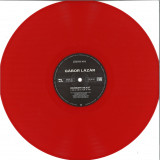
Gábor Lázár’s “Boundary Object” is a collection of eight real-time recorded, unedited tracks made in Budapest and Prague between 2020 and 2022 using a self-designed compositional interface. It's Gábor Lázár’s second album for Planet Mu following “Source” in 2020. The title comes from the idea of a Boundary object as a flexible concept of sociology and computation of how collaborations could happen between groups of people who have different kinds of backgrounds and different levels of knowledge. A Boundary object could be anything which translates between these groups to make a collaboration happen. Boundary objects are plastic, interpreted differently across communities but with enough common identity across social words and contexts to maintain integrity. This is a neat summary of how Gábor’s approach and working process led to his music on this album. Prismatic, flexible, and functioning on different levels of interpretation. On “Boundary Object”, the shiny surfaces and uniformity of “Source” have collapsed inward, leaving intact the recognisable pulse and frames of his music. While each individual track has a non-linear structure, the album as a whole has a strong narrative. Passages that start out Trance-like and familiar warp and weft into different shapes as if Gábor is examining the music like a 3d object, pulling at the edges, breaking and rebuilding what he examines, turning expectations inside-out. “Boundary Object” is intense, full-spectrum and a lot of fun.
Mike Paradinas first album of new material since 2013, written in some rare downtime in the Gower (Wales) during the summer 2020 lockdown. There's a strange sense of the old and new in Scurlage, the sentimental and utopia. Dive into Paradinas world, yesterday, today and forever.
Gábor Lázár's colourful discography extends from sound art to his more recent dancefloor detonations. From his first release on Lorenzo Senni's Presto! label to his collaborations with Russell Haswell and his popular 'seizure inducing' team-up with Mark Fell entitled 'The Neurobiology of Moral Decision Making' to his last album 'Unfold' on The Death of Rave, where he balanced relentless, snappy rhythms and wonky melodic tones against more measured chords to create a deliciously fruity futurism.Gábor has now signed to Planet Mu for his new album 'Source' which moves forward with the dance music direction he started to formulate with 'Unfold'. Gábor first fell in love with electronic music simultaneously through dance music and it's IDM offspring, and also with harsher, noisier computer music on labels such as Editions Mego. This collection, which develops slowly over 8 tracks, works its way through his own take on these influences, moving across themes and loops as if each track is a different stage in a process. All these tracks sound incredible on a club sound system. The listener can hear nods to hoover bass and 2-step in 'Phase', or trance techno in ‘Excite', the dive-bombing bass of dubstep in 'Effort ' or the frantic techno influence of 'Route', emulated in the minimal forms Gábor has created with a sound artist's precision and a strict adherence to his vacuum-like grids. Gábor bends his sounds, abstracts them and re-contextualises them; basslines fire out of the grid at strange angles and squirm as if they've come alive, shards of melody shoot off at wild angles, attacking with drama and a thrilling sense of energy
Finnish producer Sasu Ripatti has been torching the fringes of electronic music since the mid 1990s, a process that's found him melting a wide spectrum of musical innovation into his cult brand of experimental minimalism. From the skeletal jazz deconstructions of his 1997 Vladislav Delay debut "The Kind of Blue EP" to the blurred dub techno variations of 2000's "Multila" and 2012's "Kuopio", Ripatti has betrayed a restless, voracious passion for sound. "Fun is Not A Straight Line" builds on this impressive legacy, retaining his sonic signature and adding a playfulness that harks back to his beloved deep house smash, Luomo's "Vocalcity". After becoming frustrated by the inflexibility of the 4/4 house idiom, Ripatti found solace in rap and bass music's rhythmic complexity and anarchic structures. "I bought Nas's 'Illmatic' when it came out in '94 and have more or less been listening to rap since," he explains. "I'm not really sure why now, but that rap influence wanted to come through." Chopped rap vocals, booming subs and gritty, neck-snapping beats are the primary colors of "Fun is Not A Straight Line", painted into the foreground and blended into an immediately recognizable rhythmic palette. The tracks cross into the same continuum as Chicago footwork, with stuttering samples that build thick walls of bass and flurries of wordless rhymes amid a narcotic haze of beats. On 'monolith', Ripatti's love of New York rap is in full focus as he obscures chipmunked vocals with tight, crackling percussion that disintegrates into rolling kicks; 'speedmemories' is even more upfront, channeling the raw sunshine energy of So So Def electro into rhythms that are powerfully skeletal. Elsewhere, syrupy Southern-fried TR-808 bass womps are tangled with molasses-slow vocals on 'videophonekitty', fuzzed into textured, dissociated ambience. Since the beginning, Ripatti has tried to find a balance between his experimental urges and drive to create more universal music. As his more recent albums have traveled into darker, more extreme realms, he has craved something different for balance. By drawing a crooked line between DJ Premier, DJ Screw and DJ Rashad, Sasu Ripatti has emerged with the most accessible and unashamedly enjoyable album he's produced in years.
Ian McDonnell is an Irish producer living in Wicklow near Dublin. Alongside his solo releases as Eomac he's also one half of the duos Lakker, noeverything and Lena Andersson. 'Cracks' represents a change of scenery and a change of practice from his previous two albums which were both conceptualised from the outset and recorded while living in Berlin. In contrast 'Cracks' was made in a beautiful rural part of Ireland without any outside pressure. These circumstances allowed Ian to wipe the slate clean and make an album guided by his mood on any particular day, connecting into the subtle power of his new environment and reflecting it, rather than working to please the suffocating demands of clublife. The title 'Cracks' comes from the idea that, to quote Leonard Cohen, a crack is "how the light gets in", but also of course it's a title that bears witness to the cracks fomenting in the world right now. The music comes across with depth and passion, sounding deep and mossy with Eomac's penchant for punchy, shuffling drums underpinning the emotive tracks. From the off, the furious 'Mandate For Murder' flips and repeats Akala's protest about systemic racism, rushing deep into the panicked sirens of 'Portuguese Man O' War'. The album settles into a sense of mystery, wildness and dark otherworldliness with the foggy drone and timber kick of 'Ancient Self' reflecting the awe and spiritual connections to his new environment, much like the gorgeous strings and aqueous bleeps of 'Seashells' or the pitch-shifted shoegaze of 'Prophetess'. At other points it responds to the human condition, for instance the cathartic 'Falling Through the Cracks' where a broken scream is pitted against clattering drums. At other moments it simply reaches out; 'Reasons to Live's' whispered mantra of "I know you are loved by somebody" is gently insistent. It ends with a reference to a place he's left behind, seen through the lens of nature. 'All the Rabbits in the Tiergarten' could be a missing track from Aphex's Ambient Works, albeit with cut-up scissoring drums. The album is a fruitful move, inwards and forwards.
On "Neon Genesis: Soul Into Matter²" Meemo Comma (a.k.a. Lara Rix-Martin) takes Kabbalistic text and Jewish prayer and guides them through twinkling ambient synths, breakbeats and cranking industrial noise, full of strange wonder and drama. You can hear soft synths transmuted into choirs of seraphim and moments of occulted dancefloor rapture, from Aramaic chanting and ravey breakbeats to readings from the Zohar. It is quite beautiful at times. Jewish mysticism is at the root of Western esoteric beliefs and therefore has formed the structure of many films and books that explore the question of humanity. Inspired by the visuals of Evangelion and nineties anime soundtracks such as Ghost In The Shell (and its later Stand Alone Complex series), the new Meemo Comma album is a soundtrack to an imaginary anime that, like its real counterparts (e.g. Full Metal Alchemist), takes the beautiful parts of Kabbalah and sets them to science fiction stories. When asked about the themes that inform her new album, Lara Rix-Martin says "Judaism is filled with many tales and teachings that prevail in science fiction to this day - whether consciously or not. Sci-Fi is the genre best equipped to explore the immensity and challenges of human experience. Something that Judaism has also been attempting for over three thousand years." "I watched Ghost in the Shell when I was 14 and it was so striking, visually and sonically. The soundtrack has acted as a backdrop to explore my Jewish identity. I have been reading the Talmud since last year, discovering a deeper love for Jewish stories and teachings. There are some beautiful, hopeful ideas in Kabbalah too, which were a central inspiration to this album such as the idea that the first human was non-gendered and just this form made up from the qualities of HaShem (God) who performed 'Tzimtzum', contracted their form using their Ein Sof (eternal light) to create 'Adam Kadmon' whose form split into all human souls." Lara playfully subheads her album: "In the year 5781 humanity is ever closer to becoming a singular consciousness. A team of humans are forming an android, Adam Kadmon (CODENAME: UNIT KADMON). First, humans have to gain higher consciousness guided by the Sefirot." While you don't have to know about these influences to enjoy the music, it stands true that the intention is an irreverent love letter to the way grand myths are birthed into the future through new forms, retaining their beauty and elegance.
Rian Treanor returns to Planet Mu for his raw and energetic second album "File Under UK Metaplasm". The enigmatic, sweaty energy of Tanzanian singeli and Chicago footwork are juxtaposed with slick, high-def bass weight which sits at the centre of the album. Opening track 'Hypnic Jerks' is the perfect example of this, with crinkled percussive loops cut through by machine-gun kicks and acidic wobbles. Elsewhere, 'Vacuum Angle' takes Sheffield's Warp-ed legacy and brings it crashing into the future, with rhythms collapsing into static and noise but never deconstructing or losing the flow. 'Debouncing' meanwhile folds gliding square synths into rattling dancehall kicks, joining the dots between SND, Equiknoxx and Wiley with a neon Sharpie. "It's using all those formulaic dance structures but just slightly mangled or messed up," he says. "I'm still focused on making dance music for clubs, but how far can you push that before it's just no."
- A1: East Man & Streema - Know Like Dat
- A2: East Man & Mic Ty - Everybody Knows
- A3: East Man & Fernando Kep - Ouroboros
- A4: East Man & Lyrical Strally - Ten Ton Riddim
- A5: East Man & Ny Ny - Boys
- A6: East Man & Whack Eye - Who Am I?
- B1: East Man & Eklipse - East Man Theme (Reprise)
- B2: East Man & Darkos Strife - Wow How?
- B3: Ease Up
- B4: Look & Listen (Part 2)
- B5: Machine Gun
- B6: Hi Tek Theme
'Prole Art Threat' is producer Anthoney Hart's second LP for Planet Mu under his East Man alias, after 2018's well received debut 'Red White & Zero'. It brings together a set of MCs from all over London, Darkos and Eklipse from East London and Lyrical Strally from near Feltham who were on the first album, Ny Ny and Mic Ty also from East London, Streema and 'Vision Crew' member Whack Eye from Lewisham plus Fernando Kep, an MC from the burgeoning Brazil grime scene. They work across a cohesive set of tight riddims forged from thoughtful amalgams of grime, dancehall and drum & bass. The album takes its name from a Fall song/mission statement of the same title, the band being self-consciously working class and led by a brilliant autodidact in Mark E Smith. East Man relates that the title is to be taken as “a reflection of working-class creativity and how the establishment marginalise us and (perhaps on a subconscious level) see us as a threat.” Les Back, author of 'The Art of Listening' and 'Out of Whiteness: Color, Politics and Culture (with Vron Ware)' contributes liner notes to the record: East Man understands the force and the democracy of the mic. Listening to Prole Art Threat is like being at a dance. As the mic is passed between each of the MCs, a different tale is ‘elevated... off the map’ as Ny Ny puts it. We hear instalmentsfrom Forest Gate, Lee, Lewisham and Manor Park as these ‘lyrical gaffers’ and ’top boys and girls’ tell tough stories of life under the scrutiny of the ‘Feds’ in a brutal and divided city. The bars and rhymes document what it means to live here; from the double standards applied to the sexuality of young girls and boys to the corrosive violence of everyday life. All this is dissected without compromise. This is not just aLondon story though, the inclusion of Fernando Kep from the burgeoning Grime scene in Brazil is evidence of the outernational reach of the music. The tracks on East Man’s album explode the wilful ignorance of those who see ‘the working class’ in contemporary London as code for whiteness. This is the sound of a proletarian urban multiculture, made from Caribbean and African influences, sound system culture, pirate radio and the inexorable rhythms of Grime, Drum & Bass, Techno and Dancehall. It is the stirring of the "white" & "black" working classes who are living together and coming together on their own terms in sound. ‘Making music because you love it... what the fuck else could you do?’ as East Man says. The tracks and voices you are holding in your hands are, as a result urgent, vital, as hard nails and twice as sharp.
Ital Tek (a.k.a. Alan Myson) returns to Planet Mu with his sixth album ‘Outland‘. The album was written during a period of new beginnings following a move out of the city to a quieter space and the birth of his first child. During this time of self-imposed isolation Alan recorded a huge amount of source material and spent weeks and months sitting up at night with his newborn, listening back and making notes on how the new record should take form, focusing and developing ideas to shape this lean ten-track album.
Alan talks of the record being a collaboration between two parts of himself, something that definitely comes across as the album unfolds. Textures are something Alan excels at and on his last album, the largely beatless ‘Bodied’, it felt as if he was building a new sound-world. On ‘Outland’ he expands upon this. The album brings together the extremes of Alan's sound, contrasting roughened bass and beats with starker more detailed atmospheres and emotions.
The most beat-driven song here is ‘Deadhead’, with its gnarled bouncing bass, angular distorted melodies and cavernous textures. On tracks like ‘Bladed Terrain’ the contrasts are even more defined with buzzing drones and razor sharp drums plunging into a grainy fog, giving the track a dramatic 3D feel.
Then there are the stop-start pauses of ‘Leaving The Grid’, where the song evaporates into space before reemerging with shuddering rhythms and ghostly textures. Melodies crawl around these tracks as if they’re just waking up, as heard on the atmospheric ‘Angel In Ruin’.
The sleep-deprived fraying of the senses became Alan’s routine and one which he says gave him a renewed creative energy; half-asleep, working through the night, and then into the daytime super-focused but exhausted. Prone to audio hallucinations whilst writing the album, he aimed to capture these distortions in his perception of pitch and time, and you can hear these effects interpreted on tracks like ‘Endless’ and ‘Open Heart’ as melodies phase and slip out of time like an emotional Doppler effect.
This is also true of the soaring atonal synths at the peak of ‘Diamond Child’, which feel like the aural equivalent of eye floaters. These intuitive feelings and functions are a difficult thing to capture in sound, but Alan manages it beautifully and always makes the result feel warm and adventurous, heartfelt and epic.
DeForrest Brown Jr. is an outspoken theorist, journalist, curator, visual artist and musician. Raised in the deep South, DeForrest moved to New York a few years ago and has been shaking things up IRL and online ever since.
- He asks difficult questions that make us relook at how we think
about race, class, post-racial ideas, historical events and the social
structures in America.
- His work defies narrow bags and he’s truly a unique cultural polygot
comfortable booking an artist like Felicia Atkinson at Issue Project
Room or shaking up people on the street with his “Make Techno
Black Again” hat line.
- His project Speaker Music was inspired by Rhythmanalysis, a book
of essays by urbanist philosopher Henri Lefebvre as well as
considerations of momentum and the “chronopolitical” from British
cultural theorist Kodwo Eshun. Mobilizing freely improvised
electronic percussion and stereophonic audio recordings, Speaker
Music yearns to caress, engineer and sculpt sentiment into a multi-
textural rhythmic body, quivering moments into a collapsed
“nonpulsed time.”
- His debut for Planet Mu centers around weary sonic portraiture of
sonorous and cybernetic energy music – a music encoded with an
encrypted heat but made “with empathy and without excess.” His
“touching of frequencies” unveils a romantic abstraction of sonic
narratives that recalls previous innovations by musicians such as
Les McCann, Urban Tribe and James Stinson.
DeForrest Brown Jr. will be present at Unsound Festival in October at which he’ll be launching a new publication w/ Primary Information.
He will also present a special event at respected New York art gallery Artist Space on Friday December 13th at which he’ll be launching a book related to the album.
Additional dates will happen between October and next Spring - A Video will also be launched when the album is announced in early October (...).
Felix Lee has created a world for his debut album “Inna Daze“, a kind of post-human environment where the sun never really rises and everything is lit with a burnt out glow. These are survival ballads for the near future, whose vocals, mutated to fit into this setting, drift in a haze of dissociation. Musically, at first glance, it's sparse and minimal but with continued immersion, subtle iridescent-light shadows shimmer around grainy colour, sub bass rises through kicks and snares retooled from their surroundings, not so much refixed as decaying. Felix has been here before in his incarnation as Lexxi, making his debut appearance on Total Freedom’s 2012 “Blasting Voice“ compilation, and as a co-producer on Elysia Crampton's “Demon City“ album. He then went on to release his first instrumental EP “5TARB01” in 2016 on his own imprint Endless. He also runs an NTS show of the same name, along with previously holding raves, cross pollinating and interacting with the vanguard of the electronic underground. The punky crunch of those earlier releases is reflected in tracks like “Smoke” made with long time collaborator and southside resident Kamixlo. These club moments inevitably give way to the vocals, conveying a feeling of loss and renewal. Intended to exist both inside and outside the club, it's an electronic music that at times feels like a skeletal take on shoegaze, solidifying that feeling with the intense rising synths of the album closer “Slow Decay“.
Inna Daze's features include Drain Gang members Ecco2k and Whitearmor, Yayoyanoh, Quantum Natives' Oxhy, and Gaika, as well as Felix making his debut as a vocalist, his voice filtered through effects to give it a slippery, steam-like texture, echoing around the songs, giving them a second skin of sensed abstraction. One of the most thoughtful and interesting debuts of 2019, “Inna Daze“ beckons the listener into its simultaneously toxic and beautiful sound-world. Keeping enough distance to provoke more questions than answers, the album unfolds in a different way on every listen.
Basic Rhythm follows up his album 'On The Threshold' with an EP that lays out theexplicit connections between hardcore and footwork. A connection made even clearer by the inclusion of a rare remix by Chicago footwork originator RP Boo.
2 Da Core's punchy rolling drums are levelled up against rough samples and a vocal hook pitched up and down in classic hardcore style. Get Up runs a tubby bass under hazy vocal samples and weird sound effects. RP Boo's remix of 2 Da Core disassembles the track into pieces, building a stalking helicopter-like rhythm which plays hide and seek with the samples, while the closing track Nuh Ramp rounds off the EP with tumbling micro-edited rhythms and a melody built from small colourful sounds that draw on the Caribbean roots of this music.
On ‘Ways Of Seeing’ Konx-om-Pax has switched up the mood and hit gold. He has made an album that is filled with joy and sunshine, saturated with the classic feel of Berlin Techno.
Tom Scholefield has moved on from the dark ambient and brittle rave of the first two Konx-om-Pax albums, which were a reflection of his hometown Glasgow's electronic music scenes. After a recent move to Berlin, the textures of Glasgow's musical strains have fused into an accessible and friendly mix of poppy melodic electronica built from a stricter 'less is more' sound pallete, closer in spirit to the music of his adopted city. It is also a record which was made in opposition to recent music he has been hearing, in particular the troubled, dark and noisy experimental music coming out of Berlin. Tom wanted to focus on more joyful qualities, making this a record imbued with warmth and happiness, a panacea to the darkness and disorientation all around in 2019.
Having a social scene full of producers has also influenced the album. The opening track 'LA Melody' came from staying with Ross Birchard (Hudson Mohawke) at his house in LA, hanging out in the glorious sunshine with him and Lunice working on tracks.
"Initially Ross asked me to write some melodies to use in a project he was producing, but I ended up liking it so much I decided to keep the riff. I generally write music alone, but being around other producers gave me a certain excited energy that reminded me of after-parties back in Glasgow where Ross and myself spent our youth together. Spending time in Clark's studio also helped me improve my workflow and sequencing the album by seeing the way he does things". On 'Säule Acid' he collaborates with Silvia Kastel and in 'I’m For Real' the vocals of Glaswegian DJ/producer Nightwave filter around the track.
The album starts with 'St. Fabian Tower', named after the now demolished tower block in Chingford where Anthoney used to DJ for Rude FM. The track's lush detuned synths and syncopated drums are girded by stern low end frequencies. Drum and bass, jungle and hardcore are the touchstones here, but the forms he creates make no attempt to imitate the music of those eras. Take the rolling, bubbling, almost jazz-drummer patterns of 'Yeah, I Like It' and 'I Want You' where strange pops and bubbles seem to be forced through the grid almost like they're an effect of pressure. It's an odd juxtaposition next to the soulful vocals but an effective one. 'Edge Of Darkness' meanwhile, is an intense, rough ride of sliding rhythms and elephantine bass. Elsewhere, like on 'A New Consciousness', things are tempered into a more streamlined techno-like hybrid. He lets loose in the claps and kicks banger of 'Fi Di Gyal', but even here there are neat sonic tricks that sound like nods to minimalist composition.
On The Threshold is a balance of smart and energetic, non linear thoughtfulness and makeshift experimentalism that does away with boundaries, but is very much its own self contained world.
- A1: Bring Your Best Crack (2:56)
- A2: You Ain't Ready To Battle (3:07)
- A3: Come Back (2:00)
- A4: Oh Woooaaah (2:58)
- A5: Get Rid Of 'Em (1:43)
- A6: Fuck Dat (2:20)
- A7: Wat U Wont 2 Do (0:09)
- A8: Go Krazy (3:11)
- A9: Get Back (2:53)
- B1: Get It Right Hoe (2:53)
- B2: Just Be Truu (2:51)
- B3: Pack Em (2:06)
- B4: Aww Baby What U Waitn (2:24)
- B5: Talk 2 Me (2:48)
- B6: Planet Mu (2:46)
- B7: Get Of Me (Betta Get Back) (2:51)
- B8: La Happy Day (2:47)
Rian Treanor will release his anticipated debut album 'ATAXIA' on Planet Mu this March. The striking full-length follows singles for The Death Of Rave and Warp's Arcola imprint as well as live sets at Boilerroom x Genelec, Nyege Nyege festival, tours in India and various high profile EU shows.
The title 'ATAXIA' means 'the loss of full control of bodily movements' and relates to Rian's music which is 'intended to make people's bodies move in unpredictable ways.' He adds 'the angles in the letters, the phonetics seem to mirror the geometry and idiosyncratic patterns in the music.' Rian explains that components of the tracks were made by generating a series of irregular events and re-structuring them, or by destabilising a pattern that is constant.
When asked how the album compares with his previous releases, he says 'My earlier EPs share a similar interest in angular and asymmetrical rhythms that are designed for club sound systems,' adding 'they were more improvised, focusing on sequencing and pattern modulation, using standard drum sounds and synthesiser patches. ATAXIA is more focused and stricter, it's more co-ordinated in terms of the track selection and the rhythmic structures. I spent more time refining the synthesis and sound design, pushing it further than the previous releases.' He expresses an interest in exploring opposites in his music: 'fluidity and syncopation,' 'systematic and unpredictability,' 'reduction and extremity,' 'irregular symmetry,' 'easy listening and brutal'.
There's clear a conceptual backdrop, but the music itself is not overthought. There's an immediate joy to much of the album - check out ATAXIA_D3 with its wonderful cut-ups and modulations of the phrase 'people don't understand people.'
The roots of Rian's playful sound are directly linked to his love of the music he grew up with. Coming from Sheffield, you can hear elements of industrial, synth-pop, bleep, extreme computer music and speed garage at play. From Cabaret Voltaire to Warp and beyond; the sound of his city has been, and is, an integral part of his musical development and is still a direct influence.
Last year, he noted in an interview that "I'm not a computer programmer, I'm not an articulate person in that kind of way. I'm a visual artist." Now he elaborates 'I meant more that I'm a visual thinker.' Drawing and visual art have been a fundamental part of his life 'since I was a child. I got really into graffiti as a teenager and around the same time I got into mixing and these both developed together.' You can sense the mind of a visual artist at work in his music which is also reflected in the artwork he created for this project.
As well as his visual art, installations and multichannel sound works he is involved in numerous collaborations such as with composer Nakul Krishnamurthy exploring the common ground between Indian classical music and electronic music and his work with improv saxophonist Karl D'Silva, plus his time studying with Lupo at Dubplates and Mastering in Berlin (who taught him the 'importance of reduction') have all helped shape and push his sound into other unique and adventurous zones. Treanor is developing on different levels and in different forms all at the same time, re-imagining the intersection of club culture, experimental art and computer music, presenting an insightful and compelling musical world of fractured and interlocking components.
Silk Road Assassins, a trio consisting of Tom E Vercetti, Chemist and Lovedr0id, return to Planet Mu with their debut full-length 'State Of Ruin' two years after their first EP 'Reflection Spaces'.
The trio recorded over two years, working together to start with, then across different studios and via the internet when their lives became more separated. They also finessed the album at Abbey Road studios, making use of some short time to add in extra layers.
The three producers day jobs are in production music, music designed and created specifically for film and games, and this album uses these skills to explore the musical forms that they love. The album explores how trap and grime's minimalist form can be built and curved into musical architecture: elegant, opaque and layered, turning the sound into lush, melodic world-building.
The work gone into the album is revealed on repeated listens, every sound on this record feels built to sit within it's delicate ecosystem. The fundamentals of the music are given their own sense of purpose: hand claps spray, bells tumble, guitars splinter and lush melodies waft over and fill the track's spaces like light, glinting across snapping, crisp rhythms and deep bass tones.
Sami Baha is a Turkish producer based in South East London. His music was introduced to the world via his 2016 EP 'Mavericks'. Sami got into producing through being a rapper himself, working with local rappers in Turkey and producing beats for them, before setting his sights outside the country. 'Free For All' features MCs from all corners of the globe: UK drill squad 67's Dimzy, Stockholm's Yung Lean and Chicago rapper and singer DJ Nate (aka Flexxbabii). The record also features Egyptian MCs Dawsha and Abanob. Sami's production is refined and elegant, familiar tropes are reassembled in original ways, the instrumentation reflecting his background and influences simultaneously. Everything Sami brings to the album sounds relaxed and minimal, but tough, built from thoughtful arrangements and instruments, shot through with emotion and a dreamy night-time feel.
- A1: First Overture (Spiritual Atom) (4:59)
- A2: Annotation (4:04)
- A3: Carbonb 12 (5:05)
- B1: Unorthodox Elements (3:35)
- B2: Anamenesis (Part 1) (3:30)
- B3: The Abyss Of Doubt (3:35)
- B4: Mutation (5:03)
- C1: Fist Interlude (Absence Of Measure) (4:40)
- C2: Permutation (4:39)
- C3: Kundalini (4:48)
- D1: Anamnesis (Part 2) (4:05)
- D2: Blue I (4:01)
- D3: Second Interlude (The Choosing) (6:26)
By now, the story of how Jlin went from working in a steel factory in Gary, Indiana to being one of the most widely appreciated electronic musicians is well known. 'Black Origami' was one of the most reviewed and lauded albums last year. Seriously prolific and seriously hard-working, she has toured constantly since its May 2017 release and despite being involved in a wide range of projects, still manages to find a balance and 'do some personal healing and growing.'
Here we are over a year later with 'Autobiography,' the score for her collaboration with renowned British choreographer Wayne McGregor arranged by Unsound. This isn't technically her third album (that's due to arrive in 2019 or 2020), but the soundtrack stands up on its own with all the emotional peaks and troughs of a well-sequenced longplayer.
For Jlin, making music for dance is the fulfillment of one of her lifelong dreams - and remarkably, Company Wayne McGregor's performance was the first show she'd ever seen. She describes the process of working with Wayne: 'We first met face to face in October 2016 in a downtown Chicago hotel, talking for about a solid two hours. Immediately, I saw Wayne was very friendly and energetic. He's brilliant, witty, and knows exactly what he wants; an absolute gem to work with. Before I even started composing for Autobiography, Wayne told me so gently that he trusts me completely with my direction of creating the score. That was the best feeling in the world. I would wake up at two in the morning and work until six in the evening until I completed all the pieces. We were both very happy with the outcome. Creating the score for an impeccable piece of work such as Autobiography changed my life as an artist.'
'Autobiography' is a highlight in an evolving and growing career. During the last year, Jlin has also become an in-demand remixer, securing her place among a roster of music heavyweights. Unsurprisingly, given her positive and outgoing nature, she also developed friendships with the artists she has remixed such as Björk, Max Richter and Ben Frost.
Jlin will be touring with Company Wayne McGregor performing 'Autobiography' this year in addition to completing a commission for the Kronos Quartet titled 'Little Black Book.' She still approaches every performance 'with the same attitude of doing my best to execute a good show, no more, no less. Doing my best is what's most important to me.' She also still lives in Gary, Indiana, which keeps her grounded. She notes with her typical humility, 'The local community is a little more knowledgeable of me now. But I don't mind my community taking its time.'
- 01: Adrift
- 02: Become Real
- 03: Cipher
- 04: Lithic
- 05: Isolation Waves
- 06: Vanta
- 07: Across Time
- 08: Hymnal
- 09: Blood Rain
- 10: Prima
- 11: Fragility
- 12: Bodied
- 13: The Circle Is Complete
Planet Mu are excited to announce Ital Tek's 'Bodied', the follow up to his acclaimed 2016 album 'Hollowed'. Stepping in a different direction from that album, It's as if Hollowed's detailed world has been fleshed out and filled with the spectre of human voices.
As on his last album, the sounds on 'Bodied' are highly designed, but this time barely a whisper of dance music remains. Instead it's built around acoustic elements and ghostly choral arrangements, refracted and transformed into atmospheric, alien forms which are given the time to settle and transform. Rhythm is used only as a tool to give his world a sense of dark, mechanical momentum.
Alan explains; "After completing 'Hollowed' I had over a year away from writing any of my own material. I was working, composing music for a video game and a number of different projects. I needed to find a way back in and I rediscovered the joy of music being a release as opposed to a job. I was getting up really early and sketching out lots of ideas very fast, squeezing in quick bursts of writing at the beginning or end of long studio day spent working on other musical projects."
"It was important for me to define the world that the album was going to inhabit before taking it any further, so I put a much greater focus into the sound design and palette than I had before. I wanted to make the music sound very physical, geometric, and monolithic, as if it inhabited a physical space."
"On 'Bodied' the music focuses on the interplay between the minuscule and the vast, beauty and brutalism. With this album I was much more concerned with dynamics and the discipline of holding tension; the use of space and silence to provide a counterpoint to the intensity."
"Most importantly, I was keen for there to be a human acoustic foundation, so I did a lot of live recording of cello, violin, harp and guitar - anything I could get my hands on. I was certain that I wanted there to be a greater vocal presence - nothing lyrical or at the forefront but to give it an underlying organic quality - to impart some humanity into the music."
As Ital Tek moves further from his roots, he's creating new sounds and spaces in which his music can exist. It's up to the listener to decide what kind of world 'Bodied' evokes, but it's certainly one that's beautiful and rewarding to spend time in.
Planet Mu Are Very Happy To Be Releasing 'vicious Circles', The Debut Ep By Sinjin Hawke And Zora Jones, Who Aside From Producing Music Also Run The Audio-visual Production Unit 'fractal Fantasy'. Zora Released Several Collaborations On Last Year's 'visceral Minds 2' Including 'dark Matter' With Planet Mu's Jlin, While Sinjin Has Collaborated With Dj Rashad, Just Blaze And Mikeq, And Also Produced Music For Monoliths Like Kanye West And Frank Ocean. Remarkably, Given The Breadth Of Their Work, 'vicious Circles' Is Their First Collaborative Ep, And The First Time Either Have Released A Vinyl Record Too. The Ep Is A Great Showcase For The Duo's Emotional, Maximalist Chimeras Of Abstract Pounding Beats. From The Punchy, Circular, Grandiose Build-ups Of Opener 'vicious Circles', To The Unyielding Melancholy Of 'god' With Its Sinister Bulgarian Choir Sample Against A Peak Timbaland-era Rhythm, The Record's Potent Synths And Manipulated Vocals Are Both Simultaneously Fierce And Friendly. 'source Of Conflict' Is A Poised Dance Between Pulsing Ambient Textures And Drilling Beats, While 'lurk 101' Pits A Volley Of Abstracted Juke Toms Up Against A Hammering Drumline. 'babyboysosa' Feels Like Drum-less Drill, Manipulating Vocals Into Strange Alien Shapes Over A Bassline Before Spiraling Toms And Hi-hats Start To Form A Forceful March. The Ep Concludes On The Love Anthem 'and You Were One' With A Chipmunked Vocal Running Through Its Wonky Chorus Of Bent Notes And Chords.
While notorious in the Chicago streets, RP Boo's music had been unfairly confined to a few white labels and self-released mixtapes until his two archival Planet Mu LPs Legacy and Fingers, Bank Pads & Shoe Prints introduced broader audiences to his sonic history, some of it fifteen years after it was first recorded. I'll Tell You What! is the next step in his mission, and the first time he's released an album of contemporary material. The title, a favorite maxim of his, welcomes listeners to sit down and let him narrate in the unforgettable abstract fashion he's known for. He explores familiar motifs such as the cosmos, movement, and opposition, using densely interwoven vocals, unpredictable percussion, and evil humming bass as his tools of choice. RP Boo's music doesn't follow the traditional rules that most compositions do. Layering decades of samples from yesteryear to the present over his commanding vocal cut-ups, he transports the listener to their own realm of the space-time continuum. The main difference between this record and his prior work is now we hear Boo tell new stories about preaching his gospel outside of Chicago, from his experiences frantically touring the globe over the last five years. The words 'things ain't been the same / since I hopped the plane' are repeated on top of engine sounds and rumbling bass on Flight 1235, a glorious paean to his new jet-setting adventures. The spirit of competition runs through RP's veins as much as blood does, something you can't unlearn when you've been making music for Chicago's footwork circuit as long as he has. The local culture has served as a shelter from the violence that has plagued the city, pitting kids against each other with their feet rather than weapons. On At War Boo reminds us 'we are at war in the streets', a double meaning to both the mayhem in this world and the sweetness of rivalry on the dance floor. Another battle-themed track Cloudy Back Yard, one of the spacier moments on this album, is an abstract on the state of footwork's home. Chicago remains the backyard of this artform even though it's left the porch and traveled to new neighborhoods worldwide. Back at home though, competition among the DJs and dancers continues, and as the man himself says, 'with all this hate, there's smoke, and it's cloudy'. I'll Tell You What! throws more than a few curveballs into the mix. Footwork has always borrowed from hip-hop, and many vocal tracks are almost condensed raps, dating back to the street chants pioneered on Dance Mania Records in the ghetto house days. On Bounty, Boo grabs the mic and brazenly lays down a full-on verse of terror over a thick atmosphere of his signature sweltering low-end and erratic Roland R-70 patterns. While he's most famous for his confrontational battle anthems, his melancholy moments are just as powerful. You get the best of both of those worlds on U-Don't No, with soulful samples finishing his own cocky sentences, one of the most elegant tracks RP has made to date. Deep Sole closes the record out, with the words 'It's always beautiful at the end' looping over waves of hypnotic synthesis, confidently looking death straight in the eyes.
East Man is a new project from Anthoney Hart and its material predates his previous work as Basic Rhythm. His unique take on grime reduces the sound to its steely fundamentals, bringing in influences from dancehall, drum and bass and techno to gird the voices of the MCs he works with. His own name for this hardcore continuum mongrel is 'Hi Tek'.Anthoney struck a friendship with the academic and theorist Paul Gilroy, who wrote the album introduction.
Ekoplekz returns with his fourth album for Planet Mu, in the shape of 10-tracker "Bioprodukt". The unique lo-fi, woozy sound of Bristol's Nick Edwards stays intact while he veers towards the nineties for inspiration: the bleep and bass sound of the north of England is one touchpoint and the acid gurgles of the 303 are another. While the murky lo-fi production levels and evocative melodies remain, they are now bolstered by a more muscular rhythmic chassis. Snappier kicks and snares mingle with dense layers of percussion and deep undulating sub-basslines adding a funkier edge, as typified by opening track "Elevation" where playful beats interlock with breezy keyboard flourishes to create something uncharacteristically upbeat. Similarly, the gentle, fluid motion of "Slipstream" and "Calypzoid" represent some of the most appealingly chilled grooves in the Ekoplekz canon to date. But the darker-edged material remains. "Expedition" has a pensive, percussion-heavy feel whilst "Acrid Acid" is a dirt-encrusted slow-mo techno meltdown. "Transcience" displays the Ekoplekz trademark dub-fx in full flight over a driving lo-end, before "Descent" leads down to the final section, where the beats fade out, replaced by rippling layers of spectral ferric ambience on the epic "Low-X Over", before finishing with the radiant looped stasis of "Denier Daze". The albums shifting, mperfect patterns and muted colours are visually mirrored in the beautifully realised sleeve by the Print Project.
Planet Mu are very excited to announce Jlin's long awaited second album Black Origami'. A percussion-led tour de force, it's a creation that seals her reputation as a unique producer with an exceptional ability to make riveting rhythmic music. Black Origami' is driven by a deep creative thirst which she describes as this driving feeling that I wanted to do something different, something that challenged me to my core. Black Origami for me, comes from letting go creatively, creating with no boundaries. The simple definition of origami is the art of folding and constructing paper into a beautiful, yet complex design. Composing music for me is like origami, only I'm replacing paper with sound. I chose to title the album "Black Origami" because like "Dark Energy" I still create from the beauty of darkness and blackness. The willingness to go into the hardest places within myself to create for me means that I can touch the Infinity.' Spirituality and movement are both at the core of Black Origami', inspired largely by her ongoing collaborations with Indian dancer/movement artist Avril Stormy Unger whom she met and collaborated with at her debut performance for the Unsound festival - 'There is a fine line between me entertaining a person and my spirituality. Avril, who collaborates with me by means of dance, feels the exact same way. Movement played a great role in Black Origami. The track "Carbon 7" is very inspired by the way Avril moves and dances. Our rhythms are so in sync at times it kind of scares us. When there is something I can't quite figure out when it comes to my production, it's like she senses it. Her response to me is always "You'll figure it out". Once I figure it out it's like time and space no longer exist.' Similar time shifting/folding/disrupting effects can be heard throughout the record - especially on Holy Child' an unlikely collaboration with minimalist legend William Basinski. She also collaborates again with Holly Herndon on 1%', while Halcyon Veil producer Fawkes' voice is on Calcination and Cape Town rapper Dope Saint Jude provides vocals for Never Created, Never Destroyed . Jlin will be touring extensively this year and is currently lining up appearances including Sonar festival. Later this year she will be collaborating in London with acclaimed UK choreographer Wayne McGregor who played her music recently on Radio 4's Desert Island Discs and described her music as quite rare and so exciting".
It's been five years since his acclaimed debut 'Severant' and time has proved it prescient, its futuristic trap influence is now ubiquitous. 'Slow Knife' seems to return to where 'Severant' left off, but with the intricate sound design of last year's haunting EP 'Assertion Of A Surrounding Presence' subsumed into the compositions, making them more exacting and beautifully crafted. Between albums Kuedo has been working as a sound designer and composer for hire and the application of intent and widescreen rigour that commercial work requires has definitely found its way into the new album. 'Slow Knife' has the subtlety, ambition and pacing of a brilliant soundtrack - a sense of an album of scenes, that easily lends itself to an impressionistic narrative. But, as with 'Severant', the title suggests relationship unease, with the slow knife being a metaphor for the building resentment in any close relationship. 'Slow Knife' is almost two albums, the first half, according to Kuedo, invokes the seduction of the city, taking the music of Michael Mann's 'Manhunter' as a cue, with the latter half being inspired by the bloody starscapes and voodoo wilderness of films such as 'Angel Heart', 'Night Of The Hunter' and more recently the 'True Detective' series. Both halves of the album are also in thrall to Mica Levi's inspiring 'Under The Skin' soundtrack, especially in the turbulence of the mid-section. The songs of the albums first half are synthetic and seductive, a gelatinous veil with shades of the pseudo-sophisticated trance of Enigma, of all things, underpinned with dusky unsettling shadows and atmosphere. 'In Your Sleep', perhaps surprisingly, features the vocals of Hayden Thorpe from Wild Beasts, who settles his dark, whispered vocals into the moonlit shadowy atmosphere. 'Floating Forest' is the first track to allow back some of Kuedo's experimentation with the Southern rap template, which he explored before it became commonplace, with echoed drum splashes and a sinister repetitive motif, ending with a haunting growl. The second half of the album enters wilderness territory with 'Approaching's slow descending notes, before 'Broken Fox - Black Hole' throws the record into the cathartic darkness, as undulating chords play hide and seek with riotous reeds and scratchy strings grown from challenging collaborations with cello player Koenraad Ecker (from Lumisokea). 'Breaking The Surface' shivers and coils, before metal and strings dominate while 'In Your Skin' feels like being lost in a vast hinterland before 'Warmer Light' introduces some memories of sunshine, with its plucked bassline and spiralling dub. 'Halogen Light' opens with the sound of crickets and a clear piano, cleansing the soul before 'Lathe' brings things down to earth with a short, yet powerful coda.
Hello listeners, blunt heads, fly ladies and prisoners..... This is the future of the music industry. Not the music, just the idea of the artists writing their own PR faffle. Next year I'll probably have to carry my own bags on tour too.......tragic. I have had a few years of working on other projects and shuffling about in loose trousers, but now I feel the time has come to release some more music for feet and floors. What I should say is that every time I tried to write techno/house/moonbeat in the last couple of years, everything came out as shitty tech-house.....The brain was just in an alternate mode, a mode for classical music and melody, but now it seems to have come back to techno so I here present some of its recent outpourings. It belched out Polka the first night I got back to Scotland, having left London. BabaYaga is named after a sinister-as-hell witch from a Russian story book we had as kids (check http://en.wikipedia.org/wiki/Baba_Yaga) clearly designed to traumatise young minds. My traumatised mind made this tune, so it has come full circle. Mu is slower, for lazy, emotional dancers. I hope you will enjoy them and the excellent Sons of Tiki mix of Polka that accompanies them..... Send all hate mail to Vakant, I don't read it. Alex
- A1: Scream & Dance - In Rhythm
- A2: Plastic Bertrand - Stop Ou Encore (Disconet Remix)
- A3: Paladin - Third World
- B1: Adriano Celentano - L'unica Chance
- B2: Hotel Motel - Chocolate City
- B3: Hotel Motel Ft Snax - Fall
- C1: Coalkitchen - Chained To The Train Of Love
- C2: Hugh Mane - Organic Ceramic
- C3: Charli Xcx - You Mu Ha Ha Ho (Lindstrom Remix)
- D1: Emperor Machine - Breezin
- D2: Spaghetti Head - Funky Voodoo (Mang Dynasty Edit)
- D3: Rudy Norman - Back To The Streets
repressed !