"Bandleader Lina Langendorf has been known in Sweden for a long time as one of the most skilled and forward thinking saxophone players. She has been staying in both Mali and Ethopia for longer periods and has performed in concerts with legendary artists like Alemayehu Eshete, Vieux Farka Touré and...Mulatu Astatke who, at his club African Jazz Village (in Addis Ababa/Ethiopia), introduced Lina to people in the audience with the words: 'Amazing saxophone player, big respect! We should play together some day'. Some minutes later they go on stage together. Joined by the legendary piano player Dawit Yifru and the bass player from Roha Band, Giovanni Rico Bonsignori. 'Fantastic. You're so strong. Everybody loves you, they say you are ethio-jazz' was Mulatu's words after the jam session.
Lina has also been invited to the live club Le Hogon in Bamako numerous times for jam sessions and concerts with Toumani Diabaté and his band. And for Lina, these jam sessions in Addis and Bamako has been a crucial part of shaping (and sharpening) her musical vision. Last year she was also touring the UK as part of James Yorkston, Nina Persson and the second hand orchestra.
But it wasn't until feb 2023 we got to hear her own music. The debut album with her newly formed band Langendorf United was co-released between Italian label Black Sweat records and Swedish label Sing A Song Fighter and it immediately resonated with music lovers around the world (Radiohead drummer Philip Selway called it 'as if Tinariwen and Fela Kuti had a Blue Note session').
But the band is not just the composer/Saxophone star and band leader Lina Langendorf. Oh, no. The other four musicians are all highly praised musicians in various jazz bands in Sweden and Norway and together they form this sacred thythmic unity with the pulsating bass at the centre.
Langendorf United's music is vibrant and spiritual and on fire!"
Lina Langendorf - saxophone
Daniel Bingert (son of legendary South American musician Hector Bingert) - keys, guitars
Martin Hederos (The Soundtrack Of Our Lives, Tonbruket) - keys, viola
Ole Morten Vågan (Trondheim Jazz Orchestra) - upright bass
Andreas Werliin (Fire!, Wildbirds & Peacedrums) - drums
Strut presents Mulatu Plays Mulatu, the first major studio album in over 10 years from the father of Ethio-jazz, Mulatu Astatke. Featuring masterful new arrangements of some of his classic compositions, Mulatu Plays Mulatu finds Mulatu revisiting the sounds that helped to change the face of Ethiopian music during the late "60s and early "70s. The album was recorded between London and Addis Ababa, working with his long-standing UK band, a tight, intuitive ensemble honed through years of live performance, alongside cultural musicians resident at his Jazz Village club in Addis. Mulatu Plays Mulatu realises Mulatu"s long-term vision of Ethio-jazz, intricately balancing Western jazz arrangements with the rich sounds of traditional Ethiopian instruments including the krar, masenqo, washint, kebero and begena. Throughout the album, he reshapes familiar material with rich textures, expanded improvisations and a deepened rhythmic complexity, creating a body of work that feels as vital and contemporary as it does steeped in tradition. Familiar compositions like "Yekermo Sew", "Netsanet" and the celebratory "Kulun" are reinvented here as elegant big band performances. Bridging continents and generations throughout his 50-year career, Astatke now offers us an invitation to hear his music again, with a completely fresh perspective. Ethio-jazz, like its creator, is always in motion.
out of Stock
Last delivered 12 months ago available to reorder, subject to availability
The return of Mulatu to Ethiopia after studying jazz in the West sparked a new wave in the country’s music scene—Ethio-jazz.
This ambitious compilation album gathers modern Ethiopian sounds from 1969 to 1972, aiming to widely introduce what must have been a highly innovative
sound for its time.
In fact, the majority of the tracks featured on this compilation are either credited to Mulatu himself or arranged by him. In that sense, it’s no exaggeration to
call this a “Mulatu album” in essence. The result is a truly one-of-a-kind sound born from the fusion of Afro-indigenous Ethiopian rhythms and the Latin jazz
influences Mulatu absorbed during his time in the United States. The exotic, rustic flavor and smoky blackness that emerge from this blend defy description.
P-VINE is proud to release this historic work for the first time on colored vinyl.
"Ethio Jazz" is an album released by the Ethiopian master musician Mulatu Astatke in 1974 on his homeland Ethiopia's Amha Records.
It stands as a milestone not only in his career but also in the history of contemporary Ethiopian music, continuing to shine brightly.
With melancholic melodies played by wind instruments, a polyrhythmic rhythm section creating robust waves, sultry vibes from the vibraphone, and smoky
organ tones, the album is enveloped in the sounds of jazz inherited from the States. This work, where various musical elements are miraculously fused in
perfect balance, undoubtedly reigns at the pinnacle of Ethio Jazz, showcasing Mulatu's ambitious creativity in seeking out new sounds.
The Sorcerers' latest long player lands in perfect time for the summer, offering a further progression into their unique take on Ethio-inspired jazz. Other Worlds and Habitats is, of course, released on ATA Records and is blessed with the analogue recording and painstakingly loving production we have come to expect from this boutique studio. This, The Sorcerers eagerly anticipated fourth LP, follows on from the success of I Too Am A Stranger, a record which garnered praise from BBC Radio 2’s Jamie Cullum, “I love this, this is so good!”, Ethio-jazz legend Mulatu Astatke, “I like the grooves, and it is good to see The Sorcerers interpret Ethio jazz in their own unique way”, and Nightmares on Wax, “This sounds great! Love the way it's recorded”.
Never ones to stop moving forward, and ever vigilant to avoid the realm of pastiche, The Sorcerers see the Ethiopique sound as a building block for their natural progression as a group, but a block that sits at the base of a much larger, ever expanding, structure, The addition of keyboardist Johnny Richards, whose use of the Jen 73 piano, Mellotron and Farfisa Compact Duo, alongside the core members of the group, has opened some exciting doors for The Sorcerers, fusing the future looking optimism of the late 60s and 70s (when artists began to experiment with the new electronic technology and synthesisers becoming more readily available) and more traditional sounds. Taking inspiration from Ethiopian keyboardist Hailu Mergia and Nigerian musician William Onyeabor, Other Worlds and Habitats, as the name suggests, showcases The Sorcerers' shift to a new, and deeply exciting, musical landscape.
The Sorcerers’ Other Worlds and Habitats is a natural progression in the world they have created for themselves. Richer for shared experiences, and accepting the rise of the machines, they prove that while their journey is always going forward, there are many different paths to take.
Sleeve Records is back with the reissue of a rare and iconic Cuban album by Los Chikichaka aka "Los Caneyes".
All tracks are composed by "Maestro" Juan Pablo Torres. Get ready to enjoy latin psychedelic rhythms that intersect with afrocuban, jazz-funk, psychedelic, latin jazz and bolero.
out of Stock
Last delivered 15 months ago available to reorder, subject to availability
In his sixth and latest album “New African Orleans”, released by ENJA and Yellow Bird, bass guitarist and composer Alune Wade explores the multiple junctions between his native West African rhythms, the Afrobeat and juju rhythms from Lagos and the brass band repertoire immortalized in New Orleans. “I’m exploring a world that goes from my roots to the lost branches on the other side of the Atlantic,” explains the musician from Senegal. He has whittled down around 50 compositions – both original and standards - to a dozen which Alune recorded in Paris, Dakar, Lagos and New Orleans. “The idea first came to me during the Jazz à Gorée festival I organized back in 2014,” he explains. “It had me reflect on the notion of reversing the musical trip most people take from the United States to the African continent. I wanted to set out westward and begin a musical conversation with the best artists, both in Nigeria and the US.”
To achieve this, Wade has invited top artists from both sides of the Atlantic, including the Nigerian talking drummer Olaore Muyiwa Ayandeji, the percussionist Weedie Braimah and the jazz drummer Herlin Riley from New Orleans. The musical inspirations are equally transatlantic, ranging from Dr. John to Manu Dibango and Charlie Parker. But the 45-year-old also pays homage to his father who was a brass band star in his native Senegal back in the Sixties.
BACKGROUND
We only have a partial idea of the birth and remarkable development of the music born of the transatlantic slave trade. From Malinke ballads to Cuban son, from call-and-response patterns to field hollers and hip-hop, Yoruba rhythms to Argentinian tango, from Angolan percussions to the New Orleans brass band sounds… all have roots in Africa and a shackled migration that lasted four centuries. No more so than Congo Square in the Louisiana capital. In 2024, we mark the 300th anniversary of the implementation of the Code Noir which “gave enslaved Africans Sundays off to dance”. A drop in the ocean, but one which shows the importance of culture as a lifebuoy against this barbaric trade. As the Guadeloupian writer Daniel Maximin once claimed: “Our music guided us from the scream to the song, from dragging our chains to dancing.”
The Ibex Band, with Giovanni Rico and Selam Woldemariam at the creative helm, provided the musical backbone for legends like Aster Aweke, Girma Beyene, Tilahun Gessesse, Mulatu Astatke, and Mahmoud Ahmed, including the iconic album Ere Mela Mela, shaping modern Ethiopian music as we know it today. This 1976 album (Ge’ez Year 1968) played a pivotal role in that legacy and has now resurfaced to set the record straight.
There’s a tendency to talk about the seventies as a golden age of Ethiopian music. There are good reasons for that, and just as good reasons against it. However, the notion of a golden past privileges the role of Western explorers and suggests that the pinnacle of Ethiopia’s musical culture is something only a foreigner can appreciate and unearth. It downplays the complexities of Ethiopia’s culture and history, creating an artificial divide between then and now. And it underestimates the constantly evolving sound that has followed.
The legendary musical outfit The Ibex Band, later metamorphosed into The Roha Band, has played a central role in defining the sound of many of the greatest stars on the music scene of Ethiopia from the mid-seventies onwards–but their golden output has never really waned. The story of the origins of the band that provided the musical backbone for greats such as Aster Aweke, Girma Beyene, Tilahun Gessesse, backing the solo career of group member Mahmoud Ahmed as well as backing Mulatu Astatke and many others has yet to be properly told.
Two misconceptions plague the image of Ethiopian music, one is that the music is pure because it is, by some notion, unexploited, the other is that it is all traditional. To begin with, a combination of political changes between the late sixties and the mid-nineties created an environment where only the most dedicated and skilled musicians struggled on and pursued a musical career against fierce odds. The whole Ibex Band, with Giovanni Rico and Selam “Selamino” Seyoum Woldermarian at the creative helm, are arguably the origo of the vibrant scene in the mid-seventies, and the said pair are foremost responsible for not only navigating the band through troubled times, but also modernizing the 6/8 chickchicka rhythm to a contemporary form. Giovanni laid the rhythmic foundation with heavy looped basslines that reinvented traditional melodies as dance music, and with Selamino’s innovative guitar work they influenced scores of musicians from Abegaz Kibrework Shiota to Henock Temesgen. Even Giovanni’s Fender bass and Selamino’s Gibson guitar inspired younger musicians in their choice of instruments. Not only in choice of instruments but also in sound–even as the digital revolution hit Ethiopian music, a lot of popular music still took its cue from the masters from Ibex and Roha.
Ibex emerged out of the ashes of the sixties group the Soul Echos band, adding Giovanni and Selamino to their ranks and taking their cues from a slew of influences, such as Motown and The Beatles, fused with traditional music. A tighter-knit unit than most bands at the time – Ibex has remained six to seven members throughout their whole career, compared to many bands that were as large as fifteen or sixteen men strong when Ibex set out. Their playing has been viciously focused, economical yet heavy. Just a year before the recording sessions of the album in your hands, Giovanni and Selamino made a contribution to the popular musical lexicon of Ethiopia that was simply defining the popular sound: their arrangement and recording of bandmate Mahmoud Ahmed’s solo effort and real commercial breakthrough tune and eponymous album, Ere Mela Mela, from 1975.
Selamino has never limited himself to being an adroit lead guitarist, but has always been a scholar of history, and as such he has probably contributed as much to modern Ethiopian music with his guitar playing and compositions as with a deepened understanding of modern or contemporary – Zemenawi – Ethiopian music. Selamino’s contributions serve as a metaphor for those of the whole band, at one and the same time creating and defining a new, danceable and updated sound anchored in Giovanni’s bass, whilst also elevating the broader scene through their support for others on the scene and on top of that, increasing the understanding of the music.
There is an understandable desire to romanticize the musical heyday Ibex and Roha were at the forefront of, because so much of the output is sorrowfully hard to come by. Ibex creativity was nothing short of ridiculously fierce compared to many of their Western contemporaries. Based on their sheer recorded output alone they could have usurped the title “hardest working in show business” from James Brown, recording more than 250 albums or 2500 songs in the seventies and eighties. Some only surface as cassettes today, others were never given full LP release, and some are simply impossible to find today. In the light of that, it’s nothing short of a miracle that the recording Stereo Instrumental Music from 1976 (Ge’ez Year 1968) has resurfaced. Unearthed in perfect condition on a chrome cassette, this is musical history comes alive–to set the future straight. Stereo Instrumental Music was recorded in collaboration with Karl-Gustav Lundgren, a Swedish national working for the Radio Voice of the Gospel. It took two sessions at the Ras Hotel ballroom in Addis Ababa. The Ibex Band was the first band in Ethiopia to employ a four-track recorder for their recording (the first available in the country, lent by Karl-Gustav). Later the same week, Giovanni and Selamino realized that, lengthwise, the recorded material fell short of what they wished for, so they recorded four more tracks in one more session on a single-track recorder. The Ras Hotel and Ghion Hotel, where the Ibex Band held musical residencies were to Ethiopia in general and Addis Ababa in particular what Motown was to the USA and Detroit a few years earlier – a hotbed of musical creativity and showmanship.
The most astonishing thing about Ethiopian music of the last half century is how tradition and modernity are intertwined. Because of this feature, it’s kind of hard to tell when there ever was or when we are in a “golden age”. So much of music from the past has been criminally neglected, but because of the hardships in the past, it would be an oversimplification to say that said past was a golden age. Probably, the golden age is what we are approaching, because for the first time both the past and future are accessible, and the monumental contributions from before can lay a firm foundation for a thriving music scene today. The Ibex Band stands firmly in the past, present and the future. That, if anything, is golden.
The detailed history of Stereo Instrumental Music is in many ways unique. To begin with, it couldn’t have been recorded earlier (there were no four-track recorders available) and it really couldn’t have been recorded afterwards either, at least not in the years directly following, because of the toll the musical scene took from the unfavorable political climate that followed when the nascent Derg regime and rival groups tried to assert themselves, the musical equipment lent from The Voice of Gospel Radio simply disappeared from Ethiopia when the radio station folded in 1977. Karl-Gustav Lundgren,
the Swedish foreign national who assisted during the recording, worked with the Ethiopian Evangelical Church Mekane Yesus at the time, recalls how they only had about fifteen minutes to get the microphones in place for the recording as to not alert neither the management at Ras Hotel nor the authorities and most importantly, to complete the recording before the curfew came into effect at midnight. In leaping to the opportunity to use previously unavailable equipment to push their sound forward and improvising to meet the logistical challenges, the Ibex Band displayed the very avant-gardism and adaptability that explains their longevity as a band through the years. The recording of Stereo Instrumental Music is from a given time in history, but it sounds as beyond time.
Much of the energy that burst out of the scene that Stereo Instrumental Music came out of dissipated or got sidetracked during the societal changes Ethiopia went through in the 1970s and 80s. Whilst leaders might have professed to be revolutionary, the work ethic of the Ibex Band can truly be described as that. They never called it quits, but adapted, toured extensively abroad in Africa, Europe, and the Middle East, and found ways to work even in the face of the curfew that curtailed a lot of musical life. They even played major arenas in the nineteen eighties, despite said curfew and restrictions. The whole extent of their legacy has never been told, but their music speaks louder than words, so therefore… tune in to the Ibex Band’s Stereo Instrumental Music.
out of Stock
Last delivered 15 months ago available to reorder, subject to availability
Auf seinem neuen Album präsentiert der britische Multiinstrumentalist und Grammy-Gewinner Kaidi Tatham eine zukunftsorientierte und abwechslungsreiche Mischung aus eklektisch-elektronischem Jazz, in der Genres und Grenzen mit intergalaktischer Energie überschritten werden. Der heute in Belfast lebende Tatham ist seit Jahrzehnten eine innovative Kraft der britischen Black Music. Von den Anfängen als Broken Beat-Pionier (Bugz In The Attic) bis zum heutigen Keyplayer für DJ Jazzy Jeffs PLAYlist-Projekt inspirierte er weltweit Künstlerkollegen von Madlib bis Gilles Peterson und arbeitete u.a. mit Amy Winehouse, Mulatu Astatke, Soul II Soul, Leroy Burgess, Nubya Garcia, Slum Village, The Herbaliser und Marcos Valle zusammen. Als Featuregast dabei ist der fantastische MC Uhmeer (Jazzy Jeffs Sohn).
out of Stock
Last delivered 5 months ago available to reorder, subject to availability
Introducing the debut album from The Sorcerers. Recently championed by Ethio-Jazz legend Mulatu Astatke on his Addis Abbaba radio show, The Sorcerers take influences from Ethiopiques Ethio-jazz as well as the soundtracks to the european horror films of the 60's and 70's and the british library music of the same era & blend them into one cohesive package. Made up of various stalwarts of the vibrant Leeds Jazz/World scene they were originally formed to contribute some tracks to the compilation "Funk, Soul & Afro Rarities: An Introduction To ATA Records" released in 2014 on Here & Now Records. After receiving a favourable response to their contributed tracks and garnering support from the likes of Strut records founder Quinton Scott and Radio 3's Nick Luscombe (Late Junction) they decided to develop their sound further before recording their debut album.
Recorded at ATA Records' own analog recording studio using vintage analog equipment from the 60s and 70s, the album contains 8 original compositions that reference influences as diverse as Mulatu Astatke, Moondog, Kpm and Giallo soundtracks. Huey Morgan made the opening track "Pinch Of The Death Nerve" his "Beat Of The Week" on his BBC6 Music radio show with more airplay expected at the time of release. Mulatu Astake played the album on his Addis Abbaba radio show with further uk radio support has so far coming from Wah Wah 45's Dom Servini on his "Unherd" show, Shawn Lee on his Soho Radio show and Gilles Peterson.
out of Stock
Last delivered 4 years ago available to reorder, subject to availability
These two vinyl records showcase the legacy left by the boogaloo movement in Peru between 1966 and 1975. They comprise twenty-two songs by seventeen artists who recorded on the remarkable local label MAG more than five decades ago and now invite today’s new generations to dance body and soul to these re-releases. You will find outstanding tracks by the likes of Tito Chicoma, Melcochita, Los Kintos, Otto Rojas, Coco Lagos among many others. MAG was one of the most important and prolific labels in Peru and, though it also was involved in releasing a lot of other types of music, its specialty was the tropical variety, which coincidentally, DJs and collectors seem to crave most. Peru developed a major boogaloo scene in the mid-60s, far from the genre’s place of origin, New York, where iconic songs like 'Bang Bang' and 'El Pito', fused soul and funk with Latin sounds, conquering dance halls and winning extensive radio airplay. The music trend soon spread to Caribbean countries and from there made the geographical leap to the city of Lima. 'El Pito', the collective creation of the Joe Cuba Sextet, was particularly popular. Shorn of overelaborate arrangements, the improvisation and spontaneity of the song resonated with the young generation who were avid for new music after the U.S. placed an embargo on the distribution of Cuban music. In July 1966, Rebeca Llave´s label, Disperú, released the 45 RPM of 'El Pito' (and Joe Cuba's LP), promoting the single in the most prestigious newspaper in the country: El Comercio. The press information stated that the record had sold seventy thousand copies in New York and fifty thousand in Los Angeles. That same year local dance versions by the bands of Alfredo Linares (MAG) and Lucho Macedo (El Virrey) were released, followed by another by the band of the Argentinean musician Enrique Lynch who was based in Peru (Sono Radio). These records were a hit with a new generation that embraced Lucho Macedo's band and the garage rock of Los York's with equal enthusiasm. Although Joe Bataan claimed that boogaloo was killed off at the end of the sixties by the labels and their veteran musicians (who conspired against the new generation of singers), Pete Rodriguez, Richie Ray and the Lebrón Brothers continued to release boogaloo records in Peru, but salsa music soon took over.
out of Stock
Last delivered 19 months ago available to reorder, subject to availability
"With their dulcet fusion of ‘60s French ye-ye pop, slinky Studio One reggae, and liminal Brazilian tropicalia, Claude Fontaine’s songs embody the best kept dreams of a globally connected world. The second album from the Los Angeles artist reflects the dream of creating the soundtrack for this utopia by the sea.
Released on Innovative Leisure, La Mer is a mesmerizing portal. It’s impossible for it to exist outside of the modern moment, but it floats on the gilded dust of the past. At times, Fontaine channels Jane Birkin as backed by Jorge Ben. Francois Hardy locked into sonic reverie with Mulatu Astatke, or Margo Guryan making lovers rock.
None of this is a happy accident. For her second opus, Fontaine assembled some of the most gifted musicians of the last five decades. First and foremost is her co-writer and producer, the multi-platinum Grammy-Award winning Lester Mendez, whose resume includes everyone from Grace Jones and Baaba Maal to Shakira and Nelly Furtado.
As with Fontaine’s self-titled first album, the legendary Tony Chin appears on guitar, bringing the orphic tones expected from someone who has played with some of the greatest reggae musicians of all-time (King Tubby, Dennis Brown, Lee Perry, Jackie Mittoo, Max Romeo, Sly & Robbie). On bass, there’s Ronnie McQueen, one of the co-founders of Steel Pulse. Sergio Mendes’ percussionist, Gibi Dos Santos, supplies propulsive locomotion. So does Ziggy Marley’s drummer, Rock Deadrick. And that’s just the abridged list of storied instrumentalists who appear on La Mer."
out of Stock
Last delivered 20 months ago available to reorder, subject to availability
Vibraphone and keyboard player, master arranger and bandleader, Mulatu Astatke is one of the all-time greats of Ethiopian music and the creator of his own original music form, Ethio jazz. Through the acclaimed Ethiopiques album series and through featuring on the soundtrack to the Jim Jarmusch film Broken Flowers, his music has belatedly reached a global audience and a new, younger generation of fans. In November of last year, he recorded an inspired new album with London psych jazz band The Heliocentrics for Strut's 'Inspiration Information' studio collaboration series. Now, Strut are proud to present, for the first time anywhere, the definitive Mulatu career retrospective covering his landmark 60's and 70's recordings.
Mulatu is a true pioneer of African music. He was the first Ethiopian musician of his generation to travel extensively and to record abroad - he studied in the UK in Wales and at Trinity College Of Music in London, cutting his teeth on the buoyant London jazz scene of the early 60's. He became the first African student to attend Harvard and he lived and recorded in New York, developing a unique sound that fused Western jazz with traditional Ethiopian melodies.
Tracing the progression of his Ethio jazz experiments with full access to all of the labels for whom he recorded, Mulatu Astatke: New York-AddisLondon is the essential Mulatu. Covering his first recordings in the UK during 1965, his groundbreaking fusions for the small Worthy label in New York and his key '70s recordings back in Addis on Amha, Phillips and Axum, the album features comprehensive sleeve notes by Miles Cleret, boss of the excellent Soundway Records imprint, and rare, previously unseen photos from Mulatu's personal archive.
Der britische Gitarrist/Produzent Phil Dawson lernte sein Handwerk bei Legenden wie Hugh Masekela, Tony Allen, Mulatu Astatke oder DJ Osibisa.
Auf "Don't Waste Your Ancestors' Time" kreiert er eine Fusion aus afro- und afro-brasilianischen Grooves, hochkarätiger Improvisation und Dub und wartet dabei mit etlichen Kollaborateuren auf, die die Musik in neue Richtungen treiben, darunter Spoken-Word-Künstlerin Khadijatou Doyneh (Heliocentrics), Saxophonist Tony Kofi (Abdullah Ibrahim, Jazz Jamaica, Cymande,), Pianist Sam Leak (Aquarium) und Afrobeat-Meister Dele Sosimi, der in Kontexten singt, in denen man ihn noch nie gehört hat. Der Albumtitel paraphrasiert den Romanautor Wole Soyinka in einer Bitte an alle, nicht wegzuwerfen, wofür ihre Vorfahren gekämpft haben – sei es durch die Missachtung des spirituellen Erbes, durch das Zulassen, dass wir gespalten und erobert werden, oder durch das Wegschauen gegenüber zeitgenössischen Ungerechtigkeiten.
The Heliocentrics are a group for which genres are meaningless and boundaries invisible. Since first appearing on DJ Shadow's 2006 album The Outsider the group have gone on to release a string of records that float through jazz, hip-hop, psych, krautrock, and musique concrete whilst collaborating with numerous genre heavyweights from Mulatu Astake to Gaslamp Killer and picking up prestigious fans along the way, such as Madlib and the recently departed David Axelrod.
The primarily instrumental group, who operate out of their vintage analogue studio in East London called the Quatermass Sound Lab, bring in a new singer on album number four - a young Slovakian singer called Barbora Patkova. The result is an album that takes the band, already solidified in ever-expanding grooves and rhythms into new previously unexplored dimensions.The group's deep-set ability to craft music intuitively and impulsively stems from a desire to avoid typical processes or generic structures. Since its conception, the band's music has mainly been created from live improvisation. This musical approach gives the band its own sound and identity -'for anything to happen it must be at that time from the people in the room, and on the spot'. A decade of such sonic adventures has resulted in a tightly knit bond that the group refer to as almost a form of telepathy' with musical changes that otherwise would be near impossible to write.
Strut proudly present the brand-new studio album from Nubiyan Twist, 'Jungle Run'.
Now one of the leading lights in the UK's new generation of soulful, genre-fluid artists, the Leeds-born and now London-based 12-piece collective have created their finest recordings to date, effortlessly weaving together elements of jazz, soul, hip hop, African styles, Latin, dub, hip hop and electronics in a flow of thought-provoking and life-affirming music.
Recorded at the band's own self-built Henwood Studio in rural Oxfordshire, the album effortlessly moves through different voices from the band's circle. The inimitable, timeless vocals of Nubiya Brandon lead the way on the album's title track about breaking preconceptions and promoting equality, 'Where you from I'm from wherever I be.' Saxophonist Nick Richards vocals the killer first single from the album about inner turmoil and a search for the truth, 'Tell It To Me Slowly' while rising Ghanaian star K.O.G. appears on the Afro jams 'Basa Basa' and 'They Talk'. Percussionist Pilo Adami (Nina Miranda / Afrosamba) voices the infectious bossa-jazz jam 'Borders'. The band also draft in two African legends for guest duties with the original Afrobeat maestro Tony Allen on 'Ghosts' and Ethio jazz pioneer Mulatu Astatke contributing vibes on the sinuous 'Addis To London'. 'The depth of talent and ideas that every member of this group has brought to the table for this album is incredible,'
says producer and orchestrator Tom Excell. 'Conceptually, 'Jungle Run' is all about connecting different people and cultures whilst exploring the journey of individuals. This album is the pinnacle of everything we have done to date and to collaborate with the godfathers of Afrobeat and Ethio Jazz and celebrate their music in a modern context was very humbling.'
The album is another landmark for a band that has been consistently developing their sound since their formation in 2015 at Leeds College Of Music. 'One of the biggest factors in our sound was the exciting music scene in Leeds,' explains saxman Joe Henwood. 'From a reggae night called 'Sub Dub' to venues playing whacked out experimental jazz.' Since then, the band's self-titled debut album (2015), EP 'Siren Song' (2016) and single 'Dance Inna London' (2017) have become classics in their own right and their live show has become an essential ticket; previous live highlights have included high profile slots at David Byrne's Meltdown at the South Bank and Glastonbury West Holts
'Jungle Run' is released on 15th February on CD, 2LP and digital. Cover artwork comes from acclaimed designer Marcus Davies and the album is mastered by The Carvery. Nubiyan Twist tour across Europe from November.
LAVENDER, das Debütalbum der Alternative-R&B-Musikerin MULAY, ist ein zutiefst persönliches Projekt. In zwölf kunstvoll intimen Songs verarbeitet sie eine intensive, schmerzhafte Erfahrung mit toxischer Liebe. Aber LAVENDER ist viel mehr als ein klassisches Heartbreak-Album. Es ist ein Plädoyer dafür, an Verletzungen und Enttäuschungen zu wachsen. Ein Leuchtfeuer im Sturm dunkler Zeiten, das von Heilung, Selbstentdeckung und Empowerment erzählt. Stärke durch Verletzlichkeit – das ist das Mantra dieser Platte.
Mit LAVENDER setzt die in Berlin lebende Singer-Songwriterin, Produzentin und Künstlerin den Weg fort, den sie mit zwei EPs begonnen hat: ANTRACYTE (2021) und IVORY (2022) ergänzten sich konzeptionell zu einem interdisziplinären Gesamtkunstwerk aus Sound, Gesang, Visuals und Performance, bei dem ambivalente Gefühle, Licht und Dunkelheit, zusammengedacht werden. Entstanden sind die Songs zwischen Paris, London und Berlin – zusammen mit alten (Llucid, Novaa), aber vor allem mit neuen Kreativpartnern wie den französischen Produzenten/Multiinstrumentalisten Elie Zylberman und Jules Minck. Auf der Suche nach ihrer kompromisslosen Wahrheit bewegt MULAY sich fließend zwischen innovativem Songwriting und ambitionierten Produktionen, die weite, kaleidoskopartige Soundräume voll von souligem R&B, Hip Hop und Electronica aufmachen. MULAY verwandelt Schmerz und Wut in fiebrig aufgeladene, ansteckende Soundscapes, in denen Downtempo-Momente und schnellere, tanzbare Beats sirupartig zu einem emotionalen Rausch zusammenfließen.
Founded in the stillness of 2020 when a group of tight tight-knit up and coming musicians were robbed of their livelihood and greatest joy - live performance - the group came together in a graffiti smudged artist s space in an old industrial facility in Copenhagen s outskirts and created a space for themselves to improvise in a funky, groove based setting. A followup to their 2023 debut Moko Jumbie which explored the rich culture of West African music popularised by Mulatu Asastke and Fela Kuti, as the name suggests, Soul Piece leans further into the tropes, grooves and idioms of Western 60" s Soul and Funk. Recorded live over two days at the Royal Danish Academy of Music, the albums raw, warm production captures the energy, intimacy and excitement of a live performance, transporting the listener right in the centre of a pulsating dancefloor. Each song is rooted in groove and exemplary band musicianship, and made up of every stylistic feature one might crave from the genre: crunchy rhodes tones, percussive clavinets, thick organ textures, grooving tambourines, searing guitar solos, deep pocket drum grooves, infectious basslines, punchy horn backings and James Brown Brown-esque stabs. Self described as the young lions " of the Danish jazz scene, each member of the six piece is an active contributor to the country s diverse musical output; Norregaard, Langebæk & Besiakov can be heard performing regularly in the Fela Kuti saluting Black Money Orchestra and Bæst, Eskildsen with the Addis Ababa Band, and Thofte & Toftemark each leading their own projects in contemporary hard hard-hop to name but a few of their many ventures.
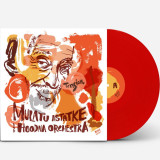
Ethio-jazz pioneer Mulatu Astatke joins the Hoodna Orchestra, Tel Aviv"s number one Afro funk collective, melding his enchanting vibraphone playing with their brass heavy force across seven original compositions that play tribute to the classic Mulatu sound while forging fresh paths. Produced by and featuring Dap-King Neal Sugarman, the results are gritty, yet majestic, soulful and uplifting.
Ethio-jazz pioneer Mulatu Astatke joins the Hoodna Orchestra, Tel Aviv"s number one Afro funk collective, melding his enchanting vibraphone playing with their brass heavy force across seven original compositions that play tribute to the classic Mulatu sound while forging fresh paths. Produced by and featuring Dap-King Neal Sugarman, the results are gritty, yet majestic, soulful and uplifting.
Die Serie der DRAHDIWABERL-Vinylneuauflagen findet mit dem Album "The Worst Of Drahdiwaberl" ihren krönenden Abschluss.Auf der streng limitierten und nummerierten, farbigen Vinyl (Naturfarbe mit weißen und schwarzen Splatter-Effekten) finden sich dreizehn der größten... Verzeihung - der hässlichsten, schlechtesten und grindigsten Hits der österreichischen Kultformation.Der grausliche Reigen erstreckt sich von "Mulatschag" über den ausgeflippten "Lodenfreak" und "Don't Touch Me There" (mit der wunderbaren Dana Gillespie) zu "Boring Old Fart", "Big Mac Donalds Massacre" und natürlich dem Klassiker "Lonely" mit "Kottan" Lukas Resetarits.Einfach "The Worst Of Drahdiwaberl"Ab 8.11.2024 auf limitierter, nummerierter und farbiger Vinyl!
* After the stunning success of their critically-acclaimed third album Sharpener, which reached number 3 in the jazz charts and number 14 in the independent music charts, London’s brass juggernauts Hackney Colliery Band blaze back onto the scene with their first collaborative album, ushering in a whole new era for the band.
* Featuring collaborations with a host of key names in jazz and world music including amongst others the father of Ethio-jazz Mulatu Astatke, British jazz funk legend James Taylor, trombonist Dennis Rollins, UK saxophonist Pete Wareham and Beninese singer-songwriter and Grammy Award-winner Angélique Kidjo, Hackney Colliery Band have effortlessly transformed their explosive live energy into 11 original recordings that push the groove and form in an accomplished manner.
*On ‘Collaborations: Volume One’, writers Steve Pretty, Olly Blackman and Luke Christie have between them penned the outfit's most dynamic material to date. ‘Mm Mm’ (feat. Angélique Kidjo and Roundhouse Choir) merges Beninese grooves with wah pedal trumpet textures, and the rousing call-and-response between Kidjo’s soaring vocal and the exhilarating choir adds a richness and depth to the composition.
*On ‘Snowfire’, innovative Norwegian pianist Bugge Wesseltoft brings a euro/nu-jazz feel to the album, while Dennis 'Funkybone' Rollins adds his trademark virtuoso trombone to the carnival-flavoured ‘Ricochet’.
*There’s an energy, respect for tradition and the exuberance of London in Hackney Colliery Band’s work, best exemplified in the evocative and downright thrilling James Taylor collaboration ‘Hypothetical’, with Taylor’s Hammond organ recalling the Acid Jazz era in which he made his name.
*New single ‘Netsanet’ (feat. Mulatu Astatke) is a deep exploration of Mulatu's trademark Ethio-jazz, while ‘Crushing Lactic’, composed by Tom Rogerson (fresh from a recent collaboration with Brian Eno) has a frenzied flow, with big horns and driving rhythm section.
*Elsewhere, Pete Wareham (stalwart of the London jazz revival) lends his free-flowing sax to ‘What’s Gone Before’, leading us into a powerful communion of jazz and brass as Mulatu Astatke’s ‘Derashe’ takes the listener down a vibrating rhythmic path while accompanied by blasts of horns and Mulatu’s trademark vibraphone.
*Two spoken word compositions (‘Why Yellow’ and ‘Climbing Up My Own Life Until I Die’) featuring York born writer and comedian Rob Auton lend an introspective voice to ‘Collaborations: Volume One’.
*A band never content to rest on its laurels, Hackney Colliery Band already have a number of collaborations in the works for ‘Volume Two’, and with further live shows planned for 2019, including the album launch at the famous Ronnie Scott’s Jazz Club, 2019 looks set to be HCB’s biggest year yet, both live and on record.
* Steve Pretty, the band’s frontman said: “It’s hard to believe that 2019 is our tenth anniversary, but now we’re ten years older it felt like the right time to get back to our jazz roots. It’s been such a privilege to work with so many of our musical inspirations both old and new on this record, and we’re super excited to be ushering in the next ten years with this new collaborative spirit: this is called ‘Volume One’ for a reason…”
First Word Records are very proud to present a brand new album from Kaidi Tatham!
'An Insight To All Minds' is Kaidi's 3rd solo album under his own name, following several EPs and two albums for First Word; 2018's acclaimed 'It's A World Before You' and the re-press of his seminal 2008 sophomore album 'In Search Of Hope' last year.
For those that don't know, Kaidi Tatham is a legendary multi-instrumentalist. Once dubbed "the UK's Herbie Hancock" by Benji B, he's a virtuoso on the keys and a true innovator in sound production as one of the original creators of the Broken Beat sound. Over the years his musical prowess has blessed numerous projects, initially with the likes of Bugz In The Attic and The Herbaliser, and more recently with DJ Jazzy Jeff (through the PLAYlist projects), Andrew Ashong (on the acclaimed 'Sankofa Season' EP last year) and with longtime accomplice, Dego. This in addition to session work for artists such as Mulatu Astatke, Slum Village, Amy Winehouse, Soul II Soul and Leroy Burgess, along with First Word label mates such as Eric Lau, Children of Zeus and Darkhouse Family. Kaidi is also a revered DJ known for rocking parties globally, whilst his solo catalogue spans tons of EPs and releases for labels such as 2000 Black, Eglo and Theo Parrish's Sound Signature.
On 'An Insight To All Minds', Kaidi says it's "not about a destination, but a process. It's about how you drive, not where you're going. Nothing in this world can torment you as much as your own thoughts… We are all going through it. We can all feel what the next person is feeling, believe it or not. It's learning how to tap into it".
The album is comprised of an assortment of Kaidi's unique flavours - uptempo jazz-funk bruk, laced with rhodes, flutes, live bass and delicious percussion. Using that blueprint he moves effortlessly through latin and samba, half-step, deep afro house and a sprinkle of curveballs, all presented in Kaidi's inimitable way.
'Intergalactic Relations' brings with it some 110bpm synthed-out spacey electro-breaks, 'Could It Be' sets off sounding like a Morricone film score, whilst 'Rodney' is some serious heads-down business; stark and punchy off-kilter broken beat and vocal stabs. There are a few guests too - 'Chungo' sees the return of Uhmeer (who previously appeared on 'Cupid' on the album 'It's A World Before You'); here the young Philly MC deftly rides a 9/4 time signature beat. Meanwhile 'Stro Kyat' invites in another supreme talent, Stro Elliot (The Roots), who provides a suitably crisp & crunchy riddim to accompany Kaidi's key play over a mind-bending 5/4 time signature.
With this new album, Kaidi Tatham adds further to his already impressive catalogue, a body of work that falls within the cracks of jazz and dance music, exemplifying modern British black brilliance once again; uncompromising, innovative, groundbreaking, intricately sophisticated and deeply funky. His fanbase expands on every release and it's no surprise that that fanbase includes peers such as Madlib ("ahead of his time"), Gilles Peterson ("a key part of an entire movement"), K15 ("a limitless source of inspiration"), Alexander Nut ("a true virtuoso") and Kyle Hall.
out of Stock
Last delivered 23 months ago available to reorder, subject to availability
Skinshape (aka Will Dorey) releases his ninth studio album titled Another Side Of Skinshape on 27th September via Lewis Recordings. As the album title suggests, Dorey’s latest body of work is somewhat unlike anything in his prior discography. However, there is always a consistent Skinshape thread which pulsates throughout all of his music - a kind of sonic dreamscape which echoes a mystical nostalgia for a sun dappled afternoon.
Taking inspiration from childhood memories, Ethiopian rhythms, and even calls to prayer, Another Side Of Skinshape gained access to the most esoteric corners of Dorey’s mind. Whilst ‘It’s About Time’ and ‘Ananda’ display a slightly more synthesised palette than we typically hear of a Skinshape tune, singles ‘Stornoway’ and ‘Lady Sun’ (which features the hazy soul vocals of West London’s Hollie Cook) replicate the same lifeblood heard on albums Nostalgia, or Craterellus Tubaeformis.
Speaking on the album, Dorey says “Some songs pay homage to the 90s whilst others the 60s and 70s. Yet you may not perceive all of these in the form that they are presented. In any case I hope that the album is enjoyable and will fit casually into the flow of your day.”
Whilst making this album, Dorey experimented with various keyboards and drum machines, which are at times layered over the excellent drumming of Thomas Blunt, who played live onto tape. Blunt is well versed in the Skinshape vernacular, also being part of Dorey’s live band. Indeed, Another Side Of Skinshape is due for release just before a run of UK and US live dates, which will be the first time the band has ever hit the open road.
Dorey is a former member of the band Palace, has played Glastonbury, BBC Maida Vale and Shepherd’s Bush Empire to name a few. Skinshape’s ‘I Didn’t Know’ has streamed over 50 million times. He is proudly from Swanage, Dorest.
out of Stock
Last delivered 2 years ago available to reorder, subject to availability
The follow up to the highly acclaimed reissue of the first volume Ethiopian Hit Parade. This 2nd volume features 'Ethiopian Hits' from 1972 to 1975. The track layout is Identical reissue to the original vinyl
"After releasing around fifty 45 rpm singles and his first 33 rpm album (Ethiopian Modern Instrumental Hits AELP 10, re-released by Heavenly Sweetness HS092VL), Amha Esthèté set about compiling his best 45s on a series of now legendary albums (the originals are impossible to find) in 1972. The first four volumes of Ethiopian Hit Parade were released in September and October 1972, with the fifth volume appearing in January 1973. You are the proud owner of Volume 2.
It is worth reminding ourselves that when Amha Esthèté set up his Amha Records label in 1968-69, it was in defiance of a state monopoly designed to regulate the imports and production of records by an imperial decree of July 1948. This extravagant state privilege had produced only 78s of traditional music , which though thrilling, excluded anything at all modern. To the best of our knowledge, only sixty-seven of these prehistoric discs were pressed in Great Britain between 1955 and 1961 and released by His Master’s Voice. They were supposed to be part of celebrations of Emperor Haile Selassie’s silver jubilee . . . even though 33s and 45s had existed since 1948 and 1949 respectively! Such incompetence and servility, combined with a rejection of an effervescent contemporary music scene, were symptomatic of the decadence surrounding the end of an era.
An audacious, funky outlaw, a music lover and an entrepreneur in tune with the baby-boomer generation, young Amha Esthèté (he was only twenty-four when he launched his label) will be remembered as the instigator of a peaceful revolution thick with soul and rock’n’roll.
After the acclaimed reissue of the first volume Ethiopian Hit Parade. Here is the second volume that include all the greatest Ethiopian Hits from 1972 to 1975. Identical reissue to the original vinyl which is extremely rare and expensive.
The opening track of the compilation is the song Tezeta Slow and Fast by GETACHEW KASSA were featured on the album Ethiopiques, Vol. 10: Ethiopian Blues & Ballads. and originally released on 1972. The other tracks on this second volume celebrate such pioneers of modern Ethiopian groove as Abayneh Degene, Tèshomè Meteku, Menelik Wossenachew Mulatu Astatqe and Muluken Melesse, alongside “tradi-modern” singers representing Amhara and Oromo culture, so rich and so long marginalized."
Far Out Recordings Proudly Presents The 1975 Self-titled Debut Album From Brazilian Vocalist And Bossa Nova Luminary Emilio Santiago. Nicknamed 'the Nat King Cole Of Brazil', Santiago Was A Master Bossa Balladeer And A Top-class Crooner. But He Is Known Equally For His Brazilian Funk, Soul And Boogie Classics. One Of His Best Know Is Album Opener 'bananeira', A Party-starting Version Of The Song Originally Written By Joao Donato And Gilberto Gil. 'brother' Is A Smooth-grooving Killer With Great Horn Arrangements And A Huge Backing Choir, While 'la Mulata' Is A Soulful, Swinging Salsa Stepper.
Originally Released On The Cid Label, The Album Showcases The Full Range Of Emilio's Talents, While Paying Homage To Some Of Brazil's Greatest Composers, Including Jorge Ben, Marcos And Sergio Valle And Ivan Lins Among Others.
The Credits On The Album Are A 'who's Who' Of Brazil's Greats, With João Donato On Keys, Wilson Das Neves, Ivan 'mamão' Conti And Paulinho On Drums, Durval Ferreira, Carlos Roberto Rocha And Helio Delmiro On Guitar, Ariovaldo, Orlandivo, And Chacal On Percussion, Danilo Caymmi On Flute, A Brass Section Featuring Victor Assis Brasil, Edson Maciel And Jesse Sadoc, And Backing Vocals From Jaime And Nair, Lúcia Lins, Jurema And Marcio Lott.
out of Stock
Last delivered 2 years ago available to reorder, subject to availability
"Enjoy The Toons Records in partnership with Walt Disney Records and Enjoy The Ride Records, is proud to present the premiere vinyl release for Walt Disney Pictures' Chip 'n Dale: Rescue Rangers.
A comeback 30 years in the making, Chip 'n Dale: Rescue Rangers catches up with the former Disney Afternoon television stars in modern-day Los Angeles. In this hybrid live-action/CG animated action-comedy, Chip and Dale are living amongst cartoons and humans in modern-day Los Angeles, but their lives are quite different now. It has been decades since their successful television series was canceled, and Chip (voice of John Mulaney) has succumbed to a life of suburban domesticity as an insurance salesman. Dale (voice of Andy Samberg), meanwhile, has had CGI surgery and works the nostalgia convention circuit, desperate to relive his glory days. When a former castmate mysteriously disappears, Chip and Dale must repair their broken friendship and take on their Rescue Rangers detective personas once again to save their friend.
Featuring the fantastic score by Brian Tyler, featuring ""Chip 'n Dale Rescue Rangers Theme"" Performed by Post Malone and ""Disney Afternoon Theme / Whale Rap Performed"" by Andy Samberg, John Mulaney & Nathaniel Motte. The 2xLP album is available on an Enjoy The Ride Records exclusive color vinyl variant, a Mondo exclusive split color vinyl, and two additional colored vinyl variants.
Habibi Funk is thrilled to share a second collection of deep grooves and unreleased songs from Algeria's Ahmed Malek, often compared to Italian heavyweight Ennio Morricone. Malek’s music effortlessly switches between thematic jazz, funk, reggae and Algerian folk – creating indelible soundscapes that intersect the musical innovations made in African jazz by Mulatu Astatke, Bembeya Jazz National along with some of Europe’s finest experimental composers like Piero Piccioni and Janko Nilovic. “Musique Originale de Films, Volume Deux” is out June 28th, 2024 via Habibi Funk.
Whenever an interview asks about a “memorable moment” in Habibi Funk label history, one we always reference is how we got in touch Ahmed Malek’s (22K Spotify Followers, 285K Spotify Monthly Listeners) music and subsequently his family. It all started with us coming across Ahmed Malek’s music on YouTube in 2012. We were mesmerized by how effortlessly the music would switch between jazz, funk and Algerian folk while counterweighting it with an undertone of melancholia. Musical perception is different for every person, but there is a chance that his music will touch you in one way or another. At the time, we had just started the Habibi Funk label and we felt Ahmed’s music might be a good fit for the sound we were trying to highlight. Fast forward three years: we had become captivated with the idea of reissuing some of Ahmed Malek’s music. We knew some people had tried to locate his family but, but with no success. In the end it was an incredible amount of luck that made it possible for you to read these words and listen to Ahmed’s music. We were on a DJ gig in Beirut playing old Arabic records and we mentioned our passion for Ahmed Malek’s music to a friend. She said she knew one person in Algier, and as much as it would be a shot in the dark, she could ask her if she had an idea of how to find Malek’s family. Two weeks went by before we heard back, and what we got was incredibly good news - her Algerian friend was the neighbor of Ahmed Malek’s daughter! We’re not spiritual people, but it felt like the universe wanted to see the release happen. We started to speak with Henya, Ahmed Malek’s daughter and she was more than happy with our idea. She assured us that her father would have loved the plan as well. She provided us with tons of awesome material, from great photos, to unseen video footage and unreleased tracks. Eventually we visited Henya in Algeria and we licensed some of her father’s music, first for one (Habibi 003), then for another (Habibi 005), then we eventually organized an exhibition in June/July 2019 – Planète Malek – Une Rétrospective – at the Musée Public National D’Art Moderne & Contemporain in Algiers, focusing on Ahmed Malek’s artistic life. We also produced a small movie about him that our friend Paloma Colombe shot and directed. “Musique Originale de Films, Volume Deux” is a deep collection of unreleased songs and stemmed grooves from the Algerian master, from jazz, funk, psych to reggae rhythms and Latin flavors, all under the sonic umbrella of “Planète Malek;” and to quote the maestro, “I didn’t choose music, music chose me.” Lead single is the subtlety funky “Thème Rythme Léger,” out May 3rd along with LP Pre-Order (coincided with Bandcamp Friday for a larger impact) a delicate sonic dance between flute, piano and Spanish guitar with a Bossainfluenced groove. The steady, swingin’ drum groove is cloudlike - definitely toe-tapping friendly so just grab a partner to feel the Rhythme Léger. Second single out May 17th is the reggae-infused “L’Empire Des Rêves” – a sultry sax melody weaves through a prismatic rocksteady thematic groove. 3rd and final single “Thème Djalti feat. Aïda Guéchoud” – is a true Western-inspired ode to his Italian counterpart Ennio Morricone. “Thème Djalti” features the haunting vocals of Aïda Guéchoud, and combines elements of baroque and Bossa-jazz in a timelessly thematic way that seems grandiose yet remains uniquely personal to your ears. Swelling strings, trumpet, fem vox, flute, and plucked guitar expertly arranged, feels like you’re riding a horse into the sunset. Focus track “La La La” is fiery afro-arab-funk of the highest order! Put on your dancing shoes as Ahmed cuts the rug and gets us grooving along. Sonically the cut sounds like if Ahmed ran into The JB’s and Fela Kuti at a Cymande concert. Driving guitar and organ solos vie over pulsating bass riffs and afro-funk drumming that’ll have you out on the dance floor in no time. As always, both vinyl and CD come with an extensive booklet featuring background and interviews with Ahmed compiled through found newspaper clippings and newsreels, also including unseen photos, scans and more. “Ahmed Malek: Musique Originale de Films, Volume Deux” will be out everywhere June 28th.
out of Stock
Last delivered 10 months ago available to reorder, subject to availability
The Ethio Jazz album by Mulatu Astatatke is a jewel of the modern Ethiopian music. Essential.
An incredibly groovy Ethiopian record, originally from 1969-1972. Amazing orchestral 'Ethio-groove' filled with US soul, jazz, sometimes Latin and the deepest Eastern rhythms, even including some great nasty and dirty fuzz guitars. A true gem of Ethiopian modern instrumental music, which illustrates perfectly this symbiosis of strong rhythms and quality arrangements of subtle yet deep Ethiopian melodies. A must for all '60s/'70s collectors! In the Ethiopian musical landscape, Mulatu Astatke is a unique musician, composer, arranger. His real contribution consists in his action for instrumental music, in a country where orchestral traditions doesn't exist. For the last 30 years, he is the leading head of the Ethiopian musical scene. First vinyl reissue and definitely one of the most important Ethiopian music albums."
out of Stock
Last delivered 3 months ago available to reorder, subject to availability
The compilation ‘Les Belgicains – Na Tango Ya Covadia 1964-1970’ (‘Les Belgicains’ during the time of Covadia 1964-1970) tells the remarkable story of the first Congolese student orchestras in Belgium. During that time Congolese referred to countrymen living in Belgium as ‘Les Belgicains’. The Congolese Rumba presented on this compilation blew a new, fresh wind through the musical landscape of Congolese popular music under the supervision of the legendary editor and producer Nikiforos Cavvadias (Ngoma label).
All tracks are remastered from the original tapes. This album is available in a deluxe vinyl edition with gatefold sleeve (1LP) + insert.
out of Stock
Last delivered 2 years ago available to reorder, subject to availability
The Emmy-winning Comeback Kid himself comes back yet again with a blunt, brilliantly quotable stand-up special. "Baby J" takes the form of a wide-ranging conversation between John Mulaney, a kid in the balcony named Henry, and the rest of the sold-out crowd at Boston"s Symphony Hall. And now, you! John dominates the chat, of course - and while his cautionary tales are a bit too convulsive to be functionally preventative, you probably aren"t here to be cautioned. So have at it!
“I wanted to try and showcase as many people as I knew on this mix. My idea of Late Night Tales was to distil a series of relaxing moments; the whole conceptual sonic of relax- ation. So, I was trying to think of all the collaborators and friends that I knew, who’d recorded stuff with this horizontal vibe. Plus, I was also trying to help my friends' stuff get into the world. I know the story of Khruangbin blowing up after appearing on the series (in fact, I think that's how I discovered them). So, the main idea was to create a certain atmosphere, but also to help some of my favourite collaborators and bud- dies to give their songs a little push out into the world. Hope you like it” Jordan Rakei
Due for release on 9th April, Late Night Tales celebrate their 20th anniversary with the release of multi-instru- mentalist, vocalist and producer Jordan Rakei’s majestic compilation. The 28-year-old modern soul icon effortlessly stamps his own jazz and hip-hop driven sound all over this gorgeous array of handpicked tracks. A beautifully layered blend that is mirrored in the music he’s made, itcomes as no surprise that such a supremely gifted songwriter should deliver a mix that is all about the song.
Rakei, born in New Zealand, but raised in Australia, moved to the UK in 2015; he released his debut album, Cloak, with Oz label Soul Has No Tempo, but his two subsequentLPs, Wallflower and Origin, came out on Ninja Tune, the former#2 in Album Of The Year for Gilles Peterson’s Worldwide poll, while Origin was nominated for Best Album at the AIM Awards. Jordan had this to say on his upcoming mix:
As Jordan says,there’s so much more to the song selection on Late Night Tales’latest outing than a random collection of artists. Many have some sort of personal connection, so just as Bonobo provided a platform for the breakout of Khruangbin on a previous LNT, this may have the same ef- fect for Rakei’s friends. After a soothing opener from Fink, good friend and big influence Alfa Mist (part of the Are We Live collective) delivers ‘Mulago.’ “I want to champion their sound and show the world how good he is, and I thought it’d be fitting to start the mix with family,” says Jordan.
Next up is Charlotte Day Wilson with ‘Mountains,’ followed by ‘Count A Heart’ from Moreton, an exclusive collab- oration with Jordan, who grew up on the same street in Brisbane, Australia. “She was the first artist I ever collabo- rated with, and one of the first artists to be involved in mycareer,” he explains. Elsewhere we hear Scottish producer and multi-instrumentalist C Duncan’s haunting ‘He Came from the Sun,’ Barcelona collective Oso Leone deliver a dreamy ‘Virtual U’ and Bill Lauren’s ‘Singularity,’ which evokes a striking sense of time and place.
Snowpoet’s ethereal ‘Evitenity’ is a “long mediative nar- rative over a beautiful soundscape,” which at times seems chaotic, nicely juxtaposed with undeniable beauty, and Maro’s kooky songwriting shines on ‘Always And Forever.’ Long-time buddy Armon-Jones contributes ‘Idiom,’ and Jordan’s exclusive cover version is a two-for-one, Radio- head’s ‘Codex’ merging with ‘Lover, You Should’ve Come Home’ by Jeff Buckley and another exclusive,original com- position by Jordan, ‘Imagination.’ The latter works as a piece with the spoken (Spanish) word voiced by movie director Alejandro González Iñárritu (Babel, Birdman, and The Reve- nant,) who is a big fan of Jordan’s. “He messaged me when I went to L.A and asked to come to my show. I was in such shock and we hung out after. I thought it would be nice to get him to do this in his native tongue, because I don’t think that’s been done yet on the series.” It certainly is a familyaffair. Not theblood is thicker than water kind, but certainly musical kindred spirits.
Das vierte Studioalbum der exzentrischen Drahdiwaberl war ähnlich wie seine Vorgänger provokant und kritisch. Der bekannteste Song aus dem Album "Mulatschag" wurde seit Veröffentlichung stets als Eröffnungssong bei Konzerten von Drahdiwaberl eingesetzt (nicht selten kam es dabei auch zu sexuellen Handlungen auf der Bühne).
Reissue of the original ethiopian vinyl compilation. 180g vinyl + heavy cardboard cover.
"Ethiopians' deep-seated ethiocentrism, the legacy of a thousand years of history, has contributed in no small way to their music's strong national identity, particularly impervious to any African influences. Latin influences, so pervasive in the great musical centers of West Africa and the Congo, have been similarly rebuffed, despite the brilliant attempts of a musician like Mulatu Astatke. He was the first and for a long time the only Ethiopian to have studied music abroad (England and USA). In the late '60s, he brought back 'ethio-jazz', as well as a passion for Latin rhythms that was not readily shared by the Ethiopian audience. As early as 1966, he released a single and two LPs in the US entitled Afro-Latin Soul (and a third LP, Mulatu of Ethiopia in 1972), with his Ethiopian Quintet composed of American and Latin-American musicians (Worthy Records). That was three years before Fela's first American tour and six years prior to Manu Dibango's key breakthrough with the release of Soul Makossa in the Western 'pre-World music' market. All this goes to show how much the history of the African continent's musical modernity should be reconsidered in light of the Ethiopian adventure, even though this lone spark bore little relation, musically or ideologically to the musical revolutions initiated most notably by Ghanian highlife, South African jazz, Congolese rumba or, much later on, by Fela."
out of Stock
Last delivered 9 months ago available to reorder, subject to availability
Tricatel is proud to present, in a limited edition of 777 hand-numbered copies, the superb double vinyl/book dedicated to 7×7, inspired by Bertrand Burgalat.
Seven notes in the scale, seven days in the week, seven colors in the rainbow, seven wonders of the world, seven virtues and seven sins, seven ages of life, seven samurai, seven dwarfs for Snow White… Under the sign of 7, Belgian artist Jean Pierre Müller, in close collaboration with seven music legends (Robert Wyatt, Archie Shepp, Sean O’Hagan, Mulatu Astatke, Kassin, Nile Rodgers, Terry Riley), has conceived a magical project combining visual and sound compositions, in all senses and meanings.
In the summer of 2012, 7×7 was first presented to the public in its entirety at Edinburgh’s Summerhall, the start of a series of high-profile exhibitions and shows that have taken 7×7 from New York to Cannes. Ten years later, Jean Pierre and Tricatel would like to dream again with you, this time of a physical object celebrating 7×7 and offering the general public the opportunity to own a piece of the 7 colors dream.
This art and music object is a Gatefold double-vinyl, comprising two white vinyl records in printed inner sleeves and a 64-page booklet in the center, like a book.
After her album with producer High John on MPM in 2019 and collaborations with agajon, Àbáse, KUOKO, Cap Kendricks and Move 78, soul singer douniah returns with her debut solo project!
douniah imparts her debut solo project "A Lot, Not Too Much" to an unexpecting audience. Thoughtfully, the singer-songwriter invites us to embark on our own saviour. The collection of songs is steeped in artistic and emotional integrity. Production was ledand executed by Dhanya Langer, one half of band project Modha, and producer of JujuRogers' 2019 album "40 Acres N Sum Mula". Written amid the pandemic, this piece is aneffort of immense proportions - experimenting with her sound in time, wading through spirals of arduous personal challenges. 'A first impression of how my journey sounds.'Agadir-born and Hamburg-raised, douniah engages in the practice of interpreting herspirit, impressively, in German, Darija and English. We find here, a body of work that threads together the tenets of free-form poetry and romanticism, backdropped by neo-experimental jazz tendencies. In euphony, a worldly array of instruments act insymbiosis to carry us through "A Lot, Not Too Much". douniah's voice is one to fall into; her message is enunciated with every word, delivered delicately with an inventory ofriffs and ranged tone. The utilisation of choppy, note-like, freestyles bridges the EP's strong singles, into a rhapsodic whole.
out of Stock
Last delivered 2 years ago available to reorder, subject to availability
Now Available In A Limited Edition Red Vinyl Pressing. Ayalew Mesfin stands aside the likes of Mulatu Astake, Mahmoud Ahmed, Hailu Mergia and Alemayehu Eshete as a legend of 1970s Ethiopia. Mesfin’s music is some of the funkiest to arise from this unconquerable East African nation. Mesfin’s recording career, captured in nearly two dozen 7” singles and numerous reel-to-reel tapes, shows the strata of the most fertile decade in Ethiopia’s 20th century recording industry, when records were pressed constantly by both independent upstarts and corporate behemoths, even if they were only distributed within the confines of this East African nation. Though Mesfin was forced underground by the Derg regime that took control of Ethiopia in 1974, he has returned almost 50 years later with this triumphant set albums – the first time that his music has been presented in this form. These albums give us a chance to discover a rare and beautiful moment in music history, in anthologies built from Mesfin’s uber-rare 7” single releases and from previously unreleased recordings taken from master tapes. Mot Aykerim gives us a chance to discover a rare & beautiful moment in music history, in an anthology built from his uber-rare 7” single releases. Contains an oversized 11” x 11” 16 page book that tells the story of modern Ethiopian music and Mesfin’s role within it.