The Jazzanians are a multi-racial jazz ensemble from 1988 Apartheid South Africa. The restored and remastered historical album, ‘We Have Waited Too Long’, was spearheaded by Darius and Catherine Brubeck. Their book, ‘Playing the Changes’, covers their years in South Africa. This is also captured in a documentary film, ‘Playing the Changes: Tracking Darius Brubeck’, which describes a significant passage in South African history (1983 - 2006), and the transformative effect of jazz on society.
Поиск:multi racial
Все
- 1
- A1: Words Drenched In Acid
- A2: South Still Speaking (Feat. Killer Mike)
- A3: Broadcasting
- B1: Mirror Discussions
- B2: Native Tongues
- B3: Shredded Speach (Feat. Bun B)
- B4: Talk Of Mane And Bruh
- C1: Strange Slanguistics (Feat. Termanology)
- C2: Concrete Idioms (Feat. Passport Rav & Propain)
- C3: Wine Glass Remark (Feat. Jay Worthy)
- D1: A Love Language (Feat. Everyday Saints)
- D2: Monologue For My Dogs (Feat. Stooky Bros & Everyday Saints)
- D3: My Sermon (Feat. 8Ball)
- D4: Power Dialogue (Feat. Adajyo)
Lukah’s unprecedented trajectory shatters new heights with A Lost Language Found, his most thoughtful, sonically-diverse record yet. With the multiplatinum OG Statik Selektah on production duties, Lukah’s by now iconic, razor-sharp pen-game goes toe-to-toe with some of the best. Trading verses with Houston innovator Bun B, Memphis legend 8 Ball, and the larger than life Killer Mike, all parties involved operate at the peak of their skill. The first of what will be multiple collaborations with heavyweight hip-hop producers, this new LP establishes what we already knew in our hearts: Lukah is here to take over.
The stage set to deliver this latest opus is intensely personal: in the heart of his community, Lukah holds court with his trusted fellows at his great grandmother’s house in French Fort, Memphis, a historically black neighborhood long rec-ognized as a stately, proud vision of Black suburbia in a city still healing from deep racial trauma. Recently laid to rest in Elmwood Cemetery, the pain and strength of mourning her influence is present in the deep lyrics of A Lost Lan-guage Found, where Lukah traces not just his own legacy, but that of the linguistically rich and diverse dialects of his people. The cover image depicts the game room of the house, a place that once hosted civil rights leaders and revolu-tionaries, now a monument both to a history of leadership and to its future. For the first time, Lukah himself appears on the album art to mark this significant occasion, flanked by his partners, the symbolic source of knowledge in his hand. Listening to Lukah spit has always been a privilege and a revelation. His artistic power lies in uncovering secrets thru torrents of lucid, poetic rhymes. The listener is invited to share in this bountiful feast. Witness the real god expansion.
The album is available as a limited edition vinyl release of 500 copies in gatefold jacket.
Way back in 2008 Soul Junction released a 45 on Duane Williams “Yes My Love Is Real” with Duane being one half of the Detroit husband and wife singing duo Beverley and Duane. The duo under the guidance of their lifelong friend Will Hatcher recorded six songs of which two “ We Got To Stick Together” and “Glad I Got You Baby” were picked up by local Detroit label president Woodrow ‘Woody Wilson for release as a 45 single on his Fee label. The popularity of the 45 was to attract attention from the major Ariola label, who picked it up for national distribution during 1978 leading to the subsequent Ariola album ‘Beverley & Duane”. As the 1980’s dawned Beverley and Duane recorded a solitary 45 single for the independent Detroit Brown Bomber label “Love/You Belong To Me”. The label was owned by John L. Barrow a nephew of former heavyweight boxing champion Joe Louis, (Brown Bomber being Louis’s nickname). Beverley and Duane later moved to the west coast until their amicable divorce which led to Duane returning to his native Detroit to reacquaint himself with his former mentor Will Hatcher. This meeting of old friends led to the creation of Duane’s first solo project which Will brought to Soul Junction in late 2007. Hot on the heels of Duane’s hugely popular Soul Junction 45 came his subsequent CD album “These Songs Are For You” (SJ5001) released in 2009. Contained within this album was the very pertinent gospel/social commentary song “Father We’re Having Trouble” a song which two very close and knowledgeable friends of mine the late John Anderson and Bill Randle claimed had all the right ingredients for a potential hit record. Over the ensuing years this song has always remained in my thoughts until a few years ago I broached the idea with my good friend Jesse James recording a cover version of it, Jesse upon hearing the song was very receptive to the idea. Another period of time elapsed before we again reignited the idea. A decade or so on from Duane’s original version and the lyric’s of this particular song still remain as pertinent as ever, if not more so! During early 2020 Jesse entered, Con Funk Shun multi-instrumentalist and vocalist Felton Pilate’s Felstar Studio in Atlanta to lay down the basic tracks with Felton acting as co-producer on this project. Everything was progressing nicely until a worldwide pandemic intervened. With Jesse locked down in his new home on the West Coast and Felton in Atlanta the project unfortunately came to a holt. During this enforced period of inactivity further racial and political upheaval occurred which only added more poignance to the project. Eventually with the lifting of lockdown restrictions Jesse finally made it back to Atlanta to finish the project, the fruits of which you have before you now.
On November 8th, 2Tone Records/Chrysalis Catalogue will release a 40th Anniversary Half-Speed Mastered Edition of The Special AKA 'In The Studio' album. This release has been liaised and approved by the band's founder and main songwriter Jerry Dammers. Formed in Coventry in the mid-1970s, The Specialswas the idea of musician Jerry Dammers, who brought together an eclectic array of individuals to fulfill his vision of a multi-racial band, fusing the energy of punk with the legendary but, at the time, often overlooked, sound of Jamaican ska. The band rose to prominence along with the 2Tone movement, which included two No. 1 singles, Too Much too Young and 1981's Ghost Town, which theme still resonates today before Terry Hall, Lynval Golding and Neville Staple left to form the Fun Boy Three and Roddy Byers left to tour with his band the Tearjerkers. The remaining members, Dammers, Bradbury and Panter, recruited guitarist John Shipley from The Swinging Cats, ex-Bodysnatcher Rhoda Dakar and lead vocalist Stan Campbell,reverting the original band name of The Special AKA and set to work on a new album. Released in 1984, 'In the Studio' was a brave mix of bold and challenging music, with a strong political, social and moral conscience. The album made it into the Top 40, and while it might not have been a huge commercial success, it was, and still is, an astonishingly unique work: a haunting, claustrophobic mix of lounge, soul, reggae, jazz and Arabic rhythms, with uncompromising subject matter. It featured two classic singles: the joyous, yet serious rallying anthem for the then imprisoned South African ANC leader, 'Free Nelson Mandela', and 'What I Like Most About You Is Your Girlfriend'. As time has gone by, the status of 'In The Studio'has grown, and today it is rightly viewed as a genuine lost classic. Like the previous two Specials 40th Anniversary vinyl editions, this has been newly remastered and cut at half-speed by Miles Showell at Abbey Road Studios, London. Format: Wide spine sleeve, 2LP 180gm Black Vinyl cut at 45rpm with insert inside and OBI.
A New Entry In The Canon Of The Genius Ray Charles The First Black Artist To Record A Country Music Album His Original Iconic Country Recordings Includes ""I Can't Stop Loving You"" & ""Seven Spanish Angels"" Mastered By Multi-GRAMMY® Winning Engineer Michael Graves Produced In Full Cooperation Of The Ray Charles Foundation
Ray Charles changed the way the world perceived country music.
A new, stand alone album, with a track-list of iconic songs cherry picked from across Ray’s country music recordings. With thoughtful attention to detail, this piece looks and feels authentic and period appropriate. This collection not only showcases Ray’s unparalleled interpretations of country classics, but also serves as a timely reminder of his role as a cultural pioneer who helped bridge racial divides through the universal language of music.
All Black Everything, the debut EP by UK-based, Parisian bassist, vocalist and composer Amy Gadiaga, is an expansive, boundary-pushing 5-track collection showcasing prodigious bass playing and a voice brimming with power and emotion. It's a profound exploration of self-acceptance that presents both a celebration and acknowledgement of Gadiaga's deep-seated darkness.
Inspired by the 2020 Black Lives Matter movement All Black Everything confronts racial identity complexities and the challenges of being a societal 'black sheep' and sees Gadiaga courageously transform her insecurities into a narrative of self-empowerment.
Born to parents of Senegalese, Gambian, and Malian descent, and hailing from the outskirts of Paris, the multitalented Gadiaga has been making waves in the UK music industry since she moved to London aged 18. With a fresh and unique style that bridges the old school jazz tradition of musicians such as Betty Carter and Wayne Shorter with the raw, rootsy modern sound of artists such as D'Angelo, Stevie Wonder and Twinkie Clark, Gadiaga's breadth of ambition and revitalising approach have brought early critical acclaim and ardent fans.
Signalling the arrival of a significant new voice on the London music scene, All Black Everything communicates the liberating essence of embracing individuality and presents a journey through Gadiaga's personal struggles, standing as a testament to art's transformative power and encouraging listeners to find strength in their uniqueness. "All Black Everything is very much an exploration and embracing of one of my archetypes in life which is the black bird/black sheep" she explains. "That feeling of not thinking you belong anywhere, of being misunderstood and really tending to your own. No helping hand. But it's ok sometimes because you also feel like nobody can compete with you, you're one of a kind."
Three timeless tracks from the esteemed D.C. LaRue back catalogue get brand new remixes from three equally exciting producers to give a modern spin to these ‘70s classics.
LaRue joined the music industry by recording two top 40 pop records influenced by the teen-idol era. In his early adulthood, he began writing songs about the fast-growing club and bar subculture he frequented where the most outcast of society’s young and marginalized could safely congregate after being ostracized in work, church, school, and often family. In this relatively brief selection of LaRue classics, contemporary remixes paradoxically bring out the timelessness of his songs, in tone, message and musicality.
First up, ‘Do You Want the Real Thing’ gets a fresh update from re-edit royalty Opolopo in the style of the lush yet sharp Motown and Philadelphia production pieces that inspired the arrangement originally, still resonates as a nightly inner dialogue or negotiation, another of LaRue’s literary signatures.
‘Let Them Dance’ greeted in its time as a one of the breakthrough moments of new music technology, is reinterpreted by Dr Packer mainly with its live acoustic tracks, also retaining bright, rhythmic synthesizer hooks with results that are still true to his intentionally oblique lyric, a novelistic portrayal of the drug dealers, the LGBTQ+ underground community, and the powerful upper class elite that made up the multi-racial, socially integrated crowds on the dance floors at the height of disco.
Last up, ‘Indiscreet’ from LaRue’s 1976 concept album, ‘The Tea Dance,’ tells much of the story about how disco had already birthed its own far more popular and influential successor form, Hip-Hop, by the time it was declared dead by the superannuated establishments of the radio, media, and record businesses. Released in a highly limited, personally inscribed 12-inch 45 rpm edition for a select list of top disco DJs, its complex, elastic polyrhythm made it as irresistible to younger black DJs and breakdancing teens as any of the year’s other big street breakouts. Only Good Vibes Music head honchos and Scotland’s finest The Knutsens give it the magic touch for the modern dancefloor.
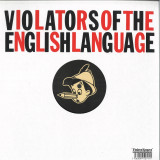
Emanating from a ‘prehistoric’ existence near the end of the last millennium, Andy Votel and his slightly older college mates were once best recognised in Mancunian clubs and bars as teenage vinyl nerds and bum-fluffed battle rappers under the collective name Violators Of The English Language (which in acronymic form explains Andy’s own exotic pen-name).
As steadfast supporters of the 1980s / 90s Brit-core rap scene coming out of London, the multicultural Violators’ Mancunian accents were perhaps a bridge-too-far to secure dream job contracts for humble labels like Kold Sweat and Music Of Life. An unlikely constructive meeting with Gang Starr’s DJ Premier (while Andy helped out at a radio station), plus playing warm up DJ sets for countless US rap heroes might have temporarily added inspirational fuel to the fire, but after an active period combining graffiti, rapping, scratching, obsessive record digging and beat making into their daily operations, adulthood eventually began to rear its unwelcome head.
A decade later, Andy Votel and his digging skills would begin to provide direct sample material for the likes of Madlib, Mos Def, Jay Z, Nas, Dr Dre, Ghostface Killa and Action Bronson, amongst others, and the Violators’ black book of breakbeats and catalogue numbers soon began to feed a same-butdifferent rap beast.
For a project that has taken thirty years, it would be totally inadequate to call the formation of Hypocritical Beatdown Records a lockdown-project. There’s a deep history and psychology in these records by Violators Of The English Language and their spin-off groups Magnets (Rap Group) and ProVerbs, that combines stage-fright, loss, pride, creative-schizophrenia, racial inequality, surrealism, personal politics, brotherhood, artistic-constipation, better judgment, love, anti-love, soul searching and much more.
As well as Andy Votel taking care of both production and part of the microphone duties, some might recognise fellow MC and solo recording artist Figure Of Speech as a prominent voice here. The trio of Magnets (Rap Group) sees Andy also joined by local B-Girl legend Jeni Chan aka Penny Chew, and rapper and DJ Benjamin Hatton who has previously recorded with Kid Acne, The Mongrels and Sheffield’s Invisible Spies’ long-running squadron. Widely respected visual artist Rick Myers (now living in Massachusetts) also contributed scratches for many of these recordings via file sharing and custom dub-plates to keep the Violators’ authentic line-up intact, as well as galvanising the crew’s semi-reluctant art-school roots.
Extra production credits for the label also go to Sean Canty from Demdike Stare, and the late great Dan Dwayre aka Black Lodge (Mo Wax) who sadly passed away during the completion of these recordings. The members of Violators Of The English Language who you’ve not yet heard of will quickly make themselves known as the needle drops on this long-mooted debut vinyl release.
Repressed , please note price increase! Would Like To Pose A Question is one of the first previously-unreleased funk and soul albums issued by Now-Again, and it still sounds amazing today. Well, it would have to: it's the brainchild of bandleader/drummer/singer/songwriter Lester Abrams (the L.A. in L.A. Carnival). Abrams helped create hit singles like "Minute by Minute" and “What A Fool Believes” for the Doobie Brothers and played with artists such as B.B. King, Stevie Wonder, Peabo Bryson, Manfred Mann, Quincy Jones and many more. Before all that - in early 70s while still in Omaha - he brought a multi-racial band into the Pacific Avenue studio to cut an album's worth of material. Only one single - "Color" b/w "Blink Man" - was ever issued, and this album sat on master tapes in Abrams' closet. That is until Now-Again’s Eothen Alapatt intervened in the early 2000s and Would You Like To Pose A Question was at last given a proper full length release.
- A1: Cool Water (Feat Ivan Conti (Azymuth)
- A2: Cycle Of Many
- A3: Admira (Feat Gigi Masin)
- A4: Flowers (Feat Venecia)
- A5: Melt Into You (Feat Alex Malheiros (Azymuth)
- B1: Flos Potentia (Sugar, Cotton, Tabacco) (Sugar, Cotton, Tabacco)
- B2: Sphere (Feat Jean-Luc Ponty)
- B3: Warm
- B4: On My Way Home
- B5: What Do The Stars Say To You
White Vinyl[31,51 €]
In 1990 Ronald Lee Trent Jr. was the teenage creator of Altered States – a raw, futuristic techno-not-techno anthem, which in retrospect was something of a stylistic anomaly for the young artist. Across subsequent years, with time spent in Chicago, New York and Detroit, came the development of his signature sound, and renown as a world class purveyor of deep, soul infused house/garage. This story has already been told, and on casual inspection, the well-worn platitude ‘house music legend’ is an old shoe that still fits. However, in fact, he’s actually so much more, and has been for quite a while. A genuine musician, songwriter, and ‘producer’ in the proper, old-school sense, the artist today has more in common with Quincy Jones than he does your average journeyman DJ track-hack.
To those in the know, these broader skills haven’t gone unnoticed, which is why on the highly collaborative, career-topping new LP ‘What Do The Stars Say To You’, it took little persuasion to recruit serious star power. Brazilian royalty Ivan Conti and Alex Malheriros from Azymuth, violin maestro Jean Luc Ponty, ambient hero Gigi Masin, hype band Khruangbin and more performed, whilst NY cornerstone François K provided mastering duties. At various points Ron himself played drums, percussion, keys, synths, piano, guitar and electronics.
Harking back to the 70s and 80s boom in adventurous, luxurious albums, WDTSSTY is a love letter to the longplayer, where rich musicality and a liquid smooth, silky flow make seemingly odd genre bedfellows acquiesce harmoniously. Each song its own high-fidelity odyssey, Trent incorporated a broad range of live instruments and electronics into a sophisticated, euphonic whole. Described by him as being “designed for harmonising with spirit, urban life and nature”, this is aural soul food, gently easing you into balmy nights, where everything is alright.
Originally wanting to be an architect, Trent’s views his approach to collaboration and music in general as having the same principles. A firm believer in the nourishing qualities of sound, he sees direct parallels between the two disciplines, being as the purpose of good architecture is to improve quality of life. “With WARM, through sound design, I built frameworks for the musicians, who furnished and occupied these structures beautifully, which was a big compliment for me”, he comments.
The conditions required for a good collab are more than simply structural though, as Trent expounds, “I’m a huge fan of everyone on the record, especially Jean Luc and Azymuth, who’re part of my DNA. Each track was made with that guest in mind – for example, when I started writing ‘Sphere’, I immediately thought ‘this IS Ponty’. I played the keys in his style, and did a guide violin solo using a synth, which he then re-did, amazingly. ‘Cool Water’ is based around Azymuth themes, so when I sent it to Ivan, he could immediately see himself in the piece; He got what I was going for straight away. For ‘Melt Into You’ I hit up Alex on Instagram, sent him the track, he liked it, and within 24 hours he’d sent back six different bass passes!”
“Conversely, Admira began with a sketch sent by Gigi and became something combining Jon Hassell-esque chords and the feel of ‘Aquamarine’ by Carlos Santana, which links back to Masin’s recurrent nautical theme”, he adds.
With community, history and the need for racial equality never far from Ron’s mind, ‘Flos Potentia’ translates from Spanish as flower power, but rather than promoting some hippy idyll, instead it refers to plants which drove the slave trade: tobacco, sugar and cotton. Joined by Khruangbin, together they propel Dinosaur L, Hi-Tension and afrobeat into an ethereal, clear-skyed stratosphere.
Aside from these esteemed guests, other key influences cited by Trent include ‘Gigolos Get Lonely Too’ by Prince, ‘Beyond’ by Herb Alpert, David Mancuso, Jan Hammer, Tangerine Dream, The Cars, Trevor Horn, Alan Parsons Project and pre-Kraftwerk incarnation Organization. A multitude of others are audible too, including George Bension, Vangelis, Loose Ends, Maze, Flora Purim, Weather Report, Atmosphere, Grace Jones, James Mason and Brass Construction.
On the subject of influences, although opposed to the fences erected by genre tags, to understand where Ron is coming from, and where he’s at, it’s important to acknowledge just how big the palette is from which he paints. Traversing jazz funk, quiet storm, sophisti-pop, new age, new wave, kosmische, Balearic, samba, afrobeat, Latin rock, soft rock and yacht rock, his deeply entrenched digger’s knowledge pays off in dividends.
- A1: Cool Water Feat. Ivan Conti (Azymuth) And Lars Bartkuhn
- A2: Cycle Of Many
- A3: Admira Feat. Gigi Masin
- A4: Flowers Feat. Venecia
- A5: Melt Into You Feat. Alex Malheiros (Azymuth)
- B1: Flos Potentia (Sugar, Cotton, Tabacco) Feat. Khruangbin
- B2: Sphere Feat. Jean-Luc Ponty
- B3: Warm
- B4: On My Way Home
- B5: What Do The Stars Say To You
Black Vinyl[24,79 €]
In 1990 Ronald Lee Trent Jr. was the teenage creator of Altered States – a raw, futuristic techno-not-techno anthem, which in retrospect was something of a stylistic anomaly for the young artist. Across subsequent years, with time spent in Chicago, New York and Detroit, came the development of his signature sound, and renown as a world class purveyor of deep, soul infused house/garage. This story has already been told, and on casual inspection, the well-worn platitude ‘house music legend’ is an old shoe that still fits. However, in fact, he’s actually so much more, and has been for quite a while. A genuine musician, songwriter, and ‘producer’ in the proper, old-school sense, the artist today has more in common with Quincy Jones than he does your average journeyman DJ track-hack.
To those in the know, these broader skills haven’t gone unnoticed, which is why on the highly collaborative, career-topping new LP ‘What Do The Stars Say To You’, it took little persuasion to recruit serious star power. Brazilian royalty Ivan Conti and Alex Malheriros from Azymuth, violin maestro Jean Luc Ponty, ambient hero Gigi Masin, hype band Khruangbin and more performed, whilst NY cornerstone François K provided mastering duties. At various points Ron himself played drums, percussion, keys, synths, piano, guitar and electronics.
Harking back to the 70s and 80s boom in adventurous, luxurious albums, WDTSSTY is a love letter to the longplayer, where rich musicality and a liquid smooth, silky flow make seemingly odd genre bedfellows acquiesce harmoniously. Each song its own high-fidelity odyssey, Trent incorporated a broad range of live instruments and electronics into a sophisticated, euphonic whole. Described by him as being “designed for harmonising with spirit, urban life and nature”, this is aural soul food, gently easing you into balmy nights, where everything is alright.
Originally wanting to be an architect, Trent’s views his approach to collaboration and music in general as having the same principles. A firm believer in the nourishing qualities of sound, he sees direct parallels between the two disciplines, being as the purpose of good architecture is to improve quality of life. “With WARM, through sound design, I built frameworks for the musicians, who furnished and occupied these structures beautifully, which was a big compliment for me”, he comments.
The conditions required for a good collab are more than simply structural though, as Trent expounds, “I’m a huge fan of everyone on the record, especially Jean Luc and Azymuth, who’re part of my DNA. Each track was made with that guest in mind – for example, when I started writing ‘Sphere’, I immediately thought ‘this IS Ponty’. I played the keys in his style, and did a guide violin solo using a synth, which he then re-did, amazingly. ‘Cool Water’ is based around Azymuth themes, so when I sent it to Ivan, he could immediately see himself in the piece; He got what I was going for straight away. For ‘Melt Into You’ I hit up Alex on Instagram, sent him the track, he liked it, and within 24 hours he’d sent back six different bass passes!”
“Conversely, Admira began with a sketch sent by Gigi and became something combining Jon Hassell-esque chords and the feel of ‘Aquamarine’ by Carlos Santana, which links back to Masin’s recurrent nautical theme”, he adds.
With community, history and the need for racial equality never far from Ron’s mind, ‘Flos Potentia’ translates from Spanish as flower power, but rather than promoting some hippy idyll, instead it refers to plants which drove the slave trade: tobacco, sugar and cotton. Joined by Khruangbin, together they propel Dinosaur L, Hi-Tension and afrobeat into an ethereal, clear-skyed stratosphere.
Aside from these esteemed guests, other key influences cited by Trent include ‘Gigolos Get Lonely Too’ by Prince, ‘Beyond’ by Herb Alpert, David Mancuso, Jan Hammer, Tangerine Dream, The Cars, Trevor Horn, Alan Parsons Project and pre-Kraftwerk incarnation Organization. A multitude of others are audible too, including George Bension, Vangelis, Loose Ends, Maze, Flora Purim, Weather Report, Atmosphere, Grace Jones, James Mason and Brass Construction.
On the subject of influences, although opposed to the fences erected by genre tags, to understand where Ron is coming from, and where he’s at, it’s important to acknowledge just how big the palette is from which he paints. Traversing jazz funk, quiet storm, sophisti-pop, new age, new wave, kosmische, Balearic, samba, afrobeat, Latin rock, soft rock and yacht rock, his deeply entrenched digger’s knowledge pays off in dividends.
After the impact of Exist in Ramallah festival back in 2019, and how relationships between the artists got established and the attendees contribution that helped to shape the identity and the vision of the project itself. Exist decided to take the next step and expand the project with a label that is runned between Amman based and festival founder Odai Masri and Amsterdam based and label co-founder Chafik Chennouf with the same ethics that the festival is standing for. Some of the main principles Exist upholds include resistance to homophobia, and the ongoing colonization of various parts of the world by state actors or multi-national oligarchs. In turn, we think that this colonization leaves no one free, and that it especially targets communities (human and non-human) that are most marginalized by capital and historical racial and ethnic structures. The first release 'Marks of Existence' is a collection of mind-melds with some of the scene's most continuously exciting and refreshing artists: Drew McDowall, Muqata'a, CASKO, Adel Poursamadi & Tegh. The Scottish, NYC-based experimental musician, Drew McDowall, has been subverting the formula for many years now, having clocked up storied work with Coil and Psychic TV back in the day. His track 'Conceal the Wound' is a stunning, exquisitely chiselled piece of synth music. It's like waking from a dream, only to return to its febrile clutches. Ramallah's Muqata'a came through flawless with his cut 'Administrative Detention', a blast of chaotic chopped breaks and lurching neo-beat tape MPC programming. The breakcore influence in combination with referencing crimes against humanity makes the tune an intense headmelter. The ideal soundtrack for unorganized resistance from a firsthand perspective. ‘The Price You Pay To Be Unattached Flesh’ sees CASKO push the hi-tech dirt of his Opal Tapes, Leyla Records and Voidance releases down darker ginnels to claustrophobic, anxiety-raising effect in a collection of brilliantly neon explosions of colour and exuberance floating on a sleazy and slow beat with bags of North-African swagger. Experimental electronic musicians from Iran have marked their prints on the face of the universal experimental music scene for some time now, though the manner in which their status went from "non-existent" to "present" and from "silent" to "noisy" might somehow seem "unpredictable" to the naked eye. Tegh, known for his work on Opal Tapes joined forces with Adel Poursamadi to come up with a beautifully bittersweet synthetic orchestration in a staggering fashion to close this EP with.
Nonesuch Records releases Ghost Song, the label debut of singer/songwriter Cécile McLorin Salvant. Ghost Song features a diverse mix of seven originals and five interpretations on the themes of ghosts, nostalgia, and yearning. Salvant says, “It’s unlike anything I’ve done before – it’s getting closer to reflecting my personality as an eclectic curator. I’m embracing my weirdness!” Cécile McLorin Salvant plays at Cadogan Hall on November 16 as part of the EFG London Jazz Festival, four shows at SFJAZZ in February, and two nights featuring the music of Ghost Song at Jazz at Lincoln Center in May. Salvant says of the title track, out now, “What if the love has gone, the love has left you and you have the emotions around that, and you’re still going through them, still engaging with the ghost of that love?” She continues, “Some songs are so painful to come out but this one came out pretty quickly. I’ve had some loss the last couple of years: my grandmother, the drummer in my band Lawrence Leathers.”
Ghost Song opens and ends with a sean-nós (traditional Irish unaccompanied vocal style) performance by Salvant, recorded in a church. On track one, she transitions into Kate Bush’s 1978 classic ‘Wuthering Heights’. Salvant says of the song, “Wuthering Heights is a book that really struck me to my core as I was making this album, during the pandemic. And the best interpretation of the novel is Kate Bush’s song.” She continues, “It’s the most classic ghost story. I decided I wanted to do an album called Ghost Song, and I knew that one had to be on it. Then I had the idea to mix it in with the sean-nós ‘Cúirt Bhaile Nua’, which binds it to the traditional ‘Unquiet Grave’, the last track on the album. The ghost is not haunting me; now I am haunting the ghost. They parallel each other so well and they’re such different time periods. I wanted the album to be a circle, with the sean-nós reference at the beginning and at the end. So it is the first track but it’s also the last track and it’s also the middle track, which is how I listen to music, walking around my neighborhood, on a plane, travelling somewhere, putting stuff on repeat.” “All the songs on the album kind of mirror each other. I tried to create this strange symmetry. So as you go in from both ends, the songs are sort of matched together,” Salvant says. “‘I Lost my Mind’ is the center of the Russian doll. I wrote that in the middle of the pandemic. There were nights when I wanted to just scream. It was this deeper part of me saying, ‘It’s OK if this sounds completely crazy, OK to just go with the completely crazy thing and not worry if people think you have lost your mind for doing it.’
“The bands also mirror each other from top to bottom. In terms of the instrumentation, everything,” Salvant explains. “That’s why the songs are there in that relationship: they match each other, they’re like fraternal twins, or one is the evil twin of the other. I, as the living, am visited by the ghost, and then I go visit the ghost in turn. I am haunting the ghost and annoying the ghost, which is saying, ‘Get out of here and go live.’” Of the sonic variety on Ghost Song, Salvant says, “Texture is a big part of how I sing, having multiple textures in one song. It’s almost a compulsion. I can’t allow myself to stay in one texture. The instrumentation creates that but the recording process as well. It’s something I like, even when I’m eating. You want the creamy and chewy and crunchy at the same time. Warm and cold.”
Cécile McLorin Salvant, a 2020 MacArthur Fellow and three-time Grammy Award winner, is a singer and composer bringing historical perspective, a renewed sense of drama, and an enlightened musical understanding to both jazz standards and her own original compositions. Classically trained, steeped in jazz, blues, and folk, and drawing from musical theater and vaudeville, Salvant embraces a wide-ranging repertoire that broadens the possibilities for live performance. Salvant’s performances range from spare duets for voice and piano to instrumental trios to orchestral ensembles. Her unreleased work Ogresse is an ambitious long-form song cycle based on oral fairy tales from the nineteenth century that explores the nature of freedom and desire in a racialized, patriarchal world. Salvant studied at the Université Pierre Mendès-France. She has performed at national and international venues and festivals such as the Newport Jazz Festival, the Monterey Jazz Festival, the Village Vanguard, and the Kennedy Center. Salvant is also a visual artist.
- A1: Intro
- A2: Say The Name
- A3: 96 Neve Campbell (Feat Cam & China)
- A4: Something Underneath
- B1: Make Them Dead
- B2: She Bad
- B3: Pain Everyday (With Michael Esposito)
- C1: Check The Lock
- C2: Looking Like Meat (Feat Ho99O9)
- C3: Eaten Alive (With Jeff Parker & Ted Byrnes)
- D1: Body For The Pile (With Sickness)
- D2: Enlacing
- D3: Secret Piece (Composed By Yoko Ono)
In the horror genre, sequels are perfunctory. As the insufferable film bro Randy explains in Scream 2, "There are certain rules that one must abide by in order to create a successful sequel. Number one: the body count is always bigger. Number two: the death scenes are always much more elaborate-more blood, more gore. Carnage candy. And number three: never, ever, under any circumstances, assume the killer is dead." Last Halloween, Los Angeles experimental rap mainstays Clipping ended their three-year silence with the horrorcore-inspired album There Existed an Addiction to Blood. This October, rapper Daveed Diggs, and producers Jonathan Snipes and William Hutson return with an even higher body count, more elaborate kills, and monsters that just won't stay dead. Visions of Bodies Being Burned is less a sequel than it is the second half of a planned diptych. It turns out, Clipping took to the thematic material of horrorcore like vampires to grave soil. Before the release of There Existed an Addiction to Blood, Clipping and Sub Pop Records divided the material up into two albums, designed to be released only months apart. However, a global pandemic and multiple cancelled tours pushed the release of the project's "part two" until the following Halloween season. Visions of Bodies Being Burned contains sixteen more scary stories disguised as rap songs, incorporating as much influence from Ernest Dickerson, Clive Barker, and Shirley Jackson as it does from Three 6 Mafia, Bone Thugs-N-Harmony, and Brotha Lynch Hung. Clipping's angular, shattered interpretations of existing musical styles are always deferential, driven by fandom for the object of study rather than disdain for it. Clipping reimagine horrorcore-the purposely absurdist hip-hop subgenre that flourished in the 1990s-the way Jordan Peele does horror cinema: by twisting beloved tropes to make explicit their own radical politics of monstrosity, fear, and the uncanny. The album features a host of collaborators: Inglewood's Cam & China, fellow noise-rap pioneers Ho99o9, Tortoise guitar genius Jeff Parker, and experimental LA drummer Ted Byrnes. The final track, "Secret Piece," is a performance of a Yoko Ono text score from 1953 that instructs the players to "Decide on one note that you want to play/Play it with the following accompaniment: the woods from 5am to 8am in summer," and features nearly all of the musicians who appeared on both albums. Since their last album, Daveed Diggs-the group's Tony and Grammy Award-winning rapper-has starred in the TNT science fiction series, Snowpiercer, voiced a character in Pixar's Soul, and portrayed Frederick Douglass in Showtime's The Good Lord Bird. Writer Rivers Solomon's novella based on Clipping's Hugo-nominated song "The Deep" has been nominated for the Nebula, Hugo, and Locus Awards, and won the Lambda Literary Award for best LGBTQ SF/Fantasy/Horror novel. Clipping's song "Chapter 319"-a tribute to George Floyd (AKA Big Floyd) the former DJ-Screw affiliated rapper who was murdered by police officers in May of 2020-was released on Bandcamp on June 19th and raised over $20,000 for racial justice charities. A clip of the song also became a popular meme on TikTok, generating over 50,000 videos in which teenagers rapped the song's lyrics ("Donald Trump is a white supremacist, full stop_") directly into the frowning faces of their conservative parents. The band also contributed a Skinny Puppy-esque rework of J-Kwon's "Tipsy" to Save Stereogum: An '00s Covers Comp.
- A1: Intro
- A2: Say The Name
- A3: 96 Neve Campbell (Feat. Cam & China)
- A4: Something Underneath
- A5: Make Them Dead
- A6: She Bad
- A7: Pain Everyday (With Michael Esposito)
- B1: Check The Lock
- B2: Looking Like Meat (Feat. Ho99O9)
- B3: Eaten Alive (With Jeff Parker & Ted Byrnes)
- B4: Body For The Pile (With Sickness)
- B5: Enlacing
- B6: Secret Piece
In the horror genre, sequels are perfunctory. As the insufferable film bro Randy explains in Scream 2, "There are certain rules that one must abide by in order to create a successful sequel. Number one: the body count is always bigger. Number two: the death scenes are always much more elaborate-more blood, more gore. Carnage candy. And number three: never, ever, under any circumstances, assume the killer is dead." Last Halloween, Los Angeles experimental rap mainstays Clipping ended their three-year silence with the horrorcore-inspired album There Existed an Addiction to Blood. This October, rapper Daveed Diggs, and producers Jonathan Snipes and William Hutson return with an even higher body count, more elaborate kills, and monsters that just won't stay dead. Visions of Bodies Being Burned is less a sequel than it is the second half of a planned diptych. It turns out, Clipping took to the thematic material of horrorcore like vampires to grave soil. Before the release of There Existed an Addiction to Blood, Clipping and Sub Pop Records divided the material up into two albums, designed to be released only months apart. However, a global pandemic and multiple cancelled tours pushed the release of the project's "part two" until the following Halloween season. Visions of Bodies Being Burned contains sixteen more scary stories disguised as rap songs, incorporating as much influence from Ernest Dickerson, Clive Barker, and Shirley Jackson as it does from Three 6 Mafia, Bone Thugs-N-Harmony, and Brotha Lynch Hung. Clipping's angular, shattered interpretations of existing musical styles are always deferential, driven by fandom for the object of study rather than disdain for it. Clipping reimagine horrorcore-the purposely absurdist hip-hop subgenre that flourished in the 1990s-the way Jordan Peele does horror cinema: by twisting beloved tropes to make explicit their own radical politics of monstrosity, fear, and the uncanny. The album features a host of collaborators: Inglewood's Cam & China, fellow noise-rap pioneers Ho99o9, Tortoise guitar genius Jeff Parker, and experimental LA drummer Ted Byrnes. The final track, "Secret Piece," is a performance of a Yoko Ono text score from 1953 that instructs the players to "Decide on one note that you want to play/Play it with the following accompaniment: the woods from 5am to 8am in summer," and features nearly all of the musicians who appeared on both albums. Since their last album, Daveed Diggs-the group's Tony and Grammy Award-winning rapper-has starred in the TNT science fiction series, Snowpiercer, voiced a character in Pixar's Soul, and portrayed Frederick Douglass in Showtime's The Good Lord Bird. Writer Rivers Solomon's novella based on Clipping's Hugo-nominated song "The Deep" has been nominated for the Nebula, Hugo, and Locus Awards, and won the Lambda Literary Award for best LGBTQ SF/Fantasy/Horror novel. Clipping's song "Chapter 319"-a tribute to George Floyd (AKA Big Floyd) the former DJ-Screw affiliated rapper who was murdered by police officers in May of 2020-was released on Bandcamp on June 19th and raised over $20,000 for racial justice charities. A clip of the song also became a popular meme on TikTok, generating over 50,000 videos in which teenagers rapped the song's lyrics ("Donald Trump is a white supremacist, full stop_") directly into the frowning faces of their conservative parents. The band also contributed a Skinny Puppy-esque rework of J-Kwon's "Tipsy" to Save Stereogum: An '00s Covers Comp.
DeForrest Brown Jr. is an outspoken theorist, journalist, curator, visual artist and musician. Raised in the deep South, DeForrest moved to New York a few years ago and has been shaking things up IRL and online ever since.
- He asks difficult questions that make us relook at how we think
about race, class, post-racial ideas, historical events and the social
structures in America.
- His work defies narrow bags and he’s truly a unique cultural polygot
comfortable booking an artist like Felicia Atkinson at Issue Project
Room or shaking up people on the street with his “Make Techno
Black Again” hat line.
- His project Speaker Music was inspired by Rhythmanalysis, a book
of essays by urbanist philosopher Henri Lefebvre as well as
considerations of momentum and the “chronopolitical” from British
cultural theorist Kodwo Eshun. Mobilizing freely improvised
electronic percussion and stereophonic audio recordings, Speaker
Music yearns to caress, engineer and sculpt sentiment into a multi-
textural rhythmic body, quivering moments into a collapsed
“nonpulsed time.”
- His debut for Planet Mu centers around weary sonic portraiture of
sonorous and cybernetic energy music – a music encoded with an
encrypted heat but made “with empathy and without excess.” His
“touching of frequencies” unveils a romantic abstraction of sonic
narratives that recalls previous innovations by musicians such as
Les McCann, Urban Tribe and James Stinson.
DeForrest Brown Jr. will be present at Unsound Festival in October at which he’ll be launching a new publication w/ Primary Information.
He will also present a special event at respected New York art gallery Artist Space on Friday December 13th at which he’ll be launching a book related to the album.
Additional dates will happen between October and next Spring - A Video will also be launched when the album is announced in early October (...).
* The latest EP (S.U.F.O.S. Save Us From Ourselves) from South London based producer, arranger and multi-instrumentalist, Wu-Lu.
* Pressed using 180g clear heavyweight vinyl
* Includes collaborations with long-term friends, Binisa Bonner, Kwake Bass, Nubya Garcia, Eun, Demae Wodu, and Morgan Simpson.
* Recorded at The Room and Abbey Road Studios
* Limited edition of 300
Having worked with the likes of MNDSGN (Stones Throw) and Andrew Ashong on his previous 2015 EP Ginga, Wu-Lu has already secured some strong production credits. These include Ego Ella May, Oscar Jerome and Poppy Ajudah, as well as work alongside Joe Armon-Jones (Ezra Collective) and Kwake Bass (Kate Tempest, Sampha) on a brand new project coming in 2020.
S.U.F.O.S. sees Wu-Lu collaborate with long-term friends Binisa Bonner, Kwake Bass, Nubya Garcia, Eun, Demae Wodu, and Morgan Simpson (drummer from band Black Midi). Thematically, it’s a reflection of where Wu-Lu sees himself and his people in 2019 London. This EP taps into racial injustice in Britain, black empowerment and self-exploration. Spending much of his time working behind the scenes for a range of artists, this EP helps define him as a soloist.
Speaking about S.U.F.O.S. Wu-Lu says, “The EP is about family in every sense of the word: blood family, spiritual family, extended family, your family. It’s the perception of my own experience and the young people who haven’t got a loud enough voice yet”.
Wu-Lu is no stranger to experimentation within his music. He has constantly been experimenting with the various influences on his Brixton doorstep, as well as some of the complex issues that a young, mixed race man living in London may face. It’s the live stage where the impact of Wu-Lu’s passionate retellings really come into their own. Recent standouts include sharing the Field Day main stage with the likes of Erykah Badu and Loyle Carner, Brainchild Festival and a feverish Clash Music LIVE appearance at Metropolis Studios alongside Masego.
Catch Wu-Lu headline The Windmill, Brixton on the 25th April 2019.
Recorded in 1969, the fourth album from Sly And The Family Stone, "Stand!" was the crowning musical statement by this unisex, multi-racial rock and soul combo from the Bay Area of San Francisco, featuring four chart hits, including the number one smash "Everyday People", "Stand!" virtually invented the 'progressive' funk of the 1970s and 80s, jettisoning the trappings of 60s soul and paving the way for a new sound that would influence other artists to this day.
We here at L A MISSION like to whip out our politics in public. We kinda get off on it. And so we're especially excited to slip you B EANER' s first solo outing on the label . From track titles to sound samples to magazine articles to packaging, this record / magazine / performance package highlights im/migration, the brown experience, and stripped identity. La Mission knows from brown. The collective is run by a crew of devastatingly handsome deviants whose racial identity is, well...it's complicated. We've lived our lives being neither white enough nor brown enough to fit neatly into racial categories. And so we took some time out from our usual exploits (like our MultiDirectional Playground Tire Swinging' orgies and Elected Candidate/Dead Pig/HungerGames slashfic) to focus on brownness. People started talking about cultural appropriation' when Miley Cyrus started twerking. We couldn't throw shade fast enough. But cooptation and exotification runs rampant in all genres of music-including dance music. We here at La Mission feel pretty fucking awkward about it. We've seen queerofcolor culture turned into whitedudebro business ventures. And as brown folks with stripped and fragmented identities, we're never sure of what culture is ours to use and abuse, anyway. Can we honor our own roots if they're messy and broken When we're inspired' by the music of other cultural groups, is that solidarity or stealing Nothing we have is whole. We can only work with the fragments we have at hand, well aware that there's unfinished business... BLACKMOUTH is the live version of the classic soul/disco sampling house tune. Take the work o f o t h e r s w h o c a m e b e f o r e y o u a n d t u r n i t i n t o a d a n c e a b l e j a m . G O T B L U E S u s e s t h e w o r k o f a b l i n d 1930s blues bongo player to form a weirdo repetitive rhythm tool: another example of using a forgotten artist for one's own gain.
- 1