The DJ/production duo from Munich back with four tracks full of bass-heavy excursions into hybrid forms of club music close to Grime, Dancehall, Dub, Techno and the yet unnamed territory in between - their natural habitat. Lead single and first track of the EP is Copper And Lead, which features "London city warlord" Riko Dan of Roll Deep fame, spitting dangerous lyrics on a Bashment/Grimeriddim.Following this is Blurred Vision, low end monster named after their gigantic soundsystem event series, exploring the middle ground between Dub and the technoleaning 4x4 universe. Up next is Killer, a song with Warrior Queen from Jamaica, who prepares for a Dancehall dub war on a 808-heavy beat straight from Miami...err, Munich.Topping the EP off is Siren Riddim, an instrumental uptempo bomb for the apocalypse club gang and all the gunfinger crew. It's the first EP in a series of three, leading up to an Haul & Pull Up album in early 2017. With this, Schlachthofbronx will follow up their three previous original albums (2009s Schlachthofbronx, 2012s Dirty Dancing and 2014s Rave And Romance), completed by EPs for Labels like Mixpak, Monkeytown, Mad Decent, Disko B and Man Recordings as well as production work for artists like M.I.A., Snoop Dogg, Major Lazer or Bonde Do Role.
Search:mun sing
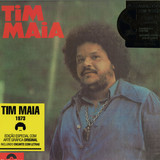
A great step forward for the legendary Tim Maia - working here in a style that's even tighter and more sophisticated than before - yet still equally filled with funk and soul! The arrangements are a bit bigger than before, and the production a bit more professional - but that change only brings Tim into even more heavenly soul territory - with a mix of grooves and strings that lays somewhere between the best early 70s work on labels like Curtom or Motown! Tim's got a new sense of majesty on the album - and also sings in English in a few spots - at a level that makes us wonder why he was never able to crack the American soul market at the time. An essential record from the man who brought American soul music to Brazil - with tracks that include "Over Again", "New Love", "Balanco", "Reu Confesso", "Preciso Ser Amado", "Amores", and "Do Your Thing Behave Yourself".
In 1997, a quiet, unassuming man of 59 years old named Victor Tavares - better know as Bitori - walks into a studio for the very first time to record a masterpiece which many Cabo Verdean consider to be the best Funaná album ever made. Bitori´s musical adventure had begun long before this point. It was 1954 when he embarked on a journey across the seas to the island of Sao Tomé & Principe. The young man´s hope was to return to Cabo Verde with an accordion.
Following two years of hard labour Bitori had succeeded in saving enough money to acquire what was to become his most valued possession, his cherished instrument. The two month journey back to Santiago, his island of birth, proved time enough to master it. Self taught, Bitori developed his own style, an infectious blaze, that quickly caught the attention of the older generation. Before long Bitori was being asked to share his musical talents, igniting the local festivities around Praia with his music.
But not everybody welcomed the rural accordion-based sound. Perceived as a symbol of the struggle for Cape Verdean independence and frowned upon as music of uneducated peasants, Funaná was prohibited by the Portuguese colonial rulers. Performing it in public or in urban centres had serious consequences - often jail time and torture awaited musicians that were caught in the act'. In light of such persecution the genre of Funaná began to slowly disappear.
In 1975 Cabo Verde achieved independence from Portuguese colonial rule. Along with Cabo Verde's independence came a lifting of the ban placed on Funaná. The musical repercussions in Cabo Verde were plenty - many upcoming artists embraced Funaná, translating and adapting its musical form in new ways. It was not to be until the mid-1990's, however, that Funaná in its traditional form was actually recorded. It was a young singer from Tarafal, Chando Graciosa, who was to play a key role in this event. Upon hearing Bitori, Graciosa immediately felt drawn to Bitori's unique playing style - a raw and passionate sound accompanied by honest lyrics that reflected the harsh reality of the Cabo Verdean working class. He eagerly approached Bitori suggesting they join forces and travel overseas with the objective of taking Funaná beyond its rural roots. The two of them, with others in tow, achieved their goal and travelled to Europe, introducing a receptive European audience to the vibrant energy of Funaná.
Eventually Bitori returned to his beloved Cabo Verde. Graciosa opted to settle in Rotterdam in order to pursue his career - he vowed, however, to bring Bitori across to Holland at a later date to record an album.
In 1997 the time was ripe to immortalise the sound Bitori had shaped over a time span of four decades. Built around a formidable rhythm section, formed of drummer Grace Evora and bass player Danilo Tavares, "Bitori Nha Bibinha" was recorded. The recording catapulted Chando Graciosa to stardom, making him Cabo Verde´s No.1 interpreter of Funaná.
The success in Cabo Verde was phenomenal and Funaná rapidly gained the recognition it deserved, especially in urban dance clubs. Bitori´s songs quickly became standards - classics known and loved throughout the country. The musical success, however, was solely limited to the Cabo Verdean islands - until now!
Analog Africa is proud to contribute to the worldwide promotion of Funaná - the once forbidden sound of the Cabo Verde archipelago - by releasing a worldwide re-issue of Bitori and Chando Graciosa´s legendary recording.
The release will herald Bitori´s first European tour taking place during the summer of 2016. Watch this space! And listen!
Reaching the milestone of its 100th single/EP release, Circus Company welcomes back Aquarius Heaven with a new EP of poignant, uplifting house music loaded with a meaningful message for these transient times. It's nearly three years since Brian Brewster delivered the Parallela Mundi 12', and in that time he has been on a relentless mission to spread his unique blend of house music, Caribbean roots and psychedelic magic across the globe in a whirlwind of live performances and collaborations. In a manifestation of his well-travelled soul, these new pieces call upon traditional influences in amongst the modern motifs that Aquarius Heaven has been built on, while lyrically dealing with the pressing issue of refugees escaping conflict, poverty and famine. The proud drum throwdown and carnival bleeps of 'Bato Chargé' conceal the seriousness of its theme. In Brewster's native tongue Creole, bato chargé translates as overloaded boat. With the Caribbean as equally rooted in the history of displaced humanity at the hands of sinister powers, the groove of 'Bato Chargé' takes on a defiant, hopeful tone directly inspired by the traditional percussive music style Gow Ka. '50 Drops' by way of contrast takes on a noirish tone with its gritty, street-weary tale and nocturnal melodics played out through enchanting arpeggios and warbling leads. Cooling off the tempo and heading into a digi-dub skank that plays off Brewster's roots in reggae and dancehall, 'Marie Galante' takes those same warm synths and runs them through a low-but-heavy stepping landscape; the perfect backdrop to the vocalist's dexterous ramblings on the mic. It's not often you hear Creole New Release Information delivered in contemporary electronic music, with a rare exception being the legendary work of Tikiman et al with Rhythm & Sound in the 90s.
Out with a bang, 'Blitz Magic' is the final release in the Jose Padilla 'Too Many Colours' campaign from International Feel. A carefully curated project, from the selection of producers working on the album (Mark Barrott, Wolf Müller, Tornado Wallace, Telephones, I:Cube and Dream 2 Science), superior productions and remixes to boot, through to the beautiful artwork. Now it draws to a beautiful close. 'Blitz Magic' a Telephones production is the perfect club track to follow the wondrous 'Lollipop'. The original of 'Blitz Magic' is a lovely balearic ride that feels the influence of the all time classic 'E2E4' or in turn 'Sueno Latino'. It has now been placed in the hands of Tambien and Deetron for remix duties. Tambien are a trio from Munich. They are the Bartellow and Public Possession pair Marvin & Valentino who have released on various labels but in recent times ESP Institute and their own Public Possession. They create that intriguing mix where intelligent meets club music such as their Jil Thunder Light Remix. Deetron is an awardwinning Swiss producer and DJ that keeps his soul in Detroit and his heart in warm techno. This sound is perfectly shown in his stripped down remix cleaning out the drums and taking it back to pure club values. As Autumn arrives it feels the perfect time to release this third single from Padilla, the last in a beautiful string of releases that for International Feel have perfectly encompassed the Balearic sound as it is now. Play loud and you'll get the benefits.
José P adilla is loved by many for his work soundtracking sunsets at the Café Del Mar and compiling the seminal Café Del Mar compilations which sold over six million copies. His fans are wide and varied, on one end of the spectrum you have Madonna or Karl Lagerfeld, and on the other DJ legends such as Harvey and Andrew Weatherall. His new album ' So Many Colours' was released on International Feel earlier this summer to great acclaim and is regarded as the most forwardthinking Balearic album of the year.
FEEDBACK
I played it loud, Tambien mix is beautifully bizarre. - Mark E
Deetron mix is magical - a organic knights of the jaguar .. - Terry Farley
Simply brilliant. Loooove both mixes. Thanks a lot - Laurent Garnier
Volume 2[12,56 €]
MISS KITTIN & THE HACKER are the Electro duo of CAROLINE HERVE and MICHEL AMATO from Grenoble, France. The pair met during the early '90s at a rave and soon after bought turntables and began DJing. In 1996, they began writing music heavily influenced by '80s synth and post-punk bands like Fad Gadget, DAF, Liaisons Dangeuresues, and Yazoo, as well as Italo Disco. Bored by the techno scene at the time, they set out out to lighten the serious tone and bring a campy sexiness to the dour musical landscape. Upon hearing their demos DJ Hell signed them to his Munich-based International DJ Gigolo label and released their first 2 EPs in 1998 and 1999. Their debut album First Album was released in 2001. Lost Tracks Vol. 1 contains 4 previously unreleased demos recorded between 1997 and 1999. The duo fused '80s European New Wave/Italo Disco with '90s Detroit Electro acts like Le Car and Dopplereffekt. By utilizing verse-chorus structures, they playfully shook up the loop based hard techno and electro that was popular at the time. Their studio set up at the time was a Korg MS-20, Roland SH-101, TR-606, TR-808, Siel DK80, and Boss DR-660 drum machine. The songs are direct, spontaneous, seemingly improvised in places. Miss Kittin sings about falling in love with an alien, sexy nightlife in Berlin, and explicit S&M leather play, all in her cheekily derisive French accent All songs have been transferred from the original DAT tapes by the band and mastered for vinyl by George Horn at Fantasy Studios. The vinyl comes housed in a glossy jacket featuring a black and white photo of the duo taken in 1996. Each LP includes a postcard with liner notes from Miss Kittin and The Hacker designed by Eloise Leigh. As Miss Kittin says of these demos, 'We were naive, innocent, adventurous and we didn't expect anything in return."
During the '70s, work days at Umiliani's Sound Workshop Studios were hectic; thousands of sessions were held in order to keep up with a very busy Italian movie industry: Hundreds of soundtracks alongside with music library were recorded and released on vinyl in very limited quantities for TV and film production use only. Those LPs are now proper collectors' items, extremely hard to find.
Filled with hypnotic bass lines, heavy drums and screaming fuzz guitars "Underground", the first LP of the fictitious group known as Braen's Machine, is one of the rarest and the most expensive of them all, always "reaching" sky high prices throughout the second hand vinyl market. A fast-beat jam with hammond scales and a twin lead guitar theme ("Flying") opens the A Side soon followed by "Imphormal", a classicfunk-beat-meetsfender- rhodes-and-psychedelic-guitar number. The music then switch to "thriller territories" with "Murder" which is based on prepared piano swells and a deeply hypnotic walking bass, reminiscent of the best Morricone's soundtracks for Dario Argento's movies. Two highly percussive songs complete the A Side: "Gap" is an improvised song with guitar and keyboards dwelling over an infectious drum rhythm while a marching snare and a vibraslap effect are the special features on "Militar Police".
The mood relaxes slightly on the opening of the B Side with a lazy jazz groove on "New Experience" but the rock influences are soon brought back on the following track "Fall Out". "Obstinacy" is all about keyboards with syncopated rhodes themes and distorted hammond sustained notes whilst the fuzz guitar is back again screaming through the left channel on the last song of the album, "Description". We could happly say that that was the golden age of the Italian music library. But who's behind the name "Braen's Machine" On the original cover the songs are credited to the composers Braen and Gisteri. Braen was a pseudonym often used by Alessandro Alessandroni, an extremely skilled and versatile musician, and one of Umiliani's closestcollaborators. He could write, conduct and arrange, he could sing (ever heard "Mah Na Mah Na"), he could whistle (ever heard Morricone's "For a fistful of dollars") and he could play almost anything: guitar, bass tuba, accordion, sitar and the list grows..... His first album "Alessandro Alessandroni e il suo complesso" (Sermi, 1969), had transformed the Italian library music from orchestral sound beds into the psychedelia we all love; the extremely fuzzy guitars are very "present" on "Underground" too. For a long time Gisteri's real identity was rather mysterious; often wrongly attributed to Umiliani. Gisteri was the pseudonym of Oronzo De Filippi, art name of Rino De Filippi, music supervisor to the Italian public broadcast company (RAI) between the '60s and the '70s. De Filippi composed other notable pieces such as "Riflessi" (Edipan, 1975) and "Nel mondo del lavoro" (Sermi, 1972).
De Filippi passed away few years ago but we were able to contact Alessandroni to talk about this LP. Remembering "Underground" recording session as one of the thousands he took part of, Alessandroni told us that this record was produced very quickly, in two days maximum. This was made possible by a team of wonderfully capable session musicians and the creative genius behind the mixing desk; this incredible combination helped to focus on the mood of each track even more. Unfortunately there are no liner notes but Alessandroni's memories and speculations, based on other music tracked in the same period at Soundworkshop by resident engineer Claudio Batussi, led us to identify this as the most probable lineup: Munari on drums, Majorana on bass, Vannucchi on keyboards and Alessandroni himself on guitar. For this reissue the sound has been restored and the cover art reproduced exactly as it was.
Oh Holy Molar is the second album from UK trio Felix. The group produces a bewitching, minimal chamber pop that works as the perfect framework for singer/songwriter Lucinda Chua's oblique and emotionally immediate stories of superstition and searching for protection against bad omens.
*As a follow up to their debut You Are The One I Pick, the band return with a collection of songs with a sound stripped back to its very core. Something is said to have "teeth" when it has the ability to make an impact. This record certainly has "teeth", and sharp ones at that.
*" The album was recorded in a vast, spooky 1940s cinema in Nottingham, England, now converted into a studio. After recording was completed the band discovered that underneath the live room lay an abandoned Dental Laboratory. "Oh Holy Molar" indeed.
*" Since the release of the rst Felix album, pianist/vocalist Lucinda Chua, also an accomplished photographer, has been working on a number of projects, most recently with Wallpaper* in Detroit. Guitarist Chris Summerlin has been recording and touring with his new band Kogumaza. The group is completed with the recent addition of drummer Neil Turpin who, when not performing with Felix, can also be found touring the world with French composer Yann Tiersen.
press quotes for You Are the One I Pick
'It's a gateway into another headspace, one aglow with uncertain magic. As statements of romantic intent go, 'Death To Everyone But Us' must represent either the most straightforward, honest distillation of the love song, or the creepiest.' BBC
'In Felix's world, everyday mundanities give rise to furtive explorations of human interaction and ineptitude in a manner as oppressive as it is oddly and honestly addictive.' Drowned in Sound
'The duo keep things refreshingly simple, with single strands of piano, guitar, and cello in quiet symmetry, leaving the listener ample room to savor Felix's knotty, enigmatic songcraft.' Pitchfork
'There is mystery and elegance in the marrow of this music, and I imagine this record will prove to stand the test of time, reserved to be pulled out for the perfect accompaniment to just the right brooding but whimsical mood.' Delusions of Adequacy
track list:
1.The Bells 2. Sunday Night 3. Oh Thee 73 4. Don't Look Back (It's Too Sad) 5. Hate Song 6.Oh Holy Molar 7. Blessing Part I 8. Blessing Part II 9. Rites 10. Who Will Pity the Poor Fool 11. Pretty Girls 12. Practising Magic 13. Little Biscuit