The American singer-songwriter tradition has always been tethered to a rustic austerity, the sort of front-porch authenticity that suggests an age where home electronics are still considered luxury items. But there's also the ongoing influence of Bob Dylan and The Band's Basement Tapes-that strange and beloved document of the magic that happens when private experiments with the folk template flourish into layered and lush songs-and its genesis through informal recording sessions. In our modern age, these kinds of casual DIY constructions are perhaps the more honest contribution to the Americana lineage-the true homespun artform. When Michael Nau and Whitney McGraw struck out on their own in the wake of the dissolution of their beloved indie-folk outfit Page France, they continued their songwriting practice with a new project called Cotton Jones Basket Ride. As legend has it, Nau and McGraw were working on the material for their debut full-length Paranoid Cocoon (2009) when they realized they had an entire album's worth of odds-and-ends from various recording sessions. The resultant album - The River Strumming - was released in 2008 on St. Ives in a batch of 300 unique hand-packaged LPs. As the label advertised it back in the day, the band "initially set out to make a cohesive record, and made just the opposite." Like The Basement Tapes, The River Strumming is a document of a band exploring possibilities without the weight of expectation. The band would eventually condense their name to Cotton Jones and make a name for themselves in the indie world for their fusion of dreamy folk and psychedelic baroque pop. But in the beginning, there was this weird and wonderful collection of songs made by musicians who were enjoying the private process of finding their path. Suicide Squeeze is proud to present a 15th-anniversary vinyl reissue of this long out-of-print classic with updated artwork by Kayleigh Montgomery-Morris.
Buscar:music choir
La Califfa" (1970) is a rare example, probably very rare, in which the director and author of the book on which the film is inspired coincide, we're talking about Antonio Bevilacqua, who won the Nastro D'Argento prize as Best New Director with this film.
The film deals with the issue of the class struggle, and in particular the love-hate relationship between a businessman (Ugo Tognazzi) and a female worker (Romy Schneider, almost too sensual here) who lost her fiancé at the working place. A romantic and dramatic work, as the music written and orchestrated by Ennio Morricone, here often surrounded by an impressive aura of sacredness. This LP also features, as guests on voices and choirs, Edda Dell'Orso and I Cantori Moderni di Alessandro Alessandroni. Surprisingly, despite the success of the film and its soundtrack received at the time, "La Califfa" has never been reissued on LP since the early '70s.
This new edition on Vinyl Magic record label eventually fills this gap and, except for the front cover image, the artwork has been completely renewed: the inner sleeve contains in fact many reproductions of posters and lobby cards of the film. Various tracks, never released on LP until today, have also been added to the final tracklist.
Limited edition on 180gr. pink vinyl.
- A1: When The World Is Feeling Blind (Feat Arya &Amp; Tahnee Rodriguez)
- A2: Cambio Di Stagione
- A3: Frastuono
- A4: Tipografia Miserere
- A5: Little Girl Ready For Big Dreams (Feat Mei &Amp; Tahnee Rodriguez)
- A6: Polibomber
- A7: Badanti
- A8: Bacigalupo
- A9: The Big White Shark
- A10: Dentro Fuori
- A11: Elena O Nadia Flashback
- B1: It`s Like Blanca
- B2: Epico Lirico
- B3: Carignano
- B4: Fatti Sentire
- B5: Nessun Dorma Da &Quot;Turandot&Quot; (Feat Francesca Biliotti)
- B6: Sampierdarena
- B7: Giostra
- B8: Sembra Ieri
- B9: Habibi Lullaby (Feat Rahma)
Calibro 35 unleash the new OST for the second season of TV series BLANCA, to be released on limited edition LP on December 1st 2023.
Italian cinematic cult outfit CALIBRO 35 announces the release of the ORIGINAL SOUNDTRACK of the second season of BLANCA, the TV series produced by Lux Vide in collaboration with Rai Fiction, broadcast in prime time on Rai 1 starting from Thursday, October 5th 2023 and directed byJan Maria Michelini and Michele Soavi. The soundtrack will be released worldwide on limited edition, crystal clear LP next December 1st via Milan based label Record Kicks.
The new thrilling episodes of Blanca Season 2 follows the success of the first season, that was aired worldwide on Netflix, M6 France and Telecinco Spain. Accompanying the journey is once again the original music of CALIBRO 35 the Italian "cult" cinematic combo active for over 15 years and with a fan base that includes superstars such as Dr.Dre, Jay-z and Damon Albarn. Made up of 20 tracks in total, the OST was entirely composed by CALIBRO 35 that created the sound universe of BLANCA: an impressive and choral work, which has engaged all the components of the band for a long time, giving the them the opportunity to develop a very vast soundscape.
"It's the first time that we deal with the creation of a 'season 2' and we discovered that the creative process can be very different" Calibro 35 says. "In the first season, we had to build from scratch a sound and musical world consistent with the idea that Jan had (Michielini, director and showrunner of the series); this time, however, we had to develop that already existing world further, in order to describe the new stories and new different characters of the second season. There had to be undiscovered musical territories, that forced us to step out of our comfort zone." The result is that on the 20 tracks of the ost, the heavy dose of Calibro's signature funk grooves of tracks such as "Badanti, "Carignano", "Cambio di Stagione" or "Sampierdarena" is mixed with more moody and soulful tunes, world music, opera and atmospheres à la John Carpenter. Amongst the album's highlights worth definitely a mention the Opening and End titles that feature the voices of Arya, MEI and Tahnee Rodriguez. Essential contribution to the recordings were made by Francesca Biliotti - mezzo soprano of the Monteverdi Choir, Valeria Sturba - exceptional multi-instrumentalist of the avant-garde music group OoopopoiooO, Rahma Hafsi and Elisa Zoot.
Described by Rolling Stone as "the most fascinating, retro-maniac and genuine thing that has happened to Italy in the past few years", Milan-based Calibro 35 enjoy a worldwide reputation as one of the coolest bands around. Active since 2007, during their long career they were sampled by Dr. Dre on Compton ("One Shot One Kill" feat. Snoop Dogg), Jay Z ("Picasso Baby"), The Child of Lov & Damon Albarn ("One Day") and Demigodz ("The Summer Of Sam"). They played major venues and festivals all over Europe and as unique musicians they collaborated with, amongst others, PJ Harvey, Mike Patton, John Parish, Stewart Copeland and Rokia Traoré. The BLANCA OST is the latest of many activities concerning cinema for CALIBRO 35: the band has been completely immersed in the world of soundtracks since the very beginning and they have recently worked on other productions as well, both as Calibro and individually. Last June, the band released their 8th studio album, NOUVELLES AVENTURES, recorded in Naples at Auditorium Novecento. With the new LP the group has made full use of their knowledge and resources, refined and enriched over the years, back to making "Calibro's music": a unique mix of funk, progressive rock, alternative jazz and wide-spectrum cinematic music the public has known them for in fifteen years of career.
- Andy Mcleod & Sarah Bachman - Whistlin' Down The Rows
- Sutari - Kuchenny (Kitchen Song)
- Avey Tare - Tabbouleh
- Bells - Union
- Big Trash - The Apples, The Tree
- Sally Anne Morgan - Grain Song
- Magic Tuber Stringband - Bill Hensley's Hoppin' John
- Lavender Blue - Chocolate Beet Cake (For Someone You Love)
- Michael Hurley - Cook Fish, Bake Pie
- Lou Turner - Ride The Melting
- Jess Tsang - Follow The Steps
- Piqsiq - Akuglugu: Then You Stir
- Makka West Feat. Michelle Dove - Earth Array
- Little Mazarn - Thanksgiving
- Crystal Good - Food Poem
- Ziona Riley - Folly Of Tomato
If you made music the way you cook, what would it sound like? For this tape compilation, we invited artists to consider the connection between food and sound, music and cooking. We envisioned an assorted mixtape—an auditory cookbook, of sorts—of songs, poems, field recordings, and aural experiments, inspired by recipes, food preparation processes, dishes, and the experience of eating. We asked: How does attention to sound—the sputtering of the oil, the popping of the kernels, the hum of a rolling boil, the repetitive thump of a mixer—help you to be a better cook? Consider how these rhythmic, arhythmic, polyrhythmic, and droning sounds might inspire your recording. What would an audio recipe sound like? Can you set a rhyming recipe to music? How is a recipe like a musical score? Where do you find space for improvisation between the notes and instructions? What is “jazz baking”? Could the multivocality of a community cookbook be translated by a choir? What food or dish or process is deserving of an ode? What do you like to listen to when you’re in the kitchen? Write a benediction song that can be sung by a group before a meal. After over a year in which dining together en masse was not possible, what is it about the experience of collective eating that you want to express gratitude for? What is your food hymn? Together the compiled tracks–or ingredients, if you will–deepened and expanded our original vision, mixing, cooking, and baking together in a hearty, warm, and inventive aural menu for the most nourishing of communal meals.
Dais Records, das in LA/NYC ansässige Label, das klanglich ausdrucksstarke und visuell dynamische Künstler vertritt, ist mit dem analogen Innovator und Produktdesignstudio Retrospekt eine Kooperation eingegangen. Das Vermächtnis und die Tradition von Dais passen hervorragend zum Leitbild von Retrospekt: "Wiederbelebung von Retro-Tech für eine neue Generation". Das Ergebnis ihrer ersten Zusammenarbeit ist ein schickes, weißes, limitiertes Exemplar des tragbaren Kassettenspielers CP-81 von Retrospekt, das eine exklusive 19-Track-Kompilationskassette mit unveröffentlichtem Material aus den Reihen des Labels mit dem Titel C23 enthält. Nathaniel Young, Kreativdesigner bei Dais, hat die Standardpräsentation des CP-81 sowohl für den Player als auch für die Verpackung neu gestaltet. Die weiße Dais-Edition des Kassettenspielers wird in einer weißen Schachtel mit schwarzem Text verpackt, zusammen mit einem Satz weißer Dais-Kopfhörer und dem C23-Compilation-Tape. Das Gerät verfügt über alle wichtigen Funktionen eines Kassettenspielers: Abspielen, Vorspulen, Zurückspulen, Aufnehmen und wird mit einem verstellbaren Dais-Kopfhörer geliefert.
Zu den Funktionen gehören: Wiedergabe, schneller Vorlauf, Rücklauf, Aufnahme, Mikrofonbuchse, Kopfhörerbuchse, Typ-C-USB-Stromversorgung, Batteriebetrieb möglich.
Enthalten sind: Tragbarer Kassettenspieler, C23-Kassettenband, 2x AA-Batterien, Verstellbare Dais-Kopfhörer, Benutzerhandbuch.
Der Dais x Retrospekt Kassettenspieler ist auf 1000 Stück limitiert - die Kassette wird nicht separat verkauft.
Der Compilation-Titel C23 bezieht sich auf die Katalognummer (DAIS223), das aktuelle Jahr und ist eine Anspielung auf die kultige britische Indie-Kassettensammlung C86, die 1986 einer Ausgabe des New Musical Express (NME) beilag. C23 enthält unveröffentlichte Tracks von High Vis, High-Functioning Flesh, RIKI, Private World, Helm, Tor Lundvall, CoH, AURAGRAPH, ADULT., Drew McDowall, SRSQ, Cold Gawd, Remixe von SPICE und Cold Showers sowie Demos von Body of Light, Choir Boy, VR Sex und Xeno & Oaklander.
[m] CAMINO DEL SOL [ANTENA COVER]
Started around a decade ago, "Overcloseness" has been a long time coming. It is Colorist's debut album on paper, but already has a magnum opus feel to it. The beginnings of Colorist lay in the Cologne music community. Being small, it was always influenced by the art and the film scene. (In fact, the label Magazine originates from the same crossing point.) The large cast of guest appearances underlines how much Antonio de Luca and Caroline Kox are in the center of that Cologne community. On "Overcloseness" intimate pieces for one or two instruments alternate with dense choir anthems ("Embody") and tracks built from ultra intense fabrics that conjure up the mediative hardness of Tool ("Blood Markers"). Driven by the otherworldly voice of Koxi and a larger than life bass line by Antonio, the album culminates in the unforgettable "Touch Me". Oscillating between a bad migraine and cathartic hypnosis, Colorist have created a genre defying universe of an album.
„This will not revive your soul, B.“
Marble Vinyl[25,42 €]
This fifth studio effort from French heavy psychedelic stalwarts MARS RED SKY is a genuine conceptual piece of work skilfully designed to take the listener on a journey through a shifting, unpredictable and even utterly disconcerting sonic universe. Bordeaux-based trio explore progressive and post-metal territories with boundless inspiration. Their original signature of jagged vocals and thundering rhythm is spiced up by drones and various mid-kraut rock and mid-gothic effects. The atmospheres and settings are finely crafted, with Julien Pras's voice adding a delicious pop languor. The music is the master of the narrative here, absorbing all the components of the album and shaping them into a kind of reversible allegory, as appealing as disturbing. The tour de force of 'Dawn Of The Dusk' lies in its ability to carve out a unique creative sphere in which you can't help but marvel.
Black Vinyl[22,65 €]
This fifth studio effort from French heavy psychedelic stalwarts MARS RED SKY is a genuine conceptual piece of work skilfully designed to take the listener on a journey through a shifting, unpredictable and even utterly disconcerting sonic universe. Bordeaux-based trio explore progressive and post-metal territories with boundless inspiration. Their original signature of jagged vocals and thundering rhythm is spiced up by drones and various mid-kraut rock and mid-gothic effects. The atmospheres and settings are finely crafted, with Julien Pras's voice adding a delicious pop languor. The music is the master of the narrative here, absorbing all the components of the album and shaping them into a kind of reversible allegory, as appealing as disturbing. The tour de force of 'Dawn Of The Dusk' lies in its ability to carve out a unique creative sphere in which you can't help but marvel.
“F(r)icciones is a complicated piece of miscellaneous works. A set of experiments in preparation for a gig at a noise convention in Orozco that never happened, an 18 women choir piece composed for a soundtrack to a documentary that doesn’t have a release date yet or trying to create a drone piece by accumulating guitar noise. The result? Burnt psychedelic blues with electronics ”
Partly an official soundtrack to “Durangas”, a documentary focusing on women and heritage, discussing civil war, education, sex or violence in the town of Durango, Basque Country. And partly a non musical accompaniment to an imaginary movie, F(r)icciones is the new album by A. Maiah.
Self described as Guitarist / Composer / Improviser of Idiomatic Noise / Microtonal Blues Ist or Psychedelic Populist, Asier has been self-releasing albums for nearly a decade now, focusing mostly on prepared guitar or improvised noise
Durangas was composed by Asier, arranged/conducted by Garazi Navas, performed by an 18 women choir from Durango and recorded live at San Agustin Cultural Centre. All of the other tracks were recorded between 2021-2022 in between portable recorders in Burgos or at Estudios Nomadas.
Martha and Jessica Kilpatrick (aka Waterbaby) had a creative upbringing in South London – spending their days singing in Southwark Cathedral Choir or experimenting with recording ideas onto cassette tapes, such as trying to make their out-of-tune family piano and a flute sound like an electric guitar. Eventually settling together in an attic flat in Peckham, the sisters became quiet, mystical forces in the underground London scene, emerging in and out of the sanctuary of their studio to perform their hypnotic live show with artists as varied as Kedr Livansky, James K, TAAHLIAH, and Dorian Electra. The sisters’ insular and feminine sonic world showcases inventive song structures backed by dizzying layers of production – all crafted on their stash of lost & found analogue gear in their South East London studio, squashed between Hyperdub’s headquarters and a mechanic’s garage. In a world where the analogue and the digital seem to be in constant headlock, Waterbaby effortlessly solve the equation – operating in a space where Cocteau Twins-esque anachronism meets the sharper edge of contemporary experimental electronica. Press: “The 10-track album is a window into the duo’s alternate reality, where folklore and mysticism blend together to create a kaleidoscopic dreamworld of experimental electronica." – Dazed “The sisters often go to magical places with their celestial compositions … Across the album’s 10 tracks, there’s a great deal of artistic ambition within the arrangements.” - Loud & Quiet "Like a distorted transmission from somewhere out of time, Waterbaby serve as our conduits, lightning rods for pop music and art of a more mystical variety." - Fact Mag "Their long-awaited debut 22° Halo' locates their sound somewhere between the nebulous chamber pop of Cocteau Twins, the meticulous synths of Air, and the speculative electronics of Arca or Oneohtrix Point Never
- Ramybė
- Autoportretas
Santaka is truly the sound of a culture. The name means “confluence” in Lithuanian, and the project has been exactly that from the moment DJ/producer Manfredas and drummer/producer Marijus Aleksa resolved to work together in the early days of 2020.
Not only does it bring together the talents that Manfredas and Marijus have individually honed over their own illustrious international careers in the club underground and young jazz worlds – but their recordings have drawn on talents from across styles and generations within Lithuania, creating a fusion of experimental sounds that represents the living nation. The highest common factors of post rock, jazz, dancefloor and abstract electronics, classical and more all flow together. Now, they are deepening this further, by reworking recordings by composer Rytis Mažulis and the avant-garde choir Melos Collective.
Over two tracks, they create haunting but hopeful, weird but truly wonderful atmospheres that look back to the deep history of their home nation’s music and culture but also forward to sonic science fictions of their own. In “Autoportretas”, disembodied voices emerge from the air around Marijus’s percussion subtly at first but becoming more and more corporeal as the ritual takes shape.
The eight-minute “Ramybė” is less linear, more dreamlike, with orchestral drones, free jazz fluttering and retro electronics joining the voices and drums. But for all their eeriness and oddness, both are built on the pleasure principle too: this exploratory music joining past and future is thrilling and sustaining in the moment.
Original[11,72 €]
In 2021, Los Angeles trio Gabriels arrived in a whirlwind with the loose-limbed vintage soul jam of ‘Love & Hate In A Different Time’, a song that could have dropped in almost any era. A stone-cold classic, it introduced a band so much more than just the sum of their supremely talented parts.
For the first time, ‘Love & Hate In A Different Time’ is now getting a special 7 Inch release with a previously unreleased live version of ‘Spanish Harlem’ recorded at BBC Maida Vale studios for a Gilles Peterson 6 Music session.
Just a handful of live shows deep, the spotlight swings and lands squarely on vocalist Jacob Lusk. A man who demands attention with a presence and voice of a gospel choir. That rich vocal swoops and soars through the pitches effortlessly matched by an on-stage persona that’s intensely likeable.
A bonafide star by anybody’s reckoning. Two acclaimed EPs deep and yet barely out of second gear, Gabriels have moved beyond mere promise to become one of 2022’s most essential new acts.
Press / PR:
“One of the most spectacular voices you will hear this year... Set to be 2022’s word-of-mouth hit” - The Guardian
“A sound that’s unlike anything else out there” – The Times
SOLD OUT every headline live show in 2021 and 2022 so far in seconds. Gabriels will also support Celeste on her sold out UK tour in the spring of 2022.
Love And Hate In A Different Time was playlisted at 6Music Arielle Free’s TOTW on Radio 1, other supporters included Annie Mac, Nick Grimshaw and Adele Roberts
Syncs with Reebok and Gucci campaigns
Breaking Act - Sunday Times Culture feature
Included in The Guardian’s 2022 Tips
NME Radar feature & NME 100: Essential Emerging Artists For 2022
KCRW’s 2021 Breakthrough Artist
Ones To Watch – The 25 Artists to Watch
- A1: Whitney Houston I Believe In You And Me 4 00
- A2: Whitney Houston Step By Step 4 12
- A3: Whitney Houston With The Georgia Mass Choir Joy 3 15
- A4: Whitney Houston With The Georgia Mass Choir Hold On, Help Is On The Way 3 08
- A5: Whitney Houston With The Georgia Mass Choir I Go To The Rock 4 05
- B1: Whitney Houston With The Georgia Mass Choir I Love The Lord 4 56
- B2: Whitney Houston Featuring Bobby Brown, Faith Evans Somebody Bigger Than You And I 4 41
- B3: Whitney Houston You Were Loved 4 10
- B4: Whitney Houston My Heart Is Calling 4 14
- C1: Whitney Houston I Believe In You And Me 3 52
- C2: Whitney Houston Step By Step 4 32
- C3: Whitney Houston Featuring The Nativity Choir From Who Would Imagine A King - (From "The Preacher's Wife") 3 30
- D1: Whitney Houston With Shirley Caesar And The Georgi He's All Over Me 3 53
- D2: Cissy Houston With Hezekiah Walker And The Love Fe The Lord Is My Shepherd 4 23
- D3: Whitney Houston With The Georgia Mass Choir Joy To The World 4 41
Black Vinyl[29,37 €]
Available for the first time on vinyl, Whitney Houston's The Preacher's Wife: Original Soundtrack Album is the best-selling gospel album of all time. Released on November 26, 1996, the album features songs performed and produced by Houston, who also starred in the film. From the moment you press play, your heart will move to soul-stirring vocals like the hauntingly beautiful "I Believe In You and Me," and the spiritual "Joy To The World," "I Love The Lord," and "Step By Step." The album features guest artists including Shirley Caesar, the Georgia Mass Choir, and Houston's mother, the legendary Cissy Houston. This 2LP vinyl features a new essay by producer Mervyn Warren and fan testimonials of love.
- A1: Whitney Houston I Believe In You And Me 4:00
- A2: Whitney Houston Step By Step 4:12
- A3: Whitney Houston With The Georgia Mass Choir Joy 3:15
- A4: Whitney Houston With The Georgia Mass Choir Hold On, Help Is On The Way 3:08
- A5: Whitney Houston With The Georgia Mass Choir I Go To The Rock 4:05
- B1: Whitney Houston With The Georgia Mass Choir I Love The Lord 4:56
- B2: Whitney Houston Featuring Bobby Brown, Faith Evans Somebody Bigger Than You And I 4:41
- B3: Whitney Houston You Were Loved 4:10
- B4: Whitney Houston My Heart Is Calling 4:14
- C1: Whitney Houston I Believe In You And Me 3:52
- C2: Whitney Houston Step By Step 4:32
- C3: Whitney Houston Featuring The Nativity Choir From Who Would Imagine A King - (From "The Preacher's Wife") 3:30
- D1: Whitney Houston With Shirley Caesar And The Georgi He's All Over Me 3:53
- D2: Cissy Houston With Hezekiah Walker And The Love Fe The Lord Is My Shepherd 4:23
- D3: Whitney Houston With The Georgia Mass Choir Joy To The World 4:41
Yellow Vinyl[25,17 €]
Available for the first time on vinyl, Whitney Houston's The Preacher's Wife: Original Soundtrack Album is the best-selling gospel album of all time. Released on November 26, 1996, the album features songs performed and produced by Houston, who also starred in the film. From the moment you press play, your heart will move to soul-stirring vocals like the hauntingly beautiful "I Believe In You and Me," and the spiritual "Joy To The World," "I Love The Lord," and "Step By Step." The album features guest artists including Shirley Caesar, the Georgia Mass Choir, and Houston's mother, the legendary Cissy Houston. This 2LP vinyl features a new essay by producer Mervyn Warren and fan testimonials of love.
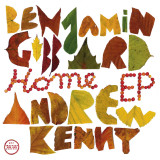
Originally released in 2003 on CD via Post-Parlo Records, and two years later on vinyl via Morr Music, the »Home EP« sees Benjamin Gibbard (Death Cab for Cutie, The Postal Service) and Andrew Kenny (The American Analog Set) each contributing three original tracks and playing one of the other's songs. This 2023 vinyl edition is released via Morr Music (EU+UK) and Barsuk Records (US). It features the artwork by Jan Kruse, that was originally made for the 2005 Morr Music version.
The EP was released as the fifth and final volume of the early-’00s series of split albums on Austin, TX indie Post-Parlo, the Gibbard/Kenny pairing followed short contributions in the series from such varied notable early-aughts indie artists as Kind of Like Spitting, Britt Daniel (Spoon), Bright Eyes, Pavo and Super XX Man.
Gibbard and Kenny’s installment came out during a prolific era for both writers: The American Analog Set had released the classic »Know By Heart« album in 2001 and followed it in 2003 with the acclaimed »Promise of Love«, while Gibbard’s profile was rising significantly via the critical and commercial success of The Postal Service’s »Give Up« and Death Cab’s »Transatlanticism«. Unlike the more lush arrangements of their main projects, both Kenny and Gibbard took a simple approach for their entry into the Home series, recording on cassette four-track machines in their respective living rooms in New York and Seattle and each performing four exclusive stripped-down tracks (including a cover of one of the other’s songs – Kenny choosing a rendition of Death Cab’s »Line of Best Fit« and Gibbard delivering his version of AmAnSet’s »Choir Vandals«).
»Home EP« showcases two brilliant songwriters whose legacies continue to shine twenty years later. The American Analog Set recently announced »For Forever«, their seventh album and first new music in 18 years, which was released last week and followed the band’s announcement earlier this year that The Numero Group will reissue their first three albums »The Fun of Watching Fireworks« (1996), »From Our Living Room to Yours «(1997), and »The Golden Band« (1999) as a vinyl boxset in early 2024.
Benjamin Gibbard has recently finished fronting both bands on the sold out Death Cab for Cutie / The Postal Service co-headline tour of arenas and amphitheaters in the United States celebrating the 20th anniversary of »Give Up« and »Transatlanticism«.
Orbiting Human Circus' new album is called Quartet Plus Two. What is Orbiting Human Circus? It is the continuing evolution of Julian Koster (Neutral Milk Hotel, The Music Tapes), whose music and storytelling under this moniker have encompassed immersive theater and a Night Vale Presents podcast, as well as more traditional albums. Central to the album are the "two" referenced in the title: North and Romika, the singing saws, whom Koster doesn't "play" so much as encourage. "I think saws sing like angels," says Koster. "I always have. Since I was a little boy. When you encourage them to sing, they do so earnestly and beautifully. It's an honest and real sound." The origins of Quartet Plus Two are as magical and seemingly unlikely as everything else in Koster's career. While walking through New York's Central Park, he stumbled upon Gauvain Gamon and Kolja Gjoni_a standup bass player and drummer, respectively_playing Gershwin and Mingus, and a musical partnership was born. Pianist Benji Miller rounds out the titular quartet, with Koster's longtime collaborators Robbie Cucchiaro (horns) and Thomas Hughes (orchestral arranging and chimes) of The Music Tapes also contributing to the record. The music they make together is at once familiar and unrecognizable, as Koster and Orbiting Human Circus interpret jazz compositions by Irving Berlin, Duke Jordan, George and Ira Gershwin, and others, alongside Koster's three originals. The use of the term "composition" is intentional and speaks to Koster's relationship with the music of Quartet Plus Two in far more evocative terms than "cover" or "standard." "To me it was always magical that there were these people called `composers' who created symphonies and popular songs for other people to breathe into life and existence all over the world and throughout time," he explains. "They traveled into our homes as sheet music, endless recorded interpretations, or were passed from hand to hand, village to village, like folk tales, changed by every hand that touched them. That music was something that came to life in our own living rooms and lives, songs that our grandmothers might have sung in a choir that we might sing just as earnestly. I just think it's nice, and I would love to share that feeling in any way we can."
Gombloh’s forgotten masterpiece
What if you have Brian Wilson and Bruce Springsteen rolled into one? And what if he came of age as an poor buskers in in Surabaya, Indonesia, but then summoned enough strength to record six albums that flew in the face of everyone in the country’s rock scene back in the early 1980s?
Genius, be they Brian Wilson or Soedjarwoto “Soemarsono” Gombloh, don’t conform to rules written for us mere mortals. They have their own way of doing things and in the case of Gombloh, writing music, conducting recording session and spending cash from his music, must be conducted on his own terms and his terms only. Studio time was expensive back in the early 1980s, yet Gombloh could be three-hour late for his session, and while engineers, session musicians and producers were jittery about the prospect of another botched session, Gombloh took his time for a nap before the recording begun.
Yet, some of his greatest works came into being in the wake of this napping session. Recording session for Sekar Mayang is no exception, despite the fact there’s foreboding sense of doom with Gombloh being unsure about the possibility of selling enough units to help his label break even. This is, after all, this is his last record with his band Lemon Tree’s. No one knew that Gombloh was operating with all his cylinders running and what came out of this Indra Record session, in the waning days of 1980, were some of the best compositions ever committed to magnetic tapes (to wax, if now you’re holding this on vinyl).
This is Gombloh at the peak of his creative genius. You can argue that his debut album Nadia & Atmospheer (what’s with the spelling mistake?) is the most sprawling and complex album (both sonically and thematically), but Sekar Mayang certainly had the best songs and I can make the argument that this album’s 10 songs are strong contenders for biggest hits in blues, country, psychedelic rock charts. “Prahoro & Prahoro” is one of those impossible song which appears to have sprung from a bottomless well of inspiration, encompassing King Crimson’s sprawling epic, Deep Purple’s deepest blues and Genesis’ most progressive tendencies. Or “Sekaring Jagat”, which begins as Lennon-McCartney lullaby before launching a thousand ships traveling to the end of the rainbow with children choir singing heavenly melodies backed by droning harpsichord and synclavier, while a buzzing Hammond B3 tightly locks with Gombloh’s guitar strumming.
For many of his fans, Gombloh is known as generous man of the people. A Robin Hood type if you please. He spent his royalty checks to buy foods for beggars and buskers and dish out some more to buy undergarments for Surabaya’s prostitutes. In Sekar Mayang, Gombloh went full Springsteen mode in “Mitra Becakan,” a social commentary that cut so deep you can end up with tears in your eyes and lump in your throat (even if you don’t understand any of its Javanese language lyrics). This is one the most devastating social commentary ever recorded for a pop song, and even if you discount the greatness of its musical composition, you chalk this up as a great social-realism poetry. His years of hanging out with pedicab drivers, street vendors and street-bound prostitutes certainly gave him enough insight into their (in)human condition.
Yet, a record this stellar was largely forgotten. First, this record was a flop upon its release in 1981. Indra Records reportedly only did one pressing on cassette tape and be done with it. For those who were lucky enough to have come across one of songs from this album on the radio were likely growing up in East Java, where Gombloh had a massive cult following early in the 1980s. Nothing was heard from this record again.
There were only a handful of cassette tapes from the first pressing found on second-hand market and I recently stumbled upon one online with a price tag of Rp 50 million (US$3,500). It’s no longer available now.
In Sekar Mayang, Gombloh harbours an obsession for a long-lost utopia, Java’s distant past, where farmers have their barn full of rice and corn, where blacksmith working around the clock making tools and children singing and dancing in their seminaries. Or the fact that he opens the song with stanza from Serat Weddhatama, arguably the most monumental poem in neo-classic Javanese literature, could be his pledge of allegiance. The question for him is should a modern-day Indonesia, rife with poverty, corruption and environmental degradation not be an anathema to that utopia?
In the end, you don’t need to be someone fluent in Javanese to enjoy this majestic record. And if this record turns out to be the last in Elevation Records catalogue and we shut down this label tomorrow, we will be very happy. Mission accomplished!
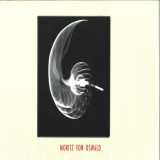
What are the differences and similarities between human and artificial sound, between oscillations generated by vocal cords and synthesizer voices, voltage amplified by speakers? On Silencio, his latest album for Tresor Records, Moritz von Oswald works with a 16-voice choir to explore this concept.
Drawing from the ensemble works of long-standing inspirations Edgard Varèse, György Ligeti and Iannis Xenakis, von Oswald and Vocalconsort Berlin delve into the space between sounds, creating a deeply textured collection that shifts between light & ethereal and
dark & dissonant.
As masterfully demonstrated in the early work of von Oswald and Mark Ernestus’ influential Basic Channel project, repetition and reduction are key elements here, much in the tradition of techno and minimalism. The vast dynamism of the human voice adds to the
profound weight of electronics while offering up a rhythmic source and sonic noise palette unexplored in von Oswald’s repertoire. In Silencio, von Oswald dredges a dank murk, pulling clouds over a distant pulse. It hangs, ready to take on new forms.
The compositions were written in von Oswald’s Berlin studio on classic synthesizers, such as the EMS VCS3 & AKS, Prophet V, Oberheim 4-Voice and the Moog Model 15. These abstract recordings were transcribed to sheet music for choir by Berlin-based Finnish composer and pianist, Jarkko Riihimäki and performed by Vocalconsort Berlin in Ölberg church in the city’s Kreuzberg district, only few metres down the road from where Dubplates & Mastering and Hard Wax opened their doors for music enthusiasts for many years so long. The recordings of the choral versions were then incorporated into the synthesized parts of the album and brought into anew electronic context; in Silencio, the focus is not on using one means to imitate the other, but to sonically discuss the tensions and harmonies between the two worlds and create a dialogue between them.
The relationship between von Oswald and Tresor Records goes back thirty years, all the way to Blake Baxter’s Dream Sequence in 1991 - which von Oswald engineered alongside Thomas Fehlmann. The collaboration with Fehlmann lived on, seeing the duo team up as 3MB with Eddie Fowlkes or Juan Atkins. More recently, the Detroit-Berlin connection continued as Juan Atkins & Moritz von Oswald present Borderland.
For von Oswald, Tresor Records and also the participating guest musicians of the choir, this release brings together audiences from other musical areas, cross-pollinating; Silencio is an album that stands for itself beyond the musical genre boundaries.
In his “Pulse Music” compositions of the mid-1970s, composer John McGuire forged a unique interpretation of European serialism. A student of Karlheinz Stockhausen, Krzysztof Penderecki and Gottfried Michael Koenig, McGuire moved to Cologne, Germany in 1970, where he become associated with the world-leading Studio for Electronic Music at Westdeutscher Rundfunk (WDR) in Cologne. Like Stockhausen, McGuire found his musical imagination both constrained and inspired by the technology that was available to him.
A conversation with sculptor Hans Karl Burgeff led McGuire to think beyond the horizon and into limitless space. For “Vanishing Points” (1985–1988), McGuire used an entirely digital set-up for the first time: a digital sequencer, eight Yamaha DX-7 synthesizers and a Studer 24-track digital tape recorder. The piece was conceived as a “sequel” to the Pulse Music series, but also a step forward from it. Whereas the Pulse Music pieces had employed steady streams of pulses, with Vanishing Points McGuire employed pulse layers that accelerate or decelerate against one another, vastly increasing the resulting rhythmic complexity.
McGuire's exploration of music technology continued in “A Cappella” (1990–1997), written for his wife, the soprano Beth Griffith, known for her recording of Morton Feldman’s “Three Voices” made in 1983. Using samples, he created a four-voice choir of voice samples and arranged them into interacting parts. The composition faced challenges due to the organic nature of the human voice compared to the precision of synthesized sounds. This process involved extensive editing and a negotiation between the "material" and the "original conception". This sort of negotiation applies as much to the composition of a single piece as it does to the work of two decades.