Neba Solo, whose real name is Souleymane Traoré, is a true living legend of Malian music. His voice and balafon playing are unique, instantly recognizable, and deeply cherished throughout Mali.
He gained international recognition with his iconic track CAN 2002, composed for the famous African Cup of Nations. This success opened doors to global stages, leading to tours in the United States, Asia, and Europe. Prestigious labels such as Cobalt and Secousse supported this exceptional period in the artistic journey of this musical genius.
For many years, Neba Solo has closely collaborated with Yaya Diarra, the sound engineer of the legendary Bogolan studio in Bamako. Diarra played a key role in preserving and recording the works of the balafon master from Sikasso. He was also the one who invited Dom Peter to work on a bold and resolutely modern project: an album with more electronic sounds, enriched with drum machines, offering a new artistic direction to Neba Solo’s compositions.
Dom Peter and Yaya Diarra immersed themselves in the studio to conceive and produce this album, titled TUMA DUMA. The result is a perfect alchemy, where electronic rhythms blend seamlessly with traditional percussion, redefining the richness of Malian musical heritage.
These nine tracks explore classic themes of the Mandingue repertoire while showcasing Neba Solo’s unique way of narrating both everyday life and universal stories
quête:music works
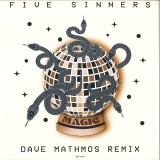
With the reissue of ''Magic" the circle of the works originally published by Eyes Records and composed in the earliest 80s by Celso Valli is completed: Future State, Blue Gas and now precisely Five Sinners !!! Best Record thus creates ''the triplet'' of the Italo-Disco operas made by the immense musician from Bologna, who used various nicknames at that time - as the trend of the main Italian arrangers - feeling 'a certain shame' in making commercial pieces, songs that were danced in the discos. He hid under dozens of pseudonyms (Adal-Scandy, Azoto, Bulldog Lama, Sandon, Super Band....) ''Magic'' and ''Precious Lies'' kept hidden, almost buried for over 40 years (but with many followers abroad) now shine their own light! Indeed. To further enrich this latest vinyl production by Claudio Casalini there is - in addition to the successful artwork of graphic designer Nerina Fernandez - the new captivating version of ''Magic'' (timing 6'20'') skillfully remixed by the talented Italian-Australian DJ-producer Dave Mathmos. In short, a 12-inch reissue not to be missed for both collectors and club DJs.
No Static / Automatic kick off their 2025 schedule with a new release from a lynch pin of Northern Spain’s electronic music community as Fanzine’s Roi joins the roster with a relentless EP of raw, rave-drenched Electro built for sweat-soaked warehouse floors. Giving us a real feel for how Roi channels the untamed spirit of A Coruña’s rugged landscape, Arise EP is powered by kicking and deep sub-bass and pure raw, untamed energy.
A co-founder of Spain’s much respected Fanzine collective, these tracks were originally written for his live set at the 2023 festival edition. Known for pulling from a wide range of influences, Roi works through a dynamic range of hard-punching rhythms on Arise, ending with a crescendo of dense melodies in closing track Spite.
The indominable Russell Haswell returns! He's a restlessly forward-thinking, multi-disciplinary artist, performer and curator who calls Diagonal Records his home. His past collaborators include Aphex Twin, Gescom, Florian Hecker and Merzbrow. "DeepTime" is Russell's latest LP for the label following on from 2023's 'Reality Therapy'. Whilst "Reality Therapy" was an introverted affair, "DeepTime" is brimming with confidence and aimed squarely at the dance floor.
Russell's club friendly turns are resolutelyprogressivist. Whilst being informed by the works of Claude Young and Jeff Mills, his music feels like it was made in another dimension altogether. Title track, "DeepTime", "Unconformity" and "Atropine" all prove the point. It's techno but it's much more besides.
Liner Notes by Martyn Pepperell
A collection of ten hypnotic guitar renditions that dive deeply into the traditional compositional musicality that underpins Harakami’s hallucinatory beatscapes before reconsidering them under a fresh, innovative and engaging new light. River: The Timbre of Guitar #2 Rei Harakami signals a new level of awareness and understanding of both Rei Harakami’s significance and Ayane Shino’s undeniable talent.
VITAL SALES POINTS:
In 1996 Tokyo-based label Sublime Records received a cassette demo from Rei Harakami, a 26-year-old Japanese experimental filmmaker, and musician. Within one year Harakami’s debut LP ‘Unrest’ was released. As the 21st century dawned, Harakami was becoming a critically acclaimed figure, and there was a feeling in Japan that Harakami would be an inevitable successor to such luminaries as Haruomi Hosono and Ryuichi Sakamoto. Sadly Harakami passed away at age 40 in 2011, leaving behind a musical legacy that seemed to deserve more recognition. A fitting tribute now comes from the incredibly gifted classical guitarist Ayane Shino. Continuing her album series ‘The Timbre of Guitar’ (the inaugural release of which was ‘Sakura’ - a cover album of Susumu Yokota's seminal album, released through the Swiss label, Mental Groove Records in 2021), she now presents ‘River ???? : The Timbre of Guitar #2 Rei Harakami’. Ayane has reworked some of Harakami’s standout tracks into an album of tranquil yet complex compositions helping to build a new level of awareness and understanding of Rei Harakami’s significance. A collection of ten hypnotic guitar renditions that dive deeply into the traditional compositional musicality that underpins Harakami’s hallucinatory beatscapes before reconsidering them under a fresh, innovative and engaging new light.
In the years that followed Harakami’s untimely passing, Sublime Records continued to sign and support new artists emerging from Japan’s rich and fertile electronic music scene. This eventually led to a meeting with gifted classical guitarist Ayane Shino in 2020. Although a new name within electronica, Shino’s classical resume is impeccable. She has performed with a range of prestigious orchestras in concert halls and at music festivals across Japan, Europe, and South America while playing classical guitar for numerous animations, movies and television commercials and holding various educational roles. These days, she also hosts the Tokyo Harmonics radio show, which is syndicated through Hyogo prefecture’s Ashiya Radio and TJS Radio in Los Angeles.
During her time completing a masters at Tokyo’s University of the Arts, Shino became fascinated by Brian Eno, Aphex Twin, Oneohtrix Point Never, Steve Reich, and, closer to home, Harakami and Susumu Yokota. ”I found myself in an environment where I was surrounded by fellow students who produced computer music, live electronics, and installations,” she explains. Following her meeting with Sublime, Hideoki Amano, the producer and owner of Musicmine, the parent company of the label, asked Shino if she would be open to transcribing and recording an album of covers of the late, great composer, producer and DJ Susumu Yokota’s music in incorporate into then-upcoming events commemorating the 5th anniversary of his death and reissues of his past works. “Yokota made music with the Roland TB-303 bass synthesizer and samplers, not in a way like a conventional instrumentalist, so I was aware it might be more of a challenge for her,” Amano explains. Fittingly, Shino was up for his suggestion, leading to ‘Sakura: The Timbre Of Guitars #1 Susumu Yokota’. Song by song, Sakura highlighted Shino’s free-flowing playing and prowess at translating electronic music into classical guitar shapes.
After considering Harakami’s background as an instrumentalist, Amano felt revisiting his catalogue should be the next step for Shino. Well-versed in how often classical versions of electronic music tend to fall flat, he asked her to examine Harakami’s songs closely, select the musical phrases suitable for guitar and create arrangements that would sound interesting to music listeners with a deep engagement with ambient, techno and electronica. In Harakami’s discography, Shino discovered “a sense of simplicity, warmth, moisture and a floating sensation.” “I was gripped by his songs, which had an array of sounds that gave me a sense of mystery but also coexisted with a sense of familiarity,” she explained. Moving beyond his official releases, Shino began digging through YouTube to find live recordings, radio appearances and obscure outtakes. Within her mind’s eye, imagining playing his songs on guitar was effortless. On her approach to the album, Ayane explains: “For this album, I succeeded in spinning some exquisite, silk thread like delicate tones, interwoven with human warmth, gentleness and simplicity. And I was also able to rework Rei Harakami's distinctive sound with a floating feel to it and transform it into a very classical guitar sound. I hope many people will be able to receive this group of sounds that I created in this album that I played with all my heart.” A record of limitless innate beauty, ‘River ???? : The Timbre of Guitar #2 Rei Harakami’ is a delicate and thoughtful body of work. A true masterclass in deconstruction and subsequent rebuilding, and an eternal lesson in how the art that we leave behind can outlive us all.
Under the motto «We become more from what is left, deliver else than just the now, build sound stories for the then», Sediments is the new label and sonic adventure launched by Estrato Aurora and d_o_ppelgaenger, partners in the electronic duo Pajaro Dune.
d_o_ppelgaenger || aka David Ortolà || is a pianist, composer, electronic music producer, teacher and scholar specializing in contemporary music and electroacoustic composition and performance. As a solo artist, he has composed multiple electronic, ambient and techno works, modular scores as Grooves #1 (2017) and Déjà vu (2024), unique musical events such as Efímeras for 20 Pianos (2011), compositions for piano and electronics as well as his latest release Live at Perpendicular (2024).
Live at Perpendicular 2024 is Sediment's inaugural offering. Recorded May 25, 2024 by d_o_ppelgaenger at Perpendicular Festival in the woods of Cuenca, Spain, this album is both an ambient live set and a sound journey inspired in the Doppelgänger archetype from the early gothic novel.
d_o_ppelgaenger's signature chiaroscuro medley of styles and ideas relies on narrative sound design, using both electronic production, classical instrumentation, field recording and generative synthesis. His music challenges the boundaries between acoustic and electronic sound calling on a wide range of oft-conflicting aesthetics: from early music to soundtrack atmospheres or disruptive avant-garde trends. This album explores the liminal terrain between divergent languages, trying to create perceptional experiences in search of empathy between the known and the misunderstood or the unheard-from.
|| We
become more from what is left,
deliver else than just the now,
build sound stories for the then. ||
Anneleen Boehme is a prominent figure in the Belgian jazz scene, known for her work as a double bassist across various projects.
Her virtuosity on the double bass was already evident in LABtrio, and her skill as both a composer and bandleader was showcased in Grand Picture Palace. Now, in her solo work, we experience Anneleen's genuine vulnerability, as she explores the deep connection with her ever-present companion: the double bass. Her music is a balm for the soul, and her playing is deeply moving, leaving no listener unaffected.
In this solo project, Anneleen Boehme pushes the boundaries of the double bass, striving to transcend them in all their forms. She places particular emphasis on the instrument's acoustic sound, subtly highlighting its rich, resonant voice. The music that warms her heart is at the core of this exploration: both her original compositions written specifically for the double bass, as well as solo arrangements of existing works and improvisations. Her passion for both jazz and classical music is beautifully expressed throughout. This is an embrace of the double bass, its deep tones, and pure musicality.
Eunoia is Anneleen Boehme's debut solo album, set for release on April 18th, 2025, and it is a dedication to herself.
"I wrote a story about who I am, about the path I've walked so far. About how the mind can drive you mad and how, amidst it all, you can find peace. I hope it will offer you the same. Sadness, joy, and comfort for your soul."
The double bass has the unique ability to convey our most melancholic emotions, and this album is no exception. Yet, its warm tones also offer a sense of healing and comfort. In most tracks, the double bass stands alone in its simple elegance, but in Fuga Ante Proelium, Anneleen's voice joins her instrument, adding a new layer to the musical experience.
South Londons’ indomitable Medlar delivers an ambitious new album
The long-time underground favourite has collaborated with the likes of Dele Sosimi, Rebekah Reid, Deevoenay, Finn Peters, Sam Virdie, Afla Sackey and Arnau Obiols on an album that finds him taking his production to new levels.
From roots playing illegal raves in the South West to building up a cultured catalogue that bounces between house and garage, Medlar has long been part of the underground conversation. He has dropped a previous album and many innovative remixes and edits for the likes of Billy Cobham and Shirley Lites, worked in the studio and on stage with Afro legend Dele Sosimi and most recently released an album under his own name that collected myriad different sonic sketches from the past 15 years.
Islands is an altogether different proposition that comes after establishing himself as a mix engineer and producer of other people's music. In that time, Medlar has honed his skills, learnt new tricks and grown more able to express himself in sound. The result is an album that explores a more electronic palette inspired by '80s fusion sounds whilst maintaining a loose, organic flow through his use of live instrumentation. “The idea for the LP was for a collection of music which could sit alone as club tracks, but would work equally well as part of a whole. The name Islands came from this, as there's some connecting ideas but the tracks sit independently in their own little sonic worlds. I took a lot of inspiration from early 80’s electronic music produced during early years of MIDI technology… proto house, jazz fusion, electronic disco and experimental ambient. I wanted to juxtapose some of these methods with more contemporary production and make something that's ultimately quite fun!” says Medlar of the record which could easily soundtrack a summer road trip.
Across 11 tracks, he blends old-school techniques like a fusion of live instruments, FM synthesis and MIDI triggered vocal samples with more contemporary touches such as punchy, club-friendly drums and dub inspired, speaker-wobbling low end. The result is less reliant on samples than his previous works and makes for a perfect blend of retro authenticity and future freshness.
- Also available on black vinyl - First ever official reissue - Produced in full cooperation with Hiroshi Yoshimura's estate - Liner notes by contemporary music writer and professor Junichi Konuma - Remastered from original sources by John Baldwin - First time on vinyl, cassette, and streaming - 2xLP vinyl housed in gatefold jacket - Discs cut at 45 rpm for optimal sound quality // Following their 2024 reissue of Hiroshi Yoshimura's classic album, Surround, Temporal Drift proudly presents the first-ever reissue of FLORA, Yoshimura's underappreciated ambient classic. FLORA was originally recorded and completed in 1987, and remained unreleased until 2006, nearly three years after Yoshimura's passing in 2003. The album is chronologically and stylistically a follow-up to his acclaimed 1986 works GREEN and SURROUND, wherein Yoshimura continues to play with the ambience of sound and the sound of ambience, underscoring his mastery in the field of environmental music. Yoshimura's other recorded works include Music For Nine Post Cards (1982), originally produced to be played back inside a museum space, and Pier & Loft (1983), commissioned as accompaniment to a contemporary fashion show.
- A1: Mieko Hirota - Soul Lady
- A2: Shinji Maki &Amp; Black Jack - Nabeyoko Soul
- A3: Tan Tan - Happy Day
- A4: Kenji Niinuma - Airenki
- A5: Hatsumi Shibata - Furui Fuku Nanka
- B1: Strawberry Jam - Arimasen
- B2: Mieko Hirota - Anata Ga Inakute Mo
- B3: Akira Yasuda &Amp; Beat Folk - Kaeroka Kaeroka (Single Version)
- B4: Miki Hirayama - Hatachi No Koi
- B5: Masaaki Sakai - Baby, Yuki Wo Dashite
At the start of the 60s, a new wave of gospel-influenced jazz started to emerge, with hits such as Art Blakey & The Jazz Messengers' "Moanin'" and Cannonball Adderley's "Work Song" epitomizing this evolution in the genre. The terms "soul jazz" and "funky jazz" were coined as a way to describe this new sound that was making an impact in the US and also on the other sides of the Atlantic and Pacific oceans.
In 1964, Ray Charles made his first visit to Japan. Then, in 1968, Martha & The Vandellas and Stevie Wonder set foot in the country, followed by Sam & Dave in 1969, Ike & Tina Turner in 1970, and B.B. King in 1971. The TV show "Soul Train" also began airing in Japan in the early 1970s. A watershed moment happened in 1973 when Sammy Davis Jr. was cast in a TV commercial for Suntory whisky — and the influence of the US Black entertainment world had really landed, with soul, jazz, and funk artists becoming household names.
Nippon Columbia played a pivotal role during this turning point. The company had contracts with Buddah Records and Blue Thumb Records, releasing notable works by artists such as Gladys Knight & The Pips, Curtis Mayfield, The Crusaders, and The Pointer Sisters. At the same time, the label was also releasing several Japanese soul, jazz, and funk projects under the lead of music director Jiro Inagaki. Inagaki, a saxophonist who began his professional career in the early 1950s, honed his skills at U.S. military camps, where he shared his love of music with the Black servicemen. In the 1960s, he played with drummer Hideo Shiraki's band, which was widely considered to be Japan's representative group of the funky jazz movement. Later, Inagaki went on to pursue more cutting-edge sounds with his Soul Media project, including being a pioneering figure in the "jazz rock" genre. By working closely with Inagaki and his various musical projects, Nippon Columbia really placed the company at the center of an exciting and important period in Japanese music.
In 1965, Nippon Columbia opened a recording studio in Tokyo's Akasaka neighborhood. Akasaka was also home to the first ever discotheque in Japan, the legendary MUGEN, which ran from 1968 to 1987 and where many acts performed, including Con Funk Shun, the Bar-Kays, Ike & Tina Turner, B.B. King, Sam & Dave, Three Degrees, and Edwin Starr, as well as many local Japanese singers and musicians. This melting pot of creativity in the area led to the recording of many singles and albums by Japanese artists that were infused with the sounds of soul and funk. Most of these recordings were not available outside of Japan and remain rare and unknown musical gems. The selection you are holding in your hands is an explosive collection of 10 essential tracks released by the legendary Nippon Columbia label between 1969 and 1977, capturing the raw, unapparelled energy that was flowing through the air of the Akasaka streets at this electrifying time. Enjoy!
---
180GWALP07 - Manufactured and distributed by 180g.
Marbles is the legendary 1970 proto punk / dance classic from John McLaughlin’s US debut album 'De?otion', recorded at the time in which he played on Miles Davis' Bitches Brew and taped the Record Plant session with Jimi Hendrix.
Marbles didn't just deliver jazz rock's most danceable 4/4 beat, played by Band of Gypsies / Electric Flag drummer Buddy Miles. It is also centered with a once-in-ageneration bass line performed by Billy Rich. Larry Young's otherworldly Hammond textures predate a lot of what synthesizers were about to do much later, and the blowtorch energy emanating from John McLaughlin's cranked amp went beyond what most would had dared during the defining era of heavy rock guitar. An apex achievement at the intersection of jazz rock, guitar rock and dance music without parallel, before or since.
Background: John McLaughlin arrived in New York in 1969 to join Tony Williams' new group Lifetime which also featured Larry Young and eventually Jack Bruce (of Cream). On the second day in town he found himself in the studio with Miles Davis, recording 'In a Silent Way.' His playing would also take center stage in Bitches Brew, Jack Johnson, On The Corner and several other Davis key works of his much beloved first electric era. In between a busy schedule with Lifetime and Davis, McLaughlin also recorded two solo albums in 1970, 'De?otion' with an all-electric group and ‚'My Goa|’s B?y?nd' as its acoustic counterpart. By the time he formed his group Mahavishnu Orchestra in 1972, John McLaughlin was firmly established as the most important practitioner of his instrument of his generation within and well beyond the emerging jazz rock / fusion genre, and he has continued to evolve and surprise until today.
Here, a thorough remaster is supplemented by a new and throbbing techno version by Stefan Goldmann.
Preparing your debut full length record is no small undertaking for any artist. The format itself deserves a certain frame of mind and approach – it’s different, and with Sarah Wild’s debut LP she embraces the idea. Expanding her artistic vision to offer something different, making use of the format and bringing new ideas and musical pathways to her established sound. Releasing on her imprint Midnight Operators in early 2025 – My Body Flows In Gravity constitutes a sophisticated homage to the early 2000s trance movement, integrating nostalgic motifs with her ultra-on point production that sits perfect in todays scene.
From the dreamy proto-house vibes of the opener, establishing a foundation with its understated beats, to the Orbital-esk serenity of the title track My Body Flows In Gravity the album works at evoking the emotive resonance of a golden era of music reborn. This trip is backed up by the Early-Balearic styled tracks such as “Fly With Me To The Moon” and “Visit To Mars” which pull you into hazy smoked filled dancefloor territory, hypnotic melodic progressions effectively capture the essence of Trance’s peak cultural moment.
At the mid point “I Don’t Wanna Go” introduces a different dimension, exploring a more Euro sound that is at the peak of the contemporary scene, but infused with Sarah’s unique edge, hyper pumping beats work alongside spoken word to really up the tempo. Following this the journey returns to a more progressive feel, “Floating Around” and ” On My Way Home” take things into deeper territory, bringing the focus’s of the record back the groove after the blurry eyed highs. Bringing the record in for a perfect landing. There is an emotional duality to this record, a movement through a juxtaposition of yearning and almost frantic emotions alongside more uplifting harmonics through to more introspective moments. The final track “Landing” gracefully closes this arc.
Sarah Wild delivers a sonic journey as much concerned with the process as with the destination itself. My Body Flows In Gravity shows Wild’s capacity to synthesize the deeply personal with the universally resonant, a set of tracks that equally speak to the introspective solitude as they do to the collective euphoria of the dancefloor.
The story of So-Do is both familiar and completely unique. A classically trained multi-instrumentalist with a poet’s sensibility and a passion for folk music meets a worldly bar owner with a love for psychedelia, post-punk and dub in the small town neither could bring themselves to leave. Over two years, they play dozens of shows in independent live houses across Japan, cut and self-release three singles – two 7”s and a 12” – and leave behind just eight tracks, all of which are set to be reissued for the first time forty years on.
So-Do’s Studio Works ’83-’85 collects the full output of this iconoclastic post-punk phenomenon, whose sparse, syncopated arrangements were infused with a dubbed-out flair that owed more to Dennis Bovell’s productions of Orange Juice, the Jah Wobble basslines of Public Image Limited or Adrian Sherwood’s live dubs of Mark Stewart than even they knew at the time.
Because for lead songwriter Hideshi Akuta, music offered an escape from the existential malaise of small-town life, folding a melancholy nihilism into tracks like ‘Kakashi’ and ‘Hashiru’ (which translates as ‘run’), or taking aim at the inequalities and creeping apathies of the middle classes, as he does on ‘Get Away’ and ‘Nothing’.
And if Talking Heads had CBGBs, Sex Pistols had the Roxy, then So-Do had Buddha. Influenced by Buddha venue owner and amateur producer Atsuo Takeuchi, Akuta turned So-Do’s sound towards dub, crafting playful, ironic and funky compositions that crackle with live energy at the vanguard of Japan’s nascent independent music scene.“So-Do is hard to explain,” Takeuchi says. “It’s been a struggle for years to try to find the words for our music.” The answer perhaps, is just to listen.
Both familiar and completely unique, So-Do extend Time Capsule’s genre-defining exposition of Japan’s reggae-inspired music of the ‘70s and ‘80s, as collected on the label’s two critically acclaimed Tokyo Riddim compilations, and London-based live outfit Tokyo Riddim Band.
Embracing the rip-it-up-and-start-again ethos of the early ‘80s, So-Do burned bright for a short time and then burned out. Their legacy is about to be reignited. Expect it to catch alight once more.
All songs are written & composed by Hideshi Akuta
Produced by Atsuo Takeuchi
Artwork by Ben Arfur
Liner Notes by Anton Spice, Ayana Honma, Kay Suzuki
Curated by Kay Suzuki
Licensed from Atsuo Takeuchi (Oregano Cafe)
Tape Restoration and Mastered by Mike Hillier at Metropolis Studios, London, UK
Time Capsule | TIME023 | 1983-1985 → 2025
Over three years in the making, Needle Mythology Records is delighted to announce a super deluxe, expanded remastered reissue of The Lilac Time’s 1991 masterpiece, Astronauts. Released as a triple vinyl, triple CD or single vinyl, only 1000 copies of each format will be produced, there will be no further pressings. Both the 3LP and 3CD editions will come with an extensive 11,000 word oral history of Astronauts and liner notes by Needle Mythology co-founder and longtime Stephen Duffy fan, Pete Paphides.
All three albums including a 2024 remaster, a collection of works in progress entitled‘Softened By Rain The Making Of Astronauts’ and a live compilation ‘Any Road Up The Lilac Time Live 1990/91’ have been mastered for vinyl by Miles Showell at Abbey Roadand will be housed in a triple gatefold sleeve with a colour inner sleeve and new artwork for each disc, which has been especially created by designer Mike Storey. The main sleeve for Astronauts itself will replicate the original artwork but with the four distinctive “blobs” rendered in a red “foil” texture. In addition to these three disc sets, 1000 single vinyl remastered copies of Astronauts will also be made available, in a cherry red vinyl edition to match the outer sleeve.
With the shoegaze and baggy movements at their zenith, The Lilac Time’s fourth album was released at a moment when the left-field music zeitgeist was shaped by the nascent shoegaze, baggy and grunge movements. Whilst Astronauts conformed to none of those trends, neither was it the record Stephen had in his head when he finally finished working on it. We’ll never know how that record would have sounded, but it’s hard to imagine a better version of the album he did end up making. The songwriter who brought ‘A Taste of Honey’ and ‘Hats Off, Here Comes The Girl’ into the world envisaged the sort of choruses that would jump from the single speaker of your favourite transistor and lodge themselves into the collective memory bank.
But while he really was writing some of his most beautiful melodies, Astronauts is a family of songs that demands to be kept together in the sundazed cloud of inspiration that created it. It constitutes a partial retreat from the outwardfacing utopianism of its predecessors, choosing instead to dwell on the journey taken to get to this point. That this is an audibly different band to the pastoral expeditionaries of the group’s previous releases is almost entirely down to the departure of Nick Duffy and the arrival of Sagat Guirey. Suddenly, accordions, banjos and mandolins are out; jazz guitar is in. Sagat’s filigree work on the outro of ‘A Taste for Honey’ acts as a sublime parting shot to a lyric which acts as a wiser, wistful companion piece to Stephen’s 1985 solo hit ‘Kiss Me’, something tantamount to the camera retreating to reveal the years elapsed between the time depicted and the present day. The distance between the carefree youth of pop stardom and the first intimations of mortality can be measured between the first and second verses of the quietly devastating ‘Madresfield’; from the depiction of the deserted cricket pavilion obscured by fresh snowfall to the sudden shift in perspective from subject to protagonist: ‘No one ever told me/That killing time is harmful/For time cannot recover/What soon the ground will offer.’ For all of that, however, the resulting album didn’t correspond to the vision its creator had for it. At a loss as to what to do with it, Stephen surrendered Astronauts to Creation with no plans to promote or draw attention to it. The consciousness shift of which Stephen had hoped The Lilac Time might be a precursor hadn’t happened. Or, rather, it had – but it had happened elsewhere, in the Haçienda and Shoom and in Ibiza. Not on the hills of Herefordshire. In a nod to that sea change, Stephen handed over one song, ‘Dreaming’ to Hypnotone, who
Having shared stages with artists like Efterklang and Ólafur Arnalds, Samson has long felt like an outsider, caught between being “too experimental” for some and “too indie” for others. His struggle to fit into a defined space has deeply influenced his music. After the pandemic derailed a major indie record deal, Samson grew disillusioned with the industry, reflecting on how his search for belonging had often been met with barriers.
His new album “Songs of Beginning & Belonging” are reflections on these experiences. Moving away from the themes of home and displacement that coloured his earlier works, the new album reflects a sense of inner peace and renewal. It is a delicate, meditative collection that underscores Samson’s growth as an artist and a person, driven by a desire to move past old wounds and start anew.
“Songs of Beginning & Belonging” is an album that feels at once delicately sparse, at times even symphonic, but is tied together by a repeated and palpable feeling of quiet liberation - a determination for things to move forward rather than reflecting back on what’s come before.
Recorded between November 2022 and May 2024 in Will’s former studio, a secluded spot on the River Tejo in Almada, which he shared with Casper Clausen of Efterklang), the album was made specifically for Dauw, who had asked Will to create a piece of music for them. The album was, as always, largely recorded using his 1970's 'Uher 4200' tape machine, plus a small collection of other tape machines that wind their way in and out of the recordings and shape in it in a beautifully singular way.
2026 Repress
Oscar Mulero keeps busy in his studio facilities as usual. His musical output keeps growing and always wandering into new directions and flavors while preserving his artistic integrity. For this Ep on his very own Pole Group imprint he showcases his combative side after some excursions into more profound and intricate territories.
Poisonality EP is about the wise use of distortion on techno, is about non conforming with the seasonal standards, about investigating new rhythms, new types of arrangements and new boundaries in sound design, always remembering the roots.
Aroma de Falso Amor is the first exercise, exploring the abrasive power of broken distorted beats, overdriven drones and textures and hyper dynamic song structures. The result is a non conventional techno workout, essential to give spice to any set.
Poisonality gives name to the EP and works with asymmetry combined with the right dose of crispiness, creating a super shuffled hi tech jam. Chaotic, hypnotic and mental.
Iris Malicioso opens the B side with an eye on the funkier Detroit tradition combined with the power of the best British influences from the nineties. Here drums and stabs are the main ingredients, interleaving, mutating and constantly evolving. Hi tech funk in its purest expression.
Dos Pequeños Zorros closes the tracklist, again focusing on the dancefloor and keeping the ingredients minimal, continuous and obsessive with a rugged, constantly twisted sequence running over a precise groove, keeping things busy through all the structure
The history of electronic music has been defined by a handful of key synth manufacturers. Iconic brands, like Roland, Yamaha, Sequential Circuits and others, have pushed boundaries and blazed trails. But what gives each synthesizer its own unique sound? What makes one synthesizer sound distinctly different from another? And, what would happen if you only used one synthesizer to create a track? The major players of electronics are the building blocks for this music machine homage.
Rack Sessions takes one synth and gives it the spotlight, the instrument is the star. The style pursued corresponds to the unique sound of the chosen piece of equipment. Looming silver screen grandeur for “The D (Roland D-550)”, stargazing elegance with “Bell Hope (Yamaha TX81Z) or gentle rolling nostalgia for “MiR (Korg M1R)”, each work is the product of the tool selected. Beats take a backseat on the flip. Open highways and burgeoning dawns are conjured in “802 Nights (Yamaha TX802)” as the listener is transported to the expertly crafted tones of the 1980s. Koolhaas chooses his elements with subtlety, adding colour to his palette to create deeply evocative works. Attack ships cruise in the spatial “SOB (Oberheim Matrix-6)” before the stalker hunts the sodden streets of “MC202’s Act Like They Don’t Know (Roland MC-202)”.
The result is an album that is utterly distinctive. An immersive audio journey that guides the listener deep into the sounds of these very special synthsizers and the broad influences of this new talent.
Marshall McLuhan said:
"Knowledge gets in the way. It is only the very ignorant person who can get past that problem because he is not fogged over by knowledge. When you're looking for new answers to new questions, it is knowledge itself that blocks progress. It is knowledge that creates rear currents just as wealth creates poverty. Knowledge creates ignorance."
We are very happy to announce the second instalment in our collaboration with SMEM. Dorian Concept spent 10 days at the Swiss Museum for Electronic Music Instruments to record Music From A Room Full of Synths. Even though he doesn't consider himself a "gear-guy," his unique approach led to a record defined by its playful curiosity and free-form arrangements. The entire album was recorded live, with no sequencing or programming involved. Thus, capturing the rawness of the moment, while celebrating the quirks and imperfections of older electronic-music gear, became the core of this project.
Dorian Concept is a highly respected electronic musician who has been releasing music for close to two decades. As a cross-genre "synthesizer virtuoso," he mixes experimental electronic sounds with jazz, ambient, and club music. Due to his unmistakable sound and singular live show, he has become a sought-after performer. Over the course of his career, he has collaborated with musicians and producers such as Flying Lotus, Thundercat, and Kenny Beats.
While they’ve been active for more than two decades, it’s only been in recent years that the Berlin and New York based contemporary sonic arts platform, Soundwalk Collective, has begun to gather the accolades and attention that they rightfully deserve. Firmly rooted within a multi-disciplinary practice that engages the narrative potential of sound within the contexts of visual art, dance, music and film, as well as tapping anthropological, ethnographic, and psycho-geographic research, they’ve gained great note for collaborations with Jean-Luc Goddard, Nan Goldin, Sasha Waltz, Charlotte Gainsbourg, and numerous others.
Building on the back of 2023’s brilliant “All the Beauty and the Bloodshed”, Soundwalk Collective now returns with “Khandroma”, one of their most fascinating and singular endeavours to date, which re-engages their enduring creative partnerships with Patti Smith. Issued by Ubi Kū, a brand new imprint founded by the Italian Buddhist Union dedicated to the relationships between Buddhist cultures, music, and sound, across the album’s stunning two sides this incredible ensemble draws inspiration from and conjures Tibetan deities, the Himalayan Plateau, the valleys of Nepal and the highest peaks where the most ancient Buddhist temples reside, culminating as a sprawling sonic tapestry like little else. Issued as a beautifully produced, limited edition vinyl LP and CD, mixed and mastered by Giuseppe Ielasi, complete with a booklet featuring liner note essays penned by Chiara Bellini and Filippo Lunardo, and images by Stephan Crasneanscki, it’s hands down among our favourite releases by Soundwalk Collective to date and not to be missed!
An international experimental sound art collective founded in 2001 by the artists Stephan Crasneanscki, who was joined in 2008 by producer Simone Merli, Soundwalk Collective is a contemporary sonic arts platform, featuring a rotating constellation of artists and musicians, that, in vastly varied number of ways, has continuously explored the remarkable potential of sound within the contexts of visual art, dance, music and film, offering particular emphasis to anthropological, ethnographic, and psycho-geographic research, examining conceptual, literary or artistic themes. In addition to their many collaborations and accolades that attend to an increased ambitious catalog of releases, they scored Laura Poitras’ film, “All the Beauty and the Bloodshed”, which won the Golden Lion at the 2022 Venice Film Festival, as well performed and exhibited at Berghain, CTM Festival, documenta, Manifesta, New Museum, and Centre Pompidou, where they notably opened “Evidence”, a exhibition with Patti Smith comprising an audio-visual journey from the work of French poets Arthur Rimbaud, Antonin Artaud and René Daumal. While Soundwalk Collective’s output and use of sonority - sometimes original composition and others manipulated archival recordings - and context is varied, the project’s endeavours are unified by a focus on sound as material that is both tactile and poetic, pursuing layered narratives that address ideas of memory, time, love and loss. Their latest, “Khandroma”, enlisting Patti Smith’s contribution on one of its tracks, stands among the most exciting and rich of these explorations yet.
Perhaps the best way of approaching “Khandroma” is through Soundwalk Collective’s longstanding focus on the discipline of psycho-geography - a practice that interrogates the impact of an environment’s embedded histories and meanings on the psychology of the present - as well as the group’s integration of observations of nature, and uses of non-linear narrative, as a vehicle for recording and the synthesis of meaning. Like previous projects that have encountered them traveling extensively across the world, occupying diverse environments for long periods of investigation and fieldwork, during which they source materials for subsequent works, the material roots of “Khandroma” are a body of field recordings made by Crasneanscki, Francisco López, and Merli at altitudes between 2,760 and 4,500 meters, in varying locations across Upper Mustang during 2016.
Drawing the album’s title from the Tibetan feminine deity who reigns the skies, the album’s two compositions weave a stunning sonic tapestry from collaged sounds of nature, bells, drones, unplaceable tones and vocals, and in the case of its second piece, “Chasing the Demon”, the voice of Patti Smith, culminating as a deeply emotive and imagistic expanse that taps something far more profound than any of its single parts. As the collective states: “the album traces the continuous morphing of the wind into sound expressions. The Himalayan Plateau seems designed to amplify and echo the encounter of the breaths, the prayers, and the chants emerging from around and within those temples; amid the sounding of bells, the turning of prayer wheels, and the billowing of flags. A resonant musical body that we recorded so as to capture its boundless mutations; an unstoppable force that cries, whispers, and blows through and over stones, wood, empty halls and monastic robes, etching an ever-changing sonic landscape onto the surfaces it encounters.”
Immersive, stunningly beautiful, and haunting, “Khandroma” draws the ancient and distant into the consciousness of the present, close to home, bordering on the profound. Issued by Ubi Kū as a beautifully produced, limited edition vinyl LP and CD, mixed and mastered by Giuseppe Ielasi, complete with a booklet featuring liner note essays penned by Chiara Bellini and Filippo Lunardo, and images by Stephan Crasneanscki, we can’t recommend it enough.
- A1: Invaders - Story Of Love
- A2: Invaders - Holy Mountain
- A3: Invaders - A Way Home (I Got To Go Back Home)
- A4: Motherless Child (Aim In View)
- A5: Splenders - African Safari
- A6: Invaders - Conquering Lion
- B1: Invaders - Heaven & Earth
- B2: Invaders - Heaven & Earth Version
- B3: Paddy And Peps - Give Jah The Glory
- B4: Stepping Stones - Paddy's Version
- B5: Bongo Pat - Young Generation
- B6: Bongo Pat - You Got To Have Love
- B7: Bongo Pat - Live Good
We are overjoyed to present this album, another one from our bucket list and another one to set the record straight and illuminate the history of another much loved, but until now mysterious group. The Invaders made some of our all time favorite records - back in 2013 we issued five 45’s of their brilliant, sometimes plaintive, sometimes hopeful and sweet early roots music. Their sound touches folk and gospel in lovely subtle ways that elevate them above the many harmony groups of the early roots reggae era. Since the start of DKR we were striving to learn more about the group - and despite being able to license a portion of their output for reissue, and get anecdotes about them here and there, we were never able to connect with the group themselves. But we never gave up asking about them, and finally in 2024 we were able to link with Delroy “Bongo Pat” Forde, the surviving member of the group. Unfortunately other Invader, Lloyd “Paddy” Campbell passed on several years back. To hear and learn their full story, you need to check out this album and read the liner notes. This 13 song LP corrals much of their output - some of the tracks we previously issued but have been long out of press, some more never before reissued, and some great related solo works by the duo. And to cap it all off we’ve added two new voicings on a couple of our favorite vintage rhythms, by Invader Bongo Pat himself, live in 2024, singing two Invaders songs written way back in the early 1970s but never recorded back then. All together this is a long overdue document of one of the 1970’s finest groups and one dear to our heart.