Modeselektor kündigen mit "Classics Vol. 1" einen neuen Release samt begleitender Live-Konzert-Tour an.
Mit "Classics Vol. 1" (CV1) veröffentlichen Modeselektor eine besondere Edition, die wie ein musikalischer Lebenslauf funktioniert. CV steht nicht zufällig für Curriculum Vitae. Eigentlich wollten Szary und Gernot alte Tracks aus ihren ersten beiden Alben "Hello Mom!" und "Happy Birthday!" neu aufnehmen. Doch was als Rekonstruktion begann, verwandelte sich fast vollständig in etwas Neues. Eine frische Sammlung von Stücken, die den Geist ihrer frühen Releases atmet, ohne sie einfach zu kopieren. Das Duo blickt zurück und erschafft dabei Zukunft. Tracks wie "KILL BILL Vol.4", "Edgar" und andere Albentitel dienten als Ausgangsmaterial, wurden zig mal auseinander und wieder zusammengebaut, neu interpretiert und dann doch in den meisten Fällen nur als abstrakte Inspiration verwendet. Das Ergebnis ist eine Rückschau, die sich emanzipiert hat. Ein mutiges Experiment, ein gescheiterter Versuch im allerbesten Sinne.
"Classics Vol. 1" schlägt so eine unerwartete Brücke zwischen damals und morgen und fasst alles zusammen, was Modeselektor ausmacht: Neugier, Chaos, Humor und ein unerschütterliches Bedürfnis, immer wieder Neues aus der eigenen Geschichte herauszuarbeiten. Und was passt besser zu Rückbesinnung, neuem kreativen Schub und Energie: Eine Tour. Modeselektor gehen 2026 auf eine ausgedehnte Konzertreise und spielen auch mehrere Festivals weltweit.
out of Stock
Last delivered 73 days ago available to reorder, subject to availability
Der postklassische Komponist, Klangkünstler und Kurator Matthew Patton ist mit seinem zweiten Album als Those Who Walk Away zurück. "Afterlife Requiem" ist eine Elegie für seinen Freund und Kollegen Jóhann Jóhannsson. Drones, Elektroakustik und fast vollständige Stille, extrahiert aus unvollendeten Aufnahmen auf Jóhannssons Festplatten, bilden die Grundlage für zwei Streichquintette - Ghost Orchestra (Reykjavík) und Possible Orchestra (Winnipeg) -, die in einem traurigen, langatmigen Werk verarbeitet und ausgelöscht werden. Patton hat auch wieder mit Andy Rudolph (Guy Maddin) und Paul Corley (Sigur Rós, Ben Frost) an der Koproduktion und dem Sounddesign gearbeitet, um eine brodelnde Körperlichkeit zu schaffen, die brodelnde Tiefen mit eindringlichen Bewegungen gespenstischer Streicher kontrastiert. ,Alles, was ich je geschrieben habe, ist ein Requiem. Alles ist ein Ende. Der Tod ist überall in dieser Musik präsent. In meinen Werken geht es um das Verschwinden - der Gegenwart, der Vergangenheit, von allem. Afterlife Requiem wird im Laufe seiner Dauer immer langsamer, es ist ein einziges großes Ritardando, die Zeit verlangsamt sich nicht nur, sie verschwindet. Ohne dass ich darüber nachgedacht hätte, ereigneten sich zwei miteinander verbundene Tragödien, die während des Schreibens, Aufnehmens und Arbeitens organisch an die Oberfläche kamen: der Tod meiner Mutter und der Tod des Komponisten und Freundes Jóhann Jóhannsson. Wenn ich mit dem Schreiben anfange, denke ich an nichts Bestimmtes, ich schreibe einfach, komponiere, nehme auf und höre zu ... aber irgendwas macht sich immer auf unvorhergesehene Weise bemerkbar oder drängt sich in den Vordergrund. Nach dem medizinisch assistierten Tod meiner Mutter wurde mir beim Ausräumen ihrer Wohnung klar, dass ich auch die physische Manifestation ihrer Welt auslöschte - und dass ich genau dasselbe mit der Musik tat, die ich schrieb und aufnahm. Während dieser Zeit wurde mir auch Jóhanns Tod immer wieder bewusst. Für Afterlife Requiem habe ich kurze, verlassene Fragmente aus Jóhann Jóhannssons Festplatten genommen und diese körperlosen Audio-Geister abwechselnd in meine eigene Musik eingebaut, wobei ich sie unrein gelassen habe - und dabei die Grenze zwischen Schaffen und Zerstören verwischt habe. Nach seinem Tod hatte ich diese Festplatten aus Jóhannssons Berliner Studio zum Anhören bekommen. Diese Musik war aufgegeben worden, in verschiedenen Stadien der Entstehung und Auflösung: ein Verzeichnis zerfallener und toter Erinnerungen, vergessen und jetzt nur noch in einer Reihe ineinandergreifender mechanischer Teile vorhanden, die mit der Zeit selbst versagen und verschwinden werden, wie alles andere auch. Monatelang hörte ich mir diese Überreste von Jóhanns Musik obsessiv an und versuchte, Hinweise auf Jóhann vor seinem Tod zu finden. Oft stellte ich fest, dass er das Aufnahmegerät noch lange nach Ende der aufgenommenen Musik laufen gelassen hatte. Er schien nicht zu bemerken, dass die Musik aufgehört hatte, oder registrierte nicht, dass dies das Ende der Musik war, oder vielleicht war er durch etwas anderes abgelenkt. Aber ich fand diese langen Stillephasen zutiefst emotional und berührend. Die verschwindenden Elegien von Afterlife Requiem sind weniger Musik als vielmehr Überreste von Musik. Auf diese Weise arbeite ich immer auf die Subtraktion von Bedeutung hin. Die Musik ist fern und verschwommen, beschädigt, geisterhaft und gespenstisch und deutet nur wie eine halb vergessene Erinnerung an das, was einmal existierte, eine verdichtete Darstellung von Verfall und Auslöschung. Ich habe dieses neue Stück von Anfang bis Ende mit diesen körperlosen Stillephasen aus Jóhanns eigenem Werk, Raum und Zeit unterlegt. Jetzt für immer verschwunden, bleibt seine aufgezeichnete Stille zurück; eine monumentale Leere, die der Welt verloren gegangen ist. Im gesamten Stück, insbesondere in den Abschnitten ,Memorial Environment", habe ich auch unzählige Geräusche aus der Natur integriert, von vulkanischer Lava über Lastenaufzüge bis hin zum menschlichen Blutfluss, dem Zischen von Turbinen und Selbstmordinjektionen. Der Künstler Robert Smithson sagte vor Jahrzehnten: ,Es ist die Dimension der Abwesenheit, die es noch zu finden gilt." Für mich misst diese Musik auch, wie die Zeit abläuft. Tatsächlich ist die Zeit bereits abgelaufen. Die Ewigkeit hat bereits begonnen." - Matthew Patton (Those Who Walk Away)
Luciano Cilio was born in Naples, Italy, in 1950. He studied music and architecture and, in the late '60s, collaborated with local artist Alan Sorrenti, American expat Shawn Phillips and various avant-garde theater groups. A virtuoso guitarist and self-taught composer, Cilio released only one LP before his untimely death at the age of 33.
Dialoghi Del Presente (1977) is a work like no other, one that sounds both ancient and ahead of its time. Produced by Renato Marengo, it features a series of muted tableaux for strings, woodwinds, guitar, chorus, piano and percussion. Cilio carves out a space where subtle, repetitive phrases yield – almost imperceptibly – to breathtaking silence.
As Jim O'Rourke writes, "These recordings sound as if they were to please no one but himself; they feel self-contained, introspective, and determined ... You can feel in the music a sort of necessity that can be rarely found, like in This Heat's debut or Nick Drake's Pink Moon."
While each subsequent "quadro" grows slightly more abstract, Cilio draws the listener into an expansive, pastoral soundscape. The closing piece, "Interludio," begins with a plaintive guitar, which is joined by haunting strings and woodwinds before concluding, poignantly, as the album began, with Cilio and his guitar, alone once more.
Superior Viaduct's edition reproduces the original sleeve design. Recommended for fans of Johann Johannsson, Talk Talk's Spirit of Eden, Arvo Part and Popol Vuh.
Sarah Connors #1 Album ”Freigeistin” erscheint 2026 als Special Deluxe Edition in neuem Look und mit
brandneuen Bonustracks. Ihr bisher persönlichstes Album hielt sich bereits sieben Wochen in den Top
10 der deutschen Albumcharts und reihte sich in die Trilogie aus ”Muttersprache” und ”HERZ KRAFT
WERKE” ein. Nun krönt sie sie den Beginn ihrer großen Arena Tour durch Deutschland, Österreich und
die Schweiz mit dem Release einer ganz besonderen Version von ”Freigeistin” inkl. aller bisherigen Hits
wie ”FICKA”, der neuen Empowerment Single ”Das schönste Mädchen der Welt” und weiteren Songs.
Sarah selbst sagt zum Album:
”Ich habe getan, was ich immer tue. Beobachtet, zugehört, geschrieben und gesungen. Ich stelle Traditionen und lang gelernte Konzepte in Frage. Ist Ehe noch zeitgemäß? Wie geht glücklich in einer langen
Beziehung? Warum hat mir keiner gesagt, wie sehr es weh tut, wenn die Kinder aus dem Haus gehen,
und kann man wirklich monogam sein? Ich will wilde Nächte und meine Leichtigkeit zurück, ich will etwas
fühlen in einer Welt, die immer stumpfer wird. Ich will jeden Tag etwas Neues lernen und ich kämpfe für
das, woran ich glaube. Meine Sehnsucht nach Aus- und Aufbruch dominiert dieses Album. Ich bin viele
und wir alle sind auf dieser Platte.”
Das Album erscheint in der Special Deluxe Edition als limitiertes Hardcover Book und als limitierte 2
LP in transparentem Pink. Beide Versionen beinhalten das komplette Album ”Freigeistin” und alle sechs
Bonustracks.
"Wo nimmt der Roedelius nur die vielen schönen Töne her?", fragt Asmus Tietchens in den Linernotes zu dieser Reissue. Eine berechtigte Frage. Hans-Joachim Roedelius, Pionier der Ambientmusik, des Krautrock, des Synthiepops, Mitglied in solch wegweisenden Bands wie Cluster und Harmonia, schwelgt auf seiner siebten Soloplatte aus dem Jahr 1981 in fremden Welten. Dies ist "Musik zum Leisehören", schreibt Roedelius auf der Plattenhülle. Und tatsächlich: Sie leise abzuspielen verstärkt den Eindruck des Außerweltlichen. Dabei ist hier nichts, was auch nur annähernd spacig oder psychedelisch wäre. Die einzelnen Stücke sind kurz, sie kommen und gehen, wie an einer Perlenschnur aufgereiht. Die Musik klingt immer ein wenig wie in Watte gepackt. Roedelius erlaubt sich beim Spielen auf seiner Elektroorgel kleine Ungenauigkeiten, lässt elektrische Störgeräusche zu. Das unterscheidet die Musik ganz grundsätzlich von der präzisen und perfekten Minimal Music. Roedelius" Musik lebt von der Improvisation, ihre Ehrlichkeit treibt einem fast die Tränen in die Augen.
Any follower of Andrew Weatherall (a particularly fervent and erudite tribe) will be familiar with 'The Sons of Slough.' Comprising Andrew's brother Ian and Duncan Gray, they have produced music together for twenty years and throughout Andrew has been an avid supporter playing their records at his shows, helping Duncan set up his Tici Taci label and generally being a good friend.
Their mutual admiration for Factory Records made it an obvious place to seek inspiration for a tribute record. The influence of Factory on Andrew and Ian's lives is difficult to overstate. They spent a fair chunk of the 80s travelling all over the country to catch the label's artists perform.
New Order were pretty much top of the list and the Factory ethos of creativity over commercialism was to become Andrew's main drive throughout his career.
Ian and Duncan have reworked New Order's "In a Lonely Place" as a homage to Factory and the inspiration they were to a whole generation. David Holmes, Keith Tenniswood and Sean Johnston (all long time Weatherall collaborators) used the track as a jumping off point bringing Factory, New Order, their own musical perspective and most of all Andrew together in a unique tribute to shared times and fond memories.
out of Stock
Last delivered 5 months ago available to reorder, subject to availability
Seine Kunstfertigkeit hat ihn zu einer prägenden Figur des zeitgenössischen Jazz gemacht, der Improvisation, Komposition und globale Einflüsse zu einem Klang verschmilzt, der sowohl filmisch als auch zutiefst persönlich ist.
Maestro begann im Alter von fünf Jahren mit dem klassischen Klavierunterricht und entdeckte mit acht Jahren den Jazz durch die Aufnahmen von Keith Jarrett und Oscar Peterson.
Mit neunzehn schloss er sich dem Trio des Bassisten Avishai Cohen an, war Co-Autor des gefeierten Albums „Gently Disturbed“ und trat weltweit auf.
2011 gründete er sein eigenes Trio und nahm sechs Alben auf, die seinen Ruf als einzigartige Stimme im modernen Jazz.
Das neue Album stellt einen mutigen Sprung nach vorne dar und kombiniert die Sensibilität des modernen Jazz mit elektronischem Sounddesign
und der harmonischen Tiefe der klassischen Musik. The Guesthouse schafft einen üppigen, filmischen Raum, in dem Grenzen verschwimmen und verkörpert aestros Erkundung von Offenheit und Zusammenarbeit.
Following a successful first volume of the newly launched DC4 compilation this summer, Volume 2 arrives featuring four on-point singles from the label’s extended family of artists, alongside a string of label debutants. Heerhorst & PETER PAHN return to the fold following their contribution to ‘Dark Clouds’ with Teenage Mutants, a former Beatport no.1 and highlight of 2023 for the label. Continuing the celestial themes ‘Crystal Sky’ feels like part 2 to ‘Dark Sky’, a lively electro-tinted record driven by dreamy melody lines and chanting vocals that has plenty of peak-time energy. Italian behemoth’s Mind Against debut on Drumcode in collaboration with Tharat, ‘Cloud’ is one of the most interesting releases we’ve heard on the label in recent times, marked by a head-spinning flurry of stuttering, distorted sounds, all the while maintaining a rolling,
intoxicating groove. Rising German artist Kos:mo mints his first release on DC with ‘Samsara', a fierce acid techno cut that takes on a life of its own in the second stanza, equally fit for a film soundtrack as a dancefloor, such is its dramatic arc. OZBEK & Zafer Atabey are mainstays of the Turkish techno and tech house scene, ‘My Culture’ is drenched in attitude, a slick slice of punchy dancefloor grit, with a foot in house, techno and electro, driven by a rapped vocal line.
This is the debut release on Superflux — a label out of New York run by DJ Brisket and Tamahori. It’s a dubby, pad-driven, deep house EP from four artists who all lived in the Midwest before landing in Brooklyn.
A1 – “Slow String (original mix)” is a straight-ahead deep house groover from Daniel Chavez, who has releases on Deep Club, Muted Noise, and Sole Aspect. Floaty pads, intricate drums and smart bass programming make for a warm and chunky tune. For fans of Brawther, Alton Miller, Ron Trent
A2 – “Slow String (Adam Raphael Dub)” is a remix from Chavez’s longtime friend and collaborator, Adam Raphael. He injects a heavy dose of West Coast tech-house into the original, like a combination of Bluem, Grayhound, and Tweekin’ for a 2025 audience
B1 – “The Blue Line (fleet.dreams remix)” is from the Mansions resident who also helms his own vinyl label, Vinezza. He takes a really driving and lush focus on this remix which evokes styles of Dana Kelley, Eddie Richards and Terry Francis Jr. He secured the coveted Hardwax “tip” on his solo EP last year, and delivers that level of discerning taste and skill here.
B2 – “The Blue Line (original mix)” is the track from IT-XPO that has anchored the release since day one. A thoughtful way to start the night, or for a soft landing in the morning sun. Heavy Shinichi Atobe and DJ Sprinkles influence here.
out of Stock
Last delivered 7 months ago available to reorder, subject to availability
Marking their 51st release, long time label collaborator and friend Owain K returns to 200 with a brand new solo 4 track EP, Kinematic Equations.
Having joined 200 back in 2012 with the “Colonius EP”, a lot has happened in that time. With 50+ releases on the imprint and Owain setting up his own blog and a label under the Innate banner. However, some things remain - mutual friendship, a shared love of underground Electronic music and Kölsch!
15 years on the Welsh rooted, Bristol (UK) based artist delivers some of his best music to date in the shape of the “Kinematic Equations”. A four track journey into astral electronics that weave together his take on deep space sounds, fused with a healthy dose of dubby aesthetics that are close to the label’s heart.
Starting with the rhythmic pulse of ‘Axial Shifts’ on side A, chords steadily arc into life as the intensity rises and falls, all whilst keeping a measured trajectory. Drifting into the ether, ‘Open Cluster’ fills the zone where heavy sub meets filtered percussion to a rounded 909 kick, set with dreamy atmospherics and shimmering delays.
On side B ‘Eta Aquarid’ blazes a powerful trail to machine-like rumbling and evolving pads which burst brightly over the course. Last but not least, the magical aura of ‘Ghost Of Jupiter’ appears - a fusion of glimmering melodies that float over driving bottom end and steady percussion, bringing the EP to a perfect conclusion.
Written and produced by Owain Kimber
Mastered by Emanuel Geller at Salz Mastering
out of Stock
Last delivered 4 months ago available to reorder, subject to availability
291out are back on Tasty Treats Records with their new album "Alter Quantum".
The title has inspired by the famous italian magazine of the 70s "Alter Alter" specialized on adventure comic books.
Alter Quantum is a blend of cinematic funk, jazz and rock music and it's meant to be listened to track by track for having a full immersion into an album that seems to be perfect as a soundtrack for an adventure's story.
Mutant präsentiert in Zusammenarbeit mit Cut Narrative und Netflix stolz Nathan Johnsons unglaubliche Filmmusik zu Rian Johnsons drittem Benoit-Blanc-Krimi „Wake Up Dead Man“.In diesem bislang düstersten Teil der Reihe wechselt Nathan Johnson geschickt von der helleren, weltumspannenden Musik des Vorgängers „Glass Onion“ zu einer gotischen und wunderschön gespenstischen Filmmusik. Nathans charakteristische Streicher entführen Sie in das Herz der Finsternis von Our Lady of Perpetual Fortitude, einer unruhigen Kirche im Bundesstaat New York, die vor einer Abrechnung steht.Nathans Filmmusik ist emotional kraftvoll, aber niemals düster und bildet eine brillante Fortsetzung einer der klanglich markantesten und einzigartigsten Krimiserien aller Zeiten.
Splatter Vinyl, limitiert auf 800 Exemplare. Das Schweizer Quartett Lone Assembly präsentiert mit "Knots & Chains" ein Debütalbum voller in Schmerz, Entfremdung und Trauer getränkter Hymnen, die dennoch Hoffnung, Stärke und Mut entfalten. Im dunklen Goth-Gewand gehüllt, ist das Album eine Wave/Synth-Pop-Erkundung von Kontrolle in all ihren Facetten: sei es durch andere, uns selbst oder die Umstände und Orte, die uns prägen. Bereits mit ihrer EP "That Never Happened" (2024), einer Hommage an eine verlorene geliebte Person, reifte die Band zu weit mehr als einem musikalischen Projekt. Lone Assembly wurden zu einem Raum der Heilung, der Nähe und der Notwendigkeit. Diese existenzielle Dringlichkeit, die die Band zusammenschweisst, durchzieht auch das Debütalbum - noch intensiver und deutlicher als zuvor. "Knots & Chains" ist ein Spiel mit chiaroscuro und wirft Licht auf Songs, die aus tiefer Dunkelheit hervorgehen. Jede Komposition untersucht eine Form von Kontrolle: die Macht anderer, wie in "You're Pulling at the Same Strings", wo der Protagonist das Unheil im Gegenüber zu begreifen versucht, das in diesem schlummert; die Herrschaft über das eigene Ich, eindrucksvoll dargestellt in "The Pain Keeper" und "My Life's Solid"; die Macht von Orten, die über uns bestimmen, etwa in "The City Works Like This", wo die Stadt zum atmenden Organismus mutiert - absorbierend, verzerrend, abstossend. Trotz der düsteren Themen blitzen immer wieder Hoffnungsmomente auf, am stärksten im unbändigen "In the Open". "Das Album formt sich zum Zyklus zwischen Erstickung und Aufatmen, wandert von erdrückender Enge zu befreiender Weite", so Sänger Raphaël Bressler.
Aaron Warren und Bjorn Copeland machen seit 1999 zusammen Musik: neun Jahre als Flaccid Mojo und 26 Jahre als Black Dice. Diese Zusammenarbeit ist wie eine Wanderung durch die verwüstete Landschaft der zeitgenössischen Musik. Indem sie Dummes, Gedämpftes und Verbrauchtem stapeln, schaffen die beiden immer wieder unausgewogene, atemberaubende Mutantenkonstruktionen. Das neueste Beispiel dafür ist ,Loose Jacks", das zweite Album von Flaccid Mojo. Es besteht aus kostenlosen Handy-Apps, fragmentierten YouTube-Videos und Elektronik mit zerbrochenen Bildschirmen - den verbrannten und zerknitterten Überresten des Streaming-Industriekomplexes. ,Loose Jacks" ist das breite, hysterische Grinsen, wenn man in den letzten Tagen einen Schatz findet. Die Songs von Flaccid Mojo sind für Live-Auftritte gemacht, mit einem modularen Arsenal an Rhythmen, Stabs und Payoffs, die alle bereitstehen. Das ist ihre Art, das Physische in den Mittelpunkt zu stellen und sicherzustellen, dass die körperlichen Vorgaben der Komposition jedes Songs diese Befehle an alle im Publikum wiederholen. Die Befriedigung eines Loops, der so lange läuft, bis er dir im Blut liegt, die Bassline, die zu einem Stoß geformt ist, der Snare-Hit, der so scharf ist wie der Ellbogen eines Fremden. Man kann sich wie ein Geist fühlen, der durch die Platte einer anderen Band schwebt, aber Loose Jacks ist wie eine Mauer, eine schwere Decke, starke Hände, die dich auf einen Haufen von Körpern heben. Es ist eine befreiende, unspirituelle Erfahrung. Eine fleischliche. Wie schon ihr Debütalbum ,Flaccid Mojo" (veröffentlicht 2022 bei Castle Face) wurde auch ,Loose Jacks" von Chris Coady aufgenommen, der seit den Neunzigern bei Black Dice-Konzerten dabei ist. Es ist toll, mit Leuten zu arbeiten, die es kapieren und nicht über Tonarten oder ,das Raster" diskutieren. Ähnlich wurde ,Loose Jacks" von Sarah Register gemastert, deren Band Talk Normal sich eine Wand mit dem Proberaum von Black Dice teilte. Für Fans von Chrome, Men's Recovery Project und den Chemical Brothers.
Vic Bang's "Oda" arrives quietly - it was waiting for the right moment. The eight tracks are shaped by listening, by circling around sound instead of chasing it... you can definitely hear patience in the pacing, a willingness to let ideas linger, to let all the small motifs breathe.
The album moves with a softer and more deliberate rhythm than much of Vic's earlier work, as the sound world here feels concentrated and cohesive, built from a limited set of elements that gradually reveal themselves. Melodies unfold without too much fuss, textures repeat and mutate very subtly and the whole record holds together like a single extended thought.
The title Oda - or "ode" in English - hints at devotion, but not in any grand or ceremonial way. These pieces seem devoted to sound itself: to tone, to gesture, to fragile and simple musical forms. There's a gentle melancholy running through the album, but also clarity, even tenderness. Each track is dedicated to something - a timbre, a rhythm, a resonance - living up to the title's etymology.
All Music composed by Victoria Barca in Buenos Aires, Argentina, between 2024 and 2025.
Saxophone (3) by Camila Nebbia
Vocal samples by Catu Hardoy and Nicolás Said
Cello samples by Gabriela Areal
Mastered by Adam Badi Donoval
Front cover relief "Endulzando el oído" by Victoria Barca
Back cover photo by Indira Seoane
Design and layout by Paulina Ufnal and Janek Ufnal
Grace Inspace Garner hat schon immer ein nomadisches Leben geführt. Geboren in LA und aufgewachsen in London, wuchs sie mit ihren umherziehenden Künstlereltern an verschiedenen Orten auf. Getreu ihrem Wanderlust-Geist entsteht ein Großteil ihrer Texte in einem Airstream-Wohnwagen am Ufer des Jedediah Smith Redwoods in Nordkalifornien, wo sie einst Jahre unter Marihuana-Bauern, Förstern und Schwarzbären verbrachte. Der Titelsong von Graces letzter EP „Sunshine Kid” wurde in einer weltweiten Kampagne von Celine verwendet, und ihre Musik wurde von führenden Medien wie Clash, The Fader und Coup De Main vorgestellt.
Ihre neue EP „Heavy Hair“ ist ihr bisher persönlichstes Werk. Der Titel stammt von einem Selbstporträt aus ihrer Kindheit, auf dem sie ein Mädchen zeichnete, das unter dem Gewicht ihrer eigenen Haare zusammengebrochen war. „Ich sagte meiner Mutter, ich hätte es gezeichnet, weil sich meine Haare mit all meinen Gedanken und Gefühlen zu schwer anfühlten“, erinnert sich Grace. Jeder Song auf dem Album deckt eine Seite von ihr auf, die vergraben oder vergessen war, und bildet eine introspektive Reise, die sowohl von Schmerz als auch von Freude geprägt ist. Jeder Song auf dem Album bringt eine Seite von ihr zum Vorschein, die vergraben oder vergessen war, und bildet eine introspektive Reise, die sowohl von Schmerz als auch von Freude geprägt ist.
Mute welcomes German synthesizer and producer duo Felsmann + Tiley to the roster with the release of their new album Protomensch. Out February 13, 2026 on limited edition black vinyl packaged in a special gatefold sleeve featuring a mirror foil lamination on the inner panel revealing a ‘self-portrait of the protomensch.’
On Protomensch (German for “proto-human”), Felsmann + Tiley blend shimmering synthwave, pounding trance, and introspective IDM with synth-pop-infused tracks featuring guest vocalists including London’s Pet Deaths and Australian artists The Kite String Tangle, Woodes, and Laius.
This juxtaposition between sentient beings and machines permeates the whole album – right from the duo’s manifesto introducing us the highly intelligent yet irrevocably shortsighted and downright tragic character of Protomensch – the cover artwork featuring turtleneck wearing chimpanzee, futuristic music videos, and stark social media aesthetics to seated, next-level live-shows involving collaboration with dozens of visual artists.
Despite their online ubiquity, sparked in part by their viral reinterpretation of label-mate M83’s “Solitude,” which has been used over 1 million times on TikTok and high-profile syncs on shows including Young Royals (season two), the BAFTA-winning crime thriller Top Boy (season three), and Amazon’s The Better Sister, Felsmann + Tiley have lingered largely on the periphery, their origins cloaked in quiet anonymity, until now. With the release of Protomensch, Felsmann + Tiley present their fully realized artistic vision and step into the spotlight.
The buzz about the Crystal Teardrop that has been growing for the past two years looks set to reach fever pitch with the release of their debut album _IS FORMING. Featuring a dozen memorable compositions by the bands Alexandra Rose and Leon Jones, the album more than lives up to the promise of their 2024 single releases and their ecstatic live performances on stages across the UK and Europe. The band formed in Stoke-on-Trent in early 2023, "inspired," explains Alexandra Rose, "by a mutual passion for the sights, sounds and creative experimentation of the late 1960s." In addition to Alexandra on lead vocals on guitar, the band comprises Leon Jones (guitar, sitar), Stuart Gray (keyboards, Mellotron), Ed Quigley (bass, vocals), and Huw Woodward (drums, percussion). Intuitively blending elements of garage rock, folk-rock, power pop and psychedelia, the band have created an appealing concoction infused with their own perspectives and personalities. To best capture their sound, they recorded at an all-analogue facility, Tilehouse studio in North London, working closely with White Stripes producer Liam Watson of Toe Rag Studios fame.
With `The devil's door' And Also The Trees, one true original Post-Punk/New Wave band, presents a quiet storm of an album. At times filmic, poetic and intense with an undercurrent of dark psychedelia. It completes a trilogy of works `The Bone Carver', `Mother-of-pearl Moon' and now `The devil's door' created by the current line-up. Here there are signature `And also the trees' poetic lyrics, orchestral guitar and soundtrack influenced songs inspired by newsreel, oil paintings and folklore. But with this work we have the addition of some surprising instruments that skew the album towards a world where John Barry meets Bela Bartok. And also the trees (AATT) formed during the original post-punk era in rural Worcestershire, an environment that has provided a constant inspiration to a group whose music has often explored the dark underbelly as well as the beauty of the British countryside. They are renowned for their captivating live performances, a unique style of mandolin-like electric guitar, evocative lyrics and dark jazz rhythms - not to mention a creative independence fiercely preserved for over four decades. Back then AATT immediately caught the attention of Robert Smith of The Cure, who invited them to tour with his group on several occasions. Smith was also involved with their early recordings alongside his bandmate Lol Tolhurst, who produced their first records. This longterm friendship and mutual respect was further solidified when AATT were invited to perform at the Robert Smith curated 2018 Meltdown festival in London. This July AATT appear as The Cure's special guests at the Nimes festival. Founded by singer Simon Jones and his guitarist brother Justin, AATT have maintained a continuous presence on the post-punk, and alternative rock scenes worldwide, with a solid fanbase e.g. in Germany.
Das vierte Album und Sub Pop-Debüt von Lala Lala, alias Lillie West, ist ein kraftvoller, warmer und mit Ohrwürmern gespickter Indie-Pop-Kracher für Fans von Jay Som, Porches, Dehd, Angel Olsen und Alex G. Lillie West hat ihre Musik immer aus dem Bedürfnis heraus gemacht, ständig in Bewegung zu sein. Als sie aber kürzlich den Wunsch verspürte, sich niederzulassen, hat sie gemerkt, dass Beständigkeit Kreativität fördern kann. Diese Entwicklung ist der Antrieb für einen Großteil ihres neuen Albums "Heaven 2". Viele Jahre lang lebte West in Chicago, wo sie Lala Lala als Teil der Indie-Szene der Stadt etablierte und mehrere Alben auf Hardly Art veröffentlichte. Diese Alben, "The Lamb" und "I Want the Door to Open", waren kraftvolle Statements einer neugierigen Künstlerin: eingängige Gitarren-Pop-Songs über das Feststecken in den Höhen und Tiefen des Lebens, den Kampf, nüchtern zu bleiben, die Stadt zu verlassen, sein Leben in die Luft zu jagen. West verließ Chicago, um nach mehr zu suchen, und schrieb dabei ihr neues Album "Heaven 2". Auf ihrer Reise landete sie in New Mexico, wo sie in Taos fernab der Zivilisation lebte. "Es war sehr herausfordernd, eiskalt und voller giftiger Tiere. Aber es ist immer noch der schönste und magischste Ort, an dem ich je gewesen bin, und ich träume ständig davon", sagt West. Anschließend zog sie nach Island, wo sie zwei Jahre lang mit Unterbrechungen lebte, wobei sie die Unterbrechungen in London verbrachte, wo sie aufgewachsen war. Schließlich kam sie nach Reykjavik, wo sie sich in der Musikszene einlebte und ein Instrumentalalbum ("If I Were A Real Man I Would Be Able To Break The Neck Of A Suffering Bird") veröffentlichte, bevor sie nach Los Angeles ging, wo sie sich verliebte und sich niederließ. L.A. ist ein guter Ort zum Leben, schon allein deshalb, weil, wie West sagt: "Wo auch immer du hingehst, dort bist du. Ich wünschte, es gäbe eine coolere Art, das auszudrücken." Zum Glück gibt es die: Dieses Thema, überall Schönheit und Erfüllung zu finden, zieht sich durch "Heaven 2". In ,Even Mountains Erode" singt West: , "There are symbols and signs, you're missing your life". West ermutigt sich selbst und uns, langsamer zu werden. Innezuhalten und den Duft der Blumen zu genießen. West hat das Album zusammen mit Melina Duterte von Jay Som produziert, die mit ihrer kraftvollen Stimme einen starken Kontrast zu Wests warmem, rundem Gesang bildet. Die Beziehung zwischen den beiden war telepathisch, und das Ergebnis ist ein mutiges und selbstbewusstes Album. Duterte und West spielten fast alle Instrumente des Albums selbst, mit ein paar wichtigen Gästen wie Sen Morimoto am Saxophon im Eröffnungstrack "Car Anymore" und einer Bridge, die Aaron Maine von Porches für den Titeltrack ,Heaven 2" geschrieben hat. Bei "Catharsis" geht es nicht nur um den Schmerz, sondern auch um die Befreiung, die man erlebt, wenn man sich davon befreit. Und so gibt es auch Momente kühner Freude auf dem Album. "Arrow", das Samples der französischen Electro-Pop-Band La Femme enthält, ist schnell, und seine Schnelligkeit und Freude fühlen sich an, als würde man auf etwas zulaufen und nicht davonlaufen. "None of this was supposed to happen", singt West. Aber es ist passiert. "Es ist so eine grundlegende spirituelle Sache", sagt West, ,Widerstand ist die Wurzel allen Leidens, und ich dachte, ich könnte den Verlauf meines Lebens bestimmen." Natürlich konnte sie das, wie alle anderen auch, nicht. Wohin man auch geht, man ist immer da.
Don’t believe your ears - Pepper’s Ghost is the latest offering from NYC project Nuke Watch.
Whatever you think it is - it is not. By the same token it really can be whatever you want - electronica, jazz, improv, noise, new age, ambient - it’s none and all of these. Like the primitive visual illusion it’s named for - Pepper’s Ghost is a projection of a thing, it’s not the thing.
The Nuke Watch method - like that of Aaron Anderson and Chris Hontos’ other primary project Beat Detectives - leans almost entirely on live improvisation, with some advanced studio alchemy in post. Where the Beat Detectives palette draws from club music tropes, Nuke Watch blends recognizable tones (hand drums, woodwinds, keys, fretless bass) with sounds of providence unknown, the line between organic and synthesized instrumentation unintelligibly smudged. What is real and what is projection? It’s hard to say. What do our ears tell us? This is where we arrive at Pepper’s Ghost.
Warped as the sounds may be, the playing belies a crew of deeply expressive, learned improvisers who have their craft honed. Their friendship and psychic connection enhances the ritualistic rhythms, mutant modular synthesis, nimble keyboard runs, absurdist sampling and unidentified skronk. They’re wonderfully complemented across several tracks on this set by Cole Pulice’s levitational, sublime saxophone.
As unhinged as this might all appear, once the mind and music meet on the same wavelength this is profoundly moving, energizing and uplifting Alive Music that recalibrates the sense of what music can be.
Nuke Watch is Aaron Anderson and Chris Hontos, with an array of friendly guests. They’ve released records as Nuke Watch on The Trilogy Tapes, Commend and Moon Glyph. As Beat Detectives they’ve released records on Not Not Fun, 100% Silk and their own studio imprint NYPD Records.
Pepper's Ghost was written and produced by Aaron Anderson and Chris Hontos. Additional instrumentation on these recordings by Cole Police, Leonard King, Eric Timothy Carlson, Chris Farstad and William Statler. It was mixed by Chris Hontos and mastered by Jack Callahan. Painting on the cover is “The Unity Of Being” (2020), by Ry Fyan. Design and layout by Aaron Anderson.
RIYL - Musical illusions, puzzles and magic tricks, downtempo, music of the spheres, good journey, Eddie Harris, Ketron, "world building", orange sunshine, suspension of disbelief.
out of Stock
Last delivered 7 months ago available to reorder, subject to availability
French artist Trypheme debuts on Impatience with “Odd Balade”, a darkly-hued collection of songs drawn from human delicacy and dreamworld mythology.
“Odd Balade” is Trypheme’s most ambitious and boldest record to date - both lyrically and musically. The album’s thirteen tracks resist rigid genre boundaries and flutter from medieval folk realms, sprawling synths, gothic 80s wave, leftfield pop, haunted vocals, mutant electronica to reverbed guitars - all reflected through her own shadowy prism. Especially album closer “A Walk In The Vercors” evokes a soothing serenity that echoes the sonic balm of Julee Cruise.
Trypheme’s musical repertoire trends heavily electronic and somewhat abstracted, but on “Odd Balade”, the artist slips into the role of the modern troubadour with a shift to a more poetically and personal songwriting that is infused with symbolism and dreamlike fantasies. The connective tissue of the album is the audacity to love and the vulnerability that ensues. As intimate and introspective as the lyrics are, the themes remain universal and human to the core: the fear of losing a loved one, the melancholia of leaving places and t“the fear of losing a loved one, the melancholia of leaving places and the cycles of life. The record was largely composed in Chars, stirred by the French village’s eerie atmosphere and frequent trips to the seaside in Brittany, where Trypheme resides. Drawing inspiration from the rugged terrain of the seaside landscapes, the writings of Allen Ginsberg and Mark Fisher and the hyperrealist art of Scott Prior, Trypheme uses her songs to depict life with broad strokes of rhythm.
On “Odd Balade” Trypheme consolidates herself as a gifted, nimble songwriter, masterly producer and subtly powerful vocalist. The record combines her skill for crafting lush, alien sound worlds and efficient, alluring arrangements with stealthily devastating songs. Belin’s voice becomes a key ingredient, appearing on eleven of Odd Balade’s thirteen tracks, by turns heavily manipulated, sampled and replayed as a form of percussion, or basically bare.
“Odd Balade” is the manifestation of Trypheme’s roving artistic practice, a ceremonial-grade sacrament cast in a rich nocturnal glow. Pairing the mundane with the mythic, the album stays true to its core: odd and strangely familiar.
RIYL - Riding off into the sunset to an unknown destination, hauntology, present, tales told by the fireside, hot summer rain, adventures, to feel a warm presence when you are walking in the forest or in the mountain, coastal landscapes, sailor’s stories, slow motion, vitesse, heavy blossoms, colors, the warmth of the sun, the tenderness of the moon, getting lost in unfamiliar streets, city’s lights, motorway rest area by night, magic numbers, rendez-vous, picnic, serendipity, poetry, the smell of old records and old books.
Tiphaine Belin has been releasing music as Trypheme since 2016. Odd Balade was written and produced by Belin, and mixed by Belin and Abel Roux. It was mastered by Amir Shoat. Cover art photography is by Ariane Kiks, with art direction by Ariane Kiks in collaboration with Mathilde Chaize.
out of Stock
Last delivered 7 months ago available to reorder, subject to availability
Chris Liebing and Charlotte de Witte announce their second-ever collaborative release, 'Symphonie des Seins' (Symphony of Existence). The release, taking in an original alongside a Dub mix from Liebing, follows 2019's 'Liquid Slow' from the pair and marks the second release ahead of Chris Liebing's 'Evolver EP' releasing in late-March.
A surging acid-beast channelling mid-90s techno energy, 'Symphonie des Seins' sees de Witte delivering a tweaky, spoken
vocal comprising the hallucinogen-fuelled diaries of ayahuasca and DMT trip reports that Liebing stumbled upon online. Crisp
but heady, old school but utterly contemporary with its delivery, 'Symphonie des Seins' sees two techno artists with very
di?erent formative eras converge perfectly with a razor-sharp piece of dancefloor mayhem.
Following January's 'Roy Batty' EP, Chris Liebing and Charlotte de Witte's 'Symphonie des Seins' is the last single before Liebing's thirteen-track 'Evolver' LP lands on March 27th. The 'Evolver LP' features additional collaborations with Luke Slater, Speedy J, The Advent, The Alte Stuben Modular Ensemble aka Daniel Miller, Terence Fixmer, and Pascal Gabriel and is Liebing's first solo Techno LP, having focused on long-form electronica output alongside co-writer Ralf Hildenbeutel for 2018's 'Burn Slow' and 2023's 'Another Day' for Mute Records, and the André Walter co-produced 'Evolution' in 2002.
out of Stock
Last delivered 73 days ago available to reorder, subject to availability
A limited vinyl reissue of the third album of Dictaphone from 2012, with a new artwork.
Already formed in the late nineties in Berlin, Dictaphone was born by Brussels-bred multi-instrumentalist Oliver Doerell. In 2000 Oliver Doerell found a partner in Berlin's Roger Döring, who shares Doerell's love for the Brussels-based music of the eighties. In the following years the duo and several guest musicians (e.g. Stephan Wöhrmann (SWOD) , Malka Spigel (Minimal Compact) & more) released the critically highly acclaimed "m.= addiction" (2002), the "Nacht" EP (2004) and "Vertigo II" (2006) via the City Centres Offices label of Thaddeus Herrmann and Shlom Sviri (Boomkat, Modern Love). In 2009 the violin player Alex Stolze joined the band. During their two decades of existence Dictaphone played shows in more than 20 countries with festival appearances at Mutek, Transmediale, Unsound, Benicassim & more. Their latest release "Poems from a rooftop" from 2012 came as a very limited edition through the Berlin-based boutique label Sonic Pieces. In 2017 the band released the long awaited third album "APR 70" on denovali. The label now also offers a reissue of the trio's past repertoire.
Dictaphone never make music for the sake of it, they always want to create something which was missing before. And they did.
out of Stock
Last delivered 14 days ago available to reorder, subject to availability
Nanook of the North is back with their second album, following the enthusiastically received 2018 debut "Nanook of the North," (Denovali) The duo of a composer and violinist Stefan Wesołowski and electronic producer Piotr Kaliński were acclaimed by Boiler Room, The Wire or NPR. Bob Boilen of Tiny Desk Concerts called Nanook of the North's performance "one of the wow moments of SXSW". Their new material is a raw and minimalist sonic landscape, practically devoid of percussive elements but featuring vocals by an acclaimed mezzo-soprano Margarita Slepakova. As with the debut, the music on "Heide" is rooted in nature and its primordiality. The title of the album alludes to wildness and untamedness, and the material was recorded last winter in a village located in the middle of forests in the northern Poland, which is clearly felt in the atmosphere of the 9 new tracks on "Heide".
Stefan Wesołowski is a Polish composer and violinist, author of critically acclaimed original albums and film music scores. Associated with publisher Mute Song and record labels like Important Records, Lakeshore Records, Ici D'ailleurs and Back Lot Music. He is an author of original soundtrack to „Listen to me Marlon” (Universal) - Oscar-shortlisted and BAFTA-nominated documentary on Marlon Brando directed by Stevan Riley and original soundtrack to Irish feature film by Nathalie Biancheri entitled „Wolf” (Focus Features), starring Lily-Rose Deep and George MacKay, premiered 2021 at Toronto Interational Film Festival.
Piotr Kaliński is na electronic music producer and guitarist. Based in Gdańsk, Poland. Associated with record labels like R&S Records and Instant Classic. Member of Hinode Tapes, Hatti Vatti and JANKA bands. One of the most active figures in Polish alternative scene - in last few years he performed live in many countries across Europe, Japan, Korea and United States. Kaliński is an author of original music for short films, fashion brands campaigns like Calvin Klein or Paul Smith and games (i.e. „Cyberpunk 2077”).
Margarita Slepakova is a coloratura mezzo-soprano specialized in the field of historical practices of early music. Based in Switzerland, she is a renowned opera, concert, and recital singer, collaborating with ensembles and orchestras all over Europe. Slepakova is a founder of Le Sommeil project, specializing in French music of the 17th century. She sang in many concert halls and opera houses including Carnegie Hall and Royal Albert Hall during BBC Proms. Margarita also performs contemporary music and has premiered pieces written especially for her voic
out of Stock
Last delivered 7 months ago available to reorder, subject to availability
Dictaphone are back with their 6th full length called "Unstable". In the 25th year of the project Brussels born composer and mastermind Oliver Doerell is surrounded again by a lot of musicians & friends. Roger Döring is there, his clarinet and saxophone play has always been a trademark sound of the band - also Alexander Stolze's ghostly violins. The dark atmosphere and experimental sound of the new album is a reference to the 80s belgian art music scene, which Doerell had the luck to experience in his formative years. Minimal jazz meets musique concrete meets a postpunk mind. On this new album “Unstable“ more voices and vocals than usual can be heard - especially Helga Raimondi (who already sang on the last album “Goats and Distortions 5") . As a collage artist she is also responsible for the visual side of Dictaphone - she designed the cover artwork and the visuals for the live shows.
The Brussels-Berlin-Teheran connection: Other guests on "Unstable" are the voices of Kaveh Ghaemi and Ashkan Afsharian, who Doerell met during a modern ballet production by Modjgan Hashemian (2008). The trumpet of Shahab Anousha can be heard in the track “La fin“ - Oliver Doerell and Shahab Anousha also share the spoken words Project “Noufān”. For nearly 20 years Oliver Doerell is linked to the Iranian Diaspora in Berlin and the Dictaphone track “Rattle” from the classic album “ Poems from a rooftop “ (2012) has been a hit in Teherans underground scene since the beginning. Furthermore the title track “Unstable“ is a homage to Ian Curtis of Joy Division. The words of this piece are based on the setlist of Joy Divisions last show.
Dictaphone played more than two hundred shows all over the world (including festivals Mutek, Transmediale, Unsound , Benicassim and many others). Their music can be heard in countless films, tv series and theatre pieces - (“the responder“ (BBC) , “the love he knows” (Ali Mohammad) , “Don´t move“ (Modjgan Hashemian) , Ring (Felix Ruckert) among others.
out of Stock
Last delivered 7 months ago available to reorder, subject to availability
Siavash Amini is a composer from Tehran, Iran. He Has worked with labels like Room40, Hallow Ground, Opal Tapes and Umor Rex for the better half of the past ten years. He has performed at festivals like CTM & MUTEK and many other well known international events. Apart from it Siavash is a co-founder of the “SET experimental art events” and “SETfest” in Tehran, Iran. His work ranges from fragile ambient pieces and brittle IDM (incorporating his distinctive style of atmospheric guitar playing) to noisy drones and bleak modern classical pieces. His compositions have been inspired by films such as Andrei Tarkovsky's The Mirror as well as novels by Dostoyesvky and poems by T.S. Eliot.
Saffronkeira is the Sardinian sound researcher Eugenio Caria being active in the electronic music scene since almost two decades. His most recent work - a cooperation with the Italian jazz trumpet legend Paolo Fresu - earned a lot of praise from the international music press for the pure timelessness of the album.
"Upon hearing a small snippet of sound an image is conjured, not a memory but not unfamiliar. A shell of a memory, thousand events superimposed on each other. While trying to extract points of a narrative to ease the discomfort of this recollection, I try to separate and unfold the image and with it the points of the spectrum which make up the sound, a shell of a narrative. Here is an album based upon an almost entirely imagined/ synthesized happening upon hearing a snippet of sound. It sounded like of a whole story that never happened but yet I felt myself amongst it’s participants, a sound triggering a false memory. Each sound in Eugenio’s collection of sounds and ideas guided me a to a point in the narrative and it’s construction. He had handed me a portals of some kind to a few scenes of the whole narrative. This is the soundtrack for that false memory from all the perspectives I can think of."
out of Stock
Last delivered 7 months ago available to reorder, subject to availability
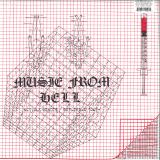
Nervous Gender’s legendary synthpunk LP Music From Hell burbles up from infernal depths to resurface on Dark Entries. Confrontational, unhinged, and unabashedly queer, Music from Hell is an unholy grail for fans of the strangest underbellies of post-punk, minimal synth, and early industrial music, and is presented here newly remastered and on expanded double LP.
Nervous Gender (de)formed in LA in 1978 at the hands of Phranc, Gerardo Velaquez, Edward Stapleton, and Michael Ochoa. Phranc, the androgynous embodiment of the band’s name, left in 1980. Following her departure, a wide cast of LA freaks would find themselves drawn into the band’s orbit, including Alice Bag of the Bags, Paul Roessler of the Screamers, the Germs’ Don Bolles, and an 8-year old drummer named Sven Pfeiffer. In 1980, Nervous Gender appeared on the seminal Live at Target compilation alongside Factrix, uns, and Flipper. With the band’s notoriety cemented, Music from Hell followed in 1981 on Subterranean Records (as no LA label would touch this material).
Side A, dubbed “Martyr Complex”, presents a more punk-forward sound with live drum salvos and slabs of aggressive synth. These twitchy, unsettling shockers ooze with the kind of snotty misanthropy that will endear them to fans of the Screamers or Crass.
Side B, known as “Beelzebub Youth”, is a live performance the band labeled "an electronic bruto-canto dissertation on the banality of spiritual transcendence." Mutant melodies cede way to synthesized clangs, whirs, bleeps, manipulated tapes, and howls of despair.
In addition to all the material from the original LP, we’re treated to a full disc of the band’s demos, the material from the Live at Target compilation, and early live recordings. Included are unrecognizable covers of Carly Simon and Lou Reed, and the Sex Pistols that are so despairingly skewed they fall into the void. This reissue of Music From Hell includes a 36 page lyric booklet, foldout poster, and gatefold sleeve with photos, flyers, and news-clippings designed by Eloise Leigh. Tackling taboo issues like sexual kinks, mental illness, drug use, and childhood molestation, Music From Hell is still surprising – even shocking - over 40 years after the album’s release. Nervous Gender stand as one of the most genuinely anti-establishment outfits in underground music, a colossal fuck you to social norms from religious strictures to gender essentialism.
out of Stock
Last delivered 6 months ago available to reorder, subject to availability
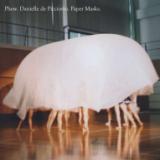
A unique collaboration between two of the most inquisitive and important artists in modern avant-garde electronic music.
Paper Masks marks a striking new collaboration between visionary Mute labelmates Phew and Danielle de Picciotto. Developed quietly over nearly five years, what began as an experiment between friends gradually evolved into a fulllength album. Phew composed and arranged all the music, weaving in dePicciotto’s voice and freely reshaping it to create something entirely new. Performed in both German and English, the result is an exploratory work that balances electronic minimalism with emotional immediacy.
Described by Pitchfork as “a Japanese underground legend”, Phew - former member of Osaka punk pioneers Aunt Sally - has forged a remarkable solo career, collaborating with Ryuichi Sakamoto, members of Can, and many others. In parallel, Danielle de Picciotto, an American-born interdisciplinary artist based in Berlin, co-founded the Berlin Love Parade and has performed internationally, working with Crime & the City Solution, Gudrun Gut, Space Cowboys, and her partner Alexander Hacke (Einstürzende Neubauten and frequent Phew collaborator) in hackedepicciotto.
Paper Masks stands as a mesmerizing exchange between two singular voices in experimental music - an intimate dialogue across distance, language, and sound, and a compelling addition to both artists’ evolving legacies.
Available on limited edition jellyfish color vinyl, featuring lyrics and poetry, and on CD, housed in an eco card-pack with a lyrics and poetry booklet.
Six years after his Grammy-nominated LP5, Sascha Ring - aka Apparat - takes a bold dive into the complexities of life with his sixth studio album.
A Hum Of Maybe is detailed, finely crafted, and wonderfully unpredictable. At its core, the record is about love - for himself, his wife, and his daughter - and holding onto it, protecting it, and constantly recalibrating as it is in a constant state of flux. As the title suggests, the songs explore being stuck in between: not a clear yes or no, but A Hum Of Maybe.
Ring elegantly combines the perspectives of an electronic producer and a classical composer, working closely with long-time collaborators Philipp Johann Thimm (cello, piano, guitar) - who also co-wrote and co-produced the record - Christoph “Mäckie” Hamann (violin, keyboard, bass), Jörg Wähner (drums), and Christian Kohlhaas (trombone). The album also features Armenian-American artist KÁRYYN - Apparat’s Mute labelmate - on ‘Tilth’, and Berlin-and Rome-based musician Jan-Philipp Lorenz (aka Bi Disc) on ‘Pieces, Falling’.
A Hum Of Maybe is complex, deeply personal, and embraces a state of limbo, marking an exciting new chapter for Apparat.
out of Stock
Last delivered 7 months ago available to reorder, subject to availability
Das experimentelle Berliner Trio ZAHN kehrt mit seinem bislang elektrisierendsten Werk zurück. Eine üppige Fusion aus Schwere, Elektronik und halluzinatorischen Farben. Monolithische Grooves treffen auf synthetischen Schimmer. PURPUR strahlt Spannung und Gefahr aus und pulsiert mit Tiefe und Dichte. Bekannt für ihren intensiven, treibenden Sound, der den unerbittlichen Marsch einer Welt am Abgrund widerspiegelt, vertieft das Trio ZAHN - Chris Breuer, Nic Stockmann und Felix Gebhard - seine klangliche Erkundung mit einem Album, das gleichzeitig elektronischer und rockiger ist als seine gefeierten Vorgänger. Purpur orientiert sich am lebhaften Cover des Albums - einer Explosion aus Trauben und Beeren, die seinen üppigen, farbenfrohen Sound widerspiegelt. Das Album verbindet kraftvolle Genres zu etwas Frischem und Elektrisierendem: schwere Fundamente treffen auf reichhaltige elektronische Texturen und schaffen Schichten aus Farbe, Komplexität und einem Hauch von halluzinatorischer Süße. Erneut in Gyhum mit dem Toningenieur Peter Voigtmann (ex-The Ocean, Death By Gong, Heads.) aufgenommen, tritt Purpur in die Fußstapfen der bisherigen Werke der Band, markiert aber auch einen mutigen Sprung nach vorne. Gastbeiträge von Fabian Bremer (Radare, AUA) und Kjetil Nernes (Årabrot) vertiefen das Gefühl der Unruhe und Faszination des Albums, während Magnus Lindberg (Cult of Luna) mit seinem Mix und Mastering dem Album die Tiefe eines unterirdischen Pulses verleiht - knackig, schwer und lebendig mit mikroskopischen Details. Während ,Adria" eine lebhafte Flucht durch Krautrock, Dark Jazz, Noise Rock und Post-Punk bot, zieht ,Purpur" die Zuhörer in eine dichtere, komplexere und eng verwobene Klanglandschaft. Das dritte Album der Band ist ein berauschender Wirbel aus synthetischem Puls und physischer Schwere - ein Album, das sich eher wie fermentiert als wie komponiert anfühlt.
Blue Curacao Vinyl. Das experimentelle Berliner Trio ZAHN kehrt mit seinem bislang elektrisierendsten Werk zurück. Eine üppige Fusion aus Schwere, Elektronik und halluzinatorischen Farben. Monolithische Grooves treffen auf synthetischen Schimmer. PURPUR strahlt Spannung und Gefahr aus und pulsiert mit Tiefe und Dichte. Bekannt für ihren intensiven, treibenden Sound, der den unerbittlichen Marsch einer Welt am Abgrund widerspiegelt, vertieft das Trio ZAHN - Chris Breuer, Nic Stockmann und Felix Gebhard - seine klangliche Erkundung mit einem Album, das gleichzeitig elektronischer und rockiger ist als seine gefeierten Vorgänger. Purpur orientiert sich am lebhaften Cover des Albums - einer Explosion aus Trauben und Beeren, die seinen üppigen, farbenfrohen Sound widerspiegelt. Das Album verbindet kraftvolle Genres zu etwas Frischem und Elektrisierendem: schwere Fundamente treffen auf reichhaltige elektronische Texturen und schaffen Schichten aus Farbe, Komplexität und einem Hauch von halluzinatorischer Süße. Erneut in Gyhum mit dem Toningenieur Peter Voigtmann (ex-The Ocean, Death By Gong, Heads.) aufgenommen, tritt Purpur in die Fußstapfen der bisherigen Werke der Band, markiert aber auch einen mutigen Sprung nach vorne. Gastbeiträge von Fabian Bremer (Radare, AUA) und Kjetil Nernes (Årabrot) vertiefen das Gefühl der Unruhe und Faszination des Albums, während Magnus Lindberg (Cult of Luna) mit seinem Mix und Mastering dem Album die Tiefe eines unterirdischen Pulses verleiht - knackig, schwer und lebendig mit mikroskopischen Details. Während ,Adria" eine lebhafte Flucht durch Krautrock, Dark Jazz, Noise Rock und Post-Punk bot, zieht ,Purpur" die Zuhörer in eine dichtere, komplexere und eng verwobene Klanglandschaft. Das dritte Album der Band ist ein berauschender Wirbel aus synthetischem Puls und physischer Schwere - ein Album, das sich eher wie fermentiert als wie komponiert anfühlt.
NOFX waren sauer (sind es möglicherweise immer noch) und wollten uns das wissen lassen! Ursprünglich 1999 veröffentlicht, war "The Decline" ein mutiges Werk und markierte einen großen Wendepunkt für NOFX. Der Song, der weithin als eines ihrer Meisterwerke gilt, ist ein 18-minütiges Punkrock-Spektakel, das die Entertainmentqualitäten, den lyrischen Witz und die Musikalität der besten Punkrockband aller Zeiten richtig zur Geltung bringt. Der Song, der den Zustand Amerikas satirisch darstellt und die gleichgültigen Massen und Politiker gleichermaßen aufs Korn nimmt, ist auch im Jahr 2026 natürlich leider noch aktuell und kritisiert somit weiterhin die Mächtigen auf eine Weise, zu der nur wenige Künstler den Mut haben. Die Vinyl-Single enthält auf der B-Seite die erste Version von "Clams Have Feelings Too" (das später auf dem Album "Pump Up The Valuum" wieder auftauchte) und ist ein Muss für jeden NOFX-Fan. Erneut auf schwarzem Vinyl wieder da und und limitiert in neuem farbigem Vinyl. Inklusive Beilage mit Texten und Bildern.
After a series of successful outings alongside sidekicks Ofofo and Zongamin, studio wizard MYTRON turns in his debut solo full-length for Multi Culti World Records. With contributions on Invisible Inc, Calypso, Bongo Joe, Kalahari Oyster Cult, LYO, Codek Records and Earthly Measures, Mytron has carved out a name for himself in a carefully-curated left-field quadrant of the indie-dance galaxy. Tuning his oscillators to myriad sounds — from dub and disco to krautrock — the London-based producer perhaps most notably channels the pristine compositional style of Kraftwerk. While most apparent in the use of vocoder, there’s a consistent efficiency of arrangement that recalls the man-machine in effervescent, idealistic fashion. Mytron manages to keep it simple, funky and musical — whimsical tunes that bop along with analog grit, wilderness, and wonk. There’s a warmth and wit that shine through every synth line, an understated confidence that speaks of years spent tangled in wires and waveforms, with an inclusive sonic eclecticism that flattens hierarchies between genres, geographies, and generations. Each influence is invited to the table, treated not as pastiche but invited to dine and dance in a space where kosmische dub disco and Afro rhythms can coexist without borders. The sleeve design echoes this philosophy: video-feedback patterns hinting at our modern screens, both portals and filters — coloured, distorted intermediaries through which we perceive the world. In the trippiest sense, the record is both reflection and refraction — a sonic mirror held up to an interconnected, glitchy reality. Tailored equally for DJ use and home-listening head trip, the album is meticulous, mischievous and merry.
BanBanTonTon review:
On Mytron’s debut long-player for Multi Culti groovy 21st Century leftfield house gear collides with Daniele Baldelli and Beppe Loda’s hugely influential `80s afro / cosmic. The 9 tracks are chunky, chugging and full of funky, funny noises. Old school B-lines mixing with eccentric electronics. Spinning, spiralling sounds.
Sugar is an electro-pop, vocoder confection, cut from the same sonic cloth as cult classics like Codek’s Tam Tam. Created from tough trap drums, splashing effects and a mutant Giorgio Moroder bass arpeggio. The title track, Propellor, pits Kraftwerk-esque hardware harmonised vocals against a bongo loop and a whistling hook. Playground has simian shrieks surround tumbling tom-toms. Highway Maintenance adds kosmische synths to a dance of woodblocks and buzzing bottom end. Keep On Dubbing is an organ-led, clip clopping percussive canter.
Tracks such as Speaker Can Talk, shot through with disco lasers blasts and recalling Curt Cress’ Dschung Tek, also lift the tempo up, but the bulk of the music here is a mid-tempo, techno drum circle. Squelchy sequences gurgling in and out of programmed percussion. On Quasar, spiky acid edges in and slowly takes over.
Key references that come to mind are Baldelli’s own turn-of-the-2000s Cosmic Sound Project productions, and Wolf Müller’s scene shaking sides on Themes For Great Cites, from around a decade later.
Un-easy listening from »anti-singer« and improviser Sofia Jernberg, a celebration of the voice in its rawest, most malleable form. Jernberg was born in Ethiopia and grew up in Vietnam and Sweden, so one can only imagine these diverse languages opened up a wealth of phonetic possibilities before she entered academia to study jazz and composition. If you dive into her catalogue you’ll clock her startling range – working as a jazz soprano and as an improviser, collaborating with everyone from Stefan Schneider to Mats Gustafsson, as well as appearances on the stage and screen, most notably in Matthew Barney, Erna Ómarsdóttir, and Valdimar Jóhannsson’s »Union of the North«.
On »Voice«, Jernberg provides a ground-level entry point to her work, meticulously running through a litany of unconventional techniques (non-verbal vocalisation, split tones, toneless singing, and distortion) without any effects, just pure batshit sonics designed to show off the voice’s scope as an experimental instrument. On »Mouth Synthesizer« she purses her lips to make ratcheting pops like some analog oscillator, hoarsely mimicking the sort of blustery, Merzbow-coded distortions you might get if you patched a RAT pedal into a broken guitar amp. It isn’t an act of caricature, it’s Jernberg’s way of demonstrating that expensive modular rigs aren’t an essential tool for experimental music, before throwing a side-eye to the field recording industrial complex on »Birds«, transforming her vocal chords into a nightmare aviary. But it’s Jernberg’s startling »multiphonic« experiments that hit hardest. The album opens on »Multiphonic I«, and it’s difficult to tell that you’re listening to a human voice at first – you could just as well be on Colin Stetson’s overblown sax airstreams. Jernberg creates a captivating spiral of crooked, phased tones and hoarse, guttural croaks that she develops over three movements. On »Multiphonic II«, her voice is turned into a storm of pained shrieks, and on the third and final segment, it almost resembles Arve Henriksen or Jon Hassell’s muted brass curlicues. Each track pulls a different musical muscle, whether it’s »One Pitch« with its unsettling yodel-like quivering drones or »Gurgle«, sounding like a close mic-ed recording of a small pot gently simmering.
The funky, atmospheric, evocative and sometimes downright weird output of companies such as DeWolfe, Cavendish, Burton and the ubiquitous KPM have always been a guiding inspiration for ATA Records, as evidenced in the spooky soundtrack works of The Sorcerers, the big band brass of The Yorkshire Film & Television Orchestra and even in the soul-jazz of The Lewis Express ('Theme From The Watcher).
Everything released on ATA is written and guided by the label heads Neil Innes and Pete Williams, who frequently dip their toes in the Library pond while working on other projects. These occasional one-off tracks have accumulated over the past few years and have now found a home on the first volume of an ongoing series : The Library Archive
Recorded using the same techniques and equipment used to create the now legendary catalogues of music sold to the film and television industry of the 60's & 70's, The Library Archive could easily sit alongside the plain minimalist covers of KPM or Telesound.
The fierce Brass of 'Whack, Slap & Blow' and 'Kaye Okay' could both be a Keith Mansfield cut, acting as a theme tune to a glamorous saturday night tv show circa 1972. 'Duck Strut' is a cheeky slice of Bass driven Brit-funk, Muted horns and flute adding an element of Quincy Jones amongst the grooving drums and percussion. 'The Needle Nose', 'Midnight Heist' and 'Wiretap' are amongst the more cinematic tracks on the album. Moody and atmospheric, they conjure up images of dark alleys, shadowy figures and dead letter drops. 'Wigged out' channels the wonky organ weirdness of Italian library legends I Marc 4 while 'Nuclear Wind I & II' use Moog and Mellotron as electronic counterpoint to ethereal voices. 'Siren's sea's' acoustic interlude conjures up images of distant clifftops, gossamer vocals enticing you onto the rocks before album closer 'Planet Nine' traverses the cosmos.
out of Stock
Last delivered 6 months ago available to reorder, subject to availability
Toronto-based musician and producer David Psutka’s long dormant Egyptrixx alias returns, with How Tidal. A compendium of sorts, which retells the story so far, reworks of highlights from his catalogue sit alongside brand new tracks, serving as a bridge between the past and the future, preceding more fresh music in 2026.
With the originals still sounding remarkably current, a straight best-of wouldn’t have been out of question, but ever the tinkering student of sound, Psutka thought he’d break them apart, just to see how he could put them back together again.
The music on is How Tidal is cutting-edge and futuristic, but never difficult, instead offering accessible gems where multiple strains of bass music are infused with a zingy, techno-pop bounce, whilst ambient moments gift sonic lozenges for maximum contentment. Psutka creates optimistically welcoming environments, where synthetic birds chirrup in cyan skies over babbling rainbow brooks, as 15 inch subwoofers boom by.
Egyptrixx gained renown across the 2010s with his hard hitting yet tranquil experimental dance music dubbed ‘celestial jeep music for a Saturn moon’. Colourful sound design was braided with dancefloor structures, creating an exhilarating tension between melodic and dissonant, euphoric and inward. The debut album Bible Eyes was released in March of 2011 to critical acclaim.
As Egyptrixx, Psutka has released four studio albums, collaborated, remixed, and toured with some of the biggest names in electronic music.
The widely acclaimed moniker is foundational to Psutka’s complex body of work that encompasses multiple solo projects, plus a diverse range of collaborative work. He has performed live at Sonar Festival, Roskilde, Mutek, MOMA PS1 Warm-UP and CTM Festival, and presented sound installations at Galeria Civica Commune di Modena and Art Gallery of Ontario (AGO).
In 2015, Psutka launched Halocline Trance as a home for his various sound projects, events and collaborations. In recent years, the label has quietly established itself as a platform that facilitates many of Canada’s most exciting creative music projects.
out of Stock
Last delivered 6 months ago available to reorder, subject to availability
A chance meeting in Mexico City set Points of Inaccessibility into motion. When Ibero-American composer Rafael Anton Irisarri crossed paths with Dutch media artist Jaco Schilp at MUTEK in 2024, a conversation about how technology shapes perception revealed an unexpected common ground. Schilp invited Irisarri to a spring 2025 residency at Uncloud, the Utrecht-based collective he co-founded, where Irisarri's sound began to take form amid an environment shaped by Schilp’s visual research.
The Uncloud studio was located inside the former Pieter Baan Centre, a forensic psychiatric prison where suspects of violent crimes were once confined. Its long history of silence and containment shaped the atmosphere in which the project developed. Within this setting, Irisarri coaxed long bowed-guitar tones through a network of pedals and looping systems. The raw gestures thickened into a vaporous and architectural field of sound. Schilp processed the material through a custom point-cloud software patch that produced images in continuous flux. The visuals flickered, dissolved and reformed like memories that resist coherence, functioning as a digital Rorschach that reflected the observer’s own perception.
Amid these spectral echoes, the project evolved into an examination of how the past persists within present signals. Memory endures as residue and interference, continually shaping perception even when its source has faded.
Schilp’s visual process required a continuous stream of sound in real time. Irisarri improvised throughout the residency, generating material that allowed the visuals to develop in parallel. Once back in his New York studio, he began shaping the recordings by carving pathways through the improvisations and mapping selected passages into MIDI. This process allowed him to build outward from the bowed-guitar material with minimal overdubs, adding Prophet 5 textures, Moog bass and strings that expanded the harmonic field while keeping the original performances at the center. To refine the structure, Abul Mogard provided editorial input, working with Irisarri’s stems to guide transitions and strengthen the overall pacing. The material, originally created under conditions of immediacy and constraint, evolved into a fully realized work through careful revision, patience and sustained reworking.
The title engages the geographic concept of the Poles of Inaccessibility, locations defined solely by their distance from all surrounding points. Irisarri adapts this idea to the conditions of digital life, where new forms of inaccessibility arise through the informational enclosures that structure perception. What appears to be a fully connected network often produces a deeper kind of separation, one shaped by the filtering logic of the systems that mediate experience. In this sense, the digital sphere mirrors its geographic counterpart. We inhabit spaces saturated with signals, yet the possibility of genuine contact becomes increasingly remote.
At its core, Points of Inaccessibility considers what can be understood as the new rituals of capitalist realism. Irisarri uses the term digital shamanism to describe the forms of simulated connection that organize contemporary life. These systems promise comfort through algorithms, influencers and AI interlocutors, yet they often reproduce the same conditions that generate loneliness in the first place. What appears as connection becomes the echo of connection, a sequence of gestures that imitate solidarity while withholding it. Like the geographic poles, these rituals are defined by distance. They pull us into environments where everything is illuminated, yet meaningful proximity becomes increasingly rare. In this sense, the work approaches a hauntology of the present, a reflection on futures that have stalled and intimacies that have been thinned by the algorithmic infrastructures that surround us.
This thematic tension unfolds across the album’s four movements. Faded Ghosts of Clouds introduces the work with textures that rise and dissipate in slow cycles, creating an atmosphere that resists clear definition. Breaking the Unison occupies a pivotal position in the sequence and focuses on the moment when the individual and the system fall out of alignment. Its shifting patterns trace the scattering of signals that once suggested connection, revealing the instability at the heart of contemporary perception. Signals from a Distant Afterglow forms the center of the album and features vocals by Karen Vogt, whose presence enters the sound field like a fragile transmission shaped by distance and delay. The closing piece, Memory Strands, follows motifs that appear, recede and briefly intersect before returning to quiet. Across these movements, the album outlines a landscape in which emergence and disappearance continually inform one another.
Listening to Points of Inaccessibility is an encounter with a sound field that is constantly in flux. Elements surface briefly, shift position and recede, creating a sense of motion that resists stable interpretation. The music moves between closeness and vastness, carrying traces of memory while withholding a clear point of resolution.
The album’s visual identity completes the project’s conceptual arc. In Mexico City, where Irisarri and Schilp first met, Daniel Castrejón transformed stills from Schilp’s point-cloud visuals into the cover image. The final artwork captures a single suspended frame of the digital material, a moment extracted from a field that is normally in constant motion. Its surface recalls the texture and abstraction found in the work of Catalan artist Antoni Tàpies, where material presence and erasure coexist within the same plane.
What emerges is a work that examines the tension between technological systems and human presence. Points of Inaccessibility asks whether connection is still possible within environments shaped by mediation and delay, or whether we have become isolated points within the very networks that promise proximity. What possibilities for relation persist within environments organized by algorithms and interruption? And how are we meant to understand presence when so much of it is constructed at a distance?
Points of Inaccessibility will be released on BioVinyl on February 6, 2026, with audiovisual performances planned throughout 2026.
Mastered by Stephan Mathieu
Artwork by Jaco Schilp
Design and layout by Daniel Castrejón
Artist photo by Iulia Alexandra Magheru.
out of Stock
Last delivered 7 months ago available to reorder, subject to availability