Come Away With "ESG". 35-year anniversary release of the classic genre-busting debut album by the Bronx sisters ESG. The sample-friendly opus that's the inspiration for hip-hop, house and post punk. Music that falls outside of the no wave, new wave and post punk library, it's for the dance floor but it's not funk, there's no horns, no driving organ; it's the opposite of Sly And The Family Stone but no less cool and no less groovy. 'A lasting document of their unique brand of minimal funk that would influence subsequent post-punk, hip-hop, and dance music acts. Stripped down to the most basic of drumbeats and rudimentary bass lines, 'Come Away' confirms the notion that the real rhythm is what happens between the beats. - AllMusic // 'This is dub disco with a punk edge.' Paste // 'Uncut punk-funk straight off the streets of the South Bronx.' Record Collector // 'ESG are that rare thing' Guardian // 'Come Away with ESG sounds so shockingly current.' Paste // 'A musical snapshot of New York City at the beginning of the '80s.' - Allmusic.
quête:my disco
The Boogie Twins aka Ashley Beedle and Ray Mang have reworked and edited one of Paul 'Trouble' Anderson's biggest signature tracks.
A message from Ashley Beedle:
"My Electric Ballroom crew, that were later to become the infamous Shock Sound System, was myself, Stan Zepherin, Dean Zepherin, Paul Denton, Cecil Peters and Ricardo Da Force (R.I.P.)
We loved going to the Electric Ballroom to see the legendary Paul 'Trouble' Anderson who was killing it in there with Boogie, Electro, Hip Hop and Disco - he was such a huge musical influencer.
When he dropped 'Heaven and Earth' in the mid 80's, the joint went ballistic.
That tune ruled London and became not only a rare groove classic but remains a much loved staple of today's club scene - all because of Paul's exceptional ear for music.
Widely and rightly regarded as one of the best ever soul and funk bands, the now legendary Average White Band tore-up the rule book and conquered the US, UK & International charts with a series of soul and disco hits between 1974 and 1980. AWB’s repertoire has been a source of inspiration and influence for many R&B acts and they are one of the most sampled bands in history, remaining relevant today, continuing to reach new generations of younger audiences. Snoop Dogg, Fatboy Slim, Ice Cube, Puff Daddy, TLC, Rick Ross, will.i.am and Mark Ronson amongst countless others, have all borrowed sections of their grooves. ‘Soul Searching’ is the 4th album by AWB, originally released in 1976. The album reached #9 in the USA. ‘Soul Searching’ also includes the much-sampled classics ‘A Love Of Your Own’ and ‘Queen Of My Soul’, with the latter reaching #40 in the USA.
It was produced by Atlantic’s legendary producer, Arif Mardin.
- A1: Spooky - Frankie Greer Quartette
- A2: Early In The Morning - Bill Beau Trio
- A3: String Around My Heart - Eunice Haze
- A4: My Man - Phylis Hendricks
- A5: Kitchen Cookin - Eddie Buster Band
- B1: Coming Home Baby - Ronny Pellers Satin Sound
- B2: Under The Covers - The Kats
- B3: The Mustang (Pt 1&2) - The New Philadelphians
- B4: Evil Ways - The Lido
- B5: El Mexicano - Brazada
- C1: Title Town - Herb Crawford Jazz Ensemble
- C2: Louisville Assembly Plant - The Runningboards
- C3: Little Sister (Pt 1&2) - The Headliners
- C4: Body Wave - Victoria
- D1: Radiation Funk - Maxwell
- D2: Oh Linda - Starfoxx
- D3: Come On - Johnny Spinosa
- D4: Monkey Time - Johnny Spinosa
+ Bonus 7" 400 ltd!
Christina Aguilera, Donny Hathaway, and Gregory Porter. If you are curious to learn how these three names are connected with Movements Vol.10 then all you got to do is to keep on reading.
Those of you who have been enjoying Tramp Records' Movements series from the very beginning know that this series is not just about funk. It actually covers a wide spectrum of genres: early Rhythm & Blues, Soul-Jazz, Latin-Soul, heavy James Brown-style Funk, and mid-70's pre-Disco. The track listing is, as on all previous volumes, selected in chronological order.
For this, our 10th jubilee album, we go back in time more than 60 years. The Frankie Greer Quartet opens the set with their beautiful composition "Spooky". Just as sweet is "Early in the Morning" by the Bill Beau Trio which was recorded in 1958. What Eunice Haze, Phylis Hendricks and the Eddie Buster Band have in common is the fact that each of them has recorded only one 45rpm single in their musical career.
Johnny Spinosa's "Come On" is a fierce Rhythm 'n Blues monster of the highest order. The same goes for The New Philadelphians. No one would question if "The Mustang" was announced as an unreleased Blue Note recording by Lou Donaldson from 1968. Cleveland Eaton, who became one of the most versatile and best jazz bassists in 1970s, started out with his band The Kats in the late 1960s. "Under the Covers" was arranged by none other than Donny Hathaway (of "The Ghetto" fame) with who he has worked closely together in his early days.
Probably one of the finest and most sought after versions of "Coming Home Baby" out there has been recorded by a german dude and bis band, Ronny Pellers Satin Sound. Another excellent cover version is delivered by The Lido which should leave any latin-jazz fan speechless. "El Mexicano" is an inconspicuous little groover while the next two tunes by Herb Crawford's Jazz Ensemble and The Runningboards are more in the soul-jazz vein. Listen to the dummer on "Louisville Assembly Plant" who goes nuts!
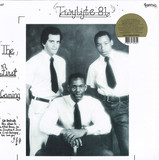
We are very proud to presents this official and first ever reissue of The First Coming, by Twylyte ’81, an extremely rare and underrated Soul-Jazz album produced and released in 1981. Twylyte ’81 was a 3 pieces band composed of Frank Jones Jr., Alfred Brown Jr. and John
Belzaguy, who, except for John, have never recorded anything else than this incredible album. The First Coming is primarily standing out by a superb composition, mixing touch of Soul, Jazz, and Disco together. It secondly shines thanks to the amazing deep and spiritual
voice of the band leader, Frank Jones Jr., whose vocals style can sometime remind of John Lucien. Even more impressive is the fact that these 3 fellas were all less or close to 18 years old when composing and recording this beauty. As did others brilliant hidden projects such as Ted Coleman Band, or Minority Band, it was also useful for Twylyte ’81 to receive the support of JSR Records, a kind of non-profit label dedicated to help young bands and artists in recording and producing their own records. Here are a few words from Al Brown Jr. about this release: “After 38 years, I still have the euphoric feeling while listening to this album. I would say that this was one of my greatest achievements. I want to say "Thank you" Pascal Rioux and associates for sharing the group's vision with the rest of the world. I pray the listeners will feel a portion of what we tried to convey through these songs. When I first began this project, I thought it was just killing time. Being 17 years old at the time, I didn't see the music we worked on being recorded. We (Frank and I) were in a basement practicing each song. Who knew that this music would be recorded let alone picked up 38 years later? I still remember every beat, drum roll, every stop/start; everything. Wow, the nostalgia of it all. I wish this album much successful and I hope in the future I can perform this album live.
The Word is one of the better kept secrets of 1980s Austrian disco music. Yet once you put the needle on this record, you notice that it sounds oddly familiar. The awe inspiring signature piece “Lobster” has the same analogue, slow moving aesthetic as Zenit’s timeless “Waiting” that was featured on Edition Hawara’s first release. The same goes for the three other wonderfully unconventional, proto electronic songs: “Easy”, “All My Life” and the eponymous “ The Word”. And there are even more commonalities with Zenit’s LP: The vocals are Linda Sharrock’s, who here teamed up with Karl “Charly” Ratzer and Peter Ponger, the twin brother of legendary Falco producer Robert Ponger. The result of this collaboration is, well, also quite legendary. How this kind of sound emerged in Vienna in 1984 is still a bit of a mystery, but clearly all the stars were aligned when Sharrock, Ratzer and Ponger were jamming in the studio. We are very proud to share this secret with you. Just as there are very few lobsters in landlocked Vienna, there are very few records like this out there.
Zenit is a jazz ensemble from Krems in Lower Austria, founded in 1976 by Hannes Treiber and Willi Langer. Their music was celebrated locally, but to reduce them to their local fame would be a shame: After all, their first two LPs, Stimmungswechsel (Change of Moods) and Früchte (Fruits), quickly gained them a much wider audience of discerning listeners. Arguably, however, Zenit’s third and final LP Straight Ahead is the most special of their records. It initially came out in 1986 on the producer’s label Spray Records, and is today one of the hardest-to-find Austrian jazz records. Its centrepiece is the infectious slow-motion disco piece “Waiting,” with vocals by American jazz singer Linda Sharrock. Effortlessly bringing together pop, soul and new age vibes, this is a record that is as unique as it is difficult to date. Does it sound like from the 80s? We’re not sure. To our minds at least, it could also be from the future.
- A1: Girls Of Iskandariah
- A2: Night Entertainer (Azef El Layl) (Azef El Layl)
- A3: The Joy Of Lina (Farha) (Farha)
- B1: Dance Of Tenderness
- B2: Jamileh
- C1: A New Candle
- C2: Once A Year (Zourouni) (Zourouni)
- D1: A Flower Of My Imagination (Ya Zahraren) (Ya Zahraren)
- D2: A Night At The Station (Leylet Al Mahatta) (Leylet Al Mahatta)
- D3: Love Of Laura (Ya Laure Houbbouki) (Ya Laure Houbbouki)
The first release in Ernesto Chahoud’s ‘Middle Eastern Heavens’ reissue series for BBE Music, we are delighted to present Lebanese maestro Ihsan Al-Munzer’s 1979 album ‘Belly Dance Disco’.
In late 70's and early 80's Beirut, Lebanese organist, composer and arranger Ihsan Al-Munzer made a series of pioneering synth-driven fusion albums that reimagined Middle Eastern music. The records came at a pivotal time in Lebanon’s musical history of avant garde experimentation that was blossoming, just as the country’s 15-year civil war took hold.
Ihsan Al-Munzer’s first release as a solo artist, ‘Belly Dance Disco’ aimed to fuse ‘Western’ modern music and bellydance to make it more accessible to the local audience in the late 1970s. “I wanted to put a mixture of European beat with Arabic percussion, but I made the European rhythm and harmony very easy to listen to for the Arabic ear – soft and understandable” says Al- Munzer.
Today, the composer’s music has made the return journey back to the West; with tracks on the album featured by hip hop artists such as Mos Def, who sampled Al-Munzer’s composition ‘Joy of Lina’ on his 2009 song ‘The Embassy’.
The 10-track album was released in 1979 on the legendary Voix De L’Orient label, which was also home to pioneering Lebanese composers The Rahbani Brothers. One of the earliest artists to introduce the synthesizer to Middle Eastern music, Al-Munzer leads the band, playing the main melody lines on the Kawai Organ and Solina String Synthesizer. Three of his original compositions feature on the album, alongside creative re-imaginings of Turkish and Arabic folklore and modern classics, pushing the boundaries of bellydance music to chime with the international scene.
Al-Munzer’s five titles from the 1970's and 1980's are part of BBE’s ‘Middle Eastern Heavens’ reissue series, a collection of groundbreaking productions from Lebanon, curated by Lebanese DJ, compiler and music researcher Ernesto Chahoud.
Notes by Natalie Shooter, a music journalist and researcher based in Beirut, edited by Will Sumsuch.
Melodies International are glad to step forward with their latest reissue and 19th release, exploring the sounds of London locals Synchrojack: Daylight and 900th Lifetime, two slabs of mid 90s UK house at its best. MEL019 will be available in January in vinyl 12-inch format.
Melodies International is a reissues record label based in London founded by Floating Points in 2015, dedicated to unearthing, restoring, contextualizing and offering new leases of life to the best of scarcer and lesser known soul, disco, jazz, house and beyond.
Originally from Portsmouth in the UK, Synchrojack is a London based production duo formed by Dean Slydell and Greg Wheeler in the mid 90s. Both deeply into records and production gear, they connected through figuring out how to set up a shared studio in Dean's parents' home and starting to produce electronic music in their late teens.
They were completely taken over by the sounds of Detroit and Chicago that were getting imported at the time. Starting out trying to emulate those sounds they loved, tracks by Model 500, Glenn Underground, Lil Louis, Steve Poindexter and Mike Dunn among many others, what came of Dean and Greg's sessions wasn't a carbon copy but their own distinctive sound.
They began releasing on Russ Gabriel's mythical UK label Ferox records in 1995 and would go on to release a string of releases throughout the 90s, using the moniker Downlink as well. MEL019 presents two tracks by Synchrojack, one from each of their two first EPs released on Ferox, both in 1995.
Above anything, what's clear listening to Synchrojack is their deep love, knowledge and appreciation for music and their talent as producers, channeling their many influences into their own sound. Daylight is a bouncy, stripped back drum heavy banger that just steams ahead with percussive synth patterns and a hypnotic deep bassline whilst 900th Lifetime brings a dramatic sci-fi vibe reminisent of some of the best out of Detroit.
Kêtu Records proudly presents, after two years looking for the artists in Nigeria, the reissue of this album from The Faces!!Originally released in 1975, Wake Up Today, differs from the Afro-Funk productions of that time by its Afro-Rock/Afro-Funk Garage style.
We let you discover this UFO and thank you for your support to the label.
Revive the legend Faces,
Vibrate the dancefloor,
!! Wake up today !!
Gary’s Gang are the New York group of musicians best know for their US hit ‘Keep On Dancin’’, which reached #41 on the Billboard Hot 100 and UK #8 in 1978. The single sold over half a million copies around the world. The follow-up was ‘Let’s Love Dance Tonight’ (UK top 49 in 1979) and ‘Do It At The Disco’ and these three tracks have been sampled numerous times.
- A1: Sharnell Morton – You Are My Shining Star
- A2: Janice “Nicki” Harisson – Magic Of Love
- A3: Direct Connec Shun – He’s No Good
- A4: James Family- We’ve Got It Made
- B1: Network & Co – Spirit Of The Boogie
- B2: Marlon Hunter – Did You Forget My Number
- B3: Spice Of Ice – Star Struck
- B4: Executive Suite – When It Comes To Lovin Me
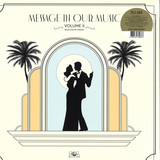
SOL DISCOS is extremely happy to introduce the second volume of their Message In Our Music compilation series, selected by WAXIST. This album is the result of more than two years of work in researching the original recordings, the artists involved & licensing the different songs. Focusing once again on the Modern-Soul genre, the album brings back to light eight extremely rare songs from the mid-70's to the mid-80's, all officially licensed. From the heavy synth Gospel Boogie of Sharnell Morton's "You Are My Shining Star", to
the magnificent Network & Co private Disco "Spirit Of The Boogie", most of these songs are highly difficult to find on their original format, not to mention at a decent price. Direct Connect Shun’s "He's No Good" records have been destroyed in a flood, and the few
copies which have sold on the Internet reach the 3 figures price tags for example. Also, the album is proud to introduce to a wider audience some lesser known but exceptional recordings such as Janice "Nikki" Harrison's "Magic of Love", which is taken from a Broadway musical produced & composed by Ted Wortham - who also composed for
Philadelphia International Recordings artists such as Teddy Pendergrass, Anthony White or Jean Carn. Message In Our Music Vol.2 has been fully remastered, and features interview based liner
notes, along with never seen before pictures of the artists selected
Releasing his first ever vinyl release 'El Sunset' on James Holden's, Border Community back in 2007, Chilean producer Ricardo Tobar has since been held in high regard by the seminal UK producer. Intricately constructing his way around the parameters of emotionally-lead, highly atmospheric electronic music, Ricardo has brought his sound forward to grace the rosters of Jennifer Cardini's, Correspondant, ESP Institute and MUSAR Recordings. Continuing to extend his already significant discography, he now returns to MUSAR Recordings for a third time with the 'After The Movie' EP.
Ricardo's 'After The Movie' EP forms a selection of cuts that have been held in his locker for quite some time. Uncovered by MUSAR Recordings label head, David on a podcast from way back, it seemed only natural that this unreleased music from Ricardo would find its home on the Amsterdam-Tel-Aviv label.
"This EP is quite special to me because it reflects a long timeline in my work. The 'After The Movie' track had been in the vault for ages until David from MUSAR found it in an old podcast; it really takes me back to those first steps in recording music." Ricardo Tobar
Across his EP, Ricardo plays with varying textures and arrangements that in turn provide a cross-section of his sound that has expanded and developed over time. 'After The Movie' presents the experimental ambience synonymous with his early works, whilst 'Parques' brings an idyllic, cinematic feel with strictly crafted synth arrangements riding high, post-rock influences also show through. 'Regain Your Power' represents a change of course, whilst also channeling a political message punctuated by social unrest taking place in Ricardo's home country, Chile. He abandons experimentalism in favour of tougher 4x4 elements, allowing his machines to run riot.
"The mixture of ideas and feelings on this EP have a politically charged spirit, as electronic music always does. A few weeks after I finished 'Regain Your Power' the whole Chilean social explosion took place with the same ideals I had in mind when recording the track." Ricardo Tobar
Stepping up on the remix is a pair whose names are etched into the history of UK electronic music, Andy Turner and Ed Handley a.k.a. Plaid. Reworking title track 'After The Movie', they produce an emotive, soundscape complete with droning basslines and ex-terrestrial flourishes.
Still Loving You, by Twilight, was originally released in 1981. Housed in a low-fi generic album cover, this very polished, professionally produced record sounds like it was made by a super talented band. Strains of Earth Wind and Fire, George Duke and Roy Ayers, flow through a collection of tunes that effortlessly blend soul, disco, funk, Latin and Brazilian vibes.
But looks, as evident with the LP cover, can be deceptive. Twilight was not a band. In fact, with the exception of a guest horn section and one guest vocal, Twilight was, and still is, Lawrence Ross; one man with a clear vision of what his music should sound like, and how he would make it on his own. Working the nightshift at General Mills, Ross was a Head shift packer at a flour mill where, in the twilight hours, there was enough quiet time to create songs.
He estimates it took him about a year to write the album, but recording only took a week. Able to get by with only 3 hours sleep he recorded Still Loving You in a seven-day stretch between 10 am and 11 am every morning, just a few hours after finishing work. Ross showed-up to the studio with a master plan to make a record as he heard it in his head, by playing everything himself. “I laid out a tick track from begin to end on the first day,” he explains. “Then I went in and laid down the bass on the next day, and then drums, and then keyboards etc, with each process taking one hour of studio time each day.”
Havazelet's story is both fascinating and mysterious. She was born in Aden, Yemen, in 1936 as Havazelet Damari, she immigrated to Israel when she was 8 years old and grew up in the disadvantaged Ezra neighborhood, in south Tel Aviv. Havazelet discovered her love for singing when she was a teen, when she would sing at feasts and family events. At one of these events she was discovered by an impresario who decided to take her under his wing.
He asked her to change her family name from Damari to Ron, as there was already a young singer called Shoshana Damari in Israel, who was becoming quite popular. In March 1960 Havazelet Ron's only Israeli album, "The Music of the Desert" was released, produced by the "Makolit" label, featuring Yemenite folk songs. Both songs on this 7" are from that album. The identity of the promoter, the album's recording date and location, and the identity of the musicians, could not be found.The album was ahead of it's time in that it introduced an innovative sound, comprised of drums, electric guitar and an organ, making it one of the first albums in Israel to record this type of composition.
... However, it confused the Israeli audience of the time: The vocals were in Yemeni-Arabic, preventing it from being played on the radio, which mainly played Hebrew music, moreover, it was too innovative and far from traditional music for the Yemenite scene. The album fell between the cracks and her big breakthrough to mainstream did not happen.
Following the album's failure, Havazelet left Israel in 1963 and went to Germany, where she performed in festivals, TV shows and recorded several more albums. All of this was made possible by her unique singing talent in five languages - Hebrew, Yemeni-Arabic, German, English and Yiddish, her impressive appearance and remarkable stage charisma. The European audience enjoyed the original music she produced and her Yemenite-style cover versions of Hebrew songs.
In 1968 Havazelet married and a year later retired from the music scene. In 1980 she returned to Israel but she left again four years later, this time to Los Angeles, where she worked as a kindergarten teacher. Havazelet Ron passed away in Los Angeles, in 2013, after a long battle with cancer. In Israel, her name is almost unknown among music lovers in general and among record collectors in particular.
Heinrich Dressel was an archaeologist, epigraphist and numismatist, creator of a table, still in use, for the cataloging of Roman amphorae. For over ten years, one of the founders of MinimalRome, Valerio Lombardozzi, has embraced the name of the German scholar, becoming both the guardian of a dense collection of sounds from the past and the creator of new brilliant electronic ones. “Completion Of The Amphoras Table”, originally released on cd by Legowelt's Strange Life Records, was the final chapter of the so-called 'Studium Amphorae Trilogy', a triptych of albums which tried to 'evoke' in notes not only the discoveries and the studies of Monte Testaccio's fragments made by the former pupil of Theodor Mommsen.
The first vinyl release of “Completion Of The Amphoras Table”, curated by Souterraine.org and Envlp_Imprint, fills not only a recording void, but also gives posterity a remarkable album to rediscover, worthy successor of “Mons Testaceum” (2007 ) and “Escape From The Hill” (2008),
which reconstructs one more time the ghostly atmosphere of a Rome at the dawn of the 20th century. Heinrich Dressel adopts the stylistic features of gloomy soundtracks and, above all, relies on a set of polyphonic synthesizers that, starting from the rare Elka Syntex, favor the composition of abstract textures, punctuated by some appropriate variations, and harmonies which, net of the
deep bass, make every single track even more magnetic.
- A1: Pinta Manta - António Sanches
- A2: Dia Ja Manche - Dionisio Maio
- A3: Morti Sta Bidjàcu - José Casimiro
- A4: Pontin & Pontin - Bana
- B1: That Day - Fany Havest
- B2: Odio Sem Valor - Pedrinho
- B3: Mino Di Mama - Quirino Do Canto
- B4: Mundo D'margura - Tchiss Lopes
- C1: Po D'terra - Joao Cirilo
- C2: Corre Riba, Corre Baxo - Abel Lima
- C3: Ilyne - Os Apolos
- C4: Sintado Na Pracinha - Americo Brito
- D1: Capchona - Elisio Vieira
- D2: Djal Bai Si Camin - Antonio Dos Santos
- D3: Stebo Cu Anabela - Abel Lima
repress
2LP 140G VINYL + 12 PAGE BOOKLET.
"Space Echo - The mystery behind the "Cosmic Sound" of Cabo Verde finally revealed!" is the 20th release by the fabulous Analog Africa Label.
In the spring of 1968 a cargo ship was preparing to leave the port of Baltimore with an important shipment of musical instruments. Its final destination was Rio De Janeiro, where the EMSE Exhibition (Exposição Mundial Do Son Eletrônico) was going to be held.
It was the first expo of its kind to take place in the Southern Hemisphere and many of the leading companies in were all eager to present their newest synthesisers and other gadgets to a growing and promising South American market, spearheaded by Brazil and Colombia.
The ship with the goods set sail on the 20th of March on a calm morning and mysteriously disappeared from the radar on the very same day.
One can only imagine the surprise of the villagers of Cachaço, on the Sao Nicolau island of Cabo Verde, when a few months later they woke up and found a ship stranded in their fields, in the middle of nowhere, 8 km from any coastline.
After consulting with the village elders, the locals had decided to open the containers to see what was inside - however gossip as scintillating as this travels fast and colonial police had already arrived and secured the area.
Portuguese scientists and physicians were ordered to the scene and after weeks of thorough studies and research, it was concluded that the ship had fallen from the sky. One of the less plausible theories was that it might have fallen from a Russian military air carrier. The locals joked that again the government had wasted their tax money on a useless exercise, as a simple look at the crater generated by the impact could explain the phenomena. "No need for Portuguese rocket scientists to explain this!" they laughed.
What the villagers didn't know, was that traces of cosmic particles were discovered on the boat. The bow of the ship showed traces of extreme heat, very similar to traces found on meteors, suggesting that the ship had penetrated the hemisphere at high speed. That theory also didn't make sense as such an impact would have reduced the ship to dust. Mystery permeated the event.
Finally, a team of welders arrived to open the containers and the whole village waited impatiently.
The atmosphere, which had been filled with joy and excitement, quickly gave way to astonishment. Hundreds of boxes conjured, all containing keyboards and other instruments which they had never seen before: and all useless in an area devoid of electricity. Disappointment was palpable. The goods were temporarily stored in the local church and the women of the village had insisted a solution be found before Sunday mass.
It is said that charismatic anti-colonial leader Amílcar Cabral had ordered for the instruments to be distributed equally in places that had access to electricity, which placed them mainly in schools.
This distribution was best thing that could have happened - keyboards found fertile grounds in the hands of curious children, born with an innate sense of rhythm who picked up the ready-to-use instruments. This in turn facilitated the modernisation of local rhythms such as Mornas, Coladeras and the highly danceable music style called Funaná, which had been banned by the Portuguese colonial rulers until 1975 due to its sensuality!
The observation was made that the children who came into contact with the instruments found on the ship inherited prodigious capabilities to understand music and learn instruments. One of them was the musical genius Paulino Vieira, who by the end of the 70s would become the country´s most important music arranger. 8 out of the 15 songs presented in this compilation had been recorded with the backing of the band Voz de Cabo Verde, lead by Paulino Vieira, the mastermind behind the creation and promulgation of what is known today as "The Cosmic Sound of Cabo Verde".
The field of electronic music were involved. Rhodes, Moog, Farfisa, Hammond and Korg, just to name a few.