Influential UK artist Man Power makes his Skint Records debut this December with a thrilling new offering featuring Berlin’s Private Agenda.
Man Power is a true electronic virtuoso who has proven he can do searing acid, raw techno and expressive disco with equal elan.
As well as running his own Me Me Me labels, he has appeared on top outlets like ESP Institute and Correspondent and now impresses once again with the help of Berlin’s Private Agenda.
The electric original version of ‘Do It Thin’ is an intense and steamy affair with Eurobeat synths and Italo piano chords that are sure to make a huge impression on the crowd. Vocals that Bronski Beat would be proud of soar to the heavens and get hands in the air whilst the hard hitting drums drive things forward.
Dramatic chords build the suspense, leading you towards an epic, guitar laden breakdown with well sequenced synths adding weight and colour. Edgy and expressive, it is a real stomper with a fusion of myriad different styles.
An instrumental version is also supplied that removes the vocal and allows the studio skills and musicianship to really shine, this was a showstopper in Man Power’s recent Boiler Room set and it not to be missed.
Man Power marks his Skint debut here with the same sense of timelessness and quality that has defined his career to date.
Suche:my disco
- A1: Red Earth
- A2: Raw Gold
- A3: Citrine Sun
- A4: Cadmium Vert
- A5: Cerulean Blue
- A6: Indigo Dore
- A7: Magenta Rose
- A8: Omega Prism
- B1: Red Earth (Instrumental)
- B2: Raw Gold (Instrumental)
- B3: Citrine Sun (Instrumental)
- B4: Cadmium Vert (Instrumental)
- B5: Cerulean Blue (Instrumental)
- B6: Indigo Dore (Instrumental)
- B7: Magenta Rose (Instrumental)
- B8: Omega Prism (Instrumental)
Sound is a potent force that can awaken your purpose and re-balance your spirit. It has the power to relax, as well as inspire you, through the positive therapy of sound vibrations. Elemental Resonance is a trailblazing meditation album where vibrational sound practitioner, Tracie Storey, combines the energy waves made by music, with positive words of love and harmony to produce inner peace, deep relaxation and a higher spiritual connection.
Storey explains “The idea for this album came to me 2 years ago when I was living in Montreal, Canada. I’d been learning to form shapes, textures and colour with sound and going deep within the architecture of my own inner space. These powerful compositions have really helped me on my journey. Creating transformative tools are now part of my life’s work, using the medium of vibrational sound which transcends all boundaries”.
Storey guides you through a series of mindful meditations - each connected to the seven energy chakras - and each supported by sound vibrations, colours to visualise, and positive affirmations to re-balance your entire being and bring you waves of calmness, strength, warmth and joy.
Released on Celestial Being, label boss Felix Buxton (Basement Jaxx), says “I’m thrilled to support this project, everywhere I look people are discovering more about Vibration and how it affects them.
Tracie is leading the way forward for new generations, uncovering more of our potential as humans. This is a great way to switch off the world and switch on to your deeper self.”
Storey has been active as a vibrational sound practitioner, for the past 5 years. Previous to six years training under Master Fabien Maman, who’s one of the world's leading experts on vibrational sound therapy, founder of the Tama-Do Academy.
She also travelled the globe as a DJ on the international dance scene (releasing on Ministry of Sound and producing mixes for the likes of Kiss FM).
- A1: Dur Dur Band - Daraadaa Muxibo
- A2: Omar Shoolil - Hab Isii
- A3: Mukhtar Ramadan Idii - Check Up My Head
- B1: Bakaka Band - Geesiyada Halgamayow
- B2: Fadumo Qassim & Waaberi Band - Waa Kaa Helaa
- B3: Iftin Band - Sirmaqabe
- C1: Mukhtar Ramadan Idii - Baayo
- C2: Ahmed Shimaali & Ahmed Sharif "Killer" - Hoobeya
- C3: Dur Dur Band - Shaleedayaa
- D1: Dur Dur Band - Ladaney
- D2: Bakaka Band - Gobonimada Jira
- D3: Iftin Band - Ii Ooy Aniga
After being blown away by a few tunes - probably just as you will be after listening to this - Samy Ben Redjeb travelled to the infamous capital city of Somalia in November of 2016, making Analog Africa the first music label to set foot in Mogadishu.
On his arrival in Somalia Samy began rifling through piles of cassettes and listening to reel-to-reel tapes in the dusty archives of Radio Mogadishu, looking for music that ‘swam against the current’.
The stars were aligned: an uncovered and unmarked pile
of discarded recordings was discovered in a cluttered corner of the building. Colonel Abshir - the senior employee and protector of Radio Mogadishu’s archives - clarified that the pile consisted mostly of music nobody had manage to identify, or music he described as being ‘mainly instrumental and strange music’.
At the words ‘strange music’ Samy was hooked, the return flight to Tunisia was cancelled. The pile turned out to be a cornucopia of different sounds: radio jingles, background music and interludes for radio programmes, television shows and theatre plays. There were also a good number of disco tunes, some had been stripped of their lyrics, the interesting parts had been recorded multiple times then cut, taped together and spliced into a long groovy instrumental loop.
Like everywhere in Africa during the 1970s, both men and women sported huge afros, bell-bottom trousers and platform shoes.
James Brown, Stevie Wonder, Marvin Gaye and The Temptations’ funk were the talk of the town. In 1977, Iftin Band were invited to perform at the Festac festival in Lagos where they represented Somalia at the Second World Black and African Festival of Arts and Culture.
Not only did they come back with an award but they also returned with Afrobeat. While Fela Kuti’s ‘Shakara’ had taken over the continent and was spreading like wildfire throughout Latin America, it was the track ‘Lady’ that would become the hit in Mogadishu.
- A1: Laurent Garnier - Water Planet
- A2: Mono Junk - Beyond The Darkness
- B1: Psychick Warriors Ov Gaia - The Valley
- B2: Melody Boy 2000 - Plenty Of Love
- C1: Drax Ltd Ii - Amphetamine
- C2: Dan Curtin - 3Rd From The Sun
- C3: Front 242 - U-Men
- D1: The Prince Of Dance Music - E3 E6 Roll On
- D2: Pan Sonic - Lahetys/Transmission
- D3: Burial - Archangel
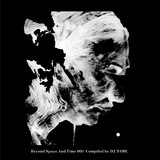
Beyond Space And Time is the new record label from Japanese music festival, Rainbow Disco Club (RDC). RDC has been welcoming music loving people to Japan for over a decade. Throughout the festival's history, RDC have been fortunate to constantly encounter performers and DJs who've collaborated with them in establishing a beautiful dance floor year in, year out. These relationships have lead RDC to start their own label, and now gives them the opportunity to reveal one of the best-kept secrets: What is in a DJ's record bag?
This time around, festival regular DJ Nobu kindly opens up his collection and shares the music he loves with us all. On visual duty we welcome Senekt - his representational yet contemporary drawing illustrates the emotion we feel from DJ Nobu.
We have much more music to come in future from artists that we trust and respect.
▼ DJ Nobu describes 10 tracks this way ▼
A1. Laurent Garnier - Water Planet
Highly respected French DJ/Producer Laurent Garnier has been releasing tracks for decades capturing the very essence of Detroit Techno and Breakbeat. He always manages to create something truly emotional. This is not his biggest hit, but it's my favorite.
A2. Mono Junk - Beyond The Darkness
This track represents the very early days of Techno with it's ravey atmosphere. It has a primitive feel, and the obscure mixdown sounds almost unbalanced. That said, this one really stands out when DJing. Very cool.
B1. Psychick Warriors Ov Gaia - The Valley
It was always my intention to include this track in a compilation if were I ever to do one. It has a fat underlying groove, with some indigenous spices thrown in. The whole thing is put together beautifully. No complaints!
B2. Melody Boy 2000 - Plenty Of Love
I wanted to include a track that had Jacking feel to it - that is my definition of dance music. This track mixes well in both Techno and House DJ sets.
C1. Drax Ltd. II - Amphetamine
This is my all time favorite track by Thomas P Heckman. It asks questions and strikes down all the boring 'wanna be cool' techno tracks. It is obviously a well known tune already, but I include it here because I'm often asked for it's track ID from new kids in the game. This is a classic that should be passed down.
C2. Dan Curtin - 3rd From The Sun
Curtin's refined synth grooves and bass lines make this a true timeless classic. It do not get tired of listening to his rhythms and melodies - he always gets it just right.
C3. Front 242 - U-Men.
The originator of Electric Body Music. Their husky vocals, hard rhythms and strong synth basslines made the group very popular at the time, and they are still to this present day. To me, this track represents what the Belgian New Beat scene is all about.
D1. The Prince Of Dance Music - E3 E6 Roll On
This is the track I played the most up until around 2006. It is a genuine house track that cuts through trends in music. A hidden floor killer.
D2. Pan Sonic - Lähetys / Transmission
Electronic music has existed for decades, and if you are to choose some of the best from all scattered & hidden places, Pan Sonic's 'Lähetys / Transmission' must be considered. The track emerges beautifully - breaking structures and transcending the past. Every layer of the piece is produced with such delicacy and care, that as a whole it magically drags you into the world of the unknown.
D3. Burial - Archangel
This track merges melancholic emotions with technological prowess at the highest level, and deeply impacted the dance music scene on it's release. I recently played this track at the end of my set at the forward thinking Terraforma Festival in Milan. It faded out to huge applause from the open minded crowd. A moment to be remembered.
Please find enclosed one 'Deluxe' stereophonic gramophone record from Concept City, containing thirteen recordings of musics entirely produced upon 4-track portastudio for your pleasure and discourse - the sole work of Mr Robert Grant of this parish.
So states the photocopy insert from the 1985 November LP on Cordelia Records. Home to R. Stevie Moore, Rimarimba recently reissued by Freedom To Spend - and label owner Alan Jenkin's The Deep Freeze Mice, Cordelia was home to a menagerie of sound collage plucked from the ether.
Included is the only vinyl release from Concept City, spreading across 13 instrumental tracks of samples and noise. The Welsh choir and robovox meets hypnotic bass of Open The Network glides to the acoustics of Jayne Andrews and Filament, before Steam amasses TV ad cassette archives. As Etruria and Lapse Wine's Durutti meets reel-to-reel to the cold wave of War, Children and wasp synth of Helsinki, Grant slowly unfolds a masterpiece.
Looped drum samples, multiple layered to tape, sped up and slowed down for phasing, the title track is a pinnacle of 80s DiY genius. 'Crossroads' multi-sampling Meg leads to the exotica 'muzak' closings of Penetration and Friends. With just 5 albums over 40 years the music of Mr Concept can be a discovery and cherished.
When it comes to underground New York Disco, Donna McGhee's highly sought-after 1978 LP, "Make It Last Forever," ranks among the best in the genre, thanks to Donna’s singing and the production skills of legendary producers Greg Carmichael and Patrick Adams.
Featuring five songs penned by the producing pair, it's got their quintessential Disco sound of the late 70s topped by Donna McGhee's superb vocals. These have also blessed recordings by The Fatback Band, Phreek, Bumblebee Unlimited and The Universal Robot Band around the same time.
The album has been an elusive affair since it first came out in 1978 and this is one the first times in decades it is widely available in its original form with newly remastered audio. Donna McGhee has been one of the key female singers of the New York disco scene, gracing several cult albums with her superb singing. The Brooklyn native began her career singing Gospel in her grandmother's choir from an early age, honing her skills and making a name for herself locally as a talented singer.
Her first break in the industry came when she was spotted by bass player Johnny Flippin, who invited her to join his band.
The group was none other than The Fatback Band led by drummer Bill Curtis. This was 1975 and the album was "Raising Hell."
McGhee's vocals can be heard throughout the album including the dancefloor classic "(Are You Ready) Do The Bus Stop" and after this initial collaboration, she stayed with the group for a another few years recording “Night Fever” in 1976 and touring with them all around the country. Following an encounter with producer Greg Carmichael, Donna McGhee jumped ship and started working with the prolific producer and his partner Patrick Adams.
A string of collaborations followed with singles and albums that have become the stuff of legend over the years: Donna can indeed be heard singing with Bumblebee Unlimited, Universal robot Band and on Phreek's classic self-titled album from 1978, singing on the track "May My Love Be With You."
In 1978, After Greg Carmichael set up his own label, Red Greg Records, he and Adams decided to get McGhee in the recording studio and produce her first solo album. With the pair playing most of the instruments, they got five tracks out of the session. The result, "Make It Last Forever" is an all-time Adams/Carmichael classic: funky disco arrangements with a touch of synths over a pulsating groove magnified by McGhee's superb sexy singing.
All five tracks have become classics in their own right.
When acclaimed South African musician Guy Buttery first sought out Dr. Kanada Narahari in late 2016, it was as his patient.
“It was a dark time.” Buttery recalls, “I had been bedridden for months and had been suffering from debilitating bouts of fatigue which no diagnosis or medication could help me get to the bottom of. When I first met Kanada, I was at the stage where even picking up my guitar to make music had become a joyless and taxing exercise.”
As Buttery’s searched for a cure, a family member recommended he see Kanada an Ayurvedic doctor who had relocated to South Africa from India and set up a practice in Durban. It was during this consultation, that the musician first experienced how Narahari infused the healing properties of Indian Classical music into his practice. Rather than treating him with a smorgasbord of pharmaceuticals, Narahari played his sitar and set Buttery on a strict daily diet of Raga’s to fast track his recovery.
Buttery was not only struck by his doctor’s musical talents but by the powerful healing properties inherent in his sitar compositions. When he left Narahari’s doctors room that afternoon, he asserts he was feeling decidedly clearer, lighter and stronger.
“Diving into Kanada’s music was definitely one of the reasons I'm still here today.” he admits. “The consistent tonal centre at the heart of Indian Classical Music, literally became my support pillar over this period. A central core of sorts in which to fall back on, strengthen and discover.”
Narahari as it turned out, was not only a prominent music therapist (and one of the only Ayurvedic doctors practicing in South Africa) but like Buttery, a highly accomplished musician with a devoted following back in his homeland.
Born in a small village along the Western Ghats in Karnataka, India, Narahari, at the age of nine, had enrolled to study Carnatic classical vocal and developed an interest in Hindustani Classical music with a particular passion for the sitar. While Buttery had secured his reputation as one of South Africa’s musical treasures, a multi-instrumentalist who commands sold-out performances both locally and internationally and more recently had been awarded the prestigious 2018 Standard Bank Young Artist for Music.
From this consultation, a friendship developed between the two musicians with Buttery soon inviting Narahari to join him in his studio. But it wasn’t all plain sailing in the beginning. While Buttery and Narahari’s sensibilities were very much aligned, there were a range of cultural and musical influences, nuances and inflections that first needed to be navigated and understood.
“I suppose we had to find a common ground.” Buttery says, before adding, “Which in the end turned out to be pretty "uncommon ground" for the both of us.”
It was after a few intensive sessions together that something exhilarating began to emerge. What began as a few idle improvisations soon evolved into feverish and lengthier jams. Whenever time permitted, the musicians would meet, descending deeper into the emerging sounds, while reimagining the realms that existed between their African and Indian heritages.
Over the next few months, the duo would rack up over fifteen hours of recordings in studio, and it was up to Buttery to shape the material into an album which they collectively titled Nāḍī, which Narahari translates from the Sanskrit as "The Channel" or "An Internal River".
During this period, Narahari bestowed upon Buttery, the moniker Guruji while Guy would refer to him, in affectionate return, as Panditji. Each time the musicians would meet, the studio space would be cleared by an impromptu ritual, with Guruji burning African Imphepho while Panditji would chant a Sanskrit mantra dusting Indian Agarbatti clouds over their instruments.
Once the room had been made hazy with this aromatic alchemy (with the ancestors welcomed in) the musicians would pick up their instruments and plunge into shimmering tides of sound. Reflecting on these sessions, Narahari recalls the immense creative freedom he felt throughout: “Guy and I tried to wander as much as possible, without any speculative, preoccupied ideologies or limitations. Love remained at the forefront of our journey together.”
“Those evenings we spent together in the studio” adds Buttery, “felt incredibly rich with purpose and a profound sense of freedom. While improvising, anything could happen and mostly did.”
On a first listen, the tracks on Nāḍī emerge as salty, humid invocations to the inscrutable depths and misty myths of the Indian ocean-- that vast body of water that stretches between, and laps the shorelines, of the artists’ respective homelands.
When asked to describe the sound him and Narahari refined, Buttery prefers to relay a series of evocative images.
“For me” he explains, “Nāḍī is a lighthouse, a beacon that resides at the bottom of the ocean.” As Buttery envisions it, “what once offered light to guide ships to safety, has been submerged and re-purposed by marine life as a coral-reef temple. Similarly, this sunken lighthouse exists as a concealed cenotaph, memorializing the ancient sea-routes and passages that once connected the two distant lands.”
On paper this may sound obscure but listening to the songs, it serves as an apt metaphor.
Across each meditative movement, listeners are able to relive the journey, immersing themselves in a series of incantations, replete with high dynamics, delicate African-Indian inflections and virtuoso string playing of an entirely new order. Further complimenting the fusion of musical dialects are a range of guest artists including Shane Cooper on bass, Thandi Ntuli on vocals, Chris Letcher on organ, Ronan Skillen on tabla and percussion and Julian Redpath on guitar, synth and backing vocals.
Now like the submerged lighthouse, the recordings stand as a monument, a marker and snapshot of this fortuitous meeting, a tribute to the healing gifts of Guruji and Panditji in performance. It’s a process that already, both musicians look back on with reverence and nostalgia.
Buttery ruminates in closing, that when he first met Kanada his illness correlated with the biggest drought South Africa had experienced in many years “…for whatever reason, whenever we would connect and make music together, the sky would tend to open. Even if it was just a few drops. This went on for months, until finally the drought dissipated and my health had been restored.”
By the time the heavens did open across the East Coast, a deep friendship had been forged and with it abundant musical offerings poured down. A treasured sample of which we able to share in every time we press play and immerse ourselves in the sacrosanct musical universe that is Nāḍī.
Elkka - the London based DJ, producer and founder of record label and DIY art collective femme culture - has announced her latest EP ‘Every Body Is Welcome’ on her imprint, following a very strong year constallated of live perfromances and DJ sets throughout Europe, and a growing radio presence in London and beyond.
‘Every Body Is Welcome’ will be released on 22nd of November. Smudging the boundaries between eras and styles, Elkka’s free-wheeling dance tracks float between club beats, earthy sounds, full of warmth, soft edges and lovely instrumentation which all lead to a completely captivating and blissful listen. The infectious new five-track EP looks set to further solidify her status as one of the artists changing the shape of dance music in 2019.
The EP kicks off with an acid-sounding dance thumper that elegantly moves along the piano melody, for a beautiful house start to the whole project. In typical Elkka style, the EP moves from the atmospheric, sun-soaked rhythms of ‘Compromise for What’ and ‘LVURSLF’ Interlude, to the more club-oriented, 4am nightscapes of ‘Avant Garde’ - ending with ‘Breathe’, the perfect union to these two different sides of her artistry in one elegant, thumping, soulful track.
‘Every Body Is Welcome’ was informed by Elkka’s own deeper understanding of who she is as an artist and what the dance floor means to her, claiming that “Arriving in London in my early 20s I was a completely different person in every possible way and discovering club culture, the rave scene and queer spaces allowed me to explore myself fully as a woman and as queer person. For me, the dance floor has been a place where I have felt the most liberated, the most myself, unified with friends and strangers by the music and moment we are sharing. This EP is a celebration of those moments, of the dance floor, of dance music that has inspired me creatively and personally. Every Body Is Welcome symbolises what I hope the dance floor to be - a music utopia or haven, somewhere for everyone to feel safe to express themselves, to find themselves, to be whoever they want to be and feel part of a community of acceptance and tolerance. Idealistic? Yes but I think art should be a space to express idealism and where we hope to be.”
Her previous EP ‘Full Circle’, released via femme culture, received acclaim and support from Annie Mac, Pete Tong, Tom Ravenscroft and Elkka was also named as one of the artists to watch in 2019 by Mixmag. In addition, Elkka has garnered playlist and radio plays from acclaimed producers Four Tet, Floating Point’s and George Fitzgerald.
Elkka founded the femme culture label and collective in 2016 in response to the lack of support for womxn DJs, producer and artists, later teaming up with fellow DJ and creative Ludo who she now co-runs the platform with. Since then, the progressively minded collective have been swiftly gaining recognition with their boundary-free ethos that champions women, women-identifying, artists and the LGBTQ+ community whilst pushing forward-thinking music through their carefully, curated club nights and events.
Earlier this year they released their second label compilation ‘HeForShe x femme culture.’ Compiled in aid of the UN Women, the compilation featured fresh new sounds from the likes of Lone, Elkka herself, Martin Bootyspoon, India Jordan, Ouri, Nightwave and more - and earlier this summer they hosted their annual alternative Pride after-party ‘PROUD’, in which all the proceeds went to The Albert Kennedy Trust (a charity for homeless LGBTQ youthsworthy causes).
My Music is a stellar spiritual soul / jazz-funk gem, recorded by keyboardist-singer Samuel Jonathan Johnson in 1978. The epitome of a cult classic, it didn't do much upon its release but steadily found an audience over the decades that followed. It eventually worked its way into the culture, and latterly the wantlists, of wave after wave of soul aficionados.
This is music that shares the jazzy R&B DNA of contemporaries like Roy Ayers and is an intoxicating blend of mellow moments and more groove-heavy tracks. Spacey keys and lush production give it a luxurious, enveloping warmth.
My Music opens with the gorgeous title track: an indulgent slow jam opus. Introducing us to Johnson’s compelling musical vision, it features a rich mélange of production techniques. Dripping in strings, horns, backing singers, popping funk bass lines and swooshing synth waves, it’s an unusually structured cosmic two stepper that has an irrepressible groove. Accordingly, it’s been a favourite with the diggers and it was sampled by The Alchemist for Jadakiss’s “We Gonna Make It” (and it was also used on Ras Kass’s “Home Sweet Home”… but that’s a story for another time).
The up-tempo “Sweet Love” bubbles over with joy, its uplifting lyrics backed by infectious bass and jazzy Fender Rhodes lines. It follows a cover of “What the World Need’s Now Is Love”, taken at a funereal pace that transforms it into a heartfelt plea for love and understanding. Essential in these dark days.
After a full-minute-long opening of lush cinematic strings and horns, “Because I Love You” makes space for Samuel’s voice, accompanied by some keys and just a sprinkle of guitar. It builds back up and then mellows its way out to a jazz lounge finish (in all the right ways). The feel-good ebullience of the Stevie Wonder-esque “It Ain’t Easy” closes out the LP’s first side.
The second side bursts open with the heavy bounce and disco-funk basslines of “You”, a slightly off-beat string-laden dancer with insistent horns and a piano-assisted groove. Next up is “Just Us”, a legendary steppers track that could be heard oozing out of deep soul radios and funk sound systems back in the late 80s.
“Yesterdays and Tomorrow” is a moving original ballad that is followed by an exquisite high-stepping paean to mom in the form of “Thank You Mother Dear”. The thumping easy-glide of “Reason For The Reason” brings the album to a close.
Respectfully mastered by Simon Francis and cut by the master Pete Norman, this reissue of Samuel Jonathan Johnson’s sole LP sounds as sumptuous as that scarlet gown on the front cover. The sleeve artwork was lovingly restored by the Be With team. My Music is a luxurious and rare collection of songs that now has an opportunity to reach beyond its cult audience.
I remember the first time I read W.E.B. DuBois eclectic masterpiece The Souls of Black Folk. The way in which this Weberian scholar flowed from personal account to prose to sociological analysis to music and even political intervention has had a lasting impact on my own work as a cultural anthropologist. It made me understand that as scholars we must use different means in order to give expression to the totality of the lived experience: There is only so much in an academic text.
The experience of alienation has always been at the heart of my scholarly and artistic practice. I have used academic writing, lecturing, theatre performance and electronic improvisation to understand and represent it as a theoretical concept, postcolonial condition and lived experience. I believe, some issues need to be told like a story, some analyzed in most abstract terms and others need to be sung like a gospel. The medium changes the message.
In this sense, I guess, I’m a singing cultural anthropologist.
For some time now I have been engaged in the use of dystopian themes and sounds to paint a sonic picture of structural racism and whiteness of our present. But recently I have grown weary of this Ballardian idea of Future Now and the resulting phantasmagorian aesthetics myself and others have been invested in. The widespread availability of Digital Audio Workstations, sequencers, loopers and delay pedals has lead us into a futuristic cul de sac best described by Mark Fisher as the very absence of future.
Likewise, I am most skeptical of the “naturalist” countermovement, the return of folk. Especially in Germany, I am convinced there is no such thing as an innocent or progressive folk musical expression as it is always connected to the idea of the homeland (“Heimat”) which in turn produces the colony. It seems to me, the current zeitgeist is stuck between a “museum of a dystopian future” and a “museum of an idealized past”, but I wanted to sing about the present.
So, I involuntarily returned to pop music in its two-folded meaning of something popular and addressing not an essentialist notion of “Volk” or its woke cousin “communities”, but society as a whole.
I entered the studio just with a few lo-fi sounding melodies and rhythms from my circuit bent CASIO synthesizer. I had no clue what the finished product would sound like. But as soon as Markus started drumming, in a way strangely reminding me of CAN’s Ethnographic Forgery Series, my uptight sounds were suddenly embedded within a warmer global sound spectrum. The alien at home and abroad and the strange overlapped: We were seeing one and the same sound differently but were gently held together by Tobias’ producing.
Making music is about building coalitions. It’s about suggesting an articulation of styles, sounds and people, that hasn’t materialized, yet, but may help us in the current crisis: I wanted Amon Düül II to send their drug induced archangel thunderbird to rescue the refugees, that had tried to escape the police by climbing up a tree in Munich in 2016. I wanted Sun Ra to taunt far-right protesters in Chemnitz in 2018. And I wanted to mourn the loss of a former kebab shop cum discotheque that served as proof that there is such a thing as a minoritarian universalism.
SCHLAND IS THE PLACE FOR ME is a pop album featuring songs of alienation, not only as a tragic experience, but as a pop-cultural promise. Maybe Bill Callahan sung it best, “I am Star Wars today, I am no longer English grey”. I want those who suffer from alienation to stand in alliance with those who seek alienation, and vice-versa. A coalition, that tolerates the possibility that we are moved by the same groove for contrary reasons.
Fehler Kuti
Munich, Autumn 2019
Music by Julian Warner, Markus Acher & Tobias Siegert
Saxophone on RINDERMARKT by Franz Brunner
Trombone on RINDERMARKT and IL by Matthias Götz
Recorded and mixed by Tobias Siegert in Munich.
SONTAGSFAVORIT mixed by Dario Albiez in Dusseldorf.
Mastered by Duphonic in Augsburg.
Artwork by Atelier Grande, Munich.
Hot off the heels of Aluxes, his 2018 Lumière Noire debut EP, young Mexican DJ/producer Iñigo
Vontier is inviting Chloé's label on a trip to the far corners of the body & mind with an album of
demented grooves, psychedelic take-offs and imaginary comic strips of mystical rituals. A
bewitching debut full-length. Mexicans may never possess the sonic science of the Germans,
the hedonistic madness of the English or the gift for synthesis of the French, but, as proven by
Iñigo Vontier's first full-length for Lumière Noire, their universe is much more exciting than
anyone would have ever thought.
The DJ/producer fully asserts his origins by brandishing the album’s title "El Hijo del Maiz" ("the
son of the corn") almost as an emblem: "in Mexico, corn is eaten daily. It has long been defined
as 'the gold of America', and I consider all Mexicans as children of corn". A spiritual and
embodied vision Iñigo's first Lumière Noire release, the four-track Aluxes, set the tone of the
young talent's distinctive interpretation of dark disco, which creeps up on the dancefloor from its
iconoclastic side. The two tracks and two remixes (one by Flügel, the other by Inigo himself)
featured on the 12" for lead single "Xu Xu" (featuring Red Axes-affiliate Xen's irrelevant vocals)
was a full-bodied confirmation that Vontier sees the dancefloor as an arena for the occult –
whether from the peoples of the equatorial jungle, the Middle East or, even from indocile
machines. But, while the spiritual element seems part and parcel of the Jalisco native’s output, it
is in no way the only ingredient of this first long-player: "this album best reflects my own vision
and spirituality, and the way I feel it" he says.
Whether contemplative or frenetic, the collection of tracks that make up “El Hijo Del Maiz” takes
the kitchen sink and throws it out the window: languid rhythms, haunted vocals, and mysterious
percussion fuel a discombobulated house set that scrambles the listener's five senses, leaving
one disoriented and exposed to the vagaries of vertigo. Following the demented, dystopian “Xu
Xu” EP, which explored an imaginary jungle that harbored Mayan and Egyptian pyramids,
Middle Eastern accents are once more present in the off-kilter “Bo Ni Ke” and its Japaneseinfluenced vocal trickery, which Moroccan flutes à la Jajouka transform into a feverish trance.
With the following three tracks, Iñigo Vontier raises himself to the same level of excellence as
the Pachanga duo (of which pride of the Mexican scene Rebolledo, is also known as a prolific
artisan of deconstruction): “Awaken”'s slumbering voice, heard as through the veil of hypnosis,
slowly introduces a techno beat which, as in follow-up “Time”, literally brings the listener to a
levitative state. In a housier vein, yet continuing in the same psychedelic, 90s-infused spirit,
“Don’t Go Back” disrupts the genre’s usual signatures with an out-of-tune keyboard that is
becoming the artist's trademark, destabilizing the listener into a drunken vertigo, with a good
helping of sexiness: "I think the sexy dimension definitely brings a kind of magic to music," says
Vontier. “I'm sure I felt this magic during my DJ sets, and I like to think that sorcerers use this
element in their practices. I might consider myself a bit of a sorcerer when I take over the DJ
booth, by the way." A mood and sound that can once again be found – in a quieter, more
bucolic version – on “Chiquitita” (feat. the flute stylings of pioneer DJ Rocca, now a partner of
cosmic disco legend Daniele Baldelli). The more cinematic, fast-paced and dreamy beat of the
no less captivating “Little Monster” might evoke the mischievous spirit of the Mayas' minor
mythological creatures, while ode to the magical herb Marijuana (feat Thomass Jackson)
proudly tramples into the debate that such a provocative title inevitably provokes: "psychedelic
drugs are powerful tools to reach a higher level of consciousness about what surrounds us, but
we must learn how to complete this psychic journey by ourselves, notably through meditation
and love.
In the end, El Hijo del Maiz is an album-length confirmation of Iñigo Vontier's uniqueness, and
his adherence to Lumière Noire's policy of letting artists fully express their vision – while letting
their passions guide their idiosyncrasies and explorations of innovative electronic signatures
- A1: James Tatum Trio Plus - Introduction
- A2: Lloyd Miller - Gol-E-Gandom
- A3: Morris Wilson Beau Bailey Quintet - Paul's Ark
- A4: Mor Thiam - Ayo Ayo Nene
- B1: Ndikho Xaba & The Natives - Nomusa
- B2: Positive Force, The With Ade Olatunji - The Akrikan In Winter
- B3: Salah Ragab And The Cairo Jazz Band - Neveen
- C1: The Frank Derrick Total Experience - No Jive
- C2: Hastings Street Jazz Experience - Ja Mil
- C3: Ronnie Boykins - The Will Come, Is Now
- D1: Leon Gardner - Be There
- D2: Ohio Penitentiary 511 Jazz Ensemble - Psych City
Vol.8 PT2[26,01 €]
Vol.9[22,14 €]
Vol.13 PT2[23,40 €]
Vol.13 PT1[23,49 €]
Vol.15[26,47 €]
Vol.16[26,01 €]
'Esoteric, modal and deep jazz from the undergound, 1968-77'
Jazzman Records presents the sound of the unsung musicians who – in the midst of the Vietnam War and the fallout of the Civil Rights struggle – created some of the most beautiful Spiritual and meditative music of the era. Sometimes funky, sometimes mellow, but always trying to say something about the world in which we live.
Existing completely under the critical radar and largely ignored or unknown by music fans and critics alike, most of the musicians featured in this album won't be familiar to even the most seasoned aficionado. Their records, frequently turned down by distributors and record stores, saw little attention when first released - and have seen even less since. But in this era of musical apathy, where so many music junkies look to the past for their musical fix, we have re-discovered hidden, obscure and esoteric jazz musicians who looked to the four corners of the earth - and beyond - for inspiration. Here we evaluate Spiritual Jazz – music that is a snapshot of the era after Coltrane, a time which saw the evolution of an underground jazz that spoke about the reform of the soul, the reform of the spirit, and the reform of society: a music which was local and international at once, which was a personal journey and a political statement, and which was religious and secular in one non-contradictory breath.
The music on this album reflects the social and historical forces at work during the closedown of the '60s dream; music made by close-knit collectives and individual visionaries, by prisoners and eccentrics, by mystics and political radicals. It includes music by acknowledged masters, and moments of brilliance by unsung figures known to us from just one or two recordings. It is the jazz music of America in the age of civil rights, brutal repression, political assassination and war; a music that would guarantee the survival of the spiritual dimension in a society that was angry and traumatized, but nevertheless had seen hope of better days to come.
For his return to Make Mistakes, Derek Russo ventures into the Belly of the Whale with three pieces of beautiful, retro future, dance floor chic.
Embryonic Speck opens up the record, evoking classic rave beats, in a crisp, clear, modern style. With this cut, Derek has crafted a late-night slayer for the discerning dance floor. A relentless groove drives the track along, creating the hypnotic, smoky dreams of rave’s past.
Night Sea Journey takes it down into disco depths. A wandering bassline swaggers through the track, crashing through dark waves of sound. Sexy and mysterious, made to drag the sweaty sea on the dance floor through the night.
Straddling, a piece of timeless, familiar house music, rounds things out by bringing in a touch more warmth and whimsy. Still for the darkness, but with a lighter mood, and booty wiggle bass. Deep, and grooving, with a playful sexiness, what more could you ask for?
“Consider the subtleness of the sea; how its most dreaded creatures glide under water, unapparent for the most part, and treacherously hidden beneath the loveliest tints of azure. Consider also the devilish brilliance and beauty of many of its most remorseless tribes, as the dainty embellished shape of many species of sharks. Consider, once more, the universal cannibalism of the sea; all whose creatures prey upon each other, carrying on eternal war since the world began.
Consider all this; and then turn to the green, gentle, and most docile earth; consider them both, the sea and the land; and do you not find a strange analogy to something in yourself? For as this appalling ocean surrounds the verdant land, so in the soul of man there lies one insular Tahiti, full of peace and joy, but encompassed by all the horrors of the half-known life. God keep thee! Push not off from that isle, thou canst never return!”
― Herman Melville, Moby Dick
‘Still Strange’ reaches back into the prized loft tapes of Jeff Sharp aka Orior following the revelatory discovery of his overlooked early ‘80s gems on 2016’s ‘Strange Dream’ collection, as coaxed out by
DDS dons Miles Whittaker and Sean Canty.
Huddling another sublime, dusty set of analogue tapes freshly baked and remarkably well-restored by Andy Popplewell, ’Still Strange’ contains four gorgeous flashbacks to the era 1979-1983
surrounding and even pre-dating ‘Strange Beauty’, and then shifts focus to recordings that Orior made around the early ‘90s.
As with its predecessor, Orior is not alone on the material in ’Still Strange.’ From those feted early tapes we find Phil Hollis returning to lend jagged guitar on the drum machine sizzle of ‘Feels Like
Summer’, while the mysterious synth player New Cross John makes vital contribution to ‘Invium.’
Along with the aching synth sigh of ‘To Return’, which pre-dated all of these recordings, and the nine minutes of haunting bedsit strums in ‘Larbico Alt Mix’ which came from the first batch, the
early material is all arguably worth the price of admission alone for seekers of lost synth treasures - really this stuff is just so good..
However, the album’s other six tracks expand knowledge of Orior’s work into the ‘90s and also contain some extraordinary material. Salvaged from further loft tapes found in various states of degradation, and subsequently mixed down between London’s Goldsmiths College and Miles Whittaker’s Whalley Range attic (and elsewhere), they are decidedly more blunt and gloaming, especially in the Deathprod-like ‘Under Shadow’ and the near static witching hour ambience of ‘Endless’, while shorter vignettes such as ‘Unknown Future’, ‘Gothic’ and ‘Another’ point to pre-echoes of BoC’s crepuscular scapes and even Bladerunner-esque sci-fi noir soundscapes
Shina Williams ‘Agboju Logun’ was a ground-breaking fusion of afrobeat, electronics, boogie and disco. First released on Phonodisk in 1979 as part of the ‘African Dances’ album, then in 1984 as an alternative version on Rough Trade’s Earthwork off-shoot, it has gone on to attain cult-like status.
So it remains a bit of a mystery how so little has been documented about the follow-up. Shina’s self-titled album was originally released on Help Records in 1980. It differs from the upfront afro-disco-funk of ‘African Dances’ as it diverts into deeper, hypnotic, afro-beat territory. Though listed as a six-track album, each side (composing of 3 tracks) is built-upon one continuous groove with call and response female & male vocals and instrumental solos coming and going as each side progresses. The results are raw, hypnotic, locked-in grooves, which sit perfectly on forward-thinking contemporary dancefloors.
Official Mr Bongo reissue. Replica original artwork. LP only. Licensed from the family of Shina Wiliams.
2x12"
A stunningly accomplished work, ‘Deep Rave Memory’ is an insight into Fearless’ worlds – both metaphysical and geographical. Pulsating in unison with the heartbeat of a modern metropolis, it was recorded at the Metal Box’ – his studio located on the peninsula of land where the River Lea meets the Thames.
The haunting and wistful blue ambient ‘Vision of You’ leads into the bracingly chilly ‘New Perspective’, which evokes a heavy rush where perceptions are blurred and vision is freeze framed, via elements of techno-soul, Sheffield Bleep and Mika Vainio.
A snarling beast of a track, the relentless machine funk of ‘Devil on Horseback’ perfects the pure cathartic release of dark ‘n’ hot body music, whilst ‘Acid Angels’ is a throbbing low-fi 303 requiem, which encapsulates that perfect dancefloor moment, when the first light breaks through the shutters.
A future classic and the album’s modus operandi, title track ‘Deep Rave Memory’’s discordant filter passes sweep across a hypnotic melody, communicating a deep sense of warm nostalgia and taking you on an epic journey – stretching out a single riff over 12 minutes – akin to the krautrock greats of which Fearless is so fond.
‘Atlas of Insanity’ is big room techno with pounding kicks, death-whip metallic snares and head spinning, spiralling synth lines that drill into your core. This is raw, impulsive and frantic music that sizzles with electric effervescence.
The Germanic kosmische idyll of ‘Driving with Roedelius’ is a homage to one of Richards’ heroes – Hans-Joachim Roedelius – and was inspired by his experience playing a set consisting solely of the electronic pioneer’s music, at a festival celebrating his life and career.
On the album's closer, Fearless recounts, “‘Broken Beauty’ is something I’ve always strived for in my art. It’s inspired by Robert Frank, William Eggleston and the way they could take the most inane object a turn it into something of beauty. It’s equally schooled by the aggressive simplicity of King Tubby’s dubbing and the transcendence of Joy Division’s ‘Decades’. The sparse allure of the best dub and techno is something I’m always striving for; being able to conjure emotion with the fewest possible elements; to not fix what’s broken, but to make it shine.
Limited to 500 copies.
Following the Stardancer EP and his remix for All I Need To Get High by Damian Lazarus & The Ancient Moons, Ae:ther unveils his most accomplished and daring work yet on the highly anticipated debut album Me released on Crosstown Rebels. Blazing a trail with his natural aptitude for crafting emotive, captivating compositions that have landed him releases on Crosstown Rebels Afterlife and Fabric, Ae:ther presents his debut LP. The album is a painstakingly produced collection of haunting melodies and narcotic rhythms that display his love and inspiration for ambient electronica, deep underground music and introspective atmospheres, culminating in dreamlike soundscapes programmed with taut percussion. The album begins on Stardancer, setting the tone with gentle keys and space influenced licks that portray a cosmonaut ascending into the stratosphere. This moves into the glistening, atmospheric Finferli, where synths depict aliens conversing in a distant, just-discovered world. Sub-aquatic ambient fills We’ll be Together, boosts of energy and intricate melodies weave in and out of the vocal, locked to the dubby groove. Ice cold subtlety and the otherworldly electronics of Costes drip slowly like water down a pane of glass. A mood of relaxation and weightlessness continues on Tina, a tender beat combined with pattering echoed chimes. N.62, a special ethereal piece, features warm chords and reduced percussion, gradually developing like the morning sun rising. Mysterious, playful charm unfurls on Elf, progressive harmony teases towards a crescendo before dropping back into the hypnotic beat. Clark is light and airy, funky melody constructing an interplanetary anthem. Stimulating a brooding mood, fuzzy clicks and glitches dance on the deep bass of Spektre II, conveying dust spraying off the surface of a moon landing. The shimmering ripples of electronica on title track Me fuse with delicate human vocals creating a heart-warming, personal account of Ae:ther’s relationship with his instruments. Trademark bleeps and blips wash over natural broken beats in one last final call to his utopia in the album outro.
- A1: Lotus Eater - Tripholium
- A2: Shifted - K Pop
- B1: Efdemin - Entropie
- B2: L.b. Dub Corp - Look Shiny
- C1: Rrose - The Myth Of Purity
- C2: Lucy - The Goat God
- D1: James Ruskin - From Here On
- D2: Denise Rabe - Paralysed Spheres
- E1: Zeitgeber - Double Down
- E2: Adriana Lopez - It All Adds Up
- F1: Chevel - Va Lavorar
- F2: Alessandro Adriani - Two Journeys
- F3: Serena Butler - Giubia
Stroboscopic Artefacts releases ‘X – Ten Years Of Artefacts’, a 13-track album curated by Lucy, the nom de techno of Luca Mortellaro. It celebrates ten years of his label by boldly confirming its raison d’être: a continual redefinition of modern techno.
‘X – Ten Years Of Artefacts’ is a various artists album in which the label’s key artists respond to its tenth anniversary with fresh compositions. Artists with divergent perspectives and MOs are equally at home expressing themselves. These tracks’ timbres, tempos and moods differ greatly yet—somewhat improbably—they seem together, ideologically unified.
The album will be later complemented by a special remixes EP, with four new reworks of pivotal back catalogue material from the label (Donato Dozzy, Caterina Barbieri, Xhin and Klock). And from fall 2019, Lucy and an incredible cast of Stroboscopic Artefacts artists will begin an extended club tour to mark the anniversary.
On ‘X – Ten Years Of Artefacts’, Mortellaro features solo as Lucy, in collaboration with Rrose as Lotus Eater and together with Speedy J as Zeitgeber. (Rrose also appears alone with “The Myth of Purity.”) Shifted, Efdemin, L.B. Dub Corp (Luke Slater), James Ruskin, Denise Rabe, Adriana Lopez, Chevel, Alessandro Adriani and Serena Butler each feature, representing a group of singular artists whose relationships with the label range from years to months—Stroboscopic Artefacts’ past, present and future must exist simultaneously.
Back in September 2009, Lucy released “Why Don’t You Change/Dub Man Walking,” the first record from Stroboscopic Artefacts, which began a discography that, ten years later, is almost unparalleled in its ambition and vision. Put simply, Mortellaro wanted to create something that didn’t exist. Stroboscopic Artefacts would be respectful of, and indebted to, the great techno and electronic music artists of the past but would develop new paths forward for the label and the genre. The label refused to perpetuate the established dichotomies of electronic music — between the dance floor and home listening, between club music and experimental music, between the past and the future. It took risks knowing it wouldn’t always work. But within a year or so of the label’s inception, it was obvious Stroboscopic Artefacts’ approach had captured imaginations far beyond its Berlin base, showing us that the boundaries of techno are often constructs of limited imagination.
The label pursued constantly evolving methods of releasing music. It created concept-driven series like Monad, Stellate and Totem, establishing frameworks that would give freedom in limitation. Standout albums by Lucy, Xhin, Dadub, Zeitgeber, Chevel, Kangding Ray, Lotus Eater and Alessandro Adriani were deeply considered longform presentations.
With this new album, remix EP and tour, now is the moment for Stroboscopic Artefacts to look fondly at its past while drawing breath, reenergised, and hinting at new chapters.