The fifth release on Objekt’s Kapsela imprint is (re)weave, an EP of crystalline club tracks from Detroit-born, London-based producer Tristan Arp.
(re)weave was written during a prolonged period of flux for the artist. “When I started making this record, my life and the world felt like a maze,” he recounts. As he routed and re-routed through past and future homes – Mexico to New York to Detroit to Mexico and finally to London – his output bore the marks of this repeated uprooting. “I was thinking about making music that reflected these twists and turns, and the knotty pathways through them. I was also re-reading Borges around this time, which must have influenced my interest in labyrinths.”
Accordingly, the EP is a mycelial puzzle, a tangle of spidery, undulating ostinatos and earthy percussion, stitched through with syncopated kicks. Employing the sounds of multitudinous critters and kin – whales, insects, thunder, water, forests – the arrangements sum to a sentient mesh of organic matter, the compositions living and breathing like earthly beings. Kaleidoscopic tendrils explore in every direction but are always underpinned by a driving, percussive backbone. It’s not easily classifiable: it’s bass-driven, but to simply call it “bass music” would sell it short.
In keeping with the winding geographical paths traced over the EP’s creation, (re)weave saw Tristan Arp revisiting and reinterpreting unfinished sessions and incorporating them into newer ideas. Rhythms and sounds have been transplanted and self-recycled from previous projects and woven into the fabric of the record. In this way, (re)weave also describes a looping back over time, a recalibration of the self from past to present through interlocking rhythms, channeling and communing with versions of oneself from times gone by.
The closing track, Wish Server, slows the EP to walking pace and hints at tentatively emerging from the deepest jungle into a delicate, innocent light. Tristan Arp imagines it as a dialog with a baby-self. “Some of my earliest memories are of sitting at my mother’s loom,” he offers. “The sequence of these tracks traces these feelings and follows the thread back to the primordial soup… through mazes… to a feeling of levitation.”
Cerca:my rhythm
A few words for the album
Moment’s Aeternity:
a 12/8 composition celebrating the raw power of the “moment”, marked by whirling improvised moments between drums, bass clarinet and Harris P’s Armenian duduk.
Pajko, fire in the forest on the mountain:
in Sokratis own words: “I have a really vivid memory as a child. I was staring at the Djena mountain from my window in Archangellos which sits on the Pajko mountain. A little beam of light shone far in the horizon; it was a fire that in my little eyes looked as if the giants of Almopia were trying to communicate with each other using phryktoria (a way of contacting through fire in Ancient Greece).”
Footprints of some Giant Steps:
While the classic compositions of two true Jazz Giants- Wayne Shorter and John Coltrane- are certainly different, they do both connect in a mystical way. Rearranged in 5/8 combining half of each melody and half of each one’s chord progression, keeping the form of the piece for improvisation, still in 5.
Oson Zeis Fainou (Seikilo’s Epitaph):
found in a tomb stone in the Northeast of Greece, this is the only melody saved from the ancient times. It is accompanied by lyrics contemplating the meaning of life:
Ὅσον ζῇς φαίνου
μηδὲν ὅλως σὺ λυποῦ πρὸς ὀλίγον ἐστὶ τὸ ζῆν τὸ τέλος ὁ xρόνος ἀπαιτεῖ.
‘’While you live, shine
don’t feel blue for anything because our life is short and time demands an end.’’
Here is to Oghene K:
’’Hey man, where is the groove?’’, he would say, just to trigger another wave of inspiration for Sokratis. Oghene was a true force of nature, a well of kindness, a masterful artist that left this world too early. This one is for him.
Balkan Riff (for Milcho Leviev):
Milcho Leviev (1936-2019), was a long-time friend and collaborator and a true inspiration for expression, creativity and colorfulness. Expressing the deep sentiments evoked by the Balkan sound and history, this is a sorrowful dialogue between bass clarinet and contrabass.
Spirits of Djena:
one of the most esoteric and personal moments of the album. Composed and recorded during the challenging times of the COVID-era, you can hear the baritone and tenor saxophone firmly grounded on a crispy, hypnotizing contrabass groove.
Sokratis Votskos Quartet
Kostas Anastasiadis / Giorgos Klountzos - Chrysidis: Drums
Leandros Pasias: Piano
Vaggelis Vrachnos: Contrabass
Sokratis Votskos: Soprano Saxophone, Bass Clarinet and Compositions
Sokratis Votskos is a jazz saxophonist, clarinetist, composer, educator, and bandleader from Greece. Deeply invested in unearthing the folk sounds and heritage music of Greece and Eastern Europe, he weaves these into modern jazz compositions though the use of melodies, polyrhythms, and his reedy, timeless tone. He leads the Sokratis Votskos Quartet, he is one half of Kolida Babo and member of the Reggetiko Project. A highly regarded sideman and ensemble player, he has worked extensively with renowned jazz musicians with several highly acclaimed releases (MiC, Jazzman, Walt Disney and now Fair Weather Friends Records).
He has performed his music in numerous venues and festivals worldwide from Vinterjazz in Copenhagen, to the EFG London Jazz Festival where he performed at the legendary Ronnie Scott’s alongside Greg Foat.
He is also an archaeoacoustics researcher and enthusiast, having completed his Master studies on the field of ancient ritualistic caves of Greece research.
Leandros Pasias was born in Thessaloniki, Greece. At age 10 was introduced to piano, continuing his studies at the Modern Conservatory of Thessaloniki and later at the Conservatorium van Amsterdam in the department of jazz piano.Ηe holds a classical harmony diploma and a BA at the Department of Music Studies at the Aristotle University of Thessaloniki. In 2020 he received jazz improvisation lessons from Aaron Parks.
With a series of appearances in multiple international jazz festivals, Leandros has collaborated with a wide range of musicians from Nicolas Masson and James Wylie to Marina Osk, Ivo Papasov and Haris Lambrakis, among others.
A member of the Yako Trio, he released “OdesSea” on Fair Weather Friends Records (2021).
Vangelis Vrachnos was born in Thessaloniki, Greece, in 1989. While he started playing the bass at the age of 12, alongside his brother, his studies would commence a few years later. Introduced to double bass at the age of 23, he undertook jazz double bass studies at the Codarts Αcademy of Rotterdam. He has participated in several festivals such as the Technopolis and Odessa international jazz festivals. Since returning to his hometown, in 2015, he has been a founding member of Mordana and Yako Trio and has collaborated with a series of musicians like James Wyllie, Sokrates Votskos and Dimitis Agelakis, among others.
Kostas Anastasiadis is a tireless researcher, that has been diligently studying Tradition and its evolution, creating a fresh amalgam of sound moods. His mature improvisational virtuosity highlights a uniquely individual artistic expression and was recognized with the ̈Unique Individual Stylist" award by the PIT (Percussion Institute of Technology) in Los Angeles, California. He has been associated with various ensembles that have garnered significant interest in the global music scene. As an educator, he is the founder of "The Harmony of Rhythm" musical method, which aims to explore and establish the elements that constitute the concept of rhythm.
Giorgos Klountzos-Chrysidis was born in Thessaloniki in 1991. Following studies at the Modern Conservatory of Thessaloniki, he moved to France and the Conservatoire de Nice. With performances at well-known festivals like Nice Jazz Festival, Nuits du Sud and Jazz à Vienne, he had the opportunity to meet the American drummer Leon Parker, who encouraged him to move to Paris, where he spent the next two years under his tutoring and guidance.
In 2016, came a defining moment in his career as he traveled to New York for the first time. He participated in the quartet of saxophonist Diego Rivera for a series of performances and attended lessons by Rodney Whitaker and Randy "Uncle G" Gelispie at Michigan's State University.
Collaborations include Xavier Davis, Ricky Ford, Nicolas Masson, Diego Rivera, Craig Bailey, Baptiste Herbin, Marc Abrams, Pantelis Stoikos, Antonis Anissegos, David Lynch, Ziad Rajab and Ivo Papasov, among others.
For her new and most radical album »Electroacoustic Works for Halldorophone«, Martina Bertoni used the electronic instrument at EMS Stockholm to create four pieces that are massive in scale and incredibly intimate, sonically restrained and emotionally overwhelming—almost ambient and always demanding your full attention.
Martina Bertoni returns to Karlrecords with »Electroacoustic Works for Halldorophone,« her most radical album yet. The foundation for the four electroacoustic pieces was laid during a residency at Stockholm’s legendary Elektronmusikstudion (EMS) that the Berlin-based cellist and composer used to explore the curious instrument, originally designed by Halldór Úlfarsson in 2008, as an algorithmic system in order to examine tunings and the mathematical relationships between Aiming to analyse and understand their interaction beyond the composer’s control, Bertoni sought to engage more deeply with the concepts of time, tuning, and, most importantly, control. Accordingly, her four »Electroacoustic Works for Halldorophone« seem both massive in scale and incredibly intimate, sonically restrained and emotionally overwhelming— almost ambient and always demanding your full attention.
While the halldorophone—famously used by Hildur Guðnadóttir for her »Joker« score—roughly resembles a cello and can be played like one, it is an electronic instrument. The vibration of its strings is being picked up, amplified, and then routed through a speaker. This creates a feedback loop that becomes increasingly complex depending on how much gain is added to individual strings. Úlfarsson gave Bertoni a carte blanche for how to handle the instrument, but she stresses that she relied on »minimal interventions—some string strumming and plucking« that set the interactions of different sounds and frequencies into motion. »I decided to not approach it like a cellist would,« she explains. »Instead I used it as a kind of generative organ by turning it into a feedback machine, with tuned feedback triggering more feedback depending on the tuning, which was based on tetraphonic scales that I could apply on the four main strings as well as the sympathetic group of strings.«
Bertoni recorded the material in the EMS studio, later composing and arranging the four complex pieces in her home in Berlin, after which they were mixed and mastered by Ciaran O’Shea. While this can be considered a compositional abstraction process, traces of her concrete work as a performer are firmly ingrained in the music. »The halldorophone doesn’t have a line output, just a double set of speakers, which is why I recorded all sounds with two microphones in the EMS studio,« she explains. »That’s why there’s plenty of breathing sounds here and there—label owner Thomas Herbst and I jokingly refer to the album as my ›chamber music record‹.« And indeed, there is a striking sense of intimacy to these four pieces throughout which individual sounds, harmonic frequencies, and even subtle rhythmic figures seem to move both on their own accord but also according to a underlying vision that steers their interplay.
Indeed, »Electroacoustic Works for Halldorophone« is an album built on and marked by contrasts. The soothing polylogue of single sounds in the higher register on opener »Omen in G« is counterpointed by massive bass drones, while the second piece, »Nominal in D,« plays a cunning game of repetition and difference by combining thick textures with all kinds of rhythmic elements. »Fades in C«—the longest of the four pieces, clocking in at 17 minutes—unlocks the emotional potentials of the sonic qualities of the halldorophone, sounding at once serene and anthemic, and »Organon in D« closes the album by underscoring how Bertoni’s unconventional approach allows her to seamlessly transform simple, quiet tones into complex, towering walls of sound.
Follow up to Goodge's 2023 album Echoes Of Yesterday. Previous releases found on Hip Dozer and Cascade Records. Tracks found on the popular Spotify Mellow Beats playlist. 11th in 'Jet Set' Cold Busted series. Designed and manufactured similar to the vintage 60's style rice paper sleeves. In his latest EP, Sunday Soul, Goodge takes listeners on a four-track journey through the heart of funk, masterfully blending elements of R&B, jazz, and chilled lo-fi. Released as part of Cold Busted's Jet Set series, this four-song offering follows Goodge's 2023 album Echoes Of Yesterday and showcases his dedication to crafting timeless music. "Lights Out" kicks off the EP with heavy funk and stirring breakbeats, accompanied by a scratchy guitar that summons the revolutionary spirit of the '70s. Horns serve as a call to action, while a rollicking bass line and chunky electric piano might inspire listeners to go out and fight crime. "Promised Land" follows, featuring a formidable funk bass guitar and lead guitar chords that rhythmically play off the delightfully busy drums, creating an atmosphere reminiscent of the city's bustle. The title track, "Sunday Soul," is a rowdy affair with a speech-over-beats leading to crispy snare rolls and chiming electric piano. Shaker magic, staccato horn bleats, and spiral flute bits combine to create a swirling vintage-hued photograph of sound. The EP concludes with "Within Myself," a spacier sonic experience that could serve as the soundtrack for chasing someone across rooftops. It's funk spelled with a capital K. Sunday Soul is a must-listen for fans of of the heavier side of funk, solidifying Goodge's position as a master of his craft, creating a nostalgic yet fresh soundscape that keeps listeners grooving back for more.
- Data - Ja Nisam Kao Ti
- Data - Izumi
- Data - España
- Data - Damage In My Head
- Data - France
- Data - Strahovi
- Data - Ne Želim Da Tako Žive
- The Master Scratch Band - Break War (The First Version)
- The Master Scratch Band - Jailbreak (The First Version)
- The Master Scratch Band - Computer Break (The First Version)
- The Master Scratch Band - Mad Scratch
Despite its tragic breakup, Yugoslavia as a political, social and cultural phenomenon still inspires generations, especially those who were born or lived at the time of this utopian land of South Slavs. Those who didn’t enjoy the privilege are still amazed by its 1970s and ’80s music scene and the number of very modern, high quality acts that were so often ahead of their time. Two such acts were Data and The Master Scratch Band, both founded by Zoran Jevtic and Zoran Vracevic, who introduced synth-pop, breakbeat, and hip-hop music in Yugoslavia in 1984 with their releases: SP Neka Ti Se Dese Prave Stvari/Ne Zovi To Ljubavlju and miniLP Deogut (Jugoton). Our latest release, “It Was Ridiculous, It Was Amazing!” gathers their earliest unreleased material from 1981-1983, showcasing a broader range of genres – alongside synth-pop and breakbeat/hip-hop, they also experimented with industrial, EBM, minimal synth, and electro-funk!
The whole record is divided into two parts: on A side there are 7 previously unpublished songs by group DATA, and on B side there are 4 previously unreleased recordings by The Master Scratch Band.
The Data side opens with two unexpected “shocker” tracks: Ja Nisam Kao Ti” (eng. I am Not Like You) and “Izumi” (eng. “Inventions”) from 1981, where they sound like early Deutsch-Amerikanische Freundschaft with unusual vocal pan sound effects on Serbian lyrics and uncompromising synth-based sound. Equally unpredictable are the next two songs: atmospheric “España” and dusty “Damage In My Head,” where Zoran Jevtić boldly steps into the lead vocal role. But the surprises don’t end there. The next two songs, France and Strahovi (eng. “Fears”), bring a mysterious and nostalgic atmosphere, elevated by the irreplaceable sound of the modular Roland System-100M. At the end comes the greatest surprise of all: Data covers YMO-Ballet in a song called Ne Zelim Da Tako Zive (eng, I Don’t Want Them Living Like That) and puts some extra energy in rhythm without losing the original song’s sensibility. Like in the original, the lyrics are tender and yet mysterious and provocative.
The Master Scratch Band side contains the very first versions of the songs Break War, Jailbreak, and Computer Break, originally recorded in studio Druga Maca in Belgrade in 1983. These versions were not released on their mini-LP album Dégout (Jugoton, 1984), and they are actually the first ever hip-hop/Breakbeat recordings in Yugoslavia. With great enthusiasm, every sound was uniquely crafted from scratch using the finest analog gear available in the early ’80s. The two young artists, aiming for international success, chose to write their lyrics in English. The album’s final track, “Mad Scratch,” showcases their talent for creating impressive sound effects, which would be a delight for contemporary DJs and producers who specialize in sampling and scratching old-school hip-hop.
This release is truly a “100% digger’s gem” – 11 previously unreleased tracks from legendary pioneers of electronic, hip-hop, and breakbeat. A collection to discover, enjoy, play, and treasure forever!
- 01: Black Power (Feat. Donna Summer)
- 02: Mao (Feat. Joe Ki Und Die P.t.s.g.)
- 03: Lesbische Nummer
- 04: Tabarin Soul Shake
- 05: I Have No Friends (Feat. Joe Quick)
- 06: The World Has Gone (Feat. Joe Quick)
- 07: Haschkeller
- 08: Jazz-Kater
- 09: Soul Food (Feat. Joe Quick)
- 10: Night Trip
- 11: Moonflower Q 70
- 12: Karthago Ist Grün (Feat. Joe Ki Und Die P.t.s.g)
- 13: Beat-Schuppen Suite (Feat. Joe Quick)
- 14: Pozzolico
- 15: Midnight Love
- 16: Otran Limited Respettivo (Ii)
- 17: Snake Dance
- 18: Foreign Music Limited Alpha 80
- 19: Sphinx
- 20: Bal-Tha-Sar
Vol.1[28,99 €]
The second installment of The Tape Masters series by German film music maestro Peter Thomas. Audiophile pressing in deluxe 2x10" vinyl set, limited to 500 copies.
While volume one of the series compiled Thomas' dopest library music cuts, this album dives deep into the soulful side of the Peter Thomas Sound Orchester, featuring the mystique house band of Afro-American Munich GI club Tabarin Bar, Donna Summer's first solo recordings, stunning cinematic funk instrumentals and a healthy amount of breaks and beats.
Out of the 20 scorching tunes on this compilation, only three were released at the time of their recording and are nearly impossible to find on the 2ndhand market, ten have never been released anywhere before, others celebrate their first outing on vinyl or in stereo.
Peter Thomas is widely acknowledged as Germany's most inventive film music composer of the 1960s and 1970s, best known for his iconic soundtracks. Today, his work is cherished not least for its incredible groove factor. The story of this compilation traces the origins of the Peter Thomas Sound Orchester's rhythm section and its soul music background, shines a light on unsung heroes like singer Joe Quick and unearthes nuggets that have been lying dormant on tape for decades.
All music was carefully transferred from Peter Thomas' private master tapes and cut in full dynamics, housed in a beautiful fold-out cover with liner notes and private pictures. The compilation is released in cooperation with Peter Thomas' son Philip who represents the Peter Thomas Sound Orchester catalogue since his father's passing in 2020.
- 1: Going Out
- 2: Confession
- 3: Drip Drop
- 4: Under The Covers
- 5: Nighttime
- 6: On The Ward
- 7: Blue Skies
- 8: I Go Back
- 9: Off The Beaten Track
- 10: Alone With You
- 11: Gave You Up
- 12: Staying In
‘Confession' is an album of quiet upheaval. An album about closeness that arrives late and unexpectedly. About stability rubbing up against desire. About the way friendship can suddenly tilt into something charged — and how that charge unsettles everything around it. Where earlier work often observed from a distance, Confession turns inward. The voice is closer, warmer, less shielded. “This wasn’t the album I intended to make,” says Carla dal Forno. “I originally wanted something veiled and abstract, but I realised I couldn’t hide behind abstraction — the songs only worked when I leaned into emotional truth.”
This is dal Forno’s fourth LP, written and recorded over several years in a small country town, in a studio housed inside a partially abandoned hospital. Long corridors, humming lights, emptied rooms — a place built for care and waiting, now quiet enough for thoughts to echo. That stillness shapes the record: intimate, watchful, unadorned. “I live in a small country town that offers a stillness my life didn’t previously have,” she explains. “In that quiet, feelings I might’ve ignored in a busy city grew loud.” Dal Forno sings plainly and conversationally, with an emotional precision that sharpens the everyday into something quietly unsettling.
The album moves through paired states: going out and staying in, wanting and withholding, devotion and distraction. Domestic calm set against private unrest. A long-held relationship offers safety and routine, while a newer connection opens emotional fault lines — longing, jealousy, fantasy, self-exposure. “At the heart of the album is a friendship that became emotionally charged in an unexpected way,” dal Forno says. “That shift brought daydreaming, jealousy, tenderness, confusion, self-awareness — and eventually acceptance.”
The drama here is internal, incremental, lived. Musically, Confession feels lighter on its feet than its subject matter suggests. Melodic basslines anchor the songs while guitars, harmonies, and gently off-kilter rhythms move around them. There’s a looseness, even a playfulness — “like the sensation of tension lifting once you finally admit something to yourself,” as dal Forno puts it. The album traces a subtle arc: attraction blooming where it shouldn’t; obsession quietly taking hold; fantasy overtaking reality; clarity arriving slowly, sometimes painfully. Visually and emotionally, Confession returns to modest spaces: backyards, beds, night streets, overgrown paths. “The record exists in that contrast,” dal Forno reflects. “Peaceful surroundings, unsettled interior.”
Like all of dal Forno’s work, Confession resists clean conclusions. It doesn’t moralise desire or romanticise restraint. Instead, it lingers in the in-between — where love is stable but not total, where yearning teaches as much as it hurts, where solitude becomes a form of care. Plain-spoken but emotionally complex. Rooted and restless. Held together by bass, breath, routine, weather. An album about admitting what you feel —and living with what that admission changes.
DJ Support: Kerri Chandler, Folamour, Louie Vega, Jazzy Jeff, Dimitri From Paris, David Morales, Dave Lee, The Shapeshifters, Brian Tappert, Quentin Harris, Michael Gray, Terry Hunter, Hector Romero, Tedd Patterson, Dr. Packer, Marcel Vogel, Dj Pippi and many others
Groove Culture main men Micky More and Andy Tee are once again at the controls as the label presents its' Third collection of “Groove Is In The Heart”. As with the popular imprint's various EPs, the focus is on joining the dots between organic house, revivalist disco, uplifting dancefloor soul and colourful jazz-funk. There's much to admire from start to finish, a very strong bunch including MM & AT,Gianni Bini and Angela Johnson celebratory cover of EWF swirling disco-funk ‘In The Stone', a wonderfully rolling and funky-House joint titled ‘Let The Rhythm’ from Ralph Session & Djfudge, Memi P. And Gisele Jackson tasty Feel Good Classic-house Tune “Make It On My Own” and the soulful-house warmth of Audiowhores ‘Touch The Ground' Feat. Angela Johnson.
Stevie Cox and Ansboy: two powerhouses of the Glaswegian club scene join forces for their collaborative debut EP on Rhythm Section INTL- ‘Twice Like Rice’. It’s a weighty four-track EP designed for the dancefloor, taking in myriad influences from dub techno, breaks, trance and good old fashioned house music. The Ep is full of deep, pulsating rhythms, lush textures and emotive peaks - all road tested in Stevie’s Iconic home turf: Sub Club.
Stevie Cox has long been a name long ruminating on everyone's lips, as a resident DJ of the iconic ‘Sub Club’ with an ever-growing tour schedule and back catalogue of releases via the likes of Klasse Wrecks and Optimo. Whilst the name Ansboy may be new to some, it is a fresh alias for the grammy nominated producer and mixdown engineer Robert Etherson who has long been a staple in the Scottish scene with an international touring repertoire under his belt.
The two friends met in their hometown of Glasgow and began their musical journey together last year after Robert taught Stevie how to do mixdowns. The pair clicked effortlessly, quickly discovering they shared the same passion for emotive, deep and progressive dance music. Their first track together - which took shape in the form of ‘Drift’ - a high-energy synth led anthem, came out with a special selection of tracks curated by Bradley Zero for his exclusive SHOUTS Summer sampler in 2025.
For the Twice Like Rice EP, their work evokes all corners of the dancefloor, kicking things off with ‘GC’ - a peak time breaks-infused trancey-heater - a master class in building dancefloor tension which gives way into a searing crescendo. Things spin towards a darker percussive focus on the more intense ‘Twice Like Rice’.
On the b-side things return to blissful euphoria with ‘Virgil’ - a warm up dub-techno ballad, before the emotional release of ‘Subculture closure’ inspired ‘Carter21’.
- A1: Levzon - Intense
- A2: Roll Dann - That Will Never Happen
- A3: Hemka - Fragrance
- B1: Chlär - Inside Us
- B2: Alarico - Push To Select
- B3: Glaskin - Cutta
- C1: Slv - Liminal Space
- C2: Lars Huismann - Conductor
- C3: Selective Response - Reality Unfolds
- D1: Dax J - Celestial Dub
- D2: Colin Benders - Siren
- D3: Alpharisc - Spiral Down
- E1: Seelow - Instant Welfare
- E2: Lds - Maxidub
- E3: Blawan - Don't You Dare Squawk At Me
- F1: Regent - Cyberian
- F2: Annē - Outrun
- F3: Sera J - Machinery
- G1: Chontane - Pyrax
- G2: The Advent - Randomized
- G3: Stigmata - Mortal Vados
- H1: Gary Beck - Fold
- H2: Non Cycling - Nothing Left
- H3: Measure Divide - Lemm
- I3: Sonic Propaganda - White Paper
- J1: Invexis - Artefakt
- J2: Jancen - Voluptuous
- J3: Z I.p.p.o - Broken Game
- I1: William Artist - Form
- I2: Raffaele Attanasio - Pointbreak
- 2026 repress / hot foil printed sleeve -
Limited Edition: Box with holographic hot foil logo print and five printed inner sleeves - No Repress
SHDW's label, Mutual Rytm hits a notable milestone at the start of 2024 as it turns two years old and hits its 20th release. To mark the occasion, the carefully curated compilation 'Federation Of Rytm III' arrives on February 2nd with a 30-track 5 x 12" boxset vinyl release and a further 6 digital bonus tracks.
Mutual Rytm is synonymous with serious, no-frills techno. It is a go-to for the world's most influential DJs and a home to some of the scene's most innovative producers. Over the last two years, it has explored several shades of sound, always with high-quality production and forward-thinking styles. A fine balance has always been struck between new and emerging talents and established names with plenty more to say, and that is the case on this collection which features the legendary likes of Blawan, Gary Beck, Colin Benders, The Advent and Dax J next to ANNE, Alarico, JakoJako, Chlar, LDS and many more.
Founder SHDW says, "I've poured my heart into curating a compilation of 36 tracks, a reflection of my deepest musical passions. The lineup is stacked with incredible artists, and it captures the label's essence - a fusion of artists spanning generations, united by a shared spirit and aesthetic, creating a seamless 'mutual rhythm'."
Although all 36 tracks stand alone as high-grade and club-ready dynamite, they also collectively form a versatile listening experience thanks to how they've been carefully assembled into a perfectly sequenced journey.
Each one dives into a different nuance within the world of techno and there is a range of moods from dark and driving to more energising and uplifting. The collection not only shows how far Mutual Rytm has come in a short space of time but also that it remains in a constant state of evolution and has a bright future ahead in 2024 and beyond.
SHDW's vision at Mutual Rytm was always to present a cohesive yet varied musical experience, and Federation Of Rytm III does exactly that.
Scissor and Thread presents Tailored Cuts, Vol. 06, a four-track selection that accompanies the digital compilation album. All four tracks appear on vinyl for the first time. Opening the A-side is a brand new and exclusive dub mix of Soela & Module One’s Drowning, reworked by Matthias Reiling (one half of Session Victim). Originally taken from Soela’s Dark Portrait album, the track is reshaped here into a spacious and hypnotic dub that emphasizes texture, atmosphere and patient groove. "I have been a fan of both Soela's and Module One's music for quite a while now," says Reiling, "so getting the chance to remix their collaboration from Soela's beautiful Dark Portrait album is a huge honor. I tried to keep the elegant and somewhat tender synth work close to it's original spirit and combine it with simple drumkit samples, acoustic guitar, electric bass and a dash of space echo. The process put me in a slightly eerie, yet romantic mood, which, so I hope, translates a little when listening to the result."
Also on the A-side, Black Light Smoke’s Love Triangle appears in ZG’s remix, a lush and understated reimagining that balances warmth with rhythmic precision. On the B-side, Hidden Spheres remix of Francis Harris’ Earth Moves feat. Eliana Glass appears alongside DaRand Land’s Passion Motion from his album Wander Being, "a more upbeat ride, with melodic overtones that drive the “passion”. Personally, it’s my interpretation of some of the sounds from mid-90’s Chicago." says DaRand Land.
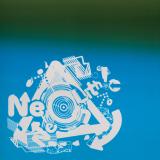
With Neolithic Neon, Appleblim creates a kaleidoscopic reflection of the spirituality inherent within electronic music — the ineffable frequencies and communal traditions that spring from exploratory synthesis, deep-rooted rhythms and myriad other sonic codes.
Throughout his third album for Sneaker Social Club, Laurie Osborne continues to express a fascination with the ancient resonance held within modern rave as he guides his own studio practice towards more purposefully analogue processes. It's reflective of his desire to let go and trust his instincts within the more chaotic realm of voltages and signals, not to mention turning to a wider spread of instrumentation and opening up to noisier avenues. This direction defines the character of Neolithic Neon, which bristles with the living imperfections of the gear in the context of incisive and wide-ranging cuts touching on jungle, dubstep, techno, electro, acid and experimental electronic music of all stripes.
Across Osborne's solo output from 2018's Life In A Laser to 2021 tape Infinite Hieroglyphics, a strong melodic sensibility spills out of the richly layered production. It's equally audible in his Wrecked Lightship collaboration with Adam Winchester, and it charges Neolithic Neon with its star-gazing, contemplative streak. From the knotty plucks and licks weaving through opener 'Moorland' to the vaporous synths darting across the top of hardcore conductor 'Thunderstorm', a dreamlike evocation takes the sound off terra firma, musing on cosmic events and our connection to the enormity of the universe.
Eternally in thrall to the maverick vocabulary of pioneering beat scientists and fuelled by the inspiration of great thinkers dwelling on our purpose and place, Neolithic Neon unfurls big ideas without heavy-handed messaging. Instead, it trusts in the universal and time-honoured language of experimentation and rhythm to present its ideas, true to Appleblim's legacy to date while opening a new chapter in his ongoing sonic quest.
Drawing from traditions of musique concrète and ambient synthesis, The Vertical Luminous creates a world of textural depth and microscopic wonder. Across its tracks, bubbling tones, processed field recordings, and shifting electronic layers intertwine, evoking the sensation of listening in on the hidden rhythms of atoms, molecules, and micro-organisms.
'While grounded in experimental technique, The Vertical Luminous avoids the academic or austere, instead embracing a mischievous sense of melody and curiosity - a reminder that exploration and joy can coexist in sound.
'The result is a record that is both meditative and playful, equally suited to deep listening or casual drift.'
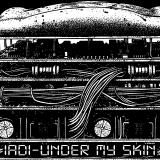
Between flesh and silicon. “Under My Skin” (2026) is the first album by IADI, released by Neo Life. A record like few
others, highly conceptual, cover art included. Its essence lies in the folds of the increasingly ambiguous relationship
between man and machine, where the former designs the latter and, perhaps without fully realizing it, is gradually
destined to adapt and be reprogrammed by it. Each track of “Under My Skin” is, in fact, a sort of interface, connector, or
any other imaginative point of contact between two creative phases, amid emotional impulses and binary calculations.
The sonic architecture oscillates between analog warmth and algorithmic coldness, constructing landscapes in which
pulsating synthesizers and mechanical rhythms seem to question each other. There's no linear narrative, but rather a
progressive immersion in a zone of near-friction, where the comfort of technology coexists with more than a faint
musical uneasiness, like a background noise that never ceases to remind you who's truly in charge. In “Under My Skin”,
the machine is neither an enemy nor a simple instrument: it's a real presence, intimate, even tactile, amplifying desires,
fears, and dreams of dawns beyond the digital realm. Intelligent dance music. Less noise, more sensations. Electronic,
but profoundly human.
The final result, then, is a music project that speaks to the present, yet sounds like an X-ray of the future, capturing that
fragile moment when humanity and technology stop observing each other from afar and begin to merge, track after
track. It's no coincidence that IADI's album opens with “Impulse”, an immediate expression of an electrical impulse, for
both humans and machines, which is also the language of the nervous system, as fast as it is vital—pure energy and
rhythm, a track as intense as it is irregular. And after this introduction, it's the turn of the equally erratic “Axon”, whose
title describes the neuron that transmits the signal over distance, telling the listener to sit back and relax for a new
journey through the notes toward the more melodic “Cortex”. The cerebral cortex, the ultimate seat of thought and
memory, becomes the source from which the musical flow of the first part of the work is drawn.
Then, suddenly, an automatic, or instinctive, response to the constant succession of impulses: “Reflex”, or zerotemperature techno, with a fragmented pace, featuring vocal samples, breaks, and restarts. In the producer's
imagination, the subsequent, and conversely placid, “Neuron” represents the emotional core of the second part of the
work, providing a kind of respite from the seething vibrations. While the neuron is the basic unit of the nervous system,
the synapse is the functional connection point between one neuron and another effector cell, essential for the
transmission of nerve impulses and communication in the nervous system, enabling functions such as learning and
movement. Likewise, a track like “Synapse” once again illuminates the path traced by IADI. The more experimental and
streamlined “Static” instead suggests true ordered chaos. “Dreamstate” is the conclusion suspended in the void, relating
to that dreamlike state between waking and sleeping, where consciousness fades toward infinity and visions begin. Pure
fading into the subconscious. Eternal return to where it all began. Dancing is a form of consciousness. Every beat is a
question. IADI, however, holds all the answers you need.
2025 Repress
Chlar returns to his Primal Instinct label with 'Modern Survival'
Following the widely praised Funk Assault (Chlar & Alarico) 'Minimum One Post A Week' EP, which kicked off the Primal Instinct label last summer and won the support of the likes of Rodhad, Tasha, and Luke Slater, as well as routine plays from Sarah Story on BBC Radio 1, Chlar now returns to his imprint with solo venture 'Modern Survival'. While the first Primal Instinct release saw references to artist urges and behaviours on social media, this next instalment explores a modern recontextualisation of humanity's hierarchy of needs in yet another high-concept EP.
First up, 'Internet Soulmate' boasts a crunchy bassline as its drum work chugs along the track playfully. The groove twists and turns before the hypnotic and tribal 'Supermarket Hunting' continues with sounds of nature, loopy rhythm and syncopated bleeps.
On the B-side's 'Body Control Officer', human-made grooves intertwine with machine-like thrum, synths whirring and zapping, while 'Competitive Influencing' takes off with rolling percussion, subtle whistles and distorted vocal one-shots. Closing out another stellar offering from the Primal Instinct frontman, Chlar brings the dark 'Scout My Algorithm', a brooding slow-burner offset by smooth arpeggio snippets and warped slices of digital noise.
"In an era where technology entwines our everyday existence, where the virtual realm shapes our interactions, and where the pursuit of influence takes centre stage comes an EP that delves deep into the modern tapestry of human existence. 'Modern Survival' is not merely a collection of songs and visual clips, but a poignant reflection on the intricate dance between our primal instincts and the brave new world we navigate today. The EP invites listeners on a journey of self-discovery and reflection, prompting them to ponder the fundamental essence of our existence in an environment of fast-paced technological evolution." - Chlar
After a six-year hiatus, Efdemin returns with POLY — his fifth studio album, released on the recently revived Berghain-affiliated label, Ostgut Ton.
As the title suggests, POLY explores multiplicity: of rhythm, texture, style, and emotion. Across eleven meticulously sculpted textures, the album weaves a multidimensional web of sonic references, nodding to the origins of techno while pushing resolutely into uncharted terrain. POLY feels like an afterglow—of decades on the dancefloor, of restless sonic exploration, and of a profound connection to the spaces and communities that have shaped Efdemin’s sound.
Over the course of 60 minutes we are taken through different territories and landscapes of sound. Mysterious and swirling, abstract and droning textures over at times fast and stoic rhythmic concepts. Sometimes the sunlight breaks into the opaque and mysterious soundscapes before the pulse is taken over and sucks us back straight into the club.
The overall tone of POLY is mild and playful, introvert and at times dreamy. The music is rich in sonic expression and breathes the spirit of musical concepts that have been refined over the course of decades. What Sollmann has condensed here feels like a culmination of his multilayered and polyphonic personality situated between Club, Museum, Studio and Academy.
The album cover features a striking photograph of a human ear by renowned German artist Isa Genzken. Known for her radical visual language, Genzken’s work here functions as a metaphor for deep listening. The ear symbolises the layered complexity and immersive quality of the music on POLY — an invitation to perceive sound in all its depth, fragility, and force and unlock it’s potential to unite different voices in a distorted reality.
Nach einer sechsjährigen Pause kehrt Efdemin mit POLY zurück – seinem fünften Studioalbum, das auf dem kürzlich wiederbelebten Label Ostgut Ton, dem in-house Label des Berghain erscheint.
Wie der Titel vermuten lässt, beschäftigt sich POLY mit Vielfältigkeit: von Rhythmus,Textur, Style und Emotionen. In elf Stücken webt das Album ein multidimensionales Netz aus klanglichen Referenzen, das auf zurückliegende Ansätze der Klubmusik verweist und gleichzeitig entschlossen in neues Terrain vordringt.
POLY wirkt wie ein Nachglühen – von Jahrzehnten auf der Tanzfläche, von unermüdlicher klanglicher Erkundung und von einer tiefen Verbindung zu den Räumen und Communities, die Efdemins Sound geprägt haben. Im Laufe von 60 Minuten werden die Hörer*innen durch verschiedene Territorien und Klanglandschaften geführt. Mysteriöse und wirbelnde, abstrakte und dröhnende Texturen über teilweise schnellen und stoischen rhythmischen Konzepten. Manchmal bricht das Sonnenlicht in die undurchsichtigen und geheimnisvollen Klanglandschaften ein, bevor der Puls wieder die Oberhand gewinnt und uns direkt zurück in den Klub saugt.
Der Gesamteindruck von POLY ist mild und verspielt, introvertiert und manchmal verträumt. Die Musik ist reich an klanglichem Ausdruck und atmet den Geist musikalischer Konzepte, die im Laufe von Jahrzehnten verfeinert wurden. Was Sollmann hier verdichtet hat, fühlt sich wie eine Kulmination seiner vielschichtigen und polyphonen Identität an, die sich zwischen Klub, Museum, Studio und Akademie bewegt.
Das Albumcover ziert die Nahaufnahme eines menschlichen Ohrs der renommierten deutschen Künstlerin Isa Genzken. Genzken´s Arbeit wirkt hier als Metapher für deep listening. Das Ohr symbolisiert die vielschichtige Komplexität und immersive Qualität der Musik auf POLY – eine Einladung, Klang in seiner ganzen Tiefe, Zerbrechlichkeit und Kraft wahrzunehmen und sein Potenzial zu erschließen, widerstreitende Stimmen in einer verzerrten Realität zu vereinen.
2026 Repress
Laster Records launches with a powerful VA featuring Alarico, Yanamaste, Chontane and
Roll Dann
Spanish's techno movement force Laster expands its vision with the launch of Laster Records, inaugurating the label with a fierce various artists EP forged for peak-time madness and emotional depth. The debut release, Laster Records VA001, brings together four essential voices in modern techno: Alarico, Yanamaste, Chontane and Roll Dann, each contributing a distinctive cut to a shared narrative of intensity and evolution.
The A-side opens with Alarico's "Of Which Sugars", a gritty, percussive storm of fast-paced
techno, where tension builds through syncopated rhythms and distorted grooves. Following is
Yanamaste's "Disconnection", a cerebral track infused with cold atmospheres, broken patterns and a sense of controlled chaos - reflecting the Georgian artist's unmistakable mental approach.
On the flip, Chontane delivers "Palindrome", a futuristic and dynamic tool with flickering synth stabs and machine funk energy. The EP closes with Roll Dann's "The Red House", a cinematic and melancholic trip through layered textures and deep basslines, paying homage to the label's own mythology.
Laster Records VA001 sets the tone for a label that, like its club roots, is raw, inclusive, and
uncompromising.
See you under the red light.
- A1: Kuniyuki Takahashi - Asia
- A2: Brian Eno, Moebius, Roedelius - The Belldog
- A3: Anchorsong - Windmills
- A4: Monde Ufo - Vallee
- B1: Mariah - Sokokara
- B2: Mytron, Zongamin - 08932168
- B3: Liquid Liquid - Scraper
- B4: Five Green Moons - Spider Dub
- C1: Fun Boy Three - Faith, Hope & Charity
- C2: Meat Beat Manifesto - Drop
- C3: African Head Charge - Orderliness, Godliness, Discipline And Dignity
- C4: Cristina - You Rented A Space
- C5: The Cramps - Garbageman
- D1: The Durutti Column - Sketches For Summer
- D2: The Third Bardo - I’m Five Years Ahead Of My Time
- D3: Sordid Sound System - Inanna
- D4: Daniel Avery - Drone Logic
- D5: Spectrum - True Love Will Find You In The End
Two Piers proudly announces the upcoming release of Bridges Towards Open Spaces: Circadian Rhythms 1967–2025.
This new collection brings together a wide range of artists and styles, weaving immersive sonic landscapes that explore a connection between natural cycles and the rhythms within.
Featuring artists such as Brian Eno, Moebius, Roedelius, Meat Beat Manifesto, Fun Boy Three, Daniel Avery, and Spectrum, the compilation moves fluidly between shimmering ambient textures and raw, straight-ahead garage rock.
Bridges Towards Open Spaces: Circadian Rhythms 1967–2025 follows in the footsteps of Two Piers acclaimed previous releases, Night Train: Transcontinental Landscapes 1968–2019 and Music for the Stars: Celestial Music 1960–1979, continuing the label’s exploration of expansive, time-spanning musical journeys.
“I wanted once again to shape a compilation around a time period, this collection is a nod to my days behind the counter of a record shop, the people I met and the styles of music that was played and I was introduced to. Some are from that time, some are of the style/feeling, that I can associate & with the friends I met there; from the early shift to the late shifts as the tempo rose throughout the day and the neons of London started to buzz”
The album will be available on Limited Vinyl and CD in May, arriving just in time for the longer, warmer days and the shifting light of the Seasons Sun.
- A1: Kuniyuki Takahashi - Asia
- A2: Brian Eno, Moebius, Roedelius - The Belldog
- A3: Anchorsong - Windmills
- A4: Monde Ufo - Vallee
- B1: Mariah - Sokokara
- B2: Mytron, Zongamin - 08932168
- B3: Liquid Liquid - Scraper
- B4: Five Green Moons - Spider Dub
- C1: Fun Boy Three - Faith, Hope & Charity
- C2: Meat Beat Manifesto - Drop
- C3: African Head Charge - Orderliness, Godliness, Discipline And Dignity
- C4: Cristina - You Rented A Space
- C5: The Cramps - Garbageman
- D1: The Durutti Column - Sketches For Summer
- D2: The Third Bardo - I’m Five Years Ahead Of My Time
- D3: Sordid Sound System - Inanna
- D4: Daniel Avery - Drone Logic
- D5: Spectrum - True Love Will Find You In The End
Limited Glacier Green[42,23 €]
Two Piers proudly announces the upcoming release of Bridges Towards Open Spaces: Circadian Rhythms 1967–2025.
This new collection brings together a wide range of artists and styles, weaving immersive sonic landscapes that explore a connection between natural cycles and the rhythms within.
Featuring artists such as Brian Eno, Moebius, Roedelius, Meat Beat Manifesto, Fun Boy Three, Daniel Avery, and Spectrum, the compilation moves fluidly between shimmering ambient textures and raw, straight-ahead garage rock.
Bridges Towards Open Spaces: Circadian Rhythms 1967–2025 follows in the footsteps of Two Piers acclaimed previous releases, Night Train: Transcontinental Landscapes 1968–2019 and Music for the Stars: Celestial Music 1960–1979, continuing the label’s exploration of expansive, time-spanning musical journeys.
“I wanted once again to shape a compilation around a time period, this collection is a nod to my days behind the counter of a record shop, the people I met and the styles of music that was played and I was introduced to. Some are from that time, some are of the style/feeling, that I can associate & with the friends I met there; from the early shift to the late shifts as the tempo rose throughout the day and the neons of London started to buzz”
The album will be available on Limited Vinyl and CD in May, arriving just in time for the longer, warmer days and the shifting light of the Seasons Sun.
- 11: Goin' Back To Wurstville
- 2: The Pulpo Dance
- 3: Ma Juju Girl
- 4: Space Spy
- 5: Just My Kind
- 6: Oofty Goofty (Wild Man Of Borneo)
- 7: The Double Switch
- 8: Itch!
- 9: Pineapple Mama
- 10: Howlin' For My Woman
- 11: Bayou Fever
- 12: Big Chief
- 13: Shake It Wild
- 14: Tiger In My Tank
- 15: King Ghidorah
- 16: Do The Wurst
Seit fast zwei Jahrzehnten verbreiten der King und seine Cumberland Three ihren Rhythm & Punk-Spaß in der ganzen Welt und bringen jede Menge ausgelassene Energie, Albernheiten, gute Laune und Schweiß mit! Mit diesem Quartett ist jede Show eine Party! Anlässlich ihres 20-jährigen Jubiläums, in dem sie unermüdlich weltweit auftraten und Dutzende von Platten veröffentlichten, haben King Salami & The Cumberland Three tief in ihrem umfangreichen Katalog gegraben, um 16 ihrer besten Tracks auszuwählen. Das Ergebnis ist diese energiegeladene Zusammenstellung, ein Album voller Spaß, das verrückte Klassiker wie ,The Pulpo Dance", ,Pineapple Mama", ,Shake it Wild" und ,Do the Wurst" enthält, neben ihrem weniger bekannten Instrumentalstück ,Itch!", das kürzlich in der Dreamies-Katzenfutter-Fernsehwerbung zu hören war. ENG For nearly two decades, the King and his Cumberland Three have been spreading the Rhythm & Punk grease all around this big old world, bringing along with them buckets of fun, raucous energy, silliness, smiles and sweat! With this quartet, every show is a party!! To mark their 20 years anniversary of relentlessly playing shows around the globe and releasing dozens of records, King Salami & the Cumberland Three have dug deep into their extensive catalogue to select 16 of their most killer tracks. It makes for a fun-packed album which contains wacky classics such as `The Pulpo Dance', `Pineapple Mama', `Shake it Wild' and `Do the Wurst, alongside their lesser-known instrumental `Itch!' that recently featured on the Dreamies cat food TV ad.