RIYL: PJ Harvey, Sonic Youth, Dead Can Dance, Black Sabbath, Depeche Mode. In Blood is the group’s 14th album and the follow-up to 2020’s critically acclaimed Dances/Curses (Album Of The Year – The Quietus, Top 10 International Albums – Irish Times). It was typical of a band so well-known for stellar live performances to release their most successful album at a time when they were unable to back it up on the road. As was the case for many, lockdown changed the band’s lives in unexpected ways. Some felt a form of cabin fever at not being able to continue to make music (diverting their energies elsewhere - founding Wrong Speed Records for starters) whereas others relished the peace and quiet, perhaps questioning whether they wanted to return to the life they had before. Gigs (so long the lifeblood of the band) were booked, postponed, and cancelled. Things began to unravel and perhaps for the first time since the band formed in 2003 it was hard to see how it could continue. A plan was hatched to attempt to re-energise and reassemble the band: they would begin work on a new album. They would approach this as though a Somerset version of The Desert Sessions – members old and new and guests would contribute as and when time and restrictions allowed. Lyrically, British folk and ghost mythology provided the starting position for the song themes ranging from mutated stories of grief and loss written in the 14th Century (Perle), spiritual reawakening by ancient apparitions (Avalon) to the growth of nature after devastation (Can’t Feel Around Us, Over Cedar Limb), a metaphor also for spirit and body renewal and rebirth after trauma. The results sound free of any genre shackles and it suits Hey Colossus. They have taken the expansive anything-goes approach that made Dances/Curses so successful and fine-tuned and shaped it into an 8-song single album that never treads water or fills time. The prominent vocals steer the listener through the music, defining it as opposed to punctuating it (or being buried by it). The album is a calling card for the band in their 20th anniversary year. As odd and challenging as long-term fans would expect or hope for, but somehow more accessible and to the point than ever before. It is the closest the group have ever come to a pop record, radiating positivity through the murk like a small ray of light in some very dark and very weird times. Music can never entirely negate these feelings but, like the natural world referenced in the lyrics and sleeve, it invisibly bonds people together, lifting us up if we choose to let it.
Поиск:myt
Все
- 1: Hello
- 2: A Love From Outer Space
- 3: Crack Up
- 4: Timewind
- 5: What's All This Then?
- 6: Snow Joke
- 7: Off Into Space
- 8: And I Say
- 9: Yeti
- 10: Conundrum
- 11: Honeysuckleswallow
- 12: Long Body
- 13: In A Circle
- 14: Fast Ka
- 15: Miles Apart
- 16: Pop
- 17: Mars
- 18: Spook
- 19: Sugarwings
- 20: Back Home
- 21: Down
- 22: Supervixens
- 23: Insect Love
- 24: Sorry
- 25: Catch My Drift
- 26: Challenge
A.R. Kive collates the three most astonishing works from that most miraculous of duos - A.R. Kane - comprising the ‘Up Home’ EP from 1988 that signified the band’s dawning realisation of their own powers and possibilities, their legendary debut LP ‘sixty nine’ (1988) and its kaleidoscopic, prophetic double-LP follow up ‘i’ (1989).
In founder-member Rudy Tambala’s new remastering, the music on these pivotal transmissions from the birth of dream pop, have been reinvigorated and re-infused with a new power, a new depth and intimacy, a new height and immensity. Vivid, timeless and yet always timely whenever they’re recalled, these records still force any listener to realise that despite the habits of retrospective myth-making and the
safe neutering effects of ‘genre’, thirty years have in no way dimmed how resistant and dissident to critical habits of categorisation A.R. Kane always were. Never quite ‘avant-pop’ or ‘shoegaze’ or ‘post-rock’ or any of those sobriquets designed to file and categorise, A.R. Kive is a reminder that those genres had to be coined, had to be invented precisely to contain the astonishing sound of A.R. Kane, because
previous formulations couldn’t come close to their sui generis sound and suggestiveness. This is music that pointed towards futures which a whole generation of artists and sonic explorers would map out. Now beautifully repackaged, remastered and fleshed out with extensive sleeve notes and accompanying materials, ‘A.R. Kive’ reveals that 35 years on it’s still a struggle to defuse the revolutionary and inspirational possibility of A.R. Kane’s music.
A.R. Kane were formed in 1986 by Rudy Tambala and Alex Ayuli, two second-generation immigrants who grew up together in Stratford, East London. From the off the pair were outsiders in the culturally mixed (cockney/Irish/West Indian/Asian) milieu of the East End, with Alex and Rudy’s folks first generation immigrants from Nigeria and Malawi, respectively. The two of them quickly developed and fostered an innate and near-telepathic mutual understanding forged in musical, literary and artistic exploration. Like a lot of second-generation immigrants, they were ferocious autodidacts in all kinds of areas, especially around music and literature. Diving deep into the music of afro-futurist luminaries such as Sun Ra, Miles Davis, Lee Perry and
Hendrix, as well as devouring the explorations of lysergic noise and feedback from contemporaries like Sonic Youth and Butthole Surfers, they also thoroughly immersed themselves in the alternate literary realities of sci-fi and ancient history (the fascination with the arcane that gave the band their name), all to feed their voracious cultural thirsts and intellectual curiosity.
It was seeing the Cocteau Twins performing on Channel 4 show the Tube that spurred A.R. Kane into being - “They had no drummer. They used tapes and technology and Liz Fraser looked completely otherworldly with those big eyes. And the noise coming out of Robin’s guitar! That was the ‘Fuck! We could do that! We could express ourselves like that!’ moment”, recalls Tambala - and through a mix of
confidence, chutzpah, ad hoc almost-mythical live shows and sheer innocent will the duo debuted with the astonishing ‘When You’re Sad’ single for One Little Indian in 1986. Immediately dubbed a ‘black Jesus & Mary Chain’ by a press unsure of WHERE to put a black band clearly immersed in feedback and noise, what was immediately apparent for listeners was just how much more was going on here - a
tapping of dub’s stealth and guile, a resonant umbilicus back to fusion and jazz, the music less a conjuration of past highs than a re-summoning of lost spirits.
The run of singles and EPs that followed picked up increasingly rapt reviews in the press, but it was the ‘Up Home EP’ released in 1988 on their new home, Rough Trade that really suggested something immense was about to break. Simon Reynolds noted the EP was: Their most concentrated slab of iridescent awesomeness and a true pinnacle of an era that abounded with astounding landmarks of guitar-reinvention, A.R. Kane at their most elixir-like.
If anything, the remastered ‘Up Home’ that forms the first part of ‘A.R. Kive’ is even more dazzling, even more startling than it was when it first emerged, and listening now you again wonder not just about how many bands christened ‘shoegaze’ tried to emulate it, but how all of them fell so far short of its lambent, pellucid wonder. This remains intrinsically experimental music but with none of the frowning orthodoxy those words imply. A.R. Kane, thanks to that second generation auto-didacticism were always supremely aware about the interstices of music and magic, but at the same time gloriously free in the way they explored that connection within their own sound, fascinated always with the creation of ‘perfect mistakes’ and the possibilities inherent in informed play.
‘sixty nine’ the group’s debut LP that emerged in 1988 had
critics and listeners struggling to fit language around A.R. Kane’s sound. As a title it was telling - the year of ‘Bitches Brew’, the year of ‘In A Silent Way’, the erotic möbius between two lovers - and as originally coined by the band themselves, ‘dream pop’ (before it became a free-floating signifier of vague import) was entirely apposite for the music A.R. Kane were making. Crafted in a dark small basement studio in which Tambala recalls the duo had “complete freedom - We wanted to go as far out as we could, and in doing so we discovered the point where it stops being music”. There was an irresistibly dreamy, somnambulant, sensual and almost surreal flow to ‘sixty nine’s sound, but also real darkness/dankness, the ruptures of the primordial and the reverberations of the subconscious, within the grooves of remarkable songs like ‘Dizzy’ and ‘Crazy Blue’. Alex’s plangent vocals floated and surged amidst exquisite peals of refracted feedback but crucially there was BASS here, lugubrious and funky and full of dread, sonic pleasure and sonic disturbance crushed together to make music with a center so deep it felt subcutaneous, music constructed from both the accidental and the deliberate, generous enough to dance with both serendipity and chaos. ‘sixty nine’ remains - especially in this remastered iteration - ravishing, revolutionary.
The final part of this ‘A.R. Kive’ contains 1989’s astonishing double-LP ‘i’ which followed up on ‘sixty nine’s promise and saw the duo fully unleash their experimental pop sensibilities over 26 tracks, plunging the A.R. Kane sound into a dazzlingly kaleidoscopic vision of pop experiment and play. Suffused with new digital technologies and combining searingly sweet and danceable pop with perhaps the duo’s strangest and boundary-pushing compositions, the album did exactly what a great double-set should do - indulge the artists sprawling pursuit of their own imaginations but always with a concision and an ear for those moments where pop both transcends and toys with the listeners expectations. Jason Ankeny has noted that “In retrospect, ‘i’ now seems like a crystal ball prophesying virtually every major musical development of the 1990s; from the shimmering techno of ‘A Love from Outer Space’ to the liquid dub of ‘What’s All This Then?’, from the alien drone-pop of ‘Conundrum’ to the sinister shoegazer miasma of ‘Supervixens’ — it’s all here, an underground road map for countless bands to follow.” Perhaps the most overwhelmingly all-encompassing transmission from A.R. Kane, ‘i’ bookended a three year period in which the duo had made some of the most prophetic and revelatory music of the entire decade.
After ‘i’ the duo’s output became more sporadic with Tambala and Ayuli moving in different directions both geographically and musically, with only 1994’s ‘New Clear Child’ a crystalline re-fraction of future and past echoes of jazz, folk and soul, before the duo went their separate ways. Since then, A.R. Kane’s music has endured, not thanks to the usual sepia’d false memories that seem to maintain interest in so much of the musical past, but because those who hear A.R. Kane music and are changed irrevocably, have to share that universe which A.R. Kane opened up, with anyone else who will listen. Far more than other lauded documents of the late 80s it still sounds astonishingly fresh, astonishingly livid and vivid and necessary and NOW.

A group of five talented musicians from the northeast, led by the songwriting genius of Alan Hull. Lindisfarne were formed in 1968 when Hull joined Simon Cowe on guitar, Ray Jackson on mandolin and vocals, Rod Clements on bass and Ray Laidlaw on drums. Building a fearsome live reputation, by 1970 they had been signed to Tony Stratton Smith's Charisma label.
Their first album, Nicely Out Of Tune, contained Lady Eleanor and set up an eager audience for Fog On The Tyne, an album of tremendous light and shade. Known for the Rod Clements- written, Ray Jackson- sung Meet Me On The Corner, and Alan Hull's anthemic title track. The album succeeds in creating a mythical, twilight northeast, from the cover design inwards; of city lights, ragmen, sausage rolls, tattered tweeds and having a "wet on the wall." Fog On The Tyne is the sound of a band at both a commercial and creative peak. The musicianship is second to none, watertight, yet relaxed and freewheeling, recorded at London's Trident Studios by Bob Dylan and Leonard Cohen producer Bob Johnston and Bowie engineer Ken Scott.
Sun Ra and the various groups he led were as prolific as they were innovative. By conservative estimates they produced around 200 recordings over a fifty year period, and the early 70s was as fertile a time as any. In a typical burst of creative energy Ra and an ensemble he dubbed The Solar Myth Arkestra produced enough material to be spread over two albums or two volumes, that amount to a kind of sonic odyssey which has no end of twists and turns, as befits a group of such singular character.
"Die Dunkelheit wimmelte immer von unerklärlichen Geräuschen..." (HPL)
Mit "Nahab" - dem zweiten Teil des Disharmonium-Zyklus - kehren BLUT AUS NORD wie getrieben in die unheimlichen, alptraumhaften Jenseitswelten von H.P. Lovecraft zurück, um sie in einem Spiegel erschreckenden Black Metal-Wahnsinns zu reflektieren.
Ähnlich wie die beiden dunklen Kammern des 2022 erschienenen Erstlings "Disharmonium - Undreamable Abysses" und der dazugehörigen Kompilation "Lovecraftian Echoes" ist diese neueste Emanation ähnlich gebärmutterartig, detailreich, verstört und transformativ.
Musikalisch nur durch das umfangreiche Oeuvre der Band beeinflusst, hat "Nahab" im Vergleich zu BANs jüngsten Lovecraft'schen Erkundungen einen erhöhten Anteil an derangierter Vokalmanie, die unheimliche Dynamik ist besser umgesetzt, die unverwechselbare melodische Kraft der Band verstärkt, die Gitarren - tiefer gestimmt für zusätzliche Resonanz - fließen im Tandem mit taumelnden Grooves wie ein stygianischer Tsunami.
In der totäugigen Trance eines dämonisch Beschworenen haben BLUT AUS NORD einmal mehr esoterische Folklore und moderne Gewalt in ein weiteres phänomenales Stück Außenseiterkunst kanalisiert, das ihrem eigenen Mythos und ihrer Monstrosität mehr als gerecht wird. In der Tat ein krönender Abschluss des Grauens.
Better get ready! Next up on Potency's ever expanding catalog of club
ready tracks, Cromby delivers three more cuts for the floor.
On the A side 'Namaste' goes straight in with an off its head bongo lead on top of an infectious groove and bass line that will get any dance floor moving.
On the flip, 'Voyager' a euphoric trance filled ode to the sounds of Frankfurt in the 90's, if you listen carefully you can almost hear your mate telling you how much he loves you over a sweaty dance floor hug! 'Mythology' wraps up the release, a trademark driving acid tool that dips and dives throughout thunderous leads and soaring pads.
Remastered with extra tracks - extra disc also includes Sound Sun Pleasure LP. Features the original space nymph cover art, which only appeared in cropped and washedout reproductions on an early 60s version. Cosmic Myth Records is dedicated to issuing remastered and fully authorized out of print titles from Sun Ra's independent Saturn Records catalog. Sun Ra's Jazz in Silhouette was enshrined in the Penguin Jazz Guide's "Core Collection" as an album that "will someday be recognized as one of the most important post-war jazz records." Jazz in Silhouette is the quintessential record of Sun Ra's late 1950s Chicago period. Recorded and issued in 1959, it marks a coda for the bandleader's bebop/hard-bop stage, as his interstellar traveller persona began to transform the band (and the music). It also charts the future, showcasing the brilliant tenor sax stylings of John Gilmore, and introduces the iconic playing of Arkestra mainstays Marshall Allen, Pat Patrick, and Ronnie Boykins. Many of the early works on these recordings would remain staples in Arkestra set lists for the rest of Sun Ra's life. This expanded edition includes the complete, contemporaneous Sound Sun Pleasure, rare stereo mixes, and bonus tracks.
Die Viking Metal Giganten SKÁLMÖD auf den Spuren der nordischen Mythologie Mit Ýdalir blicken die Viking Metal Größen SKÁLMÖD auf die Veröffentlichung ihres sechsten Studioalbums, das am 18. August 2023 via Napalm Records erscheint. Ihr erstes Studioalbum seit fünf Jahren ist von dem nordischen Gedicht Grímnismál, einer berühmten Sage aus ihrer Heimat Island, inspiriert. Die Band begeistert nicht nur Fans bei Festivalauftritten wie auf dem Wacken Open Air, auch der isländische Präsident Guðni Th. Jóhannesson unterstützt die Band und ist sogar im Vorwort ihres offiziellen Buches The Saga Of Skálmöld (2021) verewigt. Basierend auf der nordischen Mythologie thematisiert „Skuld“ die Schwesternschaft des Nornen Trios, das über das Schicksals der Menschen entscheidet, was SKÁLMÖD mit düsteren Bass- und Gitarrenmelodien illustrieren. Mit Ýdalir liefert die Viking Metal Instanz SKÁLMÖLD auf ihrem neuen Album erneut mystische Momente, die sie auf diesjährigen Festivalauftritten wie dem Wacken oder dem Summer Breeze unter Beweis stellen werden.
- A1: Track 1
- A2: Track 2
- A3: Track 3
- A4: Francesca
- A5: Track 5
- A6: Eat Your Young
- A7: Track 7
- A8: Track 8
- A9: Track 9
- A10: All Things End
- A11: Track 11
- A12: Track 12
- A13: Track 13
- A14: Track 14
- A15: Track 15
- A16: Track 16
LP + 2CD[25,63 €]
Andrew Hozier-Byrne, besser bekannt als HOZIER, veröffentlicht sein drittes Album ”Unreal Unearth”.
Die Hintergrundgeschichte von ”Unreal Unearth” ist vielschichtig, sowohl von italienischer Dichtkunst als auch griechischer Mythologie geprägt und verteilt sich über alle Albumtracks.
Mit mehr als 20 Mrd. Streams und 30 Mio. monatlichen Hörern ist der Ire einer der führenden Künstler des Genres Folk-Singer Songwriter in der Streaming Welt.
Sein Durchbruch gelang Hozier 2013, mit seiner kürzlich mit dem Diamond Award, für über 1 Millionen verkaufter Units, ausgezeichneten Hymne, „Take Me To Church“. Mit ihr stellte er seinen globalen Erfolg auf ein festes Fundament, es folgten Gold- und Platin-Auszeichnungen für seine ersten beiden Alben, eine GRAMMY-Nominierung, sowie diverse weitere Auszeichnungen.
Im Juli dieses Jahres war Hozier auf Europatour und wird im Dezember für zwei weitere Shows erneut nach Deutschland kommen.
TEMPLE OF DREAD bleiben dem Old School Death Metal grundsätzlich auch auf ihrem vierten Albumhammer "Beyond Acheron" treu. Dazu haben die Ostfriesen den Fokus auf eine dunkle und schwere Atmosphäre gelegt und mit einigen schönen Prisen Melancholie sowie schwarzen Momenten abgerundet. Das stählerne Sahnehäubchen liefern Gastbeiträge des ehemaligen MORGOTH und INSIDIOUS DISEASE Sängers Marc Grewe sowie GOD DETHRONED Frontmann Henri Sattler ab. Die Texte stammen aus der blutigen Feder von Bandfreund und Wortschmied Frank Albers. Die Zeilen des Psychologen drehen sich um antike Mythen und Historie mit Protagonisten wie Ikarus, Vulkan, Hades, Kleopatra und Marcus Antonius. Auch das Cover Artwork von "Beyond Acheron", das vom gefeierten italienischen Künstler Paolo Girardi gestaltet wurde, bleibt beim antiken Thema und zeigt Charon, den Fährmann der griechischen Unterwelt Hades. Die massive Produktion von "Beyond Acheron" stammt von TEMPLE OF DREADs Schlagzeuger Jörg Uken, der in seinem weit bekannten Soundlodge Tonstudio unter anderem bereits Alben von DEW-SCENTED, GOD DETHRONED, OBSCENITY, SUICIDAL ANGELS und WARPATH aufgenommen hat. TEMPLE OF DREAD wurden auf Spiekeroog im Jahr 2017 von Gitarrist Markus Bünnemeyer als Ventil für seine Old School Death Metal Ambitionen gegründet. Im Jahr 2018 stießen Sänger Jens Finger und Schlagzeuger Jörg Uken dazu, mit denen Bünnemeyer auch bei Slaughterday aktiv war. Schon im nächsten Jahr erschien das Debütalbum "Blood Craving Mantras" (2019). Das Trio erwies sich als äußerst kreativ und zwei weitere Alben folgten binnen kurzer Zeit: "World Sacrifice" (2020) und das von der Kritik hochgelobte "Hades Unleashed" im Jahr 2021. Mit "Beyond Acheron" setzen TEMPLE OF DREAD neue Maßstäbe für intelligente Death Metal Brutalität!
- A1: Sweet Spirit
- A2: Petal
- A3: New Style
- A4: Little Entertainer
- A5: Anemone
- A6: Dancing Anima
- A7: Hora Thello
- A8: Tanana
- A9: Acrobat Of Architect
- A10: Inner Garden
- A11: Flower Myth
- A12: Waggle Dance
- A13: Waggle Dance Reprise
- A14: Hora Auxo
- B1: Water Memory
- B2: Rainy Steps
- B3: Marginalia Song
- B4: Hora Carpo
- B5: Katabasis
- B6: Trans Train
- B7: Of Angels
- B8: Future Nursery
Limited TURQUOISE Vinyl[31,89 €]
Mirai is a 2018 Japanese animated adventure fantasy comedy film written and directed by Mamoru Hosoda and produced by Studio Chizu (known for Belle, Wolf Children and The Boy and the Beast). The film stars the voices of Moka Kamishiraishi, Haru Kuroki and Gen Hoshino a.o. It was met with critical acclaim and became nominated for an Academy Award in 2019 for Best Animated Feature Film. Additionally, the movie received an Annie Award in the same year.
Mirai follows the story of a four-year-old boy named Kun whose world is turned upside down when he meets his new baby sister. After venturing into a magical garden, Kun encounters strange guests from the past and future, including his sister Mirai, as a teenager. Together, Kun and teenage Mirai go on a journey through time and space, uncovering their family's incredible story.
The soundtrack for the film was written by Masakatsu Takagi, who had previously scored Hosoda's Wolf Children and The Boy and the Beast. His work for Studio Chizu has been praised for its magical and whimsical atmosphere. For Mirai specifically, this dreamy aesthetic was mixed with a contemporary sound and made to be simple in tone and be reflective of family.
First new recordings from GODFLESH since 2017's critically acclaimed full length 'POST SELF'.
'PURGE' musically, amongst the many layers of dirt, revisits and updates the concepts explored on the 'PURE' album from 1992; 90's hip hop grooves mangled and put through the GODFLESH filter to create something that is still unique and futuristic in style.
Both minimal and maximal, with layer upon layer of filth and heaviness, Godflesh deliver alien grooves that swing whilst also retaining the psychedelic / bad trip edge that Godflesh has always obsessed over. This is, and always has been, feel bad music; the title alone 'PURGE' references directly how songwriter / creator Justin K Broadrick utilises this music as temporary relief from his diagnosed autism and PTSD, a journey he has been on since he began creating music and feeling alone and as an outsider in any 'scene' or 'group' from childhood and throughout his adulthood.
Godflesh gives him the means to express a lifetime of feeling misunderstood and overwhelmed by hyper sensitivity, the band being the vehicle to give him some sense of catharsis and transcendence; a way of communicating overload and constant disenchantment at the human condition, and man's abuse of power and the systems that chain us.
The album references the cycle of horror that man has always and will always put us through; those in positions of power revel in the infliction of pain and horror upon individuals, in the name of their religion, their power, their money, their flags....
8 songs, delivered in a concise fashion for fellow outsiders.
black repress !
No. 1 in the charts in more than 20 countries with more than 2.6 million physical singles sold, a mythical video clip that is shown H24 on all TV channels, nominated for an MTV Award & Victoire de la musique, the most broadcast French song in the world for two years in a row... 20 years later, Starlight still arouses an unfailing love. The opportunity to revive this classic with a '20th Anniversary' collector's vinyl reissue.
Starlight exploded and broke all records when it was released at the beginning of the millennium. 20 years later, the industry has completely transformed but the track still boasts eloquent statistics with over 200M streams! A classic that is all the more notorious for having been part of the advent of a new genre that would mark the history of music: the "French Touch", shaped by Daft Punk, Stardust, Cassius, Etienne de Crécy, Modjo, and thus The Supermen Lovers.
The opportunity to revive this icon with a collector's vinyl reissue; new mix, new master, new disco version.
"Nothing Compares To Metal" setzt VELVET VIPERs Konzept mit Texten über klassische, poetische und mythische Themen fort.
Wie schon auf den ersten drei Alben der neuen Ära der Band, haben Jutta und Holger alle Songs gemeinsam komponiert.
Für VELVET VIPER ist es sehr wichtig, Musik zu machen, die die Mentalität und die kreative Freiheit der Band widerspiegelt, denn die Welt braucht Originale, keine Kopien.
Zum allerersten Mal gibt es auf dem Album einen Song mit deutschem Text, der ein privates kleines Statement von Jutta ist und nur auf der CD und der digitalen Version des Albums zu hören ist. Alle Songs auf dem Album sind etwa 5, 6 oder 7 Minuten lang, weil die Band der Meinung war, dass die Songs genug Raum brauchen, um sich mit ihren verschiedenen Teilen und komplexen Strukturen zu entfalten und die Dramatik zu erzeugen, die VELVET VIPER mit ihrer Musik vermitteln wollen.
VELVET VIPER haben sich für einen natürlichen Old-School-Sound entschieden, mit nur ein paar kleinen Keyboard-Einlagen hier und da, und sie haben versucht, ihren Live-Sound, den sie so lieben, auch einzufangen.
VELVET VIPER touren und nehmen seit einigen Jahren in unveränderter Besetzung auf und haben ihren Musikstil mit druckvollen Beats und großartigen Melodien dieses Mal wirklich auf den Punkt gebracht.
"Nothing Compares To Metal" setzt VELVET VIPERs Konzept mit Texten über klassische, poetische und mythische Themen fort.
Wie schon auf den ersten drei Alben der neuen Ära der Band, haben Jutta und Holger alle Songs gemeinsam komponiert.
Für VELVET VIPER ist es sehr wichtig, Musik zu machen, die die Mentalität und die kreative Freiheit der Band widerspiegelt, denn die Welt braucht Originale, keine Kopien.
Zum allerersten Mal gibt es auf dem Album einen Song mit deutschem Text, der ein privates kleines Statement von Jutta ist und nur auf der CD und der digitalen Version des Albums zu hören ist. Alle Songs auf dem Album sind etwa 5, 6 oder 7 Minuten lang, weil die Band der Meinung war, dass die Songs genug Raum brauchen, um sich mit ihren verschiedenen Teilen und komplexen Strukturen zu entfalten und die Dramatik zu erzeugen, die VELVET VIPER mit ihrer Musik vermitteln wollen.
VELVET VIPER haben sich für einen natürlichen Old-School-Sound entschieden, mit nur ein paar kleinen Keyboard-Einlagen hier und da, und sie haben versucht, ihren Live-Sound, den sie so lieben, auch einzufangen.
VELVET VIPER touren und nehmen seit einigen Jahren in unveränderter Besetzung auf und haben ihren Musikstil mit druckvollen Beats und großartigen Melodien dieses Mal wirklich auf den Punkt gebracht.
Malmo-based producer Sacred Grove takes care of the second release of French label Parodia.
Taking his name from an important feature of mythological landscapes, Sacred grove music is like a hole in our dimension, a moment of levitation where everything stops for a minute.
« Through the Mire » is a fantastic 4 track EP of untouchable, fascinating sounds of dance music, taking influences in early deep house and twisting it in a very unique way.
Enter the trip with the EP opener « Dusk » , a mysterious track full of hazy pads and stabs blending together to make you enter into an imaginary forest. Subtle and classy, « Dawn » is the second track of the record, 9 minutes of introspective sounds yet dancable, with an unstoppable groove. If you're not already tripping, your mind is a about to hallucinate with the third track Neusea (Delay mix), the most impactful track of the record, with a laidback peak time roller keeping the same cinematic atmosphere as the other tracks.
Last but not least, B2 track « Loverz » is like reaching the Sacred Grove that you were looking for when you entered this forest, and finally your mind is going in a total trance.
Repress!
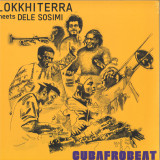
Funkiwala Records presents the third in the series of "Lokkhi Terra meets"albums, with the London fusionistas creating another unique sound-clash, this time with ex-Fela Kuti keyboardist and legendary UK Afro-beat ambassador Dele Sosimi, and members of his critically acclaimed Afro-beat Orchestra.
This particular collaboration has been bubbling away for a few years now, teasing audience expectations with a handful of sold out shows each year in between both bands busy schedules.
Featuring the two pianos of Kishon Khan and Dele Sosimi – Cuban percussionists/vocalists Geraldo De Armas (Yoruba Andabo), Oreste Noda (Ariwo), Javier Camilo (Ibrahim Ferrer) - a horn section led by Justin Thurgur (Bellowhead) featuring Yelfris Valdes (Sierra Maestra) and Graeme Flowers (Kyle Eastwood) to name a few – this is an All-star cast.
Kishon Khan's Lokkhi Terra have over a number of years now been quietly establishing themselves as one of London's more unusual heavyweight outfits, described as "Stunning Headliners… A majestic multi-cultural blend of sounds… effortlessly builds bridges between rolling Indian raga rhythms, Afro-Cuban grooves, Acid Jazz/funk and free flowing improvisation" (Timeout London). Included amongst the band members are London's top Cuban musicians, adding their infectious rich musical history to the city's melting pot.
When the band wanted to explore Cuban links with another of their favourite traditions, Afrobeat, who better to bring in then one of the Afrobeat originators – maestro Dele Sosimi – "Sosimi creates some of the most bewitching grooves in modern African music" E Jazz News.
Bringing together two Yoruba speaking musics - with different accents, from different sides of the Atlantic - Havana meets Lagos in London – A Cuban-Afrobeat-Experience. CUBAFROBEAT.
All About Jazz 4star review
A younger version of London's Grand Union Orchestra, founded by world-jazz pioneer Tony Haynes in 1982, Lokkhi Terra was put together by keyboard player Kishon Khan in 2005. Both ensembles have made a specialism of jazz / South Asian fusion, with Lokkhi Terra also giving as much attention to music from Cuba, where Bangladeshi-born, London-based Khan lived for a while in the early 2000s.
Cubafrobeat, as the title foretells, is a blend of Cuban dance music and Nigerian / Yoruban Afrobeat—a fusion rendered seamless by the synergies existing between Afro-Cuban and Yoruban music, language and mythology. The album is Lokkhi Terra's third and partners the band with the keyboard player and vocalist Dele Sosimi .
A young-going-on-child-prodigy member of Fela Kuti's Egypt 80, Sosimi went on to become musical director of Femi Kuti's Positive Force, before relocating to London and setting up Dele Sosimi's Afrobeat Orchestra, the finest Afrobeat band outside Nigeria, bar none, now with a string of consistently engaging albums under its belt. Cubafrobeat features Sosimi as lead vocalist on all four tracks, and on Fender Rhodes on two of them. His singing plays a prominent role in the Afrobeat Orchestra, but, such is the whirlwind impact of the band in full instrumental flight, that Sosimi is often thought of first and foremost for his keyboard and arranging talents. That may change by the time 2018 is over. Cubafrobeat is the third album in as many months to feature Sosimi as guest vocalist, spotlighting the gravitas, air of mystery, intimacy and ferocity his voice can bring to an occasion.
The first of these albums was the genre-bending spiritual-jazz band Emanative's Earth (Jazzman). One of the stand-out tracks, "Ìyáàmi," features Sosimi making obeisance to the titular Mother Goddesses of the Yoruba spirit worlds. His raw and intense invocations carry the track for nine mesmerising minutes. Otherwordly is not the half of it. Next up was dub / reggae / jazz band Soothsayers' Tradition (Wah Wah 45s), which featured Sosimi as lead vocalist on the compelling "Sleepwalking (Black Man's Cry)." Earth and Tradition are both outstanding albums and have previously been reviewed here.
Cubafrobeat is a total stonking blinder, too. It is an effectively nuanced affair, opening with the fiery "Afro Sambroso" and closing with the relatively reflective "Rumbafro." Sosimi's vocals light up the music, as do the several solos from trumpeters Graeme Flowers and Yelfris Valdes Espinosa and trombonist Justin Thurgur (a member of both Lokkhi Terra and the Afrobeat Orchestra). Sosimi and Kishon Khan's intertwining Fender Rhodes solos on "Cubafro" are also a delight, as is the drum and percussion section throughout.
The sound of summer, for sure, Cubafrobeat has enough depth and variety to make it something for all seasons.
Songlines 4star review
Lokkhi Terra are one of London's most authentic groups. They are a Latin-flavoured collective whose keyboard player and bandleader Kishon Khan segues from percussive montunos to complex Bengali rhythms and back, with jazz chops sparking funky and outward-looking fusions. Their collaboration with Dele Sosimi, Britain's foremost Afrobeat ambassador, has been bubbling for a while; here four tracks at ten minutes see musical conversations that never lose their sense of flow. An extensive line-up of stellar players, including trumpeter Yelfris Valdés, conguero Oreste Noda and trombonist Justin Thurgur, highlights the genre-crossing potential of world traditions. Opener 'Afro Sambroso' showcases batá drums from Gerardo de Armas Sarria before the track links Cuban grooves with Afrobeat. 'Timbafro' crackles and sways via Khan's organ, Sosimi's vocals and Oscar Martinez's timbales. 'Cubafro' features dazzling interplay between Khan, Sosimi and Javier Camillo's Spanish-language vocals. 'Rumbafro' is all rumba choruses, Yoruba vocals and Afrobeat horns. Rooted in their sources, but with musical threads intertwining, separating and reconfiguring – with grooves at a premium – this is a fusion lover's dream
he Congos possess what all bands look for, that unique distinctive sound that draws the listener in. Alongside the great songs, lead singer Cedric Myton's singing, phasing and falsetto voice makes that just the case.
The Congos were formed by Cedric Myton (b. 1947, St Catherine, Jamaica) around the mid-Seventies when the
Rasta message was central to the reggae sound coming out of Kingston, Jamaica. But he had started out in the
Rocksteady era, when he formed the vocal group 'Tartans', taking lead vocal duties alongside Devon Russell, Prince Lincoln Thompson and Lindbergh Lewis.They cut 'Dance All Night' (1967) and 'Coming On Strong' (1968). The line-Up became The Royal Rasses and from this Cedric moved on to form the Congos on meeting Roydel Johnson, who had previously sang with Ras Michael and the Sons of Negas. Cedric's Rasta roots were firmly in place when he went to work with producer Lee Perry to cut the seminal album 'Heart Of The Congos' at Perry's just built, Black Ark Studios in 1977. Cedric Myton has carried on the mantle, cutting a set of tunes with the help of his good friend Mr Brent Dowe, who had previously sang lead vocals with the Melodians.This is the Dub set to the vocal album released on the Kingston
Sounds label called 'The Congos Feast'(KS008).With such strong songs, rhythms and vocals it always had the chemistry for a great dub set. Hope you agree and enjoy the dub excursion...