Wayne Shorter war ein amerikanischer Jazz-Saxophonist, Komponist und Bandleader. Er wurde 1959 als
Mitglied von Art Blakey’s Jazz Messengers bekannt, für die er schließlich der Hauptkomponist wurde. Er
trat 1964 dem Second Great Quintet von Miles Davis bei und war 1970 Mitbegründer der Jazz-Fusion-Band
Weather Report. Als Bandleader nahm er mehr als 20 Alben auf. Viele Shorter-Kompositionen sind zu
Jazz-Standards geworden, darunter „E.S.P.“ und „Footprints“. Seine Musik wurde mit 12 Grammy Awards
ausgezeichnet. Der Musikkritiker der New York Times, Ben Ratliff, bezeichnete Shorter 2008 als „den
wahrscheinlich größten lebenden Small-Group-Komponisten des Jazz und einen Anwärter auf den größten
lebenden Improvisator“.
Das Debütalbum des legendären Jazz-Saxophonisten, Introducing Wayne Shorter, wurde ursprünglich 1960
auf Vee-Jay veröffentlicht. Es enthält 5 Shorter-Originale und eine Coverversion von „Mack The Knife“,
wobei Shorter von Lee Morgan (Trompete), Wynton Kelly (Klavier), Paul Chambers (Bass) und Jimmy
Cobb (Schlagzeug) begleitet wird. Diese Neuauflage des Albums erscheint als Teil der Original Jazz Classics
-Serie auf 180-Gramm-Vinyl, das bei RTI gepresst wurde, mit analogem Mastering von den Originalbändern
bei Cohearent Audio und einem Stoughton Tip-On Jacket.
Search:n chambers
Miles ’55: The Prestige Recordings ist eine 16-Track-Retrospektive, die eine Reihe von wegweisenden Aufnahmen aus dem Jahr 1955 präsentiert, die in Rudy Van Gelders legendärem Studio in Hackensack, New
Jersey, für Prestige Records aufgenommen wurden. Mit einer Auswahl aus Miles: The New Miles Davis
Quintet, Miles Davis and Milt Jackson Quintet/Sextet und The Musings of Miles präsentiert Miles ’55
eines der wichtigsten Ensembles des Jazz: das „First Great Quintet“, bestehend aus damals noch relativ unbekannten Musikern wie dem Tenorsaxophonisten John Coltrane, dem Pianisten Red Garland, dem
Bassisten Paul Chambers und dem Schlagzeuger Philly Joe Jones sowie Milt Jackson, Ray Bryant und
Oscar Pettiford. Dieses Jahr markierte einen entscheidenden Wendepunkt für Davis, da er begann, seine
Stimme als Trompeter und sein Selbstvertrauen als Bandleader zu finden, wobei seine Live-Auftritte bereits
einen Vorgeschmack auf die mythische Figur gaben, zu der er bald werden sollte. Diese grundlegenden
Aufnahmen legten nicht nur den Grundstein für die zukünftigen Klassiker des Trompeters, sondern zeigten
auch das aufkeimende Genie seiner bald legendären Bandkollegen.
Alle Audioaufnahmen wurden vom GRAMMY-preisgekrönten Engineer Paul Blakemore von den originalen
Analogbändern remastert. Die physischen Ausgaben der Sammlung enthalten einen neuen Essay des mit
einem GRAMMY ausgezeichneten Musikhistorikers Ashley Kahn (Autor von „Kind of Blue: The Making
of the Miles Davis Masterpiece“) sowie
Ltd Edition!
'moisturizer' ist das mutige zweite Album von Wet Leg, der fünfköpfigen Band von der Isle of Wight, die von Rhian Teasdale und Hester Chambers gegründet wurde. Zusammen mit Ellis Durand, Henry Holmes und Joshua Mobaraki hat Wet Leg die letzten Jahre auf der Straße verbracht und sich zu einer wilden, elektrisierenden Live-Band entwickelt. Das neue Album fängt diese Energie ein und liefert einen Sound, der straffer, mutiger und selbstbewusster ist, aber immer noch vor dem gleichen schnellen Witz und der rohen, ungeschliffenen Energie strotzt.
Isoliert in einem abgelegenen Haus auf dem Lande entstand 'moisturizer' in einem kreativen Rausch, der sich mit Themen wie Besessenheit und alles verzehrender Liebe befasst. Während ihr Debüt aus dem Jahr 2022 mit zwei Grammys ausgezeichnet wurde und die Charts stürmte, bringt 'moisturizer' den nötigen Biss mit: schrille Gitarren, schwere Beats und eine furchtlose Hingabe, alles auf einmal zu fühlen.
Repress!
Ahead of a full-length album coming on Glitterbox Recordings, the king of disco re-edits Dr Packer presents the second instalment of this 12' series. 'Different Strokes Part 2' features four Dr Packer versions of soulful house favourites, giving a flavour of what's to come from the LP. Kicking off with a bonafide classic, Dr Packer's take on Soulsearcher's 'Can't Get Enough!' maintains all its most iconic elements, the euphoric vocals and timeless groove given a fresh-sounding elasticity. Next up is Dr Packer's remix of The Shapeshifter's evergreen 'Lola's Theme Recut' appearing for the first time on vinyl. An exclusive to this vinyl release, a remix of Johnny Corporate's 'Sunday Shoutin'' picks up the pace with a funking bassline to suit any dynamic disco set. Rounding off this foursome of impeccable remixes is Cleptomaniacs featuring Bryan Chambers 'All I Do', a vocal house classic from the early noughties, reinterpreted masterfully for today's Glitterbox dancefloor,r which was originally featured on the label's A Disco Hï compilation. Dr Packer has done it again, breathing new life into your most beloved dance records so you can fall in love with them all over again.
- Red Eyes
- Saw Too Much
- On The Run
- Superficial Truth
- Fly Away
- Lost And Found
- King Zen
- Surface
- Nine Lives
- Regrets
Following on from 2018's "Wires" LP, their first studio album in over 25 years, and following up with "Humbucker" in 2020, and "in the Dust" in 2023, "Red Eyes" is the latest highly anticipated instalment in the reborn band that even a global pandemic couldn't stop , MOVING TARGETS! MT in the 21st century is a powerhouse, having toured US, Europe and Japan extensively since their reformation, and their latest album couples the next-level songwriting craft of Kenny Chambers with the cast-iron rhythm section of Yves and Emilien in arguably their most complete offering since reforming, "RED EYES" manages to sound reassuringly familiar and new and dynamic at the same time , and is everything you would want and expect from a MOVING TARGETS record, and more. Recorded with J ROBBINS (JAWBOX) at the helm (who also adds some percussion and backing vocals) "RED EYES" continues the MOVING TARGETS rebirth!
'moisturizer' ist das mutige zweite Album von Wet Leg, der fünfköpfigen Band von der Isle of Wight, die von Rhian Teasdale und Hester Chambers gegründet wurde. Zusammen mit Ellis Durand, Henry Holmes und Joshua Mobaraki hat Wet Leg die letzten Jahre auf der Straße verbracht und sich zu einer wilden, elektrisierenden Live-Band entwickelt. Das neue Album fängt diese Energie ein und liefert einen Sound, der straffer, mutiger und selbstbewusster ist, aber immer noch vor dem gleichen schnellen Witz und der rohen, ungeschliffenen Energie strotzt.
Isoliert in einem abgelegenen Haus auf dem Lande entstand 'moisturizer' in einem kreativen Rausch, der sich mit Themen wie Besessenheit und alles verzehrender Liebe befasst. Während ihr Debüt aus dem Jahr 2022 mit zwei Grammys ausgezeichnet wurde und die Charts stürmte, bringt 'moisturizer' den nötigen Biss mit: schrille Gitarren, schwere Beats und eine furchtlose Hingabe, alles auf einmal zu fühlen.
Ltd Edition!
'moisturizer' ist das mutige zweite Album von Wet Leg, der fünfköpfigen Band von der Isle of Wight, die von Rhian Teasdale und Hester Chambers gegründet wurde. Zusammen mit Ellis Durand, Henry Holmes und Joshua Mobaraki hat Wet Leg die letzten Jahre auf der Straße verbracht und sich zu einer wilden, elektrisierenden Live-Band entwickelt. Das neue Album fängt diese Energie ein und liefert einen Sound, der straffer, mutiger und selbstbewusster ist, aber immer noch vor dem gleichen schnellen Witz und der rohen, ungeschliffenen Energie strotzt.
Isoliert in einem abgelegenen Haus auf dem Lande entstand 'moisturizer' in einem kreativen Rausch, der sich mit Themen wie Besessenheit und alles verzehrender Liebe befasst. Während ihr Debüt aus dem Jahr 2022 mit zwei Grammys ausgezeichnet wurde und die Charts stürmte, bringt 'moisturizer' den nötigen Biss mit: schrille Gitarren, schwere Beats und eine furchtlose Hingabe, alles auf einmal zu fühlen.
- A1: Stardust
- A2: Unidentified
- B1: Round About Midnight
- B2: Walkin
- B3: If I Were A Bell
- C1: Fran Dance (Put Your Little Foot Right Out)
- C2: Two Bass Hit
- D1: So What
- D2: All Of You
- D3: The Theme
In December 2024, The Lost Recordings released the first volume of this legendary concert, recorded on October 11, 1960, at the Olympia by Miles Davis and his quartet, joined by saxophonist Sonny Stitt. Alongside pianist Wynton Kelly, bassist Paul Chambers, and drummer Jimmy Cobb, they formed an ensemble of exceptional musicality.
Now comes the second part of this remarkable concert.
In 1960, Miles returned to Paris for the fourth time in 12 years. Just months earlier, he had performed there with John Coltrane in a turbulent concert, marking the end of their collaboration. In October, at the Olympia, he rediscovered a stage he loved in a city he had fallen for back in 1949. "I loved being in Paris, I loved the way I was treated there," he would later say.
Since 1949, his music had evolved. From his immersion in Parkerian bebop to his collaboration with Gil Evans, he refined his style, developing a more spacious jazz inspired by Ahmad Jamal and enriched by his classical training. The soundtrack of Elevator to the Gallows in 1957 was a turning point, foreshadowing the pinnacle of Kind of Blue in 1959.
From the opening notes of Stardust, a previously unreleased piece, Miles sets the tone—seduction and lyricism. With a track attributed to Sonny Stitt, the swing settles in. The atmosphere intensifies with ‘Round Midnight, followed by Walking, where Stitt and Davis engage in a masterful exchange. If I Were a Bell and Fran Dance offer a more introspective moment before Two Bass Hit reignites the energy. The concert reaches its peak with So What and All of You, as Miles captivates the audience until the final notes of The Theme.
Our quest to recover the full concert began in 2022 when a friend sent us a photo of magnetic tapes in Brittany. A label reading "Miles Davis – Olympia 1960" caught our attention. After two years of research spanning France, the United States, and Stockholm, we are proud to present, for the first time, the complete version of this legendary concert.
Lee Morgan war ein amerikanischer Jazztrompeter und Komponist. Als einer der wichtigsten Hard BopMusiker der 1960er Jahre wurde Morgan bereits in seinen späten Teenagerjahren bekannt. Er nahm mit Bandleadern wie John Coltrane, Curtis Fuller, Dizzy Gillespie, Hank Mobley und Wayne Shorter auf und spielte in Art Blakeys Jazz Messengers. Morgan blieb bis 1961 bei Blakey und begann in den späten 50er Jahren, als Leader Platten aufzunehmen. Seine Komposition „The Sidewinder“, die auf dem gleichnamigen Album enthalten ist, wurde 1964 zu einem überraschenden Crossover-Hit in den Pop- und R&B-Charts. Nach einem zweiten Engagement in Blakeys Band arbeitete Morgan bis zu seinem Tod 1972 sowohl als Leader als auch als Sideman weiter. Ursprünglich 1960 auf dem Vee-Jay-Label veröffentlicht, ist ”Here’s Lee Morgan” Lee Morgans 10. Album. Auf der Sammlung von 6 Hard Bop-Stücken wird Morgan von Clifford Jordan (Tenorsaxophon), Wynton Kelly (Klavier), Paul Chambers (Bass) und Art Blakey (Schlagzeug) unterstützt. Diese Neuauflage des Albums erscheint als Teil der Original Jazz Classics Series auf 180-Gramm-Vinyl, das bei RTI gepresst wurde, mit analogem Mastering von den Originalbändern bei Cohearent Audio und einem Stoughton TipOn Jacket.
The hypnagogic haze of purling, refractive dub is strong on Sleepdial’s debut for West Mineral, introducing a crafty new name to the scene after a teasing preview on that Peak Oil x NWAQ radio show, delivering a heavy-lidded dose of tattered ambient dub inversions.
Sleepdial chases a frayed thread of thought thru the fractal echo chambers of ‘RV Lights’, only their 2nd full-length under this alias, and first on vinyl. The 9-part album is optimised for getting smudged on sunny daze with its pursuit of elusive dub sprites that connote subaquatic or vaporous etheric themes in their elemental diffusions and world-building ecologies.
In equilibrium of ambient and dub-as-method, they tenderly tease the senses with a fine grasp of deferred gratification, oscillating abstract spatial navigations and ephemeral moments of heart-in-mouth euphoria. Where sometimes this stuff can err to a pleasant mess, the dub ballast here anchors proceedings in a rugged groove that really pushes the right buttons and elevates the whole thing in its own air.
Blessed with a compelling sensuality, tracks follow a course from the compressed contrails of ‘Purview’ to the helical shapes of ‘Dovetailing’ and thru beautifully pill-bellied sensations on ‘Icarus Rising’, into ruggeder, insectoid dub in ‘Blue August’ to short circuit agitated and soothing feels. That fractured sort of duality manifests at its most anxious yet enchanted in the unpicked strings and astral scree of ‘Lightplay’, and in the title and feel of ‘Lean Angst’, gently keeping heads on toes into the swirling pressure system of album sign-off ‘Airtank’.
- A1: Free Improvisation
- A2: The Drifter
- A3: The Doors Of Perception
- B1: Ballad
- B2: Anticipation
The Doors Of Perception is among the most experimental and innovative releases by famed jazz vibraphonist Dave Pike. Recorded in 1966 and released in 1970, the album finds Pike indulging in full-fledged psychedelic jazz, with trippy grooves and a new sound. Produced by Herbie Mann, The Doors Of Perception features an all-star cast of musicians, including Eddie Daniels, Lee Konitz, Don Friedman, and Chuck Israel. Their talents are complemented by a wide range of sound effects, from echo chambers to piped-in applause to thunderstorms to fuzzy distortion, making for a dynamic and unique listening experience.
- Apartment Life
- The Machinist
- The Men Are Fighting
- Lakeland
- Seven And Seven
- Over & Over, Pt. 1
- Bells And Bells
Fit for Consequences: Original Recordings, 1984–1987 is the first ever archival release from Repetition Repetition, the “two-man electric minimalist band” consisting of Ruben Garcia and Steve Caton hailing from Los Angeles in the mid 1980’s. Repetition Repetition’s unique blend of cosmic art-rock minimalism / maximalism was self-released across a series of cassettes produced in micro editions, and while garnering the attention and participation of luminaries such as Harold Budd, remained under the radar during the band’s existence. Fit for Consequences: Original Recordings, 1984–1987 collects select material from across the duo’s catalog.
It was over a plate of Mexican breakfast food when Ruben Garcia and Steve Caton first told Harold Budd of Repetition Repetition and the worlds they intended to explore by respective way of synthesizers and guitars --- a rendezvous instigated by the former’s fan mail to the legendary composer. If the upstarts entered this restaurant from a one-way street of admiration, they would leave with not only Budd’s interest but, sometime later, a blessing in the wake of many hours shared by the three in Garcia’s Los Angeles home recording studio: “This is going to be difficult, but God help them, I think they’re great,” noted Budd in a USC lecture in 1985. Now several degrees removed from prior rock music aspirations, the real game was afoot.
Between 1984 and 1988, Repetition Repetition operated within something akin to the underground of the experimental underground, although even that designation perhaps overstates the case. The duo’s sparse output consisted of three cassettes self-released on Garcia’s Third Stone Music label: Repetition Repetition (1985), Lakeland (1987), and The Machinist (1987). Their songs would also be included during this period on Trance Port Tapes’ vital scene-scanning compilations assembled by A Produce. Live performances occurred with similar infrequency, but Garcia and Caton counted converts in quality over quantity, numbering among them the aforementioned Budd, a Chambers Brother, and, judging by a memorably drop-jawed reaction following a rare Repetition Repetition gig, Jackson Browne.
Likewise, critical support materialized in the form of KCRW deejays Brent Wilcox and Dean Suzuki, whose steady airplay positioned Repetition Repetition’s music amidst fearless company like Jon Hassell, Hiroshi Yoshimura, and Richard Horowitz. Yet, to hear fellow Trance Port featured players like Tom Recchion and Bruce Licher of Savage Republic tell it, Garcia and Caton moved as ghosts --- a notion more vexingly endorsed by the silence of record companies that failed to come knocking --- and therein lies an overarching truth to the work itself.
Journey to the heart of Repetition Repetition and one discovers a collective ear impossibly attuned to the hypnotic possibilities of stylistic convergence, the resulting music possessed of seamless multimodalities which beckon to a glimmering plane of the disembodied. Where Caton sought his artistic fixes at an intersection of popular genres, Garcia zoned in on the sonically spare, drawing from the same wellspring as the Enos and Rileys of his personal avant-garde pantheon, and in their coming together the two tapped into a deeper cosmic source. Synthetic walls of keyboard sound in forever states of reprise met waves of shimmering --- and at times even punishing --- guitar in reply, their soundscapes hovering convincingly between, as suggested in fittingly dualistic fashion in a press kit assembled by Garcia, such disparate sensations as bird flight in one song and oil drilling in the next.
But don’t call it a push-pull dynamic, as this was a creative partnership founded upon fluidity and organicism by way of, naturally, repetition. In contrast to, say, the Bressonian ideal of repetitive motion as a great stripping away, the concept in the hands of Garcia and Caton equated to ascendancy via continuous unfolding, a maximal route to minimalism. To be sure, their recording philosophy morphed over the course of the act’s short history, and what started as a process defined by consistent in-person interplay developed into a more isolated method formulated by Garcia, who eventually took to his own one-man bedroom-studio sessions in order to fully chart any and all potential ostinato-loaded paths which he could travel down, the Tascam-captured resonances subsequently provided to Caton as blueprints from which to take flight himself, adding layer upon layer of steel to the proceedings.
If the practice and execution changed, however, the evidence certainly didn’t rest in the results: The seamlessness remained, and, despite the brevity of their time together, so has Repetition Repetition. With this finely calibrated collection of songs in Fit for Consequences: Original Recordings, 1984–1987, Freedom To Spend sees to it that the private worlds of Garcia and Caton can now be visited by all rather than just the count-‘em-on-both-hands lucky few whose musical endeavors or collector vocations carried them into this once-distant dimension.
Repetition Repetition’s Fit for Consequences: Original Recordings, 1984–1987 will be released on Freedom To Spend in vinyl and digital editions on May 30, 2025. The collection includes extensive liner notes from Bill Perrine, and wil be offered alongside Over & Over, a supplemental collection of music available exclusively as a mail order cassette from Freedom To Spend and RVNG Intl.
After a collage tape collab with Bardo Todol back in 2022 (SUC52, Magnetic Road to Hell) Robert Millis finally gets his Discrepant debut proper, a much overdue entryin our random catalogue of lost musical oddities.
The not so self explanatory title Interior Music explores Millis obsession with hidden sounds and its anomalies. An hermetic rearrangement of emptiness could be another more big headed title. But I leave the man to talk about his thing:
‘’The phrase interior music occurred to me a few years ago as a way to describe some recent work. It’s about the resonances inside of hollow wooden chambers (and hollow heads) like gramophones and talking machines, music boxes, instruments, metal containers, and resonant rooms. It’s about exploring tiny audio fragments—single notes, vinyl and shellac surface noise, recording mishaps and anomalies—and arranging them into something meaningful. It is about my own interior mishaps and anomalies and attempts to arrange THEM into something meaningful. It also references “interior design” with the placement of sounds in specific locations, layers or in juxtapositions.
Inspirations include Steve Roden’s lowercase work, Toshiya Tsunoda’s field recordings, Eliane Radique’s slowly shifting ambiances, and the musique concrete of Pierre Schaeffer, as well as the dhrupad and kayal traditions of Indian classical music—especially Kesarbai Kerkar and the Dagar family who have a sublime way of stretching out individual notes and exploring their endless permutations, combinations and connotations.’’
Robert Millis is a sound artist known for his work with Climax Golden Twins, the Helen Scarsdale Agency, the soundtrack to cult horror film Session 9, the Victrola Favorites book and cassette series, and many releases on Sublime Frequencies including Indian Talking Machine, Paris to Calcutta: Men and Music on the Desert Road, compilations of the earliest music recorded in Korea, Japan and Myanmar, and the documentaries This World is Unreal Like a Snake in a Rope and Phi Ta Khon: Ghosts of Isan. Somehow he is a Fulbright scholar (to India 2012-13) and the recipient of a Guggenheim Fellowship (2020). He has or currently does play with AFCGT, Idol Ko Si, and/or Telescoping.
- A1: Bring Da Ruckus 4:10
- A2: Shame On A Nigga 2:57
- A3: Clan In Da Front 4:33
- A4: Wu-Tang: 7Th Chamber 6:05
- A5: Can It Be All So Simple
- A6: Protect Ya Neck (Intermission) 6:48
- B1: Da Mystery Of Chessboxin '4:48
- B2: Wu-Tang Clan Ain't Nuthing Ta F' Wit
- B3: C.r.e.a.m
- B4: Method Man 5:50
- B5: Tearz Performer
- B6: 1 Wu-Tang: 7Th Chamber - Part Ii 5:08
- B6: 2 Conclusion
In 2016, Cliche Morph offered the aquatic textures of "Liquid Materia". "Hidden Madness" is the return and a new beginning. Four tracks of intense introspection mark a collaboration and a founding, Deep Sound Channel and Postdynamic. Atmospheric and immersive, from the needle drop the listener is immediately drawn into the subterranean chambers of this cerebral piece. A stark beat is the guide rope, a snare that echoes and ricochets into the cavernous expanse of cold currents and all too real phantoms. Feeding off that palpable paranoia, Psyk pours a thick resonating syrup over the original before pulling the switch. Darkness descends, distortion and reverb dominate with a steady kick delivering some form of solid ground. Respite? No hope. Pound and thud tell the arrival of "Exorcist". Industrial groans and a clanking larynx are cut through by haunting strings, a meagre echo of humanity in this absorbing and unsettling track. Blazej Malinowski closes. Drum patterns are amplified and concentrated in the producer's purge of "Exorcist", hi-hats hissing as the spectral refrains of the original shift in shape and form. A 12" that plumbs the physical and the psychological depths of sound.
Ein Top-Album des Funk- und Fusion-Jazz – jetzt LP-Premiere remastered als 180g-Doppel-Vinyl!
Till Brönner braucht natürlich keine Vorstellung. Aber vielleicht haben einige seiner Fans „Midnight“
noch nicht entdeckt, sein brillantes Album, das er zu Beginn seiner Karriere aufgenommen hat, vor erfolgreichen Veröffentlichungen wie „Chattin’ With Chet“, „That Summer“ und „Oceana“, und bevor er eine
Grammy-Nominierung und drei ECHO-Jazz erhielt.
1995 bot sich dem damals 24-jährigen Trompeter die Gelegenheit, in den USA mit Musikern seiner Wahl
ein Album aufzunehmen. „Midnight“ präsentiert die erstaunlichen Sidemen Michael Brecker, sicherlich der
beste Tenorsaxofonist seiner Generation, Gitarrist Dean Brown, Bassist Anthony Jackson, Schlagzeuger
Dennis Chambers und Weather-Report-Perkussionist Manolo Badrena. Hinzu kommen David Mann von
Tower of Power und George Whitty von der Brecker-Brothers-Band.
„Midnight“ wurde auf einem Independent-Label veröffentlicht und sorgte damals noch nicht für das verdiente internationale Aufsehen. Jetzt kehrt das soulig-zeitlose Album, über das AllMusic in seiner VierSterne-Rezension schreibt es sei „nicht nur ein Höhepunkt in Brönners Werk, sondern ein Highlight des
zeitgenössischen Jazz”, zurück als remasterte 180g Doppel-LP im Gatefold-Sleeve.
- A1: On Being Ft. Felix Gerbelot
- A2: Peace Exists Here
- A3: I Am In A Church In Gravesend Listening To Old Vinyl And Drinking Coffee
- B1: A Sense Of Getting Closer
- B2: Exist Inside This Machine Ft. Aneek Thapar
- C1: My Choices Are Not My Own Ft. Tawiah And May Kaspar
- C2: The Sun In A Box
- D1: True Under Certain Conditions
- D2: When I Am Alone With My Thoughts. I Am Crushed Ft. Aho Ssan
- E1: You Couldn't Love Me Enough And I've Spent My Whole Life Making Up For It Ft. Niels Orens
- E2: My Mind Is Slipping
- F1: Mother Nature Must Have A Different Plan For Me Ft. Tom Vr
- F2: The Missing Piece
- F3: It's Up To You, What You Do In The Void
Powerful works of art have traditionally sprung from some source deep within an artist and, if they strike the right tone, resonate with an audience to leave a lasting mark. But what if that equation were reversed: what if an artist were to draw their inspiration from deep within their audience, and use that to reflect those ideas, emotions, hopes, fears, pains and aspirations back to us?
Over a two year journey, audio-visual artist and electronic innovator Max Cooper has inverted the creative process by collecting hundreds of anonymous quotes, posing deep but open questions such as "What would you like to express which you cannot in everyday life?" and "What is it like to exist inside your head?"
The goal: to understand what it is truly like to be human right now. The result: his new album On Being, to be released in February 2025 with the first single "Sun In A Box" coming this September 4th.
With On Being, Cooper aimed to probe under the synthetic surface of social media to "create a snapshot of our minds these days," as he puts it by asking people to share anonymously what they dare not ever say publicly. The result is an emotionally raw and shockingly honest kaleidoscope of confessions, ranging from suicide contemplations to miserable marriages to simple pure loneliness, contrasting with hundreds of anonymous confessions of love and longing.
"I was interested in the way I interact with people for my writing process, which usually involves a one-way communication of feelings and ideas that I later find out whether they resonate with others or not," says Cooper.
"With this I could start instead with people's thoughts and feelings, what resonates for them, and make my own interpretations of those musically and visually, and then send those back out to everyone. It's more of a collaborative approach to making an album, and more intense."
Grief, hope, regret, joy, hurt and love form the basis for each track, taking Cooper's ever-evolving creative process in a completely new direction - with profoundly intense results.
"Rendering the experience of being is at the core of what I do musically - but I hadn't realised the impact that other people's words on being would have on me until I started reading the database of thoughts," he says.
"It was like finding a secret window into everyone's minds, and discovering amongst the chaos, pleasure and pain, the experiences that we all share at different times of our lives, and overwhelming emotions and connections that call out to be explored."
Despite what we see in the maelstrom of rage in the echo chambers of society ‘On Being’ reveals that humans still have an innate need to trust one another and express communal generosity - more easily done from the safety of an anonymous portal.
"The quotes carried so much weight for me - I interpreted them with my usual musical tools, but as you can hear in the music, everything got more extreme as I dove into the depths of what everyone had to say later in the record," says Cooper.
The result is a unique work of art that demonstrates unequivocally not only the power of using music without words to express emotions, but the power of words to express what seemed to be inexpressible.
On Being will continue to evolve as Cooper gathers more confessions to feed into this ecosystem of emotions and to create a new range of art projects and other accompanying works which hopefully will speak truthfully to humanity today - and of who we are and who we can become.
Soul Station is a masterpiece of melodic improvisation, rhythmic interplay, and emotional depth and showcases Hank Mobley's ability to create music that swings hard but remains accessible and lyrical
The album remains a classic in the jazz canon, essential not only for understanding Mobley's contribution to jazz but also for appreciating the broader hard bop movement of the late 1950s and early 1960s. Released in 1960 it is widely regarded as one of his finest works and a classic in the hard bop genre: Hank Mobley was part of the first wave of musicians who helped shape the hard bop sound, a style that blends bebop with blues, gospel, and R&B influences. Mobley was known for his smooth, melodic playing, and while he didn't receive the same level of fame as contemporaries like John Coltrane or Sonny Rollins, he was respected for his consistency and lyrical improvisation. The album features an exceptional quartet of jazz legends: Hank Mobley, Art Blakey, Wynton Kelly and Paul Chambers: this quartet is especially notable because Mobley recorded with Art Blakey's Jazz Messengers and the rhythm section (Kelly and Chambers) was a part of the classic Miles Davis quintet at the time. Their tight interplay and experience shine throughout the record. "Soul Station" stands out because it encapsulates Mobley's mature, melodic sound and his ability to craft memorable, emotionally resonant music without relying on flash or pyrotechnics. It's a must- listen for any jazz enthusiast, and it's often recommended as a starting point for those exploring Mobley's extensive discography.
- A1: On Green Dolphin Street
- A2: Fran-Dance
- B1: Stella By Starlight
- B2: Love For Sale
Mastered by Matthew Lutthans at The Mastering Lab from a new 30 ips quarter-inch stereo master tape transferred from the original 3-track session tapes. Plated and pressed at Quality Record Pressings for flawless production and superior fidelity! Stoughton Printing Old Style tip-on gatefold heavyweight jacket with scuff-resistant matte finish.
Miles Davis's Kind of Blue was the number-one jazz album in history. It totaled five songs. There are four more songs from that same historic group, recorded in the same time period and at the same studio. And here they are. These songs deserve to stand on their own with artwork to highlight the quality of the music and that matches the time period of the recording. This is a rare opportunity to have a smash follow-up to what many consider the greatest jazz record ever!
Through the years, these four remarkable performances — all from a single recording session in 1958 and all exemplary of the sound of Miles Davis' legend-loaded sextet of that year — have not been served well. They have been largely treated as add-ons for other compilations. Now, for the first time, Analogue Productions, the audiophile in-house reissue label of Acoustic Sounds, Inc., together with Quality Record Prssings, has deservedly given these tracks a stellar stand-alone release for jazz fans to savor!
The once-in-a-generation lineup that recorded these tunes is the very same that would be immortalized for the enduring classic they would record almost a year later, Kind of Blue. Davis played trumpet sublime with his ensemble sextet featuring pianist Bill Evans, drummer Jimmy Cobb, bassist Paul Chambers, and saxophonists John Coltrane and Julian "Cannonball" Adderley.
Undervalued since their recording, the tunes on this album reflect historial and musical significance. They offer early glimpses into the modal jazz that Kind of Blue would bring to the forefront. Using modes common in modern classical music, rather than the chords of popular songs, Miles had begun to experiment with the new approach on the Milestones recording sessions previously.
Analogue Productions is proud to present Birth of the Blue in an exclusive first-of-its-kind stand-alone release that reflects our reputation for meticulous production, capturing authentic sound with clarity, depth and fidelity that exceeds the audiophile standard.
For this release, we started with the original 3-track recording session tapes that were mixed down to a brand-new 30 ips quarter-inch stereo master tape by senior mastering engineer Vic Anesini at Battery Studios. From that stereo master tape, Matthew Lutthans at The Mastering Lab cut the lacquers at 33 1/3 RPM utilizing the legendary Doug Sax's custom all-tube system and cutting lathe. The lacquers were plated and pressed on 180-gram vinyl at Quality Record Pressings. Lastly, the Stoughton Printing tip-on gatefold jacket with a deluxe scuff-resistant matte finish is the highest quality available. The artwork has an incredible spot-on look to a 1959 Columbia records release!
Features:
• Pioneering Ensemble: Captured the same rare and short-lived alignment of jazz legends including Miles Davis, John Coltrane, Cannonball Adderley, Bill Evans, Paul Chambers, and Jimmy Cobb, as heard on the historic Kind of Blue.
• Innovative Sound: The session represented a crucial transition in jazz, blending elements of hard bop with early modal jazz influences, showcasing the ensemble's experimentation and forward-thinking approach.
• Undervalued Legacy: Despite its historical and musical significance, the session's recordings have been historically overlooked, often relegated to being add-ons in compilations rather than recognized as standalone masterpieces.
• Modal Jazz Precursor: Offered early glimpses into the modal jazz that would later be fully realized in Davis's groundbreaking album "Kind of Blue," laying the groundwork for future jazz innovation.
• Impact on Artists: Served as a critical point of development and confidence for the musicians involved, particularly Bill Evans, who noted the significant impact of this experience on his own identity and style.
• Historical Context: Occurred at a peak moment in Miles Davis's career, following his signing with Columbia Records and his critical and commercial successes with albums such as ‘Round About Midnight and Miles Ahead.
• Revealed backstory: Extensive liner notes by the Grammy Award-winning author Ashley Kahn, who also penned the estential book, Kind Of Blue — The Making Of The Miles Davis Masterpiece
- A1: Bags & Trane
- B1: Three Little Words
- B2: The Night We Called It A Day
- C1: Be-Bop
- D1: The Late Late Blues
Vibraphonist Milt Jackson and tenor saxophonist John Coltrane make for a surprisingly complementary team on this 1959 studio session, their only joint recording. AllMusic notes that with fine backup by pianist Hank Jones, bassist Paul Chambers, and drummer Connie Kay, Bags and Trane stretch out on two of Jackson's originals (including "The Late Late Blues") and three standards: a romping "Three Little Words," "The Night We Called It a Day," and the rapid "Be-Bop." The highlight of the set is the eponymous opening track, which just oozes late-night cool.
This deluxe 180-gram 45 RPM 2LP reissue from Analogue Productions (Atlantic 75 Series) is a gem and will be a must-have for all jazz music fans.
- A1: All Blues
- A2: Softly, As In A Morning Sunrise
- A3: Walkin’
- A4: Four
- B1: Autumn Leaves
- B2: Makin' Whoopee
- B3: No Blues
- B4: The Theme
Meticulously restored from original analog tapes. Lacquers cut by Kevin Gray at Cohearent Audio Pressed by Simon Garcia, Marciac, France
Tip-on gatefold jacket printed in Italy
The Lost Recordings is proud to present the first-ever complete release of this extraordinary piece of music history featuring Miles Davis (trumpet), Sonny Stitt (saxophone), Wynton Kelly (piano), Paul Chambers (bass) and Jimmy Cobb (drums).
Almost two years a previously unreleased analog tape of the Miles Davis Quintet was discovered. It turned out to be the missing part of their legendary concert on Oct. 11, 1960 at the Paris Olympia Concert Hall. After nearly two years of search in the South of France, the USA and Sweden, the other tapes from the event were gathered and meticulously restored as well.
Recorded at the Olympia, Paris, France on Oct. 11, 1960.
- Killing Floor
- Monolith
- Out Of Existence
- Ancestral Recall
- Magickal Cost
- Into Being
- The Valley
"May Our Chambers Be Full" ist das erste aufgezeichnete Dokument der Zusammenarbeit zwischen Emma Ruth Rundle und dem experimentellen Doom Metal Sextett Thou. Roadburn Festival-Organisator Walter Hoeijmakers wusste von der gemeinsamen Liebe für das Schaffen der jeweils anderen und führte beide zusammen. Während ihre Musik recht unterschiedlich erscheint, haben sowohl Emma Ruth Rundle als auch Thou ihre jeweiligen Karrieren damit verbracht, an den äußeren Rändern der Heavy-Metal-Szene zu lauern, wobei beide mehr dem DIY-Punk und seinem spirituellen Nachfolger, Grunge, nahestehen. "May Our Chambers Be Full" bewegt sich sowohl musikalisch als auch thematisch auf einer ähnlichen, sehr feinen Linie. Während das Solo-Material von Emma Ruth Rundle eine Mischung aus Post-Rock und Folk ist und Thou typischerweise für ihre heruntergekommene, doomige Schlammschlacke bekannt sind, hat die Verbindung der beiden eine Platte geschaffen, die mehr in die Richtung des Seattle-Grunge-Sounds und dem davon beeinflussten Alternative Rock aus den 1990er Jahren geht, wobei die Kernidentitäten der KünstlerInnen weitgehend erhalten geblieben sind. Ebenso ist der lyrische Inhalt des Albums eine Mischung aus mentalem Trauma, existenziellen Krisen und der ekstatischen Tradition der expressionistischen Tanzbewegung. "Excessive sorrow laughs. Excessive joy weeps." Melodisch, melancholisch, schwer, viszeral. Für Fans von: Alice in Chains, The Cranberries, Eyehategod, Nirvana, Crowbar
Art Peppers drittes Album beim Label Contemporary Records, ”Gettin’ Together”, wurde 1960 veröffentlicht. Das Album enthält eine Auswahl von Standards und Eigenkompositionen und wird von Conte
Candoli (Trompete), Wynton Kelly (Klavier), Paul Chambers (Bass) und Jimmy Cobb (Schlagzeug) begleitet. Diese Neuauflage, die als Teil der Acoustic Sounds Series erscheint, enthält (AAA)-Lacke, die
von den Original-Masterbändern von Bernie Grundman geschnitten wurden, und wurde bei QRP auf 180-
Gramm-Vinyl gepresst und in einem Tip-On-Jacket präsentiert.
Repress! It's safe to say that hip-hop has never seen an album like Ol’ Dirty Bastard's 1995 solo debut Return to the 36 Chambers. The brief glimpses of ODB's unhinged genius provided by Wu-Tang Clan's landmark Enter the Wu-Tang album two years earlier were begging to be expanded on to a larger canvas, and, with RZA guiding production, the album promised to give Dirty the creative license to make one of the most bizarre, entertaining and original LPs in hip-hop history. With his raspy, drunken flow and dark sense of humor, Dirty fearlessly attacks from all angles, throwing himself fearlessly into punchy rhyme attacks (“Damage,” with GZA), drugged-out party jams (the monster singles “Brooklyn Zoo” and “Shimmy Shimmy Ya”) and bizarre, grimly hilarious fantasies of sex and violence (“Don't U Know” and the R&B-tinged “Sweet Sugar Pie”). Backed by RZA's appropriately gritty, dissonant beats and appearances from the Clan, Return became an instant hit, selling over 1 million copies and earning a Grammy Award nomination for Best Rap Album in 1996. The album stands as a high water mark in the Wu-Tang Clan's collective creative output and was selected as one of the Best 100 Rap Albums by The Source magazine in 1998. In honoring the legacy of one of hip-hop's most innovative releases, Get On Down is proud to present this incredible and unique special edition of Ol’ Dirty Bastard's Return to the 36 Chambers as a double LP which contains the complete original album, remastered for optimal sound quality.
- Stolen Moments
- Hoe Down
- Cascades
- Yearnin
- Butch And Butch
- Teenie's Blues
The Blues and the Abstract Truth is not just a landmark album in Oliver Nelson's career but in the history of jazz itself
The album features an incredible ensemble of top-tier jazz musicians, often referred to as a "supergroup": Oliver Nelson (alto saxophone, tenor saxophone), Freddie Hubbard (trumpet), Eric Dolphy (alto saxophone, flute), George Barrow (baritone saxophone), Bill Evans (piano), Paul Chambers (bass), Roy Haynes (drums). The early 1960s were marked by a shift from the hard bop of the 1950s to more experimental forms, including modal jazz, free jazz, and the incorporation of avant-garde elements. Musicians like John Coltrane, Ornette Coleman, and Charles Mingus were all pushing the boundaries of jazz, and Oliver Nelson's work fits within this broader movement: in this album there's a perfect combination of modern compositional techniques, virtuosic performances, and emotional depth make it an essential listening experience for any jazz fan. It captures the moment when jazz was evolving into new, exciting directions while staying connected to its roots in the blues. The Blues and the Abstract Truth is considered one of the essential albums in modern jazz where Oliver Nelson's compositional style blends hard bop, modal jazz, and blues influences with sophisticated harmonic structures and striking arrangements. The album is noted for ts rich orchestration despite having a relatively small ensemble with use of textures and colours, particularly in tracks like "Stolen Moments," created a new standard in azz arranging.
After navigating the labyrinthine musical chambers of their 2023 modern exotica album 'Palace Of A Thousand Sounds', Reno. Nevada’s Whatitdo Archive Group has returned with their first-ever holiday offering—venturing into the darker side of Christmas folklore with their new ice-cold 45, 'Wild Man'. Drawing inspiration from a global archetypical myth of the same name, Whatitdo Archive Group examines the ancient story of the Wild Man—the hairy, half-human, half-beast that stalks the shadows of humanity’s shared primeval past. The myth of the Wild Man is a folktale that goes by many names: The Yeti of the Himalayas, the Bigfoot of North America, and, of course, Krampus of Eastern Europe—a yuletide beast with a reputation as a child-devouring "Anti-Claus" who now finds himself the subject of Whatitdo’s latest musical exploration.
‘Wild Man’ gives us a glimpse into the band’s newest sonic direction. With a heavy rhythm section carried by Alexander Korostinsky’s driving bass line, the sticky wah-guitar of Mark Sexton’s L-5, and the acrobatic lines of the Wurlitzer electric piano, “Wild Man” revels in the spiritual jazz flavors of Pharoah Sanders and grooves hard like the classic soul-jazz stylings of Ramsey Lewis. Much like the Krampus myth itself, 'Wild Man' is meant to weave an ominous spell over any Christmas cocktail party long after the kids have gone to bed. Hear the warning for yourself in the song’s haunting chant: "You better watch out for your life, when the Wild Man comes in the night".
But mythology isn’t abandoned on the B-side. The band takes the traditional English folk melody 'Greensleeves' and reimagines it through the musical lens of Ethio-jazz. Recorded live at the Archive Group Studios, the track exudes a dark, roomy atmosphere, drenched in unease and mystery courtesy of the wandering electric piano dancing above the hypnotic rhythm section and mesmeric groove of the distant Batá drums. This fresh reimagining taps into the ancient, cross-cultural lineage of the "Green Man" myth, a pagan symbol of rebirth and the power of the natural world, further blurring the lines between holiday cheer and the primal, elemental forces enshrined in our collective cultural memory.
After the band’s 'Palace Of A Thousand Sounds' was named 2023’s "Best Library Record" by PopMatters Magazine, their new 'Wild Man' 7” capitalizes on the same creative process that shaped their last record, while now exploring new conceptual territory. By drawing inspiration from archaic global folklore and again utilizing their peculiar recording techniques, W.A.G. has crafted a truly unique holiday offering that unearths the darker, more primal undercurrents of the Christmas tradition. The 'Wild Man' 7" is released as part of the Snowflakes Christmas Singles Club, pressed on snow-white bio-vinyl and limited to 300 copies.
- A1: Wolfgang Lauth Combo - Ich Rede Wenn Ich Schweigen Sollte
- A2: Beaver College Modern Jazz Orchestra - No Outlet
- A3: Federico Cervantes - Little Boogum
- A4: Ron Wilson Trio - Zimbabwe
- B1: Cleveland Jazz All Stars - Night Eagle
- B2: Rex Davis - Downey Sunset
- B3: Dahle Scott - One More For The Road
- B4: Jazz Yatra Sextett - Shanti
The Peace Chant compilation series is a Temple, a reliquary of sacred harmonious statements made by enlightened artists throughout time. With Tramp Records' latest offerings, "Peace Chant, Raw Deep and Spiritual Jazz volumes 5 & 6, deeper, darker, and even more remote chambers of this already exalted temple are brought to light. The team at Tramp, with their torch of love and with reverence for those builders who came before, have returned from their quest with musical treasures unfathomable. Indeed, some of these tracks sound as if they may have literally been plucked from the ancient hands of some towering golden idol. But this quest was no looting effort, no. The Gods, as well as the artists and their families were fairly compensated through Tramp Records' rigorous and historically conscious licensing efforts.
Some of the treasures herein include, from Volume 5, a German gospel/modal jazz hybrid replete with flutes and vibes (and even a surprise gospel choir) reminding us not to 'speak when we should be silent' called "Ich Rede Wenn Ich Schweigen Sollte"; Indian jazz/rock fusion outfit Jazz Yatra Sextette's literal peace chant, "Shanti" led by Louis Banks (real name Dambar Bahadur Budaprithi), who worked with Embryo and John Maclaughlin; and Ron Wilson Trio's walking meditation and study on the beauty and rhythm of "Zimbabwe" in 3/4.
The Peace Chant compilation series is a Temple, a reliquary of sacred harmonious statements made by enlightened artists throughout time. With Tramp Records' latest offerings, "Peace Chant, Raw Deep and Spiritual Jazz volumes 5 & 6, deeper, darker, and even more remote chambers of this already exalted temple are brought to light. The team at Tramp, with their torch of love and with reverence for those builders who came before, have returned from their quest with musical treasures unfathomable. Indeed, some of these tracks sound as if they may have literally been plucked from the ancient hands of some towering golden idol. But this quest was no looting effort, no. The Gods, as well as the artists and their families were fairly compensated through Tramp Records' rigorous and historically conscious licensing efforts.
Volume 6 ululates with a rich flute and Fender Rhodes-rich microtonal fusion called "Cataracts" by Musica Orbis that even comes with some sparkling Afro-harping moments ala Dorothy Ashby; a 5/4 dreamscape conjured by the Fredric Rabold Crew called "Januschka" with enraptured wailing soprano; and a very interesting and likely heretofore unheard version of a tune that, in Dizzy's words, "... has withstood the vicissitudes of the contingent world and rocketed in an odyssey into the realm of the metaphysical...", A Night in Tunisia, with rich vocals and scatting.
Over the last few years Theravada has been making a very strong name for himself, with a unique human touch and deep lyricism, the rapper-producer proved to be a man of many hats and is standing tall as a one of a kind artist in today's musical landscape, having collaborated with artists such as Evidence, Earl Sweatshirt, Yungmorpheus, Your Old Droog and Navy Blue just so name a few, as well as his 2000 Entertainment home team alongside Rob Chambers, TOP$ and Kluse. On his brand new full-length "Waste Management", he has teamed up with RRR Music Group representative Zoomo to produce the entire project. The two have crafted 10 killer joints, with Theravada handling all mic duties on his own and Zoomo's soulful productions providing the perfect soundscape for his transcendent bars to resonate and bring you on an epic journey.
- A1: Free Improvisation
- A2: The Drifter
- A3: The Doors Of Perception
- B1: Ballad
- B2: Anticipation
Repress! The Doors Of Perception Is Presented In A Unique Blue Swirl Colored Vinyl Pressing / "The Doors of Perception" is among the most experimental and innovative releases by famed jazz vibraphonist Dave Pike. Recorded in 1966 and released in 1970, the album finds Pike indulging in full-fledged psychedelic jazz, with trippy grooves and a new sound. Produced by Herbie Mann, "The Doors of Perception" features an all-star cast of musicians, including Eddie Daniels, Lee Konitz, Don Friedman, and Chuck Israel. Their talents are complemented by a wide range of sound effects, from echo chambers to piped-in applause to thunderstorms to fuzzy distortion, making for a dynamic and unique listening experience.
Under-recognized tenorman Clifford Jordan blew in from Chicago with a trio of excellent Blue Note sessions in 1957 including Cliff Jordan featuring a septet with Lee Morgan on trumpet, Curtis Fuller on trombone, John Jenkins on alto, Ray Bryant on piano, Paul Chambers on bass & Art Taylor on drums. This mono Tone Poet Vinyl Edition was produced by Joe Harley, mastered by Kevin Gray from the original analog master tapes, pressed on 180g vinyl at RTI, and packaged in a deluxe gatefold tip-on jacket.
1965’s Dialogue was the debut by vibraphonist Bobby Hutcherson who had already proven himself a versatile sideman on albums from Idle Moments to Out To Lunch. Dialogue showcased his more adventurous leanings with a sextet featuring Freddie Hubbard, Sam Rivers, Andrew Hill, Richard Davis & Joe Chambers. This stereo Tone Poet Vinyl Edition was produced by Joe Harley, mastered by Kevin Gray from the original analog master tapes, pressed on 180g vinyl at RTI, and packaged in a deluxe gatefold tip-on jacket.
From The City of Brooklyn Zoo, Ol’ Dirty Bastard is back again! The new 7” scale, articulated O.D.B. Deluxe figure is inspired by the cover art from his platinum-selling solo debut album Return to 36 Chambers: The Dirty Version, features intricate sculpt and premium paint detailing, and comes with microphone and ID card accessories, all packaged on a blister cardback. While the artist himself is gone all-too-soon, this Ol’ Dirty Bastard Deluxe figure can live on in your collection of legendary hip-hop artists!
Honest is the second album by the English rock and pop band Dave Stewart and the Spiritual Cowboys released in 1991.
The bandmembers on this album include Chris Bostock from JoBox-ers, Jonathan Perkins, Olle Romo and Nan Vernon,
but also include Martin Chambers from the band The Pretenders and John Turnbull from Ian Dury and The Blockheads.
Honest is available as a limited edition of 750 numbered copies on translucent magenta coloured vinyl and includes an insert with lyrics.
LRK are excited to announce their latest limited edition 45 (LRK-28) release:
Dylan Chambers - I Can Never Get Enough/Comin' Up
Dylan Chambers is a vintage pop/R&B/soul singer, songwriter and guitar player from Arlington, TX. After graduating high school, Dylan got accepted to the Berklee College of Music in Boston but ended up moving to LA to work on his music career. He has since shared the stage and worked with numerous artists such as Haley Reinhart, Brett Young, Sabrina Carpenter, Gavin DeGraw, Dave Koz, Three Dog Night, etc. and toured around the country with ABC's hit television show "Dancing With The Stars" as a featured singer/guitarist on their 2014-15 National Winter Tour. For the past five years, Dylan has traveled around the world as a guest artist aboard the "Dave Koz and Friends" Live at Sea Jazz Cruise. As a songwriter, Dylan co-wrote jazz legend Herb Alpert's first single "Skinny Dip" off of his album, "Slow Down Turbo" for Indonesian rapper Rich Brian as well as country star, Brett Young's "Kiss by Kiss". Live TV appearances include the Radio Disney Music Awards, Access Hollywood, Hallmark's Home and Family, and The Today Show.
Since 2020, he has released over a dozen singles as a solo artist which he co-produced with longtime friend and musical collaborator, Stefan Lit (Lil Nas X, One Direction, Andy Grammer). Throughout the years, he has shared the stage with Flatland Cavalry, Charley Crockett, Molly Tuttle, Haley Reinhart, Sabrina Carpenter, Delvon Lamar Organ Trio, and Prep. As a songwriter, Dylan has written tracks for UMI and Rich Brian, and he's also collaborated on singles with Cory Wong from Vulfpeck, G. Love and Special Sauce, and Alex Lambert
Released in 1956 as the debut album by the Miles Davis Quintet, “Miles” features a combination of pop and jazz standards. Originally released on Prestige Records, the album features an all-star cast of players with John Coltrane (tenor sax), Red Garland (piano), Paul Chambers (bass) and Philly Joe Jones (drums). This new edition of the album is released as part of the OJC Series and is pressed on 180-gram vinyl at RTI with (AAA) lacquers cut from the original master tapes by Kevin Gray at Cohearent Audio. It is presented in a Tip-On Jacket.
- July 17, 1955, Newport Jazz Festival
- A1: Spoken Introductions By Duke Ellington And Gerry Mulligan
- A2: Hackensack
- A3: ‘Round Midnight
- July 17, 1955, Newport Jazz Festival
- B1: Now’s The Time
- July 3, 1958, Newport Jazz Festival
- B2: Spoken Introduction By Willis Connover
- B3: Ah-Leu-Cha
- July 3, 1958, Newport Jazz Festival
- C1: Straight, No Chaser
- C2: Fran-Dance
- July 3, 1958, Newport Jazz Festival
- D1: Two Bass Hit
- D2: Bye Bye Blackbird
- D3: The Theme
- July 4, 1966, Newport Jazz Festival
- E1: Gingerbread Boy
- E2: All Blues
- July 4, 1966, Newport Jazz Festival
- F1: Stella By Starlight
- F2: R.j
- F3: Seven Steps To Heaven
- F4: The Theme / Closing Announcement By Leonard Feather
- G2: Gingerbread Boy
- G3: Footprints
- July 2, 1967, Newport Jazz Festival
- H1: ‘Round Midnight
- H2: So What
- H3: The Theme / Closing Announcement By Leonard Feather
- July 5, 1969, Newport Jazz Festival
- I1: Miles Runs The Voodoo Down
- I2: Sanctuary
- I3: It’s About That Time / The Theme
- November 1, 1973, Newport Jazz Festival
- J1: Spoken Introduction By Ronnie Scott / Band Warming Up
- J2: Turnaroundphrase
- J3: Tune In 5
- November 1, 1973, Newport Jazz Festival
- K1: Ife
- K2: Untitled Original
- November 1, 1973, Newport Jazz Festival
- L1: Tune In 5 / Closing Announcement By Ronnie Scott July 1, 1975, Newport Jazz Festival
- L2: Mtume
- October 22, 1971, Newport Jazz Festival In Europe
- M1: Directions
- M2: What I Say
- October 22, 1971, Newport Jazz Festival In Europe
- N1: Sanctuary
- N2: It’s About That Time
- July 2, 1967, Newport Jazz Festival
- October 22, 1971, Newport Jazz Festival In Europe
- O1: Bitches Brew
- October 22, 1971, Newport Jazz Festival In Europe
- P1: Funky Tonk
- P2: Sanctuary
- G1: Spoken Introduction By Del Shields
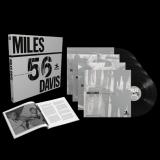
The 8-LP box set Miles At Newport 1955-1975 - The Bootleg Series Vol. 4 features of live performances by Miles’ stellar band lineups from 1955, 1958, 1966, 1967, 1969, 1971, 1973, and 1975, in New-
port, Rhode Island, New York City, Berlin, and Switzerland. From Miles’ debut performance at NJF in 1955 (a hastily arranged jam session featuring Thelonious Monk and Gerry Mulligan), to his final public performance of the ‘70s in 1975, the box set traces the ascen- dance of Miles’ music as the jazz superstar he has become known to be.
The full-length concert performances alone of Miles’ famed “Kind Of Blue” Sextet (with Cannonball Adderley, John Coltrane, Bill Evans, Paul Chambers, and Jimmy Cobb), and second great quintet in ‘66 and ‘67 (with Wayne Shorter, Herbie Hancock, Ron Carter, and Tony Williams) represent templates that reverberate in jazz and popular music to this day.
Miles At Newport 1955-1975 - The Bootleg Series Vol. 4 is available as a deluxe 8LP box set, housed in a lift-off box. The set includes print- ed innersleeves, a mini poster of Miles, and a 12-page booklet with extensive liner notes and rare photos.