There’s an alternate reality where everyone makes a living wage and the cleanest buses you’ve ever seen arrive every other minute. Where the most intense songs are about confessing your love to a crush at the apple orchard, and where gentle feelings and chaotic energy are inseparable best friends. This is the timeline where Cootie Catcher is right at home. This Toronto based four-piece exudes both vulnerability and unbridled excitement, creating a sound that hypercharges the open-hearted tenderness of twee pop with spiraling synths and giddy electronics. New album Something We All Got is the clearest and most vibrant reading of Cootie Catcher’s vision yet, with songs of sweetness, nervousness, and expectancy that beam out unguarded.
After releasing music made primarily in basement recording environments, Something We All Got is the band’s first flirtation with studio recording. The edges are still sharp, however, with some parts assembled from time-honored lo-fi methods and fun, personally-sourced samples seeping into the production. The sound is explosive and upbeat, with euphoric guitars, bubbly synth lines, speedy drums both played and programmed, and all other manner of sound constantly colliding. Cootie Catcher has three songwriters, Sophia Chavez, Anita Fowl, and Nolan Jakupovski, all of whom have distinctive voices but still manage to overlap in their writing on shared concerns like navigating the lines of romantic and platonic relationships, their city’s social scenes, and struggles in both the microcosmic experience of playing in a band and the zoomed-out challenges of living through late-stage capitalism.
Joy still touches every surface of Something We All Got. “Quarter Note Rock” bounces around the room in a fit of jangling guitar chords, scratched samples, and interplay between breakbeat loops and somersaulting live drums. It’s a blast of positivity even with lyrics about how disappointing it can be to meet your heroes. A smiling electro pop instrumental supports lyrics about having to step painfully away from an almost realized love on “Gingham Dress,” a song that subverts themes of domesticity as a backdrop for the dashed wilt of hopeless devotion.
Cootie Catcher rolls down hills and jumps through flaming hoops throughout Something We All Got without ever dumbing down the visceral emotions that drive these songs. There’s a palpable tension between the band’s exhilarating sonics and the raw, often uneasy sentiments expressed, but it’s an integral part of what makes them unique. Rather than hide behind the kind of calculated vagueness that plagues so much of the indie rock landscape in the time of cursed algorithms, Cootie Catcher runs full-speed toward every confusion and excitement, fearlessly direct and embracing the reality they’re in.
quête:n gin
- 1: Sections -6
- 1: 2Sections 7-30
- 1: 3Sections 3.40
- 1: 4Sections 4-55
- 1: 5Sections 56-73
- 1: 6Sections 74-87
- 1: 7Sections 88-90
- 1: 8Sections 9-94
- 1: 9Sections 95-06
Irgendwann im Jahr 2020 hörte ich zum ersten Mal ,Canto Ostinato" und war sofort fasziniert von diesem Werk. Ich war fasziniert von seiner besonderen Mischung aus Harmonie, Wiederholung und Tempo. Im Frühjahr 2023 hatte ich meine eigene Solointerpretation komponiert und veröffentlicht, und ich ging davon aus, dass meine Arbeit mit der Komposition damit abgeschlossen sei. Allerdings unterschätzte ich ihre Anziehungskraft. Im folgenden Jahr war ich erneut davon eingenommen, nachdem ich von Andrew Cyr vom Metropolis Ensemble eingeladen worden war, auf der Grundlage meiner Arbeit mit dem Stück weiterzuentwickeln. Bald darauf war ich in Brooklyn, in einem neu gegründeten Team von sechs Personen, das von Cyr geleitet wurde. Im folgenden Jahr war ich erneut in seinen Bann gezogen worden, nachdem ich von Andrew Cyr vom Metropolis Ensemble eingeladen worden war, auf der Grundlage, die ich mit dem Stück geschaffen hatte, weiterzuarbeiten. Bald darauf befand ich mich in Brooklyn, in einem neu gegründeten sechsköpfigen Team mit Cyr und den Mitgliedern von Sandbox Percussion, und war begeistert, an der Gestaltung eines brandneuen Arrangements von Canto Ostinato für ein großes Ensemble für eine Sommer-Sonnenwende-Aufführung im Brooklyn Botanic Garden mitzuwirken. Wir taten dies, und unsere Gruppe wuchs um die Studenten des Sandbox Percussion Summer Seminar der New School sowie die Komponisten David Leon, Ben Wallace und Ledah Finck und das Bergamot Quartet. Das Ergebnis war ein beeindruckendes, mitreißendes und sehr bewegendes Erlebnis, das ich nie vergessen werde. Ich bin sehr dankbar für diese Erfahrung und die Möglichkeit, die Musik von John Cage zu interpretieren und zu spielen. Wir taten dies, und unsere Gruppe wuchs um die Teilnehmer des Sandbox Percussion Summer Seminar der New School sowie um die Komponisten David Leon, Ben Wallace und Ledah Finck und das Bergamot Quartet. Es war ein Tag, an den wir uns alle erinnern werden - mitreißend, traumhaft und wie eine perfekte Krönung. Aber selbst dann ... zog das Stück weiterhin seine Fäden, und es wurde unumgänglich klar, dass diese neue Orchestrierung die Produktion eines Studioalbums erforderte - eine bleibende Dokumentation unserer nun gemeinsamen Leidenschaft. Über ein Jahr lang wurde das Stück verfeinert, und es wurde immer deutlicher, dass die neue Orchestrierung die Produktion eines Studioalbums erforderte - eine bleibende Dokumentation unserer nun gemeinsamen Leidenschaft. Doch selbst dann noch übte das Stück eine große Anziehungskraft aus, und es wurde unumgänglich klar, dass diese neue Orchestrierung die Veröffentlichung eines Studioalbums erforderte - eine bleibende Dokumentation unserer nun gemeinsamen Begeisterung. Diese Darbietung, die über ein Jahr lang verfeinert und 2025 in New York aufgenommen wurde, interpretiert das Stück neu in einem imposanten Rahmen aus Mallet-Percussion, Holzbläsern, Streichern und Klavier. Es ist unser aufrichtiger Versuch, die Schönheit und Größe von Canto in seiner ganzen kaleidoskopischen Harmonie, Dynamik, Spannung und Entspannung zu vermitteln. Ich bin erneut voller Ehrfurcht vor Simeon ten Holts monumentaler Schöpfung. Es ist unser aufrichtigster Versuch, die Schönheit und Größe von Canto in all seiner kaleidoskopischen Harmonie, Dynamik, Spannung und Entspannung zu vermitteln. Ich bin erneut beeindruckt von Simeon ten Holts monumentaler Schöpfung, und ein Teil dieses besonderen Klanggefüges zu sein, ist eine der größten Freuden meines musikalischen Lebens. Ich gehe nicht davon aus, dass wir noch einmal so viel Glück haben werden ... aber wer weiß ... - ERIK HALL
- A1: Another Time
- A2: Song To The Magic Frog (Will You Ever Know)
- A3: You Know I've Found A Way
- A4: The Keeper Of The Games
- A5: Glass
- A6: Would You Like To Go
- B1: My World Fell Down
- B2: Hotel Indiscreet
- B3: I'm Not Living Here
- B4: Musty Dusty B5 The Truth Is Not Real
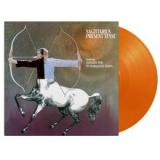
Nachdem er Songs für die Beach Boys geschrieben und Alben für die Byrds produziert hatte, ging Gary Usher ins Studio, um sein eigenes Projekt zu starten. Während dieses Prozesses wurde Curt Boettcher von der Gruppe The Millennium zu einem festen Bestandteil der Sessions, produzierte zwei Songs und schrieb sieben. Die Männer erhielten auch Unterstützung von prominenten Persönlichkeiten wie Bruce Johnston (The Beach Boys) und Glen Campbell, was das Album zu einem einzigartigen und beliebten Studioalbum machte.
Die Single »The World Fell Down« war mit Platzierungen in den unteren Regionen der Billboard Hot 100 am erfolgreichsten. All dies führte dazu, dass das Album zu einem echten Kultklassiker wurde. Fans sehen es nach wie vor als eines der wichtigsten Alben der Musikszene von Los Angeles in den 1960er Jahren an, und es wurde auch in das legendäre Compilation-Album Nuggets von 1972 aufgenommen.
»Present Tense« ist eine limitierte Auflage von 1000 einzeln nummerierten Exemplaren auf orangefarbenem Vinyl.
- A1: Nu Male Uno
- A2: Peebles 'N' Stones
- A3: Tem
- A4: Fone
- A5: Can Tangle
- B1: Persurverance
- B2: Furahai
- B3: Ecstatic Guataca
- B4: A Trance Delay
- C1: Midpoint
- C2: Elegy (For Olaibi)
- C3: Felt Like Floating
In den letzten fünf Jahren hat sich Joe Westerlund intensiv mit der Clave beschäftigt, dem metrischen Muster, das zunächst die afro-kubanische und lateinamerikanische Musik geprägt hat und dann in fast alle Bereiche des Jazz und Rock Einzug gehalten hat. Was bedeutete es, dass eine Idee so flexibel war, dass sie so viele Formen annehmen konnte und dabei doch ihre eigene Essenz behielt? Das Ergebnis ist für Westerlund ein Sprung ins Unbekannte: Curiosities from the Shift, ein 12-Track-Spielplatz mit endlos verwobenen Beats und Melodien, auf dem Westerlunds Begeisterung für die Clave auf seinen experimentellen Umgang mit Texturen trifft und seine rhythmische Symphonie mit Freunden Hand in Hand geht, die diesen Raum gemeinsam mit ihm gestalten. Die dreiteilige Suite, die die erste Hälfte von Curiosities ausmacht, beginnt mit den Schrottplatz-Percussions und den entzückenden Bass-Splashes, die ,Tem" umrahmen, und endet mit dem surrealistischen Boom-Bap von Daumenklavieren und Shakers auf ,Can Tangle". Diese Stücke strahlen eine hart erkämpfte Freude aus, als würde Westerlund sich in Echtzeit daran erfreuen, eine potenzielle Sackgasse zu entdecken, aber trotzdem seinen eigenen Weg nach vorne zu finden. Diese Songs wurden zu einer Art Arbeitsplan für das Terrain, das Westerlund auf Curiosities erkundet, vom glorreichen Call-and-Response-Opener ,Nu Male Uno" bis zum unheimlich amorphen Schlussstück ,Felt Like Floating". Alle diese Songs zeichnen sich durch einen erkennbaren Rhythmus aus, wie den galoppierenden Gang in der Mitte von ,Midpoint" und den kopfnickenden Puls, der sich durch ,Persurverance" schlängelt, dessen Name augenzwinkernd falsch geschrieben ist, um seiner Aussprache aus North Carolina via Wisconsin zu entsprechen. Aber das sind nur Sprungbretter für andere Texturen, Stimmungen und Ideen, wie die New-Age-Anklänge - schimmernde Metallophone, zwitschernde Vögel, zurückhaltende Flöten -, die ,Midpoint" durchziehen, oder die Dub-artigen Delays und Gamelan-Hymnen, die ,Persurverance" durchziehen. Dies ist zutiefst vielschichtige Musik, deren treibender Kern durch eine Reihe überraschender Entscheidungen ausgeglichen wird. Bittersüße und Freude, Trauer und Befreiung, Seufzer und Lächeln: All das ist hier vorhanden und verflechten sich bis ins Unendliche. In den Monaten nach den ersten Sessions wandte sich Westerlund an Freunde - darunter Tim Rutilli von Califone, den Saxophonisten Sam Gendel, den Trompeter Trever Hagen und die Violinisten Libby Rodenbough und Chris Jusell. Es waren seine am gründlichsten komponierten und präzisesten Werke, aber er wollte hören, was passierte, wenn seine Freunde in Echtzeit darauf reagierten. Sie lieferten Anmut, Tiefe und Gefühl, wobei ihre Parts den Vorhang zu verborgenen Winkeln rhythmischer Welten öffneten. Westerlund gibt bereitwillig zu, dass er von der Betonung des Grooves und des Metrums des Albums überrascht ist, die sich von abstrakten Klängen abhebt. Nachdem er so lange mit Bands gelebt und gearbeitet hatte, ging er davon aus, dass er mit grundlegenden Metren fertig war. Diese 12 Songs verschmelzen so viele von Westerlunds Leidenschaften zu endlos faszinierenden Stücken, die mit vertrauten Elementen seine Abenteuer ins Unbekannte übertragen. Verspielt, aber zart, wehmütig, aber wundersam, von Beats angetrieben, aber nicht an sie gebunden - dies ist Westerlunds bisheriges Vermächtnis, das Soloalbum, das einen Blick auf eine musikalische und emotionale Landschaft eröffnet, die vielleicht sogar noch reichhaltiger ist, als er es sich jemals hätte vorstellen können.
- 1: Duck Tape
- 2: Pcb
- 3: Macho Nacho
- 4: The Wind
- 5: Everything I Must
- 6: In Love
- 7: Live Laugh Love
- 8: Five Guitars
- 9: Toads On Roads
- 10: Pretty People
Topsy Turvy sind zurück und bereit für den Kampf. Mit ihrem Space-Age-Glam-Look ist ,Fighting the Ginormous Macho Nacho" das zweite Album des Wiener Trios, das respektlos, clever und immer verspielt ist. Mit Instrumententausch, opernhaften Vocals und jeder Menge Van-Halen-Synthesizern webt die Band eine unruhige Mischung aus Garage-Punk, Surf, Vintage-Rock und Psychedelia, die sich an den legendären ,Girls In The Garage"-Compilations orientiert und bis hin zum knurrenden Trotz von Amyl and The Sniffers oder Automatic reicht. Entstanden aus der kollaborativen Szene einer produktiven DIY-Szene in Wien, ist es nicht nur das bisher fokussierteste Werk der Band, sondern auch ein Hochgesang des unabhängigen Geistes, eine lebendige, atmende Rebellion gegen toxische ,Macho Nacho"-Männer auf der ganzen Welt. Topsy Turvy's "Fighting The Ginormous Macho Nacho" ist die zweite Veröffentlichung der Band, nicht lang nach ihrem gefeierten Debütalbum "But Sore" aus dem Sommer 2024. Vinyl-LP inklusive Din A2 Poster.
- Wänderer
- Castle
- Lament
- Genom Sorgen (Ft. Vs
- Angest
- Mörker Över Mörker
- Three Winters Away
- Drömsång
- Raven King
- Vigil
- Eternal Martyr (Ft. Bladee)
- Trollsång (Ft. Spöke)
- Land Av Evig Natt L
- Land Av Evig Natt Ll
- Gates
- Morning Star
- Outro (Ft. Varg2)
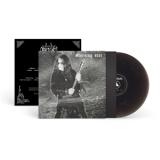
"Morning Star" zeigt Kekht Aräkh auf dem Weg zu einer authentischeren, verfeinerten Version seiner selbst. Das Album wurde in Berlin und Stockholm aufgenommen und entstand in einer Phase intensiven persönlichen und künstlerischen Wachstums. Es verbindet aggressive Black-Metal-Passagen mit immersiven, strukturierten Klanglandschaften, die sowohl intim als auch weitläufig wirken. Seit seinen Anfängen in Mykolajiw, Ukraine, hat Dmitry (alias Crying Orc), der alleinige Kopf hinter dem Projekt, einen unverwechselbaren Weg innerhalb des Black Metal gesucht. Diese Vision entfaltete sich durch sein Debütalbum "Through the Branches to Eternity EP" (2018) und die Alben "Night & Love" (2018) und "Pale Swordsman" (2021), die eine charakteristische Spannung zwischen wildem, viszeralem Black Metal und zarten, introspektiven Balladen etablierten. Auf "Morning Star" erreicht diese Dynamik eine neue Tiefe. Das Album entstand in einer Phase künstlerischer Klarheit und erkundet eine rauere, persönlichere Gefühlspalette, geprägt von Stress, Angst und langen Phasen der Schreibblockade, was ihm eine seltene Unmittelbarkeit und Verletzlichkeit verleiht. Dmitry nahm fast alle Instrumente selbst auf, das Schlagzeug stammt von Jonathan (Spira Me, Vanskapth, Olycka). Bladee steuerte den Gesang bei und war Co-Autor der Texte zu "Eternal Martyr", eine unerwartete Zusammenarbeit, die eine intuitive Chemie offenbart. VS--55 und Varg2Ö fügen abstrakte Samples und subtile Texturdesigns hinzu, die "Morning Star" seine unverwechselbare Körnigkeit und analoge Wärme verleihen, während James Ginzburg (Emptyset, Osmium) sich um das finale Mastering kümmerte und die dynamische Tiefe und atmosphärische Fülle verstärkte. Mehrere Tracks greifen früheres Material mit neuen Perspektiven wieder auf. ,Wänderer" und ,Drömsang" wurden teilweise neu aufgenommen oder komplett neu interpretiert. Intensive, treibende Passagen kollidieren mit spärlichen, kontemplativen Zwischenspielen und erzeugen eine Landschaft, die sowohl viszeral als auch eindringlich ist. Themen wie Isolation und Wanderschaft tauchen in "Wänderer" auf, traumhafte Melancholie in ,Drömsang", existenzielle Kämpfe in "Angest" und Reflexionen über Zeit und Transformation in "Three winters away". Mit "Morning Star" verbindet Kekht Aräkh vergangene Erkundungen mit neuer kollaborativer Energie und produziert ein Album, das die Black-Metal-Tradition der 90er Jahre würdigt und gleichzeitig Lo-Fi-Wärme, melancholische Melodien, klangliche Experimente und emotionale Offenheit umfasst. Das Ergebnis ist ein zutiefst persönliches Statement - ein Album, das sowohl eine Ankunft als auch eine Fortsetzung seiner künstlerischen Reise darstellt.
Afrikanische Meisterwerke der Akustikgitarre, die auf Mississippis beliebter ,African Guitar Box" aufbauen. 1979 und 1980 machte sich ein junger britisch-kenianischer Musiker namens John Low auf den Weg, um von seinen Helden das Fingerstyle-Gitarrenspiel zu lernen. Er reiste durch Kenia, Tansania, Kongo und Sambia, besuchte Stars wie Jean-Bosco Mwenda, Losta Abelo und Emmanuel Mulemena und wohnte manchmal sogar bei ihnen. Außerdem nahm er brillante, aber bisher wenig bekannte Künstler wie Francis Kitime aus Tansania und Mtonga Wanganangu aus Kenia auf. Unabhängig von ihrem Status ging John jedem Künstler demütig wie ein Schüler entgegen. Er nahm in Häusern, auf Dorfplätzen und an Wasserstellen auf. Die Sessions sind intim und ungezwungen, die Künstler fühlen sich wohl. Johns Kassettendeck nahm einige der größten Künstler des Kontinents auf, zusammen mit dem Klang von Gelächter, spielenden Kindern und klirrenden Gläsern. Fünf Jahrzehnte später bieten diese Bänder einen seltenen Einblick, wie Fingerstyle-Gitarre außerhalb der angespannten Atmosphäre kommerzieller Studios tatsächlich klang. Einige dieser Songs erschienen auf John Storm Roberts' vergriffenen Original Music-Compilations (die Mississippi stark inspirierten). Andere wurden nie öffentlich zugänglich gemacht. Alle wurden von Andrew Walter (Honest Jon's, Abbey Road) fachmännisch restauriert und von den Originalbändern remastert. John Low liefert Notizen und Songtexte, und der tansanische Musikwissenschaftler John Kitime gibt die Perspektive der Musiker wieder. Lizenziert von John Low und den Künstlern, gepresst auf hochwertigem Vinyl bei Smashed Plastic in Chicago.
Letztes Jahr erschien in Blue Notes audiophiler Tone Poet Serie mit “In The Wee Small Hours“ erstmals
ein Klassiker von Frank Sinatra. Die Überraschung ging voll auf: das Album wurde einer der größten
Verkaufserfolge der Serie. Jetzt folgt mit ”Songs For Swingin’ Lovers!” ein zweites Sinatra-Album in gleicher luxuriöser Aufmachung und Verarbeitung: Wie bei der Serie üblich wurde auch diese Produktion
von “Tone Poet” Joe Harley persönlich überwacht, von Kevin Gray bei Cohearent Audio rein analog von
den Originalbändern gemastert, bei Record Technology Inc. (RTI) auf 180-g-Vinyl gepresst und in einer
luxuriösen Tip-on-Gatefoldhülle verpackt.
So gut wie in dieser Fassung hat das relaxed swingende Album ganz sicher auf LP noch nie geklungen.
Es wurde 1956 in den Capitol Studios in Hollywood aufgenommen und enthält großartige Nelson-RiddleArrangements von Klassikern wie ”You Make Me Feel So Young“, ”Love Is Here To Stay“ und ”I’ve Got
You Under My Skin“.
Dutch titan Orlando Voorn plunges into deeper waters for his Lost Control 2097 debut. The opener ''Vibrations'' hits like a hazy '90s hip-hop daydream, wrapped in the glow of soulful deep house. ''Summer Breeze'' is strictly for the heads--pour up the gin and juice, kick back, and let the world melt for a minute. If you're hunting for that golden first strike, ''Purpose Pursuit'' cruises in with a boogie-soaked groove that feels like flipping through dusty dance-floor memories. And to top it off, label chief Black Eyes, the Prince of Hydro himself, delivers a remix that sinks you into a warm, tape-scarred drift.
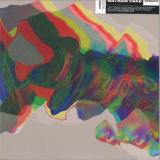
As Nathan Fake rises from the nocturnal subterranea and rave catharsis of his previous records, on Evaporator, he resurfaces into the domain of daylight, bringing a tangible sense of air rushing against your face, of big skies, and endless landscapes. The idea of pop accessibility that trickled into 2023’s Crystal Vision is refracted here through the prism of sweeping ambient, deep electronica, and trance uplift. Evaporator is Fake’s idea of “airy daytime music”, with each track a different barometer reading across the album’s varying atmospheres, which range from vibrant sunbursts, bracing rainscapes, and fine mists of clement melodics. “It’s not overtly confrontational electronic club music,” states Fake. “It’s quite pleasant, it’s accessible. As I was progressing through making the tracklist, I called it a daytime album. It doesn’t feel like an afterparty album.” For the past decade Fake has been gingerly introducing collaborations with heroes and friends alike into his lone, idiosyncratic working process. Border Community alumni Dextro AKA Ewan Mackenzie transmutes his ferocious drumming for Pigs Pigs Pigs Pigs Pigs Pigs Pigs into the blurred choral thump of ‘Baltasound’. ‘Orbiting Meadows’, meanwhile, is his second collaboration with Clark, an eerily idyllic duet where microtonal 18EDO piano clangs slowly twirl around wailing pads. Evaporator marks the junction point of old technology and ever fresh creativity for Nathan. The trusty “dinosaur” age software, particularly Cubase VST5, that has powered two decades of music is rarely updated. “I used to sort of feel a bit ashamed of using such old software, and then I kind of had an epiphany – that’s just how I work”, comments Fake. “That’s just how I play. I’m very fond of these old tools, and I get the most joy out of them, but now I’ve incorporated new technology too.” When an artist accumulates so much synergy with their instrument, music making becomes instinctual. By Fake’s account, much of Evaporator just fell into place. The album title arrived randomly in his head (“it felt completely perfect. Airy.”), ideas looped and developed until things locked into place and just felt right. ‘The Ice House’ is a fleeting glimpse of the sonic world he taps into in this creative state, its glassy FM synths built around a counterpoint between rough-hewn crystalline arpeggios and sparse yet gravitas-bearing bass. “That riff I just wrote out on the keyboard, I just played it forever and ever and ever. The original track ended up being really short. Here you go, and it’s gone!” These unplanned channellings of sound call forth records from Fake’s past while he looks ahead, perhaps getting at the very essence of his musicianship. The opener ‘Aiwa’ (“the breeziest,” he muses) reminds of the introspection that characterised Providence, excited by the fire and grit of Steam Days’ textural experiments, its chunky slams and clatters surging into a flood of harmonic buzzing as they reach out for old wisdom. ‘Hypercube’ stampedes in a similar chronological confluence, infusing an incessant synth line reminiscent of the golden age of rave with the crackling, ecstatic energy of modern festival anthems. Like the vaporisation of liquid to particles, everything that Evaporator presents has a mutant desire to be amorphous. Sounds rarely settle; the irradiated garage beat of ‘Bialystok’ is pitched downwards to driving, rebounding effect, while ‘You’ll Find a Way’ warps static into shivering energy, cinematic synth strings building anticipation into a gradual gush of chords. This translates into a more expansive stereo field than Fake has explored before. ‘Slow Yamaha’ saves the wildest, most kinetic transformations for last with a cornucopia of crispy melodies and fried drums; a sibilance of cymbals on the left, a susurrus of shakers on the right, and kaleidoscopic lasers pulsing and fizzing all around. Evaporation culminating in pure excited atoms. In a world where music has increasingly become background content, making albums remains lifeblood for Fake: “It makes me realise how long; twenty years is ages! It’s weird to see how much the world has changed. Release day back then you did fuck all, now you spend all day on socials. When I grew up the people who made the electronic music I was into were quite mysterious, and the artwork was very abstract. There was a massive distance between you and that music, and that was a key part of it, really. Now it helps to be an extrovert, and I'm just not, but the album marks the first time my face has graced the cover art. I’ve never wanted to do this before, I'm very shy, and generally I don’t like being seen,” he professes. “But, twenty years in, I supposed I could try something new. I'm very lucky that I'm somehow surviving in this world, where the media world favours extroverts and interesting looking people. It’s not my world but somehow I’m still in it.” Evaporator continues to prove Nathan’s necessary presence, with some of his most engaging, varied, and magical music yet.
- Mahjong Room
- All It Home
- Having Fun
- Jeanie
- Two Step
- Shmoopie
- Red
- Hazel Street
- Undertaker
- Ohio
Mahjong Room is the second album Cameron Lew released under the artist name Ginger Root which explores his coming of age and discovery of his own signature sound; self coined as Aggressive Elevator Soul. Self Produced and Performed, this album marked the beginning of Ginger Roots' rise in popularity outside of his Huntington Beach hometown. Lew was still in film school at the time of recording and releasing Mahjong Room. His attention was equally focused on the music videos that were made for singles `Two Step', `Call it Home', `Jeanie', `Mahjong Room', and `Ohio'. Becoming a signature of Ginger Root releases, the video treatments of songs were humor-filled and directed and produced by Lew himself. Catching the attention of other touring indie acts Ginger Root spent most of the fall of 2018 on tour with artists Khrunagbin, Duran Jones & The Indications, The Marias, and Omar Apollo.
Igor Tamerlan is a stranger in his own land. Born in 1954 the Hague and spent most formative years in Paris, Igor suddenly had the urge to relocate to Bali in 1986. “I want to settle in Indonesia and marry a local girl,” he told his sister shortly before flying out.
His next journey would be as audacious as his time in the Fifth Republic. Born from a prominent Indonesian expatriate family in Paris with ties to Indonesia’s first prime minister Sutan Sjahrir, Igor earned a degree in architecture at Ecole nationale supe´rieure d’architecture de Paris-La Villette.
He could have been a brilliant architect or a political scientist (he was accepted to Sciences Po), but his passion for music distracted him from his academic works. He was after all named after Russian composer Igor Stravinsky.
During his brief stint at Sciences Po, Igor spent most of times hanging out at recording studios and rub shoulders with the likes of singer-songwriter Jean-Jacques Goldman and Michel Polnaref. He had a brief encounter with The Rolling Stones at the Cha^teau de Thoiry studio in the early 1970s.
But Igor’s musical education and his occidental eyes appeared to be ill-suited for Indonesia. His first record, titled Langkah Pertama (First Step) on the mainstream label Musica was met with a shrug and was a commercial dud. An experimental record blending the influence of Spanish motifs, Francophile production and a whiff of hip hop and ska was seen by critics as being too alien. His sarcasm-laden lyrics and his biting critique of excessive materialism among the upper tier of Indonesia’s nouveau riche in the album was met with confusion from the audience. He was just too far ahead of his time.
He left the label Musica – or may had been dropped – soon after Langkah Pertama and decided to go independent. He then relocated to Bali and set up a state-of-the-art recording studio in Sanur, across the street from Southeast Asia’s first boutique hotel where luminaries like Mick Jagger, David Bowie, Sting, Yoko Ono and Ringo Starr stayed for their holiday.
From the studio, Igor recording everything from the sounds waterfalls, geckos, minibuses to motorized rickshaw and mix them with hip hop, jazz, electronica, dub and Balinese gamelan. A visionary, Igor was the first musician to use MIDI, which started to be available globally in the early 1980s.
On paper, songs like “Bali Vanilli” should not work, a mish mash of disparate elements mentioned above, sung in three languages, Balinese, English and Bahasa Indonesia while tackling the subject of overtourism. The song was also the first to introduce rap to an unsuspecting audience. But for some strange reason “Bali Vanilli” became a sensation and overnight Igor became household name. And in 1987, long before overtourism was an issue, Igor broached the subject to a national audience in Indonesia on the possible destruction of nature and culture from tourism.
Ever an iconoclast, Igor decided to step out of the limelight following the success of “Bali Vanilli” and in early 1990s he relocated to Indonesia’s cultural capital, Yogyakarta. Here, he worked on some more experimental music while juggling as music video director. He passed away in 2018 at the age of 64.
The 10 songs in this compilation, Bali Vanilli: Experimental Pop from Paradise Island (1987-1991), are some of Igor’s best works, music that would have gone into obscurity had it not been for the diligent work of film director Alfred Pasifico Ginting, who managed to track down some of the master tapes while researching on a documentary on the musician.
These recordings have never before been released outside of Indonesia. Igor would have been proud with this reissue project.
Billy Prestons viertes Studioalbum „That’s The Way God Planned It“ erschien im August 1969 bei Apple
Records. Die Veröffentlichung erfolgte kurz nach seiner Zeit bei den Beatles und wurde von George Harrison produziert. Der Titelsong wurde in Großbritannien ein Charterfolg. Auf dem Album wirkten außerdem
Keith Richards, Eric Clapton, Ginger Baker und Doris Troy mit.
- 1: Skull Chamber
- 2: The Venus And The Sorcerer
- 3: Panel Of The Lions
- 4: Hillaire Chamber
- 5: Candle Gallery
- 6: Chamber Of The Bear Hollows (North)
- 7: Chamber Of The Bear Hollows (South) & Brunel Chamber
- 8: Entrance Chamber
Demetrio Castellucci and Massimo Pupillo present the music of Sleep Technique, a performance by Dewey Dell inspired by the Chauvet cave and its ancient cave paintings.
The music comes to life anew on record, an immersion into the depths of sonic particles, moist electroacoustic rhythms, the repeated forms of speleothems, and the electric bass that scrapes the walls, shaping them into concave or convex surfaces. A voice that moves incredibly slowly, yet is in constant motion, like the millennia-old, unceasing erosion of water.
The album’s journey follows the geography of the cave in reverse, moving from its deepest chamber back to the entrance.
Demetrio Castellucci is a composer and sound designer who has been involved in theater productions, choreography, and film since 2004. Around the same time, he began performing as a DJ, favoring an omnitemporal approach geared toward dance that transcends musical genres. Since 2006, he has been a member of the dance company Dewey Dell, and since 2007, he has been active as Black Fanfare, a maximalist electroacoustic project. He has collaborated on performances by Andreco and Enrico Ticconi/Ginevra Panzetti, as well as on films by Ahmed Ben Nessib, Beatrice Pucci, and Ilaria di Carlo. After living in London and Berlin, he settled in Vilnius, where in 2018 he founded Unarcheology, a digital platform that publishes music and radio programs. He is also active as Airport Gad, an ambient project which, together with Unarcheology, launched its own “Airline Company”: concerts in a flight simulator built from cardboard, where the pilots are also the musicians.
Massimo Pupillo is best known as a founding member of the band Zu, with whom he has released 18 albums and performed over 2,000 live shows worldwide. He has maintained a highly open and multidisciplinary approach that has led him to work with some of the most acclaimed figures in the contemporary art world: South African photographer Roger Ballen, actors Malcolm McDowell and Marton Csokas, Romeo Castellucci and Chiara Guidi of Societas Raffaello Sanzio, American choreographer Meg Stuart, poet Anne Waldman, and Italian poet Gabriele Tinti, among others. He has collaborated live and in the studio with avant-garde musicians and composers such as Alvin Curran, piano duo Katia & Marielle Labèque, and classical virtuosos like Viktoria Mullova and Giovanni Sollima. He has also worked with some of the most influential names in the international rock scene, including Mike Patton, Thurston Moore, Jim O’Rourke (Sonic Youth), Guy Picciotto & Joe Lally (Fugazi), Buzz Osborne (Melvins), and Damo Suzuki (CAN).
In the field of improvised music, he has collaborated with Peter Brötzmann, Toshinori Kondo, Mats Gustafsson, Ken Vandermark, and Tony Buck, among others. Within the experimental music scene, his collaborations include Oren Ambarchi, David Tibet (Current 93), Thighpaulsandra (Coil), Stephen O’Malley (Sunn O))), Abul Mogard, Mick Harris (Scorn), Gordon Sharp (This Mortal Coil), FM Einheit (Einstürzende Neubauten), and many more. In cinema, he composed the score for Kirill Serebrennikov’s film LIMONOV, presented at Festival de Cannes in 2024.
- A1: Sundance
- A2: Joe And Gina
- A3: Let’s Go On Back To Camp
- A4: Young Saint Augustine
- A5: Juggernaut
- B1: The Best Man For Some Jobs Is A Woman
- B2: Golden Rose
- B3: Crystal
- B4: Seems Like It’s A Rich Man’s World
Black Vinyl[23,49 €]
Episch abgefahrener Psychedelic-Rock aus den Tiefen des privaten Gedanken-Gartens. Aufgenommen in einer abgelegenen Hütte in den kalifornischen Redwoods, ist Stan Hubbs' 1982er Hirnverwirrer "Crystal" das fehlende Bindeglied zwischen In-A-Gadda-Da-Vida und selbstgemachten Cembalo-Halluzinogenen. Diese hydroponische 44-jährige Jubiläumsausgabe enthält Hubbs' originales 16-seitiges Buch mit Gedichten und Kritzeleien, die dabei helfen sollen, die Bewusstseinserweiterung zu erleichtern.
- A1: Paul Kalkbrenner - No Goodbye
- A2: Water World - Give Me Love
- B1: Panoramic - Colors
- B2: Natasha Bedingfield - Pocketful Of Sunshine (Stonebridge Club Remix)
- C1: Y-Traxx - Mystery Land (Fred Baker Vs Mr Sam's Magical Mystery Dub Mix)
- C2: Weiss - Feel My Needs
- D1: The Killers - Mr. Brightside (Jacques Lu Cont's Thin White Duke Mix)
- D2: Sia - Drink To Get Drunk (Different Gear Remix)
Since 2020, 12 Inch Lovers have been releasing new samplers every year, eagerly anticipated by collectors. These samplers have now become a staple and are easily added to vinyl collections across Europe. They offer timeless classics and rare tracks that are often hard to find elsewhere.
With Samplers 11 & 12, they surprise again with a mix of modern classics and tracks that have never been released on vinyl or are difficult to find. By adding unique and exclusive tracks, the 12 Inch Lovers samplers remain innovative and high-quality. They are a must-have for DJs, collectors, and fans of contemporary classics!
SAMPLER 11
A1) Paul Kalkbrenner - No Goodbye (2019)
Berlin techno producer Paul Kalkbrenner became world-famous with his 2008 hit Sky & Sand. Since then, he has released one record after another and performed all over the world in the biggest venues and at the most renowned festivals. No Goodbye is one of his more recent hits, released in the summer of 2019.
The track was created using an a cappella he received on a demo tape while on tour. He was immediately inspired by the vocal and built his own sound and production around it. Interestingly, Kalkbrenner rarely uses vocals, but for No Goodbye he collaborated with Australian singer Chiara Hunter, giving the track a unique and instantly recognisable character. The result is a stylish, dance-floor-friendly track with a rolling house groove that quickly became a modern classic on dance floors worldwide.
A2) Water World - Give Me Love (2000)
This trance classic by Water World appeared in 2000 on the French label Adequat Records and is the perfect tune for a sunny summer evening. Warm melodies and pulsing beats instantly create that beach feeling, as if you were dancing with your feet in the sand. The record recalls Beachball by Nalin & Kane, sharing the same dreamy, sun-drenched vibe.
Behind Water World were producers Laurent David and Frédéric De Backer-names well known to many trance fans. In the nineties De Backer was active with projects such as Global Trance Mission (Dream Mission) and Y-Traxx, the trio that released the 1997 classic Mystery Land.
Give Me Love clearly bears their combined signature: euphoric, warm and melodic, with a timeless build that perfectly balances emotion and energy. The track was released on vinyl as part of Trance E.P. Vol. 01 and remains a fixture in retro-trance sets to this day.
B1) Panoramic - Colors (1996)
Colors by Panoramic is a Belgian trance classic released in 1996 on the legendary label XTC Records, a sub-label of Bonzai Records. Panoramic was a collaboration between Belgian techno icon Marco Bailey and Mauro Mirisola. The duo, also known under playful aliases such as The Coke Man & Sniff, released an EP featuring two powerful trance tracks.
We chose Colors, a tune with pure Belgian trance DNA: driving rhythm, dreamy synths and a catchy female vocal. The combination of Bailey's production expertise and Mirisola's creative touch resulted in a timeless track that still appears in many classic playlists.
B2) Natasha Bedingfield - Pocketful Of Sunshine (StoneBridge Club Remix) (2008)
British singer-songwriter Natasha Bedingfield released the album Pocketful of Sunshine in 2008, featuring the title track as a single. The original pop version became a major hit in North America, reaching the Top 5 in the US. Swedish DJ and producer StoneBridge (Sten Hallström) reworked the song into a groovy house version, released in the summer of 2008.
StoneBridge gave the upbeat pop tune a club-ready beat and an infectious piano riff that made it shine on dance floors worldwide. It was not his first time transforming pop into house gold-he had already achieved global fame with his remix of Robin S - Show Me Love (1992), one of the greatest house anthems of all time. He also remixed Sia - The Girl You Lost to Cocaine in 2008, another club favourite.
The StoneBridge Club Remix of Pocketful of Sunshine appeared on a special remix EP in July 2008 and was played endlessly in clubs-by us too, in the venues where we performed. The result is a timeless, sun-soaked house classic thatmakes sitting still impossible.
C1) Y-Traxx - Mystery Land (Fred Baker vs Mr Sam's Magical Mystery Dub Mix) (original release 1995)
Y-Traxx was a nineties trance project by DJs Laurent David and Fred Baker. This trance classic first appeared in 1995 as a B-side but gained real attention when it featured on a Paul Oakenfold mix album. Thanks to that success it received an official re-release in 1998 on the respected French label FFRR (Full Frequency Range Recordings).
In 2003 an excellent remix by Mr. Sam & Fred Baker followed on the Nebula label. That version is highly sought after on vinyl by trance collectors, and we are proud to feature it on our new sampler.
C2) Weiss - Feel My Needs (2018)
Feel My Needs by British producer Weiss (alias Richard Dinsdale) is the tune with that unmistakable old-school piano and catchy vocal that instantly pulls you onto the dance floor. Released in May 2018on the UK label Toolroom Records, the track is pure feel-good house with a modern touch. From the very first piano riff, hands go up in the air.
Toolroom even called it a "future anthem" for the summer of 2018, and indeed Feel My Needs became a huge floor-filler. The record charted high on global dance lists and gained massive popularity at festivals and clubs that year. With its warm piano chords, tight beat and soulful vocal, this is a modern house classic that will stay in the collective club memory for a long time.
D1) The Killers - Mr. Brightside (Jacques Lu Cont's Thin White Duke Mix) (2005)
American band The Killers formed in 2001 and scored a massive hit a few years later with Mr Brightside. Taken from their debut album Hot Fuss (2004), it became their biggest and best-known track-a true rock-pop anthem.
In 2005 the song was given an electronic twist when renowned producer and remixer Jacques Lu Cont (the alias of Stuart Price) created an eight-minute dance version titled Mr Brightside (Jacques Lu Cont's Thin White Duke Mix). This remix replaced the raw rock energy with a more progressive and electronic vibe, driven by a steady beat and long build-up.
The track found a second life in club culture and quickly became a dance-floor favourite. For vinyl collectors it was an instant must-have, and to this day it stands as the perfect party closer. The Killers themselves loved it so much that they often used the remix live as an outro, followed by the original version. A remix that perfectly bridged rock and club culture-and has since become a genuine classic.
D2) Sia - Drink To Get Drunk (Different Gear Remix) (2001)
The legendary ice-cube sleeve says it all: Drink to Get Drunk was a huge club hit in the early 2000s. Released in 2001 on the UK label INCredible, a sub-label of Sony Music, it was a collaboration between British DJ duo DifferentGear (Gino Scaletti & Quinn Whalley) and singer Sia.
The producers took Sia's original song Drink to Get Drunk from her album Healing Is Difficult and gave it a complete transformation, keeping her distinctive vocal and placing it over a hypnotic progressive-house groove.
The combination of Sia's unmistakable voice and the deep, driving production hit hard: the track became hugely popular in Belgian clubs and turned into an anthem of its time. In Belgium it even reached number one in the dance chart in early 2001, and it also performed strongly in the UK and the Netherlands.
To this day it remains a nostalgic crowd-pleaser that perfectly captures the atmosphere of the early 2000s.
Paris Ford Bass Player Musician In the earliest years of New York’s post-disco era when roller skating rinks were packed to the rafters and dance floors were alive with funk, R&B, and early electro grooves a young artist named Paris Ford laid down a recording that would quietly endure for decades.
Roll a Skate was supposed to be release on Streetwise Records, the influential New York dance label founded by producer and DJ Arthur Baker
home to seminal club classics and cutting-edge dance sounds of the early ’80s.
Only few month ago, Paris Ford, the artist has uncovered the original 2-inch, 24-track master reel of that recording the very masters from which Streetwise pressed its vinyl rediscovered after nearly 40 years.
Listening back, even Arthur Baker reflected that if he’d heard what Ford had captured back then, he would have released it as a second single a testament to the timeless energy and feel of the recording.
There’s an alternate reality where everyone makes a living wage and the cleanest buses you’ve ever seen arrive every other minute. Where the most intense songs are about confessing your love to a crush at the apple orchard, and where gentle feelings and chaotic energy are inseparable best friends. This is the timeline where Cootie Catcher is right at home. This Toronto based four-piece exudes both vulnerability and unbridled excitement, creating a sound that hypercharges the open-hearted tenderness of twee pop with spiraling synths and giddy electronics. New album Something We All Got is the clearest and most vibrant reading of Cootie Catcher’s vision yet, with songs of sweetness, nervousness, and expectancy that beam out unguarded.
After releasing music made primarily in basement recording environments, Something We All Got is the band’s first flirtation with studio recording. The edges are still sharp, however, with some parts assembled from time-honored lo-fi methods and fun, personally-sourced samples seeping into the production. The sound is explosive and upbeat, with euphoric guitars, bubbly synth lines, speedy drums both played and programmed, and all other manner of sound constantly colliding. Cootie Catcher has three songwriters, Sophia Chavez, Anita Fowl, and Nolan Jakupovski, all of whom have distinctive voices but still manage to overlap in their writing on shared concerns like navigating the lines of romantic and platonic relationships, their city’s social scenes, and struggles in both the microcosmic experience of playing in a band and the zoomed-out challenges of living through late-stage capitalism.
Joy still touches every surface of Something We All Got. “Quarter Note Rock” bounces around the room in a fit of jangling guitar chords, scratched samples, and interplay between breakbeat loops and somersaulting live drums. It’s a blast of positivity even with lyrics about how disappointing it can be to meet your heroes. A smiling electro pop instrumental supports lyrics about having to step painfully away from an almost realized love on “Gingham Dress,” a song that subverts themes of domesticity as a backdrop for the dashed wilt of hopeless devotion.
Cootie Catcher rolls down hills and jumps through flaming hoops throughout Something We All Got without ever dumbing down the visceral emotions that drive these songs. There’s a palpable tension between the band’s exhilarating sonics and the raw, often uneasy sentiments expressed, but it’s an integral part of what makes them unique. Rather than hide behind the kind of calculated vagueness that plagues so much of the indie rock landscape in the time of cursed algorithms, Cootie Catcher runs full-speed toward every confusion and excitement, fearlessly direct and embracing the reality they’re in.