The central theme of Steady is perseverance. Each track is based on a personal story or a fleeting encounter with people these past few years, from close friends to total strangers, either at home or on night shift commutes. People navigating their own hardships, almost giving up but always struggling through. More broadly, it’s about multiplicity, and contradiction. These central figures displaying hope and determination within a city of development and neglect, uniformity and chaos - an unfiltered representation of a city with all its jagged edges, darkness, and shards of light. It's broken and disheveled, but never not beautiful, just like the people in it. Musically, Steady continues where Bleach (debut album) left off - a sonic language of glitch, decaying tape and analogue distortion through which hints of RnB and soulful ballads bleed through. With a greater emphasis on beats, albeit lopsided on pitch-shifted tape loops, Steady feels more self-assured, more confident, more recognisable. At the same time, it's never stable or predictable - choruses break down early, harmonies bend into beating microtones, tracks emerge before others have finished. The symphonic scope of Bleach is still retained in Steady though. This is music of motivic development, of micro and macro form, of meticulous refining. The work of two classically trained composers, the album's chaos is heavily considered and carefully shaped. Hours of improvisation sessions have since been painstakingly refined into ten distilled tracks, owing to Steady's three year gestation.
Cerca:n y composers
- A1: Captain Kronos Vampire Hunter (Laurie Johnson)
- A2: Twins Of Evil (Harry Robinson)
- A3: The Kiss Of The Vampire (James Bernard)
- A4: The Mummy (Franz Reizenstein)
- A4: Dracula (James Bernard)
- A6: Quatermass And The Pit (Tristram Cary)
- A7: The Legend Of The 7 Golden Vampires (James Bernard)
- A8: The Lost Continent (Roy Phillips)
- A9: Dracula Ad 1972 (Mike Vickers)
- B1: The Devil Rides Out (James Bernard)
- B2: Countess Dracula (Harry Robinson)
- B3: The Gorgon (James Bernard)
- B4: Hands Of The Ripper (Christopher Gunning)
- B5: Dr Jekyll & Sister Hyde (David Whitaker)
- B6: She (James Bernard)
- B7: Taste The Blood Of Dracula (James Bernard)
- B8: Frankenstein And The Monster From Hell (James Bernard)
This album brings some of Hammer’s greatest music to vinyl for the first time. It’s an evocative and diverse collection of themes that are just as memorable as the remarkable films they accompanied. The release showcases a selection of classic themes from the film company's varied soundtrack catalogue from composers that range from the great James Bernard to David Whitaker and spans Hammer's golden years between 1958 and 1974.
Sublime ethereal minimalism from Hiroyuki Onogawa on this retrospective compilation album for
Mana, the first dedicated release and remaster of his soundtrack compositions.
The album August in the Water: Music for Film 1995-2005 plots a decade of Onogawa’s compositions for films by the renowned filmmaker Gakuryū Ishii (formally known as Sogo Ishii). Ishii’s leftfield and trailblazing cinema has proven highly influential - Crazy Thunder Road (1980) is frequently cited as the starting pistol for the Japanese cyberpunk genre - and unfathomably difficult to source outside of Japan. This, coupled with the mysterious and artistic nature of the films, has seen him build a cult-like following. Most of his oeuvre remains undistributed outside Japan, though Third Window Films has recently taken great strides toward making some titles available internationally.
This retrospective publication, sequenced into an album by Onogawa himself, spans a fertile period of collaboration with Ishii, through soundtracks for three remarkable films: August in the Water (1995), Labyrinth of Dreams (1997), and Mirrored Mind (2005). Each feels texturally and sensually linked with the spiritual, ambient, dreamlike quality that lingers in Onogawa’s music.
The sound Onogawa conjures for these films is elegant and patient, often minimal or essential in form, but saturated in a poetic emotion and atmosphere that feels strange and otherworldly, touched by the metaphysical in subtle ways. Boundaries are crossed between New Age and science fiction, locating a blissfulness, melancholy and paranoia within the same spectrum, and moving toward an enchanting sense of mood and colour.
It’s notable that the compositions on this album straddle the millennium, and the mix of divine and uncertain themes in the music carry that currency. New listeners might hear links to Mark Snow’s compositional work for the X-Files and Millennium, or other celebrated future-facing and future-fearing Japanese anime or cyberpunk.
Onogawa’s music adds great depth and tenor to the sensory experience of the films themselves, but it stands just as strongly as a listening experience on its own terms, a virtuosic example of ambient that changes in hue when turned in the light. Remarkably, and in similar circumstances to Ishii, Onogawa’s work has never been widely available outside of (always highly enthusiastic) underground fan posts, usually sourced from extremely limited and private CDs limited to Japan. This retrospective seeks to remedy that, and hopes to achieve recognition for Onogawa as one of the great composers of the last three decades.
Onogawa continues to work in film, both in the creation of soundtracks, and now as a producer and director. He composed the music for Koji Fukada’s Harmonium (2016), which won the Jury Prize in the Un Certain Regard section at the Cannes Film Festival, as well as for Fukada’s A Girl Missing (2019). As a director, he received the Grand Prize for Best Short Film in the Noves Visions category at the Sitges Festival in 2022 for Flashback Before Death (Guu), co-directed with Rii Ishihara.'
- A1: Merry Christmas Mr. Lawrence Main Theme (From "Merry Christmas Mr. Lawrence")
- A2: Endroll (From "The Last Emperor")
- A3: Rain (From "The Last Emperor")
- B1: The Sheltering Sky Main Theme (From "The Sheltering Sky")
- B2: High Heels Main Theme (From "High Heels")
- B3: Wild Palms Main Theme (From "Wild Palms")
- C1: Acceptance (From "Little Buddha")
- C2: Snake Eyes Main Theme (Long Version) (From "Snake Eyes")
- C3: Bolerisch (From "Femme Fatale")
- D1: Bibo No Aozora (From "Babel")
- D2: Small Hope (From "Hara-Kiri (Ichimei)")
- D3: Yae No Sakura Opening Theme (From "Yae No Sakura")
- D4: The Revenant Main Theme (From "The Revenant")
From small beginnings in 1974 as a local cinema and university event, Film Fest Gent has grown yearly in stature and is now recognised as one of the major destinations for the film industry. A vital component is the celebration of film music in the shape of the World Soundtrack Awards which honours the very best composers at work in the world of cinema. In 2016 the award went to one of the most brilliant composers of his generation, Ryuichi Sakamoto. This is the first overview of his remarkable catalogue of film scores, fully approved by the composer and performed by the masterful Brussels Philharmonic under the baton of Dirk Brossé. Sakamoto was already a celebrated pioneer in electronic music and composer/pianist/singer in Japan when director Nagisa Oshima asked him to write the score for Merry Christmas Mr. Lawrence in 1983 and also to star alongside David Bowie. In a 30 year plus career since then he has worked with the cream of film directors including Bernardo Bertolucci (The Last Emperor), Brian De Palma (Snake Eyes), Pedro Almodovar (High Heels) and most recently Alejandro Gonzalez Inarritu (The Revenant). This compilation is a fitting tribute to his status as one of the greatest living musicians and film composers.
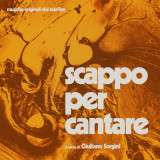
Another dream coming true! One of Giuliano Sorgini's finest and most sought-after titles is finally available as an official LP reissue – the first ever – remastered from the original tapes.
Originally released in 1971on the small library music imprint FAMA, which operated as a sub-label of RCA Italy, the record contains the original music written for Scappo per cantare, a small, pseudo-psychedelic 'musicarello' (musical comedy film) broadcast on RAI television and starring, among others, Italian singers Gianni Morandi and Mauro Lusini.
The only credited album artist is Sorgini, but it's impossible not to perceive, in this record, the hand of his close friend and colleague Alessandro Alessandroni.
This should not come as a surprise. In the early 70s, the two composers and multi-instrumentalists had a fruitful collaboration that saw them, under the monikers Braen (Alessandroni) and Raskovich (Sorgini), produce an abundance of works together, most of which have now gained the recognition they deserve. These include, among others, two 7" singles from their band The Pawnshop, three records in the series Alle sorgenti delle civiltà (Folkmusic), the crime/noir library albums Quarta pagina (Usignolo) and Inchiesta giudiziaria (Octopus Records), as well as the LP Tempo Libero (Panda Records), which was released shortly after the record presented here and in some ways drew rhythmic inspiration from it.
While their collaboration remained unacknowledged on the original release of Scappo per cantare (this was not uncommon at the time, especially in the field of library music), the record sounds perfectly in line with other works composed by Alessandroni in the early 70s, such as Complesso Gisteri's Mostra Collettiva (co-written with Oronzo De Filippi), or even a landmark album like Spontaneous, where Sorgini contributed to a handful of tracks.
So, yes, the sheer beauty of Scappo per cantare is the result of an incredible synergy between two heavyweights of Italian library music! Airy and sweeping melodies à la Zoo Folle, psychedelia à la Under Pompelmo, and various percussion instruments played by Sorgini seamlessly blend and fuse with elements and touches provided by Alessandroni.
More specifically, we find Alessandroni's signature, melancholy whistle in "Desolazione"; the peaceful and dreamy sound of his 12-string guitar in "Scogliere" and "Con Amore"; the trademark harmonies of his vocal ensemble Cantori Moderni in the last two tracks mentioned and in "Per cantare"; and his ingenious use of distortion on his Fender Stratocaster in the suspenseful transitions "Concentrazione" and "Fantocci", as well as in the frantic/hypnotic hippie numbers "Mordente" and "Fendente" (as a side note, it is worth remembering that Alessandroni experimented extensively with distortion in the rock-infused album Underground, co-written with De Filippi and released in 1971 under the moniker Braen's Machine, probably a reference to British psychedelic band Soft Machine).
The creative relationship between Sorgini and Alessandroni was so symbiotic that it would be useless to try to identify in more detail their respective contributions to the sound of Scappo per cantare. The alchemy between these two musical geniuses is the key to the album's exquisitely Italian mixture of cheerful lounge, sweet psychedelia and smooth easy listening.
To do justice to the quality of the music, this remastered reissue is enriched by a new artwork by Eric Adrian Lee, who drew inspiration from the psychedelic visual culture of the period in which the album was written and recorded.
Quartabê’s identity was built upon the metaphor of the classroom: the group sees itself as a school class, which chooses its own teachers from among great masters of Brazilian music. Assuming that the learning and creative processes have in common experimentation and play, the quartet is characterized by its bold versions coupled with irreverent performance.
In addition woto its sound, marked by the group’s various music references - from the São Paulo avant-garde movement to the free improvisation, passing through pop and electronic music - Quartabê also stands out for the formation composed mostly of women who, besides instrumentalists are also arrangers, composers, singers and improvisers - which is unusual in Brazil and it has high political relevance in a music scene where positions of creation and power are still held disproportionately by men. The band started its studies by recording a first album about the work of maestro Moacir Santos, “Lição # 1: Moacir” (2015). After performing this show in Brazil and Europe, the group took a break to record ‘Depê’ (2017), also dedicated to the oeuvre of Santos. In 2018 Quartabê released their third album, starting new studies: “Lição # 2: Dorival”, which was released by the Natura Musical / label RISCO
Out on 6 October, the music for Certainty of Tides was initially recorded with the Norwegian Broadcasting Orchestra with Nils Petter Molvaer as a soloist in 2020. He had asked several wonderful Norwegian composers to arrange a set of music from his back catalogue. “Have a listen to the recordings I did with the orchestra and tell me what you think” he told Norwegian composer, musician, and producer Jan Bang. Since the original recording was close mic’ed for broadcasting purposes, Bang saw an unfulfilled potential in the material due to lack of space in the initial recordings.
Bang came up with the idea of re-amping the mixes playing the music through speakers in a concert house followed by re-recording of the result through distant microphones. With 76 speakers (one per instrument) carefully placed exactly like the orchestra would have been seated onstage, Certainty of Tides was recorded from microphones strategically placed in the large hall of Kilden Concert House with phenomenal acoustics.
The re-amping and re-recording produced astonishing results. Some of the pieces needed additional color. Bang invited two of his highly talented electronic music students at the University of Agder (Kristian Isachsen and Even Sefenias Sigurdsen Frodesønn Røsstad). Both given freedoms to create their own sound based on their own personal taste.
The final mixes were put together by Øyvind Kurszus at Kilden Studios supervised by both students, Molvaer and Bang. Helge Steen has mastered the recording. Knut Sævik has re-sampled the drum track (played by Peter Baden) on “Simply so” and mixed the Song as well.
- A1: Welcome To Lunar Industries
- A2: Can't Get There From Here
- A3: Two Weeks & Counting
- A4: We're Not Programs, Gerty, We're People
- A5: The Nursery
- A6: I'm Sam Bell
- B1: Sacrifice
- B2: I'm Sam Bell, Too
- B3: We're Going Home
- B4: Memories (Someone We'll Never Know)
- B5: Welcome To Lunar Industries (Three Year Stretch....)
- B6: Are You Receiving?
“One of Hollywood’s most exciting film composers” – DAZED & CONFUSED Clint Mansell’s emotionally gripping and melodically thrilling score for psychological cult classic luna-drama Moon is now again available on Black Records on White Vinyl Directed by Duncan Jones, starring Sam Rockwell and Kevin Spacey, Moon is a science fiction thriller about a solitary lunar employee who finds that he may not be able to go home to Earth so easily. Sam Bell (Sam Rockwell) is an employee contracted by the company Lunar to mine on the Moon the natural gas Helium 3, which could reverse Earth's energy crisis. Stationed alone on the lunar base Sarang with only a robot named Gerty (voiced by Kevin Spacey), Sam is two weeks away from completing his three-year assignment, when he begins feeling out of place… Former ‘Pop Will Eat Itself’ frontman Clint Mansell - now based in Los Angeles - has become the go-to composer for independent Hollywood cinema. Producing peerless soundtracks to award winning Darren Arronofsky films Requiem For A Dream, The Fountain and The Wrestler.
Critically acclaimed pianist/composer Aaron Diehl's penchant for the past
influencing the future has come full circle with his fully realised suite of
Mary Lou Williams' Zodiac Suite - the first fully-fledged professional
recording of this incredible music
Solely paying tribute to Mary Lou Williams was not the goal, as Diehl's mission is
to give honour and praise to one of the greatest composers of the 20th century
and the forgotten rich history of Black Classical Music.
Joined by the orchestral collective The Knights and special guests Evan
Christopher (clarinet), Nicole Glover (tenor sax), Brandon Lee (trumpet), and
Mikaela Bennett (soprano), Diehl breathes vibrant new life into a masterwork that
the composer herself was never able to fully realize during her lifetime.
Aaron Diehl approaches the piano with a delicately nuanced expressivity and an
exquisitely attuned touch that have garnered him acclaim at the highest levels.
From his collaborations with such jazz innovators as Wynton Marsalis, Cécile
McLorin Salvant and Benny Golson, to his exploratory work in the classical realm
with Philip Glass or the New York Philharmonic, to his own current- crossing
recordings as a leader, Diehl is singularly committed to a journey of musical
discovery regardless of genre or context
- 1: Donna Non Vidi Mai
- 2: Nessun Dorma
- 3: Parigi! E La Citta Dei Desideri
- 4: Che Gelida Manina
- 5: O Soave Fanciulla
- 6: Dunque È Proprio Finita!
- 7: Recondita Armonia
- 8: E Lucevan Le Stelle
- 9: Ah! Manon, Mi Tradisce
- 10: Io So Che Alle Sue Pene
- 11: Quello Che Tacete
- 12: Ch'ella Mi Creda
- 13: Luigi! Luigi ... Dimmi, Perchè Gli Hai Chiesto
- 14: Non Piangere, Liu
- 15: Torna Ai Felici Dì
After his much-acclaimed Deutsche Grammophon début Arias (“This disc is quite simply a sensation”– BBC Music Magazine), Chilean-American tenor Jonathan Tetelman turns his attention to Giacomo Puccini, to mark the centenary of the composer’s death in 2024. For Tetelman, Puccini is one of the greatest of all composers of Italian opera: “I listen, study and enjoy his music daily. There is always something to learn from him, and my mind is forever open to him. Without Giacomo Puccini, opera wouldn’t be the same. Grazie, Maestro!”. Celebrating the very best of Puccini , the album is released to mark the 100th anniversary of the death of one the world’s most popular opera composers.The album consists of well-known tenor arias such as Nessun dorma, E lucevan le stelle, Donna non vidi mai and Che gelida manina, popular ensembles from "Madame Butterfly", "La bohème" and "Il tabarro" as well as rarities such as Torna ai felici from "Le Villi" and Parigi nè la città dei desideri from "La Rondine".
As one of the most triumphant and beguiling directorial debut features to emerge from the fruitful Polish New Wave, Andrzej Zulawski’s 1971 film Third Part Of The Night not only earned the thirty-year-old filmmaker a place next to other radical Polish directors such as Polanski, Skolimowski and Has, but also galvanised a creative bond with long running collaborator and composer Andrzej Korzyński, providing fans of foreign abstract/suspense cinema with a potent creative fusion to match those of Polanki/Komeda, Fellini/Rota and Argento/Goblin, amongst others.
Quite simply one of the heaviest psych rock film soundtracks of all time Andrzej Korzyński’s short and unreleased score matched the blueprint that adorned the drawing boards of conceptual French jazz orch rock composers like Jean-Claude Vannier, Francois De Roubaix and Alain Gourageur, creating a soundtrack that unknowingly begs comparison to Masahiko Satô’s Belladonna Of Sadness and Billy Green’s Stone. As one of the first progressive pop writers to come out of the vibrant (but carefully scrutinised) Polish beat scene with his bands Ricecar 64 and later Arp Life (and composing for national heroes such as Czeslaw Niemen, Niebiesko-Czarni and Test) Korzyński’s growing passion for conceptual rock and jazz music soon lead to instrumental composition and soundtrack scores.
His cinematic debuts scoring two consecutive transitional new wave films for Andrzej Wajda (in collaboration with the radical Polski pop groups Trubadurzy and Grupa ABC) also provided Korzyński with another significant cinematic muse in that of the stunning actress Malgorzata Braunek with whom they would both eventually achieve their finest performances under the direction of the ravenous first-timer Żuławski. Third Part Of The Night (1971) perhaps epitomises that triangular on-screen unison in its vibrant youth and feeds it through a hallucinogenic mangle finding astonishing beauty (within a repulsive synopsis) against a bleak and shattered backdrop and accompanied by progressive, psychedelic orchestral rock music – elements which would intensify for all three creatives with the next film, Diabel, which was banned by the Polish government the following year until 1988.
Third Part Of The Night also marks the public unison of Żuławski and Braunek whose later private romantic relationship is said to form the basis for another defining Żuławski/Korzyński defining endeavour with the 1981 film Possession exactly a decade later, encapsulating a period that bequeaths a previously unopened vault of some of the composers finest and most inspired sonic adventures.
- Trying To Catch A Fly
- La Grabuge (Pop Theme)
- Agent No. 1
- Opetanie Five
- Saved From Oblivion
- Tajemnica Enigmy
- W Instyucie
- W Pustiny I W Puszczy
- The Dziekanka Student's Hostel (Part Ii)
- Landscapes
- Losy (Mid-Beat Theme)
- Third Part Of The Night Czolownica
- Diabel
- La Grabuge 2 (Orch Pop Theme)
- Rosa Rosa (With Arp Life)
- Bossa Nova (Feat Ewa Wanat)
- The Dziekanka Student's Hostel (Part I)
- Lapanka
- La Grabuge 3 (Orchestral Theme)
- Losy 2 (Mid-Guitar Theme)
- Trying To Catch A Fly (Reprise)
- Wszystko Na Sprzedaz Taniec
Twenty-two rare and unreleased vintage tracks from the secret vaults of one of the most enigmatic composers in 60s/70s/80s European cinema. Originally recorded in the best studios in Poland, Italy and France for experimental film, political allegories, lost television shows, sound libraries and radio – these tracks have been hidden behind the Iron Curtain on lost master tapes and film reels until now! »Secret Enigma«, the first ever dedicated anthology of this great composer’s work, is now back in print.
Originally released exactly 30 years ag In artistic cinema Andrzej Korzyński’s unique experiments with jazz, pop, rock, orchestral and electronic music make his name synonymous with the most praised (Andrzej Wajda) and the most provocative (Andrzej Żuławski) Polish filmmakers (counting many more in between). As an early patron of the Polish New Wave and a key exponent of the development of conceptual Polish pop music his expansive portfolio has remained commercially unreleased and untravelled (like many of the original socialist era Polish made films) and has yet to find its deserved place next to the work of Ennio Morricone, François de Roubaix and John Barry. Now enhanced by a renewed interest in vintage art house film and a subculture of open minded music collectors many Easter European artists, such as Krzysztof Komeda (Poland), Zdeněk Liška (Czechoslovakia) and now Andrzej Korzynski,have finally begun to earn their place alongside their Central European peers.
For lovers of film music and experimental pop this debut anthology and appraisal of Andrzej Korzyński.
Martina Berther and Philipp Schlotter are prolific in their respective ways, having been active in pop and jazz music, respectively, as well as playing in bands and exploring the outer fringes of sound art or composing music for film. Their first joint album »Matt« was recorded over the course of four days in a church in the Swiss village after which the album was named. Berther and Schlotter worked with the buildingʼs organ as well as synthesizers and electric bass to follow an experimental approach that oscillated between composition and free improvisation. The five pieces, recorded directly to tape by Flo Götte without any additional overdubs, are characterised by an intimacy and rawness that calls to mind the introspective atmosphere of Hallow Ground label mateʼs FUJI||||||||||TA or mastering engineer Lawrence Englishʼs latest album for the Swiss label. »Matt« is the result of two versatile composers and musicians executing minimalist ideas by giving them plenty of space to unfold.
The album opens with »Unruhe,« a composition that is based on the twelve-tone technique. Using a stopwatch to ensure the adherence to the pre-determined temporal intervals between the individual notes, Berther and Schlotter used the church organ and synthesizers for an ominous piece that traverses different moods and levels of intensity throughout its 14-minute run time. »LFO1« and »LFO2« are different variations of the same concept: Based on a synthesizer preset and structured by an organ drone, two tone generators slowly fall silent, resulting in elegiac pieces that call to mind the work of Éliane Radigue. »Frachter« and »Gallia« put more emphasis on percussive elements. Again working with organ as well as Bertherʼs prepared electric bass, this improvisation comprises interlocking textures that sound almost menacing on »Frachter,« while they create a very different atmosphere on »Gallia.« These notable discrepancies in sound and mood are even more astonishing if you consider that the two pieces are based on the exact same recording, played at different speeds.
As two variations on the same idea with very different results, these two pieces perfectly represent how the duo effectively creates emotionally affective sound worlds with very few means. Berther and Schlotterʼs conceptual minimalism yields rewarding, multi-faceted aesthetic results. »Matt« is an intimate album, marked by a sense of vividness and spontaneity, but also the product of compositional conciseness.
'The double Oscar-nominated and multi-award-winning Icelandic composer Jóhann Jóhannsson (1969-2018), known for his film scores for "Arrival", "Sicario", or "The Theory of Everything", was renowned for his innovative and unique blend of classical and electronic elements. With his original, profound, and moving works for film and stage, he achieved worldwide fame and is considered one of the most celebrated film composers of the last decade.“Jóhannsson’s music gives the impression of having arrived in a time capsule from a distant planet that is a mirror image of our own. His own absence now adds further mystery and magic to his music’s unique sound world.” - Gramophone.The monumental orchestral work "A Prayer to the Dynamo," reminiscent of a lost symphony, was inspired by Jóhannsson's great fascination with technology. In particular, he drew inspiration from recordings of electrical installations and generators that he had made at the Elliðaár Power Station in Iceland, which are deeply intertwined with the orchestral sound. Furthermore, he was also captivated by the works of Edison, Tesla, and especially a chapter in the memoirs of American historian Henry Adams (1838-1918). In that chapter, Adams described his impressions of the 1900 Paris World Exhibition and the hidden power of the enormous machines he had seen there. Deutsche Grammophon now releases the world premiere recording of this outstanding orchestral work performed by the Icelandic Symphony Orchestra, conducted by Daníel Bjarnason. The album also includes two suites from Jóhannsson's soundtracks for "The Theory of Everything" and "Sicario", both of which were nominated for Oscars and various other awards, with the former winning the Golden Globe for Best Original Score.
The album describes an extraordinary time period of the global lockdowns and crises. It is also a portrait of one of this generations most intriguing guitarists.
Ole Martin Huser Olsen was names 'Performer of the Year' by the Norwegian Society of Composers in 2022. The critically acclaimed album is available on vinyl from 1st September, 2023.
The music heard on this album was originally the result of a commission to score the second half of the film Nico/Nico Crying made by Andy Warhol in 1966. The commission was made by Art Cinema OFFoff in collaboration with B.A.A.D.M for a screening of the film together with a live presentation of the score in September 2021 at Ancienne Belgique in Brussels. The recording presented here was made in the last week of that year and mixed soon after in January 2022. These recordings are essentially live-recordings performed by the composers together in the same room and recorded in a manner reminiscent of the record making process as it was in the late 1960s. The instrumentation used to make the sounds on this album consists of modular synthesis, zither, voice, contaminated field recordings and metal percussion.
Mats Erlandsson is a composer and musician part of the vibrantly re-emerging field of drone music in Stockholm, Sweden, and is associated with practices characterized by the extensive use of sustained sound. Erlandsson presents his work both as a solo artist and in collaborations, most notably together with Yair Elazar Glotman and Maria W Horn. Recent releases include Gyttjans Topografi on XKatedral, Minnesmärke on Hallow Ground and the collaboration Emanate made with Yair Elazar Glotman on the label 13070. In addition to his own artistic practice Erlandsson holds a position as studio technician and was temporarily, from October 2022 to September 2023, the acting studio director at Elektronmusikstudion in Stockholm.
The compositions of Maria W Horn implement synthetic sound, electroacoustic and acoustic instruments and audiovisual components, often devicing generative and algorithmic processes to control timbre, tuning and texture. She employs a varied instrumentation ranging from analog synthesizers to choir, string instruments, pipe organ and various chamber music formats. Acoustic instruments are often paired with digital synthesis techniques, in order to extend the instruments timbral capacities. Often based on minimalist structures, her music explores the inherent spectral properties of sound and their ability to transcend time and space, reality and dream.
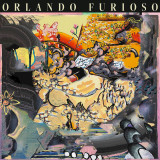
“Orlando Furioso is a haunting, one-of-a-kind statement, from an important new voice in improvised music.” - Steve Lehman
“…imagining instruments that haven’t been invented yet: space harps, cosmic gamelan, Venusian banjo. It’s the purest distillation of Atria’s musical language, simultaneously grounded and unearthly.” - Stewart Smith for The Wire (November 2022)
“Making liberal use of microtonal harmony and hypnotic, ostinato rhythms – as well as the occasional stylistic smash-cut, reminiscent of John Zorn – Orlando Furioso announced itself on Wednesday as a punchy, creative force on the New York scene. (…) Atria’s rhythms had a welcoming, social propulsion, and the microtonality of his writing for keyboard proposed an individual – even insular – language.” - Seth Colter Walls for The New York Times.
Early European composers felt that their work reflected in its structure the divine nature of the material world. Via tuning, form, and contrapuntal alchemy, these musicians sought to illuminate and edify the complex and perfect order of existence. The music recorded here also reflects the contours of an ordered world, but it is no place any of us has ever visited. By assembling far-flung building blocks from the detritus of a 21st-century musical vocabulary, Orlando Furioso brings the listener into a bizarre new cosmos. The result is deeply expressive music that speaks not with the voice of a narrator or memoirist, but with that of a cartographer.
Like a science-fiction Dante, the listener is taken on a tour of many diverse and colorful provinces of an alien world. Though each composition references its own set of real-world musical locales (from the Andes to Indonesia to Italy to New Orleans), they are bound by stylistic consistency into a coherent, continuous geography. Permeating this world is an uncompromising commitment to microtonal harmony, rhythmic intensity, and an ability to deploy the esoteric (Nicola Vicentino's notorious 31-tone temperament) and the head-smackingly obvious (a surprise djent breakdown) with equal conviction. Though Vicente's compositions are steering the ship, serious recognition is due to all the players on the record for their ability to meet these demands.
Our omnivorous musical diets offer real abundance. They enrich our craft by providing access to limitless approaches from which to choose - more masters to study, traditions to absorb, and techniques to hone than is possible in multiple lifetimes. They can also inflict heavy and often contradictory burdens of influence. When every corner of the map has been charted, it becomes difficult to find a new direction in which to travel. One solution I hope to see more often is the one pursued on this record: breaking down distinct musical worlds into component parts and reassembling them into a language. When completed with precision and with no stone left unturned, the seams between the pieces vanish and the listener is deposited somewhere beautiful and strange, left to assign their sensations meanings of their own. - Mat Muntz
Orlando Furioso is led by Vicente and features David Acevedo, David Leon, Andrew Boudreau, Alec Goldfarb, Daniel Hass, Simón Willson, and Niña Tormenta. Orlando Furioso celebrated its release at Roulette Intermedium in Brooklyn, NY, as a part of Wet Ink Ensemble's 24th Season opening concert, a performance which The New York Times heralded as "virtuosic", "punchy, creative" and "even revelatory."
Winner of the Deutscher Jazz Preis: Best International Debut Album 2023
- A1: The Shadows Dance
- A2: Mojave
- A3: Fields Of Green
- A4: Colorado-Red Sky
- B1: Wet Dreams
- B2: It All Comes Around
- B3: Be With Me
- C1: Playin' Your Game
- C2: Mystery Man
- C3: Storm In The Sky
- D1: Autumn
- D2: Von Aspen Shaden
- D3: Over & Over
- E1: Surfer Girl
- E2: In-Passing
- E3: She Misses You (Children Of The Sun Version)
- F1: Nur Gitarre
- F2: Don't Ever Say Never (Instrumental)
- F3: Aranha
- F4: The Light
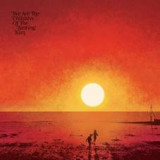
Paul Hillery's third compilation in this series of rare and hard to find grooves is as much a geographical journey as it is a musical one. With acts, artists and tracks linked to London, Florida, Atlanta, the Netherlands, Switzerland, California, India and Germany and more this compilation is very much proof of the global language that is music. With many of the recordings only previously existing on sold out and obscure private pressings and small runs on indie labels this collection of tracks really is a must have. Complementing the previous two albums curated by Paul Hillery we really do get to see and hear the history of studio recordings from a plethora of touring and travelling troubadours, jobbing composers and song-writers, session musicians, producers and engineers. Again, as with the previous two volumes in the 'Children of the Sun' series, this is an eclectic gathering of styles and genres that have been curated into an accessible fusion of Jazz, Rock, AOR and Folk tinged grooves that all have soul. With many tracks getting a first time digital release this 3 LP album sits nicely alongside the previous albums in the series and rates as an essential compilation for any serious lover and collector of music. In Paul Hillery's words: "Let us gather one more time on another journey through the rhythmic sands of time, traversing continents and genres one track at a time. Taking in joyful places and wide-open spaces while dropping out to the musical pulse that unites us all An album to remind us that we are all made of stardust with more to connect than drive us apart, for . . . We Are The Children of the Setting Sun"
What will always stay the same with Blue Cranes no matter how much they change as people, as players and as composers is the vibrant emotional core within the music they create. Each song on My Only Secret has a core memory attached to it, whether it is the birth of a child ("Sloan"), a parent's comfort after the death of a beloved pet ("Rhododendron"), or the agony of the 2016 election results ("Forward"). They feel every moment of every song deeply, something which colors every note they play. "We're a good emotional band," says Cunningham. "We can go to that place." The beauty of My Only Secret, like all of the work Blue Cranes has produced to date, is that they want anyone and everyone to join them.
"Matasuna Records" journey goes to "South Africa" for the first time to reissue two superb Afro-/Jazzfunk songs by the band "Freeway". Released in 1975 on the South African label "Flame", the album "Abahambi – Balomhlaba" was rediscovered and re-released by the good folks of "Black Pearl Records" from Berlin in 2013. The LP immediately landed on Matasuna Records' album best list and was at the top of the reissue wish list. Now that goal has come true to officially release two songs on 45, making them available as 7inch vinyl singles for the first time. Transferred from the original master tapes and remastered to sound as good as never before. An essential release!
The title track of the album "Abahambi" composed by "Sipho Gumede" and also the album opener is also the A-side of the Matasuna release. The song immediately builds up an incredible groove with the first bar and offers an atmospherically dense, 5-minute funk firework. The musicians master their instruments to perfection: be it in the collective playing as well as in the polished solo passages, where they can fully demonstrate their skills. One of the tunes that could run endlessly without ever getting boring.
On the flip side, the song "Umlazi" composed by "Enoch Mthalane" is another testament to the sophistication of their arrangements & musicality. Although this song is much slower in tempo, it is in no way inferior to the A-side in intensity. Especially the piano generates a hypnotic groove, which is skillfully continued by the guitar. Another musical treat!
The fact that the composers of the songs and musicians of the band are (or were) well-known greats of South African jazz music, but the album respectively the band name "Freeway" does not appear in any bio/discography is more than curious. Apparently it is considered proven that the band was founded by bass player "Sipho Gumede".
Born in "Durban" (South Africa), "Sipho Gumede" learned to play the guitar autodidactically until he received his first introduction to jazz from jazz guitarist "Cyril Magubane" at the age of 16. He switched to bass and then got his first professional music job as a member of the "Jazz Revellers" band. In 1970 he went to "Johannesburg" where he met, worked with and toured with some great musicians of that time. He formed several bands with some of them such as "Roots", "Spirits Rejoice" or "Sakhile". Gumede also recorded collaborative pieces with other jazz legends before recording his first solo album in 1985. In the following years he was involved in tours of North America, Europe, as well as many African countries. In 2000, Sipho moved back to "KwaZulu-Natal", where he taught music and performed for township youth. His artistic productivity did not stop there, however, and he produced a number of other albums. In total, he produced, recorded and contributed to more than 20 albums. He died in July 2004 after a short illness.