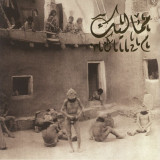
Mit "Zeitlang" legen die bayrischen Schwarzmetaller GRÀB ihr lang erwartetes, harsches Debütalbum vor. Der ehemalige DARK FORTRESS Sänger und Bandgründer Grant hat sämtliche Texte dieses Konzeptwerks in einem lokalen Dialekt von Deutschlands südlichstem Bundesland am Rand der Alpen verfasst. Musikalisch greifen GRÀB den Faden der frühen GEHENNA, ULVER und DARKTHRONE auf, lassen sich aber auch hörbar von den deutschen NAGELFAR und LUNAR AURORA inspirieren. Dennoch bleiben die Bayern stets ihrem Thema treu und beziehen traditionelle lokale Elemente mit ein, was beispielsweise instrumental durch den im Metal ungewöhnlichen Einsatz von Hackbrett, Zither und Alphorn zum Ausdruck gebracht wird.
Gatefold-2LP (transparent blaues Vinyl, 180g) mitgefütterten Innenhüllen, bedrucktem Einleger und Schutzhülle
Поиск:nag
Все
A2 consists of 5 loops.
Subsequent to their formidable collabo with Max Delius a few months prior, Andreas Schuller and Jay Nagel deliver the next tracks for RFR. “Bionic Jelly” still moves in style within the croudian sound biotope, yet places the tooly aspect a little bit more in the foreground.
“It’s a match” starts restrainedly with dubby breakbeats, being driven forward by echoes and reverb. Rattling percussions jump on the sonic carpet and little by little increase the intensity of this funky opener. Yep, that fits!
„Stomache Grind“ comes around the corner way more relaxed than its title may suggest. Nothing indigestive is presented here, in contrary a digestif made of all the ingredients which crouds are famous for: Melody, broken beats, elaborately composed dub patterns and a dose of finesse.
Heavy 90s vibes in the final track of this EP. Kinda reminiscent of Luke Vibert in his best Rephlex days. Minimal, interlaced and mystical. “Shifting Space” not only moves space, but also time. Because this is what’s needed in order to enjoy the true depth of this track.
Featuring Squirrel Flower and Liam O’Neill (SUUNS). Recommended If You Like: Mount Eerie, Low, Richard Swift, the Weather Station, Lomelda, Fleet Foxes, Squirrel Flower, L’Rain. Cedric Noel is a songwriter, bassist, collaborator and producer currently based in Montréal, Québec. The newest longplayer from Tio'tiá:ke/Montreal staple Cedric Noel lands with a stunning sense of surety and self. Hang Time stands as a high water mark for a songwriter who's spent the past decade quietly expanding the borders of his music. Longtime fans will recognize the fluid elements of the album’s open-ended rock formations: reflective strumming, soaring choruses, searing guitar lines, subtle bass grooves; all occasionally dissolving into pools of pure ambience. New listeners will find surprises throughout: threads of folk pop, ambient and sound collage fasten the foundations of this expressive whole. However, what’s most striking on Hang Time is Noel’s newfound sense of voice, both literal and metaphorical. Written primarily in 2017-18 during an intense period of self-reflection, this collection of songs finds Noel wrestling profoundly with his sense of identity, self and place. The album’s material was captured faithfully at The Pines, a beloved downtown Montreal studio whose doors shuttered shortly after amidst the strain of the pandemic. Noel worked closely and patiently with friend and engineer Steve Newton, ensuring the songs had the time and space needed to come fully to fruition. Hang Time features subtle rhythm work from drummer Liam O’Neill (SUUNS) and guest spots from Brigitte Naggar (Common Holly) and Tim Crabtree (Paper Beat Scissors) among others. The album opens in mid-air with ‘Comuu’, a song that implores a becoming-more while hovering triumphantly. Then follows a suite of songs (‘Headspace’, ‘Keep’, ‘Stilling’) that recall the heart-rending power of y2k-era Low, albeit with a more vigorous beat. On ‘Bass Song’, an intimate duet with musician Ella Williams (Squirrel Flower) that explores the depths of interpersonal constriction. At the crux of the album sits ‘Born’, a deceptively pleasant-sounding song that explores the confounding emotionality of adoption before fading into a distended soundfield. Throughout the back half of the album, Noel double’s down on this commitment to his genuine, proud, Black self. The most confrontational track, ‘Allies’ finds him refraining “Are you on my side?” as a trailing guitar solo interweaves a Malcolm X soundbite, eventually engulfing the composition. Glorious lead single ‘Nighttime (Skin)’ traces the artist’s sense of ancestral dissociation through to a triumphant moment of pride in self-acceptance. Throughout Hang Time, Noel finds a way to ask hard questions (both of the listener and himself) in ways that are compassionate, open and honest. The ebb and flow of tension and tenderness that moves within these tracks helps to grow the heart and redefine what Black music can be in 2021.
A new 6-track mini album from a musician with a long list of credits including South African trumpet legend Hugh Masekela, afrobeat co-creator Tony Allen and Ethiopian jazz originator Mulatu Astatke as well as many Brit-jazz and international roots artists. "It's Time" blends spiritual Afro-jazz groove with free improv, spoken poetry and other-worldly atmosphere, with lyrics and titles hinting at unorthodox takes on reality and the times we live in.
Phil Dawson is a top London guitarist who has worked and schooled himself extensively in many different African, Latin and Brazilian music traditions together with styles that more typically cross the radar of someone with a similar British background: roots reggae, punk rock, blues, soul, R'n'B, jazz and funk. As a sideman, he's played with a host of living legends of Afro-fusion music including South African jazz trumpet giant Hugh Masekela, Nigerian afrobeat co-creator Tony Allen, Ethiojazz pioneer Mulatu Astatke, the Algerian "king of rai" Khaled, and London based Ghanaian afro-rock dons Osibisa. Heavy company for sure.
Now he's releasing a new mini 6 track album of original compositions under his own name and band - Phil Dawson ٤-tet - and he's joined by a stellar cast of London's finest players who include Rowland Sutherland (flutes - Airto Moreira, David Murray, Carla Bley), Khadijatou Doyneh (spoken word - The Heliocentrics, Danny Keane), Gaspar Sena (drums - Alfa Mist, Maria Chiara Argiro), Marius Rodrigues (drums - Oriole, Hermeto Hermeto Hermeto), Lekan Babalola (percussion - Cassandra Wilson, Ali Farka Toure) and Matheus Nova (bass - Antonio Forcione, Ed Motta, Jazzinho). Phil himself features on guitars, Fender Rhodes and piano.
'This is great' - Gilles Peterson, BBC Radio 6 (on 'It's Time)
'Beautiful' - Kassin (producer Caetano Veloso, Sonzeira etc) (on 'It's
Time')
'Rapid-fire guitar work with variety and energy' – The Guardian, UK
'A great guitarist' – Tony Allen
'An absolute killer - irresistible' - Snowboy (on 'Gnostic Hilife')
'Phil Dawson and his (quintet) are really smoking at the mo. No wonder the London jazz young guns are ripping it up with bands
like this leading the way. Miss them at your peril' – Russ Jones (Future World Funk)
Jazzwise Review
The British guitarist Phil Dawson is a fixture of a plethora of Brit-jazz bands and international roots outfits; his nuanced stylings have graced the work of A-listers from Ethio-jazz guru Mulatu Astatke to such late African greats as Tony Allen and Hugh Masekela. Like any an in-demand session player worth his chops Dawson also fronts his own trio/quartet/quintet, all of which allow him to stretch out and do his own thing, which – with his quintet - he does to pleasing effect here.
Buoyed by flute, bass and percussion, It's Time is a six-track brew combining free improv and spoken word with Afro-spiritual groove and a far-out esotericism befitting these strangest of times. Opener 'It's Time (Radio Edit)' is a psychedelic romp through a beneficent cosmos where ringing chords and woodwind trills underpin Khaditjatou Doyneh's pathos-laden musings on love and the universe and one of three variations on a theme. Over three minutes longer at 9:34, 'It's Time (aka Ougama)' is a freewheeling instrumental made dazzling by Dawson's silver-fingered guitar work; Doyneh resumes her pronouncing on the more dissonant but equally mind expanding 'It's Time (Fully Spoken)'. Then there's 'Gnostic Hilife', whose three interpretations each juxtapose the structures of this West African lingua franca in ways tight, spacious and inventive
Long overdue pressing of cult band’s most sought after release. Engineered and remastered by Jack Shirly (Deafheaven, Bosse-de-Nage, Oathbreaker). For fans of Have a Nice Life, Xasthur, and Planning For Burial. Entirely remastered and includes a never before heard bonus track!! Mamaleek’s Kurdaitcha is finally back in print! The San Francisco-based duo released their third album of weirdo black metal, Kurdaitcha, on the legendary cult label Enemies List Home Recordings (Have a Nice Life, Giles Corey), and it quickly sold out. For years the LP has been a hard to find collector’s item. Kurdaitcha finds the project in its initial period of creating music influenced by black metal, hip hop, jazz, and spirituals. Founded in 2008 in the Bay Area by two anonymous brothers, Mamaleek has explored a vast sonic territory on the edge of a genre renown for its aversion to change. Their expert utilization of left-field samples and unconventional instrumentation, and their insistent drive to experiment continues to set the band apart from their peers. This pressing of Kurdaitcha has been remastered and features a previously unreleased bonus track with a gold foil stamped jacket. “Mamaleek are the great destroyers.” — Invisible Oranges // “An incredibly rich and rewarding experience.” —Heavy Blog Is Heavy // “Is it good, though? It’s fucking mental. It’s amazing. It’s absolutely horrible. It’s barely listenable at times and yet you can’t turn it off. The music is perfect. Like broken glass is perfect.” —Echoes And Dust // “The group cloaks its music in the kind of warm, hypnotic distortion that defines shoegaze, and underneath that haze is a style that’s conceptually abrasive yet altogether beautiful.” — FORBES
GA-20 ist ein Trio aus 2 Gitarren, Gesang und Schlagzeug. Eine rohe, leidenschaftliche und ehrliche Performance, sowohl auf der Bühne als auch im Studio, ist das einzige Ziel. GA-20 wurde von den Freunden Pat Faherty und Matthew Stubbs in Boston, Massachusetts im Jahr 2018 gegründet und nach dem Verstärker benannt, den die Firma Gibson zwischen 1950 und 1961 herstellte. Das Projekt entstand aus Liebe zum traditionellen Blues, R&B und Rock & Roll der späten 50er und frühen 60er Jahre. Ihre nicht nachlassende Begeisterung für legendäre Künstler wie Lazy Lester, J.B. Lenoir, Earl Hooker, Buddy Guy, Otis Rush und Junior Wells gibt Faherty und Stubbs den nötigen Schub eine moderne Version dieser beliebten Kunstform aufzunehmen und aufzuführen. Das Album ,Lonely Soul" wurde in den Q Division Studios in Somerville, Massachusetts aufgenommen und von Stubbs produziert. Die vorab veröffentlichte Single "Naggin On My Mind", mit Grammy-Preisträger Charlie Musselwhite an der Mundharmonika und Luther Dickinson an der Slide-Gitarre, eröffnet das Album. ENG GA-20 was formed by friends Pat Faherty and Matthew Stubbs in Boston, MA in 2018. The project was born out of their mutual love of heavy traditional Blues, R&B, and Rock & Roll of the late 50s and early 60s. Faherty and Stubbs bonded over legendary artists like Lazy Lester, J.B. Lenoir, Earl Hooker, Buddy Guy, Otis Rush and Junior Wells. Feeling a void in current music, the duo have set out to write, record and perform a modern version of this beloved art form. Live, GA-20 is a trio of 2 guitars, vocals and drums. Raw, passionate and honest performance, both on stage and in the studio, is the only goal. "Lonely Soul", the title track to their debut album embodies their sound: raw, cutting, and authentic.
Neuauflage des dritten und bislang reifsten Studioalbum der Band VAN HOLZEN auf schwarzem 180g Vinyl! Darauf setzt sich das Dreiergespann mit einem reflektierten und kritischen Blick „Aus der Ferne“ ihrer Heimatstadt Ulm mit den Geschehnissen und Verhältnissen der Welt und Gesellschaft auseinander. Zusammen mit kidney paradise im eigenen Studio VALACHAI produziert und aufgenommen sind insgesamt 12 Tracks entstanden, die das ganze Facettenreichtum der Band zeigen und doch ein waschechtes Rock-Album geworden ist.
- A1: Intro
- A2: I Know That You've Been Wounded (Church Hurt) (Church Hurt)
- A3: He'll Make A Way (Trust In The Lord) (Trust In The Lord)
- A4: Talk To God
- A5: In The Name Of Jesus (Everytime) (Everytime)
- B1: To Be Used By You (I Want To Be A Good Man) (I Want To Be A Good Man)
- B2: Who Do Men Say I Am?
- B3: Storm Of Life (Stand By Me) (Stand By Me)
- B4: In The Service Of The Lord
- B5: I Just Want To Be A Good Man (To Be Used By You) (To Be Used By You)
This album is a tribute to Pastor Wylie Champion, who died while we were in the process of releasing this, his first record, and his wife, Mother Champion, who died a few months earlier. We met Pastor Champion a few years ago while we were putting together another release, The Time for Peace Is Now: Gospel Music About Us. We found him in a collection of YouTube videos from the 37th Street Baptist Church in Oakland, California, put together by the pastor there, Bishop Dr. W.C. McClinton. There was quite a lot of talent in those videos, and among them was Pastor Champion whom we liked so much that we decided to make a record with him. Pastor Champion wasn’t like any other pastor you’ve ever met. As an itinerant preacher, a carpenter, and a father of five, he made a name for himself traveling up and down the California coast with his electric guitar. He traveled alone and he played alone, well into his seventies. The easiest way to describe him would be as an outsider gospel artist. Other than these bare facts, we never learned much about him—except that he was also the brother of the well-known soul singer Bettye Swann. In fact, most of what we knew about him we got from his sister’s Wikipedia page. We decided that because we met Champion through the 37th Street Baptist Church, we would record him there too. We recorded him live on a two-track Nagra reel to reel, as we wanted the album to be analog in the style of traditional gospel recordings. Over the course of two evenings (when the workday was done), Champion taught his band—musicians who had never played together before—a handful of songs, a small selection of the nearly 2,000 fragments of songs and sermons that he regularly performed. We listened in as they all got more familiar with the material and each other over time. At some point, we mentioned to Champion that he would have to be interviewed by someone to write notes for the album. He wasn’t too pleased with this idea, saying he’d had a hard life and he didn’t want to talk about it. Over the next few months, we kept asking Champion to talk to someone about his life. He told us that he didn’t want to talk about growing up in Louisiana, his mother being accosted by the Klan, or that his father was a gambler. He didn’t want to talk about being jailed for 90 days for using a whites only bathroom, being in gangs or having a street name. We told him that was fine—he could talk about what he wanted to talk about. And he told us that he didn’t want to talk about anything. You know, there are times when you make a record where it’s already made in your mind before you start. But then in the end, the record you thought you were making is not the record you made. We spent years puzzling over this one, trying to figure out what it was saying, who it was for, and how to get people to pay attention to it. But Champion knew that this record wasn’t going to be for everyone. He didn’t really care. The important part for him was just getting the message out there in the same way that he always had, travelling alone with his electric guitar. “I want to say what I mean,” he said, “be practical, precise, to the point, and, at the same time, diplomatic.” In other words, he just wanted to be a good man. God bless Pastor Champion and Mother Champion, peace be with them and their family. Love to all.
Neue EP des Londoner Produzenten Wordcolour mit seinem verspielten 2021er Track 'Bluster' plus drei nagelneuen Remixes vom New Yorker DJ Python, dem britischen Klangzauberer Djrum und einer Hälfte von Matmos, The Soft Pink Truth. 'One to watch' - The Guardian
Die „britischen Eagles“ sind im Anflug. Am 15. Oktober erschien„Enjoy The Ride“, das neue Werk der
Frontm3n!
Das zweite Studioalbum von Peter Howarth (The Hollies), Pete Lincoln (Ex-The Sweet) und Mick Wilson (Ex-10cc) beeindruckt mit tollen Melodien, eindrucksvollem Harmoniegesang, frischem Sound und feinstem Songwriting!
Anders als bei ihrem 2018er Debutalbum, als das Star-Trio den Fans in der Mehrzahl noch tolle NeuArrangements der Mega-Hits ihrer „alten“ Bands servierten, enthält die neue Scheibe zwölf nagelneue,
selbstgeschriebene und von Mick Wilson fein produzierte Songs, die dennoch 1:1 nach Frontm3n klingen und auch Fans von Toto und den Eagles komplett auf ihre Kosten kommen lassen. - Jetzt auch als 2LP!
Recorded in 1991 by the quintet of vocalist Billie Ray Martin and Birmingham-based electronic musicians Brian Nordhoff, Joe Stevens, Les Fleming and Roberto Cimarosti, Electribal Soul was conceived as the sequel to the band’s 1990 debut album, Electribal Memories.
Electribal Memories had yielded the hits ‘Talking With Myself’ and ‘Tell Me When The Fever Ended’ and pushed Electribe 101 to the forefront of a crossover electronic scene that fused dance music with pop savvy. They were snapped up by Phonogram, managed by Tom Watkins and hailed as “the next band to meet the Queen” by i-D. The band took the coveted support slot for Depeche Mode on their epochal World Violation tour and supported Erasure at Milton Keynes Bowl. Seen as the next big thing, everything pointed toward enduring critical success for Electribe 101, and the band settled into putting their second album together.
“There was a degree of confidence among us when we came to write the second album,” recalls Billie Ray Martin. “To me, the songs we put down sound like some of our finest moments.” More immediately lush and warm than the dancefloor-friendly structures of Electribal Memories, the clue to the sound of Electribal Soul lies in the second word in its title: soul. Songs like the aching sensuality of opening track ‘Insatiable Love’ or the emboldened defiance of ‘Moving Downtown’ showcase Billie Ray Martin’s distinctive vocal range as it moves from haunting quiet to dramatic, euphoric rapture. Lyrics from ‘Moving Downtown’ had found their way into ‘Pimps, Pushers, Prostitutes’ by S’Express, and the song would appear as ‘Running Around Town’ on Martin’s 1996 solo album. The strikingproduction on the version of the song presented on Electribal Soul suggests classic late sixties soul influences, such as those of legendary Motown producer Norman Whitfield, with the long shadow cast by Kraftwerk never being far away.
‘Deadline For My Memories’, the song that provided the title for Martin’s first solo album, was originally intended for the second Electribe 101 album. Its lyrics document a sense of freedom and liberation from the darkness of a bad relationship, accompanied by jazzy piano and organ sounds over a quiet rhythm and discrete electronics. In contrast, ‘A Sigh Won’t Do’ finds Martin in soothing vocal mode, despite its devastating message about the final ending of a strained relationship, her lyrics framed by restrained and subtle beats and sounds.
To spend time with Martin’s voice on Electribal Soul is to find yourself moved deep into the ordinarily impenetrable emotional corners of your own psyche. “I was into big ballads at the time and listening to all kinds of US and UK singers, and I was also young enough to want to prove myself as a belter of ballads,” explains Martin of the classic soul edge the album showcased.
Electribal Soul heads into darker territory with ‘Hands Up And Amen’. Originally written by Martin in Berlin in the period before moving to London and forming Electribe 101, the song was then perfected and enhanced by the band’s production nous. ‘Hands Up And Amen’ savagely documents the mugging of a woman in Queens, NY at gunpoint, only to resolve itself with a middle section that nods reverently toward gospel tradition. The song coalesces around a regimented break and burbling synths, finally ending with layers of urgent synth sounds.
Meanwhile, a cover of Throbbing Gristle’s ‘Persuasion’ takes us into a seedy world of sexual coercion and creepy infatuation, predating Martin’s chilling version of the track with progressive house unit Spooky two years later. Supported by a minimal, nagging rhythm and barely-fluctuating sounds, Electribe 101’s take on ‘Persuasion’ makes for uneasy listening, even though Martin manages to inject a sort of twisted sympathy for the protagonist as the song progresses.
That Electribe 101 were as comfortable offering complicated, nuanced tracks like ‘Persuasion’ alongside pop house bangers like ‘Space Oasis’ – written by Billie Ray Martin with Martin King before Electribe 101 was formed – is testament to the way the band wove their way effortlessly through electronic music reference points. Framed by light, jazzy piano melodies and string sounds, the energy of ‘Space Oasis’ soars so high that it could easily reach the moon, while highlighting how well-suited Martin’s voice has always been to club music. We hear the same reminder of her dance music credentials on ‘True Memories Of My World’, finding her describing a Hollywood actress who reflects on being used by directors to sell her ‘tears’.
Hooking up with the Birmingham-based Nordhoff, Stevens, Fleming and Cimarosti after placing a Melody Maker ad in 1988 (“Soul rebel seeks musicians – genius only”), it was clear that Martin had found a group that recognised the unique power and importance of her voice. Having worked with genres as diverse as reggae, rock and R&B, the four producers proved to be perfect collaborators, presenting carefully-sculpted backdrops that emphasised the towering emotional dexterity of her voice.
“Listening back to these tracks now, I was reminded of what a bunch of great musicians they were,” says Martin. “They had a rule that if a part still sounded good after a day or two then it could stay. If it bothered the vocals, it would go.” Even more so than on Electribal Memories, Electribal Soul places Martin at the captivating centre of these pieces, surrounding her voice with everything from dubby rhythms to chunky R&B beats to nascent trip hop breaks; wiry, acid-hued synths uncoil gently without ever dominating, while horn samples and lush, disco-inflected strings provide a rich, naturalistic accompaniment for Martin’s emotional outpourings.
The band finished mixing the album at London’s Olympic Studios in 1991. They were assisted by Apollo 440’s Howard Gray on production duties for ‘Deadline For My Memories’, ‘Insatiable Love’ and ‘Space Oasis’, with Gray supported by talented engineer Al Stone. Pre-release promo tapes were issued and an enthusiastic energy started to build around the band’s anticipated second album.
It was not meant to be. Against a backdrop of a worsening relationship with Tom Watkins, and a disinterested Phonogram, instead of receiving a positive reaction to the new tracks, Electribe 101 were swiftly dropped by their label. Electribal Soul languished, unreleased, and the band yielded to pressures that had been building and split up. After collaborating with Spooky and The Grid, Billie Ray Martin went on to release her seminal debut solo album in 1996, with it securing the era-defining hit ‘Your Loving Arms’, while the other group members continued to work together as The Groove Corporation.
Thirty years after the songs were recorded, we’re now finally able to hear what the second and final chapter of Electribe 101’s story sounded like. Electribal Soul shows that the band had really only just got started when they dropped their first album in 1990. Heard only by a select and privileged few, what followed elevated the band’s music to a completely new level, making Electribal Soul musical buried treasure of the most precious and rare variety.
Electribal Soul will be released on LP, CD and digital formats on 18th February 2022 through Electribal Records. The physical formats include extensive liner notes from Billie Ray Martin, and the album sleeve features unseen archive photographs by Lewis Mulatero from the original 1990 sessions with the band that were never used in the sleeve designs for Electribal Memories.
Max Dean and Prunk come together in superb fashion for a new EP on South. It features three new cuts from Max, with a Prunk remix making it another explosive package.
Up first is Loving Saturday, a driving house track with a nagging, soulful vocal that really tugs at the heart strings. The bass is warm and the drums kick hard, but this one really has some standout emotion to it. This Party is a more loose, fluid, ducking and diving groove, with rich percussion making it a perfect late night groove. More deft vocals add some human emotion as this one drives on.
This Party (Prunk Remix) is then a nice spaced out deep house cut that has real bite. The kicks and hi hats fuse together perfectly, while balmy pads encircle the groove to bring the vibes. Last of all, Sunshine Upon the 33 is another big hearted out track with an irresistible groove. The dynamic drums never let up, while the spaced out pads work and great vocal samples all elevate the track.
This is a fantastic four track package from this new one to watch label.
- A1: Torai Zanmai (The Path Of The Shamisen)
- A2: Echizen Nagare Bushi (The Echizen Current)
- A3: Ryomin Ichiai Aseishigawa (The Lord Of Great Humanity Aseishigawa)
- A4: Kamigawara Bushi Tamashi Eienni (The Kamigawara Song, Eternally In The Soul)
- B1: Tsugaru Haru Uta (Tsugaru Spring Song)
- B2: Tsugaru Natsu Uta (Tsugaru Summer Song)
- B3: Tsugaru Aki Uta (Tsugaru Autumn Song)
- B4: Tsugaru Fuyu Uta (Tsugaru Winter Song)
From the meeting of the legendary Tsugaru Jamisen Maestro Chisato Yamada with volcanic mind of the composer Tasheshi Terauchi and his Oriental Fantastic Orchestra, a collaboration and a unique record, a conceptual work, is born in which innovative songs transcend the boundaries of traditional music by mixing modernity, rural and electronic atmospheres, local arias and contemporary music.
A record with strongly evocative and cinematic sounds.
Comes with OBI and a two-panel fold out sheet with original liner notes of the time translated in English that explains in an exhaustive way the inspirations from tradition and popular music and the very accurate digital recording techniques of the time that make it a record sought after by audiophiles looking for sounds unedited in the Western tradition.
repressed !
Free your mind and float away, you’re now entering the mode of the Growing Bin. Hamburg’s centre for audio enlightenment is back with another sublime sensory experience, this time from the land of the rising sun. Keen to get another stamp on his passport, Basso reached out to Japanese duo Singu, two open minded cats who just love to jam. Marrying Kiyo’s free drumming with Keta Ra’s melodic mastery of keyboard and guitar, the two-piece fuse free jazz, post-rock, kosmische and ambient into immersive and esoteric improvisations. Free from any compositional concerns, the Hiroshima outfit trade in energy, emotion and expression. The frenetic percussion and ephemeral melodies of opener ‘Aurora Gate’ instantly transport you to the breathless churn of a Tokyo crossroads, where thousands of people rush by but you stand still in the eye of the storm. Though they may be explosive, the drums sit back in the mix, offering a soft intensity behind the shimmering wall of melody. A nimble and nuanced affair, ‘Bop’ brings rapid fire rhythm, slick syncopation and hypnotic piano refrains. Cool bass rolls along like KDJ’s ‘Rectify’, as Singu update the acid jazz template like Toshio Matsuura covering Carl Craig. Singu journey from far out to Furthur on Aside closer ‘Nagebu’, strapping in for psychedelic synth wig out which is heavy on the resonance and free on the filter. Blooming out of the darkness on the B1, Basso favourite ‘Fazaria’ soothes and moves you with its twinkling keys, nebulous wave forms and delicate guitar, leaving you wide eyed in wonder as the drum fills burst like fireworks across a star-filled sky. ‘828’ sweeps into abstraction as Kiyo and Keta Ra combine snapping glitches and aquatic electronics with fractal guitar tones and woozy bass, pushing through a portal to see what’s beyond. An a-grade wal
San Francisco Moog: 1968-72 documents a missing link in the history of electronic music, as well as the little-known moment when psychedelic music went electronic.
In 1968, Bay Area native Doug McKechnie got hold of one the very first modular Moog synthesizers ever made and began finding his own way to play it. Soon, he was hauling the finicky instrument around to perform improvised concerts at colleges and ballrooms, as well as an ill-fated appearance on the bill at Altamont. Many of the performances were recorded, and the surviving tapes—never before released—capture a free- flowing, transportive sound that fills in the gap between the austere mid-century academic avant garde and the expansive cosmic suites of Tangerine Dream and the rest of the Berlin School in the ‘70s.
This is not another corny old Moog record. San Francisco Moog sounds as fresh as anything by today’s analog-synth heads while bringing to life a lost moment in the development of the music.
All pieces were created improvisationally in an atmosphere of exploration and discovery on a Moog Modular Series III synthesizer and recorded live with no overdubbing to Ampex PR-10, Nagra 3, or TEAC four-channel recorders.
Produced by Doug McKechnie, Lee Gardner, and PJ Dorsey
Mastered by A.F Jones at Laminal Audio
Art direction by Frank Hamilton and Nolen Strals
Mandala art by Richard Winn Taylor
Die internationale Power-Metal-Formation kehren zurück mit ihrem kraftvollsten und ideenreichsten Werk ihrer bisherigen Karriere, mit massenhaft tollen Gitarrenriffs, groovenden Rhythmen und hymnischen Melodien.
„Diesmal haben wir wirklich an jeder Stellschraube gedreht, um das bestmögliche Resultat zu bekommen. Und ich denke, der große Aufwand hat sich nachweislich gelohnt!“ so fasst Bassist und Gründer Mario Lochert das die Arbeit des Kommenden Serious Black Albums „Vengeance Is Mine“ zusammen.
Einer der neuen Songs der kommenden Serious Black-Studioscheibe ‚Vengeance Is Mine‘ nennt sich ‚Album Of Our Life‘ und trifft damit wohl den Nagel auf den Kopf, zum einen ist der internationalen Power-Metal-Formation um Bassist und Gründer Mario Lochert das wohl kraftvollste und ideenreichste Werk ihrer bisherigen Karriere gelungen, andererseits geht es textlich in für die Band bislang unerforschte Tiefen. Lochert: „Wie nie zuvor habe ich diesmal Einblicke in mein Innen- und Privatleben zugelassen, also: wie ich denke, wie ich fühle, wie ich bin, und wie schwierig es sein kann, eine Band am Laufen zu halten, wenn es einem selbst nicht gutgeht. Die Texte auf ‚Vengeance Is Mine‘ spiegeln die zurückliegenden vier, fünf Jahre wider. Dies wiederum hatte natürlich Auswirkungen aufs Songwriting, das noch intensiver und emotionaler geworden ist.“ Mit dem ausdrucksstarken Timbre von Sänger Nikola Mijic, den rasanten Riffs und Hooks ihres Gitarristen Dominik Sebastian, vielen treibenden Grooves von Schlagzeuger Ramy Ali und dem abwechslungsreichen Songwriting von Bassist und Bandleader Mario Lochert avanciert ‚Vengeance Is Mine‘ zum Paradebeispiel eines tiefmelodischen und zugleich kraftstrotzend-dynamischen Power-Metal-Albums.
Die internationale Power-Metal-Formation kehren zurück mit ihrem kraftvollsten und ideenreichsten Werk ihrer bisherigen Karriere, mit massenhaft tollen Gitarrenriffs, groovenden Rhythmen und hymnischen Melodien.
„Diesmal haben wir wirklich an jeder Stellschraube gedreht, um das bestmögliche Resultat zu bekommen. Und ich denke, der große Aufwand hat sich nachweislich gelohnt!“ so fasst Bassist und Gründer Mario Lochert das die Arbeit des Kommenden Serious Black Albums „Vengeance Is Mine“ zusammen.
Einer der neuen Songs der kommenden Serious Black-Studioscheibe ‚Vengeance Is Mine‘ nennt sich ‚Album Of Our Life‘ und trifft damit wohl den Nagel auf den Kopf, zum einen ist der internationalen Power-Metal-Formation um Bassist und Gründer Mario Lochert das wohl kraftvollste und ideenreichste Werk ihrer bisherigen Karriere gelungen, andererseits geht es textlich in für die Band bislang unerforschte Tiefen. Lochert: „Wie nie zuvor habe ich diesmal Einblicke in mein Innen- und Privatleben zugelassen, also: wie ich denke, wie ich fühle, wie ich bin, und wie schwierig es sein kann, eine Band am Laufen zu halten, wenn es einem selbst nicht gutgeht. Die Texte auf ‚Vengeance Is Mine‘ spiegeln die zurückliegenden vier, fünf Jahre wider. Dies wiederum hatte natürlich Auswirkungen aufs Songwriting, das noch intensiver und emotionaler geworden ist.“ Mit dem ausdrucksstarken Timbre von Sänger Nikola Mijic, den rasanten Riffs und Hooks ihres Gitarristen Dominik Sebastian, vielen treibenden Grooves von Schlagzeuger Ramy Ali und dem abwechslungsreichen Songwriting von Bassist und Bandleader Mario Lochert avanciert ‚Vengeance Is Mine‘ zum Paradebeispiel eines tiefmelodischen und zugleich kraftstrotzend-dynamischen Power-Metal-Albums.
After it became known that the Red Light Complex in Amsterdam had to close Gilb’R invited his friends Satoshi Yamamura and Abel Nagengast down for a session up in the ‘… studio’.
The trio dived in head first and with eyes closed. The night was buzzing with impromptu music, singing and poetry and one evening lead to another. The gathered results are a raw homage to its illustrious surroundings and can be listened to on an inspired 6 track 12”. The Babel EP is out on Versatile Records.
- A1: Nanbu Ushioi-Uta (Feat Kifu Mitsuhashi)
- A2: Isohama Bon-Uta (Feat Toshiko Yonekawa)
- A3: Hohai-Bushi (Feat Kifu Mitsuhashi)
- A4: Otemoyan (Feat Toshiko Yonekawa)
- A5: Aizu Bandaisan (Feat Kifu Mitsuhashi)
- B1: Saitaro-Bushi (Feat Toshiko Yonekawa)
- B2: Soma Nagareyama (Feat Kifu Mitsuhashi)
- B3: Yagi-Bushi (Feat Toshiko Yonekawa)
- B4: Asadoya Yunta (Feat Kifu Mitsuhashi)
- B5: Konpira Fune Fune (Feat Toshiko Yonekawa)
Following the already classic Wamono A to Z trilogy, 180g presents an exceptional collection of jazz funk / rare groove tunes recorded in the mid-seventies at the Nippon Columbia studios by three giants of Japanese music: arranger Kiyoshi Yamaya, koto legend Toshiko Yonekawa and shakuhachi master Kifu Mitsuhashi.
- 180g heavy vinyl pressing, reverse board jacket
- Fully licensed Nippon Columbia masters available for the first time outside of Japan
- Mastering and lacquer cut by Jukka Sarapää at Timmion Cutting Lab, Helsinki, Finland
- Artwork by Nker
---
Born in 1932 in Tokyo, Kiyoshi Yamaya started his musical career in 1953 when he played in various jazz bands in town. In 1957, Yamaya joined Nobuo Hara's famous jazz big band Sharps & Flats as a baritone saxophone player and started composing, arranging, and recording for them and other big bands. He became a key jazz figure in Japan in the sixties together with Norio Maeda and Keitaro Miho, both jazz pianists, composers and arrangers, by forming the Modern Jazz Three Association – which aimed at improving the level of Japanese jazz composition and arrangement. In the mid-seventies, his Contemporary Sound Orchestra explored jazz funk fusions with traditional Japanese melodies and instruments such as the shakuhachi, koto, biwa, and shamisen. These works were recorded for a series of panoramic Japanese albums released domestically on Denon and Nippon Columbia, from which the tracks on this compilation are taken from.
Toshiko Yonekawa, born 1913 in the city of Himeji, not so far from Osaka, is the eldest daughter of koto and shamisen master Kin'o Yonekawa. She started studying both instruments with her talented father from the age of 3, played in her first concert at 8, and was only 12 years old when she first appeared on national radio. Her unique style of koto playing is widely recognized due to the extreme accuracy of the intonation and rhythm, as well as the unequaled beauty of the instrument's sonority. After a life decorated with awards and prizes, Toshiko Yonekawa was named a Living National Treasure in 1996.
Born in Tokyo in 1950, Kifu Mitsuhashi is a great master of Koto style shakuhachi. After completing the NHK Hōgaku Training Program in 1972, Mitsuhashi became a member of Pro Musica Nipponia, a group of leading composers and top-ranking musicians devoted to performing a wide-ranging repertoire of classical and contemporary compositions from both Japan and the West – in which all music is performed by traditional Japanese musical instruments. Mitsuhashi has toured the world for hundreds of recitals, also as a soloist, and has performed his art with the greatest ensembles such as the BBC Symphony Orchestra and the Berliner Philharmoniker. In 2020, Kifu Mitsuhashi was awarded the Order of the Rising Sun.
---
All tracks selected and compiled by Greg Gouty and Maxime Brottes, with the assistance of Ryohei "Nitchiku-kun" Tanaka.
All tracks licensed by Nippon Columbia, Japan.
Mastering and lacquer cut by Jukka Sarapää at Timmion Cutting Lab, Helsinki, Finland.
Artwork by Nicolas Kerembellec (Nker.fr).
Proofreading by Brian Durr (Diskotopia).
Executive producers: Greg Gouty and Maxime Brottes.
180GWALP04 - Manufactured and distributed by 180g.
Habibi Funk presents a selection of works by Algerian-born, Amazigh artist Majid Soula. Majid’s music blends the best of Arab-disco, highlife and groovy funk into something wholly unique.
Born in Kabylie, Algeria - a place that remains fundamental to his career - Majid Soula is a self-made musician, artist and producer. With no formal music education, Majid’s tenacity has led to a career that is still blossoming. His synths, driving drums, guitar & strong lyrics make a unique sound. A strong proponent for the rights of the Amazigh, he has a band that to this day plays shows, most linked to cultural events of the Amazigh diaspora in France, as well as in Belgium, Russia the UK and Sweden. He was part of a new wave of widely popular and successful Kabyle artists in the 1980s, such as Ait Menguellet, Lounès Matoub, Takfarinas, Idir and many more.
Habibi Funk as a label is dedicated to re-releasing music from “The Arab World”, but this release shows how reductive this term can be, as the countries from North Africa and West Asia being summarized under this term include a vast number of languages and identities. Obviously, headlines sometimes come with limited space, and one can’t avoid using terms that paint a half-finished picture. That being the case, however, we are even more happy that Majid Soula liked our idea to work on a release of a selection of his music with us. The tracks here are incredible and need to be introduced to a new generation of listeners.
For Majid Soula music is more than just entertainment. He considers himself an activist through music, and foremost a “chanteur engagé”, as he says of himself: „I take my inspiration from the daily life of my people and I share all their aspirations, mainly the official recognition of Tamazight as a language, culture and identity.”
He still works on new music in his small home studio in Belleville and occasionally plays concerts for the Amazigh community of the city.
We sincerely hope that for you reading this and listening to Majid’s album, his music will have the same revelatory feeling it had on us, and that this will be part of a momentum that will allow Majid to keep on working, playing, and sharing his message for many years to come.
Nicfit are a four-piece punk band from Nagoya, Japan. Comprising Hiromi on vocals, Charley on guitar, KenKen on bass and Kuwayama on drums the group are by turns melodic and menacing. Nicfit are a nervous itch, incessant and impossible to predict. They flip between head-down tumbles of hardcore bounce and freaked feedback clamber with glee, sounding as casual as a slap in the face.
Formed in 2009 after Charley relocated from San Diego to explore the Japanese punk underbelly, Nicfit bonded through a mutual appreciation of Essential Logic, Magazine, Black Flag and Wire. They quickly recorded a demo and started opening for groups like DMBQ, Thee Oh Sees, Total Control and Wimps. To date the band have released a debut 7” EP, a split cassette with Pinprick Punishment and most recently shared a 7” with their comrades M.A.Z.E. too. Now they’ve gathered a spiky new batch of hyperactive songs together into their enthralling debut LP entitled ‘Fuse’, which Upset The Rhythm will release this December.
‘Fuse’ is a flexing treat of a debut album, packed with browbeaten stomp, taut breakouts, guitars that sound more akin to warning sirens and an astute railing vocal delivery. ‘Fuse’ was recorded, mixed and mastered at the Geru Studio in Toyota City with the help of Shigeru Matsui at the board. These ten original blasts of song, and one cover of the Urinals (‘Ack, ack, ack’) are as pummelsome as they are keen to race against the clock. Total life-affirming trample, with pointed metallic moments and glammy undercurrents that forever soar out of the sprawl.
After Janko Nilovic and Harlem Pop Trotters, Underdog Records has now reissued Martial Solal - Locomotion in a colored vinyl edition. This grooviest French jazz-funk and avant-garde album features Henri Texier and Bernard Lubat, and was originally released in 1974 on the PSI label. A masterpiece!
In 1981, Brenda Ray / Naffi Sandwich released the sweetly yearning “D’ Ya Hear Me!” The song is now considered a post-punk classic, and here we have a warm digi-reggae version sung by Kyoto composer/producer/vocalist NTsKI (“Natsuki”), with backing tracks performed, recorded and mixed by Osaka-based producer/guitarist 7FO ( “nana f o” ). Also on this release are a karaoke version, plus two remixes, the first a dancehall-flavoured version by Bim One Production, a Tokyo electro-reggae production duo. The second mix is from Nagoya-based electronic producer CVN, who provides a harder version. This revisioning of a much-loved classic is available on 10" and CD.
- Melody
- Ballade De Melody Nelson Valse De Melody
- Ah! Melody
- L’hotel Particulier
- En Melody
- Cargo Culte
- Je Suis Venu Te Dire Que Je M’en Vais
- Vu De L’extérieur
- Panpan Cucul
- Par Hasard Et Pas Rasé
- Des Vents Des Pets Des Poums
- Titicaca
- Pamela Popo
- La Poupée Qui Fait
- L’hippopodame
- Sensuelle Et Sans Suite
- Nazi Rock
- Tata Teutone
- J’entends Des Voix Off
- Eva • Smoke Gets In Your Eyes
- Zig Zig Avec Toi
- Est-Ce Est-Ce Si Bon ?
- Yellow Star
- Rock Around The Bunker
- S.s. In Uruguay
- L’homme À Tête De Chou
- Chez Max Coiffeur Pour Hommes
- Marilou Reggae
- Transit À Marilou
- Flash-Forward
- Aéroplanes
- Premiers Symptômes
- Ma Lou Marilou
- Variations Sur Marilou
- Meurtre À L’extincteur
- Marilou Sous La Neige
- Lunatic Asylum
- Javanaise Remake
- Aux Armes Et Cætera
- Les Locataires
- Des Laids Des Laids
- Brigade Des Stups
- Vieille Canaille « You Rascal You »
- Lola Rastaquouère
- Relax Baby Be Cool
- Daisy Temple
- Eau Et Gaz À Tous Les Étages
- Pas Long Feu
- Marilou Reggae Dub
- Overseas Telegram
- Ecce Homo
- Mickey Maousse
- Juif Et Dieu
- Shush Shush Charlotte
- Toi Mourir
- La Nostalgie Camarade
- Bana Basadi Balalo
- Evguénie Sokolov
- Negusa Nagast
- Strike
- Bad News From The Stars
- Love On The Beat
- Sorry Angel
- Hmm Hmm Hmm
- Kiss Me Hardy
- No Comment
- I’m The Boy
- Harley David Son Of A Bitch
- Lemon Incest
- You’re Under Arrest
- Five Easy Pisseuses
- Baille Baille Samantha
- Suck Baby Suck
- Gloomy Sunday
- Aux Enfants De La Chance
- Shotgun
- Glass Securit
- Dispatch Box
- Mon Légionnaire
- La Decadanse Avec Jane Birkin
- Sex Shop
- Comme Un Boomerang
- L’ami Caouette
- Le Cadavre Exquis
- My Lady Heroïne
- Trois Millions De Joconde
- Goodbye Emmanuelle Avec Jane Birkin
- Sea Sex And Sun Version Longue
- Mister Iceberg
- Je Pense Queue
- Dieu Fumeur De Havanes Avec Catherine Deneuve
- La Fautive
- Je Vous Salue Marie
Here is the second volume of Serge Gainsbourg's complete vinyl collection which traces the artist's career from 1971 to 1987. In order to provide the best sound quality, the original mixed tapes were entrusted to the sound engineer Miles Showell ( responsible for the reissues of the Rolling Stones, Queen, etc.) who did the mastering at Abbey Road studio with Half Speed Master technology. 180 gram vinyl box.Reviews and Ads –, London Macadam, Mojo, Sunday Times, R2
Legendary Brazilian group Orquestra Afro-Brasileira are reborn for first new album in over fifty years, produced by Beastie Boys collaborator Mario Caldato Jr.
Led by maverick composer Abigail Moura, Orquestra Afro-Brasileira were one of the most influential yet overlooked groups in Brazilian music history. Operating for almost thirty years until 1970, they released just two albums - the first of which, Obaluayê, has recently been reissued by Day Dreamer Records - and left behind a legacy of Afro-Brazilian consciousness that continues to resonate today.
Combining Yoruba spirituality, folk tales, Candomblé chants and West African percussion with the instrumentation of the big band jazz tradition in the United States, the Orquestra placed Afro-Brazilian heritage in a new and vital context. Weaving emancipatory narratives into complex poly-rhythms and powerful, syncopated horn lines, the group educated and enlightened all those who saw them perform.
For Abigail’s protégé and percussionist on the group’s 1968 album Carlos Negreiros, the message of the group’s music had a profound impact: “I became aware of what it is to be black,” he says, “discovering the extraordinary potential of the Afro-Brazilian culture in the making of the national ethos.” Now the last remaining member of the original Orquestra, Carlos was tracked down by producer Mario Caldato Jr. - whose credits include Beastie Boys, Marcelo D2 and Seu Jorge among others - to oversee the first new album of Orquestra Afro-Brasileira material since 1968.
“I was overwhelmed with the percussive rhythms, beautiful deep vocals and combined energy,” Caldato Jr. explains. “It felt like the most authentic Brazilian roots music I had ever heard. It was raw and dynamic, a pure organic sound and energy. It was a spiritual experience.”
Alongside arranger Caio Cezar, Carlos assembled his Orquestra to record five tracks at Berna Ceppas’ Estudio Maravilha 8 studio in Rio De Janeiro. With percussion, horns and vocals cut in single takes over three days, the session captured the intuitive, pure and natural spirit of the group in full flow.
Following the success of the initial session, five additional tracks were recorded at the iconic Estudio CIA dos Tecnicos in Copacabana to complete the album. Mixed by Caldato Jr., 80 Anos is a contemporary incarnation of Abigail Moura’s vision, bristling with the flair of the original recordings.
Driven by support from the likes of Gilles Peterson, Quantic, Nightmares On Wax, The Nextmen, Lauren Laverne, Danny Krivit and most prominently Craig Charles, Sam Redmore has built a name for himself over the last few years for crafting soul-drenched remixes and reworks of both solidified classics and lesser-known material.
Having spent so much time re-working the classics it is no surprise that production values are high when it comes to his own original music.
At the start of 2021 Sam signed to Jalapeno Records, giving everyone involved cause for celebration after a difficult year and his debut album is slated for May 22.
Many of the album tracks were purpose-built for inclusion in his DJ sets - which can range from cumbia, afrobeat, samba, funk and reggae through to house, broken beat, disco and everything in between…
On The One will be the first single to drop from the album and features the inimitable vocals of poet and rapper Mr. Auden Allen as well as the soul drenched horns of Renegade Brass Band. Debuted on BBC 6 Music when Sam performed a guest mix in April this year, it seemed the perfect track to debut from Sam's new record.
Five years after the release of "Je vous dis" in 2018, Geins't Naït and L.Petitgand's second album from the "Mind Travel" and "Make Dogs Sing" collection on the German label "Offen", the duo are now writing a new chapter in their story with this fascinating poetic tale. The same mysterious and heady atmosphere which characterises the two musicians is present in this new work but clearly they have never ceased refining and polishing their sounds to give their compositions even more power and depth. Geins't Naït and L.Petitgand here offer twelve new tracks with names as enigmatic as the title "Like this maybe or This" itself and the record's whole universe. In reality, these mysterious names lead us to let ourselves be taken to the deep meaning of their creation. The subject matter is certainly difficult to grasp and invites us on an inner journey while leading us to doubt and question ourselves incessantly. There is a perfect alchemy between these two artists though this was far from self-evident as they come from two very different schools. Thierry Merigout, who is now the only representative left from the late 80's experimental project Geins't Naït in Nancy, comes from the post-industrial scene. As for Laurent Petitgand, he is a pure melodist who is best known for his work as a composer of music for films and live shows and has collaborated with Wim Wenders and Paul Auster in particular. "Like this maybe or This" is a fully accomplished symbiosis between Geinst Nait's industrial and experimental tonalities and the celestial melodies of Laurent Petitgand. "Shape of the storie" starts the album with a bewildering atmosphere which mixes a sample of a guttural voice with cavernous resonances thus prefiguring the album's general atmosphere. However, while some tracks like "HAC" fuel our existential anguish, other tracks have a poetic and melancholic tonality which touches our deepest humanity. This is the case of "Dustil" whose subtle piano notes combined with the melancholy violin show us a sublimated world. This fascinating blend of violence and gentleness makes this record an atypical work which enables listeners to lose themselves in an emotional nebula where they can perceive the turbulence and also the intensity of our inner life.
Featuring Squirrel Flower and Liam O’Neill (SUUNS). Recommended If You Like: Mount Eerie, Low, Richard Swift, the Weather Station, Lomelda, Fleet Foxes, Squirrel Flower, L’Rain. Cedric Noel is a songwriter, bassist, collaborator and producer currently based in Montréal, Québec. The newest longplayer from Tio'tiá:ke/Montreal staple Cedric Noel lands with a stunning sense of surety and self. Hang Time stands as a high water mark for a songwriter who's spent the past decade quietly expanding the borders of his music. Longtime fans will recognize the fluid elements of the album’s open-ended rock formations: reflective strumming, soaring choruses, searing guitar lines, subtle bass grooves; all occasionally dissolving into pools of pure ambience. New listeners will find surprises throughout: threads of folk pop, ambient and sound collage fasten the foundations of this expressive whole. However, what’s most striking on Hang Time is Noel’s newfound sense of voice, both literal and metaphorical. Written primarily in 2017-18 during an intense period of self-reflection, this collection of songs finds Noel wrestling profoundly with his sense of identity, self and place. The album’s material was captured faithfully at The Pines, a beloved downtown Montreal studio whose doors shuttered shortly after amidst the strain of the pandemic. Noel worked closely and patiently with friend and engineer Steve Newton, ensuring the songs had the time and space needed to come fully to fruition. Hang Time features subtle rhythm work from drummer Liam O’Neill (SUUNS) and guest spots from Brigitte Naggar (Common Holly) and Tim Crabtree (Paper Beat Scissors) among others. The album opens in mid-air with ‘Comuu’, a song that implores a becoming-more while hovering triumphantly. Then follows a suite of songs (‘Headspace’, ‘Keep’, ‘Stilling’) that recall the heart-rending power of y2k-era Low, albeit with a more vigorous beat. On ‘Bass Song’, an intimate duet with musician Ella Williams (Squirrel Flower) that explores the depths of interpersonal constriction. At the crux of the album sits ‘Born’, a deceptively pleasant-sounding song that explores the confounding emotionality of adoption before fading into a distended soundfield. Throughout the back half of the album, Noel double’s down on this commitment to his genuine, proud, Black self. The most confrontational track, ‘Allies’ finds him refraining “Are you on my side?” as a trailing guitar solo interweaves a Malcolm X soundbite, eventually engulfing the composition. Glorious lead single ‘Nighttime (Skin)’ traces the artist’s sense of ancestral dissociation through to a triumphant moment of pride in self-acceptance. Throughout Hang Time, Noel finds a way to ask hard questions (both of the listener and himself) in ways that are compassionate, open and honest. The ebb and flow of tension and tenderness that moves within these tracks helps to grow the heart and redefine what Black music can be in 2021.
Nanocluster Vol 1. is an album with some serious pedigree. It sees Immersion (aka Malka Spigel and Colin Newman of influential groups Minimal Compact and Wire respectively) collaborating with some of the finest left field artists of our era: Tarwater, Laetitia Sadier, Ulrich Schnauss and Scanner. The project was born out of a Brighton based club night, also called Nanocluster, run by Spigel and Newman alongside writer, broadcaster and DJ Graham Duff, and promoter Andy Rossiter. The club features a range of influential and cutting edge music acts. But the unique aspect of the evenings is that each show climaxes with a one off collaboration between Immersion and the headliners. The songs having been written and recorded in the studio in just three days prior to the performance - or one day in the case of Schnauss. "It could have just been a series of performances." Says Newman.? "But the fact that we had built the tracks in the studio for the performances means we had these recordings." Says Spigel. The recordings have since been developed with Immersion heading up pro- duction duties. The result is a beautiful and unique album.? "I think the really interesting thing is how different everybody is," says Spigel. "Both as people and creatively." - Immersion and Tarwater: The German duo of Ronald Lippok and Bernd Jestram have created an impressive body of work. Yet their involvement with Immersion has opened out their sound, creating a more panoramic soundscape. The opening instrumental 'Ripples' is a gentle breathe of optimism, all purring tones and sun dazzled synths. Meanwhile, 'Mrs. Wood' is a dubby psychedelic shuffle, Lippok's vocal cool and assured over a fat bass line and skybound eastern melodics. It feels like a more spacious take on the Tarwater of albums such as 'Suns, Animals and Atoms'. The four musicians' 3rd collaboration is Nanocluster's most pop moment: with a heartfelt yet unsentimental lyric unfurling over feline rhythms, 'All You Cat Lovers' is a feel-good anthem for cat lovers everywhere. - Immersion and Laetitia Sadier: An original and distinctive presence in contemporary music, Sadier made her name with the inimitable Stereolab, but she's also created several impressive solo works. The instrumental 'Unclustered' sees Sadier's spidery guitar weaving through Immersion's lush web of synths drones. The following 'Uncensored' has a subtle melodic tug with a classic Spigel guitar line underpinning Sadier's sweet yet worldly wise vocal. 'Riding the Wave' is another feel good song, swapping between Newman's plaintive vocal, and Spigel's vocal and Sadier's backing vocals. With its uplifting chorus: 'Things have a way of working out' 'Riding The Wave' feels like it might be the sound of the summer we've all been waiting for. - Immersion & Ulrich Schnauss: A highly respected solo artist, as well as being a member of Tangerine Dream, Schnauss' skill with electronics is legendary. The opening 'Remember Those Days On The Road' skips along on a rimshot rhythm with Spigel's honeyed vocal telling a tale of life on tour. Yet it is far removed from such usual fare. This feels vulnerable and flecked with melancholy. 'Skylarks' opens with a lattice of arpeggios before a gently nag- ging guitar enters and everything takes a turn for the sublime. 'So Much Green' is everything you'd hope a collaboration between Newman, Spigel and Schnauss could be. A constantly spiralling urban-kosmisch, with Spigel's plangent bass anchoring the celestial sounds. The addition of her wordless backing vocals and recordings of real birdsong only serve to elevate the mood further. - Immersion & Scanner: Scanner - aka Robin Rimbaud - is one of the most prolific and diverse artists currently working in contemporary music. Spigel and Newman have of course collaborated extensively with Rimbaud before: alongside Max Franken in the art-pop group Githead. But this is something very different. Their opening piece together: 'Cataliz' is the album's moodiest moment. With its serpentine synth drones it sounds like the soundtrack to a mysterious thriller. The rich pulsing 'Metrosphere' recalls Immersion's early work whilst adding another layer of grainy uncertainty. The closing 'The Mundane and the Profound' opens with a "Rimbaud scanned" recording of an irritated flight attendant but this is eventually subsumed by a simple yet emotive piano figure: a gentle and touching end to a unique collection of songs. Nanocluster Vol.1 is a testament to a remarkable synergy between a diverse assembly of strongly individual talents. The fact that it not only succeeds, but excels should be cause for celebration.
With 10 years in the 'biz' firmly under his belt, Jiah Wells is poised to release the first full-length LP of his Galtier project, Pulchra Es Elementis. Whilst Galtier is arguably one of the originators of the percussive style that would eventually fall under the Hard Drum label, the heightened theatrics of his recent output have seen him channel Blade Runner-styled sonics and move further away from absolute club functionality. Whilst Galtier's output often seems to soundtrack hypothetical, off-planet words, Pulchra Es Elementis turns the focus inwards: towards Wells' own emotional constellation, his evolving spirituality and his attempts to tap into planes of existence beyond the tangible. The album's Latin title translates to 'Elements are Beautiful' and encapsulates the artist's belief that there is grace in all of life's aspects; pushing past what we deem as good or bad, minuscule or massive.
Pulchra Es Elementis begins with Crystalised Larva, a brooding opener of breathy pad synths and expansive kick drums which reverberate through the mix as if the hits originate from the bottom of a valley. There's an indistinct sense of tension on this track, in part due to a central melody, which never resolves but only descends lower in pitch. This tension turns to explorative wonder on Wilfull Saviour, where a mirage of musical ideas come in and out of focus. Although the sonic worlds Galtier explores are internal to him, Wilfull Saviour still possesses that sense of a cosmic journey we've come to expect from Wells; an ardent fan of dystopian films and literature.
Continuing this emotional odyssey, Bruised, But Not Broken sees the artist push deeper into the psychological undergrowth; its murky tonality juxtaposes crisp, Reggaeton-inspired drum patterns with a heavily compressed one-note synth line that modulates wildly - cutting through the mix like a nagging thought that won't leave your mind. Next up is U Were, U Are & What U Will Be, one of the more club-ready tracks of the LP, which gets us moving with a snarling bassline and layers upon layers of percussive hits and inflections.
At Pulchra Es Elementis' mid-point is the LP's title track, a drumless interlude where blissful, shimmering synths create a patchwork of intensities. Galtier's approach to songwriting shines through here; ignoring musical pragmatics, he opts to feel his way through his compositions without knowing where they might end up. Following on from that weightless breather, Phantasiai turns up the freneticism with its head-spinning mix of drum programming and a glitched-out synth line that yo-yos up and down octaves. Things get even more furious on the Superficie-featuring Cavernam, a hollow Hard Drum banger inspired by Eskibeat sensibilities and designed to create a sense of self-implosion.
The album's penultimate track, (U Are) Beautiful, is a tale of two halves: beginning with a moment of serenity as synthesizers swell like an ocean tide before evolving into a marching crescendo of raw energy. Rounding off the album, Shine Forth hurtles through pacey drum work and all manner of strange zaps and klaxons before giving way to a final dose of nebulous ambience.
A musical journey unlike any other 'club music' albums, Pulchra Es Elementis is an LP that demands to be consumed in one sitting. Reflecting on his place within the universe and the musical landscape, the album could be viewed as a musical exorcism which sees Galtier working through and shedding huge chunks of his ego that stuck to him out of fear of the unknown. Pulchra Es Elementis begins on an insecure, overwhelming or, even, existential note before rounding off with a related sense of vastness seen with new, more positive eyes. It's a voyage we hope you will join him on.
- A1: Soichi Terada - Saturday Love Sunday
- A2: Shinichiro Yokota - Do It Again
- A3: Soichi Terada - Sun Showered
- B1: Soichi Terada & Manabu Nagayama - Low Tension (Alternative Version)
- B2: Soichi Terada - Hohai Beats
- B3: Soichi Terada - Good Morning
- C1: Soichi Terada - Cpm
- C2: Soichi Terada - Rising Sun Up
- C3: Shinichiro Yokota - We Came Together
- D1: Soichi Terada - Voices From Beyond
- D2: Soichi Terada - Purple Haze (Edit)
- D3: Soichi Terada - Binary Rondo
Compiled by Hunee, 'Sounds from the Far East' features eccentric and highly sought after material by legendary Japanese house producer Soichi Terada and fellow producer Shinichiro Yokota!
Soichi Terada is an adventurous music multi-talent and over all a good sport. Born in the Sixties, Terada majored in computer science and electronic organ; not being able to find a label for his eccentric compositions, he founded Far East Recording soon after his graduation, in 1989.
"Sounds From The Far East" shines new light on Soichi Terada's label and work, and consists of material that was originally released in the early Nineties. Next to Terada's music, Hunee also selected a few tracks by fellow artist Shinichiro Yokota, included in this compilation, and the incredible Paradise Garage gem that is 'Sunshower', by Terada and Nami Shimada.
Shin Sekai[10,71 €]
Para One presents " Sundial ", the third extract from his new album SPECTRE: Machines of Loving Grace. After " Shin Sekai " and its commanding choir and drums, the chilling skies of " Alpes ", the producer points his arrow towards the heart. The track goes only up, from its hopeful arpeggio, a melodic bassline building higher floors, towering with layers of direct yet fine drawn synth chords. " Sundial " is wide and intimate, nostalgic, and confident at the same time.
The " Sundial " EP offers 3 remixes. Hot Chip draw first with a dance floor ready version, adding their own signature riffs and textures to the original canvas. The " Nodandanintheokotantan Mix " by England born / Berlin based Call Super chooses a playful replaying of the whole piece, changed into an array of micro percussions, reshaping the main melody from bits and pieces, until a plain piano enters the frame. Finally, Para One himself reworks " Sundial " and reveals even more the versatility of the original track, remodeling it into a manifest to dance, elastic beats and house music stabs in hand.
- A1: Doukkali - Je Suis Jaloux
- A2: Francois Bernheim - Tom
- A3: Michel Handson - Le Bric A Brac
- A4: Matty Kemer - Boeing
- A5: Gilles Du Janeyrand - Filles 2000
- A6: Alain Ricar - I Like Sex
- A7: Paul Dupret - Je T'aime Trop
- A8: Richard Hertel - Patatras Hola
- B1: Michel Didier - Comme Un Arc En Ciel
- B2: Liberatore - Vedette Internationale
- B3: Alain Serco - Kiki
- B4: Gerard Gray - Le Poisson Vert
- B5: Francois Faray - Le Grand Mechant Loup
- B6: Patrice Lamy - Laisse Moi Me Dire Que Je T'aime (Part 1)
- B7: Kr Nagati - Sidi Bou
- B8: Les Missiles - La (Nouvelle) Guerre De Cent Ans (Nouvelle)
The Wizzz! saga continues on Born Bad who present volume 4, with a fresh selection of 60s and 70s rarities gathered from the unchartered nooks of the French-pop galaxy.
Stars, lesser names on the French pop scene and unknown artists rub shoulders on this tangy new compilation. Take off on a sonic journey through the starry night of the late sixties.
- A1: Prayer
- A2: Response
- A3: Bordeaux
- A4: For A Western
- A5: The Beggar
- A6: Francesca
- B1: Smile In The Crowd
- B2: You’ve Heard It Before
- B3: Dream Of A Child
- B4: Second Family
- B5: Spent Time
- C1: Sketch For (Live)
- C2: Sketch For (Live)
- C3: Conduct (Live)
- C4: Pauline (Live)
- C5: Jacqueline (Live)
- D1: Stains (Live)
- D2: Estoril A Noite (Live)
- D3: The Beggar (Live)
- D4: I Get Along Without You Very Well
Disc 1 is pressed in blue vinyl, disc 2 in green.
Factory Benelux presents an expanded vinyl edition of Another Setting, the third studio album by cult Manchester ensemble The Durutti Column.
Another Setting was recorded in 1983 at Strawberry Studio, Stockport with production by Chris Nagle, a favourite engineer of Martin Hannett. The 11 track album contains several acknowledged Durutti classics, notably haunting instrumental Prayer (burnished with cor anglais by Maunagh Fleming) and The Beggar, probably the closest Vini Reilly has edged to rock music. Elsewhere, Smile in the Crowd would be covered by Depeche Mode mainman Martin Gore on his 1989 solo project Counterfeit.
This new vinyl remaster also includes non-album single I Get Along Without You Very Well, a bittersweet Hoagy Carmichael cover sung by Lindsay Reade, the former wife of Factory foreman Tony Wilson.
The second disc is a previously unreleased live show taped at the Pandora’s Box Festival in Rotterdam on 4 September 1983, featuring eight tracks performed by Vini Reilly and Bruce Mitchell. This second disc is pressed on clear vinyl.
The 2018 edition of Another Setting is packaged in a gatefold sleeve printed on white reverse board, restoring the original cover artwork by Mark Farrow with cover paintings by Jackie Williams.
- 01-01: Jiu Yue Noge _ September Song
- 01-02: Jia _ A House
- 01-03: Jian Wei Inoshi _ The Fruit Of Errata
- 01-04: Qiang Ifeng _ Storm
- 01-05: Keki _ Cake
- 01-06: Samishii _ Lonely
- 01-07: Aruri Yi Jiang , Sonota _ Since A Certain Day, Others
- 01-08: Gan Ikuai _ The Sweetest Mass
- 01-09: Shibuyakun _ Shibuya-Kun (Vinyl Bonus Track)
- 02-01: Sahuin _ Surfin (Vinyl Bonus Track)
- 02-02: Koregaxian Shi Da _ Thats Reality
- 02-03: Lai Tare, Si Yo _ Come Away, Death
- 02-04: Shi Gajiang Ru _ Raining Stones
- 02-05: Gui Huo _ Onibi
- 02-06: E Mo Noge _ The Devil Song (12_ Edit)
- 02-07: Shi Bai Wobao Kishimeyou _ Lets Hug Failure (Vinyl Bonus Track)
- 02-08: Ren _Nosan _ Umbrella People
- 02-09: Shi Zai Surushi Nozhong _ The World Exists
Following in the footsteps of the pathbreaking Minna Miteru compilation of Japanese indie music, Morr Music and Alien Transistor have again joined forces to release The Fruit Of Errata, a compilation introducing the world to the intimate DIY pop of yumbo. Led by songwriter, pianist, and occasional vocalist Koji Shibuya, the Japanese band has released four albums since forming in 1998. This compilation draws fifteen songs (eighteen on vinyl) from those albums, and some ancillary releases, to uncover a biographical narrative of yumbo, showing how Shibuya’s songwriting, and the group’s limber, sensitive playing, has developed over the decades. It also places them squarely within a tradition of home-spun but ambitious Japanese pop that takes in Maher Shalal Hash Baz, Tenniscoats, Nagisa Ni Te, Yuzo Iwata, Kazumi Nikaido and more.
yumbo is very much the vision of Shibuya, an amiable iconoclast whose songs seem informed by some of his early listening – there’s the playful seriousness of Maher Shalal Hash Baz’s Tori Kudo here, an avowed long-time hero for Shibuya, but also the flexibility of freely improvised music. You can also hear Shibuya’s fondness for Mayo Thompson and The Red Crayola in both the idiosyncracies of the writing and the egalitarian looseness of the playing. Shibuya also carries those energies into the group’s membership – there are fantastic stories of him having a conversation at a record shop, or overhearing someone speaking, and asking the person in question to join yumbo as one of their various singers. He seems open to chance as a driving force, as a way to make space for unexpected possibilities to blossom.
The great achievement of yumbo and Shibuya, though, is translating all of this into beautiful, unpredictable pop songs. There’s a gorgeous soul-inflected lilt to “A House” that makes it delightfully affecting; the swaying brass on “Storm” propels its melody to a moody, dreamlike conclusion; the nakedness of “The Sweetest Mass” is slightly reminiscent of Carla Bley’s more pop-focused writing, crossed with the classicism of the songs that spilled from the Brill Building in the ‘60s. Throughout, Shibuya renders pop a deeply personal experience; you can hear musings here on friendship, family, intimacy, the complexity of relationships, mortality, and imbalances of power. These musings are also shadowed by real-life events: the effects and impact of the Great East Japan Earthquake of 2011 are captured in songs like “Umbrella People” from Onibi.
Throughout the performances on The Fruit Of Errata, Shibuya and the group play with tenderness; they also often draw on other players to flesh out the music even further, two such guests being the aforementioned Tori Kudo (on “Umbrella People”) and Olympia, Washington’s LAKE (on “The Devil Song”). Community-minded and generous in approach, the writing of Shibuya and the music of yumbo is never less than lovely, and The Fruit Of Errata is a welcome introduction to their world. Open and gentle, confident and generous, these pop songs are filled with charm and spirit.
** 12” LP edition of 300 copies with cover artwork and booklet featuring illustrations by Ettore Tripodi ** In September 2019 Alessandro Bosetti was invited by fellow composer and curator Riccardo La Foresta to create a new work for a newly created ensemble as part of a residency program hosted by Centro Musica in Modena, Italy. The very first encounter took place on Skype – kind of a prediction of the forthcoming physically distanced pandemic times. The first, straight-to-the-point question Bosetti posed to each musician was to tell him the history of their life. The materials collected in the interviews subsequently underwent a process of anonymization, selection and cut-up in order to create the imaginary autobiography of Didone, a genderless character on whom Bosetti composed a combinatory poem in 84 aphorisms, six of which have been translated into music. The ensemble consists of extremely different musical profiles: the contemporary soprano Giulia Zaniboni, minimalist banjo and acoustic guitar player Glauco Salvo, and four musicians with a jazz background such as guitarist Luca Perciballi, drummers Andrea Grillini and Simone Sferruzza, and saxophonist Dan Kinzelman (also part of Hobby Horse trio and long-time collaborator of Enrico Rava). Some of the stylistic features of Bosetti’s project Trophies (along with Kenta Nagai and Tony Buck) can be detected here and there. Persistent repetitions, mesmerizing sonic masses and extended, oblique melodic lines are here led by the clear and precise voice of soprano Giulia Zaniboni.
The voice is at the heart of this work: the textual fragments of the autobiographies are filtered through Zaniboni’s contemporary vocality, while informing the instrumental writing as well. Themes and textures unveil traces of words or sentences; fragments of biographies are embedded in the intricate instrumental dialogue between the two drummers. A final layer was added by Ettore Tripodi, a unique and out-of-time visual artist who imagined Didone in a series of illustrations accompanying the poem. "Didone" is a work about the reconfiguration and recombination of identities, where every specific sense of belonging melts into an indistinct swarming of possibilities.
Alessandro Bosetti is a Marseille-based composer and sound artist with a particular interest in the musicality of language and in the voice, conceived as an autonomous object and an instrument of expression. His works enact a dialogue between language, voice and sound within complex tonal and formal constructions, often crossed by oblique irony. He builds surprising devices, often linked to the radio medium and to a tireless reflection on the relationships between music and language, questioning aesthetic categories and listening postures.
His work has been shown in reference venues such as the GRM / Présences Electronique festival in Paris, Roulette and The Stone in New York, Café OTO in London, the Liquid Architecture Festival in Melbourne and Sydney, the Serralves Museum in Porto and the San Francisco Electronic Music Festival. His music is released by labels such as Errant Bodies Press, Holidays Records, Rossbin, Sedimental, Unsounds, Monotype, Weird Ear Records.
"Flowers Bloom, Butterflies Come" is the result of a dialog between the stunning Japanese photographer and artist Miho Kajioka and the wonderful UK musicians and composers Ian Hawgood and Craig Tattersall (The Humble Bee), initiated by IIKKI, between August 2019 and January 2021.
Born in the United Kingdom, Ian Hawgood spent most of his adult life living in Japan, Italy and Poland. Currently he calls Peacehaven (on the south coast, near Brighton) his home. Since 2009, he’s well-known with his work as the curator of the Home Normal label. He makes music using an array of reel-to-reel and tape machines in his studio by the sea, where he also master works for many labels and artists alike. You could often catch him on the coast with his faithful Nagra recorder, hydrophone and field microphones. These days his focus of music is on decayed ambient works using old synths and reels mostly, alongside his childhood piano. (site)
Craig Tattersall is a former member of The Remote Viewer and Famous Boyfriend bandmate Andrew Johnson. Tattersall's music can be found these days more often under his alias The Humble Bee; as a founder member of The Boats; and in his collaborative works with the likes of Bill Seaman in The Seaman And The Tattered Sail. He has run the wonderful label Cotton Goods from 2008 to 2015 and since 2009 he has recorded 12 albums on his moniker The Humble Bee.
Miho Kajioka (b. 1973, Japan, lives in Kyoto) is an artist and a photographer since 2011. Kajioka’s work has been exhibited in Spain, Italy, France, the Netherlands, the USA, Germany, Belgium, Portugal and the United Kingdom. Kajioka’s latest book ‘so it goes’ won Prix Nadar in October 2019. "Kajioka's artistic practice is in principal snapshot based; she carries her camera everywhere and intuitively takes photos of whatever she finds interesting. These collected images serve as the basic material for her work in the darkroom where she creates her poetic and suggestive image-objects through elaborate, alternative printing methods. Kajioka regards herself more as a painter/drawer than as a photographer. She feels that photographic techniques help her to create works that fully express her artistic vision. Her images evoke a sense of mystery in her constant search for beauty. The focused, creative and respectful way in which she uses the medium of photography to creating her works seems to fit in the tradition of Japanese art that is characterized by the specifically Japanese sense of beauty, wabi sabi. (…) According to her, photography captures moments and freezes them; printing impressions is like playing with the sense of time and getting lost in its timeline." (Ibasho Gallery)
- A1: Thanatos (Dubfire Remix)
- A2: Mother Wading In The River (Evs Remix)
- B1: Heathen (Vril Remix)
- B2: Mother Wading In The River (Flug Broken Remix)
- C1: Mother Wading In The River (Cassegrain Remix)
- C2: Heathen (Steve Rachmad Remix)
- D1: Wolfman’s Dream (Yotam Avni Remix)
- D2: Heathen (Intercity Express Remix)
- E1: Wolfman’s Dream (Markus Suckut Remix)
- F1: Mother Wading In The River (Flug Trip Remix)
- F2: Mother Wading In The River (Yagya Remix)
Out last year via SCI+TEC, Nagaya's 'Dream Interpretation' was an immersive masterclass inritualistic simplicity. Floating in a cloud of billowing ambiance, it's nine tracks inviting thelistener to traverse a broad spectrum of spirit. Now, almost exactly a year later, the Tokyo master returns, this time drafting in an impressivearray of names to reinterpret the very same tracks. First up SCI+TEC head honcho Dubfiredelivers a wonderfully atmospheric and glitchy rework of 'Thanatos,' before EVS (the designerand owner of LA jewelry brand Parts of Four,) brings things down a level with a dark andhypnotic version of 'Mother Wading In The River.' Elsewhere German producer VRIL presents adistorted techno remix of 'Heathen,' the prolific Steve Rachmad puts his own unique spin on onthe same track, and Argentinian master Flug showcases his magic with two sublime offerings.
"Flowers Bloom, Butterflies Come" is the result of a dialog between the stunning Japanese photographer and artist Miho Kajioka and the wonderful UK musicians and composers Ian Hawgood and Craig Tattersall (The Humble Bee), initiated by IIKKI, between August 2019 and January 2021.
Born in the United Kingdom, Ian Hawgood spent most of his adult life living in Japan, Italy and Poland. Currently he calls Peacehaven (on the south coast, near Brighton) his home. Since 2009, he’s well-known with his work as the curator of the Home Normal label. He makes music using an array of reel-to-reel and tape machines in his studio by the sea, where he also master works for many labels and artists alike. You could often catch him on the coast with his faithful Nagra recorder, hydrophone and field microphones. These days his focus of music is on decayed ambient works using old synths and reels mostly, alongside his childhood piano. (site)
Craig Tattersall is a former member of The Remote Viewer and Famous Boyfriend bandmate Andrew Johnson. Tattersall's music can be found these days more often under his alias The Humble Bee; as a founder member of The Boats; and in his collaborative works with the likes of Bill Seaman in The Seaman And The Tattered Sail. He has run the wonderful label Cotton Goods from 2008 to 2015 and since 2009 he has recorded 12 albums on his moniker The Humble Bee.
Miho Kajioka (b. 1973, Japan, lives in Kyoto) is an artist and a photographer since 2011. Kajioka’s work has been exhibited in Spain, Italy, France, the Netherlands, the USA, Germany, Belgium, Portugal and the United Kingdom. Kajioka’s latest book ‘so it goes’ won Prix Nadar in October 2019. "Kajioka's artistic practice is in principal snapshot based; she carries her camera everywhere and intuitively takes photos of whatever she finds interesting. These collected images serve as the basic material for her work in the darkroom where she creates her poetic and suggestive image-objects through elaborate, alternative printing methods. Kajioka regards herself more as a painter/drawer than as a photographer. She feels that photographic techniques help her to create works that fully express her artistic vision. Her images evoke a sense of mystery in her constant search for beauty. The focused, creative and respectful way in which she uses the medium of photography to creating her works seems to fit in the tradition of Japanese art that is characterized by the specifically Japanese sense of beauty, wabi sabi. (…) According to her, photography captures moments and freezes them; printing impressions is like playing with the sense of time and getting lost in its timeline." (Ibasho Gallery)