Tony Bontana, the Birmingham rapper, producer and multi-instrumentalist, releases his 35th album My Name, which is also his first to receive a proper vinyl pressing. The album follows an impressive 2025 in which he performed with Nourished By Time, Mark William Lewis, YHWH Nailgun, TAGABOW and 454.
His earlier 2025 album The Beautiful Malaise made The Wire’s annual top 50, and he appeared as the sole feature on Nourished By Time’s album The Passionate Ones, where Marcus praised his “freewheeling spirit.”
Tony’s production work has appeared on records by Billy Woods, Cities Aviv and Novelist, with upcoming collaborations planned with Blackhaine and DJ Python. The single Battered Chips has received airplay from NTS, Esk on Rinse and Huw Stephens on 6 Music.
If anyone is counting this is the 35th album by Birmingham rapper, producer, multi-instrumentalist Tony Bontana. A pioneer of his own ‘Splayed’ style of production characterised by heavily manipulated samples, non-linear rhythms and introspective lyricism. My Name is a significant landmark for Tony being the first album to receive a proper vinyl pressing. It caps an impressive 2025 which has seen Tony play live with acts such as Nourished By Time, Mark William Lewis, YHWH Nailgun, TAGABOW and 454. His previous album “The Beautiful Malaise” (one of four he released in 2025) made The Wire’s annual top 50. He appeared as the sole feature on the acclaimed Nourished By Time album The Passionate Ones on the track Jojo with NBT’s Marcus praising the rapper as having the “freewheeling spirit of a street baller out on the playground” . His productions have already appeared on records by Billy Woods, Cities Aviv and Novelist with further collabs to come with the likes of Blackhaine and DJ Python. The standout single Battered Chips has received airplay from NTS, Esk on Rinse, New Music Fix and Huw Stephens on 6.
quête:nai j
This is underground house music made in Detroit with real weight, moody, stylish and absolutely loaded with character. A bold and ultra-desirable vinyl-only drop that nails the spirit of Detroit-rooted dance music while keeping its own identity razor sharp. Massive record, massive presence, no compromise.
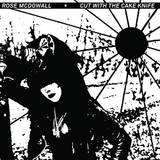
Cut The With The Cake Knife was recorded by Rose McDowall in 1988/89 following the break up of her group Strawberry Switchblade. Produced with the aid of several musicians in several studios, the album features songs written for the fabled second Strawberry Switchblade album. More importantly perhaps it showcases the honest, direct and life-affirming songs of one of the greatest unsung songwriters of the modern pop era at a tumultuous time in her career.
Tibet opens the set and could be one of the best pop songs you've never heard. The innate sadness of the songs' content - the loss of a friendship, impending sorrow - is heightened to heart-melting level by McDowall's pop nous and melodic sensibility. Choruses and hooks are everywhere on Cake Knife, from the outsider take on stadium 80s pop in Wings Of Heaven to the spiraling, ecstatic So Vicious, a glorious anthem that highlights the human fragility in McDowall's vocal performance, an instrument that has never lost the naïve purity it first exemplified in Strawberry Switchblade's early 80s recordings. The centerpiece of the album, the title-track, is the greatest Switchblade pop chart hit that never was. Like the veiled melancholy of her former group's hits, Cut With The Cake Knife hints at a darkness beneath the gloss, a darkness that saw McDowall delve into more esoteric territory with her subsequent recordings and collaborations. Cut With The Cake Knife serves as the bridge between the pop music McDowall had been making with her friends Jill Bryson, Lawrence from Felt and Primal Scream to what became a more extreme, deep sound informed by neo-folk and post industrial music.
Rose McDowall's role in the canon has always been one of an outsider. Beginning in Glasgow's East End in the avant proto-noise group The Poems, achieving fame briefly in the 80s and then disappearing into counter-cultural folklore, the emphasis in the internet-age has been skewed towards her image and cultural significance. Unseen to many, her solo work, her groups Sorrow and Spell and her collaborations with a whole host of underground luminaries have still touched lives. As McDowall elucidates: 'They're real sad songs, about real life. I've had people come up to me to say I'd connected with them and helped them. I remember a gig in America when we made a whole room cry. It was bizarre. A couple at the front of the stage started crying and then these two boys beside and suddenly everyone was crying. And I thought, "that's power."
Night School's issue of Cut With The Cake Knife includes unpublished photographs, extensive sleeve notes from Rose McDowall and 2 bonus tracks culled from the bootleg 7' 'Don't Fear The Reaper.' First vinyl pressing is Clear w/ Black swirl; 500 only / has DL card and booklet, with a poster
CD has extensive booklet and is packaged in anO-Card.
Above The Clouds I Finally Found Peace, the latest work from French artist Quelza (Leo Naït Aïssa) on Ostgut Ton, feels like a homecoming.
A testament to introspection and self-awareness.
Rather than adhering strictly to a club-focused approach, the EP marks a step forward in freedom of expression, breaking away from a purely club-based format and instead leading into a broader listening territory. It unfolds as a personal musical journal shaped by perception, memory, and emotion.
As its title suggests, the record carries a spiritual undercurrent. It stands as a sincere sonic statement from a young artist, driven by a clear intention: to express vulnerability and honesty through sound.
The EP invites the listener to let go of expectations formed by previous releases, while preserving the emotional intensity and distinctive sonic identity that have come to define this work in recent years.
„Above The Clouds I Finally Found Peace“, das neueste Werk des französischen Künstlers Quelza (Leo Naït Aïssa) auf Ostgut Ton, fühlt sich wie eine Heimkehr an.
Ein Zeugnis der Selbstreflexion und Selbstwahrnehmung. Anstatt sich strikt an einen cluborientierten Ansatz zu halten, markiert die EP einen Schritt vorwärts in Richtung Ausdrucksfreiheit, bricht mit einem rein clubbasierten Format und führt stattdessen in ein breiteres Hörgebiet. Sie entfaltet sich wie ein persönliches musikalisches Tagebuch, geprägt von Wahrnehmung, Erinnerung und Emotion.
Wie der Titel schon andeutet, hat die Platte eine spirituelle Unterströmung. Sie ist ein aufrichtiges klangliches Statement eines jungen Künstlers, der von einer klaren Absicht getrieben ist: Verletzlichkeit und Ehrlichkeit durch Klang auszudrücken.
Die EP lädt den Hörer dazu ein, die Erwartungen, die durch frühere Veröffentlichungen entstanden sind, loszulassen, während sie gleichzeitig die emotionale Intensität und die unverwechselbare klangliche Identität bewahrt, die dieses Werk in den letzten Jahren geprägt haben.“
Editions Mego welcomes KMRU back to the fold. Kin is Kenyan born, Berlin based, sonic wizard Joseph Kamaru’s second release on Editions Mego, following on from the classic 2020 release Peel. Since the release and subsequent praise for Peel, the artist has been a staple on the electronic scene performing on numerous stages and festivals worldwide in tandem with a flood of media recognition. Kin could be construed as the second child following Peel. The project came out of initial discussions with Peter Rehberg about what a Peel sequel would sound like. Kamaru is quick to clarify that Kin is not that record; “I'll know when that record will come and when I'll make it. It's already happening... or maybe it lives within both of these Mego records”.
It is this deft ambiguity and vague tiptoeing around the concrete that encapsulates the ambiguous sound world of Kamaru’s vision.
Kin was started early 2021 in Nairobi with Kamaru exploring his noisier palette of sounds encompassing distortions reminiscent of the sounds he would muster from in his youth when playing guitar. He paused making this record for a year as soon as Peter died, then slowly returned to it through 2022 resulting in the immense new work we have here.
The charms within Kin lay as Easter eggs revealing the true identity behind the colourful sonics only after multiple deep listens. With Trees Where We Can See sets the tone by way of a warm swaying melody inviting the listener in for further investigation. In 2022 KMRU and Mego stalwart Fennesz toured the USA together resulting in a strong friendship and also, the second track here, Blurred. A neat Mego/Editions Mego loop as such. Blurred arranges twangy guitar strums alongside glistening glaciers of shimmering drones. They Are Here represents a darker hue as melancholic clouds of shadowy noir tap directly into the listener's nerve stream. Maybe takes a detour into a bristling euphoric electronic storm whilst We Are screeches in a pattern formation not unlike a highly abstracted Aphex Twin forcing its way out of a hard drive. By Absence concludes proceedings, operating as both exit music and a portal to further sonic investigation with acoustic bellowing residing amongst a kaleidoscopic backdrop.
Kin is a trip that rewards close repeated listens as all the colours and textures, nuance and narratives unveil themselves. This isn’t a record to be glossed over, magic rewards concentration.
Kin is a record to be Played slow and LOUD.
For Pita.
All tracks written, produced, mixed by Joseph Kamaru
Blurred co-written & produced with Christian Fennesz
Mastered by Stephan Mathieu at Schwebung Mastering
Photography: Joseph Kamaru
Layout & Design: Nik Void
Cut by Andreas Kauffelt at Schnittstelle, Berlin
Monologues Records concludes its celebration of a decade on the dancefloor with a punchy selection of raw, underground tracks that channel the infallible sound of acid through varying refractions. DECIUS / Paranoid London's Quinn Whalley and Posthuman's Joshua Doherty team up as True Pleasures for the throbbing crunch of 'Pump', Japanese wizards Iori Wakasa and Keita Sano go oddball disco on 'Teachers', label boss Ben Gomori jacks the groove on the hip house flavoured 'Gomorish' and Burnin Music chief Pegasvs nails it on the 303 electro of 'Ridley Road Market Preacher'.
Indiana Jones never dug this deep.
Church – the brainchild of Joe Washington – were a band both lucky and cursed to come up in the seventies. Lucky, because they rode a wave of community activism, uplifting messages and a moment when music truly mattered. Cursed, because those same times meant their tight, heartfelt output went overlooked.
Mid-sixties to circa 1980 soul and funk were extraordinarily rich. The era’s big releases have aged like fine wine, yet countless hidden gems remain buried. Church’s only single was one of them. Their hypnotic 1976 release “How Long” b/w “Da Da Song” arrived the same year as Stevie Wonder’s Songs in the Key of Life, Marvin Gaye’s I Want You, Diana Ross’s Diana, and at a time when Black mainstream music was shifting toward disco. Church, however, sounded like Sly & The Family Stone in an alternate timeline — gritty, focused, stripped of additives.
“Da Da Song” is pure grits and gravy: furious, tight drums and lyrics that sound like both a plea to DJs to play their record and an insistence to keep the party alive, noticed or not. It cooks from start to finish in just two and a half minutes.
“How Long” is its own universe. Where “Da Da Song” is skeletal, “How Long” blends key strands of Black music in under three minutes: touches of spiritual jazz with a Gary Bartz-like sax, gospel-blues undertones, and echoes of the era’s flower-power-tinged Black creativity — The Undisputed Truth, The Family Stone, even the poetic freedom of Nikki Giovanni. The lyrics are a timeless plea for love.
Church formed in the Bay Area in the early seventies, shaped by the movement, culture and activism of the time. Joseph Washington, based in San Jose, never chased a music career — for him, music was a way to bring people together. Before Church, he led a backing band called Wash, then added gospel singer Linda Williams (née Stephens) and New York–born Joel Como on xylophone to complete the group.
They rehearsed in Joe’s garage, spread through word of mouth and played every gig they could: Black colleges, opening slots for The Whispers, neighbourhood house parties. Some members studied at Nairobi Junior College in East Palo Alto, then a hotbed of Black community activism, with revolution in the air and messages woven naturally into the music.
This single is a message from that era, resurfacing at last — ready to be sampled just as another Joe Washington track, “Look Me in the Eyes”, was on Drake and J. Cole’s “First Person Shooter”. These rare, spirited tunes are begging for new life through samplers, again and again.
- A1: Youth
- A2: Concave
- A3: Convex
- A4: Belong
- B1: Martial
- B2: Enemy
- B3: Warface
- B4: Abandon
Naibu is a well respected artist with 6 critically acclaimed solo albums and releases on prominent labels like
Creative Source, Soul:R, Hospital and Paradox Music
The album takes influences from dnb's greatests (Photek, Paradox…) blending them with flavours of electronica and experimental music. A unique combination of sounds that will please home listeners and DJs alike, with cuts like 'Martial' shaking dancefloors worldwide.
Record comes with fully printed inner sleeve featuring original artwork by Japanese artist Hitomi Ito
⁃ Only 200 copies worldwide
Following up on the success of 'Sans Soleil' on Minato Music, Naibu brings out 'Abandon', a new and intimate album that showcases his talent not only as producer but also as singer / songwriter.
Probably his most personal release to date, this is a project that brings opposites together and champions
experimentation. From classic d’n’b stylistic references in tracks like 'Concave' and 'Convex', to the soft minimal tones of 'Belong', the album steps into uncharted territory with 'Martial' and its military paced drums, a track that will leave a mark on any dancefloor.
Naibu’s music is supported by a wide range of DJs, from Fabio to Loxy, and is regularly featured on Laurent
Garnier's radio show
Berlin scene figurehead Gilles Aiken, AKA Edward, coming through with a massive Kalahari debut (and it’s safe to say he understood the assignment).
Booting off on a massive remix tip as the veteran producer reinterprets Mike Parker & Aric Rist’s Trybet project, but trust him to allow for a moment of dancefloor introspection. It’s prime early morning gear in a rousing juxtaposition of beatific string harmony and tough-as-nails deepness. Triumphant ‘window shutters open in the club at 5 AM’-type shit.
The other two are quintessential Edward: impressionistic, widescreen odysseys across lysergic terrain, but groove-forward where it counts. A pair of head-spinning explorations intended for the dancefloor, flush with shadowy flex, insectoid detail and tripped-out flourishes while keeping it funked-out in the tradition of Detroit.
The ‘Deep Sea Villain EP’ plumbs the depths of smudged abstraction, and as we’ve come to expect from Edward, it’s big on hallucinatory detail. It all oozes the multi-layered surrealism that typifies his best work. Proper transcendent biz.
- A1: Haunted Nightmare Society
- A2: Dark Romance In The Garden Next Door
- A3: The End Games
- B1: Ministry Of Fairy Tales
- B2: Lost Places Of The Boundless Heroes
- B3: The Robots With Heart And Acid
- C1: Sirens Of The Awakening
- C2: Extasy Of Fear
- D1: Online Mobs
- D2: Heaviest Dirty Melody Maker
- D3: Bizarre Flickering System Of Minds
The Return of 'The Nightstalker', a Childhood Intelligence endeavor written/produced by Dan Piu & Gary Rich (2022). The second album «Genetic Constitution» is the sequel of «The Tragedies Of A High-Tech World» (2020), in which the Nightstalker continues to manifest its mystic dystopian electronic prophecies. Full of haunted melodies, cinematic compositions and passages of hope and despair.
«In a damned world
dystopian and mad
we create our own sound
of the positive apocalypse
with bizarre characters
we feel connected
with the outsiders,
strangers and forgotten
in the darkest hour
the crazy sounds arise
standing on the edge
a delight for the senses
when all are gone
we have stayed
in the endless desert
good and evil at the same time
for us it is true
always to nail down
when everyone can have it
we do not want it»
*Repressed on yellow vinyl
45 Pounds is a record of thrilling cacophony: whirring drums meet the sound of instruments which have been twisted and bent into new shapes, all of which are paired with the arresting growls of Zack Borzone. Across the record the four-piece re-imagine what is possible within the confines of a band set up, creating music that perfectly encapsulates the information overload of our times.
The band have become known for their stellar live performances and now with 45 Pounds they have set that electrifying feeling to record. With 45 Pounds YHWH Nailgun have created a statement that is short to cut through the modern day post-algorithmic sludge. Stay tuned for more news.
- B2: Grazia Vitale – Poi (1975)
- D4: Daniel Sentacruz Ensemble – Vivo Solo Con Te (1982)
- A1: Cinzia Peloso – Sciogli Le Catene (1980)
- A2: Linda’s Night – Cucciolona (19??)
- A3: Daniela Guerci – Non Ti Resisto Più (1979)
- A4: La Comune Idea – Cuore Di Serpente (1981)
- B1: Tony Ferri – Stella D’oriente (1979)
- B3: Sara Bongiovanni – Casablanca (1985)
- B4: Solimar – Veliero (1980)
- B5: Coscarella & Polimeno - Station To Station 2025 (2025)
- C1: Cap – Alla Porta Del Tempo (1982)
- C2: Francisca – Non Dico No (1983)
- C3: Hyper Drive Band – Hyper Mix (1985)
- C4: Linnel Jones – We’ll Cry Out (1986)
- D1: Jairo – Night Woman (1985)
- D2: Ilaria Berlato – Vincerò (1985)
- D3: Alex P.i. – Free Love (1985)
- D5: Miro – Tu Non Lo Sai (1984)
Everyone knows the story of American disco.
But few are aware that, between the late 1960s and the late 1980s, Italy wrote a parallel one — spontaneous, surprising, and incredibly creative.
It is a story that spans two distinct seasons: the Italian disco of the 1970s — melodic, handmade, sometimes naïve yet always original — and the emerging Italo Disco of the 1980s, electronic, futuristic, and lightheartedly projected toward the future.
Two different languages, yet both driven by the same desire for freedom and modernity. Discoteca Sound — Italian Discoteca Underground 1975–1986 brings together 18 rare tracks — including two previously unreleased — that tell this story of transition: from the orchestral and sentimental disco of Italian dance halls to the synthetic and visionary sound of the first drum machines.
A journey through private archives, local labels, regional studios, and forgotten voices — the sonic map of a country that has always danced, but to its own rhythm. From Mediterranean disco to the first Italo Disco, from the dim lights of provincial dance halls to the early home synthesizers, each track opens a window onto an Italy that dreamed of the dance floor as a universal language of connection during the brief season of revolutionary utopias.
This compilation celebrates ten years of work by Disco Segreta — a decade dedicated to the research, recovery, and appreciation of Italian disco and electronic culture. An act of justice owed to all those artists who had their moment yet were never remembered by history — bringing back to light an essential, still too little known part of our musical heritage.
Because dancing today remains, more than ever, a living act of memory.
Limited edition 2LP, features 2 previously unreleased tracks and a new 2025 version of Coscarella & Polimeno – Station to Station.
f Grazia Vitale – Poi (1975) Previously Unreleased
q Daniel Sentacruz Ensemble – Vivo Solo Con Te (1982) Previously Unreleased
f Grazia Vitale – Poi (1975) Previously Unreleased
q Daniel Sentacruz Ensemble – Vivo Solo Con Te (1982) Previously Unreleased
f B2. Grazia Vitale – Poi (1975) Previously Unreleased
q D4. Daniel Sentacruz Ensemble – Vivo Solo Con Te (1982) [Previously Unreleased]
[f] B2. Grazia Vitale – Poi (1975) [Previously Unreleased]
[q] D4. Daniel Sentacruz Ensemble – Vivo Solo Con Te (1982) [Previously Unreleased]
[f] B2. Grazia Vitale – Poi (1975) [Previously Unreleased]
[q] D4. Daniel Sentacruz Ensemble – Vivo Solo Con Te (1982) [Previously Unreleased]
dungeon acid review 25-09-03 by Joakim Cosmo A acid house style EP by swedish acid techno pioneer on swedens oldest underground label? Making a acid house EP in 2025 that makes a difference is a challenging task but this one just nails it. Here you see a softer and more musical side of Dungeon Acid in the shape of 5 dark yet hopeful Acid House tracks. Despite the classic form and ingredients it somehow avoids feeling retro but I guess this is what happens when you let a true grand master do it combined with a selector and label boss beyond the ordinary. It's like a paralell universe version of what Acid House could have become, and its a beautiful vision. A1-101-303 starts off with a dreamy, moody dubby and slightly romantic track that is just utterly beautiful in all its simplicity. The elegance and easy touch strikes me instantly. Nails the essence of the genre. One more like this and im buying it. The way A2-Unlock rewind builds up gives me goosebumps. So hypnotic and dark and experimental and the way it progresses to the ravey chord-break. The sounds and effects and details feel so alive and on the fly. In the record store this is where id already go "ok, im having this one" B1-Lonely Acid boy is yet another simple yet super atmospheric track. The contrasts between the rough robotic parts and the jazzy live solos ontop just gets to me. The roughness in the mix, that second beat with the hi-hats and extra bass, the fact that its so loud and sudden, is just great. And then we get to B2-Shnukki and all of a sudden, a romantic melodious electro track with a asian touch and acid bassline, that somehow goes well together with the other tracks. This one isnt my favourite or what I would buy the record for, but it would probably be the one I discover years later. Typical Borft Records to think that far ahead. The EP ends with B3-Chiliflex BB come on and this one starts with more late 80's ravey chords but the further you get into the track the more disharmonic, tweaky and punky it becomes. Things dont really fit together yet they do. To sum it up, these tracks are raw, funky, gutsy, streety, visionary, full of contrast and a bit challenging, just like acid house should be, but often isnt. I think Dungeon Acid and Borft Records nails it here. I'd buy doubles of this.
With CAPTAIN, BNXN takes the wheel. The Nigerian singer-songwriter has always blurred the lines between afrobeats, R&B, and soulful introspection—but this time, he’s driving with full control, no co-pilot. The album marks a defining moment for BNXN (pronounced "Benson"): a confident, fully-formed statement from an artist who’s learned to trust his instincts, sharpen his pen, and follow his own creative compass.
From the cinematic opener to the late-night confessionals tucked between glossy hooks, CAPTAIN feels like a diary written at cruising altitude. BNXN threads personal stories through rich instrumentation—balancing Yoruba and English lyrics, weaving between amapiano pulses, stripped-down ballads, and smoky alt-R&B. Standout moments find him unpacking fame’s isolations, questioning loyalty, and wrestling with what it means to lead without losing yourself. There’s growth in every verse, not just in what he says, but how he says it: sharper, more intentional, and wholly unafraid to take risks. This is BNXN unfiltered—charting new territory without ever losing sight of home.
It's ten up for Ira James's so-far-so-superb Vessel Recordings Group label as the duo of Nonfiction and Kid Enigma step up for a fresh new single. 'Make It Look Good' is an instant house classic with all the key elements nailed: the drums are deep but driving, while the percussion adds texture and bite. And who better to add some further layers of house authenticity than the one and only Chicago don DJ Sneak. First up he goes raw and loop as you would expect, then dubs things out with his second offering. Another doozy from this imprint.
- A1: Countrymusicdisco45 4 08
- A2: Sometimes Shooting Stars 2 57
- A3: Short Cut Home 3 25
- A4: Disappointment 3 00
- A5: Days Are Mighty 2 46
- B1: Don't Dance With Me Tonight 3 27
- B2: You Got It Wrong 2 39
- B3: Ring The Bells 3 57
- B4: Let's Make It Up 2 49
- B5: When Did You Stop Loving Me 3 54
- C1: Just Beginning 4 00
- C2: Wintering Of The Year 3 16
- C3: Let It Rain 3 04
- C4: We Tell Each Other Who We Are 3 27
- C5: Trip To You 4 06
- D1: Dirt 2 54
- D2: Heaven Right Here 3 38
- D3: If Later Ever Comes 3 03
- D4: Remember The Season 3 10
- D5: A Little Love 3 35
- D6: Weary Traveller 3 20
“The high priest of country cool” - Rolling Stone
“I like him very much. He’s very special. He’s singing with a voice I never heard before” - Townes Van Zandt
“A conscious, soulful brother” - Horace Andy
“He’s a brother to me - one of the best singer/songwriters I’ve ever met” - Adrian Sherwood
“Unearthed mine of gems from inner Wales - a songbook of ideas - that's Jeb!” - Gilles Peterson
Jeb Loy Nichols is a bonafide Country (Got) Soul legend. The Music Maker presents 21 incredibly deep, grooving and soulful songs from the cream of Jeb's catalogue; from its earliest days to his latest unreleased gems via countless rare and unbelievably good lost-classics. This 2LP set is presented in a gatefold sleeve complete with freshly commissioned artwork courtesy of Jeb himself.
In collecting these uncut, under-heard gems, we hope to do justice to Jeb's jaw-dropping artistic brilliance. A man who, in working with Adrian Sherwood, Dennis Bovell, Dan Penn, Larry Jon Wilson and countless other legendary characters, has crafted some of the most deeply affecting folk, country, soul, funk, blues, dub, reggae, gospel, rap and electronic music, ever heard.
The first music Jeb really felt a connection with was southern soul: "I used to listen to the radio at night and fell in love with Bobby Womack and Al Green, The Staple Singers and Joe Simon – that whole Nashville/Memphis/Muscle Shoals thing.” But Jeb was so much more than a soul boy, Indeed, he "went to bluegrass festivals with my dad and come home and listened to jazz records with my mother.” And, when he was fifteen, he heard his first punk record: "God Save The Queen" by The Sex Pistols. “That and The Ramones completely changed me.” In 1979 he got a scholarship to go to art school in New York: “A great time. Punk was over but hip-hop was starting and I got into that in an obsessive way.”
His first recording, in 1980, was an unreleased rap song called "I’m A Country Boy". If that isn't an insight enough into Jeb's kaleidoscopic path through music, in 1981 he visited friends in London and found himself living in a squat with Adrian Sherwood, Ari Up (from the Slits), and Neneh Cherry. “Adrian put me to work immediately, moving boxes of records all across London. It was Adrian that was and is my biggest influence – in his complete disregard for genre purity.” So, presumably you're getting the picture? A veritable musical magpie with a voracious appetite and unimpeachable taste.
"Mine has always been a meandering career. I've done what I've done, and made the music I've made, due to chance meetings. I'm not particularly ambitious; it's more important to me that I work with friends and like-minded people. I've been a big fan of Be With for years. Everything they release is essential. When they asked about rereleasing "Countrymusicdisco45" I was both pleased and flattered. We began talking about how we'd do it; two years and twenty-one tracks later, here we are. I've always thought of the music I make as Country Music. Music conceived in the country, written in the country, recorded in the country. I left London and moved back to the country so I could live among the trees, the grasses, the animals, those things that don't go to war and get greedy. This compilation is the story of that life. Hand made, lo-fi, ramshackle, stripped down, real deal music. Heartworn and funky. Music made in the kitchen, not in the studio. As the great Skip Mcdonald said, Perfect ain't perfect. It's great to see all these tracks gathered together. It feels like a family reunion. Some older members of the tribe, some newer arrivals."
Opener "countrymusicdisco45" is a song Jeb wrote about how his crew lives, tucked up blissfully in the hills: "House parties full of country folk dancing to disco, reggae, soul, country, hip-hop. All night. I recorded it at home under the influence of Stevie Wonder." It's one of the funkiest records you'll ever hear. "Sometimes Shooting Stars" was recorded in Nashville and mixed by the legendary Dennis Bovell. It's deep, dubby, majestic. A thing of fragile, melodic beauty. The party ramps back up again with the undeniable groove of "Short Cut Home" before the profoundly moving "Disappointment" arrives. One of many songs he's recorded with good buddy Benedic Lamdin (aka Nostalgia 77): "We were going for a Leon Thomas meets Richard Brautigan meets Alice Coltrane kind of thing". We think they nailed it. "Days Are Mighty", like a lot of the tracks on this collection, "started life as a demo, an attempt to get something down while it was fresh. No frills, nothing fancy, just feel." And what feels!
The irrepressibly funky "Don't Dance With Me Tonight" is a deeply moving, slow-mo organ-drenched head-nod-funky country-ballad. Next up, the breezy "You Got It Wrong" was recorded in Wales with some of Jeb's good friends and neighbours, The Westwood All Stars, featuring Clovis Phillips and Will Barnes. Skanking fiddle-flecked gem "Ring The Bells" was the first thing Jeb recorded when he moved to Wales. A combination of all his loves; country, reggae, soul. It's followed by "Let's Make It Up", a truly sumptuous string-drenched emotional groover. "When Did You Stop Loving Me" is another Nashville track, written and recorded during a time Jeb was spending a lot of time with the Muscle Shoals crew, Donnie Fritts, Spooner Oldham, George Soule and Dan Penn: "It shows, I'm sure, their influence." Oh, you bet it does!
The swaggering country-funk of "Just Beginning" should grace many groove-focused DJs' sets whilst "Wintering Of The Year", again made with Clovis, is pastoral, campfire soul. The glacial, gorgeous "Let It Rain" is from an unreleased record Jeb made with the great British jazz bass player Andy Hamill and "We Tell Each Other Who We Are" is freaky country-soul made by a man with a love for strutting, wonky hip-hop stylings. Rounding out the side, "Trip To You" is pure, uncut amphetamine-propelled drum-machine soul.
The spare, beautiful "Dirt" is from an EP Jeb made with Julian Moore in his house in South London: "All first takes, straight to tape." Swoon! "Heaven Right Here" was a very minor league hit in America: "It was produced by the brilliant and much missed Wayne Nunes. It was started in the countryside of Missouri, finished in the countryside of Wales, and recorded in the countryside of Sussex." Double swoon! "If Later Ever Comes" is electronica meets J.J. Cale business whilst "Remember The Season" is truly wonderful and breezy guitar soul. "A Little Love" was made with Wayne Nunes as well, after a night of listening to Studio One and Northern Soul. Bouncy dub closer "Weary Traveller" was written by Bill Monroe, the hero of Jeb's youth: "Monroe's music was heavily influenced by black southern churches; I've tried to keep some of that feral feel." This was the final recording by Jeb's 1990s Country-Dub band, Fellow Travellers.
The name of this compilation comes from a time when Jeb lived in Peckham, south London and he used to DJ and sometimes perform at a local bar: "The owner of the bar, a Jamaican named Count Percy, once asked me what I called my music. I told him I wasn't sure, I guess just pop music. He thought about it for a minute and then said, 'no, more like mom and pop music'. Rather than call me a country singer or a folk singer he always referred to me as The Music Maker."
With the long overdue deluxe overview of his beloved music, we hope to finally shine a light on the unheralded genius of Jeb Loy Nichols. RIYL Larry Jon Wilson, Townes Van Zandt, Bobby Charles, country got soul artists, dub, deep soul, disco, dancing, heartbreak. This deluxe collection, spellbinding from beginning to end, should hopefully go some way to ensuring Jeb reaches an ever bigger, ever more appreciative crowd of followers. Mastering for this special double vinyl edition was overseen by Be With regular Simon Francis and it was cut by the esteemed Cicely Balston at Abbey Road Studios to be pressed in the Netherlands by Record Industry. The artwork has been lovingly put together by The Music Maker, himself, Jeb Loy Nichols. "Be With is the perfect home for this mongrel music. I am forever in their debt." The pleasure is all ours, Jeb.
The 12th release on ALIM Music, Brazilian singer-songwriter Rogê delivers a radiant and rhythmically rich reinterpretation of Talking Heads’ “Road to Nowhere,” setting the tone for BBE's Naive Melodies - a bold and visionary tribute to the music of Talking Heads, reinterpreted through the lens of Black musical innovation. Curated by Drew McFadden - the creative mind behind BBE’s acclaimed Modern Love (David Bowie tribute album) releasing this October via BBE Music. Now based in Los Angeles, Rogê, a Latin Grammy nominee and longtime torchbearer of Rio’s samba-soul vanguard - reimagines the Talking Heads classic as a soulful samba jam, infused with earthy guitar, syncopated percussion, and his signature smoky, magnetic vocals. Where the original rides on quirky tension, Rogê’s version flows with saudade and sway, steeped in the Afro-Brazilian traditions that have defined his sound for over a decade.
Produced by Tommy Brenneck (Amy Winehouse, Mark Ronson, Cuco, Charles Bradley, The Budos Band), the track carries a raw, analog warmth that nods to classic MPB (Música Popular Brasileira) and the golden age of 1970s samba-rock, while subtly weaving in the existential overtones of the song’s lyrics. Rogê's “Road to Nowhere” captures the essence of Naive Melodies: a reimagining of Talking Heads’ catalog through the rhythmic and cultural lens of the global Black music traditions that helped shape it. From samba and funk to soul, dub and jazz, the album brings together forward-thinking artists from across the diaspora to revisit, reinterpret, and revive the sounds that have always lived in the band’s DNA.
- A1: Disco Wich Aa
- A2: Nainan Da Pyar De Gaya
- A3: Par Toon Ki Janay
- A4: Pyar Mainu Kar
- A5: Aye Deewane
- B1: Soniya Mukh Tera
- B2: Mainu Apne Pyar Wich
- B3: Chum Chum Dil Nal
- B4: Ve Tu Jaldi Jaldi Aa
- B5: Dohai Ni Dohai
- C1: Disco Wich Aa (Peaking Lights Remix)
- C2: Turbotito & Ragz Featuring Piya Malik - Nainan Da Pyar De Gaya
- C3: Par Toon Ki Janay (Danger Boys Remix)
- D1: Nainan Da Pyar De Gaya (Psychemagik Remix)
- D2: Par Toon Ki Janay (Dexter+Franz Remix)
- D3: Mainu Apne Pyar Wich (Mystic Jungle Remix)
- D4: Disco Wich Aa (Baalti Remix)
Naya Beat is incredibly excited to announce the release of an astonishing lost “holy grail”, Mohinder Kaur Bhamra’s 1982 masterpiece ‘Punjabi Disco’. Unknown and inaccessible to even the deepest of diggers, it is the first British Asian electronic dance album recorded and a true lost relic. A chance find of the original multitrack masters during the Covid lockdown led to ‘Punjabi Disco’ being rediscovered. Lovingly mixed down and remastered from these very studio recordings, the reissue also includes remixes by Peaking Lights, Baalti, Mystic Jungle, Psychemagik, and Danger Boys, as well as a cover by Say She She’s Piya Malik and Turbotito & Ragz and a previously unreleased track. It is available for pre-order and out on x2LP vinyl and all digital platforms on October 31st, 2025.
Released the same year and into equal obscurity as ‘Ten Ragas To A Disco Beat’, Charanjit Singh’s acid house opus, the reissue of ‘Punjabi Disco’ is set to have similar reverberations in the world of dance music. Produced by Mohinder’s eldest son and legendary bhangra pioneer Kuljit Bhamra using a recently acquired Roland SH-1000 synthesizer and a CR-8000 CompuRhythm drum machine played by his then 11-year-old brother, the album was recorded at Roxy Music bass player Rick Kenton’s studio in London. The concept for a Punjabi disco album was subsequently stolen from the Bhamra’s by the very record label that had agreed to distribute the album. Eventually self-released with no label support, ‘Punjabi Disco’ vanished into complete obscurity.
A pivotal figure in British Asian music, West London-based vocalist and first-generation immigrant Mohinder Kaur Bhamra became the first woman to sing at Punjabi weddings and other community events in the UK. Her son, Kuljit, would accompany her, playing tabla at her events from the age of six. Wedding music was traditionally a tame, segregated affair: men and women seated and separated on opposite sides of the room. ‘Punjabi Disco’ was born out of a desire to create an unsegregated dancefloor and inspired by the sounds of disco from the era. A tapestry of electric drum rhythm, warbling bass, and psychedelic siren-like Roland synth melodies provide a vehicle for Mohinder’s powerful voice. Part disco, part funk, part acid house, and infused with Punjabi folk melodies, the sound of ‘Punjabi Disco’ is as mesmerising as it is undefinable.
Featuring an incredible gatefold package and exhaustive liner notes by the Guardian’s Global Music Critic, Ammar Kalia, the x2LP release has been cut to vinyl for the discerning listener and DJ by Grammy-nominated Frank Merritt from The Carvery, London.
This is Naya Beat’s ninth release in a series of reissues, remixes, and compilations dedicated to uncovering electronic and dance music from the subcontinent and South Asian diaspora.
Interception, the second long player from Jensen Interceptor following 2018's Mother, is something of a state-of-the-nation that finds Melas consolidating several eras of his career, past and present, to form a distinct new sound that is the most experimental work he has produced to date.
In 2024, a freak accident at an event he was playing left him with multiple broken bones in his foot. The forced downtime became an opportunity for introspection, allowing him to revisit earlier projects and explore new musical territories. Blending his signature electro with genres such as IDM, footwork, and baile funk, Melas used this recovery period to fuse old influences with fresh global sounds. "Since I started making music I've always made music geared towards use in my DJ sets but there's always been an urge to explore the deeper side of electronic music.
That time off after the accident gave me the space to dive into genres and really experiment.
" The accident came at a time when he had already spent time, like so many others though the COVID-19 pandemic, assessing his next move. A full tour schedule had left him feeling constrained by the limitations of working in a single genre. As such, Interception is the end point of this reassessment and the start point of what Melas sees as the next stage of his musical evolution.
"I really wanted to challenge and, I guess, prove myself in other spheres, to take my music to a new place. I've never wanted to be too repetitive and found that expectations, imagined or real, were forcing me to get stuck on a specific sound both in my productions and DJ sets." This renewal is reflected in the title of the album, which eagle-eyed fans will note is the same as the first EP that was released under the Jensen Interceptor moniker, and the emotional and personal nature of the LP is likewise mirrored in the abstract impressionism of the artwork created by fellow Australian, Brodie Kaman, the artist behind the visual look of Lady Gaga's recent Mayhem LP as well as works for FKA Twigs, Nine Inch Nails, and more.
The design-resembling oil drifting across a microscope slide-uses a mix of vivid pastels and moody darks to express the album's emotional depth: a collection of distinct elements coalescing into something richer and more evocative.