Mit seinem neuen Album Y'Y (ausgesprochen "eey-eh, eey-eh") betritt Amaro Freitas ein neues Reich des musikalischen Schaffens. Ein Reich, das in Magie und Möglichkeiten verwurzelt ist und von einem Gefühl der Verantwortung für die Gaben der Erde getragen wird. Seite A ist ein Ausdruck der Verbundenheit mit der Erde und den Ahnen, eine Hommage an den Wald und die Flüsse Nordbrasiliens, sowohl mit der Musik als auch mit dem Albumtitel Y'Y, einem Wort aus dem Sateré-Mawé-Dialekt, einem uralten indigenen Code, der Wasser oder Fluss bedeutet. Und indem er die Lektionen, die er im Amazonasgebiet über die glühende Kraft verzauberter Geister gelernt hat, die in Zeiten des Kampfes im Namen der Gemeinschaft eingreifen, zum Leben erweckt. Auf Seite B zeigt Y'Y die Verbindungen zwischen der globalen schwarzen Avant-Jazz-Gemeinschaft. Die Musik des Multiinstrumentalisten Shabaka Hutchings, der Harfenistin Brandee Younger, des Bassisten Aniel Someillan, des Gitarristen Jeff Parker und des Schlagzeugers Hamid Drake schafft eine kunstvolle Konversation, indem sie Jazztraditionen aus der ganzen Welt miteinander verwebt und gleichzeitig in den einzigartigen Klängen und Ritualen afro-brasilianischer und indigener Kulturen verwurzelt bleibt. Auf Y'Y lässt Freitas das Wissen der Vorfahren in die Musik einfließen, indem er seine frische, "dekolonisierte" Interpretation des brasilianischen Jazz einbringt und Musik präsentiert, die vorgefasste Meinungen darüber, was Jazz sein kann, durchaus erschüttern könnte.
Suche:nam
DJ Support: Louie Vega, Kenny Dope, David Morales, Dimitri From Paris, Dave Lee, Simon Dunmore, Michael Gray, Brian Tappert, Melvo Baptist, Seamus Haji, Terry Hunter, DJ Spen, Hector Romero, Dr. Packer, Kenny Carpenter; Jellybean Benitez, Husky, Birdee, Derrick McKenzie.
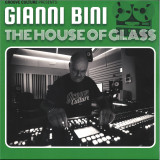
Legendary Italian producer Gianni Bini Debuts on Groove Culture with 'The House Of Glass' LP. With an inimitable CV and discography that includes over a thousand production credits to his name, hundreds of singles under renowned pseudonyms including Bini & Martini, Fathers Of Sound, The Goodfellas, Subsystem and two Worldwide hits as Eclipse and House Of Glass, Gianni is one of the most revered producers of disco-house, defining each genre with a signature sound. Always looking to push the boundaries of what it means to make music, his latest project sees Gianni return to deliver an epic disco record that takes the sound back to its roots in every way possible. Backing up live drums, live bass, live guitars, live strings with catchy vocals and enough groove to level a discotheque, it’s this Disco-Pop energy that Gianni has captured and expertly delivered with 'The House Of Glass'LP.
Der Dark-Ambient-Pionier, die stygische Drone-Legende und das fast schon mythische Wesen LUSTMORD durchstößt mit "Much Unseen Is Also Here" einmal mehr den Schleier - die neueste Solo-Veröffentlichung des Künstlers in einer beeindruckenden, 40-jährigen kreativen Karriere an der Spitze der Industrial-Musik. Auf Drängen von Cosey Fanni Tutti und Chris Carter von Throbbing Gristle, Musik zu machen, die seine unverwechselbare Aura einfängt, übernahm Brian Williams 1980 Lustmord und begann mit Sounds zu arbeiten, weil die Musik, die er hören wollte, einfach nicht existierte. Lustmord veröffentlichte 1989 sein drittes Album "Heresy", das zu einem Meilenstein in der Industrial-Szene wurde und heute allgemein als Ursprung des Dark-Ambient-Genres gilt. 35 Jahre später führt Much Unseen Is Also Here" das Vermächtnis von Heresy" fort und knüpft an dessen fesselnden Erzählbogen an. "Much Unseen Is Also Here" besteht aus drei verschiedenen Teilen und ist dazu gedacht, in einer einzigen, ununterbrochenen Durchgang angehört zu werden; es entführt den Hörer in eine kompromisslose Parallelwelt, die nur in der Musik existiert, bevor es ihn am Ende für immer verändert wieder hinauswirft. Lustmord, der seit 1994 in L.A. lebt, hat auch als Komponist und Sounddesigner an der Musik für ikonische Film- und Fernsehproduktionen mitgewirkt, darunter "The Crow", "Strange Days", "From Dusk Till Dawn", "Underworld" und in jüngerer Zeit die FX-Serien "Fear The Walking Dead" und "First Reformed"von "Taxi Driver"-Autor Paul Schrader aus dem Jahr 2017. Immer noch entschlossen, die Grenzen von Sound, Genre und Medien zu erweitern, hat Lustmord auch zu den Soundlandschaften von Videospielen wie Assassin's Creed, League of Legends und, passenderweise, dem von H.R. Geiger inspirierten Survival-Horror-Spiel Scorn von 2022 beigetragen.
Arguably one of the most memorable house music moments, born out of the black LGBT scene in Chicago at the legendary Warehouse and known as one of Frankie Knuckles earliest productions; ‘Your Love’ is a stone cold classic. A record that is up there with the greats, instantly recognisable and a song that only get better with time.
Written by Jamie Principle and originally released in 1986, ‘Your Love’ has become a seminal recording over the past 34 years. Originally an underground club anthem, famously borrowed on the crossover hit ‘You’ve Got The Love’ (The Source feat. Candi Staton), and most recently re-produced by as part of the Director’s Cut project which aimed to update a number of classic cuts for the modern dancefloor, this is a record that endures the test of time. Working alongside The Frankie Knuckles Foundation and Eric Kupper, SoSure Music now releases two new remixes for 2020 from Darrius Syrossian and Alan Dixon.
First up, House music aficionado and legendary Sankey’s resident Darius Syrossian offers his unique blend of beats to the remix package. With releases on the likes of Get Physical, Viva Music and Hot Creations, Darius’ production is heavily influenced by some of the greats – think of the finest spinners from Detroit, New York and Chicago – and is well placed to approach this huge task. Darius introduces a rolling house beat and some old skool breakbeats into his mix, keeping the energy high throughout; bringing a feeling of a euphoria and hitting the peak time moment.
Charting a rapid rise through the ranks in a relatively short time Alan Dixon is already building a name for himself in House and Nu Disco scene and has recently released on labels including Glitterbox, Permanent Vacation, Running Back and True Romance. Alan’s remix aims directly at the centre of the disco dancefloor. A strong beat dominates a unique energy through the mix along with a slightly nostalgic vibe. With a beautiful floaty interlude and a raw emotion this remix updates a classic with respect while also giving a fresh new twist.
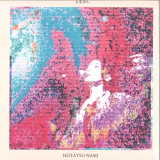
“Originally released on the lauded Green Energy label from experimental maverick Henry Kawahara, Forest Jams is thrilled to present the official re-issue of Nami Hotatsu’s sophomore album – revised and re-christened “Ultra Hyper Cosmic Voice” by the artist herself. Equal parts beguiling and inviting, Nami’s mixture of vocals and driving propulsive beats still sound as fresh and as captivating as when they were originally released in 1994.
Now, thirty years later, we invite you to discover Nami’s “perfect world of being” in its totality – awakening yourself to the unknown world inside through what lauded producer Haruomi Hosono hailed as a “shamanistic” vision!” – Hsu Jui-Ting
Code: Selfish is a 1992 LP by British rock band The Fall. Their 14th full-length studio album, it entered the UK chart at number 21, although it spent only one week on the chart.
The album is characterised by its harsher sound in relation to the previous year's Shift-Work, and is influenced by techno music (techno fan Dave Bush had been added on keyboards and computers).7 Despite this, the album also has some notably mellow moments, with "Time Enough At Last" (named after an episode of The Twilight Zone) and "Gentlemen's Agreement" being at odds with the overall sound of the album.
Largely recorded in a converted church in Glasgow, Code: Selfish features the group's only self-penned Top 40 single, "Free Range". The album would prove to be their last for the Phonogram label, as the group were dropped following the release of the Ed's Babe EP later in 1992. Simon Ford reports in his Fall biography Hip Priest that Phonogram had to compensate the band for the early termination of their five-album deal and that these funds were used to record what became The Infotainment Scan.
The album was re-released by Voiceprint in 2002 under licence from Phonogram, and also appeared in a double-CD set coupled with an edition of Shift-Work on the same label in 2003. This edition added "Ed's Babe" and "Free Ranger" to the track listing. It was reissued again in expanded and remastered form by Universal in May 2007.
This is The Wreckery album that never was but always should have been!
At the crest of the Australian post punk era, The Wreckery played atmospheric rock with film-noir swagger and renegade attitude, carving a loyal following. Critics quickly positioned them as successors to a darkly exciting avant-garde Melbourne tradition previously marked out by The Birthday Party.
Early recordings for Rampant Records (1985-87) showcased The Wreckery's fusion of swamp blues and noir-jazz, delivered with a deadpan, reckless, and romantic cut (check out the 'Ruling Energy' video!). Creative tensions saw the band implode as they were reaching their peak with the Laying Down Law album (Citadel Records, 1988). Yet another great and dangerous rock 'n' roll band who became a danger to themselves.
35 years later, the new album Fake is Forever delivers on unfulfilled promises, revealing The Wreckery on fire like never before. The DNA is still there – the signature sound of Charles Todd's baritone sax; the scathing lyrics and vocals of Hugo Race; the distorted angular guitars of Clayton-Jones; the eclecticism of multi-instrumentalist Robin Casinader; Nick Barker and former Plays With Marionettes drummer Frank Trobbiani fuse as the solid engine room of this iconic group. All the original edge with a new maturity and control.
The songs still emanate from the deep, dark end of the musical gene pool. The sarcastic, provocative lyrics of 'Smack Me Down', 'Get A Name' and 'Young People'; the musical fury of 'Stole it from Alpha Ray' and 'Evil Eye', the romantic melodrama of 'The Devil in You' and 'Whistle Clean', the deranged rock of 'Dragonfly' and 'Garbage Juice' – The Wreckery's range is as vast as it is ferocious. Whereas the band in the 80's were brash and angry this record finds the band conjuring quiet menace, sensual, intoxicating.
Hugo Race – vocals, guitars, keys
Ed Clayton-Jones - guitar, piano, synth, Mellotron, slide guitar , Solina string synth
Nick Barker – bass guitar and backing vocals
Charles Todd - the saxophones
Robin Casinader - Hammond organ, mellotron, mandolin and violin
Frank Trobbiani - the drums and percussion
Recorded by Andrew 'Idge' Hehir at Soundpark Studios, Melbourne
Mixed by Hugo Race at Helixed
Mastered by Toto Strapporava at 3Faders Studio, Buenos Aires
Published by Peermusic
Modern Baseball was formed in 2011 by friends and guitarists Jacob Ewald and Brendan Lukens, who were soon joined by Ian Farmer on bass and Sean Huber on drums. The band self-released their first EP The Nameless Ranger in 2011 while still in high school. Shortly after the members relocated to Philadelphia to attend college and quickly gained a strong following in the Philadelphia music community, teaming up with locals Marietta to release the Couples Therapy split in the spring of 2012. Modern Baseball released their debut full-length Sports later that year on Lame-O Records, which they self-recorded and produced. After spending the summer of 2013 touring heavily across the US, the band headed into Studio A in Philadelphia to self-record You're Going to Miss It All. Mixed by Jonathan Low at Minor Street Recordings, mastered by Will Yip and released through Run For Cover Records, You're Going to Miss It All features 12 tracks that showcase the band's signature witty indie-pop.
This is The Wreckery album that never was but always should have been!
At the crest of the Australian post punk era, The Wreckery played atmospheric rock with film-noir swagger and renegade attitude, carving a loyal following. Critics quickly positioned them as successors to a darkly exciting avant-garde Melbourne tradition previously marked out by The Birthday Party.
Early recordings for Rampant Records (1985-87) showcased The Wreckery's fusion of swamp blues and noir-jazz, delivered with a deadpan, reckless, and romantic cut (check out the 'Ruling Energy' video!). Creative tensions saw the band implode as they were reaching their peak with the Laying Down Law album (Citadel Records, 1988). Yet another great and dangerous rock 'n' roll band who became a danger to themselves.
35 years later, the new album Fake is Forever delivers on unfulfilled promises, revealing The Wreckery on fire like never before. The DNA is still there – the signature sound of Charles Todd's baritone sax; the scathing lyrics and vocals of Hugo Race; the distorted angular guitars of Clayton-Jones; the eclecticism of multi-instrumentalist Robin Casinader; Nick Barker and former Plays With Marionettes drummer Frank Trobbiani fuse as the solid engine room of this iconic group. All the original edge with a new maturity and control.
The songs still emanate from the deep, dark end of the musical gene pool. The sarcastic, provocative lyrics of 'Smack Me Down', 'Get A Name' and 'Young People'; the musical fury of 'Stole it from Alpha Ray' and 'Evil Eye', the romantic melodrama of 'The Devil in You' and 'Whistle Clean', the deranged rock of 'Dragonfly' and 'Garbage Juice' – The Wreckery's range is as vast as it is ferocious. Whereas the band in the 80's were brash and angry this record finds the band conjuring quiet menace, sensual, intoxicating.
Hugo Race – vocals, guitars, keys
Ed Clayton-Jones - guitar, piano, synth, Mellotron, slide guitar , Solina string synth
Nick Barker – bass guitar and backing vocals
Charles Todd - the saxophones
Robin Casinader - Hammond organ, mellotron, mandolin and violin
Frank Trobbiani - the drums and percussion
Recorded by Andrew 'Idge' Hehir at Soundpark Studios, Melbourne
Mixed by Hugo Race at Helixed
Mastered by Toto Strapporava at 3Faders Studio, Buenos Aires
Published by Peermusic
For Fans of Robyn, Tirzah, Charli XCX, Mica Levi, Jessy Lanza, Maurice Fulton. "Don't come closer, because I might hurt you boy / You don't deserve it, I treat you like a toy." So sings 28-year-old South East London musician Tatyana on "It's Over", the sad and squelchy electro-leaning title track to her second album. Primarily written and produced over the summer of `23, It's Over follows the loose trajectory of a not-quite-relationship from the year before. But, more than that, it's an album about modern dating, alienation and the confines of existing online. If you've heard Tatyana's name before, it's probably because she released a debut album back in 2022, Treat Me Right, co-produced with Metronomy's Joe Mount, a record she describes as more of a collaboration. For It's Over, Tatyana took control of every aspect of the album's creation, from the production (she co-produced it alongside Mikko Gordon) to the artwork and the technology she used throughout. "This record made me technically proficient because I really pushed myself," says Tatyana. "I figured out a lot of things that I didn't know before. In the past, I allowed others to lead the charge and I'm not doing that any more." Born in London, before moving to Russia, Holland and Singapore in her teens, before eventually studying music at Berklee College in the USA - which she attained on full scholarship - and then back to London, Tatyana imbues her music with both haywire technical proficiency and encyclopaedic, far-flung tastes. Mostly, though, her sound originates from a pure love of the dancefloor: Robyn, Tirzah, Mica Levi, Jessy Lanza, The Knife. You can hear these dance-pop influences everywhere, from the colourful synth shapes of "Control (ft. Dave Okumu)" to the crackling analogue hiss of "Nothing is True, Everything is Possible". Lean in a little closer, too, and you might catch the shimmer of a harp on every song (she's played harp since she was a little girl, and toured extensively as a professional session harpist). "I write about love, I write about romance, these are the things that interest me," says Tatyana. "That's what this record is. It's about this relationship that broke my brain and I had to write about it."
One of the hardest working singer-songwriters in the game is named Katie Crutchfield. She was born in Alabama, grew up near Waxahatchee Creek. Skipped town and struck out on her own as Waxahatchee. That was over a decade ago. Crutchfield says she never knew the road would lead her here, but after six critically acclaimed albums, she"s never felt more confident in herself as an artist. While her sound has evolved from lo-fi folk to lush alt-tinged country, her voice has always remained the same. Honest and close, poetic with Southern lilting. Much like Carson McCullers"s Mick Kelly, determined in her desires and convictions, ready to tell whoever will listen. And after years of being sober and stable in Kansas City-after years of sacrificing herself to her work and the road-Crutchfield has arrived at her most potent songwriting yet. On her new album, Tigers Blood, Crutchfield emerges as a powerhouse-an ethnologist of the self-forever dedicated to revisiting her wins and losses But now she"s arriving at revelations and she ain"t holding them back.
Polycarp boss Simon Ferdinand delivers the cinematic electronica ‘Six Months’ EP in 2024, recorded across this time period and influenced by travels to Sicily, Baltimore and Zanzibar.
Hamburg, Germany’s Polycarp is the brainchild of Simon Ferdinand and has been active as a platform for the music of Simon under his own name, Basch and their music together as Bonn, as well as further notable artists such as Tilman and Johannes Albert. Here, Ferdinand returns to the imprint with another solo sonic adventure, traversing through a range of emotions and influences with elements of glitch, ambient, electro, breaks, EBM and more instilled within the project.
‘Broken’ leads the release and sets the tone through an amalgamation of hazy, glitched out jazz loops obscured and processed throughout. Title-track ‘Six Months’ then shifts towards a more ethereal deep house aesthetic with cossetting textures, stuttering synth
chords, elongated bass drones and jazzy organic drums. ‘In The Lab’ follows next and sees Basch join forces with Simon to create a haunting slice of broken beat deepness fuelled by murky low-end pulsations, saturated drums and gritty stab sequences.
First up on the flip-side is ‘The Beginning’, shifting gears towards classic electro tropes with boomy 808’s, unfurling arpeggios and twitchy resonant synth bleeps before ‘Santa Maria’ rounds out the release with a contemporary electronica feel, fusing fluttering square wave bass lines, crisp amen breaks and intricately intertwined textural elements.
"Jolifanto" takes its name from the first verse of "Karawane", a seminal Dadaist phonetic poem by Hugo Ball. When Ball first recited it in 1916 at the Cabaret Voltaire, both the author and the audience embraced a trance that left Ball exhausted, requiring assistance off the stage as the audience claimed the spotlight.
Over a century later, by a series of fortuitous events, "Jolifanto" is also the title of an album featuring two powerful musical entities. Artists stemming from diverse backgrounds converge with a shared experimental spirit, curiosity and passion for exploration in their music.
"Jolifanto" is an unexpected explosion propelled by (poly)rhythm, expanding into seemingly distant territories under the influence of flamenco. The Dadaist spirit permeates the work, where a constant tension between the improvised and the meticulously planned is evident. ZA! and Perrate together form an organism traveling from the roots to the rave, with nothing sounding out of place because the place is yet to be defined.
Perrate witnessed ZA!'s concert in a festival he attended as part of the audience. The Catalans surprised him with a proposal that he found radical and unclassifiable. Later, after being invited to prepare a collaboration for the Música y Museos season in Seville, Perrate decided to move off the beaten path, approaching ZA!, who quickly embraced the proposal. Exchanges of ideas and audio tracks ensued in a short time and they quickly found out that they were in the same wavelength. A week before the concert, they met in the same physical space for the first time, dedicating a couple of days to composition and preparing the gig at La Mina Studios in Seville. The concert took place, hailed as "the best concert most attendees had experienced in a long time", as reported by the Diario de Sevilla. That energy needed to be captured, and so it was, at the Happy Place studio in Seville, where the album was recorded between March 6th and 9th, 2023.
The Catalan duo ZA!, "the duo that mash up terrace-chant mayhem with... everything else" (The Wire #384), has operated independently and self-managed since their inception in 2004. They overlap genres and amalgamate sounds that move, with intensity, between wild jazz, post-rock and avant-garde electronics, among other influences. In their acclaimed latest work, they have revived the Phoenician language, exploring Mediterranean sounds alongside MegaCobla and Tarta Relena.
Perrate, active since the late 90s, explores the outer edges of flamenco without forsaking its profound essence rooted in lineage and tradition, evident in every note of his voice. His latest work, "Tres golpes" (Lovemonk/El Volcán, 2022), named flamenco album of the year by Babelia/El País, and one of the albums of the year for BBC3's Late Junction, reflects an innate curiosity, possibly the seed of all the fortuitous events leading to this album.
The encounter between Perrate and ZA! is the result of serendipitous events interwoven with the narrative of artists dedicated to experimentation and radicalism in all its forms.
In 2024, the singer and songwriter Oum is celebrating her fifteen-year career, with a live album, recorded in Marrakech, which plunges back into the magic of her three flagship records, here revisited in a different light. This seventh album, named Dakchi, which means "those things", is the opportunity for this daring off-roader to allow herself a suspended moment for a temporary assessment, a return to her roots. Dakchi is the first best-of live album, in which Oum brings together around ten titles from her repertoire woven throughout three albums with identities as singular as they are filled with a common sap: Soul of Morocco (2013), Zarabi (2015) and Daba (2019). It is the expression of typically Moroccan hybridizations - African, Berber and Andalusian - which irrigate the crossbreeding of Oum. It is also joyful and natural fireworks display of polyrhythms which galvanize her music : the Marrakech signature, playful, sunny, festive. Oum slips three unpublished pieces, including the sublime Arabic cover of the legendary bolero "Lagrimas Negras", "Toda la Gente", an introduction to "Mansit", signed by cuban musician Damian Nueva or the delicate "Intidhar", composed by Yacir Rami.
SOYUZ (СОЮЗ) stole our hearts back in 2022 when we released their album Force Of The Wind to critical acclaim. Here we proudly present the predecessor to that LP, the band’s sophomore long player from 2019 that was previously only available digitally. It captures a pivotal evolving period in the band's career, the recordings giving a snapshot of what would become their sound on Force Of The Wind, yet with echoes of avant-psychedelic-pop footprints from yester years.
Produced at a time when band leader Alex Chumak had moved from Minsk to Kyiv, torn between the need to try something new and the homesickness it brought about. Travelling back to Minsk almost weekly, Alex joined fellow band members Mikita Arlou and Stanislav Murashko to lay down II at Studio 42. The album captures these transient feelings, contextualised through the broad scope of influences the band were nourished by. From MPB to Ethio-Jazz and the Italian library soundtracks of Piero Piccioni and Piero Umiliani, the album shines with touches of joy from across the globe.
The opening track 'Verocai' is a tribute to the Brazilian maestro and 'Mirouze', whilst being named after a French favourite of the band, Jean-Pierre Mirouze, pays clear homage to Milton Nascimento and Lô Borges. A ghostly sample and invisible connection to music made miles away in a different era that has influenced and become part of the band’s lives. This is further reinforced in the album's enchanting closer, the aptly titled 'Nascimento', another nod to the great Brazilian musician and singer.
The beginnings of the cinematic, soul-laden jazz SOYUZ are now known for, are on display across the likes of ‘Lyric’ and 'Motive I'. The latter an orchestrated jazz instrumental with sensuous string sections, all of which were recorded on the warmth of a Studer reel-to-reel and waltzing Rhodes keys.
SOYUZ’s wide-ranging palate is further demonstrated in tracks like ‘Business Partners’ with its Krauty, kosmische, new wave production featuring Inturist, and the oh-too-short Anatolian-influenced interlude 'Corrida'. Elsewhere, 'Tezeta' and ‘ES-2 Jazz’ hint at the psychedelic haze of soul-funk, with the former featuring verses from Serbian rapper Petar Martic.
For this new physical and digital release, the whole album was mixed from scratch by Ryan Power before Joker worked his magic on the remaster. More excellence is to come from SOYUZ, but in the meantime, we are thrilled to present this essential recording from the band’s foundational years, mixed to a level that does it the justice it deserves.
Plizzken are back in a big way with their eagerly anticipated second LP, Do You Really Wanna Know? These German punks' debut LP was the first full length where lead singer Sebi sang entirely in English. Since that album's release to great acclaim from the international street punk commu- nity, Sebi suffered the setback of a debilitating workplace accident, but triumphantly rose above all expecta- tions for recovery, making a hard-hit- ting new record with his long-running band Stomper 98 to boot! Returning their focus to Plizzken, Sebi and the crew are locked in and razor tight, crafting 13 brand new tracks of anthemic working class street punk that will thrill their fans while taking them by surprise. What will strike listeners immediately is a renewed focus on melody and hooks. In short, these songs are CATCHY! By the time the handclaps come in on the fourth song, "Memory Lane," you may just find yourself dancing around the room to these tunes. Likewise for the post-punk/new wave influenced groove that drives tracks like "I Don't Wanna. "Without sacrificing the realism and grit with which they face the world and sound the alarms for the working class to rise up, Plizzken sound renewed, positive, and keen to encourage everyone ready "TO FIGHT THE GOOD FIGHT," as the gang vocals on "Mad World" put it. Although they are all punk rock veterans with decades playing music, Do You Really Wanna Know? has the energy of a hungry young band who are not about to waste a new lease on life. Combining street level punk rock 'n roll with a genuine pop sensibility and a rabble-rousing spirit, executed with the chops of seasoned players, Do You Really Wanna Know? is truly a record that will have old fans dancing and singing along with fists in the air, hand in hand with what is certain to be an army of new ones.
In our 20th celebration year we welcome back Loz Goddard! It’s been quite a while since we last saw him on our label. With his standout debut collab release with Harry Wolfman in 2016 he has developed a unique mix of electronica, deep soundscapes and lush organic Deep House on labels such as “Oath”, “Razor N Tape”, “Church”, “Outplay” and “Apparel Music”. Now he finally returns with a mini album that features beautiful crafted ambient and electronica cuts paired with three upbeat tracks that will for sure shake the dance floors in and outdoors this summer! Enjoy!
In his own words, here are some insights on the influences and production process of these six pieces:
The release is named after a night in the White Hotel in Salford watching Skee Mask. At the time I had a bunch of unfinished ambient ideas as a result of making “Balloon Tree Road” (out on Oath). There were a lot of ideas I still loved that didn’t get finished for that release, so I set about finishing them late 2022 & early 2023 with the view to releasing an EP or ‘mini album’ that was again angled a bit more towards home-listening.
The more upbeat tracks are newer jams that I created in 2023. I wanted to include a few club-ready tracks on the record as well, so the release appeals to DJ’s as well as home listeners. I approached the production much like my past two records on Oath, with lots of live drum elements, some sampling and a mixing approach which keeps everything sound warm and organic. It’s rough round the edges - as has been the case with my productions of late - and offers a nice contrast to my DJ sets and radio shows at the moment, in which I am playing mostly Deep/Progressive House, Breaks & Techno. There’s some influence on the title track from the Deep & Lo-Fi House sound of artists like Baltra & Mall Grab, and I have taken influence from all the breaks I’ve been playing in DJ sets for ‘How’s This for a Vague Song Title’.
All tracks mastered by Salz Mastering in Cologne. Photography & Art by Break 3000.
Circus of Desire is the much anticipated third studio album from Grammy-nominated folk singer-songwriter Olivia Chaney. Worked up over five eventful years, this collection of lovingly wrought songs was recorded in NYC with long-time collaborator, producer and musician Thomas Bartlett (David Byrne, the Magnetic Fields, Sufjan Stevens, The National, St. Vincent, Father John Misty)
Consisting of ten originals and one cover (a revoicing of Dory Previn’s haunting ballad ‘Lady with the Braid’), this album is Olivia set free. Taking their departure from real life experiences, these songs strain towards the universal. The title track blends the carnivalesque and meditations on ancient wisdom with an anthemic, dancy refrain. ‘Calliope’ is a tribute to Olivia’s daughter, named after the Greek muse of music and epic poetry, picturing this little life as part of the ever-revolving cosmos. ‘To the Lighthouse’ tells the story of her sister who left the capital to live on a remote island. Like ‘Mirror, Mirror’ and ‘Why’, a pair of tracks about erotic love, this song reflects upon our capacity to flee and transcend inherited trauma. ‘Zero Sum’ is a setting of a metaphysical number poem by Olivia’s grandfather, a mathematician and poet. ‘I Wish’ - the album closer, is the ultimate breakup song.
Whilst staying true to her folk roots, Olivia enters new musical territories with Circus of Desire, venturing into the realms of pop and dance. The record features cameos from a number of friends, including string arrangements by Nico Muhly and banjo and guitar from Sam Amidon. The result of this rich blend of musical influences is an album that looks honestly, sometimes despairingly, but primarily hopefully at the carnival that is life - ‘we’re in a dance with death, with fire…we’re all in a circus of desire’.
Circus Of Desire by olivia Chaney, released 22 March 2024, includes the following tracks: "Why", "Galop", "Bogeyman", "Mirror, Mirror" and more.
This version of Circus Of Desire comes as a 1xLP.
- A1: Perdiendo La Cabeza Vitín Avilés Y Su Orquesta
- A2: Oye El Que Sabe, Sabe Tito Rodríguez Y Su Orquesta
- A3: Oye A Moncho Mon Rivera Con Moncho Leña Y Sus Ases Del Ritmo
- A4: Que Corto Es El Amor Myrta Silva Y Orquesta
- A5: En Casa De Estanislao Belisario López Y Su Charanga
- A6: Papa Upa
- A7: Ocoricoco
- B1: Llegó El Dulcerito
- B2: De Media Caña
- B3: La Negra Tomasa
- B4: Torna A Sacramento
- B5: Si Armando Viene
- B6: El Figureo
- B7: 1Ponganse Duro
- C1: Yo No Era Así
- C2: Calletana
- C3: Espiritu Burlón
- C4: Canción De La Serranía
- C5: No Te Puedo Olvidar
- C6: El Juey
- D1: Tambó
- D2: Porque Me Critican
- D3: A La Loma De Belen
- D4: Carmelo
- D5: Mi Sazón Charanga Sensación De Rolando Valdés
- D6: El Que Se Fue, Sí Hace Falta
Erkundet das lebendige Erbe von Ansonia Records mit "Salsa Con Estilo", einer 2-LP-Compilation, die die Entwicklung der Salsamusik von ihren Wurzeln bis zum Höhepunkt nachzeichnet sowie eine Geschichte der New Yorker Salsa-Szene anhand der Musik aus dem Katalog des Labels bietet. Ansonia Records, ein wichtiges Familienunternehmen in der New Yorker Latino-Community, spielte eine bedeutende Rolle bei der Gestaltung der Latin-Musikszene. Unter der Leitung von Rafael "Ralph" Pérez veröffentlichte das Label vielfältige Klänge aus der Karibik und darüber hinaus, verpflichtete legendäre Musiker wie Arsenio Rodríguez und Myrta Silva. Die erste LP, "Roots of Salsa", stellt die tanzbarstenen Rhythmen und großen Refrains des Labels vor, die als Vorlage für viele folgende Salsa-Bands dienten. Die zweite LP, "Salsa Boom", endeckt versteckte Perlen des Salsa-Booms der 1970er Jahre vor, in dem sich Ansonia Records gegen größere Konkurrenten behaupten konnte."Salsa Con Estilo" ist nicht nur eine musikalische Reise durch die Entwicklung der Salsa, sondern auch ein Zeugnis des nachhaltigen Einflusses von Ansonia Records auf die New Yorker Salsa-Szene, die ihren Namen für immer in die Annalen der lateinamerikanischen Musikgeschichte eingetragen hat.