Ever dream you're in a spaceship on a never-ending journey to an unknowable destination? That's how Nyles Lannon often thought of life in the early part of the pandemic, when time seemed to stand still, before the vaccines or even knowing when there might be any. But whether that spaceship is a desolate prison or a vessel for escaping to a better world depends on how you use it. With literally nowhere to go, the Film School guitarist and his then-12-year-old son Skye, on drums and modular synths, would jam most evenings in Nyles's home studio, just to have something to focus their minds on and counter the tedium of "remote learning." What started out as a way to keep his talented kid busy became a means to process the anxiety and disorientation of that strange, scary stretch of time. The result is Vanishing, a ten-song album of moody melodies, new wave beats, droney rock, and even an electrogroove instrumental interlude, by the father-son project they named Nyte Skye.
The emotional toll of lockdown, our collective grief, the literal darkness that engulfed the sky thanks to devastating wildfires brought on by climate crisis—these are heavy subjects, but the songs also convey how we managed to keep each other sane, and inspired, through it all. Film School devotees will find plenty to love; so will fans of the Police (Stewart Copeland being one of Skye's major
influences), the Cure, Spiritualized, and Elliott Smith. The album's opener, "Dream State (I'm Vanishing)," is a wistful synth-driven indie gem about disappearing into an alternate universe where worries don't exist. "Doing Time," with its massive washes of 12-string guitar and sophisticated syncopated beat, is a shoegazey meditation on holding onto a child's sanguine outlook in the face of adversity. If dream pop track "Take Me Up Again" is the album's bounciest, its counterpoint is "Faded," whose bittersweet melody and gentle rhythm bely themes of physical and emotional frailty.
Ultimately, not only did working on Vanishing help the duo cope with a uniquely challenging situation, but just being stuck at home helped stoke their creativity. "Music was the only thing I did during the pandemic, besides online school," Skye says. "It gave us all this time we didn't have before to make the album." For Nyles—knowing they might never have that kind of time again—to be able to put out a record with his son is, simply, "a dream come true."
Vanishing was written, recorded, and produced by Nyles Lannon and Skye Lannon and mixed by Dan Long, with additional contributions from Zach Rogue (Rogue Wave), Nichole Kreglow (backup vocals), lyricist Neil Rodenmeyer (Lupa Rosa), and Ian McDonald (FUTRVST).
Suche:name one
- 1: La Nouille … L'air
- 2: Complainte De La Bete
- 3: Mordue
- 4: Les Vaches Musiciennes
- 5: La Fille Brule
- 6: Un Bezoar Dans Le Ventre
- 7: Failli Tomber
- 8: La Vie Secršte Des Doryphores
- 9: Boue Qui Roule
- 10: Vengeance Tardive
- 11: Ingurgiter Ton Image
- 12: Para Lo Lop
- 13: La Fontaine Noire
- 14: La Violeta
- 15: Je Suis Sur L'autoroute
- 16: Aucel Perdut
- 17: Chant Pour Dissuader L'etre Aim De Sortir La Nuit
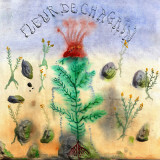
Pauline Marx, formerly of the fantastic duo La Fureur de Vouivre, seems like a being from another time and place; namely, an escaped marauder lurking in the forests of a Bruegel painting and integrating the surreal flora and fauna of a Boschian creation into the scenery and lore of deep Brittany. Her invented mythology is loaded with murky rituals and contorted mantras, backed by the surprising sounds and textures of terrains so earthly and so unreal.
The Devil at the Crossroads
Where do you think you come from? Where do you think you're going? Lasciate ogni speranza, voi ch’entrate: you, with the noodle to the four winds, who pass the threshold of this disc, you better leave all hope there, and glide in the poisonous footstep of the devil your guide.
Where do you think you come from? The mountain is no longer just the mountain; after your passage, it will no longer even be a mountain. Like the whole landscape, it will have been eaten, sauced by invisible leeches. Your nostalgia for the ground and your thirst to find the source will have only discovered a forest of vain words and foul water. Where do you think you're going? At the crossroads, the world is consumed in the previous future. Only the devil will know how to make you overcome the disgust of traditions, and only the love for the devil will give you enough vim to reach your goal: a village, perhaps, but which belongs to no one, a haven to your excessiveness .
The dark tradition to which this game of ternary trampling belongs, like the rhythm of a heart in tune with the inverted world, has no country and no assigned time. Rather a topology of Eve awakened after a thousand-year sleep, an idiosyncratic and possessed reading of our common humus, made up of stories composted in the limbo of the past, of songs captured in extremis vitae and rebus in the privatized antechambers of death.
What does she tell us about? Of our automobile and in love roamings, of the porosity of the membranes that separate beings and things, of the constant inversion of signs. The seventeen stages of this short journey, where intertwine the throbbing of objects, blown horns and rubbed horsehair, form the map of a country never to be found, ours, where only the voice of an old child and the disgusting devil's poisonous charm can guide us.
"I begin our sixth album by exploring melodies that take me to the boundaries of my voice. I write myself into my highest highs and lowest lows. There is a precariousness in the outer limits of my range that demands vulnerability. As our demos take shape, I realize this will be our first album without any belting, the first time I can’t force my way through the notes," recalls Tennis' Alania Moore. "In the studio, Patrick compresses the shit out of my mic and I sing with the gentleness of breathing. In that softness, lyrics take shape. We want to write a big album—something suited for radio, but our songs don’t follow conventional pop structures. Instead of choruses with universal themes, I write with a specificity that is new to me, narrowing in on the smallest details of our lives. The more we try to broaden our scope, the more we turn inward." "We name the album Pollen. It is about small things with big consequences: a particle, a moment, a choice. It is me in a fragile state; sometimes inhabited freely, sometimes reacted against. It is striving to remain in a moment without slipping into dread. It is about the way I can be undone by a very small thing." Tennis is Alaina Moore and Patrick Riley. Pollen is their sixth album. The two met in the philosophy department at the University of Colorado in 2008 after dropping out of their respective music programs. In the years after graduating, they got involved in Denver’s DIY music scene. Through house shows, they were connected with Underwater Peoples and Firetalk. The band went blog-viral nearly overnight, landing them a record deal with Fat Possum and then Communion Records, but with shifting labels and new interests, Tennis chose an alternate path for their band and career. In 2016, Moore and Riley formed the label Mutually Detrimental and began self-releasing. Their newfound freedom allowed them to return to their sailboat to write their next full-length, this time in the Sea of Cortez. Yours Conditionally, released in 2017, became their most commercially successful album–charting at #4 on Billboard’s Independent list and in the top 100 highest selling vinyl releases that year. They played Coachella and opened for artists like The National, Father John Misty and The Shins–proving their DIY roots as a cornerstone to their sound and narrative. Their follow up Swimmer (2020), was recorded in their home studio with Moore and Riley producing and engineering. The pair brought their long-time touring member Steve Voss in for the second time to drum on record. The singles, Need Your Love and Runner, were Tennis’ most successful releases to date.
Gotts Street Park are a proud bunch of throwbacks. The Leeds-based trio - Josh Crocker (bass, production), Tom Henry (keys) and Joe Harris (guitar) - met through various music studies and friendship networks. Individually their tastes are diverse: from North Indian classical to experimental jazz, soul to alternative hip hop but their vision is united: “The idea of doing things live in one room has always been important,” remarks Josh. “That’s how they used to do it. Our identity evolved from that.”
The inception of the collective goes back to around 2012. There have been minor line up tweaks - they currently record with a rotating list of drummers - but the philosophy has stayed the same: an ongoing pursuit to capture the raw, unparalleled vibe that comes from recording music together, usually as one take, sometimes to analogue tape.
That approach is a deliberate call back to the methods made famous by legendary studios like Sun and Stax in Memphis, or FAME and Muscle Shoals in Alabama and their in-house bands. That’s why for years, GSP set up their own studio in a shared house in a tough (but, crucially, affordable) corner of west Leeds, Armley. Gotts Park (historically the home of industrialist Benjamin Gott) was close by - the group’s name was a nod to their local geography but also the fact it sounded like an area plucked straight out of some of their favourite East Coast hip hop releases.
Their work was quickly noticed, and it was from that base where they began working with an eye catching list of collaborators: Rejjie Snow, Kali Uchis, Cosima, Yellow Days, Chester Watson, Greentea Peng and Benny Mails. Tom also played keys in Mabel’s band. Early on, while performing as a band for hire for those artists, they were simultaneously honing their own sound; a deliberately retro “heavy, saturated” atmosphere that married the languid vibe of traditional soul with the pin sharp clarity of contemporary hip hop. Old leanings, sure, but upcycled with their own modern twist. “We’re constantly trying to build a catalogue,” says Tom. “Writing new stuff and sending it out to people.” That’s why after the release of their debut EP, ‘Volume One’, in 2017 the invitations kept coming; most notably from Brits Rising Star award winner Celeste, with whom they recorded two tracks on her debut EP ‘Lately’.
‘Volume Two’ once again features an impressive raft of vocalists - all female - from established names to fresh talent. This time, musically, the overall tone is lighter; less gritty, more optimistic. “It’s definitely not as gloomy,” says Josh. “Still though, there is this kind of dark, mysterious thing that we do a lot that works,” he continues. “Like the song we’ve done with Grand Pax, for example - it’s got that kind of witchy darkness to it. I think if you do a really straight male soul voice, it can be a bit cheesy and sound like you’ve heard it a million times before.”
Their collaborations might be some of the freshest of 2020 but make no mistake: Gotts Street Park are out there looking to create something timeless.
Mum No Hands’ - an assured four tracker that draws on Bristol bass, footwork, jungle and broken techno to create something fresh and upfront. A certified stalwart of the Bristol scene, Yushh (aka Jen Hartley) is already well on her way to becoming a household name. Over the last few years she has toured extensively across Europe’s festival and club circuits, landing sets at Freerotation Festival and HÖR along the way. Her label, Pressure Dome, is known internationally as a go-to outlet for various offshoots of forward-thinking, soundsystem-ready UK techno, with a roster that includes Sputnik One, Caldera, Ido Plumes and Cando. So far, she has only teased her production skills with a string of one-off drops and remixes, including features on Rhythm Section, Banoffee Pies and All Centre. On ‘Look Mum No Hands’ she finally lays out the blueprints for her unique, club-honed sound. The title track skips along at a nippy 160 bpm, driven by a slow/fast halfstepping beat and monster bassline that places it somewhere between DMZ and Teklife. ‘Same Same’ drops the tempo down to 130 bpm, with loungey keys and a skippy vocal chop offsetting a cavernous low-end. On the flip, ‘Close Fall’ squeezes darkside d’n’b sonics into a chugging 95 bpm beat template, while ‘Self Couscous’ takes an intricate, glitched approach to jungle/broken beat reminiscent of mid 00’s Planet Mu. Genre: Dance / Bass
Repress!
Tarenah was one of only two singles pressed under the nom de plume of Psychedelic Research Lab - a collaboration between Scott Richmond and John Selway which began while the pair were attending music conservatory at SUNY Purchase College, in upstate New York. Scott produced the first version of the track for a modern dance performance in 1993. A mix of electronics and room full of live musicians, the session featured an afro-cuban percussionist, a Bangladeshi vocalist / tabla player, a classical flautist, and a reggae guitarist, with Scott on keys and engineering, and John on multiple TB-303s. The duo played the piece to a pal, who said, “Listening to your music is like being in a psychedelic research lab” and the moniker was born. DJ Jonathan Kadish, the chill out resident at pioneering NYC rave, NASA, championed the track and subsequently commissioned four remixes for his label, Gyroscopic Recordings.
The tune has been elevated to legendary status in certain circles - due to it being a firm favourite of “The Godfather Of Chill-out”, the late DJ Jose Padilla. Jose at this time had a penchant for “ambient breaks / breakbeats” - seminal stuff like the work of San Francisco's Hardkiss crew and other Bay Area artists. According to close friend Phil Mison, drawn to the Chill Mix, Jose Padilla played and played Tarenah at Ibiza`s Cafe del Mar. It was a daily constant in Jose`s sets for several seasons, and he eventually included the track on the second volume of his essential compilation series honouring said White Isle shrine - put together in the mid-90s for the label React. Sealing the tune`s fate and making Tarenah forever synonymous with Jose and the golden, halcyon, San Antonio, Cala Des Moro, sunsets he soundtracked.
The 3rd Floor Mix, named after the location of the SUNY Purchase studio, is tribally-tinged uplifting progressive house - taking its cues from the contemporary Dutch imprints, Fresh Fruit and Touche. John Selway’s Remix (titled “Spy’s Sub Mix” on the original pressing) strips the track back to a cool, more minimal, jack - heavily influenced by the “bleep” sound of Sheffield`s Warp Records. The Sleepwalker Mix is beatless. Tailored from twisting, intertwining, 303 drones.
Following Tarenah, Scott and John continued devoting their life to dance music. Scott went behind the scenes, founding - alongside Jonathan Kadish - the famous Satellite Records dance music record store chain. He also ran the house and trance labels, Central Park and Pitch Black. In recent years, Scott has worked in artist management, and within the global music festival scene, primarily with Vh1 Supersonic and Ticket Fairy India, which has taken him to Mumbai, Goa, and Pune. John has had an amazingly prolific electronic music career, building a vast, and varied catalogue of productions - both solo, and through collaboration. From Disintegrator and working on Deep Dish`s debut single, to Smith & Selway and The Rancho Relaxo Allstars. Along the way finding the time to run labels such as Serotonin and CSM. Currently John is teaching and mentoring the next generation of electronic music artists at 343 Labs music school, while still producing forward-thinking techno and electro.
This is the first time Tarenah has been reissued in full on vinyl, and Midnight Drive are very proud to present this sublime underground classic once more. Reissued in full conjunction with John Selway and Scott Richmond, remastered by Curvepusher, London and distributed worldwide by Above Board distribution 2022.
The pandemic affected each of us in different ways. From colossal stars to complete unknowns, it up-ended our lives, and demolished our expectations.
Take Lil Skies. The Philly talent found himself back in his home city, completing a journey that began in pace on his 2017 mixtape ‘Life Of A Dark Rose’. Re-connecting with his roots – his moniker is a nod to his father, while 2019 debut album ‘Shelby’ named after his mother – he’s delivered some of his most potent, open material to date.
‘Unbothered’ is a tight, focussed return – a snappy 14 tracks, is exudes a sense of purpose, retaining the swagger of his debut while upping the word play. It’s an inward journey, one exemplified by those early viral singles ‘OK’ and ‘Havin’ My Way’ but it’s also lit up by some special guests.
Working with alacrity, Lil Skies built ‘Unbothered’ from a series of freestyles, yet every element on the album feels exact, placed with real precision. Using a mere three features – a trilogy that boasts Wiz Khalifa, Lil Durk, and Jodeci – the emphasis is placed on his vocals, on his ability to utilise the voice as an instrument.
‘Trust Nobody’ hinges on fragile paranoia, while ‘Riot’ bristles with a palpable sense of rage. An attempt to channel the repressed – and often extreme – emotions of the past 12 months, ‘Unbothered’ pitches a cool facade against a depth of feeling that often threatens to explode – just check out ‘Think Deep Don’t Sink’ for a mission statement.
Working within clear definitions, ‘Unbothered’ feels more distilled than Lil Skies’ previous work, the sound of someone choosing to work with what they know. Lyrically it’s marked by pain and redemption, lingering on messages of perseverance, and renewal. He may claim to be ‘Unbothered’, but the marks of the pandemic are there for all to see on a brave, at times powerful, new album
(Anil Aras, Kepler, Thoma Bulwer & Anna Wall, & Laidlaw mixes)
For a few years a while ago, Robert James was one of the hottest names in house. He ushered in the post-minimal era with colourful, accessible sounds that brought some much needed life and charm back to the scene. After disappearing for a time he returned with his debut album in May and now some of it gets some top remixes. Slapfunk's Anil Aras pumps a nice cosmic house vibe, Kepler does his tight, high tempo work and Thoma Bulwer & Anna Wall combine their skills once more on a clipped, punchy tech house version of 'Planet 90.' Laidlaw lays out some electronic drum funk with a fine version of 'Infinity' to close.
- A1: Logic System - Unit
- A2: Kraftwerk - Computerwelt (2009 Remastered
- B1: Whodini - Magic's Wand
- B2: Rocker's Revenger - Walking On Sunshine (Feat Donnie Calvin
- C1: Klein & Mbo - Dirty Talk (European Connection
- D1: Liaisons Dangereuses - Los Niños Del Parque
- D2: Yello - Bostich
- E1: The The - Giant
- F1: The Residents - Kaw-Liga
- G1: Clan Of Xymox - Stranger
- G2: A Split - Second - Flesh
- H1: Severed Heads - Dead Eyes Opened
- H2: The Weathermen - Poison!
- I1: New Order - Blue Monday
- J1: Anne Clark - Our Darkness
- J2: 16 Bit - Where Are You?
- K1: Phuture - We Are Phuture
- K2: Model 500 - No Ufo's (Vocal
- L1: Frankie Knuckles Feat Jamie Principle - Your Love
- L2: Quest - Mind Games (Street Mix
- M1: Jasper Van't Hof - Pili Pili
- N1: Guem Et Zaka Percussion - Le Serpent
- N2: Hugh Masekela - Don't Go Lose It Baby
- O1: Sly & Robbie - Make 'Em Move
- Q1: The Ecstasy Club - Jesus Loves The Acid
- R1: Foremost Poets - Reason To Be Dismal?
- S1: Lhasa - The Attic
- S2: A Guy Called Gerald - Voodoo Ray
- T1: M/A/R/R/S - Pump Up The Volume - Usa 12" Mix
- T2: Bobby Konders - Nervous Acid
- U1: Meat Beat Manifesto - Helter Skelter
- V1: Raze - Break 4 Love
- W1: Sueño Latino With Manuel Goettsching Performing E2-E4 - Sueño Latino (Paradise Version
- X1: Off - Electrica Salsa
- O2: Brian Eno - David Byrne - Help Me Somebody
- P1: Primal Scream - Loaded (Andy Weatherall Mix
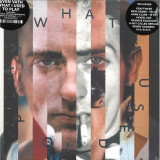
For this uniquely personal retrospective spread over twelve vinyl discs, Sven Väth takes us back to the early days of his DJ career. On What I Used To Play we meet great pioneers of electronic music, gifted percussionists, obscure wave bands, and innovative producers of a bygone 'new electronic' era. Rough beats and irresistible grooves from the identification stage of house, techno, and acid remind us not just how far electronic music has evolved over the past four decades, but how great it was to dance to EBM, techno, and house for the very first time.
If there is one protagonist of the electronic music scene who has remained curious, innovative and at the very cutting edge of music for over four decades, it's Sven Väth. His multi-layered artist albums and Sound of the Season mix compilations have been defining the genre for over two decades, and even today, he is constantly on the lookout for the next top tune to add to the highlights of his next set. At least, that's the case when he's not producing them himself as an artist or remixer. "Actually, it's always been part of my DNA to think ahead," and nothing had been further from his mind than looking back at his past, but when in spring of 2020 the international DJ circuit had to be scaled down to virtually zero, the 'restless traveler' suddenly had time. Time to stop and reflect on "how it actually was back then, at the very beginning of my career..."
"It was a great trip and with every track, beautiful memories came flooding back".
In the London apartment, he had just moved into, Sven has set up a "little music room", where he cocooned himself for several days, "to look way back for the first time and review my musical journey through the eighties, so to speak."
The interim result was six thematically oriented playlists with a grand total of 120 tracks from 'early 80s' to 'Balearic late 80s', together with excursions into afrobeat, European new wave, and EBM sounds and a few epochal techno/house tracks from the USA in between. From these 'Best of Sven Väth's favorites', the project What I Used To Play crystallized. Sven remembers how the Cocoon team reacted to his proposal: "They found the idea of making a compilation out of it MEGA from the beginning and everyone said 'Sven, go for it', but then, of course, the work really started, namely, to clear the rights and to get clean sounding masters of the up to 40-year-old tracks. There was also disappointment, of course. We couldn't clear certain titles because the rights holders in the USA had fallen out with each other or simply disappeared from the scene. In short, it wasn't easy, but now I can safely say we got the most important tracks."
Finally, after two years of research, curation, design, and administrative fine-tuning, the "little retrospective" from 1981 to 1990 is available. The exquisitely packaged, and three-kilo heavy box set is not only physically impressive, WIUTP is also the definitive record of Sven Väth's musical development. On each of the twenty-four sides of vinyl, you can trace track by track, what influenced him during which phase, and how he took off as a DJ from his parents' Queen's Pub straight into the spotlight at Dorian Gray. There and at Vogue (later OMEN), Sven became the style-defining player in the DJ booth that he still is today.
1981 - 1990: Future Sounds of Now
In the early eighties, the crowd in clubs like Vogue and Dorian Gray danced to what nowadays we call 'dance classics' - mainly disco, funk, soul, and chart pop. It was up to a new generation of DJs, including Sven Väth, the youngest protagonist in the Rhine-Main area at the time, to create their own club-ready music mix. Good new tracks and potential floor-fillers were rarities that had to be sought out and found, in order to prove oneself worthy.
Without MP3s, internet streaming, or other digital download possibilities, music didn't just gravitate to the DJ, instead, it had to be tracked down. In well-stocked record stores in Frankfurt and Wiesbaden or even in Amsterdam, London, or New York, Sven and friends sourced the material for countless magical nights. On WIUTP we can follow Sven's very personal journey through this wild, innovative era in which synth-pop, funk, hip-hop, and disco were successively replaced as 'club music' by house, techno, acid, and breakbeat. By the end of the decade, it was clear to see that these once exotic 'fringe' phenomena would soon become 'mass' phenomena.
Early 80s
Dirty Talk by the Italian-American duo Klein & M.B.O. represents the most innovative phase of the Italo-disco genre in the early eighties like no other track. Mario Boncaldo (I) and Tony Carrasco relied entirely on the original synthetic drum and percussion sounds of the Roland TR-808, coupled with the raunchy vocals of Rossana Casale and guitar accents of Davide Piatto. Of course, other tracks from this period were also influential in style, most notably Unit by Logic System, which worked as the perfect soundtrack to the laser lighting system at the legendary Dorian Gray club. With stomping beats and robotic rap interludes, Bostich by Yello also belongs on Sven's eternal playlist - after all, it caught the attention of Afrikaa Bambaataa, who invited the Swiss duo to perform at the Roxy in New York in 1983.
EBM Wave - Mid 80s
From today's point of view, the almost ten-minute-long, downtempo track Giant by Matt Johnson's band project The The, would probably not be considered an obvious club classic. However, a closer (re)listen reveals the rhythmic intricacies of the percussion overdubs by JG Thirlwell (aka Foetus) on Johnson's composition, and it becomes clear why this exceptional piece of music is one of Sven's absolute favorites. Other classics from this phase include Kaw-Liga by the mysterious The Residents, the hypnotic-synthetic Our Darkness by Anne Clark (and David Harrow), and last but not least, the somber, monotonous anthem Where Are You? by 16Bit, one of Sven Väth's projects together with Michael Münzing, Luca Anzilotti from 1986.
US House - Late 80s
You certainly can't talk about Chicago house without mentioning Frankie Knuckles. The resident DJ at the Warehouse not only gave the name to an entire genre, but also produced epochal floor fillers on the Trax label like the timeless Your Love, sung (and moaned) by Jamie Principle. Acid house protagonists Phuture also hail from Chicago, and on We Are Phuture (also released on Trax) we hear the chirping acid sounds of the legendary Roland TB-303 in full effect. Another featured classic is No UFO's by Detroit's Model 500 aka Juan Atkins, who is rightly considered the 'Godfather of Techno' even if the genre-defining track from 1985 still breathes with the spirit of hip-hop and electro from the first breakdance era.
Afrobeat
Le Serpent, by Algerian-born Abdelmadjid Guemguem, is a track that sounds completely different from everything else on WIUTP. Made in 1978, it's a monumental, rousing groove created without bass or synths, just with five congas! Even though Guem sadly passed away in 2021, his immortal, acoustic beats are understood all over the world and will continue to enrich many thousands of DJ sets for years to come. Another classic that not only Sven appreciates beyond measure is Hugh Masekela's Don't Go Lose it, Baby. In addition to being one of the most important jazz pioneers, the trumpeter and freedom fighter from Johannesburg was very experimental, integrating electronic sounds into his music in later years, in a similar vein to Miles Davis and Herbie Hancock. Dutch jazz pianist Jasper van't Hof's afrobeat project Pili Pili has also aged well. The trance-like, almost sixteen-minute-long track of the same name, manages to fill a whole side on the seventh of twelve vinyl discs in the WIUTP box.
UK-US-Euro - Late 80s
Time for a change of scene, in the truest sense of the word, and from a musical perspective, this section is like landing on another planet. First up is Andrew Weatherall's classic remix of Primal Scream's Loaded, featuring the iconic Peter Fonda sample (lifted from the 1966 biker film Wild Angels) that came to personify the mood triggered by the British Second Summer of Love in the late eighties: "We wanna be free to do what we wanna do, and we wanna get loaded...". This period also saw the emergence of M/A/R/R/S whose only single, 1987's Pump Up The Volume, became a club classic with support from DJ legend CJ Mackintosh. In this most eclectic of sections, we also encounter New York house and reggae producer Bobby Konders and his seminal Nervous Acid.
Balearic - Late 80s
Those who know him, know that Sven had already lost his heart to the 'magic island' of Ibiza as a teenager, so with that in mind, the WIUTP project couldn't end without a Balearic chapter. Inspired by Manuel Göttsching's E2-E4, the immortal, eponymously titled Sueño Latino belongs in there without question. Equally popular on the island was, and still is Break 4 Love by Raze, which thinking about it, would also fit perfectly into the house chapter. Last, but not least, there's an overdue reunion with Sven Väth himself, in his role as frontman of the successful Frankfurt trio OFF. Together with Michael Münzing and Luca Anzilotti (later of Snap!) this 'Organization For Fun' created the off-the-wall club hit Electric Salsa in 1986 which incidentally turned into an international chart smash, putting Sven in the enviable position of having to decide between pop stardom and a DJ career. Well, we all know how that decision turned out and the rest, as they say, is history. A not insignificant part of his story is What I Used To Play. Enjoy!
After a pandemic hiatus, End Of Dayz has recently returned first with a digital release from an industry newcomer Adam Strange last September and now with a veteran like Pushmann who has been releasing music on labels like Axis, Symbolism, Hardgroove, Be As One or Matterwave where he released his first double LP last summer. The vinyl and digital release "The Deal" comes with remixes from a big name like Gene Richards JR and an extra big name like the British living legend Mark Broom. A faster than usual release at End Of Dayz that will delight even the hardest DJs.
In the late '70s Wild Fire was one of the more popular groups in Trinidad. Formed by Oliver “Stompy” Chapman back in 1962 the group was originally named the Sparks. By the disco era Wild Fire were the house band at night clubs like Disco Tracks and the Upper Level. The group was very influenced by disco, especially the famous British group, Hot Chocolate known for the classic disco hit ”You Sexy Thing.” Hot Chocolate’s chief songwriter, Tony Wilson was originally a Trinidadian native and also great friends with Oliver Chapman. The opening track on this compilation is "Try Making Love", a floor-filling track written by Tony Wilson in 1977 and recorded at Coral Sound Studio in Port of Spain. It was there that Oliver Chapman laid down the unforgettable bass line, solidifying its status as a surefire hit. The infectious tune held steady at the number one slot for six weeks in Trinidad and eventually climbed to the top of the charts in Barbados. Recorded at KH Studios, “Living On A String” with its unique disco synth sound by keyboard player Calvin Duncan was about the hard living of one trying to survive as a musician and hoping to one day partake in the material strappings of fame. “The Rebels” was more about the political struggle for the young in the country at the time. There was a lot of corruption in the government and a lot of young people out of work. The song called to stand up and rebel against the regime. And years later in 1990 it did happen when the Muslim group Jamaat al Muslimeen stormed the Red House (Trinidad’s Parliament House) and took cabinet members hostage. Wild Fire would go on to tour the Caribbean extensively including stops in Barbados, Antigua, St. Thomas and Guadeloupe. The group had a massive local hit with their track “Say A Little Prayer.” The group would disband in 1985 and Oliver Chapman would move to America. Wild Fire - Dance Hits is a collection of Wild Fire's more dance friendly material.
- A1: Hall Of Fame
- A2: Hour Of 1
- A3: G.i
- A4: Puppet On A String
- A5: Sheer Terror
- A6: Happy People
- A7: Lost In Limbo
- A8: Plain To See
- A9: Party Line
- A10: Here’s The Rope
- A11: Insomniac
- B1: Fashionite
- B2: Religious Ripoff
- B3: Asshole
- B4: No Rights
- B5: No Way Out
- B6: Twisyed Views
- B7: Snubbing
- B8: Teenager In A Box
- B9: Bored To Death
- B10: Georgetown Blues
Color Vinyl[19,96 €]
In November of 1982, I went into the studio with Government Issue to record what was to be their first full-length album. Up until that time, they had only released the Legless Bull 7”EP, and the tape they recorded early 1982 would take over a year and a half to be released as the Make An Effort 7”EP. The members of G.I. excelled at driving each other crazy and there was a lot of arguing, but still we had a great session at Inner Ear and we managed to track 20 songs in one day. From the beginning the band had been divided on what to record, and it was only after much debate that they decided to leave off the material they had recorded with the earlier line-ups and only put out 10 new songs.
In early 1983 Dischord was strapped for cash, meaning that we could only work on one release at a time. Since all of our money was tied up with the manufacturing of Minor Threat’s Out of Step 12” EP, the G.I. record would have to wait. A new DC label, Fountain of Youth, expressed an interest in releasing Boycott Stabb, so it was decided to do a ‘split-label’ record. In this case, Fountain of Youth put up the money and we let them use the Dischord Records name to help with context and distribution. It has since been reissued on a number of different labels and formats, but after coming across the master tapes and hearing the songs that had been left off, we thought it would be cool to release the complete session, and to finally release the record on Dischord proper.
In going through the tapes, I discovered that most of the outtake songs were never mixed, so earlier this year I took the recordings back into the studio. Hearing the separated tracks amazed me. Such great playing and songs! With the technological advances in the recording world made multi-tracking and overdubbing so common, it’s easy to forget that studios could also be used as something more akin to a photo-booth, capturing what was happening at that very moment. Most of the early Dischord sessions were essentially ‘live’ recordings, so the bands had to be able to play, and because the budgets were minuscule, they had to get the songs down in short order. G.I. stepped up on both counts. -Ian MacKaye, August 2010
- A1: Hall Of Fame
- A2: Hour Of 1
- A3: G.i
- A4: Puppet On A String
- A5: Sheer Terror
- A6: Happy People
- A7: Lost In Limbo
- A8: Plain To See
- A9: Party Line
- A10: Here’s The Rope
- A11: Insomniac
- B1: Fashionite
- B2: Religious Ripoff
- B3: Asshole
- B4: No Rights
- B5: No Way Out
- B6: Twisyed Views
- B7: Snubbing
- B8: Teenager In A Box
- B9: Bored To Death
- B10: Georgetown Blues
Black Vinyl[18,45 €]
In November of 1982, I went into the studio with Government Issue to record what was to be their first full-length album. Up until that time, they had only released the Legless Bull 7”EP, and the tape they recorded early 1982 would take over a year and a half to be released as the Make An Effort 7”EP. The members of G.I. excelled at driving each other crazy and there was a lot of arguing, but still we had a great session at Inner Ear and we managed to track 20 songs in one day. From the beginning the band had been divided on what to record, and it was only after much debate that they decided to leave off the material they had recorded with the earlier line-ups and only put out 10 new songs.
In early 1983 Dischord was strapped for cash, meaning that we could only work on one release at a time. Since all of our money was tied up with the manufacturing of Minor Threat’s Out of Step 12” EP, the G.I. record would have to wait. A new DC label, Fountain of Youth, expressed an interest in releasing Boycott Stabb, so it was decided to do a ‘split-label’ record. In this case, Fountain of Youth put up the money and we let them use the Dischord Records name to help with context and distribution. It has since been reissued on a number of different labels and formats, but after coming across the master tapes and hearing the songs that had been left off, we thought it would be cool to release the complete session, and to finally release the record on Dischord proper.
In going through the tapes, I discovered that most of the outtake songs were never mixed, so earlier this year I took the recordings back into the studio. Hearing the separated tracks amazed me. Such great playing and songs! With the technological advances in the recording world made multi-tracking and overdubbing so common, it’s easy to forget that studios could also be used as something more akin to a photo-booth, capturing what was happening at that very moment. Most of the early Dischord sessions were essentially ‘live’ recordings, so the bands had to be able to play, and because the budgets were minuscule, they had to get the songs down in short order. G.I. stepped up on both counts. -Ian MacKaye, August 2010
Déjà vu is translated as “already seen” but for South California native Ben Schwab, his discovery in a small Ohio town 2000 miles from home led to an epiphany of creating the “already heard.” Unearthing a box of 1975 cassette tapes of his father’s old band, the recordings or “Sylvies” as Ben would affectionately call them later became the imprint for a familiar feeling he would end up chasing. The songs were timeless, effortless, and soulful.
Awakening senses to the eternal quality of hidden or lost music, Sylvie fully encompasses that very same musical lineage and spirit living in those lost yet beloved time capsules. Recorded years before by Ben’s father, John Schwab and his own band Mad Anthony in a Southern California barn, those reels spoke of a common narrative at the time; a band close to a record deal which never came, so the tapes were boxed up and stored in a closet for years to come. “Dad’s songs are straight from the heart and really shaped my taste and imagination for songwriting in a permanent way,” Ben reveals. Taking the name from one of those early recordings an obscure cover of a 70s track by Ian Matthews ‘Sylvie’ would inspire his project’s namesake and feature as the album’s only cover. “It’s an incredible song from the past but for whatever reason, is basically unknown,” Ben offers by way of an explanation.
Born Aaron Livingston, GRAMMY Award winning Son Little unleashes his album Like Neptune never sounding stronger or more confident than now, showcasing his original vision of r&b, informed by his love for hip-hop imbued with tinges of funk, pop, and psychedelia
While Little's collaborations with The Roots and RJD2 had already helped him make a name for himself by that point in his adopted hometown of Philadelphia.
Critics on both sides of the pond were quick to recognize the unique power of Little's solo recordings, which stripped the past for parts that could be reconstituted into something wholly new and original. NPR hailed Little's "impeccably crafted songs" as "honest and unpretentious," while The Independent proclaimed him "a formidable talent," and Vice declared that he was "dissolving
the barrier between R&B and rock 'n' roll one tearjerker at a time."
Our first vinyl release of 2023 sees two classic tracks from Groove Park take centre stage. Hit The Bang and Carrousel first came to the fore in 1995 as separate releases and, after a few solid remixes, our Bonzai Classics imprint resurrected both tracks along with top-notch remixes in 2002. 21 years later we bring to you the original versions of both tracks on glorious 12” vinyl. André Strässer and Sharam Jey aka Sharam Nickjey Khososi make up the dynamic duo that is Groove Park. They were also the brains behind massive projects such as 16C+, Three n One and Johnny Shaker to name just a few. The tracks found a unique place in clubland, having a diverse structure that spanned genres flawlessly. The A side features Hit The Bang with its hybrid progressive/techno flow. The relentless bass groove, distinct voices and stabbing synths gave rise to a powerful, energetic and mesmerizing moment that lives on. On the flip, Carrousel takes up the B1 slot opening with that infectious woodblock sequence alongside pumping kick drums. A groovy bassline joins the party as old skool pianos come through. The track reels us in with many twists and turns, from wide, epic progressive parts to energetic trance, all wrapped up in a warm, nostalgic glow. A proper piece of dance music history and a must for the serious collector.
The impact Belfast born duo Bicep have had on Irish music is unmeasurable, capturing the hearts and minds of the next-gen with their future-facing sonics. The pairing started their FMB label in 2012, going on to support a plethora of Irish artists in the process, from Cromby and Hammer to Brassica and Brame & Hamo.
The label's latest record comes from yet another Irish artist. Swoose, a name that should be familiar to any Irish electronic lover, began his career handing out flyers for legendary club Stiff Kitten. From here Swoose went on to become a resident of Shine and AVA Festival, and has released a string of killer records on Shall Not Fade and Lost Palms. Now residing in London, his record on FMB brings the OG Belfast dance music community back together for a fittingly euphoric release.
Title track ‘Breathe’ produces poignant undertones and contemplative thought, meditative breaks channeling the producer's fascination with wild flora and fauna. The track's interior begins to distort our sense of time and self, liquid textures forming over celestial harmonies like psilocybin. ‘Hyphae’ takes a 4/4 approach, while keeping the EP’s emotional personality present. Its pulsating bassline is balanced by far-reaching syths and dancing hi-hats, resting in a unified space of motion and colour.
Rotterdam via Belfast based artist Kessler has been on the tip of everyone's tongue since the return of clubbing. He has released music on Sherelle’s BEAUTIFUL black and LGBTQ+ label and his debut Shall Not Fade release was one of the most celebrated EPs of 2021. Kesslers knackt to create beautiful, other-wordly soundscapes that are both functional and edge on the side of melancholy are unmatched. His flip of title track ‘Breathe’ swaps gentler tones for his signature UK-sound inspired drums and crowd-evaporating atmospherics. The arrangements gentle ebb and flow, maintaining that signature blend of pace and etherealness.
Toronto’s Peach is on hand for the second remix – ‘Hyphae – a stripped-back early-morning groover that mixes psychedelia with flexible percussion. The track gives off a subtly uplifting vibe that blends heads-down club with minimal, punchy aesthetic. Just when you thought it was time to go home too...
Arkada records is excited to announce our 4th release - forthcoming split vinyl EP featuring the sounds of ADJ & Adrien d’Elzius.
We are very happy to present the first part of the EP with the unique sounds of one of the pioneering artists in the UK underground Electro scene, the label owner of Pyramid Transmissions - ADJ
ADJ originates from and is based in London. He has been playing Underground Electronic Music for over 35 years as a DJ, starting in the days of Early Electro and Hip Hop. He has also been producing and releasing music for 25 years, releasing over 200 tracks in this time on a plethora of labels including Touchin Bass,For Those That Knoe, Another Perspective, Ai, Outside, Cultivated Electronics,Yellow Machines, Crobot Muzik, Diffuse Reality, Netlabel ,Digital Distortions and more...has done remixes for Flint Kids, Scanone, LASynthesis, Carl Finlow, Fleck Esc, Arsonist Recorder , Paul Hierophant to name a few.
He has run the Pyramid Transmissions Record label with label partner Pathic for 20 years and also ran the Analogique record label for 5 years from 1995-2000 releasing Techno, Electro and Electronica as 3 Elements.
ADJ also performed his first LIVE set in a few years in March 2020 MUTABOR in Moscow.
As a DJ, he has played at many festivals including a BLOC residency, Glastonbury For BLOC, Bestival, Shambala, Infiltrate at WMC Miami. 2019 saw another tour of the US with Silicon Scally,Ben Milstein, EVAC, Ion Driver and 214. He also runs the Dodo Club and Frequency Resonate(with Errorbeauty) nights in London and Berlin aswell as playing in Lille, Kiev, Moscow, St Petersburg Berlin,Zagreb,Athens, Napoli, Brussels, Budapest, Vienna, Valencia, Sofia, Paris and many more..
Second part of our EP presents the futuristic glitched-out sounds of the one of a kind Belgium producer Adrien d’Elzius also known under his allies HosmOz.
Adrien d’Elzius was born in the gloomy south of Belgium spending his youth hanging around in a camping and listening to Hip Hop, he started his life in a mess of paradox. At 10, he learned to play drums under his punk’s brother regard, and experimented different kind of rock until 18. That’s where someone showed him a track of Aphex Twin, who blew his mind and made him believe he had finally found the music that suited him. From there, he compulsively spend hours playing around with his computer and slowly made himself a place in the very small community of underground music lover of Brussels under the nickname hosmOz after winning a contest. From his melodic and acidic drill’n’bass beginning, his sound slowed down and got darker, challenging himself to try to create something he couldn’t before. He recently re-released his Lp on Diffuse Reality that make it available on physical form and also his debut album on Burial Soil with remixes by Umwelt and Lloyd Stellar.
The masters of the release are kindly made by Thomas Dunstan. Artwork made by our amazing designer Lawrence Cli
Glasgow’s Seated Records return with more archival Scottish New Wave material; this time, in the form of Pop Wallpaper’s disco-not-disco interpretation of the Shuggie Otis classic, “Strawberry Letter 23”. And interpretation is the right word, guitarist Evan Henderson confesses that the lyrics sang by Audrey Redpath on the record were, “err inaccurate due to pre-internet home recording translation”.
The Edinburgh band first released “Strawberry Letter 23” in 1986 as a double A side 12” alongside original song, “Nothing Can Call Me Back". The 1986 record’s sleeve states that the original - “Strawberry Letter 23" has been “re-modelled for special pleasures, namely on the dance floor”. Here the re-model has been re-modelled once more. The track is recontextualised for 2022 playing on a four track 12” that includes an unreleased instrumental demo version of the track, as well as mixes from label founder Pigeon Steve and close friend of the label, Useful Tom.
Wallpaper’s first EP “Over Your Shoulder” was released in 1984. The release received a considerable amount of radio support, not least from Radio 1’s John Peel and Janice Long, which culminated with a live session for Long’s show at the BBC’s studios in London. Released a couple of years later, Strawberry Letter received similar levels of radio play. Despite (much to the band’s confusion) being tracked by Motown UK at one point, Pop Wallpaper did not go on to receive commercial success and eventually went their separate ways.
“Strawberry Letter 23” sits in the singular historical, cultural context of mid-80s Britain. Following the explosion of punk at the end of the 1970s, in the 1980s many British bands began experimenting with new styles and instruments - always keeping an eye firmly on their punk roots. The loose percussion and synthesiser melodies have an almost new-age, balearic mood, while the falsetto vocals of singer Audrey Redpath are an unmistakable embodiment the Post-punk style of the time. The prominent bass-line suggests a reggae or disco inspiration, and bass player Myles Raymond admits that he obsessed over a Sly & Robbie Taxi records compilation around the time the band put the tune together.
This reissue includes an unreleased, unheard instrumental demo-version of the cover, “SL23”. The band recorded the demo during an nighter at Wilf’s Planet studios in Edinburgh, just after Wet Wet Wet had just finished up their own demo for “Wishing I Was Lucky” (Pop Wallpaper all insist they thought it would never be a hit). In this version, we hear the band messing around with drum machines and synths which, in a similar style to Kevin Low and Fiona Carlin on Seated 001, creates a stripped back dance floor work-out that bares almost no resemblance to any version of “Strawberry Letter 23”. In an attempt to emulate the Trevor Horne production style of the time, the band’s drummer Les Cook recalls pushing for more and more reverb on the drums during the session to a reluctant producer Chic Medley, who “eventually obliged, but needed a lot of persuading”. Much to Cook’s disappointment “the reverb was toned down when we got to the final release”.
On the B side, label boss Pigeon Steve delivers a dubbed-out and acid drenched, cosmic rendition of the track with “SL24”, before Useful Tom (son of Pop Wallpaper bass player Myles Raymond) brings the EP to an end with spacey de-construction of fractured vocals and gliding synths on the B2 with “SL25”.
As one of the three co-founders of Washington D.C. production and DJ trio Black Rave Culture, James Bangura is no stranger to situating electronic music within its most purposeful and potent contexts. With this new duo of tracks, however, Bangura taps into a deep, personal internality, metabolising visceral experiences and personal transitions into unexplored phases of his musical life.
The bass-forward “Harrar” is a complex organism which operates on two planes: a sweat-drenched 150pm symphony of synth pulses, fidgety percussion, shimmies and distorted vocals, that falls into lockstep with a
meditative, dubby bass tone that calmly swells and recedes. Emerging out of Bangura’s high intensity hardware jam sessions with friends and collaborators, both the depth and energetic fizz of “Harrar”’ are signified by its name, borrowed from Harrar Coffee & Roastery--a beloved Ethiopian coffee house and community meeting place in Washington D.C. that radiates warmth and familiarity.
“Witness Dub” occupies less of the senses, exploring a state of liminality through a contemplative deep house signature. Having emerged from an extended period of active duty in the military, Bangura had to navigate civilian life for the first time, causing him to process multiple culture shocks that stretched across culture, language, communication and identity. “Witness Dub” finds Bangura at this crossroad, juxtaposing the steady propulsion of kicks and drums with pensive minor key chords, as he begins to explore the other side of the self, letting the energy guide the music.