Each release from the label follows a spiritual trajectory, inspired by the chakra system. This third EP is dedicated to the solar plexus chakra, symbolizing self-confidence, action, and connection to one's inner power. Its name, "Chiron Key", refers to the Chiron key in astrology, associated with healing deep wounds and resilience.
This vinyl-only EP features four deep, hypnotic, and percussive tracks, crafted for both dancefloor energy and immersive listening. It brings together a mix of international and emerging artists:
* Luca Ruiz
* Cakkou
* Monile
Suche:name one
Neba Solo, whose real name is Souleymane Traoré, is a true living legend of Malian music. His voice and balafon playing are unique, instantly recognizable, and deeply cherished throughout Mali.
He gained international recognition with his iconic track CAN 2002, composed for the famous African Cup of Nations. This success opened doors to global stages, leading to tours in the United States, Asia, and Europe. Prestigious labels such as Cobalt and Secousse supported this exceptional period in the artistic journey of this musical genius.
For many years, Neba Solo has closely collaborated with Yaya Diarra, the sound engineer of the legendary Bogolan studio in Bamako. Diarra played a key role in preserving and recording the works of the balafon master from Sikasso. He was also the one who invited Dom Peter to work on a bold and resolutely modern project: an album with more electronic sounds, enriched with drum machines, offering a new artistic direction to Neba Solo’s compositions.
Dom Peter and Yaya Diarra immersed themselves in the studio to conceive and produce this album, titled TUMA DUMA. The result is a perfect alchemy, where electronic rhythms blend seamlessly with traditional percussion, redefining the richness of Malian musical heritage.
These nine tracks explore classic themes of the Mandingue repertoire while showcasing Neba Solo’s unique way of narrating both everyday life and universal stories
It was less than a year ago that Italy-born but Denmark-based musical artist Alex Puddu released his latest album Deliria, an enticing blend of erotic disco, soulful grooves and electronica inspired by Italian pop music of the late 70s / early 80s, which went on to enjoy extended radio play across the globe including on BBC 6, NTS, KCRW, and national Spanish station Radio 3, to name a few.
But it wasn’t long thereafter that indefatigable groove purveyor Puddu travelled back to Rome for a new musical adventure, heading straight to The Sound Work Shop, the recording studio of legendary Italian composer Piero Umiliani, where he recorded the 10 new tracks that are included in his latest musical opus, Professione Reporter, another funky and soulful adult-oriented disco-pop album entirely sung by himself in Italian.
Professione Reporter tells the story of a photo reporter who travels the world following and stalking rich recently-widowed women whose husbands died in mysterious circumstances. Attracted by their charm and wealth, our protagonist transforms himself into a gigolo, becoming a dedicated lover-boy to these rich sugar mamas and a slave to the sweet life, going so far as to become an accomplice in their criminal plans to ensure the inheritance of their dead husbands.
Once again Alex Puddu has hit the mark with a collection of polished and ear-friendly grooves that tell the alluring story of a private eye embroiled in a web of love affairs, wealth and deceit, evoking images of satin sheets, champagne and dim lights set against the backdrop of one of the most hedonistic decades so far.
"Non Rompere" is a dark, decidedly experimental song from the disco era, a style embraced in the second half of the 70s by Amanda Lear and then in the early 80s by Italian showgirls such as Nadia Cassini, Patrizia Pellegrino, Pamela Prati, who considered disco-music the most transgressive genre of the time (which later often became ''trash''). G.Bri, namely Vanna Brosio, a seductive actress and TV presenter, follows this trend with an equally bold approach, making use of the shameless lyrics of Cristiano Malgioglio (Cristiano Facile) and the arrangement and orchestral direction of Beppe Cantarelli, one of the key figures of Italian music in the world (with over 100 million records sold). The record production of ''Non Rompere', longed for by followers for decades, nevertheless needs to be enriched. Dave Mathmos takes care of it, choosing to keep the original version intact and faithful to his style he creates two alternative versions: the ''Remix'' oriented towards High Energy, replacing the rock guitar with synthesizers that evoke the sounds of artists such as Giorgio Moroder and Patrick Cowley; the "Italo Dub", draws on the roots of Italo-Disco, highlighting the melodies of the chorus and adding another layer of melodic depth, all through the use of synthesizers (Additional instruments used: Linndrum drum machine, Roland TR-707 drum machine, Moog V - Synth, Jupiter 8V - Synth, Diva - Synth). This approach shows once again the talent of the Italian-Australian DJ in fusing and reinventing the genre, while preserving the energy and innovation, characteristics of the Italian Disco music scene of that time.
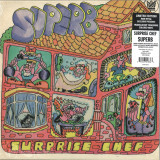
Australia's world-renowned cinematic soul outfit Surprise Chef return with new album Superb. A record that represents a change in their creative approach and turns up the heat in their music. Trading in their meticulous writing and recording techniques for a looser and less planned approach with the intentions of bringing more levity to the process, and it comes through in spades. The high caliber musicianship is still front and center, but they push their sound into a more energetic and fun place on this album. Album opener "Sleep Dreams" is the closest thing to a Surprise Chef tune one would come to expect but then lead single "Bully Ball" comes on and you get the picture that they came to kick in the door on this one. The song's gritty drums thunder through the speakers and get covered with percussion, keys, bass, and guitar chanks that stay in the pocket and bring the funk with them. The band pushes the boundaries of arrangement with tunes like "Body Slam" that starts off like a sweet soul track then pulls a 180, turning dark and haunting, centering on a sound they created by tucking a timpani into a bathroom two doors down from the mixing board. That same sense of experimentation comes up again on "Fare Evader" where they pepper another neck breaking rhythm track with synth notes that sound like robot sound effects from a 70s sci-film. The fellas turn up the tempo for the dance with tunes like "Consulate Case" and "Tag Dag"; the former pulling influence from afro-funk and the latter from jazz-funk. They take us deep into the beautiful world of Surprise Chef ballads on "Websites" and double down on their abilities to make beautiful and ethereal tracks with "Dreamer's Disease". With their new album Superb, their new approach, and plans to tour the world, we are about to see Surprise Chef take the step from the underground's most beloved to a household name and we are definitely here for it.
“Less than a month after one of the most violent fire events in the history of the continent, new shoots had burst through the scorched hardpan, nourished by the still-vital roots of those flayed and blackened trees.” John Vaillant, Fire Weather.
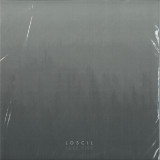
Loscil (aka Scott Morgan) returns to kranky with Lake Fire, a nine-track offering of ash-laden sonics that mine the tension within the cycle of destruction and rejuvenation.
Lake Fire is the result of a disjointed creative process. Originally conceived as a suite for electronics and ensemble, most of the original compositions were deserted, save for Ash Clouds, featuring James Meager on double bass. The remaining tracks were reshaped and remixed, built anew out of the remnants of the abandoned work. The result is a phoenix, an album burnt to the ground only to be reassembled out of its cinders. Fragments of the original lurk beneath a densely overpainted canvas of sound.
Infused into the resulting rearrangements are impressions from a road trip into the mountains marking a personal half-century milestone, surrounded by the ominous proximity of wildfires and dense smoke; celebrating life while the world burns. The album’s title comes from the striking irony that forest fires are often named after regional lakes - perhaps subconsciously referencing ancient lore. The cover photos were taken from this same trip, while sitting in a rowboat staring into the grey abyss of an opposing mountainside outside of Revelstoke, BC, obfuscated by smoke from a nearby lake fire.
Press quotes for previous solo release “Clara”:
"The sound sculptor Scott Morgan continues to astound.” Pop Matters
"A beautifully nuanced work, Clara is both revealing and mysterious -- and loscil fans wouldn't expect anything less.” Allmusic
press quotes for previous collaboration release with Lawrence English “Colours of Air”:
"As you might expect from the steady hands at the tiller, this is a cortex-hugging drone record of beauty and depth.” The Quietus
"One of the thrills of listening to this record is how its initially predictable veneer fades on subsequent listens to reveal layers of mischief underneath.” Resident Advisor
Following the first two releases on Sea~rène, GiGi FM returns with “Virgo Space Acid”, a deeply personal and sonically assertive exploration of transformation and healing.
Rooted in the energies of 2025, the Year of the Snake, this four-track EP channels the mystery and intuition of the serpent, weaving together Virgo’s archetypal forces of the healer and the alchemist.
Across driven beats, hypnotic acid sequences, and vocal-infused textures, “Virgo Space Acid” reflects a journey of renewal, self-ownership, and inner power.
From Berghain to The Bunker New York, GiGi FM has long been known for her ability to channel movement into sound. With “Virgo Space Acid”, she refines her craft even further, working with fewer elements yet pushing them to their fullest expressive potential. She explores the full range of her voice, shaping it into textures, atmospheric layers, and even percussion, while separately reworking classic 909 drum machine sounds into something entirely her own. This EP is a statement of both discipline and liberation, where minimalism meets deep transformation.
Opener “Calibration” sets the tone with its mantra-like intention: an invitation to realign and tune into one’s own energy. Built around a driving bassline, nostalgic yet forward-moving synths, and GiGi’s own spoken word, “A breath holds time, calibrates space”, the track creates a moment of clarity before the journey begins.
“Mercury” follows, embodying the trickster, the messenger, the shapeshifter. Playful and urgent, its bouncing synth sequences move like conversations in motion, with rising tones driving the track forward, pushing toward a restless ascension that mirrors Mercury’s role as a bridge between realms, both celestial and internal.
The title track, “Virgo Space Acid”, is the wormhole: the brain battle, the transformation. With a heavyweight 303 bassline, spiraling bleeps reminiscent of birds, and powerful classic 909, it is pure tension and release, an acid-drenched trip through motion and evolution.
Closing the record, “Floresta” is a sensual and grounding moment of reflection. Named after the stage at Waking Life Festival where GiGi felt a pivotal shift in her healing journey, the track mirrors the scene with dub chord sequences, emotional rising pads, and percussive vocal elements. Like the purple and pink drapes floating above the dance floor at sunset, Floresta is both a farewell and a prelude, a misty horizon where one chapter closes and another awaits.
With “Virgo Space Acid”, GiGi FM continues to expand her sonic language, deepening her connection between body, rhythm, and transformation. More assertive, more urgent, yet deeply intuitive, this is a record of movement, clarity, and self-empowerment.
"We are Sea~rène, swimming in-between supernatural tides, forever following the emotional waves of the universe." GiGi FM
GOLD DISC CLASSIC SERIES
Re-Issue of the 1st ever Vibronics 7" single, side A is the original mix, side B is a previously un-released dub version.
Originally released in 1998 as played by JAH SHAKA. It is now presented in a beautiful gold sleeve.
Part of the SCOOPS Gold Disc Classic Series !!
Vibronics is one of the most established names in UK Dub/Reggae music achieving millions of views on YouTube,
millions of Spotify streams and many tens of thousands of vinyl record sales.
Collaborators include Michael prophet, Macka B, Iration Steppas, Soom T, Aba-Shanti and more.
Hitting release number three, Slush Records remaster and reissue Spacer IV aka James Zeiter’s sought-after 1997 EP on Pleasure Records. The man behind a slew of lauded records under a variety of different aliases, his sound is one that is cherished for orbiting the spheres of progressive trance and atmospheric dub techno. This four-track EP, however, saw James venture into unchartered territory, exploring a more melodic, house-tinted spectrum, before flipping back into the progressive techno-trance underbelly.
Having started life in 1995, Spacer IV had already gone from the leagues of limited white labels, to being the name stamped on one of Pleasure’s biggest-selling records by the time this EP came out. With only 195 white labels of his first record ARC 1/ARC 2 pressed, a copy was passed to Pete Robinson at Robs Records. ‘ARC 2’ was plucked from that release, supplemented with a new cut ‘ARC 3’ and given a proper pressing on Robs Records offshoot label Pleasure to notable success.
Fast forward to 1997 and James chose to depart the trance-infused techno sound of those first releases. Absorbing elements by osmosis, this EP sees James dipping his toes into fresh waters. Using what limited hardware he had available, including an Akai S950 sampler, Ensoniq ESQ-1 and Novation Bass Station 1, James laid down four distinctive and versatile club cuts.
‘Sirocco’ opens the EP, a tingling hit of endorphins that only the most timeless of tracks can elicit. Echoing pads feed acid murmurings, that sit atop dusty breakbeats and rattling sub-bass. An aural exploration, that is equal parts ethereal and empowering, taking cues from breaks, ambient, chill out and house. It’s one of those rare tracks that has the power to float you away or fuel your buzz, giving a healthy tug on the heartstrings in the process.
‘Mono’ follows, merging heads-down dancefloors with the embrace of warmer climates. It’s deep and Detroit-infused yet bolstered by a dream house bassline straight out of the Italian riviera. A dose of eyes-closed euphoria that hits just right.
The flipside sees James in more familiar territory with ‘Jetson’ and ‘Dust’. The former is a hit of space-age progressive house. Trippy, hypnotising, driving goodness, showcasing James’ ability to lock your body into a groove, yet send your mind to another world. The latter rounds out the EP, serving up an acid-swirling club stomper, forever building in intensity before dropping you into the vacuum of deep space.
Australia's world-renowned cinematic soul outfit Surprise Chef return with new album Superb. A record that represents a change in their creative approach and turns up the heat in their music. Trading in their meticulous writing and recording techniques for a looser and less planned approach with the intentions of bringing more levity to the process, and it comes through in spades. The high caliber musicianship is still front and center, but they push their sound into a more energetic and fun place on this album. Album opener "Sleep Dreams" is the closest thing to a Surprise Chef tune one would come to expect but then lead single "Bully Ball" comes on and you get the picture that they came to kick in the door on this one. The song's gritty drums thunder through the speakers and get covered with percussion, keys, bass, and guitar chanks that stay in the pocket and bring the funk with them. The band pushes the boundaries of arrangement with tunes like "Body Slam" that starts off like a sweet soul track then pulls a 180, turning dark and haunting, centering on a sound they created by tucking a timpani into a bathroom two doors down from the mixing board. That same sense of experimentation comes up again on "Fare Evader" where they pepper another neck breaking rhythm track with synth notes that sound like robot sound effects from a 70s sci-film. The fellas turn up the tempo for the dance with tunes like "Consulate Case" and "Tag Dag"; the former pulling influence from afro-funk and the latter from jazz-funk. They take us deep into the beautiful world of Surprise Chef ballads on "Websites" and double down on their abilities to make beautiful and ethereal tracks with "Dreamer's Disease". With their new album Superb, their new approach, and plans to tour the world, we are about to see Surprise Chef take the step from the underground's most beloved to a household name and we are definitely here for it.
Old Soul Records are proud to present Chris’ seminal garage classic ‘Set If Off’, the tune that’s cemented his name as a 2-Step elder. Whilst the reworked version has seen a re-issue on a Pure Garage comp in recent times, this original version is presented here in it’s raw, unfiltered form. If that wasn’t enough it’s backed up with not one but two previously unreleased versions – ‘Set It Off (Bang Mix)’ & ‘Set If Off (Original Dub)’. This package is a testament to Chris’ production and all the tracks sounds as fresh now as when they were first committed to DAT during those heady foundational days.
The legendary New Jersey House collective Smack were responsible for a long list of hits throughout the 90's, with members of the team producing under a number of different aliases and alongside Blaze, Kerri Chandler, Tony Humphries were at the forefront of the New Jersey sound.
One such alias was Princess Di, produced by Smack Productions own Healey LeCator and featuring an unknown vocalist. Together they released a string of X-rated house tracks from 1994 until 1996 that have gone on to be cult classics, standing the test of time.
With the permission from Jeffrey Collins from Music Station, WOLF have hand-picked their favourite Princess Di tracks and combined them onto one bumper 12". Fully remastered and cut LOUD. Sometimes you have to look back in order to move forward!
DJ Support: Chris Stussy, Enzo Siragusa, Hot Since 82, Prunk, and M-High
Amsterdam-based Hungarian duo Retrouve are ready to make their mark on the global house music stage with their highly anticipated debut album, Feel So Right LP, on PIV Records. This young and dynamic pair has been turning heads in the House and Minimal Deep Tech scene with their slick productions and fresh take on the genre. Featuring eight timeless tracks, Feel So Right LP is a masterclass in diversity and depth, showcasing Retrouve’s profound understanding of house music and beyond. From soulful grooves to driving basslines, each track tells a story of their journey as artists and friends, reflecting their determination to carve out a unique sonic identity that resonates with both the old guard and the new wave of house music enthusiasts. Despite being newcomers, Retrouve have already garnered significant support from some of the biggest names in the industry, including Chris Stussy, Enzo Siragusa, Hot Since 82, Prunk, and M-High. Their unreleased tracks have been sought-after IDs for the past two years, creating a buzz that has only grown louder with time. Feel So Right LP is a testament to the duo’s unwavering passion and dedication to their craft while creating a memorable listening journey. With this release, Retrouve are poised to become ones to watch in 2025 and beyond.
- A1: Winter Wonderland (Feat Kansas Smitty's) (2 40)
- A2: I Believe In Father Christmas (3 51)
- A3: Man With The Bag (Feat Kansas Smitty's) (2 54)
- A4: Christmas Don't Let Me Down (3 21)
- A5: Sleigh Ride (Feat Kansas Smitty's) (2 24)
- A6: Amazing Grace (Feat The Vernon Spring) (2 53)
- B1: This Winter (Feat Lady Blackbird & Kansas Smitty's) (2 54)
- B2: Silent Night (3 50)
- B3: Jingle Bells (Feat Kansas Smitty's) (2 55)
- B4: Frosty The Snowman (Feat Kansas Smitty's) (2 09)
- B5: Have Yourself A Merry Little Christmas (5 34)
- B6: God Rest Ye Merry Gentlemen (Feat Kansas Smitty's) (2 15)
- B7: Let No Walls Divide (3 21)
- C1: It's Christmas (3 12)
- C2: Beautiful, Together (3 26)
- C3: Hang Your Lights (4 57)
- C4: The Jolly Fat Man (3 05)
- C5: The Pianoman At Christmas (4 27)
- D1: Turn On The Lights (4 16)
- D2: So Many Santas (3 28)
- D3: Christmas Never Gets Old (2 43)
- D4: How Do You Fly (5 55)
- D5: Christmas Caught Me Crying (3 17)
Multi platinum-selling musician and multi-instrumentalist Jamie Cullum today announces The Pianoman At Christmas - The Complete Edition. Due for release on 19th November via Island Records. The deluxe album completes last year’s critically acclaimed hit album The Pianoman At Christmas Part 1, with its Second Part - featuring 11 covers of classic Christmas songs, as well as two original songs, including lead single ‘Christmas Don’t Let Me Down’, out now.
Drawing from the past and inspired by the present, The Pianoman At Christmas - The Complete Edition sees Jamie team up with London jazz innovators Kansas Smitty’s, as well as composer and producer The Vernon Spring and acclaimed LA-based jazz singer Lady Blackbird to complete a piece of work that is imbued with seasonal sophistication. Alongside his two original tracks, Jamie breathes new life into classics such as ‘Winter Wonderland’, ‘Silent Night’ and ‘Frosty The Snowman’, ranging from ‘Amazing Grace’ to ‘Man With The Bag’ and ‘Sleigh Ride’. The Complete Edition will be released on double CD and double black vinyl formats, alongside a limited run of 180G Heavyweight coloured vinyl in red and gold.
Speaking on the release, Jamie said -
“I had a huge amount of fun creating part two of TPAC. Recorded live, all in the room together - it’s the party after the big show, with friends, drinks and some of the finest musicians on planet earth.”
Released almost a year to the day before The Complete Edition is due out, The Pianoman At Christmas featured 11 original songs played by 57 of Britain’s best musicians, recorded in Abbey Road’s famous Studio 2 and produced by Greg Wells whose The Greatest Showman soundtrack spent 28 weeks at number 1. The album sold over 37,000 copies, spending 6 weeks in the album chart and peaking at number 11. In December Jamie broke the Guinness World Record for the largest music lesson ever, when he held a virtual piano lesson for 2,282 people, teaching them the carol ‘In The Bleak Midwinter’ with special guests Robbie Williams, Sigrid and Dodie.
With 10 million album sales and over 890 million streams to date, Jamie is a celebrated musician the world over with loyal fans in every corner of the globe. With a career spanning over 20 years, his legendary live shows have seen him perform and work alongside artists as diverse as Herbie Hancock, Pharrell Williams, Kendrick Lamar and IDLES - Jamie writing on the latter’s album Ultra Mono. The success of Jamie’s major label breakthrough, Twentysomething in 2003 and its follow up Catching Tales saw him nominated for a BRIT, Grammy and numerous other awards around the world. In 2020 he won an Ivor Novello Award for his track ‘Age of Anxiety’, taken from his acclaimed 9th studio album Taller. In addition to his enduringly successful recording career, Jamie has also established himself as a multi-award winning music broadcaster; his BBC Radio 2 show celebrated its 11th year on air this year.
With her debut album Black Acid Soul earning critical praise, Lady Blackbird is a revelatory new talent with music that transcends the jazz scene through which the LA-based artist is rooted. Reflecting influences as varied as Billie Holiday, Gladys Knight, Tina Turner and Chaka Khan, with critics drawing comparisons to Adele, Amy and Celeste, Lady Blackbird’s distinct and beguiling voice is not one to be missed.
UK band Kansas Smitty’s have developed a musical voice wholly unique from what’s happening around them. They are led by band leader and producer Giacomo Smith who's cinematic compositions feature on their releases, most recently 2021's acclaimed Things Happened Here for Berlin based label !K7. In 2015 they launched their own east London venue and bar, of the same name, which became one of the conception points for the current UK jazz boom.
Londoner Sam Beste aka The Vernon Spring is a polymath in music who has production, writing and performance credits as eclectic as Amy Winehouse, Matthew Herbert, Kano, Joy Crookes, Beth Orton, Blood Orange, Gabriels and MF DOOM. Since 2019 he has been making waves with solo project The Vernon Spring, which foregrounds his rare capacity to hold sophistication and simplicity in the same hands through highly intimate muted-piano compositions and improvisations.
One of Europe's most popular alternative / dark wave bands. Lebanon Hanover have over one million monthly listeners on Spotify. Following their first US tour in over a decade, Lebanon Hanover returns with a soul-stirring double A-side single release, marking their first new material since the captivating 2020 album, 'Sci-Fi Sky.' Now, the enigmatic duo of William Maybelline and Larissa Iceglass beckons listeners into unventured sonic domains, intricately weaving folk-driven acoustic dream pop with the vulnerable essence of post-punk in a contemplative exploration of life's ephemeral yet profound nature. Embarking on a Cure-like sonic voyage reminiscent of the 'Head on the Door' and the 'Kiss Me’ era, title track 'Better Than Going Under' manifests as a romantic, sombre daydream. William Maybelline's brooding baritone intertwines with sighing back vocals, narrating an ode to life's fleeting yet boundless vistas. The acoustic strums initiate a folk-driven narrative which, when coupled with a celestial choir, crafts a contemplative soundscape of cautious optimism, reminiscent of Echo and the Bunnymen or The Church.. KYIV: Bearing the name of Ukraine's capital, 'KYIV,' voiced by Larissa Iceglass, delves into a narrative reflective of the sorrow and despair entwined within war-torn regions like Ukraine and beyond. The acoustic guitar and drum machine create a Cocteau Twins' 'Treasure'-esque soundscape, evoking a melancholic yet beautiful auditory journey. Iceglass's voice, transitioning from her husky baritone to a more resigned lament, embodies a poignant reflection on the harsh realities faced by those embroiled in conflict-ridden landscapes.
The first release to document the solo cello work of musician and composer Lucy Railton, the 40-minute composition Blue Veil recorded at Église du Saint-Esprit in Paris invites listeners into the realm of precision-tuned states of resonance: states made manifest through Railton's careful traversal of her cello's most subtle acoustic characteristics as they harmonically interlock with mind's embodied modalities of attention and imagination. Blue Veil arises out of, is sustained in and finally dissolves back into Railton's momentary presence with her intimate connection to the cello, a way of hearing that allows for a deeper engagement with harmonic resonance, one that opens a space for immediate encounters of mind and sound. Railton's exploratory practice of harmonic perception emerges from a focus on the physical qualities of intervallic and chordal sounds, their textural qualities, degrees of friction, and inner pulsations. Composing in the moment guided by resonances within the cello's body, her own, and their shared vibrational space, Railton moves through Blue Veil by giving sounds what they ask for: sounds of pure texture manifesting as a move through temporal transparency, sounds of rough texture marking regions of dimensionally dense space. Railton's creative and highly refined use of just intonation harmony deforms sound's inner movements in ways that suggest a mode of listening that actively supplies imagery of sounds implied or completely absent rather than merely savouring those fully present. This active mode of "listening-with", playfully and semi-metaphorically referred to by Railton as "sing-along music", allows listening to reflexively participate in the music's movement as it gradually passes through richly saturated domains of harmonic imagination. And just as the precision-tuned tones of Blue Veil lose their individuality when fusing multifaceted uniformity, listening's structures of reference and recognition dissolve into nameless waves of intensity, continuously unfolding themselves upon and merging with the listener. Blue Veil is the result of a deep exploration of the inner worlds of tuning, an undertaking in turn informed by and emerging out of Railton's realisations of the music of Catherine Lamb and Ellen Arkbro, her collaborative work with Kali Malone and Stephen O'Malley as well as her interpretive practice in performing the work of Maryanne Amacher, Morton Feldman and others.
180 G. BLACK VINYL WITH LINER NOTES IN CREOLE, FRENCH, ENGLISH
Originally released in 1979, "Spiritual Sound" lives up to its name, a soaring, triumphant album, six tracks of spirit magic from Guadeloupe.
Telluric, intense, terribly alive, the gwoka drums of Guadeloupe carry the identity of a painful and fervent island. Marked forever by the crime of slavery, Guadeloupe's créolité cherishes the ka drums and their natural environment: the low-pitched boula drum with male goatskin, the high-pitched soloist makè drum with female goatskin, the chacha, ti bwa, triangle, calabash and other percussion instruments that surround them, and the voices - the fiery, proud, timbred, urgent voices of the gwoka.
This album is also a legend for its voices: in his then dazzling youth, singer Lukuber Séjor was one of the first gwoka artists to largely feminize the chorus of répondè, who converse with his text delivered in a straight and powerful voice.
And everything here sets new standards. In 1979, Mizik Filamonik - Spiritual Sound proclaimed a spiritual patriotism of ferocious intensity. The album by Lukuber Séjor - whose spelling alone is a battle - sets out to give Guadeloupe the intangible weapons of self-respect and self-knowledge, through a singular practice of traditional music.
The genesis of gwoka music is less straightforward than one might imagine... The drums performed the servile task of accompanying the work of slaves in the fields and during the “corvées” imposed by the administration, before being freely practiced by the common people after the abolition of 1848. At the heart of the conviviality of the Guadeloupeans furthest from the cities - geographically and socially - the gwoka drums come out for carnival, funeral wakes and neighborhood celebrations, but also during strikes, fits of anger and armed vigils of the riots and revolts that have punctuated the island's history. For generations, governors of the colony and then the prefects of the overseas department of Guadeloupe have been viewing the gwoka as a potential for turbulence and a threat to public order.
But as the Beatlesmania, “chanson engagée” and rock revolutions unfolded in Europe, young people turned to the drums of mizik a vié nèg (“bad negro music”, in Creole), which Guadeloupeans had learned to despise by following the “assimilation” process advocated by the school system and most of the political class. At the end of the sixties, in a Guadeloupe mourning the deadly repression of the May 1967 social movement, they played traditional music, refusing to wrap it up in tourist prettiness and madras folk costumes. Instinctively, they played a rough and contemporary gwoka, led by the incendiary Guy Konkèt. This was the era of decisive 45 rpm records such as Robert Loyson's Kann a la richès, which brought to light the fieriest words of union rallies.
At his home in Sainte-Anne, Lukuber Séjor played with flautist Olivier Vamur and his brother Claude Vamur, who cobbled together a drum kit from tin crockery and became, a few years later, the most influential drummer in Kassav'.
These were the years of the Bumidom program, when young Guadeloupeans were encouraged to emigrate to mainland France. At the age of twenty, Lukuber Séjor embarked on the liner Irpinia, disembarking at Le Havre and taking the train to the Gare Saint-Lazare - the route taken by thousands of young West Indians who went on to study or looked for work, all the while trying to maintain a link with their homeland. In this case, it's at the Antony university residence, where Lukuber played the drum and participated in a thousand gwoka updates and aggiornamentos, while exile reinforced the need for a spiritual link with the native land.
In 1978, Guy Konkèt played at the Salle Wagram, a historic event for West Indian music. After serving as répondè - i.e. backing vocalist - on one of his home-recorded albums, Lukuber joined his live band. Little by little, he became one of the key artists on a circuit parallel to French show business. At a student party in Caen, he met a young woman from Martinique who, at the time, was more motivated by her ambitions as a visual artist than by her vocation as a musician. Her name was Jocelyne Béroard and, a few years before she plunged into the Kassav' adventure and became the greatest West Indian singer of her generation, she designed the cover of Lukuber Séjor's LP.
This ambition was obvious and imposed its will. A more or less regular band was formed, with Roger Raspail, Rudy Mompière and Éric Danquin on ka drums, Claude Vamur on ti bwa, Olivier Vamur and Françoise Lancréot on flutes and Annick Noël on keyboards. Lukuber Séjor is set on wanting to extend the gwoka palette to other instruments, as the jazz-rock revolution opens a thousand new doors. Annick Noël will play a wide range of timbres and textures on electric piano and synthesizer. Another novelty: the répondè are two men and two women, Roger Raspail, Olivier Vamur, Françoise Lancréot and Maryann Mathéus ...
Mizik Filamonik - Spiritual Sound is a self-production in which the singer and leader sank all his savings, allowing him no more than a single day in the studio. The first side is more of a musical manifesto, with the first two tracks, Éritage and Penn é plézi, being instrumentals. The third, Son, forcefully celebrates the need for Guadeloupeans to connect with the gwoka. In fact, Jocelyne Béroard's cover shows a tambouyé in the shadow of a cloudy sky, against which a radiant sun is rising and whose light will soon flood the entire landscape. The silhouette and face of this man strongly evoke the immense Vélo, master of the ka, rejected at the time on the fringes of society.
The second side of the LP is surprising. Formally, three tracks are explicitly linked like the three parts of a triptych. Primyé voyaj evokes the appalling tribulation of Africans deported as slaves to Guadeloupe; dézyèm voyaj speaks of the Bumidom program and the economic, political and social forces driving young Guadeloupeans towards the mirage of prosperity in France; twazyèm voyaj closes the cycle with the emigrants' return from Europe after years away from their island...
This gwoka, obsessed with the need to save Guadeloupe spiritually, appeals far beyond the politicized audience. Mizik Filamonik - Spiritual Sound instantly became a classic, although Lukuber Séjor never really made a career for himself as a musician.
After all, the album was released in 1980, with no promotional resources in France or Guadeloupe - and therefore no concerts. The thirty-two-year-old author, composer and performer made his own third trip back to Guadeloupe. He set up a small woodworking business, which he lost in Hurricane Hugo in 1989. His other activity, teaching in a medical-educational institute, became the core of his professional life. He continued to be an active campaigner - a campaigner for the Creole language, a campaigner for the reawakening of identity, a campaigner for special education, a campaigner for a thousand causes that he ignited with his generous and perceptive enthusiasm, such as the defense of breadfruit fries...
The echoes of his 1979 album have not died down. Of course, the use of Penn é plézi as the theme tune for Radio Guadeloupe's funeral notices from 1980 to 1992 kept him in the collective memory, but he continues to sing and compose sporadically, as with his all-female
vocal group Vwapoulouéka... Still convinced that music is a means of liberating the spirit, he continues the journey of a young man eager to deploy the power of Creole music and language.
Bertrand Dicale
Forms is the debut release from Naturalisten. Behind this name is Rado, one of the founders of the Unknown Species collective. They’ve put together some great underground parties in London through the years, giving space to new talents and sounds, and blissfully ignoring trends and fads.
Rado’s colourful and imaginative take on deep techno shines through all the six tracks here. Fans of the sounds we often hear on the likes of Delsin, Nous’Klaer Audio, Spazio Disponibile, Bitta, Animalia, are likely to find plenty to love here. Starting with the subtlety of “Release The Tension”; passing through the swampy “Against The Tide”, the bleepy minimal drum’n’bass of “Woodpecker”, the acid deepness of “Aves Acid”; and landing on the early-morning atmospheres of “Canopy Dreams”, which we find very much reminiscent of some exquisite James Holden moments from a time long gone.
The final touch to an already beautiful body of work is added by Forest Drive West with his remix of the opening track “Release The Tension”. His reinterpretation slowly creeps in and wraps you up in a wave of low frequencies, before blossoming into an epic outro.
Early support for this release came from Sunju Hargun, Sybil, Aaron J, Benedikt Frey, among others.
2025 Repress
The Colombian producer whose name is on everyone's lips, figure of the underground in his native land, Felipe Gordon makes a sensational debut on our beloved label SKYLAX RECORDS ! His fabulous Django Mango EP mixes his house music obssessions with his love for Latin & jazz music. Adept of analog equipment and eminent musician, he gives us a real work of art to store alongside Nuyorican souls legends (master at work in mind). Kicking off the release, the title song django mango takes us through the swirls of the alleys of bogota, a bit as if moodymann had paid for a first class round trip in bogota , a laid-back title that can be enjoyed at any time of the day. a clever mix of funky bassline & a light piano that almost reminds us of the masters of the buena vista social club (without the vocals!) in house mode. A masterpiece in itself. on A2, we can hear this mixture again the perfect fusion between the golden-age house aesthetics and the cultural sounds of South America all complemented by a superb vocal during the break "our names are nick names wich won't reflect where we came from" a statement in itself ! The b-side from the outset gives us perhaps one of the best songs of the ep, the brilliant dakar, a subtle mix of rhodes, swaying bass and African children's chants. And to end, D, Fuck Off All Your Trouble, is an ode to the resilience of the motor city in the purest style of the 313. A brillant debut !Skylax 4 Ever