Soul music changes just like the weather. Different styles, rhythms and dances have been emerging over the years, making the genre so exciting and assorted. For almost a decade, in the post-disco era, synths and drum machines ruled the day, but by the mid 90s a group of new artists were turning their attention to the golden age of soul music.
One of those names was Adriana Evans, whose debut album from 1996 surprised soul fans around the world. Adriana boasts a solid musical background and this can be heard on the record. Her mom was the jazz singer Mary Stallings and she was also the goddaughter of Pharoah Sanders, so she has been surrounded by music since childhood.
Both choices here are taken from that outstanding album. "Looking For Your Love" is a beautiful mid-tempo tune which could have been recorded by The Emotions or Phyllis Hyman. On the reverse, "I'll Be There" is a sublime piano and flute-led ballad in the vein of Minnie Ripperton.
quête:name one
- A1: The Mysterons /Century 21 Television Logo/Main Titles (The Mysterons Version)/The Power Of The Mysterons/ Red Vs Blue
- A2: Winged Assassin/An Officer And A General/The Mysteron Threat (Version 1)/Runway Runaway
- A3: Point 783 /The Oncoming Storm
- A4: Big Ben Strikes Again/Midnight Runner/Atomic Annihilation/The 13Th Hour
- B1: Avalanche/Chills, Thrills And Spills
- B2: Model Spy/Serenade De Monte Carlo
- B3: Seek And Destroy/Walking With Angels
- B4: Operation Time/The End Of Time
- B5: White As Snow/Tvr-17 Pop/Insubordination/End Credits (Original Version)
- C1: Spectrum Strikes Back/Main Titles (Standard Version)/Espionage On The Plains/The Mysteron Threat (Version 2)/ Indigo Fever /Bringing The House Down
- C2: The Trap/Trouble At Glen Garry Castle
- C3: Shadow Of Fear/Of Gods And Men/Wrath Of Phobos
- C4: Fire At Rig 15/Fallen Hero
- D1: Renegade Rocket/Major Disaster/A Wing And A Prayer
- D2: Noose Of Ice /The Tower Crumbles
- D3: Flight To Atlantica /Champagne Buzz
- D4: Expo 2068/Nuclear Detour
- D5: Attack On Cloudbase/40,000 Feet To Heaven/Faint And Empty Hope/Captain Scarlet (The Spectrum Version)
After the international success of Thunderbirds, Gerry and Sylvia Anderson turned their attention to a deadly threat from Mars. Seeking revenge for an attack on their home planet,
the Mysterons plot to use their powers to bring Earth to its knees.
Across 32 episodes broadcast during 1967 – 1968, the series is remarkable for moving away from the more caricatured puppets of previous shows –
they have more realistic body proportions and the storylines are much more violent and darker in tone. Something reflected in the music which has a
more militaristic feel to it although, as always, composer Gray offers up occasional lighter tracks to break up the mood.
The opening narration of each episode sums it up –
"The Mysterons: sworn enemies of Earth. Possessing the ability to recreate an exact likeness of an object or person. But first, they must destroy...
Leading the fight, one man fate has made indestructible. His name: Captain Scarlet."
The Captain Scarlet LP will be sixth album in the series which includes UFO, Supercar, Thunderbirds, Fireball XL5 and Space: 1999.
The second release in January to celebrate the 25th anniversary of Frank de Groodts career as a recording artist is a re-press of his legendary Sonar Bases 4 10 double 12 . Exactly 21 years ago, in January 1997, Frank elevated to electro stardom with this astonishing combination of dark electronica and electro beats.
Frank at the time lived just outside the city of Amersfoort, which is where he was born and lives again these days, some 30 minutes northwest of Utrecht. His first ever release in January 1994 was a techno EP on U-TRAX, as Pieces of a Pensive State of Mind. Later that year, he released his first 12"-es on Djax records as The Optic Crux, and he continued to keep making up artists names in the following 25 years, like Fastgraph and The Operator. He is also one half of the live outfit Random XS (together with DJ Zero One), collaborated with Arno Peeters (a.k.a. Spasms) as Urban Electro and with Detroit's Dennis Richardson as Ultradyne. And that s not even all of his alter egos.
The sound of these eight unique tracks called for a new moniker back in the nineties: Sonar Base (ironically misspelled on the original release as Sonar Bass). All track on this re-press have been remastered for maximum impact. The double vinyl goodness kicks off with Earth Probe, that very subtly creeps towards us, before it kicks in with a rather obese bassdrum. As if Frank wanted to ease his listeners into his then new sound, this track basically is in techno/acid style, but has the slower tempo that characterizes the rest of the electro tracks of this release.
Immediately following, is the unrivaled beauty of Welcome To Sonar Base #4, a track that slowly builds up before it takes us on a deep space journey at two thirds. The 11 minute Sonar Base #5 has been a DJ favorite for 21 years, reaching out to both electro and techno lovers, while Sonar Base #6 is the type of ultra-pure electro that really puts your woofers to the test.
Arrival At Dwell Probe is another one of our favorites, with superfine beats, desolate voice samples and deep and moody synths. Very musical, truly a top piece that will leave you totally unprepared for Blunted. This track has the rolling type of hiphop-style beats that mix well with LL Cool J's Mama Said Knock You Out, but of course has the space-station atmosphere that makes it unmistakably a Sonar Base track.
The fast pace and merciless beats of Intergalactic Anecdote rush us to the finale: Sonar Base #10, a worthy closing track, with deep bassdrum patterns and melancholic strings that also please fans of broken beats. It stops and goes and keeps demanding your attention, making you wanting to go back again to the first track disc and start your Sonar Base trip all over again.
The third release on U-TRAX in 1993 was also a third debut, this time by Natasja Hagemeier and Jeroen Brandjes. Early in their career, they used several artist names, but became most commonly known as The Connection Machine. With their debut mini-album The Dream Tec Album they more or less described their style: dreamy techno. It became an instant Dutch techno classic and U-TRAX is proud and delighted to offer a fully remastered re-release, including three never before released bonus tracks (one of which is digital-only).
Natasja and Jeroen resided in Utrecht back in the 90s. In 1991 they assembled all their ideas and recorded the track "24 Hours" with DJ Paradize. Soon after this experience, they started to buy their own gear, all strictly MIDI (which wasn't too obvious in those days). In their early recording years, they had three producer-names (Syndrome, The Connection Machine and Bitch&Bites), that were all collected under the The Utroid Machine Missions umbrella, which was used for their debut on U-TRAX.
All tracks on The Dream Tec Album are The Connection Machine's earliest works, from the 1991/1992 years.
"An Overflow of the Mind" is a beautiful, dreamy track with almost divine sounds and strange voice-samples that serves perfectly as an introduction to their entire repertoire.
Their first production was "24 Hours", and what a brilliant one it is! A well-known jazz-musician talks about a "24 hour party going on", on top of a sinister and trancey rug, woven of sampled sounds from pioneers in electronic music and nailed down to the floor with a deep pounding bassdrum. At the time they made this track, 141 bpm was unbelievably fast...
"Evilish Cosmos" is all about a very sad and personal emotion, so everything we say about it will be absolutely wrong. Just listen to the meandering piano line, distorted voice samples - and feel it.
The first bonus track on this release is "Recognized Pain", which was intended to be part of the original The Dream Tec Album. It had appeared on the Phuture Classical Section C cassette in 1993, on the famous Drome Tapes label that formed the roots of U-TRAX. It truly is an amazing track: pure sonic terror with haunting rhythms, psychedelic synth lines and shards of voice samples that make the listener feel slightly uncomfortable.
"X_Manray" is many electronic music lover's favorite track. It is sooo deep that it is hard not to get hypnotized by it. Warm strings are coupled with deep beats that show up and disappear every now and then. Could serve perfectly to start off any DJ's set, as long as she or he has the guts.
Though "Braindrain" is probably the most danceable track on this album, it is carefully designed to tease the listener. Everything in this track drops in too late and every tone, melody or loop last exactly a few bars too long. Designed as a DJ-teaser and so it is.
The second bonus track, "Cafe d'Anvers", is another previously unreleased work, of which unfortunately no master recording was saved. All that is left, as far as we know, was an old VHS Hifi tape from the U-TRAX Archives. And that is where this bonus track was taken from. Mastering engineer Thee J Johanz managed to restore the quality of the recording somewhat, while at the same time maintaining its dark, clubby sound, a tribute to the famous club of the track's name in Antwerp, Belgium.
"Dream Affected Dream" is one of the most recent productions on this album. It was recorded with CNN playing live on top of it. At this exact moment, CNN was having an interview with David Koresh, the leader of the infamous Branch Davidians sect from Waco, Texas, while they were under siege by an armed police force. Natasja and Jeroen were just ready to record Dream Affected Dream, and spontaneously decided to mix in the audio from CNN. Not very long after that, the cult members set fire to themselves. A very strange and oddly funky track, that also serves as a time-document.
The final track is another bonus track. Like Cafe d'Anvers, "Voight-Kampff" is taken from on old U-TRAX VHS Hifi tape and masterfully mastered into a lovely relaxed dreamtech piece. Very suitable to start the Sunday after a long night of clubbing. This track is available for free to buyers of the complete digital album only.
Original release date: July 1993.
Four Flies' new record series, ITALIAN LIBRARY SONGBOOK - Masters of Cinematic Music Reimagined into Song, hopes to build a bridge between the modern and the contemporary. Producers and songwriters from today's music scene put their spin on hidden tracks and outtakes from the catalogues of Italian soundtrack maestros, reimagining them into new, previously unheard songs poised between pop and club culture – a sound nestled somewhere in between Balearic, downtempo, and organic grooves.
Volume I focuses on Alessandro Alessandroni, a composer whose trajectory is emblematic with respect to Four Flies' journey as a label and publisher. Despite being best known in his lifetime for his unmistakable whistle in Ennio Morricone's soundtracks for Sergio Leone's spaghetti westerns, Alessandroni was way more than that. He was a refined composer and multi-instrumentalist, and one always ahead of his time. Partly thanks to Four Flies and its contribution to the rediscovery of the Maestro with releases such as the EP "Afro Discoteca" and the compilation album "Lost & Found", this has become unquestionably clear in the past few years, which have seen his name climb to the top of collectors' want lists and gain recognition in the international music industry.
This release goes back to one of Alessandroni's lesser known film scores, Sangue di sbirro (written for Alfonso Brescia's 1976 poliziottesco Cop's Blood), where he created his own version of the soul-infused jazz-funk music typically found in 70s Blaxploitation movies.
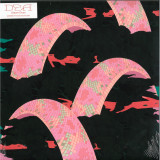
More specifically, Neapolitan producer pAd and London singer-songwriter Jessica Duncan reimagine the original "Philadelphia", which appears on Side B and whose title clearly refers to the city that, back in the 70s, saw the birth of (mellow) disco. The result of their collaboration is "Do You Wanna Get Close?" on Side A, a downtempo, jazz-funk and Balearic gem pervaded by warm, sexy and elegant pop-soul vibes that make it a perfect club track to enjoy the night until the early hours of the morning.
To ensure maximum audio quality, the mastering was done by Fabrizio De Carolis at his Reference Mastering studio in Rome's Prati neighborhood (the same neighborhood that was once the epicenter of Roman library music) while the vinyl cut at the The Carvery, the multiple Grammy-nominated London studio behind some of the best organic grooves records of the past decade. The result is a deep, full, rich and three-dimensional sound that enhances the beauty of both tracks.
The series and volume artwork is by graphic designer and calligrapher Luca Barcellona, an artist used to working with analog tools such as ink, brushes and pencils. He drew inspiration from the world of literature, imagining each release as one of the volumes in an elegantly bound classics book series - an analogy that reminds us of the tactile element that makes vinyl records so unique and precious, while also suggesting the cultural value of a music that aims to connect the legacy of the past and the creativity of the present.
Sheila was reborn in Detroit as one of George Clinton's fiercely funky Brides of Funkenstein. More than simple sex appeal and sass, Sheila sang on the seminalNever Buy Texas from a Cowboyas well as P-Funk hits like "Atomic Dog," making a name for herself alongside P-Funk collective greats. After this mothership connection, Sheila toured with Rick James in 1981 as an original Mary Jane Girl, wrote for Clinton's solo records in the mid '80s and even made a soul connection with Bruce Willis -- who inspired the singer to do her own thing. She then departed the P-Funk stratosphere for another planetary dimension, recording with Aurra, Civil Attack and Public Enemy.
"Attitude" and "Keep On Doing" presents Sheila doing what she does best raw funk and soul
Sheila in featured article: Wax Poetics issue #2 (due out in September)
Member of Brides Of Funkenstein, Parliament/Funkadelic, George Clinton, Aurra, Civil Attack
Limited pressing of 300 copies
45rpm 7" record in Silk-Screened Jacket
Mauro Pawlowski is what one might call 'rock royalty'. He has been of the key figures in the Belgian contemporary music scene ever since he started his career as frontman of notorious cult band Evil Superstars in 1992. The insatiable Mauro was a dEUS member for years but he was also the driving force behind countless other musical projects and alter egos. He had a hand in over 100 records and counting.
Mauro is now releasing a new solo pop album called 'Eternal Sunday Drive' under his own name via Unday Records, something a generation of music lovers has been yearning for the last decade.
"Of the records Ayler made during 1964, the LP New York Eye and Ear Control...is probably the most important link between the epoch-making collective improvisation Free Jazz by the Ornette Coleman double quartet, and John Coltrane's Ascension. Apart from that, it is—in my opinion—one of Ayler's very best recordings. New York Eye and Ear Control owes a large part of its success to the contrasting temperaments of the three musicians used by Albert Ayler in addition to his trio, namely, trumpeter Don Cherry, trombonist Roswell Rudd and alto saxophonist John Tchicai. Don Cherry improvises in broad melodic lines or places sharply accented staccato passages. Roswell Rudd interposes fragmentary flourishes in the highest register, or growl sounds and glissandos in the manner of the old tailgate trombonists. John Tchicai presents the polarity of a slightly 'cool,' linear style and offers motivic linkage by insistently repeating melodic patterns. All three inspire Albert Ayler to a breadth of expression which is too often missing in his improvisations with smaller groups. There is less limitation to his sound-span playing, more contrast, more punch and rhythmic accentuation, and with quick response Ayler takes motives from Cherry, Rudd and Tchicai, transforms them
into his own musical idiom, and in turn gives a new direction to the flow of ideas." - Free Jazz by Ekkehard Jost
"The music is fiery but with enough colorful moments to hold one's interest throughout." - Scott Yanow, All Music Guide
"...a valuable window into the music's early history as well as what might have happened outside record dates, more than one is usually privy to." - Clifford Allen, AllAboutJazz
It is with great joy that we present the Mr Bongo edition of Marcos Valle's 1983 self-titled masterpiece. A pure vintage that features the ultimate Brazilian-boogie cult-classic ‘Estrelar’ and iconic 80s cover art that sees a gloriously sun-drenched Marcos dressed in a pink v-neck t-shirt surrounded by a generous selection of deadly-looking neon cocktails.
The album was produced by the legendary Lincoln Olivetti and Marcos' brother Paulo Sérgio Valle. It showcases a real who's who of Brazilian music at the time, with stellar performances from vocalists and musicians such as Rosana, Serginho Do Trombone, Robson Jorge and Oberdan Magalhães to name but a few. This was Marcos’ second album, after having moved back to Brazil from his time living in Los Angeles, and that US influence is evident through its prominent boogie, soul and funk sounds. It also features collaborations with the US singer-songwriter, composer, pianist, keyboardist, and record producer, Leon Ware, who co-penned three tracks including 'Estrelar'. To complete the album there are tracks such as 'Fogo Do Sol', which is pure AOR / Balaeric vibes, and tracks that are more MPB and pop-inspired, making a well-balanced track list for both home-listening pleasure and dancefloor business.
What could we do to give one of Marcos' most celebrated albums the treatment it deserved and produce the most definitive re-issue possible? The answer was to enlist the services of Miles Showell, Abbey Road Studios Mastering and lacquer-cutting engineer and all-around audio-magician, to cut a special half-speed master edition. Miles had previously worked his half-speed magic on our Arthur Verocai album re-issue, and once again we are totally blown away by the richness which Miles has brought out in his mastering technique. He has enhanced the listening experience and taken this wonderful album to another level.
To celebrate the release we have pressed up several vinyl versions; both standard master, and Miles' half-speed mastering editions on Black vinyl, alongside special limited edition Rose and Mint-Green coloured vinyl variants that were inspired by the audacious-looking cocktails on the cover - sheer 80s excess!
Peggy Gou’s Gudu Records presents a landmark EP of original music by Dea - a legendary Indonesian DJ and artist who counts DJ Harvey, Mr. Scruff and Gilles Peterson (who famously claimed that Dea was the best DJ he’d seen in a decade after watching him spin in 2017) among his admirers.
Making his name in Indonesia’s Sun Down Circle collective, Dea has gone from one of his country’s best-kept secrets to one of the world’s most respected diggers and DJs. His EP for Gudu is his most extensive collection of solo music yet, backed with a transcendent remix by I:Cube - the few-more-acclaimed French artist famed for trading remixes with Daft Punk in the 90s and decades of brilliant solo music since.
Pink Vinyl
It is with great joy that we present the Mr Bongo edition of Marcos Valle's 1983 self-titled masterpiece. A pure vintage that features the ultimate Brazilian-boogie cult-classic ‘Estrelar’ and iconic 80s cover art that sees a gloriously sun-drenched Marcos dressed in a pink v-neck t-shirt surrounded by a generous selection of deadly-looking neon cocktails.
The album was produced by the legendary Lincoln Olivetti and Marcos' brother Paulo Sérgio Valle. It showcases a real who's who of Brazilian music at the time, with stellar performances from vocalists and musicians such as Rosana, Serginho Do Trombone, Robson Jorge and Oberdan Magalhães to name but a few. This was Marcos’ second album, after having moved back to Brazil from his time living in Los Angeles, and that US influence is evident through its prominent boogie, soul and funk sounds. It also features collaborations with the US singer-songwriter, composer, pianist, keyboardist, and record producer, Leon Ware, who co-penned three tracks including 'Estrelar'. To complete the album there are tracks such as 'Fogo Do Sol', which is pure AOR / Balaeric vibes, and tracks that are more MPB and pop-inspired, making a well-balanced track list for both home-listening pleasure and dancefloor business.
What could we do to give one of Marcos' most celebrated albums the treatment it deserved and produce the most definitive re-issue possible? The answer was to enlist the services of Miles Showell, Abbey Road Studios Mastering and lacquer-cutting engineer and all-around audio-magician, to cut a special half-speed master edition. Miles had previously worked his half-speed magic on our Arthur Verocai album re-issue, and once again we are totally blown away by the richness which Miles has brought out in his mastering technique. He has enhanced the listening experience and taken this wonderful album to another level.
To celebrate the release we have pressed up several vinyl versions; both standard master, and Miles' half-speed mastering editions on Black vinyl, alongside special limited edition Rose and Mint-Green coloured vinyl variants that were inspired by the audacious-looking cocktails on the cover - sheer 80s excess!
The third release on U-TRAX in 1993 was also a third debut, this time by Natasja Hagemeier and Jeroen Brandjes. Early in their career, they used several artist names, but became most commonly known as The Connection Machine. With their debut mini-album The Dream Tec Album they more or less described their style: dreamy techno. It became an instant Dutch techno classic and U-TRAX is proud and delighted to offer a fully remastered re-release, including three never before released bonus tracks (one of which is digital-only).
Natasja and Jeroen resided in Utrecht back in the 90s. In 1991 they assembled all their ideas and recorded the track "24 Hours" with DJ Paradize. Soon after this experience, they started to buy their own gear, all strictly MIDI (which wasn't too obvious in those days). In their early recording years, they had three producer-names (Syndrome, The Connection Machine and Bitch&Bites), that were all collected under the The Utroid Machine Missions umbrella, which was used for their debut on U-TRAX.
All tracks on The Dream Tec Album are The Connection Machine's earliest works, from the 1991/1992 years.
"An Overflow of the Mind" is a beautiful, dreamy track with almost divine sounds and strange voice-samples that serves perfectly as an introduction to their entire repertoire.
Their first production was "24 Hours", and what a brilliant one it is! A well-known jazz-musician talks about a "24 hour party going on", on top of a sinister and trancey rug, woven of sampled sounds from pioneers in electronic music and nailed down to the floor with a deep pounding bassdrum. At the time they made this track, 141 bpm was unbelievably fast...
"Evilish Cosmos" is all about a very sad and personal emotion, so everything we say about it will be absolutely wrong. Just listen to the meandering piano line, distorted voice samples - and feel it.
The first bonus track on this release is "Recognized Pain", which was intended to be part of the original The Dream Tec Album. It had appeared on the Phuture Classical Section C cassette in 1993, on the famous Drome Tapes label that formed the roots of U-TRAX. It truly is an amazing track: pure sonic terror with haunting rhythms, psychedelic synth lines and shards of voice samples that make the listener feel slightly uncomfortable.
"X_Manray" is many electronic music lover's favorite track. It is sooo deep that it is hard not to get hypnotized by it. Warm strings are coupled with deep beats that show up and disappear every now and then. Could serve perfectly to start off any DJ's set, as long as she or he has the guts.
Though "Braindrain" is probably the most danceable track on this album, it is carefully designed to tease the listener. Everything in this track drops in too late and every tone, melody or loop last exactly a few bars too long. Designed as a DJ-teaser and so it is.
The second bonus track, "Cafe d'Anvers", is another previously unreleased work, of which unfortunately no master recording was saved. All that is left, as far as we know, was an old VHS Hifi tape from the U-TRAX Archives. And that is where this bonus track was taken from. Mastering engineer Thee J Johanz managed to restore the quality of the recording somewhat, while at the same time maintaining its dark, clubby sound, a tribute to the famous club of the track's name in Antwerp, Belgium.
"Dream Affected Dream" is one of the most recent productions on this album. It was recorded with CNN playing live on top of it. At this exact moment, CNN was having an interview with David Koresh, the leader of the infamous Branch Davidians sect from Waco, Texas, while they were under siege by an armed police force. Natasja and Jeroen were just ready to record Dream Affected Dream, and spontaneously decided to mix in the audio from CNN. Not very long after that, the cult members set fire to themselves. A very strange and oddly funky track, that also serves as a time-document.
The final track is another bonus track. Like Cafe d'Anvers, "Voight-Kampff" is taken from on old U-TRAX VHS Hifi tape and masterfully mastered into a lovely relaxed dreamtech piece. Very suitable to start the Sunday after a long night of clubbing. This track is available for free to buyers of the complete digital album only.
Original release date: July 1993.
Triumph breeds confidence, and with confidence comes an expansion of ambition, a focus of ability, an emboldening of audacity. De-Loused In The Comatorium had risked everything Omar and Cedric possessed on the wildest of gambits, the most impossible of dreams: making sense of the riot of influences ricocheting about Omar’s head, and memorialising their departed friend Julio Venegas through Cedric’s magical realist roman-a-clef. It Clouds Hill shouldn’t have worked. But it did, and with that fiendish tightrope act successfully accomplished, the duo stretched the wire even further and higher, over a figurative fiery pit peopled with lions, crocodiles, piranha and other sharp-toothed beasts not yet known to man. Because how do you make great art without taking great risks? Frances The Mute was no De-Loused Part Two. For one thing, the band’s configuration had changed, in the most painful way. Shortly before the release of De- Loused, sound manipulator and founder member Jeremy Michael Ward passed away, a wound Omar says the group never recovered from. But even though his inspired fucking- with-the-sonic-parameters is absent from Frances The Mute, his spirit and influence can still be determined, the album’s concept derived from a diary Ward had encountered in his day-job in repossession. “Jeremy picked up lots of interesting stuff when he was a repo man,” remembers Cedric. “Weird things, including this diary, He let us read it a bunch of times. It was by a guy who’d been adopted and was searching to find his real parents. It was very surreal, it didn’t make much sense – the guy might’ve been schizophrenic – but it was very inspiring. It felt like how certain music helps you escape your boring every-day life. The names and scenes in the diary directly inspired these songs.” Some of the tracks pre-dated De-Loused, having their origins in early demos Omar recorded at the duo’s Long Beach home Anikulapo, songs such as The Widow and Miranda The Ghost Just Isn’t Holy Anymore. Cedric had heard these jams in their embryonic state and began working in his mind on what he could bring to them. “I was attracted to The Widow like you would be to a lover, right?” Cedric remembers. “I sang over it with Omar while we were touring De-Loused in Australia on the Big Day Out, like, ‘Okay, I’ve got something for this.’” A potent ballad, laden with emotional crescendos and evoking the epic drama of Ennio Morricone – an effect aided by an elegiac trumpet part performed by Flea – The Widow would become The Mars Volta’s first song to chart on the Billboard Top 100, capturing the album’s potent sorrow and widescreen sprawl in miniature. Indeed, the lush sound of the album, the depth of detail and breadth of instrumentation, belies its grungy roots. Having tasted the luxury of Rick Rubin’s mansion, Omar veered in the opposite direction when recording Frances, cutting the album in what he describes as “a shithole... Basically a warehouse with one little air conditioner on its last legs, awful wiring and a console you couldn’t rely on. We were there night and day – I would literally lock engineer Jon DeBaun in there. He slept on a mattress in the vocal booth.” A considerably more complex and ambitious album than its predecessor – four of its five tracks lasted over ten minutes in length, with its closing epic Cassandra Gemini spanning over half an hour – Frances The Mute wasn’t recorded “live” by an ensemble, but with the individual musicians coming into the “shithole” and recording the parts Omar had scripted for them separately. “They had to have absolute trust in me,” Omar remembers, “Like actors trust their director.” In addition to the core band – now fleshed out with incoming bassist Juan Alderete, and Omar’s brother Marcel on keyboards and percussion – the album featured guitar solos from John Frusciante, saxophone and flute by future member Adrian Terrazas-Gonzales, a full string section, and piano played by Omar’s hero, salsa legend Larry Harlow. “It was a childhood dream come true,” Omar says. “We recorded with him in my hometown in Puerto Rico, and my father flew in to watch the session. Larry was a perfect gentleman, and a very lively spirit.” The album’s fevered intensity infected even the staid string section, Cedric remembers. “When they performed the part on Cassandra Gemini, ’25 wives in the lake tonight’, one of the guys in the orchestra played so hard he broke his bow, this real old, antique bow. And you could see his ‘classical’ side come out – like, ‘I broke this playing a fuckin’ rock song??’ He was pissed off. But I was like, ‘Fuck yeah, man, that’s on the record! You’ve got to realise things like that are cool.’” The album also features field recordings of “the coqui of Puerto Rico” during the opening minutes of Miranda That Ghost Just Isn’t Holy Anymore. “We took a page out of the Grateful Dead’s book there,” laughs Cedric. “They recorded air. We recorded fuckin’ frogs in Puerto Rico.”
Legendary Utrecht DJ and producer P.A. Presents (Peter Aarsman) returns with his first new release since 2000 with this vintage techno stunner, Swirling Gas. This EP also marks the first new music on U-TRAX in more than 21 years, kicking the label s comeback into a higher gear.
Peter ironically is the only artist on U-TRAX that actually is born and bred in the city of Utrecht. Even more irony lies in the fact that he hasn t lived in the city (or stadsie in Utregs, the local dialect) for the past 25 years.
Peter knew he wanted to be a DJ since he was ten years old, in a time when this was still a very unusual career to dream about. Long before house music had landed in Europe, Peter was fiddling around with disco and italo 12 -es and all those years of training is what made him the superior DJ that he still is today. In terms of skills, flair, energy and feel for the dance floor, there are probably not a lot of DJs that can rival with Peter.
While the era of house of techno of the late 80s and the 90s brought him countless DJ gigs, his reputation didn t cross the city borders much, until he bought his first gear and started producing techno music himself. Again, his DJ background proved helpful with producing his tracks, as most of his tracks are dancefloor orientated and usually have an impeccable timing.
Peter debuted with the mini-album Salicylic Acid on U-TRAX in 1993, followed by the Flight Stimulator EP a year later. Both are classics today, but neither brought him as much fame as his 12 Entangled did on Deviate, a record label that was started by a couple of our friends from Utrecht a year prior to U-TRAX. Entangled made it to many charts and compilation albums, including Carl Craig s mix CD as part of !K7 s DJ-Kicks series.
Besides two releases on U-TRAX and three 12 -es on Deviate, Peter recorded a full length album for the latter label. Unfortunately, before the album ever saw the light of day, Deviate closed their doors and the tracks remained on the shelves for the next 17 or so years. These tracks still sound surprisingly fresh and original today and we are super excited to be able to release some of them on this Swirling Gas EP!
The title track Swirling Gas obviously gets its name from the documentary sample that the track kicks off with. The almost heartbeat-like electro rhythms, layered choruses and dreamy synths will give you goose bumps all the way to the soles of your feet.
Raw is quite another thing, but way more complicated and sophisticated than the title suggests. An in-your-face electro bass drum pattern supports layer after layer of additional rhythms, some even touching on salsa, and then big fat layers of pulsating synths take you away into deep space. A unique track that will instantly reward the DJ that has the guts to play it for her/his audience.
Drum Magic on the flipside is exactly that: a magic techno trip built around complicated syncopated drum rhythms, which should serve the adventurous DJ well as a foundation for mixing all sorts of weird stuff on top of. We can t wait to see videos appear with creative mixing ideas.
Final track Freaky is opening with some heavy pounding, yet jumpy beats before it opens up into a bit of a space trip around the 3 minute mark. Though the track has a touch of the Basic Channel sound, its echoing synth tones are very distinct and will light up any venue, no matter how big.
All tracks have been revamped and edited into more current lengths by DJ Zero One, blessed by DJ White Delight and mastered by Thee J Johanz. Label art by Bonk Artwork.
Legendary Utrecht DJ and producer P.A. Presents (Peter Aarsman) returns with his first new release since 2000 with this vintage techno stunner, Swirling Gas. This EP also marks the first new music on U-TRAX in more than 21 years, kicking the label s comeback into a higher gear.
Peter ironically is the only artist on U-TRAX that actually is born and bred in the city of Utrecht. Even more irony lies in the fact that he hasn t lived in the city (or stadsie in Utregs, the local dialect) for the past 25 years.
Peter knew he wanted to be a DJ since he was ten years old, in a time when this was still a very unusual career to dream about. Long before house music had landed in Europe, Peter was fiddling around with disco and italo 12 -es and all those years of training is what made him the superior DJ that he still is today. In terms of skills, flair, energy and feel for the dance floor, there are probably not a lot of DJs that can rival with Peter.
While the era of house of techno of the late 80s and the 90s brought him countless DJ gigs, his reputation didn t cross the city borders much, until he bought his first gear and started producing techno music himself. Again, his DJ background proved helpful with producing his tracks, as most of his tracks are dancefloor orientated and usually have an impeccable timing.
Peter debuted with the mini-album Salicylic Acid on U-TRAX in 1993, followed by the Flight Stimulator EP a year later. Both are classics today, but neither brought him as much fame as his 12 Entangled did on Deviate, a record label that was started by a couple of our friends from Utrecht a year prior to U-TRAX. Entangled made it to many charts and compilation albums, including Carl Craig s mix CD as part of !K7 s DJ-Kicks series.
Besides two releases on U-TRAX and three 12 -es on Deviate, Peter recorded a full length album for the latter label. Unfortunately, before the album ever saw the light of day, Deviate closed their doors and the tracks remained on the shelves for the next 17 or so years. These tracks still sound surprisingly fresh and original today and we are super excited to be able to release some of them on this Swirling Gas EP!
The title track Swirling Gas obviously gets its name from the documentary sample that the track kicks off with. The almost heartbeat-like electro rhythms, layered choruses and dreamy synths will give you goose bumps all the way to the soles of your feet.
Raw is quite another thing, but way more complicated and sophisticated than the title suggests. An in-your-face electro bass drum pattern supports layer after layer of additional rhythms, some even touching on salsa, and then big fat layers of pulsating synths take you away into deep space. A unique track that will instantly reward the DJ that has the guts to play it for her/his audience.
Drum Magic on the flipside is exactly that: a magic techno trip built around complicated syncopated drum rhythms, which should serve the adventurous DJ well as a foundation for mixing all sorts of weird stuff on top of. We can t wait to see videos appear with creative mixing ideas.
Final track Freaky is opening with some heavy pounding, yet jumpy beats before it opens up into a bit of a space trip around the 3 minute mark. Though the track has a touch of the Basic Channel sound, its echoing synth tones are very distinct and will light up any venue, no matter how big.
All tracks have been revamped and edited into more current lengths by DJ Zero One, blessed by DJ White Delight and mastered by Thee J Johanz. Label art by Bonk Artwork.
Alex Van Pelt writes songs for ghosts and broken hearts.
French multi-instrumentalist Alex started making music fifteen years ago when he was still a teenager, in bands such as Coming Soon, Mont Analogue, or as a guitarist for Sierra Manhattan, Norma, François Virot and Adam Green. But today he grows up and shows what he’s made of as a solo artist.
After his debut album Tum Tum (2019), in which he stated the basis of a rich and sensitive musical vocabulary made of DIY synth and post-romantic songs, he cultivates and confirms his originality with his new opus, Global Crush (out in November 2021). Words reverberates with sounds, and structures assumes ever shifting shapes : passed Global Crush’s melodic immediacy, one soon perceives a will to disrupt the conventional ground rules of pop music.
Like in a Kitano or Wong Kar Wai movie scene, Alex’s songs mix melancholy and humor. He has put together the intimate patchwork of Global Crush in a landscape painter fashion, and the result somehow works as a map to the artist's interests and influences (to name a few : the Everly Brothers’ breakup songs, Supertramp’s melodies, Daniel Clowes comics and video games ost such as Final Fantasy and the Sims).
As current lead vocalist and co-songwriter of the hugely successful modern progressive metal band HAKEN, ROSS JENNINGS needs no introduction in some circles, having released 1 ep, 1 Live album and 6 full length studio albums of consistently high quality with the band, HAKEN have been climbing that mountain with grace and gusto, albeit on the fringe of mainstream rock and metal. In 2019 HAKEN won ‘Best UK Artist’ at the annual PROG awards, with their latest release ‘Virus’ reaching #2 in the UK rock charts and entering the US Billboard Hot 100 at #52.
On the back of this release ROSS JENNINGS set out to write, record and self-produce his debut solo effort ‘A SHADOW OF MY FUTURE SELF’ with an ambition to become a new household name and keep mainstream classic rock alive and well.
Between the 60s and 80s, Albert Verrecchia played a major role in Italian pop music and on the European disco and Afro-cosmic scene, both under his own name and under the monikers Albert Weyman and Albert Prince. He was the keyboardist of legendary Italian-French r'n'b band I Pyranas, served as a session Hammondist for singer and TV star Raffaella Carrà, and produced the disco trio Belle Epoque as well as the debut album of singer-songwriter Alan Sorrenti. Among his many incarnations, in the early and mid-70s he also composed a few soundtracks for Italian genre cinema, including for movies such as the poliziottesco Roma drogata, la polizia non può intervenire (Hallucinating Trip, 1975, Lucio Marcaccini) and the erotic drama Tecnica di un amore (1972, Brunello Rondi).
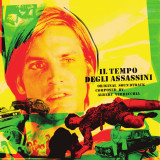
The score he wrote in 1975 for Il tempo degli assassini (Season of Assassins, a film about a gang of criminal youths who terrorize the city of Rome in the already violent 70s) is certainly his most accomplished work in the genre. Conceived for a small ensemble, it was written almost entirely on the spot in the recording studio. Verrecchia himself played the Moog, and his dynamic and percussive approach to the instrument resulted in a style midway between funk and proto-disco. A modern rhythmic style - or Ritmico Moderno, which is the title chosen by CAM for the LP containing the soundtrack and released two years later as part of a promotional library music series only distributed to film professionals and radio and TV programmers (CML series, cat. no. 131). One is led to wonder whether it was thanks to that LP that, in 1977, three pieces from the soundtrack found their way into another film about youth gangs, the Spanish Perros callejeros (Street Warriors), written and directed by Jose Antonio de la Loma. On a side but important note, there's the added bonus of popular 70s and 80s entertainer Sammy Barbot singing on Gang Leader alongside female vocal group Baba Yaga. What a pity that Verrecchia's career as a film composer ended here!
BOSS BY NAME, BOSS BY NATURE. The five heroes finally follow up the Steel Box 45 (Goner) with Cash 'Em In. A disgustingly catchy yet charming ode to the lost art of picking up one lucky person and, well, chucking them over a bar. Might as well, right? Sonically, this is still hitting that sweet spot between early UK punk and glam rock n roll, and once you've flipped both sides you'll be getting ready to cash someone in yourself (and don't worry, Cal from The Chisel pops up to provide full instructions). Featuring members of Fucked Up, Rixe, Chubby and The Gang and The Chisel. The 7" is limited to 450 copies on white vinyl and comes in a fold out poster sleeve with artwork from Tin Savage.
Strap in for another standout release from Hell Yeah, and their final 12" of the year. 'Lagos Connect' is a one-off dance floor bomb from Aura Safari, one of the hottest names on the Italian electronic-jazz-funk circuit. Vocals come from Nigerian singer Villy and the artwork is by long-time label collaborator Andrea Amaducci who finishes off this package in style.
Aura Safari are Alessandro Deledda, Andrea Moretti, Lorenzo Lavoratori, Daniele Melloni and Nicholas Iammatteo. They contributed to the first volume of the Buena Onda compilation in 2020 and released the critical acclaimed Hotel Mediterraneo EP after years entrenched in the local scene of Perugia, attending the Umbria Jazz Festival every summer and legendary Red Zone Club during winter, both of which shaped the sound of Aura Safari. Now, they showcase their good-time grooves and vibrant vibes on two brilliant new tracks.
'Lagos Connect' is a gloriously upbeat tune that brims with musicality. The bass is fat, the chords seductive and the guitars slide in and out with funky charm. It immediately drops you in the middle of an open-air dance floor in high summer. Villy's soulful lyrics are socially and politically aware. They talk of living life with good vibrations even in the face of adversity. They speak of how society views those less fortunate and of staying true to yourself. They add realness and emotion to a sizzling and timeless track that will unite hearts and minds around the world. A reprise, radio edit and dub mix are also included, then 'Moving Rivers' ups the jazz-funk. It's another majestic arrangement packed with dazzling Rhodes chords, crashing drums and squelchy bass that demand that you move every limb in your body.
Keep yourself warm this winter with this pair of irresistible dance floor heaters from Aura Safari.