Elliott Smith's "Division Day" is not only one of the late artist's most beloved fan favorite songs, it's also one of Smith's first departures away from the soft-spoken melancholy of his first two albums and into the more sophisticated pop that led to his breakout success. B-side "No Name #6" is a classic in its own right, encapsulating the humble brilliance of one of our generation's greatest singer-songwriters. "Division Day" b/w "No Name #6" is now back in print with its first pressing on colored vinyl. Limited to 1000 copies on clear vinyl, this 7" single is a crucial document of Elliott Smith's musical evolution, and a vital piece of Suicide Squeeze history.
Поиск:name one
Все
- Ocean Motion Mildew Mind
- Yes Sir Ree
- I Can’t Stand It
- Country Time
- If I Were A Poet
- Torero Piece
- Peachy Keen-O
Carving an unlikely and elaborate niche in the stoney academic landscape
which she once shared with the likes of Phill Niblock, John Cage and Sorel
Hayes, the excitable proto-punk poèmes sonores of the linguistic loose
cannon known as Beth Anderson first rolled through New York in the mid-
1970s (from Kentucky via San Francisco) like a jumbled tumbleweed of lost
Letterism, face paint and threadbare drummy funk to astonish gallery floors,
lecture theatres and loft apartment stages.
One thousand leagues under the radar of the commercial music industry,
with a sense of humour that elevated way above her highbrow peer group,
the music of Beth Anderson has successfully evaded the pressing plant for
most of her creative career, and not unlike fellow New York gallery actionist
Suzanne Ciani, it has taken decades to successfully collect and contextualise
these early recordings - expanding her elusive discography beyond the rare
and mysterious solo single entry in the process.
When uttered amongst the type of vinyl vampires that haplessly gravitate
between both art school vintage vanity pressings and family funded plunder
funk, there’s an outside chance that the name Beth Anderson might muster
some vague recognition on account of her one and only solo wax sojourn
into the expansive DIY market. In 1980 the 45rpm single, ‘I Can’t Stand It’,
combusted into the consciousness of adventurous participants with its deep
rhythmic backbeat (courtesy of future Sonic Youth / Dinosaur Jr producer
Wharton Tiers, member of the new wave band Theoretical Girls), climaxing
with two colourful and commanding linguistic tantrums before disappearing in
a puff of smoke leaving would-be fans dumbstruck without so much as a
label name or distribution contact to explain what they had just heard.
For those who have spent the subsequent years on the edge of that same
seat, it might come as some comfort knowing that somewhere out there,
there is also a contrasting world of gallery patrons and experimental sound
poetry enthusiasts that similarly didn’t know that their regular performance
poet Beth Anderson even made the ambitious pop record. For the uninitiated,
the enigmatic Beth Anderson has straddled both sides of the art / rock fence
placed between two equally niche pastures.
Hopefully this first ever vinyl compendium will succeed in joining the dots,
loops, yelps, squeaks, beats and repeats. Let us follow Beth’s lineage, along
her magnetic tape highways crossing multiple boundaries in a hope to bridge
unlikely anti-genres like ‘yoga punk’, ‘ramble rap’, ‘combustion pop’ and
‘formroom funk’… all of which were officially neatly bracketed under the
curious Text-Sound movement where Beth garnered utmost respect as a key
practitioner.
Cardinal Fuzz and Feeding Tube Records are proud to present to you the 2nd LP from TOMOYUKI TRIO (Tomoyuki Aoki, Mike Vest & Dave Sneddon) following their debut LP ‘Mars’ on the esteemed Riot Season Record Label. Tomoyuki Aoki is the founding member and lead guitarist of the legendary Tokyo Psych Monsters UP-TIGHT. Of all the Japanese psych-rock groups that emerged in the late nineties and early noughties, Up-Tight are the most reverent, the most directly plugged into the source, from their name (Velvet Underground) with knowing referential song titles like “Sweet Sister” to their extended heavy, dark black clad acid fried one chord psych melters -- we're talking bands like Fushitsusha, White Heaven, Kousokuya, Shizuka, and the grandaddies of 'em all, the deservedly-legendary, Les Rallizes Denudes. Shitsuren If anything has got an even heavier, dronier edge than what we heard on the last one. Super fuzzed guitars, sad ballads, grinding distorto epics and numbed, narcotic rhythms. This is one to play at maximum volume so that you can soak up its molten magik as over 2 sides of Shitsuren’s grueling guitar hypnotics you uncover the darker side of the ensembles personality to find them digging deep to drag the audience with them into the shadows of stoner psyche. If you can picture Okhami No Jikan, Asahito Nanjo. Musica Transonic & Toho Sara then you’re close to the outrageous levels of psychedelic excess captured here, a riotous concoction of ferociously brooding, locked down heavy bearing intensity of fierce/brutal speaker battering in the red levels.
- Prologue/The Tale Of Master Seth
- Hitler And Witchcraft/ Witchcraft In History
- Women As Witches/ Witch Burning
- Witch Tortures
- Witch Tortures (Cont.)/The World Of Spirits And Demons
- Preparation For Magic/ Instruments Of Magic
- How To Invoke Spirits, Demons, Unseen Forces/ The Magic Bloodstone
- The Witches Cauldron/How To Communicate With The Spirits
- How To Communicate With The Spirits (Cont.)/Gerald Yorke And Necromancy
- How To Make A Pact With The Devil/How To Become A Witch
- Curses, Spells, Charms
- Curses, Spells, Charms (Cont.)/Potions
- The Hand Of Glory/The Witches Sabbat
- Witchcraft Today/Epilogue
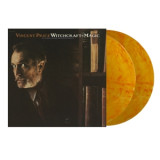
This is going to be the scariest spoken word record you’ve ever heard. We’re not joking…and neither is Vincent Price. The star of such horror classics as House of Wax, The Abominable Dr. Phibes, and Theatre of Blood (and, of course, narrator of Michael Jackson’s Thriller video) can barely hide his delight while he takes his audience through a graphic and occasionally grisly history lesson in witchcraft from the Bible through the Middle Ages, the Spanish Inquisition, and Nazi Germany. Then, accompanied by occasional eerie, abstract electronic music, Price’s sinister satisfaction only mounts as he provides instruction in the dark arts, with such tracks as “How to Make a Pact with the Devil” and “Curses, Spells, Charms.” It’s all in good fun, of course…or is it? The mysterious writer of the script, one Terry d’Oberoff, has only one other credit to his name: as the “mascot” of an early ‘70s band called…wait for it…Black Magic. This 1969 double-LP release has long been coveted by collectors of the curious and macabre, and for its first reissue in over 50 years, we are giving it the Real Gone treatment, reproducing the gatefold jacket and the full-size, 8-page booklet that accompanied some copies. It’s a combination history textbook and how-to manual in witchcraft, with a title page depicting a particularly unsettling spell called “The Hand of Glory” involving the severed, salted, and dried hand of a convicted felon. We are releasing this one-of-a-kind album on clear with orange “pumpkin” swirl vinyl…Happy Halloween.
"The debut album of Berlin’s favourite two-thirds Welsh, one-third Danish instrumental psych-disco trio, out Aug 30th. Imagine Jaki, JJ and Jarre*** locked in a room together, with a memo from John Carpenter that reads “Goblin + Swans = ?”. Something like that. Raw drums, bass, vintage organs and synths are utilised to brutal effect via 7 epic songs that deliver disco disquietude, krautrock, oscillating horror soundtracks and beyond.
Or, as the band themselves insist: ""the Nicki Minaj of dungeon synth"".
The band name is the Greek classifying nomenclature for man: aka The Talking Animal. As promulgated by Anthony Burgess.
Zammit A.D. – drums, organs, synths. TNT Taylor – 4-string electric bass. Fred Alert – Moog, Dominion, percussion
featuring guest vocals from Gemma Ray. Recorded and mixed by Ingo Krauss (Swans, Einsturzende Neubauten) at Candy Bomber, Berlin. Produced by Zoon Phonanta
The band has had a difficult birth. They got together, did two shows (one with Gruff Rhys), then pandemic struck, leaving them far apart. They got back together, then Fred broke his back in an accident. When they finally reconvened, they recorded, then their other musical projects took over (eg Jon Spencer & The Hitmakers, The Third Sound). The album and live plans were then delayed by more broken limbs. Now fully healed they are poised to heal you back in gratitude, at their soon to be announced in-person performances.
*** Liebzeit (Can), Burnell (Stranglers), Jean-Michel"
This is the first reissue of the “Piece Of The Action” LP since 1973, and the CD has bonus tracks with everything Bobby Hutton recorded between 1969 and 1974. Everything taken from the original master stapes and restored.
Bobby Hutton is from Detroit, Michigan and began his career after winning a talent show at the 20 Grand nightclub. In 1971 he performed on the very first nationally aired Soul Train TV programme. He cites Jackie Wilson as his biggest influence. He began writing under his real name Harold Hutton, then Billy Davis at Chess Records persuaded the change to Bobby Hutton. He had decided not to pursue a career at Motown, and after one single for Checker, then another at Blue Rock (a subsidiary of Mercury) he moved to the Philips label for the huge Northern Soul favourite, “Come See What's Left Of Me" which was first played at the Stafford All-Nighters back in1985, covered up as Casanova Brown. Talents that produced and arranged for Bobby during those Blue Rock/Philips sessions include Donny Hathaway and Joshie Jo Armstead, and in fact it was with Jo that Bobby co-wrote that Northern Soul classic.
The Philips tracks are all on the CD as bonus tracks to the Piece Of The Action” album for ABC Records in 1973.
Produced by Dee Ervin, there are several fine tracks to enjoy but surely none better than the Gary Wright-penned “Lend A Hand” which became one of the biggest 'modern' Northern Soul tracks of all-time after spins at venues like the Highland Room at the Blackpool Mecca and Wigan Casino. The track was first championed by DJ Colin Curtis in 1974.
The album is beautifully produced with vocal accompaniments from artists including Patti Hamilton of The Lovelites, Jean Plum, Mikki Farrow and Frankie Karl. It received great reviews at the time and that persuaded ABC to release a non-album follow-up 45 produced by the brilliant McKinley Jackson and Reginald Dozier credited “Loving You, Wanting You, Needing You, Wanting You”/'Watch Where You’re Going” which is an elusive, highly sought-after single by soul collectors worldwide (now an Expansion 7” reissue).
In 2007, Bobby was honoured as he was voted the best singer in Chicago, quite an achievement and something that Bobby is quite rightly very proud of
What better time to resurrect and regurgitate one of the most extreme (and downright indefensible) releases in Alternative Tentacles history? OG Grindcore/Death Metal to the max, here’s their second-ever, from ‘92. Whole concept at the time was one big celebration and tribute to those super-gory Mexican crime weeklies, like Alarma, Peligro and Alerta. Where do you think the cover came from?? Identities were secret, all lyrics en Espanol. Rumors link some big names, from Fear Factory, Faith No More, Sepultura, and more... Why the name? Besides the obvious "Witchcraft" translation, “Santeria = animal sacrifice, but Brujeria = human sacrifice!” Or so they say. Featuring 6 amazing tracks this is Mexican death grind at its best. Enjoy.
Beloved Spanish indie rockers Hinds are back with their utterly triumphant fourth album, VIVA HINDS. Written by the band’s co-founders, co-vocalists, co-guitarists and co-songwriters Carlotta Cosials and Ana Perrote, it features their first-ever fully Spanish language songs, as well as first collaborations with the likes of Beck and Fontaines D.C.’s Grian Chatten. Recorded in rural France, the album was produced by Pete Robertson (Beabadoobee), engineered by the GRAMMY-nominated Tom Roach, and mixed by GRAMMY-winning engineer Caesar Edmunds (The Killers, Wet Leg).
Shortly after the band made their debut ten years ago, they hit what felt like an insurmountable obstacle – they had to change their name from Deers to Hinds for legal reasons. But, as their fans began to greet them at shows by cheering “¡VIVA HINDS!”, the band soon realized that what initially felt like an ending was actually just the beginning. Fast forward to 2023, and VIVA HINDS was written by Cosials and Perrote after a series of endings. They hit a creative rut after releasing their 2020 album The Prettiest Curse, and their bassist and drummer devastatingly decided to leave the band. They also split with their management team, lost touring revenue due to lockdowns, and were without a label for the first time. But when Perrote and Cosials got together to write again it became clear that their connection, one so special that they call themselves “millionaires in friendship,” would be all they needed to get them through. VIVA HINDS – the most accomplished, sonically adventurous, honest and celebratory record of Hinds’ career – is only the beginning.
PRESS/ONLINE: “The track, though signaling a new era for Hinds, arrives rapturous and catchy, as Perrote and Cosials trade verses and riffs. ...'Coffee' is a sweeping first chapter of where the duo aims to
“‘Coffee’ is a a gorgeous punk-indie cross contamination, instantly memorable, grungy” - Wonderland
“They bring the energy of a thousand rock bands, entrancing the crowd with their searing indie riffs, the constant interlocking of guitars and smiles, and deeply charming banter” - Rolling Stone
“The Prettiest Curse is an evolution. It is striking, complex, uncompromising indie-pop. More than that, it makes a bold statement: it canonises Spanish indie-rock” – Loud and Quiet 9/10
“They’ve taken their sound and unashamedly experimented with it. They’re all the better for it” – NME 4/5
“The Spanish group’s second album displays the superior songcraft of the band, as vocalists Ana Perrote and Carlotta Cosials wade through love’s messy feelings with confidence and exuberance” - Pitchfork
"King Yellowman is the 1984 Columbia Records debut album by Yellowman. The artist, whose real name is Winston Foster, is a Jamaican reggae and dancehall artist who first became popular in Jamaica in the 80s. After he rose to prominence in his home country, he released this record under the Columbia label. Yellowman is considered to be one of the pioneers in reggae and hugely contributed to Jamaican musical culture and the internationalization of reggae. King Yellowman is available as a 40th anniversary edition of 1000 numbered copies on yellow coloured vinyl."
This debut full-length album by Stockholm-based composer and electroacoustic experimentalist Theodor Kentros, could easily be interpreted as 'just' an assemblage of pieces written between 2021-2024. Named after the paranoid hallucination (or, if said hallucination is real, the underground secret mail system) figuring in the 1966 Thomas Pynchon novel ‘The Crying of Lot 49’, it should rather be perceived as a very distinct, coherent stream running through his output during these years.
The six tracks – ranging in sound and disposition from serialised organ drones constructed to reach screeching and beautiful culminations, to minimalist, repetitive studies in tape loops and string synthesis – were composed and recorded in Stockholm and Visby at different occasions during down-time from his many other projects, which include a myriad of other commissions, co-running labels XKatedral and Kalkatraz Cassettes and touring with punk groups and solo shows.
Jorge Ben is a name that any lover of Brazilian music will be very familiar with. He is widely regarded as the James Brown of Brazilian music and is famed for writing the Brazilian anthem ‘Mas Que Nada'. For the duet ‘Carolina, Carol Bela' he teamed up with the singer and guitarist Toquinho. Toquinho is best known for his collaborations, as composer and performer, with bossa nova poet Vinicius de Moraes.
'Carolina, Carol Bela' featured on the album Toquinho by Toquinho. It was originally released in 1970 on the small independent Brazilian label, RGE. The song was sampled by DJ Marky and XRS for their Drum & Bass track ‘LK’ (V Recordings, 2002). This went on to be a huge chart hit across the world, and a number one hit in the UK.
João Donato is a Brazilian jazz and bossa nova pianist. He has collaborated with many of the greats of Brazilian Music, including Tom Jobim, Astrud Gilberto and Gilberto Gil. He was one of the few Brazilian artists who went over to perform in the States during the bossa nova boom of the late 60’s. The song ‘A Rã’ was originally released on his seminal album Quem é quem, (EMI, 1973), an album that is full of great tracks and was considered as one of the 100 best albums of all time by the Rolling Stone magazine.
- A1: Kotms Ii (Feat Kingpin Skinny Pimp - Intro)
- A2: Ultra Shxt (Feat Key Nyata)
- A3: Set It (Feat Maxo Kream)
- A4: Hot One (Feat Tiacorine & Asap Ferg)
- A5: Black Flag Freestyle (Feat That Mexican Ot)
- A6: Headcrack (Feat Kingpin Skinny Pimp - Interlude)
- A7: G'z Up (Feat 2 Chainz & Mike Dimes)
- A8: Lunatic (Interlude)
- B1: Sked (Feat Kenny Mason & Project Pat)
- B2: Choose Wisely (Feat Kingpin Skinny Pimp - Interlude)
- B3: Cole Pimp (Feat Ty Dolla Sign & Juicy J)
- B4: Wishlist (Feat Armani White)
- B5: Hit The Floor (Feat Ski Mask The Slump God)
- B6: Hoodlumz (A$Ap Rocky & Playthatboizay)
- B7: Kotms Ii (Feat Kingpin Skinny Pimp - Outro)
Black Vinyl[32,98 €]
Denzel Curry's forthcoming King Of The Mischievous South Volume 2 finds him presenting a sequel to the project, and bringing back the sound, that helped launch his career. While the first installment of King Of The Mischievous South was performed from the perspective of his Raven Miyagi persona, a name bestowed upon him by Raider Klan founder SpaceGhostPurrp, Volume 2 finds Curry operating under his Big Ultra persona -- an elevated version of Raven Miyagi that is bragadocious and revels in the success that Curry has seen over the last decade of his career. Creating King Of The Mischievous South Volume 2 has been a goal of Curry's for some time, though his earliest attempts to do so ultimately morphed into other projects, namely his 2016 album Imperial and 2020's 13LOOD 1N + 13LOOD OUT. It wasn't until he stopped overly attempting to create Volume 2 that its songs started to emerge naturally.
Given the project's sound, which pays homage to the great musical heritages of the South -- from Memphis to Houston and Curry's own South Florida -- its features include the region's greats, both old and new, as well as others whose style is indebted to the South's musical legacy. Features include fellow former Raider Klan member Key Nyata, Memphis stalwarts Juicy J and Project Pat, Texas' Maxo Kream, That Mexican OT and Mike Dimes, North Carolina’s TiaCorine, Atlanta's 2 Chainz and Kenny Mason and South Florida's Ski Mask The Slump God and PlayThatBoiZay, as well as ASAP Ferg and ASAP Rocky, among others. The project more broadly and the intentional inclusion of Rocky and Ferg is Curry's attempt to show what could have been had relationships not soured with SpaceGhostPurrp, fulfilling the promise that existed at the rise of their respective careers in the early 2010s.
With all of the otherworldly adventures Denzel has taken listeners on over the course of his last few conceptually-driven albums, this project serves as a showcase for the fun, spontaneity and technical mastery that has made him one of rap's most in-demand talents over the course of the last decade.
The impact, influence, and importance of Run-D.M.C.'s self-titled debut – the album that invented hardcore hip-hop and bridged rap, rock, and funk in then-unparalleled ways – cannot be measured. The first full-length record released by Profile Records, the 1984 set permanently changed the sound of music, broadcast streetwise wisdom to every corner of the country, and made the notion of a one-man band a distinct reality. Bolstered by an incendiary blend of staccato deliveries, stark beats, aggressive exchanges, evocative hooks, and socially conscious messages, Run-D.M.C. still hits listeners in the jaw with the same intensity it did nearly 40 years ago when it could be heard booming from ghetto blasters carried around city blocks nationwide.
Sourced from the original master tapes, pressed on MoFi SuperVinyl, and strictly limited to 3,000 numbered copies, Mobile Fidelity's 180g SuperVinyl 33RPM LP is the definitive-sounding version of the groundbreaking work cited by Rolling Stone as the 378th Greatest Album of All Time. This reissue also represents the first time this gold-certified effort has been presented in audiophile quality. Benefitting from the ultra-low noise floor, superb groove definition, and dead-quiet surfaces of SuperVinyl, Run-D.M.C. now plays with a clarity, immediacy, punchiness, and directness worthy of the artistry, urgency, and intellect of the trio's material.
The brilliance of Russell Simmons and Larry Smith's production comes into view as if the music is being broadcast on a giant system in a small club — only more focused, lively, and unlimited. Free of dynamic constraints and fatiguing harshness, this LP invites you to turn up the volume and experience the raw, rough, invigorating songs that changed the look, sound, and feel of hip-hop overnight. Think the trio’s sparse framework of drum machines, tag-team rhymes, keyboard accents, and turntable scratches is stuck in the mid-80s? Spin MoFi’s SuperVinyl LP and gain new appreciation for the music, messages, and production on display on Run-D.M.C.
Recorded in the wake of two successful and pioneering singles, both included on the album, Run-D.M.C. effectively took a sheet of coarse-grit sandpaper to the polish, sheen, and linear presentation of all the hip-hop that preceded it. Stripped to bare-bones foundations, the songs grab your attention and shake you by the collar with a combination of industrial-leaning rhythms, staggered deliveries, dance drama, and hard, minimalist percussion. Then there are the lyrics.
The LP broadcasts a smart mix of boots-on-the-ground reports, uplifting advice, and then-nascent b-boy culture. In one fell swoop, its narratives and music rendered the scene’s proclivity toward glamor and softness passé. Run-D.M.C.’s tough, cool-minded fashion sense showed the trio walked its talk and gave fans — particularly those living in long-ignored urban areas — heroes which with they could identify. Kangol hats, black jeans, leather jackets, Adidas sneaks, and gold chains were the new currency.
In every regard, Run-D.M.C. signifies the birth of modern hip-hop. Never more obviously than on the groundbreaking “Rock Box,” where rap and rock were first fused. As the first hip-hop video to receive regular rotation on MTV, the track eviscerated racial and social boundaries, awakened musicians and listeners to new possibilities, and redefined both popular music and, ultimately, popular culture. As the Roots’ Questlove has stated, it “ knocked down many obstacles, enabling hip-hop to become the new gospel."
Such teaching includes the real-world scripture of “Hard Times,” utopian hopefulness of “Wake Up,” and observational truths of “It’s Like That.” Released as the group’s debut single well before its eponymous album, the latter tune established themes and outlooks Run-D.M.C. would embrace during its career. Namely, the keen awareness of various prejudices, economic ills, and disruptive violence as well as the knowledge that education, self-motivation, and hard work were the ways to escape disadvantages and disillusionment.
Inspired and inspirational, the song reflects the spirit and shrewdness that courses throughout Run-D.M.C. That includes a detailed account of the trio’s not-so secret weapon (“Jam-Master Jay”), purpose statement (“Hollis Crew (Krush-Groove 2)”), and a revolutionary hybrid autobiographical narrative-dis track (“Sucker M.C.’s (Krush-Groove 1)”) widely regarded as one of the best hip-hop songs ever created. The same can be said for every moment on Run-D.M.C.
MoFi SuperVinyl
Developed by NEOTECH and RTI, MoFi SuperVinyl is the most exacting-to-specification vinyl compound ever devised. Analog lovers have never seen (or heard) anything like it. Extraordinarily expensive and extremely painstaking to produce, the special proprietary compound addresses two specific areas of improvement: noise floor reduction and enhanced groove definition. The vinyl composition features a new carbonless dye (hold the disc up to the light and see) and produces the world's quietest surfaces. This high-definition formula also allows for the creation of cleaner grooves that are virtually indistinguishable from the original lacquer. MoFi SuperVinyl provides the closest approximation of what the label's engineers hear in the mastering lab.
COEO back on Toy Tonics! The German duo has been part of Toy Tonics since day one. Now they celebrate their return to Toy Tonics with an outstanding EP full of timeless, contemporary house music that also marks their 10th contribution to the label after their first release on the imprint 10 years ago. Their house vibes have been defining the sound of the Toy Tonics label for many years and still now they regularly play the Toy Tonics events around the world. (The Toy Tonics Jams).
On this new EP one more time the boys dive deep into the Italo & Piano House world- getting more electronic than ever. This EP is 100% in the vibe of now. With great piano chord drops that make everybody scream on the dance floor, with horn and synth melodies that you can sing along after you heard them one time only and with classic house beats that are THE sound of today.
The main title “Nostalgia” is inspired by and a tribute to all the intimate and ecstatic moments they were able to share over the years with music lovers on festivals and in clubs around the world. While the piano house theme on the A1 brings you in that festive mood of your last summer festival you have been to with your closest friends, the second track of the EP „Breeze“ takes it on a higher energetic level and combines a funky bass guitar with progressive house elements. Remember that special moment when you were attending your first full moon party in that far away country after you have finished school? That gentle wind blowing through the trees? „Breeze“ could be the soundtrack of that adventure.
On the B side Italo house influenced „Meet me at the cascades“ captivates through an hypnotic approach and unfolds dreamy synth pads and arpeggios to take you on a imaginary journey to your favourite retreat, a place you feel safe.
The EP features 3 original tracks and also a remix by COEO friends Stump Valley. The former Dekmantel artists who now joined Toy Tonics. Stump Valley btw are Francesco and Aleksei. Aleksei also works under the name of Brian de Palma and will release a solo album soon on Peggy Gou’s label Gudu. Stump Valley‘s remix of „Nostalgia“ rounds up the EP with its stand out piano solo and marks the perfect end to an EP that is meant to stay in your head just like all those intense memories which life in general evokes.
Dubstep's origins lie in dark 2-step mutations that evolved on dancefloors and in studios in the early 2000s. That same fusion of swing and space and subs can be found by the bucketload throughout the new EP by one of DNO’s staples, Kercha.
Skippy speed garage hats and slippery globules of bass animate the otherwise sparse production on the opening track ‘Feature’, while the wild beat on ‘Absurd’ could catch out any DJs not giving it their full attention. Wrapped in Kercha’s signature sonic debris, it delivers three and a half minutes of rattling, clicking, squelching wizardry.
The B-side gives us ‘Stimulate’, a collaboration with new-gen rising star Hypho. Indebted to trap, it’s full of militant 808 hi-hat rolls and the kind of firing synth tones that spell doom in a sci-fi movie (and tear up festival stages).
Finally, ‘Saturday’ is classic Kercha: sub-bass from the Seventh Circle, and so many suspicious chirps, whistles and hoots that it could soundtrack a nighttime stroll through the woods just as easily as skanking in a smoked-out sweatbox. The track is peppered with voice notes from a friend — snatches of funny, halfcut chatter, as random in content as Kercha's non-vocal sampladelia. The final snippet, which translates to “Saturday dictates its rules”, gives the track its name. A statement that can be read in all sorts of ways, it could even confer a motto for this whole collection, reflecting Kercha’s trademark originality.
The ‘Absurd’ EP is one of Kercha’s most dancefloor-directed releases to date, and whether conjuring the ghosts of club nights past or envisioning the raves of the future, it’ll be dominating sound systems for a long time to come.
Rhythms of postmodern realism at the very bottom of the DNO.
This is the quartet's second LP, recorded in 1971, and contains mostly Peruvian songs with a strong Cuban flavor where Pancho Acosta’s electric guitar reaches vertiginous heights and is combined with outstanding conga and timbales playing. Extremely rare and hard to find in its original issue, this is the first-time reissue. Remastered from the original tapes. The guitarist Francisco "Pancho" Acosta Angeles (1946) played a significant role in spreading love for Cuban rhythms across Peru, those sunshine beats breaking through the cloudiness that hangs over Lima most of the year, as the city bears a closer resemblance weather wise to London than to Havana. In 1967, after making a name for himself with his six-stringed skill, he made his vinyl debut with Compay Quinto. Shortly after Pancho left Company Quinto, he joined Los Kintos. When Los Kintos disbanded, Pancho Acosta swiftly moved on to his next project for MAG: the Cuarteto Yemayá, formed by tumba drummer and singer Miguel Montoya, bassist Máximo Pecho and timba drummer José Luis Fiallega, all under Pancho's direction and arrangements. The quartet's debut album, "Ecos del Trio Matamoros", was a tribute to the Cuban trio of the title and comprised cover versions as well as a couple of their own songs. This is the quartet's second LP, recorded between July and August 1971. "El Tic Tac" contains mostly Peruvian songs. The foreign versions on the album include the classic 'Compay Gallo', written by Miguel Matamoros; 'Toribio carambola' and 'El Tic Tac', from the repertoire of the Cuban Trio Servando Diaz; and 'Sandunguéate', best known in Celia Cruz’s version. ‘Oye Mi Son' and 'Oye Mi Guitarra' were composed by the album's lead vocalist, Miguel Montoya. Percussionist Jorge Mariazza (Los Pachas, Manzanita y su Conjunto) co-wrote 'Descarga Yemayá' with Pancho, which features outstanding conga and timbales playing. Pancho also composed tracks on his own: 'Me Voy a Monsefú', 'Mi Provinciana', 'Yo Me Voy de Aquí' and 'Flaca y Fea', the latter
with a Beatle-like intro where his Japanese electric guitar reaches vertiginous heights (he never used sound effects in his recordings). Cuarteto Yemayá released one more album for MAG. In 1973 Los Kintos reformed, with the addition of the bass, percussionist and guitarist from Cuarteto Yemayá. Pancho Acosta has continued his career as a composer and arranger to this day
With extensive practical and academic understanding of the ‘remix’ process, Stian Balducci takes on the role of audio architect in this refined and redesigned remix album.
His meticulous approach has not replaced, but built upon Kjetil Jerve’s piano material and boasts a thorough dedication to mood and timbre through-out. The outcome combines new strokes of colour and delicately layered textures, offering fresh perspectives to an old canvas. The aural landscape takes shape in progressive, parabolic pulsations, coupled with sparse, rhythmic heart-throbs that embody the faint silhouettes of drum reverberations. This atmospheric landscape is complimented with subtle, pensive keys from Kjetil’s piano recordings that add emotional depth to the work and pay diligent tribute to the free structures of jazz.
The final project may be understood as a window, giving view to life’s sentient and evocative themes, without ever infringing on their delicacy. The sonic progressions tap into nature’s cycles through meditative repetition and offer the listener some brief respite from innate human habits of over-thinking.
As the contents of the album unfold, we are taken reassuringly by the hand to familiar, foreign lands, filled with curious sonorous tales and subtle insights that shed light on a world of deeper perception.
In keeping with the communal ethos of Dugnad Rec, ‘Tokyo Tapes: Piano Recycle’ reflects a thoughtful exchange between Stian and Kjetil. Stian professed that the project went ahead with just one rule: “to work only with the original source material, no external samples or sound sources”. This puritan approach spotlights a shared characteristic between them; namely, a unified desire to explore vibrations and a wholistic dedication to sound experimentation.
The very first Buchla synthesiser performance by revolutionary composer Suzanne Ciani finally makes its fifty year journey from its switch-on New York art gallery to its long deserved and discerning global phonographic audience.
With this previously unheard vinyl pressing, Finders Keepers Records are proud to present an archival project of ‘art music’ that not only redefines musical history but lays genuine claim to the overused buzzwords such as pioneering, maverick, experimental, groundbreaking and esoteric, while questioning social politics and the evolution of music technology as we have come to understand it. To describe Italian-American composer Suzanne Ciani’s resurrected Buchla concert records as genuine gamechangers would be a gross understatement. These records represent a musical revolution, an artistic revelation, a scientific benchmark and a trophy in the cabinet of counterculture creativity. This sonic installation album, alongside her recently liberated WBAI/Phill Niblock 1975 sessions (FKR082), are triumphant yardsticks in the synthesiser space race and the untold story of the first woman on the proverbial musical moon. While pondering the early accolades attached to these golden era New York recordings it’s daunting to learn that these records were in fact not even records at all.
What exists on this disc now was a manifesto and a one-time gateway to a new world, which somehow was only partially pushed ajar. Captured here is a genuine live act exploring new territories with a fully performable music instrument. If the unfamiliar, modernistic, melodic pulses, tones and harmonics found on these 1970’s artistic gallery collaborations/ live presentations (then soon to be followed by academic grant applications and educational demonstrations) had been placed in a phonographic context alongside the widely marketed work of Morton Subotnick, Walter Carlos or Tomita, then the name Suzanne Ciani and her infectious influence would have already radically changed the shape, sound and gender of our record.
With the light of Buchla and Ciani’s initial flame Finders Keepers continues the journey through the vaults of this increasingly celebrated music legacy, illuminating these ‘non-records’ that evaded the limelight for almost half a century. You can’t write history when you are too busy making it. With fresh ink in the bottomless well, let’s start at the beginning. Again
2024 REPRESS
Fourth corner. Physically, it's where four states in the U.S. come together at one singular point. Symbolically, it's where the four great rivers in China come together as one. Or, it could be the cycle of life during the four seasons of the year. For Trixie Whitley, it's a metaphor for trying to find balance and belonging from the songs that make up her scintillating debut album, Fourth Corner.
Whitley burst into public consciousness in 2011 as the lead singer of Black Dub, super-producer Daniel Lanois' (U2, Bob Dylan) project, blowing people away with a voice and presence beyond her now-25 years.
And it's that voice: an emotional, blues-drenched instrument that ranges from a lilting slap to a knock-you-backwards uppercut. On Fourth Corner, Whitley explores the range of human emotion in another set of four: utter love, total rage, unadulterated happiness, and crippling loneliness. "It's those elements of life I keep coming back to," she says. "Both as a person and musically as well."
Recorded in New York with producer/keyboardist Thomas Bartlett (aka Doveman, who's also worked with Glen Hansard, Antony and the Johnsons, Grizzly Bear and the National) engineer Pat Dillett (David Byrne, St. Vincent, Mary J. Blige), and string arrangements by Rob Moose (Antony, Bon Iver), aching songs like "Need Your Love" have Whitley working from a spare beginning that explodes into a blossom dripping with pleading vocals and delicate piano. On tracks like the sassy "Irene" and the sinister "Hotel No Name," Whitley lays down a snarling guitar line on top of scuzzy beats while her voice veers from defiant to remorseful.
It's a tantalizing mix of sounds that can come only from someone who says: "I'm from everywhere but have never felt like I belong." Whitley lived a nomadic life: born in Belgium, she split her time growing up there and in New York but also frequently visiting family in France, Texas, and Mexico. Her mother came from an artistic European gypsy family, filled with musicians, painters, writers, and sculptures, while her father, renowned singer-songwriter Chris Whitley, thrust her into the world of music as a toddler when she joined him onstage in Germany at age three.
After a few years of touring and recording experience with some of the most inspiring artists around, Trixie is ready to presenther anticipated first solo full length.
"I'm psyched and petrified," says Whitley in her archetypal wide-eyed wonderment mixed with a fierce determination. "As a songwriter, I want to go to places people don't expect and with that is complete freedom of expression." Perhaps that place is another version of a fourth corner: something spiritual perhaps, certainly emotional, but most definitely real.
Katharine Whalen of Squirrel Nut Zippers fame, makes a triumphant return with her Jazz Squad featuring Austin Riopel on guitar, Danny Grewen on trombone, and the great Griffanzo on pianos. This time the chanteuse delivers an entire album of breezy west coast jazz sounds in the form of a tribute to Chet Baker. It was around 1996 when Katharine Whalen first made her grand entrance onto culture’s collective radar as the sultry, yet effervescent voice of the Squirrel Nut Zippers, where she remained until their initial disbandment around the turn of the century.
In addition to the Zippers putting dixieland jazz on the pop charts in the 1990s, they sneakily introduced an unsuspecting "alternative" crowd to jazz music. Her cultural impact was also felt when she voiced the song "You You You You You" a standout track from Stephin Merritt's (The Magnetic Fields) project titled The 6ths. That song would also find its way into commercials and the film Pieces of April. After recording one solo album for Mammoth Records shortly after leaving the Zippers, Whalen stepped out of the public eye.
However, she’s remained very much in the spotlight of one unique small town; Hillsborough, NC, which has been referred to as Twin Peaks meets Northern Exposure. It’s a surreal literary, liberal Mayberry. If you find yourself in this Southern portal, you can find Katharine Whalen's Jazz Squad playing monthly in a cocktail bar appropriately named Yonder. The album was recorded in an old chapel in Hillsborough by North Carolinian royalty, Jerry Kee (Polvo, Superchunk, The Kingsbury Manx). Each song was recorded with the band all playing together in the same room, the way the old jazz records used to be put to tape.