Cerca:natural child

Generi
Tutto
WEYES BLOOD - AND IN THE DARKNESS, HEARTS AGLOW LP

Technological agitation. Narcissism fatigue. A galaxy of isolation. These are the new norms keeping Weyes Blood (aka Natalie Mering) up at night and the themes at the heart of her latest release, And in the Darkness, Hearts Aglow. The celestial-influenced folk album is her follow-up to the acclaimed Titanic Rising. (Pitchfork, NPR, and The Guardian admiringly named it one of 2019's best.) While Titanic Rising was an observation of doom to come, And in the Darkness, Hearts Aglow is about being in the thick of it: a search for an escape hatch to liberate us from algorithms and ideological chaos. "We're in a fully functional shit show," Mering says. "My heart is a glow stick that's been cracked, lighting up my chest in an explosion of earnestness." And in the Darkness, Hearts Aglow opens with the wistful, winsome "It's Not Just Me, It's Everybody," a song about the interconnectivity of all beings, despite the fraying of society around us. "I was asking a lot of questions while writing these songs. Hyper-isolation kept coming up," Mering says. "Our culture relies less and less on people. Something is off, and even though the feeling appears differently for each individual, it is universal." Other tracks follow in kind. The lullaby-like "Grapevine" chronicles the splintering of a human connection. The otherworldly dirge "God Turn Me into a Flower" serves as allegory about our collective hubris. "The Worst Is Done" is an ominous warning, set against a deceivingly breezy pop melody. "Chaos is natural. But so is negentropy, or the tendency for things to fall into order," she says. "These songs may not be manifestos or solutions, but I know they shed light on the meaning of our contemporary disillusionment."

pre-ordina ora18.11.2022

dovrebbe essere pubblicato su 18.11.2022

10,46
ERNEST HOOD - BACK TO THE WOODLANDS LP

Written and recorded between 1972 and 1982 in Western Oregon, Back to the Woodlands is a previously unreleased, and nearly lost, album made by Ernest Hood during the same era as his near mythical album Neighborhoods . A visionary combination of field recordings, zithers, and synthesizers, Back to the Woodlands offers an unprecedented depth of access to this singular artistic mind. Born into a musical family, Ernest Hood began a promising career as a jazz guitarist during the 1940s, touring internationally with his brother Bill Hood and the saxophonist Charlie Barnet , before contracting polio in his late twenties. The disease left Ernest unable to play the guitar and confined him to a wheelchair for the rest of his life. It also forced him to adapt and innovate around his musical practices in the face of adversity; Hood's value of sound matured with a remarkably democratic and nonhierarchical approach and application. Taking up the zither, a less physically-demanding stringed instrument to the guitar, embarking upon the unprecedented process of incorporating field recordings into his work as early as 1956, and eventually discovering the synthesizer, Hood's music became imbued with optimism and subtle cultural critique. This ethos and technique - refined over the coming decades - would lay the groundwork for a sprawling body of radio work, mail order recordings for homebound listeners, and Neighborhoods , self- issued as a small vinyl edition in 1975. Where Neighborhoods , a nostalgic opus, drawing from a well of collective memory of the 1950s, is defined by traces of human activity, Back to the Woodlands leaves the modern world behind, delving into Hood's love for nature. Only recently discovered in his archives, the album dramatically expands his concept of "musical cinematography," imagistically triggering states of sensory memory from within its zither and synthesizer melodies, intertwined with field recordings made during Hood's extensive travels throughout Oregon. If Neighborhoods is a retreat into the gauzy joys of a romanticized past, Back to the Woodlands is an immersion in the timeless sanctuary of the natural world. A fascinating counterpoint to its predecessor, Back to the Woodlands brings us even closer to Hood's belief in the transportive qualities of sound; that field recordings could serve as a vehicle for the imagination and liberation, particularly for those with similar mobile disabilities as his own. Across the album's twelve compositions, the rippling instrumental harmonics - shifting between abstraction and playful melody - fold so seamlessly into the birdsong, bubbling brooks, and other environmental ambiences, that they often give the impression of having been recording within the landscapes toward which they whisper. Falling somewhere between the immersive calm of healing music and New Age, the creative field recording practices of sound ecologists world building for Folkways, and the jazz infected ambiences during Obscure / Editions EG's highest heights, Back to the Woodlands sculpts an singular proximity of music for its moment; a form of ambient sonic realism that draws the consciousness toward its surroundings as much as within. Working closely with his estate to maintain his original vision, Freedom to Spend has restored and remastered this never before released, lost masterpiece by Ernest Hood from the original tapes. Ernest Hood's Back to the Woodlands will be issued on vinyl, as well as on CD in combination with its contemporary Where the Woods Begin , with new liner notes by Michael Klausman . On behalf of Ernest Hood and Freedom To Spend, a portion of the proceeds from this release will benefit Oregon Wild, an organization dedicated to protecting and restoring Oregon's wildlands, wildlife, and waters as an enduring legacy for future generations.

pre-ordina ora11.11.2022

dovrebbe essere pubblicato su 11.11.2022

22,48
Pharoah Sanders - Journey To The One LP 2x12"

Repress expected. Date TBA

By 1980 when this was originally released Pharoah Sanders was solidly entrenched with his own voice on tenor. The passing of John Coltrane and Sanders's fruitful years of playing with the prolific saxophone genius resulted with an unmistakable influence on his sound and explorations of the instrument. Beginning with "Greetings to Idris" the structure of the music is one that follows tradition yet opens up for the musicians to improvise within the arrangements. "Greetings to Idris" is in reference to the featured drummer Idris Muhammad who also played with Coltrane during his late period. Naturally Sanders is featured as the main instrument and his horn can be bold and demanding of your full attention. Always interested in other instruments from other cultures, much like Trane, he incorporates the Japanese instrument the koto, a beautifully harmonic stringed instrument to counter his soft rich blowing on tenor with only wind chimes and a harmonium for a delicious peaceful bit of music on "Kazuko"(Peace Child) that has the qualities of a meditative offering. Most of the music, eight tracks, is composed and arranged by Sanders and demonstrates his leadership. There is one John Coltrane composition entitled "After The Rain" that gets the Tranesque treatment by Sanders that makes it hard for even the most discerning listener to distinguish between the original version and Sanders impression. It is a bluesy duet featuring only sax and piano and leaves you wanting to hear it over and over again because of it's simple and haunting melodies. Another song that Coltrane recorded entitled "Easy To Remember" has a gentle swing to it built around a classic quartet (drums, bass, piano, sax) like that employed by Coltrane that results in a superb standard. Sanders incorporates the use of another "foreign" instrument to jazz by working in a tabla and sitar on "Soledad " that takes center stage before Sanders joins in on the music. The result is a thing of genius as the East and West merge and interface for composition that is peaceful. Sanders music on this LP fluctuates between the tranquil sounds of his mellow horn to the outer limits where he left off with the explorations of Trane's late period. What separates this LP from others is that it is a group playing under his leadership where he gives all others close to equal billing. The uptempo, "You've Got To Have freedom" is one such song where Sanders gets out there on some of his solos but works within the group structure as the other musicians, most notably Eddie Henderson on flugelhorn, bring the music back home. There is a chorus sung much of the time throughout where the the proclamation "Ya gotta have peace and love, ya gotta have freedom" is presented in Manhattan Transfer style but with much more soul. The use of vocalists is done again on the track entitled "Think About The One." The chorus features vocalese specialist Bobby McFerrin. This LP shows the different sides of Pharoah Sanders, a man always willing to explore the music, explore his soul and share it with you. The closing track "Bedria" is a mellow exploration of the various ranges of the tenor. It is a ten minute song that displays all the grace of his being, a gentle giant who can manipulate the horn to do extraordinary things, reverberating out and back in undulating waves of harmonic bliss. Sanders on this LP is next to perfect. One of his best recording from his post Impulse career. It belongs in your jazz collection right next to John Coltrane.

non in magazzino

Ordina ora e ordineremo l'articolo per te presso il nostro fornitore.

53,74

Last In: 3 years ago
BRENDAN EDER ENSEMBLE - EDWARD BLANKMAN'S CAPE COD COTTAGE LP

Welcome to the world of Edward Blankman, a retired dentist who wrote elegant, minimalist jazz in obscurity circa 1970. At least that's the story. In truth, Edward Blankman's Cape Cod Cottage is the 2021 concept album from Echo Park composer Brendan Eder. A tender, wistful follow up to 2020's To Mix With Time, the Cape Cod Cottage sound evokes the spirit of Erik Satie, Miles Davis with Gil Evans, and Stevie Wonder, balanced with the accessibility of 1960s lounge-exotica. Eder created Blankman's story to channel his own grief, with bittersweet tenderness. Read the liner notes (or watch the mini-doc), and you'll be transported to the quiet shores of Cape Cod in the early 70s, where a lonely retiree mourns his late wife, Natalie, with walks in nature and evenings at his Wurlitzer. The story is brought to life with a meticulously crafted package sporting classic liner notes, faux 1970s photographs documenting Edward with the musicians (taken during the actual session), a make-believe jazz label, and a commissioned oil painting of Edward's cottage. Eder brought together a dream line up with a ton of chemistry for the project; drummer Christian Euman (Jacob Collier), saxophonist Josh Johnson (Jeff Parker, Leon Bridges), and bassist Alex Boneham (Billy Childs), who all studied together at the Hancock Institute of Jazz. Rounding out the group is flutist Sarah Robinson, a recurring player in Eder's ensemble, and Edward Blankman (Brendan) on the Wurlitzer. The cast was booked for a single date with coveted engineer Michael Harris (Kamasi Washington, Angel Olsen) at famed Electro-Vox Recording Studios. To create realism for Edward's story, the charts were purposefully withheld from the musicians until they arrived at the studio. The result is an authentic and natural performance delivered by players at the top of their game, captured on lauded vintage equipment including the legendary Neve-8028 console. This was, hands down, one of the very best records of last year so don't miss out on this extremely limited pressing for UK and Europe. Under license from Jazz Dad Records.

pre-ordina ora04.11.2022

dovrebbe essere pubblicato su 04.11.2022

36,35
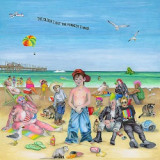
WHITMER THOMAS - THE OLDER I GET, THE FUNNIER I WAS

The Older I Get, the Funnier I Was, which follows Thomas’ brilliant 2020 HBO special The Golden One and his Can't Believe You're Happy Here EP released earlier this year, surveys a range of emotion and offers a broad sonic palette, moving between pop punk, electro, and the obvious influence of the singer-songwriters he grew up listening to in early childhood. It conjures the ennui of Bright Eyes alongside the barefaced storytelling of John Prine, the overstuffed lists of Fred Thomas with the lackadaisical humor of Colleen Green, among many others.

Thomas attributes the dexterity of the record to Duterte, who recorded and engineered most of it in addition to serving up plenty of encouragement when Thomas got down on the process. “As a comic, I used to test out new songs during sets to see if the funny bits were hitting, but since I wrote this in isolation I ended up writing lyrics and worrying less about making jokes,” Thomas says. That said, the album’s plenty funny. Stand-out and lead single “Rigamarole” opens with a Thomas-voiced infomercial that recalls his oft-cited lookalike Jim Carrey as the Grinch, before launching into a buoyant pop song about being depressed.

Whitmer Thomas will admit that when he traveled home to small town Gulf Shores, Alabama to record his HBO stand-up special, The Golden One, he expected to be greeted as a returning hero, a conquering king, or at minimum, a guy with a moderately successful career as an entertainer in Los Angeles. “I expected a big welcome home, open arms, but when I went back I realized: nobody fucking knows me. Nobody remembers me,” Thomas says. “In the years I’d been performing that show, I’d been romanticizing my childhood in this mythologized place, but the visit made me see that I’m not really from there anymore.”

The sense of alienation compounded when Thomas recognized how few people in town remembered his mom, to whom The Golden One is dedicated and largely about. Thomas grew up watching her perform with her twin sister at the legendary Flora-Bama Lounge, where he set the special, and still counts her as one of his musical influences. His new album, The Older I Get, the Funnier I Was, isn’t overtly about his mom, her presence is deeply felt throughout. While in Gulf Shores, Thomas discovered dozens of her old recordings, all of which had been wrecked by Katrina, but upon returning to LA, Thomas paid “a fancy place in Hollywood” to fix the tapes and hired Melina Duterte (Jay Som, Bachelor, Routine) to mix them. The two struck up a collaborative friendship, and Thomas had the sound of his mom’s voice back. “I was listening to songs she recorded when she was about my age, just these heartfelt, sweet Americana songs,” he says. “I decided then that I wanted to lose the Ian Curtis voice I always sing with; I wanted to do what came naturally, because my mom always sounded like herself, even when she was singing some cheesy reggae song about, like, Jamaica.”

Thus he went into The Older I Get, the Funnier I Was knowing it was time to retire his darkwave persona, and leaning into his natural, chirpier voice, which he says sounds “like a 12-year-old’s.” It makes sense: much of the album chronicles what Thomas calls “being a kid and feeling like you have no control and overcompensating by being annoying.” “So much of the album is about witnessing drug and alcohol addiction as a kid and seeing what it does to people, but also realizing that there's nothing you can do about it,” Thomas says. It’s familiar territory (see: “Partied to Death”) but the methodology is different this time around; true to its title, The Older I Get, the Funnier I Was isn’t always looking for laughs. Thomas might’ve left his hometown behind, but his kid self is still tagging along, a Peter Pan shadow he can’t untether himself from. The first line he sings on The Older I Get, the Funnier I Was is: “There should be a room at every party where you can just sit and watch a movie.” Find a 12-year-old who wouldn’t say the same.

pre-ordina ora21.10.2022

dovrebbe essere pubblicato su 21.10.2022

27,10
Lee Tracy & Isaac Manning - Is it What You Want

As the sun sets on a quaint East Nashville house, a young man bares a piece of his soul. Facing the camera, sporting a silky suit jacket/shirt/slacks/fingerless gloves ensemble that announces "singer" before he's even opened his mouth, Lee Tracy Johnson settles onto his stage, the front yard. He sways to the dirge-like drum machine pulse of a synth-soaked slow jam, extends his arms as if gaining his balance, and croons in affecting, fragile earnest, "I need your love… oh baby…"

Dogs in the yard next door begin barking. A mysterious cardboard robot figure, beamed in from galaxies unknown and affixed to a tree, is less vocal. Lee doesn't acknowledge either's presence. He's busy feeling it, arms and hands gesticulating. His voice rises in falsetto over the now-quiet dogs, over the ambient noise from the street that seeps into the handheld camcorder's microphone, over the recording of his own voice played back from a boombox off-camera. After six minutes the single, continuous shot ends. In this intimate creative universe there are no re-takes. There are many more music videos to shoot, and as Lee later puts it, "The first time you do it is actually the best. Because you can never get that again. You expressing yourself from within."

"I Need Your Love" dates from a lost heyday. From some time in the '80s or early '90s, when Lee Tracy (as he was known in performance) and his music partner/producer/manager Isaac Manning committed hours upon hours of their sonic and visual ideas to tape. Embracing drum machines and synthesizers – electronics that made their personal futurism palpable – they recorded exclusively at home, live in a room into a simple cassette deck. Soul, funk, electro and new wave informed their songs, yet Lee and Isaac eschewed the confinement of conventional categories and genres, preferring to let experimentation guide them.

"Anytime somebody put out a new record they had the same instruments or the same sound," explains Isaac. "So I basically wanted to find something that's really gonna stand out away from all of the rest of 'em." Their ethos meant that every idea they came up with was at least worth trying: echoed out half-rapped exhortations over frantic techno-style beats, gospel synth soul, modal electro-funk, oddball pop reinterpretations, emo AOR balladry, nods to Prince and the Fat Boys, or arrangements that might collapse mid-song into a mess of arcade game-ish blips before rallying to reach the finish line. All of it conjoined by consistent tape hiss, and most vitally, Lee's chameleonic voice, which managed to wildly shape shift and still evoke something sincere – whether toggling between falsetto and tenor exalting Jesus's return, or punctuating a melismatic romantic adlib with a succinct, "We all know how it feels to be alone."

"People think we went to a studio," says Isaac derisively. "We never went to no studio. We didn't have the money to go to no studio! We did this stuff at home. I shot videos in my front yard with whatever we could to get things together." Sometimes Isaac would just put on an instrumental record, be it "Planet Rock" or "Don't Cry For Me Argentina" (from Evita), press "record," and let Lee improvise over it, yielding peculiar love songs, would-be patriotic anthems, or Elvis Presley or Marilyn Monroe tributes. Technical limitations and a lack of professional polish never dissuaded them. They believed they were onto something.

"That struggle," Isaac says, "made that sound sound good to me."

In the parlance of modern music criticism Lee and Isaac's dizzying DIY efforts would inevitably be described as "outsider." But "outsider" carries the burden of untold additional layers of meaning if you're Black and from the South, creating on a budget, and trying to get someone, anyone within the country music capital of the world to take your vision seriously. "What category should we put it in?" Isaac asks rhetorically. "I don't know. All I know is feeling. I ain't gonna name it nothing. It's music. If it grabs your soul and touch your heart that's what it basically is supposed to do."

=

Born in 1963, the baby boy of nine siblings, Lee Tracy spent his earliest years living amidst the shotgun houses on Nashville's south side. "We was poor, man!" he says, recalling the outhouse his family used for a bathroom and the blocks of ice they kept in the kitchen to chill perishables. "But I actually don't think I really realized I was in poverty until I got grown and started thinking about it." Lee's mom worked at the Holiday Inn; his dad did whatever he had to do, from selling fruit from a horse drawn cart to bootlegging. "We didn't have much," Lee continues, "but my mother and my father got us the things we needed, the clothes on our back." By the end of the decade with the city's urban renewal programs razing entire neighborhoods to accommodate construction of the Interstate, the family moved to Edgehill Projects. Lee remembers music and art as a constant source of inspiration for he and his brothers and sisters – especially after seeing the Jackson 5 perform on Ed Sullivan. "As a small child I just knew that was what I wanted to do."

His older brother Don began musically mentoring him, introducing Lee to a variety of instruments and sounds. "He would never play one particular type of music, like R&B," says Lee. "I was surrounded by jazz, hard rock and roll, easy listening, gospel, reggae, country music; I mean I was a sponge absorbing all of that." Lee taught himself to play drums by beating on cardboard boxes, gaining a rep around the way for his timekeeping, and his singing voice. Emulating his favorites, Earth Wind & Fire and Cameo, he formed groups with other kids with era-evocative band names like Concept and TNT Connection, and emerged as the leader of disciplined rehearsals. "I made them practice," says Lee. "We practiced and practiced and practiced. Because I wanted that perfection." By high school the most accomplished of these bands would take top prize in a prominent local talent show. It was a big moment for Lee, and he felt ready to take things to the next level. But his band-mates had other ideas.

"I don't know what happened," he says, still miffed at the memory. "It must have blew they mind after we won and people started showing notice, because it's like everybody quit! I was like, where the hell did everybody go?" Lee had always made a point of interrogating prospective musicians about their intentions before joining his groups: were they really serious or just looking for a way to pick up girls? Now he understood even more the importance of finding a collaborator just as committed to the music as he was.

=

Isaac Manning had spent much of his life immersed in music and the arts – singing in the church choir with his family on Nashville's north side, writing, painting, dancing, and working various gigs within the entertainment industry. After serving in the armed forces, in the early '70s he ran The Teenage Place, a music and performance venue that catered to the local youth. But he was forced out of town when word of one of his recreational routines created a stir beyond the safe haven of his bohemian circles.

"I was growing marijuana," Isaac explains. "It wasn't no business, I was smoking it myself… I would put marijuana in scrambled eggs, cornbread and stuff." His weed use originated as a form of self-medication to combat severe tooth pain. But when he began sharing it with some of the other young people he hung out with, some of who just so happened to be the kids of Nashville politicians, the cops came calling. "When I got busted," he remembers, "they were talking about how they were gonna get rid of me because they didn't want me saying nothing about they children because of the politics and stuff. So I got my family, took two raggedy cars, and left Nashville and went to Vegas."

Out in the desert, Isaac happened to meet Chubby Checker of "The Twist" fame while the singer was gigging at The Flamingo. Impressed by Isaac's zeal, Checker invited him to go on the road with him as his tour manager/roadie/valet. The experience gave Isaac a window into a part of the entertainment world he'd never encountered – a glimpse of what a true pop act's audience looked like. "Chubby Checker, none of his shows were played for Black folks," he remembers. "All his gigs were done at high-class white people areas." Returning home after a few years with Chubby, Isaac was properly motivated to make it in Music City. He began writing songs and scouting around Nashville for local talent anywhere he could find it with an expressed goal: "Find someone who can deliver your songs the way you want 'em delivered and make people feel what you want them to feel."

One day while walking through Edgehill Projects Isaac heard someone playing the drums in a way that made him stop and take notice. "The music was so tight, just the drums made me feel like, oh I'm-a find this person," he recalls. "So I circled through the projects until I found who it was.

"That's how I met him – Lee Tracy. When I found him and he started singing and stuff, I said, ohhh, this is somebody different."

=

Theirs was a true complementary partnership: young Lee possessed the raw talent, the older Isaac the belief. "He's really the only one besides my brother and my family that really seen the potential in me," says Lee. "He made me see that I could do it."

Isaac long being a night owl, his house also made for a fertile collaborative environment – a space where there always seemed to be a new piece of his visual art on display: paintings, illustrations, and dolls and figures (including an enigmatic cardboard robot). Lee and Issac would hang out together and talk, listen to music, conjure ideas, and smoke the herb Isaac had resumed growing in his yard. "It got to where I could trust him, he could trust me," Isaac says of their bond. They also worked together for hours on drawings, spreading larges rolls of paper on the walls and sketching faces with abstract patterns and imagery: alien-like beings, tri-horned horse heads, inverted Janus-like characters where one visage blurred into the other.

Soon it became apparent that they didn't need other collaborators; self-sufficiency was the natural way forward. At Isaac's behest Lee, already fed up with dealing with band musicians, began playing around with a poly-sonic Yamaha keyboard at the local music store. "It had everything on it – trumpet, bass, drums, organ," remembers Lee. "And that's when I started recording my own stuff."

The technology afforded Lee the flexibility and independence he craved, setting him on a path other bedroom musicians and producers around the world were simultaneously following through the '80s into the early '90s. Saving up money from day jobs, he eventually supplemented the Yamaha Isaac had gotten him with Roland and Casio drum machines and a Moog. Lee was living in an apartment in Hillside at that point caring for his dad, who'd been partially paralyzed since early in life. In the evenings up in his second floor room, the music put him in a zone where he could tune out everything and lose himself in his ideas.

"Oh I loved it," he recalls. "I would really experiment with the instruments and use a lot of different sound effects. I was looking for something nobody else had. I wanted something totally different. And once I found the sound I was looking for, I would just smoke me a good joint and just let it go, hit the record button." More potent a creative stimulant than even Isaac's weed was the holistic flow and spontaneity of recording. Between sessions at Isaac's place and Lee's apartment, their volume of output quickly ballooned.

"We was always recording," says Lee. "That's why we have so much music. Even when I went to Isaac's and we start creating, I get home, my mind is racing, I gotta start creating, creating, creating. I remember there were times when I took a 90-minute tape from front to back and just filled it up."

"We never practiced," says Isaac. "See, that was just so odd about the whole thing. I could relate to him, and tell him about the songs I had ideas for and everything and stuff. And then he would bring it back or whatever, and we'd get together and put it down." Once the taskmaster hell bent on rehearsing, Lee had flipped a full 180. Perfection was no longer an aspiration, but the enemy of inspiration.

"I seen where practicing and practicing got me," says Lee. "A lot of musicians you get to playing and they gotta stop, they have to analyze the music. But while you analyzing you losing a lot of the greatness of what you creating. Stop analyzing what you play, just play! And it'll all take shape."

=

"I hope you understood the beginning of the record because this was invented from a dream I had today… (You tell me, I'll tell you, we'll figure it out together)" – Lee Tracy and Isaac Manning, "Hope You Understand"

Lee lets loose a maniacal cackle when he acknowledges that the material that he and Isaac recorded was by anyone's estimation pretty out there. It's the same laugh that commences "Hope You Understand" – a chaotic transmission that encapsulates the duality at the heart of their music: a stated desire to reach people and a compulsion to go as leftfield as they saw fit.

"We just did it," says Lee. "We cut the music on and cut loose. I don't sit around and write. I do it by listening, get a feeling, play the music, and the lyrics and stuff just come out of me."

The approach proved adaptable to interpreting other artists' material. While recording a cover of Whitney Houston's pop ballad "Saving All My Love For You," Lee played Whitney's version in his headphones as he laid down his own vocals – partially following the lyrics, partially using them as a departure point. The end result is barely recognizable compared with the original, Lee and Isaac having switched up the time signature and reinvented the melody along the way towards morphing a slick mainstream radio standard into something that sounds solely their own.

"I really used that song to get me started," says Lee. "Then I said, well I need something else, something is missing. Something just came over me. That's when I came up with 'Is It What You Want.'"

The song would become the centerpiece of Lee and Isaac's repertoire. Pushed along by a percolating metronomic Rhythm King style beat somewhere between a military march and a samba, "Is It What You Want" finds Lee pleading the sincerity of his commitment to a potential love interest embellished by vocal tics and hiccups subtlely reminiscent of his childhood hero MJ. Absent chord changes, only synth riffs gliding in and out like apparitions, the song achieves a lingering lo-fi power that leaves you feeling like it's still playing, somewhere, even after the fade out.

"I don't know, it's like a real spiritual song," Lee reflects. "But it's not just spiritual. To me the more I listen to it it's like about everything that you do in your everyday life, period. Is it what you want? Do you want a car or you don't want a car? Do you want Jesus or do you want the Devil? It's basically asking you the question. Can't nobody answer the question but you yourself."

In 1989 Lee won a lawsuit stemming from injuries sustained from a fight he'd gotten into. He took part of the settlement money and with Isaac pressed up "Saving All My Love For You" b/w "Is It What You Want" as a 45 single. Isaac christened the label One Chance Records. "Because that's all we wanted," he says with a laugh, "one chance."

Isaac sent the record out to radio stations and major labels, hoping for it to make enough noise to get picked up nationally. But the response he and Lee were hoping for never materialized. According to Isaac the closest the single got to getting played on the radio is when a disk jock from a local station made a highly unusual announcement on air: "The dude said on the radio, 107.5 – 'We are not gonna play 'Is It What You Want.' We cracked up! Wow, that's deep.

"It was a whole racist thing that was going on," he reflects. "So we just looked over and kept on going. That was it. That was about the way it goes… If you were Black and you were living in Nashville and stuff, that's the way you got treated." Isaac already knew as much from all the times he'd brought he and Lee's tapes (even their cache of country music tunes) over to Music Row to try to drum up interest to no avail.

"Isaac, he really worked his ass off," says Lee. "He probably been to every record place down on Music Row." Nashville's famed recording and music business corridor wasn't but a few blocks from where Lee grew up. Close enough, he remembers, for him to ride his bike along its back alleys and stumble upon the occasional random treasure, like a discarded box of harmonicas. Getting in through the front door, however, still felt a world away.

"I just don't think at the time our music fell into a category for them," he concedes. "It was before its time."

=

Lee stopped making music some time in the latter part of the '90s, around the time his mom passed away and life became increasingly tough to manage. "When my mother died I had a nervous breakdown," he says, "So I shut down for a long time. I was in such a sadness frame of mind. That's why nobody seen me. I had just disappeared off the map." He fell out of touch with Isaac, and in an indication of just how bad things had gotten for him, lost track of all the recordings they'd made together. Music became a distant memory.

Fortunately, Isaac kept the faith. In a self-published collection of his poetry – paeans to some of his favorite entertainment and public figures entitled Friends and Dick Clark – he'd written that he believed "music has a life of its own." But his prescience and presence of mind were truly manifested in the fact that he kept an archive of he and Lee's work. As perfectly imperfect as "Is It What You Want" now sounds in a post-Personal Space world, Lee and Isaac's lone official release was in fact just a taste. The bulk of the Is It What You Want album is culled from the pair's essentially unheard home recordings – complete songs, half-realized experiments, Isaac's blue monologues and pronouncements et al – compiled, mixed and programmed in the loose and impulsive creative spirit of their regular get-togethers from decades ago. The rest of us, it seems, may have finally caught up to them.

On the prospect of at long last reaching a wider audience, Isaac says simply, "I been trying for a long time, it feels good." Ever the survivor, he adds, "The only way I know how to make it to the top is to keep climbing. If one leg break on the ladder, hey, you gotta fix it and keep on going… That's where I be at. I'll kill death to make it out there."

For Lee it all feels akin to a personal resurrection: "It's like I was in a tomb and the tomb was opened and I'm back… Man, it feels so great. I feel like I'm gonna jump out of my skin." Success at this stage of his life, he realizes, probably means something different than what it did back when he was singing and dancing in Isaac's front yard. "What I really mean by 'making it,'" he explains isn't just the music being heard but, "the story being told."

Occasionally Lee will pull up "Is It What You Want" on YouTube on his phone, put on his headphones, and listen. He remembers the first time he heard his recorded voice. How surreal it was, how he thought to himself, "Is that really me?" What would he say to that younger version of himself now?

"I would probably tell myself, hang in there, don't give up. Keep striving for the goal. And everything will work out."

Despite what's printed on the record label, sometimes you do get more than one chance.

non in magazzino

Ordina ora e ordineremo l'articolo per te presso il nostro fornitore.

11,72

Last In: 3 years ago
Kenny Neal - Stright From The Heart

The Southern state’s musical giants have always had their own distinct recipe for
American roots: spiced with jazz, steeped in swamp-blues and cooked up a little
differently by every artist who performs it. As a second- generation child of the
Bayou State, Kenny Neal has taken his own inimitable guitar, gale-force harp and
roadworn voice all over the globe. But in 2022, the Grammy- nominated blues
master’s latest album, Straight From The Heart, finds him drawn by the siren call
of his hometown and musical ground zero, Baton Rouge.“This is the first album
I’ve ever recorded on my own turf, and it truly came straight from the heart,” says
Neal, who both led and produced a crack team of local musicians at his own
Brookstown Recording Studios. “All the tributaries of the blues converge here,
flowing into one rich tradition.”You’ll hear all of Neal’s travels in Straight From The
Heart, but this latest album brings it all back home in every sense. Lining up in the
studio alongside his Baton Rouge compadrés, the respect that Neal commands
on the scene also drew some special guests, including hot- tip blues sensation
Christone ‘Kingfish’ Ingram (who co-writes and plays stinger guitar on Mount Up
On The Wings Of The King), pop royalty Tito Jackson (on Two Timing) and two
songs with Rockin’ Dopsie Junior & The Zydeco Twisters. You’ll even hear Neal’s
supremely talented daughter Syreeta drive the vocal outro of Two Timing.“It was
like a family reunion,” says Neal of the good-natured sessions. “It was excellent
because I had all the musicians that grew up under me here in Baton Rouge. And
just being in my own studio, not worrying about the clock.”Straight From The
Heart is a fitting title for a record that salutes the many loves of Neal’s life.
There’s the brass-driven opener Blues Keep Chasing Me, which tips a hat to his
recently departed friend, Lucky Peterson. There’s the touching piano-led Someone
Somewhere, which salutes his beloved father, harp master Raful Neal, who put
him on this path. Elsewhere, Neal’s deep love for every side of his home state is
underlined by the zydeco chop of Bon Temps Rouler and New Orleans, whose
lyrics reference everything from “sippin’ on Hurricane” to “sittin’ on the Bayou
catching catfish”. Faced with such an open-hearted record, it’s impossible not to
reciprocate. And as the world opens up and Kenny Neal embraces his natural
habitat of the road, this Louisiana icon will bring a little bit of that Baton Rouge
spirit onto every stage he treads. “It don't cost nothing to share a little love and a
little respect,” he says. “And we can all rise above…”

pre-ordina ora14.10.2022

dovrebbe essere pubblicato su 14.10.2022

43,28
Nyokabi Kariuki - peace places: kenyan memories LP

Nyokabi Kari?ki wrote her upcoming EP, peace places: kenyan memories out next year on SA Recordings, while away from home, Kenya, in the United States, during the pandemic. She found that imagining peaceful, gentle, memories from her 18 years of a childhood in Kenya became an antidote to remedy homesickness and emotional fatigue — and almost naturally, these imaginings evoked a very visceral and creative response within her. From Nyokabi’s childhood home in Nairobi, where her piano, gifted to her at age 8, still sits; to her father’s hometown of K?r?nyaga (‘Ngurumo, or Feeding Goats Mangoes’) and her grandmother’s farm in Kiambu (A Walk Through My C?c?’s Farm); from holidays by the Kenyan coast (‘Galu’ and ‘Naila’s Peace Place’) to a few in Laikipia (‘Equator song’); these places find themselves crystallised in each track of the EP, most apparent through the inclusion of field recordings taken in each respective place; but also in the music and lyricism of the pieces. As she worked on this record, she realised that her mind was not only taking solace in imagining ‘home’ as physical spaces, but also in seeing that ‘home’ was in ancestry, in language and words, in family and friends, in the palpability of her instruments, in harmony but also dissonance, and of course, in music. My album artwork was painted by a dear childhood friend, Naila Aroni, and so I decided to give back in a similar way: by creating a track around her own ‘peace place’. She chose Lamu on the Kenyan coast, a place I’d never been, so I used the video to guide me. In it, she walks along the beach with her best friend, having a conversation that — in the track, we first hear as a unrecognisable ‘yells’, which are actually timestretches of the conversation; framed alongside hyperreal flurries on the vibraphone (played by Chris O’Leary). Then, in the final moments of the song, the conversation is revealed: “Naila, how happy are you?” her best friend asks. “It doesn’t even feel real, It’s surreal,” Naila responds. When I’d heard the audio, the emotion of pure joy & euphoria seemed distilled into the sounds of their voices. And so Naila’s Peace Place is an effort to freeze that moment in time, so we can marinate in the sound of that joy for just a little longer. - Nyokabi on Naila’s Peace Place.

pre-ordina ora30.09.2022

dovrebbe essere pubblicato su 30.09.2022

23,07
Lee Tracy & Isaac Manning - Is it What You Want LP

As the sun sets on a quaint East Nashville house, a young man bares a piece of his soul. Facing the camera, sporting a silky suit jacket/shirt/slacks/fingerless gloves ensemble that announces "singer" before he's even opened his mouth, Lee Tracy Johnson settles onto his stage, the front yard. He sways to the dirge-like drum machine pulse of a synth-soaked slow jam, extends his arms as if gaining his balance, and croons in affecting, fragile earnest, "I need your love… oh baby…"

Dogs in the yard next door begin barking. A mysterious cardboard robot figure, beamed in from galaxies unknown and affixed to a tree, is less vocal. Lee doesn't acknowledge either's presence. He's busy feeling it, arms and hands gesticulating. His voice rises in falsetto over the now-quiet dogs, over the ambient noise from the street that seeps into the handheld camcorder's microphone, over the recording of his own voice played back from a boombox off-camera. After six minutes the single, continuous shot ends. In this intimate creative universe there are no re-takes. There are many more music videos to shoot, and as Lee later puts it, "The first time you do it is actually the best. Because you can never get that again. You expressing yourself from within."

"I Need Your Love" dates from a lost heyday. From some time in the '80s or early '90s, when Lee Tracy (as he was known in performance) and his music partner/producer/manager Isaac Manning committed hours upon hours of their sonic and visual ideas to tape. Embracing drum machines and synthesizers – electronics that made their personal futurism palpable – they recorded exclusively at home, live in a room into a simple cassette deck. Soul, funk, electro and new wave informed their songs, yet Lee and Isaac eschewed the confinement of conventional categories and genres, preferring to let experimentation guide them.

"Anytime somebody put out a new record they had the same instruments or the same sound," explains Isaac. "So I basically wanted to find something that's really gonna stand out away from all of the rest of 'em." Their ethos meant that every idea they came up with was at least worth trying: echoed out half-rapped exhortations over frantic techno-style beats, gospel synth soul, modal electro-funk, oddball pop reinterpretations, emo AOR balladry, nods to Prince and the Fat Boys, or arrangements that might collapse mid-song into a mess of arcade game-ish blips before rallying to reach the finish line. All of it conjoined by consistent tape hiss, and most vitally, Lee's chameleonic voice, which managed to wildly shape shift and still evoke something sincere – whether toggling between falsetto and tenor exalting Jesus's return, or punctuating a melismatic romantic adlib with a succinct, "We all know how it feels to be alone."

"People think we went to a studio," says Isaac derisively. "We never went to no studio. We didn't have the money to go to no studio! We did this stuff at home. I shot videos in my front yard with whatever we could to get things together." Sometimes Isaac would just put on an instrumental record, be it "Planet Rock" or "Don't Cry For Me Argentina" (from Evita), press "record," and let Lee improvise over it, yielding peculiar love songs, would-be patriotic anthems, or Elvis Presley or Marilyn Monroe tributes. Technical limitations and a lack of professional polish never dissuaded them. They believed they were onto something.

"That struggle," Isaac says, "made that sound sound good to me."

In the parlance of modern music criticism Lee and Isaac's dizzying DIY efforts would inevitably be described as "outsider." But "outsider" carries the burden of untold additional layers of meaning if you're Black and from the South, creating on a budget, and trying to get someone, anyone within the country music capital of the world to take your vision seriously. "What category should we put it in?" Isaac asks rhetorically. "I don't know. All I know is feeling. I ain't gonna name it nothing. It's music. If it grabs your soul and touch your heart that's what it basically is supposed to do."

=

Born in 1963, the baby boy of nine siblings, Lee Tracy spent his earliest years living amidst the shotgun houses on Nashville's south side. "We was poor, man!" he says, recalling the outhouse his family used for a bathroom and the blocks of ice they kept in the kitchen to chill perishables. "But I actually don't think I really realized I was in poverty until I got grown and started thinking about it." Lee's mom worked at the Holiday Inn; his dad did whatever he had to do, from selling fruit from a horse drawn cart to bootlegging. "We didn't have much," Lee continues, "but my mother and my father got us the things we needed, the clothes on our back." By the end of the decade with the city's urban renewal programs razing entire neighborhoods to accommodate construction of the Interstate, the family moved to Edgehill Projects. Lee remembers music and art as a constant source of inspiration for he and his brothers and sisters – especially after seeing the Jackson 5 perform on Ed Sullivan. "As a small child I just knew that was what I wanted to do."

His older brother Don began musically mentoring him, introducing Lee to a variety of instruments and sounds. "He would never play one particular type of music, like R&B," says Lee. "I was surrounded by jazz, hard rock and roll, easy listening, gospel, reggae, country music; I mean I was a sponge absorbing all of that." Lee taught himself to play drums by beating on cardboard boxes, gaining a rep around the way for his timekeeping, and his singing voice. Emulating his favorites, Earth Wind & Fire and Cameo, he formed groups with other kids with era-evocative band names like Concept and TNT Connection, and emerged as the leader of disciplined rehearsals. "I made them practice," says Lee. "We practiced and practiced and practiced. Because I wanted that perfection." By high school the most accomplished of these bands would take top prize in a prominent local talent show. It was a big moment for Lee, and he felt ready to take things to the next level. But his band-mates had other ideas.

"I don't know what happened," he says, still miffed at the memory. "It must have blew they mind after we won and people started showing notice, because it's like everybody quit! I was like, where the hell did everybody go?" Lee had always made a point of interrogating prospective musicians about their intentions before joining his groups: were they really serious or just looking for a way to pick up girls? Now he understood even more the importance of finding a collaborator just as committed to the music as he was.

=

Isaac Manning had spent much of his life immersed in music and the arts – singing in the church choir with his family on Nashville's north side, writing, painting, dancing, and working various gigs within the entertainment industry. After serving in the armed forces, in the early '70s he ran The Teenage Place, a music and performance venue that catered to the local youth. But he was forced out of town when word of one of his recreational routines created a stir beyond the safe haven of his bohemian circles.

"I was growing marijuana," Isaac explains. "It wasn't no business, I was smoking it myself… I would put marijuana in scrambled eggs, cornbread and stuff." His weed use originated as a form of self-medication to combat severe tooth pain. But when he began sharing it with some of the other young people he hung out with, some of who just so happened to be the kids of Nashville politicians, the cops came calling. "When I got busted," he remembers, "they were talking about how they were gonna get rid of me because they didn't want me saying nothing about they children because of the politics and stuff. So I got my family, took two raggedy cars, and left Nashville and went to Vegas."

Out in the desert, Isaac happened to meet Chubby Checker of "The Twist" fame while the singer was gigging at The Flamingo. Impressed by Isaac's zeal, Checker invited him to go on the road with him as his tour manager/roadie/valet. The experience gave Isaac a window into a part of the entertainment world he'd never encountered – a glimpse of what a true pop act's audience looked like. "Chubby Checker, none of his shows were played for Black folks," he remembers. "All his gigs were done at high-class white people areas." Returning home after a few years with Chubby, Isaac was properly motivated to make it in Music City. He began writing songs and scouting around Nashville for local talent anywhere he could find it with an expressed goal: "Find someone who can deliver your songs the way you want 'em delivered and make people feel what you want them to feel."

One day while walking through Edgehill Projects Isaac heard someone playing the drums in a way that made him stop and take notice. "The music was so tight, just the drums made me feel like, oh I'm-a find this person," he recalls. "So I circled through the projects until I found who it was.

"That's how I met him – Lee Tracy. When I found him and he started singing and stuff, I said, ohhh, this is somebody different."

=

Theirs was a true complementary partnership: young Lee possessed the raw talent, the older Isaac the belief. "He's really the only one besides my brother and my family that really seen the potential in me," says Lee. "He made me see that I could do it."

Isaac long being a night owl, his house also made for a fertile collaborative environment – a space where there always seemed to be a new piece of his visual art on display: paintings, illustrations, and dolls and figures (including an enigmatic cardboard robot). Lee and Issac would hang out together and talk, listen to music, conjure ideas, and smoke the herb Isaac had resumed growing in his yard. "It got to where I could trust him, he could trust me," Isaac says of their bond. They also worked together for hours on drawings, spreading larges rolls of paper on the walls and sketching faces with abstract patterns and imagery: alien-like beings, tri-horned horse heads, inverted Janus-like characters where one visage blurred into the other.

Soon it became apparent that they didn't need other collaborators; self-sufficiency was the natural way forward. At Isaac's behest Lee, already fed up with dealing with band musicians, began playing around with a poly-sonic Yamaha keyboard at the local music store. "It had everything on it – trumpet, bass, drums, organ," remembers Lee. "And that's when I started recording my own stuff."

The technology afforded Lee the flexibility and independence he craved, setting him on a path other bedroom musicians and producers around the world were simultaneously following through the '80s into the early '90s. Saving up money from day jobs, he eventually supplemented the Yamaha Isaac had gotten him with Roland and Casio drum machines and a Moog. Lee was living in an apartment in Hillside at that point caring for his dad, who'd been partially paralyzed since early in life. In the evenings up in his second floor room, the music put him in a zone where he could tune out everything and lose himself in his ideas.

"Oh I loved it," he recalls. "I would really experiment with the instruments and use a lot of different sound effects. I was looking for something nobody else had. I wanted something totally different. And once I found the sound I was looking for, I would just smoke me a good joint and just let it go, hit the record button." More potent a creative stimulant than even Isaac's weed was the holistic flow and spontaneity of recording. Between sessions at Isaac's place and Lee's apartment, their volume of output quickly ballooned.

"We was always recording," says Lee. "That's why we have so much music. Even when I went to Isaac's and we start creating, I get home, my mind is racing, I gotta start creating, creating, creating. I remember there were times when I took a 90-minute tape from front to back and just filled it up."

"We never practiced," says Isaac. "See, that was just so odd about the whole thing. I could relate to him, and tell him about the songs I had ideas for and everything and stuff. And then he would bring it back or whatever, and we'd get together and put it down." Once the taskmaster hell bent on rehearsing, Lee had flipped a full 180. Perfection was no longer an aspiration, but the enemy of inspiration.

"I seen where practicing and practicing got me," says Lee. "A lot of musicians you get to playing and they gotta stop, they have to analyze the music. But while you analyzing you losing a lot of the greatness of what you creating. Stop analyzing what you play, just play! And it'll all take shape."

=

"I hope you understood the beginning of the record because this was invented from a dream I had today… (You tell me, I'll tell you, we'll figure it out together)" – Lee Tracy and Isaac Manning, "Hope You Understand"

Lee lets loose a maniacal cackle when he acknowledges that the material that he and Isaac recorded was by anyone's estimation pretty out there. It's the same laugh that commences "Hope You Understand" – a chaotic transmission that encapsulates the duality at the heart of their music: a stated desire to reach people and a compulsion to go as leftfield as they saw fit.

"We just did it," says Lee. "We cut the music on and cut loose. I don't sit around and write. I do it by listening, get a feeling, play the music, and the lyrics and stuff just come out of me."

The approach proved adaptable to interpreting other artists' material. While recording a cover of Whitney Houston's pop ballad "Saving All My Love For You," Lee played Whitney's version in his headphones as he laid down his own vocals – partially following the lyrics, partially using them as a departure point. The end result is barely recognizable compared with the original, Lee and Isaac having switched up the time signature and reinvented the melody along the way towards morphing a slick mainstream radio standard into something that sounds solely their own.

"I really used that song to get me started," says Lee. "Then I said, well I need something else, something is missing. Something just came over me. That's when I came up with 'Is It What You Want.'"

The song would become the centerpiece of Lee and Isaac's repertoire. Pushed along by a percolating metronomic Rhythm King style beat somewhere between a military march and a samba, "Is It What You Want" finds Lee pleading the sincerity of his commitment to a potential love interest embellished by vocal tics and hiccups subtlely reminiscent of his childhood hero MJ. Absent chord changes, only synth riffs gliding in and out like apparitions, the song achieves a lingering lo-fi power that leaves you feeling like it's still playing, somewhere, even after the fade out.

"I don't know, it's like a real spiritual song," Lee reflects. "But it's not just spiritual. To me the more I listen to it it's like about everything that you do in your everyday life, period. Is it what you want? Do you want a car or you don't want a car? Do you want Jesus or do you want the Devil? It's basically asking you the question. Can't nobody answer the question but you yourself."

In 1989 Lee won a lawsuit stemming from injuries sustained from a fight he'd gotten into. He took part of the settlement money and with Isaac pressed up "Saving All My Love For You" b/w "Is It What You Want" as a 45 single. Isaac christened the label One Chance Records. "Because that's all we wanted," he says with a laugh, "one chance."

Isaac sent the record out to radio stations and major labels, hoping for it to make enough noise to get picked up nationally. But the response he and Lee were hoping for never materialized. According to Isaac the closest the single got to getting played on the radio is when a disk jock from a local station made a highly unusual announcement on air: "The dude said on the radio, 107.5 – 'We are not gonna play 'Is It What You Want.' We cracked up! Wow, that's deep.

"It was a whole racist thing that was going on," he reflects. "So we just looked over and kept on going. That was it. That was about the way it goes… If you were Black and you were living in Nashville and stuff, that's the way you got treated." Isaac already knew as much from all the times he'd brought he and Lee's tapes (even their cache of country music tunes) over to Music Row to try to drum up interest to no avail.

"Isaac, he really worked his ass off," says Lee. "He probably been to every record place down on Music Row." Nashville's famed recording and music business corridor wasn't but a few blocks from where Lee grew up. Close enough, he remembers, for him to ride his bike along its back alleys and stumble upon the occasional random treasure, like a discarded box of harmonicas. Getting in through the front door, however, still felt a world away.

"I just don't think at the time our music fell into a category for them," he concedes. "It was before its time."

=

Lee stopped making music some time in the latter part of the '90s, around the time his mom passed away and life became increasingly tough to manage. "When my mother died I had a nervous breakdown," he says, "So I shut down for a long time. I was in such a sadness frame of mind. That's why nobody seen me. I had just disappeared off the map." He fell out of touch with Isaac, and in an indication of just how bad things had gotten for him, lost track of all the recordings they'd made together. Music became a distant memory.

Fortunately, Isaac kept the faith. In a self-published collection of his poetry – paeans to some of his favorite entertainment and public figures entitled Friends and Dick Clark – he'd written that he believed "music has a life of its own." But his prescience and presence of mind were truly manifested in the fact that he kept an archive of he and Lee's work. As perfectly imperfect as "Is It What You Want" now sounds in a post-Personal Space world, Lee and Isaac's lone official release was in fact just a taste. The bulk of the Is It What You Want album is culled from the pair's essentially unheard home recordings – complete songs, half-realized experiments, Isaac's blue monologues and pronouncements et al – compiled, mixed and programmed in the loose and impulsive creative spirit of their regular get-togethers from decades ago. The rest of us, it seems, may have finally caught up to them.

On the prospect of at long last reaching a wider audience, Isaac says simply, "I been trying for a long time, it feels good." Ever the survivor, he adds, "The only way I know how to make it to the top is to keep climbing. If one leg break on the ladder, hey, you gotta fix it and keep on going… That's where I be at. I'll kill death to make it out there."

For Lee it all feels akin to a personal resurrection: "It's like I was in a tomb and the tomb was opened and I'm back… Man, it feels so great. I feel like I'm gonna jump out of my skin." Success at this stage of his life, he realizes, probably means something different than what it did back when he was singing and dancing in Isaac's front yard. "What I really mean by 'making it,'" he explains isn't just the music being heard but, "the story being told."

Occasionally Lee will pull up "Is It What You Want" on YouTube on his phone, put on his headphones, and listen. He remembers the first time he heard his recorded voice. How surreal it was, how he thought to himself, "Is that really me?" What would he say to that younger version of himself now?

"I would probably tell myself, hang in there, don't give up. Keep striving for the goal. And everything will work out."

Despite what's printed on the record label, sometimes you do get more than one chance.

non in magazzino

Ordina ora e ordineremo l'articolo per te presso il nostro fornitore.

23,49

Last In: 3 years ago
Sudan Archives - Natural Brown Prom Queen LP (2x12")

Die Violinistin, Sängerin, Songwriterin und Produzentin Sudan Archives ist zurück mit ihrem zweiten Album Natural Brown Prom Queen, dem Nachfolger ihres erfolgreichen Debüts Athena.
Mit seinen 18 epischen und ambitionierten Tracks zeigt Natural Brown Prom Queen eine neue Seite von Sudan Archives: Brittney Parks oder Britt, das Mädchen von nebenan. Und erkundet Themen wie Rasse, Weiblichkeit und Familie.

Enthalten auf dem Album sind auch die Singles "Home Maker" und "Selfish Soul".
Erst kürzlich konnte Sudan Archives mit zwei Coverversionen von sich reden machen. Dem Song Heart, erschienen auf Neneh Cherrys Cover-Album The Versions, und Dogtown, zu hören auf Ocean Child: Songs of Yoko Ono (beide 2022).

2LP - schwarzes Standard-Vinyl

pre-ordina ora09.09.2022

dovrebbe essere pubblicato su 09.09.2022

29,79
Sudan Archives - Natural Brown Prom Queen LP (2x12")

Die Violinistin, Sängerin, Songwriterin und Produzentin Sudan Archives ist zurück mit ihrem zweiten Album Natural Brown Prom Queen, dem Nachfolger ihres erfolgreichen Debüts Athena.
Mit seinen 18 epischen und ambitionierten Tracks zeigt Natural Brown Prom Queen eine neue Seite von Sudan Archives: Brittney Parks oder Britt, das Mädchen von nebenan. Und erkundet Themen wie Rasse, Weiblichkeit und Familie.

Enthalten auf dem Album sind auch die Singles "Home Maker" und "Selfish Soul".
Erst kürzlich konnte Sudan Archives mit zwei Coverversionen von sich reden machen. Dem Song Heart, erschienen auf Neneh Cherrys Cover-Album The Versions, und Dogtown, zu hören auf Ocean Child: Songs of Yoko Ono (beide 2022).

2LP - schwarzes Standard-Vinyl

pre-ordina ora09.09.2022

dovrebbe essere pubblicato su 09.09.2022

30,46
RADIO DIASPORA - NEGRO HUMOR LP

Radio Diaspora works on the concept of cultural identity, which is flexible and dynamic. This provocation is generated by referring to all African ancestry moved by the diaspora and its sonorous, vocal, polyrhythmic, and polyphonic codes - all the ancestral heritage that has spread throughout the world following expropriations, genocide, and slavery - sampling and amplifying references that become triggers of energetic approaches. A heavy core of representations and senses aims to exorcize through noise and strangeness all secular violence against people of the African diaspora. In the title song of this album, 'Negro Humor', the respected Brazilian actor Grande Otelo highlights the contradiction of the clown, which awakens joy in everyone but is a sorrowful, lonely figure, ridiculing himself and putting himself in the most embarrassing situations. Relieved, loud laughter echoes in the audience because it is not the target of ridicule. In 'Despacho', Radio Diaspora explores the dichotomy of society by introducing a speech by Brazilian lawyer Hédio Silva Júnior specialised in Afro-Brazilian religion. He questions a rule under discussion in Brazil's Congress that would prohibit the use of chickens in Candomblé and Umbanda rituals. Silva Júnior points out that everyone takes a stand to protect the rights of animals, but the same cannot be said of the defense of young black people and outlying societies. The track 'Meia-Noite' evokes a celebrated point of Umbanda, an Afro-Brazilian religious syncretic cult, permeated by free jazz and electronic atmospheres developed by the duo. The other songs on the album are divided into two parts. They feature the voices of North American icons of the black struggle for civil rights: The tracks 'A.H.M. Al-Shabazz 1 and 2', amid sonic dissonances, use extracts from speeches by the American leader Malcolm X, and in 'Muhammad Ali 1 and 2' we hear quotes from famous interviews given by the boxer and activist. Ali ironizes the questions he asked his mother as a child, why all good and positive things are associated with white. "Mother, how come is everything white? Why is Jesus white with blonde hair and blue eyes? Angels are white, the Pope, Mary, and even the angels. When we die, will we go to heaven? She said naturally we go to heaven. So, I said, what happened to all the black angels they took from the pictures." His Inquiry, however, is seen as a joke by the white audience present at the TV show, which laughs off Ali's scathing criticism. Radio Diaspora uses art as an instinctive force to reject submission to traditions and culture as taming. Music is the weapon. "The (album) sound means to exorcise racism out of our minds and make us ready to act". - Rômulo Alexis

pre-ordina ora26.08.2022

dovrebbe essere pubblicato su 26.08.2022

29,79
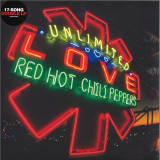
Red Hot Chili Peppers - UNLIMITED LOVE LP 2x12"

Red Hot Chili Peppers will unveil their new album and twelfth full-length offering, Unlimited Love Warner Records, on April 1, 2022. It notably marks their first recording with guitarist John Frusciante since 2006 and first with producer and longtime collaborator Rick Rubin since 2011. To herald Unlimited Love, the Los Angeles band just shared the first single and music video “Black Summer.”

“Our only goal is to get lost in the music. We (John, Anthony, Chad and Flea) spent thousands of hours, collectively and individually, honing our craft and showing up for one another, to make the best album we could. Our antennae attuned to the divine cosmos, we were just so damn grateful for the opportunity to be in a room together, and, once again, try to get better. Days, weeks and months spent listening to each other, composing, jamming freely, and arranging the fruit of those jams with great care and purpose. The sounds, rhythms, vibrations, words and melodies had us enrapt.

We yearn to shine a light in the world, to uplift, connect, and bring people together. Each of the songs on our new album UNLIMITED LOVE, is a facet of us, reflecting our view of the universe. This is our life’s mission. We work, focus, and prepare, so that when the biggest wave comes, we are ready to ride it. The ocean has gifted us a mighty wave and this record is the ride that is the sum of our lives. Thank you for listening, we hope you enjoy it.

ROCK OUT MOTHERFUCKERS!” - Anthony Kiedis, Flea, Chad Smith, John Frusciante

On lead track “Black Summer,” ethereal guitar underlines introspective lyrics as the rhythm unlocks a hypnotic drum groove highlighted by evocative bass. It quietly inhales only to exhale with a massive refrain, “It’s been a long time since I made a new friend, waiting on another black summer to end,” before a guitar solo echoes to the heavens and back.

Unlimited Love resumes a three-decade partnership with Rick Rubin Johnny Cash, Adele. Their creative collaboration spans legendary albums, including the diamond-selling Blood Sugar Sex Magik 1991, Californication 1999, By The Way 2002, and Stadium Arcadium 2006.

The interplay between the band borders on intergalactic once again—yet elevated to another stratosphere altogether. Unlimited Love represents the united spirit of four individual souls still fearlessly exploring the future of their eternal friendship and musical congregation.

This summer, Red Hot Chili Peppers will launch their first tour in support of Unlimited Love. They’ve invited a dynamic cohort of guests along for the ride at select dates, including Anderson.Paak & The Free Nationals and Thundercat and will be playing stadium dates in the UK in June 2022.

non in magazzino

Ordina ora e ordineremo l'articolo per te presso il nostro fornitore.

32,14

Last In: 3 years ago
Stella Donnelly - Flood
disponibile anche

Red Vinyl[27,52 €]

Cassette[9,20 €]


Like the many Banded Stilts that spread across the cover of her newest album, ‘Flood’, Stella
Donnelly is wading into uncharted territory. Here, she finds herself discovering who she is as
an artist among the flock, and how abundant one individual can be.
 ‘Flood’ is Donnelly’s record of this rediscovery: the product of months of risky experimentation,
hard moments of introspection, and a lot of moving around.
 Donnelly’s early reflections on the relationship between the individual and the many can be
traced back to her time in the rainforests of Bellingen, where she took to birdwatching as both a
hobby and an escape in a border-restricted world. By paying closer attention to the natural
world around her, Donnelly recalls “I was able to lose that feeling of anyone’s reaction to me. I
forgot who I was as a musician, which was a humbling experience of just being; being my small
self.”
 Reconnecting with this ‘small self’ allowed Donnelly to tap into creative wells she didn’t know
existed. Soon songs were coming to her in a way she could not control and over the coming
months, Donnelly accumulated 43 tracks as she moved out of Bellingen and around the
country, often finding herself displaced due to border restrictions and a tough rental market.
 Though the writing of ‘Flood’ was an intensely personal undertaking, Donnelly still saw the
recording process as one of her most collaborative projects yet. Along with her band members,
co-producing the record beside Anna Laverty and Methyl Ethyl’s Jake Webb helped to foster
an important spontaneity in the studio. With Webb, Donnelly could “dig in” and discover a
“forward-leaning sound” she’d been searching for, while Laverty’s ability to “capture the piano”
and discern the “perfect take” allowed the songwriter to take risks, many of which have clearly
paid off.
 Looking back at the Banded Stilt, Donnelly ultimately appreciates how when “seen in a crowd
they create an optical illusion, but on its own it’s this singular piece of art.” While each song in
‘Flood’ is a singular artwork unto itself, the collective shares all of Stella Donnelly in abundance:
her inner child, her nurturing self, her nightmare self; all of herself has gone into the making of
this record and, although it would take an ocean to fathom everything she feels, it’s well worth
diving in

pre-ordina ora01.08.2022

dovrebbe essere pubblicato su 01.08.2022

27,52
Stella Donnelly - Flood

Stella Donnelly

Flood

12inchSC432LP-C1
Secretly Canadian
01.08.2022
disponibile anche

Black Vinyl[27,52 €]

Cassette[9,20 €]


Like the many Banded Stilts that spread across the cover of her newest album, ‘Flood’, Stella
Donnelly is wading into uncharted territory. Here, she finds herself discovering who she is as
an artist among the flock, and how abundant one individual can be.
 ‘Flood’ is Donnelly’s record of this rediscovery: the product of months of risky experimentation,
hard moments of introspection, and a lot of moving around.
 Donnelly’s early reflections on the relationship between the individual and the many can be
traced back to her time in the rainforests of Bellingen, where she took to birdwatching as both a
hobby and an escape in a border-restricted world. By paying closer attention to the natural
world around her, Donnelly recalls “I was able to lose that feeling of anyone’s reaction to me. I
forgot who I was as a musician, which was a humbling experience of just being; being my small
self.”
 Reconnecting with this ‘small self’ allowed Donnelly to tap into creative wells she didn’t know
existed. Soon songs were coming to her in a way she could not control and over the coming
months, Donnelly accumulated 43 tracks as she moved out of Bellingen and around the
country, often finding herself displaced due to border restrictions and a tough rental market.
 Though the writing of ‘Flood’ was an intensely personal undertaking, Donnelly still saw the
recording process as one of her most collaborative projects yet. Along with her band members,
co-producing the record beside Anna Laverty and Methyl Ethyl’s Jake Webb helped to foster
an important spontaneity in the studio. With Webb, Donnelly could “dig in” and discover a
“forward-leaning sound” she’d been searching for, while Laverty’s ability to “capture the piano”
and discern the “perfect take” allowed the songwriter to take risks, many of which have clearly
paid off.
 Looking back at the Banded Stilt, Donnelly ultimately appreciates how when “seen in a crowd
they create an optical illusion, but on its own it’s this singular piece of art.” While each song in
‘Flood’ is a singular artwork unto itself, the collective shares all of Stella Donnelly in abundance:
her inner child, her nurturing self, her nightmare self; all of herself has gone into the making of
this record and, although it would take an ocean to fathom everything she feels, it’s well worth
diving in

pre-ordina ora01.08.2022

dovrebbe essere pubblicato su 01.08.2022

27,52
Stella Donnelly - Flood

Stella Donnelly

Flood

CassetteSC432CASS
Secretly Canadian
01.08.2022
disponibile anche

Black Vinyl[27,52 €]

Red Vinyl[27,52 €]


Like the many Banded Stilts that spread across the cover of her newest album, ‘Flood’, Stella
Donnelly is wading into uncharted territory. Here, she finds herself discovering who she is as
an artist among the flock, and how abundant one individual can be.
 ‘Flood’ is Donnelly’s record of this rediscovery: the product of months of risky experimentation,
hard moments of introspection, and a lot of moving around.
 Donnelly’s early reflections on the relationship between the individual and the many can be
traced back to her time in the rainforests of Bellingen, where she took to birdwatching as both a
hobby and an escape in a border-restricted world. By paying closer attention to the natural
world around her, Donnelly recalls “I was able to lose that feeling of anyone’s reaction to me. I
forgot who I was as a musician, which was a humbling experience of just being; being my small
self.”
 Reconnecting with this ‘small self’ allowed Donnelly to tap into creative wells she didn’t know
existed. Soon songs were coming to her in a way she could not control and over the coming
months, Donnelly accumulated 43 tracks as she moved out of Bellingen and around the
country, often finding herself displaced due to border restrictions and a tough rental market.
 Though the writing of ‘Flood’ was an intensely personal undertaking, Donnelly still saw the
recording process as one of her most collaborative projects yet. Along with her band members,
co-producing the record beside Anna Laverty and Methyl Ethyl’s Jake Webb helped to foster
an important spontaneity in the studio. With Webb, Donnelly could “dig in” and discover a
“forward-leaning sound” she’d been searching for, while Laverty’s ability to “capture the piano”
and discern the “perfect take” allowed the songwriter to take risks, many of which have clearly
paid off.
 Looking back at the Banded Stilt, Donnelly ultimately appreciates how when “seen in a crowd
they create an optical illusion, but on its own it’s this singular piece of art.” While each song in
‘Flood’ is a singular artwork unto itself, the collective shares all of Stella Donnelly in abundance:
her inner child, her nurturing self, her nightmare self; all of herself has gone into the making of
this record and, although it would take an ocean to fathom everything she feels, it’s well worth
diving in

pre-ordina ora01.08.2022

dovrebbe essere pubblicato su 01.08.2022

9,20
Wolfhounds - Bright and Guilty 2x12"

Deluxe reissue of their 1989 sophomore album pressed on pale blue colour vinyl.
Presented in a gloss laminated gatefold sleeve, which features the original LP plus a bonus disc with all the A and B sides, some compilation tracks and an outtake, plus a 12-page booklet containing previously unpublished lyrics and tons of contemporary reviews and photos.
Completely remastered for your listening pleasure.
In 1989, while the musical world was fêting serial-killer worshipping noise bands, white boys with dreadlocks and the first glimmers of techno, one band – The Wolfhounds – was describing the times and the country exactly as they were. Or at least as they saw it.
Well, not exactly. The privations of finding enough money to live on, a semi-permanent roof over your head and perhaps the hope of real change were all there in the lyrics along with the multitudinous shards of ideas in the music, both raging and reflective – but there was also a sense of magical realism and authentic personal circumstance imbued in it all.
Formed as a frantic noisy fusion of sixties garage and independent post-punk in Romford in 1984, by 1986 it was the band’s misfortunate to be corralled with the jangly and quirky bands of the era-defining C86 tape, given away free with the NME that year. The frustration of being lumped with the lumpen was already spilling over into a heightened creativity that would see the band release three LPs in 18 months, the first and perhaps most fully realised of which was Bright & Guilty.
The band’s sense of melody saw three singles taken off it, and all received plentiful radio play that resulted in enthusiastic audience responses when the band toured with My Bloody Valentine and the House of Love shortly after the LP came out. This renewed attention also saw them being threatened with legal action by the food company satirically targeted by one of the singles – Happy Shopper.
The band’s magpie listening habits also saw the first glimmers of an interest in sampling with the track Cottonmouth, hip hop in the drum rhythms of Invisible People and Son of Nothing, discordant post- hardcore in Non-specific Song and even percussive hints of Tom Waits’ Rain Dogs in Charterhouse.
The album’s lyrical themes have sustained the relevance of these 30-something year-old songs. The dictatorship of the class system over the economy is touched on in Charterhouse, the unfairness of housing policy in Rent Act and Red Tape Red Light, the desperation of not having enough money to even seek employment in Useless Second Cousin. But there is contemplation and mystery, too: Rope Swing’s nostalgia for pre-teen childhood, Invisible People’s detailing of intangible weaknesses.
Of all their peers, The Wolfhounds post-C86 output stands up straight and proud, and you’ll find echoes of their sound in Fontaines DC, Idles and many others – but not performed with the brashness, vigour and uniqueness of the originals.

pre-ordina ora29.07.2022

dovrebbe essere pubblicato su 29.07.2022

30,21
Gav & Jord - Writings Ov Tomato

Jon K & Elle Andrews' MAL imprint returns with its second release - a long rumoured excursion from Equiknoxx skippers Gavin “Gavsborg” Blair and Jordan “Time Cow” Chung operating under the Gav & Jord masthead for the first time. It’s their most probing x tight set of productions thus far - showcasing that naturally wild rhythmic mutability that’s earned them followers in every corner of the experimental paradigm over the last few years.

‘Writings Ov Tomato’ ties off a loop between Equiknoxx and their early supporter Jon K, who was pivotal in bringing their productions to the attention of Sean Canty at DDS, who went on to release their by-now seminal ‘Bird Sound Power’ album a good half-decade ago. This new set of tracks came about after MAL urged to the duo to explore any under-excavated musical territory they’d been thinking about since they began to tour the world, and the result is this incredible, purely instrumental LP that romps between Autechrian mutations, avant R&B swangers, Jersey-style sluggers and proper, wig-flipping club missiles.

Who else would boot off a new LP with a track titled ‘Childish House Mafia’? The fact it sounds like Actress formulating an industrial noise tape using ritual chants just makes it all the more screwy. The title track returns the duo to more familiar ground, with prickly “Bird Sound Power” drums notched up a few BPM and spliced with whirring trap hats and disorienting synths. ‘A Yow Jon K’ is a Kingston-fried take on sun-bleached Miami electro, with a rolling beat filled out by Gav & Jord’s hard boiled soundboard x foley crunches, before ‘Pig Pilot’, the record’s most substantial cut, loops JBC Radiophonic Workshop convulsions around a booming 4/4 that wouldn’t sound completely out of place at Berghain’s Klubnacht. Saturating the hook and allowing ferric hats to fill in the gaps, the pair manage to fabricate a sound closer to 1970s library music than Villalobos, and we’d wager you ain’t ever heard owt like it.

Combine all this with lower-key slithering industrial-ambient moments like the plughole-wonked outro ‘Brent Bird’ (named after Gav’s producer brother), the tuned tinkle of ‘No Sweat in my Sweatpants’ and the airborne elegance of ‘Appinness’, and you’ve got another Equiknoxx joint that draws from the syncretic mosaic of Afro-Latin-Sino-US influences and re-contextualises them into remarkably odd and effective structures that dance in the integers of a myriad styles.

non in magazzino

Ordina ora e ordineremo l'articolo per te presso il nostro fornitore.

26,51

Last In: 3 years ago
KOLONIEN - TILL SKOGEN

Kolonien

TILL SKOGEN

12inchCMBLP154
Cumbancha/Exil
11.07.2022

"It's a wonderfully uplifting album
As invigorating as a cold, sunny, Swedish morning, Kolonien have the freshness
of The Cardigans' early albums while at the same time sounding something like a
Nordic Fleet Foxes." - SonglinesKolonien is a four- member family band from
Sweden that has been one of the leading voices of the Swedish folk revival for
over a decade. With a sound that blends acoustic roots music with anthemic,
sing- along pop, Kolonien has a fresh, appealing sound that brings multiple
musical worlds together.Kolonien's lush vocal harmonies are reminiscent of Fleet
Foxes, their Nordic folk-pop sound might remind some listeners of Of Monsters
and Men, and their hipsters with strings vibe makes them Sweden's answer to
Mumford & Sons. At the same time, Kolonien's music and inspirations are deeply
rooted in the Swedish folk tradition as well as the natural environment and
progressive philosophies of the alternative-lifestyle community where they were
raised.Kolonien is made up of brothers Erik and Arvid Rask, their cousin Anna
Möller and their childhood neighbor, and "brother from another mother," Mischa
Grind. The members of the band were raised in and around Järna, a community
south of Stockholm that is known as a back-to-the-land destination for hippies,
progressives and people seeking an alternative lifestyle. While they had been
making music together since childhood, the band formally came together during
a music festival in Tanzania in 2010. Since then, they have toured extensively
across the world and released a number of well-received albums and EPs.

pre-ordina ora11.07.2022

dovrebbe essere pubblicato su 11.07.2022

25,00
Articoli per pagina:
N/ABPM
Vinyl