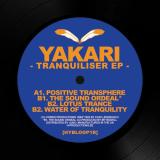
Cari Lekebusch is one of the architects of the Swedish techno scene whose influence naturally spilt out over the wider European landscape as part of the second wave in the late 80s and early 90s. Under his Yakari alias, he explored a tear-jerking and trance-infused style that was about looking outward to distant worlds beyond our own. This EP is a classic example and was originally released in 1994 on Loop Records. 'Positive Transphere' is an absorbing opener with dirty bass offset by sprawling synths, 'The Sound Ordeal' gets darker and more involving emotionally, before 'Lotus Trance' explodes in bright colours and new age love. 'Water Of Tranquility' is a more deep, insular closer. An EP that has aged perfectly and will still turn heads 30 years on.
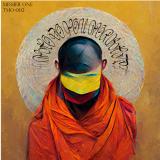
The Messier Objects returns with the second release on their label containing ten new tracks from the new TMO alter ego ‘Messier One.’ The work combines nostalgic IDM, eerie ambient and dreamy dub techno into one mini-album, inspired by the brute forces of nature and the power of healing and regeneration.
Expect to feel the force of nature on the A-side, where tracks such as ‘Earth’s Signal 04’ and ‘The Greatest Ebb Current’ contain distorted and fuzzy pads, eerie and vague echoing vocals, and whitenoise patterns that somehow feel strangely calming. Together with the broken drum patterns on tracks such as ‘Who Do You Worship?’, and the distorted kicks on ‘Kaalo Asmi Loka Kshaya Kritpraviddho’, the A-side manages to create crude IDM and ambient patterns – resembling historic natural events as if you were there yourself.
On the B-side. the noisy and broken patterns from the previous six tracks are replaced with warm and meditative sounds. ‘Two Tides’ is filled with soothing arpeggiated soundscapes and echoing voices, and the organic jungle chants and mythical vocals in ‘Rebuilding Temples’ further continue the process of regeneration. The B-side is accompanied with two remixes from Messier808 (known from the first release), who brings his typical meditative 4x4 patterns to the table, accompanied by dreamy textures, cyclical melodies and illusive effects from a now ‘healed’ society.
This thoughtful release brings a complete story told in only ten chapters. As always, their releases are backed by breathtaking artworks using vibrant and organic colours, completing an intriguing mini-album.
M’Bamina – African Roll (1975)
The story of an album born between Africa, Italy, and the nightclub culture of the 1970s
In the heart of 1970s Italy — a country undergoing profound social change and a music scene just beginning to open itself to distant sounds and cultures — an extraordinary, almost improbable story took shape. It is the story of a group of young African musicians who found their way to Europe, of a Turin nightclub that became a crossroads for communities and experimenters, and of an album which, released in small numbers and largely unnoticed at the time, is now considered a rare jewel of Afro-fusion.
The band called themselves M’Bamina — an ensemble of musicians from Congo, Cameroon, and Benin, who arrived in Italy in the early Seventies. Settling between northern Italy and the Pavia area, they began performing in small clubs and community events, bringing with them a vibrant rhythmic heritage: African polyrhythms, call-and-response vocals, funk-infused bass lines, and Caribbean or Afro-Latin colours absorbed along their musical journeys. Their raw, contagious energy on stage quickly drew attention.
Meanwhile, in Turin, another story was unfolding. There was a venue becoming almost legendary: Voom Voom, one of the city’s liveliest nightclubs, run by Ivo Lunardi. The club attracted an eclectic crowd — students, artists, foreigners, night owls — and Lunardi quickly understood that the dancefloor wasn’t just a place for music, but a melting pot for a new kind of cultural energy. Out of this vibrant atmosphere came his idea: to turn the club’s name into a small independent record label, Voom Voom Music, capable of capturing the spirit of those years and giving voice to unconventional projects.
When Lunardi heard M’Bamina, he immediately sensed that this was the sound he had been searching for: fresh, different from anything circulating in Italy at the time, and capable of blending African tradition with funk and European sensibility. He brought them into the studio.
Production was handled by Lunardi along with Christian Carbaza Michel, while the engineering was entrusted to Danilo Pennone, a young sound technician with a sharp, intuitive ear.
The recording sessions — held in Turin in 1975 — produced a remarkably warm and direct sound. The music feels almost live: grooves rooted in African tradition, but open to funk-rock structures and modern arrangements. It is a natural fusion, never forced. Tracks move between tribal rhythms, funk basslines, light electric guitars, congas and Afro-Latin percussion, with call-and-response vocals and melodies that echo both Congolese tradition and the lineage of Latin jazz. Not by chance, one of the album’s most striking tracks, Watchiwara, reinterprets a Latin standard through M’Bamina’s own rhythmic language.
The album was titled African Roll — a name that was already a statement of intention. It is African music that “rolls,” that moves, adapts, transforms within a new geographic and cultural setting. It is not strictly Afrobeat, nor Congolese rumba, nor Western funk: it is a spontaneous, hybrid blend, shaped more by lived experience than by any calculated aesthetic program.
When African Roll was released, the world around it barely noticed. Distribution was limited, and 1970s Italy had yet to develop a cultural framework for receiving such music. The national music press rarely paid attention to African or “world” productions. The album slipped into silence — though the band’s own story did not.
M’Bamina continued performing across Europe and Africa, even sharing a stage in Cameroon with none other than Manu Dibango. By the late Seventies, they moved to Paris, signed with Fiesta/Decca, and recorded a second LP, Experimental (1978). Meanwhile, the peculiar record they had made in Turin began to resurface quietly among vinyl collectors, Afro-funk enthusiasts, and DJs hunting for forgotten grooves.
That is when the album’s fate began to shift.
Over the decades, African Roll emerged as an almost unique document: a snapshot of an intercultural Italy before the word “intercultural” even existed, a fragment of migrant history, a spontaneous experiment in musical fusion born far from major industry circuits but rich in authenticity. Original copies began commanding high prices on the collector’s market, and the album became recognized as one of the hidden classics of European Afro-fusion from the 1970s.
Today, more than fifty years later, this reissue finally restores visibility and dignity to a project that deserves to be heard, studied, and celebrated. It is not simply an album: it is the testimony of a rare cultural encounter, born in an Italy unaware of how fertile such exchanges would one day become.
It is the story of a visionary producer, an extraordinary band, and a fleeting moment in which music, migration, and nightlife came together to create something genuinely new.
African Roll is — now more than ever — the sound of a bridge: between continents, between eras, between cultures. A record that, after rolling far and wide, has finally come home.
The Éthiopiques series returns! Essential archive recordings from an extremely fruitful period in Ethiopian music.
Before “Swinging Addis” took over the world, there was Moussié Nerses Nalbandian — the Armenian-born composer who shaped modern Ethiopian music. Mentor, arranger, and pioneer, he laid the foundations of Ethio-jazz.
This Éthiopiques volume revives his forgotten legacy, recorded live by Either/ Orchestra First issue ever with new exclusive photos and in depth liner 8-page insert.
“Ethiopian jazzmen are the best musicians that we have seen so far in Africa.
They really are promising handlers of jazz instruments.”
Wilbur De Paris
(1959, after a concert in Addis Ababa)
አዲስ፡ዘመን። *Addis zèmèn* **A new era.**
The time is the mid-1950s and early 1960s, just before "Swinging Addis" bloomed – or rather boomed – onto the scene. Brass instruments are still dominant, but the advent of the electric guitar, and the very first electronic organs, are just around the corner. Rock’n'Roll, R’n’B, Soul and the Twist have not yet barged their way in. Addis Ababa is steeped in the big band atmosphere of the post-war era, with Glenn Miller's *In the* *Mood* as its world-wide theme song, neck and neck with the Latin craze that was in vogue at the same period. Life has become enjoyable once again, with the return of peace after the terrible Italian Fascist invasion of Ethiopia (1935-1941). The redeployment of modern music is part and parcel of the postwar reconstruction. *Addis zèmèn* – a new era – is the watchword of the postwar period, just as it was all across war-torn Europe.
The generation who were the young parents of baby boomers** were the first to enjoy this musical renaissance, before the baby boomers themselves took over and forever super-charged the soundtrack of the final days of imperial reign. Music is Ethiopia's most popular art form, and very often serves as the best barometer for the upsurge of energy that is critical for reconstruction. Whether it be jazz in Saint-Germain-des-Prés or the *zazous* who revolutionised both jazz and French *chanson* after the *Libération*, be it Madrid's post-Franco Movida, or Dada, the Surrealists and *les années folles* that followed World War I, the periods just after mourning and hardship always give rise to brighter and more tuneful tomorrows. Addis Ababa, as the country's capital, and the epicentre of change, was no exception to this vital rule.
**Two generations of Nalbandian musicians**
Nersès Nalbandian belonged to a family of Armenian exiles, who had moved to Ethiopia in the mid-1920s. The uncle Kevork arrived along with the fabled "*Arba Lidjotch*", the** "*40 Kids*", young Armenian orphans and musicians that the Ras Tafari had recruited when he visited Jerusalem in 1924, intending to turn their brass band into the official imperial band. If Kevork Nalbandian was the one who first opened the way of modernism, pushing innovation so far as to invent musical theatre, it was his nephew Nersès who would go on to become, from the 1940s and until his death in 1977, a pivotal figure of modern Ethiopian music and of the heights it. Going all the way back to the 1950s. Nothing less. And it is Nersès who is largely to thank for the brassy colours that so greatly contributed to the international renown of Ethiopian groove. While the younger generations today venture timidly into the genealogy of their country's modern music, often losing their way amidst a distinctly xenophobic historiographical complacency, many survivors of the imperial period are still around to bear witness and pay tribute to the essential role that "Moussié Nersès" played in the rise of Abyssinia's musical modernity.
Given the year of his birth (15 March 1915), no one knows for sure if Nersès Nalbandian was born in Aintab, today Gaziantep (Turkiye/former Ottoman Empire) or on the other side of the border in Alep, Syria... What is certain is that his family, like the entire Armenian community, was amongst the victims of the genocide perpetrated by the Turks. Alep, the place of safety – today in ruins.
Before Nersès then, there was uncle Kevork (1887-1963). For a quarter of a century, he was a whirlwind of activity in music teaching and theatrical innovation. *Guèbrè Mariam le Gondaré* (የጎንደሬ ገብረ ማርያም አጥቶ ማግኘት, 1926 EC=1934) is his most famous creation. This play included "ten Ethiopian songs" — a totally innovative approach. According to his autobiographical notes, preserved by the Nalbandian family, Kevork indicates that he composed some 50 such pieces over the course of his career. This shows just how much he understood, very early on, the critical importance of song as Ethiopia's crowning artistic form. Indeed, for Ethiopian listeners, the most important thing is the lyrics, with all their multifarious mischief, far more than a strong melody, sophisticated arrangements or even an exceptional voice. (This is also why Ethiopians by and large, and beginning with the artists and producers themselves, believed for a long time — and wrongly — that their music could not possibly be exported, and could never win over audiences abroad, who did not speak the country's languages).
Last but not least, one of Kevork's major contributions remains composing Ethiopia's first national anthem – with lyrics by Yoftahé Negussié.
Nersès Nalbandian moved to Ethiopia at the end of the 1930s, at the behest of his ground-breaking uncle. Proficient in many instruments (pretty much everything but the drums), conductor, choir director, composer, arranger, adapter, creator, piano tuner, purveyor of rented pianos,... he was above all an energetic and influential teacher. From 1946 onwards, thanks to Kevork's connexion, Nersès was appointed musical director of the Addis Ababa Municipality Band. In just a few years, Nersès transformed it into the first truly modern ensemble, thanks to the quality of his teaching, his choice of repertoire, and the sophistication of his arrangements. It was this group that would go on to become the orchestra of the Haile Selassie Theatre shortly after its inauguration in 1955, which was a major celebration of the Emperor's jubilee, marking the 25th anniversary of his on-again-off-again reign.
At some point or other in his long career, Nersès Nalbandian had a hand in the creation of just about every institutional band (Municipality Band, Police Orchestra, Imperial Bodyguard Band, Army Band, Yared Music School…), but it was with the Haile Selassie Theatre – today the National Theatre – that his abilities were most on display, up until his death in 1977. To this must be added the development of choral singing in Ethiopia, hitherto unknown, and a sort of secret garden dedicated to the memory of Armenian sacred music, and brought together in two thick, unpublished volumes. Shortly before his death (November 13, 1977), he was appointed to lead the impressive Ethiopian delegation at Festac in Lagos, Nigeria (January-February 1977).
His status as a stateless foreigner regularly excluded him from the most senior positions, in spite of the respect he commanded (and commands to this day) from the musicians of his era. Naturally gifted and largely self-taught, Nerses was tirelessly curious about new musical developments, drawing inspiration from the very first imported records, and especially from listening intensely to the musical programmes broadcast over short-wave radio – BBC *First*. A prolific composer and arranger, he was constantly mindful of formalising and integrating Ethiopian parameters (specific “musical modes”, pentatonic scale, and the dominance of ternary rhythms) into his “modernisation” of the musical culture, rather than trying to over-westernise it. It even seems very probable that *Moussié* Nerses made a decisive contribution to the development of tighter music-teaching methods, in order to revitalise musical education during this period of prodigious cultural ferment. Flying in the face of all the historiographical and musicological evidence, it is taken as sacrosanct dogma that the four musical modes or chords officially recognised today, the *qǝñǝt* or *qiñit* (ቅኝት), are every bit as millennial as Ethiopia itself. It would appear however that some streamlining of these chords actually took place in around 1960. It was only from this time onward that music teaching was structured around these four fundamental musical modes and chords: *Ambassel*, *Bati*, *Tezeta* and *Antchi Hoyé*. A historical and musical “details” that is, apparently, difficult to swallow, especially if that should honour a *foreigner*. Modern Ethiopian music has Nersès to thank for many of its standards and, to this day, it is not unusual for the National Radio to broadcast thunderous oldies that bear unmistakable traces of his outrageously groovy touch.
Far Out Recordings proudly presents the self-titled debut album by Rio de Janeiro born multi-instrumentalist, composer and arranger Tunico. Honing Brazilian roots rhythms like maracatu, xanadu, and samba, to combine with a global contemporary jazz outlook, the newcomer adds a modern classic to the ever rich vein of Brazilian instrumental music.
Consider it a natural evolution from the legacies of greats like Quarteto Novo, Hermeto Pascoal, Banda Black Rio, Tamba Trio, and Dom Um Romão, Tunico’s debut brings together an eye catching ensemble of talents from the Rio jazz community, with whom he performs on a weekly basis at celebrated live sessions and jam’s at venues like Macuna and Comuna Lapa, which often go on all night.
Released in 2022, the album’s rip-roaring lead single “Galope” features the effervescent vocals of Katerina Assef, as well as consummate solos from all over the band, as Sounds & Colours put it “…it exudes distinction and promise”. “Sambola” calls on the signature swagger of Far Out favourite Antonio Neves, indulging us in irresistible swinging samba-funk, undeniably reminiscent of the aforementioned Banda Black Rio in their late 70s heyday.
Born and raised in an artistic Rio household, Antonio Secchin aka Tunico’s father was the painter Guilherme Secchin, whose original work is lovingly repurposed to create the album’s cover. Antonio learned his trade on guitar from a young age, which remains his primary method for composition, but at the age of eighteen he started to gravitate towards the saxophone, and in particular the soprano sax, from which he now leads bands despite being entirely self taught. He would develop his skills busking on curbsides and metro stations before becoming a mainstay player in venues and clubs around the city.
When the pandemic struck, Antonio retreated to his family home in the Rio countryside. With time and space to breathe and reflect in a natural environment, he set to work at fleshing out the compositions he’d written throughout his musical life into full bodied works. His affinity with his rural surroundings is reflected in the luscious, blossoming feel of this groovy, mystical and poignant instrumental debut album.
Tunico will be released on vinyl, CD and digital platf
This is Queenie DJ and Music producer from China I’m thrilled and honoured to have YangBing — a true master of Chinese electronic music — join this project with his remix for spring
About this EP — “Four Seasons (IIII Season)”It took me two years to complete this album (from pre production to Released )
This EP was inspired by the distinct feeling and atmosphere of each season. The four vinyl colours reflect that same seasonal bloom.
Track by Track:
1. Spring (Splash Fluorescent Pink Vinyl)
This song was born during Spring Festival in Guangzhou. To capture the local spirit, I sampled the classic Cantonese opera “The Princess’ Flower” — a touch of tradition. YangBing’s remix then injects vibrant electronic energy, making the track blossom with the renewal of spring.
2. Summer (Splash Blue Vinyl)
I was sitting by the sea in Xiamen, coffee in hand, feeling the sun and ocean breeze wash over me. Right then, it hit me: a jazz-house tune would be the perfect soundtrack to that summer afternoon. This track is that moment, frozen in sound.
3. Autumn (Splash Yellow Vinyl)
For me, autumn is a bridge to winter — a time for natural soundscapes. You’ll hear birds, evocative chimes, and traditional Chinese textures like the Jiangnan pipa and urgent gong rhythms. Part of this song was inspired by Yangshuo, where mountains and water truly embody the season’s essence. It’s where East meets West, sparking something special.
4. Winter (Splash Pure White Vinyl)
A downtempo rhythm to ease busy minds. Winter’s morning light enters on the lingering birdsongs of autumn, followed by subtle holiday warmth and the quiet feeling of falling snow. To me, winter is a season of gathering — of holidays, family and friends.
(coloured vinyl 12" 180g comes in different coloured vinyl, we cannot guarantee which colour you will receive))
pas en stock
Dernière livraison il y a 3 mois réapprovisionnement sans garantie
W.R.F. was formed in 2015 by Nina and late studio partner Andrew Weatherall to help wrangle the vast output recorded together beyond his solo releases.
Spotlighting nine tracks from the Apparently Solo series of EPs recorded between 2016- 2019 and released on Bandcamp in 2023, this lustrous time capsule marks the culmination of Walsh and Weatherall’s creative relationship born after they clicked at London’s earliest acid house clubs, becoming partners then managers of their Sabres Of Paradise/Sabrettes labels before taking different paths by the late '90s.
An accomplished musician, Nina had learned the art of studio technology by the time they reunited and started working together in 2012. Created at her Facility 4 Studio situated in the dangerous, gang-ridden no man’s land between Streatham and Mitcham, Anamchara captures the super-prolific creative stretch starting in 2015 that produced Weatherall’s Convenanza and Qualia solo sets, W.R.F.’s The Phoenix Suburb (And Other Stories) plus a whole lot more. According to Nina, Andrew envisioned the spectacular ‘Borderland’ as natural successor to ‘Smokebelch’, his most revered track. When it came to his remix, Nina enlisted renowned viola virtuoso Sarah Sarhandi and composed new harmonies with Pachelbel’s Canon in D Minor in mind.
The set also catches the breakthrough period when, through Nina’s careful coaxing, Andrew started using the computer system she’d set up to better express his musical visions by arranging the elements, grooves and melodies she sent him. Still considered the UK’s greatest DJ-producer, Andrew’s arrangements were inspired by his club-igniting sets. “This allowed me to mix the colours for his palette whilst he was painting the picture,” says Nina. Anamchara straddles the gamut of musical styles explored by W.R.F. at this time, from slower paced psychedelic “drug chug” outings ‘We Two’. ‘Heat To Meat Ratio’, ‘Hidden Watchers Part 1’ to banging acid house and techno sometimes inspired by the violence outside the studio door, including ‘SCHLAP’, ‘Crack-Ed’ and churning acid juggernaut ‘Yacidik’ (“After much dangling of the acid carrot, Andrew took a bite and, after one familiar raised eyebrow, never looked back,” says Nina).
Many tracks fly elements from the enormous sonic library Nina inherited from late partner Erick Legrand that she called The Akashic Library of Sound. Marking Andrew’s 2016 admission into the vault, ‘Rattly Old Puffin’ boasts Erick’s psychedelic guitar and tumbling drum loop Weatherall would run with, including on ‘Borderland’. “Erick was like our third member,” says Nina.
Bringing down the curtain, ‘Alma’’s exquisitely poignant melody that unfolds over thirteen time-stopping minutes was composed by Nina while navigating Erick’s birth and departure date anniversaries to accompany Andrew’s reading from Gordon Burn’s 1991 same-named novel at 2018’s Durham Literary Festival. Burn’s novel imagines early 60s popstrel Alma Cogan, who succumbed to cancer in 1966 surviving to reflect on fame. “Now it just makes me think of Erick. And every time I hear those well-placed cymbal crashes I can only think of the Captain himself.”
A beautiful grand finale for this astonishing selection of pure gold from the vaults.
Kris Needs / 2026
pas en stock
Dernière livraison il y a 4 mois réapprovisionnement sans garantie
Multicast Dynamics aka Samuel van Dijk presents Language of Colours. A substantial set of vibrant, cinematic tracks marking the first release on Language of Colours, a sonic imprint dedicated to conceptual electronic music. 10 tracks moving through organic ambient, reduced downtempo beats, lush soundscapes, and experimental drones. Originally released digitally in 2021, now available for the first time on vinyl.
pas en stock
Dernière livraison il y a 4 mois réapprovisionnement sans garantie
Evergreen In Your Mind, the new and third album from Norwegian singer-songwriter Juni Habel, exists in two worlds at the same time. Songs were recorded in quiet corners of her home, on the piano in the school where she works, and it uses the physical world around her to provide percussion. It also takes place, as she herself attests, within a dream; an imagined place in which her desire for oneness with each other and the world around us is finally realised.
Evergreen In Your Mind was recorded with co-producer Stian Skaaden, it’s Habel’s first album in three-years, following the breakthrough success of 2023’s Carvings LP. Formed of eleven new recordings, the songs here remain delicate, Habel’s voice playing an elegant lead role – but there are fluctuations too.
These small shifts in Habel’s sound result in a notable stride forward. More focus went into the groove of these songs. Playfulness was embraced and, perhaps most importantly, patience played a fundamental role in shaping the album with time and care given to every element of these songs. “We always aim to capture effortlessness - but the way of getting there is anything but effortless,” Habel reveals.
This extra time that was given to the project gave Juni the space to nurture her creativity. She would read and listen to music, hike into the hills, place herself within nature and seek out stillness. Not as a deviation from her work but as a fundamental part of the process. It’s a search for connection, and it’s a recurring theme across Evergreen In Your Mind; the polarity between stillness and passion, also our resistance to these desires, and the things we want to live and experience.
The album’s title-track and fist single feels indicative of this narrative. A gorgeous, delicate folk song, it finds Habel out in the woods, hiding from real life, caught in the space between the natural world and the pull of modernity. “It’s nostalgic. It’s about looking back and realizing things will be different,” Habel says. “Its about visualizing something beautiful in your head that you keep clinging onto.”
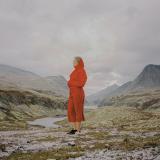
The album cover for Evergreen In Your Mind also adds shimmer. A striking photograph of Juni among the mountains, it was taken on a day trip to Rondane, a five-hour drive each way from her home. Habel explains. “It was awe-inspiring to drive all the way up into the high mountains, with its wide plains and intense colours. For an album with music that at times likes to hide itself, I think it fitted nicely with such an epic, grand, and powerful landscape.”
"Fans of Nick Drake, Karen Dalton and Neil Young will find much to enjoy in this musical equivalent of an evening spent alone by the fireside.” The Times
Writings on the topic that go off in all directions, mind-numbing lectures given by academics, and testimonies, most of them heavily doctored, from those who “lived through that era”: so many people today fantasize about the early days of punk in our country… This blessed moment when no one had yet thought of flaunting a ridiculous green mohawk, taking Sid Vicious as a hero, or – even worse – making the so-called alternative scene both festive and boorish. There was no such thing in 1976 or 1977, when it wasn’t easy to get hold of the first 45s by the Pistols or the Clash. Few people were aware of what was happening on the fringes of the fringes at the time. Malcolm McLaren was virtually unknown, and having short hair made you seem strange. Who knew then that rock music, which had taken a very bad turn since the early 1970s, would once again become an essential element of liberation? That, thanks to short and fast songs, it would once again rediscover that primitive, social side that was so hated by older generations? Who knew that, besides a few loners who read the music press (it was even better if they read it in English) and frequented the right record stores? Many of these formed bands, because it was impossible to do otherwise. We quickly went from listening to the Velvet Underground to trying to play the Stooges’ intros. It’s a somewhat collective story, even though there weren’t many people to start it.
The Guilty Razors were among those who took part in this initial upheaval in Paris. They were far from being the worst. They had something special and even released a single that was well above the national average. They also had enough songs to fill an album, the one you’re holding. In everyone’s opinion, they were definitely not among the punk impostors that followed in their wake. They were, at least, genuine and credible.
Guilty Razors, Parisian punk band (1975-1978). To understand something about their somewhat linear but very energetic sound, we might need to talk about the context in which it was born and, more broadly, recall the boredom (a theme that would become capital in punk songs) coupled with the desire to blow everything off, which were the basis for the formation of bands playing a rejuvenated rock music ; about the passion for a few records by the Kinks or the early Who, by the Stooges, by the Velvet mostly, which set you apart from the crowd.
And of course, we should remember this new wave, which was promoted by a few articles in the specialized press and some cutting-edge record stores, coming from New York or London, whose small but powerful influence could be felt in Paris and in a handful of isolated places in the provinces, lulled to sleep by so many appalling things, from Tangerine Dream to President Giscard d’Estaing...
In 1975-76, French music was, as almost always, in a sorry state ; it was still dominated by Johnny Hallyday and Sylvie Vartan. Local rock music was also rather bleak, apart from Bijou and Little Bob who tried to revive this small scene with poorly sound-engineered gigs played to almost no one.
In the working class suburbs at the time, it was mainly hard rock music played to 11 that helped people forget about their gruelling shifts at the factory. Here and there, on the outskirts of major cities, you still could find a few rockers with sideburns wearing black armbands since the death of Gene Vincent, but it wasn’t a proper mass movement, just a source of real danger to anyone they came across who wasn't like them. In August 1976, a festival unlike any other took place in Mont-de-Marsan – the First European Punk Festival as the poster said – with almost as many people on stage as in the audience. Yet, on that day, a quasi historical event happened, when, under the blazing afternoon sun, a band of unknowns called The Damned made an unprecedented noise in the arena, reminiscent of the chaotic Stooges in their early adolescence. They were the first genuine punk band to perform in our country: from then on, anything was possible, almost anything seemed permissible.
It makes sense that the four+1 members of Guilty Razors, who initially amplified acoustic guitars with crappy tape recorder microphones, would adopt punk music (pronounced paink in French) naturally and instinctively, since it combines liberating noise with speed of execution and – crucially – a very healthy sense of rebellion (the protesters of May 1968 proclaimed, and it was even a slogan, that they weren’t against old people, but against what had made them grow old. In the mid-1970s, it seemed normal and obvious that old people should now ALSO be targeted!!!).
At the time, the desire to fight back, and break down authority and apathy, was either red or black, often taking the form of leafleting, tumultuous general assemblies in the schoolyard, and massive or shabby demonstrations, most of the time overflowing with an exciting vitality that sometimes turned into fights with the riot police. Indeed, soon after the end of the Vietnam War and following Pinochet’s coup in Chile, all over France, Trotskyist and anarcho-libertarian fervour was firmly entrenched among parts of the educated youth population, who were equally rebellious and troublemakers whenever they had the chance. It should also be noted that when the single "Anarchy in the UK" was first heard, even though not many of us had access to it, both the title and its explosive sound immediately resonated with some of those troublemakers crying out for ANARCHY!!! Meanwhile, the left-wing majority still equated punks with reckless young neo-Nazis. Of course, the widely circulated photos in the mainstream press of Siouxsie Sioux with her swastikas didn’t necessarily help to win over the theorists of the Great Revolution. It took Joe Strummer to introduce The Clash as an anti-racist, anti-fascist and anti-ignorance band for the rejection of old-school revolutionaries to fade a little.
The Lycée Jean-Baptiste Say at Porte d’Auteuil, despite being located in the very posh and very exclusive 16th arrondissement of Paris, didn’t escape these "committed" upheavals, which doubled as the perfect outlet for the less timid members of this generation.
“Back then, politics were fun,” says Tristam Nada, who studied there and went on to become Guilty Razors’ frontman. “Jean-Baptiste was the leftist high-school in the neighbourhood. When the far right guys from the GUD came down there, the Communist League guys from elsewhere helped us fight them off.”
Anything that could challenge authority was fair game and of course, strikes for just about any reason would lead to increasingly frequent truancy (with a definitive farewell to education that would soon follow). Tristam Nada spent his 10th and 11th unfinished grades with José Perez, who had come from Spain, where his father, a janitor, had been sentenced to death by Franco. “José steered my tastes towards solid acts such as The Who. Like most teenagers, I had previously absorbed just about everything that came my way, from Yes to Led Zeppelin to Genesis. I was exploring… And then one day, he told me that he and his brother Carlos wanted to start a rock band.” The Perez brothers already played guitar. “Of course, they were Spanish!”, jokes their singer. “Then, somewhat reluctantly, José took up the bass and we were soon joined by Jano – who called himself Jano Homicid – who took up the rhythm guitar.” Several drummers would later join this core of not easily intimidated young guys who didn’t let adversity get the better of them.
The first rehearsals of the newly named Guilty Razors took place in the bedroom of a Perez aunt. There, the three rookies tried to cover a few standards, songs that often were an integral part of their lives. During a first, short gig, in front of a bewildered audience of tough old-school rockers, they launched into a clunky version of the Velvet Underground's “Heroin”. Challenge or recklessness? A bit of both, probably… And then, step by step, their limited repertoire expanded as they decided to write their own songs, sung in a not always very accurate or academic English, but who cared about proper grammar or the right vocabulary, since what truly mattered was to make the words sound as good as possible while playing very, very fast music? And spitting out those words in a language that left no doubt as to what it conveyed mattered as well.
Trying their hand a the kind of rock music disliked by most of the neighbourhood, making noise, being fiercely provocative: they still belonged to a tiny clique who, at this very moment, had chosen to impose this difference. And there were very few places in France or elsewhere, where one could witness the first stirrings of something that wasn’t a trend yet, let alone a movement.
In the provinces, in late 1976 or early 1977, there couldn’t be more than thirty record stores that were a bit more discerning than average, where you could hear this new kind of short-haired rock music called “punk”. The old clientele, who previously had no problem coming in to buy the latest McCartney or Aerosmith LP, now felt a little less comfortable there…
In Paris, these enlightened places were quite rare and often located nex to what would become the Forum des Halles, a big shopping mall. Between three aging sex workers, a couple of second-hand clothes shops, sellers of hippie paraphernalia and small fashion designers, the good word was loudly spread in two pioneering places – propagators of what was still only a new underground movement. Historically, the first one was the Open Market, a kind of poorly, but tastefully stocked cave. Speakers blasted out the sound of sixties garage bands from the Nuggets compilation (a crucial reference for José Perez) or the badly dressed English kids of Eddie and the Hot Rods. This black-painted den was opened a few years earlier by Marc Zermati, a character who wasn’t always in a sunny disposition, but always quite radical in his (good) choices and his opinions. He founded the independent label Skydog and was one of the promoters of the Mont-de-Marsan punk festivals. Not far from there was Harry Cover, another store more in tune with the new New York scene, which was amply covered in the house fanzine, Rock News (even though it was in it that the photos of the Sex Pistols were first published in France).
It was a favorite hang-out of the Perez brothers and Tristam Nada, as the latter explained. “It’s at Harry Cover’s that we first heard the Pistols and Clash’s 45s, and after that, we decided to start writing our first songs. If they could do it, so could we!”
The sonic shocks that were “Anarchy in the UK”, “White Riot” or the Buzzcocks’s EP, “Spiral Scratch” – which Guilty Razors' sound is reminiscent of – were soon to be amplified by an unparalleled visual shock. In April 1977, right after the release of their first LP, The Clash performed at the Palais des Glaces in Paris, during a punk night organised by Marc Zermati. For many who were there, it was the gig of a lifetime…
Of course, Guilty Razors and Tristam were in the audience: “That concert was fabulous… We Parisian punks were almost all dressed in black and white, with white shirts, skinny leather ties, bikers jackets or light jackets, etc. The Clash, on the other hand, wore colourful clothes. Well, the next day, at the Gibus, you’d spot everyone who had been at this concert, but they weren’t wearing anything black, they were all wearing colours.”
It makes sense to mention the Gibus club, as Guilty Razors often played there (sometimes in front of a hostile audience). It was also the only place in Paris that regularly scheduled new Parisian or Anglo-Saxon acts, such as Generation X, Siouxsie and the Banshees, the Slits, and Johnny Thunders who would become a kind of messed-up mascot for the venue. A little later, in 1978, the Rose Bonbon – formerly the Nashville – also attracted nightly owls in search of electric thrills… In 1977, the iconic but not necessarily excellent Asphalt Jungle often played at the Gibus, sometimes sharing the bill with Metal Urbain, the only band whose aura would later transcend the French borders (“I saw them as the French Sex Pistols,” said Geoff Travis, head of their British label Rough Trade). Already established in this small scene, Metal Urbain helped the young and restless Guilty Razors who had just arrived. Guitarist for Metal Urbain Hermann Schwartz remembers it: “They were younger than us, we were a bit like their mentors even if it’s too strong a word… At least they were credible. We thought they were good, and they had good songs which reminded of the Buzzcocks that I liked a lot. But at some point, they started hanging out with the Hells Angels. That’s when we stopped following them.”
The break-up was mutual, since, Guilty Razors, for their part, were shocked when they saw a fringe element of the audience at Metal Urbain concerts who repeatedly shouted “Sieg Heil” and gave Nazi salutes. These provocations, even still minor (the bulk of the skinhead crowd would later make their presence felt during concerts), weren’t really to the liking of the Perez brothers, whose anti-fascist convictions were firmly rooted. Some things are non-negotiable.
A few months earlier (in July 1978), Guilty Razors had nevertheless opened very successfully for Metal Urbain at the Bus Palladium, a more traditonally old-school rock night-club. But, as was sometimes the case back then, the night turned into a mass brawl when suburban rockers came to “beat up punks”.
Back then, Parisian nights weren’t always sweet and serene.
So, after opening as best as they could for The Jam (their sound having been ruined by the PA system), our local heroes were – once again – met outside by a horde of greasers out to get them. “Thankfully,” says Tristam, “we were with our roadies, motorless bikers who acted as a protective barrier. We were chased in the neighbouring streets and the whole thing ended in front of a bar, with the owner coming out with a rifle…”
Although Tristam and the Perez brothers narrowly escaped various, potentially bloody, incidents, they weren’t completely innocent of wrongdoing either. They still find amusing their mugging of two strangers in the street for example (“We were broke and we simply wanted to buy tickets for the Heartbreakers concert that night,” says Tristam). It so happened that their victims were two key figures in the rock business at the time: radio presenter Alain Manneval and music publisher Philippe Constantin. They filed a complaint and sought monetary compensation, but somehow the band’s manager, the skilful but very controversial Alexis, managed to get the complaint withdrawn and Guilty Razors ended up signing with Constantin with a substantial advance.
They also signed with Polydor and the label released in 1978 their only three-track 45, featuring “I Don't Wanna be A Rich”, “Hurts and Noises” and “Provocate” (songs that exuded perpetual rebellion and an unquenchable desire for “class” confrontation). It was a very good record, but due to a lack of promotion (radio stations didn’t play French artists singing in English), it didn’t sell very well. Only 800 copies were allegedly sold and the rest of the stock was pulped… Initially, the three tracks were to be included on a LP that never came to be, since they were dropped by Polydor (“Let’s say we sometimes caused a ruckus in their offices!” laughs Tristam.) In order to perfect the long-awaited LP, the band recorded demos of other tracks. There was a cover of Pink Floyd's “Lucifer Sam” from the Syd Barrett era – proof of an enduring love for the sixties’ greats –, “Wake Up” a hangover tale and “Bad Heart” about the Baader-Meinhof gang, whose actions had a profound impact on the era and on a generation seeking extreme dissent... On the album you’re now discovering, you can also hear five previously unreleased tracks recorded a bit later during an extended and freezing stay in Madrid, in a makeshift studio with the invaluable help of a drummer also acting as sound engineer. He was both an enthusiastic old hippie and a proper whizz at sound engineering. Here too, certain influences from the fifties and sixties (Link Wray, the Troggs) are more than obvious in the band’s music.
Shortly after a final stormy and rather barbaric (on the audience’s side) “Punk night” at the Olympia in June 1978, Tristam left the band ; his bandmates continued without him for a short while.
But like most pioneering punk bands of the era, Guilty Razors eventually split up for good after three years (besides once in Spain, they’d only played in Paris). The reason for ceasing business activities were more or less the same for everyone: there were no venues outside one’s small circuit to play this kind of rock music, which was still frightening, unknown, or of little interest to most people. The chances of recording an LP were virtually null, since major labels were only signing unoriginal but reassuring sub-Téléphone clones, and the smaller ones were only interested in progressive rock or French chanson for youth clubs. And what about self-production? No one in our small safety-pinned world had thought about it yet. There wasn’t enough money to embark on that sort of venture anyway.
So yes, the early days of punk in France were truly No Future!
pas en stock
Dernière livraison il y a 6 mois réapprovisionnement sans garantie
April Records proudly presents the new album from Stockholm Stockholm-based bassist and composer Jon Henriksson - a confident and flexible statement that deepens his place within contemporary Scandinavian jazz. Following the success of his 2023 debut Harmonia which placed second in Orkesterjournalen s Golden Album " readers " poll, Henriksson returns with music that foregrounds collective interplay, shifting forms, and a strong compositional voice. Born in Gothenburg and now active across Sweden and Europe, Henriksson has collaborated and toured with artists including Lars Jansson, Hakan Broström, Erik Söderlind, Klas Lindquist, Jonas Kullhammar and Christina von Bülow. Alongside leading his own ensembles, he remains a soughtsought-after bassist in a wide range of projects, balancing a deep connection to the jazz tradition with a modern, exploratory approach. Shapeshifter is built around a core quartet of tenor saxophone, piano, double bass and drums, expanded with guitar on three tracks and trombone on two. The album moves fluidly between contrasting moods, from forceful and driving to reflective and restrained, with each piece shaped by the musicians " intuition and responsiveness. The title reflects Henriksson s compositional philosophy: allowing roles, textures, and forms to evolve as the music unfolds.The ensemble brings together long long-standing musical relationships. Pianist Rasmus Sorensen and Henriksson have collaborated since their studies at Skurups Folkhögskola (Henriksson is a longstanding member of Sorensen s own trio), while drummer Jonas Bäckman forms part of a well well-established rhythm section partnership with the bassist across numerous projects including the Britta Virves Trio. Saxophonist Karl Karl-Martin Almqvist, a member of the Danish Radio Big Band, completes the quartet, with guitarist Pelle von Bülow and trombonist Rasmus Holm joining the session shortly before recording to expand the album s sonic palette where the music called for it. Originally conceived as a quartet album, Shapeshifter took its final shape in the lead lead-up to recording as additional instrumental colours were introduced organically. The piece Toninho , a tribute to Brazilian guitarist and composer Toninho Horta, features acoustic guitar and subtle wordless vocals, reflecting melodic influences that sit naturally within the album s contemporary jazz framework. Across the record, space, pacing, and interaction remain central. Rather than forcing constant motion, the music allows ideas to develop with clarity and intent, resulting in an album that highlights Henriksson s growing assurance as a composer and bandleader, while keeping the collective at its core.
"Voigt Legacy - Megamix 1" is the promising title of a kind of "Best-Of Bassdrum-Hits" from the far-reaching Voigt universe. It is a compact megamix of seven selected tracks from some very rare live sets which have never been released before or never on vinyl. The mix features all-time classics such as "Fackeln Im Sturm" and "W.I.R.", as well as the long-out-of-print super-smasher "Die Schallplatte" and gems from the Protest, catalogue such as "Du Musst Nichts Sagen" and "Sound & Vision". This multifaceted collection of danceable tracks and looped horses is presented in a deluxe cover with glossy colours.
The art bridge is a natural choice because where there's a loop, there's a way. An abstract loop collage measuring 600 cm x 150 cm was created under the same title, "Voigt Legacy – Megamix 1", corresponding to the music and referencing the graphic symbolism of the titles, logos and cover artwork.
pas en stock
Dernière livraison il y a 7 mois réapprovisionnement sans garantie
‘Workaround’ is the lucidly playful and ambitious solo debut album by rhythm-obsessive musician and DJ, Beatrice Dillon for PAN. It combines her love of UK club music’s syncopated suss and Afro-Caribbean influences with a gamely experimental approach to modern composition and stylistic fusion, using inventive sampling and luminous mixing techniques adapted from modern pop to express fresh ideas about groove-driven music and perpetuate its form with timeless, future-proofed clarity. Recorded over 2017-19 between studios in London, Berlin and New York, ‘Workaround’ renders a hypnotic series of polymetric permutations at a fixed 150bpm tempo.
Mixing meticulous FM synthesis and harmonics with crisply edited acoustic samples from a wide range of guests including UK Bhangra pioneer Kuljit Bhamra (tabla); Pharoah Sanders Band’s Jonny Lam (pedal steel guitar); techno innovators Laurel Halo (synth/vocal) and Batu (samples); Senegalese Griot Kadialy Kouyaté (Kora), Hemlock’s Untold and new music specialist Lucy Railton (cello); amongst others, Dillon deftly absorbs their distinct instrumental colours and melody into 14 bright and spacious computerised frameworks that suggest immersive, nuanced options for dancers, DJs and domestic play. ‘Workaround’ evolves Dillon’s notions in a coolly unfolding manner that speaks directly to the album’s literary and visual inspirations, ranging from James P. Carse’s book ‘Finite And Infinite Games’ to the abstract drawings of Tomma Abts or Jorinde Voigt as well as painter Bridget Riley’s essays on grids and colour. Operating inside this rooted but mutable theoretical wireframe, Dillon’s ideas come to life as interrelated, efficient patterns in a self-sufficient system.
With a naturally fractal-not-fractional logic, Dillon’s rhythms unfold between unresolved 5/4 tresillo patterns, complex tabla strokes and spark-jumping tics in a fluid, tactile dance of dynamic contrasts between strong/light, sudden/restrained, and bound/free made in reference to the notational instructions of choreographer Rudolf Laban. Working in and around the beat and philosophy, the album’s freehand physics contract and expand between the lissom rolls of Bhamra’s tabla in the first, to a harmonious balance of hard drum angles and swooping FM synth cadence featuring additional synth and vocal from Laurel Halo in ‘Workaround Two’, while the extruded strings of Lucy Railton create a sublime tension at the album’s palatecleansing denouement, triggering a scintillating run of technoid pieces that riff on the kind of swung physics found in Artwork’s seminal ‘Basic G’, or Rian Treanor’s disruptive flux with a singularly tight yet loose motion and infectious joy. Crucially, the album sees Dillon focus on dub music’s pliable emptiness, rather than the moody dematerialisation of reverb and echo. The substance of her music is rematerialised in supple, concise emotional curves
and soberly freed to enact its ideas in balletic plies, rugged parries and sweeping, capoeira-like floor action. Applying deeply canny insight drawn from her years of practice as sound designer, musician and hugely knowledgable/intuitive DJ, ‘Workaround’ can be heard as Dillon’s ingenious solution or key to unlocking to perceptions of stiffness, darkness or grid-locked rigidity in electronic music. And as such it speaks to an ideal of rhythm-based and experimental music ranging from the hypnotic senegalese mbalax of Mark Ernestus’ Ndagga Rhythm Force, through SND and, more currently, the hard drum torque of DJ Plead; to adroitly exert the sensation of weightlessness and freedom in the dance and personal headspace.
After years of friendship and sound fragmentation, Felipe Valenzuela and Federico Molinari have succeeded in capturing and distilling their unique musical perspective into a single frame.Throughout this process, these two minds from across the Andes have developed numerous productions with a broad, multidirectional genre range.This release features four tracks, each with its own distinct identity. The A1 track, FORCED TO THE SCALES, which lends its name to the EP, blends elements of Spanish classical music with a futuristic edge, seamlessly adapting to various moments within a set.The second track on side A, RAPS TIGHT, is an experiment born from the same session, where a subtle sensitivity is expressed through a a slow beat, enveloped in a harmonious world.On side B, 503 emerges from a different creative process, combining two divergent paths that naturally intersect, resulting in a track full of energy and dynamism.The EP closes with DEAD MAN, a one-shot recording that, through its raw spontaneity, encapsulates the conclusion of a fragmented journey within a frame full of versatility.
pas en stock
Dernière livraison il y a 11 mois réapprovisionnement sans garantie
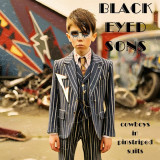
Black Eyed Sons - A New Rock 'n' Roll Collective - Members of The Quireboys and Down n' Outz are joined by an amazing collection of fellow musicians for a joyous collaboration of mutual admiration and musical celebration. Enjoy the debut album 'Cowboys In Pinstriped Suits" released via Off Yer Rocka recordings 31st January 2025. Since the band announced they were working on their highly anticipated new album, "The Band Rolls On", what was already becoming a chance for a musical rebirth metamorphosized into something far bigger and more ambitious. The final cuts feature distinguished collaborations from a multitude of Rock Royalty.
The band, their management and close friends within the industry all agreed that this should be treated as a stand-alone new project, a Rock 'n' Roll Collective going under the name "Black Eyed Sons", a nod to a previous album from their extensive back catalogue. The revised album title, "Cowboys in Pinstriped Suits” is named after one of the eleven tracks and features none other than Def Leppard’s Joe Elliott alongside Alice Cooper guitarist Ryan Roxie and bass grooves from Chip Z’Nuff. Guy Griffin commented "It's been nice to take a break and focus on the writing. Working with our own band as well as so many friends within the industry has done nothing but inspire us to write and create this exciting new project. We've done the hard work getting the tracks laid down, we're now looking forward to going back out on the road as Black Eyed Sons and delivering something entirely new from five musicians who've been playing together for over twenty years. Relationships break down sometimes, that’s Rock 'n' Roll, everyone does their thing, but we want to make sure there's no confusion as to what this is. Whilst we're proud of our musical history, that was then, this is now. It's onwards and upwards, so let the music do the talking. Joe Elliott added, "Having worked with these guys since 2009 in the greatest “other” band I could ever hope to work with, The Down ’n’ Outz, it just felt totally natural for me to reciprocate the love these guys have shown me by contributing to what is essentially a new beginning for them. So welcome to the mad world of Rock ’n’ Roll, you Black Eyed Sons." - Joe Elliott (Cowboys in Pinstriped Suits). Other collaborators had this to say: “This song feels so real and natural. Like a hug from an old friend. I’m proud to be a part of it.” - Charlie Starr (Autumn Reigns) - ‘’My friendship with the Quireboys started a long time ago and each time our paths have crossed, the bond has grown stronger. Therefore, I would lie if I didn’t say that in the back of my mind there always was a wish to do something together. So, I am more than thrilled when I was invited to sing on the Black Eyed Sons new album and that they also gave me a song where I could be who I am’’ ⁃ Mike Tramp (Your True Colours) - “I go back 30 years with these guys. A band that I’ve always loved and respected. To be asked to be part of this project was a great thrill, and proud moment as a guitarist.” - Scotti Hill (Dig Me out of this Hole) - “I’ve known Griff since the beginning of our respective careers…we are both from the old school baby, and Griff has always been the embodiment of rock n’ roll - genuine, classy, trashy, and an attitude that exemplifies what it is to be a rock n’ roll troubadour“ ⁃ Ryan Roxie (Cowboys in Pinstriped Suits/Can't Put Your Arms Around A Memory) - “Since you graced us with your presence on the Wolves’ debut album, it’s only fair we should be a part of your debut as Black Eyed Sons. All the best!” - Kyf Brewer / Company Of Wolves (Foolin’ Yourself) - “Not only was it a pleasure to play guitar & sing on this record but it was also an honour to have Griff & the band record one of our songs! - Steve Conte / Company Of Wolves/Michael Monroe/NY Dolls (Foolin’ Yourself) - Band: Guy Griffin (lead vocals/guitar); Paul Guerin (guitar); Keith Weir (keyboards); Nick Mailing (bass); Pip Mailing (drums)
Lili Holland-Fricke and Sean Rogan’s debut album “dear alien” is a constellation of radiant improvised impulses, imagined in lucent fragments of cello, guitar and voice. Spacious, tender and glistening with rich electronic distortion, the record melds a spectrum of processed and natural sound as the artists invite listeners into their dreamlike world of synergetic introspections.
Cultivated through a shared spirit of resourcefulness and play, “dear alien” emerges as an organic meeting place in the compositional output of British-German experimental cellist Lili Holland-Fricke and Manchester-born guitarist and producer Sean Rogan. Having studied their respective instruments at the Royal Northern College of Music, both artists have flourished in eclectic solo and collaborative projects, creating intricate and intimate spheres of sound with a deep appreciation for songwriting and improvisation.
Holland-Fricke’s transition from the classical world to writing her own material, and later vastly expanding her palette with electronics, first converged with Rogan’s distinctive flair for production in 2022 on her EP “birdsong for breakfast” and single ‘draw on the walls’. Now, the duo present an album envisioned through true ‘50/50’ collaboration during the summer of 2023, written across two intensive weeks of improvising and experimenting at Rogan’s Greenwich home studio. A convergence of the artists’ sounds and influences, the music was fostered by the idea of making an album with ‘no plan’ and their shared recent discovery of Arthur Russell, to whom the final track is dedicated.
“dear alien” assembles eight compositions that emerged naturally as the duo created sketches with cello and pedals, guitar, tape loops and poetic vocal musings, forming songs that explore themes of waiting, circling back around, and glitchy communication. Moments of drifting through pillowy layers of sound contrast with saturated visions of electronic modification, where the record’s glowing instrumental contours are pushed to the extremes.
The plaintive shades of ‘half blue’ and meandering deliberations of ‘slow thing’ are teased by the friction of static signals and a sense of ever-mutating sonic mass – a sensibility most acutely realised in ‘dawning’, where cello-vocoder eruptions grow in magnitude, the absence of sound between them burdened with something sinister and unspoken. As the artists expand on this piece, ‘It’s the sound equivalent of squeezing your eyes shut to shield against the brightness of something you don’t want to see, only to find that each time you open them again the world is not softening but getting more relentlessly overwhelming, to the point of being totally blinding.’
Three tracks with lyrics – ‘at first’, ‘dear alien’ and ‘seem asleep’ – refract the album’s wistful and melancholic colours into poetic imagery and metaphors, ushering in reflections on relationship tensions and someone close feeling unknown, with hints towards wider unsettled feelings about climate change. In the spirit of lyrical improv, ‘seem asleep’ compiles lone lines from Holland-Fricke’s journals into a cut-and-paste collage around hopeful patience or futile lingering – either way conjuring a softness that welcomes the hazy ambience of ‘for a. r.’, the final composition which soundscapes the summer days spent making the album. As the artists describe of this track, ‘The music kind of leads somewhere, but then kind of leads nowhere, and just meanders around where it is, content to just be walking in a circle back to where it started.’
Copenhagen’s Echocord returns this September with the ‘Invincible Nature’ EP by Altone, backed by a remix from Thomas Fehlmann and Another Channel. Atone is the guise of Tokyo’s Yuki Takasaki, one of the leading figures of the genre out of Japan with releases on the likes of Greyscale, Lempuyang, Vuo, Æ Recordings, Primary colours and many more. His distinctive twist on Dub Techno has earned him accolades worldwide within the underground and here he joins the roster of the esteemed Echocord, the Kenneth Christiansen helmed label that’s been at the forefront of Dub Techno for more than two decades now. The original mix of ‘Naturally Unnatural’ opens, showcasing Altone’s unique style via subtly nuanced chord flutters, expansive reverberations, pulsating low end tones and ever unfolding, subtly unfurling feel. The ‘Naturally Flowing Thomas Fehlmann Remix’ follows, the Swiss sonic wizard and former member of the legendary The Orb among many other projects delivers deep, throbbing subs and glitched out synth modulations intertwined with fragments of the original composition. ‘Unnaturally Balanced’ then opens the B-Side with Altone diving deeper into dub realms courtesy of ever alternating, billowing dub echoes and a raw, reduced rhythm section. The ‘Another Channel Version’ of ‘Unnaturally Balanced’ then rounds out the EP, embracing a more classic dub techno aesthetic as crunchy drums, swirling atmospherics and spaced out echoes ebb and flow amongst one another across the six and half minute duration.
pas en stock
Dernière livraison il y a 10 mois réapprovisionnement sans garantie
The phenomenal three-piece band includes members of Oranssi Pazuzu, K-X-P, Grave Pleasures and Aavikko
Svart Records is proud to release the debut album, I, from Haunted Plasma, a powerhouse of futuristic synth in symbiosis with the super violent atmospherics of kosmische Black Metal. Haunted Plasma is “man meets machine” in a cybernetic wasteland, set to a conceptual backdrop of William Gibson and Phillip K. Dick style mind-melt. The highly evolved creatives at the heart of Haunted Plasma’s sound, cite Terry Riley, Massive Attack, a contemporary take on Krautrock hypnosis, psychedelic Black Metal and 90s Techno, resulting in an orgy of mutant sound.
The phantoms at the beating nucleus of this unearthly machine are Juho Vanhanen (Oranssi Pazuzu, Grave Pleasures), Timo Kaukolampi (K-X-P, Op:l Bastards) and Tomi Leppänen (Circle, Aavikko, K-X-P), transmitting a music form evolved from a life of redefining sonic boundaries in their respective projects. Also featuring guest vocals from Mat McNerney (Hexvessel, Carpenter Brut, Grave Pleasures/Beastmilk), Pauliina Lindell (Vuono, Dust Mountain) and Ringa Manner (Ruusut, The Hearing). Haunted Plasma promises an extraterrestrial experience from some of the foremost contemporary musicians at the heart of the Finnish heavy and avant-garde musical underworld.
Haunted Plasma reveals:
“We are liberated futurists, embracing free-form and natural composition, mirroring the merciless forces of cosmic creation. We have a motto to stay true to our feelings, to spawn a sound that’s never been heard before. Servants of music. Energizing, radical and pure”
The first single from Haunted Plasma’s cascading debut, Reverse Engineer, is a creepy, slowly erupting, synthetic nightmare, of a downloaded being waking up in the wrong future. Ghostly vocals demand the listener to “give us what we want” in an Orwellian glimpse into the current dystopia we live in, where information is controlled, and thoughts are bought and sold. As McNerney intones the words “technology of power” he describes the threat of a malevolent and omnipresent artificial intelligence, as much as describing the oppressive and electromagnetic sonar pulse of Haunted Plasma’s sound itself. Psychedelic guitar hypnosis from Vanhanen snakes around Kaukolampi’s molten and morphing synths, while Leppänen’s uncanny man/machine rhythms pull our strings and animate their other-worldly mechanisms. Have a look at the official visualiser of "Reverse Engineer" on the Svart YouTube channel here
Culminating in the full-blown fast Krautrock of the final self-titled track, oozing with blistering noise elements and enigmatic vocals from Ringa Manner, the album's journey reaches its zenith, taking you to unknown territories on a Kubrikian space trip. I is a rare record of talented musicians coming together to create a completely new sound, which is entirely their own, boldly glowing, where no light has shone before. From the dreamy psychedelia of Echoes to the discombobulated Spectral Embrace, Haunted Plasma is a willful force of deliberate sound contortion.
Whether you want to give in to Haunted Plasma’s sound or not, you are being watched, you are being recorded and your every move is monitored. Haunted Plasma will enter your system on the 31st of May 2024. Turn on your phantom circuits and be prepared for an interdimensional excursion into Haunted Plasma’s alien dreams.
The debut album from Haunted Plasma will be packaged in a beautiful tip-on sleeve, swirling fog artwork, complete with 12” booklet and pressed on 3 exclusive vinyl colours: 300 copies on Standard Black Wax, 500 copies in Amber + Black Smoke and 200 copies of Svart exclusive Turquoise/Black Marble. The album will also be available on CD and digital platforms.
If 2022’s The Children Of Scorpio was the debut album that turned people onto the world of Project Gemini aka Paul Osborne, Colours & Light is the body of work that will be buried deep into their hearts. It is a majestic album, bringing together the worlds of folk rock, psych soundtracks and hazy cinematic funk.
A growing confidence and ease emanate from the writing and production of this sophomore LP, bolstered by the reception to his standout debut. “It’s a more layered and diverse record” Paul mentions, “with a more outward-looking, global sound, born out of the records I was listening to and the musicians I was lucky enough to collaborate with”. It feels relaxed yet self-assured, with a kaleidoscope of sounds that twist together in a mesmerising fashion.
The theme of the album developed naturally through the lyrics Paul began writing. A creative process both plagued and fed by insomnia, nourished by relationships, entwined in emotions, nights out, nights in and the after-effects on the human condition. Relatable themes yet seen through the prism of a soundscape that takes in many a different culture and scene. From acid folk to psych-funk, Francophile elements to Anatolian and Eastern inspirations, all interlocking and rotating as one.
Drawing inspiration from those he admires, Colours & Light radiates with collaborations. The title track, which tips its hat to a live 1973 TV version of Pentangle’s ‘Wedding Dress’, features the folk rock, guitar brilliance of Jack Sharp from Wolf People/Large Plants.
Elsewhere, two tracks are blessed by the sultry, smokey French vocals of Gloria’s Wendy Martinez, ‘Extra Nuit’ and ‘Entre chien et loup’. The former echoes Paul's love of classic French psych-pop from the late ’60s and early ’70s and artists such as Laurance Vanay, Calcium, Leonie, and Serge Gainsbourg. Martinez's sublime vocal work nestles perfectly within Paul's psych-folk-funk productions, as her Gloria partner, Alexis Morel (aka Kid Victrola) sprinkles a dose of entrancing guitar line magic on proceedings.
The list of collaborations extends further with Raz and Markey Funk, drummer Tony Coote and percussionist Paul Elliott all featuring. Regular collaborator and underground icon Barrie Cadogan (Little Barrie) returns along with Bert Page from The Cromagnon Band, who between them provide a hit of whacked-out, fuzzed-up country guitar and Moog madness respectively on ‘Lost In The Woods (Bacchanal)’.
Rounding off the record Paul’s daughter, Olivia Osborne, supplies the keyboard intro on the penultimate track ‘Twilight’. Dorian Conway from The Soundcarriers (whose bandmate Paul Isherwood returns on mixing duties) then layers echoing heavy flute parts to magically capture the psychedelic sunrise images brought to mind.
Balancing light and shade on this record, there is beauty and tension all wrapped up in Paul’s vivid and visceral, storytelling gift.
If 2022’s The Children Of Scorpio was the debut album that turned people onto the world of Project Gemini aka Paul Osborne, Colours & Light is the body of work that will be buried deep into their hearts. It is a majestic album, bringing together the worlds of folk rock, psych soundtracks and hazy cinematic funk.
A growing confidence and ease emanate from the writing and production of this sophomore LP, bolstered by the reception to his standout debut. “It’s a more layered and diverse record” Paul mentions, “with a more outward-looking, global sound, born out of the records I was listening to and the musicians I was lucky enough to collaborate with”. It feels relaxed yet self-assured, with a kaleidoscope of sounds that twist together in a mesmerising fashion.
The theme of the album developed naturally through the lyrics Paul began writing. A creative process both plagued and fed by insomnia, nourished by relationships, entwined in emotions, nights out, nights in and the after-effects on the human condition. Relatable themes yet seen through the prism of a soundscape that takes in many a different culture and scene. From acid folk to psych-funk, Francophile elements to Anatolian and Eastern inspirations, all interlocking and rotating as one.
Drawing inspiration from those he admires, Colours & Light radiates with collaborations. The title track, which tips its hat to a live 1973 TV version of Pentangle’s ‘Wedding Dress’, features the folk rock, guitar brilliance of Jack Sharp from Wolf People/Large Plants.
Elsewhere, two tracks are blessed by the sultry, smokey French vocals of Gloria’s Wendy Martinez, ‘Extra Nuit’ and ‘Entre chien et loup’. The former echoes Paul's love of classic French psych-pop from the late ’60s and early ’70s and artists such as Laurance Vanay, Calcium, Leonie, and Serge Gainsbourg. Martinez's sublime vocal work nestles perfectly within Paul's psych-folk-funk productions, as her Gloria partner, Alexis Morel (aka Kid Victrola) sprinkles a dose of entrancing guitar line magic on proceedings.
The list of collaborations extends further with Raz and Markey Funk, drummer Tony Coote and percussionist Paul Elliott all featuring. Regular collaborator and underground icon Barrie Cadogan (Little Barrie) returns along with Bert Page from The Cromagnon Band, who between them provide a hit of whacked-out, fuzzed-up country guitar and Moog madness respectively on ‘Lost In The Woods (Bacchanal)’.
Rounding off the record Paul’s daughter, Olivia Osborne, supplies the keyboard intro on the penultimate track ‘Twilight’. Dorian Conway from The Soundcarriers (whose bandmate Paul Isherwood returns on mixing duties) then layers echoing heavy flute parts to magically capture the psychedelic sunrise images brought to mind.
Balancing light and shade on this record, there is beauty and tension all wrapped up in Paul’s vivid and visceral, storytelling gift.
Anna Gréta goes gentle...into her second album on ACT, “Star of Spring”. The Reykjavik-born pianist, singer and a songwriter, who has lived in Stockholm since 2014, has her own way of approaching the art of quiet, artful, deeply personal songs, often drawing inspiration from the beauty and power of Iceland’s natural landscape. Her 2021 ACT debut "Nightjar in the Northern Sky" was named after a bird, and this follow-up album lands gracefully on a flower, the “glory of the snow”, also known as the "star of spring", which symbolises the ending of winter and the arrival of spring.
But look closer, and there are always other levels of meaning. Her "Nightjar”, the rare bird she once saw in front of the northern sky, was a metaphor for the search for the things which are special and essential. In fact, almost all of Anna Gréta's lyrics have more than one significance, and her storytelling has now taken a leap forward on "Star of Spring". She says of the little flower on the title track: "I wasn't just inspired by the way it takes over the meadows in spring and turns them from green to blue, but also by the fact that it blooms because it is compelled to do so. It cannot do anything else."
Anna Gréta's starting point to creating music was and is the piano. She first studied classical music, then switched to jazz. She only started singing later, when she was writing the songs for Nightjar and wanted to express herself in words. Anna Gréta's debut as a singer, pianist and songwriter earned her international acclaim: Downbeat Magazine called it „an album with the metamophoric diversity of a year’s seasons and a voice like the everchanging colours of the Northern lights“, France Musique “a remarkably immersive experience” and Jazzwise “starkly beautiful”.
On "Star Of Spring" Anna Gréta has further developed her individual style. Her vocal lines can resemble piano motifs, often doubling them and resonating with an impressively quiet vibrato, sometimes quirkily reminiscent of Björk, at other times with the brooding ease of Norah Jones. The album also bears a very distinctive production style. For each of the songs, Anna Gréta has created her own little world of choirs, rhythmic textures and various smartly used keyboard instruments. The album ranges from the hymnal and elegiac - in "She Moves" or in the title track - to the playful and cheerful "Space Time" or the extremely pared-down melancholic ballad "Denouement". And even if the general mood of the music exudes above all warmth and comfort, Anna Gréta also deals with serious topics, such as the forced birth control of women in Greenland during the 60s and 70s in the song "The Body Remembers".
There is a directness of expression and emotionality, even sensuousness about the new album, and that is not least because Anna Gréta’s band has developed and become a properly played-in unit with the experience to take this album’s more complex arrangements in its stride. The sheen and brightness of her piano playing is contrasted with a deeper voice, that of her father Sigurður Flosason's bass clarinet, on three tracks. "This album is more playful and experimental," she says. "A lot of things were easier for me than on the first album. And while I was still completely focussed on my own world then, now I was even more conscious and aware of what was going on around me."
The result is music that is rooted in jazz, but at the same time goes far beyond it in a very subtle and deeply touching way.
From an avid record collector in his home of Brazil to an artist now championing an undisputable position in the upper echelon of D&B's global hierarchy, DJ Marky's 'The Time Is Right' LP sees one of underground music's biggest success stories serve up an incredibly significant album that represents his unwavering passion for both drum and bass culture and his own growth as an artist.
19 years on from the release of his debut album ‘In Rotation’ with XRS, the internationally revered DJ, producer, and label head has found a home for this greatly-awaited album on Shogun Audio, traversing an extensive and beguiling selection of sonic soundscapes across fifteen of the most refined tracks that you'll hear this year.
Capturing both his signature sound and pristine personality in an energetic, bubbly, and vibrant amalgamation of soon-to-be drum and bass anthems, 'The Time Is Right' is an immaculate 175BPM fuelled offering that celebrates one of the scene's most passionate, charismatic, and loved mainstays of the past two decades.
Teaming up with a selection of hugely talented collaborators, including the likes of Pola & Bryson, MC GQ, Makoto, Charli Brix, SOLAH, and many more, 'The Time Is Right' sees DJ Marky serve up a heartfelt, vigorous, and personal sonic journey that undoubtedly presents his most meaningful and complete body of work to date.
As a love letter to his peers, fans, collaborators, and the D&B scene as a whole, this latest album from one of D&B's biggest icons captures the brilliance of his innate ability to intertwine different cultures and music in a mesmerisingly effortless manner.
Through the deeply-personal and emotive feels of 'Colours Of My Mind ft. Pola & Bryson', future anthems such as 'Natural Feeling ft. Charli Brix & Alibi' and 'Back & Forth ft. Melinki, D'Cypher, Harry Shotta & GQ', certified club hits like 'Wrong Hands ft. L-Side, and many other gems embedded throughout the album, DJ Marky further cements his reputation as one of the most unique, talented, and iconic artists to ever grace the drum and bass scene.
pas en stock
Dernière livraison il y a 2 jours réapprovisionnement sans garantie
Soliton maximizes the compact format by further illuminating lesser-traveled paths. Contemplation and exploration weave harmoniously through five mysterious tracks. Influenced by a wide range of styles and sounds, such as Japanese ambient, the muted dissonance of Pharoah Sanders, and the chilly dub of the Scape catalog, Soliton evokes visions of lonely night drives punctuated by bright moments of bliss. The Calque EP from January 2023 saw them pursuing the minimal electronic side of their work even further. The opening track, "Kottbusser Tor,” showcases a conspicuous absence of the processed guitars that characterize most of their work, and instead explores sequenced filters, tape delays and analog synth patterns for eight minutes. On "Ammosel", they dive directly into dubby soundscapes, with crackling electronics and deep basslines, while "Kiyosumi" and "Fade Into Air" pay a visit to more familiar ambient territory. A darker undercurrent pervades on this EP, but one that goes particularly well with the coldest of seasons and its frosty air. The duo, consisting of Jason Kolb (Michigan, US) and Jonas Munk (Denmark) started working together in 2006, sending each other tracks across the Atlantic, eventually resulting in a full-length release on Felte in 2012. What started out as a side project to their respective main projects (Auburn Lull and Manual) have slowly become the main activity for both artists, now with a total of four full-lengths under their belt. Their music has also evolved and matured over the years, reaching a level of perfection that’s only granted producers who've been in the game for decades. Billow Observatory have by now established themselves as purveyors of highly refined ambient music and the Soliton EP sees them elegantly blend new and old, electronic and organic, into a gently drifting, enveloping whole. “.. mind drenching sunrises, glittering constellations, and sailing clouds, richly furnishing the familiar sense of hovering over vast natural orders that you're also inside. – Pitchfork // “So the world it inhabits is essentially that one between states, simulating a quietly vibrant ecology of sub-aquatic bass rumbles, washed out expanses of mid-range swirl and keening top end whose elusive colours seem to fade and coruscate in the low light. Lovely
“A piece of music never truly comes to An end. Revisiting a theme illustrates this idea that life goes on.” These are the words of Wayne Shorter, uttered in 2018 upon the release of Emanon, his final opus. On this record, the octogenarian uses dusky hues to shade in the passions of his youth - drawing and science-fiction, as well as the causes he has defended all his life - the fight against ecological upheaval and structural racism. This sentiment did not fail to resonate with Julien Lourau, who has reached a stage in life where he has begun to look back over certain pages written by the man he has always considered one of the masters of his trade. Five years later, this Parisian native has also chosen to revisit his glory days, offering reworked versions of specific tracks composed by his titular elder throughout the 80s. “When I play this music, I find myself back in my teenage bedroom. These are my standards, and they remind me of autumn in Rambouillet.” At that time, after practising his scales, Julien would also play Dungeons & dragons, and immerse himself in SF as well as heroic fantasy - epic influences which are not without a certain connection to the dreamworlds Shorter conjured up, as another fan of landscapes beyond the grasp of reality.
This album features four themes taken from Atlantis, which came out in 1985, and two from Joy Ryder, released three years later. To these, he has added a composition penned at around the same time for Sportin’ Life, the penultimate LP by Weather Report. This is rounded off by a tune taken
from Native Dancer, the record which, ten years earlier, in 1975, brought together this saxophonist who learnt his trade alongside Art Blakey, before joining Miles’ second quintet, and Brazilian Milton Nascimento.
“Between Native Dancer and Atlantis, Shorter did not release anything under his own name, but he took the time and care to really perfect his writing. Upon his return, he injected a very Brazilian form of subtlety into his compositions, especially rhythmically. And from a harmonic point of view, these themes are extremely sophisticated, and reveal truly singular colours. In fact, he decided to display the score as if it constituted the liner notes of Atlantis.”
Julien Lourau is a fan of every Wayne Shorter era, from his Blue Note days, where Mr Gone defined the bases of a truly unique repertoire, all the way to his final quartet - a reference like no other. He decided to focus on this “highly electric” period, which is not necessarily Shorter’s best known, nor his most widely appreciated - despite being a unanimous reference, Shorter has nonetheless never had a direct descendent. In Lourau’s line of sight there lies a desire to focus on typically South American tonic accents which characterise this repertoire, twinned with the ambition to switch up their actual sound “by attempting to open up onto a production highly influenced by eighties fusion". However, he admits that modifying the structures of these most unique of worlds constituted a fresh challenge. “There’s this labyrinthine harmonic system where you’ve no idea how it holds together, but where it’s actually impossible to touch the slightest element without the whole edifice wavering. It is in fact a very difficult thing to achieve!”
In order to successfully transcribe all this creativity free of obstacles, Julien Lourau once again called upon the help of Mathieu Debordes. From January 2023 onwards, Mathieu endeavoured to break down all the musical elements, on paper, before creating any actual music. The record was therefore constructed on the faith of these scores, without necessarily transiting through a creative residency - just two live gigs, to make sure the setup worked. Besides Mathieu Debordes and his synthesisers, Julien Lourau has assembled an ad hoc team by his side. On the bass, according to the track, we can hear erstwhile companion Sylvain Daniel or a new acolyte on the fretless bass, Joan Eche Puig.
Stéphane Edouard, on percussion, even dives headfirst into an unlikely proto-rap of sorts, on Pearl On The Half Shell (where, on the original version, Bobby McFerrin adjusted his interventions in a rather madcap style). Aesthete and drummer Jim Hart as well as pianist Leo Jassef also figure on this release - both were present on previous project devoted to label
CTI. “At sixteen, I wanted to sound like Michael Brecker rather than Ben Webster - that was equated with modernity in those days”, adds Julien with a smile, as for him, all this rings out a little like a logical next step, a joyful immersion into the fountain of youth. And if, for this record, he plays the soprano more than ever, the saxophone Shorter set in his sights on, he never tries to replicate an unattainable ideal note by note. What would be the point?
“Wayne Shorter is not just a saxophonist’s saxophonist. In fact, I don’t know a single person who has risen to challenge of his solos. I have not done it myself either, but on the other hand, I have retained a lot of his phraseology. His way of approaching the instrument reveals a more evanescent language, a work on colour and shape. Keeping this in mind has allowed me to gravitate towards certain elements, that in hindsight, I find echoes of in my work, even in Groove Gang.” Shorter etches out these phrases, creating a groove within which Lourau had traced subtle punctuation, managing, from a highly written base, to create fresh apertures, promises of a great escape. Emblematic of this standpoint, his regal version of Ponte de Areia, originally a wonderful dialogue between Milton Nascimento and Wayne Shorter. Here, the Frenchman takes liberties with the original melodies, without ever growing distant from the original spirit, extending one section with delicacy, offering a rubato development and then a groove “like a little suite”. Julien Lourau also renews with an accomplice from last century, Magic Malik, who lends his high-pitched vocals to the track. Though they had not recorded together for more than twenty years, the two of them got on as if they had only ceased collaborating yesterday, everything flowed naturally. The track was wrapped up in just one take, much like other themes, such as opener Who Goes There where the flautist deploys smooth, enchanted and smoky wisps.
Fundamentally, reflecting of the sleeve which features a child playing with a ball, image that could symbolise the sun just as much as the moon, Julien Lourau manages to translate the ambiguous candour which characterizes Shorter’s work - solar and crepuscular at the same time, that of a visionary and poet definitively situated outside of all chronology, but with whom Julien shares surprising and ‘timely’ coincidences. Shorter was born August 25, 1933, the same day as Julien’s father, “if we take time zones into account”, and who died on Lourau’s birthday, March 2, 2023. Should we take this as a random fact? Or could we not see here the sign of a destiny connecting the agnostic Frenchman to the man who, as a fervent Buddhist, believed in the transmission of his spiritual flow ?
Julian Cannonball Adderley's only Blue Note album, Somethin' Else, would likely forever be famous in music lore if just for the presence of Miles Davis. The iconic composer/trumpeter steps into the role of sideman on the 1958 set, one of just a handful of times he'd make such a move after the calendar passed the mid-1950s. Yet evaluating Somethin' Else strictly on Davis' involvement misses the big picture. Plain and simple, Adderley's jubilant work remains a jazz landmark due to the chemistry of its Hall of Fame personnel, enthusiasm of its participants, and sophistication of its arrangements – not to mention the reference-grade production and inclusion of the definitive renditions of two all-time jazz standards.
Limited to 6,000 numbered copies, pressed on dead-quiet MoFi SuperVinyl at RTI, and mastered from the original master tapes, Mobile Fidelity's ultra-hi-fi UltraDisc One-Step 180g 45RPM 2LP collector's edition pays tribute to the record's merit and includes the bonus track "Allison's Uncle." Offering reference-calibre sonics, this spectacular collector's version provides a clear, transparent, ultra-dynamic, and up-close view of a cornerstone effort that witnesses Adderley and Davis sharing horn duty alone for the only time in their fabled careers – an arrangement that occurred as a result of Adderley having joined Davis' majestic sextet a year prior.
The premium packaging and beautiful presentation of the UD1S Somethin' Else pressing befit its extremely select status. Housed in a deluxe slipcase, it features special foil-stamped jackets and faithful-to-the-original graphics that illuminate the splendour of the recording. No expense has been spared. Aurally and visually, this UD1S reissue exists as a curatorial artefact meant to be preserved, touched, and examined. It is made for discerning listeners that prize sound quality and production, and who desire to fully immerse themselves in the art – and everything involved with the album, from the iconic photos to the gorgeous finishes.
The vibrant potency reveals itself openly on an analogue set that provides full-range reproduction of an ensemble that also includes pianist Hank Jones, bassist Sam Jones, and drummer Art Blakey. Each and every snare hit, downbeat, and cymbal splash registered by the latter take on realistic proportions, blooming and decaying as they would right in front of you on a stage. Jones' foundational bass lines register with uncommon depth and palpability, the litheness of the strings and fullness of the instrument epitomizing the definition of rhythm. Stellar, too, are the surefooted 88s. Sublime in scale, tonality, and attack, with the delineation such you can practically separate the white and black keys in your mind. As for that liquid interplay between Adderley and Davis? Breathtakingly lifelike in timbre, naturalism, purity, and presence. This collector's version takes you there – there being Rudy Van Gelder's legendary New Jersey studio in March 1958 to witness it all unfold, again and again.
For reasons that extend far beyond the outstanding playing and flawless repertoire, Somethin' Else is without question a record you'll always want to watch and hear come together. As veteran critic Bob Blumenthal observed writing about the album four decades after its release, "The instant rapport achieved by the quintet is thus the product of much shared and common history, though the tensile strength that they create throughout created a totally unique feeling that can be attributed to the sensitive musicianship of all concerned, including the supposedly hard bopping leader and drummer." Such inimitable feeling, or emotion, courses throughout every passage, and no where more obviously than on "Autumn Leaves" and "Love for Sale."
Without question, the discreet interpretations of the Johnny Mercer and Cole Porter songs, respectively, found on Somethin' Else have long been considered part of jazz's alluring mystique. Adderley and Davis bring contrasting approaches to the table yet sound of a singular mind on "Autumn Leaves," with the latter's muted trumpet and the headliner's lush alto saxophone dovetailing into a performance that endures as a blueprint for expression, counterpoint, sophistication, fluidity, and linearity. Blues, melody, and romance pour from their horns. Their bandmates, picking up on the intimate vibe and calm mood here – as well as on the spry, head-over-heels spirit of "Love for Sale" – join in on the conversation with sharp economy and float-on-air roundedness.
Not to undersell the other three numbers, all deserving five-star status. Twelve measures in length, the title track offers a slow burn in swing. Written by Adderley's brother, Nat, the 12-bar "One for Daddy-O" transmits funk flavors. The closing "Dancing in the Dark" pops with lushness and temptation, its stream of bold colours and understated textures calling for a moonlight twirl, or at least fantasies suggestive of a memorable night. Somethin' else, indeed.
The Joshua Jaswon Octet is a Berlin-based contemporary jazz ensemble, featuring a broad cross-section of exceptional young musicians from Europe's leading jazz scenes. Lead by the London-born saxophonist and composer, the ensemble released its debut album Silent Sea in October 2020, which was selected by BBC Music as one of the best jazz recordings of 2020/21 and received 4 and 5 star reviews across the UK and international media. Polar Waters draws out the distinct musical personalities of each member of the Octet into the group's collective sound was a part of the ensemble's natural evolution from its first record and something that has developed through extended time living with and performing the music. Jaswon focused on exploring the fluidity of roles, sound colours and textural combinations in the ensemble and how this related to both the collective and individual.
Fly Me To The Sun is a breathtaking German library gem from the hallowed Coloursound label. Originally out in 1983 it features two Polish composers, Andrzej Marko and André Mikola. If outré synth-funk is your thing, you need this record.
Almost blindingly luminous with positive vibes and radiant optimism, Fly Me to the Sun is a collection of funky, sun-dappled compositions for synthesizer and live instruments like drums, bass and guitar. A dope blend of beatbox driven future jazz and electro pop.
The wonderfully sleaze-adjacent opener "Dhamma" includes some grandiose piano chords amid floating ambient sounds a la Steve Hillage with slick drums entering the fray at a languid pace. "Circulation" sounds like Bowie ran into Chaz Jankel during an extended stay in Los Angeles, the Thin White Duke emerging out of a studio at 6am, bleary-eyed and clutching this filthy, bleepy instrumental of sonic smut. "Magic Scenery" is as delicate and astounding as the title suggests, a deep ambient movement conjuring halcyon images of rolling fields with abundant fauna and flora; acid-tinged visions of intense colour and natural beauty. Cool, slo-mo breaks adorn the strutting melancholy of “Longing for Tomorrow” and “Nocturnal Flowers” to close out Side A.
Skip the title track, which opens up Side B, and head straight to “Birth of a Butterfly” for a slice of creeping digi-dub-soul niceness. This should've been front and centre of that Personal Space compilation a decade ago. Raising both the tempo and the temperature, “Riding on a Sunbeam” continues in the mesmerising cosmic funk style before "Osmosis", one of the clear stand-outs, presents a fine vintage synth solo over a mellow funky rubberband beat. The closing track, "Solar Heating", warms things up with slapped bass and bold drum machine beats and the synth lends Sci-Fi vibes to the dark dub-funk-reggae rhythm.
As David Hollander, in Unusual Sounds: The Hidden History of Library Music, states, Coloursound was "founded in 1979 by composer, music lawyer, and vibraphonist Gunter Greffenius. A Munich-based library with a reputation for releasing innovative and ambitious music, it catered largely to the market for experimental sounds, its first release was 1980’s Biomechanoid, an abstract synthesizer excursion by Joel Vandroogenbroeck, of the pioneering kosmische band Brainticket. The record — complete with imposing, anonymous title and unearthly H.R. Giger cover art — set the tone for the label’s progressive leanings. The label’s catalogue stands as a tribute to the unfettered creative license that libraries were able to provide to forward-thinking musicians who, frustrated by the whims and constraints of the commercial scene, found complete freedom in the world of production music."
As with all our library music re-issues, the audio for Fly Me To The Sun comes from the original analogue tapes and has been remastered for vinyl by Be With regular Simon Francis. Richard Robinson has brought the original Coloursound sleeve back to life in all its metallic silver glory.
pas en stock
Dernière livraison il y a 3 ans réapprovisionnement sans garantie
‘Self Oscillation’ is made up of 5 club-ready psychedelic workouts swaying with natural momentum, from
Ecuadorian superstar Nicola Cruz, who makes his 2nd appearance on London’s Rhythm Section INTL.
The internationally renowned producer, Nicola Cruz, has been instrumental in pioneering the sound of Andean music over the last decade. Born and raised in Ecuador, Nicola has found his own unique way to tap into Latin America’s illustrious musical past to create something utterly contemporary. His previous projects have had the 4 elements running through as major themes: Fire and lava erupted during his sophomore album, Siku, with an Ecuadorian volcano doubling up as a recording space. And now, with his second Rhythm Section release, we are met with sounds of flowing water that Nicola describes as “aqueous explorations”. On this EP, ‘Self Oscillation’, Nicola Cruz fuses experimental production techniques with underwater, bass-heavy constructions. Moods change like the tides; from euphoric highs with acid riffs and latin drum patterns, the music quickly dives to moody submarine basslines and dark, frenetic rhythms.
‘Self Oscillation’ sees Nicola’s production move to new heights as he expertly bridges the gap between natural and mechanical sounds. With the help of iconic 80s and 90s synths and the retro colours of a Roland Space Echo, his newest work is a hybrid of electronic dance music and a synaesthetic image of nature. In the spirit of his previous EP on Rhythm Section INTL, ‘Self Oscillation’ showcases the synergy - or rather ongoing battle between the organic and inorganic, the analog and digital, civilisation confronted and confounded by nature. It’s within this dichotomy that Cruz revels, and manages to say so much, without words.
pas en stock
Dernière livraison il y a 16 mois réapprovisionnement sans garantie
The second Be With foray into the archives of revered German library institution Selected Sound is one of our favourites, Sound Inventions from Klaus Weiss Rhythm And Sounds, originally released in 1979.
From the notoriously strong mind of Niagara drummer / library-funk overlord Klaus Weiss, Sound Inventions is loaded with tripped out studio funk-freakery, mad samples and swaggering abstract funk grooves. From dramatic deep disco with dark Italo/Moroder leanings to heavy German funk breaks, this is absolutely sensational. Absolute synth-and-string-drenched magic.
Born in 1942 in Gevelsberg, Germany, Klaus Weiss began his career as a jazz drummer at sixteen (with a group called the Jazzopators) before working with the internationally successful 60s groups the Klaus Doldinger Quartet and the Erwin Lehn Big Band. In 1965 he formed his own trio, the first of many groups to bear his name, and as his renown as a bandleader grew over the next decade it naturally lead to working in production music.
About as cult as it gets when it comes to library music legends (German or otherwise), he produced essential records on German library labels Coloursound, Selected Sound and Sonoton, as well as making two essential entries in the Conroy catalogue. Collections of music in the trademark Klaus Weiss sound of electronics unsurprisingly built on top of sometimes funky, sometimes frenetic, but always hard-hitting drums.
Sound Inventions is one of those library records with a hefty track list, 22 in total, but they’re all pretty stunning. That’s not something you can often say and picking out the highlights is almost impossible. If pushed, we’d steer you towards the tough teutonic funk of “Drumcrazy”, the by turns juddering and sweeping majesty of the title track “Sound Inventions”, the aquatic serenity of “Glide”, the elegant strut of “Greenwich Street”, the muted, eerie cosmic-funk of “Air Space”, the squelchy acid-clavs of “Rhythm Function”, the calming, melodic “Waves”, the stuttering proto-Timbaland sensation that is “Rainbows” and the percussive funk-fuelled workout of “A Few Cuts”. Phew. Heavy indeed!
Founded in the late 60s by German composer and musician Klaus Netzle, Selected Sound began as a production music company specialising in jazz, orchestral and electronic recordings. You can’t miss those early LPs in their iconic glossy metallic copper sleeves with minimal German typography. Serious, classy stuff.
This re-issue of Sound Inventions has been mastered for vinyl by Be With regular Simon Francis from audio from the original tapes. Richard Robinson has handled reproducing the glossy metallic (iconic) original Selected Sound sleeve. Essential.
pas en stock
Dernière livraison il y a 4 ans réapprovisionnement sans garantie
With this new work Maurizio Abate recovers the discourse started with Loneliness, Desire and Revenge (2016) but with a different narrative sensitivity. The symbolic air that you breathe suggests a personal and universal experience in which thoughts and perceptions remain as enveloped in an eternal cosmic wheel. It's a condition that flows sincerely into an emphatic introspection and identification between the stasis of an inner soul and the flowing vitality of stagnant aquatic landscapes. In this direction the music of Abate always condenses multiple ranges of different emotional spectra evoked by profound naturalistic references. The airy openings of the strings, the distant whispers of the harmonica, cascades of phrasings more calm or more torrential can lead into the magnificent climax of the Nostalgia. The string arrangement for violin and cello by Lucia Gasti introduces in a dimension of idyll, in elegiac passages of touching poetry almost of chamber music but at the same time wet by the pastoral and bucolic moods of autumn landscapes, they are paintings imbued with different flavors and colours that recall the light and the candor of the Venetian tonalisms or the moving paintings full of meaning of Tarkoski. In the darkest and saddest moments the open chords are like suspensions of unresolved questions and torments, but the cathartic finale with a free and minimalist piano prelude to possible future glares, almost to perceiving that even where there's stasis the sun can still shine the hope for the new on the clearing of the pond. Remains the feeling with that stylistic "freedom of expression" dear to the visionaries Fahey and Basho, but also a clear interpretation of the expressive possibility of the lead guitar, absolutely lyrical and contemporary for refinement of the crystalline sound, which places this work in parallel with the basic acoustic tests of others great like Jim O'Rourke, Jack Rose or James Blackshaw.