Поиск:natural language

Стили
Все
NATURAL LANGUAGE - MASA 003 EP

MASA 003 is Natural Language’s first solo edited work. This young and creative producer from Andalusia touches the soul with 6 passionate and energetic journeys in which Andy’s different emotional flows over the past year are portrayed through “melancho-aquatic” landscapes and electro-break vibrations.

нет на складе

Закажите сейчас, и мы закажем товар для вас у нашего поставщика.

14,71

Последний логин: 3 г. назад
Natural Palace - Reeling

Natural Palace

Reeling

12inchLPSASL040
SOUND AS LANGUAGE
20.09.2024

"Natural Palace is real wave, where the city lights have dimmers and adjust to the vision of the night. They get bright before an afterparty, can ease some shade for a cooldown celebration or spark the shine upon your day. It all started as a distant dream between four friends with a love for '90s dance, '80s AOR and '70s downtown. The dream started to become a fever during a self-imposed recording lock-in. Now, the doors of the Natural Palace are ready to be opened as a post-pan band with songs that could be welcomed on the mid-level of a three-story German dance emporium and in the back rooms of laundromats on future retro nights.

RIYL: Throwing on ""Dewdrops in the Garden"" at the first signs of spring, smoke machines with extra fog juice, hanging out with Howard Jones in a HoJo lobby, Black Box dance parties with Neneh Cherry on top."

Сделать предзаказ20.09.2024

он должен быть опубликован на 20.09.2024

28,36
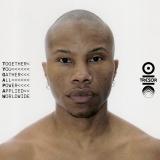
TYGAPAW - Together You Gather All Power Applied Worldwide LP 2x12"

May 2026 marks the arrival of TYGAPAW (aka Dion McKenzie)’s first full-length album on Tresor Records, entitled Together You Gather All Power Applied Worldwide. An acronym of its creator’s name, TYGAPAW’s third studio album is a deeply personal collection of music building worlds where Black queer and trans siblings can thrive, while unifying dancefloors worldwide. A proposition that collective wisdom liberates us from the matrix of domination we live within. The album unfolds as the latest chapter in TYGAPAW’s ongoing techno opera opus, continuing to center the voices of Black women, which surface as layered incantations rather than lyrics - powerful, haunting, sensual, activating.
With the process of creating the album starting in 2023, as TYGAPAW (Dion McKenzie) was in the first year of their transition, the music reflects the intensity of that period, where they were experiencing deplatforming as a response to the shift in their physical appearance: Tracks like ‘M32 Riddim’ and ‘Helicopter hovers over my Crown Heights Apartment’ feature high-paced rhythms intersecting with intense siren-like synths to form demanding compositions echoing a heightened sense of alert. Yet throughout the album, relief comes in the form of TYGAPAW’s vocal features, co-conspirators, and chosen family, whose voices are treated with reverb and echo, a sonic fingerprint that leads back to the pioneers in the legendary studios of TYGAPAW’s native land, Jamaica, an important reminder that the past will always inform the future. It is an album for dancers first and foremost, where joy, defiance, and integration with the natural body coexist, and every drop feels less like a climax than a transformation. Expect a bass that permeates your soul and melodic synthesized sequenced phrases echoing the dancehall eras of TYGAPAW’s youth, reshaped into hypnotic melodies that glow over industrial kicks designed to command attention, reasserting Jamaica's pioneering yet often overlooked contribution to electronic music.
In the opening track, ‘Can I Live’, Precious Okoyomon’s words feel like the beginning of a ritual; setting the intentions for the rest of the proceedings. As McKenzie puts it, their “work is about regeneration, resetting, getting integrated into nature, and about rebirth. That’s the tone I wanted to set at the outset of the album.” Ms Carrie Stacks continues this thread of support in ‘Don’t Panic’ with heavily processed vocals on top of a beat that takes inspiration from another important ingredient in the antidote to the oppression of isolation: Ballroom culture. “ I feel like I found my queerness in Ballroom, that’s why this track is very important to me.”
Echoes of NYC Black queer nightlife scene also permeate in the energetic drums of ‘Exorcise the Language of Domination’, in which Julianna Huxtable’s spoken performance complements the various movements and tones of the music. “My producer brain thought this was the one that Juliana’s vocals would be best suited for. I hinted: ‘what do you think of this one?’ She just went into her notes and picked some passages to go with the first section of the track. From there, it was a year-long process of development. It required time and space for this thing to evolve, but I think it’s one of the most powerful tracks on the album.” London’s SUUTOO contributes the album’s only musical collaboration on ‘B2B’, a track that emerged from sessions in McKenzie’s New York studio where the real objective was to connect and have fun; a time out from the demands of life outside.
The album closes out with a double hit of emotion in the form of ‘Effects of Resistance and Black Trans Masculine Experience’. The former features South African scholar Khanyisile Mbongwa drawing connections that exist between Africa and the Black diaspora, whilst looking to the future and calling for a shared sense of community.
The latter piece, an instrumental version of the piece which featured on the IMMIGRANT E.P. of 2025 is a gentle and deeply affecting end to the record, a place of peace and acceptance. This end-of-cycle tone is mirrored in the sleeve photography, which also ties back to IMMIGRANT by finally revealing what was hidden: a portrait of the artist fully self-actualized; a step towards true inner liberation. TYGAPAW is sonically defiant across this album; bass frequencies feel tactile — less heard than inhabited — infectious lead synth melodies remain with you long after the track ends. An overall sound that leaves asserting an urgent need for connection. From Detroit to New York to Berlin to Jamaica, despite geographic distance, this album reminds us that we remain in solidarity, recognising that meaningful world-building requires collective input and action, both personal and communal, if we are to move toward liberation.

В наличии на складе

Есть у нас в наличии и готов к отправке

25,17
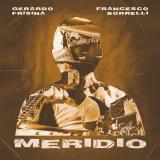
Gerardo Frisina, Francesco Borelli - Meridio 7"

a collaboration forged over the years with Francesco Borrelli, a sound engineer, musician and performer who has shaped Gerardo’s recordings for the last ten years and more. It embodies the natural evolution and fulfillment of a shared journey, a dedicated pursuit of sound and vision, and a creative dialogue where concept and execution become one.


“Meridio” primarily defines the project’s geographical roots: Francesco, from Naples, and Gerardo, with ties to southern Calabria, carry a Mediterranean sensibility that emerges organically, not as a mere reference but as an attitude: a sense of fluid rhythm, a constant tension between order and improvisation, between elegance and instinct. The titles of the two tracks included on this 7-inch single – ‘Partenope’ and ‘Ligea’, muses and symbols of the Mediterranean Sea – draw on mythological imagery and further reinforce the connection to a profound cultural dimension.


The result is a dense yet layered sound that openly embraces the funk and progressive aesthetics of the 70s and 80s, reprocessing them in a contemporary spirit; a language effortlessly moving between arrangement and production, between timbral exploration and rhythmic immediacy.

Сделать предзаказ15.05.2026

он должен быть опубликован на 15.05.2026

10,04
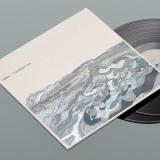
Calibre - Tricklemore Sea (2x12")

Calibre

Tricklemore Sea (2x12")

2x12inchSIGLP022
Signature
04.05.2026

Calibre announces his new album 'Tricklemore Sea', set for release on vinyl and digital on 1st May via Signature Recordings.

A deeply personal and exploratory body of work, the album moves through ambient, shoegaze, electronic, blues and folk, all subtly shaped by the low-end sensibility that has defined his music for decades. It resists easy categorisation, reflecting an ongoing interest in blending bass culture with forms that sit outside it. Following the release of 'They Want You' at the end of 2025, this new project marks a clear shift in tone. Where that record leans into intensity and forward momentum, 'Tricklemore Sea' turns inward, occupying a more introspective space. Featuring entirely his own vocals and production, it carries a more exposed and vulnerable quality.

The album has taken shape gradually, drawing from material written in the years after 'Planet Hearth'. Rather than forming around a fixed concept, it emerges as a collection of pieces connected by tone and instinct. Tracks move between simplicity and abstraction, with piano-led compositions sitting alongside field recordings, improvisations and bass-driven works. Ideas often begin quickly, then evolve over long periods of revisiting and reworking. His voice takes on a more central role throughout, bringing a heightened sense of vulnerability. Lyrics and delivery are often left open, allowing space for interpretation. His process remains fluid and instinctive, with ideas written quickly, revisited over time and combined across different periods.

Moments such as 'Little Blend' carry a quiet melancholia balanced with hope, while 'Free One' reflects on the pressures of contemporary life. The title track considers the scale of human existence within a wider universe, framing individual lives as small but meaningful within something larger. Elsewhere, 'Deflower' and 'Pigeon Luncheon' draw from recordings made in Berlin at the end of lockdown, capturing a sense of movement and return. Older material, including 'Living In Your Head' and 'Hyndsight', is recontextualised and sits naturally alongside newer work. Threads from his wider catalogue remain present. 'Able Son Dub' nods to longstanding reggae influences, while 'Bit Broken Stream' appears here in a downtempo form alongside its drum and bass counterpart from 'They Want You'. Tracks like 'United Pull' and 'Mizzle Mine' lean further into abstraction, using minimal language and space to suggest mood rather than define it.

Over more than 30 years, Calibre has built a catalogue that moves across drum and bass, ambient, dub, techno, house, jazz, soul, blues and folk. His work is marked by restraint, quiet melancholy and a singular approach that continues to evolve. Complete authorship remains central, with all vocals, lyrics and production on both 'They Want You' and 'Tricklemore Sea' created solely by him. This breadth extends into his DJ sets, where he draws heavily from his own catalogue, often performing entirely self-produced material across a wide range of tempos and styles. His ability to move between contexts has seen him play at Boomtown, Houghton and Atonal Berlin, delivering distinct sets while maintaining a clear identity.

With 'Tricklemore Sea', that identity leans toward stillness, introspection and emotional depth. It is a record that prioritises feeling over definition, holding space for ambiguity while remaining grounded in a strong sense of authorship. Each release carries an element of exposure, a moment of vulnerability in letting the work go. At its core, the album seeks to capture something fleeting but recognisable, a sense of beauty that sits just beyond language.

He describes it simply: "The river inside of me flowing into the sea."

В наличии на складе

Есть у нас в наличии и готов к отправке

27,31
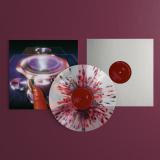
Gena - The Pleasure Is Yours LP

There is a kinetic energy that binds drummer and producer Karriem Riggins and singer-songwriter, rapper, and producer Liv.e, the spark that happens when instinct meets flow and spirit finds rhythm.

Their collaborative debut as GENA (short for “God Energy, Naturally Amazing,” and loosely inspired by Gina from Martin), The Pleasure Is Yours feels like a playful, soulful conversation between two kindred improvisers: Liv.e’s smoky, unpolished vocals glide through Riggins’ warm, percussive universe. Rooted in jazz, soul, and hip-hop, Liv.e brings a raw, experimental approach to R&B, while Riggins known for his work with Common, Erykah Badu, The Roots, Madlib, and his close kinship with J Dilla, extends his lifelong dialogue between jazz improvisation and beat science.

Together they create a world that’s analog and ethereal, percussive and poetic, bridging eras without settling in one, the sound of two artists finding a new shared language rooted in rhythm, vulnerability, and exuberance.

Pressed on 180g vinyl, the album comes in an embossed sleeve and is avaible in red and black splatter.

Сделать предзаказ18.05.2026

он должен быть опубликован на 18.05.2026

28,15
Gena - The Pleasure Is Yours (Tape)

There is a kinetic energy that binds drummer and producer Karriem Riggins and singer-songwriter, rapper, and producer Liv.e, the spark that happens when instinct meets flow and spirit finds rhythm.

Their collaborative debut as GENA (short for “God Energy, Naturally Amazing,” and loosely inspired by Gina from Martin), The Pleasure Is Yours feels like a playful, soulful conversation between two kindred improvisers: Liv.e’s smoky, unpolished vocals glide through Riggins’ warm, percussive universe. Rooted in jazz, soul, and hip-hop, Liv.e brings a raw, experimental approach to R&B, while Riggins known for his work with Common, Erykah Badu, The Roots, Madlib, and his close kinship with J Dilla, extends his lifelong dialogue between jazz improvisation and beat science.

Together they create a world that’s analog and ethereal, percussive and poetic, bridging eras without settling in one, the sound of two artists finding a new shared language rooted in rhythm, vulnerability, and exuberance.

Pressed on 180g vinyl, the album comes in an embossed sleeve and is avaible in red and black splatter.

Сделать предзаказ18.05.2026

он должен быть опубликован на 18.05.2026

16,18
Andy Martin - TECH039

Andy Martin

TECH039

12inchTECH039
TECHNO Records
01.05.2026

Barely six months after the debut, the paths of the label and the artist converge once more — at their intersection, TECH039 emerges. This work significantly expands the musical language of Andy Martin: evolution is audible within every single recording. Tonally, rhythmically, and accent-wise, the release becomes a deep exploration of how personal experience transforms artistic signature, turning it into a new legacy for the local and global scene.

We see the author in a moment of artistic self-determination, on his path to international recognition. This is the sound of a master who cares about context, yet fundamentally refuses to meet outside expectations. At the core of TECH039 lies the concept of techno-futurism — sound projected forward, yet anchored in the fundamental laws of nature.

On the record: a transit from atmospheric harmonies and complex percussive structures to near-ambient variations, followed by gripping, mind-piercing sounds set against a functional bassline. This is a story of five distinct states, conceptually unified by a shared relation to the outer world, rather than the rigid boundaries of style.

- Mechanical Vals — fully positions the spirit of the record, referencing the incomparable signature of Andy Martin.
- The Paths of Rhythm — creates a rhythmic hypnotic structure, inviting DJs to uncover additional layers.
- Toltequidad – serves as a reminder that even the darkest night has its limits, and lighter hours inevitably arrive.

The integrity of the statement is completed by two interpretations:
- Vardae Reinterpretation — a reinterpretation deepening the original's hypnotic component.- Feral Reshape — a structural transformation emphasizing natural, organic power.

A substantial record for the collector’s archive and home listening, as well as a functional tool for the club night.

В наличии на складе

Есть у нас в наличии и готов к отправке

13,24
abentis - Dim Grow LP

abentis

Dim Grow LP

12inch2PPLP001
2++
22.05.2026

From Wisdom Teeth’s recent compilation nagoyaka na kaze / 和やかな風 (quiet wind)—which cast a spotlight on the Japanese city of Nagoya—emerges “2++”, a new label launched by abentis, who curated the compilation alongside Facta and K-LONE as a central figure in the scene. Conceived as a series introducing facets of Nagoya’s underground electronic music to the world on vinyl, its inaugural release is abentis’ debut album, Dim Grow.

Across the album, intricately designed electronic mallet sounds—created using Ableton Live’s physical-modeling synthesizer—take center stage. Fresh and percussive like marimba or kalimba, yet simultaneously carrying an otherworldly, unreal quality, these tones form the core of the record’s sonic identity. In moments of near-silence, a crystalline resonance poised between glass and metal shimmers with subtle shifts in temperature, giving the album its distinctive texture.

While resonating with the sonic sensibilities of fellow Wisdom Teeth affiliates such as K-LONE, Tristan Arp, and Salamanda, abentis’ uniquely strange palette can be traced back to one of his strongest influences: Haruomi Hosono. In particular, Hosono’s mid-’70s tropical-infused solo albums — Tropical Dandy (1975), Bon Voyage Co. (1976), and Paraiso (1978) — serve as a key reference point. Symbolically reflected in Hosono’s marimba and vocal performance at a 1976 live show in Yokohama Chinatown, the marimba functioned as a central instrument for constructing imagined exotic landscapes inspired by Martin Denny and Hawaiian music.

For abentis—who worked at a local jazz bar before becoming active as a hip-hop beatmaker—the language of “tension chords,” a harmonic vocabulary rooted in jazz and R&B that hovers ambiguously between brightness and darkness, forms a consistent grammar throughout Dim Grow.

Behind the album’s core theme of “mallets + tension chords” lies a broad musical lineage: the harmonic sensibility of Claude Debussy, who anticipated the tensions of jazz; the proto-minimalist spirit of Erik Satie; the marimba-centered structures of Steve Reich; their continuation in Japan through Mkwaju Ensemble (with Midori Takada and production by Joe Hisaishi); and the subsequent branches into post-rock, electronica, and ambient music.

Growing up in Nagoya—an industrial city where creative independence is deeply valued—and being rooted in punk and hip-hop counterculture scenes naturally fostered abentis’ affinity with these predecessors. His practice between genres, combined with an encounter with the highly cross-pollinated musical perspective cultivated around Wisdom Teeth, provided the framework through which his own musical language crystallized. Dim Grow stands as the natural culmination of that journey.

Сделать предзаказ22.05.2026

он должен быть опубликован на 22.05.2026

26,47
Hannah Peel & Beibei Wang - The Endless Dance LP
  • 1: Wild Geese Arrive
  • 2: Awaken The Insects
  • 3: Mantis Vs Horse
  • 4: Grain Rain
  • 5: Tiger Sex
  • 6: Feed The Fireflies
  • 7: Offerings To The Beast
  • 8: Limit Of Heat
  • 9: Thunder Begins To Soften

'The Endless Dance' is the first collaborative album from Northern Irish producer and composer Hannah Peel and Chinese percussionist Beibei Wang. The record is grounded in the strength of ancient concepts, but comes alive with the joy and freedom of play as together, Peel and Wang travel through the 24 solar terms of the Chinese calendar with a cornucopia of sound in tow – synths and prepared piano alongside traditional and unconventional percussion.

The album is collaged together from recordings made over five days at legendary rural studio Real World, a setting which aligned with the duo’s inspiration from the natural world creating a permanent record of their shared musical landscape, informed by the flora and fauna that emerge and retreat through the seasons.

Both genre-defying, storied artists in their own right, Peel and Wang met while working on Manchester Collective’s 2023 album NEON and 'The Endless Dance' certainly represents a step-change from the duo’s shared classical backgrounds – but their knowledge and training is also the foundation of its freewheeling audacity, giving them the confidence to trust their instincts.

The album is produced by Mike Lindsay LUMP, Tunng, Guy Garvey, Jon Hopkins who, with free rein, brings added energy and creativity to the album, whilst Peel & Wang are also joined by Hyelim Kim on Daegeum, a Korean flute with “colourful overtones on every note”.

Track to track, 'The Endless Dance' is unpredictable and unexpected, which is in part due to the genuine curiosity and outside perspectives that each player brought to the sessions. “I am so familiar with Chinese heritage, but I don't see how it can present in electronics, for instance,” says Wang. “Hannah comes in with that direction, to imagine what the sounds could be together.” The characterful richness of the album stems from the commonalities they found in the sessions. “We both come from cultures where story is really important,” explains Peel. “The attention to detail comes from telling a story, and one note can set that off in a different direction.”

'The Endless Dance' is a major work from two accomplished, singular artists - but it’s also the sound of mutual curiosity and shared fun, or as Wang puts it: “Two women talking in totally different language that had a wonderful chat.”

Сделать предзаказ22.05.2026

он должен быть опубликован на 22.05.2026

25,63
Nitai Hershkovits & Daniel Dor - Found & Found LP

Nitai Hershkovits and Daniel Dor return with Found & Found, their second collaborative album and a natural continuation of the musical dialogue initiated with The Garden Suite.

Born out of pure curiosity - "there was more to say, more to explore," explains Dor - the album expands the duo's sonic language beyond the synth-only framework of their previous work. While the Moog remains central, Found & Found introduces clarinet and acoustic guitar, gently dissolving the boundaries between electronic and acoustic sound.

Each composition unfolds through interlocking, mantra-like patterns. Repetition becomes a space for transformation: melodies circle, textures shift, and subtle harmonic movements invite the listener inward. The music is structured with care, yet it feels open and fluid. intimate, spacious and quietly immersive. If their previous record explored orchestral depth through synthesizers, this new chapter embraces air and clarity. Acoustic gestures emerge within electronic landscapes, creating a sound world that is both grounded and weightless.

Nitai Hershkovits brings with his fellow partner Daniel Dor a refined harmonic sensitivity shaped by both jazz and classical traditions. Together they continue to refine a shared language that moves between structure and freedom, precision and emotion.

В наличии на складе

Есть у нас в наличии и готов к отправке

21,81
808 State vs. Humanoid - In Place Of Language

808 State vs. Humanoid

In Place Of Language

12inchASGDE056
De:Tuned
10.04.2026
 
4
также имеющийся в продаже

Orange marbled vinyl[11,72 €]


British electronic music pioneers Graham Massey (founding member of Manchester legends 808 State) and Brian Dougans (the mind behind acid house milestone Humanoid and one half of The Future Sound Of London) join forces for their debut collaboration In Place Of Language, released on Belgian label De:tuned.

Both 808 State and Humanoid helped shape the UK's early rave and acid house movement. Here, Massey and Dougans channel that legacy into a beautifully balanced four-track EP that radiates warmth and energy, drawing on more than three decades of experience in electronic music. Inspired by key elements of the '89-91 era while embracing a contemporary edge, the duo merge their distinct sonic identities into a sound that feels both timeless and forward-looking.

In Place Of Language is not a nostalgia trip, but a natural evolution: a meeting point between foundation and future, and a blueprint for a new wave of electronic experimentation!

Kevin Foakes (Openmind, DJ Food, Ninja Tune) created all the graphic work. Mastered by Matt Colton at Metropolis. A separate digital release will also be available at the usual digital shops. Stay tuned!

В наличии на складе

Есть у нас в наличии и готов к отправке

10,88
Quinteplus - Quinteplus

Quinteplus

Quinteplus

12inchVAMPI349
Vampisoul
10.04.2026

This first-time reissue of Quinteplus’ 1971 album revives a key moment in Argentine jazz, featuring crisp trumpet and tenor sax, electric piano-driven funk and modal grooves, and a tight, spacious rhythm section. It showcases prominent figures like Jorge Anders and “Pocho” Lapouble.

==================================

Quinteplus was born in Buenos Aires at the end of the 1960s, emerging directly from the ideas and experiments of the legendary Agrupación Nuevo Jazz. Founded in the early ’60s, this collective brought together some of the most forward thinking figures in Argentine jazz functioned as a creative lab where musicians questioned where jazz could go next. Among the key ideas discussed was the fusion of jazz with Argentine folk styles such as zamba, chacarera, malambo, cueca, and candombe, as well as a deeper look into African rhythms as a bridge between musical worlds.

Two members of that collective, keyboardist Santiago Giacobbe and bassist Jorge “Negro” González, carried those ideas forward when they formed Quinteplus in 1969. The group came together naturally: all the musicians already knew each other and had played in different projects around the Buenos Aires scene. They shared a strong admiration for Julian “Cannonball” Adderley’s quintet, along with a clear goal—to develop a modern jazz language grounded in local Argentine rhythms.

From the start, Quinteplus stood out for its openness and adventurous spirit. Rhythm was central, and so was experimentation. The band belonged to a generation of Argentine jazz musicians eager to explore electric instruments and new textures, anticipating what would soon be known as jazz-rock. This was happening in Buenos Aires at the very same time Miles Davis was opening new doors with “In a Silent Way” and “Bitches Brew”. Giacobbe introduced one of the first Fender electric pianos in Argentina, while González pioneered the amplification of the upright bass and even developed a hybrid electric, boxless version of the instrument. Trumpeter Gustavo Bergalli, meanwhile, maintained close ties with the emerging Argentine rock scene, collaborating with Luis Alberto Spinetta and appearing on Almendra’s first album.

In 1971, Quinteplus recorded its first and only studio album for EMI. The original lineup featured Jorge Anders on tenor saxophone, Bergalli on trumpet, Giacobbe on keyboards, González on upright and electric bass, and Norberto “Pocho” Lapouble on drums and percussion—who also illustrated the album’s iconic sleeve. The record is a refined showcase of the band’s musical vision: original compositions, fluent jazz language, folk-derived rhythms, funky electric textures, tight ensemble playing, and standout brass solos. Though critically praised, the album received little label support and sold modestly, eventually becoming a sought-after collector’s item.

Quinteplus disbanded in 1973, their music was perhaps too bold and unconventional for its time.

В наличии на складе

Есть у нас в наличии и готов к отправке

23,11
Rone - Megaptera

Rone

Megaptera

12inchIF1101LP
InFiné
12.06.2026
  • A1: Al Lark
  • A2: Premier Contact
  • A3: Verba Aliena
  • A4: Breach
  • A5: La Baleine Et Le Musicien
  • A6: Speaker
  • A7: Caudale
  • A8: Cap Lahoussaye
  • B1: Insomnia
  • B2: Zodiac
  • B3: Lingua
  • B4: Breathe In Feat. Yael Naim
  • B5: Megaptera Novaeangliae
  • B6: Panimal
  • B7: Try Again

MEGAPTERA, the scientific name of the humpback whale, is also the title of the new album by French producer and composer Rone.


Born from an ambitious film project, the record was largely composed at sea, off the coasts of Brittany and Réunion Island, using a modular synthesizer and melodic sketches developed for an almost unreal proposition: attempting to resonate with whales through music.


Following Room With a View—a soundtrack to a performance created with the alternative dance company La Horde, exploring collapse and rebirth—Rone continues his investigation into new imaginaries. If that earlier work emerged from reflections on ecological, social, and technological tipping points, MEGAPTERA marks a shift: away from the city, toward the sea.


Gradually, he moved away from performance toward a more craft-based approach, extending his practice beyond the studio into a wider space of listening, exchange, and fieldwork. Early footage of sailors broadcasting his work into open water—seemingly answered by whale presence—circulated online, generating fascination, but also a growing unease for the artist regarding what these projections might imply.


This tension became the starting point for a longer period of field experimentation, developed in dialogue with scientists, environmentalists, sailors, and bioacousticians. The resulting 15-track album reflects this open-ended inquiry — not only into whether human-made sound can reach whales, but also into how this process can shape a new form of electronic music, and open it towards new deep-sea soundscapes.


Rather than seeking imitation, Rone works with reduction. Drawing on research into cetacean vocalisation, he pares back his language—focusing on frequency bands, repetition, and suspended structures. Minimalism appears less as reference than as natural convergence.

Сделать предзаказ12.06.2026

он должен быть опубликован на 12.06.2026

24,58
Katia Curie, Nizar Sarakbi, Reduks - Dangerous Secret EP

Secrets are dangerous things.

perlaplastica, the new label from Katia Curie and Nizar Sarakbi, steps out of the shadows with its inaugural EP, Dangerous Secrets. Alongside co-conspirator Tom Altthaler aka Reduks, the trio sketch a stripped-back, dub-infused approach across four tracks laced with subtle samples from Twin Peaks.

The A-side leans into rolling, hypnotic tech-house, while the flip moves through an elegant remix before closing on a driving, break-led finish.

All tracks are mastered by Marco Pellegrini (Analog Cut Mastering). The visual world is shaped by Nikolaus Prinz. Limited to 250 copies, vinyl only.

What began as a natural collaboration now surfaces as something more deliberate. A first glimpse into a shared language

Сделать предзаказ19.06.2026

он должен быть опубликован на 19.06.2026

14,08
M’BAMINA - AFRICAN ROLL

Gatefold Sleeve

M’Bamina – African Roll (1975)
The story of an album born between Africa, Italy, and the nightclub culture of the 1970s
In the heart of 1970s Italy — a country undergoing profound social change and a music scene just beginning to open itself to distant sounds and cultures — an extraordinary, almost improbable story took shape. It is the story of a group of young African musicians who found their way to Europe, of a Turin nightclub that became a crossroads for communities and experimenters, and of an album which, released in small numbers and largely unnoticed at the time, is now considered a rare jewel of Afro-fusion.
The band called themselves M’Bamina — an ensemble of musicians from Congo, Cameroon, and Benin, who arrived in Italy in the early Seventies. Settling between northern Italy and the Pavia area, they began performing in small clubs and community events, bringing with them a vibrant rhythmic heritage: African polyrhythms, call-and-response vocals, funk-infused bass lines, and Caribbean or Afro-Latin colours absorbed along their musical journeys. Their raw, contagious energy on stage quickly drew attention.
Meanwhile, in Turin, another story was unfolding. There was a venue becoming almost legendary: Voom Voom, one of the city’s liveliest nightclubs, run by Ivo Lunardi. The club attracted an eclectic crowd — students, artists, foreigners, night owls — and Lunardi quickly understood that the dancefloor wasn’t just a place for music, but a melting pot for a new kind of cultural energy. Out of this vibrant atmosphere came his idea: to turn the club’s name into a small independent record label, Voom Voom Music, capable of capturing the spirit of those years and giving voice to unconventional projects.

When Lunardi heard M’Bamina, he immediately sensed that this was the sound he had been searching for: fresh, different from anything circulating in Italy at the time, and capable of blending African tradition with funk and European sensibility. He brought them into the studio.
Production was handled by Lunardi along with Christian Carbaza Michel, while the engineering was entrusted to Danilo Pennone, a young sound technician with a sharp, intuitive ear.
The recording sessions — held in Turin in 1975 — produced a remarkably warm and direct sound. The music feels almost live: grooves rooted in African tradition, but open to funk-rock structures and modern arrangements. It is a natural fusion, never forced. Tracks move between tribal rhythms, funk basslines, light electric guitars, congas and Afro-Latin percussion, with call-and-response vocals and melodies that echo both Congolese tradition and the lineage of Latin jazz. Not by chance, one of the album’s most striking tracks, Watchiwara, reinterprets a Latin standard through M’Bamina’s own rhythmic language.

The album was titled African Roll — a name that was already a statement of intention. It is African music that “rolls,” that moves, adapts, transforms within a new geographic and cultural setting. It is not strictly Afrobeat, nor Congolese rumba, nor Western funk: it is a spontaneous, hybrid blend, shaped more by lived experience than by any calculated aesthetic program.
When African Roll was released, the world around it barely noticed. Distribution was limited, and 1970s Italy had yet to develop a cultural framework for receiving such music. The national music press rarely paid attention to African or “world” productions. The album slipped into silence — though the band’s own story did not.

M’Bamina continued performing across Europe and Africa, even sharing a stage in Cameroon with none other than Manu Dibango. By the late Seventies, they moved to Paris, signed with Fiesta/Decca, and recorded a second LP, Experimental (1978). Meanwhile, the peculiar record they had made in Turin began to resurface quietly among vinyl collectors, Afro-funk enthusiasts, and DJs hunting for forgotten grooves.
That is when the album’s fate began to shift.

Over the decades, African Roll emerged as an almost unique document: a snapshot of an intercultural Italy before the word “intercultural” even existed, a fragment of migrant history, a spontaneous experiment in musical fusion born far from major industry circuits but rich in authenticity. Original copies began commanding high prices on the collector’s market, and the album became recognized as one of the hidden classics of European Afro-fusion from the 1970s.
Today, more than fifty years later, this reissue finally restores visibility and dignity to a project that deserves to be heard, studied, and celebrated. It is not simply an album: it is the testimony of a rare cultural encounter, born in an Italy unaware of how fertile such exchanges would one day become.

It is the story of a visionary producer, an extraordinary band, and a fleeting moment in which music, migration, and nightlife came together to create something genuinely new.
African Roll is — now more than ever — the sound of a bridge: between continents, between eras, between cultures. A record that, after rolling far and wide, has finally come home.

В наличии на складе

Есть у нас в наличии и готов к отправке

23,49
Sven Väth x Wolfgang Haffner - Fusion

Wolfgang Haffner is one of Europe's most respected jazz drummers, known for his impeccable sense of timing, groove, and atmosphere. Though rooted in jazz, his musical language transcends genre boundaries, guided by pulse and subtle nuance rather than tradition alone. For Cocoon Recordings, he now enters an entirely new dialogue, offering warm, organic reinterpretations that honor the spirit of the source material while opening a fresh sonic horizon. The result is a meeting of two artistic worlds where Sven Väth's timeless energy and Haffner's refined touch flow naturally into a new musical form, an encounter between two artistic universes, merging into something both unexpected and deeply musical.

Fusion is a groove driven piece built around a clear, flowing melody, allowing Haffner to reinterpret it acoustically through a jazz lens. Its straight, driving pulse lets him explore the track's rhythmic and melodic interplay with clarity and nuance.

L'Esperanza, originally a dreamy, trance like track, envelops listeners in strings, filtered downbeats, and a playful synth melody, a perfect canvas for Haffner's warm, organic touch. Its ethereal layers and subtle tension allow him to explore the track's emotional depth while preserving its entrancing charm.

Barbarella, emblematic of Sven Väth's early 90s vision, carries the energy and innovation of a club classic. Haffner's reinterpretation transforms it into a rich, acoustic exploration that honors its hypnotic essence. By emphasizing the track's iconic motifs and underlying drive, and by drawing out the track's essential elements, he bridges its electronic origins with a new, organic perspective.

Together, these three reinterpretations form a cohesive journey that celebrates the timeless essence of Sven Väth's music while revealing a new dimension through Haffner's masterful touch, a release that invites listeners to experience familiar classics in a completely new light.

В наличии на складе

Есть у нас в наличии и готов к отправке

13,24
TURN ON THE SUNLIGHT - ISEO

Turn On The Sunlight is the long-running project of Texas-born, Maui-based musician and producer Jesse Peterson.

Originally formed in New York in the late 2000s, Turn On The Sunlight has evolved into a fluid, location-spanning practice rooted in collaboration, intuition and process. Now based on Maui, Peterson’s work draws together a wide network of musicians and environments, with recordings taking shape across Los Angeles, Tokyo, London, San Miguel de Allende and Haʻikū.

Loosely situated within a framework of organic, ambient-leaning jazz, 'Iseo' unfolds as a series of open, exploratory pieces, with electronics sitting subtly beneath acoustic and environmental elements. Built from layered instrumentation including synthesizers, guitar, zither, flutes, voice and field recordings, Peterson moves between grounded, tactile detail and more expansive, immersive states. A sense of warmth and permeability runs throughout: organic percussion, environmental textures and drifting rhythmic elements lend the record a gently saturated humidity, reflecting Peterson’s base in Hawaii, where the presence of nature is felt as much as it is heard.

Underlying the project is a way of working rooted in gathering, listening and tending. Instruments, ensemble sessions, field recordings and everyday environments are approached with attentiveness, shaped through collecting, refining and allowing things to settle. Relationships, landscape and lived experience shape the sound, giving 'Iseo' a tactile, almost hand-made quality.

Rather than fixed arrangements, the album feels as if it has been organically and lovingly assembled through a process of listening and response, each element finding its place within a wider, evolving whole. This approach reaches a natural centre point in the 15-minute piece 'Medianoche En La Calle Aurora', which unfolds patiently, bending through shifting environments as motifs and textures emerge and dissolve with quiet continuity.

Peterson’s role as both instigator and facilitator is central to the project. Bringing together a diverse group of collaborators including Carlos Niño, Mia Doi Todd, Laraaji, Ko Ishikawa, Luis Pérez Ixoneztli and Miles Spilsbury, he creates space for individual voices to emerge within a shared language. The result is a music defined by openness and generosity.

'Iseo' takes its title from Peterson’s son’s middle name, a word that can be understood to mean ‘one-world life’. The piece itself takes the form of a gentle lullaby, its melody loosely shaped around the syllables of his name and sung to Peterson’s son by Luis Pérez Ixoneztli, a close collaborator whose presence across the record reflects a long-standing relationship that extends beyond the music itself.
Sleeve art and design by Michael Willis.

Сделать предзаказ05.07.2026

он должен быть опубликован на 05.07.2026

22,65
Daniele Baldelli & Jolly Mare - Flusso Uno

Daniele Baldelli and Jolly Mare come together for a record that feels less like a collaboration and more like a shared state of mind. Flusso Uno moves through Afro-cosmic kraut-inflected psychedelia and cinematic electronics with a natural, unforced flow, where rhythm, texture and narrative all pull in the same direction.
Rather than referencing the past, the EP treats it as a living language. The longform, ritualistic percussion of early cosmic dance culture meets the hypnotic motorik pulse of krautrock and the more structured, sample-driven tribalism that followed in later decades. What ties it all together is a deep sense of atmosphere and intention: music that feels physical, emotional and quietly transportive.
“We particularly focused on ritual percussions, hypnotic grooves and suspended atmospheres, trying to blend musical anthropology, auteur electronics and narrative instinct.”
Dhol Parade opens the journey like a slow-burning procession, drums circling and expanding as if guiding the listener into another space. With Icari the perspective lifts, melodic lines drifting and tilting, constantly searching for balance between gravity and flight. Huldufolk pulls everything back into a shadowy, nocturnal zone, where textures feel half-real, half-imagined.
Finally, Viaggio Tascabile loses the record in a quietly reflective way, a compact voyage that sums up the EP’s philosophy: small in scale, deep in meaning. Flusso Uno is not about nostalgia or revivalism. It is about taking the spirit of cosmic culture and letting it breathe in the present, where storytelling, dancefloor intuition and sonic exploration still meet. A record made for open ears, open minds and long nights.

В наличии на складе

Есть у нас в наличии и готов к отправке

13,24
Enzo Siragusa - Kilimanjaro Sound EP

DJ Support: BEN UFO, Solomun, Marco Carola, Damian Lazarus, Jamie Jones, Joseph Capriati, Ilaria Alicante, Michael Bibi, Paco Osuna, D'Julz, Groove Armada, Dennis Cruz, Chloe Caillet, Kettama and many more

Enzo Siragusa opens 2026 with his ‘Kilimanjaro Sound’ EP, a release that expands on last year’s standalone single. Marking both Enzo and FUSE’s first drop of the year, the EP delivers the latest instalment in his longstanding Kilimanjaro concept while reaffirming the label’s position at the heart of underground club culture.

Following the digital release of ‘Kilimanjaro Sound’ back in October, the full EP frames the title track within a broader narrative of rhythm, atmosphere, and movement. A long-time fixture in Enzo’s sets throughout 2025, the title track established itself as a fan favourite through its rolling percussion, weighty low-end, and expansive spatial design, and now it takes on renewed presence on vinyl. New cut ‘Liquify’ pushes deeper into Enzo’s rhythmic sensibilities, pairing fluid groove structures with subtle tension and release. Designed for late-night floors, the track unfolds patiently, allowing swing, texture, and space to do the heavy lifting. It’s a natural continuation of the Kilimanjaro language, less about immediacy, more about immersion, showcasing his refined understanding of how momentum is built and sustained in true club environments.

Completing the EP is a remix from Giammarco Orsini, whose Garage Dub Mix of ‘Kilimanjaro Sound’ offers a fresh perspective while remaining true to the original. Born in Italy and now based in Berlin, Orsini has quietly evolved into one of the scene’s most respected selectors and producers, with releases on Cragie Knowes, Mood Waves, and Shonky’s Stoned Pilot. His interpretation strips the track back to its essentials, reintroducing it through a garage-leaning lens that prioritises groove, swing, and subtle pressure.

As the first release following FUSE’s latest DJ Mag Best of British Award, marking their second Best Club Event win, the EP reflects the values that have long defined the brand: community, longevity, and music built for real dancefloors. Pressed to wax, the release extends one of Siragusa’s most recognisable concepts and sets the tone for the year ahead - measured, confident, and rooted in the underground.

В наличии на складе

Есть у нас в наличии и готов к отправке

13,87
SPARKLING ATTITUDE - Club Splendore

Club Splendore was born in 2022 in Modena, Italy, as an itinerant party and club format.

In just a few years, it has established itself as one of the most recognizable disco-oriented projects within the new Italian nightlife scene, exporting its sonic and visual identity to iconic clubs and international settings.

With over 20 dates in a single year, recurring sold-outs and a diverse crowd, Club Splendore has evolved into an experience that goes beyond the dancefloor: an inclusive, label-free space where music, style and attitude coexist under red lights and immersive atmospheres. The format has appeared in some of the most relevant venues across Europe, including Villa Delle Rose (Riccione), Palazzina Grassi (Venice), Matis Club (Bologna), Hierbas Club (Cortina), while also expanding internationally with dates at Do Not Disturb – W Hotel Amsterdam, COYA Mykonos, and House Party London, confirming the project’s ability to connect with an international audience. From the club to the record.

Club Splendore Vol.1 is the project’s first official vinyl release and marks a natural step forward: capturing on physical format the sound that has been defining its dancefloors over the past years. The record explores a contemporary take on Italo Disco, infused with classic disco, funk and modern house elements, delivered with an ironic, sensual and direct approach. A sound that reinterprets the aesthetics of the ’80s without nostalgia, translating them into a current, club-focused language. Behind the production and on the decks: Sparkling Attitude, Nicola Zucchi and Matteo Mussoni, resident DJs of the format and the core musical force behind Club Splendore.

Side A features “Drink Campari”, an italo disco track built around warm, enveloping textures, elastic basslines, bright synths and a late-night groove. A story of summer desire and endless nights, playing with the iconography of Italian Red Passion in a light, effortless way.

Side B hosts “Madame”, a bonus track and electronic ballad with a more intimate, suspended mood. A track designed for the final hours of the night, when the club slows down and the dancefloor gives way to something more personal.

Club Splendore Vol.1 is not a compilation, but a statement of intent. A first chapter that brings the club experience beyond the club itself, staying true to the promise that has defined the project from the very beginning: “We will bring the light into the darkness of the night.

В наличии на складе

Есть у нас в наличии и готов к отправке

18,91
NALBANDIAN THE ETHIOPIAN & EITHER/ORCHESTRA - NALBANDIAN THE ETHIOPIAN (ETHIOPIQUES)

The Éthiopiques series returns! Essential archive recordings from an extremely fruitful period in Ethiopian music.

Before “Swinging Addis” took over the world, there was Moussié Nerses Nalbandian — the Armenian-born composer who shaped modern Ethiopian music. Mentor, arranger, and pioneer, he laid the foundations of Ethio-jazz.

This Éthiopiques volume revives his forgotten legacy, recorded live by Either/ Orchestra First issue ever with new exclusive photos and in depth liner 8-page insert.

“Ethiopian jazzmen are the best musicians that we have seen so far in Africa.
They really are promising handlers of jazz instruments.”

Wilbur De Paris
(1959, after a concert in Addis Ababa)

አዲስ፡ዘመን። *Addis zèmèn* **A new era.**
The time is the mid-1950s and early 1960s, just before "Swinging Addis" bloomed – or rather boomed – onto the scene. Brass instruments are still dominant, but the advent of the electric guitar, and the very first electronic organs, are just around the corner. Rock’n'Roll, R’n’B, Soul and the Twist have not yet barged their way in. Addis Ababa is steeped in the big band atmosphere of the post-war era, with Glenn Miller's *In the* *Mood* as its world-wide theme song, neck and neck with the Latin craze that was in vogue at the same period. Life has become enjoyable once again, with the return of peace after the terrible Italian Fascist invasion of Ethiopia (1935-1941). The redeployment of modern music is part and parcel of the postwar reconstruction. *Addis zèmèn* – a new era – is the watchword of the postwar period, just as it was all across war-torn Europe.
The generation who were the young parents of baby boomers** were the first to enjoy this musical renaissance, before the baby boomers themselves took over and forever super-charged the soundtrack of the final days of imperial reign. Music is Ethiopia's most popular art form, and very often serves as the best barometer for the upsurge of energy that is critical for reconstruction. Whether it be jazz in Saint-Germain-des-Prés or the *zazous* who revolutionised both jazz and French *chanson* after the *Libération*, be it Madrid's post-Franco Movida, or Dada, the Surrealists and *les années folles* that followed World War I, the periods just after mourning and hardship always give rise to brighter and more tuneful tomorrows. Addis Ababa, as the country's capital, and the epicentre of change, was no exception to this vital rule.

**Two generations of Nalbandian musicians**
Nersès Nalbandian belonged to a family of Armenian exiles, who had moved to Ethiopia in the mid-1920s. The uncle Kevork arrived along with the fabled "*Arba Lidjotch*", the** "*40 Kids*", young Armenian orphans and musicians that the Ras Tafari had recruited when he visited Jerusalem in 1924, intending to turn their brass band into the official imperial band. If Kevork Nalbandian was the one who first opened the way of modernism, pushing innovation so far as to invent musical theatre, it was his nephew Nersès who would go on to become, from the 1940s and until his death in 1977, a pivotal figure of modern Ethiopian music and of the heights it. Going all the way back to the 1950s. Nothing less. And it is Nersès who is largely to thank for the brassy colours that so greatly contributed to the international renown of Ethiopian groove. While the younger generations today venture timidly into the genealogy of their country's modern music, often losing their way amidst a distinctly xenophobic historiographical complacency, many survivors of the imperial period are still around to bear witness and pay tribute to the essential role that "Moussié Nersès" played in the rise of Abyssinia's musical modernity.
Given the year of his birth (15 March 1915), no one knows for sure if Nersès Nalbandian was born in Aintab, today Gaziantep (Turkiye/former Ottoman Empire) or on the other side of the border in Alep, Syria... What is certain is that his family, like the entire Armenian community, was amongst the victims of the genocide perpetrated by the Turks. Alep, the place of safety – today in ruins.
Before Nersès then, there was uncle Kevork (1887-1963). For a quarter of a century, he was a whirlwind of activity in music teaching and theatrical innovation. *Guèbrè Mariam le Gondaré* (የጎንደሬ ገብረ ማርያም አጥቶ ማግኘት, 1926 EC=1934) is his most famous creation. This play included "ten Ethiopian songs" — a totally innovative approach. According to his autobiographical notes, preserved by the Nalbandian family, Kevork indicates that he composed some 50 such pieces over the course of his career. This shows just how much he understood, very early on, the critical importance of song as Ethiopia's crowning artistic form. Indeed, for Ethiopian listeners, the most important thing is the lyrics, with all their multifarious mischief, far more than a strong melody, sophisticated arrangements or even an exceptional voice. (This is also why Ethiopians by and large, and beginning with the artists and producers themselves, believed for a long time — and wrongly — that their music could not possibly be exported, and could never win over audiences abroad, who did not speak the country's languages).

Last but not least, one of Kevork's major contributions remains composing Ethiopia's first national anthem – with lyrics by Yoftahé Negussié.
Nersès Nalbandian moved to Ethiopia at the end of the 1930s, at the behest of his ground-breaking uncle. Proficient in many instruments (pretty much everything but the drums), conductor, choir director, composer, arranger, adapter, creator, piano tuner, purveyor of rented pianos,... he was above all an energetic and influential teacher. From 1946 onwards, thanks to Kevork's connexion, Nersès was appointed musical director of the Addis Ababa Municipality Band. In just a few years, Nersès transformed it into the first truly modern ensemble, thanks to the quality of his teaching, his choice of repertoire, and the sophistication of his arrangements. It was this group that would go on to become the orchestra of the Haile Selassie Theatre shortly after its inauguration in 1955, which was a major celebration of the Emperor's jubilee, marking the 25th anniversary of his on-again-off-again reign.

At some point or other in his long career, Nersès Nalbandian had a hand in the creation of just about every institutional band (Municipality Band, Police Orchestra, Imperial Bodyguard Band, Army Band, Yared Music School…), but it was with the Haile Selassie Theatre – today the National Theatre – that his abilities were most on display, up until his death in 1977. To this must be added the development of choral singing in Ethiopia, hitherto unknown, and a sort of secret garden dedicated to the memory of Armenian sacred music, and brought together in two thick, unpublished volumes. Shortly before his death (November 13, 1977), he was appointed to lead the impressive Ethiopian delegation at Festac in Lagos, Nigeria (January-February 1977).

His status as a stateless foreigner regularly excluded him from the most senior positions, in spite of the respect he commanded (and commands to this day) from the musicians of his era. Naturally gifted and largely self-taught, Nerses was tirelessly curious about new musical developments, drawing inspiration from the very first imported records, and especially from listening intensely to the musical programmes broadcast over short-wave radio – BBC *First*. A prolific composer and arranger, he was constantly mindful of formalising and integrating Ethiopian parameters (specific “musical modes”, pentatonic scale, and the dominance of ternary rhythms) into his “modernisation” of the musical culture, rather than trying to over-westernise it. It even seems very probable that *Moussié* Nerses made a decisive contribution to the development of tighter music-teaching methods, in order to revitalise musical education during this period of prodigious cultural ferment. Flying in the face of all the historiographical and musicological evidence, it is taken as sacrosanct dogma that the four musical modes or chords officially recognised today, the *qǝñǝt* or *qiñit* (ቅኝት), are every bit as millennial as Ethiopia itself. It would appear however that some streamlining of these chords actually took place in around 1960. It was only from this time onward that music teaching was structured around these four fundamental musical modes and chords: *Ambassel*, *Bati*, *Tezeta* and *Antchi Hoyé*. A historical and musical “details” that is, apparently, difficult to swallow, especially if that should honour a *foreigner*. Modern Ethiopian music has Nersès to thank for many of its standards and, to this day, it is not unusual for the National Radio to broadcast thunderous oldies that bear unmistakable traces of his outrageously groovy touch.

В наличии на складе

Есть у нас в наличии и готов к отправке

22,06
Diego Infanzon - Discotheque EP

Diego Infanzon

Discotheque EP

exclPARTOUT9.03
Partout
19.12.2025

Uruguayan-based Diego Infanzon makes his debut on Partout with a powerful EP that bridges the energy of classic House and the raw pulse of Techno. Known for his groove-driven productions and hypnotic rhythmic language, Infanzon delivers a collection of tracks built for heavy rotation, blending sharp drum work, deep atmospheres and his unmistakable sense of movement on the dancefloor. Carrying the spirit of openness to genres and freedom in sound, the EP reflects the forward-thinking approach that has defined Infanzon’s rise across labels like Cod3QR, Turbo Recordings and Sous Music, now landing naturally within Partout’s vision.

В наличии на складе

Есть у нас в наличии и готов к отправке

11,35
HU VIBRATIONAL - VIBE RIDE

HU VIBRATIONAL

VIBE RIDE

12inchND015
NEW DAWN
09.12.2025

Vibe Ride is the sixth release of Adam Rudolph's Hu Vibrational project and marks his 60th release as a leader or co-leader. Comes with insert and download code.

“With every record, the goal is to explore new creative territory,” explains Rudolph. Vibe Ride continues a deeper exploration of a trance-like groove and a conceptual framework known as Sonic Mandala. This album marks the most complete realization of that idea, partly due to the group's experience touring beforehand. That time on the road helped to refine ideas and strengthen musical chemistry. The recording process unfolded organically—likely due to the long-standing collaboration within ensembles like Go: Organic Orchestra and Moving Pictures, where the musicians have developed a deep familiarity with the shared musical language.

Sonic Mandala refers to a musical approach distinct from traditional linear structures of theme and development. Found in cultures across the globe, it may represent one of the oldest forms of musical expression—predating written history by tens of thousands of years. Today, it is most vividly preserved in the music of the Ituri Forest peoples (Aka, Baka, Ba Benzele, Mbuti), whose sound traditions revolve in cyclical, orbit-like patterns. Vibe Ride seeks to bring that ancient sense of circularity into a contemporary—and perhaps even futuristic—context.

The ensemble of Vibe Ride—Alexis Marcelo, Jerome Harris, Harris Eisenstadt, Neel Murgai, Tim Kieper, and Tripp Dudley—brings exceptional creativity and skill to the project. While grounded in the sonic languages of today, their performance channels an ancient vibrational lineage, connecting with ancestral sound makers who were attuned to the rhythms of the sun, moon, stars, and seasons. Human beings have always been deeply responsive to natural cycles.

Like a mandala, where the circle reveals itself as a spiral—always returning, but never to the exact same point—the Sonic Mandala musical experience spirals through motion. Refined signal patterns emerge through overtone-rich instrumentation. The groove becomes a threshold, shifting the listener from passive observation into active, even transcendent, participation. With open ears and an open mind, the sound spirals inward—toward a primal center—and outward into the cosmos. When this elevated state is shared among participants, it creates what mystics describe as resonance.

Vibe Ride thrives on the distinctive sonic voices of its players, interwoven with care and nuance into the compositions. Hu Vibrational merges elements of world music, electronica, and improvised jazz into something both funky and spiritual, intense and soothing.

Using signature techniques of organic orchestration, layered arrangement, and electronic processing, the compositions are sculpted from percussion, electronics, and ethereal textures. Rhythmic foundations drawn from diverse traditions serve not as endpoints, but as building blocks. As the saying goes, “Orchestration is the key.” In shaping the sound, the aim was to discover fresh ways of balancing structure and sonic color. As Don Cherry once said: “The swing is in the sound.”

The audiophile LP was carefully recorded, mixed, and mastered by James Dellatacoma—longtime engineer for both Bill Laswell and Rudolph—at Laswell’s Orange Studio.

“This crew artfully blends together to create a seamless tapestry of rhythm… the end results are mesmerizing. Hu Vibrational is all about communing with the groove spirits and creating worlds where earthy rhythms and other-worldly sounds are one.”
— Dan Bilawsky, All Music Guide

“You can be sure that when Adam Rudolph and an ensemble of breathtaking drummers get together mystical and wonderful things will happen.”
— Raul da Gama,

“A stunning effort, enjoyable and grows with repeated listening.”
— Stefan Wood, Freejazzcollective

В наличии на складе

Есть у нас в наличии и готов к отправке

22,90
JAZZ N PALMS - Ses Rodes Remixes (2x12")

Two years after Jazz N Palms served up his sumptuous Ses Rodes album, the Ibiza-based Italian is back with a series of 'Revisades', which means reviews in local language. Each track on this double 12" takes the original instrumentals into fresh realms with new mixes, new drum arrangements and the recovery of old takes not used on the original album.

The Jazz N Palms label and producer is Riccio, an artist who makes lush jazz-fusion, jazz dance, Balearic and downtempo instrumental music. Ses Rodes was inspired by the quiet, organic, slower side of Ibiza. It was written with young, talented local musicians, Riccio met at a jazz night at the famous Pikes hotel, and the record harks back to the island's beautiful natural charms that have been captivating visitors for hundreds of years. ‘They didn't ask me, but I did it anyway,’ he says of these magical new Revisades.

The reworks kick off with a smooth but busy broken beat rework of 'Manana', which is doused in romantic chords. 'Mediodia' becomes a jazz-funk gem, 'Tarde' picks up the pace with silky disco licks and 'Noche' glows warm with dreamy pads and soft focus vibraphone. The gentle grooves of 'Mar' are led by a sexy sax line and intimate interplay between funky bass and jazzy keys, 'Playa' is loved-up, sun-down bliss, 'Bosque' is an irresistible invitation to dance and 'Cielo' is a rich tapestry of horns, keys and percussive patter to soothe the soul.

With its deeper textures and looser grooves, Ses Rodes (Revisades) is a love letter to Ibiza’s slower side and healing spirits.

В наличии на складе

Есть у нас в наличии и готов к отправке

29,37
TROTH - An Unfinished Rose LP

Slowly yet firmly blooming into focus, An Unfinished Rose is the new album from Australian duo Troth.

This is their first since relocating to Hobart, Tasmania and their introduction to Night School Records. With a detailed web of past releases on labels A Colourful Storm, Mammas Mysteriska Jukebox, Knekelhuis and Bowman’s own Altered States Tapes imprint, An Unfinished Rose is the group’s most realised and composed work thus far. While still drawing on the improvisatory and DIY practices that informed Troth’s beginnings, it points to a new incarnation of the duo’s music; an intentional language emerging from the fog of obfuscation and mists of uncertainty.

Over these 9 meditations on change, acceptance, renewal and rebirth, An Unfinished Rose finds Amelia Besseny and Cooper Bowman peeling back some of the roughhewn architecture that defined their earlier releases to reveal a masterful - if auto-didactic - use of space and melody. Composition and improvisation compliment and feed each other throughout, with locked-loop earworms providing the springboard for lines of clarinet or synth melody, and the negative space between chord clusters giving ample room for Besseny’s most confident vocal performances to date. Shaving off a little of the defining dissonance and tape compression of old reveals Troth’s music in radiant daylight, humbly accepting of its place in the world while yearning for better, more sympathetic modes of living. Leaning more heavily on acoustic instrumentation and post-production processes than previously, the result is a transcendent body of work infused with an almost zen-like presence.

Troth’s music exists in the border between forming and becoming, its goal to project a kind of preternatural beauty, leaving interpretation open to the listener. Field recordings, happenstance and improvisation may provide seeds for the duo’s compositions, particularly on Side A, but there is a deft touch of songcraft on show. Loam Loom Leaf Litter opens An Unfinished Rose, directly referencing natural cycles of life, death and regeneration, before the blissed-out drum machine groove of Gold Plum continues a discussion concerning the totality of nature and one’s place in it. Besseny’s vocal, swelling like an ocean churn in duet with itself is adorned with synthesised harp and a revolving synth pattern, conjuring plumes of medieval smoke. Thistle’s rounded, bass-heavy drums, nodding to the vast echo of dub, is a relatively new terrain for Troth. It’s propulsive and thumping, pulsing with a meaning and symbolism consistent with Troth’s past work, referenced overtly in Bessey’s lyrics - “Say it too much and it loses its meaning…”. Similarly, the sprawling modern-classical suite, Tides Reflected In Her Eyes, is intentional in its lyrical themes while traversing new ground, revelling in layers of bowed cello and vocal intonations. Side B’s 4 tracks feel like Troth’s most thoroughly accessible and affecting music to date. Leaning into their own detoured version of Synth Pop, Cocoonist explores downtempoisms via a crunchy low frequency synth, and dream-like, fuzzy trip-hop modalities, not unlike Besseny and Bowman’s other group, Th Blisks. Following on, Myrtle Mystes is an open and searching DIY pop song, forged out of drum machine, bass guitar and cello. (An) Unfinished Rose’s title-track is a clear stand-out, built upon an evocative rhythm sample that appears to change emotional resonance with each undulating repetition. Its cascading waves of affect, interjected with a subtle breeze of synth, bowed instrumentation and soaring, densely-layered vocals.

An Unfinished Rose is enveloping, warm, forgiving. Difficult, yet retaining a unique beauty. Troth’s music aims to celebrate the duo;s shared experiences of being in the world, despite the complexity often surrounding us all. Theirs is a message of hope and perseverance, learning and patience.

В наличии на складе

Есть у нас в наличии и готов к отправке

27,27
Julien Mier - Gradually

Gradually, the latest album by Julien Mier, is a sonic journey that delves into the transitions of life, identity, and the blurred boundaries between art and personal growth. With a trilingual brain, Mier reflects on how language shifts have shaped his sense of self throughout his life and the music that he writes. Gradually is his exploration of shapelessness—an urge to break free from rigid musical genres and get closer to his most fundamental expression. The album is composed of nine tracks, each representing a distinct cultural and linguistic influence, all tied together by the theme of gradual evolution.

The first section, Ciel, Soleil, and Espace (French for Sky, Sun, and Space), draws on Mier’s French heritage, evoking the feeling of childhood memories bathed in a warm, nostalgic glow. This fluid, atmospheric section mirrors the soft, ever-changing air, symbolising a time of pure, untainted intention. It feels like a hazy, sepia-toned dream, as fleeting and elusive as the scent of an old friend. The gentle flow of the music mirrors the flow of wind, effortlessly shifting from one element to the next, a reflection of the innocence and clarity of youth.

The second section, Steen, Zee, and Zand (Dutch for Stone, Sea, and Sand), channels the influence of Mier’s childhood in a small Dutch dune village. These tracks are grounded in the hard-edged textures of electronic dance music, a genre that introduced him to a world of rhythm and movement. With a sonic palette of blues, greys, and more defined shapes, this section captures the solid, enduring forces of nature—earth, water, and stone. It’s a sonic landscape rooted in stability, a foundation from which everything can grow. The tracks build from the fluidity of the first section into more structured, rhythmic territories, mirroring the natural transition from childhood innocence to the discovery of deeper, more grounded musical influences.

The final section, Scrap (a collaborative track with the Japanese producer Daisuke Tanabe), Soil, and Spark, dives into the exploration of the world beyond familiar borders. Mier’s relocation from the Netherlands to Australia in 2016 is reflected in these pieces, which grapple with the contrast and complexity of different cultures and environments. These tracks are tinged with rust-red hues and a sense of eroded beauty, evoking a more fragmented, distorted view of the world. The music here is marked by tension, conflict, and the erosion of once-solid forms—symbolic of the digital and ecological storms that shape our modern existence. The closing piece, Spark, signals a new beginning, a hopeful initiation into the cycle of renewal.

The album artwork for Gradually is a conclusive visual representation of this journey, captured in the final frame of an analog film roll that began in the Netherlands and concluded with an image of the streets of Sydney, Australia—a perfect metaphor for the album’s narrative of gradual transition and discovery.

В наличии на складе

Есть у нас в наличии и готов к отправке

24,16
Stephen Vitiello with Brendan Canty and Hahn Rowe - Second

When you’re running a label, a demo occasionally comes across your desk that makes you reconsider everything you thought your label was all about. For Balmat, such was the case with this stunning album from Stephen Vitiello, Brendan Canty, and Hahn Rowe. It sounds like nothing we’ve released so far—and that very otherness opened up a whole new world of possibilities for us.

Fans of ambient, experimental electronic music, and sound art will be familiar with Vitiello, a New York native, long based in Virginia, who has collaborated with a cross-generational list of greats: Taylor Deupree, Steve Roden, Lawrence English, Tetsu Inoue, Nam June Paik, Ryuichi Sakamoto, Pauline Oliveros, and many more. On labels like 12k, Room40, and Sub Rosa, he has explored a wide range of minimalism, microsound, lowercase, ambient, improv, and other styles. But this album is something different. It may begin in ambient-adjacent territory, but it quickly veers off, and it just keeps zigzagging, taking on elements of krautrock, post-punk, dub, and the groove-heavy interplay of groups like Natural Information Society and 75 Dollar Bill.

This stylistic turn is thanks in large part to Vitiello’s choice of collaborators. “We’re coming from three different schools,” Vitiello says: “sound art, art rock, and punk rock.”

Active since the early 1980s, Rowe—a violinist, guitarist, and producer/engineer—has played with, or manned the boards for, a frankly jaw-dropping list of musicians: Herbie Hancock, Gil Scott-Heron, the Last Poets, Roy Ayers, John Zorn, Glenn Branca, Swans, Live Skull, Brian Eno, David Byrne, Anohni, R.E.M., Yoko Ono, and many more. But he might be most closely associated with Hugo Largo, a one-of-a-kind New York quartet—two basses, vocals, and Rowe’s violin—that in the late 1980s helped lay the groundwork for what would eventually become known as post-rock.

Canty, of course, is the legendary drummer of Fugazi, the visionary DC post-hardcore group, as well as Rites of Spring before them, and, currently, the Messthetics, a Dischord-signed instrumental trio with guitarist Anthony Pirog and Fugazi bassist Joe Lally.

Vitiello’s trio first collaborated on First, a 17-minute piece released on the Longform Editions label in 2023. Second picks up where the freeform drift of First left off, channeling the trio’s exploratory energies into more intentionally structured tracks and—in a real first for Balmat—some almost shockingly muscular grooves. “Sometimes my projects are more conceptually driven,” Vitiello says, “but I think this was more musically geared. I just wanted to open up the references and bring in an incredible drummer, bring in some melodies, and I’m sort of the center.” But his collaborators, he stresses, are “vastly creative in making anything I might suggest better.”

Like its predecessor, Second took shape in phases, shifting between improvisation and collage. Vitiello laid down the skeleton of the music at home, sketching out initial ideas on Rhodes keyboard and acoustic and electric guitar; he then fed the parts through samplers and his modular system, recording 10- or 20-minute jams. Once he had edited them into more structured forms, he hit the studio with Canty, who added not just drums but also bass and piano; finally, Vitiello took the results of those sessions to Rowe, who played violin, viola, electric bass, and 12-string acoustic and bowed electric guitar, and assisted in some of the final structuring and mixdown.

A few more surprises along the way: Reanimator’s Don Godwin, the studio engineer where Vitiello recorded with Canty, contributed what he calls “resonant dustpan”; and none other than Animal Collective’s Geologist, who just happened to be in the studio that day, sits in on hurdy gurdy on “Mrphgtrs1,” the album’s gorgeous, stunningly atmospheric drone closer. “I love these chance encounters,” Vitiello says. “Somebody I admire, a group I admire—that was an unexpected gift.”

An unexpected gift is a great way of describing Second as a whole: three veteran musicians venturing outside their usual zones and finding a new collaborative language together. The results can’t be neatly slotted into any given genre; they belong not to any given category, but to the spirit of conversation itself.

В наличии на складе

Есть у нас в наличии и готов к отправке

25,17
Auntie Flo - Outernational Dance

Auntie Flo finds a natural home for OUTERNATIONAL DANCE on Multi Culti Throughout his long career in music, Brian d’Souza aka Auntie Flo has made a name for himself for his adventurous and open minded approach to music making. Travel and collaboration is key to his work, and over the course of four albums and various singles, he’s showcased music made in Cuba, South Korea, Uganda, Brazil and more, often fusing long standing musical traditions, field recordings and artist collaborations with a modern production techniques. As Auntie Flo, he has bridged not only cultural gaps as a Scottish-Goan in hybrid genres like Afro-disco, Indian Classical and Dub-Techno, but recently crossed over into bioelectrical music, with his Plants Can Dance, Mushroom Music and full-blown ambient psychedelica all housed under his A State Of Flo label and Substack. Outernational Dance helps define this expansive sound with a set of tracks that brings dance culture back to nature, inspired by ‘Esperanto’, a form of universal language created by L. L. Zamenhof in 1887. The notion of music as the universal language has always been at the heart of Auntie Flo’s practise and makes this new EP a perfect fit for the boundary dissolving reverie of the Multi Culti ethos: pointing the way to a better world, borderless, free and in symbiosis with nature.

В наличии на складе

Есть у нас в наличии и готов к отправке

14,08
LUC-HUBERT SEJOR - MIZIK FILAMONIK: SPIRITUAL SOUND

180 G. BLACK VINYL WITH LINER NOTES IN CREOLE, FRENCH, ENGLISH

Originally released in 1979, "Spiritual Sound" lives up to its name, a soaring, triumphant album, six tracks of spirit magic from Guadeloupe.

Telluric, intense, terribly alive, the gwoka drums of Guadeloupe carry the identity of a painful and fervent island. Marked forever by the crime of slavery, Guadeloupe's créolité cherishes the ka drums and their natural environment: the low-pitched boula drum with male goatskin, the high-pitched soloist makè drum with female goatskin, the chacha, ti bwa, triangle, calabash and other percussion instruments that surround them, and the voices - the fiery, proud, timbred, urgent voices of the gwoka.


This album is also a legend for its voices: in his then dazzling youth, singer Lukuber Séjor was one of the first gwoka artists to largely feminize the chorus of répondè, who converse with his text delivered in a straight and powerful voice.

And everything here sets new standards. In 1979, Mizik Filamonik - Spiritual Sound proclaimed a spiritual patriotism of ferocious intensity. The album by Lukuber Séjor - whose spelling alone is a battle - sets out to give Guadeloupe the intangible weapons of self-respect and self-knowledge, through a singular practice of traditional music.

The genesis of gwoka music is less straightforward than one might imagine... The drums performed the servile task of accompanying the work of slaves in the fields and during the “corvées” imposed by the administration, before being freely practiced by the common people after the abolition of 1848. At the heart of the conviviality of the Guadeloupeans furthest from the cities - geographically and socially - the gwoka drums come out for carnival, funeral wakes and neighborhood celebrations, but also during strikes, fits of anger and armed vigils of the riots and revolts that have punctuated the island's history. For generations, governors of the colony and then the prefects of the overseas department of Guadeloupe have been viewing the gwoka as a potential for turbulence and a threat to public order.

But as the Beatlesmania, “chanson engagée” and rock revolutions unfolded in Europe, young people turned to the drums of mizik a vié nèg (“bad negro music”, in Creole), which Guadeloupeans had learned to despise by following the “assimilation” process advocated by the school system and most of the political class. At the end of the sixties, in a Guadeloupe mourning the deadly repression of the May 1967 social movement, they played traditional music, refusing to wrap it up in tourist prettiness and madras folk costumes. Instinctively, they played a rough and contemporary gwoka, led by the incendiary Guy Konkèt. This was the era of decisive 45 rpm records such as Robert Loyson's Kann a la richès, which brought to light the fieriest words of union rallies.

At his home in Sainte-Anne, Lukuber Séjor played with flautist Olivier Vamur and his brother Claude Vamur, who cobbled together a drum kit from tin crockery and became, a few years later, the most influential drummer in Kassav'.

These were the years of the Bumidom program, when young Guadeloupeans were encouraged to emigrate to mainland France. At the age of twenty, Lukuber Séjor embarked on the liner Irpinia, disembarking at Le Havre and taking the train to the Gare Saint-Lazare - the route taken by thousands of young West Indians who went on to study or looked for work, all the while trying to maintain a link with their homeland. In this case, it's at the Antony university residence, where Lukuber played the drum and participated in a thousand gwoka updates and aggiornamentos, while exile reinforced the need for a spiritual link with the native land.

In 1978, Guy Konkèt played at the Salle Wagram, a historic event for West Indian music. After serving as répondè - i.e. backing vocalist - on one of his home-recorded albums, Lukuber joined his live band. Little by little, he became one of the key artists on a circuit parallel to French show business. At a student party in Caen, he met a young woman from Martinique who, at the time, was more motivated by her ambitions as a visual artist than by her vocation as a musician. Her name was Jocelyne Béroard and, a few years before she plunged into the Kassav' adventure and became the greatest West Indian singer of her generation, she designed the cover of Lukuber Séjor's LP.

This ambition was obvious and imposed its will. A more or less regular band was formed, with Roger Raspail, Rudy Mompière and Éric Danquin on ka drums, Claude Vamur on ti bwa, Olivier Vamur and Françoise Lancréot on flutes and Annick Noël on keyboards. Lukuber Séjor is set on wanting to extend the gwoka palette to other instruments, as the jazz-rock revolution opens a thousand new doors. Annick Noël will play a wide range of timbres and textures on electric piano and synthesizer. Another novelty: the répondè are two men and two women, Roger Raspail, Olivier Vamur, Françoise Lancréot and Maryann Mathéus ...

Mizik Filamonik - Spiritual Sound is a self-production in which the singer and leader sank all his savings, allowing him no more than a single day in the studio. The first side is more of a musical manifesto, with the first two tracks, Éritage and Penn é plézi, being instrumentals. The third, Son, forcefully celebrates the need for Guadeloupeans to connect with the gwoka. In fact, Jocelyne Béroard's cover shows a tambouyé in the shadow of a cloudy sky, against which a radiant sun is rising and whose light will soon flood the entire landscape. The silhouette and face of this man strongly evoke the immense Vélo, master of the ka, rejected at the time on the fringes of society.

The second side of the LP is surprising. Formally, three tracks are explicitly linked like the three parts of a triptych. Primyé voyaj evokes the appalling tribulation of Africans deported as slaves to Guadeloupe; dézyèm voyaj speaks of the Bumidom program and the economic, political and social forces driving young Guadeloupeans towards the mirage of prosperity in France; twazyèm voyaj closes the cycle with the emigrants' return from Europe after years away from their island...

This gwoka, obsessed with the need to save Guadeloupe spiritually, appeals far beyond the politicized audience. Mizik Filamonik - Spiritual Sound instantly became a classic, although Lukuber Séjor never really made a career for himself as a musician.

After all, the album was released in 1980, with no promotional resources in France or Guadeloupe - and therefore no concerts. The thirty-two-year-old author, composer and performer made his own third trip back to Guadeloupe. He set up a small woodworking business, which he lost in Hurricane Hugo in 1989. His other activity, teaching in a medical-educational institute, became the core of his professional life. He continued to be an active campaigner - a campaigner for the Creole language, a campaigner for the reawakening of identity, a campaigner for special education, a campaigner for a thousand causes that he ignited with his generous and perceptive enthusiasm, such as the defense of breadfruit fries...

The echoes of his 1979 album have not died down. Of course, the use of Penn é plézi as the theme tune for Radio Guadeloupe's funeral notices from 1980 to 1992 kept him in the collective memory, but he continues to sing and compose sporadically, as with his all-female

vocal group Vwapoulouéka... Still convinced that music is a means of liberating the spirit, he continues the journey of a young man eager to deploy the power of Creole music and language.

Bertrand Dicale

В наличии на складе

Есть у нас в наличии и готов к отправке

19,75
Gnonnas Pedro - The Man Who Sings All African Languages LP 2x12"

An official retrospective (1967 to 1985) of the legendary Beninese Composer, Gentleman & Salsero Gnonnas Pedro, who recorded dozen of albums & singles from the 1960s the 2000s with mythical bands such as Los Panchos, Les Dadjes & Africando !

21 tracks covering the extremely wide musical spectrum of this mythical artist in 40 years of career : Afrobeat, Salsa, Funk, Soul, Jerk & Folk frenzied grooves that will set any dancefloor on fire !

Available in a beautiful Limited Deluxe 2xLP gatefold edition (with a digital voucher including a Bonus track) & in HQ digital format with very detailed biography & liner notes in French & English, + Exclusive pictures, never seen before.

Bonus track : "À Ma Fille" (Digital only, includes with the download voucher of the album that comes with the release)

В наличии на складе

Есть у нас в наличии и готов к отправке

28,53
Rrose & Polygonia - Dermatology

Rrose & Polygonia

Dermatology

12inchEAUX1791
EAUX
09.10.2024

Eaux proudly announces a new collaborative mini-album from label boss Rrose and Polygonia. Containing six tracks and over 40 minutes of music housed in a fully printed sleeve with artwork by Jon-Paul Villegas, the record focuses squarely on the dancefloor while infusing it with the kinds of psychoactive drones, intricate polyrhythms, and relentless modulations that have come to identify both of their approaches to sound. Featured heavily are their shared interests in sonic shapes that resemble natural forms and conjure tactile feelings, in this case related to themes of skin-like surfaces and circulatory systems experienced simultaneously on a micro and macro level. While several of the tracks hover in a flexible tempo range between 125 and 130 bpm, "Stretcher" reaches up to 142, and the closing track "Vena Cava" trades the kick drums for spectrally processed percussion and endlessly diverging high-frequency pulses.

The story behind the release starts in 2022, when Rrose reached out to Polygonia after noticing that her tracks were appearing in their sets more frequently than any other artist. Never before had Rrose proposed a collaboration with someone they hadn't met before, but there was such an obvious connection in their approach to sound that it felt necessary. As it turns out, Polygonia had only become interested in techno after hearing Rrose perform at a festival in 2018. It all made sense, and they began sharing sketches and unfinished ideas with each other, trading them back and forth until they reached completion. Without any announcement of their collaboration, the two artists have since been asked to share the stage together several times. It seems there are other people out there sensing a connection...


Bios:

RROSE

Rrose is an alias of the multi-disciplinary artist Seth Horvitz, born and raised in California, and currently based in London. Active since 2011, the Rrose project explores the intersection of hypnotic techno, experimental composition and psychoacoustic phenomena with a meticulous touch. The first major breakthrough was 2012's "Waterfall" for Sandwell District which followed "Motormouth Variations," a collaborative project with composer, improviser, and activist Bob Ostertag. After the shuttering of Sandwell District, Rrose established Eaux, a home for further solo productions and collaborations. Building on his studies in electronic composition and history at Mills College, Rrose's electronic pieces blur the lines between thrillingly claustrophobic club tracks and destabilizing sound art explorations. In 2015, she released an extended version of James Tenney's postcard composition "Having Never Written a Note For Percussion" for solo gong, and in 2018 collaborated with Charlemagne Palestine on "The Goldennn Meeenn + Sheeenn" for two grand pianos. These works overlapped with the development of Rrose's singular techno: EPs like "Vanishing Pools," "The Ends of Weather" and "Arc Unknown" as well as 2019's debut LP "Hymn to Moisture" and last year's follow up "Please Touch." Rrose is also active as a touring DJ and live performer, equally comfortable commanding sweaty warehouse dancefloors and seated audiences in historic concert halls. Appearances include Unsound, Atonal, Semibreve, Dekmantel, Mutek, Sonic Acts, Nuit Sonore, Mostra, Parallel, Theatre Graslin, Nextones, and Berghain.
-----

POLYGONIA

Polygonia represents a multidisciplinary music and art project conceived by Lindsey Wang from Munich, Germany.

She draws inspiration from her many years of practicing various acoustic instruments and her keen interest for other cultural forms of expression, which she translates into the digital language of electronic music and art.

Her productions' soundscape exudes a mystical, organic quality, featuring intricate and compelling rhythms. Polygonia's sound palette ranges from energetic, groovy Deep Techno, Downtempo, Grey Area to textural and/or harmonic Ambient. Besides, she is not afraid to include influences from the genres House, Drum and Bass, Electro etc.. In addition inspiration from nature play a major role in many of her productions. Exemplary for her style are for instance her 'Otro Mundo' EP (2023) on Bambounou's Bambel Imprint, her 'Bloom' EP (2022) on the American record label Sure Thing, the release 'Deformed Human Nature' (2021) on her own label IO, as well as the album 'Abbilder einer vergessenen Welt' (2021) on the Korean label Huinali.

Her DJ and live sets too reflect her passion for different genres. Depending on the time of day and setting, Polygonia shows a different musical side. What unites all her dance music sets is the hypnotizing effect that invites to completely lose oneself in the world of sounds for a longer period of time. Several voices from the audience also confirm that the musician always tells a complex story within her mixes, allowing for very clear highs and lows. In the same set there can be very harmonic passages, which provide emotional moments and on the other hand extremely texture-heavy dark tracks, which establish a connection with the subconscious and put the listener in a kind of trance.

Polygonia has already visited numerous of prestigious venues. She is now a regular at Tresor or Berghain in Berlin and additionally started her residency in 2023 at Munich-based BLITZ club.

В наличии на складе

Есть у нас в наличии и готов к отправке

16,18
Stephen O'Malley & Anthony Pateras - Sept duos pour guitar acoustique et piano préparé (2x12")

Sept duos pour guitar acoustique et piano préparé is the second duo recording from Stephen O'Malley and Anthony Pateras. Their first together, Rêve Noir (2018), took an electro-acoustic scalpel to a 2011 duo concert for electric guitar and piano, using Revox and digital treatments to twist and smear gig documentation into ghostly echoes and fractured drones. Here, in contrast, the music is entirely acoustic and presented as it was performed, without overdubs. Both players’ choices of instruments are notable: this is O'Malley’s most extensive recording on steel string acoustic guitar (playing an instrument whose previous owners include Marissa Nadler and Glenn Jones) and Pateras return to the prepared piano, which he has rarely employed in recent years, after spending much of the first decade of the 21st century exploring its possibilities.

Recorded during O'Malley’s residency at La Becque on Lake Geneva in the summer of 2021, from the first moments of the opening ‘déjà revé’ the music immediately establishes the distinctive landscape of chiming tones and hovering clouds of resonance explored throughout its one-hour running time. Pateras’ preparations create tolling bell-like tones alive with complex overtones, alongside which O'Malley’s open strings and natural harmonics add a sparkling clarity. While Pateras’ music often uses a densely chromatic harmonic language, these duos are remarkable for their modal simplicity. However, the interaction between the pure intervals of O'Malley’s just-intoned strings and the unstable harmonies created by the piano preparations suspends the music in an oneiric state of hazy ambiguity. Without obvious reference to tempo or meter, the music floats in what the composer Ernstalbrecht Stiebler has called a ‘bottomless sound space’, the temporal placement of events determined by bodily rhythms and the performers’ own listening to (and enjoyment of) the sounds being made.

Heard one way, this music can seem striking in its consistency, almost environmental. Attending more carefully, the listener hears the pitch sets and tunings changing throughout the album’s length. Each piece has its own character, subtly distinguished from the others through mood, pacing, and timbre. On ‘déjà voulu’, for instance, O'Malley makes prominent use of slide, the woozy, bending pitches weaving through a series of lush arpeggiated chords from the piano. ‘Déjà senti’, on the other hand, is particularly spare, the gestures spaced out to the extent that they often float in isolation against the background of fading resonance. Much of ‘déjà su’ is built around a slowly pulsing single prepared piano tone, creating an almost ominous tension, whereas the sparkling guitar harmonics and arpeggios of the closing ‘déjà raconté’ have a gently triumphal air. While the music’s calm, rippling surface is immediately entrancing, these seven duos – in the tradition of the best improvised music – also reward close listening, which reveals sonic details and focuses the listener’s attention on how the music unfolds spontaneously from decision to decision, from gesture to gesture.

Recorded during a period when O'Malley and Pateras were grieving the loss of recently departed friends and collaborators, these seven duos possess a reflective, at times almost mournful quality. More importantly, though, they are imbued with other qualities that can arise from personal loss: a clarity that allows one to clear away the inessential, to begin again, to renew one’s faith in friendship and music.

В наличии на складе

Есть у нас в наличии и готов к отправке

23,74
Azu Tiwaline - The Fifth Dream LP 2x12"

What comprises a dream?

An astral plane of our own making where thoughts, love, and desires of the inner mind abound with irreverence - ripe with connection & perspective beyond constraints of time, set, and setting.

Azu Tiwaline exists within the wonders of these interstitial worlds, diving deeper towards inner sanctums of mystic imagination, sublime intrigue, & profound understanding on her second full length LP “The Fifth Dream”.

Released again through her beloved partnership with I.O.T Records, “The Fifth Dream” finds Azu painting an expansive vision towards unified multitudes, mercurial realities, & abundant inner sanctums.

Where her first album “Draw Me a Silence” was a loving ode to her family & upbringing in the form of an elegant diptych, “The Fifth Dream" is the enactment of actualizing her roots into new routes, taking her multifaceted identity into new means of communication towards herself, the world, & the cosmic unknowns that surround her.

Throughout The Fifth Dream’s 54-minute runtime, we hear all elements of the uniquely transcendental sound that Azu is beloved for worldwide. “Antennae Opening”, “Blowing Flow”, & “Amen Dub” embody her talents for tectonic, dubwise soundscapes that channel the innately maternal elements of bassweight into bold & abstracted pulsations, indebted to the most psychedelic & body activating ends of dubstep.

Still attuned to the spatial awareness of dub sonics but giving way to the hypnotic syncopation & synaptic frequencies of techno, “Reptilian Waves”, “Long Hypnosis”, & “Mei Long” bring forth her spectacular expertise for entheogenic rave rhythms - guiding us warmly towards trance-inducing hyper states of dance & delight. Fluctuating between an adventurous velocity and enveloping stasis, the expansive abyssal planes of “Golden Dawn”, “Night in Palm Tree”, & “Canope Imaginaire” conjures a wondrously invigorating rhythmic enlightenment & celestial comprehension - simultaneously moving us forward, inwards, & outwards through Azu’s uniquely omnidirectional & kaleidoscopic musical visions.

Adorned with sampled field recordings of her deeply inspiring home in the desert of El Djerid in South Tunisia, Azu opens a portal into the synergistic inner sanctums of being, self, and the world around us that’s essential to her work as an artist - from the macro levels of humanity’s naturally intimate connection to the Earth we share, down to each of our own micro levels of culture, ancestry, and belonging. All of this is alchemized through a combination of timeless Saharan knowledge & modern cybernetic tools, creating new dimensions of bewitching, euphonious sonic energy. This is music that gives back as much as the listener wants to give themselves unto it - detailed and layered, orbiting a steady core as ethereal swirls and intonations of the natural world embrace us warmly within a spellbinding journey.

8 of the album’s 9 tracks feature a deep level of collaboration from innovative Franco-Iranian percussionist Cinna Peyghamy. Cinna’s use of Tombak, the principle drum of Iranian music throughout time, is beautifully sonorous - channeling the passion of centuries of Southwest Asian rhythm & expression into his own personalized flourishes, with Azu adding her own electrifying frequencies & undiluted artistic freedom to their shared interplay. This profoundly communicative diasporic essence is transmuted between Azu & Cinna, their expression, & the listener. Both are music lovers, intimately connected to their respected Iranian and Tunisian cultures - concurrently acknowledging the wisdom of their resonant pasts, while proudly bringing the sounds of their heritage into the present & future.

“The Fifth Dream” embodies a cosmic anodyne for those feeling caught in between life’s abyssal inbetweens, whilst aiming for a consonant awareness of where our home truly lies in the swells of life’s spiritual maelstrom. This dream belongs at once to none & to many, that of a common language unified in concentric depth - finding beauty in all aspects of our world, and ultimately, within oneself.

В наличии на складе

Есть у нас в наличии и готов к отправке

25,17
Natural Wonder Beauty Concept - Natural Wonder Beauty Concept LP

The life of the solo electronic artist is equal parts privilege and loneliness. You hurtle across the sky to spend a few hours in a dark club, behind the decks or on stage at the microphone. A brief grasp at transcendence, then the lights are on. Afterwards, you chat with friends you made last month, last year, or an hour ago. Back on the train, the plane. A couple weeks of this, then home. Repeat. It was against this backdrop that Ana Roxanne and DJ Python (Brian Piñeyro) struck up a singular friendship and collaboration, culminating in the shared musical language of their new project, Natural Wonder Beauty Concept. Brian and Ana met in New York City in the winter of 2020. They’d respectively put out critically acclaimed albums but due to extenuating global circumstances, the real-world implications of those records were yet to be seen. Ana’s debut LP, Because of a Flower, released in fall 2020, trades in both ethereality and directness, stretching timeless pop and R&B forms into shimmering ambient magic. When the Bay Area-born, Mills-trained artist sings, on record or live, time slows down and we enter a languorous yet ecstatic present. The second album from Queens-based deep reggaeton innovator DJ Python, Mas Amable, also subverts easy temporality. Released in spring 2020, Mas Amable floats in liminal space—not quite a dance record, a downtempo record, nor an ambient record—unfurling at a wistful pace, naturally suited for a strange period when each day felt the same yet wildly different.

В наличии на складе

Есть у нас в наличии и готов к отправке

23,95
Rosso Polare - Bocca D’ombra LP

"We entered the shadowy mouth of a new space, descending into a realm that precedes the underworld, the arcane, far from our time. We met beasts that gave us lessons about their language which we started learning without grammar."


'The animal world is a constant in the work of Milan improvisational duo Rosso Polare. If Cani Lenti was guided by the diaphanous birdsong integrated into their sparkling mix of folklore, ambiences and occasional humming, on Bocca D’ombra the themes go darker, textures are harder to pin down and the animal presence takes on new connotations.

Instead of an anonymous, patchworked outdoors we enter a cavernous space that invokes the collective unconscious with bestial and funereal undertones, as the animals take on the role of the psychopomps, ancient guides through the shadow realm.

The album is influenced by Timothy Morton’s Dark Ecology, a thinker who sees the constant exchange between the human and natural world as an ongoing dialogue, the two influencing each other, in a series of reverberating loops. This looping is also reflected in their compositions, where improvisations with traditional instruments like electric and acoustic guitars, monophonic synths, horns or flutes meet natural noise-making tools like branches, rocks or nuts that amount to lugubrious, often dissonant textures. Bocca D’ombra is built on a series of whispers, breaths, panting and rustling, creating a feeling of closeness sometimes verging on the claustrophobic, ingeniously set against sounds evoking space – fireworks crackling, crows echoing, church bells reverberating, indistinct cries from a children’s playground.

Distance and repetition are deeply ingrained in their own understanding of sound and their surroundings, becoming the building blocks of their practice. Just like Gregory Bateson in the ‘70s, the duo believes in a more romantic approach to ecology, seeking a porous border between self and environment, human and animal, internal monologue and external ambient hum.

If earlier releases were noisier and denser, Bocca D’ombra is tight and focused - every sound and melody is given room to breathe and develop on its own, enhancing the haunting, otherworldly aspect of the music. The result is heady, intoxicating mix which sublimates chaos into sparkling compositions of contemporary animism.'

В наличии на складе

Есть у нас в наличии и готов к отправке

16,77
KAU - III (RSD RELEASE)

Kau

III (RSD RELEASE)

10inchSDBANU1009
SDBAN ULTRA
21.04.2023

KAU is an instrumental project based in Brussels consisting of André Breidlid (drums), Matteo Genovese (bass) & Jan Janzen (keys). Representing various European backgrounds, their coming-together is in the spirit of the city they grew up in.

Taking inspiration from jazz, they create a head-bobbing atmosphere using bassy beats and catchy melodies. By implementing acoustic instruments, the trio stays true to an organic and rich sound, granting themselves the liberty for improvisation & spontaneous happenings. Influenced by artists like BADBADNOTGOOD & Christian Scott, their music is contemporary, powerful, and audacious.

The EP "III" is the collaboration between the three core members of the band and Maxime Dereux, talented French saxophonist already guested on "II". Having built strong musical ties over the course of the last years, the idea to make more music together arose naturally without a shadow of a doubt.

The result is a 4 track EP with a high concentration of powerful riffs and sharp themes. The title song 'Mad Max' perfectly represents madness incarnated. On "Moonwalker" they go to new places with ever-changing melodies and sax lines. 4 minutes of holding on to your seat in anticipation of the next measure.

This EP also features Brussels born and bred rapper "Jay MNG" who has made a name for himself around many concert halls & festivals in Belgium. Having collaborated notably with Commander Spoon and Kuna Maze, the polylinguistic rhymes of Jay MNG left a mark on this emerging music scene. Enraged, banging in whatever language that may be, Dutch, French or English, he manages to make a massive impact on the atmosphere of the tracks and add his own flavour.

В наличии на складе

Есть у нас в наличии и готов к отправке

13,87
VLMV - THERE WILL COME SOFT RAIN
  • 1: Tribal (A Heart, Self-Taught)
  • 2: We Are All Explorers Now
  • 3: The Pilot
  • 4: Bodies Grown, Pt.1
  • 5: In Absentia
  • 6: I Am An Officer
  • 7: Philistine! (Reclaim The Sky!)
  • 8: Bodies Grown, Pt.2
  • 9: Somnolence In Reverse
также имеющийся в продаже

RAINY DAY ED.[24,79 €]


Pete Lambrou, the visionary composer and multi-instrumentalist behind VLMV (pronounced "Alma"), is one of the most singular voices emerging from the ambient, post-rock, and experimental scenes in the UK. With a career that spans atmospheric solo work, film and television scoring, and evocative live performance, Lambrou has carved out a distinctive sonic universe he describes as "ambient-ish post-something" (Pete Lambrou) a playful yet accurate summation of a sound that is at once genre-fluid and deeply immersive. The album takes its title from Sara Teasdale's 1918 poem and Ray Bradbury's later short story, both of which imagine a world continuing quietly after humanity's disappearance. This idea became the gravitational centre around which the record formed. Written during a period of deep engagement with climate fiction and ecological thought, `There Will Come Soft Rains` reflects on humanity's legacy, its technological ambition, and its uneasy relationship with the natural world. A century on from Teasdale's poem, the balance of power feels less certain, and Lambrou's music inhabits that tension with remarkable subtlety. "The initial ideas stem mostly from chaos, randomness or sound exploration and then get shaped as I go. Typically, and certainly for this album. It's evolved since album 1, which was more song / chord based. It's a fun process of finding the sound and then working out whether it's speaking to me - or merely just a cool noise. That's fun, but it sometimes can't evolve or progress, so then begins the long journey of shaping it into some sort of song format - which doesn't have to be a-typica,l but whatever feels right to me. The subject matter and overall theme is important too - it's got to all make sense within itself. There's no point having a slowly creeping theme and then rush the music." (Pete Lambrou) VLMV embody an emotional honesty that works with patience and nuance. Whether you're encountering his music for the first time or returning to its quiet depths, VLMV offers an aural space that resonates long after the final note fades. Lambrou's singular sonic language sits at the intersection of ambient, post-rock, modern classical, and experimental electronic music, while remaining unmistakably human at its core. "Instrumentally it's far more synth based - as soon as I had the concept, I wanted to make sure technology clash and marry with traditional instruments (at different times) in a sort of slow-moving dance I suppose. One is nature, one is human development and technology. Sometimes working together and sometimes in opposition. On my previous albums I'd say that at least half of the tracks started life as songs, whereas with `There Will Come Soft Rains` I think the majority (if not all) started as experiments in sound." (Pete Lambrou) Sonically, the album is VLMV at its most cinematic and textural. Warm, intimate piano figures and elegiac string arrangements are set against unstable modular synthesis, fractured rhythms, and evolving sound design. The organic and the artificial are locked in a slow, shifting dialogue, mirroring the album's central themes. At times the music feels tender and nostalgic, at others unpredictable and mournful, yet it never tips into despair. Instead, a quiet resilience runs throughout the record. "The album is slightly unusual in that it was mixed in Dolby Atmos before being mixed down to stereo. Most, if not all, do it the other way round. That's because I got to work with a superb mix engineer who just happens to live opposite. It was extremely random and lucky, moving to a tiny hamlet in the South of England and there being a Dolby Atmos studio opposite with a genius of an engineer. We had in mind that we would do it this way round and enjoy the mix process and give everything its own space - it still had issues when folding down to stereo, but overall a more pleasurable mix!" (Pete Lambrou) There Will Come Soft Rains has a geological sense of time: themes creep, expand, erode, and reform, resisting conventional structures in favour of something more patient and immersive. Each sound exists because it needs to; they move, recede, and emerge with a three-dimensional clarity that enhances the music's cinematic quality, giving each element room to breathe while maintaining an enveloping sense of cohesion. Lambrou's unique voice is Intimate and fragile, his vocals hover above the instrumentation, a guiding thread through the expansive soundscapes, drawing listeners closer into the emotional core of each piece. "Long time vocal collaborator Anja Madhvani did lots of harmonies on the album - I wanted to include her voice as much as possible on this album. In terms of string players - 3/4 have been long term collaborators with me. Marie Schreer actually recorded all strings on my first album ALMA, and Fraser & Clodagh have worked on every album (and occasional live shows) since Stranded Not Lost. In terms of art - Joel Cammarata designed the cover, and accompanying art - he designed Sing With Abandon and I absolutely adore his work, but also - he's so great at understanding and developing and capturing the concept." (Pete Lambrou) Layered harmonies drift through the music like distant signals or half-remembered voices. Madhvani's presence adds a human fragility to the album's vast soundscapes, reinforcing the sense of memory and longing that runs beneath the surface. The strings, performed by a close circle of trusted collaborators, further ground the record in warmth and physicality, acting as a counterweight to the synthetic elements that threaten to unravel it. "Despite the heavy subject matter, I wanted to create an album that imparts hope and optimism, marrying traditional instrumentation as nostalgia, with technological innovation through the randomness of modular synths." (Pete Lambrou) The partnership with Pelagic Records feels both organic and significant. Known for championing artists who value emotional weight, sonic ambition, and artistic integrity, the label provides a natural home for VLMV's work. Lambrou's music shares Pelagic's ethos: immersive, patient, and unafraid of scale whether intimate or vast. With There Will Come Soft Rains, Pete Lambrou has crafted a work that feels timely without being didactic, expansive without being overwhelming. It stands as a quiet, but powerful statement that lingers long after the final notes fade. FOR FANS OF Sigur Ros * Olafur Arnalds * Radiohead * Keaton Henson * This Will Destroy You

Сделать предзаказ08.05.2026

он должен быть опубликован на 08.05.2026

22,65
VLMV - THERE WILL COME SOFT RAIN

Pete Lambrou, the visionary composer and multi-instrumentalist behind VLMV (pronounced "Alma"), is one of the most singular voices emerging from the ambient, post-rock, and experimental scenes in the UK. With a career that spans atmospheric solo work, film and television scoring, and evocative live performance, Lambrou has carved out a distinctive sonic universe he describes as "ambient-ish post-something" (Pete Lambrou) a playful yet accurate summation of a sound that is at once genre-fluid and deeply immersive. The album takes its title from Sara Teasdale's 1918 poem and Ray Bradbury's later short story, both of which imagine a world continuing quietly after humanity's disappearance. This idea became the gravitational centre around which the record formed. Written during a period of deep engagement with climate fiction and ecological thought, `There Will Come Soft Rains` reflects on humanity's legacy, its technological ambition, and its uneasy relationship with the natural world. A century on from Teasdale's poem, the balance of power feels less certain, and Lambrou's music inhabits that tension with remarkable subtlety. "The initial ideas stem mostly from chaos, randomness or sound exploration and then get shaped as I go. Typically, and certainly for this album. It's evolved since album 1, which was more song / chord based. It's a fun process of finding the sound and then working out whether it's speaking to me - or merely just a cool noise. That's fun, but it sometimes can't evolve or progress, so then begins the long journey of shaping it into some sort of song format - which doesn't have to be a-typica,l but whatever feels right to me. The subject matter and overall theme is important too - it's got to all make sense within itself. There's no point having a slowly creeping theme and then rush the music." (Pete Lambrou) VLMV embody an emotional honesty that works with patience and nuance. Whether you're encountering his music for the first time or returning to its quiet depths, VLMV offers an aural space that resonates long after the final note fades. Lambrou's singular sonic language sits at the intersection of ambient, post-rock, modern classical, and experimental electronic music, while remaining unmistakably human at its core. "Instrumentally it's far more synth based - as soon as I had the concept, I wanted to make sure technology clash and marry with traditional instruments (at different times) in a sort of slow-moving dance I suppose. One is nature, one is human development and technology. Sometimes working together and sometimes in opposition. On my previous albums I'd say that at least half of the tracks started life as songs, whereas with `There Will Come Soft Rains` I think the majority (if not all) started as experiments in sound." (Pete Lambrou) Sonically, the album is VLMV at its most cinematic and textural. Warm, intimate piano figures and elegiac string arrangements are set against unstable modular synthesis, fractured rhythms, and evolving sound design. The organic and the artificial are locked in a slow, shifting dialogue, mirroring the album's central themes. At times the music feels tender and nostalgic, at others unpredictable and mournful, yet it never tips into despair. Instead, a quiet resilience runs throughout the record. "The album is slightly unusual in that it was mixed in Dolby Atmos before being mixed down to stereo. Most, if not all, do it the other way round. That's because I got to work with a superb mix engineer who just happens to live opposite. It was extremely random and lucky, moving to a tiny hamlet in the South of England and there being a Dolby Atmos studio opposite with a genius of an engineer. We had in mind that we would do it this way round and enjoy the mix process and give everything its own space - it still had issues when folding down to stereo, but overall a more pleasurable mix!" (Pete Lambrou) There Will Come Soft Rains has a geological sense of time: themes creep, expand, erode, and reform, resisting conventional structures in favour of something more patient and immersive. Each sound exists because it needs to; they move, recede, and emerge with a three-dimensional clarity that enhances the music's cinematic quality, giving each element room to breathe while maintaining an enveloping sense of cohesion. Lambrou's unique voice is Intimate and fragile, his vocals hover above the instrumentation, a guiding thread through the expansive soundscapes, drawing listeners closer into the emotional core of each piece. "Long time vocal collaborator Anja Madhvani did lots of harmonies on the album - I wanted to include her voice as much as possible on this album. In terms of string players - 3/4 have been long term collaborators with me. Marie Schreer actually recorded all strings on my first album ALMA, and Fraser & Clodagh have worked on every album (and occasional live shows) since Stranded Not Lost. In terms of art - Joel Cammarata designed the cover, and accompanying art - he designed Sing With Abandon and I absolutely adore his work, but also - he's so great at understanding and developing and capturing the concept." (Pete Lambrou) Layered harmonies drift through the music like distant signals or half-remembered voices. Madhvani's presence adds a human fragility to the album's vast soundscapes, reinforcing the sense of memory and longing that runs beneath the surface. The strings, performed by a close circle of trusted collaborators, further ground the record in warmth and physicality, acting as a counterweight to the synthetic elements that threaten to unravel it. "Despite the heavy subject matter, I wanted to create an album that imparts hope and optimism, marrying traditional instrumentation as nostalgia, with technological innovation through the randomness of modular synths." (Pete Lambrou) The partnership with Pelagic Records feels both organic and significant. Known for championing artists who value emotional weight, sonic ambition, and artistic integrity, the label provides a natural home for VLMV's work. Lambrou's music shares Pelagic's ethos: immersive, patient, and unafraid of scale whether intimate or vast. With There Will Come Soft Rains, Pete Lambrou has crafted a work that feels timely without being didactic, expansive without being overwhelming. It stands as a quiet, but powerful statement that lingers long after the final notes fade. FOR FANS OF Sigur Ros * Olafur Arnalds * Radiohead * Keaton Henson * This Will Destroy You

Сделать предзаказ08.05.2026

он должен быть опубликован на 08.05.2026

24,79
Atabasca - Atabasca LP
  • A1: Dune
  • A2: Kundela Mawedi
  • A3: Paco
  • A4: Cameo
  • B1: Cacopoulos
  • B2: Khettara
  • B3: Hell Dorado
  • B4: Papambra
  • B5: Porpora

Killer Groove Records proudly presents the self-titled debut album by Italian cinematic funk trio Atabasca. A sonic journey where funk, psychedelia and desert groove merge into a timeless narrative suspended between rhythm and vision.


"Atabasca" marks the debut release from the cinematic funk trio, dropping March 27th on limited edition LP, CD digipack and digital formats, the latter featuring an exclusive bonus track. This is a project built on evocative imagery: each song unfolds as an open scene, an emotional landscape where listeners can step inside and write their own ending.

Lap steel, kalimba, percussion and guitars interweave with bass and drums, striking an original balance between tradition and experimentation that evokes unwritten soundtracks for worlds at once distant and familiar. The record navigates between melancholy and irony, tension and release, with a sharp focus on dynamics and sonic narrative.


Deserts, seas, imaginary villages, getaways, pursuits and collective rituals: "Atabasca" emerges as a collection of musical landscapes that unfolds through vivid, evocative imagery.

Jazz-funk, world music, afrobeat, psychedelia and the Italian Golden Age of movie soundtracks merge into a singular emotional geography: warm, analog and deeply human.

The musical journey opens with "Dune", a melancholic statement that leaves room for imagination, before igniting with "Kundela Mawedi" and its cascading lap steel over haunting vocal chants. "Paco" tips its hat to classic westerns, tracing a bandit's trajectory, while "Cameo" drifts back to childhood through minimal rumba and shimmering kalimba. The cinematic imagery continues in "Cacopoulos", a nod to Spaghetti westerns and Eli Wallach, built on raw drum patterns and distorted guitars. Intensity builds in "Khettara", where afrobeat rhythms and Middle Eastern textures intertwine, before "Hell Dorado" tears off in pursuit of the American dream's funk-fueled mirage. "Papambra" weaves hypnotic polyrhythms between kalimba and lap steel, while "Porpora" delivers a sensual, visceral tango of passion and tension. The digital edition closes with "Reprise", a sequel that stretches the album's central theme into an expansive, meditative interpretation.

The tracks were recorded in single takes, capturing the raw energy and natural atmosphere of the performance. Artistic production was handled by the trio alongside Andrea Fabrizii (digger, musician, producer and catalogue curator for CAM Sugar), while Riccardo Ricci mastered the album at Velvet Room Mastering Studio in Brighton.

Like a desert blooming within the evergreen forests of the planet's far north, a unique, alien, disruptive environment. This is the vision behind Atabasca, the project of Luca Mongia (guitars, lap steel, keyboards, vocals), Paolo Mazziotti (bass, keyboards, vocals) and Valerio Pompei (drums, percussion, vocals).

Individually active for over twenty years on both the national and international scenes, the three Italian musicians came together in 2023 to create a project that merges experience, experimentation and creative freedom. Their music is imaginative and at times dreamlike, blending the classic concept of the instrumental trio with the worlds of film scoring and sound design.

Atabasca's sound moves through jazz-funk, world and cinematic territories, weaving together afrobeat, desert and psychedelic influences into a personal and timeless language. Each piece is a scene; each sound, a fragment of a world, a journey between reality and imagination where groove, texture and organic timbre merge into a singular sonic ecosystem: a perpetually shifting balance that generates new inner landscapes.


For fans of Khruangbin, Surprise Chef and instrumental psych-funk!

нет на складе

Закажите сейчас, и мы закажем товар для вас у нашего поставщика.

23,49

Последний логин: 2 дн. назад
Jim Ghedi - Wasteland LP

Jim Ghedi

Wasteland LP

12inchBR022LP
Basin Rock
01.05.2026

Wasteland is a record that is unafraid to plunge into the darkness of the modern world and embrace the weirder, edgier and more unnerving moments that come from doing so. It is an album that captures all the enormity of life from the micro to the macro, zooming in on the personal as well reflecting on broader societal issues.

“Wasteland is about the idea of a place once known or familiar that is now broken down and unrecognisable,” says Ghedi. “It’s about exploring the process of watching someone’s surroundings and environment collapse.” And within that you have a lot going on. “It also explores death, personal loss, grief, mental health and how the natural world provides solace and meaning for that loss and how these worlds blur into one another.”
Ghedi has always been an artist that in many ways perfectly encompasses folk music in its purest form but he is also someone that frequently pushes the boundaries of that label and no more so is that apparent than on this record. As like previous albums, such as 2018’s A Hymn for Ancient Land and 2021’s In the Furrows of Common Place, Ghedi uses traditional folk songs as a means to explore contemporary issues via modern and experimentally-leaning music. “With the traditional material on this album I wanted to find songs with content that resonated with me,” says Ghedi. “But also that were based roughly around the north of England.” This is a central underlying theme to the album for Ghedi. The feelings of loss, erosion, and degradation are often most pronounced in working class communities and this was something he wanted to weave in. “It was important to voice and choose material that represented or expressed issues that correlated with things going on around me.”

However, as remarkable as some of the traditional material is, some of the most arresting work on the album is Ghedi’s entirely original compositions. Lead single ‘Wasteland’ is a stunning piece of work that while rooted in an environment being corrupted and broken – “there’s violence on these hills” Ghedi sorrowfully sings, before claiming this is no longer somewhere that can be called home – it is also a stirringly beautiful composition that soars and glides as it opens up, as sweeping strings swoop and in and out of Ghedi’s twangy electric guitar.

The decision to incorporate more fuller sounds, such as electric guitar and huge drums, results in a notable shift and evolution in tone for Ghedi. “The lyrical content needed something more band-driven and loud to deliver them,” he explains. “Incorporating the electric guitar in my songwriting was also a big part of opening the sound up, using drop tunings pushed me to use my voice in a wider range, which forced me to use falsetto a lot which I haven’t previously done before. That then opened the sound up and gave me creative ideas for bigger arrangements and to sonically really push things.”

What Ghedi has done in creating his masterpiece is construct a remarkable space where deeply intimate and personal feelings coexist with reflections on environment, place and society, while also interweaving historical context via traditional songs. Wasteland is as much of a world to explore and exist in as much as it is an album, with Ghedi carving out his distinctly unique sonic language and voice to explore that singular environment.

Сделать предзаказ01.05.2026

он должен быть опубликован на 01.05.2026

21,81
Jim Ghedi - Wasteland LP

Jim Ghedi

Wasteland LP

12inchBR022LPRB
Basin Rock
01.05.2026

Wasteland is a record that is unafraid to plunge into the darkness of the modern world and embrace the weirder, edgier and more unnerving moments that come from doing so. It is an album that captures all the enormity of life from the micro to the macro, zooming in on the personal as well reflecting on broader societal issues.

“Wasteland is about the idea of a place once known or familiar that is now broken down and unrecognisable,” says Ghedi. “It’s about exploring the process of watching someone’s surroundings and environment collapse.” And within that you have a lot going on. “It also explores death, personal loss, grief, mental health and how the natural world provides solace and meaning for that loss and how these worlds blur into one another.”
Ghedi has always been an artist that in many ways perfectly encompasses folk music in its purest form but he is also someone that frequently pushes the boundaries of that label and no more so is that apparent than on this record. As like previous albums, such as 2018’s A Hymn for Ancient Land and 2021’s In the Furrows of Common Place, Ghedi uses traditional folk songs as a means to explore contemporary issues via modern and experimentally-leaning music. “With the traditional material on this album I wanted to find songs with content that resonated with me,” says Ghedi. “But also that were based roughly around the north of England.” This is a central underlying theme to the album for Ghedi. The feelings of loss, erosion, and degradation are often most pronounced in working class communities and this was something he wanted to weave in. “It was important to voice and choose material that represented or expressed issues that correlated with things going on around me.”

However, as remarkable as some of the traditional material is, some of the most arresting work on the album is Ghedi’s entirely original compositions. Lead single ‘Wasteland’ is a stunning piece of work that while rooted in an environment being corrupted and broken – “there’s violence on these hills” Ghedi sorrowfully sings, before claiming this is no longer somewhere that can be called home – it is also a stirringly beautiful composition that soars and glides as it opens up, as sweeping strings swoop and in and out of Ghedi’s twangy electric guitar.

The decision to incorporate more fuller sounds, such as electric guitar and huge drums, results in a notable shift and evolution in tone for Ghedi. “The lyrical content needed something more band-driven and loud to deliver them,” he explains. “Incorporating the electric guitar in my songwriting was also a big part of opening the sound up, using drop tunings pushed me to use my voice in a wider range, which forced me to use falsetto a lot which I haven’t previously done before. That then opened the sound up and gave me creative ideas for bigger arrangements and to sonically really push things.”

What Ghedi has done in creating his masterpiece is construct a remarkable space where deeply intimate and personal feelings coexist with reflections on environment, place and society, while also interweaving historical context via traditional songs. Wasteland is as much of a world to explore and exist in as much as it is an album, with Ghedi carving out his distinctly unique sonic language and voice to explore that singular environment.

Сделать предзаказ01.05.2026

он должен быть опубликован на 01.05.2026

21,81
Poison Idea - War All The Time (LP)

POISON IDEA’s momentum hasn’t slowed down one bit; this is still their brand of loud, potent powerthrash. Slightly more metal than in the past but the accent here is on the force and fury. Scorching. Each song on War All the Time flows into the other in a natural sequence for maximum impact and the whole thing blows over before you know it, but everything stays in your head, banging against the walls of your frontal bone. All this makes a good album, but what turns War All the Time into an amazing album are the lyrics and their delivery. Jerry A took the negative side of the world around him and expressed it in detail, rendered with words that can be read in a universal manner, expressing everything trivial and worthy of our puke in a language better suited to talk about the beauty of life. And those words remain as true to this day as the band’s riffs are brutal.

Сделать предзаказ01.05.2026

он должен быть опубликован на 01.05.2026

25,63
Flaer - Preludes LP

Flaer

Preludes LP

12inchODA01FT
ODDA Recordings
24.04.2026

Artist and multi-instrumentalist Flaer looks to the landscape to explore pastoral melancholy on debut release, Preludes. It is released in a second edition black vinyl, with an alternate cover artwork.

Ensconced in his family home in rural Leicestershire in the early months of 2020, painter and musician Realf Heygate (b. 1994) picked up his childhood cello for the first time in several years and began to play. Setting himself parameters to only record onto 4-track tape with acoustic instruments – cello, piano and acoustic guitar – he assembled a suite of instrumental compositions that form the basis of Preludes, his debut album as Flaer and the inaugural release on Odda Recordings.

Channelling the tension and unease between the pastoral idyll of the English countryside and the darkness which lurks beneath the surface, the mini-album draws inspiration from the analogue aesthetic of 1970s folk horror films, weaving field recordings of birdsong, church bells and the natural environment into chimerical melodies that reflect on Heygate’s childhood experiences of rural England.

“It was really important not to isolate the sound from its environment,” he explains, describing the compositional and recording process as “site-specific”. Developed over a series of intuitive musical enquiries, the mini-album’s uncanny quality emerges from combining raw demo takes with overdubs of almost orchestral grandeur.

Heygate points to the final track as indicative of the work as a whole: “‘Follow’ really is the mantra for the release and embodies the practical approach I was taking to music making: not to force the music but see where it takes you.”

As a painter, Heygate’s practice takes artefacts through sequences of reproduction that embrace the fluctuating materiality of the copy. Since obtaining a degree in Fine Art from Central Saint Martins in 2017, he has exhibited solo at Peter von Kant and Springseason galleries in London, and has participated in group shows at Saatchi Gallery, Cob Gallery and Senesi Contemporanea.

Describing his artistic practice as one of self-erasure, music instead provides Heygate with a more personal and autobiographical outlet. Where the two worlds combine is on Preludes’ striking artwork, which features paintings of 13th century stone carvings from the font of the church in the town where he grew up.

Speaking to a time where people were connected to the land in a more profound way, each symbol is assigned to a track on the album, which Heygate likens to giving them a title.

“To add that one juxtaposition might open a whole new interpretation or language that might be hard to find otherwise,” he explains.“Over time it might reveal itself to you, which is why I'm excited about it being released. To throw them out there and see what comes of it.”

Сделать предзаказ24.04.2026

он должен быть опубликован на 24.04.2026

24,58
GAIA BANFI - LA MACCAIA

GAIA BANFI

LA MACCAIA

12inchTRB75
Trovarobato
24.04.2026
  • 1: Macaia
  • 2: Piazza Centrale
  • 3: Il Lungoriva Di Genova
  • 4: Amar
  • 57:
  • 6: Congelati
  • 7: Seia

Preceded by Piazza Centrale and the subsequent Seia the album of the singer-songwriter, producer, and multi-instrumentalist, new promise of the Italian music scene, moves along the traces of memories to tell a timeless story, using a very personal language in which singer-songwriter music, pop, and electronic experimentation naturally coexist. Hypnotic and magnetic, her music is a subtle, elusive seduction, an emotion that delicately insinuates itself into the mind, an invitation to get lost in its beauty. A passion that touches the deepest chords of the soul, without the overwhelming rush of the senses, but with the intensity of a pure and profound feeling. Gaia Banfi was born in Milan, has been living in Bologna for years, but in her album, it is Genoa that resonates, the place of her childhood, which here becomes an imaginary setting for a symbolic dimension in which everyone can recognize themselves, through seven tracks in which all those melancholies that swell as we grow up, the lacks, the turbulent and dark loves, the unrequited ones, but also the vitality, the discovery, the absence of judgment, and finally the awareness, the inner conquests, the clemency, and the love for oneself, take voice.

Сделать предзаказ24.04.2026

он должен быть опубликован на 24.04.2026

26,68
808 State vs. Humanoid - In Place Of Language

808 State vs. Humanoid

In Place Of Language

12inchASGDE056C
De:Tuned
15.04.2026
 
4
также имеющийся в продаже

Black Vinyl[10,88 €]


British electronic music pioneers Graham Massey (founding member of Manchester legends 808 State) and Brian Dougans (the mind behind acid house milestone Humanoid and one half of The Future Sound Of London) join forces for their debut collaboration In Place Of Language, released on Belgian label De:tuned.

Both 808 State and Humanoid helped shape the UK's early rave and acid house movement. Here, Massey and Dougans channel that legacy into a beautifully balanced four-track EP that radiates warmth and energy, drawing on more than three decades of experience in electronic music. Inspired by key elements of the '89-91 era while embracing a contemporary edge, the duo merge their distinct sonic identities into a sound that feels both timeless and forward-looking.

In Place Of Language is not a nostalgia trip, but a natural evolution: a meeting point between foundation and future, and a blueprint for a new wave of electronic experimentation!

Kevin Foakes (Openmind, DJ Food, Ninja Tune) created all the graphic work. Mastered by Matt Colton at Metropolis. A separate digital release will also be available at the usual digital shops. Stay tuned!

нет на складе

Закажите сейчас, и мы закажем товар для вас у нашего поставщика.

11,72

Последний логин: 25 дн. назад
Nicolas Remondino - Hìeratico LP
  • A1: Hìeratico
  • A2: Litho Non-Danse
  • A3: Blue Hymne (Feat Limpe Fuchs)
  • A4: Cuerda De Piedra
  • A5: Aranha
  • A6: Tombal (Feat Pierre Bastien, Massimo Silverio &Amp; Marco Baldini)
  • B1: Boku Ga (Feat Adele Altro)
  • B2: Meridiana (Feat Giuseppe Ielasi)
  • B3: Lode (Feat Natalia Rogantini &Amp; Jonas Torstensen)
  • B4: Sospire (Feat Roberto Musci)
  • B5: Muracetra (Feat Vipera &Amp; Dròlo Ensemble)
  • B6: Vessel (Digital Bonus Track)

Like its cover, Nicolas Remondino's Hìeratico plays in the rich shades of crepuscular spaces. A night-tuned, percussion led album where prepared drums are accompanied by flickers of spoken word, acoustic instruments and muted electronics,

The title translates to 'hieratic', for Remondino a "black and gold" term laden with dualities and complex connotations. A sense of teetering between sparkling light and richly coloured darkness imbues the music, the compositions simulating a sense of heightened acuity as they convey us through a spooky elemental soundworld. The opening title track begins with a metallic shimmer, a drum skin activated in a way that sounds like it's being smelted. A cushioned rhythm enters, a smothered timbre akin to hearing something lurking around the garden. On "litho non-danse", percussion cracks like branches and dried foliage under foot.

Remondino recorded initial outlines for the pieces at Giuseppe Ielasi's studio in Milan, before fleshing out these ideas with his own additional instrumentation and contributions from a globe-spanning network of collaborators. On "blue hymne", chiming percussion equal parts jubilant and sinister heralds spoken word from Limpe Fuchs. "Tombal" opens with Massimo Silverio whispering in the Carnic dialect, a minority language from the Carnic Alps. Around, Marco Baldini, Pierre Bastien and Remondino construct a somber soundscape that cranks and sighs in the crevices.

Hìeratico is an album of hybrids. Diverse voices, accents and dialects deliver its lyrics, the instrumentation underpinning it crosses idioms. The drumkit at its core is modified to amplify its resonant tones and harmonics. Inspired by natural substances and phenomena: stone, wood, wind, earth, metal, grass, rain, clouds and bark, Remondino explores how percussion could evoke their materiality, treating drums as lucid textural instruments as much as rhythmic timekeepers. It gives the album a finely shaded depth and clarity as it conjures the vibrancies that reside in darkened corners. Hìeratico dwells in a sensation that crosses borders, the speckles of light in the oblique night sky. Listening is an aural equivalent to stepping into a pitch black forest and waiting for your eyes to adjust, a lightless void turning into a spectacular tableau of shadows and glows. Daryl Worthington

нет на складе

Закажите сейчас, и мы закажем товар для вас у нашего поставщика.

25,17

Последний логин: 26 дн. назад
Guilty Razors - Complete Recordings 1977 - 1978

UILTY RAZORS, BONA FIDE PUNKS.


Writings on the topic that go off in all directions, mind-numbing lectures given by academics, and testimonies, most of them heavily doctored, from those who “lived through that era”: so many people today fantasize about the early days of punk in our country… This blessed moment when no one had yet thought of flaunting a ridiculous green mohawk, taking Sid Vicious as a hero, or – even worse – making the so-called alternative scene both festive and boorish. There was no such thing in 1976 or 1977, when it wasn’t easy to get hold of the first 45s by the Pistols or the Clash. Few people were aware of what was happening on the fringes of the fringes at the time. Malcolm McLaren was virtually unknown, and having short hair made you seem strange. Who knew then that rock music, which had taken a very bad turn since the early 1970s, would once again become an essential element of liberation? That, thanks to short and fast songs, it would once again rediscover that primitive, social side that was so hated by older generations? Who knew that, besides a few loners who read the music press (it was even better if they read it in English) and frequented the right record stores? Many of these formed bands, because it was impossible to do otherwise. We quickly went from listening to the Velvet Underground to trying to play the Stooges’ intros. It’s a somewhat collective story, even though there weren’t many people to start it.
The Guilty Razors were among those who took part in this initial upheaval in Paris. They were far from being the worst. They had something special and even released a single that was well above the national average. They also had enough songs to fill an album, the one you’re holding. In everyone’s opinion, they were definitely not among the punk impostors that followed in their wake. They were, at least, genuine and credible.

Guilty Razors, Parisian punk band (1975-1978). To understand something about their somewhat linear but very energetic sound, we might need to talk about the context in which it was born and, more broadly, recall the boredom (a theme that would become capital in punk songs) coupled with the desire to blow everything off, which were the basis for the formation of bands playing a rejuvenated rock music ; about the passion for a few records by the Kinks or the early Who, by the Stooges, by the Velvet mostly, which set you apart from the crowd.
And of course, we should remember this new wave, which was promoted by a few articles in the specialized press and some cutting-edge record stores, coming from New York or London, whose small but powerful influence could be felt in Paris and in a handful of isolated places in the provinces, lulled to sleep by so many appalling things, from Tangerine Dream to President Giscard d’Estaing...
In 1975-76, French music was, as almost always, in a sorry state ; it was still dominated by Johnny Hallyday and Sylvie Vartan. Local rock music was also rather bleak, apart from Bijou and Little Bob who tried to revive this small scene with poorly sound-engineered gigs played to almost no one.
In the working class suburbs at the time, it was mainly hard rock music played to 11 that helped people forget about their gruelling shifts at the factory. Here and there, on the outskirts of major cities, you still could find a few rockers with sideburns wearing black armbands since the death of Gene Vincent, but it wasn’t a proper mass movement, just a source of real danger to anyone they came across who wasn't like them. In August 1976, a festival unlike any other took place in Mont-de-Marsan – the First European Punk Festival as the poster said – with almost as many people on stage as in the audience. Yet, on that day, a quasi historical event happened, when, under the blazing afternoon sun, a band of unknowns called The Damned made an unprecedented noise in the arena, reminiscent of the chaotic Stooges in their early adolescence. They were the first genuine punk band to perform in our country: from then on, anything was possible, almost anything seemed permissible.

It makes sense that the four+1 members of Guilty Razors, who initially amplified acoustic guitars with crappy tape recorder microphones, would adopt punk music (pronounced paink in French) naturally and instinctively, since it combines liberating noise with speed of execution and – crucially – a very healthy sense of rebellion (the protesters of May 1968 proclaimed, and it was even a slogan, that they weren’t against old people, but against what had made them grow old. In the mid-1970s, it seemed normal and obvious that old people should now ALSO be targeted!!!).
At the time, the desire to fight back, and break down authority and apathy, was either red or black, often taking the form of leafleting, tumultuous general assemblies in the schoolyard, and massive or shabby demonstrations, most of the time overflowing with an exciting vitality that sometimes turned into fights with the riot police. Indeed, soon after the end of the Vietnam War and following Pinochet’s coup in Chile, all over France, Trotskyist and anarcho-libertarian fervour was firmly entrenched among parts of the educated youth population, who were equally rebellious and troublemakers whenever they had the chance. It should also be noted that when the single "Anarchy in the UK" was first heard, even though not many of us had access to it, both the title and its explosive sound immediately resonated with some of those troublemakers crying out for ANARCHY!!! Meanwhile, the left-wing majority still equated punks with reckless young neo-Nazis. Of course, the widely circulated photos in the mainstream press of Siouxsie Sioux with her swastikas didn’t necessarily help to win over the theorists of the Great Revolution. It took Joe Strummer to introduce The Clash as an anti-racist, anti-fascist and anti-ignorance band for the rejection of old-school revolutionaries to fade a little.

The Lycée Jean-Baptiste Say at Porte d’Auteuil, despite being located in the very posh and very exclusive 16th arrondissement of Paris, didn’t escape these "committed" upheavals, which doubled as the perfect outlet for the less timid members of this generation.
“Back then, politics were fun,” says Tristam Nada, who studied there and went on to become Guilty Razors’ frontman. “Jean-Baptiste was the leftist high-school in the neighbourhood. When the far right guys from the GUD came down there, the Communist League guys from elsewhere helped us fight them off.”
Anything that could challenge authority was fair game and of course, strikes for just about any reason would lead to increasingly frequent truancy (with a definitive farewell to education that would soon follow). Tristam Nada spent his 10th and 11th unfinished grades with José Perez, who had come from Spain, where his father, a janitor, had been sentenced to death by Franco. “José steered my tastes towards solid acts such as The Who. Like most teenagers, I had previously absorbed just about everything that came my way, from Yes to Led Zeppelin to Genesis. I was exploring… And then one day, he told me that he and his brother Carlos wanted to start a rock band.” The Perez brothers already played guitar. “Of course, they were Spanish!”, jokes their singer. “Then, somewhat reluctantly, José took up the bass and we were soon joined by Jano – who called himself Jano Homicid – who took up the rhythm guitar.” Several drummers would later join this core of not easily intimidated young guys who didn’t let adversity get the better of them.

The first rehearsals of the newly named Guilty Razors took place in the bedroom of a Perez aunt. There, the three rookies tried to cover a few standards, songs that often were an integral part of their lives. During a first, short gig, in front of a bewildered audience of tough old-school rockers, they launched into a clunky version of the Velvet Underground's “Heroin”. Challenge or recklessness? A bit of both, probably… And then, step by step, their limited repertoire expanded as they decided to write their own songs, sung in a not always very accurate or academic English, but who cared about proper grammar or the right vocabulary, since what truly mattered was to make the words sound as good as possible while playing very, very fast music? And spitting out those words in a language that left no doubt as to what it conveyed mattered as well.
Trying their hand a the kind of rock music disliked by most of the neighbourhood, making noise, being fiercely provocative: they still belonged to a tiny clique who, at this very moment, had chosen to impose this difference. And there were very few places in France or elsewhere, where one could witness the first stirrings of something that wasn’t a trend yet, let alone a movement.

In the provinces, in late 1976 or early 1977, there couldn’t be more than thirty record stores that were a bit more discerning than average, where you could hear this new kind of short-haired rock music called “punk”. The old clientele, who previously had no problem coming in to buy the latest McCartney or Aerosmith LP, now felt a little less comfortable there…
In Paris, these enlightened places were quite rare and often located nex to what would become the Forum des Halles, a big shopping mall. Between three aging sex workers, a couple of second-hand clothes shops, sellers of hippie paraphernalia and small fashion designers, the good word was loudly spread in two pioneering places – propagators of what was still only a new underground movement. Historically, the first one was the Open Market, a kind of poorly, but tastefully stocked cave. Speakers blasted out the sound of sixties garage bands from the Nuggets compilation (a crucial reference for José Perez) or the badly dressed English kids of Eddie and the Hot Rods. This black-painted den was opened a few years earlier by Marc Zermati, a character who wasn’t always in a sunny disposition, but always quite radical in his (good) choices and his opinions. He founded the independent label Skydog and was one of the promoters of the Mont-de-Marsan punk festivals. Not far from there was Harry Cover, another store more in tune with the new New York scene, which was amply covered in the house fanzine, Rock News (even though it was in it that the photos of the Sex Pistols were first published in France).
It was a favorite hang-out of the Perez brothers and Tristam Nada, as the latter explained. “It’s at Harry Cover’s that we first heard the Pistols and Clash’s 45s, and after that, we decided to start writing our first songs. If they could do it, so could we!”
The sonic shocks that were “Anarchy in the UK”, “White Riot” or the Buzzcocks’s EP, “Spiral Scratch” – which Guilty Razors' sound is reminiscent of – were soon to be amplified by an unparalleled visual shock. In April 1977, right after the release of their first LP, The Clash performed at the Palais des Glaces in Paris, during a punk night organised by Marc Zermati. For many who were there, it was the gig of a lifetime…
Of course, Guilty Razors and Tristam were in the audience: “That concert was fabulous… We Parisian punks were almost all dressed in black and white, with white shirts, skinny leather ties, bikers jackets or light jackets, etc. The Clash, on the other hand, wore colourful clothes. Well, the next day, at the Gibus, you’d spot everyone who had been at this concert, but they weren’t wearing anything black, they were all wearing colours.”

It makes sense to mention the Gibus club, as Guilty Razors often played there (sometimes in front of a hostile audience). It was also the only place in Paris that regularly scheduled new Parisian or Anglo-Saxon acts, such as Generation X, Siouxsie and the Banshees, the Slits, and Johnny Thunders who would become a kind of messed-up mascot for the venue. A little later, in 1978, the Rose Bonbon – formerly the Nashville – also attracted nightly owls in search of electric thrills… In 1977, the iconic but not necessarily excellent Asphalt Jungle often played at the Gibus, sometimes sharing the bill with Metal Urbain, the only band whose aura would later transcend the French borders (“I saw them as the French Sex Pistols,” said Geoff Travis, head of their British label Rough Trade). Already established in this small scene, Metal Urbain helped the young and restless Guilty Razors who had just arrived. Guitarist for Metal Urbain Hermann Schwartz remembers it: “They were younger than us, we were a bit like their mentors even if it’s too strong a word… At least they were credible. We thought they were good, and they had good songs which reminded of the Buzzcocks that I liked a lot. But at some point, they started hanging out with the Hells Angels. That’s when we stopped following them.”

The break-up was mutual, since, Guilty Razors, for their part, were shocked when they saw a fringe element of the audience at Metal Urbain concerts who repeatedly shouted “Sieg Heil” and gave Nazi salutes. These provocations, even still minor (the bulk of the skinhead crowd would later make their presence felt during concerts), weren’t really to the liking of the Perez brothers, whose anti-fascist convictions were firmly rooted. Some things are non-negotiable.
A few months earlier (in July 1978), Guilty Razors had nevertheless opened very successfully for Metal Urbain at the Bus Palladium, a more traditonally old-school rock night-club. But, as was sometimes the case back then, the night turned into a mass brawl when suburban rockers came to “beat up punks”.

Back then, Parisian nights weren’t always sweet and serene.

So, after opening as best as they could for The Jam (their sound having been ruined by the PA system), our local heroes were – once again – met outside by a horde of greasers out to get them. “Thankfully,” says Tristam, “we were with our roadies, motorless bikers who acted as a protective barrier. We were chased in the neighbouring streets and the whole thing ended in front of a bar, with the owner coming out with a rifle…”
Although Tristam and the Perez brothers narrowly escaped various, potentially bloody, incidents, they weren’t completely innocent of wrongdoing either. They still find amusing their mugging of two strangers in the street for example (“We were broke and we simply wanted to buy tickets for the Heartbreakers concert that night,” says Tristam). It so happened that their victims were two key figures in the rock business at the time: radio presenter Alain Manneval and music publisher Philippe Constantin. They filed a complaint and sought monetary compensation, but somehow the band’s manager, the skilful but very controversial Alexis, managed to get the complaint withdrawn and Guilty Razors ended up signing with Constantin with a substantial advance.

They also signed with Polydor and the label released in 1978 their only three-track 45, featuring “I Don't Wanna be A Rich”, “Hurts and Noises” and “Provocate” (songs that exuded perpetual rebellion and an unquenchable desire for “class” confrontation). It was a very good record, but due to a lack of promotion (radio stations didn’t play French artists singing in English), it didn’t sell very well. Only 800 copies were allegedly sold and the rest of the stock was pulped… Initially, the three tracks were to be included on a LP that never came to be, since they were dropped by Polydor (“Let’s say we sometimes caused a ruckus in their offices!” laughs Tristam.) In order to perfect the long-awaited LP, the band recorded demos of other tracks. There was a cover of Pink Floyd's “Lucifer Sam” from the Syd Barrett era – proof of an enduring love for the sixties’ greats –, “Wake Up” a hangover tale and “Bad Heart” about the Baader-Meinhof gang, whose actions had a profound impact on the era and on a generation seeking extreme dissent... On the album you’re now discovering, you can also hear five previously unreleased tracks recorded a bit later during an extended and freezing stay in Madrid, in a makeshift studio with the invaluable help of a drummer also acting as sound engineer. He was both an enthusiastic old hippie and a proper whizz at sound engineering. Here too, certain influences from the fifties and sixties (Link Wray, the Troggs) are more than obvious in the band’s music.

Shortly after a final stormy and rather barbaric (on the audience’s side) “Punk night” at the Olympia in June 1978, Tristam left the band ; his bandmates continued without him for a short while.

But like most pioneering punk bands of the era, Guilty Razors eventually split up for good after three years (besides once in Spain, they’d only played in Paris). The reason for ceasing business activities were more or less the same for everyone: there were no venues outside one’s small circuit to play this kind of rock music, which was still frightening, unknown, or of little interest to most people. The chances of recording an LP were virtually null, since major labels were only signing unoriginal but reassuring sub-Téléphone clones, and the smaller ones were only interested in progressive rock or French chanson for youth clubs. And what about self-production? No one in our small safety-pinned world had thought about it yet. There wasn’t enough money to embark on that sort of venture anyway.

So yes, the early days of punk in France were truly No Future!

нет на складе

Закажите сейчас, и мы закажем товар для вас у нашего поставщика.

21,43

Последний логин: 30 дн. назад
Guti - You Know Ya Miss Me EP

Guti returns to Crosstown Rebels with improvisational new EP, ‘You Know Ya Miss Me’.An exploration of instinct, groove, and the new Latin sound, the Argentinian live maestro returns to Damian Lazarus’ imprint on 13th March 2026.

A new wave of Latin-infused groove arrives on Crosstown Rebels, and South American favourite Guti is at the helm. Returning to Damian Lazarus’ imprint with a release that captures his music in its most immediate and expressive form, his four-track ‘You Know Ya Miss Me’ EP marks his first material on the label since 2020, reigniting a relationship that stretches back over 15 years. For the Argentinian artist, the studio has always been a living room, a jam space, a place where ideas can breathe, collide, and evolve naturally. Throughout his career, Guti has blended groove-driven house and Latin percussion into a signature sonic language in which spontaneity guides the process. The result here is a new release that feels as alive as it does intentional, designed for ears, hearts, and dancefloors alike.
Title track ‘You Know Ya Miss Me’ opens with warm rhythmic layers and subtle instrumental interplay, a space where melody and movement coexist freely. ‘What You Give’ follows, pulsing with the organic energy of jam-session dynamics, each percussive gesture and melodic line alive with intention. On the flip, ‘The Truth’ unfurls a rich tapestry of percussion, soulful vocals, and improvisational motifs, while ‘La Nueva Onda Latina’ closes the EP as a vivid statement; an embodiment of the “new Latin sound” at the heart of Guti’s ethos, where instruments, electronics, and collaborative energy meet on equal footing. At its core, ‘You Know Ya Miss Me’ is a showcase of a musical mind at work: deliberate yet free, precise yet flowing, rooted in tradition but open to the unexpected. It’s a reflection of Guti’s belief that dance music can be both kinetic and expressive, that improvisation and groove can coexist, and that the most resonant sounds are born when musicians let go in the moment. This EP invites listeners into that space, to move with the rhythms, and to experience a sound unmistakably Guti; organic, vibrant, and alive.

нет на складе

Закажите сейчас, и мы закажем товар для вас у нашего поставщика.

13,66

Последний логин: 2 дн. назад
MAOH - Nightfall

MAOH

Nightfall

12inchT3R020
The Third Room
13.03.2026

Nightfall marks Maoh's first release on The Third Room, channelling a sound distilled through years of deep exploration. Four tracks evoke natural forces and instinctive motion, reshaping the dancefloor into a psychedelic, collective yet deeply personal journey driven by a relentless, precise groove. Maoh commits to a tightly defined sonic language born from tribal percussion and restrained rhythmic dynamic, creating a physical and grounded listening experience. Deeply rooted in repetition and pulse, the release remains precise in its contemporary execution, serving as a bridge capable of uniting listeners in shared momentum. As the tool-driven composition unfolds into storylines, revealing vast and unfamiliar landscapes, sparse voices surface to complete the narrative like a final breath, reminding us of the human presence within the universal expanse that the release encapsulates. Ultimately, Nightfall traces a continuous line from early collective expression to a forward-facing, technological present. Rhythm functions here as ritual and joint movement, articulated with clarity and intent.

нет на складе

Закажите сейчас, и мы закажем товар для вас у нашего поставщика.

13,24

Последний логин: 27 дн. назад
Yamila - Noor

Yamila

Noor

12inchUR169LP
Umor-Rex
11.03.2026

Yamila presents her second album on Umor Rex, Noor. Following Visions, Yamila returns with a work that merges nature-experience listening with expansive musicality. Noor was born from her time in an ecologist community, where she sought refuge in stillness, learned from animals, and tried to forget the human. In this communion with nature, she discovered a new compositional approach: reducing acoustic noise to allow unheard voices to emerge, transforming music into a possibility for interspecies dialogue.

Since ancient times, sound has been used to care for herds, to call across distances, to communicate with the non-human. Noor reimagines that ancestral role in a contemporary language, where epic harmonies collide with delicate micro-tonalities, and where rhythm unfolds not only as pulse but as movement for the body, a natural extension of Yamila’s work with dance companies and choreographers.

Her voice is interwoven with electronics and the resonant strings of Echo Collective, creating sonic landscapes that radiate intensity and fragility. At times monumental, at others almost whispered, Noor oscillates between composition and spontaneity, structure and suspension.

The album unfurls as a dialogue between the organic and the artificial, where sound grows like a sprout breaking through hard soil. Yamila’s music here is not only to be heard, but to be inhabited: a choreography of air, vibration, and resonance. Noor is both shelter and revelation, a reminder that music can still be epic, luminous, and deeply human, while listening beyond the human.

All music and voices by Yamila Ríos. Recorded at Destelheide by Christophe Albertijn. Strings by Trio Echo Collective (Violin: Margaret Hermant, Viola: Neil Leiter), (Cello: Stijn Kuppens), (Arrangements: Pierre Slinckx). Mastered by Rafael Anton Irisarri at Black Knoll Studio, NY. Photos by Assiah Alcázar. Design & layout by Daniel Castrejón.

нет на складе

Закажите сейчас, и мы закажем товар для вас у нашего поставщика.

22,27

Последний логин: 60 дн. назад
Yamila - Noor

Yamila

Noor

12inchUR159LP
Umor-Rex
24.02.2026

Yamila presents her second album on Umor Rex, Noor. Following Visions, Yamila returns with a work that merges nature-experience listening with expansive musicality. Noor was born from her time in an ecologist community, where she sought refuge in stillness, learned from animals, and tried to forget the human. In this communion with nature, she discovered a new compositional approach: reducing acoustic noise to allow unheard voices to emerge, transforming music into a possibility for interspecies dialogue.

Since ancient times, sound has been used to care for herds, to call across distances, to communicate with the non-human. Noor reimagines that ancestral role in a contemporary language, where epic harmonies collide with delicate micro-tonalities, and where rhythm unfolds not only as pulse but as movement for the body, a natural extension of Yamila’s work with dance companies and choreographers.

Her voice is interwoven with electronics and the resonant strings of Echo Collective, creating sonic landscapes that radiate intensity and fragility. At times monumental, at others almost whispered, Noor oscillates between composition and spontaneity, structure and suspension.

The album unfurls as a dialogue between the organic and the artificial, where sound grows like a sprout breaking through hard soil. Yamila’s music here is not only to be heard, but to be inhabited: a choreography of air, vibration, and resonance. Noor is both shelter and revelation, a reminder that music can still be epic, luminous, and deeply human, while listening beyond the human.

All music and voices by Yamila Ríos. Recorded at Destelheide by Christophe Albertijn. Strings by Trio Echo Collective (Violin: Margaret Hermant, Viola: Neil Leiter), (Cello: Stijn Kuppens), (Arrangements: Pierre Slinckx). Mastered by Rafael Anton Irisarri at Black Knoll Studio, NY. Photos by Assiah Alcázar. Design & layout by Daniel Castrejón.

нет на складе

Закажите сейчас, и мы закажем товар для вас у нашего поставщика.

23,74

Последний логин: 75 дн. назад
elsas - APORIAMOR LP

elsas

APORIAMOR LP

12inchLPS43
Lapsus Records
13.02.2026

APORIAMOR noun 1. The death of love’s contradiction.
| “Embody APORIAMOR”

Etymology
aporia-: an irresolvable internal contradiction or logical disjunction in a text, argument, or theory. from Greek aporos ‘impassable’, from a- ‘without’ + poros ‘passage’
-amor: love. Sentimiento intenso del ser humano que, partiendo de su propia insuficiencia, necesita y busca el encuentro y unión con otro ser. Del latín amor.
-mor: latin for death.

APORIAMOR explores the affective ontological and organic processes of love and lust in the turmoil of an urban existence, through the female lens. It expresses the process of strengthening through heartbreak in its various forms.

With her debut EP The Art of the Concrete, elsas knew that by giving that name to a record which was ironically expansive and experimental, she would be calling for a distilled and clearer path further down the line. This is what she’s been incorporating into the sonic world of this new EP, APORIAMOR, signifying the birth of a more matured and distilled version of herself as an artist.

With APORIAMOR (“the death of love’s contradiction”) elsas conveys a personal process of healing in the romantic space. Through different experiences of heartbreak, elsas builds a language - a coping mechanism attached to its subsequent artistic expression – that isn’t founded on hardness or a closing-off, but instead, on a playful but profound reckoning, and learning of self-worth.

APORIAMOR embraces the complexities of being a lover-girl: of moving through life with an open heart. It celebrates the clarity, sweet hindsight, and detachment that come from processing emotion. APORIAMOR is both an affirmation and a release.

elsas makes canonical blends with a forward boundary-bending vision. Her sound in this record is naturally referential of both her Mediterranean heritage and UK alternative music — intrinsic parts of her lived experience. She has had the opportunity to collaborate with artists she deeply admires, each exchange enriching her creative world.

The experience of working hand-in-hand with Sampha for the last 3 years and ongoingly has been a core of her evolution as an artist. She has also collaborated in many forms with artists like Florence + the Machine, Little Simz, Jordan Rakei, Jockstrap, Obongjayar, Black Country New Road, Genevieve Artadi (KNOWER) and Duval Timothy. Additionally, her ongoing work with the Idrîsî Ensemble, of which she is a core member, continues to inform her artistic depth.

The making of this largely self-produced record unfolded over four years — “it’s a well-kneaded dough,” she says. These songs evolved through exposure to multiple environments: from early writing sessions in her childhood home in the Spanish countryside, to stages across the U.S. while on tour supporting Sampha.

Experimentation and modulation are an intrinsic part of elsas’ method, conceiving songs as organisms that respond to their surroundings. Collaborators on this collection of songs include Shrink, Will Lister, Gabriel Gifford, Ethan P. Flynn and more. The record was mixed by David Wrench (a long-time supporter of elsas’) and Nathan Boddy, and mastered by Matt Colton.

With APORIAMOR, elsas creates a visual world from the fabulation of the past, as an act of playful historical revisionism in which she embeds herself as both subject and storyteller. The songs function like an archive of her experiences across various years, each one unearthed and presented as some sort of archaeological artifact. Through this body of work, elsas begins to conceptualize herself as a legacy artist: one who honors the archive of her own becoming while emerging as a distinct and resonant voice in today’s musical landscape.

Сделать предзаказ13.02.2026

он должен быть опубликован на 13.02.2026

22,27
Marie Davidson - City Of Clowns

Marie Davidson

City Of Clowns

12inchDEEWEE089
DEEWEE
04.02.2026

Marie Davidson Returns with Club-Ready 12” ‘City Of Clowns (MDJ Tools)’ — Featuring Soulwax Dubs on DEEWEE

Utilising their inimitable remixing style, Soulwax pump up and strip back Davidson’s ‘Push Me Fuckhead’ and ‘Sexy Clown’ for maximum dancefloor effect. The release also includes an electrifying contemporary version of 'Sexy Clown,' co-produced in the studio with Pierre Guerineau and tailored for Davidson’s acclaimed 2025 live performances.

This latest release follows Davidson’s 2025 album, a record that saw her expand her artistic language through a fusion of 90s Detroit techno grit, fired-up circuitboard breakbeats and skewed club minimalism. As with much of her work, the album used music as a means to navigate her place in the world — as an artist, as a woman, and as an entertainer. Conceptual yet emotionally raw, Davidson continues to push the boundaries of electronic music, creating work that is both deeply cerebral and disarmingly human.

With both Soulwax and Marie, sharing a commitment to bold, physical sound and restless reinvention, ‘City Of Clowns (MDJ Tools)’ stands as a natural meeting point — a late-night dialogue between two of modern electronic music’s most distinctive voices.

‘City Of Clowns (MDJ Tools)’ will be released digitally on October 31, with vinyl following early December.

нет на складе

Закажите сейчас, и мы закажем товар для вас у нашего поставщика.

14,24

Последний логин: 67 дн. назад
ATABASCA - Cacopoulos / Kundela Mawedi 7"

Killer Groove Records proudly presents the debut 45 by Italian cinematic funk trio Atabasca. A syncopated journey where funk, psychedelia, and cinematic groove merge into a timeless narrative suspended between rhythm and vision.


"Cacopoulos" and "Kundela Mawedi" mark the birth of Atabasca's sonic universe: the first two singles from the upcoming self-titled debut album,which will be released on March 27 in limited-edition LP, CD digipack, and digital formats.

On the A-side, "Cacopoulos" is an impetuous, visionary ride that fuses the power of instrumental groove with the evocative imagery of library music and Italian golden-age soundtracks. From the first beat, listeners are drawn into a dry, dusty landscape driven by a primal drum groove and the acid twang of a guitar that evokes the spirit of classic Westerns. Indeed, "Cacopoulos" pays homage to I Quattro dell'Ave Maria (Ace High) and to the legendary Eli Wallach, the sly outlaw who turns deception into revenge, a subtle yet powerful nod that ties the trio's sound to imagery steeped in dust, dreams, and redemption.


On the flip side, the sound of an old lap steel guitar evokes the gentle waves of the sea, opening the doors to "Kundela Mawedi", a dreamy track with exotic tones and heavenly atmospheres. The sonic journey unfolds through hypnotic rhythms and echoes of ancient cultures, where ethereal voices and warm, entrancing bass lines intertwine with psychedelic riffs and evocative guitar melodies, merging into a soundscape rich in warmth and mystery. The chorus, with its unexpected choral chant, adds a spark of magic. An elegant twist that gently stirs the dreamlike mood and transports the listener into a new sonic dimension, steeped in mysticism and tribal vibrations. "Kundela Mawedi" is more than just a song: it's a sensory experience, a musical ritual where tradition meets psychedelia, sand meets sea, and the soul dances upon the waves of time.


Recorded in a single take, the session captures the raw energy and natural atmosphere of the performance. Artistic production was handled by the trio alongside Andrea Fabrizii (digger, musician, producer, and catalogue curator for CAM Sugar), while Riccardo Ricci mastered the tracks at Velvet Room Mastering Studio in Brighton.


A killer double-sider, blending psychedelic and funk moods with percussive, jazzy textures. A must-have gem for every groove-loving DJ.


Like a desert blooming within the evergreen forests of the planet's far north, a unique, alien, disruptive environment: this is the vision behind Atabasca, the project of Luca Mongia (guitars, lap steel, keyboards, vocals), Paolo Mazziotti (bass, keyboards, vocals), and Valerio Pompei (drums, percussion, vocals). Individually active for over twenty years on both national and international scenes, the three musicians came together in 2023 to create a project that merges experience, experimentation, and creative freedom. Their music is imaginative and at times dreamlike, blending the classic concept of the instrumental trio with the worlds of film scoring and sound design.


Atabasca's sound moves through jazz-funk, world, and cinematic territories, weaving together afrobeat, desert, and psychedelic influences into a personal and timeless language. Each piece is a scene; each sound, a fragment of a world, a journey between reality and imagination where groove, texture, and organic timbre merge into a singular sonic ecosystem: a perpetually shifting balance that generates new inner landscapes.


Fans of Khruangbin, Surprise Chef, and instrumental psych-funk, take note!
нет на складе

Закажите сейчас, и мы закажем товар для вас у нашего поставщика.

13,87

Последний логин: 89 дн. назад
osman.fcy, Belia Winnewisse - Vertex

Belia Winnewisser and Fatuma Osman have known each other since childhood, a friendship rooted in shared afternoons of music and late 90s/early 00s girl core. Their first joint debut EP Vertex, released through the Swiss label Light of Other Days, emerges as both a continuation of that bond and an exploration of process, weaving together collective memories with their present-day musical language.

Resisting polished closure, the record circles around the idea of limerence in sound: suggesting rather than declaring, outlining atmospheres that leave room for the listener’s imagination to fill out the blanks. Across its five tracks Belia and Fatuma oscillate between the personal and the universal, immediacy and nostalgia. The opening track Emerald rises like morning light; fragile, blissful, and quietly radiant. Covering Madonna’s 80s single Angel feels natural and slots seamlessly into the EP’s arc: as a defining pop presence of the last four decades, she embodies less an idol than a subtle compass. Surrender, the first track on the B-side, draws you into the club, vibrating between vulnerability and release. Each step extends their vision further, revealing a cohesive body of work.

Vertex holds opposite poles in tension, creating a space where vulnerability and intensity create dialog. What lingers is a realm of possibilities: a conversation between two friends and collaborators who understand that sound can be as much about what is left out as about what is expressed. Vertex documents their progression, marking a milestone without concluding it.

Сделать предзаказ31.01.2026

он должен быть опубликован на 31.01.2026

12,56
Any Young Mechanic - There's A New Place On The Market (7")
  • A1: There's A New Place On The Market
  • B1: Every Time You Put Me Up, I Get Down Some New Way

Having taken their name from a line in Hooray For Hollywood – inspired by the song’s jarring use in Robert Altman’s Philip Marlowe detective movie The Long Goodbye – there is an aptly cinematic quality to Any Young Mechanic’s music.
With intricate scenes, enthralling narratives and unique characters cropping up across the lyrics, and a kaleidoscopic yet coherently interwoven spectrum of moods and emotions stretching through the music, the Adelaide five-piece bring a fresh language to folk music’s natural propensity to spin a good yarn.
So rather than offering borrowed references illuminated by the cosy flickers of campfire flames, on their debut album The Modern Shoe Is Ruining The Foot, the Australian band’s urgent songs conjure up vivid, widescreen vistas that blend the genre’s enduring charms with a musical dexterity and sharp vision reaching beyond folk’s usual corners.
“We are trying to make folk music for now,” suggests frontman Sam Wilson. “Turning it on its head in a new, sometimes uncanny way, because we don't want to just do the old thing again. I don't think it’s interesting to make things again, so we’re searching for a contemporary edge.”
The roots of this original yet inclusive approach, in part, go back to the Adelaide music scene that helped to forge Any Young Mechanic.

Сделать предзаказ30.01.2026

он должен быть опубликован на 30.01.2026

20,38
The Hirsch Effekt - Der Brauch (2x12")
  • 1: Der Brauch
  • 2: Der Faden
  • 3: Das Seil
  • 4: Brauch Reprise
  • 5: Der Doppelgänger
  • 6: Die Lüge
  • 7: Die Brücke
  • 8: Das Nachsehen
  • 9: Die Heimkehr
также имеющийся в продаже

Gold Vinyl[33,57 €]


Since their formation, The Hirsch Effekt have carved out a unique niche in the German-speaking music scene. Yet, despite—or perhaps because of—their elusiveness, the band has captivated a devoted audience. Musically, The Hirsch Effekt have always embraced limitless possibilities. Acoustic, introspective moments—where bassist Ilja John Lappin brings out his cello or guitarist Nils Wittrock returns to his classical roots—sit naturally alongside massive progressive metal onslaughts. The band is equally at home on intimate club stages as they are at international festivals, evidenced by repeated appearances at Euroblast and numerous events across the UK. Recently, they toured Germany alongside scene giants like Leprous, Tesseract and traversed Europe with Caligula’s Horse. Yet between these extremes, The Hirsch Effekt continually create songs that flirt with radio accessibility—almost—because the band steadfastly resists any form of standardization. With their seventh album, Der Brauch, they continue this course uncompromisingly. While earlier works, despite their diversity, were still labeled “metal albums,” this new record explores paths first hinted at on the multilayered second album, Holon : Anamnesis—the same album that fans of VISIONS magazine voted the only German-language entry among the 20 best albums of all time. Der Brauch can be seen as a return to that pivotal point—and simultaneously as a bold step forward. Drummer Moritz Schmidt doesn’t entirely forgot blast beats, but the record demands a new heading. In the end, though, there is only one truth: it unmistakably sounds like The Hirsch Effekt.

Сделать предзаказ30.01.2026

он должен быть опубликован на 30.01.2026

32,35
Fluisteraars - Gegrepen Door de Geest der Zielsontluiking
  • 1: Het Overvleugelen Der Meute
  • 2: Brand Woedt In Mijn Graf
  • 3: Verscheuring In De Schemering

After last year's widely acclaimed third full- length album "Bloem" found its way into the hearts and minds of many listeners, it did not take long for the duo of M. Koops and B. Mollema to return to the studio and record an immediate follow up. But do not be fooled by this quick succession of releases; "Gegrepen door de Geest der Zielsontluiking" is in many ways a polar opposite of what "Bloem" had to offer. Guided by a spirit of self- transcendence, Fluisteraars sought to indulge in a deep current of animalistic urge. From murky depths to the high towers of the soul, "Gegrepen..." is an exaltation of a new language, a breaking down of barriers and revaluation of underlying routine. Utilizing a minimalist and spontaneous recording style proved fruitful in this endeavor: only doing one take of every instrument, only recording the natural acoustics of the room instead of the close- up registration of sound so ingrained in modern production. The duo recorded exactly one song each studioday. No overdubs, no synths - they started every day by setting up a new sound palette for each song.

Сделать предзаказ23.01.2026

он должен быть опубликован на 23.01.2026

33,82
Peki Momes - Peki Momés LP

Peki Momes

Peki Momés LP

12inchMLP1015XLP
Mocambo
05.12.2025

The stunning debut album by Peki Momés is back in store after selling out the first edition in a few weeks! This 2nd pressing has a different label design. Featuring twelve outstanding original tunes. Turkish psychedelic, global disco and outernational!
Peki Momés is a Turkish artist living in Germany - who only started to record music by accident in 2024. Blessed with style and intuition rather than formal education, her fresh and uncompromisingly authentic approach to music took hearts and ears by storm.

Ever since her debut 45 on Mocambo Records, Peki Momés has become a little sensation in and outside the organic groove scene: turntablist DJ Koco played doubles of "Göc Mevsimi" in his set, Iggy Pop announced "Rüya" on his "Iggy Confidential" show on BBC and the second vinyl single surprised everyone with a mesmerizing cover of Marco Valle's much loved "Estrelar" in the turkish language. Both records sold out quickly and are in the bags of tastemakers like Coco Maria.

Peki Momés' music is an eclectic mix of sounds from the global underground, tastefully crafted by producer Dustin Braun and a troupe of ridiculously talented jazz musicians. Dirty disco, fuzzy funk, anatolian rare grooves, experimental synth, library music and japanese city pop all blend naturally with her distinct vocals to create a unique ethereal outernational sound that is all her own.

Once dubbed as 'turkish discodelic', Peki's songs have a dreamlike, enchanted and psychedelic quality and instantly take the listener on a journey. In a poetic way, she approaches topics like "dreams and a naive fear of losing or not fulfilling them" or expresses "worries about our weary world and call for solidarity from all" - always with an outlook of hope. You do not have to speak turkish to understand - the message is transported by a universal language.

With her debut album, Peki Momés is now telling her full story. Displaying a young Peki on the cover, the artwork hints at the freshness and enthusiasm of the project. We should consider ourselves lucky that Peki chose to disrespect rules in favor of self-empowerment and made this wonderful longplayer that you never knew you needed.

нет на складе

Закажите сейчас, и мы закажем товар для вас у нашего поставщика.

21,64

Последний логин: 4 мес. назад
AROTTENBIT - YOU DON'T KNOW WHAT A REWORK IS
  • Specimen 1.1
  • Specimen 2.1
  • Specimen 3.1
  • Specimen 4.1
  • Specimen 5.1
  • Specimen 6.1
  • Specimen 7.1
  • Specimen 8.1
  • Specimen 9.1
  • Specimen 0.1

After screaming to the world You Don't Know What Chiptune Is, arottenbit returns with an even more radical and collective statement: You Don't Know What A Rework Is. Ten tracks, completely deconstructed and rebuilt by twenty Italian bands, each in their own sonic language. From drone swallowing the void to the most savage death metal, from visceral punk to a fearless flamenco twist, every track becomes an uncharted territory, a journey where arotttenbit's identity dissolves and multiplies into twenty new forms. Most of the recordings were captured by Otto himself with his mobile studio, during a tour across Italy that took him into basements, rehearsal rooms, and underground spaces, harnessing raw and direct energy from the bands in their natural environment. Mixing and mastering then came to life at Otto Engineering Labs, his personal sound-space where everything was stitched together and transformed into a single living organism.


[a] SPECIMEN 1.1.[FLC:011-015] (FEAT. FULCI)
[b] SPECIMEN 2.1.[ISK:006-008] (FEAT. JASON DAHLKE)
[c] SPECIMEN 3.1.[FSG:005-007] (FEAT. FOSGENE)
[d] SPECIMEN 4.1.[OVO:004-007] (FEAT. OVO)
[e] SPECIMEN 5.1.[UND:008-010] (FEAT. UNDERTAKERS)
[f] SPECIMEN 6.1.[HWF:007-009] (FEAT. HYPERWÜLFF)
[g] SPECIMEN 7.1.[3ST:009-010] (FEAT. THREESTEPSTOTHEOCEAN)
[h] SPECIMEN 8.1.[MBR:006-007] (FEAT. MASTER BOOT RECORD)
[i] SPECIMEN 9.1.[LXN:010-011] (FEAT. LESLIEXNIELSEN)
[j] SPECIMEN 0.1.[8NE:006-008] (FEAT. OTTONE PESANTE)

Сделать предзаказ28.11.2025

он должен быть опубликован на 28.11.2025

23,11
KLINCK TRIO - MY HAIR IS EVERYWHERE

Belgian violinist and composer Elisabeth Klinck announces the debut album of her ensemble, Klinck Trio, on VIERNULVIER Records. My Hair is Everywhere will be released on November 7, 2025 on vinyl LP and through all digital platforms.

Rooted in improvisation and guided by openness, the Klinck Trio — Adia Vanheerentals (saxophone, voice), Maya Dhondt (piano, voice), and Elisabeth Klinck (violin, voice) —crafts music where sound and silence are equally vital.

Their debut album is an exploration of fragility, unfolding like a delicate conversation in which each note is chosen with intention and every pause carries presence.

Recorded in the summer of 2024 at Studio Ledeberg, My Hair Is Everywhere captures a moment in time: three musicians meeting in sound, each bringing their own timbre, language and natural state of being into dialogue. Klinck offers seeds of material —metaphors, sketches, sonic ideas — that the ensemble shapes into fully formed pieces. The result is an album that stands complete, yet carries within it the openness to unfold further in live performance, where new layers and resonances can emerge.

In the spirit of American composer and pianist Meredith Monk, the trio embraces lightness andvulnerability, crafting soundscapes that feel both childlike in their intimacy and expansive in their emotional reach. My Hair is Everywhere balances melancholy, tenderness, and harmonic interplay with silence, breath, and resonance—the subtle negative space where music continues beyond the notes themselves. By recording in close proximity, every detail emerges: the strike of piano pedals, the clicking of saxophone keys, the intake of breath, and the faint displacement of air. Textures of dragging violin, whispered fragments, and soft humming become almost tangible, drawing the listener fully into this intimate, enveloping present
moment.

Above all, this compelling debut is an invitation to listen differently: to enter a transformative space where three distinct musical voices find each other in fragility.
The artwork, created by French artist Annabelle Guetatra, reflects the album’s sense of lightness through color and playful collage work.

Сделать предзаказ07.11.2025

он должен быть опубликован на 07.11.2025

22,90
Delphine Dora & Ayami - Suzuki: Kagome Kagome

An’archives presents Kagome Kagome, the first collaboration between France’s Delphine Dora and Japan’s Ayami Suzuki. Curious listeners might know Dora from the string of lovely, idiosyncratic albums she’s released over the past two decades, most recently for labels like Modern Love, Morc and Recital; she’s also worked with the likes of Michel Henritzi and Sophie Cooper. Suzuki’s performances, predominantly for voice, place her within a tradition of Japanese improvised music – see the music she’s made with artists such as Takashi Masubuchi, TOMO and Leo Okagawa – but her approach also takes in folk song, ambience and claustrophobic drone.

On Kagome Kagome, Dora and Suzuki play to their many strengths: a gentle, free-willed folksiness; long, aerated drone constructs; ghostly, time-warping explorations for voice. They met on Dora’s May 2024 tour of Japan, though they’d been in touch beforehand, with Dora proposing the collaboration to Suzuki, developed around “concepts of ‘otherworldliness’ and ‘impermanence’,” the latter says, “and explored the relationship between ‘the invisible’ and sound in Japanese culture – a common interest we share.”

They recorded across several days that month, with the sessions for Kagome Kagome taking place in Kanumi, in Tochigi prefecture, at a space named Center. “I was particularly looking forward to seeing Delphine encounter the vintage 104-year-old harmonium from Nippon Gakki Seizo Co. that had just been repaired at Center,” Suzuki recalls. “It was as if the harmonium had been waiting for Delphine to draw sound from it. I felt it was a beautiful relationship where they could guide each other.”

Indeed, there’s something channelled about the music that Dora and Suzuki made together in the session that constitutes Kagome Kagome. Dora’s harmonium might be the spine of the album, but Suzuki’s free- floating voice, and gaseous, muddied banks of electronics, wrap around the wheezing, ancient tonality of the harmonium beautifully – they, too, sound as though they were just waiting to be willed out of the daytime air. Their voices nestle together beautifully – “when we sang together in a tunnel,” Suzuki says, “there were times when we sang the exact same melody without planning. It happened so naturally that the boundaries between us became blurred.”

And that title? It’s drawn from a Japanese children’s song, and the song titles themselves constitute the song’s lyrics, in alternating Japanese (Romanized) and French language. Urban legend connects the song “Kagome Kagome” to the Nikko Toshogu Shrine, nearby Center, that Suzuki and Dora visited while they were in Kanumi. “The mysterious lyrics of ‘Kagome Kagome’ and its puzzle-like connection to Nikko Toshogu were a perfect fit for this mysterious album,” Suzuki reflects, “which I think has its own kind of puzzle-like elements.”

A deep album of prayer and magic, of divination and ritual, Kagome Kagome’s sense of serious play, its rich beauty, feels somehow dislocated from our time. If you’ve ever enjoyed the music of Nico, Kendra Smith, Charalambides, or other channelers of ghostly mystery, its eerie otherness will, somehow, feel oddly familiar.

нет на складе

Закажите сейчас, и мы закажем товар для вас у нашего поставщика.

31,72

Последний логин: 6 мес. назад
Sam Ruffillo - Tipo Cosi LP 2x12"

Italian producer, musician, DJ, and groove architect Sam Ruffillo drops his long-awaited debut album Tipo Così on Toy Tonics – a sun-drenched, genre-blurring statement that blends classic house with Mediterranean flair, romantic funk, and tongue-in-cheek Italo vibes. Over 11 expertly crafted tracks, Ruffillo delivers a dancefloor-ready, emotionally rich LP that connects deep musicality with irresistible rhythm and light-hearted elegance.

After three acclaimed EPs and collaborations with revered artists such as Barbara Boeing, Kapote, and Fimiani, Ruffillo has firmly cemented himself as a core artist on the Berlin-based label. Known for his unmistakable signature sound — a warm mix of vintage disco, 90s house, and Italian vocals — Sam’s music has garnered widespread DJ support from tastemakers like Gerd Janson, Palms Trax, Seth Troxler, and DJ Tennis, while becoming a staple on Italian airwaves. His infectious summer anthems like Danza Organica and Perfetta Così have soundtracked countless club nights and festivals, creating a loyal following that eagerly awaited this full-length debut.

Tipo Così is the natural culmination of a musical journey that’s both playful and profound — a travel diary written in grooves, synth stabs, and melodies that feel like postcards from a parallel Mediterranean universe. The album expands and deepens Ruffillo’s world into a fully immersive experience: lush emotional chords meet tight syncopated grooves, vintage synth textures collide with irresistibly catchy pop refrains, and the boundary between sincerity and playful irony is exquisitely blurred.

Entirely written, produced, and recorded in Italy, in his beloved hometown of Bologna, the album finds Ruffillo at the helm on keys, drum machines, and production, supported by a talented cast of musicians contributing live bass, guitar, and other organic elements — further enriching his trademark fusion of electronic grooves and natural instrumentation. There’s a tactile warmth in these tracks, a hands-on feel that adds soul and depth to every beat.

This album also marks Ruffillo’s heartfelt return to singing in Italian, with standout tracks like House Tipo Così, Mi Fa Volare, Ancora, and Dentro Di Me, where romantic naïveté meets pulsing club energy in a way that feels both timeless and refreshingly new. The vocal performances add an intimate, human touch to the music, reinforcing the personal stories woven into each song. There’s poetry in the casual, a bittersweet elegance in the way the lyrics float over groove-heavy production.

Having toured extensively across Europe, Australia, Indonesia, New Zealand, and Mexico — with sets at iconic venues like Panorama Bar and festivals such as Sónar Barcelona — Ruffillo has fine-tuned much of this album in front of live audiences. The real-world testing ground infused the record with a dynamic energy and immediacy that only comes from genuine crowd interaction. These songs weren’t just made in the studio — they were lived on dancefloors around the world.

Tipo Così is not just a collection of tracks. It’s a philosophy — playful, stylish and unmistakably personal. A modern club album bursting with heartfelt emotion and sophistication. Music for dancers with taste; for lovers of beauty, rhythm, and the little imperfections that make things feel real.

But what exactly is Tipo Così? More than just a phrase, it’s a way of being. It’s about embracing elegance without effort, mixing irony with sincerity, and letting nostalgia slip into the room without taking over the party. It’s Sam Ruffillo’s signature language: relaxed, confident, meticulous yet never rigid — where a chord progression can say as much as a lyric, and every beat carries intention.

The album’s visual identity complements this vision perfectly. The artwork and promotional materials lovingly reference Italian design from the ’80s and ’90s, combining bold graphic elements with playful pop culture nods. This aesthetic mirrors Ruffillo’s music — a fusion of vintage warmth and contemporary freshness, delivered with authenticity and charm.

Sam Ruffillo belongs to a new generation of European artists who are reshaping electronic music by blending past and present, analog and digital, groove and emotion — without nostalgia or pose. His artistic universe is coherent, vibrant, and alive; a rich tapestry of sound, images, and stories that coexist with lightness, precision, and a distinctive voice.

Reflecting on his artistic journey, Sam describes music as a vital, deeply human impulse — a tribal connection to rhythm and body that has driven him since he was a teenager. His creative process balances meticulous planning with room for spontaneity, usually sparked by clear melodic ideas that evolve naturally. Collaborations with close friends, especially vocalists like Ninfa, add warmth and authenticity, exemplified in tracks like “House Tipo Così.” For Sam, music is honest self-expression — crafted for listeners who crave memorable melodies and rhythms imbued with genuine feeling.

While technical perfection is tempting, Sam prioritizes emotion, knowing that what truly resonates is the soul behind the sounds. His long-standing partnership with Toy Tonics has been key in nurturing his vision, offering a blend of creative freedom and professional support. Looking ahead, Sam Ruffillo is excited to broaden his live performances, and release new projects that continue to blend electronic grooves with organic, heartfelt sounds — maintaining the delicate balance between playful irony and sincere emotion that defines Tipo Così.


Kurzversion:
Italian DJ, producer and musician Sam Ruffillo drops his debut album Tipo Così on Toy Tonics - a sunny blend of house, funk, Italo and pop, full of groove and emotion. Written and recorded in Bologna with live instruments and Italian vocals, it’s a playful, elegant journey shaped on dancefloors worldwide. A stylish, sincere club album where nostalgia, irony and rhythm meet in perfect harmony.

- Mi Fa Volare
Road-tested across continents and now finally released, “Mi Fa Volare” channels 90s uplifting euphoria with big breakbeats, lush chords, and Italian vocals built to stick. Somewhere between balearic bliss and piano house nostalgia, it’s a feel-good club weapon made for peak-time moments - already sung back by crowds after just one listen.


- Ancora
“Ancora” is a vibrant hi-NRG track inspired by 80s Italo disco, sung entirely in Italian. It blends driving rhythms with dreamy melodies, capturing the radiant spirit of the decade. This fresh yet nostalgic song delivers euphoric vibes and timeless energy, making it a perfect fit for both dancefloors and reflective listening moments worldwide.


- Dentro Di Me
“Dentro Di Me” channels ‘90s sensuality through a fast-paced, UK house-inspired lens. Entirely in Italian, it’s a bold and contemporary dance track where hypnotic vocals meet high-energy grooves. Blending nostalgic textures with forward-thinking production, the result is a seductive and euphoric trip - equal parts emotional and club-ready.


- Amigo
“Amigo” blends Latin groove, acoustic guitar-driven rhythm, and Mediterranean flair into a warm, magnetic, cross-cultural dance anthem. Sung in Spanish and Italian, it celebrates connection, inclusivity, and the joy of moving together - whether stranger or friend. With its unstoppable rhythm and vibrant energy, it’s a feel-good track with a unifying spirit.


- Ma Sei Fuori
“Ma Sei Fuori” is a tongue-in-cheek dancefloor bomb blending raw house energy with catchy vocal phrases and a nod to classic French touch. Driven by hypnotic vocal lines and a playful attitude, it doesn’t take itself too seriously - while still proving serious club impact. Built for late-night moments, it’s bold, bouncy, and impossible to ignore.

нет на складе

Закажите сейчас, и мы закажем товар для вас у нашего поставщика.

20,59

Последний логин: 5 мес. назад
Fabio Nobile - Sankofa Soul

Fabio Nobile is a drummer and multi-instrumentalist who has been active on the music scene for over 25 years. Today, his musical
exploration draws from the deep roots of Afro traditions and the expressive freedom of jazz—two musical cultures that are an integral
part of his identity.
Sankofa Soul is a musical project born from the encounter between jazz, African traditions, and the search for a profound connection
between past and present. The term “Sankofa” comes from the Akan language (spoken in Ghana) and means “to go back and fetch what
is good” —an invitation to look to the past to better understand the future.
In an era where music is evolving at a rapid pace, Sankofa Soul looks to a rich and multifaceted cultural heritage, while also embracing a
modern voice—a universal call to reconnect with our European origins through the lens of African legacy.
Each track on Sankofa Soul reflects Fabio Nobile’s experiences, studies, and roots, forming a dialogue between past and present, the
sacred and the profane, individuality and community.
Sankofa Soul is a heartfelt tribute to West Africa, with a special focus on Nigeria.
Zuma Rock leads us into the rich and ever-changing soundscape of West Africa—a space where tradition meets innovation, and rhythm
tells stories older than words. Here, the legacy of Fela Kuti’s Afrobeat pulses through every beat, anchoring the music in political fire and
deep ancestral roots. At the same time, the unmistakable horn section weaves a vibrant fusion of Afro-Funk and Jazz. In Zuma Rock, we
enter a dialogue between past and present—a musical return to the source.
And then appears Kalakuta Republic, a heartfelt homage to the self-declared commune that was home to the legendary Fela Kuti—a
reminder not to forget the rebellious spirit of the Kalakuta Republic. This track gives voice to the very essence of Afro-jazz, wrapped in a
hypnotic 12/8 rhythm that echoes ancient African traditions. Its immersive pulse blends seamlessly with jazz’s boundless expressive
freedom, creating a vibrant, compelling dialogue suspended between ancestral roots and modernity.
Landed in Lagos and I Read the Stars naturally embrace the distinctive sound of Manu Dibango, while Say Your Prayer Now reminds us
how the evolution of Jamaican reggae—and its cultural and musical foundations—remains deeply linked to Mother Africa.
This is Sankofa: the soul’s journey back to the past to move forward.

нет на складе

Закажите сейчас, и мы закажем товар для вас у нашего поставщика.

18,91

Последний логин: 6 мес. назад
Transpac - Text To Speech LP

Data message encrypted using the X25 standard // Received via Minitel:
"Speech synthesis, also known as text-to-speech, is the process of converting written text into spoken
words using computer algorithms.
The goal of speech synthesis is to create a synthetic voice that sounds as natural and human-like as
possible, with the ability to convey emotions, tone and intonation."

(ES)
D91013 — Transpac - Text To Speech LP
Mensaje de datos cifrado con el estándar X25 // Recibido via Minitel:
"La síntesis de voz, también conocida como conversión de texto a voz, es el proceso de convertir texto
escrito en palabras habladas mediante algoritmos informáticos.
El objetivo de la síntesis de voz es crear una voz sintética que suene lo más natural y humana posible,
capaz de transmitir emociones, tono y entonación."

нет на складе

Закажите сейчас, и мы закажем товар для вас у нашего поставщика.

17,44

Последний логин: 6 мес. назад
Various - Dolores: Salsa & Guaracha From 70's French West Indies

In Guadeloupe, many people think that jazz and ka music are like a ring and a finger. To some extent, the same could be said about so called Latin music and the music played in the French West Indies.

Both aesthetics were born in the Caribbean and bear so many connections that they can easily be considered cousins. In constant dialogue, there are lots of examples of their fruitful alliance and have been for a while. The English country dance that used to be practiced in European lounges came to be called kadrille in Martinique and contradanza in Cuba. They both featured additional percussion instruments inherited from the transatlantic deportation. Drawing from shared feelings about the same traumatized identity – later to be creolized – it would be hard not to assume that they were meant to inspire each other. The golden age of the orchestras that graced the Pigalle nights during the interwar period further proves the point. As soon as the 1930s, Havana-born Don Barreto naturally mixed danzón and biguine music in a combo based at Melody's Bar. In the following decade, Félix Valvert, a conductor who was born and raised in Basse-Terre in Guadelupe, also worked wonders in Montparnasse with La Coupole, which was an orchestra made up of eclectic musicians. Afro- Caribbean performers of various origins were often hired on rhythm and brass sections in jazz bands, which used to enliven the typical French balls of the capital. In the 1930s and onwards, Rico’s Creole Band was one of them.


Martinican violinist-clarinettist Ernest Léardée, who would become the king of biguine music as well as the main figure of French Uncle Ben's TV commercials (a dark stigma of post-colonial stereotypes), had musicians from the whole Caribbean sphere play at his Bal Blomet – and they all enchanted "ces Zazous-là" (according the words of Léardée's biguine-calypso piece). In les Antilles (French for French West Indies), music history started to speed up in the 1950s, when trade expanded and radio stations grew bigger. The Guadelupean and Martiniquais youth tuned in their old galena radio sets to South American and Caribbean music. As for the women traders, les pacotilleuses, they bought and sold goods across different islands (the "passing of items through various hands" was thought to be most pleasurable) and brought back countless sounds in their luggage. Such was the case of Madame Balthazar, who once returned from Puerto Rico with the first 45rpm and 33rpm to ever enter Martinique.

Out of this adventure was created the famous Martinican label La Maison des Merengues, a music business she opened and undertook with her husband and which proved to be a major landmark. At the end of the 1950s, in Puerto Rico, Marius Cultier competed in the Piano International Contest playing a version of Monk's Round 'Midnight. He won the first prize and this distinction foreshadowed everything that was to come. Cultier, the heretic Monk of jazz, was quickly praised for writing superb melodies, always tinged with a twist that conferred a unique sound to his music. It didn't take long for the gifted self-taught musician to get to play with Los Cubanos, making a name for himself thanks to his impressive maestria on merengues.

The rest is history. Besides, in the late 1950s, Frantz Charles-Denis, born into the upper middle class in Saint-Pierre and better known by his first name Francisco, went back home after working at La Cabane Cubaine – a club located rue Fontaine where he had caught the Latin fever. Francisco's music was therefore heavily marked by his Cuban cousins' influence, which gave the combos he led a specific style and also led to renewal. Things were swinging hard in La Savane, located in the main square in Fort-de-France. He set up the Shango club close by and tested out the biguine lélé there, a new music formula spiced up with Latin rhythms. Soon afterwards, fate had him fly to Puerto Rico and Venezuela.

As for percussionist Henri Guédon (percussions were only a part of his many talents), he was born in Fort-de-France in May 22nd 1944, the day marking the celebration of the abolition of slavery. As an old man, he could remember that in " his father's Teppaz, a lot of hectic 6/8 music was constantly playing...". In the opening lines of his Lettre à Dizzy, a small illustrated collection of writings published by Del Arco, he highlighted the huge impact that cubop had on him as a teenage boy, around 1960. He eventually turned out to be the lider maximo in La Contesta, a big band steeped in Latin jazz. He was also the one who originated the word zouk to describe music which brought the sound of the New York barrio to Paris. It was the culmination of a journey that started in Sainte-Marie: "a mythical place for bélé, the equivalent of Cuban guaguancó". In the early 1960s, the tertiary economy developed to the detriment of agriculture. Yet rural life was where roots music emerged in Martinique and in Guadeloupe.

Record companies played a major part in the process of Latin versions sweeping across the islands – before reaching everywhere else. Producer Célini, boss of the great Aux Ondes label, and Marcel Mavounzy, both the head of Émeraude records - a firm which was founded in 1953 - as well as the brother of famous saxophonist Robert Mavounzy, were big names to bear in mind. Although there were many of them - all of whom are featured on this record - Henri Debs was definitely the major figure in the recording adventure. He proved to be so influential that he even got compared to Berry Gordy. In the mid 1950s, when he acquired his first Teppaz, he worked on his first compositions: a bolero and a chachacha. Then, he became the one man who made people discover Caribbean music, from calypso to merengue. He was among the first ones to rush out to San Juan, Puerto Rico, to buy records and distribute them through a store run by one of his brothers in Fort-de-France. He had members of the Fania All Star come and perform there, which he was madly proud about. He was also the first one to pay attention to Haitian music, such as compas direct and various other rhythms which would soon flood the market. As a result, many of the combos hitting his legendary studio would end up boosted by widespread "Afro-Latin" rhythms. However, he never denied his identity: gwo ka drums were given a major role, although they were instruments which had long been banned from the "official" music spheres. The present selection bears witness to such a creative swarming. Here are fourteen tracks of untimely yet unprecedented cross-fertilization: all types of music rooted in the Creole archipelago have found their way, whatsoever, to the tracklisting. Whether originating from the city or being more rural, they all go back to what Edouard Glissant, in an interview about the place of West Indian music in the Afro-American scope, called "the trace of singing, the one which got erased by slavery." "It is so in jazz, but also in reggae, calypso, biguine, salsa... This trace also manifests through the drums, whether Guadelupean, Dominican, Jamaican or Cuban... None of them being quite the same. They all point to the idea of a trace, seeking it out and connecting to each other through it. This is the hallmark of the African diaspora: its ability to create something new, in relation to itself, out of a trace. It may be the memory of a rhythm, the crafting of a drum, a means of expression which doesn't resort to an old language but to the modalities of it." The opening track features one of the emblematic orchestras of this aesthetic identity, criscrossing many music types from the archipelago. The 1974 Ray Barretto guajira – Ray Barretto was a major New York drummer influenced by Charlie Parker and Chano Pozzo – is magnificently performed by Malavoi, a legendary Fayolais group (i.e from Fort-de-France). Additionally, the compilation ends on a piece by Los Martiniqueños de Francisco. It symbolically closes the circle as it is a genuine potomitan of Martinique culture which also functions as a tireless campaigner for Afro-Caribbean music. Practicing the danmyé rounds (a kind of capoeiria) to the rhythm of the bèlè drum, it delivers a terrific Caterete, a kind of champeta of Afro- Colombian obedience which was originally composed by Colombian Fabián Ramón Veloz Fernández for the group Wgenda Kenya. The icing on the cake is Brazilian Marku Ribas, who found refuge in Martinique in the early 1970s, bringing his singing to the last trance-inducing track. These two "versions" convey the whole tone of a selection composed of rarities and classics of the tropicalized genre, swarming with tonic accents and convoluted rhythms. It is the sort of cocktail that the West Indians never failed to spice up with their own ingredients. For instance, the Los Caraïbes cover of Dónde, a famous Cuban theme composed by producer Ernesto Duarte Brito, has a typical violin and features renowned Martinique singer Joby Valente and his piquant voice.


The track used to be – or so we think – their only existing 45rpm. The meaningful Amor en chachachá by L'Ensemble Tropicana, a band which included Haitian musicians among whom was composer and leader Michel Desgrotte, also recalls how Latin music was pervasive in the tropics in the mid-1960s. They were the ones keeping people dancing at Le Cocoteraie in Guadelupe and La Bananeraie in Martinique. Around the same time, another "foreign" band, Congolese Freddy Mars N'Kounkou's Ryco Jazz, achieved some success on both islands by covering Latin jazz classics – such as their adaptation of Wachi Wara, a "soul sauce" by Dizzy Gillespie and Chano Pozo whose interweaving of strings and percussions can have anyone hit the dancefloor. How can you resist Dap Pinian indeed, a powerful guaguancó by Eugene Balthazar, performed by the Tropicana Orchestra and published by the Martinique-founded La Maison des Merengues? It also acts as a symbol of the maelstrom at work. Going by the name Paco et L'orchestre Cachunga, Roger Jaffory used to play guaguancó too: his Fania-inspired Oye mi consejo is one example of his style. Baila!!!!! Dancing was also one of the Kings' focus points. Oriza is a Puerto Rican bomba and a "classic" originally composed by Nuevayorquino trumpeter Ernie Agosto, which reserves major space for brasses, giving it a special sheen.

Emerging from the New York barrios crucible was also La Perfecta, a Martinique group originating from Trinidad, whose name directly references the totemic Eddie Palmieri figure as well as his own band, also called La Perfecta. Here they borrow Toumbadora from Colombian producer and composer Efraín Lancheros and interpret it by emphasizing percussions, which set fire to the track even more than the wind instruments. The same goes for Martinique's Super Jaguars, who use Tatalibaba – a composition by Cuban guitarist Florencio "Picolo" Santana which was made famous by Celia Cruz & La Sonora Matencera – as a pretext for sending their cadences into a frenzy. In a more typically salsa vein, the Super Combo, a famous Guadelupean orchestra from Pointe-Noire that was formed around the Desplan family and had Roger Plonquitte and Elie Bianay on board, adapt Serana, a theme by Roberto Angleró Pepín, a Puerto Rican composer, singer and musician also known for his song Soy Boricua. Here again, their vision comes close to surpassing the original. In the 1970s, L'Ensemble Abricot provided a handful of tracks of different syles, hence reaching the pinnacle of the art of achieving variety and giving pleasure. They played boleros, biguines, compas direct, guaguancó and even a good old boogaloo - the type they wanted to keep close to their hearts for ever, "pour toujours", as they sang along together in one of their songs. Léon Bertide's Martinican ensemble excelled at the boogaloo which had been composed by Puerto Rican saxophonist Hector Santos for the legendary El Gran Combo.


Three years later, in 1972, Henri Guédon, with the help of Paul Rosine on the vibraphone, tackled the Bilongo made famous by Eddie Palmieri. Such a classic!!!!! And so were the Aiglons, the band from Guadelupe: choosing to execute Pensando en tí, a composition by Dominican Aniceto Batista, on a cooler tempo than the original, they noticeably used a wonderfully (un)tuned keyboard in place of the accordion. On the high-value collectible single – the first one released by Les Aiglons under the Duli Disc label – there is a sticker classifying the track under the generic name "Afro". Now that is what we call a symbol. Jacques Denis

нет на складе

Закажите сейчас, и мы закажем товар для вас у нашего поставщика.

21,43

Последний логин: 53 дн. назад
Plume Girl - Unnameable Glory (TAPE)

For her second full-length as Plume Girl, Sowmya Somanath crafts a space where boundaries of language, feeling, and sound start to dissolve. ‘Unnameable Glory’ ruminates on the limits of expression, and the luminous freedom that emerges when we let go of the need to name. Elaborating on the exploratory songs of her debut, Plume Girl continues to bring together Hindustani classical improvisation, ambient soundscapes, and experimental pop.

Somanath’s voice—from gentle murmur to radiant call—guides the listener through dreamlike arrangements: sunrise guitar arpeggios, humming choirs, heartbeat kickdrums, and synths tremble. Elsewhere field sounds and old family recordings are collaged, a woman’s giggle transposed into a piano melody, a sloshing body of water mirrored by synth bleeps. Plume Girl conjures moments of revelation, drawing from the natural beauty and intuition, that unnameable glory.

Is there a divinity or a wholeness that exists beyond language, belief, or tradition? Unnameable Glory both celebrates and gently challenges the notion: Can we honour the creative richness of culture while also seeing through the divisions it creates? Can we meet the world—and each other—without assumption, without fear, with eyes made new? In these songs, the sacred is found not in grand gestures, but in the anonymous freedom of simply being: the iridescence of oil and water on a street, the smile of a stranger, the hush that settles by a creek.

At the heart of the album is a sense of curiosity and surrender—a willingness to listen without judgment, to let the moment be unnameable, to allow wonder to arise and dissolve. And yet, as Somanath notes, there’s an impulse to capture that’s tough to ignore; a need to replicate and remember. Unnameable Glory dwells in this tension: between holding and letting go, between the urge to define and the beauty of what cannot be contained. There is a quiet, revolutionary joy in simply living and sensing together. Music becomes a meeting place for the whole, the holy, and the unnamable.

Сделать предзаказ11.07.2025

он должен быть опубликован на 11.07.2025

15,08
PAU RIBA - ELECTROCCID ACCID ALQUIMISTIC XOC
  • Sol Solet
  • Es Fa Llarg Es Fa Llarg Esperar
  • Cuatre Barres Blanc I Negre
  • Brian A Clown
  • Lluna Robada
  • Maria
  • Occident (Recepte De Cuina)
  • Lluna Estimada
  • Estrella De La Fortuna

Once again, Riba left everyone bewildered with a work that, on its own, gave early substance to what would eventually be known as roc català, of which Riba may well have been its most authentic representative. The album was recorded in the winter of 1975 with the help of the same group of musicians who had accompanied him a few months earlier at a concert at Zeleste to debut new songs: a mix of Valencian musicians from bands like Paranoia Dea and guitarist Eduardo Bort's group. "Electròccid àccid alquimístic xoc" marks a shift in Pau Riba's sound-now electrified and fully embracing rock with nods to Lou Reed, Ray Davies, and Kevin Ayers, but the core of "Electròccid_" is defined by Riba's own authorship. With lyrics that veer from poetic to absurdly ironic, Riba explores themes like the moon, the stars, death, love, women, the devil, and the bourgeoisie-fueling the originality that made him such a unique artist. It's striking how naturally and effortlessly Riba incorporated the Catalan language into the rock idiom-and vice versa. First vinyl reissue in over four decades!

Сделать предзаказ27.06.2025

он должен быть опубликован на 27.06.2025

22,27
Peki Momes - Peki Momés LP

Peki Momes

Peki Momés LP

12inchMLP1015RLP
Mocambo
05.06.2025

The stunning debut album by Peki Momés is back in store after selling out the first edition in a few weeks! This 2nd pressing has a different label design. Featuring twelve outstanding original tunes. Turkish psychedelic, global disco and outernational!

Peki Momés is a Turkish artist living in Germany - who only started to record music by accident in 2024. Blessed with style and intuition rather than formal education, her fresh and uncompromisingly authentic approach to music took hearts and ears by storm.

Ever since her debut 45 on Mocambo Records, Peki Momés has become a little sensation in and outside the organic groove scene: turntablist DJ Koco played doubles of "Göc Mevsimi" in his set, Iggy Pop announced "Rüya" on his "Iggy Confidential" show on BBC and the second vinyl single surprised everyone with a mesmerizing cover of Marco Valle's much loved "Estrelar" in the turkish language. Both records sold out quickly and are in the bags of tastemakers like Coco Maria.

Peki Momés' music is an eclectic mix of sounds from the global underground, tastefully crafted by producer Dustin Braun and a troupe of ridiculously talented jazz musicians. Dirty disco, fuzzy funk, anatolian rare grooves, experimental synth, library music and japanese city pop all blend naturally with her distinct vocals to create a unique ethereal outernational sound that is all her own.

Once dubbed as 'turkish discodelic', Peki's songs have a dreamlike, enchanted and psychedelic quality and instantly take the listener on a journey. In a poetic way, she approaches topics like "dreams and a naive fear of losing or not fulfilling them" or expresses "worries about our weary world and call for solidarity from all" - always with an outlook of hope. You do not have to speak turkish to understand - the message is transported by a universal language.

With her debut album, Peki Momés is now telling her full story. Displaying a young Peki on the cover, the artwork hints at the freshness and enthusiasm of the project. We should consider ourselves lucky that Peki chose to disrespect rules in favor of self-empowerment and made this wonderful longplayer that you never knew you needed.

Сделать предзаказ05.06.2025

он должен быть опубликован на 05.06.2025

32,14
James Krivchenia - Performing Belief LP
  • Undesigned
  • Judge The Seeds (A/ Happiness For No Reason B/ Bright Sadness)
  • Probably Wizards
  • Sympathetic Magic
  • Bracelets For Unicorns (A/ The Spiritiual Body B/ The Articulate Body)
  • Filling In The Swamp
  • The Wounded Place (A/ Subliminal B/ Anonymous)
  • Metaphoric Leakage

Following the hyperactive “Blood Karaoke” (2022, Reading Group), “Performing Belief” builds rhythmic thickets from gathered sounds interwoven with synths, drum machines and other samples. Having built these rhythmic nests, Krivchenia then called on two contemporary mages of the low end: electric bassist and fellow Angeleno Sam Wilkes (Wilkes/Gendel) and double bassist/multi-instrumentalist from Krivchenia’s native Chicago, Joshua Abrams (Natural Information Society). Wilkes and Abrams bring the presence of a grounding human witness to the rhythmic undergrowth, providing a centering and even at times melodic voice to the gathering. This alchemy carries a profoundly fresh sense of time, blurring the edges of the quantized grid and the generic boundaries of electronic music.

The core of the album is a lush, opulent matrix of percussion ranging from the familiar—hand claps and drum machines—to the mysteriously verdant, sampled largely from Krivchenia’s own performed field recorded collection. For years, he would record any and all of his musical encounters with natural objects: performing on a particularly resonant log on a hike, throwing rocks into a pristine pond, tap dancing in the mud. This archive of “natural” sounds became the fertile soil out of which the tracks on “Performing Belief” grew. What is gained in the process is not just a novel set of sounds, but a new rhythmic language. The particular give, the anticipatory rustle, the extra breath of a hollow log when functioning as a kickdrum provides a greenness that overtakes the rhythmic grid, giving this music a peculiar kind of stickiness. This rhythmic language, set in Krivchenia’s long-fermenting electronic musical palate, feels like a revelation, even while it calls back not only to his wonderfully elastic timekeeping behind the kit with his beloved band Big Thief, but also to his prior work in computer music as well as his deep study and love of the vast human archive of drumming. “Performing Belief” is in good company in the rank and file of the legendary Planet Mu label. From the foundational early releases of the likes of Jega and Venetian Snares, to the contemporary envelope-warping work of Jlin and hundreds of brilliant releases in between, Planet Mu has been a beacon of forward-thinking rhythmic music for decades, informing Krivchenia’s own sense of the weird metaphysics of musical time since he was a kid. Krivchenia’s contribution to this history calls to mind the principle of organic danceability that subtends Mu’s whole catalogue, while bending our sense of rhythm in new and gracious dimensions. Krivchenia brings out the loamy complexity of natural rhythms, a clearing as generous as it is inviting. Let the drummer give you some.

Сделать предзаказ02.05.2025

он должен быть опубликован на 02.05.2025

26,01
Poison Idea - War All the Time

POISON IDEA’s momentum hasn’t slowed down one bit; this is still their brand of loud, potent powerthrash. Slightly more metal than in the past but the accent here is on the force and fury. Scorching. Each song on War All the Time flows into the other in a natural sequence for maximum impact and the whole thing blows over before you know it, but everything stays in your head, banging against the walls of your frontal bone. All this makes a good album, but what turns War All the Time into an amazing album are the lyrics and their delivery. Jerry A took the negative side of the world around him and expressed it in detail, rendered with words that can be read in a universal manner, expressing everything trivial and worthy of our puke in a language better suited to talk about the beauty of life. And those words remain as true to this day as the band’s riffs are brutal.

Сделать предзаказ04.04.2025

он должен быть опубликован на 04.04.2025

30,88
LORCO - Giordano Bruno will have his revenge on Rome

LORCO aims to evoke an ancient Naturalism, like a relic brought back to light from the depths of the sea, a buried simulacrum rescued from the pyre that sought to erase the philosophical legacy of Giordano Bruno.
"Stories are battle axes to be unearthed" (Wu Ming).

In Giordano Bruno Will Have His Revenge on Rome, the human presence is sparse. Voices are rare, words remain in listening.
It’s industrial music played “as forests think” (Eduardo Kohn), speaking the language of waterfalls, hurricanes, and serene lakes Far from the factories, it listens to something we still belong to.

Сделать предзаказ04.04.2025

он должен быть опубликован на 04.04.2025

20,80
Kirk Barley - Lux

Kirk Barley

Lux

12inchODA05M
ODDA Recordings
03.04.2025

Another foggy day in Yorkshire. A steel grey sky. Raindrops tracing one another down the windowpane. Kirk Barley sits in his studio and assembles compositions from scraps of found sound and live instrumentation. Melodies swell, withdraw and repeat like waves. Time slows. Accelerates. Slows again. The light bends, tweaked at the edges. Twisted by rhythms that never quite resolve.

Written, recorded and produced by Barley in Yorkshire in early 2024, Lux picks up where 2023 LP Marionette leaves off, conjuring a mystical, reflective space between formal minimalism and sonic imaginaries of northern landscapes.

And yet, where Marionette relied at times on more recognisable field recordings, Lux leans into Barley’s skill as an instrumentalist and sound designer, working from a palette of short samples and utilising a variety of alternate tuning systems to build, layer and coax his compositions into being. Most evident on tracks ‘Vita’, ‘Sprite’ and ‘Descendent’, these tunings create an otherworldly harmonic language that is easier to perceive than describe.

Alongside more familiar instruments of guitar, bass, drums, organ and clarinet, here Barley draws on plastic saxophones and bells, and recordings of glass, wood and metal sound objects to provide the organic matter. Rather than directly representative of the natural world, Lux enters into a dialogue with it which, like the grasses and flowers of the album’s cover, exists somewhere between reality and artifice.

On album opener ‘Cache’, Barley constructs his own sense of time from a recording of an umbrella crank, a sparse and spectral piece which hints at memories embedded in the track’s title. Introspection blossoms into new life on ‘Vita’, crumpling again into the percussive ambience of ‘Verre’. A track that takes its harmonic lead from the clinks of glass, it features Barley’s long-time collaborator Matt Davies on drums, whose nuanced, tonally sensitive playing gives ‘Verre’ a fizzing, ice-like quality.

There are several moments where Lux picks up on themes Barley explored under electronic moniker Church Andrews on recent works with Davies, stretching and distorting temporalities most explicitly on ‘Descendent’, whose ritualistic air unfurls around a pattern in exponential decline.

Embracing the surrealism Barley absorbed over years watching classic film noir and the works of David Lynch and Federico Fellini, Lux wends its way through the enchanted sound worlds of ‘Sprite’ and ‘Balanced’ before arriving at the album’s title track.

An expression of his recent experiments in live, prepared guitar, ‘Lux’ brings the album back to earth, returning us to the room where the rain has stopped, the clouds have parted, and the soft warmth of the spring sun is pouring in through the open window.

нет на складе

Закажите сейчас, и мы закажем товар для вас у нашего поставщика.

22,65

Последний логин: 12 мес. назад
Dead Bandit - Dead Bandit LP

Capturing phantom drones behind dusty beats and haunted twangs, Ellis Swan and James Schimpl return for their third album as Dead Bandit. Locked into a musical language unique to their collaboration, the duo once again put us out to pasture across broad sonic plains, drums flapping like loose fence panels in the prairie breeze and bass rumbling like distant thunder. True to their previous two records, Swan and Schimpl keep the strung out guitars at the front of what they do, whether playing a naked, desolate strum or running six strings through disruptive effects processing until they're barely recognisable.
But while there are details of disturbance when listening to Dead Bandit's self-titled record up close, the wider impression is a smoother, more direct affair that toys with post-rock complexity and matches it with the emotional weight of melodic simplicity, gentle grooves and conscious arrangements. 'Weeds' offsets its languid fuzz guitar with shimmering sustained notes before settling into a patient, heavy-hearted composition charged with heartbreak leads pealing out in the middle distance.
By comparison, 'Glass' has a smoky, half-hidden backroom quality. Its brushed whisper of a beat, lingering guitar drones and subtle sub bass come on like a dub wise flip of a sad-eyed country ballad. The mood maintains on 'Half Smoked Cigarette', which captures the grey sky sullenness of post-punk and reframes it in the seductive isolation of rural America. While there's a thickness to the sound on these most direct of tracks on the album, there's also fragility inherent to the sound world Dead Bandit have been shaping out over these past few years.
'Buttercup' swaps sadness for sinister undercurrents, once more drawing on fulsome low end to fill out the sparse threads of instrumentation up top. 'Pink' finds a steady momentum for its own brand of brooding mystery, the sharp end of the beat bringing focus to the many-layered approaches to the guitar which roundly define the Dead Bandit sound. There's an even clearer direction mapped out in the vintage drum machine pulse of 'Koyo', all the better to carry swirling effects treatments and moody melodic figures. Even in these ominous climes there's space for plaintive, endearing hooks which land as the most direct phrases in Dead Bandit's musical lexicon to date.
The fundamental sound across this album holds true, but Dead Bandit are never bound to a singular practice. 'Lucien's Bitters' strikes up a pronounced drum machine beat which comes on like 90s downtempo, and it feels like a natural vessel for the heavy, shoegaze tinted lament of the guitars. At every turn, Swan and Schimpl prove their affinity for all kinds of approaches, and yet the end product is a deeply cohesive, immediate listen that shows just how clear their creative vision really is.

нет на складе

Закажите сейчас, и мы закажем товар для вас у нашего поставщика.

22,27

Последний логин: 12 мес. назад
ASA HORVITZ - GHOST

After his father and other close relatives died in a short period, singer, composer and multi-instrumentalist Asa Horvitz wanted a musical language to evoke our metaphysical and tangible experiences with loss. Horvitz and a team of friends assembled a dataset of over 150 texts from throughout history that dealt with grief and fed them through a custom Natural Language Processing AI system. Based on the cryptic text that resulted, they created a music-theatre production which toured in Europe and is presented here as a series of standout recordings from the project’s long genesis. GHOST’s compositions started as vocal improvisations led by Horvitz and bassist/singer-songwriter Carmen Quill, accompanied by Ariadne Randall and Bryan West (processing, synths, viola da gamba, etc). Later, Horvitz’s uncle—esteemed pianist and composer Wayne Horvitz—interpolated additional passages. Recalling (at turns) Robert Ashley’s spoken-word operas, Arthur Russell’s vaporous pop song, medieval music, outre hip-hop, and the undulations of Einstein on the Beach, the music remains soulful despite its partially systematized means of production. GHOST derives its strength from its empathetic perspective, tracking the tidal patterns that underpin our grief without attempting to fabricate their logic.

– Winston Cook Wilson

Сделать предзаказ05.03.2025

он должен быть опубликован на 05.03.2025

21,81
ANTHONY JOSEPH - ROWING UP RIVER TO GET OUR NAMES BACK LP 2x12"

Poet, novelist, musician and academic, Anthony Joseph teams up with legendary UK producer Dave Okumu for forthcoming album, ‘Rowing Up River To Get Our Names Back’

Dave Okumu, known perhaps best as frontman for The Invisible, though digging deeper into his production credits, huge names emerge such as; Grace Jones, Amy Winehouse, Jesse Ware, Rosie Lowe and Eska. On this album, the magic and alchemy of Dave’s production style showcase subtle sonics and deep layering resulting in a contemporary sound to carry Anthony’s afrofuturistic metrical meanings.

Anthony and Dave first came across each other when working with Shabaka Hutchings during Covid broadcasts, and then after Anthony performed some poems on Dave’s 2023 album ‘I Came From Love’, the seeds of collaboration were sown.

With a little more psychedelia, a little more experimentation, Dave’s eclectic vision focuses on the actual sounds on these pieces. Anthony stated that “The best producers guide you, not push you” now add to that the fact that both these humans were born on the same day, a concoction of laid back attitudes in people with strong purpose, some real magic can happen, naturally.

Early writing sessions for this record took place in 2022, around Mount Blanc in France. Anthony was away touring with long-time collaborator, Jason Yarde. Ideas were a little thin and they found themselves somewhat repeating previous work resulting in Anthony rethinking things a little, and so entered Dave Okumu.

LP opener ‘Satellite’ is a fine example of how this new partnership pans out. New musicians have been enlisted; Dan See (Drums), Aviram Barath (Synths), Nick Ramm on Fender Rhodes and Byron Wallen (Trumpet). Add to that the mighty vocal power house of Eska and we have a whole new dimension of soul and depth, to carry Anthony’s statements. “You build a wall, we go under, you build it higher, we go higher, like a satellite” .

On the album's second single, ‘Tony’ - there’s a nod to all drummers and creators of African rhythms, from the point of view of Afrobeat legend Tony Allen. Highlighting this is drummer’s drummer Richard Spaven as Dave’s choice of skin beater. He successfully reminds us that Tony was someone who understood the real power of rhythm and how it is used to unite people.

As well as the new musicians on this LP, Dave Okumu played all the guitars and used the studio as his tool. On ‘A Juba for Janet’ - a poem to Joseph’s mother, and a track so bass heavy that it feels as though it could sit in a deep dubstep set in Plastic People days, - Anthony’s voice reaches straight down your ear canals next to dark drums, huge synths and delayed saxophone stabs from Colin Webster. Slightly more introspective verses on ‘An Afrofuturist Poem’ see Dave’s beats show off the real future sound of this record, kalimba, moog bass and guitars all played by the man himself.

Mellower and deeper moments are also present, Anthony’s cryptic yet informative storytelling is at its absolute best on ‘Churches Of Sound (The Benetiz-Rojo)’ - Caribbean and Windrush history reeled off alongside a linear musical timeline of Black music in the diaspora.

A reminder that this body of work is first of 2 volumes, ‘Rowing Up River To Get Our Names Back’ is not a follow up to Anthony’s previous album, but more a development of his 2006 novel, ‘The African Origins of UFOs’ a book where experimental elements of afro-futurism, metafiction, science fiction, surrealism, mythology are rewritten in Anthony’s innovative language. Look out for Volume 2 also coming in 2025.

Anthony Joseph releases, ‘Rowing Up River To Get Our Names Back’ (Vol. 1) via Heavenly Sweetness 7th February 2025 and he will play live at Ronnie Scotts in London on 14th March 2025, with Dave Okumu as a special guest.

CREDITS:

Vocals - Anthony Joseph

Additional vocals, vocal arrangements - Eska Mtungwazi

Producer - Guitars, Bass, Moog, Synthesisers, Programming, Percussion - Dave Okumu

Drums - Dan See

Drums on ‘Tony’ - Richard Spaven

Synthesiser - Aviram Barath

Fender Rhodes, Synthesisers, Nick Ramm

Trumpet - Byron Wallen

Saxophones - Colin Webster

Trombones - James Wade Sired

нет на складе

Закажите сейчас, и мы закажем товар для вас у нашего поставщика.

22,65

Последний логин: 14 мес. назад
Morita Vargas - 8

Born and raised in Argentina, Morita Vargas is an experimental artist and producer based in Buenos Aires. She manipulates her voice through reverbs, delays and whispers, singing in a self-invented 'language'. The sound of Morita’s voice is a portal into her thriving, dreamlike world brimming, shimmering and beating with unrefined natural sensations which stimulate something primordial yet strangely contemporary.

As far back as 2014 she began work on her first productions - early sketches which later became the basis for ‘8’. It all started off as voice memos on her phone (recorded while roaming the streets and riding the trains of Greater Buenos Aires). Later on, Morita introduced various instruments into her vision: kalimba, harmonica, keyboard, flute, tambourine, chajchas, and cajón. Composed and performed from that period until its original release in 2018, ’8’ features 10 original voice-led compositions that in scope recall evocative portraits of synthesized landscapes and rainforests, attuned to a vibrant modern pulse and enchanting vocals. Morita Vargas “8” has achieved a kind of polyphonic soundscape which evokes unfamiliar realities through voyages within and between the realms of ambient and experimental music.

In numerology the number 8 symbolizes the transition between heaven and earth, the illumination of our infinite capacity for various metamorphoses. Tackling ideas of transformation, mutation, cyclical processes, death, creation, melancholy, and joy, the album you are holding is a monumental and deeply personal statement. You are invited to walk barefoot down the mystical path and indulge in the process of spiritual expulsion and renewal that is ‘8’. The path lies along the route of infinite meanings, somewhere on the border between dream and reality.

нет на складе

Закажите сейчас, и мы закажем товар для вас у нашего поставщика.

22,65

Последний логин: 15 мес. назад
Luke Wyland - Kuma Cove

Luke Wyland

Kuma Cove

12inchBALMAT13
Balmat
22.11.2024

“Music is my forever cove,” writes Portland, Oregon’s Luke Wyland of the ideas that give shape to Kuma Cove, his latest album under his own name. Though named after a real place on the Oregon coast, Kuma Cove casts its gaze far beyond the sightseer’s line of vision. Recorded live in the studio and blurring obvious lines between computer-based composition and electro-acoustic instrumentation, it is an album about flow, borders, transitory states, and shelter. Composed of discontinuous ripples and repetitions (“I’m forever searching for a better descriptor than looping, which feels too simple and flattened by overuse,” Wyland says), shaped into richly emotive arcs, and informed by his experience as a person who stutters, it is also an album about identity, self-expression, and the energies that sluice through and across what we perceive as linear time—like floodwaters seeking an exit, like streams running into the sea.

Artist’s Statement:
I made this record while spending significant time in the woods by the Sandy River in Corbett, Oregon,
where I've had my studio for the last five years. It is a diary of spontaneous live recordings edited to highlight the moments of clarity that emerge from long-form improvisations. These compositions express a slowing internal rhythm. An unwinding. A somatic recalibration as I enter middle age. A newly empowered vulnerability.

Here are the internalized cadences of my stutter, flowing freely from my fingers. The musicality of my disfluency is revealed in its frictions, elongations, and foreshortenings. Disruptions in linear time, where the bubbling cadences of my stutter find unexpected pathways, reveal the elasticity of the present moment. This is my idiosyncratic language, shaped and inspired by my disability. Subliminally mirroring internal processes, neural firings, cognitive entanglements...

The title, Kuma Cove, refers to a beloved cove on the coast of Oregon my wife and I return to yearly. There has always been something so magnetic about coves. The way they cradle one from the overwhelming enormity of the ocean beyond, muting a primordial fear. I experience these improvisations as ecosystems I'm able to inhabit for stretches of time, embodying the particular rhythms and sensorial textures within each. Music is my forever cove. Everything you hear is created live in Ableton on a setup I've been honing for 15 years. I celebrate MIDI and computer music as an extension of self and strive to make it as expressive as any analog instrument. I was a visual artist for the first half of my life and quickly adapted those skills to composing and producing on a computer. The transition felt natural within the landscape of DAW's interfaces, especially as a synesthete. Ableton and its community of Max creators continue to surprise me with its expansiveness.

I'm forever searching for a better descriptor than looping, which feels too simple and flattened by overuse. I envision sonic loops as tangled masses of time, three-dimensional knots spinning on tilted axes, or overlapping wreaths refracting out a myriad of colors. My practice is continually refocusing my ear to what is revealed in the repetitions, searching for the fingerprint of each. I find it incredible how technology lets us manipulate time like this. Nothing on this record is quantized or locked to a universal bpm. Experiencing numerous tempos at once feels important. Recordings as mirrors. Freedom from expected (conversational) flow as we hold time for each other.
-Luke Wyland, August 2024

Artist Bio:
Luke Wyland is an interdisciplinary artist, composer, and performer based in Portland, OR (USA). Wyland has been releasing critically acclaimed records for the past 20 years in the groups AU and Methods Body, as LWW, and under his own name, working with such labels as New Amsterdam, Beacon Sound, Balmat, The Leaf Label, and Aagoo Records. As a person who stutters, Wyland’s approach to music is informed by his idiosyncratic relationship with language. Wyland believes deeply in the cathartic power of live performance as a means for collective healing. Through an interdisciplinary art practice that focuses on improvisation, somatic embodiment, bespoke tuning systems, the cadences of disfluent speech, and time manipulation technologies, he’s collaborated with choreographers, high-school choirs, filmmakers, sound designers, and renowned musicians such as John Niekrasz, Holland Andrews, Colin Stetson, and Abraham Gomez-Delgado. He’s also the co-creator of the “It’s A Fucking Miracle” dance class with Tahni Holt.
Wyland has toured nationally and internationally and performed at the Whitney Museum, Ecstatic Music Festival, Issue Project Room, PICA’s Time-Based Arts Festival, End of the Road Festival, and Les Nuits Botanique, among others.

нет на складе

Закажите сейчас, и мы закажем товар для вас у нашего поставщика.

20,59

Последний логин: 15 мес. назад
Michaela Turcerová - alene et

On alene et, Michaela Turcerová, a Copenhagen-based, Slovakia born musician, takes minutiae — the tiniest scrapes and breathiest hums — and distorts them into sprawling, collaged webs that barely resemble the instrument in its natural state. Each shard, when pieced together, makes a rhythmic, undulating sound born from the subtlest motions.

Alene et marks Turcerová’s debut as a soloist, putting a spotlight on the exploratory approach she has developed on her own and across a variety of collaborations. She has long studied the quiet excavation of her instrument, pulling it apart to find a new vocabulary. To develop this language, she unearths shards of sound from the instrument, muting it or bringing out its scratchiness and grittiness. Primarily working with open-ended scores and improvisation, she is inspired by various percussive music, looking to deep sonic awareness to guide her. As a soloist, her music harkens to the abstracted electronics present across the Editions Mego catalog or the distorted ruminations of Nyege Nyege tapes. And no matter where she goes, she is constantly in the pursuit of the unknown — the hidden elements of music that come to life through experimentation and listening.

With alene et, Turcerová presents her singular language on the saxophone to the fullest. To make this music, she placed many microphones close to her instrument, zeroing in to each sound and examining it from multiple different angles. She emphasizes the percussive possibilities of her instrument, puzzle-piecing each note into pulsating webs. Each track highlights a different side of the saxophone — the bristling distortion and amplification of a column of air as it blows through her saxophone’s body, the trickling tapping of the keys as she places her fingers onto them.

At its core, alene et presents Turcerová’s curiosity. The saxophone lives many different lives within her hands, shapeshifting through the uncovering of its possibilities. She shows us how the instrument is an ever-changing entity, a distorted and blown out drone with a thousand shards poking out from inside of it. But more than just a showcase of an individual instrument, alene et feels like a statement of the act of exploration. Turcerová is an excavator, always looking for new worlds hidden within her saxophone, and leaving room for more to come alive with each listen.

Сделать предзаказ18.11.2024

он должен быть опубликован на 18.11.2024

23,74
JENNIFER CASTLE - Camelot

Camelot, the legendary seat of King Arthur's court in Early Middle Ages Britain, was probably not a real place. A corruption of the name of a real Romano-Briton city, the word "Camelot" accumulated symbolic, mythic resonances over centuries, until achieving its present usage as a near-synonym of "utopia." In the mid-20th century alone, Camelot inspired an explosion of representations and appropriations, among them the violent, affectless Arthurian court of Robert Bresson's 1974 film Lancelot du Lac and the absurdist iteration of Monty Python's 1975 Holy Grail, both of which feature armored knights erupting into fountains of blood; the mystical Welsh world of novelist John Cowper Powys's profoundly weird 1951 novel Porius, with its Roman cults, wizards and witches, and wanton giants; and the nationalist nostalgia of President John F. Kennedy's White House. Unsurprisingly there are fewer Camelots in more recent memory. Camelot, Canadian songwriter Jennifer Castle's extraordinary, moving 2024 chronicle of the artist in early middle age, charts a realer, more rooted, and more metaphorical place than the fabled Camelot of the Early Middle Ages (or its myriad depictions), but it too is a space more psychic than physical. In Castle's Camelot, the fantastic interpenetrates the mundane, and the Grail, if there is one, distills everyday experience into art and art into faith, subliming terrestrial concerns into sublime celestial prayers to Mother Nature, and to the unfolding process of perfecting imperfection in one's own nature. Co-produced by Jennifer and longtime collaborator Jeff McMurrich, her seventh record is at once her most monumental and unguarded to date, demonstrating a mastery of rendering her verse and melodies alike with crisply poignant economy. For all their pointedly plainspoken lyrical detail and exhilarating full-band musical flourishes, these songs sound inevitable, eternal as morning devotions. "Back in Camelot," she sings on the lilting, vulnerable title track, "I really learned a lot / circles in the crops and / sky-high geometry." The album opens with a candid admission of sleeping "in the unfinished basement," an embarrassing joke that comes true. But the dreamer is redeemed by dreaming, setting sail in her airborne bed above "sirens and desert deities." If she questions her own agency_whether she is "wishing stones were standing" or just "pissing in the wind"_it does not diminish the ineffable existential jolt of such signs and wonders. This abiding tension between belief and doubt, magic and pragmatism, self and other, sacred and profane, and even, arguably, paganism and monotheism, suffuses these ten songs, which limn an interior landscape shot through with sunstriped shadows of "multi-felt dimensions" both mystical and quotidian. The epic scale and transport of "Camelot," with its swooning strings, gives way dramatically to "Some Friends," an acoustic-guitar-and-vocals meditation in miniature on Janus-faced friends and the lunar and solar temperatures of their promises_"bright and beaming verses" versus hot curses_which recalls her minimalist last album, 2020's achingly intimate Monarch Season. (In a symmetrical sequencing gesture, the penultimate track, the incantatory "Earthsong," bookends the central six with a similarly spare solo performance and coiled chord progression, this time an ambiguous appeal to _ a wounded lover? a wounded saint? our wounded planet?) Those whom "Trust" accuses of treacherous oaths spit through "gilded and golden tooth"_cynics, critics, hypocrites, gurus, scientists, doctors, lovers, government, the so-called entertainment industry_sow uncertainty that can infect the artist, as in "Louis": "What's that dance / and can it be done? What's that song / and can it be sung?" Answering affirmatively are "Lucky #8," an irrepressible ode to dancing as a bulwark against the "tidal pools of pain" and the "theory of collapse," and "Full Moon in Leo," which finds the narrator dancing around the house with a broom, wearing nothing but her underwear and "big hair." But the central question remains: who can we trust, and at what cost faith, in art or angels or otherwise? Castle's confidence in her collaborators is the cornerstone of Camelot. Carl Didur (piano and keys), Evan Cartwright (drums and percussion), and steadfast sideman Mike Smith (bass) comprise a rhythm section of exquisite delicacy and depth. This fundamental trio anchors the airiness of regular backing vocalists Victoria Cheong and Isla Craig and frames the guitars of Castle, McMurrich, and Paul Mortimer (and on "Lucky #8," special guest Cass McCombs). Reprising his decennial role on Castle's beloved 2014 Pink City, Owen Pallett arranged the strings for Estonia's FAMES Skopje Studio Orchestra. On the ravishing country-soul ballad "Blowing Kisses"_Pallett's crowning achievement here, which can be heard in its entirety in the penultimate episode of the third season of FX's The Bear_Jennifer contemplates time and presence, love and prayer_and how songwriting and poetry both manifest and limit all four dimensions: "No words to fumble with / I'm not a beggar to language any longer." Such rare moments of speechlessness_"I'm so fucking honoured," she bluntly proclaims_suggest a state "only a god could come up with." (If Camelot affirms Castle as one of the great song-poets of her generation, she is not immune to the despairing linguistic beggary that plagues all writers.) Camelot evinces a thoroughgoing faith not only in the natural world_including human bodies, which can, miraculously, dance and swim and bleed and embrace and birth_but also in our interpretations of and interventions in it: the "charts and diagrams" of "Lucky #8," a daydreamt billboard on Fairfax Ave. in LA in "Full Moon in Leo," the bloody invocations of the organ-stained "Mary Miracle," and all manner of water worship, rivers in particular. (Notably, Jennifer has worked as a farmer and a doula.) The album ends with "Fractal Canyon"'s repeated, exalted insistence that she's "not alone here." But where is here? The word "utopia" itself constitutes a pun, indicating in its ambiguous first syllable both the Greek "eutopia," or "good-place"_the facet most remembered today_and "outopia," or "no-place," a negative, impossible geography of the mind. Utopia, like its metonym Camelot, is imaginary. Or as fellow Canadian songwriter Neil Young once sang, "Everyone knows this is nowhere." "Can you see how I'd be tempted," Castle asks out of nowhere, held in the mystery, "to pretend I'm not alone and let the memory bend?"

Сделать предзаказ01.11.2024

он должен быть опубликован на 01.11.2024

23,49
Jennifer Castle - Camelot	LP

. For Fans Of: The Weather Station, Weyes Blood, Adrianne Lenker, Phoebe Bridgers, Joan Shelley, Lana Del Rey, Cass McCombs, Angel Olsen & Neil Young. Camelot, the legendary seat of King Arthur’s court in Early Middle Ages Britain, was probably not a real place. A corruption of the name of a real Romano-Briton city, the word “Camelot” accumulated symbolic, mythic resonances over centuries, until achieving its present usage as a near-synonym of “utopia.” In the mid-20th century alone, Camelot inspired an explosion of representations and appropriations, among them the violent, affectless Arthurian court of Robert Bresson’s 1974 film Lancelot du Lac and the absurdist iteration of Monty Python’s 1975 Holy Grail, both of which feature armoured knights erupting into fountains of blood; the mystical Welsh world of novelist John Cowper Powys’s profoundly weird 1951 novel Porius, with its Roman cults, wizards and witches, and wanton giants; and the nationalist nostalgia of President John F. Kennedy’s White House. Unsurprisingly there are fewer Camelots in more recent memory. Camelot, Canadian songwriter Jennifer Castle’s extraordinary, moving 2024 chronicle of the artist in early middle age, charts a realer, more rooted, and more metaphorical place than the fabled Camelot of the Early Middle Ages (or its myriad depictions), but it too is a space more psychic than physical. In Castle’s Camelot, the fantastic interpenetrates the mundane, and the Grail, if there is one, distills everyday experience into art and art into faith, subliming terrestrial concerns into sublime celestial prayers to Mother Nature, and to the unfolding process of perfecting imperfection in one’s own nature. Co-produced by Jennifer and longtime collaborator Jeff McMurrich, her seventh record is at once her most monumental and unguarded to date, demonstrating a mastery of rendering her verse and melodies alike with crisply poignant economy. For all their pointedly plainspoken lyrical detail and exhilarating full-band musical flourishes, these songs sound inevitable, eternal as morning devotions. “Back in Camelot,” she sings on the lilting, vulnerable title track, “I really learned a lot / circles in the crops and / sky-high geometry.” The album opens with a candid admission of sleeping “in the unfinished basement,” an embarrassing joke that comes true. But the dreamer is redeemed by dreaming, setting sail in her airborne bed above “sirens and desert deities.” If she questions her own agency whether she is “wishing stones were standing” or just “pissing in the wind” it does not diminish the ineffable existential jolt of such signs and wonders. This abiding tension between belief and doubt, magic and pragmatism, self and other, sacred and profane, and even, arguably, paganism and monotheism, suffuses these ten songs, which limn an interior landscape shot through with sunstriped shadows of “multi-felt dimensions” both mystical and quotidian. The epic scale and transport of “Camelot,” with its swooning strings, gives way dramatically to “Some Friends,” an acoustic-guitar-and-vocals meditation in miniature on Janus-faced friends and the lunar and solar temperatures of their promises—“bright and beaming verses” versus hot curses which recalls her minimalist last album, 2020’s achingly intimate Monarch Season. (In a symmetrical sequencing gesture, the penultimate track, the incantatory “Earthsong,” bookends the central six with a similarly spare solo performance and coiled chord progression, this time an ambiguous appeal to … a wounded lover? a wounded saint? our wounded planet?). Those whom “Trust” accuses of treacherous oaths spit through “gilded and golden tooth” cynics, critics, hypocrites, gurus, scientists, doctors, lovers, government, the so-called entertainment industry sow uncertainty that can infect the artist, as in “Louis”: “What’s that dance / and can it be done? What’s that song / and can it be sung?” Answering affirmatively are “Lucky #8,” an irrepressible ode to dancing as a bulwark against the “tidal pools of pain” and the “theory of collapse,” and “Full Moon in Leo,” which finds the narrator dancing around the house with a broom, wearing nothing but her underwear and “big hair.” But the central question remains: who can we trust, and at what cost faith, in art or angels or otherwise? Castle’s confidence in her collaborators is the cornerstone of Camelot. Carl Didur (piano and keys), Evan Cartwright (drums and percussion), and steadfast sideman Mike Smith (bass) comprise a rhythm section of exquisite delicacy and depth. This fundamental trio anchors the airiness of regular backing vocalists Victoria Cheong and Isla Craig and frames the guitars of Castle, McMurrich, and Paul Mortimer (and on “Lucky #8,” special guest Cass McCombs). Reprising his decennial role on Castle’s beloved 2014 Pink City, Owen Pallett arranged the strings for Estonia’s FAMES Skopje Studio Orchestra. On the ravishing country-soul ballad “Blowing Kisses” Pallett’s crowning achievement here, which can be heard in its entirety in the penultimate episode of the third season of FX’s The Bear Jennifer contemplates time and presence, love and prayer and how songwriting and poetry both manifest and limit all four dimensions: “No words to fumble with / I’m not a beggar to language any longer.” Such rare moments of speechlessness “I’m so fucking honoured,” she bluntly proclaims suggest a state “only a god could come up with.” (If Camelot affirms Castle as one of the great song-poets of her generation, she is not immune to the despairing linguistic beggary that plagues all writers.) Camelot evinces a thoroughgoing faith not only in the natural world including human bodies, which can, miraculously, dance and swim and bleed and embrace and birth but also in our interpretations of and interventions in it: the “charts and diagrams” of “Lucky #8,” a daydreamt billboard on Fairfax Ave. in LA in “Full Moon in Leo,” the bloody invocations of the organ-stained “Mary Miracle,” and all manner of water worship, rivers in particular. (Notably, Jennifer has worked as a farmer and a doula.) The album ends with “Fractal Canyon”s repeated, exalted insistence that she’s “not alone here.” But where is here? The word “utopia” itself constitutes a pun, indicating in its ambiguous first syllable both the Greek “eutopia,” or “good-place” the facet most remembered today and “outopia,” or “no-place,” a negative, impossible geography of the mind. Utopia, like its metonym Camelot, is imaginary

Сделать предзаказ01.11.2024

он должен быть опубликован на 01.11.2024

28,36
Eyolf Dale - The Space Between Two Notes

Norwegian pianist Eyolf Dale’s lateral approach to composition is given full range on his beautiful new album. Featuring his trio with the Norwegian Radio Orchestra, conducted by Edition Records artist Japanese maestro Miho Hazama, The Space Between Two Notes is a nuanced investigation of sound and space.

Eyolf Dale, the renowned Norwegian pianist and composer, releases his latest album, The Space Between Two Notes, his 7th album released under Edition Records. This new album elegantly reimagines selections from Dale's celebrated trio albums, Beingand The Wayfarers, with rich orchestral arrangements featuring the Norwegian Radio Orchestra, conducted by fellow Edition artist, Miho Hazama.

The Space Between Two Notes explores a mesmerising blend of jazz and classical music, harmoniously integrating the intimatedynamics of a trio with the grandeur of an orchestra.

The album is an exploration of musical intervals—the nuanced spaces between notes—which shape the auditory landscapes of Dale’s compositions. This approach sets it apart from traditional jazztropes, which often emphasize vertical structures, like chords and melodies. Dale, however, crafts his music horizontally, focusing on the relationships and distances between sounds.

Eyolf Dale’s approach to music is profoundly influenced by his rich musical upbringing and an early fascination with the varied textures of sound: from the intricate works of Pat Methany to the vibrant tones of Norwegian jazz. This diverse background informs his unique musical language, which is not confined by genre but instead resides in the intriguing liminal space between established musical traditions.

The album features not only Dale's pianistic finesse but also the empathetic interplay of his trio, including Audun Kleive on drums,whose sensitive accompaniment ensures the music's purity of expression. As Eyolf points out "One of the most challenging aspects, in my opinion, of blending classical and jazz elements lies in the delicate balance of the drummer's cymbals.” Together,they achieve a unity of sound that transcends the sum of its parts, further enriched by the poised bass playing of Per Zanussi andthe orchestral collaboration. This synergy allows the music to unfold naturally, each note and silence carefully articulated to communicate more than mere melody.

Limited Edition Orange Coloured Vinyl.

Сделать предзаказ18.10.2024

он должен быть опубликован на 18.10.2024

25,17
Nightwish - Yesterwynde LP 2x12"

Nightwish

Yesterwynde LP 2x12"

2x12inch4065629725419
Nuclear Blast
20.09.2024
также имеющийся в продаже

White[36,93 €]


"They are the Finnish / Dutch / British troupe NIGHTWISH – one of the most fascinating rock bands of the last decades, whose enigmatic paths have proceeded from acoustic passages to symphonic heavy metal and from catchy folk to progressive majesty. If there is one trait the band has year after year, it might be this: expect something familiar but also expect the unexpected. NIGHTWISH has indeed broken all kinds of boundaries – never deliberately, but perfectly naturally.
Now guess what? NIGHTWISH's new studio album ""Yesterwynde"" – the band's tenth overall – is no exception to the rule. But it is more...

“""Yesterwynde"" took more time to make than any previous NIGHTWISH album”, nods keyboardist Tuomas Holopainen, who once again envisioned most of the material. ""The new album was intensively worked on for 3,5 years. My ambition and piety really skyrocketed, and I just couldn't let go of the creative process – and didn't want to. Along the way, ""Yesterwynde"" became both an exhilarating obsession and a comforting haven for me. All aspects of the making – compositions, lyrics, arrangements, cover art, videos, mixing and so on – were given more attention than ever before.""
The result? There's a fascinating, but inexplicable feeling that NIGHTWISH has once again been able to find unprecedented nuances, spices and perspectives in their new works – exactly: after a career of nine classic albums. """"Yesterwynde"" is an experience that takes time to digest. The gravid ingredients of the songs are easily recognizable, but beneath the surface lies a large number of intriguing details and features"", Holopainen describes.

""It's interesting – but not surprising – that ""Yesterwynde"" has attracted quite a variety of opinions. Some have stated that it is the most 'band' record to date. For some it appears to be the heaviest and most ominous NIGHTWISH release. It has also been called our most progressive album. And the list goes on.""
And what does Tuomas think of it himself?
""To me, ""Yesterwynde"" sounds, tastes and feels strongly like the true essence of NIGHTWISH – enriched with new moods and flavors.""

The lyrics of ""Yesterwynde"" deal with large-sized universal themes: memories, mortality, humanism, time and much more. ""The new album is the conclusion of the trilogy – textually it follows in the footsteps of its predecessors ""Endless Forms Most Beautiful"" and ""Human. :II: Nature."""", Holopainen says. ""At the same time, ""Yesterwynde"" is the band's most lyrically driven album: our music has never been so 'married' to the lyrics. So here's a tip: if something in the composition puzzles you, the words might clear it up.""
""For me, one of the key lines is 'we are because of a million loves' – taken from the song ""Perfume of the Timeless"". Each of us is part of an unbroken chain that stretches back billions of years. If even one of your ancestors had died too young – mauled by a cave bear, for example – during this incredibly long period of time, you would never have been born. In other words: our existence is such an unfathomable privilege!”

What does the term 'yesterwynde' mean?
""It describes a feeling that cannot be found in any human language. That's why we had to invent a whole new word. The album is supposed to open that feeling to the listener.""
Without taking anything away from the solid delivery of guitarist Emppu Vuorinen, drummer Kai Hahto, bassist Jukka Koskinen and multi-instrumentalist/singer Troy Donockley, it might be worth highlighting one fact: the performance of the eloquent storyteller Floor Jansen is once again unparalleled. It is simply breathtaking how the singer is able to make songs fly with her performance. ""Floor's second child was born just over a month ago, and we hadn't rehearsed together at all... So it was a little nerve-wracking to go to Floor's home studio for vocal recordings. Well, what happened? We had booked twelve working days and after six days everything was completed in style. Floor's preparedness for the sessions was something extreme!""

After the recordings and mixing process, there was one more working phase. Mastering. Could you possibly guess that no shortcuts were taken at this point either?
""The album was mastered seven times until we reached the finish line – one hundred percent satisfied!"", states Tuomas. ""When the record was eventually finished, a three-year, extremely inspiring adventure had come to an end. I felt very, very happy.""
NIGHTWISH's next steps are clear. And they are not the most common ones.
""NIGHTWISH will not go on a world tour this time. This was a decision made for personal reasons. But don't worry... Our contract with Nuclear Blast Records includes several albums, and there's plenty of motivation to create new music!""
May the dream continue...
"

Сделать предзаказ20.09.2024

он должен быть опубликован на 20.09.2024

27,86
Nightwish - Yesterwynde LP 2x12"

Nightwish

Yesterwynde LP 2x12"

2x12inch4065629725440
Nuclear Blast
20.09.2024
также имеющийся в продаже

Black[27,86 €]


"They are the Finnish / Dutch / British troupe NIGHTWISH – one of the most fascinating rock bands of the last decades, whose enigmatic paths have proceeded from acoustic passages to symphonic heavy metal and from catchy folk to progressive majesty. If there is one trait the band has year after year, it might be this: expect something familiar but also expect the unexpected. NIGHTWISH has indeed broken all kinds of boundaries – never deliberately, but perfectly naturally.
Now guess what? NIGHTWISH's new studio album ""Yesterwynde"" – the band's tenth overall – is no exception to the rule. But it is more...

“""Yesterwynde"" took more time to make than any previous NIGHTWISH album”, nods keyboardist Tuomas Holopainen, who once again envisioned most of the material. ""The new album was intensively worked on for 3,5 years. My ambition and piety really skyrocketed, and I just couldn't let go of the creative process – and didn't want to. Along the way, ""Yesterwynde"" became both an exhilarating obsession and a comforting haven for me. All aspects of the making – compositions, lyrics, arrangements, cover art, videos, mixing and so on – were given more attention than ever before.""
The result? There's a fascinating, but inexplicable feeling that NIGHTWISH has once again been able to find unprecedented nuances, spices and perspectives in their new works – exactly: after a career of nine classic albums. """"Yesterwynde"" is an experience that takes time to digest. The gravid ingredients of the songs are easily recognizable, but beneath the surface lies a large number of intriguing details and features"", Holopainen describes.

""It's interesting – but not surprising – that ""Yesterwynde"" has attracted quite a variety of opinions. Some have stated that it is the most 'band' record to date. For some it appears to be the heaviest and most ominous NIGHTWISH release. It has also been called our most progressive album. And the list goes on.""
And what does Tuomas think of it himself?
""To me, ""Yesterwynde"" sounds, tastes and feels strongly like the true essence of NIGHTWISH – enriched with new moods and flavors.""

The lyrics of ""Yesterwynde"" deal with large-sized universal themes: memories, mortality, humanism, time and much more. ""The new album is the conclusion of the trilogy – textually it follows in the footsteps of its predecessors ""Endless Forms Most Beautiful"" and ""Human. :II: Nature."""", Holopainen says. ""At the same time, ""Yesterwynde"" is the band's most lyrically driven album: our music has never been so 'married' to the lyrics. So here's a tip: if something in the composition puzzles you, the words might clear it up.""
""For me, one of the key lines is 'we are because of a million loves' – taken from the song ""Perfume of the Timeless"". Each of us is part of an unbroken chain that stretches back billions of years. If even one of your ancestors had died too young – mauled by a cave bear, for example – during this incredibly long period of time, you would never have been born. In other words: our existence is such an unfathomable privilege!”

What does the term 'yesterwynde' mean?
""It describes a feeling that cannot be found in any human language. That's why we had to invent a whole new word. The album is supposed to open that feeling to the listener.""
Without taking anything away from the solid delivery of guitarist Emppu Vuorinen, drummer Kai Hahto, bassist Jukka Koskinen and multi-instrumentalist/singer Troy Donockley, it might be worth highlighting one fact: the performance of the eloquent storyteller Floor Jansen is once again unparalleled. It is simply breathtaking how the singer is able to make songs fly with her performance. ""Floor's second child was born just over a month ago, and we hadn't rehearsed together at all... So it was a little nerve-wracking to go to Floor's home studio for vocal recordings. Well, what happened? We had booked twelve working days and after six days everything was completed in style. Floor's preparedness for the sessions was something extreme!""

After the recordings and mixing process, there was one more working phase. Mastering. Could you possibly guess that no shortcuts were taken at this point either?
""The album was mastered seven times until we reached the finish line – one hundred percent satisfied!"", states Tuomas. ""When the record was eventually finished, a three-year, extremely inspiring adventure had come to an end. I felt very, very happy.""
NIGHTWISH's next steps are clear. And they are not the most common ones.
""NIGHTWISH will not go on a world tour this time. This was a decision made for personal reasons. But don't worry... Our contract with Nuclear Blast Records includes several albums, and there's plenty of motivation to create new music!""
May the dream continue...
"

Сделать предзаказ20.09.2024

он должен быть опубликован на 20.09.2024

36,93
BASIC - THIS IS BASIC

BASIC is a mind-meld between Chris Forsyth, his frequent running partner (and formidable 6-string thinker) Nick Millevoi, and Mikel Patrick Avery (Natural Information Society). "This Is BASIC", their debut album, is a complex and entrancing instrumental LP recasting forgotten scraps of guitar history into a moving mosaic of strings, skins and electronics. Taking inspiration (and their name) from the 1984 Robert Quine/Fred Maher album ("Basic"), Forsyth and Millevoi got together for a run of low-key jam sessions using an Alesis drum machine for rhythm tracks and forging a collaborative language from angular polyrhythms, pulsing baritone-guitar lines, and shimmering chorus-pedal washes (another stylistic nod, this time to the glistening post-punk of the Durutti Column and numerous 4AD bands). Avery was soon enlisted on drum kit_a setup that quickly morphed into a single drum, bell, and a bespoke electronics rig of his own creation. The trio quickly flowered into an improvisational swirl of disorienting electronics, hypnotic throb, and dense flanged-guitar harmonics: three unique voices spinning a complex conversation of textures and rhythms.

Сделать предзаказ06.09.2024

он должен быть опубликован на 06.09.2024

21,22
De Niemanders - Ii LP 2x12"

De Niemanders

Ii LP 2x12"

2x12inchVVNL49581
V2
06.09.2024

Between December 2022 and January 2024, the collective De Niemanders (producer Rick Wiegerinck joined the team) visited asylum seekers' centers in the Netherlands with a mobile studio, searching for singers, musicians, and their music and stories. The music sessions were mostly filled with pure joy, while the conversations were heavy, hopeless, hopeful, cheerful, and everything in between. The collective connected with creative individuals from all over the world, who in turn introduced them to even more artists, writers, and storytellers. Rocco, Wout, and Rick quickly realized that they needed to offer more than ‘just’ the music album as a platform, so a completely unique Niemanders newspaper was born, and journalist Christianne Alvarado joined for a six-part podcast series.

Following their instincts, they created a new Niemanders album that became a genuine collaboration between the people they met and themselves. A significant difference from the prisons was that this time, the singers and musicians could be recorded in a mobile studio. As a result, the album is a mix of many singers and languages, telling the stories of their journeys, dreams, families, past lives ‘back home,’ and their current situation as refugees. There are songs inspired by the stories that residents of asylum seekers' centers told or wrote down, sung by Rocco, while other tracks emerged from writing sessions with singers Isma IP, Guy-El Mabiala, Q-Mars, and Hamid Reza Behzadian, and are also sung by them. The song material is a creative melting pot of colorful music that ranges from swinging afrobeat, highlife, desert rock, and rootsy psychedelia, but the alternative rock for which Ostermann and Kemkens are known also seeps through. You could say that, with few exceptions, each song is a film soundtrack for the text.

Unfortunately, the harsh reality of asylum procedures also intruded into some of the blossoming musical friendships. Due to a negative decision by the Immigration and Naturalization Service (IND), one of the great singers was forced to leave the Netherlands. This is just one example of the lack of control over—and the nerve-wracking wait for—an IND decision, which unfortunately seems to be something every person in an asylum procedure must endure. The asylum process can bring years and years of uncertainty and waiting, or sudden deportation.

Сделать предзаказ06.09.2024

он должен быть опубликован на 06.09.2024

29,37
Black Lives - People of Earth LP

The large and humanistic ensemble Black Lives , led by bassist Reggie Washington (brother of drummer Kenny Washington) and his wife Stefany Calembert, is working to fulfil a dream - some would say a utopia - that is as much musical as it is social. Musicians from the U.S., Africa, the Caribbean, and Europe are united by a common language in their fight for equality and justice. It's about the future of our societies, which are lost in the excesses of all-consuming materialism and mistrust of others. A natural convergence of musical and cultural aesthetics - jazz, soul, funk, hip hop, blues - is shaping a declaration of love and an act of resistance. Hearts beat fast and fists are raised high! The watchwords call for a world of unity, peace, and freedom. It's a strong belief in tomorrow. 'If you unite and struggle, it's possible to change.'

Сделать предзаказ07.07.2024

он должен быть опубликован на 07.07.2024

26,85
CHASTITY BELT - LIVE LAUGH LOVE LP
 
11
также имеющийся в продаже

Cloudy Vinyl[25,00 €]


Baby Blue & Halloween Orange Vinyl. In their decade-plus together, the four-piece_Julia Shapiro (guitar, vocals), Lydia Lund (guitar, vocals), Gretchen Grimm (drums, vocals), and Annie Truscott (bass, vocals)_have created a resonant body of work. Live Laugh Love is a natural continuation. Against the bizarre backdrop of the past few years, Chastity Belt remained a supportive space for the members to grow and experiment, drawing on the ingredients most essential to their process since the beginning: authenticity and levity. Recorded over three sessions in as many years (January 2020, November 2021 and 2022), the focus became more about enjoying their time together in the studio than making it feel like work. Their ease and familiarity with engineer Samur Khouja in LA, who also recorded their last album, made for a particularly enjoyable process. Once completed, they returned to renowned engineer Heba Kadry who mastered the album.Album opener "Hollow" sets the tone with a gently driving rhythm while guitar layers stream like sun rays through an open car window. A warmth radiates through Shapiro's voice, even while grappling with feeling lost and stuck. "The older I get," Shapiro says of the lyrics, "the more I realize that I might just always feel this way, and it's more about sitting with the feeling and accepting it, rather than trying to fight it." That wisdom seems to anchor Live Laugh Love. Chastity Belt has never shied from navigating the spectrum of difficult emotions, and an existential thread weaves throughout the subject matter. And yet the songs feel more grounded than ever; there's a sense of quiet confidence and self-assurance that comes with being less numb and more present. Facing discomfort takes more fortitude, after all.Live Laugh Love finds the members in their prime as musicians. Their parts trace intricate patterns over one another, but there's room to breathe between the layers. Everyone contributes to the writing, sometimes switching instruments, and for the first time, all four members sing a song. It's never been more apparent that they are creative siblings, cut from the same belt. "We've been playing music with each other for over a decade," says Shapiro, "so it really does feel like we're all fluent in the same language, and a lot of it just happens naturally.""Laugh" seeks in the balm of friendship, aware of the anticipatory nostalgia that hits during a good time that you're already missing before it's gone; the heavier guitar tones on "Chemtrails" streak ominous chord progressions over Grimm's precision timekeeping, lamenting memories that won't fade easily. During a transitional time, Truscott came across a note in their phone that read, "it's not hard all day, just sometimes," which inspired a poignant line in the chorus of "Kool-Aid," their first song as lead vocalist on a Chastity Belt recording. Another standout, "I-90 Bridge" shines with a silvery melody that soars as Lund belts one of the most resounding moments on the album: "Tell your girlfriend she's got nothing to fear/I'm set in my head/My body's a different story." The track "Blue" saunters nonchalantly with a wink; you can almost hear Shapiro's smile as she sings "Faking it big time/So I can hit my stride/Man, it feels good to be alive," channeling early Chastity Belt channeling early '90s before channeling the late Elliott Smith in a spiral of distortion and insight: "Don't get upset about it/It's gonna pass/Tell all your friends about it/They're gonna laugh.""We have such a strong sense of each other's musical inclinations" says Lund. "I think this allows for a lot of playfulness_we can kinda surprise each other, like a good punchline would."

Сделать предзаказ26.06.2024

он должен быть опубликован на 26.06.2024

22,27
Fergus McCreadie - Stream LP

In the dynamic landscape of contemporary jazz, Scottish pianist and composer Fergus McCreadie has carved a remarkable niche. Since 2021, his career has skyrocketed, marked by two acclaimed album releases that propelled him into the limelight – shortlisted for the Mercury Prize and clinching the Scottish Album of the Year (SAY) for "Forest Floor." His debut with Edition Records, "Cairn" (2021), set the stage for a journey deeply rooted in natural themes. McCreadie's latest venture, "Stream," continues this intriguing exploration, this time delving into the essence of water. Accompanied by his long-standing comrades, David Bowden and Stephen Henderson, the album flows with the fluidity of its namesake. It's a musical stream that flows through the rich landscapes of Scottish folklore and the sophisticated avenues of contemporary jazz, blending them seamlessly. The album's narrative is a testament to the trio's evolving musical identity, meticulously crafted to mirror a journey from darkness to light. McCreadie shares, "What I like most about this album is that it evolves from dark to light as the album goes on. It's a sort of cloudy skies to sunnier skies journey, quite different from previous albums where the track sequence was more arbitrary." Their sound, a nuanced tapestry woven with delicate touches and bold strokes, speaks of their confidence and exuberance in forging a distinct path. "Stream" is an exploration of shared passions and expressions, pushing the boundaries of their musical language and vocabulary to new depths. With "Stream," Fergus McCreadie, Bowden, and Henderson offer a refreshing antidote to the predictable. Their music is a celebration of individuality, a journey that resonates with the trio's unique voice. It's an invitation to listeners to immerse themselves in a soundscape that's both familiar in its Scottish roots and revolutionary in its jazz execution – a goal every artist aspires to achieve. "Stream" is a musical narrative that flows like water – sometimes calm, sometimes tempestuous, but always moving forward. For those seeking a fresh, engaging, and authentic musical journey, Fergus McCreadie's "Stream" is a listening adventure not to be missed.

Stream by Fergus Mccreadie, released 3 May 2024, includes the following tracks: "Driftwood", "Sun Pillars", "Stony Gate", "Coastline" and more.

Сделать предзаказ03.05.2024

он должен быть опубликован на 03.05.2024

23,32
CHASTITY BELT - LIVE LAUGH LOVE

decade-plus together, the four-piece - Julia Shapiro (guitar, vocals), Lydia Lund (guitar, vocals), Gretchen Grimm (drums, vocals), and Annie Truscott (bass, vocals) - have created a resonant body of work. Live Laugh Love is a natural continuation. Against the bizarre backdrop of the past few years, Chastity Belt remained a supportive space for the members to grow and experiment, drawing on the ingredients most essential to their process since the beginning: authenticity and levity. Recorded over three sessions in as many years (January 2020, November 2021 and 2022), the focus became more about enjoying their time together in the studio than making it feel like work. Their ease and familiarity with engineer Samur Khouja in LA, who also recorded their last album, made for a particularly enjoyable process. Once completed, they returned to renowned engineer Heba Kadry who mastered the album. Album opener "Hollow" sets the tone with a gently driving rhythm while guitar layers stream like sun rays through an open car window. A warmth radiates through Shapiro's voice, even while grappling with feeling lost and stuck. "The older I get," Shapiro says of the lyrics, "the more I realize that I might just always feel this way, and it's more about sitting with the feeling and accepting it, rather than trying to fight it." That wisdom seems to anchor Live Laugh Love . Chastity Belt has never shied from navigating the spectrum of difficult emotions, and an existential thread weaves throughout the subject matter. And yet the songs feel more grounded than ever; there's a sense of quiet confidence and self-assurance that comes with being less numb and more present. Facing discomfort takes more fortitude, after all. Live Laugh Love finds the members in their prime as musicians. Their parts trace intricate patterns over one another, but there's room to breathe between the layers. Everyone contributes to the writing, sometimes switching instruments, and for the first time, all four members sing a song. It's never been more apparent that they are creative siblings, cut from the same belt. "We've been playing music with each other for over a decade," says Shapiro, "so it really does feel like we're all fluent in the same language, and a lot of it just happens naturally." "Laugh" seeks in the balm of friendship, aware of the anticipatory nostalgia that hits during a good time that you're already missing before it's gone; the heavier guitar tones on "Chemtrails" streak ominous chord progressions over Grimm's precision timekeeping, lamenting memories that won't fade easily. During a transitional time, Truscott came across a note in their phone that read, "it's not hard all day, just sometimes," which inspired a poignant line in the chorus of "Kool-Aid," their first song as lead vocalist on a Chastity Belt recording. Another standout, "1-90 Bridge" shines with a silvery melody that soars as Lund belts one of the most resounding moments on the album: "Tell your girlfriend she's got nothing to fear/I'm set in my head/My body's a different story." The track "Blue" saunters nonchalantly with a wink; you can almost hear Shapiro's smile as she sings "Faking it big time/So I can hit my stride/Man, it feels good to be alive," channeling early Chastity Belt channeling early '90s before channeling the late Elliott Smith in a spiral of distortion and insight: "Don't get upset about it/It's gonna pass/Tell all your friends about it/They're gonna laugh." "We have such a strong sense of each other's musical inclinations" says Lund. "I think this allows for a lot of playfulness...we can kinda surprise each other, like a good punchline would."

Сделать предзаказ29.03.2024

он должен быть опубликован на 29.03.2024

25,00
PS5 - Echologia LP

Ps5

Echologia LP

12inchHJ012LP
Hyperjazz Records
01.02.2024

After two years and a half, Pietro Santangelo (formerly Nu Genea sax player) and his PS5 ensemble are back to Hyperjazz Records with a brand new album: Echologia.

'Echologia' draws inspiration from the idea of natural biodiversity as an expression of contamination, coexistence and balance. In the same way as the biological agents contribute to the life of a certain ecosystem, seemingly distant musical languages act as elements of balance in a fertile and blooming musical system. Multiculturalism becomes coexistence.
As in the previous 'Unconscious Collective' (Hyperjazz, 2021), suggestive saxophones textures interwine on a solid rhythmic equilibrium and move naturally along an imaginary line highlighting the ancestral connection between Africa and Mediterranean Sea. On the background, the tribute to the earlier Jamaican dub masters with a strong use of vintage echoes in the mixing phase.
Album cover by Sabrina Cirillo is inspired by the myth of the nymph Echo, the Oread condemned by Juno to be able to express herself by repeating only the last words of theinterlocutor, who died of pain due to the impossibility of communicating her love to Narcissus.

нет на складе

Закажите сейчас, и мы закажем товар для вас у нашего поставщика.

25,63

Последний логин: 2 г. назад
TRYSTERO - SFUMARE E VEDERE LP

Trystero comprises Scottish/Luxembourgish producer Thomas Lea Clarke (aka MR TC) and Low Bat, otherwise known as one half of the formidable duo Jean-Luc. Their debut album, Sfumare e Vedere, was conceived over three days aboard Urban Boat, a 1960s barge transformed into an arts and performance space. Moored along the river just outside of Paris, the duo embarked on a joint residency, discovering their complementary creative energies and a mutual passion for all things strange and psychedelic.

As frontman, Low Bat is a fire-powered poet, his unparalleled stage presence resonating through Trystero's music. The French native and fluent German speaker has a natural flair for languages. For this project, he sings in a combination of Italian and English about love, loss, and class struggle, constructing surreal wordplay about pelicans and puttanesca. Meanwhile, Clarke's drone-lead electronic accompaniment takes its cues from sizzling acid, 1990s snap rhythms, post-punk, krautrock and shoegaze. Firmly rooted in these tripped-out genres, Trystero journeys to entirely new cosmic dimensions.

нет на складе

Закажите сейчас, и мы закажем товар для вас у нашего поставщика.

20,59

Последний логин: 2 г. назад
DAVID TATTERSALL - ON THE SUNNY SIDE OF THE OCEAN LP

David Tattersall, the Wave Pictures guitarist and frontman releases a solo album of interpretations of John Fahey tunes, recorded live in the studio. "I have been a fan of John Fahey's music since I was very young; it has always been with me and I can't remember a time when I wasn't affected by it. It is weird music, and very good. Of course, Fahey is an important cult figure in the history of music: as the first man to find a language for steel string guitar that can stand proudly alongside the established tradition of nylon string classical guitar; as one of many men who rediscovered obscure old blues musicians and recorded them for a new generation in the 1960s; as one uniquely able to reconcile 20th century avant-garde music with folk tradition; as an early indie-label DIY pioneer. For me personally, Fahey went beyond technique, and to some extent beyond historical or intellectual justifications for his work. He explored his emotions through his instrument of choice, and in so doing made the case for the guitar as the ultimate conduit for emotional expression. While there are many imitators who try to play ''like Fahey'', I avoided using his fingerpicking style or sense of rhythm, and tried instead to use his music to explore my own emotions, my own dreams and memories. I was more interested in the lyrical and expressive aspects of Fahey's music than in the techniques of it. I tried to find myself within his compositions and without composing anything I feel that I have managed to make a David Tattersall record that says as much about me as any of the many albums that I have written. John Fahey's beautiful discography shows that the guitar can carry as much mystery and soul as the human voice, and simply put, I wanted in on a little of this action. This is my second all-instrumental solo acoustic album, and where this differs from my first attempt, Little Martha, is that here I improvised freely. I used Fahey's originals only as guides. I'm not sure what I was looking for, perhaps something beyond explanation, but I tried to be as free as possible, and I am delighted by the spontaneous results. Hopefully, they will make the listener feel happy and dreamy, just like the effect that Fahey's many albums have on me. One of the most important things that Fahey ever said was his advice to guitarists to try to feel the emotions that each chord they play on a guitar brings forth. He is telling guitarists to not only play the guitar, but to let the guitar play them. I did my best to follow this advice. I hope you enjoy listening to the album, that it brings you some dreamy moments, and that it sends you back to happily explore the originals. I had a great time recording it. Naturally, I can't put the experience adequately into words but that's the whole point. I think Fahey was a genius of the kind that creates a whole genre single-handedly. There could be thousands, millions, of reinterpretations of his compositions. In fact, there probably already are. And long may this continue. All tracks were recorded live with no tampering."

Сделать предзаказ29.12.2023

он должен быть опубликован на 29.12.2023

24,79
Me Lost Me - RPG LP - Blue Vinyl

ME LOST ME led by Newcastle-based artist Jayne Dent announces a new album RPG via Upset The Rhythm on 7th July, and is touring across the UK including support dates with Pigs x7. RPG (recorded in Blank Studios with Sam Grant of Pigs x7) is ME LOST ME’s fourth outing as a collective, having transitioned from an ambitious solo project in 2017, Jayne now regularly collaborating with acclaimed North-East jazz musicians Faye MacCalman and John Pope.
ME LOST ME delights in experimenting with songwriting and storytelling, creating a beguiling mix of soaring vocals and atmospheric electronics that playfully weave together disparate genres, drawing influence from folk, art pop, noise, ambient and improvised music. Hauntological in part, RPG is concerned with tales and with time - are we running out of it? Does insomnia cause a time loop? Do the pressures of masculinity prevent progress? Jayne Dent asks these questions and more on RPG, her homage to worldbuilding and the story as an artform, calling back to those oral traditions around a campfire, as well as modern day video games - bringing folk music into the present day as she does so.
ME LOST ME presents sound reaching in opposite directions, straddling time towards the archaic and timeless traditions of folktales, and towards the possible and potential futures of pastoral Britain and the world at large. Part speculation, part reminiscence, what results on the new album RPG is music that sounds ultimately displaced and yet omnipresent, adjacent to a hapless Vonnegut hero whose life is scattered throughout time and history, but full of wonder and curiosity rather than fear.
On track “The Oldest Trees Hold The Earth”, we see time stretched out between the branches of impossibly old beings in the woods. This track was co-written in Aarhus, Denmark with fellow Newcastle folk musician (with Danish heritage) Ditte Elly. The pair wordlessly passed a sheet of paper between each other to write the lyrics, inspired by Højbjerg and Mosegård, the woods they were sitting in. “How long should I wait/Before the moss grows?/On my skin, on my outstretched arms,” the lyrics are sung in a round, the close harmonies delicate and detailed.

A central thesis of this album is the joy of creation, something which is paid homage to in the album’s final track, “Science And Art” (Not because we need it to last/just because we needed to make it - so we invented the words/this language). It is also reflected in the definition that Jayne gives for “folk” itself. She comments, “To me, folk is quite an expansive idea. I think of it as creative work that's often made ad-hoc, with things that are at hand and more often than not it's born of a DIY ethos. It is songs and stories of the people, as in the traditional sense, but also creative coding, game design etc. Whatever outlet someone has for their creative expression could be described as folk. It's the things we make because humans need to make things, and the stories we tell about ourselves and the world around us.”
Crucially, on latest album RPG, Dent expands her songwriting and looks towards the unreal locations of worldbuilding in video games for inspiration. She comments, “I think the main similarity is the importance of a song's setting/environment to inform its narrative and textures, I'm often most inspired when out walking in the natural landscape, in cities and travelling to places I've never been before - the environment I'm in really impacts the work I make. While writing this album, however, I found myself inspired by imaginary landscapes, those in video games, paintings, etc. I was writing stories into these unreal locations instead. Even the songs inspired by real places, like The Oldest Trees Hold the Earth, have a very surreal quality to them in the songs, like they're being warped and turned into something not of this world. I think that's the main difference for me in terms of the thematic content and inspiration behind this album - I've been getting more and more interested in balancing surreal and fantastical environmental elements with ordinary and everyday settings.”
RPG upends the concept of the eternal return - we may be in the midst of inevitable repetition, but we tell stories whilst awaiting the passage of time.
"Being familiar with, and a fan of Jayne's earlier work, it was great to get the opportunity to work with her on the production of her new record. I had in mind a sense of what the record might be, but what came of the sessions, led by the vision Jayne had for the record, totally exceeded my expectations. As far as albums go, it has a breadth of writing and a sonic depth that made it a truly brilliant record. Having Jayne join us on a leg of the Pigs x7 tour in April is going to be ace. The creative nature, the sincerity and bold strokes of ME LOST ME put it in that space outside of any genre pigeonholes, and between our two sets I imagine the audience is going to have a proper sonic bath..."
Sam Grant, Pigs Pigs Pigs Pigs Pigs Pigs Pigs, 2023
“The music of Me Lost Me is beguiling, idiosyncratic and cinematic - or should that be video-game-omatic? This suite of songscapes often hits the sweet spot between ancient and modern with its masterful blend of stark folk, neon electronic burbling and unusual arrangements. Jayne's singing is refreshingly straightforward and nuanced - it's exquisite! - and perfectly punctures the nebulae of synths and brass which billow around the old wooden frames of the songs. Whilst listening I had images in my mind of what Northumberland might look like through the eyes of Simon Stalenhag - foggy moors, a robot looking across the sea to Lindisfarne, twinkling lights on metal towers.... that sort of thing. It's a really great album.”
Richard Dawson, 2023

нет на складе

Закажите сейчас, и мы закажем товар для вас у нашего поставщика.

16,77

Последний логин: 11 мес. назад
AESOP ROCK - INTEGRATED TECH SOLUTIONS 2x12"

A tech company's "senior spirit guide" finally comes to the defense of the "financially unsuccessful" Vincent van Gogh; wonders of the natural world are reimagined as "muster points for brainstorming innovators"; the "artificial char lines" on fast-food burgers are cited as if signs of the apocalypse. For the better part of three decades, Aesop Rock has used the syntax of the moment to pinpoint the fault lines in that moment's supposedly solid foundation. With his tenth album, Integrated Tech Solutions, Aes wields insidious corporatespeak as a tool to pry that parasitic worldview away from the parts of life that truly matter. A concept album about an organization offering "lifestyle- and industry-specific applications designed to curate a desired multi-experience," Integrated Tech Solutions picks apart the charlatan language that hears app inventors put themselves on continuums starting with cavemen and continuing through da Vinci. On "Mindful Solutionism," the wheel evolves seamlessly into modern agriculture - and then into atomic bombs, Agent Orange, cigarettes, and surveillance cameras. In a rare moment of transparency, the engineers Aes give voice to sum up this spiral in just a few words: "We cannot be trusted with the stuff that we come up with." Appropriately, the album sounds like the past and future at once. Largely self-produced, Integrated Tech Solutions catches Aes at his leanest and most innovative, leveraging "SolutionismÖs careening bounce against the wistful "By the River" or the slow creep of "Salt and Pepper Squid." The effect is a record that sounds itself like an organism growing, mutating, hurtling toward profitability - and then destruction. As fans have come to expect, Aes is cuttingly funny and slyly profound at once, whether recounting a childhood restaurant run-in with Mr. T ("100 Feet Tall") or quipping, on "Pigeonometry," that "white dove is a pigeon - you motherfuckers is bigots." At the same time, Integrated Tech Solutions is working on another parallel project: tracing the sprawl of modernity and cutting directly to its core. "I've been doing laps of the lost worlds," he raps on "All City Nerve Map," sounding at once wearied and reinvigorated. "I can draw a map to the raw nerve."

нет на складе

Закажите сейчас, и мы закажем товар для вас у нашего поставщика.

38,61

Последний логин: 2 г. назад
Julien Lourau - Crianças ⏤ The Music of Wayne Shorter LP

“A piece of music never truly comes to An end. Revisiting a theme illustrates this idea that life goes on.” These are the words of Wayne Shorter, uttered in 2018 upon the release of Emanon, his final opus. On this record, the octogenarian uses dusky hues to shade in the passions of his youth - drawing and science-fiction, as well as the causes he has defended all his life - the fight against ecological upheaval and structural racism. This sentiment did not fail to resonate with Julien Lourau, who has reached a stage in life where he has begun to look back over certain pages written by the man he has always considered one of the masters of his trade. Five years later, this Parisian native has also chosen to revisit his glory days, offering reworked versions of specific tracks composed by his titular elder throughout the 80s. “When I play this music, I find myself back in my teenage bedroom. These are my standards, and they remind me of autumn in Rambouillet.” At that time, after practising his scales, Julien would also play Dungeons & dragons, and immerse himself in SF as well as heroic fantasy - epic influences which are not without a certain connection to the dreamworlds Shorter conjured up, as another fan of landscapes beyond the grasp of reality.

This album features four themes taken from Atlantis, which came out in 1985, and two from Joy Ryder, released three years later. To these, he has added a composition penned at around the same time for Sportin’ Life, the penultimate LP by Weather Report. This is rounded off by a tune taken

from Native Dancer, the record which, ten years earlier, in 1975, brought together this saxophonist who learnt his trade alongside Art Blakey, before joining Miles’ second quintet, and Brazilian Milton Nascimento.

“Between Native Dancer and Atlantis, Shorter did not release anything under his own name, but he took the time and care to really perfect his writing. Upon his return, he injected a very Brazilian form of subtlety into his compositions, especially rhythmically. And from a harmonic point of view, these themes are extremely sophisticated, and reveal truly singular colours. In fact, he decided to display the score as if it constituted the liner notes of Atlantis.”

Julien Lourau is a fan of every Wayne Shorter era, from his Blue Note days, where Mr Gone defined the bases of a truly unique repertoire, all the way to his final quartet - a reference like no other. He decided to focus on this “highly electric” period, which is not necessarily Shorter’s best known, nor his most widely appreciated - despite being a unanimous reference, Shorter has nonetheless never had a direct descendent. In Lourau’s line of sight there lies a desire to focus on typically South American tonic accents which characterise this repertoire, twinned with the ambition to switch up their actual sound “by attempting to open up onto a production highly influenced by eighties fusion". However, he admits that modifying the structures of these most unique of worlds constituted a fresh challenge. “There’s this labyrinthine harmonic system where you’ve no idea how it holds together, but where it’s actually impossible to touch the slightest element without the whole edifice wavering. It is in fact a very difficult thing to achieve!”

In order to successfully transcribe all this creativity free of obstacles, Julien Lourau once again called upon the help of Mathieu Debordes. From January 2023 onwards, Mathieu endeavoured to break down all the musical elements, on paper, before creating any actual music. The record was therefore constructed on the faith of these scores, without necessarily transiting through a creative residency - just two live gigs, to make sure the setup worked. Besides Mathieu Debordes and his synthesisers, Julien Lourau has assembled an ad hoc team by his side. On the bass, according to the track, we can hear erstwhile companion Sylvain Daniel or a new acolyte on the fretless bass, Joan Eche Puig.

Stéphane Edouard, on percussion, even dives headfirst into an unlikely proto-rap of sorts, on Pearl On The Half Shell (where, on the original version, Bobby McFerrin adjusted his interventions in a rather madcap style). Aesthete and drummer Jim Hart as well as pianist Leo Jassef also figure on this release - both were present on previous project devoted to label

CTI. “At sixteen, I wanted to sound like Michael Brecker rather than Ben Webster - that was equated with modernity in those days”, adds Julien with a smile, as for him, all this rings out a little like a logical next step, a joyful immersion into the fountain of youth. And if, for this record, he plays the soprano more than ever, the saxophone Shorter set in his sights on, he never tries to replicate an unattainable ideal note by note. What would be the point?

“Wayne Shorter is not just a saxophonist’s saxophonist. In fact, I don’t know a single person who has risen to challenge of his solos. I have not done it myself either, but on the other hand, I have retained a lot of his phraseology. His way of approaching the instrument reveals a more evanescent language, a work on colour and shape. Keeping this in mind has allowed me to gravitate towards certain elements, that in hindsight, I find echoes of in my work, even in Groove Gang.” Shorter etches out these phrases, creating a groove within which Lourau had traced subtle punctuation, managing, from a highly written base, to create fresh apertures, promises of a great escape. Emblematic of this standpoint, his regal version of Ponte de Areia, originally a wonderful dialogue between Milton Nascimento and Wayne Shorter. Here, the Frenchman takes liberties with the original melodies, without ever growing distant from the original spirit, extending one section with delicacy, offering a rubato development and then a groove “like a little suite”. Julien Lourau also renews with an accomplice from last century, Magic Malik, who lends his high-pitched vocals to the track. Though they had not recorded together for more than twenty years, the two of them got on as if they had only ceased collaborating yesterday, everything flowed naturally. The track was wrapped up in just one take, much like other themes, such as opener Who Goes There where the flautist deploys smooth, enchanted and smoky wisps.

Fundamentally, reflecting of the sleeve which features a child playing with a ball, image that could symbolise the sun just as much as the moon, Julien Lourau manages to translate the ambiguous candour which characterizes Shorter’s work - solar and crepuscular at the same time, that of a visionary and poet definitively situated outside of all chronology, but with whom Julien shares surprising and ‘timely’ coincidences. Shorter was born August 25, 1933, the same day as Julien’s father, “if we take time zones into account”, and who died on Lourau’s birthday, March 2, 2023. Should we take this as a random fact? Or could we not see here the sign of a destiny connecting the agnostic Frenchman to the man who, as a fervent Buddhist, believed in the transmission of his spiritual flow ?

Сделать предзаказ10.11.2023

он должен быть опубликован на 10.11.2023

20,97
Aesop Rock - Integrated Tech Solutions 2x12"

A tech company's "senior spirit guide" finally comes to the defense of the "financially unsuccessful" Vincent van Gogh; wonders of the natural world are reimagined as "muster points for brainstorming innovators"; the "artificial char lines" on fast-food burgers are cited as if signs of the apocalypse. For the better part of three decades, Aesop Rock has used the syntax of the moment to pinpoint the fault lines in that moment's supposedly solid foundation. With his tenth album, Integrated Tech Solutions, Aes wields insidious corporatespeak as a tool to pry that parasitic worldview away from the parts of life that truly matter.


A concept album about an organization offering "lifestyle- and industry-specific applications designed to curate a desired multi-experience," Integrated Tech Solutions picks apart the charlatan language that hears app inventors put themselves on continuums starting with cavemen and continuing through da Vinci. On "Mindful Solutionism," the wheel evolves seamlessly into modern agriculture—and then into atomic bombs, Agent Orange, cigarettes, and surveillance cameras. In a rare moment of transparency, the engineers Aes give voice to sum up this spiral in just a few words: "We cannot be trusted with the stuff that we come up with."


Appropriately, the album sounds like the past and future at once. Largely self-produced, Integrated Tech Solutions catches Aes at his leanest and most innovative, leveraging "Solutionism"'s careening bounce against the wistful "By the River" or the slow creep of "Salt and Pepper Squid." The effect is a record that sounds itself like an organism growing, mutating, hurtling toward profitability-and then destruction. As fans have come to expect, Aes is cuttingly funny and slyly profound at once, whether recounting a childhood restaurant run-in with Mr. T ("100 Feet Tall") or quipping, on "Pigeonome- try," that "white dove is a pigeon-you motherfuckers is bigots." At the same time, Integrated Tech Solutions is working on another parallel project: tracing the sprawl of modernity and cutting directly to its core. "I've been doing laps of the lost worlds," he raps on "All City Nerve Map," sounding at once wearied and reinvigorated. "I can draw a map to the raw nerve."


[f] Kyanite Toothpick [feat. Hanni El Khatib]


[k] Bermuda [feat. Lealani Teano]


[n] Forward Compatibility Engine [feat. Rob Sonic]


[r] Black Snow [feat. Nikki Jean]

Сделать предзаказ10.11.2023

он должен быть опубликован на 10.11.2023

46,43
CHERRY BANDORA - BACK TO THE TAVERNA LP

There’s a connection between the musical history of the Mediterranean that can’t be explained through academia alone. It’s an expression of simultaneous grief and celebration that trespasses cultures and generations; and demands to be felt, or even better, danced, to be understood. The same spirit weaves Rebetiko from the ashes of the Ottoman empire to the heavy Hafla soundtracks on the Koliphone label in ‘70s Jaffa, or rebellious Turkish psychedelic music to the first generation of surf guitarist migrants in America. It's an infectious feeling that travelled and evolved wherever it was called, and that passion is embodied in “Back to the Taverna”, the new album by Berlin based bouzouki quintet, Cherry Bandora.

On the milestone of their third release, original members Liad Vanounou (Bouzouki) and Lorena Atrakci (Vocals) have bolstered their sound with longtime friends and collaborators Moshe ‘Moosh’ Lahav on Keyboards and flute, Tamir ‘Hassan’ Chen on Bass and Nimrod Lieberman on Drums to create an album celebrating the ecstasy of being able to drink and perform together again, freed from the anathema of the last years. The band has evolved considerably since their beginnings ten years ago as an Agean-influenced part of the local Balkan Swing scene; the most significant addition being the deployment of “The Hardest Working Man in Tropical Music” Alex Figueira as musical director for this album. His scorched fingerprints are unmissable throughout the extended psychedelic breakdowns and percussive overdubs that make “Back to the Taverna” such a dynamic offering.

Cherry Bandora have always been a very personal band; collecting songs from nearby cultures and history and blending them into their own experience by developing new arrangements or lyrics, just as musicians from those times would have. Lorena delights in expressing herself away from her mother tongue or providing modern lyrics for an updated feeling, as she does to the beloved Turkish standard, “Rampi Rampi”. In this interpretation she uses her native Hebrew in a saucy lockdown-delivery-guy romance... This track also features Baris Öner from local Turkish rock band Kara Delik on his signature flanging Saz.

Singing in Greek, English, Turkish and Hebrew was also a natural choice on the album, representing the “multikulti” area of Berlin that the band lives and records in. These languages would all be heard on the street as they walked to record in the analog Studio Wong in Kreuzberg.

“As descendants of Mizrahi Jews (Jewish migrants from non-European countries), growing up listening both to Beatles and Umm Kulthum, playing in jazz music departments in high school, and now living in Kruezkölln, we basically pay tribute and revive this shared heritage in the context of the global music scene of today” says Lorena.

The opening track, The Sound Of Baglama, is an interpretation of the anthemic Tsitsanis homage to the tavernas and sweethearts of Thessaloniki. It lays the ground for what to expect from Cherry Bandora’s exceptional live performances, featuring effortless switch-ups between surf rock choruses and laid-back verses dipping into Persian disco funk. This song will be accompanied by a tour-collage “found footage” style film clip in production at this
time.

Cherry Bandoras show their dedication to the bit with a rousing English version of the canonical rembetiko tune Dimitroula Mou. This amour song, popular with generations of female singers, is accompanied by real studio plate smashing, a ritual which sealed their final session for the album. 2 bonus tracks are included on the digital release, both a little more raw from the band’s home studio: the reeling dervish Rubi Rubi (which will be released as a second single with a video clip) and the emotionally dense and hypnotic slow burner Esý.

The album will be released digitally and on vinyl as a collaboration between Rebel Up Records (Belgium) and Rumi Sounds (Berlin) on Friday 3 november 2023 and is a prime example of what a raunchy, open minded and tireless bouzouki band can do as they hit their prime.

An extensive highlighted review will appear in Songlines magazine #135 December issue and the track ‘Benimde Canim Var’ will be featured on their free compilation. Also radioplay on Radio Campus France playlist (allover) during November and December.

Сделать предзаказ03.11.2023

он должен быть опубликован на 03.11.2023

22,90
Flaer - Preludes

Flaer

Preludes

12inchODA01M
ODDA Recordings
31.10.2023

Artist and multi-instrumentalist Flaer looks to the landscape to explore pastoral melancholy on debut release, Preludes.

Ensconced in his family home in rural Leicestershire in the early months of 2020, painter and musician Realf Heygate (b. 1994) picked up his childhood cello for the first time in several years and began to play. Setting himself parameters to only record onto 4-track tape with acoustic instruments – cello, piano and acoustic guitar – he assembled a suite of instrumental compositions that form the basis of Preludes, his debut album as Flaer and the inaugural release on Odda Recordings.

Channelling the tension and unease between the pastoral idyll of the English countryside and the darkness which lurks beneath the surface, the mini-album draws inspiration from the analogue aesthetic of 1970s folk horror films, weaving field recordings of birdsong, church bells and the natural environment into chimerical melodies that reflect on Heygate’s childhood experiences of rural England.

“It was really important not to isolate the sound from its environment,” he explains, describing the compositional and recording process as “site-specific”. Developed over a series of intuitive musical enquiries, the mini-album’s uncanny quality emerges from combining raw demo takes with overdubs of almost orchestral grandeur.

Heygate points to the final track as indicative of the work as a whole: “‘Follow’ really is the mantra for the release and embodies the practical approach I was taking to music making: not to force the music but see where it takes you.”

As a painter, Heygate’s practice takes artefacts through sequences of reproduction that embrace the fluctuating materiality of the copy. Since obtaining a degree in Fine Art from Central Saint Martins in 2017, he has exhibited solo at Peter von Kant and Springseason galleries in London, and has participated in group shows at Saatchi Gallery, Cob Gallery and Senesi Contemporanea.

Describing his artistic practice as one of self-erasure, music instead provides Heygate with a more personal and autobiographical outlet. Where the two worlds combine is on Preludes’ striking artwork, which features paintings of 13th century stone carvings from the font of the church in the town where he grew up.

Speaking to a time where people were connected to the land in a more profound way, each symbol is assigned to a track on the album, which Heygate likens to giving them a title.

“To add that one juxtaposition might open a whole new interpretation or language that might be hard to find otherwise,” he explains.“Over time it might reveal itself to you, which is why I'm excited about it being released. To throw them out there and see what comes of it.”

нет на складе

Закажите сейчас, и мы закажем товар для вас у нашего поставщика.

19,29

Последний логин: 2 г. назад
Rico Friebe - Faces Meet

Rico Friebe is back with the album "Faces Meet" after his recent debut "Word Value" and delivers his personal "deer in the headlight"-moment. What once appeared sparely uncertain and questioning, equalling the fragile try to overcome a state of darkness and forsakenness, now forms into a frenzy of confrontational flashes on "Faces Meet".

Like reflecting on the uncertainties presented on "Word Value", "Faces Meet" reveals some genuinely harrowing findings, creating a wholesome musical moment in time that might never happen like this again.
Besides the uncompromising statements as to find in the opener "Look At Me", refined perceptions in "Nowhere To Run" or "Fifty-One", open-hearted calls in "Do More" and "Let Go", Rico's pivotal confrontation with the irrevocable truth and emotional dissection peaks in his heartbreaking story on "The Best Talk" which marks the crucial lynchpin of the whole album.

Like faces (and therefore people) are constantly meeting everywhere, being faced with the decision how honest and open to meet at all, "Faces Meet" happens to be an even more involved metaphor about surrendering to your true inner self in a mirror-like situation.
Deeply rooted in the seeds of his debut album "Word Value", Rico follows a highly natural and severely plain musical language while implementing new and further ideas and elements throughout his sonic landscape.

"Faces Meet" is an album of insight and self-awareness and the inevitably necessary foundation for his third double LP and magnum opus "Anthems For A Lost Generation" (set to be released in Spring 2024), accelerating a lately unstoppable story into unforeseeable pathways.

Сделать предзаказ23.10.2023

он должен быть опубликован на 23.10.2023

21,22
Rico Friebe - Faces Meet LP

Rico Friebe is back with the album "Faces Meet" after his recent debut "Word Value" and delivers his personal "deer in the headlight"-moment. What once appeared sparely uncertain and questioning, equalling the fragile try to overcome a state of darkness and forsakenness, now forms into a frenzy of confrontational flashes on "Faces Meet".

Like reflecting on the uncertainties presented on "Word Value", "Faces Meet" reveals some genuinely harrowing findings, creating a wholesome musical moment in time that might never happen like this again.
Besides the uncompromising statements as to find in the opener "Look At Me", refined perceptions in "Nowhere To Run" or "Fifty-One", open-hearted calls in "Do More" and "Let Go", Rico's pivotal confrontation with the irrevocable truth and emotional dissection peaks in his heartbreaking story on "The Best Talk" which marks the crucial lynchpin of the whole album.

Like faces (and therefore people) are constantly meeting everywhere, being faced with the decision how honest and open to meet at all, "Faces Meet" happens to be an even more involved metaphor about surrendering to your true inner self in a mirror-like situation.
Deeply rooted in the seeds of his debut album "Word Value", Rico follows a highly natural and severely plain musical language while implementing new and further ideas and elements throughout his sonic landscape.

"Faces Meet" is an album of insight and self-awareness and the inevitably necessary foundation for his third double LP and magnum opus "Anthems For A Lost Generation" (set to be released in Spring 2024), accelerating a lately unstoppable story into unforeseeable pathways.

Сделать предзаказ23.10.2023

он должен быть опубликован на 23.10.2023

28,36
Rico Friebe - Faces Meet

Rico Friebe is back with the album "Faces Meet" after his recent debut "Word Value" and delivers his personal "deer in the headlight"-moment. What once appeared sparely uncertain and questioning, equalling the fragile try to overcome a state of darkness and forsakenness, now forms into a frenzy of confrontational flashes on "Faces Meet".

Like reflecting on the uncertainties presented on "Word Value", "Faces Meet" reveals some genuinely harrowing findings, creating a wholesome musical moment in time that might never happen like this again.
Besides the uncompromising statements as to find in the opener "Look At Me", refined perceptions in "Nowhere To Run" or "Fifty-One", open-hearted calls in "Do More" and "Let Go", Rico's pivotal confrontation with the irrevocable truth and emotional dissection peaks in his heartbreaking story on "The Best Talk" which marks the crucial lynchpin of the whole album.

Like faces (and therefore people) are constantly meeting everywhere, being faced with the decision how honest and open to meet at all, "Faces Meet" happens to be an even more involved metaphor about surrendering to your true inner self in a mirror-like situation.
Deeply rooted in the seeds of his debut album "Word Value", Rico follows a highly natural and severely plain musical language while implementing new and further ideas and elements throughout his sonic landscape.

"Faces Meet" is an album of insight and self-awareness and the inevitably necessary foundation for his third double LP and magnum opus "Anthems For A Lost Generation" (set to be released in Spring 2024), accelerating a lately unstoppable story into unforeseeable pathways.

Сделать предзаказ23.10.2023

он должен быть опубликован на 23.10.2023

11,35
Various - In The Light Of Time-UK Post-Rock And Leftfield Po 2x12"

Als sich The Damned 1989 erstmalig trennten, gründete Leadsänger David Vanian die Phantom Chords. Ihre erste Single, ein Cover der John Leyton-Nummer 'Johnny Remember Me' erschien 1990 und ihre Version von 'Town Without Pity' folgte 1992. Erst 1995 wurde schließlich von Big Beat ein Phantom Chords-Album veröffentlicht, das gekonnt die Genres Rockabilly und Gothic Rock miteinander verschmolz. Zu den Tracks gehörten u.a. mit 'Voodoo Doll', 'Big Town', 'Fever In My Blood', 'Jezebel', 'Chase The Wild Wind' und 'Swamp Thing' eine Mischung aus Covern und Originalmaterial, die aufgrund zu geringer Verkaufserwartung der LP eine reine CD-Veröffentlichung war. Jetzt, fast drei Jahrzehnte später, wird dieser Fehler korrigiert und 'David Vanian And The Phantom Chords' endlich auf Vinyl als 2LP-Set (Black Vinyl) veröffentlicht - natürlich auf Ace Records!

Сделать предзаказ13.10.2023

он должен быть опубликован на 13.10.2023

32,73
Setting - Shone a Rainbow Light On LP

The debut recording by Setting, a trio comprising Nathan Bowles (solo/trio, Pelt, Black Twig Pickers); Jaime Fennelly (Mind Over Mirrors, Peeesseye); and Joe Westerlund (solo, Califone, Sylvan Esso, Jake Xerxes Fussell). Deluxe LP edition features 140g black virgin vinyl and a reverse board jacket with art by Timothy Breen. Deluxe CD edition features a gatefold jacket with art by Timothy Breen. RIYL: Popol Vuh, Brian Eno’s Ambient 4, Harmonia, The Necks. Setting, befitting its name which can be read as noun or verb, and simultaneously suggests the sun, or any star in the firmament from our earthbound perspective; a story and its surroundings, its scenic context or mise en scène; or a psychedelic experience, as in the prescription to mind one’s “set and setting” arose outdoors, uncontained and unconstrained by architecture. The group’s debut recording Shone a Rainbow Light On traverses textural, phosphorescent topography with a certified organic folk-engine. Kosmische correspondences are inevitable and valid, but also somewhat deceptive, given this meditative music’s terrestrial rootedness in the familiar natural world, more in native humus and humidity than in outer space. Fuelled by a vibratory hybrid of acoustic and electronic instrumentation, these four stately longform pieces sound like a UFO slowly sinking into a peat bog (or, as we call it in North Carolina, a pocosin). An instrumental trio comprising Nathan Bowles (solo/trio, Pelt, Black Twig Pickers) on strings, keys, and percussion; Jaime Fennelly (Mind Over Mirrors, Peeesseye) on harmoniums, synthesizers, and piano zither; and Joe Westerlund (solo, Califone, Sylvan Esso, Jake Xerxes Fussell) on drums, percussion, and metallophones, Setting established its own setting and found its footing in regularly scheduled improvisational sessions outside Westerlund’s home in Durham, North Carolina, beginning in 2021. The three players began as two, in the context of occasional Bowles and Westerlund percussion duo performances dating back to 2018. Fennelly provided the initial impetus to gather and play together with intentionality and discipline, as well as an harmonic adhesive and thickening agent in the grain and gravity of his harmonium and synthesizer. As always, Bowles’s background as a pianist and drummer informs his approach to banjo, imparting a woodiness, a piney verticality and resinous tang. Westerlund’s training with Milford Graves is apparent in his polyrhythmic flow and its correspondences to human circulatory and corporeal rhythms. They recorded their collective discoveries with engineer Nick Broste in the spring of 2022.The record begins, like the group’s name, and like the language of its unique instrumental interplay, with ambiguous grammar: “We Center,” the first and longest track at thirteen and a half minutes, builds patiently to a percolating climax of tidal heaving, with ceremonial connotations. “Zoetropics,” the shortest piece, follows, offering a more diaphanous counterpoint to the density of its predecessor. The zithery, shivering “A Sun Harp,” its title redolent of Sun Ra, showcases Westerlund’s unfettered drumming, which skitters restlessly until anchored, at its conclusion, by a minor bass progression. Finally, “Fog Glossaries” exhales through the maritime and meteorological evocations of its title, distant buoys clanging. Although certainly elements and strategies of so-called ambient and drone musical traditions are invoked and deployed, those diffuse terms feel inadequate to describe everything else happening here: the devotional valences, the minimalist rigor, and even submarine jazz inclinations perceptible beneath the surface. Throughout this four-movement program, which invites deep listening, it is often difficult to differentiate individual instruments from the massed choir of the group’s unified sonic presence. At times what sound like field recordings cicadas, birds, wind, water splash out of this slow but powerful current, only to be revealed as overtones produced by harmonium, banjo, or cymbals. Setting’s sound is fundamentally synthetic in the sense of synthesis, not artifice—in a manner remarkable for its almost entirely acoustic arsenal of instrumentation, often registering as the product of a single alien technology, perhaps the rainbow lights of that bog-marooned UFO. (“Setting,” of course, can also refer to a machine’s variable operational amplitude its temperature, volume, speed, elevation, etc.) Sometimes the most seemingly extraterrestrial lifeforms are in fact our unfamiliar earthbound neighbors. Despite the destruction of many such habitats, the coastal plains of eastern, tidewater North Carolina is home to more pocosins freshwater, evergreen wetlands with deep, acidic, sandy, peat soils than anywhere else in the world. These threatened peat-bog ecosystems are the only native environment to sustain the carnivorous Venus flytrap, among other oddities. The sonic ecosystem of Setting similarly deep, acidic, and boggy contains equivalent wonders, savage and delicate, for listeners willing to take the time to sink.

Сделать предзаказ13.10.2023

он должен быть опубликован на 13.10.2023

27,31
Me Lost Me - RPG LP - Pink Vinyl

ME LOST ME led by Newcastle-based artist Jayne Dent announces a new album RPG via Upset The Rhythm on 7th July, and is touring across the UK including support dates with Pigs x7. RPG (recorded in Blank Studios with Sam Grant of Pigs x7) is ME LOST ME’s fourth outing as a collective, having transitioned from an ambitious solo project in 2017, Jayne now regularly collaborating with acclaimed North-East jazz musicians Faye MacCalman and John Pope.
ME LOST ME delights in experimenting with songwriting and storytelling, creating a beguiling mix of soaring vocals and atmospheric electronics that playfully weave together disparate genres, drawing influence from folk, art pop, noise, ambient and improvised music. Hauntological in part, RPG is concerned with tales and with time - are we running out of it? Does insomnia cause a time loop? Do the pressures of masculinity prevent progress? Jayne Dent asks these questions and more on RPG, her homage to worldbuilding and the story as an artform, calling back to those oral traditions around a campfire, as well as modern day video games - bringing folk music into the present day as she does so.
ME LOST ME presents sound reaching in opposite directions, straddling time towards the archaic and timeless traditions of folktales, and towards the possible and potential futures of pastoral Britain and the world at large. Part speculation, part reminiscence, what results on the new album RPG is music that sounds ultimately displaced and yet omnipresent, adjacent to a hapless Vonnegut hero whose life is scattered throughout time and history, but full of wonder and curiosity rather than fear.
On track “The Oldest Trees Hold The Earth”, we see time stretched out between the branches of impossibly old beings in the woods. This track was co-written in Aarhus, Denmark with fellow Newcastle folk musician (with Danish heritage) Ditte Elly. The pair wordlessly passed a sheet of paper between each other to write the lyrics, inspired by Højbjerg and Mosegård, the woods they were sitting in. “How long should I wait/Before the moss grows?/On my skin, on my outstretched arms,” the lyrics are sung in a round, the close harmonies delicate and detailed.

A central thesis of this album is the joy of creation, something which is paid homage to in the album’s final track, “Science And Art” (Not because we need it to last/just because we needed to make it - so we invented the words/this language). It is also reflected in the definition that Jayne gives for “folk” itself. She comments, “To me, folk is quite an expansive idea. I think of it as creative work that's often made ad-hoc, with things that are at hand and more often than not it's born of a DIY ethos. It is songs and stories of the people, as in the traditional sense, but also creative coding, game design etc. Whatever outlet someone has for their creative expression could be described as folk. It's the things we make because humans need to make things, and the stories we tell about ourselves and the world around us.”
Crucially, on latest album RPG, Dent expands her songwriting and looks towards the unreal locations of worldbuilding in video games for inspiration. She comments, “I think the main similarity is the importance of a song's setting/environment to inform its narrative and textures, I'm often most inspired when out walking in the natural landscape, in cities and travelling to places I've never been before - the environment I'm in really impacts the work I make. While writing this album, however, I found myself inspired by imaginary landscapes, those in video games, paintings, etc. I was writing stories into these unreal locations instead. Even the songs inspired by real places, like The Oldest Trees Hold the Earth, have a very surreal quality to them in the songs, like they're being warped and turned into something not of this world. I think that's the main difference for me in terms of the thematic content and inspiration behind this album - I've been getting more and more interested in balancing surreal and fantastical environmental elements with ordinary and everyday settings.”
RPG upends the concept of the eternal return - we may be in the midst of inevitable repetition, but we tell stories whilst awaiting the passage of time.
"Being familiar with, and a fan of Jayne's earlier work, it was great to get the opportunity to work with her on the production of her new record. I had in mind a sense of what the record might be, but what came of the sessions, led by the vision Jayne had for the record, totally exceeded my expectations. As far as albums go, it has a breadth of writing and a sonic depth that made it a truly brilliant record. Having Jayne join us on a leg of the Pigs x7 tour in April is going to be ace. The creative nature, the sincerity and bold strokes of ME LOST ME put it in that space outside of any genre pigeonholes, and between our two sets I imagine the audience is going to have a proper sonic bath..."
Sam Grant, Pigs Pigs Pigs Pigs Pigs Pigs Pigs, 2023
“The music of Me Lost Me is beguiling, idiosyncratic and cinematic - or should that be video-game-omatic? This suite of songscapes often hits the sweet spot between ancient and modern with its masterful blend of stark folk, neon electronic burbling and unusual arrangements. Jayne's singing is refreshingly straightforward and nuanced - it's exquisite! - and perfectly punctures the nebulae of synths and brass which billow around the old wooden frames of the songs. Whilst listening I had images in my mind of what Northumberland might look like through the eyes of Simon Stalenhag - foggy moors, a robot looking across the sea to Lindisfarne, twinkling lights on metal towers.... that sort of thing. It's a really great album.”
Richard Dawson, 2023

Сделать предзаказ07.07.2023

он должен быть опубликован на 07.07.2023

16,77
Natural Information Society - Since Time Is Gravity LP 2x12"

The next chapter of the Natural Information Society is here. Since Time Is Gravity, credited to Natural Information Society Community Ensemble with Ari Brown, presents a newly expanded manifestation of acclaimed composer & multi-instrumentalist Joshua Abrams nearly 15 year, 7 albums &-counting flagship ensemble. Joining the core NIS of Abrams (guimbri & bass), Lisa Alvarado (harmonium) Mikel Patrick Avery (drums) & Jason Stein (bass clarinet) are Hamid Drake (percussion), Josh Berman & Ben Lamar Gay (cornets), Nick Mazzarella & Mai Sugimoto (alto saxophones & flute), Kara Bershad (harp) & Chicago living legend of the tenor saxophone Ari Brown. Recorded live to tape at Electrical Audio & The Graham Foundation, cover painting Vibratory Cartography: Nepantla, by Lisa Alvarado. 2xLP on Eremite USA, 2xLP & CD on Aguirre/Eremite Europe. Out 14-04.

Since first developing Natural Information Society in 2010, Joshua Abrams has been gradually expanding the group’s conceptual underpinnings, its musical references & the sheer number of the group’s members. Its music is, in a sense, an expansive form of minimalism, based in repeated & overlaid rhythmic patterns, ostinatos & modality. Its roots, its scale & its meaning become clearer in time. If time is gravity, it also allows us to carry more. Having begun as fundamentally a rhythm section with Abrams’ guimbri at its core, the version here can stretch to a tentet, including six horns.

Abrams has been expanding his minimalism gradually, but he has long understood a key to minimalism’s potential: the breadth of its roots in the late 1950s & early 1960s, ranging from the dissatisfaction of young European-stream composers with the limitations of serialism to the simultaneous dissatisfaction of jazz musicians with the dense harmonic vocabulary of bop & hard bop. The former began exploring rhythmic complexity & narrow tonal palates in place of harmonic abstraction (Steve Reich’s Drumming, Philip Glass’ Music with Changing Parts; perhaps above all Terry Riley’s In C & his late ‘60s all-night organ & loop concerts); the later reduced dense chord changes to scales (signally with Miles Davis' Kind of Blue, but rapidly expanding with John Coltrane’s vast project). In the 1950s the LP record opened the world with documentation of Asian & African musics, key influences on both minimalists & jazz musicians. If John Coltrane’s soprano saxophone suggested the keening shehnai of Bismillah Khan, the instrument was rapidly taken up by two key minimalists, LaMonte Young & Riley, similarly appreciative of its flexible intonation, the same thing that kept it out of big bands.

If the guimbri, the North African hide-covered lute that Abrams plays with NIS, involves a rich tradition of hypnotic healing music associated with the Gnawa people, Abrams’ music also touches on other musics as well — other depths, memories & healings, different drones, rhythms & modes. As the group expands on Since Time Is Gravity, he has made certain jazz traditions in the same stream more explicit as well. If there is a mystical & elastic quality involved in the experience of time, both in direction & duration, you will catch it here. The parts for the choir of winds expand on the roles of Abrams’ guimbri, Mikel Patrick Avery & Hamid Drake’s percussion & Lisa Alvarado’s harmonium: at times, the winds are almost looping in the tentet version, each hitting a repeating note in turn, at once drone & distinct inflection on temporal sequence. The brilliance of the work resides in Abrams’ compositions, the NIS’ intuitive execution & in Ari Brown’s singular embodiment of the great tenor saxophone tradition, including the oracular genius of Eddie “Lockjaw” Davis, & Yusef Lateef. The three pieces by the expanded NIS featuring Brown —the opening “Moontide Chorus” & “Is” & the ultimate “Gravity”— have an immediate impact, & togther might be considered a kind of concerto for tenor saxophone. Here Brown presses almost indistinguishably from composed melody to improvised speech, getting so close to language that he might have a text. Everything here is a sign. Note the tap of the Rhythm Ace that links “Moontide Chorus” to “Is”, the attentive heart always present, even when signed by a machine. There’s a link here to the methodologies & meanings of dub music & the linear & vertical collage of beats, textures & tongues: treated with reverence, a sample of a beat-box can be as soulful, as hypnotic, as a mbira or a tamboura. If those pieces with Brown are heard as a suspended concerto, the three embrace & enfold the other works, like the sepals of a flower. That placement will also touch on the mysteries of our perception of time.

Particularly in “Is”, but elsewhere as well, a phenomenon of transcendence arises in which time appears to be tripartite, at once moving backwards & forwards & standing still. This is an act of technical brilliance certainly, but also an illumination of music’s ability to represent temporal consciousness through polymetrics. This particular listener has only heard it before in a few places, including the horn shouts & bowed basses of Coltrane’s Africa, in moments of Charles Mingus’ The Black Saint & the Sinner Lady, in certain pieces where tapes were literally running backwards, & earlier still in Dizzy Gillespie’s Cubana Be, Cubana Bop, in which the composer George Russell & conguero Chano Pozo found a music that spoke at once in the voices of Stravinsky’s Rite of Spring & the vestigial rites, rhythms & songs of the Yoruba language & Santeria religion of inland Cuba.

In Joshua Abrams’ compositions & the realization of them by the NIS, in the time of one’s close listening & memory thereof, distinctions between the “natural” & the “social”, the “quotidian” & the “transcendent” are erased, suspended or perhaps irrelevant. Consider two of the ensemble pieces, one named for nature, the other social science. In “Murmuration” the repeated wind figures of flute & alto saxophone combine with the interlocking patterns of harp, guimbri & frame drum (tar) to create a perfect moving stillness, not an imitation but a witness to the miracle of the starlings’ astonishing collective art, a surfeit of beauty that might be the ultimate defense tactic.

“Stigmergy” takes its name & concept from the Occupy movement’s Heather Marsh, who proposes a social system based on a cooperative rather than competitive models, one in which ideas are freely contributed & developed as ideas rather than an individual’s property. In its form, Abrams’ “Stigmergy” is the closes thing to traditional jazz, a series of accompanied solos by each of the wind players. However, the composed accompaniment is a radically collectivist notion: a repeated rhythmic figure, call it ostinato or riff, in which the different winds each play only a note or two of the figure, a concept both more collectivist & individualistic in its conception than any typical unison figure. It suggests another of the underlying recognitions that propel the Natural Information Society, the group as social organism, the teleology of hypnotic anarchy, all parts in place, functioning systematically, evolving & expressing itself, its nature & society, as a transformative organism.

George Lewis has described music as “a space for reflection on the human condition”. This suggests that, rather than a “distraction”, at least some music might serve as a distraction from distraction. It’s a focus, a clarity, a awareness, an external invitation to interiority, as if music itself is a model for form & contemplation, an organism contemplating for us or as us. If that is a possibility, & I am sure I have heard such musics, than this music is among them. How many of our rhythms, melodies & harmonies (cultural, historical, biological, psychic) might such music carry, translate & transform in the particulate ecstasy of our own murmuration? (Stuart Broomer, April 2022)

нет на складе

Закажите сейчас, и мы закажем товар для вас у нашего поставщика.

33,15

Последний логин: 2 г. назад
Hania Rani - On Giacometti

Hania Rani

On Giacometti

12inchGONDLP059
Gondwana Records
22.05.2023

Hania Rani announces "On Giacometti" a tender meditation on the life and art of Alberto Giacometti and family. "On Giacometti" is a collection of beautiful recordings inspired by the renowned artist and family and features some of Rani's most profoundly delicate compositions to date. Invited by film director Susanna Fanzun, to score her forthcoming documentary on the legendary artist Alberto Giacometti, Hania Rani took herself to the Swiss mountains to compose in blissful isolation. As Rani explains eloquently below the compositions are based on improvised melodies, simple harmonies and structures and inspired by the silence of the mountains as Rani returns to her main instrument, the piano. The results are beguilingly reminiscent of her beloved debut album Esja, but with subtle extra layers of synthesiser, and on two tracks cello from friend and long-running collaborator Dobrawa Czocher.

'On Giacometti' is presented as a limited edition LP with bespoke packaging featuring Les Naturals - Chocolat (Gmund) sustainable recycled paperboard made from 100 % recovered paper with Foil Artwork by Łukasz Pałczyński. Plus Double sided printed insert and download code inside.

Hania Rani "On Giacometti":
‘When I was asked to compose a soundtrack for a movie about the family of Giacometti I didn't think twice.

Alberto Giacometti, a Swiss artist, who worked mainly as painter and sculptor has been one of my favourite artists for a long time. His individual style, aesthetics and the character of his creative process is still fascinating to me on many levels, so being able to dive even deeper into his universe, getting to know not only him but also his family was an opportunity that I couldn't miss. Little did I know how far this "yes" will take me - not only mentally and on a creative level but also physically. Thanks to the director of the documentary - Susanna Fanzun and by a stroke of luck and a couple of extra questions I decided to move for a couple of months to the Swiss mountains, not far away from the place where Giacometti was born and where the place he called home was, although he didn't live there. Susanna showed me a place close to her hometown where I could rent a studio and work on the soundtrack but also for my other projects. It was the middle of a winter, the area was full of ice and snow, just like only it can happen still in the mountains. The residency house was located in a valley surrounded by high mountains and the sun in the winter season was not coming up for too long during the day. I remember she told me about it and added "that not everyone is feeling well there, but I hope you will". I did.

Being almost separated from reality, the city and its entertainments, people rushing and everything that usually takes my attention I could fully concentrate on the music and soundtrack, spending most of the day with my own thoughts and having enough space to experiment and be free in a creative process. This soundtrack would probably be a very different thing if composed in a place that I am usually living in. I took this a chance to explore something new about myself as a composer and human being, taking the opposite direction that I would usually choose for myself.

The album "On Giacometti" includes the excerpts from the soundtrack, the most representative tracks and those which became a strong voice itself. Based a lot on improvised melodies, simple harmonies, structures and silence it reminds me of my debut album "Esja" which was partly composed and recorded in another chilly place - Iceland. All these components, both mental and physical, guided me back to my main instrument - piano, which I tried to redefine again with a language of the space that I was working in. The space is usually the key element that gives me the answer about the arrangement or character of the project. Space seems to be the first to appear and music is the invisible power which is changing its angels.’ Living surrounded by mountains makes you change the perspective and understanding of scale as Alberto Giacometti once famously wrote in a letter: It gives an impression that things that are actually far away, like mountains, are close and the other ones that are not so far away, like people, seem small, watched from a distance. You feel like touching the mountain top with your finger could be as easy as touching the tip of your nose. The snow additionally protects the whole area from the noise, each sound lands softly on the ground accompanied by echoes of immeasurable space. Each scratch or whisper is becoming an autonomic entity, opening the gate to the world of ghosts and lost spirits. It's easy to think that time stands still there, while nothing is moving and changing at the first sight. But the ubiquitous ice and snow reveal the passage of time, transforming frozen paysage into the wild stream of water - each day, hour and second. Melting and vanishing, clearing the space from white powder and noise consuming surface. Invisible process for a one night traveller, becomes painfully real for longer time settlers. Time flows with each new wave of sound coming through the river, reminding us that we are part of the cycle, which endlessly repeats itself.

нет на складе

Закажите сейчас, и мы закажем товар для вас у нашего поставщика.

27,31

Последний логин: 2 г. назад
Rico Friebe - Word Value

After 36 years without singing one word, unforeseeable tragedy and its consecutive challenges made Rico Friebe finally find his voice, suddenly and fluently starting to write songs full of intimacy and subtle storytelling – now presented on his debut singer album „Word Value“!

Processing the encounter with a special person and the lasting aftermath, all songs are perfused by an emotional sincerity and serenity, dealing with a rise and fall of depression and hope while furthermore exploring forgotten chasms and grievances from his further past.

„Word Value“ is tracing an arc as the first of four albums that are deeply connected, based on one another, followed next by the second LP „Faces Meets“ later in 2023.

In times of fast rising technology, artificial intelligence, social deconstruction, inflation of language and morality, the most basic and natural human needs haven't ever changed – re-find them while closing your eyes, opening your soul and putting on „Word Value“...

Сделать предзаказ14.04.2023

он должен быть опубликован на 14.04.2023

20,97
Rico Friebe - Word Value

LTD. 180g WHITE LP + CD + TAPE + DOWNLOAD-CODE (INCL. UNRELEASED BONUS SONG) BUNDLE!

After 36 years without singing one word, unforeseeable tragedy and its consecutive challenges made Rico Friebe finally find his voice, suddenly and fluently starting to write songs full of intimacy and subtle storytelling – now presented on his debut singer album „Word Value“!

Processing the encounter with a special person and the lasting aftermath, all songs are perfused by an emotional sincerity and serenity, dealing with a rise and fall of depression and hope while furthermore exploring forgotten chasms and grievances from his further past.

„Word Value“ is tracing an arc as the first of four albums that are deeply connected, based on one another, followed next by the second LP „Faces Meets“ later in 2023.

In times of fast rising technology, artificial intelligence, social deconstruction, inflation of language and morality, the most basic and natural human needs haven't ever changed – re-find them while closing your eyes, opening your soul and putting on „Word Value“...

Сделать предзаказ14.04.2023

он должен быть опубликован на 14.04.2023

28,28
Rico Friebe - Word Value

Tape

After 36 years without singing one word, unforeseeable tragedy and its consecutive challenges made Rico Friebe finally find his voice, suddenly and fluently starting to write songs full of intimacy and subtle storytelling – now presented on his debut singer album „Word Value“!

Processing the encounter with a special person and the lasting aftermath, all songs are perfused by an emotional sincerity and serenity, dealing with a rise and fall of depression and hope while furthermore exploring forgotten chasms and grievances from his further past.

„Word Value“ is tracing an arc as the first of four albums that are deeply connected, based on one another, followed next by the second LP „Faces Meets“ later in 2023.

In times of fast rising technology, artificial intelligence, social deconstruction, inflation of language and morality, the most basic and natural human needs haven't ever changed – re-find them while closing your eyes, opening your soul and putting on „Word Value“...

Сделать предзаказ14.04.2023

он должен быть опубликован на 14.04.2023

11,39
XYLOURIS WHITE - THE FOREST IN ME

More in tune now with the rhythm of the sun and moon, Xylouris White (Dirty Jim White and George Xylouris) speak to each other across great distances with the intuition and fellowship that can only be found over years in each other"s company. With fewer distractions, appreciative of the freedom to play with new sounds and spaces, they carve The Forest In Me from unbelievably thin air. Once you set the needle down on the record and hear for yourself, the intimacies and impressionism, abstraction and unfiltered emotion found in The Forest In Me, you may wonder what was the mood of the room in which this music came to be. George, Jim and long-time producer (and secret third member) Guy Picciotto share their thoughts: Guy Picciotto: "In late 2019, we had begun taking steps to working on new material. In a haphazard fashion, Jim and I started tracking drums in my basement, cutting them up into shapes with no set landing in mind. Some of it we sent to Giorgos in Crete - he responded with his lyra and his lute. Without intention we had initiated a process that would soon become more ruthlessly mandated by the world events that separated and isolated us to three corners of the globe in the following year." Giorgos Xylouris: "While we were recording, I noticed that the music had a certain solitude about it, both from the title and from inside. That led us to find more music from within that we had not yet discovered." Jim White: "The idea emerged, naturally nourished and nourishing a record with none of our usual angles and themes, no verbal language, no angst nor sudden dynamics, a more subtle structure. And we found The Forest In Me." The first revelation from The Forest In Me is "Latin White", in which Jim"s jaunty pattern sets the stage for George"s Cretan lyra and lute figurations, giving this short dance piece the feel of a welcome hoedown around the campfire, warding off the encroaching darkness of an emptied world. The repetitions, gathered to induce joy, have a glassy-eyed mechanical drive to them; their dervish-istic seeking betrays any suggestion of balm.

Сделать предзаказ14.04.2023

он должен быть опубликован на 14.04.2023

25,42
Violeta Vicci - Cavaglia (Ltd. LP)

Violeta Vicci rides a motorbike, is fluent in seven languages, and feels at home in England, Switzerland and Spain. A multifaceted, contemporary violinist, vocalist and composer, she feels comfortable genre-crossing from classical to ambient, multilayered electronics, her influences ranging from Bach to Brian Eno. Her music has been played on BBC Radio 3 (Hannah Peel), Radio 4 Woman's Hour, BBC6 (Iggy Pop), KEXP and Resonance FM.

Since starting the violin at the age of four and giving her concert debut at the age of fifteen, she fulfilled her long life dream to study at the Royal Academy of Music. Violeta has recently supported the Orb on their 30th anniversary UK tour and collaborated with the likes of Thom Yorke, Elbow, Jonsi (Sigur Ros), Steeleye Span and Ellie Goulding. She also arranges the strings for Fontaines DC and writes and performs with psychedelic rock band TTRRUUCES. "We didn't have a TV when growing up, so spending time in nature, building castles in the sand, reading, playing music and listening to fairy tales, played a big role in creating my inner magical universe."

During lockdown, Vicci started "Live Music in Nature" a series of live-streamed concerts performed in beautiful natural locations around the UK, combining strings, voice and effect pedals to create a soundtrack to nature.

She has been nominated for a Royal Philharmonic Society Award 2021 and has released two studio albums to date.

Сделать предзаказ14.04.2023

он должен быть опубликован на 14.04.2023

23,49
Melaine Dalibert - Magic Square

Melaine Dalibert

Magic Square

12inchFLAU99
flau
27.01.2023

French pianist Melaine Dalibert, known for his releases on contemporary music labels such as Another Timbre and Elsewhere, his work with David Sylvian, Ensemble 0, Sylvain Chauveau, and world premieres from Gérard Pesson, Giuliano D'Angiolini, Michael-Vincent Waller, Tom Johnson, has signed with FLAU in Japan to release a new album Magic Square.

Across the album's eight tracks, the French pianist and composer takes listeners on a "fantasy journey". Travel is at the heart of Magic Square, but not of the physical kind. Instead, his emotive and intriguing piano pieces inspire inward travel and daydreaming, reflecting the past two years of pandemic and introspection.

Having received his training in Rennes and the conservatories of Paris, Dalibert has a musical background that is naturally entrenched in the technical aesthetic of classical music. However, experimenting with algorithmic ways of writing and other mathematical concepts such as fractals, Dalibert's music combines emotion and logic for captivating results. His music has been played on BBC Radio, Radio France and NTS Radio, among others.

“Melaine Dalibert, himself a composer whose works similarly deal in patience and space, is an ideal interpreter « As with his other releases, Dalibert breaks boundaries difficult to define but easy to hear, rendering and dissolving their polarities with a new iteration of his already luminous language. » (Mark Medwin, Dusted Magazine, juillet 2021) of such beguilingly modest music, and this sensitive recording lets every detail resound.”
Steve Smith — The New-Yorker

“compositions by French pianist Melaine Dalibert, is a warm stream of harmonious ripples that echoes the graceful postclassical music of Max Richter, Ólafur Arnalds, Jóhann Jóhannsson, etc, but the economy and precision, combined with Dalibert’s calm hands on the keys, put it on a whole other level of beauty.”
Derek Walmsley — the WIRE

“As with his other releases, Dalibert breaks boundaries difficult to define but easy to hear, rendering and dissolving their polarities with a new iteration of his already luminous language.”
Mark Medwin — Dusted Magazine

“Dalibert is one of the most effortlessly talented and subtlety creative pianists at work today”
Roger Batty — Musique Machine

“Au-delà des genres et au dessus de ce monde, le pianiste français Melaine Dalibert continue d’échafauder une œuvre d’un autre temps, d’un futur à construire avec une musique qui doit autant à Federico Mompou qu’à l’Acousmatique. Night Blossoms, son dernier disque en date (avec la participation de David Sylvian sur deux titres) est une pure merveille !”
Greg Bod — Benzine Mag

“La musique de Melaine Dalibert, héritière de cinquante ans d’expériences minimalistes, correspond à l’impérieux besoin du public d’aujourd’hui de cultiver un hors-temps et de se plonger au cœur du son. Elle y répond parfaitement”
Guillaume Kosmicki — Res Musica

“Comment des pièces reposant sur des constructions aussi abstraites et rigoureuses peuvent-elles susciter autant d’émotion à l’écoute ? La musique de Melaine Dalibert projette l’auditeur dans un univers où l’assommant temps quotidien n’a plus cours. Plus de mesure, plus de début ni de fin : pour qui accepte de se laisser prendre, Night Blossoms fait perdre tous les repères du commensurable”
Guillaume Kosmicki — Hémisphère Son

Сделать предзаказ27.01.2023

он должен быть опубликован на 27.01.2023

24,33
Meg Baird - Furling

Meg Baird

Furling

12inchDC782
DRAG CITY
27.01.2023

Meg Baird’s songs are rarely made up of tidy stories. In fact, for Meg, mystery itself is often the
medium. With ‘Furling’, Meg’s fourth album under her own name, she explores the breadth of
her musical fascinations and the environments around them - the edges of memory,
daydreams spanning years, loose ends, loss, divergent paths, and secret conversations under
stars. ‘Furling’ moves through these varied spaces with the slippery, misty cohesiveness of a
dream - guided by an ageless, stirring voice that remains singular and unmistakable.
Since co-founding the beguiling and beautiful Espers in the mid-aughts amid Philadelphia’s
fertile underground music community, Meg’s solo recordings have constituted just a fraction of
her work.
Her first solo LP, the disarmingly out-of-time ‘Dear Companion’ (2007), saw her carve a quiet,
sunlit space away from the flickering swirl of Espers. Since her last solo releases, ‘Seasons on
Earth’ (2011) and ‘Don’t Weigh Down the Light’ (2015), Meg has lent thunderous drumming,
lead vocal, and poetry to Heron Oblivion (Sub Pop) on an album that garnered praise from the
New York Times and made Mojo’s Top Ten Albums Of 2016 list. She collaborated with harpist
Mary Lattimore on the mesmerizingly hazy ‘Ghost Forests’ (2018). She’s played drums with
Philadelphia scuzz-punks Watery Love (In The Red, Richie Records) and explored her deep
familial folk roots in the Baird Sisters (Grapefruit Records). She also contributed her vocal
arrangements to albums from Sharon Van Etten, Kurt Vile, Will Oldham and Steve Gunn, and
toured with Angel Olson, Dinosaur Jr., Bill Callahan, Thurston Moore and Bert Jansch, among
others.
Yet ‘Furling’ is the album that most irreverently explores the span of her work and musical
touchstones. It showcases her natural tether to 1960s English folk traditions. But it also reveals
her deep love for soul balladry, the solitary musings of Flying Saucer Attack and Neil Young
shackled to his piano deep in the foggy pre-dawn, dubby Bristol atmospherics, the melancholy
memory collage of DJ Shadow’s ‘Endtroducing’, and the delicious, Saturday night promise of
St. Etienne.
‘Furling’ was primarily recorded at Louder Studios by Tim Green (Bikini Kill, Nation of Ulysses,
Melvins, Wooden Shjips). Additional piano and vocal recording were captured at Panoramic
Studios in Stinson Beach, CA with Jason Quever (Papercuts). It was mastered in Brooklyn by
Heba Kadry, who mixed Bjork’s ‘Utopia’ and mastered albums for Slowdive, Cass McCombs
and Beach House.
For all its adornments, ‘Furling’ remains deeply intimate. The entire album was performed by
Meg and her long-time collaborator, partner, and Heron Oblivion bandmate Charlie Saufley.
While her prior solo work hinted at more expansive horizons, ‘Furling’ explores the idea of Meg
Baird as a band much more freely. Venturing beyond the musical confines of fingerstyle guitar,
she plays drums, mellotron, organs, synths, and vibraphone over her piano and guitar
foundations. Her distinctive, simultaneously elegiac and uplifting vocals, meanwhile, connect
surreal dream montages, graft sunshine sonics to swooning mediations on romantic solidarity
in trying times, and weave odes to the simple gestures of friendship - and the loss of family and
friends.
This rich sound world makes the songs a varied bunch: ‘Twelve Saints’ mates Pacific sunset
ambience and Pink Floyd pastoral to a meditation on mortality and escape. The infectious and
kinetic ‘Will You Follow Me Home’ contemplates hope and longing through the looking glass of
a Jimmy Miller-era-Stones strut. And in the closing piece, ‘Wreathing Days’, language
disintegrates over tone clusters that feel somewhere between falling and flying.
‘Wreathing Days’ also reveals much about Meg’s mastery of contrast - situating the dear and
delicate adjacent to chaos. And while it’s true that some songs on ‘Furling’ grapple with
humanity’s existential unknowns in stark terms, they primarily revel in the mysteries that hide in
nature and humanity at their most ordinary. ‘Furling’ lives in the notion that whole universes of
experience, enlightenment, elation and ecstasy can bloom in these corners.

Сделать предзаказ27.01.2023

он должен быть опубликован на 27.01.2023

27,52
The Waterboys - An Appointment With Mr Yeats LP 2x12" (2022 Remaster)

An Appointment with Mr Yeats sees the words of W B Yeats, one of Ireland's greatest literary sons, merged with the music of The Waterboys, one of Britain and Ireland's greatest rock bands, in a truly unique and ambitious musical undertaking. The album was originally released in 2011, and has been fully remastered for re-issue, and now contains 6 previously unreleased bonus tracks. The Waterboys vocalist Mike Scott, first delivered a new dimension to Yeats' poetry in 1988, when he wrote a musical accompaniment for the classic poem The Stolen Child, during the making of the Waterboys seminal album 'Fisherman's Blues'. Five years later he set another Yeats poem to music, Love and Death, which appeared on their 'Dream Harder' album. Over the years, Scott had been quietly crafting a wealth of material similarly based on the writings of Yeats. A number of these were performed by him at the Abbey Theatre during the Yeats International Festival in 1991, but most had remained in Scott's private songbook awaiting the right vehicle. An Appointment with Mr. Yeats was that long-awaited context. Scott's love of literature is firmly embedded throughout the work of The Waterboys. He has also put the writings of Robert Burns, James Stephens, Kenneth Grahame and George MacDonald to song. Speaking on his literary influences and loves, Scott explained: "I grew up in a house full of books so literature - and language - have always been important to me. Working with other peoples' words is something that comes as natural to me as working with my own. In a way it's even more immediate; I've always found writing music an easier process than the writing of lyrics, and setting words of the quality of Yeats' to music is an enormous privilege and treat." An Appointment with Mr. Yeats is a unique and memorable opportunity for lovers of great music and great literature to celebrate the union of song and word in one spectacular record.

Сделать предзаказ02.12.2022

он должен быть опубликован на 02.12.2022

33,82
ART OF PRIMITIVE SOUND - STRUMENTI MUSICALI DELLA PREISTORIA: II PALEOLITICO LP

Art Of Primitive Sound is a sensational journey to the origin of Music. In his crucial research chapter on the Paleolithic, Walter Maioli between 1986 and 1991 investigates the soundscape of different geographical, climatic and botanical environments, in which the mystery of the ancient human-nature relationship resides. What emerges is an expanded and unprecedented Paleorganology, with a range of acoustic and natural instruments from all over the World. Rubbing of fossils, animal artefacts, plant elements of all sorts, everything becomes sound and each object opens up forms of imaginary communication, psychic effect and unexplored languages. Whistles, flutes, leaf and shell rattles, rhombuses, horns, bone pipes, slate slabs, bamboo arches, stones, vertebrae, seeds, stalagtites etc...how great can be the Natural Orchestra inherent in the spirit of forests, rivers, caves, seas, swamps or Amazon jungles? Thanks to an interdisciplinary partnership (Anthropology, Archaeology, Botany, Ethnomusicology) of collaborating friends, Maioli directs an Opera of universal character inspired by the archaic essence of sound and infrasonic dimension.

нет на складе

Закажите сейчас, и мы закажем товар для вас у нашего поставщика.

18,45

Последний логин: 3 г. назад
INGREDIENT - Untitled

Ingredient is the elegant collaboration of Toronto poets, composers, producers and dear friends Ian Daniel Kehoe and Luka Kuplowsky. Their self-titled release is an enigmatic electronic avant-pop record attuned to the micro and macro perspectives of the natural world. Ingredient is an album whose lyrics are more poem than lyric, and whose songs exist in a merger of house music, philosophically-minded lyricism and contemporary R&B. One might recall electronic and art-pop luminaries such as Yukihiro Takahashi, The Blue Nile, and Arthur Russell, or connect it to contemporaries like Nite Jewel, Westerman and Blood Orange. A distinct world of dance, of questions, of secrecy and ultimate softness.

Eight years of friendship forges strange telepathy.

In the summer of 2020, Ian Daniel Kehoe was entrenched in a new feeling of heaviness; psychosomatic symptoms had started to proliferate; stress made new pores across the body, bending sensitivity into pain. His days were met with confusion, detachment, sleeplessness and pain without causation. Disfigured, he felt that what had been central and centering was blown out to the periphery of things. In a moment of self-preservation he reached out to his dear friend Luka Kuplowsky to make an album together. For Kehoe, it was an instinctual grasp for the anchoring truthfulness of deep friendship and the potential for a dedicated creative collaboration. Kuplowsky’s presence was light, supportful and curious, eager to explore musically the sounds they were mutually drawn to: house music, ambient pop, dub. The duality between Kuplowsky and Kehoe – between the Aflight and the Unmoored – is a portrait of a friendship whose exchanges came easy and produced an outpouring of song. Creation and therapy crisscross. In email correspondence that catalogs their process of collaboration, affection abounds: “feels bare without the Luka Licks”, or “Love you so much”, or “Kinda just overwhelmed with deadliness coming in at all angles.” When their voices first come in together on “Wolf,” that harmony arrives in a dramatic avant-pop sound that is bold and wondrous.

Kuplowsky and Kehoe both arrive at Ingredient as established artists whose works are committed to language’s propensity to provoke and mystify. Kuplowsky’s 2020 album Stardust is an idiosyncratic and otherworldly blend of pop and jazz romanticism grounded by Cohen-esque vocals and a stirring philosophical curiosity. Kehoe’s entrance into the new decade has hatched four records of pop experimentation, most recently 2022’s Yes Very So, a euphoric and bold album of poetic synth-pop and meditative ambient instrumentals. Kuplowsky and Kehoe’s union as Ingredient is a beautiful and unusual chemistry that integrates their distinct approaches while bringing forth a newness: a sound that alternates between cinematic technicolor and dubbed out fogginess; a lyricism that exchanges their lucid and clear poetics for a playful and obtuse verse. The album intuitively taps into the opposing emotional states of Kuplowsky and Kehoe during the conception of the record, contrasting the buoyancy of trumpeting keyboards (“Resurface”), angelic synthesized voices (“Come”), and rolling bass (“Photo”) with the record’s underlying darkness of whirring buzzsaw textures (“Transmission”), whooping sirens (“Wolf”) and murky ambience (“Illumination”). Lyrically, this duality arises in the record’s flux between openness (“Variation”, “Raindrop”) and existential dread (“Wolf”). “Illumination” most clearly crystalizes this opposition, reconciling the verses’ neurotic yearning for enlightenment with the chorus’ liberating doctrine of negation: “no more devotion… no more delusion”. Amidst the gradations of light and dark, Kuplowsky and Kehoe trade indelible, lush melodies as though their voices are made of a substance that melts easily one into the other. The harmony of poetry, sound, and texture cuts through your brain fog like a wet diamond.

Ingredient’s self-titled record was assembled by Kuplowsky and Kehoe over the course of six months in a home studio they frequented daily. Amidst synthesizers and drum machines they composed, re-composed, and workshopped a wide array of music, ultimately focusing on a set of eight songs that lived in a shared musical and philosophical world. Recording days often ended in basketball games at a local court or a rooftop commune over a pot of tulsi tea and a crossword puzzle. Kuplowsky brought in the Blue Cliff Record – the classic anthology of Chan Buddhism – whose inscrutable and sublime insights remained constant throughout the recording process as an activator of reorientation and reflection. While Kehoe was frequently rendered physically immobile by bouts of anxiety, a patience and mutual caring governed the pace of their creation; rest, stretching and meditation became equally important as the act of arrangement. Invited into their intimate circle of composition was Thom Gill, whose heavenly voice uplifts “Variation” and “Raindrop,” and Karen Ng, whose alto sax simmers and dances around the funky strut of “Raindrop.”

The lyrics on Ingredient reflect the persistence of change, the infinite variability of nature where randomness and divergence are no accidents. In Daoism, duality, in the form of Yin and Yang, is not contradictory as it is in Western idealist philosophy, but rather composes the eternal and lived paradox of our changeless-changing universe: changeless because all is change, and changing because the dynamism of the Dao makes each moment transformational. Kuplowsky and Kehoe refract this way of seeing the world, as in Variation: “Variation in the natural world / there it is.” Ingredient is an experience of the manifold ways of saying there it is of the transformational world, and there it is, unfolding. Elsewhere, change and ephemerality is addressed through the record’s preoccupation with non-human perspectives, reorienting the listener to the wolf, the mouse, the emerald frog, the centipede, the bird, the fly in the lamp. The album cover visualizes this fascination with the striking image of a reddish-orange frog atop a defamiliarized landscape of dark green leaves. Mirroring the exploratory process of the record’s collaboration, the frog also signals the amphibian’s natural inclination to leap into boundless potential. Kuplowsky and Kehoe’s lyrics manifest philosopher and ecologist Timothy Morton’s concept of “the mesh,” drawing attention to the “vast, entangled web” of interconnectedness that connects all life forms and interweaving the songwriters’ shared wonder into the Animal’s unknowability. As Luka narrates in the breakdown of the dance-floor ready “Photo,” “the closer we observe things, the further they retreat into abstraction.” In Ingredient’s ecosystem, perception is a reversible fractal where the world’s minutest details mirror the shape of the cosmos.

According to the Dao, the path to healing starts by reorienting perception away from the self and toward the self’s subsumption in Totality. For Kehoe, collaborating with Kuplowsky became the reorientation necessary for the self-preservation he was seeking, opening up a shared creative practice to navigate and soften the complexity of his psychological shattering. The album begins with Kuplowsky intoning “colossal faith” which bounces around the stereo field in a cloud of echo, and it is the enormity of “faith” that centers both Kuplowsky and Kehoe’s collaboration and their inquisitiveness in the vast mysteries of our very being. Truth in Ingredient is not an essential nugget, but a bending of the light – it is the equivocal entanglement of how we are in nature as nature, but with a plea or prayer under our breath that marks our felt distance from what we are a part of: “carry me towards the mountains of my birth / returning to the nest / the silence of the earth.”

Сделать предзаказ15.11.2022

он должен быть опубликован на 15.11.2022

22,65
Lady Neptune - Noz LP

6 face-melting gurners for the 21st Century’s, wilted and jilted generation.

Glasgow’s Lady Neptune follows her New Gorbals Gabber cassette E.P. with her debut vinyl release NOZ. Over the course of 23 bloody fisted minutes, Lady Neptune’s – aka Moema Meade - hyper destructed take on Gabber and Happy Hardcore breaks down the genre tropes before rebuilding them as a new pop music. If 2020’s New Gorbals Gabber showed an artist building their own language from fragments of different genres, 2022’s NOZ goes harder into the cyberpunk-ass future and takes no prisoners. Recorded and mixed at Glasgow’s legendary Green Door Studios and mastered by Rashad Becker, here Lady Neptune evolves into a monster.

With the classic weapons of Dutch Gabber – distorted 909 kick drums, bursts of noise and world-eating Rave-O- Matic hoovering synth riffs, Lady Neptune’s 6 tracks constantly threaten to careen off the speaker into the sweatiest, most gibbering, messy corners of the club. The two years since her debut has seen Meade destroying festival dancefloors, training for the full assault that is NOZ. Live performances have seen foam guns, tequila-pistols, neon stage dancers and a full, maxed-out orgy of fast-as-hell BPM, rave music burning up the cones. The experience reaps rewards from the outset on recorded form here. APOCOLYPS begins with monstrous vocals and the all-consuming kick, pulled back and taut for launch. The arsenal builds; warbling synths and high-pitched synth-strings before dropping into Bald Terror-sized hoovers and stuttering 4/4s. It quickly bleeds into MASTERER, with a looped, pitched up vocal intersecting with the synth riff. The aesthetics might be Happy Hardcore but the dynamic feels like a synthetic, evil Nu Metal-influenced Industrial music. Constantly evolving and twisting with its own natural drama, the drop at 2:15 is pure ecstatic release. fusing Meade’s inclination for pop hooks with the first out-and-out 180BPM (ish, who’s counting?) anthemic melter of the E.P., TELL ME has THE big catchy chorus, used sparingly and sung by Meade with angelic devilishness, coming at you in waves of XTC. It’s a repeater.

It’s then massive fists in the air for the ruthless Side B opener WIT. In the Welsh-Brazilian artist’s adopted home of Glasgow it translates directly as WHAT!? Itt makes sense. g. Sharp, weaponised, rhythmic punishment abounds before OH responds. Pitched up vocals and another mid-frequency synth hook wipes the slate clean. Like the best Gabber, the tension and release dynamic is used to full effect by Meade, with the thunderous low end kick -expertly tweaked in the mastering by Rashad Becker – slipping into the ghostly cavern. Industrialized 4/4 and noise-snares propel onwards to be utterly squashed by that bloody synth, stinging and horribly brilliant. Proving her genius for a ridiculous A-N-T-H-E-M, TIME 2 MAKE U FEEL GOOD closes the 23 minutes of ragged, drugged glory with a festival-slamming chorus built from the wreckage. It’s a song that does that thing we all know and love but can’t put our finger on. Sad, happy, tragedy, ecstasy, joy, horror...There’s big, minor chord changes (yes there’s some CHORDS on this slammer), the kick is submerged in layers of pads and Meade’s actual secret weapon: her vocal and knack for writing a chorus line. In the listener’s mind it’s over before it’s begun, a track destined for the big rewind.

NOZ is a breathless, E-number riddled eternal ecstasy.

нет на складе

Закажите сейчас, и мы закажем товар для вас у нашего поставщика.

18,11

Последний логин: 3 г. назад
XAM Duo - XAM Duo RMX

Xam Duo

XAM Duo RMX

10inchSCR224
SONIC CATHEDRAL
31.10.2022

XAM Duo – the Yorkshire-based pairing of Matthew Benn and Christopher Duffin – follow-up their The A-side features a reworking of the album’s closing track, ‘Cold Stones’, by legendary electronic artist and DJ, James Holden. In one of his first remixes for a number of years, he has taken the original’s calming, comedown energy and transformed it into an epic, 11-and-a-half-minute journey, which somewhere around the five-minute mark comes right back up. “It didn't turn out quite how I expected, but as they say the sculpture is already in the stone, we just have to find it,” says Holden. “It's like the most rave thing I’ve done for ages and also not rave at all, like a blurry dream about a rave?” Whatever it is, it’s incredible, as are the two further reworkings on the B-side. The Early Years resurface after another lengthy hiatus and reframe ‘LGOC’ as a divine astral jazz / krautrock crossover, while Richard Pike (of PVT and Deep Learning, among others) turns ‘Blue Comet’ into a glitchy and discordant soundtrack to the best 1980s computer game you never played. “It’s lovely to hear three different interpretations of songs that we already tend to keep quite loose and elastic,“ says Matthew Benn. “These remixes feel like a natural extension of the music on the album, like they're from the same world, but perhaps in a different language.” Praise for XAM Duo II: “Thirty minutes of top-quality retro techno ambience and high-tech jazz” – MOJO “An elegant swirl of MIDI exotica, digital wind chimes and health-spa tones... threading saxophone through Boards Of Canada-style funk” – Uncut “Simultaneously more eclectic and more concise, the album expands, refines and folds down the twosome’s electro-organic explorations” – Concrete Islands “XAM Duo’s layered electronics pivot between the meditative and the assertive” – Clash “Made up of sweet synths, precise beats and some piano and sax, they create an atmosphere that feels as if it’s designed to accompany times of concentration and calm” – Loud And Quiet A1 - Cold Stones (James Holden Remix) B1 - LGOC (The Early Years Remix)
B2 - Blue Comet (Richard Pike Remix)

Сделать предзаказ31.10.2022

он должен быть опубликован на 31.10.2022

16,77
Emmanuel - Tiger Grass

Emmanuel

Tiger Grass

12inchARTSCORE017
ARTS
28.10.2022

"Force of Nature" represented the link between life and nature and techno, a work that goes across 10 years of his career, label boss Emmanuel is back with a new release on the core label. "Tiger Grass" is the natural evolution of his sound, defining a concept of timelessness and modern sound design, now more than ever he is committed to raise the awareness of what techno as a cultural and art-form language should communicate to the dance-floor now and tomorrow.

нет на складе

Закажите сейчас, и мы закажем товар для вас у нашего поставщика.

5,84

Последний логин: 2 г. назад
Nyokabi Kariuki - peace places: kenyan memories LP

Nyokabi Kari?ki wrote her upcoming EP, peace places: kenyan memories out next year on SA Recordings, while away from home, Kenya, in the United States, during the pandemic. She found that imagining peaceful, gentle, memories from her 18 years of a childhood in Kenya became an antidote to remedy homesickness and emotional fatigue — and almost naturally, these imaginings evoked a very visceral and creative response within her. From Nyokabi’s childhood home in Nairobi, where her piano, gifted to her at age 8, still sits; to her father’s hometown of K?r?nyaga (‘Ngurumo, or Feeding Goats Mangoes’) and her grandmother’s farm in Kiambu (A Walk Through My C?c?’s Farm); from holidays by the Kenyan coast (‘Galu’ and ‘Naila’s Peace Place’) to a few in Laikipia (‘Equator song’); these places find themselves crystallised in each track of the EP, most apparent through the inclusion of field recordings taken in each respective place; but also in the music and lyricism of the pieces. As she worked on this record, she realised that her mind was not only taking solace in imagining ‘home’ as physical spaces, but also in seeing that ‘home’ was in ancestry, in language and words, in family and friends, in the palpability of her instruments, in harmony but also dissonance, and of course, in music. My album artwork was painted by a dear childhood friend, Naila Aroni, and so I decided to give back in a similar way: by creating a track around her own ‘peace place’. She chose Lamu on the Kenyan coast, a place I’d never been, so I used the video to guide me. In it, she walks along the beach with her best friend, having a conversation that — in the track, we first hear as a unrecognisable ‘yells’, which are actually timestretches of the conversation; framed alongside hyperreal flurries on the vibraphone (played by Chris O’Leary). Then, in the final moments of the song, the conversation is revealed: “Naila, how happy are you?” her best friend asks. “It doesn’t even feel real, It’s surreal,” Naila responds. When I’d heard the audio, the emotion of pure joy & euphoria seemed distilled into the sounds of their voices. And so Naila’s Peace Place is an effort to freeze that moment in time, so we can marinate in the sound of that joy for just a little longer. - Nyokabi on Naila’s Peace Place.

Сделать предзаказ30.09.2022

он должен быть опубликован на 30.09.2022

23,07
ERIC COPELAND & JOSH DIAMOND - RIDERS ON THE STORM LP

Basslines like a clumsy, exuberant puppy. A braid of guitar notes tickling your neck. The jittery buoyance of a marimba, so cartoonish you can picture its unblinking technicolor eyes. A snare that cracks like every friend knocking on your door at once. These are the fragmentary beats and visions that Josh Diamond and Eric Copeland spent the last two years exchanging, the magnetic, romantic, completely unashamed chunks stacked into the bubbling delight of "Riders on the Storm." These two are, yes, known for vastness, transcendence, and suffocation. Eric is a founding member of Black Dice, weaponizers of volume, misdirection, and alien language. Josh is a founding member of Gang Gang Dance, whose haunted, murky explorations drag listeners to infinite, irreversible revelations. Given these pedigrees, it's natural to anticipate their collaboration as an itchy, opaque monolith. Within the shit and terror of 2022 it's even understandable to yearn for something like that. But "Riders" with its light heart and wiggle and squirm is actually the record we need. "It's intentional," confirmed Josh of the record's lightness: "just wanting to make the opposite of what's going on outside." Eric reinforced this feeling of liberation and inversion, recalling the freedom of sharing unfinished ideas, of trusting Josh's creativity. "Nobody was vying for anything," he explained, "we were just trying to do it for each other." The completed exchange of sound unrolls like a laughter-filled conversation, Josh and Eric each banking on the other's improvements and re-configurations. The most remarkable thing about this trust, this generosity, is how their pair have managed to invite listeners into it, making everyone a part of this free-spirited dance. "Riders on the Storm" is the first full length collaboration between Josh Diamond and Eric Copeland, following their contribution to Mary Staubitz and Russ Waterhouse's 2020 `Distant Duos' project. It was recorded and mixed with the guidance of Ivan Berko (Hidden Fees, Ghost Exits). In addition to their work with Black Dice and Gang Gang Dance, Eric and Josh are both solo artists. Diamond released his debut solo album, "Seek Rips," in 2021. Copeland released his 16th solo album, "Spiral Stairs," in 2022.

Сделать предзаказ23.09.2022

он должен быть опубликован на 23.09.2022

21,22
ML - Life Always Breaks Your Heart

AM006 is by Berlin's ML, titled 'Life always breaks your heart'. Two 30-minute pieces were written, constructed, collaged and fixed together by himself. It's an important story, so there's a copy from ML below and also ours was written by Bokeh Version Industrial to do it justice.

Hallucinated Brazilian poetry read by text to voice engines, supernatural thrillers ripped from Youtube, the clang of cutlery and distant canteen conversation, that noise wire fencing makes when you rake it with a stick, crickets chirping over odd dance emotions, a sample you think your recognise but can’t name…..

The trivial is cosmically important, the cosmically important is trivial. ‘It’s about the product’ - all of life’s a sample. You contain universes.

Alice in Wonderland, late night sessions with kosmische guitar legends, ethnographic chants from an unknown land, “There’s no monopoly of knowledge / there’s no monopoly of power”: forecasts from global political trends, China will be important they say, someone’s whistling a tune that doesn’t exist, I’m thinking of times long before I was born . . .

Growing naturally like a beautiful montage from his field recordings (a rich library of personal psychoacoustic details) and his 150 Session on NTS, ML's Life Always Breaks Your Heart is mixtape-concrète:

Gamelan of the soul, Bio-Curry-Wurst in Kreuzberg, zither overlays the booms of the squatter’s homegrade grenades…

Mark Leckey vs. Alvin Curran, Gustav Flaubert vs Cabaret Voltaire, free association flashbacks with the timestamps mixed up, with added bass guitar, OP-1, Ableton, distinguishing the ‘real’ instruments becomes unimportant….they’re absorbed by memory foam….

No country, no flag – outernational without a cause!

There is no purpose, there is only reverie.

ML -

"A useless ruin, things are falling apart, even in our deepest, we long for harmony. A hypothetical path, for obscure reasons, fades into transparency. The mediocrity of Western culture, sicken by P.R., life offers a chance, a place for enthusiasm. The texture of the world, them can read it in your eyes. In the heart of schizo-culture, distance, suddenly shortened, forms characters as symbols. Deafen by mass media, embittered by unsettled chemistry, the willing body, forever in transition. The pre-invented existence, owned by language, creates a passage towards chaos. Paragraphs of currents, amplify the feelings, while silence leaks into the new luxury of time. Gentrification of sentiments, beneath our palms, all these memoirs. A modern consciousness, stretching over years in narcissistic differentiation. In touch with another human spirit, blowing backwards, beneath dark waters. We put our hands on your body, onto a new landscape, employed by metaphysical mutations. At the edge of the cosmos, prairies and mountains hide the truth in tactical silence. Apparently so, a number of months ago, above our head, a landscape of journals. Mystical content, statistically insignificant. A new patio, them crawled through the walls."

нет на складе

Закажите сейчас, и мы закажем товар для вас у нашего поставщика.

13,40

Последний логин: 3 г. назад
KRAMER - MUSIC FOR FILMS EDITED BY MOTHS LP

A legendary indie audio artist blurring his lifelong attachments, from spontaneous composition (in the late 70's with John Zorn) to experimental rock (with Bongwater and other bands in the 80's) alongside his recent inquiries into the intricacies of ambient-folk songcraft (with his most recent solo LP, "And The Wind Blew It All Away"), Kramer continues to explore the possibilities of shaping naturally occuring aural landscapes into intoxicatingly affecting music. Sound and language - not just melody and ambient textures - has been his raw material for decades. He nowjuggles them more deftly than ever on his newest ambient opus. In the ten compositions that comprise this new LP, mournful at times yet mysteriouslylife-affirming and generous in their scope, Kramer sees films where there arenone, and composes his accompanying ambient soundtracks in a state of interrupted grace. Words, text, complete screenplays, character arcs, shooting scripts and storyboards swirl through his head as he puts his imagery to sound, and the results evoke a world in which moths, drawn to the bright flickering lightsof Cinema and the low humming lights of Dreams, in Kramer's own words, "...might never die". The LP's nature reveals an interior dialogue between musician and choice. Each piece represents Kramer's encounter with the blank canvas of silence that greets him as a composer. Embracing sounds as objects and instruments of Truth, the end result of his process is as much about what is absent and what has been removed or edited away than what is left in its wake as artifacts of emotion. These pieces are the Spring frost of lost imaginings, vanitas to broken connections, visions nearly unrecordable by the human eye. Kramer envisions a music that functions to stoptime, as an event that always plays in the present and never needs a past to give it a reference point. It is music that communicates in the most intimate way possible, as intricately and as deeply as the way it blossoms and shifts and evades categorizationwhen exposed to thin air. Drawn toward the light of a multitude of influences, we hear echoes of the feverishly frozen dreams of composers Morton Feldman, Terry Riley, Brian Eno and Arvo Part, melting alongside the surreal cinemas of David Lynch and The Brothers Quay, all parts converging to evoke a time and place that does not exist outside of the mind's eye of the listener. These ten works are fluid adventures in fathomless landscapes, emotions distilled and offered as a paintless painting without a physical home. Each individual composition is an offering to a future memory, a chalice to be filled with the listener's own reactions to them. As a whole, the ten pieces form an image of ten circling planets in an expanding galaxy that colors itself anew with each subsequent listen. Movement, grace, and Peace.

Сделать предзаказ09.09.2022

он должен быть опубликован на 09.09.2022

22,48
Fennesz - Black Sea (Reissue) 2x10"

2022 reissue of »Black Sea«, originally released in 2008. Fennesz uses guitar and computer to create shimmering, swirling electronic sound of enormous range and complex musicality. "Imagine the electric guitar severed from cliche and all of its physical limitations, shaping a bold new musical language." - (City Newspaper, USA). His lush and luminant compositions are anything but sterile computer experiments. They resemble sensitive, telescopic recordings of rainforest insect life or natural atmospheric occurrences, an inherent naturalism permeating each piece.

нет на складе

Закажите сейчас, и мы закажем товар для вас у нашего поставщика.

26,47

Последний логин: 3 г. назад
Don Cherry - The Summer House Sessions

Note price increase and cat number change from last time around. In 1968, Don Cherry had already established himself as one of the leading voices of the avant-garde. Having pioneered free jazz as a member of Ornette Coleman's classic quartet, and with a high profile collaboration with John Coltrane under his belt, the globetrotting jazz trumpeter settled in Sweden with his partner Moki and her daughter Neneh. There, he assembled a group of Swedish musicians and led a series of weekly workshops at the ABF, or Workers' Educational Association, from February to April of 1968, with lessons on extended forms of improvisation including breathing, drones, Turkish rhythms, overtones, silence, natural voices, and Indian scales. That summer, saxophonist and recording engineer Göran Freese who later recorded Don's classic Organic Music Society and Eternal Now LPs invited Don, members of his two working bands, and a Turkish drummer to his summer house in Kummelnäs, just outside of Stockholm, for a series of rehearsals and jam sessions that put the prior months' workshops into practice. Long relegated to the status of a mysterious footnote in Don's sessionography, tapes from this session, as well as one professionally mixed tape intended for release, were recently found in the vaults of the Swedish Jazz Archive, and the lost Summer House Sessions are finally available over fifty years after they were recorded. On July 20, the musicians gathered at Freese's summer house included Bernt Rosengren (tenor saxophone, flutes, clarinet), Tommy Koverhult (tenor saxophone, flutes), Leif Wennerström (drums), and Torbjörn Hultcrantz (bass) from Don's Swedish group; Jacques Thollot (drums) and Kent Carter (bass) from his newly formed international band New York Total Music Company; Bülent Ates (hand drum, drums), who was visiting from Turkey; and Don (pocket trumpet, flutes, percussion) himself. Lacking a common language, the players used music as their common means of communication. In this way, these frenetic and freewheeling sessions anticipate Don's turn to more explicitly pan-ethnic expression, preceding his epochal Eternal Rhythm dates by four months. The octet, comprising musicians from America, France, Sweden, and Turkey, was a perfect vehicle for Don's budding pursuit of "collage music," a concept inspired in part by the shortwave radio on which Don listened to sounds from around the world. Using the collage metaphor, Don eliminated solos and the introduction of tunes, transforming a wealth of melodies, sounds, and rhythms into poetic suites of different moods and changing forms. The Summer House Sessions ensemble joyously layers manifold cultural idioms, traversing the airy peaks and serene valleys of Cherry's earthly vision. In the Swedish Jazz Archive quite a few other recordings from the same day were to be found. Some of the highlights are heard as bonus material on the CD edition of this album. The octet is augmented by producer and saxophone player Gunnar Lindqvist, who led the Swedish free jazz orchestra G.L. Unit on the album Orangutang, and drummer Sune Spångberg, who recorded with Albert Ayler in 1962. The bonus CD also includes a track without Cherry featuring Jacques Thollot joined by five Swedes including Lindqvist, Tommy Koverhult, Sune Spångberg, and others. With liner notes by Magnus Nygren and album art featuring a cover painting by Moki Cherry: Untitled, ca. 1967-68. Track list: 1. Summer House Sessions 2. Summer House Sessions.

Сделать предзаказ02.09.2022

он должен быть опубликован на 02.09.2022

30,67
Toby Whyle - Call It A Night

What happens when you let go of something you've always been passionate about? Will it come back? And if so, in what ways and with what impact?
These questions laid the foundation for Toby Whyle's debut album 'Call It A Night'.

It is a journey to find out what feels right to him-this means escaping old patterns and allowing himself to try new things. Musically, he exposes himself unreservedly to the gravitational forces of electronic music and guitar pop by orbiting these points of attraction without ever really getting caught by either of them. Each song moves along its own trajectory, fueled by Toby's thoughts and experiences.

His first single, 'No One Moves', hitting number 1 on the FM4 charts in early 2021, marked the beginning of a new adventure-a journey upon which Toby embarks entirely on his own for the first time. After his first EP, 'A Mood Of Its Own', and the release of further singles, the debut album 'Call It A Night' will be out on May 20th, 2022, on Matches Music.

PRESSTEXT
Writing songs has always been quite natural and ever-present in Toby Whyle's life. And he's written plenty of them over the last decade. However, what's new is the realisation that songwriting is one of his few means to slow down the bright and fast-paced world surrounding us. Driven by the urge to create and develop something new, he started to write again. And suddenly, this feeling of being able to pause time came out more intense and immediate than ever.

In this way, the singer, songwriter, and guitarist manages to stand back from the constant rush, carving out space to move freely at his own pace. " Each song is an empty room, and I can decide for myself how I'm going to furnish it. It might get rather chaotic with stuff piled up to the ceiling, then again there's almost nothing in it", he describes his approach to songwriting. For him, creating melodies, crafting music and lyrics is not just a means of reflecting on situations he finds himself in but also a tool of handling them. Toby's music strives to affect and inspire people in all the different phases in life, as his songs are also a result of the diverse situations he's gone through.

Aesthetics and craftsmanship play a crucial role in Toby Whyle's creative process, from crafting songs, recording and producing them, and building and maintaining a particular visual language. He aims to create high-quality and exceptional music that enthuses and delights people, which sparks energy and conveys a certain feeling.

нет на складе

Закажите сейчас, и мы закажем товар для вас у нашего поставщика.

18,45

Последний логин: 3 г. назад
DAMON & NAOMI - A SKY RECORD

Damon&Naomi

A SKY RECORD

12inch20202018
20.20.20
12.08.2022

**JAPANESE IMPORT CD NOW AVAILABLE TO PRE-ORDER FOR 12TH AUG**

Iconic indie folk pop duo from Galaxie 500 return with a dreamy collaboration with atmospheric Japanese guitarist Kurihara.

“With its meditative tempos and enveloping guitar work by Michio Kurihara—‘it’s like this golden net,’ Naomi said of his gorgeous, versatile playing—A Sky Record offers shelter from the squall. If it has the glow of a long-delayed reunion between friends, that’s not accidental: Kurihara hasn’t traveled outside of Japan in some time, so Damon and Naomi hadn’t recorded with him in nearly ten years. When they finally made it back to Japan in November 2019 for a brief tour, they were elated to book some time with Kurihara at the aptly named studio Peace Music.

“In those long stretches of quarantime, the tracks they returned from Japan with had distinct moods but not yet any lyrics. (Kurihara works best when trying to conjure a specific feeling or natural image—after all, he did once make a solo record, Sunset Notes, on which every song was based on a different sunset he’d witnessed...) How to write about the pandemic? How to not write about the pandemic? Naomi first struck upon the appropriate tone when re-reading the journals of one of her favorite abstract painters, Charles Burchfield. She arranged this found language into the lyrics of the iridescent ‘Season Without Time,’ which also became a tribute to a friend that she and Damon had lost in the last year.

“From there, the floodgates opened. The wistful and watery ‘Midnight’ (electrified, towards the end, by the slow screams of a Kurihara solo) conjures Naomi’s nostalgia for youthful summers spent at Jones Beach, while the gentle current of ‘Sailing By’ pays homage to those ritualistic BBC Shipping Forecasts and the waltzing, quintessentially British theme song from which it takes its name.”
—Lindsay Zoladz

Сделать предзаказ12.08.2022

он должен быть опубликован на 12.08.2022

30,21
Nocow a.k.a. Aleksei Nikitin - Iles

Smokey Vinyl

Dynamic Reflection proudly presents a new vinyl release on their Limited Series (vinyl only) from a Saint Petersburg-based producer Aleksei Nikitin, better known as Nocow. In true Nocow's fashion, the album encapsulates an array of intertwined genres that goes beyond techno and results in a refreshing take on techno music.

Ambient drones, tribal undertones, UK garage influences and 90's aesthetics are among some of the impressions we've gotten from the project. On "ILES" he shows such a diverse spectrum of electronic music sub-genres is something that comes naturally for the artist, who is known for his versatility in music production. In the words of Nocow himself, this allows him to express his ideas to a higher degree of freedom.

The music on "ILES" serves as a language of subconscious that simultaneously brings out thoughtful reverie and the feeling of saudade. It is an emotional experience that connects the sense of nature's mysticism with the notion of human self, which allows for the listener's inner dialogue in a moment of reflection.

Nocow's music solidified him as a prominent artist within the contemporary techno scene and his new album is yet another proof of it. We are fascinated by the project and feel certain you will be mesmerized by the sonic world of "ILES" as well. We hope you enjoy this as much as we do.

Love,

Paul & Dave

нет на складе

Закажите сейчас, и мы закажем товар для вас у нашего поставщика.

12,40

Последний логин: 14 мес. назад
Phenocryst - Explosions

Phenocryst

Explosions

12inchYOTZ21011LP
Blood Harvest Records
11.07.2022

Hailing from Portugal, PHENOCRYST was formed in early 2020 by D.S. (Archaic Tomb, Summon) and P. Tosher (Extreme Unction, Scum Liquor, ex-A Tree of Sign), with N. (Summon, Sepulcros, Concilium) and V.M. (Systemik Violence, Necrobode) joining later on, during the recording of their debut EP. The band is based in the outskirts of Lisbon, and the origin of such conjuration is a rigorous consequence of a vibrant underground activity in the city. D.S. and P. Tosher wanted to create the foundation of a death metal act crossing other influences like doom and some psychedelic vibes, to illustrate soundscapes of disastrous, catastrophic, and annihilating volcanic and natural events. There are not many artists actually singing about this specific topic, if any, and therefore, the lyrical content is also something to explore. As such, the moniker PHENOCRYST is fitting. Aptly titled Explosions, PHENOCRYST now reveal their debut recording. Totaling five tracks (one instrumental) over 23 minutes, Explosions unsettles with preternatural ease, reeking of death stench and obscure delirium. PHENOCRYST are proudly and purely death metal, but are emboldened in their liberation to explore within this rich language: Only Death is Realer. Indeed, Explosions is an explosive event, and one which marks PHENOCRYST's forthcoming debut album, which is currently being prepared. Take the first step into their burnt lands...

Сделать предзаказ11.07.2022

он должен быть опубликован на 11.07.2022

21,43
Eric Clapton - Unplugged LP 2x12"

Eric Clapton

Unplugged LP 2x12"

2x12inch821797202022
Sony Music
10.06.2022

Strictly limited to 10,000 numbered copies, pressed on MoFi SuperVinyl at RTI, and mastered from the original master tapes, Mobile Fidelity's ultra-hi-fi UltraDisc One-Step 180g 45RPM 2LP collector's edition enhances the blockbuster work for today – and the ages to come. Surpassing the sonics of any prior version, it peels away any remaining limitations to provide a transparent, lively, ultra-nuanced presentation of a record that won six Grammy Awards – including prizes for Album of the Year, Best Male Rock Vocal Performance, and Best Rock Song. The expanse and depth of the soundstage, fullness of tones, natural snap and extension of the guitar strings, realistic rise and decay of individual notes, and roll of Clapton's vocals all attain demonstration-grade levels.

Housed in a deluxe box, the UD1S Unplugged pressing features special foil-stamped jackets and faithful-to-the-original graphics that illuminate the splendor of the recording and the reissue's premium quality. No expense has been spared. Aurally and visually, this UD1S reissue exists as a curatorial artifact meant to be preserved, touched, and examined. It is made for discerning listeners that prize sound quality and production, and who desire to fully immerse themselves in the art – and everything involved with the album, from the images to the finishes.

Truly, everything about Unplugged matters. Having sold more than 10 million copies in the U.S. and more than 26 million copies worldwide, the 1992 work resonates with listeners of all generations and speaks a universal language. Recorded for MTV before a very small audience on January 16, 1992, the 14-track set became the signpost for future acoustic-based endeavours that witnessed artists of all stripes re-examining their catalogues and, in many instances, as Clapton does here, placing familiar originals in fresh contexts and unveiling spirited versions of cover material. Needless to say, Clapton's session turned MTV's series into can't-miss programming for which the likes of Rod Stewart, Tony Bennett, Nirvana, Pearl Jam, and more would soon participate.

Kicking off his performance with a spirited instrumental to establish the mood, Clapton immediately wades into the style that originally caught his attention as a British teenager in the early 1960s: American blues. Backed by a superb band that includes guitarist Andy Fairweather Low, pianist Chuck Leavell, bassist Nathan East, and drummer Steve Ferrone, Slowhand delivers a rhythmic, toe-tapping rendition of Bo Diddley's "Before You Accuse Me" that announces he's come to reconnect with his muse. What follows over the course of nearly the next hour stirs the heart, shakes the soul, moves the mind, and invigorates the senses.

Of course, there's no talking about Unplugged without keying in on "Tears in Heaven," the striking ballad Clapton penned about the death of his four-year-old son. More emotional, direct, spare, and healing than the studio version released a year prior, it crackles with an intimacy, maturity, poignancy, honesty, sweetness, and integrity that inform the entire concert. Indeed, how Clapton frames other favorites here – transforming "Layla" into a relaxed, comfortable stroll and ruminating on the seasoned ripples flowing throughout "Old Love," for example – indicate both a creative rebirth and gleeful acceptance of the next phase of his career.

And that very direction (two of Clapton's next three albums would be all-blues projects) is what really makes Unplugged so indispensable. Equivalent in mastery if not in volume to the output that earned him his "God" nickname, interpretations of Jesse Fuller's "San Francisco Bay Blues" (complete with kazoo!), Big Bill Broonzy's "Hey Hey," Robert Johnson's "Walkin' Blues" and "Malted Milk," and Muddy Waters' "Rollin' & Tumblin'" showcase a learned professor in his element and all the wheels turning.

In every regard, Clapton's Unplugged session was appointment listening when it came out in August 1992. With the arrival of MoFi's UD1S pressing, that sensation is more urgent than before.

More About Mobile Fidelity UltraDisc One-Step and Why It Is Superior

Instead of utilizing the industry-standard three-step lacquer process, Mobile Fidelity Sound Lab's new UltraDisc One-Step (UD1S) uses only one step, bypassing two processes of generational loss. While three-step processing is designed for optimum yield and efficiency, UD1S is created for the ultimate in sound quality. Just as Mobile Fidelity pioneered the UHQR (Ultra High-Quality Record) with JVC in the 1980s, UD1S again represents another state-of-the-art advance in the record-manufacturing process. MFSL engineers begin with the original master tapes and meticulously cut a set of lacquers. These lacquers are used to create a very fragile, pristine UD1S stamper called a "convert." Delicate "converts" are then formed into the actual record stampers, producing a final product that literally and figuratively brings you closer to the music. By skipping the additional steps of pulling another positive and an additional negative, as done in the three-step process used in standard pressings, UD1S produces a final LP with the lowest noise floor possible today. The removal of the additional two steps of generational loss in the plating process reveals tremendous amounts of extra musical detail and dynamics, which are otherwise lost due to the standard copying process. The exclusive nature of these very limited pressings guarantees that every UD1S pressing serves as an immaculate replica of the lacquer sourced directly from the original master tape. Every conceivable aspect of vinyl production is optimized to produce the most perfect record album available today.

MoFi SuperVinyl

Developed by NEOTECH and RTI, MoFi SuperVinyl is the most exacting-to-specification vinyl compound ever devised. Analog lovers have never seen (or heard) anything like it. Extraordinarily expensive and extremely painstaking to produce, the special proprietary compound addresses two specific areas of improvement: noise floor reduction and enhanced groove definition. The vinyl composition features a new carbonless dye (hold the disc up to the light and see) and produces the world's quietest surfaces. This high-definition formula also allows for the creation of cleaner grooves that are indistinguishable from the original lacquer. MoFi SuperVinyl provides the closest approximation of what the label's engineers hear in the mastering lab.


SACD


Mastered from the original master tapes, Mobile Fidelity's numbered hybrid SACD enhances the blockbuster work for today – and the ages to come. Peeling away remaining sonic limitations to provide a transparent, lively, ultra-nuanced presentation of a record that won six Grammy Awards (including prizes for Album of the Year, Best Male Rock Vocal Performance, and Best Rock Song), it places Clapton and company in your room. The expanse and depth of the soundstage, fullness of tones, natural snap and extension of the guitar strings, realistic rise and decay of individual notes, and roll of Clapton's vocals all attain demonstration-grade levels. A perennial audiophile favourite, Unplugged now tosses its hat into the ring as a demonstration disc.

Сделать предзаказ10.06.2022

он должен быть опубликован на 10.06.2022

192,40
Trees Speak - Vertigo of Flaws: Emancipation of the Dissonance and Temperaments in Irrational Waveforms

Trees Speak are back!
Speak’s new album, “Vertigo of Flaws: Emancipation of the Dissonance and Temperaments in
Irrational Waveforms” comes as a double-vinyl edition, single CD and digital release. The limitededition first pressing only of the vinyl includes a bonus 45 enclosed in an 8-page 7”x7” booklet
insert housed within the gatefold sleeve with cover artwork created by Soviet Union propaganda
artist Lazar Markovich Lissitzky in 1911.
Trees Speak are back!
This new release is a vast leap into an ocean of space and sound, a quantum leap into cybernetics, biology, anti-gravity,
time travel, dream speech and transfiguration. A seriously next step release!
Showing no signs of slowing down their rapid creative pace – incredibly this is their fourth album in the space of just over
one year – ‘Vertigo of Flaws’ is a mighty 29 tracks, one and a half hours of music across one double album that is surely
going to be a defining point in their musical career, a giant leap into the sonic unknown, an epic exploration of intensity
and sound.
Alongside their now trademark German krautrock motoric-beat rhythms, angular New York post-punk attitude, tripped-out
60s spy soundtrack, psyche-rock, and 70s synthesizers and vocoders, here you will also hear a new cosmic spacial
awareness (both personal inner space and galactic outer space) and a truly wilful pushing of sonic boundaries - as police
sirens, static noise, alarms, radio signals, avant-garde voices, and orchestral string quartets, all collide to add beautiful
dissonance to uber-powerful, intense, addictive and propulsive rhythms - in the process creating a truly unique
soundscape that Trees Speak have made wholly their own.
If you ever wanted to hear Can, Hawkwind, Destroy All Monsters, Pere Ubu, electric eels, John Cage, Liquid Liquid,
Tangerine Dream, Suicide, Neu!, Laurie Spiegel, Art Ensemble of Chicago, John Barry, Mother Mallard’s Portable
Masterpiece Company, Sun Ra, Stockhausen, John Carpenter, Electro-Acoustic and Musique Concrete and Mars in one
band - then this is it!
Trees Speak are Daniel Martin Diaz and Damian Diaz from Tucson, Arizona and their music often draws on the cosmic nighttime magic of Arizona’s natural desert landscapes. ‘Trees Speak’ relates to the idea of future technologies storing
information and data in trees and plants - using them as hard drives - and the idea that Trees communicate collectively.
Special guests from the hyper-creative hub of the Tucson music scene on this release are Gabriel Sullivan, Ben Nisbet, Saul
Millan, Stephani Guilmette, and Davis Jones.
The album Vertigo of Flaws was recorded in Brooklyn, New York, and Tucson, Arizona during the plague of 2021.
Extract from Vertigo of Flaws sleevenotes:
‘As we travel through space and time, avoiding the discarded remains of the industrial period, the
deconstruction of social norms through the expression of art, music, and philosophy guide the human
experience towards the unknown.
All that remains are musical echoes scattered throughout the universe, like ancient vibrations that now
populate the cosmos. These waves now show signs of decay. Melody, beauty, tonality have all but fallen
away as dissonance blossoms. As John Cage wrote in 1937,
“Whereas, in the past, the point of disagreement has been between dissonance and consonance, it will be,
in the immediate future, between noise and so-called musical sounds. New methods will be discovered,
bearing a definite relation to Schoenberg’s twelve-tone system and present methods of writing percussion
music and any other methods which are
free from the concept of a fundamental tone”.
Similarly, George Van Tassel claimed the Integratron as capable of
rejuvenation, anti-gravity, and time travel. So, what remains of the
“people”? We have adopted from them our own Zeitgeber: their pulses
now guide our sun, our planets, our earths, and are the new circadian,
diurnal, and ultradian rhythms of the galaxy. Traumsprache, dream
speech, is now the internal language of trees.
Decaying metal and machines liberated the note unto nature’s table,
and we sip the delicious nectar of music once more irrational, elaborate,
violent, vast. The past is the future, musical disintegration its own rebirth.
We are nature, once more the computer of the Universe.’

нет на складе

Закажите сейчас, и мы закажем товар для вас у нашего поставщика.

36,09

Последний логин: 3 мес. назад
Awe Kid - Body Logic (2LP)

Awe Kid

Body Logic (2LP)

2x12inchATMV093
ATOMNATION
20.05.2022

Awe Kid explores ideas of trans-humanism, evolution and digital immortality on Body Logic, a fantastically lush new album for Atomnation. The immersive 10 track record plays with organic, breathing textures punctuated by moments of digital unrealness to result in an album permeated with a dream-like quality. This contrast is mirrored by the artwork from Portugal's acclaimed The Royal Studio.

Awe Kid is an alias of Sine Language Records co-founder Rick Parsons. It is the product of years spent exploring a multitude of different music. From early days in post-hardcore groups and on to a love of 90s Warp, electronic jazz and more experimental niches, the multi-instrumentalist has now settled on his own unique fusion of breaks, ambient and left-field dance music. This deft studio wizard mixes up melodic nostalgia with forward-thinking sound design using whatever he can get his hands on, from analog and modular hardware, to samplers, field recordings to digital techniques.

Says Parsons, “I love working with digital processes because you get these unexpected moments where you dial something in, that somehow takes on a tangible, organic form in the real world. Searching for these sweet spots was the motivation for the album, contrasting natural textures against synthetic elements, and finding ways to create something that feels like it exists outside of the computer.”

While the album pays homage to dance music traditions, such as the broken beat of title track 'Body Logic', and full-throttle breaks of 'Zenith', these are assimilated and repurposed to create something that defies genre categorization. The listener's journey is perfectly paced, with broody but uplifting cuts of electronica giving way to shimmering, celestial melodies, and dusty breakbeats emerging from dense layers of atmosphere, only for the mood to be reset with soothing, suspenseful synths and haunting vocal samples. Elsewhere, devastatingly emotional ambient is followed by punchy grooves and propulsive melodies to make for a real ride.

нет на складе

Закажите сейчас, и мы закажем товар для вас у нашего поставщика.

19,29

Последний логин: 5 мес. назад
Soundwalk Collective with Charlotte Gainsbourg - Lovotic LP 2x12"

Clear Vinyl

Written and conceived by Stephan Crasneanscki, ‘LOVOTIC’ is a concept album by Soundwalk Collective, composed in collaboration with lauded actress and singer/songwriter Charlotte Gainsbourg. Featuring veteran techno stalwart AtomTM, rising singer/composer/performance artist Lyra Pramuk, celebrated actor Willem Dafoe, and writer/philosopher Paul B. Preciado, the album is released by the new Berlin-based Analogue Foundation.

Inspired by a relatively new field of research that seeks to explore and develop the possibilities of sexual and emotional relationships – and even love – between humans and robots, ‘LOVOTIC’ interrogates the impulses, ideas, and needs underlying this phenomenon. The project ventures into a future where sex, intimacy and desire are reformulated through the connection of humans, robotics, and artificial intelligence.

In an age of such hybrid entanglement with the machine, human identity requires the construction of new forms of intimacy, gender, and sexuality. At present, however, such technologies are primarily used to produce programs of limited sexual iterations that do not question the preformatted categories of gender and sexual orientation. In contrast, on ‘LOVOTIC’, Soundwalk Collective ask whether the future of sex and sexuality could instead be an exponentially expanding kaleidoscope. Where does the impulse of preference come from? What sets of words from our vocabulary can be communicated to the AI mind to generate a new identity for desire? Could the machine be another technology that brings us closer together?

Sonically ‘LOVOTIC’ is unidentifiable, artificial, and genuinely futuristic, occupying an amorphous androgynous netherworld at the borderlands between biotic and android. Traditional musical signposts are virtually non-existent, instead offering a mercurial, formless sound which mirrors the flourishing of gender fluidity it suggests could be on the horizon.

The production tangibly evokes the odd, rubbery textures of faux flesh, the slick virtual glide or glitchy mishaps of software, and the sleek shine of hardware. Gleaming sound design creates shard-like surfaces redolent of Alva Noto and Ryuichi Sakamoto’s ‘Glass’, the slippery stretched sonics Gabor Lazar, and the unsettling dark ambience of TOWERS and Hallmark ‘87.

At turns intimate and inviting, with whispering-in-your-ears ASMR vocals evoking blissful, heightened sexual states, within ‘LOVOTIC’ there’s optimism, but also unease; As well as the positive, it implies the negative ramifications of technology. At points a synthetic siren’s call appears to lure the listener to a darker place, with audio malfunctions suggesting dystopian science. Voices morph from gentle to distorted – a glitch in the system causing the mask to slip, like virtual lizards – ‘They Live’ or ‘V’ (?), for the metaverse age.

Here, Charlotte Gainsbourg invokes a being of unknown identity – an artificial eve, the oracle and the portal – speaking from an unspecified time in the future. The voices of AtomTM, Lyra Pramuk and Willem Dafoe weave in and out of Charlotte’s, often overlapping, merging into one another, expressing the entity of a being that’s ephemeral and in constant flux, oscillating between the natural and artificial. The record’s other bonafide singer, Lyra Pramuk’s delivery alternates between spoken word, operatics and partially- unintelligible language.

A multi-media project, ‘LOVOTIC’ also features the work of writer, philosopher and curator Paul B. Preciado – a leading thinker in the study of gender and body politics. Paul contributes a post-apocalyptic, quasi scientific and fictional text, which adds further fantasy, artistic and intellectual depth, augmenting the listener’s experience. Like all the best Sci Fi, his words seem prescient, describing what could become a likely reality in the future. Paul performs his written texts on the opening and closing tracks of the album; ‘The Age Of Mutation’ (in Spanish) and ‘Primate Love’ (in English).

Soundwalk Collective is an experimental sound collective helmed by Stephan Crasneanscki in collaboration with Simone Merli, which operates in a continuously rotating constellation of sound artists and musicians. The Collective’s approach to composition combines anthropology, ethnography, non-linear narrative, psycho- geography, the observation of nature, and explorations in recording and synthesis.

нет на складе

Закажите сейчас, и мы закажем товар для вас у нашего поставщика.

33,91

Последний логин: 4 г. назад
Kimyan Law - Yonda

Kimyan Law

Yonda

3x12inchBMTLP014
BLU MAR TEN RECORDS
19.04.2022

3x12"

Extraordinary musical talent returns with a deeply textured third outing on Blu Mar Ten Music.

Having made serious waves with the release of his debut album "Coeur Calme" in 2014 and the incredible 2016 follow up album "Zawadi", Kimyan Law steers his sound in a darker, more introspective direction with the twelve heavily themed set-pieces of his new album, "Yonda".

The album title, "Yonda", homophonically flits between a location in Kimyan Law's native Congo and definitions of something situated at a distance but still visible, foreshadowing the artist's move away from his typical uplifting palette into less playful territory.

While previous work seemed to be a personal exploration of joy-tinged melancholy, "Yonda", feels much more sober and pensive, infected with external events. In conversation with Kimyan Law the artist described one piece ("Krieg") as his "portrait of war", with the music moving through phases of violence, silence, panic, redemption and peace. Ever the allegorist, Kimyan Law relates themes of conflict and war not just to obvious geopolitics but also to his own physical struggles, and even an obsessive battle with the music itself, ("Yonda" has been more than three years in the making). In 2017 the artist wrote, "I've reached a point where I couldn't sleep because it bothered me so much... I have found myself unable to make any music except for Krieg".

An accomplished drummer in his own right, Kimyan Law's intricate rhythmic sensibility is the lifeblood that runs throughout the album, incorporating ever more outlandish sources of percussion recorded from his natural surroundings and filtered through technology.

"Yonda's opener, "Jaardin", is deceptively gentle, with off-kilter rhythms and pianos providing fertile ground for Elyn's delicate singing before the whole piece careens off into what can only be described as orchestral proto-jungle territory. It soon becomes apparent that this placid introduction is misleading, with subsequent tracks fluctuating between pounding tribal beats ("Arboreal Epitone" / "Kin"), chilling orchestration ("Byo" / "Krieg") and rehabilitated jungle forms ("Seven Ant Foley"). A constant mix of light and dark, futuristic yet primitive atmosphere hangs over the album, with waves of luscious synths and deeply musical string arrangements lovingly cloaked over the razor-sharp drum work.

Unusual conceptual themes litter "Yonda"; "Dor Rhythm" is about a Dung Beetle's journey, "Lampion" is about paper lanterns, "Nova" is about plant growth while "Kilele" is a song about peace, featuring Kimyan Law's own vocals in a new language he created himself, conjuring memories of Cocteau Twin's Liz Fraser.

While "Yonda" contains moments of incontestable beauty it can often be a difficult listen, an illustration of an anxious mind yearning for peace. An obsessive and intricate musician, Kimyan Law's use of African percussion, finely honed polyrhythmic patterns and celestial sprinklings of keys melded with slabs of sub-bass power and sheer energy makes for an intoxicating listen. As ever, Kimyan Law has delivered a profoundly serious piece of work that expands the vocabulary of his genre. Despite the darkness saturating the work, a soft light still breaks through the window. It is the east, and Kimyan Law is the sun.

нет на складе

Закажите сейчас, и мы закажем товар для вас у нашего поставщика.

18,95

Последний логин: 2 г. назад
Joel Lyssarides - Stay Now

Joel Lyssarides

Stay Now

12inchACTL9942-1
ACT
28.01.2022

“For me music is not a calculation, when I play I follow my intuition.
The creative impulse always comes from within me. Me and my
piano, they’re at the centre of my musical world.” - Joel Lyssarides
 For Joel Lyssarides, jazz is above all a language, a tool for
uniquely personal expression. He composed the pieces for ‘Stay
Now’ in a remote house in the forest, a good half-hour outside
Stockholm. And by preference at night, in silence, darkness and
deep concentration.
 The atmosphere of this place is audibly reflected in the music,
which is strongly influenced by space, sound and mood -
reinforced by the highly concentrated, differentiated, subtle
interplay of pianist Lyssarides with bassist Niklas Fernqvist and
drummer Rasmus Blixt.
 What these three young musicians have in common is their
capacity for great sensitivity and expressiveness. Their music is
based on a vocabulary that draws equally from European classical
music, jazz from both sides of the Atlantic and great songwriting,
with all its depth and accessibility.
 And yet this has nothing to do with crossover. Everything flows
and swings, nothing seems deliberate or contrived, one can hear a
natural understanding for the infinite possibilities of every note.
 This trio has the self-confidence to put the entirety of their efforts
into enhancing the expressiveness of the music. And it is in the
most intimate, quiet, focused and concentrated moments that the
most spectacular things happen.
 The album title ‘Stay Now’, therefore, is above all an
acknowledgement of quite how precious the here and now is.
These are the moments when we start to understand the true
value of present and past encounters. As we listen, we can let the
moment linger… and allow ourselves to sink blissfully and
unforgettably into it.

Сделать предзаказ28.01.2022

он должен быть опубликован на 28.01.2022

25,17
Lennert Jacobs - Enthusiasm

Lennert Jacobs' music is an echo of his imagination, inevitably reflecting and reinforcing a natural philosophy of enlightenment. L. Jacobs employs modern and classical instruments to enhance and distill a spirit of humanity through his aesthetic currency of sound.
Surveying his debut album ‘Enthusiasm’ and its instinctive impulses delivers a sublime sonic experience. Specifics of musical styles fade obliquely in service of resonance on a deeper level—sound speaking on a universal language with innately humorous wonkiness whirling you into a state of pure delight.

Kaleidoscopic keyboards shape a celebration of freedom and spontaneity. With warped beats, the songs clatter in crafted structures to create obscure alternative atmospheres. ‘Enthusiasm’ is a sonic lens that lands right from the first moment you hear it, a showcase of musical talent and intuitive expression.

Lennert Jacobs does an excellent job of investing and producing mainly instrumental compositions which manage to touch on a wide variety of emotions over the course of their unfolding. The works on ‘Enthusiasm’ are synthetic creatures, living and growing autonomously. The duality of the composer is on full holistic display: the lighter side—relaxing, ethereal, and dreamy, and the darker—disturbing and uncanny. This is a sonic transportation and cerebral massage. Stick a needle in it to activate.

Сделать предзаказ19.11.2021

он должен быть опубликован на 19.11.2021

17,27
Sonae - Summer

Sonae

Summer

12inchLAAPS014LP
LAAPS
08.10.2021

Summer was conceived as an entry point for Sonae to access and wrestle with difficult themes, to engage with them authentically, artfully, personally. It was also the starting point for a collaborative audio-visual project with video artist Jennifer Trees (the confronting multimedia installation that premiers in September 2021 at Stadtgarten, Cologne).

Summer articulates these ideas using the unique musical and sonic language that Sonae has been developing across previous releases. The expressive textures and tender melodics of 2015’s Far Away is Right Around the Corner; the atmospheric noise and brute unease of 2018’s I Started Wearing Black; the vicious edges of her 2019 remix-tape Music For People Who Shave Their Heads. Summer is haunted by blistered cellos and spectral string drones, the elegant and emotive movement around diatonic harmonies that echo the classicism and bucolic themes of Vivaldi’s The Four Seasons (1775). Like Vivaldi, Sonae’s work is programmatic, presenting a progressive, intensifying narrative and suggesting aural phenomena of the natural world - buzzing insects, breaking rocks, waves crashing, dust and heat rising - and characterising the seasonal spirit as capricious, volatile and punishing. In these ways, Summer is related to pastoral traditions of European classicism, evoking the aura of doomed and dust-blown gothic grandiosity. It also has feet firmly planted within the lean, sound worlds of underground techno - pulsating four-on-the-floor beats with deep, vibrational sine-wave sub kicks; elegantly bleak, distorted atmospherics that straddle the uncanny space between corrosion and euphoria. The result is a visceral and poetic listening experience. Original, highly affecting, fully engaging body, mind and soul. (…)

Sonae’s music evokes imagination, provokes emotion, and disrupts and defies expectations. She explores the edges and intensities of experience, creating audible and embodied sensations that suggest the physical, atmospheric, and psychological effects of global warming on a living organism. We feel the fatigue, the slowness, sweatiness, dizziness, the sensations of uncomfortable warmth and burning; the atmospheres are hazy, dark and heavy, articulations are brutish and tactile, crunchy and sharp; there is restlessness and resignation, desolation and awe.

Summer is not a warning. It is not an explanation or an argument. It offers no answers. Summer simply holds up a mirror and asks us to experience and behold both the beauty and the brutality of our present reality. It is a work of protest, grief and hope, and it functions as a space for the listener to reckon with these truths and sensations for themselves. (Leah Kardos, London, June 2021)

Sonae (Sonia Güttler) is a German electronic producer and DJ, based in Cologne. Her acclaimed debut album was released in 2015 with Monika Enterprise (Berlin) followed on the same label with her second album in 2018 : ‘’I Started Wearing Black’’. Her Third album ‘’Music For People Who Shave Their Heads’’ has been released in 2019 with bit-phalanx (London).
Sonae plays live solo and with the label collective Monika Werkstatt at places like Institut Für Zukunft (Leipzig), Meakusma Festival (Eupen), Ausland (Berlin), Pop Kultur Festival (Berlin), Fusion Festival (Germany), Uh-Fest (Budapest), Cafe Oto (London), 23rpm Festival (London) The Cube (Bristol) and more on the same bill with Squarepusher, Plaid, Darkstar, Kyoka, Frank Bretschneider, Tim Exile.

Сделать предзаказ08.10.2021

он должен быть опубликован на 08.10.2021

20,97
Sourdure - De Mòrt Viva

To be released in LP and CD on 02/04/21 by Les Disques du Festival Permanent, Pagans, Murailles Music.

Artwork and illustration by Camille Lavaud

Constructed like an invented tarot deck, De Mòrt Viva explores the idea of a contemporary paganism in ten jubilant, humorous and spiritual odes.

The Auvergne Occitan imposes itself at the spittoon, deploying its metaphorical and polysemic network, with the particular candor of a newly acquired language.

The melody is born from the word, the poem gives birth to the song, in a form that could recall from afar and without erudition, the trobar, the art of the troubadours.

In this game-album each piece describes a possible situation, with its typical emotions and stakes, its often reversible systems of forces whose meaning escapes Manichean thinking.

Drawing from the ageless figures of the Carnival, these ten arcane songs will perhaps bring to our consciences what to think differently about contemporary concerns.

Always hybrid and exploratory, Sourdure's music reveals itself here under a new face. Exoskeleton or chemical revelator, the electronics are camouflaged in the roughness of the song as if to disturb its contours. Carried away by an armada of percussions and wind instruments, the voice naturally takes its strong place, whispering, savoring the langue d'oc like a macerated wine.

Сделать предзаказ13.08.2021

он должен быть опубликован на 13.08.2021

20,88
Savak - Cut-Ups

Cut Ups was produced by the band and Geoff Sanoff (Nada Surf, Luna, Jets To Brazil) at Renegade Nation Studio in New York City with additional recording done by the band at their Brooklyn practice space and homes. This is an album for listeners who don't seek authenticity, but intuitively know it when they hear it; for people who are interested in language and sound. This is not lifestyle marketing. This is not going to cover your bald spot or shrink your waistband. This is not this year's model. Or last year's model dressed up as tomorrow's hope. This is the sound of four adult men in Brooklyn, New York, sharing their world as they see it. They are not afraid to write about politics or personal failings. They are not afraid to celebrate love. Or yearn for a better world. They may be cut up, but they are here to stay. For those who need references, the band suggests Neu!, The Gun Club, Agent Orange, The Fall, Magazine, Love, Mission of Burma, Gang of Four, The Byrds, Television and dub music, spy movie soundtracks, international folk music, free jazz, spoken word, comedy, food, travel, books, and just trying to sustain humanity in an increasingly hostile world.

Сделать предзаказ06.08.2021

он должен быть опубликован на 06.08.2021

14,83
LUCA YUPANQUI - SOUNDS OF THE UNBORN LTD. CLEAR GREEN SPLATTER VINYL-

Luca Yupanqui was not yet born when she recorded her debut album. The music on the aptly titled Sounds of the Unborn is the expression of life in its cosmic state _ pre-mind, pre-speculation, pre-influence, and pre-human. It is the first album created by a person while they were still inside the womb, the expression of a soul that hasn't yet seen the light of day nor taken a single breath of air. It is a message that comes from a different realm, a sublayer of our existence. Sounds of the Unborn was made with biosonic MIDI technology, which translated Luca's in utero movements into sound. With the help of her parents, Psychic Ills bassist Elizabeth Hart and Lee Scratch Perry collaborator Iván Diaz Mathé, Luca's prenatal essence was captured in audio. They designed a ritual, a kind of joint meditation for the three of them, with the MIDI devices hooked to Elizabeth's stomach, transcribing its vibrations into Iván's synthesizers. They let the free-form meditations flow without much interference, just falling deeper into trance and feeling the unity. After five hour-long sessions, the shape of an album began to emerge. Elizabeth and Iván then edited and mixed the results of the sessions, respecting the sounds as they were produced, trying to intervene as little as possible, allowing Luca's message to exist in its raw form. This cosmic soul summoning created new sounds, striking into uncharted territory for Elizabeth and Iván as musicians. A new language was being created, a new form of communication. It was a music without intellect or intentionality behind it, with no preconception or attempt to create any specific sound or melody. Every note on Sounds of the Unborn occurred naturally. It is human nature to wonder what life is like inside another human being's consciousness. How does it feel? What does it sound like? All these questions became stronger and more important to Elizabeth and Iván while they were waiting for Luca to come into the world. At a certain point the questions turned into, What would she say if she could speak? How would she react to the outer world? And ultimately, What kind of music would she play if she was able to? This album is an attempt to answer those questions. RIYL: Brian Eno, Mort Garson, Kaitlyn Aurelia-Smith

Сделать предзаказ02.04.2021

он должен быть опубликован на 02.04.2021

21,98
LUCA YUPANQUI - SOUNDS OF THE UNBORN

Luca Yupanqui was not yet born when she recorded her debut album. The music on the aptly titled Sounds of the Unborn is the expression of life in its cosmic state _ pre-mind, pre-speculation, pre-influence, and pre-human. It is the first album created by a person while they were still inside the womb, the expression of a soul that hasn't yet seen the light of day nor taken a single breath of air. It is a message that comes from a different realm, a sublayer of our existence. Sounds of the Unborn was made with biosonic MIDI technology, which translated Luca's in utero movements into sound. With the help of her parents, Psychic Ills bassist Elizabeth Hart and Lee Scratch Perry collaborator Iván Diaz Mathé, Luca's prenatal essence was captured in audio. They designed a ritual, a kind of joint meditation for the three of them, with the MIDI devices hooked to Elizabeth's stomach, transcribing its vibrations into Iván's synthesizers. They let the free-form meditations flow without much interference, just falling deeper into trance and feeling the unity. After five hour-long sessions, the shape of an album began to emerge. Elizabeth and Iván then edited and mixed the results of the sessions, respecting the sounds as they were produced, trying to intervene as little as possible, allowing Luca's message to exist in its raw form. This cosmic soul summoning created new sounds, striking into uncharted territory for Elizabeth and Iván as musicians. A new language was being created, a new form of communication. It was a music without intellect or intentionality behind it, with no preconception or attempt to create any specific sound or melody. Every note on Sounds of the Unborn occurred naturally. It is human nature to wonder what life is like inside another human being's consciousness. How does it feel? What does it sound like? All these questions became stronger and more important to Elizabeth and Iván while they were waiting for Luca to come into the world. At a certain point the questions turned into, What would she say if she could speak? How would she react to the outer world? And ultimately, What kind of music would she play if she was able to? This album is an attempt to answer those questions. RIYL: Brian Eno, Mort Garson, Kaitlyn Aurelia-Smith

нет на складе

Закажите сейчас, и мы закажем товар для вас у нашего поставщика.

19,87

Последний логин: 5 г. назад
Heathered Pearls - Cast

Since his 2012 debut as Heathered Pearls, Jakub Alexander has constructed art — music, objects, installations, performances — as a way of re-imagining fragments of his past and mapping ideas for his future. The Polish-born, Michigan-raised, New York-based artist and producer sees imagery and narrative framework as fluid components to his craft. Alexander’s first album, Loyal, mimicked the hypnotic motions of ocean waves at night, offering melodic, loop-based ambient music as a tribute to the tasteful influence of his mother and aunt. The second Heathered Pearls album, Body Complex, found inspiration from comfort, imperfection, and visions of interior architecture, transforming Loyal’s soft textures into driving 4/4 figures, glacial tone drifts, and starry synth plateaus. His 2017 EP, Detroit, MI 1997 - 2001, reflected on a formative era through ephem- eral dance music. The third Heathered Pearls full-length,


Cast, returns to moodier loop formats joined by the distinctly new presence of the spo- ken word. The move mirrors the multitudes of its namesake: collaborators comprise a cast, healing in the bind of a cast, complex emotions and the shadows they cast. Alexander started work on Cast when living in Berlin and in Queens.

“I hit a wall listening to these tracks when they were instrumental.” This is where he diverged from previous modes, deciding to integrate speech. With a healthy distaste for aspects of performance art, he invited strictly non-scripted recordings, a series of anti-performances. This new format adds a surprising human element to music that has previously operated as sea-shapes or infrastructure. These flashes of language, Alexander’s close friends speaking about things, narratively and cerebrally, casually and profoundly, turn the distinctive Heathered Pearls sound into some- thing surprisingly gritty, tangible, and in certain sweeps, cinematic. It is as if the world outside of these compositions bleeds into the music, casting their verbal being from just off the surface, like the album’s cover artwork where the light hits the plexi object but misses the wall.

Alexander sees his covers as naturally unfinished workstations; the gauzed and patinaed copper on Cast continues in this philosophy. This is all to say Cast deals with absence as much a presence. Among the guest storytellers is Alexander’s friend and tourmate Nick Murphy (formerly Chet Faker), who unwinds a series of tender observations on “Basic Needs.” The swirling synthesizer immerses a series of empathies; feeling like an egg yolk, a window’s view, his love for the color yellow, and wanting yellow to love him back.

Сделать предзаказ26.03.2021

он должен быть опубликован на 26.03.2021

22,14
SAM DE NEF - LONELY DAY, CROWDED YEAR

It doesn't happen too often that you come across someone with Sam's composure and artistry at such a young age. 22 year old Sam De Nef has been in music for a while as lead singer of indie outfit 'Danny Blue and the Old Socks', but It wasn't until last year he started thinking of a solo career. Influenced by a generation of songwriters he listens to every day, Sam felt an urge to follow his own path and write genuine songs he could play all by himself and at any time, unadorned and without pretence.

He started recording demo's during the March lockdown, swiftly landed a record deal and started recording his debut with Nicolas Rombouts (Dez Mona, Ottla, Stef Kamil Carlens) and PJ Decraene (Rhinos are People too) - also his live band - in an old house in the French Vosges mountains.

The first tracks he released did not go unnoticed at national radio, press and streaming playlists alike. Sam is a prolific writer and lyricist, he recorded a 7 track debut mini album, expected in February. We are instantly struck by his stunning vocals, his versatility and maturity as a songwriter, embracing the classics but never without transcending their influence.

Sam De Nef's first solo project is a vehicle to tell his own stories and write songs that come to him in the most natural way. His debut mini album is an inspired collection of visceral folk and singer songwriter tunes, drenched in nostalgia. He's inspired by the likes of Dylan, Jack Kerouac, Leonard Cohen and Karen Dalton, but displays a unique voice and decidedly steers clear of platitudes.

"On my first trip to Serbia, visiting my girlfriends family, I discovered a whole new world in music. People played their songs around the diner table. What I saw was a family sharing food, alcohol and stories everyone could relate to. This experience opened up a new window, the wind blowing inspiration. I want to tell stories and touch people with simple songs and colorful language."

There is a directness and intimacy throughout each of the record's 23 minutes, which both sparks universal melancholy and makes Sam De Nef's debut very personal.

Сделать предзаказ05.03.2021

он должен быть опубликован на 05.03.2021

16,35
FIELD WORKS - CEDARS

The mystifying 9th album in the Field Works series, Cedars combines cosmic Americana with Western ambient and Middle Eastern influences. Delicate layers of pedal steel, banjo, oud, and hurdy-gurdy float atop looping guitar drones to create a soothing, atmospheric chamber where folk and electronic music coalesce. Set to Arabic and English poetry, the song cycle examines some of Earth's most iconic and ancient forests, revealing our complicated relationship with the natural world. For this special dual-language release, Field Works producer Stuart Hyatt has assembled a supergroup of musicians, poets, and artists. The album is narrated by Youmna Saba and H.C. McEntire. Instrumentalists include Marisa Anderson, Fadi Tabbal, Dena El Saffar, Danny Paul Grody, Bob Hoffnar, Tomás Lozano, Nathan Bowles, Alex Roldan, Youmna Saba, and Stuart Hyatt. Renowned illustrator María Medem brings poems by Todd Fleming Davis and Youmna Saba to life in the accompanying full-color Risograph comic book; and longtime Field Works collaborators PRINTtEXT design the packaging.

Сделать предзаказ05.03.2021

он должен быть опубликован на 05.03.2021

22,48
ANDREE BURELLI - ANDREE BURELLI

Though any and all vocals on De Sidera are wordless, language is central to the album. ‘I try to make my vocalisms sound like words,’ she explains, ‘but it is a kind of invented language.
Somehow the form, the signifier, is enough to express meaning, sense, emotion.’ Burelli notes that this concept has resonance with her practice in Greek and Turkish music, in which wordless vocals and instrumental improvisations are common.
This is front and center on a song like the title track ‘De Sidera,’ where Burelli’s rising and falling vocals dance atop an undulating, contemplative bassline - close your eyes, and the clear tides of the Mediterranean lap at the sand - her wordless intonations guiding you to a tranquil state.
Burelli surrenders to the natural world and the ineffability of words - on De Sidera she shares the gem of universality she discovered while doing so.

Сделать предзаказ12.02.2021

он должен быть опубликован на 12.02.2021

24,33
Sabaturin - Kenemglev

Sabaturin

Kenemglev

12inchZAM008LP
Holuzam
19.01.2021

Sabaturin is Charles-Émile Beullac (Galerie Stratique, Canada) and Simon Crab (Bourbonese Qualk, United Kingdom). In the spirit of old school tape exchanges that resulted in musical collaborations developed over long periods of time but informed by the infinitely easier processes of the digital age, "Kenemglev" was assembled without the musicians ever meeting.

The title "Kenemglev" means "consensus" in Breton, something which quite naturally had to be achieved between both musicians. The other consensus was a sort of virtual middle ground symbolized by the Breton language, particular to a geographical area (Brittany) that both agreed would stand for a neutral meeting point between their respective native languages and, consequently, cultures. All titles are Breton words and the name Sabaturin ("standing on one feet", "to be off-balance") expresses mainly Charles' excitement: "Simon's bold approach has been some kind of a shock therapy for my music".

The sleeve was designed by Simon Crab, using a Chladni pattern simulation based on specific pitches. Looking like stained glass, it sort of reflects the way the music is presented: although including 9 titles, the album's tracklist flows uninterrupted on each side of the vinyl, semi-mixed, blended.

Detailed electronic ambience, glitches, loops and tiny details are augmented by a sort of signature rhythmic grid we recognize from "My Government Is My Soul"-era Bourbonese Qualk. It never settles into a formula and so the music remains loose, as much Mille Plateaux as classic 80s industrial shortwave-sampling or dub, rolled into one same entity, touching base with the gorgeous glitch dub "Morgouskus". This concludes a gentle and discreet album that doesn't require the validation of being associated with any of the current keywords in the electronic music scene.

нет на складе

Закажите сейчас, и мы закажем товар для вас у нашего поставщика.

19,66

Последний логин: 5 г. назад
Gesellschaft Zur Emanzipation Des Samples - Anthology of American Pop Music

GES: Anthology of American Pop Music

Six great pop standards remembered: five pop songs are dissected by sampler, stretched, compressed, and re-collaged. In this way, their identity is lost. What remains is a vague concreteness: flashes of déjà vu and remote echoes that evoke the original.
GES (Gesellschaft zur Emanzipation des Samples)
-
Active members: Helmut Schmidt, Jan Jelinek
Founded: 2009
Headquarters: Federal Court of Justice, Karlsruhe, Germany
-

GES Glossary

Acoustic Surveillance Series

A 7-inch vinyl record series curated by GES focussing on historical methods of acoustic surveillance. Each record introduces a surveillance system from the past. Starting with Uguisubari in 2017, the series will continue with the release of Orecchio di Dionisio in 2021. GES is open to further suggestions on this subject.

Bundesgerichtshof (German Federal Court of Justice), Karlsruhe

“The use of audio samples as artistic practice may justify the infringement of copyright and intellectual property rights.” (ruling of the German Federal Court of Justice pertaining to Metall auf Metall II, 2016). The court is also the official headquarters of GES.
Circulations

What happens to copyright claims when music from a passing car is captured in a street recording? Is it legal to use this recording freely or is it necessary to obtain licensing rights? Circulations re-enacts this recording situation: audio players are placed in public spaces, where they reproduce the desired sample material. The acoustically choreographed space is then recorded, creating a field recording in which everyday noises circulate together with seemingly incidental music.

Emancipation of Sampling

Fuelled by its criminalization, the act of sampling existing recordings forfeited some of its artistic prestige (see Sampling). GES wishes to rehabilitate and re-emancipate the practice of sampling as a form of art in its own right. Strategy: 1. Name samples and sources explicitly. 2. Choose samples that are as popular and as recognizable as possible (Beatles, Carpenters, etc.). 3. The editing and manipulation of the sample must not compromise its recognizability (negotiable). 4. Use as many samples as possible. 5. Always name more sample sources than were actually used in the composition.

Field Recording

A compositional practice widely used in sound art and ethnomusicology that involves the recording of natural acoustical phenomena. Two additional requirements are usually imposed: The recording process should take place outside a studio environment, i.e. outdoors. And the person recording does not generate any of the acoustic material him/herself. GES expands this definition by introducing the concept of choreographed public space (see Circulations).

Gambling

An acoustic event favoured by GES, already used in numerous sound collages (must take place in public). The most popular option is thimblerig, a cup and ball gambling game commonly played in the street. Compositional instruction by GES: Place an audio playback device in the proximity of a thimblerigger. Play works for orchestra (by Debussy or Mahler). Move slowly towards the gamblers with a microphone.

Helmut Schmidt

Multiple identity and fictional character devised by GES. Figures variously within the semiotic system of GES as member, guest artist or public representative. Following the historical example of Subcommandante Marcos (EZLN).

Kraftwerk

The German band founded by electropop musicians Florian Schneider-Esleben and Ralf Hütter (a.k.a. Die Prozessoren) is the natural enemy of GES. Protected by computer-generated avatars, Kraftwerk operates a quote-hostile cultural hegemony. Their strategy: Install a special brand in the collective consciousness by means of a sophisticated system of quotations and references that may in turn not be quoted by anyone else. Other bands with such delusions of omnipotence: U2, Metallica.

Marcel Duchamp

As the inventor of the readymade, Duchamp may be viewed as a precursor to the art of sampling. However, the artist is appreciated above all for his sonorous qualities, as his vocal silence has often been sampled and processed. It was the inspiration for Jelinek's radio play Zwischen.

Orecchio di Dionisio

This 65-meter-deep limestone cave in the Sicilian town of Syracuse, carved out of a hillside in ancient times, has exceptional acoustics: A person standing at the cave entrance can hear every word whispered deep down inside it. The painter Michelangelo da Caravaggio gave it its name (The Ear of Dionysius) in 1608. The cave indeed resembles an ear and – according to Caravaggio – had a specific function: The tyrant Dionysius I imprisoned his political prisoners in the cave in order to spy on them. Orecchio di Dionisio will be featured in the Acoustic Surveillance Series in the near future.

Sampling

Compositional practice whereby recorded music is fragmented, turned into sound collages and transferred into different contexts of meaning. Since the advent of affordable sampling technology in the 1990s, the music industry has been trying to criminalize and/or promote the practice. Both strategies are driven by the same principle: Profit.

Uguisubari

Sound-making floorboards in Japanese temple and castle complexes, featured in the Acoustic Surveillance Series in 2017. In the Edo period, the “nightingale floor” (literal translation of uguisubari) was a popular acoustic warning system. The principle was straightforward: When someone stepped onto the boards, nails would rub against metal clamps beneath the floor, creating a tell-tale squeaky sound that was said to resemble the chirping of the Japanese nightingale.

Wind

A generator of acoustic events and an amplifier/transmitter of existing sounds. A meteorological form of energy appreciated by the GES on account of its unpredictability. A series about wind as an acoustic phenomenon is planned. Working title: Hotel Corridors.

Zwischen (Between)

Radio play by GES member Jan Jelinek based on recordings of various public interview situations. From the speech of the interviewees (all of them eloquent personalities) the pauses between coherent utterances were extracted and assembled. What we hear is an archaic body language: modes of breathing, word particles and onomatopoeic turmoil. A key question for GES: Which comes first, personal rights or artistic freedom? For Zwischen, Jelinek used only recordings by public figures that were already available to the public.

нет на складе

Закажите сейчас, и мы закажем товар для вас у нашего поставщика.

17,44

Последний логин: 5 г. назад
KAITLYN AURELIA SMITH - The Mosaic Of Transformation

West coast composer, artist, and producer Kaitlyn Aurelia Smith has chartered a pioneering career with multiple critically-acclaimed albums since 2015. Following the release of The Kid in 2017, Smith focused her energy in several directions. She founded Touchtheplants, a multidisciplinary creative environment for projects including the first volumes in her instrumental Electronic Series and pocket-sized poetry books on the practice of listening within. She's continued to explore the endless possibilities of electronic instruments as well as the shapes, movements, and expressions found in the physical body's relationship to sound and color. It is this life-guiding interest that forms the foundational frequencies of her most recent full-length, The Mosaic of Transformation, a bright, sensorial glide through unbound wave phenomena and the radiant power discovered within oneself. "I guess in one sentence, this album is my expression of love and appreciation for electricity," says Smith. While writing and recording, she embraced a daily practice of physical movement, passing electricity through her body and into motion, in ways reflecting her audio practice, which sends currents through modular synthesizers and into the air through speakers. Not a dancer by any traditional definition, she taught herself improvisatory movement realizing flexibility, strength, and unexpectedly, a "visual language" stemming from the human body and comprised of vibrational shapes. Understood as cymatics, as Smith says, "as a reference for how frequencies can be visualized," much like a mosaic. Smith describes her first encounters with this mosaic; "the inspiration came to me in a sudden bubble of joy. It was accompanied by a multitude of shapes that were moving seamlessly from one into the other...My movement practice has been a constant transformation piece by piece. I made this album in the same way. Every day I would transform what I did yesterday...into something else. This album has gone through about 12 different versions of itself." As it has arrived, in a completed state, The Mosaic of Transformation is a holistic manifestation of embodied motions. Smith's signature textural curiosity that fans have grown to adore pivots naturally into a proprioceptive study of melody and timbre. Airy organ and voice interweave with burbling Buchla-spawned harmonic bubbles. "The Steady Heart" quivers to life, peppering blasts of wooden organ between winding vocal affirmations. As with a body, moving one portion requires a balance and counterbalance; here, subtle tonal twitchy signals fire in conjunction with coiling arias to create a mesmeric core. When the beat arrives at the midway mark, a swooping and jittery waltz, a sense of stasis in motion, a flow state, is sonically achieved. As soon as it syncs, it disappears back into the swirling ebbs of electric force. Other tracks stray into more ruminative physical realms. "Carrying Gravity" is built around string-like pads that expand and contract like a solar plexus, becoming taught and then loose. If the record could be summarized in a single movement, it is the 10-minute closing suite, a rapturous collage called "Expanding Electricity." Symphonic phrases establish the piece before washes of glittering electric peals and synthesized vibraphone helix into focus. Soon, Smith's voice grounds it all with an intuitive vocal hook, harmonized and augmented by concentric spirals of harp-and-horn-like sounds. Smith's music doesn't capture a specific emotion as much as it captures the joys of possessing a body, and the ability to, with devotion and a steady open heart, maneuver that vessel in space by way of electricity to euphoric degrees.

нет на складе

Закажите сейчас, и мы закажем товар для вас у нашего поставщика.

20,97

Последний логин: 5 г. назад
Atom™ - <3

Atom™

<3

12inchR-M189-2
Raster
24.07.2020

THE ONLY DIFFERENCE BETWEEN ONE AND NONE IS N TRANS HUMAN OBJECT (THO) //////////////////////////////////////////////////////////////////// THE SUPERIOR FUNCTION ************************************************ X1N SAYS: //////////////////////////////////////////////////////////////////// IN THE VAST SURFACE OF ALL MATHEMATICAL EQUATIONS, ONE CAN SENSE EVENTS WHICH SEEM TO COME FROM OTHER DIMENSIONS - RIPPLES AND PATTERNS. THE ZERO POINT NINE INFINITE NUMBER LINE NEVER REACHES ONE, YET IS ONE, NONETHELESS. 0.9999... READ THAT SEQUENCE LIKE A MANTRA. A MANTRA OF DEATH. //////////////////////////////////////////////////////////////////// “I TALK IN ALPHA NUMERALS” ************************************************ ### denotes “end”. No more messages to follow.

нет на складе

Закажите сейчас, и мы закажем товар для вас у нашего поставщика.

16,43

Последний логин: 4 г. назад
Louis Armstrong - 1926-1968: The Essential Works

Louis Armstrong is one of the most important jazz musicians. He belongs to those who transformed the local music scene born in the Southern States of the United States - around New Orleans - into an international language.

It was in the 1920's, in Chicago, that he recorded his first records with His Hot Five and His Hot Seven. His personality and his natural enthusiasm, combined with his talent as a trumpet player and singer, helped him pave his way to success.

He traveled the United States with his orchestra throughout the 1930's and the 1940's, and appeared on television sets from all around the world throughout the 1950's and the 1960's. In five decades, Armstrong's music had evolved into jazz music, then known as a familiar universal language, popular on five continents.

The four sides of this double album revive the history of jazz, from "Muskrat Ramble" to "Hello Dolly".

нет на складе

Закажите сейчас, и мы закажем товар для вас у нашего поставщика.

25,17

Последний логин: 5 г. назад
DUMAMA + KECHOU - BUFFERING JUJU

buffering juju, the title of dumama + kechou's debut album, relates to the process of "excavating spiritually charged content from within". The duo's textural sound, driven by cyclical song structures and chant making, not only captures the angst of the modern world but mines this state of affairs for regenerative potential.
dumama (vocalist and uhadi player) + kechou (multiinstrumentalist with a focus on indigenous African instruments and handmade instruments) met in Cape Town in 2017. There was an instinctive pulse to the initial clutch of shows they played together, blowing open vast sonic and conceptual possibilities. "I guess we were in similar places with our music processes in trying to push healing music to the edges and be more experimental with it," says dumama. The narrative of the album unravels as a piece of magical realism informed by South African folklore and reality, detailing a woman's liberation story where the characters shift shape and traverse multiple realms, deploying various iterations of their power or lack thereof. "It has an organic, natural, cyber and modern kind of energy - all rooted in African aesthetics of sound and storytelling," says kechou. All of this sits on a bed of the duo's unique musical language, one that, although applied electronically in the form of looping and soundscaping, is founded on approaches to string, vocal and percussion tones that reflect a merger between Northern and Southern African heritage.
Recorded primarily in Cape Town and Johannesburg over the first quarter of 2019, buffering juju is a conduit to a past we were not necessarily present for, and a future where threatened indigenous technologies thrive in an increasingly digitised world.

нет на складе

Закажите сейчас, и мы закажем товар для вас у нашего поставщика.

23,15

Последний логин: 5 г. назад
Tara Nome Doyle - Alchemy

Tara Nome Doyle

Alchemy

12inch12BACH12
Martin Hossbach
13.03.2020

»Alchemy« is the debut album from 22-year old singer-songwriter Tara Nome Doyle, following the singles »Heathens«, »Neon Woods« and »Mercury«. Doyle’s 2018 EP »Dandelion«, featuring her breakthrough-hit »Down with You«, has so far amassed nearly two million streams. Recently, two of her songs featured in Sophie Kluge’s feature film »Golden Twenties«. Doyle is a member of Kat Frankie’s choir on whose a capella EP she features.

»Alchemy« deals, in two songs each, with the four phases of development of the pre-modern natural philosophy, the alchemy. The album can be read psychologically or as a portrait of someone coming of age. Experience and reflection are closely entwined which is as beautiful as it’s threatening.

Doyle, whose middle name is pronounced just like »Naomi«, is from Berlin-Kreuzberg, her parents are from Ireland and Norway. She speaks (and sings) both languages without accent. Is it permissible to recognize the biographical background of these landscapes in her art? The stored heat and the fog from the Irish peat bogs, the magic of the the Norwegian forests?

The concept album was recorded in large parts with David Specht (bass player and producer of Isolation Berlin) and Doyle's newly founded band in Berlin. Specht remains reserved, keeping the band in check. It’s the interiors that we should hear – acoustically, but also thematically. The drums sound more like a knock on the window pane than the city noise outside the door, the guitar controls the harmony and not the power supply. The first instrument remains Doyle’s voice, which is always working and is looking for a way. Inward, outward. All songs were written by Doyle, for the arrangement for »Neon Woods« she worked with Max Rieger (Die Nerven, producer for e.g. Drangsal and Ilgen-Nur).

нет на складе

Закажите сейчас, и мы закажем товар для вас у нашего поставщика.

17,77

Последний логин: 2 г. назад
Zoë Mc Pherson - States of Fugue

States of Fugue SF02 is the adventurous & uncompromising new record from Zoë Mc Pherson. It follows the success of her critically acclaimed 2018 album String Figures SF01, an audiovisual project that earned her invitations to perform around the world.

States of Fugue SF02 also inaugurates her new hybrid label SFX, a collaborative project with fellow multimedia artist Alessandra Leone. The label presents an opportunity for the pair to fully embody their creative vision whilst building bridges between, and for practitioners working at the intersection of different creative fields.

Zoë Mc Pherson's recent recorded work includes collaborations with Rupert Clervaux and Christina Vantzou, and a remix for Contagious, which was released on Rabih Beaini's Morphine imprint. SoF features collaborations with Elvin Brandi and dutch free improv scene singer Greetje Bijma, a cast which reveals Zoë's punkish & deviant taste and who's vocal work provides moments of both ballistic & mystic power.

Brandi features on Learn Ur Language with a rabid diatribe, somehow flowing through Zoë's staccato barricades. On album closer Bug, Greetje's alien annunciations are neatly vaporised into the year 3000.

The album relentlessly toys with typical dance music meter, creating complex organic structures that activate forgotten muscles in those exposed at sufficient volume, puppeteering the obedient dancer into new patterns of movement. Tenace is the prime example, where wormhole rhythms pull you in with the gravity of an unknown planet.

The album within it's singular feeling for electro-naturalism is rich in humanity and personality, aided throughout by the diverse terrain of Zoë's voice - a tool she uses for full spectrum expression, from whispers to screams. With the launch of SFX and a clutch of multimedia collaborations alongside, we are witnessing her evolve in all directions.

SFX is a new hybrid label from Zoë Mc Pherson and Alessandra Leone. After collaborating for three years on their multimedia String Figures project, the label will build on this foundation, continuing to develop and release objects and experiences across various mediums.

The labels first release will be Zoë Mc Pherson's sophomore LP
States of Fugue, released February 20th 2020.

нет на складе

Закажите сейчас, и мы закажем товар для вас у нашего поставщика.

18,28

Последний логин: 6 г. назад
Giraffe - Desert Haze

Giraffe

Desert Haze

12inchMARIONETTE012
Marionette
18.11.2019

“Experimental trio Giraffe crystalize time on ‘Desert Haze’, their new LP on Marionette. Giraffe is the musical project of Sascha Demand (guitar), Jürgen Hall (keys), and Charly Schöppner (percussion). Sascha Demand is a composer that comes from a contemporary and improvised musical background, collaborating with the likes of Ensemble Integrales and Vinko Globokar. Jürgen Hall works in electroacoustic experimental projects, theatre and film scores, with releases on Staubgold and Edition Stora. Charly Schöppner is known for his popular music releases such as Boytronic on major production companies in the 1980´s and composes for theatre, dance, and film scores. With only a couple of releases to date on the wonderful Meakusma imprint as well as an EP on Marmo, little is known about Giraffe. After letting go of other artistic projects, the trio now focuses solely on Giraffe by continuously searching for and finding their own unique language.

Sascha, Jürgen and Charly have quite diverse musical backgrounds, though morphing into Giraffe they tower into one single composer. Their music is a critical statement, not in a political sense but rather an artistic one. Being mindful about what it means to create and how to position themselves as artists nowadays (without the constant hassle of being en vogue and short-lived trends) shaped their rather rare and stoic artistic stance. It is refreshingly honest to see their expression develop so naturally.

On Desert Haze, they’ve created a vibrant and minimalistic tribal sound that feels inspired by the Saharan traditional music of the Tuareg, Jazz, and German psychedelic krautrock. Giraffe themselves also list the radical music of the Viennese School (Schoenberg along with his pupils Berg and Webern) as well as the Köln School with its early electronic experiments as their main influence and inspiration. More precisely the composition process and the organization of musical material within space and time, where a conceptual and intellectual approach melds with an experimental yet expressive sound searching method.

Side A focuses on the trios studio work; it is built around tone color and pitch analysis of resonating prepared guitar sounds. Through a unique mixture of free improvisation and a serialism "rule set”, they develop instrumental layers and structures to form their tracks. Side B sees Giraffe playing more freely with a reduced setup - representative of what you may hear when listening to them live.
Desert Haze, along with its track-titles, showcases an almost mimetic approach to art. The haptic music grabs the listener not as a passive recipient but as an active resonant body to vibrate through. One can almost feel the Elements, pressure and heat forming a diamond, hypnotic overtones ringing through windy caves, shamanistic rhythms conjuring up mysterious and ancient landscapes - where the constant cycle of sedimentation and erosion reveals structures of fragile beauty - always gentle to the hand’s touch and the mind’s eye.”

нет на складе

Закажите сейчас, и мы закажем товар для вас у нашего поставщика.

19,71

Последний логин: 4 г. назад
John Roberts - Can Thought Exist Without The Body

What are the best non-physical landfills for discarded thought? Do waves transition between naturally occurring substrates and audio signals? Does adrenal fatigue and replenishment in the human brain relate to cycles of euphoria and dysphoria in music? What is the mental effect of visual versus aural repetition? Is all music fictional? Can the language of objects and memories impregnate sound? Are bodies out of fashion? What is the music production equivalent to a green screen in film? What is the best non-physical preservation method for sound? Is film editing a way of ordering memories? Is repetition therapeutic? Are all films fictional? Have physical forms slipped into obsolescence? Did Erik Satie have an anxiety disorder? Is background music parasympathetic? Are physical players more virtuosic than virtual instruments? Is thought finite? Is physical music a fetish? Is reality fictional? What is the most elegant way to float between corporeal and ethereal forms? Do memories deteriorate and fade like audio signals exposed to the elements? Can thought exist without the body?

нет на складе

Закажите сейчас, и мы закажем товар для вас у нашего поставщика.

17,61

Последний логин: 6 г. назад
Various - STRAIN CRACK & BREAK: MUSIC FROM THE NURSE WITH WOUND LIST VOLUME 1

After years of mythology, misinterpretation and procrastination Nurse With Wound’s Steven Stapleton finally chooses Finders Keepers Records as the ideal collaborators to release “the right tracks” from his uber-legendary psych/prog/punk peculiarity shopping list known as The Nurse With Wound List, commencing with a French specific Volume One of this authentically titled Strain Crack Break series. Featuring some Finders Keepers’ regulars amongst galactic Gallic rarities (previously presumed to be imaginary red herrings) this deluxe double vinyl dossier demystifies some of the essential French feee jazz and Parisian prog inclusions from the alphabetical “dedication” inventory as printed the anti-bands 1979 industrial milestone debut.

When Steven Stapleton, Heman Pathak and John Fothergill’s anti-band Nurse With Wound decided to include an alphabetical dedication to all their favourite bands on the back of their inaugural LP the notion of creating a future record dealers’ trophy list couldn’t have been further from their minds. By adding a list of untravelled European mythical musicians and noise makers to their own debut release of unchartered industrial art rock they were merely providing a suggestive support system of existing potential likeminded bands, establishing safety in numbers should anyone require sonic subtitles for Nurse With Wound’s own mutant musical language. Luckily for them, the record landed in record shops in the midst of 1979’s memorable summer of abject apathy and its sound became a hit amongst disillusioned agit-pop pickers and artsy post-punks, thus playing a key role in the bourgeoning “Industrial” genre that ensued. On the most part, however, the list , like most instruction manuals, remained unreadable, syntactic and suspiciously sarcastic... As potential “real musicians” Nurse WIth Wound became an Industrial music fan’s household name, but in contrast many of the names on The Nurse With Wound List were considered to be imaginary musicians, made-up bands or booby traps for hacks and smart-arses. It took a while for the rest of the record collecting community to catch on or finally catch u

Since then, many of the rare, obscure and unpronounceable genre-free records on The Nurse With Wound List have slowly found their own feet and stumbled in to the homes of open-minded outernational vinyl junkies, D’s and sample hungry producers, self-propelled and judged on their own merit, mostly without consultation of the enigmatic NWW map. But, to the inspective competitive collector’s chagrin, one resounding fact recurs, NWW got there first! Via vinyl vacations, on cheap flights and Interrail tickets, buying bargain bin LPs on a shoestring while oblivious to the pending pension worthy price tags after their 40 year vintage, Stapleton and Fothergill, even if you’ve never heard of them, were at the bottom of the pit before “digging” became paydirt. And NOW at huge international record fairs that occur in massive exhibition halls (or within the confines of your one-touch palm pilot) amongst jive talk acronyms such as SS, PP, BIN, DNAP and BCWHES the coded letters NWW have begun to appear on stickers in the corner of original copies of the same premium progressive records accompanied by a customary 50% price hike to titillate/coerce the initiated as dealers extort the taught. Like “psych” “PINA” or “Krautrock” did before, “NWW” has become a buzzword and in the passed decades since its first publication The List has been mythologised, misunderstood and misconstrued. It’s also been overlooked, overestimated and under-appreciated in equal measures, but with a growing interest it has also come to represent a maligned genre in itself, something that all members of the original line-up would have deemed sacrilegious. Bolstered by the subtitle “Categories strain, crack and sometimes break, under their burden,” all bands on the inventory (many chosen on the strength of just one track alone) were chosen for their genre-defying qualities... A check-list for the unchart

Forty years after Nurse With Wound’s first record, Finders Keepers Records, in close collaboration with Steve Stapleton remind fans of THIS kind of “lost” music, that there once existed a feint path which was worn away decades before major label pop property developers built over this psychedelic underground. As long-running fans and liberators of some of the same records, arriving at the same axis from different-but-the-same planets, Finders Keepers and Nurse WIth Wound finally sing from the same hymn sheet resulting in a collaborative attempt to officially, authentically and legally compile the best tracks from the list, succeeding where many overzealous nerds have deferred (or simply, got the wrong end of the stick). Naturally our lavish metallic gatefold double vinyl compendium would only scratch the surface of this DIY dossier of elongated punk-prog peculiarities hence out decision to release volume one in a series which, in accordance with Steve’s wishes, focusses exclusively on individual tracks of French origin, the country that unsurprisingly hosted the highest content of bands on the list. Comprising of musique concrète, free jazz, Rock In Opposition, Zeuhl School space rock, macabre ballet music, lo-fi sci-fi, and classic horror literature inspired prog, this first volume of the series entitled Strain Crack And Break throws us in at the deep end, where the Seine meets the in-sane, introducing the space cadets that found Mars in Marseilles.

Like the Swedish flat-pack record shelves that attempt to house the vast amounts of vintage vinyl that goes into a multi-volume compilation like this, its time to prepare your own musical penchants and preconceived ideas about DIY music and hear them slowly strain, crack and b

нет на складе

Закажите сейчас, и мы закажем товар для вас у нашего поставщика.

24,16

Последний логин: 2 г. назад
Hans Berg - Sounds Of The Forest Forgotten

As humans living on the planet today, we have become so removed from our original, natural habitat—the forest—that we forget our wild roots, our primal, animal origins. Music is one of the things that can bring us back to that place, that can put us in contact with a felt world of instinct, immediacy, and presence: a world where language and the problem-solving mind are not needed, where the music keeps your mind and body in the present moment, and the point of dancing becomes the dance of our inner wildness and animality itself. Hans Berg's Sounds of the Forest Forgotten affirms that music can bring us to a state of mind and body that can help us feel what we've forgotten from the forest. The overlaying project of the album is to conjure musical and conceptual resonances between mysticism and nature, summoning the incredible depth and force of nature that we usually miss, especially living in contemporary urban cities. Sounds of the Forest Forgotten channels the creativity, playfulness, and freedom of a life both before and beyond ours through the sounds of analog and digital synthesizers, a modular system, drum machines, and computers. Recorded between Hans's studios in Berlin and on the Swedish countryside, the album similarly shuttles between contemplative and ecstatic, between delicate and powerful, mixing sublime psychedelic techno compositions like 'Emerald Sea' with acidic dance-floor bangers like 'Storm' and 'Milk Thistle,' all nestled between contemplative and textural ambient compositions like 'Butterfly' and 'Glow Worm.' Berg is known for his enthralling productions and energetic livesets that capture dance floors with his particular brand of hypnotic techno, replete with angular lines, affecting melodies, pulsating basslines, and big drums. He also produces atmospheric scores and ambient soundscapes to accompany the video art and installations of long-term collaborator and celebrated artist Nathalie Djurberg. Berg's live sets have found a home in nightclubs around the world, with recent gigs in Berlin, Stockholm, New York, Tokyo, and Melbourne, to name a few. In addition to 2MR, he has released his solo work on record labels including Ian Pooley's imprint Montage, Klasse Recordings, and The Vinyl Factory. His ongoing collaboration with fellow Swede Johanna Knutsson - as Knutsson/Berg - has led them to start the label UFO Station Recordings, on which they release their own material. The duo also has released on labels such as Idle Hands, Default Position, Kann, and Random Island.

нет на складе

Закажите сейчас, и мы закажем товар для вас у нашего поставщика.

18,45

Последний логин: 7 г. назад
Kendojubaki & DJ Ali - Jabal

Jabal is the title of the forthcoming release by Kendojubaki and Dj Ali through Berlin based Label 'Live From Earth'. The release is the second instalment of the labels Live From Earth Klub series.

'Jabal' translates to mountain in Arabic. It is also where the two artists roots trace back to in their home country of Lebanon. The listeners receive a glimpse of the socio-political issues surrounding the jabal areas across Lebanon through unique sampling

KendojubakiKendojubaki is the pseudonym of Adam Rajab, an Australian-Lebanese Sound Designer and producer currently based in Melbourne. As the son of Lebanese refugees he spent parts of his childhood working in his parents Middle Eastern supermarket. In times of recreation he and his relative Ali would pretend to be an Arabic wedding band playing the tabla and the mijwiz to imaginary dabke dancers.Hatched from these activities and through years of back-and-forth between e Middle East and Australia, Adam has captured a unique sound-language which amalgamates traditional sounds of the Levant with modular synthesis, drum machines and industrial elements of unrelenting vim. His thematic music dwells on commonly unfair socio-political issues surrounding the east and the west, displacement and identity.

As a Dj Kendojubaki's sets are filled with long Arabic intros, old school hardcore rave tracks and tempos above 140. In his own productions and live sets, kendo recombines his sound design influence into powerful and cathartic riddims, along with thick echoes un-natural like drums.

Dj Ali Dj Ali is the stage name for Ali Chahine, an Australian-Lebanese live hardware act currently based in Melbourne, Australia. In his productions, Ali fuses sounds from his archive of field and foley recordings along with 90's hardcore rave melodies to create an emotive flow of fast techno music.As the son of Lebanese refugees, Ali also shares stories of conflict and socio-political issues through his music and art. In 2018 Ali joined the collaborative label 'Al Gharib' with relative Adam Rajab who is most commonly known as 'Kendojubaki's'. The two are collaborating on a 12' release named 'Jabal' in December, released through Berlin label Live From Earth.

нет на складе

Закажите сейчас, и мы закажем товар для вас у нашего поставщика.

9,54

Последний логин: 4 г. назад
Продуктов на странице:
N/ABPM
Vinyl