Fresh underground talent straight out of Liverpool from certified herbalist Sticky Dub. The MC/Producer cooks up his own special blend of Broken Beat, UKG, Dub and Hip Hop, as styles collide to unique effect. His Northern roots man, rudebwoy energy is processed through an electronic, inner city engine, resulting in some of the most exciting club ready cuts we've heard this side of the Mersey. Melodic dub baselines rub with skipping dancefloor beats, all laced with Sticky's bouncing Scouse drawl, and lyrical insight, on his quest to understand nature and rhythm. And like Sticky says, if you want to keep the spiritual equilibrium of the world in check, then 'never give weapons to a man who can't dance"....
Cerca:nature rhythm
CRUDE’s second record release features one of the most promising artists from the underground music world - DJ RAT.
Hailing from the American Pacific Northwest, DJ RAT’s signature sound is characterised by an eccentric, distinguishing and uncompromising approach - seamlessly blending intense, arcane and mystical elements in order to create a captivating experience.
Side A kicks in with Nocturne, the EP’s leading track that guides the listener into a veil of mystery with its enigmatic melody and its pulsating basslines that gradually build intensity while maintaining an underlying sense of tranquillity.
Hexosphere’s rhythm is edgy and straightforward with a trippy nature.
There’s an ever-evolving dynamic throughout the four tracks, alternating between driving rhythms and moments of serene psychedelia - exploring the duality of light and dark and evoking a feeling of introspection.
The B-side takes off with Corridor, an oscillating tension-builder.
Corridor’s distorted synths and glitchy effects cascade over pounding drums, creating a chaotic yet mesmerising soundscape.
Telepathic Climax weaves in and out with shimmering and alluring shifts that add depth and dimension to the track.
Atmospheric and trippy textures create a sense of space and immersion throughout the journey of the EP - with illuminating elements piercing through the darkness.
"Leave Of Absence" beginnt mit einer schaurigen Geigenschwellung, bevor es in den Gitarrenwahnsinn ausbricht, der von Sean Martin (Twitching
Tongues, ex-Hatebreed) und Mike McKenzie (The Red Chord) im Duett gespielt wird. Umbra Vitae bleiben mit "Belief Is Obsolete" und "Clear Cutter"
im roten Bereich und stellen die elektrisierende Rhythmusgruppe von Jon Rice (Uncle Acid, Tsjuder) und Greg Weeks (The Red Chord) vor. Das
Hook-geladene "Anti-Spirit Machine" steht dann im Mittelpunkt, ein Kriegsschrei für die Unterdrückten. Von hier aus fahren Umbra Vitae fort, alles zu
zertrümmern, was sich ihnen in den Weg stellt. Das disharmonische "Reality In Retrograde" rast mit knirschender Unschärfe in das schwerfällige "Past
Tense" und das düster-verführerische "Velvet Black". Zwei Songs, die metallische Heaviness in Reinkultur sind. "Twenty-Twenty Vision", "Algorithm Of
Fear" und "Empty Vessel" steigern die Intensität, angetrieben von den ergreifenden lyrischen Themen und den unmenschlichen Gesangseinlagen von
Jacob Bannon (Converge). Die Dreifaltigkeit aus dem langsamen "Cause & Effect", dem ultra-gewalttätigen "Deep End" und dem wirbelnden "Nature
vs. Nurture" prügeln weiter auf die Hörer ein und leiten das miteinander verbundene "Fatal Flaw" und "Light Of Death" als bösartiges Finale dieses
modernen Metal-Meisterwerks ein.
"Leave Of Absence" beginnt mit einer schaurigen Geigenschwellung, bevor es in den Gitarrenwahnsinn ausbricht, der von Sean Martin (Twitching
Tongues, ex-Hatebreed) und Mike McKenzie (The Red Chord) im Duett gespielt wird. Umbra Vitae bleiben mit "Belief Is Obsolete" und "Clear Cutter"
im roten Bereich und stellen die elektrisierende Rhythmusgruppe von Jon Rice (Uncle Acid, Tsjuder) und Greg Weeks (The Red Chord) vor. Das
Hook-geladene "Anti-Spirit Machine" steht dann im Mittelpunkt, ein Kriegsschrei für die Unterdrückten. Von hier aus fahren Umbra Vitae fort, alles zu
zertrümmern, was sich ihnen in den Weg stellt. Das disharmonische "Reality In Retrograde" rast mit knirschender Unschärfe in das schwerfällige "Past
Tense" und das düster-verführerische "Velvet Black". Zwei Songs, die metallische Heaviness in Reinkultur sind. "Twenty-Twenty Vision", "Algorithm Of
Fear" und "Empty Vessel" steigern die Intensität, angetrieben von den ergreifenden lyrischen Themen und den unmenschlichen Gesangseinlagen von
Jacob Bannon (Converge). Die Dreifaltigkeit aus dem langsamen "Cause & Effect", dem ultra-gewalttätigen "Deep End" und dem wirbelnden "Nature
vs. Nurture" prügeln weiter auf die Hörer ein und leiten das miteinander verbundene "Fatal Flaw" und "Light Of Death" als bösartiges Finale dieses
modernen Metal-Meisterwerks ein.
"Trails" is a 7-track EP by Guitarist and composer Robbie Belchamber, which draws upon elements of jazz, brazilian, west african and folk music. The compositions are centered around the soft timbre of fingerstyle nylon-string guitar, with subtle arrangements incorporating voice, flute, percussion, mandolin, accordion and electric guitar filling out the texture.
"During lockdown I spent a lot of time exploring Melbourne's northern waterways, riding my bike along the Birrarung, Darebin creek and Merri creek. These opportunities to slow down, reflect, observe and spend time in nature formed the genesis of many of the compositions. "Trails" sonifies these experiences, the bubbling rhythms of water, melodic inventions of currawongs and magpie-larks, pervasive scents of the bush, all changing with the seasons."
"Trails" is the first release under Robbie Belchamber, and features collaborations Melbourne musicians such as Lucky Pereira (Glass Beams, 30/70), Hannah McKittrick, Grace Robinson (Empress), Moses Carr, Aidan Ryan (NoLess) and Erica Tuccerri.
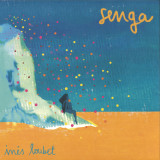
avigating vibrant influences of Latin-jazz, Tropicália and joyful grooves; multi-instrumentalist, songwriter, singer and producer Inês Loubet presents her utterly gorgeous debut album ‘Senga’. The album covers Inês’ experiences over the past five years, originating in Portugal, travelling through Brazil, before finding home in London.
Previously, Inês co-wrote and performed on Caravela’s album 'Orla' on None More Records, which was praised by the likes of Gilles Peterson and The Line of Best Fit. Her music has been played on Jazz FM, BBC 6 Music, BBC Radio 3, NTS and Soho Radio. A relentless live performer, she’s played alongside Brazilian legends Gilberto Gil & João Bosco, graced the stage of The Royal Albert Hall, Union Chapel, and O2 Shepherds Bush, around UK and international tours.
The album explores a range of profound themes including nature, travel, grief, unconditional love, separation, family dynamics, and the nuanced experience of womanhood in contemporary society. Dedications to the music, philosophy and revolutionary history of samba (‘Sambo Mesmo Sem’), everyday observations of joy (‘Guri’), and motivating generational change for the better (‘Sab Sabim’); glide across romantic harmonies and the Brazilian rhythms at the melodic heart of the album.
“I started writing whilst living in Salvador da Bahia, Brazil, in February 2020”, says Inês. “I was shy and hadn't written fully composed tracks before then. During lockdown I received support from The Arts Council’s DYCP, started making demos, gained confidence and started playing them live”. In October 2022 Inês was presented with the Drake YoLanda award and went to Giant Wafer studio in Wales for three days, before recording the final vocals at her home studio and mixing and mastering in Porto, Portugal.
Inês is joined on the album by a band of close friends. Percussionist and long-time collaborator Jansen Santana from Salvador da Bahia brings the soul of the drums, the tambor. “I always have the Bahia drums present in my mind when I write a new composition. I studied Latin percussion at University and then lived in Salvador absorbing all that heritage and knowledge”. Playing four different stringed instruments on the album, Greg Sanders is a long-time friend and collaborator from London “I met him in a samba band in 2015 and he was the first person I ever showed my songs to and played with”. The band is completed by Ruta Sipola on flute, Jake Burgess on tenor sax, Peu Meurray who recorded a lot of the percussion and lead vocals, and bassist Julio de Castro from Sao Paulo. “I was blown away by his bass playing, his swing and creativity, his ton of experience and professionalism but also his voice - he's an amazing singer and I believe that adds a lot to the magic”.
Inês concludes, “Last year, I had a show in London and I asked everyone in the audience to write down what they felt when they listened to the music. These are some of the things they wrote: wholesome, refreshing, lifted, moving, joyful, happy, nostalgic, warmth, force, goosebumps, emotional, togetherness, transported, rooted”. ‘Senga’ captures all of these feelings and more in a memorable first impression from a highly talented musician.
2024 Repress!
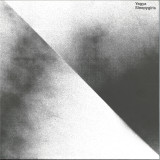
Limited 10 year anniversary repress. In May 2014, Icelandic producer Yagya released his fifth album, Sleepygirls, across three slabs of vinyl on Dutch label Delsin. It's a deep, spacious and dubbed out affair that stays locked at a pleasingly sedentary tempo throughout. Since 2002 the definitive member of the Thule Musik collective has been crafting lush electronic albums under his Yagya alias and always manages to find pure bliss and beauty and his simple, nature inspired soundscapes. "I wanted to create an album that's atmospheric, repetitive, and easy to listen to over and over again," says the man himself. "Something that works well in the background (e.g. when concentrating on work), as well as up close in a big sound system. I also wanted to learn how to make my music sound better than before, since I'm a huge sound-nerd, so that was a part of the goal for me personally." The album is a fine fusion of tropes from Yagya's earlier albums, features jazz instrumentalists that improvise beautiful melodies over monotonic, almost drone-like, techno beats and also uses live recordings of Japanese vocals, saxophone and guitar to counter the repetitiveness of the rhythms. Right from the rolling bliss of the opener, you're suspended in a womb like pillow of sound that is soft, warm and serenely beautiful. As tracks roll on, the pace stays the same but themes vary from upright and summery to more elongated and insular. This is natural, organic dub that is a delight and a pleasure to listen to. The vinyl versions of each track have been specially mixed with random LFOs, sonic quirks and unique fingerprints making them the subtly different to the CD version, but overall this is a brain soothing and mind melting album that can soundtrack lazy days, long summer afternoons and warm winter evenings in equal style.
Clear/Black Smoke Vinyl[38,87 €]
Svart Records are proud to release the long-awaited full length album "SÁLA" by Kati Rán in May 2024
If the most profound treasures are often the most deeply buried, the journey to uncover them is vital process of discovery. Five years after the 15-minute single “Blodbylgje” signaled the birth of a new, more primordial, and immersive vision after the dissolution of her band L.E.A.F., Nordic dark folk artist Kati Rán has expanded on its oceanic theme for her long-awaited full-length album, “SÁLA”. Embarking on a far-reaching musical and personal travelogue, it’s a reawakening of both the feminine narratives submerged and fragmented within Norse mythology, and the enduring, healing powers held within.
Named after the Old Norse word for ‘soul’ and ‘sea’, “SÁLA” is an act of ‘soul retrieval’, the shamanic art of trauma recovery, be it illness, death, heartbreak or loss, and the reintegration of a splintered self. Across its 13, wide-ranging, elegantly unfolding tracks, the album is an embodiment of different feminine voices and perspectives – from the Norse nine daughters of the sea, or ‘billow maidens’, through various historical and fictional figures to the late-night voices we hear in our most liminal states – all with tales to tell, riddles to solve, challenges to be accepted and guidance to offer. It’s a multiplicity that, like the ocean itself, belongs to a vast, restless dynamic: a matrix of mysteries, unfathomable depths and ever-shifting currents, accumulating into an elemental, regenerative source of power.
Recorded in a barn in Húsafell, Iceland – home to glacier ice caves and a rare lava stone marimba rediscovered for the track “Stone Pillars” – as well as Finland, Norway and at home in Kati’s native Netherlands, “SÁLA” is as much chronicle of Kati’s own perspective-shifting recording process as it as a pilgrimage through different viewpoints and internal states. That itinerate urge is also reflected in the use of different languages, ranging across Norwegian, Old Norse, Icelandic, and, for the first time, English, her combination of ancient texts, historical reimagining’s and unguarded personal reflection backed up by deep research into the most resonant recesses of Nordic lore.
Spun throughout every thread of “SÁLA” is a sense of communion - with the power of stories to offer moral guidance and the thrill of the unknown; with the element of water, recreated across the album both in field recordings and the agelessly organic nature of the music itself; with the archetypes whose qualities we are called upon to embody at our most critical moments; and with the internal hidden realms forever whispering at us from the far edges of our consciousness.
Appropriately, it’s a collaborative venture too. As well as working closely together with Finnish producer Jaani Peuhu, there are contributions from across the musical spectrum, including extreme metal vocalist extraordinaire Gaahl, the Icelandic female choir Umbra Ensemble, renowned Norwegian jazz musician Karl Seglem, Björk and Brian Eno contrabassist Borgar Magnason, members of pagan folk acts Völuspá, Gealdýr, Heilung and Theodor Bastard and even Napalm Death’s Mitch Harris on vocals.
For all the many sources “SÁLA” draws from, the result is a singular, intimately transformative rite of passage, and a retuning of the heart to the reverent continuity of the sacred. It will take you from the opening title track’s chest-pounding rhythmic pulse emerging from a traditional Norwegian bukkehorn (recorded by Karl Seglem), a galloping horse-rider and Kati’s glacial, velveteen chant, through “Kólga’s” recounting of female persecution through the ages borne on the most gossamer-light yet unbreakable of timbres and “Stone Pillar’s” gently percolating, deep wells of abandonment and incantations to recovery. “SÁLA” closes with the track “Sátta” - Old Norse for ‘peace’ and ‘reconciliation’ – ending the album as it began with the bukkehorn, as it weaves rich drones and experience-stamped poems and prayers, Kati’s vocals the most sensitively tuned of emotional barometers. An album made in dedication, and in thrall to, its own sense of destiny, “SÁLA” is, as all quests must ultimately be, a homecoming.
Album introduction written by Jonathan Selzer.
Black Vinyl[34,87 €]
Svart Records are proud to release the long-awaited full length album "SÁLA" by Kati Rán in May 2024
If the most profound treasures are often the most deeply buried, the journey to uncover them is vital process of discovery. Five years after the 15-minute single “Blodbylgje” signaled the birth of a new, more primordial, and immersive vision after the dissolution of her band L.E.A.F., Nordic dark folk artist Kati Rán has expanded on its oceanic theme for her long-awaited full-length album, “SÁLA”. Embarking on a far-reaching musical and personal travelogue, it’s a reawakening of both the feminine narratives submerged and fragmented within Norse mythology, and the enduring, healing powers held within.
Named after the Old Norse word for ‘soul’ and ‘sea’, “SÁLA” is an act of ‘soul retrieval’, the shamanic art of trauma recovery, be it illness, death, heartbreak or loss, and the reintegration of a splintered self. Across its 13, wide-ranging, elegantly unfolding tracks, the album is an embodiment of different feminine voices and perspectives – from the Norse nine daughters of the sea, or ‘billow maidens’, through various historical and fictional figures to the late-night voices we hear in our most liminal states – all with tales to tell, riddles to solve, challenges to be accepted and guidance to offer. It’s a multiplicity that, like the ocean itself, belongs to a vast, restless dynamic: a matrix of mysteries, unfathomable depths and ever-shifting currents, accumulating into an elemental, regenerative source of power.
Recorded in a barn in Húsafell, Iceland – home to glacier ice caves and a rare lava stone marimba rediscovered for the track “Stone Pillars” – as well as Finland, Norway and at home in Kati’s native Netherlands, “SÁLA” is as much chronicle of Kati’s own perspective-shifting recording process as it as a pilgrimage through different viewpoints and internal states. That itinerate urge is also reflected in the use of different languages, ranging across Norwegian, Old Norse, Icelandic, and, for the first time, English, her combination of ancient texts, historical reimagining’s and unguarded personal reflection backed up by deep research into the most resonant recesses of Nordic lore.
Spun throughout every thread of “SÁLA” is a sense of communion - with the power of stories to offer moral guidance and the thrill of the unknown; with the element of water, recreated across the album both in field recordings and the agelessly organic nature of the music itself; with the archetypes whose qualities we are called upon to embody at our most critical moments; and with the internal hidden realms forever whispering at us from the far edges of our consciousness.
Appropriately, it’s a collaborative venture too. As well as working closely together with Finnish producer Jaani Peuhu, there are contributions from across the musical spectrum, including extreme metal vocalist extraordinaire Gaahl, the Icelandic female choir Umbra Ensemble, renowned Norwegian jazz musician Karl Seglem, Björk and Brian Eno contrabassist Borgar Magnason, members of pagan folk acts Völuspá, Gealdýr, Heilung and Theodor Bastard and even Napalm Death’s Mitch Harris on vocals.
For all the many sources “SÁLA” draws from, the result is a singular, intimately transformative rite of passage, and a retuning of the heart to the reverent continuity of the sacred. It will take you from the opening title track’s chest-pounding rhythmic pulse emerging from a traditional Norwegian bukkehorn (recorded by Karl Seglem), a galloping horse-rider and Kati’s glacial, velveteen chant, through “Kólga’s” recounting of female persecution through the ages borne on the most gossamer-light yet unbreakable of timbres and “Stone Pillar’s” gently percolating, deep wells of abandonment and incantations to recovery. “SÁLA” closes with the track “Sátta” - Old Norse for ‘peace’ and ‘reconciliation’ – ending the album as it began with the bukkehorn, as it weaves rich drones and experience-stamped poems and prayers, Kati’s vocals the most sensitively tuned of emotional barometers. An album made in dedication, and in thrall to, its own sense of destiny, “SÁLA” is, as all quests must ultimately be, a homecoming.
Album introduction written by Jonathan Selzer.
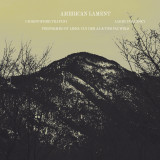
With Folksong Distortions, Pauwels and Van der Aa create a journey of lament through the soul of times gone by. Their radical renditions of works by Larry Polansky and Christopher Trapanido not distort the more upbeat rhythm and tradition of folk songs, but rather reveal and highlight the essence of hard lives, imposed choices - choices that were illusions in the first place - and the difficult times and conditions they have always depicted.
Christopher Trapani arranged two classics from the U.S. South, effects. The work, developed in collaboration with Tom Pauwels and Liesa Van der Aa, was originally made and featured on ICTUS' American Lament programme. The duo was given considerable room for improvisation and interpretation in the process. The first song, 'Wayfaring Stranger', is a well-known folk/gospel melody in A minor. The lyrics contrast an aimless journey through a harsh, hostile world, with the Christian promise of heaven as a 'home' and reunion with lost loved ones. The second song, 'Freight Train', was written by Elizabeth Cotten, a left-handed guitarist who held her guitar upside down, resulting in a very recognisable strumming style.
Sweet Betsy from Pike and Eskimo Lullaby are taken from Larry Polansky's 2005 'Songs and Toads', a five-section piece that computer-composed pieces. The work was originally written for guitar, more specifically for the national steel guitar, refretted in a specific intonation designed by Lou Harrison. Each piece explores a different guitar tuning. A significant intervention to the original work is made to accommodate Liesa Van der Aa's violin with effect pedals, opening to an epic re-reading of the work as conceived by the American composer Larry Polansky. What this set-up enables is a melancholy, slow-paced approach that quite radically opposes the more upbeat and joyful nature of the folk songs.
With her third Gondwana album, "Constellation", Manchester"s Caoilfhionn Rose has come of age as an artist, digging deep to find experimental new ways of expressing her wonder at nature"s beauty, her love of music in all its diversity, and her belief in the restorative powers that both afford in the troubled post-COVID world. The ten tracks on "Constellation" feel rooted in a knowledge of folk, jazz and all the twentieth century"s classic tunesmiths, and yet they seem to create a magical, otherworldly space of her own imagining, blending Caoilfhionn"s core piano with synths, and pitting a live rhythm section and saxophone embellishments against ambient samples and future-facing production techniques.
With this new project, their fourth full-length work, Tupperwear completely departs from the "stylish" electronics and trends to delve into a profound exploration of the fundamentals of music.
It involves a quest or even a game through the extrapolation of geometry into various musical parameters, encompassing classical aspects like pitch, timbre, rhythm, intensity, etc., as well as noise, textures, or the implicit mathematics in natural or irrational elements.
Pentagonono delves into cosmology and nature. It is a musical approach without prejudices to basic numerology that unveils the universe, the harmonic scale, the number e, and logarithmic spirals. The golden ratio (phi) and the omnipresent number pi are also explored. Geometric shapes, proportions, and divisions of vibrating elements are transmitted through the air, internalized by humans, and transformed into music.
Following in the footsteps of previous sound explorers from various spatial and temporal origins such as Gamelan music with its infinite polyrhythmic replication, Psychedelia, Serialism, Musique Concrète, Bach, or J Dilla, this album presents itself as a materialization of ideas and concerns that, while already present in the band's musical understanding, are now brought to the forefront as if it were a vital manifesto.
Church Andrews and Matt Davies weave intricate patterns from Fibonacci sequences on new mini-album, Yucca.
Producer and composer Church Andrews (aka Kirk Barley) and drummer Matt Davies return to explore the outer limits of rhythm on a six-track suite that is at once angular and fluid, natural and systematic. Drawn to the restrictions of working solely with one synth and live drums, the pair found creativity in limitation, developing a compositional dialogue between the sonic timbres of Kirk’s productions and Matt’s percussive practice.
Evoking the primitive yet complex form of the plant from which it takes its name, Yucca features tracks that are built around rhythmic ratios of the Fibonacci sequence. Mirroring spiral patterns exhibited in nature, each track evolves like a cellular structure of its own, from the livewire syntax of ‘Chirp’ and the deconstructed ebb and flow of ‘Ferns’, to the mini-album’s title track, where crisp grooves flit between modulated electronics like fireflies.
“I’ve always been inspired by music that is complex without sounding complex,” Matt explains. He maintains a sense of bounce amid the intricate phrasing and cites drummers Roy Haynes and his grandson Marcus Gilmore as inspirations, alongside sabar drummers from Senegal and Mridangam drumming of South India.
With a shared background in hip-hop and the swung beats of J Dilla and Flying Lotus, Kirk Barley and Matt Davies were also inspired by the minimalism of Terry Riley and the sparse palette of dub techno.
Written and recorded in Lewisham in the spring and summer of 2023, Yucca follows the release of Axis in 2022, with the duo having also performed at festivals such as Rewire and Waking Life, and recorded live sessions for FACT magazine and Worldwide FM.
The third release on Yorkshire-based Odda Recordings, following Kirk Barley’s Marionette and Flaer’s Preludes, Yucca confirms the label’s reputation for championing music on the unstable ground between the organic and the synthetic.
By now one of our most cherished and respected portuguese songwriters, Maria Reis has been steadily creating a legacy that will undoubtedly endure in the portuguese songwriting canon for years to come. Co-founder of the Lisbon based Cafetra label- collective, Reis spent her teenage years honing her craft, particularly with her co- leading role on Pega Monstro with her sister Júlia Reis, with albums like 'Alfarroba' and 'Casa de Cima' on Upset !the Rhythm and whose indefinite hiatus since 2018 opened the gateway for a prolific solo venture. After a raw debut EP released in 2017 – Maria -, 2019 saw the release of the celebrated 'Chove na Sala, Água nos Olhos', a definitive statement of Reis' almost casual gift of painting vivid and impressionistic portraits of everyday life, conveying all the anger, resignation and melancholic joy of moving on. Two years later, following a string of widely praised live appearances, Reis records the 'Flor da Urtiga' EP with musical production of Noah Lennox aka Panda Bear, a sweeter affair, crossed by a witty irony that tackles such subjects as family, love and toxic masculinity, through layered acoustic guitars, lightweight percussion and joyful harmonies. 'Benefício da Dúvida' from 2022, strips back most of the production to rely on simple but affirmative arrangements assembled with the help of her sister Júlia and longtime collaborator Leonardo Bindilatti.
And now, almost two years on the clock after 'Benefício da Dúvida', Maria Reis returns with a newfound maturity with 'Suspiro...' - Portuguese for sigh. Created in close collaboration with Tomé Silva - a young and versatile musician and producer who's been recently leaving a mark on the portuguese scene - and recorded in the intimacy of the latter's bedroom, 'Suspiro...' doesn't cut ties with that recent past but reflects the learning process embedded in previous ventures in its lyrics and arrangements, towards song's eternity. A projection of different emotional states and physical spaces throughout these years, 'Suspiro...' carries in the apparent simplicity of its title the plurality of meanings found in such a natural act, from anger to being in love, from resignation to resilience. Life in a sigh? We've been further from that.
An attentive and sensitive observer of both intimate and surrounding spaces, Maria Reis continues to explore wordplay in her very personal manner, a poetic act as brutally honest as filled with imagery allusions, enchanting the mundane with lyricism. Touched by a resigned and dreamy melancholy, 'Suspiro...' settles, for the most part, on electric and acoustic guitar lines, simple but expressive rhythms, floating vocal harmonies and a voice almost tangible in the way it conveys memorable hooks without fear of appearing both fragile and tenacious. 'Amor Serpente's low key tragedy turned mantra for life, the blissed pop of 'Estagnação' or 'T-shirt', 'Holofote's flailing rawness, the mesmerizing sparkle of 'Pico', 'Meta Data's electrified energy or the playful keyboards and sound effects of 'Coisas do Passado' composing a lively portrait of reality and expectations where we can all see ourselves reflected in. For Maria, almost a second nature, that through all her honesty, know how and imagination, reaches a new life with 'Suspiro...'.
Bruno Berle, the young songwriter and poet originally hailing from Maceió, the capital of Brazil’s Alagoas state, crafts songs that are simple, direct, and full of tender nuance. With his first album No Reino Dos Afetos (which translates to "In the Realm of Affections” and was released in 2022), Berle firmly established himself as a unique and important voice in the burgeoning scene of new Brazilian artists making a global impact, including peers like Ana Frango Elétrico, Tim Bernardes, Bala Desejo, Sessa and more. Now back with his second album, No Reino Dos Afetos 2, he stretches that further.
Bruno Berle’s music lives between two worlds – a traditional Brazilian folk talent steeped in history, and a contemporary, dreamy electronic pop; the result is songwriting that’s genre-bending, intentional, iconoclastic and consuming, spacious and sinewy and singular, a striking reflection of its composer while leaving space for the listener to settle in. The album follows Bruno’s relocation to São Paulo, and the songs are a reflection of his past and present. A rebuke of former categorizations of his work in Brazilian music scenes, and an idea of where his music can move, unfettered.
Berle’s music is purposeful in being a true portrait of himself, and a reflection of the music, art, and fashion scenes he personally moves through. Berle aims to provide an entrypoint for Black queer joy in his music, in his storytelling, in his presence and vision as a creative. For him, it feels subversive to be playing MPB laced with dubstep and lo-fi, a sort of intentional sacrilege, capturing a dialogue of modernity in traditional music.
Berle wrote most of the arrangements and co-produced his new album, Reino Dos Afetos 2 with longtime friend and musical partner Batata Boy, who is also from Maceió; the album was recorded in Rio de Janeiro, Maceió, and São Paulo, his new home, and picks up the conversation begun in 2022 on Berle’s debut album No Reino dos Afetos. Both records are the result of a nonlinear but coherent seven-year music creation process culminating in these albums, holding hands across space and time.
“Tirolirole,” the first single from the record, was released at the end of 2023; sun-soaked rhythms and soft voice coat the song, the lilting refrain of “Tirolirole” throughout – hushed, gentle, but somehow almost tactile, a golden-hour moment unlocked in the mind. “Tirolirole” is a triumphant future classic about the temporality of a blossoming love, with Bruno’s stunning vocal soaring over melodies which ebb and flow like the waters on the Atlantic shore. Of the track, Berle explains: “Despite ‘Tirolirole’ being an expression that evokes my childhood, just like the light words about nature, the harmony, and the poetry are epic, carrying a great hope for love.”
In fact, the guiding theme of No Reino dos Afetos 2 is a relationship, unfolding in the arc of a weekend. It traverses the innocence of an early young love, how that can be formative, can stretch on to take new shapes, or shape you. The album happens at the genesis of meeting someone and falling for them, before the relationship is thrown into overdrive – set in a big city, against a backdrop of major life changes, rising energy, the sound of São Paulo.
Something transcendental emerges in “Dizer Adeus,” with an arrangement that echoes a gospel atmosphere (evangelical and Catholic environments were pivotal to Berle’s upbringing). On “É Só Você Chegar,” piano and flute gracefully intertwine, a dance, while “Quando Penso” skews sparser, the voice-and-guitar minimalism somehow cultivating an entirely different shape – somehow both cozy and melancholy, with the background sound of a rainy day. Coupled with the lo-fi aspects that shape much of the album’s personality in the vocals and the production, No Reino Dos Afetos 2 is meticulously elaborated by Berle’s sonic alchemy, like on the mid-album instrumental “Sonho,” which feels like floating. “It’s the apex. It’s when lovers are sleeping together,” Berle explains of the feeling he wanted to encapsulate in the song.
On “Love Comes Back” Berle interprets Arthur Russell, the late Iowa musician who only reached greater visibility after he died in 1992. “His way of making music is similar to mine,” Berle explains. “He sings in a more fragile way, has more of an experimental way of recording, letting ‘chance’ appear in the final work.”
Even so, Berle doesn’t want his music to be buried in sentimentality – and the purposefulness of his craft serves as a sort of north star. The production, the arrangements, his restraint and intentionality in crafting his songs feel just as vital as their emotional cores. His songwriting is amorphous, fluid, an encompassing genre-bending movement in-and-of-itself, quietly daring. The songs are often in conversation with other works – drinking in fountains as diverse as the filmmaking of Ingmar Bergman, the poetry of Walt Whitman, the rhythm of Djavan, and the painting of Maxwell Alexandre. Musically he weaves together a rich tapestry of Brazilian folk, UK 2-step garage/dub, trip hop and sun soaked west coast songwriters; something akin to the worlds of Milton Nascimento, Arthur Russell, James Blake, Feist, and Sade colliding into one. But even then No Reino Dos Afetos 2 floats separately, a romanticism driven by a simplicity and intimacy, an open-ended possibility, Berle’s singularity as an artist at the helm of the ship.
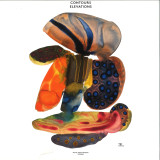
Music From Memory is delighted to present ‘Elevations’, a new album from Manchester based artist Tom Burford, aka Contours.
Drawing heavily on his background as a drummer and percussionist, ‘Elevations’ began as an exploration of the Balafon, a Malian tuned percussion instrument, before organically growing into its final form; a delicate suite of compositions centered around rhythmical interactions of percussion, synthesizer and strings.
Recorded during the pandemic and the period following, the album reflects a desire to lose oneself in the expanse of nature - the title ‘Elevations’ being a direct nod to the mountainous area of Cumbria where Tom grew up. The album also represents the joy of creating with friends; it features performances from several of his musical contemporaries, many of which were recorded at his home in Manchester. Slowly taking shape, the final result is a record that seamlessly blends electronic and acoustic, operating at the intersection of Minimalism, Jazz, Fourth World and Contemporary Classical music.
Finland's UNEARTHLY RITES are preparing to release their debut album. On Ecdysis UNEARTHLY RITES' potent old school death metal songwriting offers a rallying cry against corporate greed and environmental negligence, with a scathing rebuke of those culpable of ecocide and climate destruction. At the beating heart of Ecdysis lies UNEARTHLY RITES' insistence for a better world, with the perilous effects of capitalist interests taking precedence over nature and human life at the core of the group's concerns. Through their collective work in environmental activism, including anti-mining campaigns in the arctic north that focuses on the challenges faced by the indigenous Sámi peoples, Ecdysis is less a despairing cry as it is a plea for change. The band's caustic approach to extreme metal and punk adds a feverish urgency to proceedings, with the rhythm section of bassist Vikman and guitarists Simo Perkiömäki and Santtu Markko evoking the genre's most brutish traits against Sisli Piisilä's visceral vocal delivery. Despite their rage and despondency at institutional apathy on the title track and the harrowingly doomy highlight cut Sacrifice Zones, album closer Doomed shuns inaction and resigned complicitly by directly challenging the listener to choose their side for humanity's sake and future.
Recorded across three sessions over the last three years, ‘Behold’ is a testament to Parsnip at their most creative, catchy and collaborative. This album showcases the multi-talents of all four members, with spirited performances adding dazzle to the thirteen tracks.
Paris Richens lets the bass playfully roam. Carolyn Hawkins tumbles feeling into the drum rumble. Stella Rennex’s guitar soars alongside her saxophone work, whilst a sprightly keyboard is tenderly attended by Rebecca Liston. Everyone sings amidst this lush canopy.
Patience, environmental cues and internal signals are integral for a garden to flourish. The same can be said of the conditions necessary for ‘Behold’ to emerge. It is an album gleeful in reassessment, changed priorities and anticipation. The roots are deeply anchored to mystery, drinking up a hidden wonderment that lies within. ‘Monument’ is a twist of melody and mania, “For what am I? But a channel of light” they attest amongst the whoops and hollers. ‘The Babble’ sounds like Ray Davies playing Wordle for enlightenment. In fact most of these songs are pointing the way towards growth and understanding. ‘Turn to Love’ is mesmeric and timeless, thoroughly serene and perfectly judged. Parsnip write songs as a form of communion with the intangible in our increasingly delusory world, but there is always a gentle reminder; don’t take anything too seriously! “My head is gonna split in two, fix it with flour and glue” they demand on ultimate bop ‘Papier-Mâché’, this juxtaposition of mature resolve with childlike astonishment packs a more powerful punch.
On ‘Behold’, Parsnip explore both the inner and outer realms of consciousness with quick wits and some seriously quality jangle and jolt. ‘The Light’ is a whip smart workout, sprouting naturally from the propulsive nature of their debut album ‘When the Tree Bears Fruit’ (2019). ‘Placeholder’ is also devastatingly honest and channels The Field Mice as it buries itself like an arrow into your heart.
Anti Fade Records and Upset The Rhythm proudly present Parsnip’s first album in five years, ‘Behold’. Available in all good record stores April 26th.
Melbourne/Naarm-based musician and curator Rama Parwata, known for being the backbone drummer in bands such as Kilat, Whitehorse and Rinuwat, releases his second major solo album titled ‘Ceases’ on Cassauna/Important Records.
Parwata's gripping new electro-acoustic work is a sonic exploration within the realms of post-free-jazz and experimental electronics. At its core, ‘Ceases’ navigates the liminal spaces between rhythm and noise, structure and chaos. The album traverses a vast emotional and conceptual landscape, touching upon themes of impermanence, transformation, and the cyclical nature of existence.
At the forefront of the album is Parwata's emotive compositional and performative approach, which serves as both anchor and catalyst for the album's journey. The percussion performance is cymbal heavy accompanied by deeply meditative drones and slow moving melodies. The wash of sound touches on a spiritualism akin to Coltrane’s “A Love Supreme Part 4: Psalm”, albeit with a modern electronic vision á la Tim Hecker. With a keen sense of textural intricacy Parwata favours the emotional expression of electro-acoustic composition, weaving complex poly-textures that ebb and flow with hypnotic, prayer-like intensity. Each performative gesture creates a visceral immediacy that draws the listener deeper into the celestial, otherworldly sonic framework.
The diverse array of electronic elements, meticulously crafted and seamlessly integrated into the fabric of the album are a testament of Parwata’s capacity for acousmatic composition. From pulsating synthesizers to glitched-out samples, the electronic timbres in "Ceases" serve as both sonic embellishments and structural foundations, blurring the boundaries between organic and synthetic, acoustic and digital. Honing in on the electronics, a listener could be convinced they were hearing anything from spiritual-jazz, 90s rave, dungeon synth or doom. Through judicious composition, Parwata imbues each sound with a sense of transcendental allure and paints a soundworld that has a distinct ‘outerness’. At times the narrative is pointedly bleak but over a few passages the sonic language often bends toward rejuvenation; finding respite in cadence. The title itself suggests a sense of cessation, of endings and beginnings intertwined—a motif that reverberates throughout the album.