Limited to 300 units.
Project founded in Mallorca circa 2015 releasing 'Four Seasons' by the end of that year, it was a digital and musical tribute to nature itself.
Then based in Barcelona on december 2017 came out an EP/Anti titled 'Continental', 41 minutes of pure melancholic weird dreams with crunchy beats.
On may 2019 Diürn presents 'Una Història Hologràfica', one hour of experimental electronic music that expands through downtempo, techno and ambient. The album pushes the sound boundaries further by exploring the consciousness of the unknown.
Cerca:nature unit
It goes without saying that the global metal scene would not be the same without Sepultura. For 35 years now, the Brazilian icons are not only a band revered worldwide; they have been, are and forever will be at the very forefront of Thrash Metal, trailblazing ever since they released their long-since legendary debut album “Morbid Visions” in 1986.
While quickly establishing themselves as leaders of the second wave of Thrash already in the late eighties, to this day they never came even close to stagnation. “Quadra”, their mighty new undertaking, is proof of a will unbroken, a thirst unquenched and a quality so staggeringly high it’s a wonder this band doesn’t implode. Now three albums deep into what may very well be their strongest incarnation yet – uniting the talents of old-school members Andreas Kisser (guitars, vocals) and Paulo Xisto Pinto Jr. (bass), vocal force of nature Derrick Leon Green (vocals) and drummer Eloy Casagrande – Sepultura are an unleashed power to be reckoned with, uniting bucketloads of experience and youthful vigour in a totally revived way.
“On ‘Quadra’, we felt the urge to revisit that old thrash feeling of ‘Beneath the Remains’ or ‘Arise“,’ only seen through the eyes of today,” Andreas Kisser utters the magic words. “Add to that the tribal percussion, the orchestral elements, the choirs, the melodies and the clean vocals and you get a thorough run-through of our entire career, backed by a very contemporary approach.” Fuelled by an energy almost uncanny for a band that has been active for so long, Sepultura storm through a contemporary thrash monument, backed by sublime melodies, a very eerie atmosphere and a fiendishly high level of technicality. Kisser is appreciating these compliments, still maintaining his very down to earth approach. “We don’t heed the past and we don’t try to be preoccupied by the future too much,” he shrugs. “We’re in the now, trying every day to make Sepultura a little bit better. That’s what keeping us strong.”
And that’s what they have been doing for the last 30+ years. Album after album, tour after tour, no gap in between records longer than three years. “Music is all we do,” Kisser states matter-of-factly. “If it wouldn’t be for Sepultura,” he laughs, “I would be a sad and lonely guy. Sepultura is what we are.” And “Quadra” is living testimony to that. The old Sepultura echo through the very fibre of the songs in all its raw and morbid splendour, but yet it’s the present, the experienced and refined beast that is Sepultura in 2020 that’s blasting out thrash metal anthems for a fucked-up age.
With now 15 albums under their belts, Sepultura are the work horses of the metal world, always ready to attack. In many ways, “Quadra” broadens the vision the Brazilian thrash troopers had on “Machine Messiah” (2017), again relying on the impeccable talent of Swedish producing giant Jens Bogren and his Fascination Street Studios. “He is so full of passion, it’s unbelievable, man,” Kisser raves. “He’s really there, he really cares about the projects he’s doing. For Sepultura, he’s like the fifth member of the band. The chemistry was so amazing, 99 percent of what we were trying do to actually worked. That was insane!” Even after more than 30 years at the forefront of international thrash, guitarist Kisser sounds positively baffled by working with Bogren. “We felt like we were in our rehearsal room.”
Bringing together a monumental grandeur and a wild, untamed ferocity, Sepultura stepped up their game musically – and conceptually as well. “We were possessed by the number four, by the numerology of it”, Kisser starts to explain. “I divided the album into four parts as if we were doing a double vinyl. Side one is the pure and raw thrash side. Side two brings in the rhythms and percussion from our ‘Roots’ era. Three is getting a bit experimental and four brings forth the melodies and the acoustic guitars.” With John North’s book “Quadrivium” as a further source of inspiration, Sepultura dive deep into a mystical world full of hidden meanings. “You have four seasons and twelve month in a year just to pick one example. A lot of stuff in our culture is divided like that.”
Plus, Quadra also is the Portuguese word for ‘sport court’ that by definition is a limited area of land, with regulatory demarcations, where according to a set of rules the game takes place,” he adds. “We all come from different Quadras. The countries, all nations with their borders and traditions; culture, religions, laws, education and a set of rules where life takes place.” In the Quadra of thrash, however, we all are the same. And we bow our heads in unison to the mighty leader that is Sepultura.
In the early eighties, Edmond Mondésir, professor of philosophy and Léon Bertide, trade unionist, founded the Bèlènou group. They were actors of the great agricultural strike of 1974, which resulted in the death of two workers (Ilmany and Marie-Louise) and left many wounded. Activists of the patriotic movement Asé Pléré An Nou Lité (Stop crying, Fight), they were part of the identity and the cultural affirmation la revendication identitaire et culturelle of the time. Like the Guadeloupean musician Gérard Lockel and his work on the Gwo Ka, they put the Bèlè, in its traditional form, back in the spotlight during Swaré Bèlè (Bèlè nights).Minimalist and spiritual, a true rural ancestral art from Martinique, the Bèlè combines dance and music from responsorial monodies, which is a choir that responds to the lead singer (Respondè / La vwa dèyè), on codified drum rhythms and ti-bwa (2 sticks that hit the back of the drum or a piece of bamboo). It comes in a series of collective choreographies, working up into the trance. The texts are simple, short and tell the story of everyday life and struggle. While preserving the emotion and the drum’s central place, the fundamental contribution of Bèlènou is to keep the traditional form of Bèlè while adding a modern instrumentation: bass, guitar, saxophone, drums...
Emosyon Tambou-a (Emotion of the Drum) was released in 1990. This third opus of the band expands the musical spectrum in harmonies, arrangements and influences to create a contemporary music anchored in the Bèlè matrix, while keeping the beat, the energy and ancestral roots of music. Bèlènou adapts some classic rhythms: Bélya, Gran Bèlè, Bèlè Pitjé or Ting-Bang rewritten here for an orchestra.With the appearance of long couplets and a complex harmonization of the choruses, Bèlènou's music brings a form of modernity, it opens notably to jazz territory as well as to other forms of music and grooves. Also, Bèlènou leaves the musicians with space for improvisation: not only on the saxophone or the guitar, but also with the drums (cleverly adaptating traditional rhythms to the drums).
The texts sung in Creole are of a social nature, appealing to the solidarity and self-denial of the people (Bélya pou péyi-a, Tout pèp-la sanblé), to the struggle for political emancipation towards a new democracy (Wi ny ké rivé, Ni dé jou, Démokrasi); land protection (Sové tè-a); finally, to the vitality of the Bèlè culture ... (Emosyon Tambou-a, Dansé Ting-Bang)...Culture participates, according to the expression of Aimé Césaire, as "Miraculous Weapons". Bèlènou sings a project of a new and united society. A precursor group, experimental in the its early years, Bèlènou reconciles with talent tradition, modernity and cultural identity.
Lovely crafted tip-on sleeve. Remastered. 700 copies
Available on vinyl for the first time in 40 years, Outernational Sounds is proud to present a masterpiece from the Los Angeles jazz underground - Horace Tapscott's burning, spiritualised 1978 set, The Call.
One of the unsung giants of jazz music, the composer, bandleader, arranger, pianist and community activist Horace Tapscott was the undisputed keystone in the grassroots Los Angeles jazz scene. Throughout the 1960s and 1970s, his radical community arts and music formations the UGMA (Underground Musicians Association, later changed to UGMAA - Union of God's Musicians and Artists Ascension), and his protean big band, the Pan Afrikan Peoples Arkestra, were at the epicentre of music, culture and politics in the Los Angeles area.
From their 1960s base at the Watt's Happening Coffee House on 103rd St, to their decade-plus- long 1970s residency at the Immanuel United Church of Christ on 85thE St and Holmes Ave, Tapscott's groups were the beating heart of underground music in LA. Hundreds of musicians passed through and played their part. Major figures in LA jazz such as Arthur Blythe, Azar Lawrence, Jimmy Woods, John Carter, Bobby Bradford, Sonny Criss, Ndugu Chancler and dozens of others all paid dues or just got down with Tapscott, not to mention the core Arkestra regulars who have since become celebrated names - Nate Morgan, Jesse Sharps, Adele Sebastian, Dadisi Komolafe, Gary Bias, to mention only a few.
Tapscott and the Arkestra were down on the ground - playing fundraisers in park and street, organising teach-ins and workshops for young and old, mixing it with radical theatre groups, firebrand poets, political radicals, Black separatists, community groups and churches. They lived communally, and built an ark for the Black arts in the heart of the city. But as a result of this grassroots community focus and Tapscott's antipathy to the music industry, the Arkestra didn't record for nearly two decades. That only changed when long-time jazz fan Tom Albach started Nimbus Records. The label was initiated specifically in order to document Tapscott and his circle, and the first three records showcased Horace and the Arkestra.
The Call was put together from two studio sessions in April 1978, one at Hollywood Sage and Sound, one at United Western - the latter session had the addition of a string section, who can be heard on the moody Cal Massey composition 'Nakatini Suite' and Jesse Sharps' swinging modal trip, 'Peyote Song No. III', with its swirling soprano solo. In keeping with the communal nature of the Arkestra, the other two compositions, 'The Call' and 'Quagmire Manor at Five A.M.' are also by Arkestra members. But at the centre of the music is the builder of the Ark, the visionary whose original call to action started a movement whose legacy continues to this day - Horace Tapscott.
Heed The Call!
Ltd. Ed. 180 units w/ Special Poster Cover
Syncope is concept EP, a mutant musical and visual project
initiated in 2018, promoting the inherent link between music and graphic design. It takes roots in Isaac Newton's Opticks treatise, which for the first time addresses a relationship between audible and visible. Syncope aims to explore the diversity and affinity of distinct phenomena such as frequencies, colors, synesthesia, polyrhythm ...Each exploration takes the form of a visual and musical narrative. This duality emerges on all visual and musical media, mixing plastic and technological elements, organic and synthetic, exploring the intimate relationship between man and machine. Dual nature also existing within the object, both a cover and a poster. A particular interest is giving to printing, using offset, with bronze and purple Pantone colors.This EP is the first object resulting from this project. Oil thief is an ambient track with synthetic and bestial sounds. Jungle is a rite of passage integrating African percussion and polyrhythms. Mengele Zoo close this EP with a progressive and psychedelic guitar slick.
Wa Wu We is the artist alias and vinyl only label from Sebastian Mullaert. This is the third chapter, crafted in the Swedish woods. The first 6 episodes of the Wa Wu We label will form a collection of records, united by their significant and unique cover art and the way they've been recorded; this being the focus on improvising expression, resting in meditation and the nature surrounding Sebastian's studio. All 6 of these episodes will be released as vinyl only and will be limited to 500 copies each.
THE STORY Wa... the Wu are We Let the question appear, and dissolve in the dance! Wa Wu We is back with the third vinyl release, and like before its vinyl only. Deep jams nurtured by the Swedish woods, the home of Sebastian Mullaert.
The beautiful four colour sleeve is designed by art director Markus Clemmedson and include Sebastian's poetry.
Originally from West Yorkshire, but now resident in Manchester, composer, bassist and producer Phil France is probably best known as a key collaborator alongside Jason Swinscoe in the Cinematic Orchestra, where he co-wrote, arranged and produced on classic albums including Everyday, Man With The Movie Camera, Ma Fleur and also the triple award winning soundtrack for The Crimson Wing nature documentary. In 2013 France released his debut solo album, The Swimmer (GOND016), an emotive, epic record influenced by the great second wave of film composers including John Carpenter and Vangelis, as well as minimalist composers such as Steve Reich and Philip Glass
Five years later, France presents the follow up, the enigmatically titled, Circle, which again represents a very personal journey for the artist. For France the album is an extension of work he began on The Swimmer. A process he has described as: " blocks of sound containing intricate minimal arpeggiated patterns and electronic textures that develop and shift in subtle, original and melodic ways. The trancelike quality, mood and electronic character of title track Circle led France to think of the circular patterns which eventually became a potent concept for the album. "Ideas and fashions repeat themselves in cycles. Events are said to travel 'full circle' and this is important to me because it represents my own recent personal and musical journey after 15 years touring as bassist and composer with The Cinematic Orchestra. I consider circles to be a strong symbol of unity, strength and inclusiveness and ultimately I've aspired to make something beautiful with those values at its heart".
The album opens with the title track, Circle, built on a minimal looped pattern with melodic embellishment and shifting additional harmonic textures. Bells was developed from the arpeggiator and offers a nod to the melodicism and atmosphere of French electronic music. The Jackal features an idea originally developed for The Crimson Wing score but which finally bears fruit here. Cathedrals features an improvised intro, Philip Glass inspired organ and vocal textures inspired by the work of Colin Stetson. Finally, the album ends with a reprise of Circle this time featuring layered pianos. But it isn't the conclusion of the journey, for France: "The Circle is infinite - During the process of making this record, I have been constantly reminded that nothing ever stays the same and that all is in constant flux. The challenge for me is always to respond positively, be aware of and seize the opportunity for progression constant change provides" And it is that sense of movement and flow, but also calm and beauty that permeates Circle and make it such a worthy successor to The Swimmer.
It is said that every generation casts its mind back to a previous era in times of crisis; the resources that will allow us to decode the questions of our moment may lie in the myths of another era.
Le Renard Bleu, the new musical and cinematic collaboration between Lafawndah and composer Midori Takada, and filmmakers Partel Oliva, takes a cross- generational echo as ground zero for recovering a crucial myth for uncertain times: the blue fox.
As transmitted by Takada, the fox appears in both ancient Senegalese and Japanese folktales as the trickster archetype; belonging both to the heavens and to the earth, the fox is the agent of chaotic good, shaking the world up when its energy has become stagnant. Above all else, the fox is famous for its cunning nature.
Renard Bleu marks the first new music released by Takada in nearly twenty years; it would be difficult to overstate the importance of her return to the public eye. Her first solo record, 1983's Through the Looking Glass, has been rediscovered and heralded as a lost classic; the influence of her percussion trio, the Mkwaju Ensemble, continues to permeate and inspire a new generation entranced by its lucid beauty, playfulness, and sensual patience. Takada has performed in numerous film score orchestras, including the ensemble for Akira Kurasawa's Dreams, coincidentally a key influence on Renard Bleu.
In the ensuing years, Takada has worked closely with theater group the Suzuki Company of Toga on productions of Electra and King Lear, an experience, she says, that allowed her to pursue 'a unity of music, body and space.' Recent live solo performances have evinced the depths of her exploration of all three.
Equally, it is Lafawndah's freedom of tone, decentralized maps of ancient and modern music cultures, and alloying of devotional intensity with modern songcraft casts her as a distinct relative of Midori Takada's.
Over the course of two EPs, self- directed music videos, and countless live performances, Lafawndah has drawn out an uncompromising exploration of how theater, situational intervention, and choreography can amplify the affective palate of forward pop music. One can trace the influence of artists such as Meredith Monk, Carlos Sara, and Andy Kaufman as much as musical antecedents AR Rahmann, Missy Elliott, or Geinoh Yamashirogumi.
It is in a mutual commitment to this unity that Lafawndah, Takada and Partel Oliva find fertile aesthetic common ground.
The music of Renard Bleu originated in Takada's preoccupation with the legend of the fox; after constructing a vivid instrumental composition dramatizing the spirit animal's journeys through waterphone, bells, marimba and various forms of drums, Lafawndah responded - in her inimitable mix of fairytale and undertow-- with melodies and lyrics capturing a dialogue between her and the fox himself. Eventually, the duo met in Tokyo for a week of communing with the material at Avaco Creative Studios, where new elements were composed on site.
Created in partnership with KENZO and premiered today via their channels, it was Partel Oliva who imagined a contemporary cinematic frame for the myth of the fox to re- appear, creating a hybrid of choreography and narrative around Takada and Lafawndah's performance of their joint composition (also titled Le Renard Bleu.) Returning to film in Japan for the third time, Partel Oliva's moving image work (Club Ark Eternal, The Pike and the Shield) has set the standard for and revolutionized the fashion art film. Their deployment of original music, dance, and a highly stylized mis en scene coalesces here in the casting of Los Angeles krump artist Qwenga as the eponymous fox, stalking the halls of the ancient Noh theater in which Takada and Lafawnda's performance takes place.
Why call up the myth of the fox now In Le Renard Bleu, Lafawndah and Takada's collapsing of distance between generations, styles, and milieus intimates that the relationship to time must be shaken. The future lies in fragments in the past; to remember is to recover it; the fox rises to thicken the plot.
The Caribbean House Is A New Billy Bogus Project. It's The Perfect Meld Of Creepy Atmospheres, Sunset Grooves, Analog Sensibilities And Incessant Rhythms. Bogus Leads This Collective Formed By Federico Bologna (ohmega Tribe, Technogod) And Cristiano Santini (disciplinatha, Dish-is-nein,). This Triumvirate Of 90's Underground Italian Masterminds Come From The World Of Electronica, Noise Rock And Psychedelia. Here They All Combine To Rise Again Rise And Unite To Create Something Entirely New.
And So To The Music. Their Debut Lp Opens Up With The Dark And Haunting "night Drive". Recent Single "gong Bong" Is Next. It Is One Part Slo-mo Disco, One Part Psychedelic Moondance And One Part Sci-fi Horror Movie. If The First Two Thirds Of The Track Is A Caterpillar Then The Last Third Is A Butterfly As Uplifting Riffs And Swirls Of Layered Keys Bring Things To A Crescendo. "lonely Man" Is A Quirky Detuned Monster Tour-de-force Which Leads Nicely Into "love By Proxy". Layered Keys And Intertwined Arpeggios Mingle To Create The Closest Thing To A Love Song Possible From This Trio.
Flip The Vinyl Over For A Hippy Drive With "jesus Freaks" And Its Groovy Guitar Licks And White Noise Synth Blasts. "nature Nature" Is All About The Pulsing Bass Guitar And Sample Like Guitar Stabs Before Heading Completely Off-piste For A Synth-bass Ending. "africa Addio" Presents Us With Meandering Synth Lines Before Layering On A Waft Of Sound Effects And Spooky Keys. Movie Territory. We Close Off The Lp With The "streets Like Noodles". New Wave Nyc Chic Meets Underground Italy Psych.
- A1: Brother, My Cup Is Empty
- A2: Loverman
- A3: Mercy
- A4: Your Funeral... My Trial
- B1: Where The Wild Roses Grow
- B2: The Weeping Song
- B3: The Mercy Seat
- C1: Nobody's Baby Now
- C2: Jack The Ripper
- C3: Stagger Lee
- D1: Henry Lee (Ft. Pj Harvey)
- D2: Nick Cave 1996 Interview (With Kylie)
DELUXE VINYL EDITION!!!
By the time of their performance at the Bizarre Festival on 17th August 1996, Nick Cave and The Bad Seeds were enjoying their most successful era to date. Their latest album Murder Ballads, released in February that year, was their best-selling record yet, having topped the charts in three countries and reached the Top 10 in a further five. This was aided in no small part by Nick Cave's duet with Kylie Minogue on 'Where the Wild Roses Grow', which was a worldwide hit and earned the band two ARIA awards. The video received repeated airplay on MTV, who would later nominate Nick Cave for Best Male Artist at the MTV Awards. Nick and the Seeds toured Europe, Asia and South America in support of the album, and it is their entire performance at the Bizarre Festival that is included here. Recorded and broadcast on FM radio throughout the United States, who had curiously been left off the tour's itinerary, the group captured the dark, brooding nature of Murder Ballads perfectly in their set, which included too classics from their back catalogue such as 'The Weeping Song' and 'The Mercy Seat'. As a grand finale, the band were joined by PJ Harvey - with whom Cave was romantically linked at the time - for a rendition of 'Henry Lee'.
House music is a global love thang. Viennese label secret crunch releases its fourth EP and his 2nd various artists sampler, which unites producers from all over the world.
On Side A Vienna based Sam Irl opens with a jazz infused bouncy groove. "Come back" shines with its exciting musical diversity and suspense. Tijuana born Soul Of Hex alias Sebastian Vorhaus delivers a subtle rave vibe that grows into an uplifting groove.
On the b side Moff & Tarkin impresses with a subtle steady builder based on a funky baseline, fueled with floaty space sounds. Italian Clang 83 finishes in style with a deeper than deep banger.
And so Solar Phenomena's astral adventures continue into the furthest corners of the technoid galaxy Having executed a safe and successful take-off earlier this summer with Echoplex' s 'Solar Experience', the new label continues to explore the stars with rising Roman Antonio Ruscito.
Following releases on Who Whom and Edit Select earlier this year, Ruscito navigates us through a conceptual suite that questions ideas of existence and loneliness within a reality that blurs with virtuality at such a pace we have to question everything. One thing that doesn't need questioning is the forthright and stark nature of these constructions.
'Seclusion One' plays the role of the rocket-fuelled take-off track. Setting the scene and plotting the route, there's a subtly evolving and mutating feel while the end-point remains focused with a consistent feel of elevation thanks to the rich textures entwined into every element of the rhythm and energy.
Onward we travel: 'Seclusion Two' takes much more of an introspective route as it rolls out a much more stripped back evocative journey that s creative subverted by Rephlex-affiliate and respected Finnish artist Aleksi Perala one his electro-referencing remix.
Finally we're brought back down to our home asteroid with the beautiful harmonics and hazed aesthetics of 'Seclusion Three'. Presented in two different forms one star-struck instrumental and one featuring the redolent dulcets of Sam the message and overall experience is one of hope and unity, glaring in the face of personal, technological and cultural isolation. It s time to come together
Two years on from the release of his debut album called 'Natureboy', Dario Rojo Guerra, aka Natureboy Flako, is back with a new six-song Mini Album EP on Five Easy Pieces.
Two years on from the release of his debut album called 'Natureboy', Dario Rojo Guerra, aka Natureboy Flako, is back with a new six-song EP on Five Easy Pieces. 'Natureboy Flako' is a self-titled collection of music culled from over 200 recording sessions since Guerra moved from London to Berlin in late 2015. It's the first work that unites the artistic identity of Flako with that of the Natureboy persona at the heart of his debut album, and is the debut for a new artist name: Natureboy Flako. Moving away from the live instrumentation of his debut LP, 'Natureboy Flako' is the most electronic-sounding record he's made, using old analogue equipment such as Korg's MS-20, ARP Odyssey and Roland's SH-2000 synthesisers, as well as new instruments such as Arturia's MiniBrute. Where previous songs relied on overdubs, most of these songs were recorded in one take, with little overdubbing, making it his most live record to date. As with 2015's album 'Natureboy', the six-song EP sees Guerra searching for musical balance. Both sides of the record offer contrasting energies, with the A-side featuring some of the heaviest tracks he's made and the cinematic B-side made up of more reflective compositions. However, both sides are equally propulsive, with driving arpeggios forming the backbone of much of the EP.
- A1: Seq 1
- A2: Seq 2
- A3: Seq 3
- A4: Seq 4
- A5: Seq 5
- A6: Seq 6
- A7: Seq 7
- A8: Seq 8
- B1: Dj Blue Heart - Intro
- B2: Tumble Down
- B3: Dj Blue Heart - Hole In The Ozone (Skit)
- B4: Nature
- B5: Ecological Bullshit (Skit)
- B6: Dj Blue Heart - Dig It (Skit)
- B7: The Sound Of Fear
- B8: Dj Blue Heart - Important Announcement (Skit)
- B9: Slow Think
- B10: Dj Blue Heart - Serious Business (Skit)
- B11: Tumble Down (Instrumental)
- B12: Dj Blue Heart - The Nightmare Is Over... (Skit)
- B13: Slow Think (Instrumental)
- B14: Dj Blue Heart - Immortal Vibes (Skit)
- B15: The Sound Of Fear (Instrumental) H
2022 Repress
Strictly Limited to 500 Unique Units, No repress, - This is The 'Special edition' with different B Side (as opposed to WRWTFWW011(RED) and comes in Colored Green vinyl 12, housed in heavy cardboard old Stoughton tip-on jacket & VHS Obi. File under: Soundtrack, Haunting Synth, Decadent FM Rock & Erotic Funk.
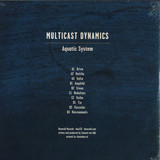
"Aquatic System"" is the second installment of the series, written and composed in two remote geographical places - namely at waters in Finland and Fuerteventura. Inspired by the complexity of water, its movement, various forms, inhabitants and hidden energy, the album was assembled mainly using synthesizers and processed field recordings of the ponds, streams, lakes and oceans of the different locations. With a vibrant story and conceptualization the focus lies in taking the listener on a observing, thoughtful and reflective journey through the aquatic system of our waters. Aquatic System opens with an impression of a frozen surface imagining icy and calm underwater movements underneath. Soon a slow process of melting begins and while the water starts to move in tiny streams of sound, small lifeforms evolve, curiously sending out small pulses in their flowing and constantly moving habitat. The aquatic nature awakens. Zooming out to larger waters high frequencies arise and colliding forms become audible. Larger marine life forms can be faintly heard when entering a much wilder environment, sensing sound-swirls of wind, foaming water tops and impressive large waves crashing on dark rocks. Finally ending at the shore, where the great ocean appears on the horizon, the environment is surrounded with moisture. From the calm reflective landscape derives an inward moment, recalling the organic and atmospheric quality of the sound journey. ""Aquatic System"" has been developed into an audiovisual performance together with visual artist Emilia Kwiatkowska and was performed several times in Spain and Finland, before the music has been finalized for the tracks.
- A1: Abayomy - Obatala (Pd)
- A2: Zebrabeat_Zebrabeat Afro - Amazônia Orquestra (Zebrabeat)
- A3: Burro Morto - Lúcifer Colômbia (Daniel Jesi/Burro Morto)
- A4: Ive Seixas - Cervejas Populares (Ive Seixas)
- B1: Iconili - O Rei De Tupanga (Iconili)
- B2: Zulumbi - Zulumbi (Rodrigo Brandão / Lúcio Maia / Pg / Dengue)
- B3: Passo Torto - Faria Lima Pra Cá (Kiko Dinucci / Rodrigo Campos)
- B4: André Sampaio E Os Afromandinga - Ecos De Niafunke (André Sampaio)
- B5: Fabrício - Feito Tamborim, Pará Céu (Fabrício.)
Over the past few decades, there has been a seismic shift in Brazil's musical landscape. A plethora of varying musical undergrounds has developed across the nation. While Rio and São Paulo have been overwhelmed with networks of talented musicians for a long time, creative life is now bursting all over the country. Amplificador exists to document and propagate the wonderfully diverse music currently blossoming from Brazil's vivacious and geographically varied musical undergrounds. Presenting an up-to date insight into Brazilian music, this compilation draws together some of the components of 'Novíssima Música Brasileira' (brand new Brazilian music), ranging from afro-grooves to rock, to modern samba and MPB. The music reaches back across Brazil's incredibly rich musical and cultural traditions, while also taking in influence from other movements around the globe.
Having begun life in 2012 as a Brazilian music blog run by Marcelo Monteiro, Eduardo Rodrigues, Mateus Campos, and Ricardo Calazans, the aim of Amplificador is to document and propel to wider audiences, Brazilian music of the '00s and '10s generation. This is a task made more significant by obvious changes in the way music is consumed. 'People are no longer obliged to listen to what the radio and TV are presenting. There is a whole new generation that wants to listen to new bands and new sounds and we try to connect those bands with other bands, producers, fans and even the mainstream.' These changes in technology and the way music is discovered and shared have developed parallel to the proliferation of these emerging scenes. The ostensible decentralization of the music industry means the promoting and filtering work of journalists and blogs, like Amplificador, have become increasingly important, as people try to keep up with the tsunami of new music and media flooding the country on a daily basis.
Marcelo uses the example of the Mangue Beat movement to explain a trend in contemporary Brazilian music that looks both inwards, to Brazil's own musical traditions and outwards, to movements around the world to create a novel, localised identity: 'The 90's Pernambuco art-social movement was inspired by Coco, Maracatu and Forró all mixed with modern riffs and grooves. The mythical
revolutionary Chico Science, his Nação Zumbi, Mundo Livre, Siba, and many others do this blend perfectly. There are also the references to the older generations and masters - Gil, Caetano, Luiz Gonzaga, João Gilberto, Tim Maia, Jorge Benjor - as a constant inspiration for all bands.' This is very much the case for the Brazilian artists of today.
Music is unquestionably informed by place. Brazil has always been famed for its regional differences in this sense. Indeed there are still pronounced variations between the scenes of Rio, Sao Paulo, Natal, Goiânia, Belo Horizonte and Belém for example, there are also great divergences within cities and while technology has brought changes to the way musical influences are shared, there are cultural differences, rooted in folkloric traditions, that aren't going away. Expressing his appreciation for this fact, while highlighting the potential of Brazil's spread of musical flavours, Marcelo explains that 'what we have now is new ingredients to make an even better mixture.'
This compilation heavily features music from a scene in Brazil's current musical make-up, which draws inspiration from African music, particularly Afro-beat music. Abayomy Afrobeat Orchestra from Rio formed because of their shared love of the music of Fela Kuti, uniting initially in 2009 for a jam session in his honour. But what sets Abayomy apart from other groups of a similar nature, is the fact that their sound also brings with it the songs and rhythms of candomblé. In this sense, Abayomy was the first band of its kind. The thirteen members of the orchestra have a palpable current of Rio's musical heritage - its rhythms and culture - running through them. So while their sound is distinctly African, it is also inherently Brazilian. Similarly, Zebrabeat Afro-Amazônia Orquestra draw upon traditional guitarradas and carimbos from the state of Pará and fuse these with the poly-rhythms of Afrobeat to create another regional hybrid, which stays true to both its Amazonian and African roots, yet which results in a very fresh, Brazilian sound. From Belo Horizonte (capital of Minas Gerais), Iconilli are another key band on Brazil's Afro-groove scene. With influences as varied as funk, jazz and psychedelic rock, congado, mining harmonies, maracatu, coco, ijexá, carimbó, Iconilli somehow manage to balance all of these sounds in such a way that makes it impossible to pin them down. From the Northeastern city of Joao Pessao, Parayba, Burro Morto's pshychadelic afro sound leans more towards rock and funk influences, with hint of regional Brazilian rhythms such as frevo and forro. They add another flavour to the Brazilian afro-groove scene: just one of the many exciting facets of Novíssima Música Brasileira.
While African-inspired music features heavily on the compilation, it is just one of the many styles within. Ive Seixas has a fresh approach to MPB, based on traditional rhythms and instrumentation, punctuated by a pop sensibility, coupled with a powerful female vocal. As an artist she is a product of a 'Do It Yourself' outlook to creativity, taken from her love of rock growing up. In 2013 she embarked on a project of street performance: wandering, like a lonely troubadour with just her guitar. Ive and her project began to gain notoriety and shortly after, her first EP was recorded, featuring some important names of South Rio's underground scene. 'Cervejas Populares' taken from the EP, is a beautiful, sombre piece of modern Brazilian pop, with a traditional samba rhythm. Another artist of the new MPB scene is Fabricio, from the city of Vitoria, who's 'Feito Tamborim' melds rock and funk and is also clearly reminiscent of the old Brazilian masters. It's an appreciation for the national musical heritage, alongside a keen ear for melody and an acceptance of foreign influences that results in these promising new sounds of Brazilian MPB.
Sao Paulo's super group of the underground 'Passo Torto' have been at the helm of an emerging scene in the city: an innovative approach to samba which draws in and experiments with afro grooves, jazz melodies and rock structures. Their sound is naturally very Brazilian, but the nylon twang of Faira Lima Pra Ca, interspersed with ominous strings and light rolling percussion, seems reminiscent of Captain Beefheart or Tom Waits, as the band lament their frustrations with their native city through their music.
The Future of Novíssima Música Brasileira looks very bright. The main challenge (and purpose of this album) is to get the music beyond Brazil's underground and into view of international audiences. In the last 10 years this goal has become somewhat more attainable, as the Brazilian government has begun to see the internationalisation of the nation's culture as a strategic objective, with public projects gaining increased investment and backing. The continuing project of Amplificador is to reinforce this international bridge by writing, filtering and promoting the scene as a whole. There is a wealth of great music currently blooming in Brazil and using new media tools, Marcelo and the team, alongside many others, will passionately continue to get the voices of Brazil's underground heard.
As summer falls away, Aconito Records rises again with more experimental sound designs and deep atmospheres on this new limited-edition record, Gaia's Archetype. Featured here are two productions by Hironori Takahashi of Japan, as well as an edit from label owner Nax_Acid. Inspired by the emotions he discovered at Japan's 'Metamorphose' open-air festival, Hironori wished to express feelings of contrasting unity - light and dark, human and nature - in his music.