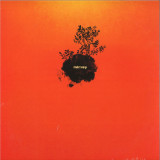
For Fans Of : LVL UP, Crying, Paear, Sheer Mag, Krill. When his primary music project, LVL UP, stopped working together in 2018, prolific multi-instrumentalist and illustrator Nick Corbo began working on a new body of music and visual art as Spirit Was. On his debut studio album Heaven’s Just a Cloud, haunting, beautiful scenes of the natural world feel just as represented in the warm, classic, wooden floors of country rock as they do in the dark, droning, shadows of doom and black metal. With new creative liberties, Corbo is allowed an opportunity to keep exploring the heavy, distorted instrumentation and experimental techniques that have shaped his music to date. His ability to focus on small details and weave them into vast networks has been evident in all of the music and visual art in his catalogue. In its density, Heaven’s Just A Cloud is threaded with memorable lyrics and recapitulating musical themes that guide the listener. Spirit Was feels at home among the technical, melodic songwriting of Harry Nilsson’s studio recordings, or the dusty, psychedelic oblivion of Earth and Wolves in the Throne Room. A departure from his previously collaborative recordings, the album features Corbo on drums, bass, guitar, and keyboards, weaving sweet, intentional melodies and vocal harmonies over a slamming, distorted rhythm section.
Cerca:ne hau
- A1: Image-Autumn-Womb (2021 Remaster) 03 09
- A2: In A Notebook (2021 Remaster) 02 16
- A3: Finding It There (2021 Remaster) 03 44
- A4: Subtle The Sum (2021 Remaster) 02 03
- A5: Threnody (2021 Remaster) 04 45
- A6: Now (2021 Remaster) 03 58
- A7: The Winter Of 1539-1540 (2021 Remaster) 02 19
- B1: John Harrington (2021 Remaster) 06 09
- B2: Apalachee (2021 Remaster) 05 00
- B3: Mound Builders (2021 Remaster) 02 55
- B4: Gifts (2021 Remaster) 04 18
- B5: Clement Danes (2021 Remaster) 04 12
Originally released in 2008 on CD and in a very limited vinyl edition, "The Malady Of Elegance" by Goldmund aka Keith Kenniff finally gets its long-deserved vinyl re-release, featuring a new artwork and remastered audio by Taylor Deupree.
Taking cues from 'Corduroy Road' Keith Kenniff (aka Helios) again restricts himself to the piano in conjuring up his humble soundscapes and again we are pulled into a deep, meditative and filmic world as the notes glide to a slow, pensive meter. Keith's precedent release was the challenging 'Two Point Discrimination' EP, released on the Western Vinyl label as part of their portrait series, but where that record was a collection of haunting experiments in form and sound, 'The Malady of Elegance' sees us back into the warming, homespun territory of 'Corduroy Road'. That's not to say these compositions are upbeat, far from it in fact, but there are lines to be drawn to folk music, and while Keith no longer draws on the American Civil War as a primary influence there is still the sense that the ghosts of old America haunt the keys.
On top of these references we see Keith tripping somewhat fittingly into a flickering filmic world somewhat in line with his taste in European film. There is a delicate narrative on show throughout the record from the opening hopefulness of Image-Autumn-Womb through the melancholy of Now to the sensitive romance of the album's closer Evelyn. Listening to the record almost creates its own cinematic accompaniment in the minds eye, and this is simply a testament to Keith's incredible talents as a composer.
Fans of Erik Satie, Sylvain Chauveau and Hauschka need look no further, 'The Malady of Elegance' is a deeply personal meditation which you cannot help but get lost inside.
SILENT SKIES ist die Band einer Kooperation zwischen Tom Englund (EVERGREY) und Vikram Shankar (REDEMPTION).
Geboten wird melancholische, soundtrackartiges Musik die hauptsächlich von emotionalen Keyboard-Klängen
begleitet wird.
Trostlos, düster, aber auch hoffnungsvoll bahnen sich die Kompositionen auf ”Satellites” ihren Weg, die von
Selbstreflexion und innerer Einkehr geprägt sind. Diese Melange erzeugt durch seine fast schon hypnotische
Wirkung Bilder vor dem inneren Auge des Zuhörers.
They have been active since 2005 and their new record, Where Myth Becomes
Memory, is their sixth full- length album. It is the follow up to their critically
acclaimed 2018 album, Time Will Die And Love Will Bury It. The group is known
for their sonic and energetic live performances, as well as their stark and
consistent artistic aesthetic.
Vocalist Eva Spence is one of the most dynamic and varied vocalists in the
progressive metal scene, her gorgeous cleans and guttural screams are truly
unique.
Their new record, Where Myth Becomes Memory, is a grand display of
immaculate musicianship, intricate songwriting, and raw emotion. There is a
consistent theme throughout the record which is accompanied by a hauntingly
beautiful grand piano. The attention to detail in the recording is astonishing, as
you can hear the individual cadence of each key being pressed in. The album
feels like a living, breathing work of art.
Throughout Where Myth Becomes Memory, you find Rolo Tomassi moving
through elements of mathcore, post- metal, prog, classical, ambient and
experimental.
The band can be broadly described as progressive metal, and specifically defined
as experimental mathcore.
They have been active since 2005 and their new record, Where Myth Becomes
Memory, is their sixth full- length album. It is the follow up to their critically
acclaimed 2018 album, Time Will Die And Love Will Bury It. The group is known
for their sonic and energetic live performances, as well as their stark and
consistent artistic aesthetic.
Vocalist Eva Spence is one of the most dynamic and varied vocalists in the
progressive metal scene, her gorgeous cleans and guttural screams are truly
unique.
Their new record, Where Myth Becomes Memory, is a grand display of
immaculate musicianship, intricate songwriting, and raw emotion. There is a
consistent theme throughout the record which is accompanied by a hauntingly
beautiful grand piano. The attention to detail in the recording is astonishing, as
you can hear the individual cadence of each key being pressed in. The album
feels like a living, breathing work of art.
Throughout Where Myth Becomes Memory, you find Rolo Tomassi moving
through elements of mathcore, post- metal, prog, classical, ambient and
experimental.
The band can be broadly described as progressive metal, and specifically defined
as experimental mathcore.
printed spined outer sleeve, plain inner, 12-page booklet
Mit ihrem neuen Studioalbum zelebrieren Bastille das Lebensgefühl im digitalen Zeitalter – sie feiern das Menschsein in der Tech-Ära und fangen dieses seltsame Gefühl ein, in einer Welt zu leben, die sich manchmal wie Science-Fiction anfühlt.
„In dieser apokalyptischen Phase an diesen neuen Songs zu arbeiten, wo plötzlich jeder zu Hause festsaß, rund um die Uhr vor dem Bildschirm, machte das Gefühl, dass es zunehmend schwerer wird zu
unterscheiden, was nun wirklich ist und was nicht, nur noch stärker“, so der Singer Songwriter Dan Smith. Das Album ist durchzogen mit Anspielungen und Referenzen aus Sci-Fi-Filmen und -Romanen sowie aus den Bereichen Videogames und Virtual Reality. Alles dreht sich um grenzenlose Möglichkeiten und einen fiktiven (aber durchaus vertraut wirkenden) Tech-Giganten namens Future Inc., verantwortlich für eine Erfindung namens Futurescape: ein Gerät, mit dem User:innen die eigenen Träume virtuell ausleben können.
Mit „Give Me The Future“ entführen Bastille ihre Hörer:innnen also in ein Sci-Fi-Wunderland, in dem alles möglich ist. Ihr viertes Studioalbum erscheint als CD und 12“ Vinyl.
"A split-screen maelstrom of Fela Kuti, Led Zep, Morricone, psych and dub" The Budos Band - MOJO - Rising - August 2019
Celebrating 15 years from the release of their debut album, Daptone's Royal Court from Staten Island delivers a truly epic collection of new material that finds the group further bridging the gap between the farfisa-fueled Ethio-Funk stylings of their early recordings, with the psychedelic, Sabbath-inspired hellfire of late.
“In some ways, itʼs reminiscent of our first two albums The Budos Band and Budos II,” says Tom Brenneck. “We branched off on Burnt Offering and Budos V. Now, weʼre still moving forward. You can play these songs on the dance-floor. We knew the horns had to stand out too. Thinking about hip-hop allowed us to put the bounce back into The Budos.”
This is evident from needle drop to final rotation. Heavy drum breaks, reminiscent of the B-Boy approved grooves of their early output reign supreme, setting the stage for the pulsating, hallucinatory wall of organ, menacing horns, and rugged guitar riffs to permeate your soul - leaving the listener in a rhythmic wash of Budonian rapture.
Long in the Tooth represents the culmination of a 15-year journey by a band that has consistently carved its own distinct path through the grooves of history.
Mimsy describes himself as someone with many interests and few skills, and sure, you can put it that way. But more precisely, he is a seeker and finder who has always felt more at home in the intermediary spaces. Since his first releases on Karaoke Kalk under the names Saucer, Motel and Wunder in 1997, he has mostly been active as Wechsel Garland, working with samples beyond recognition and thus blurring the lines between his own songwriting and the musical material he uses.
In 2011, he ended the project with the album »Dreams Become Things« and is now opening a new chapter as Mimsy with »Ormeology.« The album was ten years in the making and saw the producer work with sounds, voices and text fragments that were gathered over time. The twelve pieces—based on guitar pickings, looped textural sounds, rhythm boxes and shimmering organ sounds—install themselves in the unconscious through sound, melody and subtle rhythmic shifts to send the listener’s perception on a journey into the unknown.
The name Mimsy is a nonce word coined by Lewis Carroll in his famous nonsense poem »Jabberwocky,« a combination of »miserable« and »flimsy,« while the term »Ormeology« refers to the Italian film »Le Orme« (»Footprints on the Moon«), in which the main character is haunted by memories of a fictional film of the same name. While this alone creates a rich thematic frame of references for the album, it does not at all define its themes. Instead, the references are reflected in the methods with which the pieces on »Ormeology« were designed—sound and language orbit freely around one another, images within images are being layered, following their path unconsciously. In »Sans mobile apparent,« the lyrics get to the heart of this: »die Widersprüche aushalten / die Folien übereinanderlegen« (»enduring the contradictions / laying the foils on top of each other.«) Creative frictions emerge not out of binary decision-making patterns, but from additive layering.
Mimsy followed traces forth and back through time and space, collaborating for a few tracks with set designer and musician Lydia Schmidt and letting Wolfram Wire record various lyrics based on automatic writing that were gathered by Mimsy. Furthermore, he asked the photo blogger Lilia Katherine from Brazil and the Canada-based Andrea Hernandez to translate and record his lyrics in their own respective languages. Human global coincidences resulted in collaborations which are presented as discrete and thus make the album as a whole and even more complex meditation on the interplay of the concrete and the abstract. This is best exemplified by the song »Ginster,« throughout which Schmidt and Mimsy’s voices overlap more and more until they enter a sort of call and response pattern, although they never seem to address each other directly.
»Ormeology« is an album that whirrs and flickers, seeking to mediate between the tangible world and the intangible by blurring the boundaries between words and sounds and space. It is an archipelago that is in many ways connected to what surrounds it, while at the same time opening up a space of its own.
Acclaimed UK electronic musician Kevin Richard Martin (The Bug, King Midas Sound) releases a stunningly powerful rescore of Andrei Tarkovsky’s seminal 1972 movie Solaris on Phantom Limb.
In May 2020, British musician Kevin Martin was invited by the Vooruit arts centre in Gent, Belgium to compose a new score for a film of his choice. Having been long inspired by pioneering Soviet filmmaker Andrei Tarkovsky, Martin tells us that his 1972 masterpiece Solaris was the “natural choice”. The film is an unattested giant, not only of science fiction and Soviet film, but also in the annals cinematic history. And its original score, composed by regular Tarkovsky collaborator and early Soviet electronic musician Eduard Artemyev, is a magnificent work of haunting majesty, a key element to the film’s brilliance. Martin’s challenge was great: “it was with a certain amount of trepidation I stepped into such large footprints,” he writes.
The results - an all new score entitled Return to Solaris - are breathtaking. The film is intense, psychologically devastating and bleakly compelling. Interweaving themes of love, horror, sorrow, nostalgia, memory and dystopia, Martin’s score expertly mirrors this expansive breadth of psychic weight, from existential dread to heartbreaking poignancy, with immense emotional gravity. Drawn to its “narrative struggle between organic, pastoral memories of a lost past, and the harsh, dystopian realities of a futuristic hell,” Martin employs atonal noise, simmering waves of distorted synthesis, undulating drones and otherworldly, astronomic sound-design to crushing effect. Subtly submerged recurring motifs - reflections of individual characters - rise and fall amidst the fog, occasionally illuminating the doom like motes of starlight, before settling back into the density of space.
Take the freaked-out punked up soul of The Stooges and MC5 mix that with 60s garage trash, blend in Sabbath, AC/DC and heavy rock n roll and then hot wire that sound to a handful of freaks located in Fredericton, New Brunswick. Here it is that The Angered Wrecks were located - in an old Victorian style house in downtown Fredericton. It was here they set up a permanent rehearsal space on the main floor taking up the dining room and living room area with a full P.A. system and the long parties would begin as the Angered Wrecks cranked out an unholy primal serving of mind-numbing, eyeball-popping guttural pure rock and roll.
Lucky for us the Angered Wrecks had a primitive DIY recording set up as they recorded live off the floor with one cardioid mic taped to the ceiling to capture the entire room sound and straight into a cheap Alpine cassette deck. The results of these previously unheard recordings capture the essence of trashy rock’n roll at it’s finest, delivered with pure dereliction, and always a side of extra sleaze.
Keeping warm in the winter at another old salt box style house they would later rehearse and play gigs in, a large circle was cut in the floor so that the rising heat from the pottery kiln downstairs would (along with the right mixture of beer and ‘Purple Jesus’, weed and often speed and hot dogs) keep these boys fuelled long enough in sub zero temperatures to keep pumping out the rock’n roll savagery.
The last show they played was in the fall of ’81 at the Bug Shack after the household was served an eviction noticed with the house to be entirely demolished (just like Stooge Manor aka The Fun House).
They got a gig together the weekend before demolition, packed the bottom floor and played a blazing set. At the very end, walls were kicked apart, old cans of paint strewn about, general wanton destruction to furniture, doors, windows etc…insane. The bug shack had come to an end and shortly thereafter, The Angered Wrecks.
That these tapes have survived to this day is all thanks to John Westhaver’s archival hoarding (even though the loss of a 90 minute session of the Angered Wrecks still haunts John to this day).
So CRANK these tracks as loud as you can – these audio tapes are not for the faint of heart
- A1: Dick Khoza And The Afro Pedlars - Chapita
- A2: Ensemble Of Rhythm And Art - Pelican Fantasy
- A3: Spirits Rejoice - Sugar Pie
- B1: Makhona Zonke Band- The Webb
- B2: Abacothozi - Night In Pelican
- C1: The Black Pages - There Goes
- C2: The Headquarters - Moshate
- C3: The Shyannes - Asso-Kam
- D1: Almon Memela’s Soweto - Pelican City
- D2: The Drive - I Have A Dream
‘The Afro Modern Seventies Sounds of Soweto’s First Nightclub
• Over ten years in the making, this is the first compilation from South African vinyl re-issue specialists Matsuli Music
• Ten track double gatefold album journey through jazz, funk, fusion and disco, detailing the incredible story and sounds behind the Soweto nightclub during the height of apartheid
• Uniquely South African take on the trans-Atlantic sounds of Philadelphia, Detroit and New York City
• Cover artwork by Zulu Bidi (of Batsumi fame) with unseen photographs, and liner notes by Kwanele Sosibo featuring interviews with key musicians, players and a former president of South Africa
• Audio mastered and cut for vinyl by Frank Merritt at The Carvery with heavyweight 180g vinyl pressed at Pallas in Germany
A night-time haunt in the backstreets of Soweto run by a well-known bootlegger should have been a prime zone for nefarious underworld activities. Instead, it nurtured an underground of a different kind. Soon after its opening in 1973, Club Pelican became a spot where musicians steeped in the tradition of South African jazz began to cook up experimental sounds inspired by communion, competition and the movements in funk and soul blowing in from the West. Located in an industrial park on the western edge of Orlando East, Soweto, Club Pelican was off the beaten track, among a matrix of railway and industrial infrastructure. In a different time and place, this would have been a prototypical nightclub location, except there was no local precedent to follow. This was Soweto’s first night club.
In the intervening years, this location has served to heighten the now-defunct spot’s legendary status as a singular venue, one that ruled the night in the Seventies. Initially called Lucky’s and established in 1973, the Pelican’s impact on the Soweto cultural landscape was immediate. Lorded over by a charismatic figure known as Lucky Michaels, the club became the jewel in a nondescript collection of family businesses. It boasted a diverse pool of talent in its succession of house bands and an A-list of ghetto-fabulous singers as
its cabaret stars. Its VIP section was a veritable who’s who of Soweto society and its stage, hosting a mix of the day’s pop culture infused with the creativity and individual histories of the musicians, the Pelican filled a live music vacuum.
One Night in Pelican captures the halcyon seventies period with a single nightclub embodying an indomitable spirit of its troubadour players. While schooled and rooted in “standards” and local forms, the music could take any direction, at a moment’s notice. This compilation features all the key groups and players of the time: Abacothozi, Almon Memela’s Soweto, The Black Pages, Dick Khoza and the Afro Pedlars, The Drive, Ensemble of Rhythm and Art , The Headquarters, Makhona Zonke Band, the Shyannes and Spirits Rejoice.’
Martina Topley Bird’s new studio album ‘Forever I Wait’, features collaborations and arrangements from Robert Del Naja of Massive Attack, Euan Dickenson, Rich Morel, Christoffer Berg, Benjamin Boeldt and Tiadiad.
'Forever I Wait' is Topley-Bird’s fourth long awaited studio album and her very first self-produced and curated piece of work to date. The album, set for a digital release on September 10th, with a vinyl LP available to pre-order now, captures an extensive journey confronting, exploring, analysing and reflecting on the devastating fragilities of life as it ultimately seeks to make peace with what life is.
A sentient and sensual presence framed Tricky’s trip-hop pioneering white label debut release, Aftermath. Hauntingly unique and immediately recognisable, that voice became the defining timbre of a new music movement. Behind this voice was mysteriously soft-spoken, London-born Martina Topley-Bird, whose exquisite voice came to inspire and infuse other pioneering artists across all genres.
“It’s a trip through different emotional states and frequencies, mostly dark, from insecurity and desire, all the way through to serenity and acceptance with themes that resonate from my young teens all the way through till today. Things that I’ve seen and things I’ve felt and worked through, although sometimes I sense them trying to return”
“Forever I Wait”, as the title alludes, was written and re-written over a long period of time.
“I had to change my way of relating to music and the music industry in order to make the record I wanted to make.…and that took time. And I took the time I needed. I started in London, moved and lived in America for the first time in my life, then briefly moved back to London and finished the record in Spain.”
“After trying to work on a new record for a couple of years, I came to a realisation that in order to move forward I had to separate the concept and vision I had for this record from me as a person. I had to shift my perspective. That was a big personal win and the beginning of “Forever I Wait.”
'Forever I Wait' leans on a multitude of tense sounds, dubby atmospherics and natural instrumentation to demand the listeners attention leading to over two decades of observations, experiences and musical sacrifices. It is a bi-product of the new perspective featuring carefully selected and tailored supporting arrangements from a handful of collaborators including Robert del Naja (Massive Attack), Rich Morel (Deep Dish), Christoffer Berg (Fever Ray) and Benjamin Boeldt (Adventure).
A truthful expression of desire and heartache “Forever I Wait “Is Topley Bird’s most precise and accurate album to date.
Industrious Polish DJ, producer and live performer Szafran is summoned to Thabo's Berlin-based house imprint Home Again, debuting a new alias and sound in his arsenal as he reaches the spaces between house, breakbeat and acid house. The label's third release, Thabo grabs revered Parisian producer Leo Pol for a killer remix.
Previously releasing and performing as Oskar Szafraniec, he broke through under the mentorship of acid house legend A Guy Called Gerald, touring extensively together and developing his live show. His releases have come through notable labels Rawax, Deset and Cyclo, while collaborations with heavyweights Ricardo Villalobos and Pier Bucci brought more discerning ears, and basing himself in Berlin ensured that he'd play across the city's hallowed haunts, including Club der Visionaere, Watergate, Tresor and Salon zur Wilden Renate.
"After eight years in Berlin, I relocated to Croatia's Dalmatian coast last year. There was the enforced break from touring, but I also took a break from producing. I wanted to step back and find new inspirations. I was listening to a lot of Warp Records, feeling hugely inspired by the melodies in Aphex Twin and Squarepusher's '90s releases. My musical direction changed and I wanted to present these influences with my own touch. I feel my music is more emotive through the way I'm contrasting analogue, digital and organic elements and I hope people feel that." - Szafran
Packing punch and propulsion in equal measure is 'It's Just A Feeling', a striking, emotive track that cuts through with the sonic signature of the Roland TB 303. Prolific mastermind Leo Pol picks up the pace, giving the track a rerub with all the bang and bustle to vitalise a dancefloor. Prodigious outing 'You Don't Know' enters the field full of vigor with the breakbeat drum loops and 4 X 4 kick drum sequences giving it a propulsive, rousing pace, while 'Infuse' reaches through and closes the EP with a laidback flex.
Artwork by Ken Hanamura
"""Riding SCORCHING hot on the heels of their recent self-titled debut, fans could be forgiven for expecting more of the same from Champyun Clouds’ second long player of
2021. A hodgepodge of cutting-room-floor-fodder and experiments that would’ve been b-sides or Japan-exclusive CD bonus tracks in those halcyon days of physical formats’ golden ages is not what we’re getting. Let’s save those for a deluxe anniversary reissue
one day. Nah - sheer, unabashed creativity fuels this album; and weirdly enough, they’ve managed to branch out in interesting ways while also creating an album that is more immediate and banger-centric. Although Nail’s eclectic psych-lounge tendencies and
Asa’s irreverent poetry and broad Nottingham lilt remain the key touchstones of CC’s sound, opener “Check For Silt”s rough drum’n’bass beats offer an immediate and clear sonic progression for the Nottingham duo. The LP ultimately plays a bit like a haunted
jukebox in outer space - with elements of dub, britpop, early house, trippy, blissed-out sunshine pop (reminiscent of mid-90s His Name Is Alive at their most Beach Boys-aping), William Orbit-esque 90s psych-pop electronica, distorted glam rock shuffles and
garage-y funk. There’s a particularly great moment of sequencing at the end of the first half where I got lulled into a state of near-euphoria with the Air-like “The Flowered Crown” before getting slapped ‘round the face by “I’m Not Right For You”, which sounds
like Nile Rogers producing a demo for Sheila & B. Devotion, except he recorded it at the bottom of a well. Sophomore slump? Never heard of him, mate."""
Six months on from the release of their critically-acclaimed fourth album, ENTERTAINMENT, DEATH, Philadelphia trio SPIRIT OF THE BEEHIVE closeout 2021 with brand new 7” THE DOOR, comprising two previously-heard but never physically released songs in “THE DOOR IS OPEN” and “THE DOOR IS CLOSING”.
A special and limited release, 500 copies of the single have been pressed on cloudy teal vinyl. The 7” is led by “THE DOOR IS OPEN”, a 2020 single that marked a new chapter for the band ahead of the release of ENTERTAINMENT, DEATH. The song “continues to defy definition”, Stereogum said upon its initial release, before adding: “It’s amazing that they made such a short track feel like such a dreamy journey.”
It’s backed by “THE DOOR IS CLOSING”, a bright and skewed gem of a track that was originally released earlier this year via Through The Soil, a charity compilation that benefited the NAMI COVID-19 Mental Health Support Fund.
Whether opened or closed, THE DOOR is a bold reminder of SPIRIT OF THE BEEHIVE’S many layered and colourful ideas. It also ribbon-ties a brilliant 2021 for the band, one which saw ENTERTAINMENT, DEATH labelled as “an intensely beautiful, intensely difficult record” by Pitchfork, a “sprawling odyssey of haunting dissonance and blissful euphoria” by Flood Magazine, and a "storm of sound with a deep humanity coming through” by Fader.
SPIRIT OF THE BEEHIVE is Zack Schwartz, Rivka Ravede and Corey Wichlin.
Martina Topley Bird’s new studio album ‘Forever I Wait’, features collaborations and arrangements from Robert Del Naja of Massive Attack, Euan Dickenson, Rich Morel, Christoffer Berg, Benjamin Boeldt and Tiadiad.
'Forever I Wait' is Topley-Bird’s fourth long awaited studio album and her very first self-produced and curated piece of work to date. The album, set for a digital release on September 10th, with a vinyl LP available to pre-order now, captures an extensive journey confronting, exploring, analysing and reflecting on the devastating fragilities of life as it ultimately seeks to make peace with what life is.
A sentient and sensual presence framed Tricky’s trip-hop pioneering white label debut release, Aftermath. Hauntingly unique and immediately recognisable, that voice became the defining timbre of a new music movement. Behind this voice was mysteriously soft-spoken, London-born Martina Topley-Bird, whose exquisite voice came to inspire and infuse other pioneering artists across all genres.
“It’s a trip through different emotional states and frequencies, mostly dark, from insecurity and desire, all the way through to serenity and acceptance with themes that resonate from my young teens all the way through till today. Things that I’ve seen and things I’ve felt and worked through, although sometimes I sense them trying to return”
“Forever I Wait”, as the title alludes, was written and re-written over a long period of time.
“I had to change my way of relating to music and the music industry in order to make the record I wanted to make.…and that took time. And I took the time I needed. I started in London, moved and lived in America for the first time in my life, then briefly moved back to London and finished the record in Spain.”
“After trying to work on a new record for a couple of years, I came to a realisation that in order to move forward I had to separate the concept and vision I had for this record from me as a person. I had to shift my perspective. That was a big personal win and the beginning of “Forever I Wait.”
'Forever I Wait' leans on a multitude of tense sounds, dubby atmospherics and natural instrumentation to demand the listeners attention leading to over two decades of observations, experiences and musical sacrifices. It is a bi-product of the new perspective featuring carefully selected and tailored supporting arrangements from a handful of collaborators including Robert del Naja (Massive Attack), Rich Morel (Deep Dish), Christoffer Berg (Fever Ray) and Benjamin Boeldt (Adventure).
A truthful expression of desire and heartache “Forever I Wait “Is Topley Bird’s most precise and accurate album to date.
With a little patience and a lot of finesse, Jakobin & Domino cooked up a fine new five track House EP for Luv Shack Records.
The eponymous opener "Lost Memories" effortlessly blends jazzy rhodes and emotive string samples with a funky percussive track and a stomping four to the floor beat.
"Hypnotica" delivers what the title suggests; haunting arpeggios go hand in hand with eerie 7 chords and hushed vocal samples, albeit with a jacking groove laying the foundation.
On "Molecules", Jakobin & Domino evoke classic Chicago house vibes with a shuffling beat, a funky synth bass and uplifting chord stabs to boot.
The arguably most classic J&D sounding track on the EP is "Needed", a hard hitting joint that blends a sombre piano chord progression with dreamy acid lines, evoking major dub house feelings.
"Unbogeba" is a laid back slice of deep house that nicely wraps up the EP, with a lingering afro vocal sample and super lush organ chords, it's the perfect track for hazy afterhours.
After their first album “Vertigo” (2018), the Paris-based musicians making up BLOW are back with the indie-pop album “Shake the Disease”. Produced by Crayon, this surprising new chapter is a collec- tion of purer, more organic sounds with a somewhat 70’s/80’s tilt. A return to basics, one that doesn’t turn its back on reality.
The changes are radical as the need was strong to surprise people including themselves, to think outside the box. They went for radical changes: a new method of song writing, a new musical genre, a new way of working, ... But the group’s fans should be reassured: even if the electronics have given way to a more rock-inspired sound, and the chords are a bit richer, and even if the bass, the driving element of each song, is stronger than ever, “Shake the Disease” is pure BLOW.
In terms of the lyrics, a common thread appears: duality. Without ever giving way to schizophrenia, this duality of “what I’d like to be” versus “what I really am” stands at the center of the chessboard. Legitimate and healthy questions give rise to life changes that almost all of us ask ourselves when en- tering into our thirties, just like the members of BLOW. Coming to terms with all this mentally without losing our instincts or our spontaneity, is the guiding idea behind this second album.
Coming back strong, BLOW started dropping uplifting single and live session «Full Delight» and more recently «One Life», both supported in France and abroad by Greenroom, Tsugi radio, The Inde-pendent, Ones to Watch, Hotmix, Brain, Vanyaland, Kulturnews, Laut.de, DetektorFM...
This third extract is «Shake The Disease», a laid back single coming along with a COLORS session including breathtaking performances from Quentin (singer of BLOW) and the only featuring of the album, praised female songwriter and singer Anna Majidson from French duo HAUTE (also featured on COLORS a few years back).
Limited Transparent Magenta Vinyl. Enigmatic pop outsider Tony Gallardo makes music that's perpetually perched on the outskirts of Mexico's fertile electronic underground. Since 2008, he has been releasing music that inhabits its own artistic universe, a cross between Frank Zappa, Daniel Johnston, The Knife, OutKast and Rosa Pistola. He co-founded the Cocobass label, pioneered the fusion of L.A. noise and cumbia known as ruidos6n and has released music under a plethora of monikers: dark techno as Boi Patrol, ramshackle electronic pop as Maria y Jose, experimental surf rock as El Capricho and experimental dembow as La Fiebre X. "Selected Works" assembles some of Gallardo's most crucial material from a run of EPs released between 2008 and 2013. These tracks show the breadth of his output, running through sleazy, neon electro ('Bruja', 'Mi Presa'), neck-snapping tropical dance music ('Kibose', 'La Conquista'), and eerie Mexican trap ('Plata 0 Plomo', 'Ultra'). It's introspective, haunted music from one of Mexico's most original and most under-appreciated artists that paints a picture of a psychedelic musical landscape that's hard to resist. One listen to the album's closer 'Club Negro', originally released in 2013, should tell you all you need to know. This track is the perfect introduction to the world of Tony Gallardo, with screwed 'n chopped Spanish vocals, 7 doomy syncopated beatbox rhythms and wobbly houseparty electronics.
This is the repress of celebrated American rock band Against Me!'s album 'Shape Shift With Me' on blue double vinyl. Originally released back in 2016, it has been out of stock on vinyl since 2018. It is the follow up album to the band’s critically acclaimed studio album, Transgender Dysphoria Blues, and came out at the same time as frontwoman Laura Jane Grace announced her memoir titled TRANNY: Confessions of Punk Rock’s Most Infamous Anarchist Sellout. Recorded, mixed and engineered by Marc Jacob Hudson (Taking Back Sunday, Saves The Day) at Rancho Recordo, ‘Shape Shift With Me’, Against Me!’s seventh full length album, has the distinction of the first album frontwoman Laura Jane Grace has written truly from the heart, with no metaphorical cloaks cast over the lyrics. It’s an album about love, that deceptively complex emotion we all struggle with yet has somehow eluded most of Grace’s songwriting for the past 20 years. In a career already full of classic punk records, Shape Shift With Me feels like the definitive Against Me! album—it’s poppy and catchy (“Rebecca,” “Suicide Bomber”), aggressive and in-your-face (“ProVision L-3,” “Dead Rats”), sentimental and longing Crash,” “All This (And More”). Moreover, it’s the culmination of four years of existence as Laura Jane Grace—there’s no going back now, so she might as well embrace it.