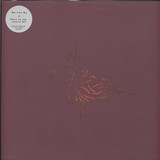
"The kind of melancholia I'm talking about, by contrast, consists not in giving up on desire, but in refusing to yield. It consists, that is to say, in a refusal to adjust to what current conditions call 'reality' - even if the cost of that refusal is that you feel like an outcast in your own time." (Mark Fisher, Ghosts Of My Life, Zero Books 2014, p. 24) In Ghosts of My Life: Writings on Depression, Hauntology and Lost Futures', the author Mark Fisher outlines - to put it in a big way - a resistant melancholy. This stands in contrast to leftist melancholy resignation', as well as something which Fisher does not talk about: its common masculine counterpart, habitual post-left cynicism - as in seen it all before'. Fisher calls this hauntological melancholy. Haunting, spooks, ghosts and apparitions are an almost constant presence on I Started Wearing Black', the second album by the Cologne-based artist Sonae (pronounced so-nah'). The term hauntology shares a fate with retro-futurism when it comes to inflationary overuse and abuse. It's a conceptual container that looks good and can hold a lot, indeed, too much. Furthermore, hauntology has its peak season behind it, a term on the threshold of its expiration date. Nevertheless, I would like to rehabilitate hauntology and use it properly to characterize I Started Wearing Black', because the term is rarely as compelling to describe music as is the case here. The most recent other example could be Asiatisch' by Fatma Al Qadiri, but with a completely different frame of reference. What are the ghosts of this music It rustles, crackles, ruffles, crunches, rattles, scrapes, sometimes a beat emerges from the constant noise, sometimes an obscure voice mumbles incomprehensibly, sometimes a melancholy piano figure is prevented by this noise from coming too much to the foreground. It definitely is eerie - to bring into play another term used by Fisher in the title of his latest book, The Weird and the Eerie'. In British pop-jargon, eerie first occurred to me more often when referring to particularly leftfield, spooky and... well... ghostly dub, a bass-heavy, echoing noise, from Augustus Pablo to Creation Rebel to Burial. Unlike the Wald & Wagner records by Wolfgang Voigt, Sonae is not a kind of neo-romantic veiling with a tendency for escapist nebula. It is more a noise of latency. The noise signals a latent - not necessarily acute - threat, a latent uneasiness about... yes... about what About a System Immanent Value Defect' That's the name of a track on I Started Wearing Black' where something that sounds like a French Horn (or a foghorn) battles for attention through or against the background noise. An email from Sonae: The piece 'System Immanent Value Defect' should actually be called 'I See Turkey'. I wrote it for my fellow student Elif - she is a pianist and Gezi Park activist from Istanbul. Through her I witnessed the inner conflict and agitation that political circumstances can create: her feelings of guilt when there was an attack, with her safe in Germany as a student, watching the events from afar. It was horrible. When her mother begged her not to come home because she feared for her safety, I felt a cold shiver run down my spine. I started with the piece from this mood, beginning with the piano, then the noise (modulated sinusoidal curves), which reminded me of waves and the then heatedly discussed Mediterranean sea: atmospheric, melancholy motifs. In contrast is the anger, the pressure, represented in corresponding sounds - hopefully audible! - During this time I started to think about world views as they can be found around the globe, in how far they held by societies and their political representation. I realized that I know of no political system that is actually about the people and what would do them good. It's always about positions, power, money. I thought that was a lot more frightening on a global scale than merely viewing Turkey in isolation. That's why the piece is called "System Immanent Value Defect", because our world suffers from precisely that. Everywhere, it's all about the wrong things.' Between the wrong things there are happy moments. In the title track, after 184 seconds of rattling and hissing, a beat is unleashed, like an arrow released from a spanned bow, a beatific relief, if there is such a thing. White Trash Rouge Noir' first meanders along spookily, then after 144 seconds it transforms itself into a distant cousin of Einstu¨rzende Neubauten's Yu¨ Gung', but there is no Big Male Ego to be fed here, and the black in the album title is a completely different type of black from that of the Neubauten. Furthermore, I Started Wearing Black' was finished long before the black dresses were worn at the Golden Globes as a sign of protest against sexual violence. Sonae writes that she herself started wearing black some time ago. Her reasons are so-called personal ones: ... resulting from an individual situation (lovesickness), I started to wear black (gaining weight and feeling ugly).' The political dimension of gaining weight, feeling ugly and therefore dressing in black in I Started Wearing Black' lurks within the noise and never becomes explicit and only rarely manifest - or a manifesto. Sonae writes about the track We Are Here': A piece for minorities... in this case, considering the current pop-feminist discourse, explicitly for women. Female artists have long been saying loud and clear that 'we are here' and 'electronic music is not a boys club!' But this pop-feminist moment should only be seen as one part of the dedication of the piece. It is for minorities, for the oppressed, who didn't belong enough.'
Klaus Walter
Search:ne hau
Instant is the trio of Bernd Schöll (Bass, Vocals, Rhythm), Mike Hauer (Guitar, Synth, Percussion), and Marion Siekmann (Vocals) from Munich, Germany. They formed in 1980 after meeting through mutual friends attending the local art and graphic design school. The trio were dissatisfied with their surrounding musical environment. Inspired by the Velvet Underground, Kraftwerk, and Giorgio Moroder, they set out to create their own brand of Neue Deutsche Welle fusing Dada, disco, and Krautrock.
Over the course of 2 weeks in Summer 1980 the band teamed up with local producer Mario Strack to record 6 songs. These would make up their debut eponymous album that was originally self-released on 10' vinyl in 1981. They utilized a simple set up of guitar, bass, and keyboards, plus the BOSS DR-55 Dr. Rhythm drum machine. Metal scraps clanging appear on the tracks 'Do Not' and 'Optimate Minimum', and a washing machine was sampled on the track 'Joyboy', which features Marion reading from the appliance's instruction manual. The A-side features 4 tracks in 11 minute, while the B-side hosts 2 songs in the same stretch of time. 'Charade' features no wave saxophone accompaniment from Kai Taschner of Munich New Wave band Luna Set. Marion's vocals are between Nico's Teutonic chill and Alison Statton's (Young Marble Giants) playfulness, while Bernd takes a monotone approach. Lyrics for 'My Boy' and 'Everybody's Gotta Mutate' were adapted from 'Rotwang', a fragmented novel written by Tim Hildebrandt, one of the brothers famous for illustrating the works of Tolkien.
All songs have been remastered for vinyl by George Horn at Fantasy Studios in Berkeley. The vinyl comes housed in a replica of the original jacket design, which features a neon red screen-printed drawing of a cut-out doll family on a stark white background. Each LP includes a postcard insert with lyrics.
Belgium-based Composer Christina Vantzou's Fourth Full-length For Kranky Ventures Further Into The Uniquely Elusive And Evocative Mode Of Ambient Classical Minimalism Which Has Become Her Signature: A Fragile Synthesis Of Contemplative Drift, Heady Silences, And Muted Dissonance. In Regards To The New Album She Speaks Of Focusing Particular Attention On The Effects Of The Recordings On The Body, And Of 'directing Sound Perception Into An Inner Space.'
No. 4 Took Shape Across Roughly Two Years, Incorporating A Diverse Array Of Musical And Conceptual Collaborators, Including Fellow Kranky Artists Steve Hauschildt And John Also Bennett (of Forma) As Well As Angel Deradoorian (ex-dirty Projectors), Clarice Jensen, Beatrijs De Klerck, And Members Of Belgium's Echo Collective. During The Creation Process Vantzou Wanted To 'blur Lines Of Hierarchy,' And Thus Allowed All Ensemble Members And Technical Assistants To Add Or Delete Elements. Despite Such A Spectrum Of Input The Eleven Tracks Feel Distinctly Cohesive, Weaving Elegant Textures And Resonant Open Spaces Within A Twilit Landscape Of Eclectic Instrumentation: Piano, Harp, Vibraphone, Voice, Strings, Marimba, Synthesizers, Gong, And Bells.
Vantzou Describes The Recording Process As One Of Prepared Spontaneity: That Is, 'having Plenty Of Ideas Ready To Explore Going Into The Session, But With Enough Time To Depart From Those Ideas And See What Happens.' This Mindset Of Premeditated Exploration Informs The Album's Emotive Textural Intuition, With Hushed Drones And Delicate Gestures Eliding In The Periphery Of The Mix. She Cites Sleep And 'the Loosening Of Time' As Two Formative Practices In Her Private And Professional Life, Which Manifests In The Quietly Hallucinatory Properties Of Vantzou's Music. No. 4 Feels Both Endless And Ephemeral, Immersive And Immaterial. It's A Music Of Horizon Lines And Half-light, Mapped With Feeling And Foresight.
Recorded In New York City And Brussels. Mixed In Berlin.
A Portion Of This Work Was Funded By A Generous Grant From The Flemish Community In Belgium.
2x12"
Tinfoil is the project of DeFeKT and Sunil Sharpe. Initially forged as a studio collaboration in 2014 (and later as a live show), the pair have since racked up an impressive catalogue of 12s on their own self-titled label. Tinfoil's sound is unique in today's scene, reflecting the versatility of both artists, plus a combined know-how of techno and electro. Their music comes primarily from live studio jams, enforced by a desire to get quickly to the point in what they do. This is no surprise given the fast, technical way in which they each perform solo.
For their debut album, Tinfoil provide a varied but cohesive collection of tracks. Following the intro's epic synth blasts, they open with a bang through 'Caravan Life' - a sinister, bassline-driven destroyer that builds and builds over a blend of claps, filter zaps and crying feedback. 'Beads' continues in a heads-down vein, this time with a more musical EBM type bass and knocking rimshots that mark the first appearance of Sunil's role-playing, haunting lead vocals.
'Friendly Safe Fumes' marries playful bass notes to a singing lead line, as fizzling closed hats and busy claps whip things into a frenzy. Next enter the otherworldly mutant electro of 'Meadow Pulse', signaling a well-timed lull in mood to explore a silkier side to Tinfoil's production. 'Every Saturday Night' starts with a taxi conversation about horses and carbolic soap in bygone Dublin days, before launching into a volley of clattering beats and hip-shaking FM sequences.
'Multi-DOMINATION' retains some of the FM wonk and treads a broken-beated path, featuring vocals this time akin to a ritualistic chant or perhaps the murmurings of a possessed baby. 'Both Roads To Triogue' meanwhile, brings us to a short intersection, splicing odd voices with a dense tribal rhythm. 'The Wolves Of Hellfire' is Tinfoil in more minimal dancefloor mode, as drones filter in and out under a resonating bass that detonates at all the right times.
Closing with 'Resting Point', the climax becomes deadly. The beats are stepped and the bass boisterous, while pained screams become quickly uncontrolled, setting up for a crescendo of roughneck rhythms, ricocheting kicks and turbulent modular wails.
Tinfoil have been on a roll since the beginning but maybe 'On A Roll' emphasizes this a little bit more now.
- Black and Purple vinyl versions.-LP includes download.
-Son of Blue Note legend Bruce Lundvall.
-12 years since his last record to feature vocals.
Dais Records is proud to unveil the new dark pop masterpiece from artist and composer Tor Lundvall. His first vocal album since 2009's Sleeping and Hiding, and following the release of two instrumental albums and three CD box sets since that time, Tor returns with an album of beautifully intricate sadness and reflection: A Dark Place.Born in 1968 in Wyckoff, NJ, Tor Lundvall is a painter and ambient composer.
The son of Blue Note Records legend Bruce Lundvall, Tor was exposed to artwork, music, and creativity from a young age, and began his professional painting and music output in the late 80s. Widely known for his dark imagery and thoughtful, provocative soundscapes, Tor Lundvall's artwork is all-encompassing. His music, when paired with his paintings, creates a world within which one could easily disappear. An intensely private individual, Tor Lundvall eschews the gallery circuit and live performances for his private studio in Eastern Long Island, NY, preferring to show his artwork privately and focus on studio production and writing without the pressures of the audience and all it encompasses.
Dais Records is honored to provide another glimpse into his world through his recordings. We hope you find it as special and as unforgettable as we do. Artist Statement:It's been twelve years since I recorded my last vocal album, "Sleeping and Hiding" (released in 2009, but recorded in 2005). After completing those sessions, I felt that I had said just about everything I wanted to say lyrically. I wasn't sure if another vocal album would ever materialize, but slowly and surely, new lyrics came with new songs to accompany them. Finding the words to describe this album is almost as difficult as the past couple of years. There is a lot of pain, fear and sadness wrapped into these eight songs. More so than usual, I think. The loss of my father in 2015 and coping with his absence certainly hangs heavily here. I recorded this album at night while I stared out from my bedroom window into the shadows of the garden and the neighbor's house next door. The reflections of the flower lights encircling my bedroom window looked like distant, golden constellations through the glass while I worked. A nice memory. A few of the melodies were inspired by, or constructed around some of my earliest riffs and abandoned sketches, one dating all the way back to 1985. The lyrics to the final track, "The Next World", came to me while swimming alone in the bay one clear October afternoon about five years ago. I originally envisioned a lighter, more optimistic song to accompany my first draft of lyrics, but the piece evolved into a song about final reflections, lost dreams and the terrible sadness of the passing of time.
Tommy Mandel's Mello Magic' on Invisible City Editions is a compilation of personal synth-laden pop songs created between 1980-87 in NYC. BIG BIG TIP!
.
His professional work as a keyboardist and vocalist found him on stage and in the studio with many of the 80s greats from the Clash, Todd Rundgren, B-52s, Violent Femmes, The Ramones, Tina Turner, Mark Ronson, Dire Straits and Bryan Adams. While offstage and out of the major studio sessions, Tommy wrote in little books, made animation films and hooked up a massive amount of synthesizers, sequencers,microphones and recorded songs like diary entries. He self released almost 20 CDs, cassettes and one Self Titled 12' Ep. Each song selected here is stunningly simple, lush, desperate, playful, and harmonic, touching on disparate trangents like Brian Wilson, Egyptian Lover, Michael Shrieve,Holger Czukay, Ariel Pink, YMO, AOR FM West Coast Rock, Arthur Russell, Martin Denny, Peter Gordon, Drexciya, Prince and Private Issued New Age Boogie. Tommy recently jokingly coined his music corporate ambient' and and it all shouldn't work, but somehow he manages to effortlessly make each song a Tommy Mandel song - DIY, homespun,personal, stunning, and not too serious. This is perfect pop, charming, sincere, infectious and the work of a humble, good hearted, romantic savant. Tommy Mandel's Mello Magic' will be out on limited LP Vinyl release and available Spring 2018. Be sure to check his ambient new age LP from his cassette Music For Insomniacs'also out soon on ICE/Intelligent Instruments. Designed by Marko Vuleta-Djukanov. - Sesto F
ALEX is a dark, haunting and brooding synthwave record that sets the night on fire, taking you from darkness all the way to the shining lights of Broadway. With hints of cyberpunk, outrun and other 80's inspired retrowave influences, ALEX has developed a true signature sound that is funky, groovy and totally rocking. X takes you on a futuristic, electronic music trip that's filled with nostalgia and suspense. Artist bio: Originating from Edinburgh Scotland, ALEX is a Scottish born electronic music producer, composer and DJ. After spreading his sound to every channel and label possible, ALEX broke through in the most significant way possible. If you get the attention of Playmaker and NewRetroWave in the Synthwave scene, you're doing something right, and ALEX's unique approach to composition and production led to his debut release with NRW, the 'Blood Club' EP. And things haven't slowed for the young producer, with two more EP's and an album since his debut, each showing another side to the artist. After the release of his Drive inspired EP 'Youth', fans of the powerful vocal tracks 'Rebel of the Night' and 'Youth' can get excited for the pair of major budget music videos ALEX has in store, with filming having taken place in Russia and New York City. ALEX grew up listening to the likes of Daft Punk, Justice, Underworld, Chromatics, Deadmau5, absorbing the sounds of Disco, House, Hip-Hop, and Rock, cherry picking his favourite elements to blend into the new retro haze of his own material. He also cites film composers, such as Disasterpiece, John Carpenter, Vangelis, Johan Johansson, and John Williams.
* Still Circles announce the release of their debut album, 27:36, available March 30th via Killtone Records.
* Currently at 7 in the chart on the Josh Hannen show Amazing Radio
* Session for Alan Raw BBC Introducing on Sat March 3rd 2018
* Comprised of Natalie Kolowiecki and Jack Donnison, the Bradford based duo bridge the worlds of trip-hop and ambient music: splicing slo-mo beats, grainy atmospherics, haunting melodies and soft-wax drones. Their first single, 'Only Noise' is testament to this - with its manipulated vocals, heavy bass line and lurching percussion, the track's stark surrealism evokes the thrum of their northern English town.
* Upon the surface, 27:36 has the indelible markings of the band's influences: Brian Eno, Poliça, Adrian Sherwood (to name a few) - but the duo never settle into pure pastiche. Instead, they contort the sounds of these artists into something all their own. 27:36 is an alien vision of what pop music could be.
There are some records that manage to sound both of a time and utterly timeless and Bon Voyage Organisation's Jungle Quelle Jungle (a nod to Supertramp's Crisis What Crisis) is one of those albums. Its silken-smooth production, irresistible grooves, funk-tinged guitars, lush soundscapes and general glowing presence could easily lead one to believe that have dug up a lost disco gem from the 1970s. However, behind the disco-pop gleam lies eerie dystopian sci-fi ruminations of a futuristic bent and tones that can often feel as French as they do Asian or African.
This sort of cross-continental exploration is an expansion on BVO's previous two EPs, the man behind the Organisation, Adrien Durand, says. 'I tried to continue the musical expedition between dystopian Science-Fiction Haunted Africa - plus Haitian Vaudou on 'Soleil Dieu' - and futuristic Asia. Addressing, in a double entendre manner, some of the political issues that I am sensitive to.' In fact the jungle in question in the album's title is a metaphorical one and one that creates a vast series of environments for Durand to explore such subjects as world trade, utopian ideals and themes of idols, as well as of time and communication. However, one will need to speak French to decipher such explorations, as well as shake off the natural impulse to move with every glorious beat on its 13 tracks, of which are moved along by Maud Nadal and Agathe Bonitzer's golden vocals.
Durand is a full-time producer based in Paris, working with the likes of Amadou & Mariam, so it makes sense that this record would absolutely sparkle in this department. Durand feeds off the variety of musicians coming and going during recording sessions as well as the rotating members and numbers of people involved with the band but fundamentally he writes all songs on piano first before bringing them to record live. 'We recorded a rhythm section of five - drums, percussion, guitar and myself on bass/synth bass and keyboards - at La Frette which is a studio located in a mansion outside of Paris and fitted with a beautiful 1973 NEVE desk. We only used analogue gear, by taste really, and found it a pretty reliable way of doing things. This simply consists of putting good players together in a room and waiting for the right take to happen.' Two four-day sessions and a 'cooling off' period (to let the recordings settle) soon followed before Durand picked the material back up to give it a final polish.
The resulting album is one loaded with intricacies and idiosyncrasies, something that Durand puts down to his own unique approach. 'I don't consider myself much of a songwriter but I love arranging rhythm sections and I'm pretty proud of the ones on this record.' This applies when it comes to working with such musicians as Inor Sotolongo Zapata, who with Durand used traditional Cuban percussive instruments and explored Haitian rhythms. When Durand expands on some of the ideas and influences that were funnelled into the record, you begin to get a sense of the vastness of the sounds that fill his world, from Trevor Horn's production work on ABC's Lexicon of Love, to the literary work of JG Ballard to the visual flair of the original Blade Runner and even the Tuareg sounds of Tinariwen, due to the fact that his studio neighbours their manager's and he would hear their rhythms bleeding through the walls. You therefore end up with an album that offers tracks such as 'GOMA' that fuses Chinese and African rhythms as well as 'SI D'Adventure' a piece of pop music that is dazzlingly hook-laden.
As a result of this cooking pot of sounds, influences, thoughts and creations, Durand has more of a gumbo approach to making this music than a set-out scientific formula. 'There is no definite recipe for me to like the production of a record,' he says. 'Of course it really sticks out that my work is really influenced by the 1978-1983 period, the golden age and last stand of analogue studios and session musicians.' Whilst Durand adores the traditional and conventional music, he really views this as something bigger and wider. 'I have a taste for the otherworldly vibe from records coming from less sought-after musical scenes, particularly Poland, Haiti, Ethiopia, Somalia, Congo and early Cantonese pop. Languages and the rapport of the people involved in the making of those records really inspires me. I particularly hate the use of the word 'World Music' as a potpourri for everything that doesn't sound quite western enough.'
* In his first release for Milan's Haunter Record, Berlin-based producer Broshuda generates simple yet complex emotional vignettes. Evading all definitions, he makes use of an an array of tools and techniques akin to those of classic dub and contemporary sound design on obscure/ random equipment, drawing from a limited pool of sound sources while paying a lot of attention to detail in the construction of sound. His post-rave power ambient poems, coalescing with a pronounced melodic element, give the release a profoundly introspective and earthy character. Blurring and masquerading different layers of sound into new forms and shapes.
Rudy returns to Faze Action Records with an all-new collection of atmospheric and evocative tropical sounds. Last August saw the release of the By Nature EP that encapsulated the steamy and exotic textures of the Balearic sound.
This time, Midnight Safari takes up where on the beaches of Formentera, where the last EP left us. This time setting sail on a Midnight Safari with Marimba's and chugging rhythms underpinning sophisticated Piano' melodies. Following this we drop anchor and appreciate the evening breeze of In The Air with its haunting 'Cello, endless drifting arpeggio's and tropical percussion with a hint of North Africa. Reach Backless points the way squarely to the dance floor with chunky drums and synth bass, synth hooks galore and that piano solo that launches into starry evening skies. It's back down to earth with the settled quiet bass guitar harmonics of Windchimes before heading into the more soulful and synth melodic territory of Solar Plex.
Returning to Giallo after the as-played-by-Helena-Hauff et al split 'Black Gloves II', Bogdan Dražic is back with 'Four Trax On Black Wax'. Three new blisteringly blown out grained to fuck voodoo bangers plus a remix from the mighty Dmitry Distant. Haunted organs, lost jungle tribes, hot cannibal nights... all documented under piles of dirt and ancient spells. Not to be missed!
Next to the entire All is an astonishing work by Danish experimental sound quartet We like We, consisting of Katrine Grarup Elbo (violin), Josefine Opsahl (cello), Sara Nigard Rosendal (percussion) and Katinka Fogh Vindelev (voice).
Although classically trained, all four share a desire for exploring, experimenting and shaping a sound of their own, something which is truly present on this album. Both instrumentation and composition feel glued together with an abundant sense of playfulness and vision. The record starts with the beautiful I'm not for More which sets the tone for the 10 pieces, hurling you back and forth in a whirlwind of sound and musical intuitivity.
Genre bending as the record can be, it can be seen as somewhat of a contrasting work - as much of northern folk traditions as of an avant-classical work in the spirit of György Ligeti and Meredith Monk. Forest Sketches, as an example, starts with minimal woodblocks and percussive rattling while slow building violins, cello and vocals pull themselves in through the unknown before bursting into a Pagan sounding wormhole of screams and looped cellos. The piece ends with minimal vocal sound scapes fading away into almost pure silence. It could be mirrored with a merger of both the opening and closing scene of Kubrick's classic movie 2001 - creating the sense of beginning of humanity versus the far future, with abstractation and the unknown.
Next to the entire All is both a mind bending and grounded piece of work fitting naturally next to other Sonic Pieces releases such as Hauschka & Hildur Gudnadottir's Pan Tone or Christoph Berg's Conversations, while adding a northern minimalism. A record as hard to shake off as it is to describe.
Pillow Person is the new solo adventure from Sarah Jones who has previously made her name in showbiz from playing traps with the likes of Hot Chip et al. For her debut solo slab on Acid Waxa however, Pillow Person's catchy-as-owt digi-singles are given the remix treatment by 4 giants of modern darnce! Those being: Bogdan Raczynski (10 releases on Rephlex, 7 bad jokes, 4 mixes, 2 game soundtracks, 1 production with Bjork & 0 bad haircuts) Lechuga Zafiro (Co founder of Uruguyan, Afro-Latin label Salviatek) IYDES (aka London based badman Joe Brooks) and cellist/composer/producer Oliver Coates, who has collaborated with everyone from Leo Abrahams to Radiohead. 2 be filed (if you must) under: haus, Latin, klasical, phuture grime, jungle, electronic pop musique and so on!
Long time friend of the label, Neue Grafik, steps forth with his most fully realised offering to date. This record has been a long time coming, born out of a encounter in Paris back in 2016. This meeting of minds led to a blossoming friendship between Fred ( Neue Grafik) and Bradley ( RS INTL) which has taken them across 3 continents, countless dance-floors and finally crystallised onto this 12'.
The record itself takes cues from the broken-beat sound of London while paying homage to the Parisian house dance scene. Largely sample based, but also employing much more live instrumentation than ever before, Neue Grafik's music is informed by movement and in turn offers so much for Dancers to respond to.
The EP begins with the lysergic ebbs and flows of 'Innervision', ( in which Wayne Snow graces the record with a sublime vocal performance) and moves effortlessly to the uplifting bruk of 'Dance to Yemanja' via the staccato of ' to Peckham Rye'( a homage to the labels origins) , before finishing on the hauntingly melancholic tones of 'Aulnay's Tears' - an homage to the victim's of police brutality in the Parisian Suburb in 2017.
With releases on 22a, Beat X Changers and Wolf Music and a whole host of exciting plans for the near future - we're very pleased to welcome Monsieur Grafik onboard!
Brett Naucke returns to Spectrum Spools with his sophomore LP for Spectrum Spools following the "Seed" LP (SP-034) as well as a string of exceptional cassette releases on Umor Rex and Hausu Mountain.
"The Mansion" finds Naucke at the peak of his powers with a fresh array of meticulously composed psychotropic tapestries. Themes based on a childhood home, now a distant memory, reveal a mysterious narrative in mind-bending sonic detail. These complex ideas fuse conflicting states of tension and beauty with an organic acumen, each track a piece of the greater whole.
"The Mansion" is a fine mixture of contemporary concrète structure interlaced with tightly crafted melodic arrangement and hi-fidelity electronic exploration. In addition to his stalwart synthesis, Naucke employs additional personnel featuring vocal duties from Natalie Chami (of Goodwill Smith and TALsounds) and Viola sounds from Whitney Johnson (of Matchess). Field recording, piano and other various instrumentation are also carefully implemented adding a new, deeper dimension to the Naucke oeuvre.
With his most realized set of compositions yet, "The Mansion" finds Naucke at the paragon of his conceptual and sonic ethos with a work that's at once deeply meaningful and profound in it's auditory breadth.
Being nothing...
This is the third EP by Dutch post-techno project Monocorpse... his style is evident by now: minimal and dark... a sort of doom techno for the freaked-out dance floor... but this new EP also feels like a soundtrack... rather moody and haunting music which would fit perfect in thrillers and psychological dramas... despite all of this there are some real dance floor tracks on this EP... stuff Monocorpse never delivered before in this way...
The Shadows is the new album from Leeds-based six-piece Tomorrow We Sail. Building on their debut release For Those Who Caught the Sun in Flight (Gizeh, 2014) over the course of three years, this new work combines perfectly the soaring atmospherics, gorgeously intertwined vocal harmonies and dramatic shifts in tone and dynamics that have come to characterise Tomorrow We Sail's sound. Yet, there is a new sense of urgency here. Very much an album of its time, The Shadows draws upon the same sense of connection to both past and present that defined its precursor but features storytelling that's even more defiant and deeply personal.
Like its predecessor, the record features seven songs but from the chiming guitars of opening track Side By Side it is clear that the stately pace of For Those Who Caught the Sun in Flight has made way for a far more dynamic and driving energy; perhaps best captured in the righteous anger of The Ghost of John Maynard Keynes. Tomorrow We Sail still invoke a keen sense of measured grace in their songwriting - from the sweeping, elegiac title track, through to the sparse, restrained, yet haunting beauty of Winifred and To Sleep. Urgent, yet assured, The Shadows demands your attention.
Fantasy Life was a one-off Italo disco studio project that consisted of various producers, songwriters, and vocalists from Turin, Italy. The line-up included Lorenzo Avico, Maurizio Camoletto and Sergio Bergamin. They recorded their only single Over and Over' at Minirec Studio in 1985 with mixing engineer Gigi Guerrieri. It was released that same year by Thick Record a sublabel of Il Discotto Productions and became one of the most coveted Italo Disco 12's. Over and Over' is a parable that describes the story of a girl growing up, comparing her life to the changes of the moon. Signature Linn drum and Simmons drums create the driving rhythm track that hauntingly sways back and forth. The vocal version has a nearly two minute extended instrumental break in the middle of the song heightening the dramatic pace. On the B-side is a Dub Version with extended instrumental breaks, bass lines and occasional vocals. Both songs are remastered for vinyl by George Horn at Fantasy Studios in Berkeley. The vinyl is housed in the original jacket featuring a painting by Andrea Franzoso and includes a double sided postcard with lyrics and notes